


26463 Résultats
Classification:
photographies
photographies
Numéro de référence:
AP140.S2.SS1.D52.P124
AP140.S2.SS1.D52.P124
Personnes et institutions:
Date:
1977
1977
Classification:
photographies
photographies
Date:
1977
1977
Personnes et institutions:
Classification:
maquettes
maquettes
Numéro de référence:
AP140.S2.SS1.D57.P34
Description:
Elle est composée de trois pièces originales (un support avec des courbes de niveau, un support avec des bâtiments, un bâtiment détaché). Trois bâtiments manquant ont été simulés en carton et ne sont pas collés (sous-numérotés avant - 1,2,3).
AP140.S2.SS1.D57.P34
Description:
Elle est composée de trois pièces originales (un support avec des courbes de niveau, un support avec des bâtiments, un bâtiment détaché). Trois bâtiments manquant ont été simulés en carton et ne sont pas collés (sous-numérotés avant - 1,2,3).
Personnes et institutions:
Date:
1979 - 1987
1979 - 1987
Titre:
Study model, Wissenschaftszentrum, Berlin, Germany
Actions:
AP140.S2.SS1.D57.P34
Description:
Elle est composée de trois pièces originales (un support avec des courbes de niveau, un support avec des bâtiments, un bâtiment détaché). Trois bâtiments manquant ont été simulés en carton et ne sont pas collés (sous-numérotés avant - 1,2,3).
Study model, Wissenschaftszentrum, Berlin, Germany
Actions:
AP140.S2.SS1.D57.P34
Description:
Elle est composée de trois pièces originales (un support avec des courbes de niveau, un support avec des bâtiments, un bâtiment détaché). Trois bâtiments manquant ont été simulés en carton et ne sont pas collés (sous-numérotés avant - 1,2,3).
Classification:
maquettes
maquettes
Date:
1979 - 1987
1979 - 1987
Personnes et institutions:
Classification:
photographies
photographies
Actions:
Numéro de référence:
PH1978:0054
PH1978:0054
Personnes et institutions:
Date:
ca. 1934
ca. 1934
Classification:
photographies
photographies
Date:
ca. 1934
ca. 1934
Personnes et institutions:
Classification:
photographies
photographies
Actions:
Numéro de référence:
PH1991:0194:001-015
PH1991:0194:001-015
Personnes et institutions:
Date:
1928
1928
Classification:
photographies
photographies
Date:
1928
1928
Personnes et institutions:
Niveau de description archivistique:
Projet
Projet
Numéro de référence:
AP056.S1.1999.PR01
Description:
This project series documents the Canadian Embassy in Berlin, Germany from 1999-2005. The office identified the project number as 9903. This project consisted of a new embassy building for Canada in the reunified German capital located at the junction of Leipziger Platz and Potsdamer Platz. The embassy was built in joint venture with Gagnon Letellier Cyr Architects and Smith Carter Architects and Engineers. The firms were selected for the project by the Canadian Department of Foreign Affairs and International Trade after a national competition was held. The competition jury had chosen a different design, by architecture firm Saucier + Perrotte.[1] The embassy, built to follow the original octagonal wall of Leipziger Platz, had a stone exterior punched with windows, as dictated by the District Office of Central Berlin's guidelines.[2] It occupied the first four floors of the Leipziger Platz block and all floors of the Ebertstrasse block. Inside, the Focus Canada Centre off the Ebertstrasse entrance served as the central government information centre and included interactive kiosks. The Embassy Reception Hall, complete was an Inuksuk at its entrance, was a space that greeted guests and provided consular services. The Canada Lounge defined the ground floor and provided a space where visitors could engage with Canadian news through newspapers, radios and televisions. The cylindrical Great Timber Hall pierced through the embassy. This wood-lined space had a sky-light ceiling to allow natural light to flow inside and served as an executive meeting room and a space for special guests, entertainment, events and exhibits. Retail spaces were also provided along Vossstrasse and a residential component made up the upper floors of Leipziger Platz. The project is recorded through a model and drawings dating from 1998-2000. The large part of these drawings are sketches, but plans, elevations, sections, perspectives and details are also included. [1] Adele Weder, "A Berlin Chronicle," The Canadian Architect, June 20, 1999, 20-21. [2] "Canadian Embassy Berlin." KPMB. Accessed April 18, 2019. http://www.kpmb.com/project/canadian-embassy-berlin/
AP056.S1.1999.PR01
Description:
This project series documents the Canadian Embassy in Berlin, Germany from 1999-2005. The office identified the project number as 9903. This project consisted of a new embassy building for Canada in the reunified German capital located at the junction of Leipziger Platz and Potsdamer Platz. The embassy was built in joint venture with Gagnon Letellier Cyr Architects and Smith Carter Architects and Engineers. The firms were selected for the project by the Canadian Department of Foreign Affairs and International Trade after a national competition was held. The competition jury had chosen a different design, by architecture firm Saucier + Perrotte.[1] The embassy, built to follow the original octagonal wall of Leipziger Platz, had a stone exterior punched with windows, as dictated by the District Office of Central Berlin's guidelines.[2] It occupied the first four floors of the Leipziger Platz block and all floors of the Ebertstrasse block. Inside, the Focus Canada Centre off the Ebertstrasse entrance served as the central government information centre and included interactive kiosks. The Embassy Reception Hall, complete was an Inuksuk at its entrance, was a space that greeted guests and provided consular services. The Canada Lounge defined the ground floor and provided a space where visitors could engage with Canadian news through newspapers, radios and televisions. The cylindrical Great Timber Hall pierced through the embassy. This wood-lined space had a sky-light ceiling to allow natural light to flow inside and served as an executive meeting room and a space for special guests, entertainment, events and exhibits. Retail spaces were also provided along Vossstrasse and a residential component made up the upper floors of Leipziger Platz. The project is recorded through a model and drawings dating from 1998-2000. The large part of these drawings are sketches, but plans, elevations, sections, perspectives and details are also included. [1] Adele Weder, "A Berlin Chronicle," The Canadian Architect, June 20, 1999, 20-21. [2] "Canadian Embassy Berlin." KPMB. Accessed April 18, 2019. http://www.kpmb.com/project/canadian-embassy-berlin/
Personnes et institutions:
Date:
1998-2000
1998-2000
Titre:
Canadian Embassy, Berlin, Germany (1999-2005)
Actions:
AP056.S1.1999.PR01
Description:
This project series documents the Canadian Embassy in Berlin, Germany from 1999-2005. The office identified the project number as 9903. This project consisted of a new embassy building for Canada in the reunified German capital located at the junction of Leipziger Platz and Potsdamer Platz. The embassy was built in joint venture with Gagnon Letellier Cyr Architects and Smith Carter Architects and Engineers. The firms were selected for the project by the Canadian Department of Foreign Affairs and International Trade after a national competition was held. The competition jury had chosen a different design, by architecture firm Saucier + Perrotte.[1] The embassy, built to follow the original octagonal wall of Leipziger Platz, had a stone exterior punched with windows, as dictated by the District Office of Central Berlin's guidelines.[2] It occupied the first four floors of the Leipziger Platz block and all floors of the Ebertstrasse block. Inside, the Focus Canada Centre off the Ebertstrasse entrance served as the central government information centre and included interactive kiosks. The Embassy Reception Hall, complete was an Inuksuk at its entrance, was a space that greeted guests and provided consular services. The Canada Lounge defined the ground floor and provided a space where visitors could engage with Canadian news through newspapers, radios and televisions. The cylindrical Great Timber Hall pierced through the embassy. This wood-lined space had a sky-light ceiling to allow natural light to flow inside and served as an executive meeting room and a space for special guests, entertainment, events and exhibits. Retail spaces were also provided along Vossstrasse and a residential component made up the upper floors of Leipziger Platz. The project is recorded through a model and drawings dating from 1998-2000. The large part of these drawings are sketches, but plans, elevations, sections, perspectives and details are also included. [1] Adele Weder, "A Berlin Chronicle," The Canadian Architect, June 20, 1999, 20-21. [2] "Canadian Embassy Berlin." KPMB. Accessed April 18, 2019. http://www.kpmb.com/project/canadian-embassy-berlin/
Canadian Embassy, Berlin, Germany (1999-2005)
Actions:
AP056.S1.1999.PR01
Description:
This project series documents the Canadian Embassy in Berlin, Germany from 1999-2005. The office identified the project number as 9903. This project consisted of a new embassy building for Canada in the reunified German capital located at the junction of Leipziger Platz and Potsdamer Platz. The embassy was built in joint venture with Gagnon Letellier Cyr Architects and Smith Carter Architects and Engineers. The firms were selected for the project by the Canadian Department of Foreign Affairs and International Trade after a national competition was held. The competition jury had chosen a different design, by architecture firm Saucier + Perrotte.[1] The embassy, built to follow the original octagonal wall of Leipziger Platz, had a stone exterior punched with windows, as dictated by the District Office of Central Berlin's guidelines.[2] It occupied the first four floors of the Leipziger Platz block and all floors of the Ebertstrasse block. Inside, the Focus Canada Centre off the Ebertstrasse entrance served as the central government information centre and included interactive kiosks. The Embassy Reception Hall, complete was an Inuksuk at its entrance, was a space that greeted guests and provided consular services. The Canada Lounge defined the ground floor and provided a space where visitors could engage with Canadian news through newspapers, radios and televisions. The cylindrical Great Timber Hall pierced through the embassy. This wood-lined space had a sky-light ceiling to allow natural light to flow inside and served as an executive meeting room and a space for special guests, entertainment, events and exhibits. Retail spaces were also provided along Vossstrasse and a residential component made up the upper floors of Leipziger Platz. The project is recorded through a model and drawings dating from 1998-2000. The large part of these drawings are sketches, but plans, elevations, sections, perspectives and details are also included. [1] Adele Weder, "A Berlin Chronicle," The Canadian Architect, June 20, 1999, 20-21. [2] "Canadian Embassy Berlin." KPMB. Accessed April 18, 2019. http://www.kpmb.com/project/canadian-embassy-berlin/
Niveau de description archivistique:
Project
Project
Date:
1998-2000
1998-2000
Personnes et institutions:
Classification:
photographies
photographies
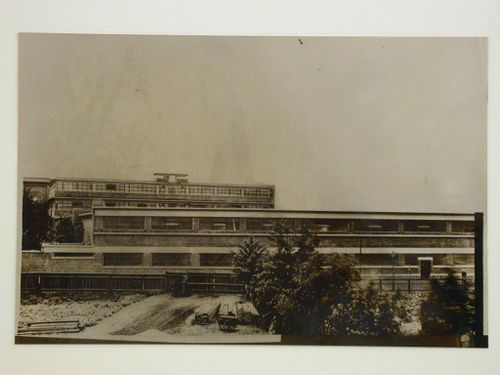
Actions:
Numéro de référence:
PH1980:1015:043
PH1980:1015:043
Personnes et institutions:
Sujet:
architecture
architecture
Date:
between 1925 and 1929
between 1925 and 1929
Classification:
photographies
photographies
Date:
between 1925 and 1929
between 1925 and 1929
Personnes et institutions:
Sujet:
architecture
architecture
Classification:
photographies
photographies
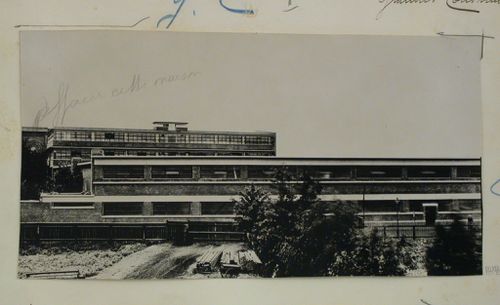
Actions:
Numéro de référence:
PH1980:1015:045
PH1980:1015:045
Personnes et institutions:
Sujet:
architecture
architecture
Date:
between 1925 and 1929
between 1925 and 1929
Classification:
photographies
photographies
Date:
between 1925 and 1929
between 1925 and 1929
Personnes et institutions:
Sujet:
architecture
architecture
Classification:
photographies
photographies
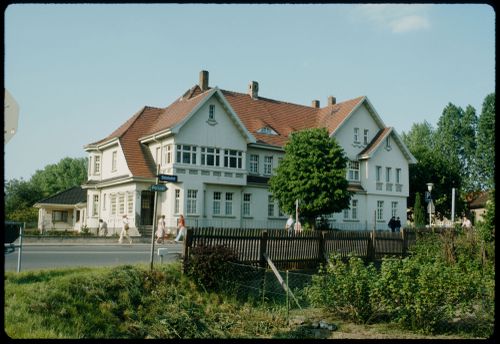
Actions:
Numéro de référence:
PHCON2002:0016:012:022:011
PHCON2002:0016:012:022:011
Personnes et institutions:
Date:
1977
1977
Classification:
photographies
photographies
Date:
1977
1977
Personnes et institutions:
Niveau de description archivistique:
Projet
Projet
Numéro de référence:
CI006.S1.1929.PR3
Description:
Series documents the architectural project of Mart Stam for the Trade union corporate headquarters in Wiesbaden, Germany, in 1929. Material in this series was produced in 1929. The series contains design development drawings.
CI006.S1.1929.PR3
Description:
Series documents the architectural project of Mart Stam for the Trade union corporate headquarters in Wiesbaden, Germany, in 1929. Material in this series was produced in 1929. The series contains design development drawings.
Personnes et institutions:
Date:
1929
1929
Titre:
Trade union corporate headquarters, Wiesbaden, Germany (1929)
Actions:
CI006.S1.1929.PR3
Description:
Series documents the architectural project of Mart Stam for the Trade union corporate headquarters in Wiesbaden, Germany, in 1929. Material in this series was produced in 1929. The series contains design development drawings.
Trade union corporate headquarters, Wiesbaden, Germany (1929)
Actions:
CI006.S1.1929.PR3
Description:
Series documents the architectural project of Mart Stam for the Trade union corporate headquarters in Wiesbaden, Germany, in 1929. Material in this series was produced in 1929. The series contains design development drawings.
Niveau de description archivistique:
project
project
Date:
1929
1929
Personnes et institutions:
Classification:
photographies
photographies
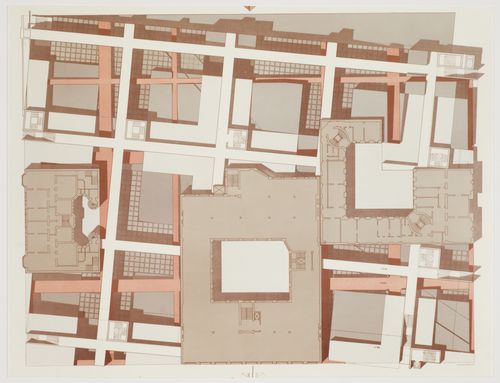
Numéro de référence:
DR1991:0018:722
DR1991:0018:722
Personnes et institutions:
Date:
between 1980 and 1985
between 1980 and 1985
Classification:
photographies
photographies
Date:
between 1980 and 1985
between 1980 and 1985
Personnes et institutions:


