


364 Résultats
Classification:
livres
livres
Prix:
$39.95
(disponible sur commande)
Résumé:
In this book, Mario Carpo reviews the long history of the computational mode of production, showing how the merger of robotic automation and artificial intelligence will stop and reverse the modernist quest for scale. Today's technologies already allow us to use nonstandard building materials as found, or as made, and assemble them in as many nonstandard, intelligent,(...)
$39.95
(disponible sur commande)
Résumé:
In this book, Mario Carpo reviews the long history of the computational mode of production, showing how the merger of robotic automation and artificial intelligence will stop and reverse the modernist quest for scale. Today's technologies already allow us to use nonstandard building materials as found, or as made, and assemble them in as many nonstandard, intelligent,(...)
Titre:
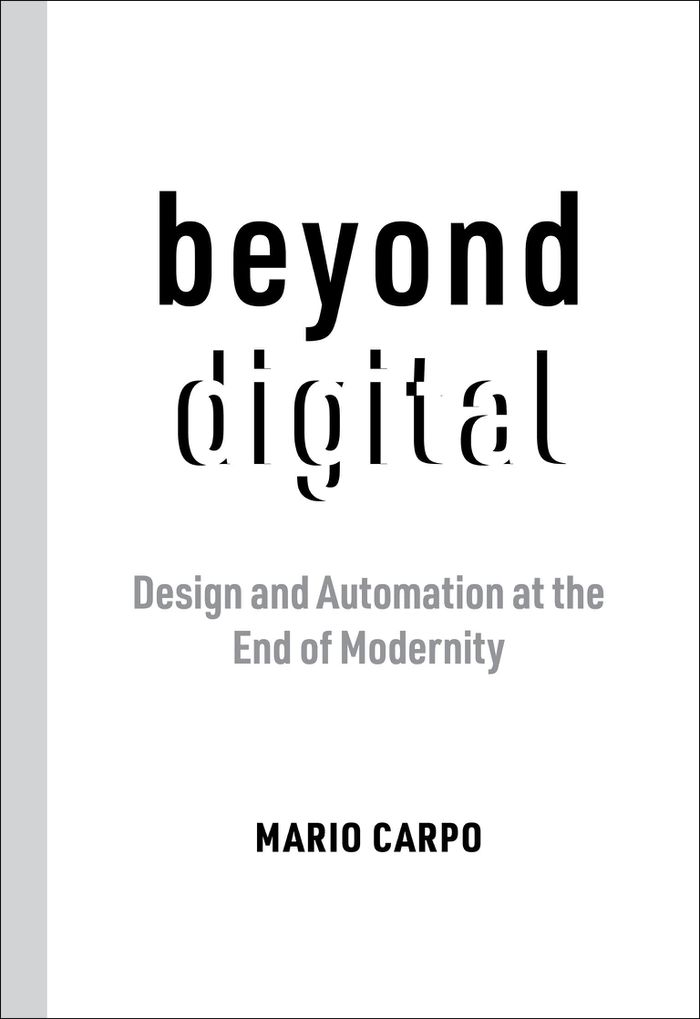
Beyond digital: Design and automation at the end of modernity
Actions:
Prix:
$39.95
(disponible sur commande)
Résumé:
In this book, Mario Carpo reviews the long history of the computational mode of production, showing how the merger of robotic automation and artificial intelligence will stop and reverse the modernist quest for scale. Today's technologies already allow us to use nonstandard building materials as found, or as made, and assemble them in as many nonstandard, intelligent, adaptive ways as needed: the microfactories of our imminent future will be automated artisan shops.The post-industrial logic of computational manufacturing has been known and theorized for some time. By tracing its theoretical and technical sources, and reviewing the design theories that accompanied its rise, Carpo shows how the computational project is now being recast by the urgency of the climate crisis and by the global pandemic, which has tragically proven its viability. Looking at the work of a new generation of designers, technologists, and producers, this volume offers a new modern agenda for our post-industrial future.
Beyond digital: Design and automation at the end of modernity
Actions:
Prix:
$39.95
(disponible sur commande)
Résumé:
In this book, Mario Carpo reviews the long history of the computational mode of production, showing how the merger of robotic automation and artificial intelligence will stop and reverse the modernist quest for scale. Today's technologies already allow us to use nonstandard building materials as found, or as made, and assemble them in as many nonstandard, intelligent, adaptive ways as needed: the microfactories of our imminent future will be automated artisan shops.The post-industrial logic of computational manufacturing has been known and theorized for some time. By tracing its theoretical and technical sources, and reviewing the design theories that accompanied its rise, Carpo shows how the computational project is now being recast by the urgency of the climate crisis and by the global pandemic, which has tragically proven its viability. Looking at the work of a new generation of designers, technologists, and producers, this volume offers a new modern agenda for our post-industrial future.
Classification:
livres
livres
Publication:
avril 2023
avril 2023
Sujet:
Théorie de l’architecture
Théorie de l’architecture
Classification:
livres
livres
Actions:
Prix:
$42.00
(disponible en magasin)
Résumé:
Conceived as part of the one-year investigation Catching Up with Life, A Section of Now aims to re-establish a dialogue between architecture and society that would allow for architecture to begin to contend with and address our changed and changing social norms. The publication serves as a meditation on new behaviours, rituals, and values and their spatial implications(...)
$42.00
(disponible en magasin)
Résumé:
Conceived as part of the one-year investigation Catching Up with Life, A Section of Now aims to re-establish a dialogue between architecture and society that would allow for architecture to begin to contend with and address our changed and changing social norms. The publication serves as a meditation on new behaviours, rituals, and values and their spatial implications(...)
Titre:
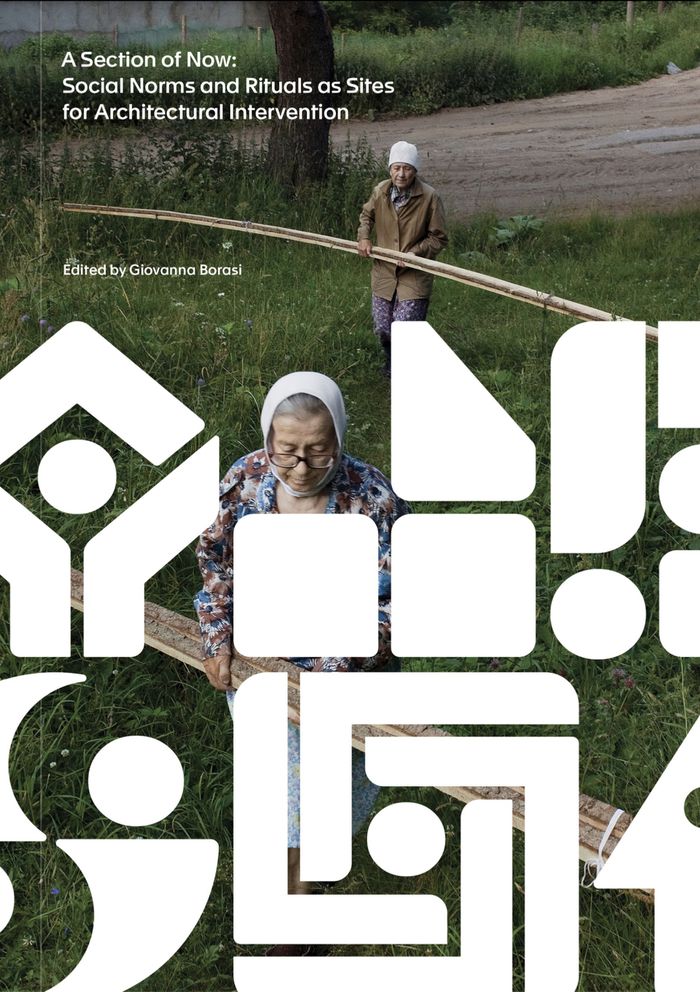
A section of Now: Norms and Rituals as Sites for Architectural Intervention
Actions:
Prix:
$42.00
(disponible en magasin)
Résumé:
Conceived as part of the one-year investigation Catching Up with Life, A Section of Now aims to re-establish a dialogue between architecture and society that would allow for architecture to begin to contend with and address our changed and changing social norms. The publication serves as a meditation on new behaviours, rituals, and values and their spatial implications and seeks to catalyze urban and architectural interventions that accommodate, influence, and, in some cases, pre-empt our new lived realities. Authors address topics ranging from the safety of digital spaces to how normative life trajectories affect the elderly and the many selves each of us puts forward, while architects present frameworks for spaces for blended families, thirty-year-old retirees, and contested monuments, among many others. Bringing together analytical essays about the contemporary moment and the direction in which society is moving, projective texts that outline new architectural types to address societal needs, alongside television series, photography, and architecture and design projects, A Section of Now outlines a new relationship between the spaces in which we live and the ways we live within them.
A section of Now: Norms and Rituals as Sites for Architectural Intervention
Actions:
Prix:
$42.00
(disponible en magasin)
Résumé:
Conceived as part of the one-year investigation Catching Up with Life, A Section of Now aims to re-establish a dialogue between architecture and society that would allow for architecture to begin to contend with and address our changed and changing social norms. The publication serves as a meditation on new behaviours, rituals, and values and their spatial implications and seeks to catalyze urban and architectural interventions that accommodate, influence, and, in some cases, pre-empt our new lived realities. Authors address topics ranging from the safety of digital spaces to how normative life trajectories affect the elderly and the many selves each of us puts forward, while architects present frameworks for spaces for blended families, thirty-year-old retirees, and contested monuments, among many others. Bringing together analytical essays about the contemporary moment and the direction in which society is moving, projective texts that outline new architectural types to address societal needs, alongside television series, photography, and architecture and design projects, A Section of Now outlines a new relationship between the spaces in which we live and the ways we live within them.
Classification:
livres
livres
Publication:
août 2021
août 2021
Sujet:
Publications du CCA
Publications du CCA
Classification:
livres
livres
Prix:
$35.00
(disponible sur commande)
Résumé:
"Graphic style" is an overview of graphic design styles from the industrial era onward. The authors gives an appreciatopn of every significant trend from Art Nouveau to Neo-Modern. Now, in an expanded edition with over 700 illustrations.
$35.00
(disponible sur commande)
Résumé:
"Graphic style" is an overview of graphic design styles from the industrial era onward. The authors gives an appreciatopn of every significant trend from Art Nouveau to Neo-Modern. Now, in an expanded edition with over 700 illustrations.
Publication:
mars 2001, New York
mars 2001, New York
Titre:
Graphic style from Victorian to digital - new edition
Actions:
Prix:
$35.00
(disponible sur commande)
Résumé:
"Graphic style" is an overview of graphic design styles from the industrial era onward. The authors gives an appreciatopn of every significant trend from Art Nouveau to Neo-Modern. Now, in an expanded edition with over 700 illustrations.
Graphic style from Victorian to digital - new edition
Actions:
Prix:
$35.00
(disponible sur commande)
Résumé:
"Graphic style" is an overview of graphic design styles from the industrial era onward. The authors gives an appreciatopn of every significant trend from Art Nouveau to Neo-Modern. Now, in an expanded edition with over 700 illustrations.
Classification:
livres
livres
Publication:
mars 2001, New York
mars 2001, New York
Classification:
livres
livres
Actions:
Prix:
$57.95
(disponible sur commande)
Résumé:
In this publication, Gabriella Giannachi traces the evolution of the archive into the apparatus through which we map the everyday. The archive, traditionally a body of documents or a site for the preservation of documents, changed over the centuries to encompass, often concurrently, a broad but interrelated number of practices not traditionally considered as archival.(...)
$57.95
(disponible sur commande)
Résumé:
In this publication, Gabriella Giannachi traces the evolution of the archive into the apparatus through which we map the everyday. The archive, traditionally a body of documents or a site for the preservation of documents, changed over the centuries to encompass, often concurrently, a broad but interrelated number of practices not traditionally considered as archival.(...)
Titre:
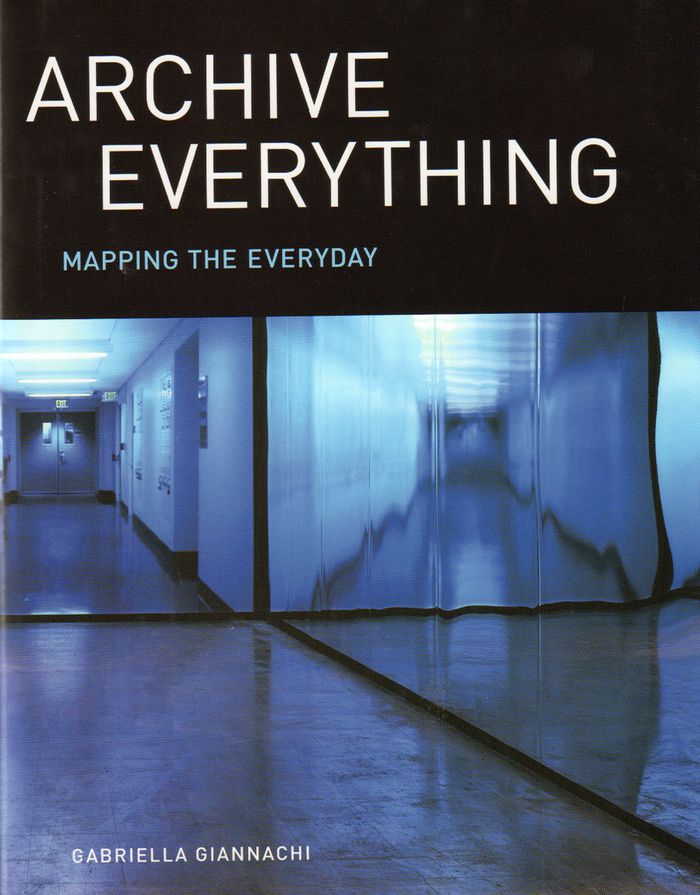
Archive everything: mapping the everyday
Actions:
Prix:
$57.95
(disponible sur commande)
Résumé:
In this publication, Gabriella Giannachi traces the evolution of the archive into the apparatus through which we map the everyday. The archive, traditionally a body of documents or a site for the preservation of documents, changed over the centuries to encompass, often concurrently, a broad but interrelated number of practices not traditionally considered as archival. Archives now consist of not only documents and sites but also artworks, installations, museums, social media platforms, and mediated and mixed reality environments. Giannachi tracks the evolution of these diverse archival practices across the centuries.
Archive everything: mapping the everyday
Actions:
Prix:
$57.95
(disponible sur commande)
Résumé:
In this publication, Gabriella Giannachi traces the evolution of the archive into the apparatus through which we map the everyday. The archive, traditionally a body of documents or a site for the preservation of documents, changed over the centuries to encompass, often concurrently, a broad but interrelated number of practices not traditionally considered as archival. Archives now consist of not only documents and sites but also artworks, installations, museums, social media platforms, and mediated and mixed reality environments. Giannachi tracks the evolution of these diverse archival practices across the centuries.
Classification:
livres
livres
Publication:
novembre 2016
novembre 2016
Classification:
livres
livres
Actions:
Prix:
$105.00
(disponible sur commande)
Résumé:
The experience of engaging with art and history has been utterly transformed by information and communications technology in recent decades. We now have virtual, mediated access to countless heritage collections and assemblages of artworks, which we intuitively browse and navigate in a way that wasn’t possible until very recently. This collection of essays takes(...)
$105.00
(disponible sur commande)
Résumé:
The experience of engaging with art and history has been utterly transformed by information and communications technology in recent decades. We now have virtual, mediated access to countless heritage collections and assemblages of artworks, which we intuitively browse and navigate in a way that wasn’t possible until very recently. This collection of essays takes(...)
Titre:
Museums in a digital culture: how art and heritage became meaningful
Actions:
Prix:
$105.00
(disponible sur commande)
Résumé:
The experience of engaging with art and history has been utterly transformed by information and communications technology in recent decades. We now have virtual, mediated access to countless heritage collections and assemblages of artworks, which we intuitively browse and navigate in a way that wasn’t possible until very recently. This collection of essays takes up the question of the cultural meaning of the information and communications technology that makes these new engagements possible, asking questions like: How should we theorize the sensory experience of art and heritage? What does information technology mean for the authority and ownership of heritage?
Museums in a digital culture: how art and heritage became meaningful
Actions:
Prix:
$105.00
(disponible sur commande)
Résumé:
The experience of engaging with art and history has been utterly transformed by information and communications technology in recent decades. We now have virtual, mediated access to countless heritage collections and assemblages of artworks, which we intuitively browse and navigate in a way that wasn’t possible until very recently. This collection of essays takes up the question of the cultural meaning of the information and communications technology that makes these new engagements possible, asking questions like: How should we theorize the sensory experience of art and heritage? What does information technology mean for the authority and ownership of heritage?
Classification:
livres
livres
Publication:
octobre 2016
octobre 2016
Sujet:
Muséologie
Muséologie
Classification:
livres
livres
Actions:
Prix:
$34.95
(disponible sur commande)
Résumé:
Philip K. Dick, one of the most prolific and visionary authors of the 20th century, crafted compelling visions of possible futures and dystopian realities teeming with humans, artificial intelligences, and more. Yet, the Dickian universe is more than just its characters—it’s a realm intricately built with technological devices, machines, and objects entirely conceived by(...)
$34.95
(disponible sur commande)
Résumé:
Philip K. Dick, one of the most prolific and visionary authors of the 20th century, crafted compelling visions of possible futures and dystopian realities teeming with humans, artificial intelligences, and more. Yet, the Dickian universe is more than just its characters—it’s a realm intricately built with technological devices, machines, and objects entirely conceived by(...)
Publication:
juillet 2024
juillet 2024
Titre:
Towards the realm of materiality: Designing Philip K. Dick's non-existing technologies
Actions:
Prix:
$34.95
(disponible sur commande)
Résumé:
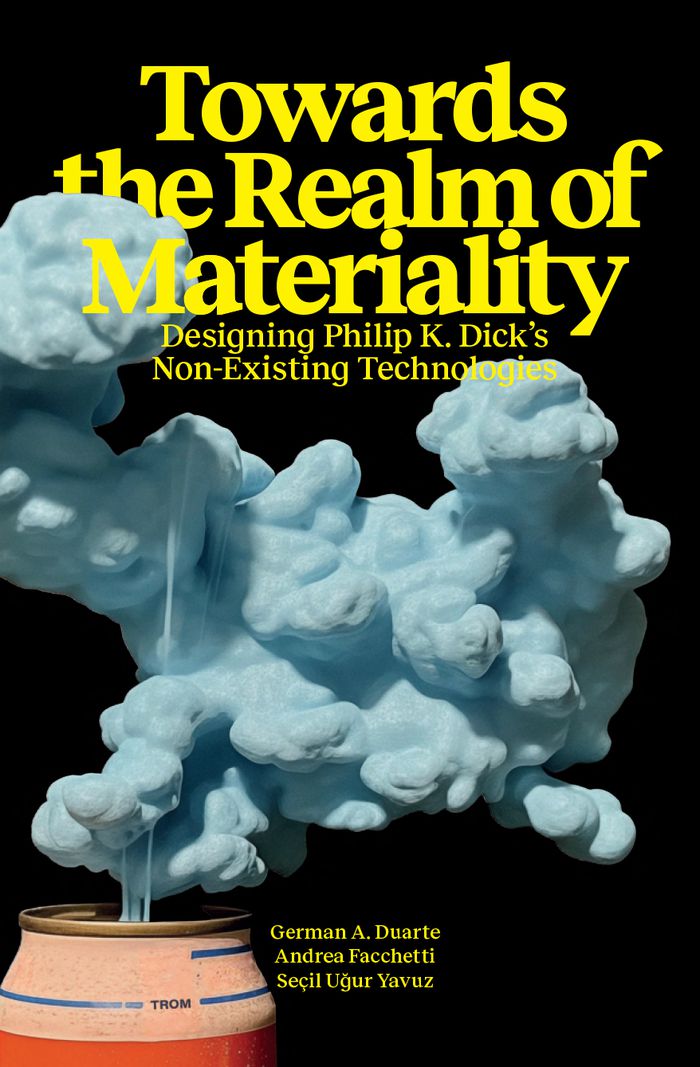
Philip K. Dick, one of the most prolific and visionary authors of the 20th century, crafted compelling visions of possible futures and dystopian realities teeming with humans, artificial intelligences, and more. Yet, the Dickian universe is more than just its characters—it’s a realm intricately built with technological devices, machines, and objects entirely conceived by this brilliant mind. How did Philip K. Dick envision these technologies, and through them, the future? And now, decades after his time, how should we perceive and interpret these tools? More intriguingly, how can we decode and reconstruct the creative process that led to the creation and "materialization" of these devices? Grounded in a multidisciplinary framework, this volume explores alternative designs and projects for some of the non-existing technologies described in Philip K. Dick’s oeuvre.
Towards the realm of materiality: Designing Philip K. Dick's non-existing technologies
Actions:
Prix:
$34.95
(disponible sur commande)
Résumé:
Philip K. Dick, one of the most prolific and visionary authors of the 20th century, crafted compelling visions of possible futures and dystopian realities teeming with humans, artificial intelligences, and more. Yet, the Dickian universe is more than just its characters—it’s a realm intricately built with technological devices, machines, and objects entirely conceived by this brilliant mind. How did Philip K. Dick envision these technologies, and through them, the future? And now, decades after his time, how should we perceive and interpret these tools? More intriguingly, how can we decode and reconstruct the creative process that led to the creation and "materialization" of these devices? Grounded in a multidisciplinary framework, this volume explores alternative designs and projects for some of the non-existing technologies described in Philip K. Dick’s oeuvre.
Classification:
livres
livres
Publication:
juillet 2024
juillet 2024
Classification:
livres
livres
Prix:
$69.95
(disponible sur commande)
Résumé:
Hovestadt's Institute for Computer-Aided Architectural Design at the Eidgenossische Technische Hochschule (ETH) Zurich (Swiss Federal Institute of Technology, Zurich) is widely regarded as one of the world's most important institutes currently working at the interface between architecture and information technology. As a universal tool, the computer encourages one to(...)
$69.95
(disponible sur commande)
Résumé:
Hovestadt's Institute for Computer-Aided Architectural Design at the Eidgenossische Technische Hochschule (ETH) Zurich (Swiss Federal Institute of Technology, Zurich) is widely regarded as one of the world's most important institutes currently working at the interface between architecture and information technology. As a universal tool, the computer encourages one to(...)
Titre:
Beyond the grid: Architecture and information technology
Actions:
Prix:
$69.95
(disponible sur commande)
Résumé:
Hovestadt's Institute for Computer-Aided Architectural Design at the Eidgenossische Technische Hochschule (ETH) Zurich (Swiss Federal Institute of Technology, Zurich) is widely regarded as one of the world's most important institutes currently working at the interface between architecture and information technology. As a universal tool, the computer encourages one to think in terms of information structures and systems that span individual fields. This "rethinking" of the nature of architecture is leading to a paradigm shift at the methodological level of design, planning, construction, and economy. After a decade of experimentation, it has now become possible to see information technology for architecture as the basis for a new and energy-saving practical approach to building.
Beyond the grid: Architecture and information technology
Actions:
Prix:
$69.95
(disponible sur commande)
Résumé:
Hovestadt's Institute for Computer-Aided Architectural Design at the Eidgenossische Technische Hochschule (ETH) Zurich (Swiss Federal Institute of Technology, Zurich) is widely regarded as one of the world's most important institutes currently working at the interface between architecture and information technology. As a universal tool, the computer encourages one to think in terms of information structures and systems that span individual fields. This "rethinking" of the nature of architecture is leading to a paradigm shift at the methodological level of design, planning, construction, and economy. After a decade of experimentation, it has now become possible to see information technology for architecture as the basis for a new and energy-saving practical approach to building.
Classification:
livres
livres
Publication:
mai 2010
mai 2010
Sujet:
Architecture numérique
Architecture numérique
Classification:
audio
audio
Titre:
Lucky Dip.
Lucky Dip.
Actions:
Description:
1 online resource.
Auteur:
Sujet:
Publication:
[Place of publication not identified] : Lateral Addition, 2021.
[Place of publication not identified] : Lateral Addition, 2021.
Classification:
audio
audio
Publication:
[Place of publication not identified] : Lateral Addition, 2021.
[Place of publication not identified] : Lateral Addition, 2021.
Auteur:
Sujet:
Classification:
livres
livres
Actions:
Prix:
$49.95
(disponible sur commande)
Résumé:
Bringing together pioneers in design and making within architecture, construction, engineering, manufacturing, materials technology and computation, 'Fabricate' is a triennial international conference, now in its third year (ICD, University of Stuttgart, April 2017). Each year it produces a supporting publication, to date the only one of its kind specialising in Digital(...)
$49.95
(disponible sur commande)
Résumé:
Bringing together pioneers in design and making within architecture, construction, engineering, manufacturing, materials technology and computation, 'Fabricate' is a triennial international conference, now in its third year (ICD, University of Stuttgart, April 2017). Each year it produces a supporting publication, to date the only one of its kind specialising in Digital(...)
Titre:
Fabricate: rethinking design and construction
Actions:
Prix:
$49.95
(disponible sur commande)
Résumé:
Bringing together pioneers in design and making within architecture, construction, engineering, manufacturing, materials technology and computation, 'Fabricate' is a triennial international conference, now in its third year (ICD, University of Stuttgart, April 2017). Each year it produces a supporting publication, to date the only one of its kind specialising in Digital Fabrication. The 2017 edition features 32 illustrated articles on built projects and works in progress from academia and practice, including contributions from leading practices such as Foster + Partners, Zaha Hadid Architects, Arup, and Ron Arad, and from world-renowned institutions including ICD Stuttgart, Harvard, Yale, MIT, Princeton University, The Bartlett School of Architecture (UCL) and the Architectural Association.
Fabricate: rethinking design and construction
Actions:
Prix:
$49.95
(disponible sur commande)
Résumé:
Bringing together pioneers in design and making within architecture, construction, engineering, manufacturing, materials technology and computation, 'Fabricate' is a triennial international conference, now in its third year (ICD, University of Stuttgart, April 2017). Each year it produces a supporting publication, to date the only one of its kind specialising in Digital Fabrication. The 2017 edition features 32 illustrated articles on built projects and works in progress from academia and practice, including contributions from leading practices such as Foster + Partners, Zaha Hadid Architects, Arup, and Ron Arad, and from world-renowned institutions including ICD Stuttgart, Harvard, Yale, MIT, Princeton University, The Bartlett School of Architecture (UCL) and the Architectural Association.
Classification:
livres
livres
Publication:
janvier 2017
janvier 2017
Sujet:
Architecture numérique
Architecture numérique
Classification:
livres
livres
Titre:
Library: An Unquiet History
Library: An Unquiet History
Actions:
Prix:
$18.95
(disponible sur commande)
Résumé:
Through the ages, libraries have not only accumulated and preserved but also shaped, inspired, and obliterated knowledge. Now they are in crisis. Former rare books librarian and Harvard MetaLAB visionary Matthew Battles takes us from Boston to Baghdad, from classical scriptoria to medieval monasteries and on to the Information Age, to explore how libraries are built and(...)
$18.95
(disponible sur commande)
Résumé:
Through the ages, libraries have not only accumulated and preserved but also shaped, inspired, and obliterated knowledge. Now they are in crisis. Former rare books librarian and Harvard MetaLAB visionary Matthew Battles takes us from Boston to Baghdad, from classical scriptoria to medieval monasteries and on to the Information Age, to explore how libraries are built and(...)
Publication:
mars 2015
mars 2015
Titre:
Library: An Unquiet History
Actions:
Prix:
$18.95
(disponible sur commande)
Résumé:
Through the ages, libraries have not only accumulated and preserved but also shaped, inspired, and obliterated knowledge. Now they are in crisis. Former rare books librarian and Harvard MetaLAB visionary Matthew Battles takes us from Boston to Baghdad, from classical scriptoria to medieval monasteries and on to the Information Age, to explore how libraries are built and how they are destroyed: from the scroll burnings in ancient China to the burning of libraries in Europe and Bosnia to the latest revolutionary upheavals of the digital age. A new epilogue elucidates the preservation of knowledge amid the creative destruction of twenty-first century technology. 10 illustrations.
Library: An Unquiet History
Actions:
Prix:
$18.95
(disponible sur commande)
Résumé:
Through the ages, libraries have not only accumulated and preserved but also shaped, inspired, and obliterated knowledge. Now they are in crisis. Former rare books librarian and Harvard MetaLAB visionary Matthew Battles takes us from Boston to Baghdad, from classical scriptoria to medieval monasteries and on to the Information Age, to explore how libraries are built and how they are destroyed: from the scroll burnings in ancient China to the burning of libraries in Europe and Bosnia to the latest revolutionary upheavals of the digital age. A new epilogue elucidates the preservation of knowledge amid the creative destruction of twenty-first century technology. 10 illustrations.
Classification:
livres
livres
Publication:
mars 2015
mars 2015


