


3095 Résultats
Classification:
livres
livres
Actions:
Prix:
$80.95
(disponible sur commande)
Résumé:
The designer and architect Pierre Chareau (1883–1950) was a pivotal figure in modernism. His extraordinary Art Deco furniture is avidly collected and his visionary glass house, the Maison de Verre, is celebrated, but the breadth of his design genius has been little explored. Chareau linked architecture, fine arts, and style; designed furniture for avant-garde films and(...)
$80.95
(disponible sur commande)
Résumé:
The designer and architect Pierre Chareau (1883–1950) was a pivotal figure in modernism. His extraordinary Art Deco furniture is avidly collected and his visionary glass house, the Maison de Verre, is celebrated, but the breadth of his design genius has been little explored. Chareau linked architecture, fine arts, and style; designed furniture for avant-garde films and(...)
Titre:
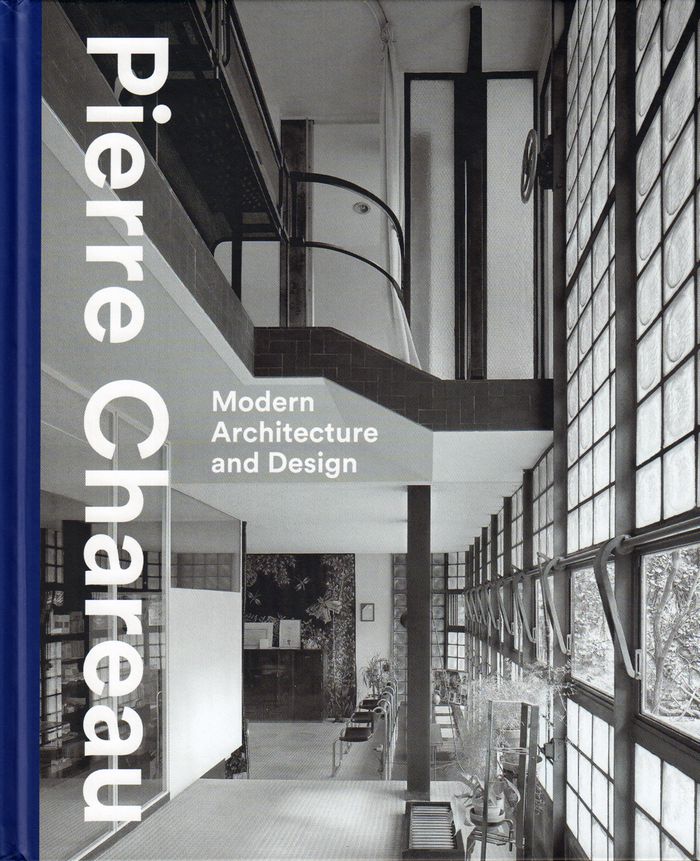
Pierre Chareau: modern architecture and design
Actions:
Prix:
$80.95
(disponible sur commande)
Résumé:
The designer and architect Pierre Chareau (1883–1950) was a pivotal figure in modernism. His extraordinary Art Deco furniture is avidly collected and his visionary glass house, the Maison de Verre, is celebrated, but the breadth of his design genius has been little explored. Chareau linked architecture, fine arts, and style; designed furniture for avant-garde films and chic homes; collected artists such as Picasso and Mondrian; and was a radical innovator in the use of materials. Essays by leading scholars embrace the full scope of his invention, offering detailed analyses of individual projects, the interdisciplinary nature of his work, his Jewish background, his place in the avant-garde of Paris between the wars, and his more recent reception. Extensive illustrations present a rich sampling of Chareau’s furniture, architecture, interiors, fabrics, and wallpapers, as well as his own important art collection.
Pierre Chareau: modern architecture and design
Actions:
Prix:
$80.95
(disponible sur commande)
Résumé:
The designer and architect Pierre Chareau (1883–1950) was a pivotal figure in modernism. His extraordinary Art Deco furniture is avidly collected and his visionary glass house, the Maison de Verre, is celebrated, but the breadth of his design genius has been little explored. Chareau linked architecture, fine arts, and style; designed furniture for avant-garde films and chic homes; collected artists such as Picasso and Mondrian; and was a radical innovator in the use of materials. Essays by leading scholars embrace the full scope of his invention, offering detailed analyses of individual projects, the interdisciplinary nature of his work, his Jewish background, his place in the avant-garde of Paris between the wars, and his more recent reception. Extensive illustrations present a rich sampling of Chareau’s furniture, architecture, interiors, fabrics, and wallpapers, as well as his own important art collection.
Classification:
livres
livres
Publication:
novembre 2016
novembre 2016
Sujet:
Architecture, monographies
Architecture, monographies
Classification:
périodiques
périodiques
Titre:
Log 38
Log 38
Actions:
Prix:
$19.50
(disponible en magasin)
Résumé:
After two successive thematic issues, "Log 38" (Fall 2016) returns to its classic open form, bringing together myriad perspectives from architecture’s center and periphery. Cynthia Davidson’s expansive interview with New York architect Harry Cobb, of Pei Cobb Freed & Partners, illuminates Cobb’s 60-plus years in practice, as well as the history of modernism in America.(...)
$19.50
(disponible en magasin)
Résumé:
After two successive thematic issues, "Log 38" (Fall 2016) returns to its classic open form, bringing together myriad perspectives from architecture’s center and periphery. Cynthia Davidson’s expansive interview with New York architect Harry Cobb, of Pei Cobb Freed & Partners, illuminates Cobb’s 60-plus years in practice, as well as the history of modernism in America.(...)
Titre:
Log 38
Actions:
Prix:
$19.50
(disponible en magasin)
Résumé:
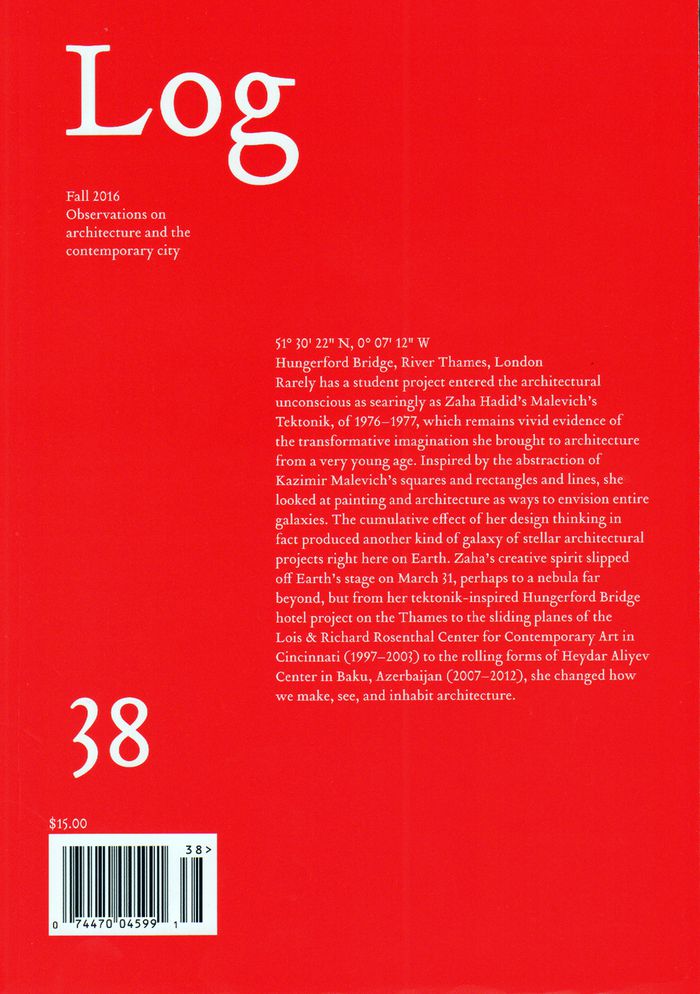
After two successive thematic issues, "Log 38" (Fall 2016) returns to its classic open form, bringing together myriad perspectives from architecture’s center and periphery. Cynthia Davidson’s expansive interview with New York architect Harry Cobb, of Pei Cobb Freed & Partners, illuminates Cobb’s 60-plus years in practice, as well as the history of modernism in America. Eve Blau explores the contexts that drove the 1968 Learning from Las Vegas studio at Yale, and Pier Vittorio Aureli and Maria Shéhérazade Giudici reevaluate the roots of modern domestic space. "Log 38" also features critical perspectives on the current moment in architecture, with reviews of OMA’s Fondaco dei Tedeschi, reflections on this year’s Venice Architecture Biennale, and reactions to Brexit from architects and educators affected by the vote, and even an imaginative look at the work of Sam Jacob Studio from 20 years in the future.
Log 38
Actions:
Prix:
$19.50
(disponible en magasin)
Résumé:
After two successive thematic issues, "Log 38" (Fall 2016) returns to its classic open form, bringing together myriad perspectives from architecture’s center and periphery. Cynthia Davidson’s expansive interview with New York architect Harry Cobb, of Pei Cobb Freed & Partners, illuminates Cobb’s 60-plus years in practice, as well as the history of modernism in America. Eve Blau explores the contexts that drove the 1968 Learning from Las Vegas studio at Yale, and Pier Vittorio Aureli and Maria Shéhérazade Giudici reevaluate the roots of modern domestic space. "Log 38" also features critical perspectives on the current moment in architecture, with reviews of OMA’s Fondaco dei Tedeschi, reflections on this year’s Venice Architecture Biennale, and reactions to Brexit from architects and educators affected by the vote, and even an imaginative look at the work of Sam Jacob Studio from 20 years in the future.
Classification:
périodiques
périodiques
Publication:
octobre 2016
octobre 2016
Sujet:
Revues
Revues
Classification:
livres
livres
Actions:
Prix:
$50.00
(disponible sur commande)
Résumé:
Sarah Schrank in this book places the celebrated arrival of LA in the richer context of art controversies and political contests over modern art and art spaces in the twentieth century. Challenging historical accounts that situate the city's origins as an art center in the 1960s, she argues that debates over modernism among artists and civic leaders alike made art a(...)
$50.00
(disponible sur commande)
Résumé:
Sarah Schrank in this book places the celebrated arrival of LA in the richer context of art controversies and political contests over modern art and art spaces in the twentieth century. Challenging historical accounts that situate the city's origins as an art center in the 1960s, she argues that debates over modernism among artists and civic leaders alike made art a(...)
Titre:
Art and the city : civic imagination and cultural authority in Los Angeles
Actions:
Prix:
$50.00
(disponible sur commande)
Résumé:
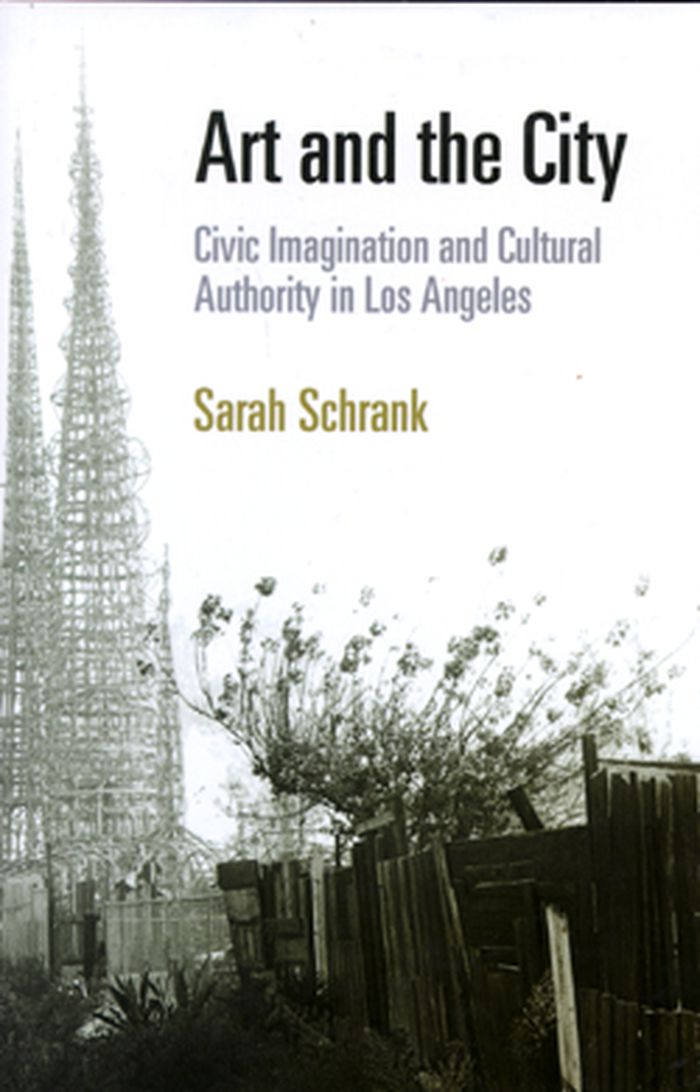
Sarah Schrank in this book places the celebrated arrival of LA in the richer context of art controversies and political contests over modern art and art spaces in the twentieth century. Challenging historical accounts that situate the city's origins as an art center in the 1960s, she argues that debates over modernism among artists and civic leaders alike made art a charged political site as early as the 1910s. The legacy of those early battles reverberated throughout the century. Because of a rich tradition of arts education and the presence of Hollywood, Los Angeles historically hosted a talented population of contemporary artists. However, because of the snug relationship between urban aesthetics and capital investment that underscored the booster goals of the civic arts movement, modern artists were pushed out of public exhibition spaces until after World War II.
Art and the city : civic imagination and cultural authority in Los Angeles
Actions:
Prix:
$50.00
(disponible sur commande)
Résumé:
Sarah Schrank in this book places the celebrated arrival of LA in the richer context of art controversies and political contests over modern art and art spaces in the twentieth century. Challenging historical accounts that situate the city's origins as an art center in the 1960s, she argues that debates over modernism among artists and civic leaders alike made art a charged political site as early as the 1910s. The legacy of those early battles reverberated throughout the century. Because of a rich tradition of arts education and the presence of Hollywood, Los Angeles historically hosted a talented population of contemporary artists. However, because of the snug relationship between urban aesthetics and capital investment that underscored the booster goals of the civic arts movement, modern artists were pushed out of public exhibition spaces until after World War II.
Classification:
livres
livres
Publication:
octobre 2008, Philadelphia
octobre 2008, Philadelphia
Sujet:
Théorie de l’urbanisme
Théorie de l’urbanisme
Classification:
livres
livres
Titre:
Dutch design a history
Dutch design a history
Actions:
Prix:
$40.95
(disponible sur commande)
Résumé:
Thomas, a museum curator, delves deeply into the rich design history of the Netherlands, beginning with the historical roots of Dutch crafts education and the moral and social ideals of modernism that became central to the nation’s cultural dialogue. Touching upon such issues as the emergence of the professional industrial designer, public work initiatives, debates about(...)
$40.95
(disponible sur commande)
Résumé:
Thomas, a museum curator, delves deeply into the rich design history of the Netherlands, beginning with the historical roots of Dutch crafts education and the moral and social ideals of modernism that became central to the nation’s cultural dialogue. Touching upon such issues as the emergence of the professional industrial designer, public work initiatives, debates about(...)
Titre:
Dutch design a history
Actions:
Prix:
$40.95
(disponible sur commande)
Résumé:
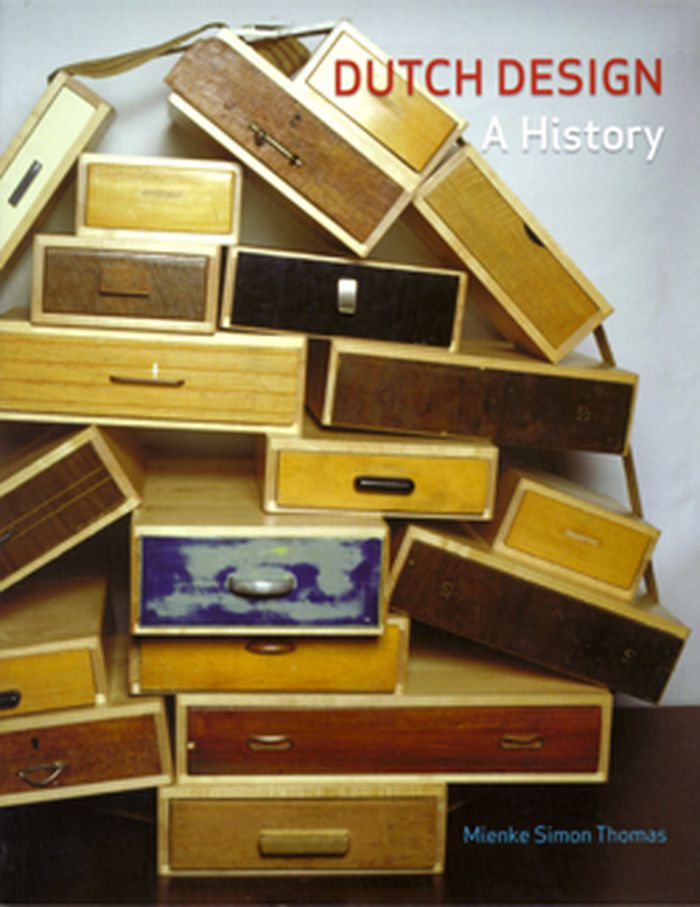
Thomas, a museum curator, delves deeply into the rich design history of the Netherlands, beginning with the historical roots of Dutch crafts education and the moral and social ideals of modernism that became central to the nation’s cultural dialogue. Touching upon such issues as the emergence of the professional industrial designer, public work initiatives, debates about design as art, and the provocative notion of “anti-design,” Thomas argues that though Dutch design from the beginning has been driven by aims of functionality, simplicity, and affordability, it has also embraced luxury and exclusivity. The book also discusses the role played by leading Dutch designers and their works, including Wim Crouwel, Marcel Wanders, and the design collective Droog Design. An unprecedented, detailed history, Dutch Design Culture is a critical primer on one of the leading national design movements today.
Dutch design a history
Actions:
Prix:
$40.95
(disponible sur commande)
Résumé:
Thomas, a museum curator, delves deeply into the rich design history of the Netherlands, beginning with the historical roots of Dutch crafts education and the moral and social ideals of modernism that became central to the nation’s cultural dialogue. Touching upon such issues as the emergence of the professional industrial designer, public work initiatives, debates about design as art, and the provocative notion of “anti-design,” Thomas argues that though Dutch design from the beginning has been driven by aims of functionality, simplicity, and affordability, it has also embraced luxury and exclusivity. The book also discusses the role played by leading Dutch designers and their works, including Wim Crouwel, Marcel Wanders, and the design collective Droog Design. An unprecedented, detailed history, Dutch Design Culture is a critical primer on one of the leading national design movements today.
Classification:
livres
livres
Publication:
juin 2008, London
juin 2008, London
Sujet:
Design, époques et styles
Design, époques et styles
Classification:
livres
livres
Actions:
Prix:
$55.00
(disponible sur commande)
Résumé:
To survey the work of Mexican architect Javier Senosiain (born 1948) requires a journey through a particular trajectory in the history of architecture, from Frank Lloyd Wright and Bruno Zevi to Alvar Aalto, Eero Saarinen and Jørn Utzon. These pioneers of organic modernism faced the 20th century’s mechanistic, functionalistic and rationalistic proposals with a vision that(...)
$55.00
(disponible sur commande)
Résumé:
To survey the work of Mexican architect Javier Senosiain (born 1948) requires a journey through a particular trajectory in the history of architecture, from Frank Lloyd Wright and Bruno Zevi to Alvar Aalto, Eero Saarinen and Jørn Utzon. These pioneers of organic modernism faced the 20th century’s mechanistic, functionalistic and rationalistic proposals with a vision that(...)
Titre:
Javier Senosiain: organic architecture
Actions:
Prix:
$55.00
(disponible sur commande)
Résumé:
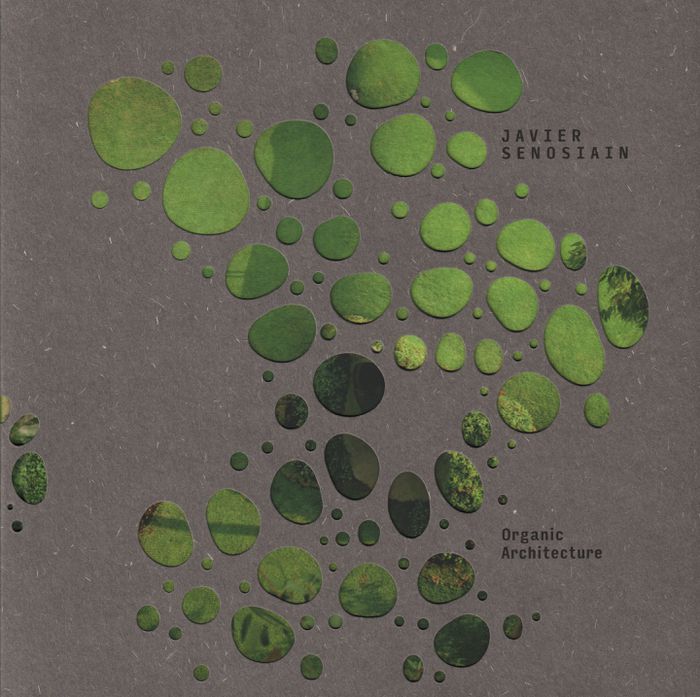
To survey the work of Mexican architect Javier Senosiain (born 1948) requires a journey through a particular trajectory in the history of architecture, from Frank Lloyd Wright and Bruno Zevi to Alvar Aalto, Eero Saarinen and Jørn Utzon. These pioneers of organic modernism faced the 20th century’s mechanistic, functionalistic and rationalistic proposals with a vision that sought to revive an organic relationship between humans and their environments. Senosiain’s concept of “Organic Architecture” follows in this tradition. Throughout his career, Senosiain’s work has explored the relations between user, site and architecture in spaces that echo natural forms and conditions. “The concept of an organic habitat,” he writes, “is the creation of spaces adapted to man that are also similar to a mother’s bosom or an animal’s lair.” This volume surveys Senosiain’s work since the 1970s and his concept of “Organic Architecture.”
Javier Senosiain: organic architecture
Actions:
Prix:
$55.00
(disponible sur commande)
Résumé:
To survey the work of Mexican architect Javier Senosiain (born 1948) requires a journey through a particular trajectory in the history of architecture, from Frank Lloyd Wright and Bruno Zevi to Alvar Aalto, Eero Saarinen and Jørn Utzon. These pioneers of organic modernism faced the 20th century’s mechanistic, functionalistic and rationalistic proposals with a vision that sought to revive an organic relationship between humans and their environments. Senosiain’s concept of “Organic Architecture” follows in this tradition. Throughout his career, Senosiain’s work has explored the relations between user, site and architecture in spaces that echo natural forms and conditions. “The concept of an organic habitat,” he writes, “is the creation of spaces adapted to man that are also similar to a mother’s bosom or an animal’s lair.” This volume surveys Senosiain’s work since the 1970s and his concept of “Organic Architecture.”
Classification:
livres
livres
Publication:
août 2018
août 2018
Sujet:
Architecture, monographies
Architecture, monographies
Classification:
livres
livres
Titre:
The architecture of science
The architecture of science
Actions:
Prix:
$107.00
(disponible sur commande)
Résumé:
How do the spaces in which science is done shape the identity of the scientist and the self-conception of scientific fields? How do the sciences structure the identity of the architect and the practice of architecture in a specific period? And how does the design of spaces such as laboratories, hospitals, and museums affect how the public perceives and interacts with the(...)
$107.00
(disponible sur commande)
Résumé:
How do the spaces in which science is done shape the identity of the scientist and the self-conception of scientific fields? How do the sciences structure the identity of the architect and the practice of architecture in a specific period? And how does the design of spaces such as laboratories, hospitals, and museums affect how the public perceives and interacts with the(...)
Titre:
The architecture of science
Actions:
Prix:
$107.00
(disponible sur commande)
Résumé:
How do the spaces in which science is done shape the identity of the scientist and the self-conception of scientific fields? How do the sciences structure the identity of the architect and the practice of architecture in a specific period? And how does the design of spaces such as laboratories, hospitals, and museums affect how the public perceives and interacts with the world of science? « The Architecture of Science » offers a dazzling set of speculations on these issues by historians of science, architecture, and art; architectural theorists; and sociologists as well as practicing scientists and architects. The essays are organized into six sections: "Of Secrecy and Openness: Science and Architecture in Early Modern Europe"; "Displaying and Concealing Technics in the Nineteenth Century"; "Modern Space"; "Is Architecture Science?"; "Princeton after Modernism: The Lewis Thomas Laboratory for Molecular Biology"; and "Centers, Cities, and Colliders."
The architecture of science
Actions:
Prix:
$107.00
(disponible sur commande)
Résumé:
How do the spaces in which science is done shape the identity of the scientist and the self-conception of scientific fields? How do the sciences structure the identity of the architect and the practice of architecture in a specific period? And how does the design of spaces such as laboratories, hospitals, and museums affect how the public perceives and interacts with the world of science? « The Architecture of Science » offers a dazzling set of speculations on these issues by historians of science, architecture, and art; architectural theorists; and sociologists as well as practicing scientists and architects. The essays are organized into six sections: "Of Secrecy and Openness: Science and Architecture in Early Modern Europe"; "Displaying and Concealing Technics in the Nineteenth Century"; "Modern Space"; "Is Architecture Science?"; "Princeton after Modernism: The Lewis Thomas Laboratory for Molecular Biology"; and "Centers, Cities, and Colliders."
Classification:
livres
livres
Publication:
avril 1999
avril 1999
Sujet:
Théorie de l’architecture
Théorie de l’architecture
Classification:
livres
livres

Titre:
Sherrie Levine
Sherrie Levine
Actions:
Prix:
$32.00
(disponible sur commande)
Résumé:
The artist Sherrie Levine (b. 1947) is best known for her appropriations of work by other artists—most famously for her rephotographs of canonical images by Edward Weston, Eliot Porter, and other masters of modern photography. Since those works of the early 1980s, she has continued to work on and “after” artists whose names have come to define modernism, making sculpture(...)
$32.00
(disponible sur commande)
Résumé:
The artist Sherrie Levine (b. 1947) is best known for her appropriations of work by other artists—most famously for her rephotographs of canonical images by Edward Weston, Eliot Porter, and other masters of modern photography. Since those works of the early 1980s, she has continued to work on and “after” artists whose names have come to define modernism, making sculpture(...)
Titre:
Sherrie Levine
Actions:
Prix:
$32.00
(disponible sur commande)
Résumé:
The artist Sherrie Levine (b. 1947) is best known for her appropriations of work by other artists—most famously for her rephotographs of canonical images by Edward Weston, Eliot Porter, and other masters of modern photography. Since those works of the early 1980s, she has continued to work on and “after” artists whose names have come to define modernism, making sculpture after Brancusi and Duchamp, paintings after Malevich and Blinky Palermo, watercolors after Matisse and Miro, photographs after Monet and Cezanne as well as Alfred Stieglitz. Throughout, Levine's practice effectively uncompleted, decentered, and extended works of art that were once singular and finished, posing critical rebuttals to some of the basic assumptions of modernist aesthetics. Her work was central to the theorization of postmodernism in the visual arts—most notably as it emerged in the pages of October magazine.
Sherrie Levine
Actions:
Prix:
$32.00
(disponible sur commande)
Résumé:
The artist Sherrie Levine (b. 1947) is best known for her appropriations of work by other artists—most famously for her rephotographs of canonical images by Edward Weston, Eliot Porter, and other masters of modern photography. Since those works of the early 1980s, she has continued to work on and “after” artists whose names have come to define modernism, making sculpture after Brancusi and Duchamp, paintings after Malevich and Blinky Palermo, watercolors after Matisse and Miro, photographs after Monet and Cezanne as well as Alfred Stieglitz. Throughout, Levine's practice effectively uncompleted, decentered, and extended works of art that were once singular and finished, posing critical rebuttals to some of the basic assumptions of modernist aesthetics. Her work was central to the theorization of postmodernism in the visual arts—most notably as it emerged in the pages of October magazine.
Classification:
livres
livres
Publication:
septembre 2018
septembre 2018
Sujet:
Théorie de l’art
Théorie de l’art
Classification:
livres
livres
Actions:
Prix:
$45.50
(disponible sur commande)
Résumé:
When Philip Johnson died in 2005 at the age of 98, he was still one of the most recognizable--and influential--figures on the American cultural landscape. The first recipient of the Pritzker Prize and MoMA's founding architectural curator, Johnson made his mark as one of America's leading architects with his famous Glass House in New Caanan, CT, and his controversial AT(...)
$45.50
(disponible sur commande)
Résumé:
When Philip Johnson died in 2005 at the age of 98, he was still one of the most recognizable--and influential--figures on the American cultural landscape. The first recipient of the Pritzker Prize and MoMA's founding architectural curator, Johnson made his mark as one of America's leading architects with his famous Glass House in New Caanan, CT, and his controversial AT(...)
Titre:
The man in the glass house: Philip Johnson, architecture of the modern century
Actions:
Prix:
$45.50
(disponible sur commande)
Résumé:
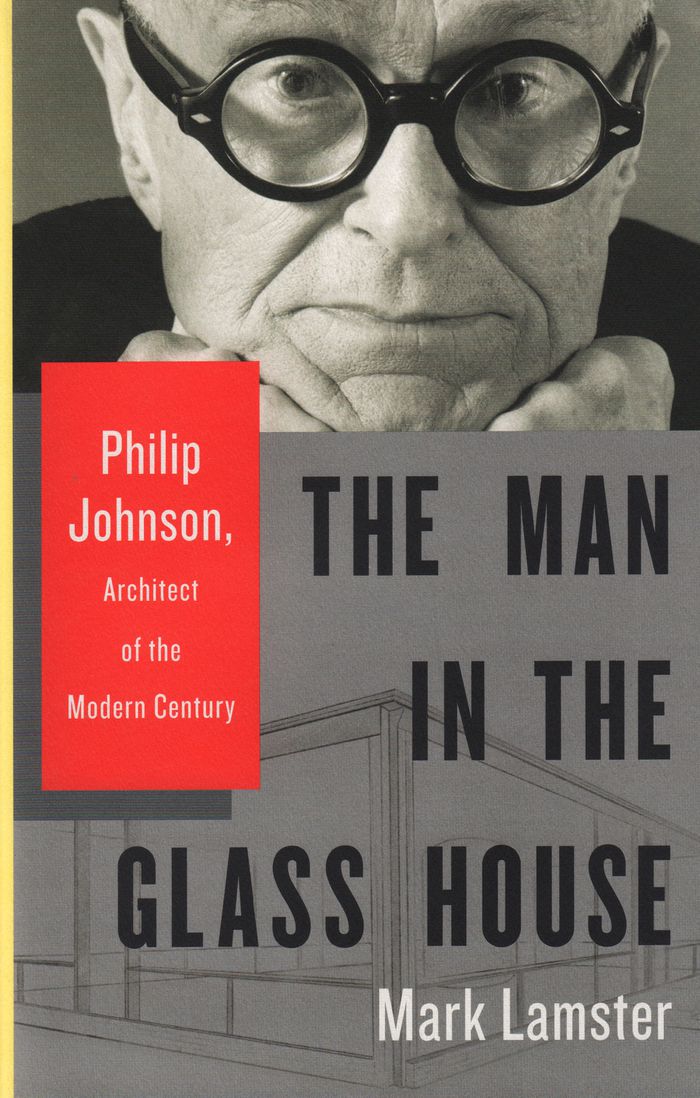
When Philip Johnson died in 2005 at the age of 98, he was still one of the most recognizable--and influential--figures on the American cultural landscape. The first recipient of the Pritzker Prize and MoMA's founding architectural curator, Johnson made his mark as one of America's leading architects with his famous Glass House in New Caanan, CT, and his controversial AT Building in NYC, among many others in nearly every city in the country--but his most natural role was as a consummate power broker and shaper of public opinion. Johnson introduced European modernism--the sleek, glass-and-steel architecture that now dominates our cities--to America, and mentored generations of architects, designers, and artists to follow. He defined the era of "starchitecture" with its flamboyant buildings and celebrity designers who esteemed aesthetics and style above all other concerns.
The man in the glass house: Philip Johnson, architecture of the modern century
Actions:
Prix:
$45.50
(disponible sur commande)
Résumé:
When Philip Johnson died in 2005 at the age of 98, he was still one of the most recognizable--and influential--figures on the American cultural landscape. The first recipient of the Pritzker Prize and MoMA's founding architectural curator, Johnson made his mark as one of America's leading architects with his famous Glass House in New Caanan, CT, and his controversial AT Building in NYC, among many others in nearly every city in the country--but his most natural role was as a consummate power broker and shaper of public opinion. Johnson introduced European modernism--the sleek, glass-and-steel architecture that now dominates our cities--to America, and mentored generations of architects, designers, and artists to follow. He defined the era of "starchitecture" with its flamboyant buildings and celebrity designers who esteemed aesthetics and style above all other concerns.
Classification:
livres
livres
Publication:
novembre 2018
novembre 2018
Sujet:
Architecture, monographies
Architecture, monographies
Classification:
livres
livres
Titre:
Arts and crafts furniture
Arts and crafts furniture
Actions:
Prix:
$99.50
(disponible sur commande)
Résumé:
This is a fully illustrated history of the Arts and Crafts movement covering : the influence of Ruskin, Pugin, Talbert, Eastlake and G.E. Street; the founding of William Morris & Co. in the 1860s until its demise in the early twentieth century; the fruition of the Movement from 1880 to 1910 including the Guilds, the major personalities and their attitude to Art Nouveau;(...)
$99.50
(disponible sur commande)
Résumé:
This is a fully illustrated history of the Arts and Crafts movement covering : the influence of Ruskin, Pugin, Talbert, Eastlake and G.E. Street; the founding of William Morris & Co. in the 1860s until its demise in the early twentieth century; the fruition of the Movement from 1880 to 1910 including the Guilds, the major personalities and their attitude to Art Nouveau;(...)
Titre:
Arts and crafts furniture
Actions:
Prix:
$99.50
(disponible sur commande)
Résumé:
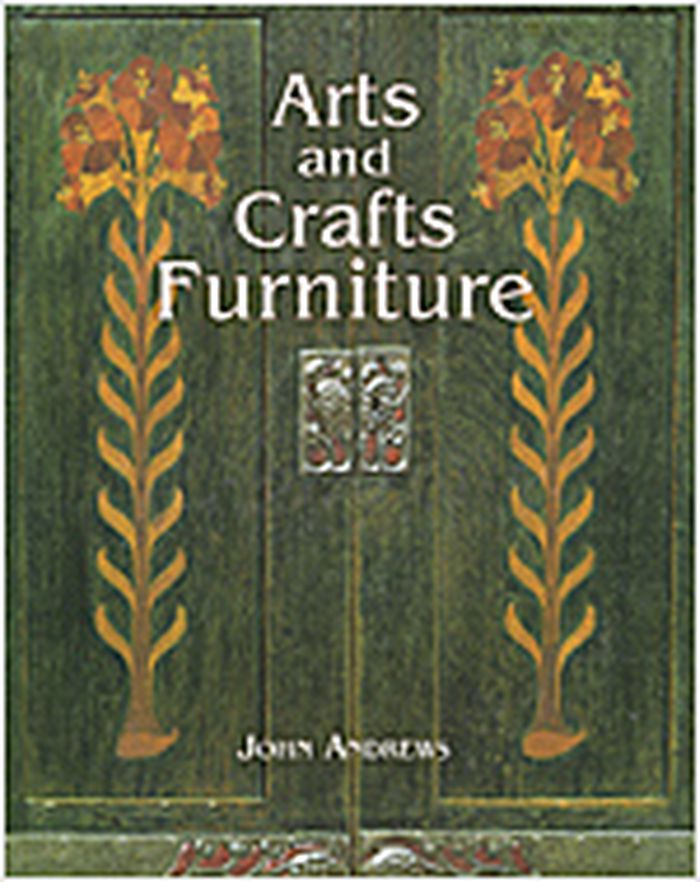
This is a fully illustrated history of the Arts and Crafts movement covering : the influence of Ruskin, Pugin, Talbert, Eastlake and G.E. Street; the founding of William Morris & Co. in the 1860s until its demise in the early twentieth century; the fruition of the Movement from 1880 to 1910 including the Guilds, the major personalities and their attitude to Art Nouveau; the aftermath into the 1920s and the rise of Modernism The Arts and Crafts Movement (1860-1920)changed the way designers think about furniture. All of the main leaders of the movement are covered. Illustrations show examples of museum quality pieces: the typical production of the Guilds, the Cotswold School, the Glasgow designers, Heal, Liberty and the major commercial companies including Gordon Russell. The principal American followers are also included. Each section details the furniture of the architects and designers involved.
Arts and crafts furniture
Actions:
Prix:
$99.50
(disponible sur commande)
Résumé:
This is a fully illustrated history of the Arts and Crafts movement covering : the influence of Ruskin, Pugin, Talbert, Eastlake and G.E. Street; the founding of William Morris & Co. in the 1860s until its demise in the early twentieth century; the fruition of the Movement from 1880 to 1910 including the Guilds, the major personalities and their attitude to Art Nouveau; the aftermath into the 1920s and the rise of Modernism The Arts and Crafts Movement (1860-1920)changed the way designers think about furniture. All of the main leaders of the movement are covered. Illustrations show examples of museum quality pieces: the typical production of the Guilds, the Cotswold School, the Glasgow designers, Heal, Liberty and the major commercial companies including Gordon Russell. The principal American followers are also included. Each section details the furniture of the architects and designers involved.
Classification:
livres
livres
Publication:
janvier 1900, Suffolk / Easthampton
janvier 1900, Suffolk / Easthampton
Sujet:
Design d’intérieur
Design d’intérieur
Classification:
livres
livres
Prix:
$45.00
(disponible sur commande)
Résumé:
John M. Lyle (18721945) was an anomaly among architects: a Beaux-Arts classicist who nevertheless found much inspiration in modernism, allowing his own traditionalist practice to be affected in form and detail by a brave new emphasis on minimalism and indigenous influence. With ornamentation showcasing local flora and fauna and a turn to native landscape for inspiration,(...)
$45.00
(disponible sur commande)
Résumé:
John M. Lyle (18721945) was an anomaly among architects: a Beaux-Arts classicist who nevertheless found much inspiration in modernism, allowing his own traditionalist practice to be affected in form and detail by a brave new emphasis on minimalism and indigenous influence. With ornamentation showcasing local flora and fauna and a turn to native landscape for inspiration,(...)
Titre:
A progressive traditionalist: John M. Lyle, architect
Actions:
Prix:
$45.00
(disponible sur commande)
Résumé:
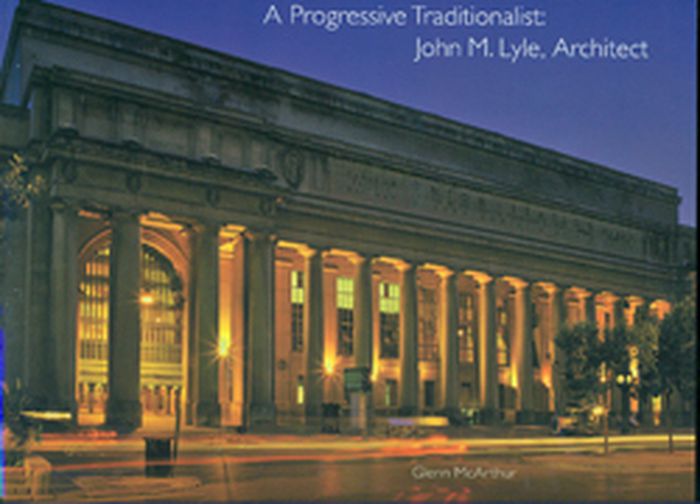
John M. Lyle (18721945) was an anomaly among architects: a Beaux-Arts classicist who nevertheless found much inspiration in modernism, allowing his own traditionalist practice to be affected in form and detail by a brave new emphasis on minimalism and indigenous influence. With ornamentation showcasing local flora and fauna and a turn to native landscape for inspiration, his innumerable buildings contributed to a burgeoning nationalism in the field. A Progressive Traditionalist traces this aesthetic trajectory, documenting Lyles training at Yale and in Paris, his early career in New York and his later success in Toronto, including countless legendary banks and residences and the iconic Union Station. Part biography and part architectural history, and extensively illustrated with colour photographs and drawings throughout, this book is the first to examine in depth the important contributions of one of the early twentieth centurys foremost architects.
A progressive traditionalist: John M. Lyle, architect
Actions:
Prix:
$45.00
(disponible sur commande)
Résumé:
John M. Lyle (18721945) was an anomaly among architects: a Beaux-Arts classicist who nevertheless found much inspiration in modernism, allowing his own traditionalist practice to be affected in form and detail by a brave new emphasis on minimalism and indigenous influence. With ornamentation showcasing local flora and fauna and a turn to native landscape for inspiration, his innumerable buildings contributed to a burgeoning nationalism in the field. A Progressive Traditionalist traces this aesthetic trajectory, documenting Lyles training at Yale and in Paris, his early career in New York and his later success in Toronto, including countless legendary banks and residences and the iconic Union Station. Part biography and part architectural history, and extensively illustrated with colour photographs and drawings throughout, this book is the first to examine in depth the important contributions of one of the early twentieth centurys foremost architects.
Classification:
livres
livres
Publication:
mars 2009
mars 2009
Sujet:
Architecture du Canada
Architecture du Canada


