


3068 Résultats
Classification:
livres
livres
Actions:
Prix:
$81.50
(disponible sur commande)
Résumé:
By 2020, some 400 Chinese new towns will have been built, representing an unprecedented urban growth. While some of these massive developments are still empty today, others have been rather successful. The substantial effort on the part of the Chinese government is to absorb up to 250 million people, chiefly migrants from the rural parts of the country. Unlike in Europe(...)
$81.50
(disponible sur commande)
Résumé:
By 2020, some 400 Chinese new towns will have been built, representing an unprecedented urban growth. While some of these massive developments are still empty today, others have been rather successful. The substantial effort on the part of the Chinese government is to absorb up to 250 million people, chiefly migrants from the rural parts of the country. Unlike in Europe(...)
Publication:
mai 2019
mai 2019
Titre:
The city after chinese new towns: spaces and imaginaries from contemporary urban China
Actions:
Prix:
$81.50
(disponible sur commande)
Résumé:
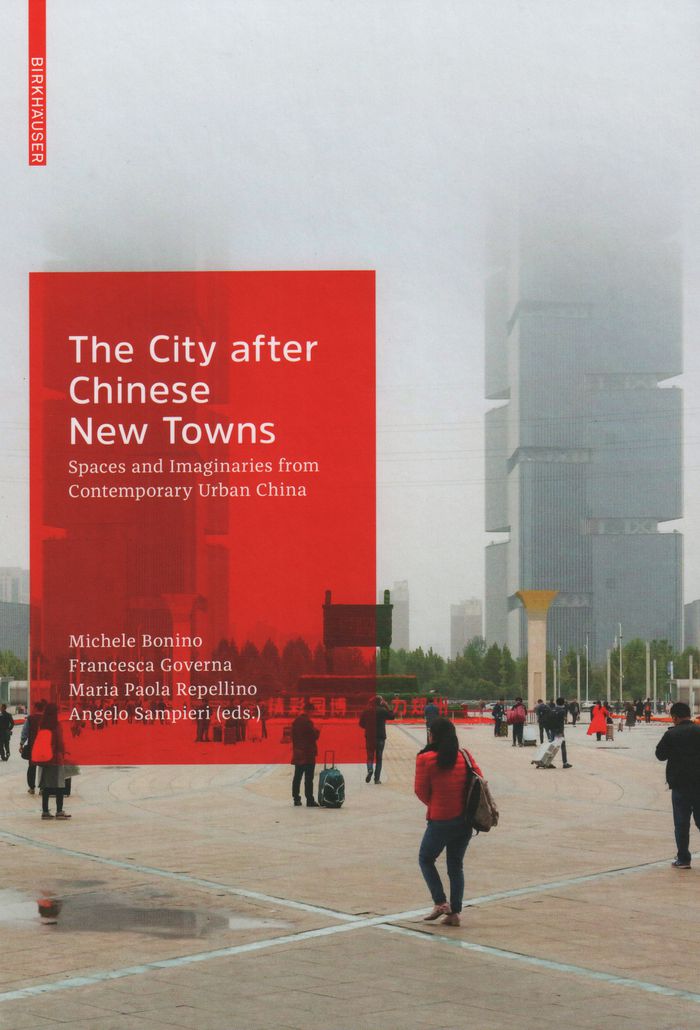
By 2020, some 400 Chinese new towns will have been built, representing an unprecedented urban growth. While some of these massive developments are still empty today, others have been rather successful. The substantial effort on the part of the Chinese government is to absorb up to 250 million people, chiefly migrants from the rural parts of the country. Unlike in Europe and North America, where new towns grew in accordance to the local industries, these new Chinese cities are mostly built to the point of near completion before introducing people. The interdisciplinary publication, written by architects, planners and geographers, explores the new urbanistic phenomenon of "Chinese new towns". Especially commissioned photographs and maps illustrate many examples of these new settlements.
The city after chinese new towns: spaces and imaginaries from contemporary urban China
Actions:
Prix:
$81.50
(disponible sur commande)
Résumé:
By 2020, some 400 Chinese new towns will have been built, representing an unprecedented urban growth. While some of these massive developments are still empty today, others have been rather successful. The substantial effort on the part of the Chinese government is to absorb up to 250 million people, chiefly migrants from the rural parts of the country. Unlike in Europe and North America, where new towns grew in accordance to the local industries, these new Chinese cities are mostly built to the point of near completion before introducing people. The interdisciplinary publication, written by architects, planners and geographers, explores the new urbanistic phenomenon of "Chinese new towns". Especially commissioned photographs and maps illustrate many examples of these new settlements.
Classification:
livres
livres
Publication:
mai 2019
mai 2019
Classification:
livres
livres
Actions:
Prix:
$45.00
(disponible sur commande)
Résumé:
A pioneer of "Water Urbanism" and the "Sponge City" model, Kongjian Yu is not only one of the most important living landscape architects, but also a keen observer of the present. His project proposals and his reflections on urban planning in China are a practical-conceptual reference with which to attempt to unravel the emerging questions of a planet threatened by(...)
$45.00
(disponible sur commande)
Résumé:
A pioneer of "Water Urbanism" and the "Sponge City" model, Kongjian Yu is not only one of the most important living landscape architects, but also a keen observer of the present. His project proposals and his reflections on urban planning in China are a practical-conceptual reference with which to attempt to unravel the emerging questions of a planet threatened by(...)
Titre:
Kongjian Yu: Turenscape 1998-2018
Actions:
Prix:
$45.00
(disponible sur commande)
Résumé:
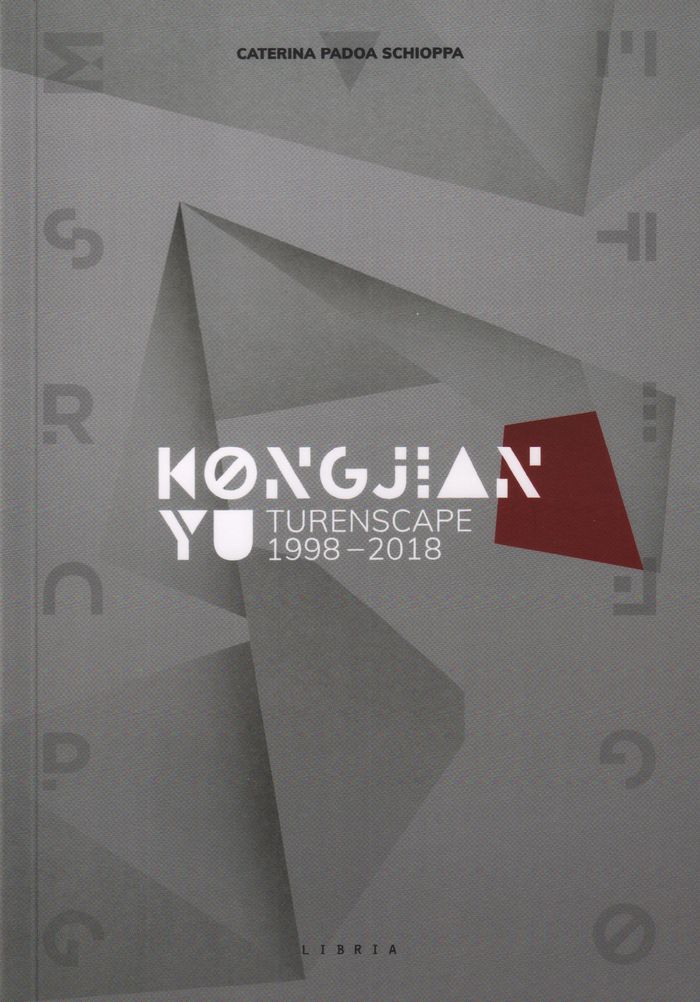
A pioneer of "Water Urbanism" and the "Sponge City" model, Kongjian Yu is not only one of the most important living landscape architects, but also a keen observer of the present. His project proposals and his reflections on urban planning in China are a practical-conceptual reference with which to attempt to unravel the emerging questions of a planet threatened by environmental catastrophes, hydrogeological risks and a water crisis. Taking the foundational geometries of rural landscapes as a model, Kongjian Yu proposes very low technology water infrastructure works which, by activating an adaptive behavior, recompose intermediate landscapes between city and nature, concrete representations of the partnership between man and the element that, more than any other, generates and protects life and water.
Kongjian Yu: Turenscape 1998-2018
Actions:
Prix:
$45.00
(disponible sur commande)
Résumé:
A pioneer of "Water Urbanism" and the "Sponge City" model, Kongjian Yu is not only one of the most important living landscape architects, but also a keen observer of the present. His project proposals and his reflections on urban planning in China are a practical-conceptual reference with which to attempt to unravel the emerging questions of a planet threatened by environmental catastrophes, hydrogeological risks and a water crisis. Taking the foundational geometries of rural landscapes as a model, Kongjian Yu proposes very low technology water infrastructure works which, by activating an adaptive behavior, recompose intermediate landscapes between city and nature, concrete representations of the partnership between man and the element that, more than any other, generates and protects life and water.
Classification:
livres
livres
Publication:
septembre 2019
septembre 2019
Sujet:
Architecture, monographies
Architecture, monographies
Classification:
livres
livres
Titre:
Social practices
Social practices
Actions:
Prix:
$26.95
(disponible sur commande)
Résumé:
Mixing biography, autobiography, fiction, criticism, and conversations among friends, with ''Social Practices'' Chris Kraus continues the anthropological exploration of artistic lives and the art world begun in 2004 with Video Green: Los Angeles Art and the Triumph of Nothingness. Social Practices includes writings from and around the legendary ''Chance Event—Three Days(...)
$26.95
(disponible sur commande)
Résumé:
Mixing biography, autobiography, fiction, criticism, and conversations among friends, with ''Social Practices'' Chris Kraus continues the anthropological exploration of artistic lives and the art world begun in 2004 with Video Green: Los Angeles Art and the Triumph of Nothingness. Social Practices includes writings from and around the legendary ''Chance Event—Three Days(...)
Titre:
Social practices
Actions:
Prix:
$26.95
(disponible sur commande)
Résumé:
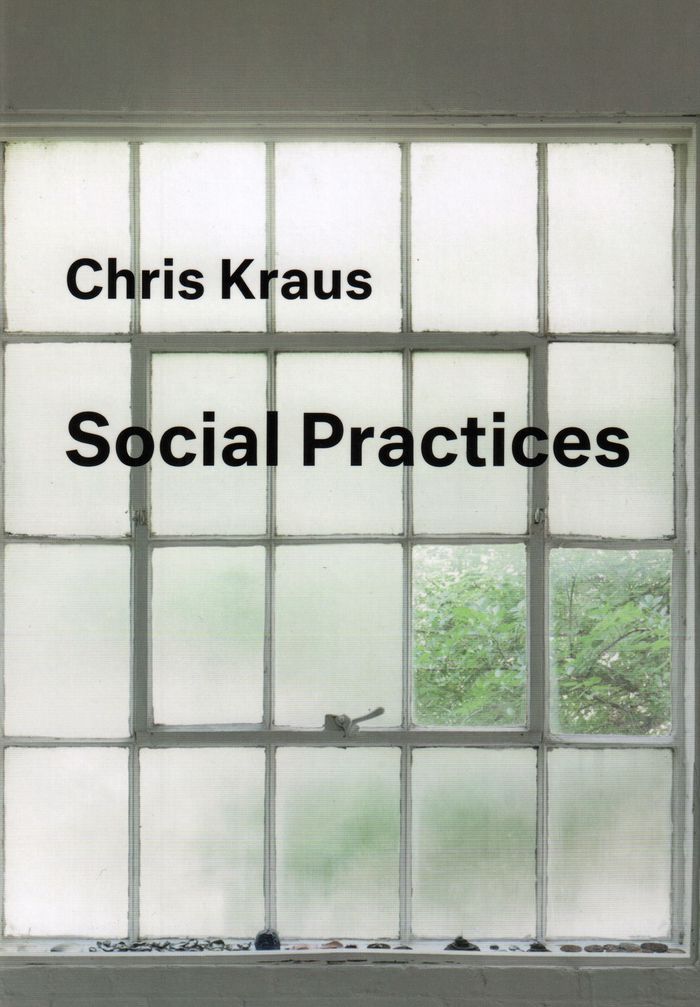
Mixing biography, autobiography, fiction, criticism, and conversations among friends, with ''Social Practices'' Chris Kraus continues the anthropological exploration of artistic lives and the art world begun in 2004 with Video Green: Los Angeles Art and the Triumph of Nothingness. Social Practices includes writings from and around the legendary ''Chance Event—Three Days in the Desert with Jean Baudrillard'' (1996), and ''Radical Localism,'' an exhibition of art and media from Puerto Nuevo's Mexicali Rose that Kraus co-organized with Marco Vera and Richard Birkett in 2012. Attuned to the odd and the anomalous, Kraus profiles Elias Fontes, an Imperial Valley hay merchant who has become an important collector of contemporary Mexican art, and chronicles the demise of a rural convenience store in northern Minnesota.
Social practices
Actions:
Prix:
$26.95
(disponible sur commande)
Résumé:
Mixing biography, autobiography, fiction, criticism, and conversations among friends, with ''Social Practices'' Chris Kraus continues the anthropological exploration of artistic lives and the art world begun in 2004 with Video Green: Los Angeles Art and the Triumph of Nothingness. Social Practices includes writings from and around the legendary ''Chance Event—Three Days in the Desert with Jean Baudrillard'' (1996), and ''Radical Localism,'' an exhibition of art and media from Puerto Nuevo's Mexicali Rose that Kraus co-organized with Marco Vera and Richard Birkett in 2012. Attuned to the odd and the anomalous, Kraus profiles Elias Fontes, an Imperial Valley hay merchant who has become an important collector of contemporary Mexican art, and chronicles the demise of a rural convenience store in northern Minnesota.
Classification:
livres
livres
Publication:
octobre 2018
octobre 2018
Sujet:
Théorie de l’art
Théorie de l’art
Classification:
livres
livres
Prix:
$55.00
(disponible sur commande)
Résumé:
In September 1976, a curtain of shimmering white was unfurled across the hills of rural northern California, running unbroken for 24.5 miles from Sonoma County to the Pacific Ocean. The artistic vision of Christo and Jeanne-Claude's Running Fence was 18 feet high and traversed the private properties of 59 ranchers. Although it remained in place for just two weeks, the(...)
$55.00
(disponible sur commande)
Résumé:
In September 1976, a curtain of shimmering white was unfurled across the hills of rural northern California, running unbroken for 24.5 miles from Sonoma County to the Pacific Ocean. The artistic vision of Christo and Jeanne-Claude's Running Fence was 18 feet high and traversed the private properties of 59 ranchers. Although it remained in place for just two weeks, the(...)
Titre:
Christo and Jean-Claude: Remembering the running fence
Actions:
Prix:
$55.00
(disponible sur commande)
Résumé:
In September 1976, a curtain of shimmering white was unfurled across the hills of rural northern California, running unbroken for 24.5 miles from Sonoma County to the Pacific Ocean. The artistic vision of Christo and Jeanne-Claude's Running Fence was 18 feet high and traversed the private properties of 59 ranchers. Although it remained in place for just two weeks, the process of planning it consumed nearly four years, and the installation required helicopters, barges, lawyers, and more than 300 Bay Area students and workers. Illustrated throughout with graphic representations and photographs, Christo and Jeanne-Claude recounts how two artists who were complete strangers to the area gradually enlisted the support of entire communities in order to make their vision a reality.
Christo and Jean-Claude: Remembering the running fence
Actions:
Prix:
$55.00
(disponible sur commande)
Résumé:
In September 1976, a curtain of shimmering white was unfurled across the hills of rural northern California, running unbroken for 24.5 miles from Sonoma County to the Pacific Ocean. The artistic vision of Christo and Jeanne-Claude's Running Fence was 18 feet high and traversed the private properties of 59 ranchers. Although it remained in place for just two weeks, the process of planning it consumed nearly four years, and the installation required helicopters, barges, lawyers, and more than 300 Bay Area students and workers. Illustrated throughout with graphic representations and photographs, Christo and Jeanne-Claude recounts how two artists who were complete strangers to the area gradually enlisted the support of entire communities in order to make their vision a reality.
Classification:
livres
livres
Publication:
avril 2010
avril 2010
Sujet:
Land Art
Land Art
Classification:
livres
livres
Prix:
$50.00
(disponible sur commande)
Résumé:
The role of the global architect in society is changing. Instead of waiting for commissions to come their way, architects are initiating and developing practical solutions in response to dramatically changing living conditions in many parts of the world today. Small Scale, Big Change focuses on a central chapter of this shift, presenting recently built or(...)
$50.00
(disponible sur commande)
Résumé:
The role of the global architect in society is changing. Instead of waiting for commissions to come their way, architects are initiating and developing practical solutions in response to dramatically changing living conditions in many parts of the world today. Small Scale, Big Change focuses on a central chapter of this shift, presenting recently built or(...)
Publication:
octobre 2010
octobre 2010
Titre:
Small scale, big change: new architectures of social engagement
Actions:
Prix:
$50.00
(disponible sur commande)
Résumé:
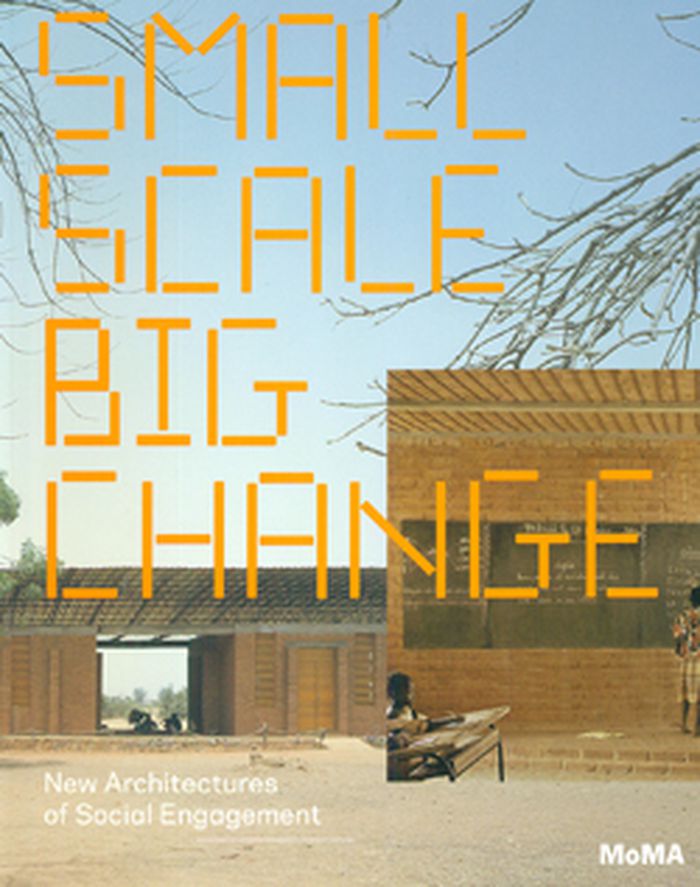
The role of the global architect in society is changing. Instead of waiting for commissions to come their way, architects are initiating and developing practical solutions in response to dramatically changing living conditions in many parts of the world today. Small Scale, Big Change focuses on a central chapter of this shift, presenting recently built or under-construction works in underserved communities around the globe by these 11 architects and firms: Elemental (Chilean); Anna Heringer (Austrian); Diébédo Francis Kéré (Burkinabé); Hashim Sarkis A.L.U.D. (Lebanese); Jorge Mario Jáuregui (Brazilian); Frédéric Druot, Anne Lacaton & Jean Philippe Vassal (French); Michael Maltzan Architecture (American); Noero Wolff Architects (South African); Rural Studio (American); Estudio Teddy Cruz (American, born Guatemala); and Urban Think Tank (American/Austrian/Venezuelan).
Small scale, big change: new architectures of social engagement
Actions:
Prix:
$50.00
(disponible sur commande)
Résumé:
The role of the global architect in society is changing. Instead of waiting for commissions to come their way, architects are initiating and developing practical solutions in response to dramatically changing living conditions in many parts of the world today. Small Scale, Big Change focuses on a central chapter of this shift, presenting recently built or under-construction works in underserved communities around the globe by these 11 architects and firms: Elemental (Chilean); Anna Heringer (Austrian); Diébédo Francis Kéré (Burkinabé); Hashim Sarkis A.L.U.D. (Lebanese); Jorge Mario Jáuregui (Brazilian); Frédéric Druot, Anne Lacaton & Jean Philippe Vassal (French); Michael Maltzan Architecture (American); Noero Wolff Architects (South African); Rural Studio (American); Estudio Teddy Cruz (American, born Guatemala); and Urban Think Tank (American/Austrian/Venezuelan).
Classification:
livres
livres
Publication:
octobre 2010
octobre 2010
Classification:
périodiques
périodiques
Titre:
Conjunctions:55 Urban arias
Conjunctions:55 Urban arias
Actions:
Prix:
$18.00
(disponible en magasin)
Résumé:
Those who choose to live in cities often have a complex relationship with their steel and glass environment--an attachment that often mingles irritation with affection, fear with calm, a desire to leave with the imperative to stay. This bond between city dwellers and their metropolitan milieux lies at the heart of Urban Arias. Downtowns, uptowns, midtowns; parks,(...)
$18.00
(disponible en magasin)
Résumé:
Those who choose to live in cities often have a complex relationship with their steel and glass environment--an attachment that often mingles irritation with affection, fear with calm, a desire to leave with the imperative to stay. This bond between city dwellers and their metropolitan milieux lies at the heart of Urban Arias. Downtowns, uptowns, midtowns; parks,(...)
Titre:
Conjunctions:55 Urban arias
Actions:
Prix:
$18.00
(disponible en magasin)
Résumé:
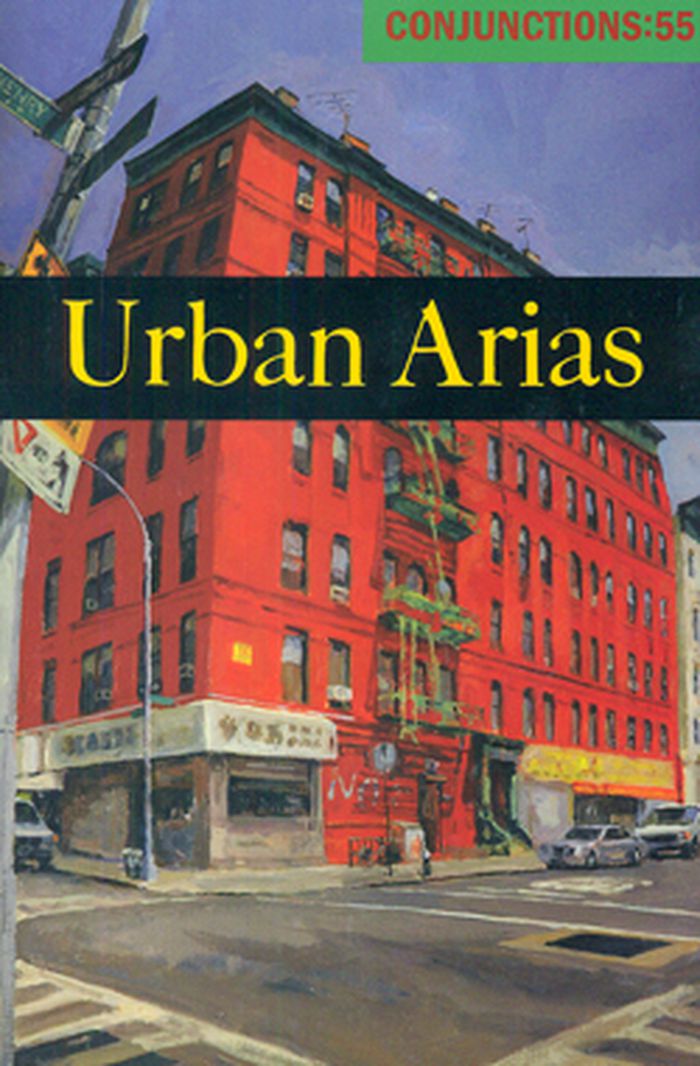
Those who choose to live in cities often have a complex relationship with their steel and glass environment--an attachment that often mingles irritation with affection, fear with calm, a desire to leave with the imperative to stay. This bond between city dwellers and their metropolitan milieux lies at the heart of Urban Arias. Downtowns, uptowns, midtowns; parks, ghettoes, museums--the rich gamut of what constitutes one of the oldest experiments in human habitation stands at the center of this special issue. Among the two dozen contributors are Elizabeth Hand, Paul La Farge, Jonathan Lethem, Karen Russell and Luc Sante, along with a previously unpublished interview with Thomas Bernhard, in which the uneasy relationship between rural and urban life is discussed.
Conjunctions:55 Urban arias
Actions:
Prix:
$18.00
(disponible en magasin)
Résumé:
Those who choose to live in cities often have a complex relationship with their steel and glass environment--an attachment that often mingles irritation with affection, fear with calm, a desire to leave with the imperative to stay. This bond between city dwellers and their metropolitan milieux lies at the heart of Urban Arias. Downtowns, uptowns, midtowns; parks, ghettoes, museums--the rich gamut of what constitutes one of the oldest experiments in human habitation stands at the center of this special issue. Among the two dozen contributors are Elizabeth Hand, Paul La Farge, Jonathan Lethem, Karen Russell and Luc Sante, along with a previously unpublished interview with Thomas Bernhard, in which the uneasy relationship between rural and urban life is discussed.
Classification:
périodiques
périodiques
Publication:
décembre 2010
décembre 2010
Sujet:
Revues
Revues
Classification:
livres
livres
Prix:
$46.95
(disponible sur commande)
Résumé:
In the years immediately following World War II, Black Mountain College, an unaccredited school in rural Appalachia, became a vital hub of cultural innovation. Practically every major artistic figure of the mid-twentieth century spent some time there: Merce Cunningham, Ray Johnson, Franz Kline, Willem and Elaine de Kooning, Robert Motherwell, Robert Rauschenberg, Dorothea(...)
$46.95
(disponible sur commande)
Résumé:
In the years immediately following World War II, Black Mountain College, an unaccredited school in rural Appalachia, became a vital hub of cultural innovation. Practically every major artistic figure of the mid-twentieth century spent some time there: Merce Cunningham, Ray Johnson, Franz Kline, Willem and Elaine de Kooning, Robert Motherwell, Robert Rauschenberg, Dorothea(...)
Titre:
The experimenters: chance and design at Black Mountain College
Actions:
Prix:
$46.95
(disponible sur commande)
Résumé:
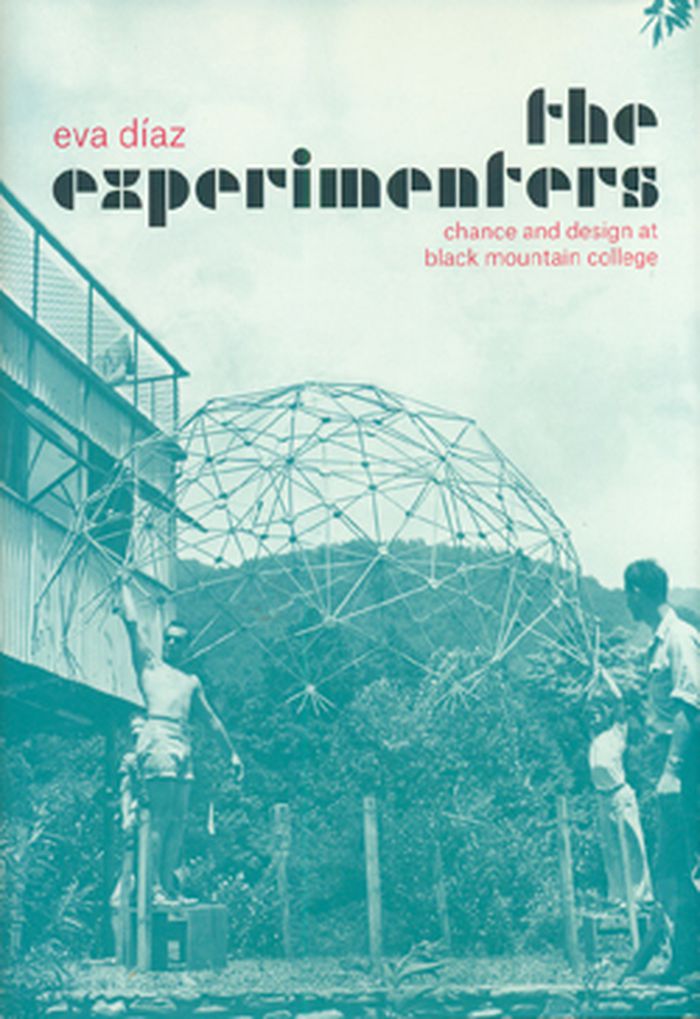
In the years immediately following World War II, Black Mountain College, an unaccredited school in rural Appalachia, became a vital hub of cultural innovation. Practically every major artistic figure of the mid-twentieth century spent some time there: Merce Cunningham, Ray Johnson, Franz Kline, Willem and Elaine de Kooning, Robert Motherwell, Robert Rauschenberg, Dorothea Rockburne, Aaron Siskind, Cy Twombly—the list goes on and on. Yet scholars have tended to view these artists’ time at the College as little more than prologue, a step on their way to greatness. With The Experimenters, Eva Díaz reveals the importance of Black Mountain College—and especially of three key teachers, Josef Albers, John Cage, and R. Buckminster Fuller—to be much greater than that.
The experimenters: chance and design at Black Mountain College
Actions:
Prix:
$46.95
(disponible sur commande)
Résumé:
In the years immediately following World War II, Black Mountain College, an unaccredited school in rural Appalachia, became a vital hub of cultural innovation. Practically every major artistic figure of the mid-twentieth century spent some time there: Merce Cunningham, Ray Johnson, Franz Kline, Willem and Elaine de Kooning, Robert Motherwell, Robert Rauschenberg, Dorothea Rockburne, Aaron Siskind, Cy Twombly—the list goes on and on. Yet scholars have tended to view these artists’ time at the College as little more than prologue, a step on their way to greatness. With The Experimenters, Eva Díaz reveals the importance of Black Mountain College—and especially of three key teachers, Josef Albers, John Cage, and R. Buckminster Fuller—to be much greater than that.
Classification:
livres
livres
Publication:
octobre 2014
octobre 2014
Sujet:
Théorie de l’architecture
Théorie de l’architecture
Classification:
livres
livres
Actions:
Exemplaires:
Description:
335 pages ; 21 cm.
Description:
335 pages ; 21 cm.
Auteur:
Sujet:
Publication:
Oxford ; Melbourne : Oxford University Press, 1975.
Oxford ; Melbourne : Oxford University Press, 1975.
Titre:
The country and the city / Raymond Williams.
Actions:
Exemplaires:
Description:
335 pages ; 21 cm.
The country and the city / Raymond Williams.
Actions:
Exemplaires:
Description:
335 pages ; 21 cm.
Classification:
livres
livres
Publication:
Oxford ; Melbourne : Oxford University Press, 1975.
Oxford ; Melbourne : Oxford University Press, 1975.
Auteur:
Sujet:
Classification:
livres
livres
Actions:
Exemplaires:
Description:
72 pages : chiefly illustrations, portrait ; 27 cm
Description:
72 pages : chiefly illustrations, portrait ; 27 cm
Auteur:
Sujet:
Publication:
Fort Worth [Texas] : Published by the Amon Carter Museum ; Los Angeles : Ward Ritchie Press, [1967], ©1967
Fort Worth [Texas] : Published by the Amon Carter Museum ; Los Angeles : Ward Ritchie Press, [1967], ©1967
Titre:
Dorothea Lange looks at the American country woman : a photographic essay / by Dorothea Lange with a commentary by Beaumont Newhall.
Actions:
Exemplaires:
Description:
72 pages : chiefly illustrations, portrait ; 27 cm
Dorothea Lange looks at the American country woman : a photographic essay / by Dorothea Lange with a commentary by Beaumont Newhall.
Actions:
Exemplaires:
Description:
72 pages : chiefly illustrations, portrait ; 27 cm
Classification:
livres
livres
Publication:
Fort Worth [Texas] : Published by the Amon Carter Museum ; Los Angeles : Ward Ritchie Press, [1967], ©1967
Fort Worth [Texas] : Published by the Amon Carter Museum ; Los Angeles : Ward Ritchie Press, [1967], ©1967
Auteur:
Sujet:
Classification:
livres
livres
Prix:
$46.95
(disponible sur commande)
Résumé:
Working in rural China is unlike other countryside: it is full of contradiction, neither rural nor urban, both traditional and modern, abandoned in some areas and yet others are becoming cities overnight. It is in fact a laboratory for new ways of living. And it has become our laboratory for new ways of making architecture. Whereas contemporary architecture since the(...)
$46.95
(disponible sur commande)
Résumé:
Working in rural China is unlike other countryside: it is full of contradiction, neither rural nor urban, both traditional and modern, abandoned in some areas and yet others are becoming cities overnight. It is in fact a laboratory for new ways of living. And it has become our laboratory for new ways of making architecture. Whereas contemporary architecture since the(...)
Titre:
Uncertainty : Experiments in making from the Chinese countryside
Actions:
Prix:
$46.95
(disponible sur commande)
Résumé:
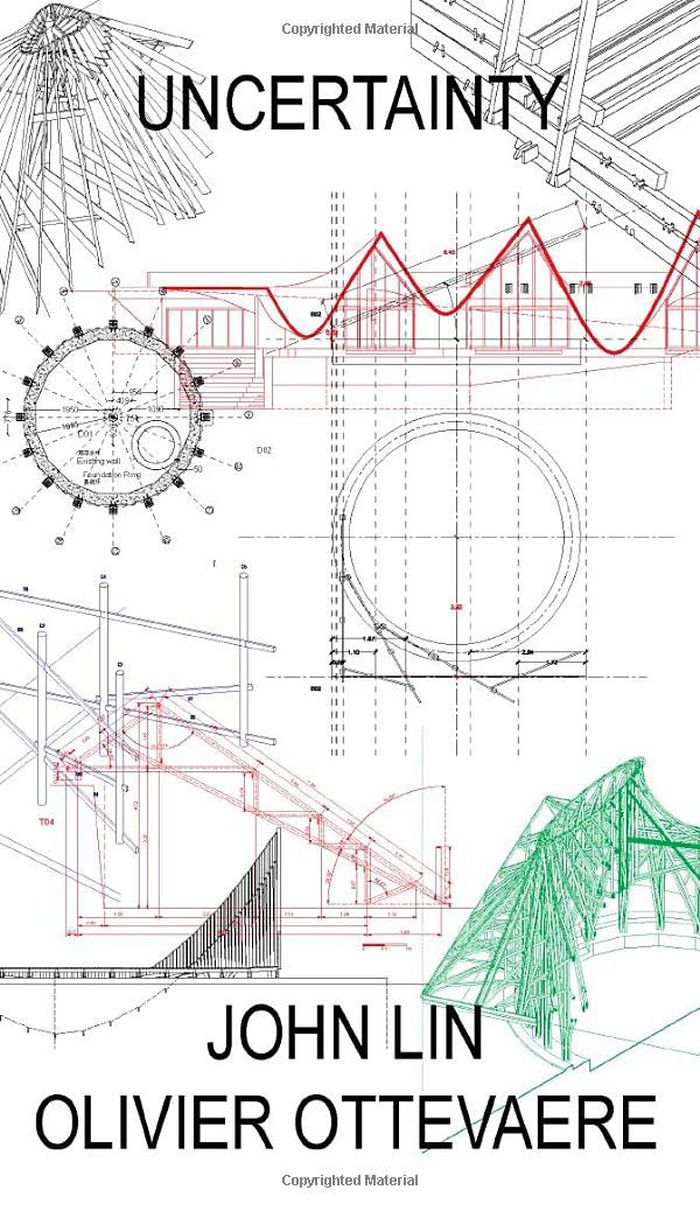
Working in rural China is unlike other countryside: it is full of contradiction, neither rural nor urban, both traditional and modern, abandoned in some areas and yet others are becoming cities overnight. It is in fact a laboratory for new ways of living. And it has become our laboratory for new ways of making architecture. Whereas contemporary architecture since the advent of modernism has developed increasingly controlled, prototypical, and standardized mechanisms for building, our experiments embrace the opposite: a lack of control, taking place within the flux of political, social and economic uncertainties. The experiments presented here are examples taken from a series of design and build projects conducted from the Department of Architecture at the University of Hong Kong over the past 10 years. They are remarkable in their diffuse explorations and situations. Some were urgent post-earthquake reconstructions, often adapting to extreme topographies or taking place in the midst of major urbanizing transformations, whereas other experiments occurred in forgotten villages with left-behind craftspeople and their disappearing building cultures. These forays and what can be best described as adventures in building, left us with varied and novel (sometimes failed) experiments with structure and program. But they are presented here for the trait they have in common: an exploration of the limits of material, geometry, construction methods, and even historical context. As often occurs for architects working in a foreign landscape, the differences in language and culture have proven to be a source of constant miscommunication and surprising discovery. The lack of a common spoken language- these remote areas speak their own dialects- has placed an emphasis on drawing as another means of communication. Through drawing we have explored a means of design and a means of building. Therefore, this is also a book about ways of drawing that represent ways of control and, inversely perhaps, what not to control.
Uncertainty : Experiments in making from the Chinese countryside
Actions:
Prix:
$46.95
(disponible sur commande)
Résumé:
Working in rural China is unlike other countryside: it is full of contradiction, neither rural nor urban, both traditional and modern, abandoned in some areas and yet others are becoming cities overnight. It is in fact a laboratory for new ways of living. And it has become our laboratory for new ways of making architecture. Whereas contemporary architecture since the advent of modernism has developed increasingly controlled, prototypical, and standardized mechanisms for building, our experiments embrace the opposite: a lack of control, taking place within the flux of political, social and economic uncertainties. The experiments presented here are examples taken from a series of design and build projects conducted from the Department of Architecture at the University of Hong Kong over the past 10 years. They are remarkable in their diffuse explorations and situations. Some were urgent post-earthquake reconstructions, often adapting to extreme topographies or taking place in the midst of major urbanizing transformations, whereas other experiments occurred in forgotten villages with left-behind craftspeople and their disappearing building cultures. These forays and what can be best described as adventures in building, left us with varied and novel (sometimes failed) experiments with structure and program. But they are presented here for the trait they have in common: an exploration of the limits of material, geometry, construction methods, and even historical context. As often occurs for architects working in a foreign landscape, the differences in language and culture have proven to be a source of constant miscommunication and surprising discovery. The lack of a common spoken language- these remote areas speak their own dialects- has placed an emphasis on drawing as another means of communication. Through drawing we have explored a means of design and a means of building. Therefore, this is also a book about ways of drawing that represent ways of control and, inversely perhaps, what not to control.
Classification:
livres
livres
Publication:
juin 2022
juin 2022
Sujet:
Architecture contemporaine
Architecture contemporaine


