


3067 Résultats
Classification:
livres
livres
Actions:
Prix:
$29.95
(disponible sur commande)
Résumé:
There are all kinds of indications that architecture in the nineties has set off in a new direction after the domination of the two last decades by postmodernism as a style or attitude. This trend, which can be seen in the work of architectural firms like OMA, Jean Nouvel, Dominique Perrault, Herzog & De Meuron and Toyo Ito, can be connected with one of the dominant(...)
$29.95
(disponible sur commande)
Résumé:
There are all kinds of indications that architecture in the nineties has set off in a new direction after the domination of the two last decades by postmodernism as a style or attitude. This trend, which can be seen in the work of architectural firms like OMA, Jean Nouvel, Dominique Perrault, Herzog & De Meuron and Toyo Ito, can be connected with one of the dominant(...)
Titre:
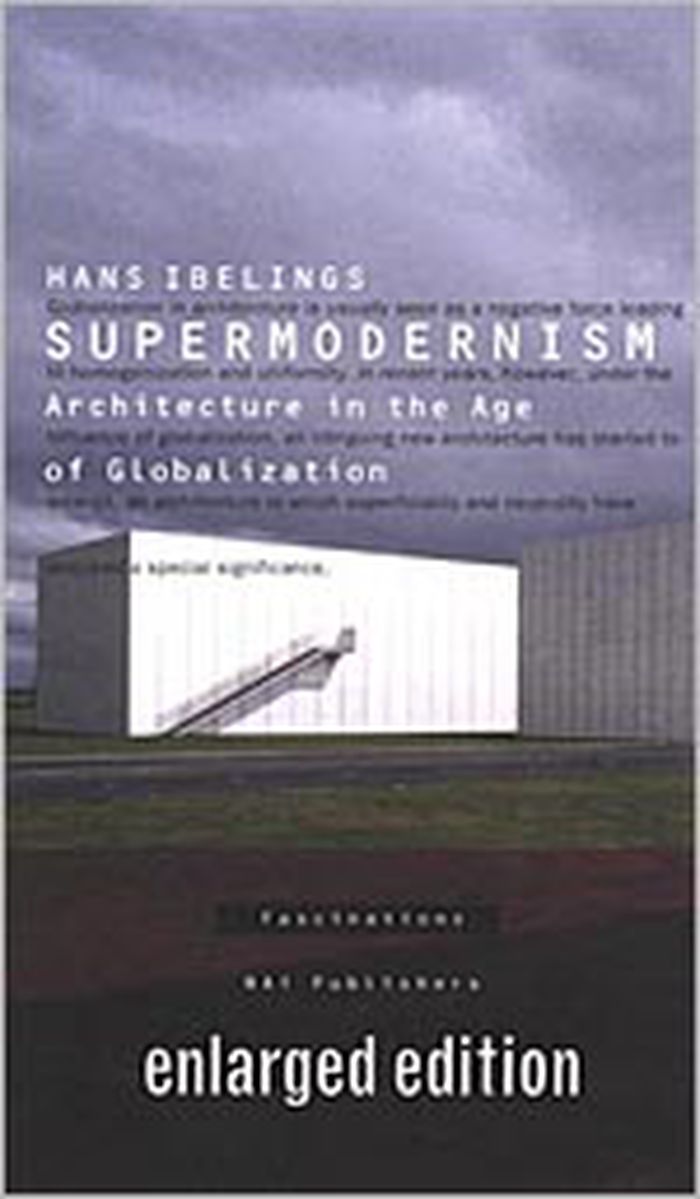
Supermodernism : architecture in the age of globalization / enlarged edition
Actions:
Prix:
$29.95
(disponible sur commande)
Résumé:
There are all kinds of indications that architecture in the nineties has set off in a new direction after the domination of the two last decades by postmodernism as a style or attitude. This trend, which can be seen in the work of architectural firms like OMA, Jean Nouvel, Dominique Perrault, Herzog & De Meuron and Toyo Ito, can be connected with one of the dominant forces of the present time: the globalization that is taking place in virtually every field. One of the consequences for architecture is the erosion of the postmodern (and deconstructivist) axiom of the uniqueness of the site. The context, let alone contextualism, no longer seems to play an important role in an increasing number of designs and buildings. Semiotic expressiveness - another postmodern theme - is also often lacking in this architecture. The author explores this new trend towards abstract, neutral architecture, which in various respects can be seen as the last word of modern architecture of the postwar International Style. This enlarged edition of "Supermodernism" includes a new final chapter in which Ibelings charts the latest examples of supermodernism, as well as a revised introduction and conclusion in which he responds to the numerous reactions his provocative stance has triggered.
Supermodernism : architecture in the age of globalization / enlarged edition
Actions:
Prix:
$29.95
(disponible sur commande)
Résumé:
There are all kinds of indications that architecture in the nineties has set off in a new direction after the domination of the two last decades by postmodernism as a style or attitude. This trend, which can be seen in the work of architectural firms like OMA, Jean Nouvel, Dominique Perrault, Herzog & De Meuron and Toyo Ito, can be connected with one of the dominant forces of the present time: the globalization that is taking place in virtually every field. One of the consequences for architecture is the erosion of the postmodern (and deconstructivist) axiom of the uniqueness of the site. The context, let alone contextualism, no longer seems to play an important role in an increasing number of designs and buildings. Semiotic expressiveness - another postmodern theme - is also often lacking in this architecture. The author explores this new trend towards abstract, neutral architecture, which in various respects can be seen as the last word of modern architecture of the postwar International Style. This enlarged edition of "Supermodernism" includes a new final chapter in which Ibelings charts the latest examples of supermodernism, as well as a revised introduction and conclusion in which he responds to the numerous reactions his provocative stance has triggered.
Classification:
livres
livres
Publication:
janvier 1900, Rotterdam
janvier 1900, Rotterdam
Classification:
livres
livres
Prix:
$32.50
(disponible sur commande)
Résumé:
"Museum frictions" is the third volume in a series on culture, society, and museums. "Museum frictions" is an illustrated examination of the significant and varied effects of the increasingly globalized world on contemporary museum, heritage, and exhibition practice. The contributors — scholars, artists, and curators —present case studies drawn from Africa, Australia,(...)
$32.50
(disponible sur commande)
Résumé:
"Museum frictions" is the third volume in a series on culture, society, and museums. "Museum frictions" is an illustrated examination of the significant and varied effects of the increasingly globalized world on contemporary museum, heritage, and exhibition practice. The contributors — scholars, artists, and curators —present case studies drawn from Africa, Australia,(...)
Sujet:
Muséologie
Muséologie
Publication:
janvier 2007, Durham, London
janvier 2007, Durham, London
Titre:
Museum frictions : public cultures / global transformations
Actions:
Prix:
$32.50
(disponible sur commande)
Résumé:
"Museum frictions" is the third volume in a series on culture, society, and museums. "Museum frictions" is an illustrated examination of the significant and varied effects of the increasingly globalized world on contemporary museum, heritage, and exhibition practice. The contributors — scholars, artists, and curators —present case studies drawn from Africa, Australia, North and South America, Europe, and Asia. Together they offer a multifaceted analysis of the complex roles that national and community museums, museums of art and history, monuments, heritage sites, and theme parks play in creating public cultures. Whether contrasting the transformation of Africa’s oldest museum, the South Africa Museum, with one of its newest, the Lwandle Migrant Labor Museum; offering an interpretation of the audio guide at the Guggenheim Bilbao; reflecting on the relative paucity of art museums in Peru and Cambodia; considering representations of slavery in the United States and Ghana; or meditating on the ramifications of an exhibition of Australian aboriginal art at the Asia Society in New York City, the contributors highlight the frictions, contradictions, and collaborations emerging in museums and heritage sites around the world. The volume opens with an extensive introductory essay by Ivan Karp and Corinne A. Kratz, leading scholars in museum and heritage studies.
Museum frictions : public cultures / global transformations
Actions:
Prix:
$32.50
(disponible sur commande)
Résumé:
"Museum frictions" is the third volume in a series on culture, society, and museums. "Museum frictions" is an illustrated examination of the significant and varied effects of the increasingly globalized world on contemporary museum, heritage, and exhibition practice. The contributors — scholars, artists, and curators —present case studies drawn from Africa, Australia, North and South America, Europe, and Asia. Together they offer a multifaceted analysis of the complex roles that national and community museums, museums of art and history, monuments, heritage sites, and theme parks play in creating public cultures. Whether contrasting the transformation of Africa’s oldest museum, the South Africa Museum, with one of its newest, the Lwandle Migrant Labor Museum; offering an interpretation of the audio guide at the Guggenheim Bilbao; reflecting on the relative paucity of art museums in Peru and Cambodia; considering representations of slavery in the United States and Ghana; or meditating on the ramifications of an exhibition of Australian aboriginal art at the Asia Society in New York City, the contributors highlight the frictions, contradictions, and collaborations emerging in museums and heritage sites around the world. The volume opens with an extensive introductory essay by Ivan Karp and Corinne A. Kratz, leading scholars in museum and heritage studies.
Classification:
livres
livres
Publication:
janvier 2007, Durham, London
janvier 2007, Durham, London
Sujet:
Muséologie
Muséologie
Classification:
livres
livres
Prix:
$39.00
(disponible sur commande)
Résumé:
Writing in the context of two Polaroid Corporation bankruptcies, not to mention the obsolescence of its film, Peter Buse argues that Polaroid was, and is, distinguished by its process—by the fact that, as the New York Times put it in 1947, “the camera does the rest.” Polaroid was often dismissed as a toy, but Buse takes it seriously, showing how it(...)
$39.00
(disponible sur commande)
Résumé:
Writing in the context of two Polaroid Corporation bankruptcies, not to mention the obsolescence of its film, Peter Buse argues that Polaroid was, and is, distinguished by its process—by the fact that, as the New York Times put it in 1947, “the camera does the rest.” Polaroid was often dismissed as a toy, but Buse takes it seriously, showing how it(...)
Titre:
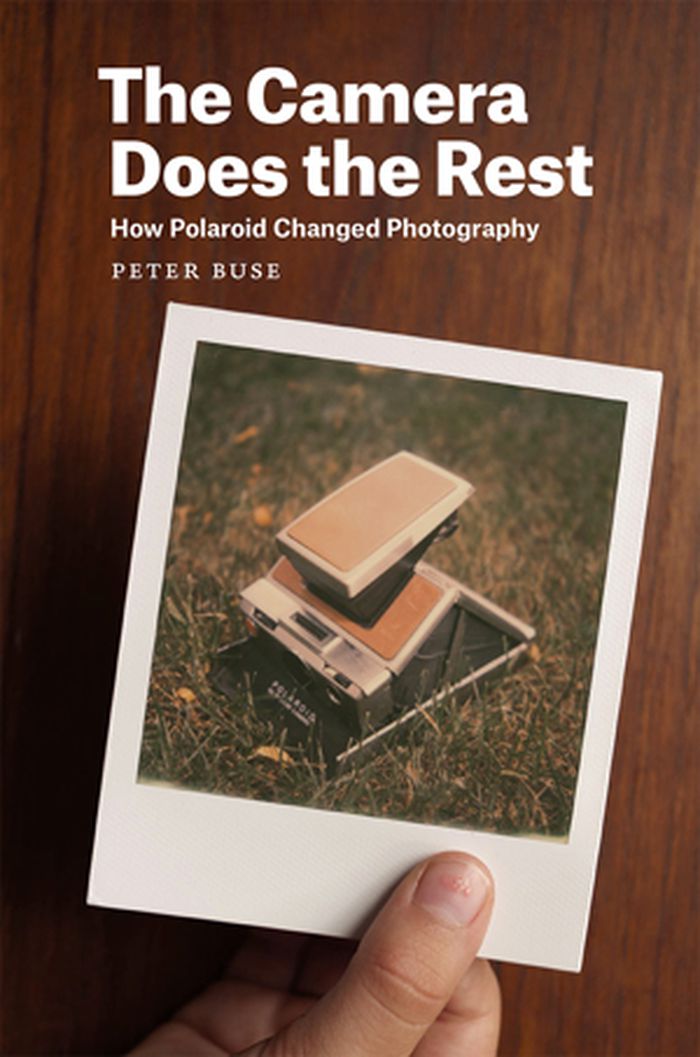
The camera does the rest: how Polaroid changed photography
Actions:
Prix:
$39.00
(disponible sur commande)
Résumé:
Writing in the context of two Polaroid Corporation bankruptcies, not to mention the obsolescence of its film, Peter Buse argues that Polaroid was, and is, distinguished by its process—by the fact that, as the New York Times put it in 1947, “the camera does the rest.” Polaroid was often dismissed as a toy, but Buse takes it seriously, showing how it encouraged photographic play as well as new forms of artistic practice. Drawing on unprecedented access to the archives of the Polaroid Corporation, Buse reveals Polaroid as photography at its most intimate, where the photographer, photograph, and subject sit in close proximity in both time and space—making Polaroid not only the perfect party camera but also the tool for frankly salacious pictures taking. Along the way, Buse tells the story of the Polaroid Corporation and its ultimately doomed hard-copy wager against the rising tide of digital imaging technology. He explores the continuities and the differences between Polaroid and digital, reflecting on what Polaroid can tell us about how we snap photos today. Richly illustrated, The Camera Does the Rest will delight historians, art critics, analog fanatics, photographers, and all those who miss the thrill of waiting to see what develops.
The camera does the rest: how Polaroid changed photography
Actions:
Prix:
$39.00
(disponible sur commande)
Résumé:
Writing in the context of two Polaroid Corporation bankruptcies, not to mention the obsolescence of its film, Peter Buse argues that Polaroid was, and is, distinguished by its process—by the fact that, as the New York Times put it in 1947, “the camera does the rest.” Polaroid was often dismissed as a toy, but Buse takes it seriously, showing how it encouraged photographic play as well as new forms of artistic practice. Drawing on unprecedented access to the archives of the Polaroid Corporation, Buse reveals Polaroid as photography at its most intimate, where the photographer, photograph, and subject sit in close proximity in both time and space—making Polaroid not only the perfect party camera but also the tool for frankly salacious pictures taking. Along the way, Buse tells the story of the Polaroid Corporation and its ultimately doomed hard-copy wager against the rising tide of digital imaging technology. He explores the continuities and the differences between Polaroid and digital, reflecting on what Polaroid can tell us about how we snap photos today. Richly illustrated, The Camera Does the Rest will delight historians, art critics, analog fanatics, photographers, and all those who miss the thrill of waiting to see what develops.
Classification:
livres
livres
Publication:
avril 2016
avril 2016
Sujet:
Théorie de la photographie
Théorie de la photographie
Classification:
livres
livres
Prix:
$62.00
(disponible sur commande)
Résumé:
"Mute icons" challenges fixed aesthetic notions of beauty in architecture as both, disciplinary discourse and a spatial practice within the public realm, by intersecting historic antecedents and present instances within contemporary projects wherein indeterminacy, monolithicity and defamiliarization play a speculative role in constructing withdrawn, irritant and yet(...)
$62.00
(disponible sur commande)
Résumé:
"Mute icons" challenges fixed aesthetic notions of beauty in architecture as both, disciplinary discourse and a spatial practice within the public realm, by intersecting historic antecedents and present instances within contemporary projects wherein indeterminacy, monolithicity and defamiliarization play a speculative role in constructing withdrawn, irritant and yet(...)
Titre:
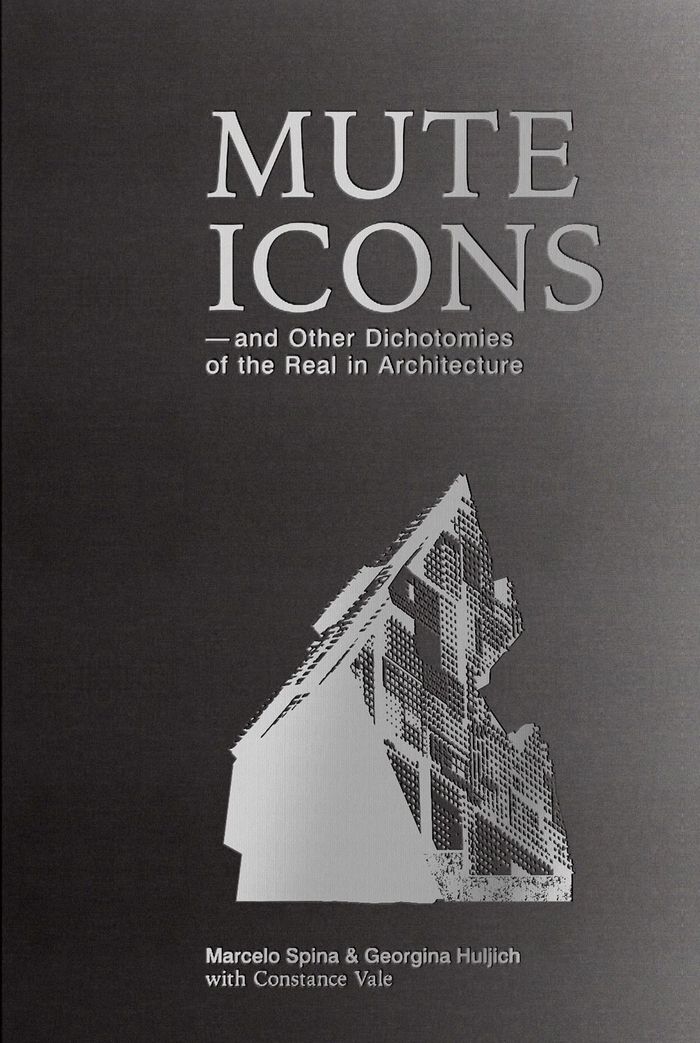
Mute icons: pressing dichotomy in contemporary architecture
Actions:
Prix:
$62.00
(disponible sur commande)
Résumé:
"Mute icons" challenges fixed aesthetic notions of beauty in architecture as both, disciplinary discourse and a spatial practice within the public realm, by intersecting historic antecedents and present instances within contemporary projects wherein indeterminacy, monolithicity and defamiliarization play a speculative role in constructing withdrawn, irritant and yet engaging architectural images. No longer concerned with narrative excesses or with the "shock and awe" of sensation making; the mute icon becomes intriguing in its deceptive indifference towards context, perplexing in its unmitigated apathy towards the body. Object and building, absolute and unstable, anticipated and strange, manifest and withdrawn, such is the dichotomy of mute icons. Dwelling in the paradox between silence and sign and aiming to debunk a false dichotomy between critical discourse, a pursue of formal novelty and the attainment of social ethics, "Mute icons" reaffirms the cultural need and socio-political relevance of the architectural image, suggesting a much-needed resolution to the present but incorrect antagonism between formal innovation, social responsibility and economic austerity. Intersecting relevant historical antecedents and polemic theoretical speculations with original design concepts and provocative representations of P-A-T-T-E-R-N-S recent work, the book aspires to stimulate authentic speculations on the real.
Mute icons: pressing dichotomy in contemporary architecture
Actions:
Prix:
$62.00
(disponible sur commande)
Résumé:
"Mute icons" challenges fixed aesthetic notions of beauty in architecture as both, disciplinary discourse and a spatial practice within the public realm, by intersecting historic antecedents and present instances within contemporary projects wherein indeterminacy, monolithicity and defamiliarization play a speculative role in constructing withdrawn, irritant and yet engaging architectural images. No longer concerned with narrative excesses or with the "shock and awe" of sensation making; the mute icon becomes intriguing in its deceptive indifference towards context, perplexing in its unmitigated apathy towards the body. Object and building, absolute and unstable, anticipated and strange, manifest and withdrawn, such is the dichotomy of mute icons. Dwelling in the paradox between silence and sign and aiming to debunk a false dichotomy between critical discourse, a pursue of formal novelty and the attainment of social ethics, "Mute icons" reaffirms the cultural need and socio-political relevance of the architectural image, suggesting a much-needed resolution to the present but incorrect antagonism between formal innovation, social responsibility and economic austerity. Intersecting relevant historical antecedents and polemic theoretical speculations with original design concepts and provocative representations of P-A-T-T-E-R-N-S recent work, the book aspires to stimulate authentic speculations on the real.
Classification:
livres
livres
Publication:
juillet 2021
juillet 2021
Sujet:
Théorie de l’architecture
Théorie de l’architecture
Classification:
livres
livres
Prix:
$23.50
(disponible sur commande)
Résumé:
Has COVID-19 ushered in the end of the office? Or is it the office’s final triumph? For decades, futurologists have prophesied a boundaryless working world, freed from the cramped confines of the office. During the COVID-19 crisis, employees around the globe got a taste of it. Confined by lockdown to their homes, they met, mingled, collaborated, and created(...)
$23.50
(disponible sur commande)
Résumé:
Has COVID-19 ushered in the end of the office? Or is it the office’s final triumph? For decades, futurologists have prophesied a boundaryless working world, freed from the cramped confines of the office. During the COVID-19 crisis, employees around the globe got a taste of it. Confined by lockdown to their homes, they met, mingled, collaborated, and created(...)
Titre:
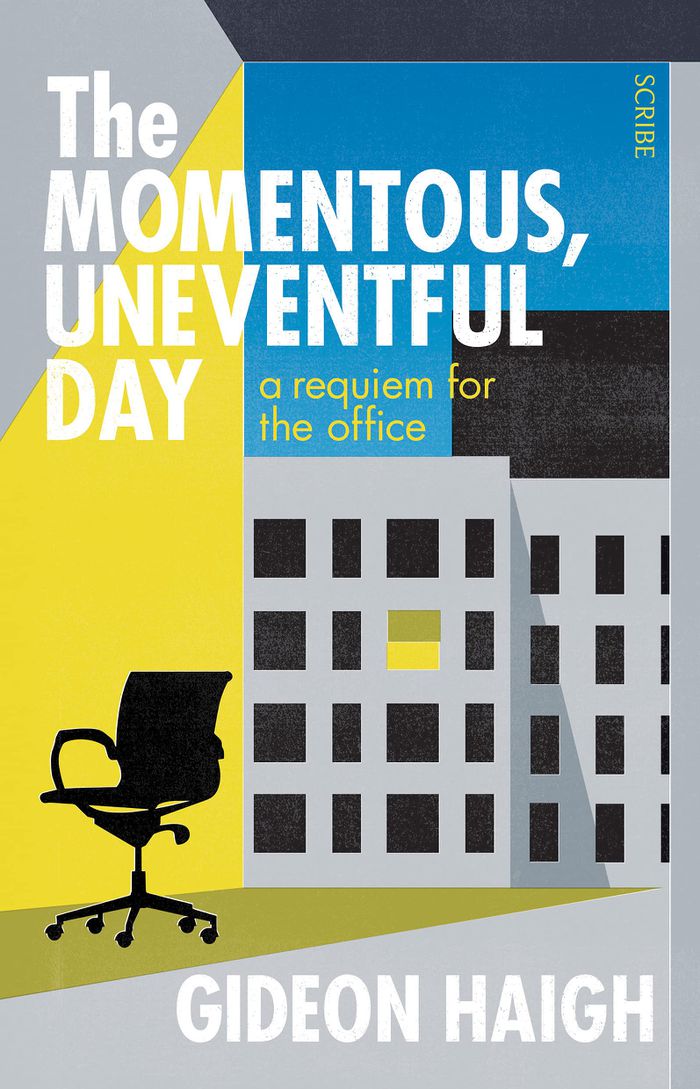
The momentous, uneventful day: A requiem for the office
Actions:
Prix:
$23.50
(disponible sur commande)
Résumé:
Has COVID-19 ushered in the end of the office? Or is it the office’s final triumph? For decades, futurologists have prophesied a boundaryless working world, freed from the cramped confines of the office. During the COVID-19 crisis, employees around the globe got a taste of it. Confined by lockdown to their homes, they met, mingled, collaborated, and created electronically. At length, they returned to something approaching normality. Or had they glimpsed the normal to come? In''The momentous, uneventful day,'' Gideon Haigh reflects on our ambivalent relationship to office work and office life, how we ended up with the offices we have, how they have reflected our best and worst instincts, and how these might be affected by a world in a time of contagion. Like the factory in the nineteenth century, the office was the characteristic building form of the twentieth, reshaping our cities, redirecting our lives. We all have a stake in how it will change in the twenty-first. Enlivened by copious citations from literature, film, memoir, and corporate history, and interspersed with relevant images,''The momentous, uneventful day'' is the ideal companion for a lively current debate about the role offices will play in the future.
The momentous, uneventful day: A requiem for the office
Actions:
Prix:
$23.50
(disponible sur commande)
Résumé:
Has COVID-19 ushered in the end of the office? Or is it the office’s final triumph? For decades, futurologists have prophesied a boundaryless working world, freed from the cramped confines of the office. During the COVID-19 crisis, employees around the globe got a taste of it. Confined by lockdown to their homes, they met, mingled, collaborated, and created electronically. At length, they returned to something approaching normality. Or had they glimpsed the normal to come? In''The momentous, uneventful day,'' Gideon Haigh reflects on our ambivalent relationship to office work and office life, how we ended up with the offices we have, how they have reflected our best and worst instincts, and how these might be affected by a world in a time of contagion. Like the factory in the nineteenth century, the office was the characteristic building form of the twentieth, reshaping our cities, redirecting our lives. We all have a stake in how it will change in the twenty-first. Enlivened by copious citations from literature, film, memoir, and corporate history, and interspersed with relevant images,''The momentous, uneventful day'' is the ideal companion for a lively current debate about the role offices will play in the future.
Classification:
livres
livres
Publication:
septembre 2021
septembre 2021
Sujet:
Théorie/ philosophie
Théorie/ philosophie
Classification:
livres
livres
Titre:
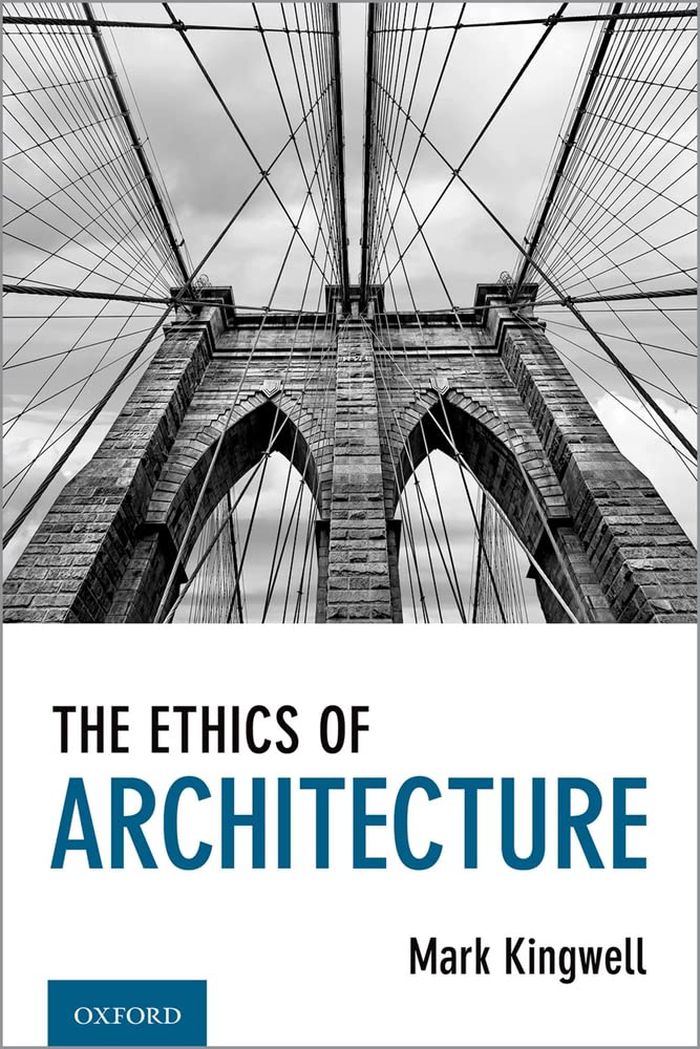
The ethics of architecture
The ethics of architecture
Actions:
Prix:
$42.99
(disponible en magasin)
Résumé:
A discussion of how architecture functions in a complex world of obligation and responsibility, with a preface offering specific discussion of architecture during and after the COVID-19 pandemic. What are the special ethical obligations assumed by architects? Because their work creates the basic material conditions that make all other human activity possible, architects(...)
$42.99
(disponible en magasin)
Résumé:
A discussion of how architecture functions in a complex world of obligation and responsibility, with a preface offering specific discussion of architecture during and after the COVID-19 pandemic. What are the special ethical obligations assumed by architects? Because their work creates the basic material conditions that make all other human activity possible, architects(...)
Titre:
The ethics of architecture
Actions:
Prix:
$42.99
(disponible en magasin)
Résumé:
A discussion of how architecture functions in a complex world of obligation and responsibility, with a preface offering specific discussion of architecture during and after the COVID-19 pandemic. What are the special ethical obligations assumed by architects? Because their work creates the basic material conditions that make all other human activity possible, architects and their associates in building enjoy vast influence on how we all live, work, play, worship, and think. With this influence comes tremendous, and not always examined, responsibility. This book addresses the range of ethical issues that architects face, with a broad understanding of ethics. Beyond strictly professional duties - transparency, technical competence, fair trading - lie more profound issues that move into aesthetic, political, and existential realms. Does an architect have a duty to create art, if not always beautiful art? Should an architect feel obliged to serve a community and not just a client? Is justice a possible orientation for architectural practice? Is there such a thing as feeling compelled to "shelter being" in architectural work? By taking these usually abstract questions into the region of physical creation, the book attempts a reformulation of "architectural ethics" as a matter of deep reflection on the architect's role as both citizen and caretaker.
The ethics of architecture
Actions:
Prix:
$42.99
(disponible en magasin)
Résumé:
A discussion of how architecture functions in a complex world of obligation and responsibility, with a preface offering specific discussion of architecture during and after the COVID-19 pandemic. What are the special ethical obligations assumed by architects? Because their work creates the basic material conditions that make all other human activity possible, architects and their associates in building enjoy vast influence on how we all live, work, play, worship, and think. With this influence comes tremendous, and not always examined, responsibility. This book addresses the range of ethical issues that architects face, with a broad understanding of ethics. Beyond strictly professional duties - transparency, technical competence, fair trading - lie more profound issues that move into aesthetic, political, and existential realms. Does an architect have a duty to create art, if not always beautiful art? Should an architect feel obliged to serve a community and not just a client? Is justice a possible orientation for architectural practice? Is there such a thing as feeling compelled to "shelter being" in architectural work? By taking these usually abstract questions into the region of physical creation, the book attempts a reformulation of "architectural ethics" as a matter of deep reflection on the architect's role as both citizen and caretaker.
Classification:
livres
livres
Publication:
mars 2021
mars 2021
Sujet:
Théorie de l’architecture
Théorie de l’architecture
Classification:
livres
livres
Actions:
Prix:
$47.00
(disponible en magasin)
Résumé:
Renowned philosopher Susan Buck-Morss collaborates with Kevin McCaughey of Boot Boyz Biz and Adam Michaels of Inventory Press on this experimental image-text renewal of McLuhan, Berger and Benjamin. "Seeing <—> Making: Room for thought" both studies and presents the creative process of constructing ideas with images. By activating the techniques of montage and analogy,(...)
$47.00
(disponible en magasin)
Résumé:
Renowned philosopher Susan Buck-Morss collaborates with Kevin McCaughey of Boot Boyz Biz and Adam Michaels of Inventory Press on this experimental image-text renewal of McLuhan, Berger and Benjamin. "Seeing <—> Making: Room for thought" both studies and presents the creative process of constructing ideas with images. By activating the techniques of montage and analogy,(...)
Publication:
janvier 2024
janvier 2024
Titre:
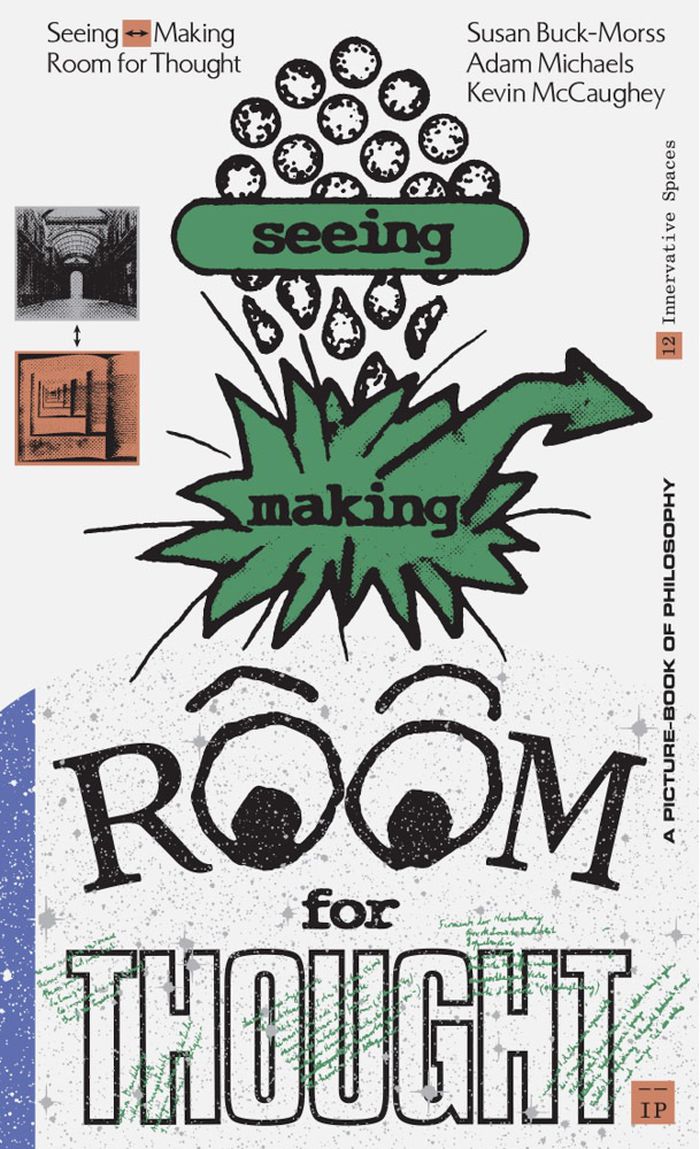
Seeing <—> Making: Room for thought
Actions:
Prix:
$47.00
(disponible en magasin)
Résumé:
Renowned philosopher Susan Buck-Morss collaborates with Kevin McCaughey of Boot Boyz Biz and Adam Michaels of Inventory Press on this experimental image-text renewal of McLuhan, Berger and Benjamin. "Seeing <—> Making: Room for thought" both studies and presents the creative process of constructing ideas with images. By activating the techniques of montage and analogy, the book reveals a wide field of view and a space to engage new critical connections between a multiplicity of objects from the past and present. Realized through an intergenerational collaboration of three cultural producers committed to making theory visible, a transformative anthology of critical essays by Susan Buck-Morss anchors this kaleidoscopic project. Images and ideas sync with Buck-Morss’ perceptive texts on visual culture, history, politics and aesthetics, fusing criticism with visual play and linking collective imagination and social action. In both design and content, "Seeing <—> Making: Room for thought" builds upon the dynamic sensorium of Marshall McLuhan and Quentin Fiore's book "The medium is the massage", Walter Benjamin's "Arcades" Project and John Berger's "Ways of seeing". This innovative volume brings Buck-Morss’ more experimental, visually engaged work to the fore in a way that has not been available in the usual contexts within which her writing has appeared.
Seeing <—> Making: Room for thought
Actions:
Prix:
$47.00
(disponible en magasin)
Résumé:
Renowned philosopher Susan Buck-Morss collaborates with Kevin McCaughey of Boot Boyz Biz and Adam Michaels of Inventory Press on this experimental image-text renewal of McLuhan, Berger and Benjamin. "Seeing <—> Making: Room for thought" both studies and presents the creative process of constructing ideas with images. By activating the techniques of montage and analogy, the book reveals a wide field of view and a space to engage new critical connections between a multiplicity of objects from the past and present. Realized through an intergenerational collaboration of three cultural producers committed to making theory visible, a transformative anthology of critical essays by Susan Buck-Morss anchors this kaleidoscopic project. Images and ideas sync with Buck-Morss’ perceptive texts on visual culture, history, politics and aesthetics, fusing criticism with visual play and linking collective imagination and social action. In both design and content, "Seeing <—> Making: Room for thought" builds upon the dynamic sensorium of Marshall McLuhan and Quentin Fiore's book "The medium is the massage", Walter Benjamin's "Arcades" Project and John Berger's "Ways of seeing". This innovative volume brings Buck-Morss’ more experimental, visually engaged work to the fore in a way that has not been available in the usual contexts within which her writing has appeared.
Classification:
livres
livres
Publication:
janvier 2024
janvier 2024
Classification:
livres
livres
Titre:
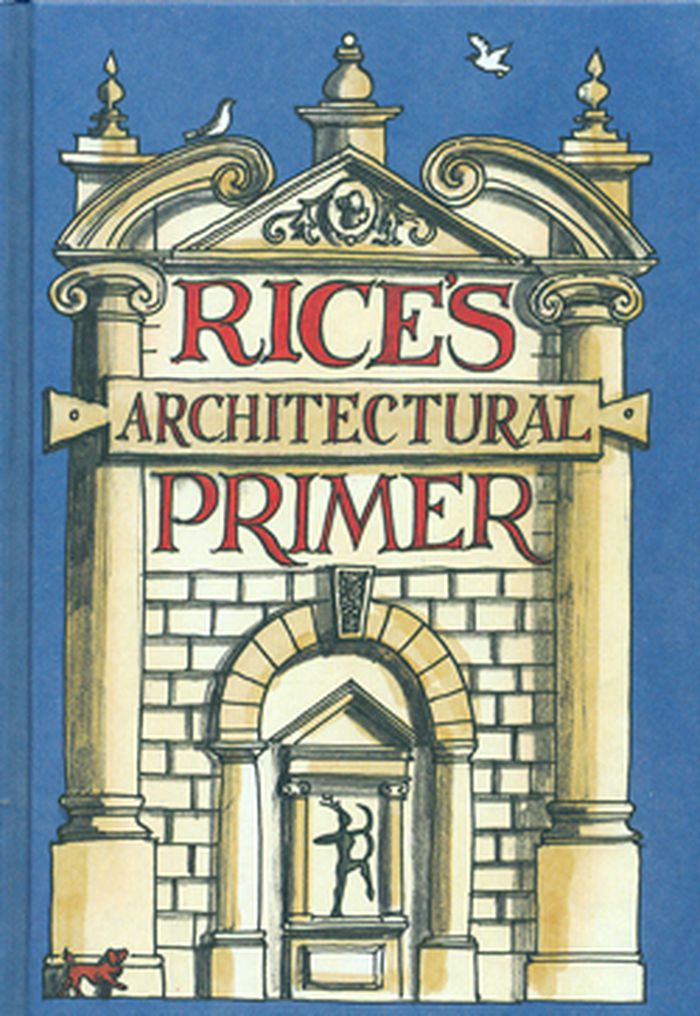
Rice's architectural primer
Rice's architectural primer
Actions:
Prix:
$32.00
(disponible sur commande)
Résumé:
A beautifully packaged, idiosyncratic introduction to British building styles, by the acclaimed illustrator and architectural enthusiast Matthew Rice. Covering the grammar and vocabulary of British buildings and the evolution of styles from Norman castles to Norman Foster, the aim is to enable the reader to recognise, understand and date any British building. As(...)
$32.00
(disponible sur commande)
Résumé:
A beautifully packaged, idiosyncratic introduction to British building styles, by the acclaimed illustrator and architectural enthusiast Matthew Rice. Covering the grammar and vocabulary of British buildings and the evolution of styles from Norman castles to Norman Foster, the aim is to enable the reader to recognise, understand and date any British building. As(...)
Titre:
Rice's architectural primer
Actions:
Prix:
$32.00
(disponible sur commande)
Résumé:
A beautifully packaged, idiosyncratic introduction to British building styles, by the acclaimed illustrator and architectural enthusiast Matthew Rice. Covering the grammar and vocabulary of British buildings and the evolution of styles from Norman castles to Norman Foster, the aim is to enable the reader to recognise, understand and date any British building. As Matthew Rice says, ‘Once you can speak any language, conversation can begin, but without it communications can only be brief and brutish. The same is the case with Architecture: an inability to describe the component parts of a building leaves one tongue-tied and unable to begin to discuss what is or is not exciting, dull or peculiar about it.’ With this book in your hand, pocket or car, buildings will break down beguilingly into their component parts, ready for inspection and discussion. There will be no more references to that curly bit on top of the thing with the square protrusions. Ungainly and inept descriptions will be a thing of the past and, fluent in the world of volutes, hood moulds, lobed architraves and bucrania, you will be able to leave a cathedral or country house with as much to talk about as a film or play.
Rice's architectural primer
Actions:
Prix:
$32.00
(disponible sur commande)
Résumé:
A beautifully packaged, idiosyncratic introduction to British building styles, by the acclaimed illustrator and architectural enthusiast Matthew Rice. Covering the grammar and vocabulary of British buildings and the evolution of styles from Norman castles to Norman Foster, the aim is to enable the reader to recognise, understand and date any British building. As Matthew Rice says, ‘Once you can speak any language, conversation can begin, but without it communications can only be brief and brutish. The same is the case with Architecture: an inability to describe the component parts of a building leaves one tongue-tied and unable to begin to discuss what is or is not exciting, dull or peculiar about it.’ With this book in your hand, pocket or car, buildings will break down beguilingly into their component parts, ready for inspection and discussion. There will be no more references to that curly bit on top of the thing with the square protrusions. Ungainly and inept descriptions will be a thing of the past and, fluent in the world of volutes, hood moulds, lobed architraves and bucrania, you will be able to leave a cathedral or country house with as much to talk about as a film or play.
Classification:
livres
livres
Publication:
septembre 2009
septembre 2009
Classification:
livres
livres
Prix:
$10.00
(disponible en magasin)
Résumé:
Canada is a country whose national narrative is difficult to define, even for Canadians. This question is further complicated when looking at emerging artists who have grown up under intense globalization. In Canada, specific identities are difficult to pinpoint and, when they are, they are often portrayed as problematic stereotypes bound up in a colonialist history. (...)
$10.00
(disponible en magasin)
Résumé:
Canada is a country whose national narrative is difficult to define, even for Canadians. This question is further complicated when looking at emerging artists who have grown up under intense globalization. In Canada, specific identities are difficult to pinpoint and, when they are, they are often portrayed as problematic stereotypes bound up in a colonialist history. (...)
Titre:
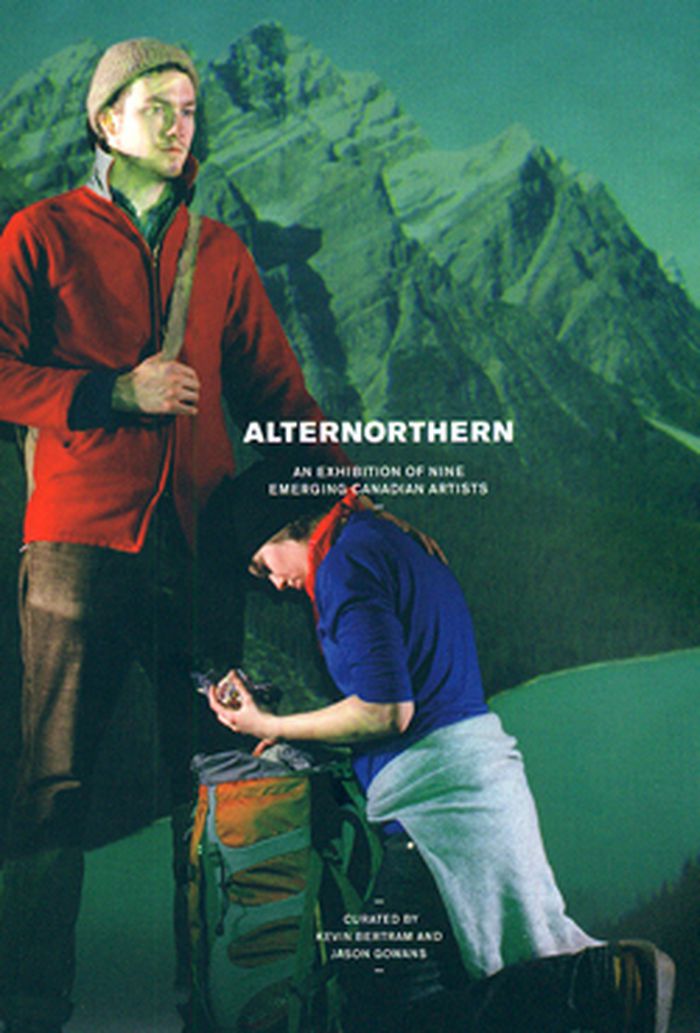
Alternorthern: an exhibition of nine emerging Canadian artists
Actions:
Prix:
$10.00
(disponible en magasin)
Résumé:
Canada is a country whose national narrative is difficult to define, even for Canadians. This question is further complicated when looking at emerging artists who have grown up under intense globalization. In Canada, specific identities are difficult to pinpoint and, when they are, they are often portrayed as problematic stereotypes bound up in a colonialist history. “Alternorthern” was conceived in the tension that exists between nationalism, globalization, and individualism: the exhibition is a product of both cultural values and cultural hybridism. The nine artists in this exhibition function similarly in that they use their own identities to make gestures that transgress time and space. Each artist in the exhibition is Canadian, yet each creates work that speaks to issues pertinent to both Canadian and global geographic and political landscapes. The exhibition will open during the 2010 Olympics, when many of the stereotypes, symbols, themes, and political workings of Canada will be disseminated into the U.S. media. As Canada is in the throes of presenting its tourist identity on the international stage, this exhibition can function as a way of transgressing this identity. Thus, the curators see this exhibition not as a response to the event of the Olympics but as an opportunity to subvert and play with cultural dialogue that will exist during this time.
Alternorthern: an exhibition of nine emerging Canadian artists
Actions:
Prix:
$10.00
(disponible en magasin)
Résumé:
Canada is a country whose national narrative is difficult to define, even for Canadians. This question is further complicated when looking at emerging artists who have grown up under intense globalization. In Canada, specific identities are difficult to pinpoint and, when they are, they are often portrayed as problematic stereotypes bound up in a colonialist history. “Alternorthern” was conceived in the tension that exists between nationalism, globalization, and individualism: the exhibition is a product of both cultural values and cultural hybridism. The nine artists in this exhibition function similarly in that they use their own identities to make gestures that transgress time and space. Each artist in the exhibition is Canadian, yet each creates work that speaks to issues pertinent to both Canadian and global geographic and political landscapes. The exhibition will open during the 2010 Olympics, when many of the stereotypes, symbols, themes, and political workings of Canada will be disseminated into the U.S. media. As Canada is in the throes of presenting its tourist identity on the international stage, this exhibition can function as a way of transgressing this identity. Thus, the curators see this exhibition not as a response to the event of the Olympics but as an opportunity to subvert and play with cultural dialogue that will exist during this time.
Classification:
livres
livres
Publication:
janvier 2010
janvier 2010
Classification:
livres
livres
Actions:
Description:
1 online resource (1 electronic resource (310 pages))
Auteur:
Sujet:
Publication:
punctum Books 2012.
punctum Books 2012.
Titre:
Leper Creativity: Cyclonopedia Symposium.
Actions:
Description:
1 online resource (1 electronic resource (310 pages))
Leper Creativity: Cyclonopedia Symposium.
Actions:
Description:
1 online resource (1 electronic resource (310 pages))
Classification:
livres
livres
Publication:
punctum Books 2012.
punctum Books 2012.
Auteur:
Sujet:


