


3085 Résultats
Classification:
livres
livres
Titre:
The Strip
The Strip
Actions:
Prix:
$46.95
(disponible sur commande)
Résumé:
The Las Vegas Strip has impersonated the Wild West, with saloon doors and wagon wheels; it has decked itself out in midcentury modern sleekness. It has illuminated itself with twenty-story-high neon signs, then junked them. After that came Disney-like theme parks featuring castles and pirates, followed by replicas of Venetian canals, New York skyscrapers, and the Eiffel(...)
$46.95
(disponible sur commande)
Résumé:
The Las Vegas Strip has impersonated the Wild West, with saloon doors and wagon wheels; it has decked itself out in midcentury modern sleekness. It has illuminated itself with twenty-story-high neon signs, then junked them. After that came Disney-like theme parks featuring castles and pirates, followed by replicas of Venetian canals, New York skyscrapers, and the Eiffel(...)
Titre:
The Strip
Actions:
Prix:
$46.95
(disponible sur commande)
Résumé:
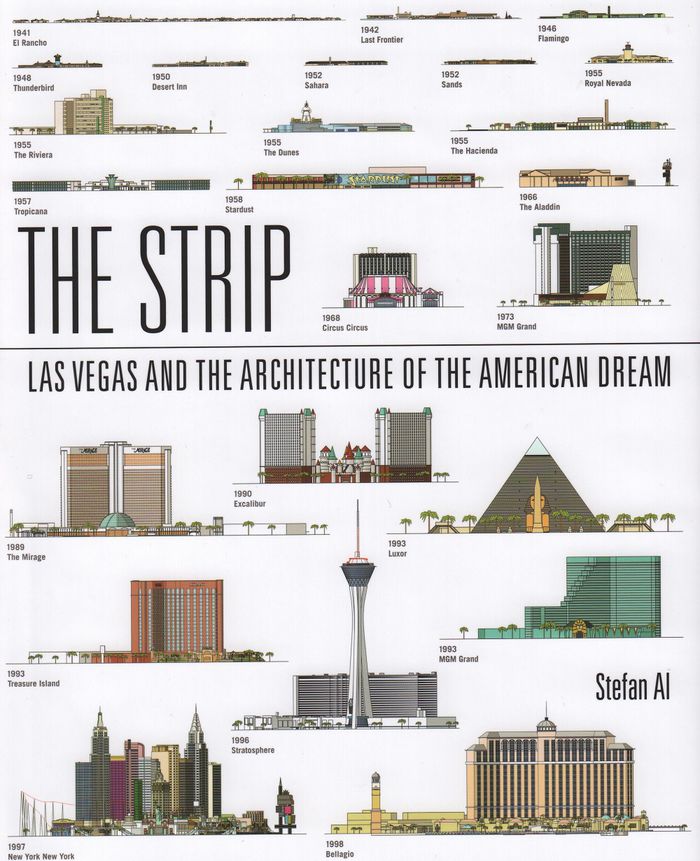
The Las Vegas Strip has impersonated the Wild West, with saloon doors and wagon wheels; it has decked itself out in midcentury modern sleekness. It has illuminated itself with twenty-story-high neon signs, then junked them. After that came Disney-like theme parks featuring castles and pirates, followed by replicas of Venetian canals, New York skyscrapers, and the Eiffel Tower. (It might be noted that forty-two million people visited Las Vegas in 2015—ten million more than visited the real Paris.) More recently, the Strip decided to get classy, with casinos designed by famous architects and zillion-dollar collections of art. Las Vegas became the “implosion capital of the world” as developers, driven by competition, got rid of the old to make way for the new—offering a non-metaphorical definition of “creative destruction.” In "The StripW, Stefan Al examines the many transformations of the Las Vegas Strip, arguing that they mirror transformations in America itself. The Strip is not, as popularly supposed, a display of architectural freaks but representative of architectural trends and a record of social, cultural, and economic change.
The Strip
Actions:
Prix:
$46.95
(disponible sur commande)
Résumé:
The Las Vegas Strip has impersonated the Wild West, with saloon doors and wagon wheels; it has decked itself out in midcentury modern sleekness. It has illuminated itself with twenty-story-high neon signs, then junked them. After that came Disney-like theme parks featuring castles and pirates, followed by replicas of Venetian canals, New York skyscrapers, and the Eiffel Tower. (It might be noted that forty-two million people visited Las Vegas in 2015—ten million more than visited the real Paris.) More recently, the Strip decided to get classy, with casinos designed by famous architects and zillion-dollar collections of art. Las Vegas became the “implosion capital of the world” as developers, driven by competition, got rid of the old to make way for the new—offering a non-metaphorical definition of “creative destruction.” In "The StripW, Stefan Al examines the many transformations of the Las Vegas Strip, arguing that they mirror transformations in America itself. The Strip is not, as popularly supposed, a display of architectural freaks but representative of architectural trends and a record of social, cultural, and economic change.
Classification:
livres
livres
Publication:
mars 2017
mars 2017
Sujet:
Théorie de l’urbanisme
Théorie de l’urbanisme
Classification:
livres
livres
Actions:
Exemplaires:
Description:
vii, 279 pages : illustrations, maps, plans ; 23 cm
Description:
vii, 279 pages : illustrations, maps, plans ; 23 cm
Auteur:
Sujet:
Publication:
Dar es Salaam : Mkuki na Nyota Publishers ; Nairobi : The British Institute in Eastern Africa, 2007.
Dar es Salaam : Mkuki na Nyota Publishers ; Nairobi : The British Institute in Eastern Africa, 2007.
Titre:
Dar es Salaam : histories from an emerging African metropolis / edited by James R. Brennan, Andrew Burton, and Yusuf Lawi.
Actions:
Exemplaires:
Description:
vii, 279 pages : illustrations, maps, plans ; 23 cm
Dar es Salaam : histories from an emerging African metropolis / edited by James R. Brennan, Andrew Burton, and Yusuf Lawi.
Actions:
Exemplaires:
Description:
vii, 279 pages : illustrations, maps, plans ; 23 cm
Classification:
livres
livres
Publication:
Dar es Salaam : Mkuki na Nyota Publishers ; Nairobi : The British Institute in Eastern Africa, 2007.
Dar es Salaam : Mkuki na Nyota Publishers ; Nairobi : The British Institute in Eastern Africa, 2007.
Auteur:
Sujet:
Classification:
livres
livres
Actions:
Exemplaires:
Description:
318 pages : illustrations (chiefly color), charts, facsimiles, plans, portraits ; 22 cm
Description:
318 pages : illustrations (chiefly color), charts, facsimiles, plans, portraits ; 22 cm
Auteur:
Sujet:
Publication:
Aix-en-Provence : Presses Universitaires de Provence, 2019.
Aix-en-Provence : Presses Universitaires de Provence, 2019.
Titre:
La Friche la Belle de Mai à Marseille : Espaces industriels, politiques culturelles et art contemporain / Marta Rosenquist.
Actions:
Exemplaires:
Description:
318 pages : illustrations (chiefly color), charts, facsimiles, plans, portraits ; 22 cm
La Friche la Belle de Mai à Marseille : Espaces industriels, politiques culturelles et art contemporain / Marta Rosenquist.
Actions:
Exemplaires:
Description:
318 pages : illustrations (chiefly color), charts, facsimiles, plans, portraits ; 22 cm
Classification:
livres
livres
Publication:
Aix-en-Provence : Presses Universitaires de Provence, 2019.
Aix-en-Provence : Presses Universitaires de Provence, 2019.
Auteur:
Sujet:
Classification:
livres
livres
Prix:
$80.00
(disponible sur commande)
Résumé:
Les auteurs dressent le portrait d'une période artistique riche, à la fois héritière d'une tradition de luxe, mais aussi précurseur du design contemporain. Ils nous font découvrir les défis, les innovations et les modes de cette époque. Sous l'égide de commanditaires comme Jean Zay, Michelle et Vincent Auriol, ils nous permettent d'accéder à une série de lieux(...)
$80.00
(disponible sur commande)
Résumé:
Les auteurs dressent le portrait d'une période artistique riche, à la fois héritière d'une tradition de luxe, mais aussi précurseur du design contemporain. Ils nous font découvrir les défis, les innovations et les modes de cette époque. Sous l'égide de commanditaires comme Jean Zay, Michelle et Vincent Auriol, ils nous permettent d'accéder à une série de lieux(...)
Titre:
Le chic! Arts décoratifs et mobilier français de 1930 à 1960
Actions:
Prix:
$80.00
(disponible sur commande)
Résumé:
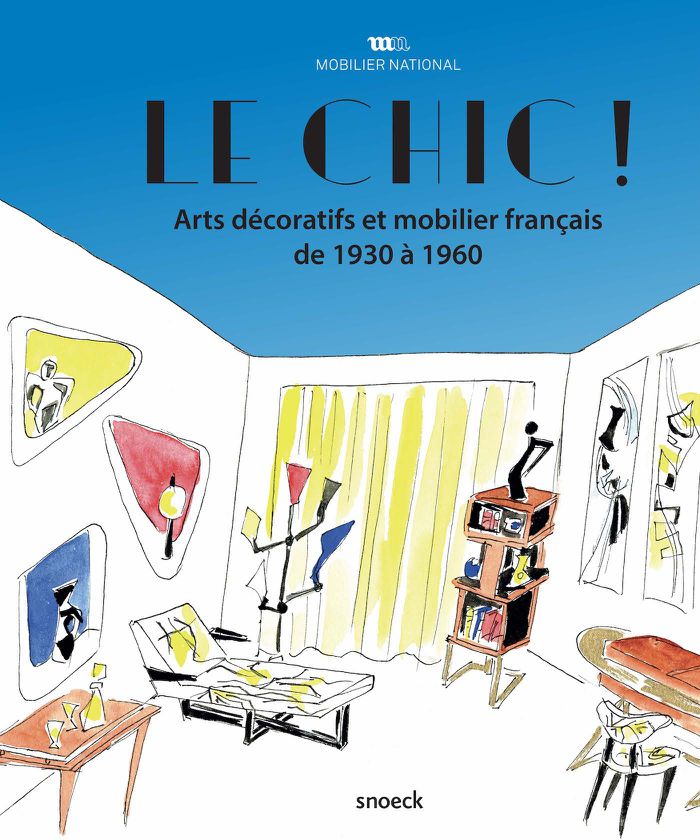
Les auteurs dressent le portrait d'une période artistique riche, à la fois héritière d'une tradition de luxe, mais aussi précurseur du design contemporain. Ils nous font découvrir les défis, les innovations et les modes de cette époque. Sous l'égide de commanditaires comme Jean Zay, Michelle et Vincent Auriol, ils nous permettent d'accéder à une série de lieux incontournables des ambassades aux palais présidentiels. De 1930 à la fin des années 1950, la majeure partie des décorateurs qui feront l’histoire de ces trois décennies du XXe siècle est appelée à collaborer avec le Mobilier national : André Arbus, Jules Leleu, Jean Pascaud, Étienne-Henri Martin, Marc du Plantier, Gilbert Poillerat ou Raphaël Raffel. La figure du décorateur joue alors un rôle capital. Véritable ensemblier, il conçoit la décoration comme un tout harmonieux et orchestre les métiers d’arts au service d’un projet global. L’art du raffinement s’appuie alors tant sur la préciosité des matériaux (parchemin, bronze doré, cristal, laque, etc.) que sur la recherche de la ligne, jusqu’à l’épure du design. Le Mobilier national présente cette importante rétrospective en puisant dans sa collection exceptionnelle et présente des pièces uniques, d'une qualité et d'une diversité remarquables.
Le chic! Arts décoratifs et mobilier français de 1930 à 1960
Actions:
Prix:
$80.00
(disponible sur commande)
Résumé:
Les auteurs dressent le portrait d'une période artistique riche, à la fois héritière d'une tradition de luxe, mais aussi précurseur du design contemporain. Ils nous font découvrir les défis, les innovations et les modes de cette époque. Sous l'égide de commanditaires comme Jean Zay, Michelle et Vincent Auriol, ils nous permettent d'accéder à une série de lieux incontournables des ambassades aux palais présidentiels. De 1930 à la fin des années 1950, la majeure partie des décorateurs qui feront l’histoire de ces trois décennies du XXe siècle est appelée à collaborer avec le Mobilier national : André Arbus, Jules Leleu, Jean Pascaud, Étienne-Henri Martin, Marc du Plantier, Gilbert Poillerat ou Raphaël Raffel. La figure du décorateur joue alors un rôle capital. Véritable ensemblier, il conçoit la décoration comme un tout harmonieux et orchestre les métiers d’arts au service d’un projet global. L’art du raffinement s’appuie alors tant sur la préciosité des matériaux (parchemin, bronze doré, cristal, laque, etc.) que sur la recherche de la ligne, jusqu’à l’épure du design. Le Mobilier national présente cette importante rétrospective en puisant dans sa collection exceptionnelle et présente des pièces uniques, d'une qualité et d'une diversité remarquables.
Classification:
livres
livres
Publication:
octobre 2022
octobre 2022
Sujet:
Design, époques et styles
Design, époques et styles
Classification:
livres
livres
Actions:
Prix:
$46.50
(disponible sur commande)
Résumé:
Are there significant variations in the ways planners in different nations have influenced urban, regional, and national development? Do such variations arise from differences in planning cultures, meaning the collective ethos and dominant attitude of planners in different nations towards the appropriate roles of the state, market forces, and civil society? How are such(...)
$46.50
(disponible sur commande)
Résumé:
Are there significant variations in the ways planners in different nations have influenced urban, regional, and national development? Do such variations arise from differences in planning cultures, meaning the collective ethos and dominant attitude of planners in different nations towards the appropriate roles of the state, market forces, and civil society? How are such(...)
Titre:
Comparative planning cultures
Actions:
Prix:
$46.50
(disponible sur commande)
Résumé:
Are there significant variations in the ways planners in different nations have influenced urban, regional, and national development? Do such variations arise from differences in planning cultures, meaning the collective ethos and dominant attitude of planners in different nations towards the appropriate roles of the state, market forces, and civil society? How are such professional cultures formed? Are they indigenous and immutable, or do they evolve with social, political, and economic changes both within and outside the national territories? Specifically, what has been the impact of the intensification of global interconnectedness in trade, capital flows, labor migration, and technological connectivity on national planning cultures? "Comparative planning cultures" addresses these questions, drawing on the planning experience in ten nations and at different territorial levels. The result is an understanding of planning culture that is complex and dynamic-in contrast to traditional notions of culture that evoke a sense of immutability and inheritance of unchanging social attributes of planners. The volume concludes that there is no cultural nucleus or core planning culture, no social gene that can be decoded to reveal the cultural DNA of planning practice of any nation.
Comparative planning cultures
Actions:
Prix:
$46.50
(disponible sur commande)
Résumé:
Are there significant variations in the ways planners in different nations have influenced urban, regional, and national development? Do such variations arise from differences in planning cultures, meaning the collective ethos and dominant attitude of planners in different nations towards the appropriate roles of the state, market forces, and civil society? How are such professional cultures formed? Are they indigenous and immutable, or do they evolve with social, political, and economic changes both within and outside the national territories? Specifically, what has been the impact of the intensification of global interconnectedness in trade, capital flows, labor migration, and technological connectivity on national planning cultures? "Comparative planning cultures" addresses these questions, drawing on the planning experience in ten nations and at different territorial levels. The result is an understanding of planning culture that is complex and dynamic-in contrast to traditional notions of culture that evoke a sense of immutability and inheritance of unchanging social attributes of planners. The volume concludes that there is no cultural nucleus or core planning culture, no social gene that can be decoded to reveal the cultural DNA of planning practice of any nation.
Classification:
livres
livres
Publication:
avril 2005, New York / London
avril 2005, New York / London
Sujet:
Théorie de l’urbanisme
Théorie de l’urbanisme
Classification:
livres
livres
Titre:
Hotel an american history
Hotel an american history
Actions:
Prix:
$39.50
(disponible sur commande)
Résumé:
In this lucid and creative work, Sandoval-Strausz, an assistant professor of history at the University of New Mexico, situates the rise of hotels within the history of the triumph of capitalism and of an increasingly mobile society. Hotels, he says, facilitated mobility and the integration of frontier lands into larger networks of capital and commerce. Hotels were also(...)
$39.50
(disponible sur commande)
Résumé:
In this lucid and creative work, Sandoval-Strausz, an assistant professor of history at the University of New Mexico, situates the rise of hotels within the history of the triumph of capitalism and of an increasingly mobile society. Hotels, he says, facilitated mobility and the integration of frontier lands into larger networks of capital and commerce. Hotels were also(...)
Publication:
novembre 2007, New York
novembre 2007, New York
Titre:
Hotel an american history
Actions:
Prix:
$39.50
(disponible sur commande)
Résumé:
In this lucid and creative work, Sandoval-Strausz, an assistant professor of history at the University of New Mexico, situates the rise of hotels within the history of the triumph of capitalism and of an increasingly mobile society. Hotels, he says, facilitated mobility and the integration of frontier lands into larger networks of capital and commerce. Hotels were also part of the gradual process that dissociated people from particular places. If hotels solved some social problems, Sandoval-Strausz shows, they created others: guardians of domesticity, for example, worried about urban dwellers who chose to live full-time in hotels. In exploring the social and political meaning of hotels, the author pursues countless avenues, from menus to morals (Hotels were magnets for prostitution and other forms of illicit sex). There's a bit of labor history thrown in, too, since, in order to make good on the promise to be patrons' home away from home, hotels employed a huge number of workers, from cooks and launderers to janitors, Sandoval-Strausz also traces hotels' exclusion of Jews and blacks—the book ends with the 1964 Supreme Court case that desegregated public accommodations.
Hotel an american history
Actions:
Prix:
$39.50
(disponible sur commande)
Résumé:
In this lucid and creative work, Sandoval-Strausz, an assistant professor of history at the University of New Mexico, situates the rise of hotels within the history of the triumph of capitalism and of an increasingly mobile society. Hotels, he says, facilitated mobility and the integration of frontier lands into larger networks of capital and commerce. Hotels were also part of the gradual process that dissociated people from particular places. If hotels solved some social problems, Sandoval-Strausz shows, they created others: guardians of domesticity, for example, worried about urban dwellers who chose to live full-time in hotels. In exploring the social and political meaning of hotels, the author pursues countless avenues, from menus to morals (Hotels were magnets for prostitution and other forms of illicit sex). There's a bit of labor history thrown in, too, since, in order to make good on the promise to be patrons' home away from home, hotels employed a huge number of workers, from cooks and launderers to janitors, Sandoval-Strausz also traces hotels' exclusion of Jews and blacks—the book ends with the 1964 Supreme Court case that desegregated public accommodations.
Classification:
livres
livres
Publication:
novembre 2007, New York
novembre 2007, New York
Classification:
livres
livres
Actions:
Prix:
$28.95
(disponible sur commande)
Résumé:
Around the beginning of the twentieth century, women began to claim Berlin as their own, expressing a vision of the German capital that embraced their feminine modernity, both culturally and architecturally. Women located their lives and made their presence felt in the streets and institutions of this dynamic metropolis. From residences to restaurants, schools to(...)
$28.95
(disponible sur commande)
Résumé:
Around the beginning of the twentieth century, women began to claim Berlin as their own, expressing a vision of the German capital that embraced their feminine modernity, both culturally and architecturally. Women located their lives and made their presence felt in the streets and institutions of this dynamic metropolis. From residences to restaurants, schools to(...)
Publication:
octobre 2008, Minneapolis, London
octobre 2008, Minneapolis, London
Titre:
A women's Berlin building the modern city
Actions:
Prix:
$28.95
(disponible sur commande)
Résumé:
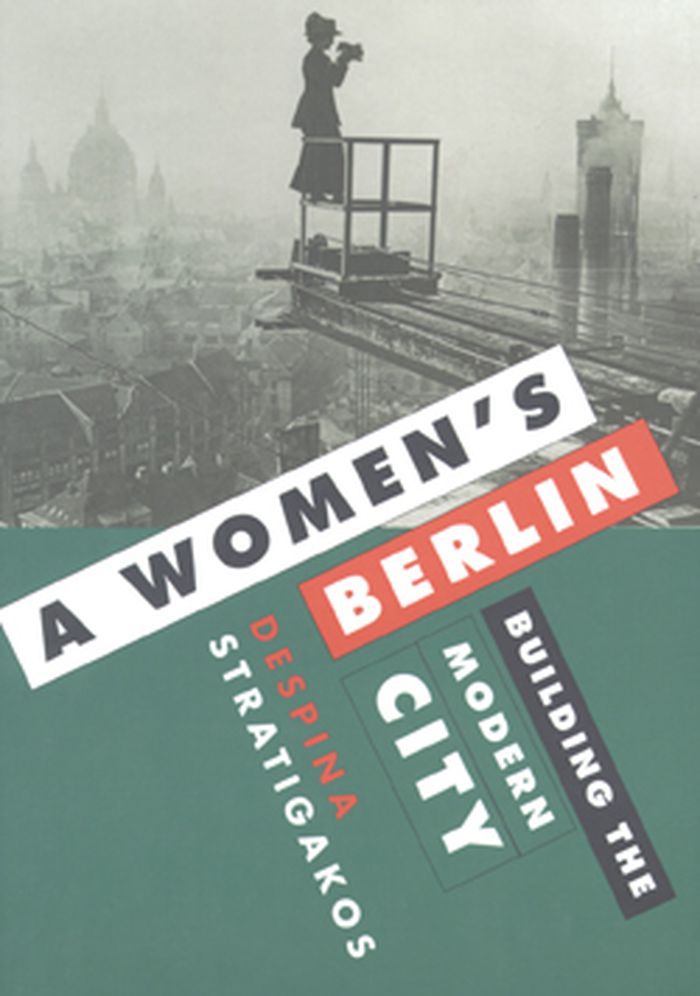
Around the beginning of the twentieth century, women began to claim Berlin as their own, expressing a vision of the German capital that embraced their feminine modernity, both culturally and architecturally. Women located their lives and made their presence felt in the streets and institutions of this dynamic metropolis. From residences to restaurants, schools to exhibition halls, a visible network of women’s spaces arose to accommodate changing patterns of life and work. A Women’s Berlin retraces this largely forgotten city, which came into being in the years between German unification in 1871 and the demise of the monarchy in 1918 and laid the foundation for a novel experience of urban modernity. Although the phenomenon of women taking control of urban space was widespread in this period, Despina Stratigakos shows how Berlin’s concentration of women’s building projects produced a more fully realized vision of an alternative metropolis. Female clients called on female design professionals to help them define and articulate their architectural needs. Many of the projects analyzed in A Women’s Berlin represent a collaborative effort uniting female patrons, architects, and designers to explore the nature of female aesthetics and spaces.
A women's Berlin building the modern city
Actions:
Prix:
$28.95
(disponible sur commande)
Résumé:
Around the beginning of the twentieth century, women began to claim Berlin as their own, expressing a vision of the German capital that embraced their feminine modernity, both culturally and architecturally. Women located their lives and made their presence felt in the streets and institutions of this dynamic metropolis. From residences to restaurants, schools to exhibition halls, a visible network of women’s spaces arose to accommodate changing patterns of life and work. A Women’s Berlin retraces this largely forgotten city, which came into being in the years between German unification in 1871 and the demise of the monarchy in 1918 and laid the foundation for a novel experience of urban modernity. Although the phenomenon of women taking control of urban space was widespread in this period, Despina Stratigakos shows how Berlin’s concentration of women’s building projects produced a more fully realized vision of an alternative metropolis. Female clients called on female design professionals to help them define and articulate their architectural needs. Many of the projects analyzed in A Women’s Berlin represent a collaborative effort uniting female patrons, architects, and designers to explore the nature of female aesthetics and spaces.
Classification:
livres
livres
Publication:
octobre 2008, Minneapolis, London
octobre 2008, Minneapolis, London
Classification:
livres
livres

Titre:
L'occupation du monde
L'occupation du monde
Actions:
Prix:
$36.95
(disponible sur commande)
Résumé:
Face à l’aggravation des crises environnementales qu’elle a provoquées, la société industrielle semble frappée d’aveuglement. Elle est bercée de l’illusion que tout finira par s’arranger, grâce à la souplesse du marché, l’innovation technique et l’inventivité du capital. Toute une mythologie économique entrave ainsi la réflexion et la perception de la gravité de la(...)
$36.95
(disponible sur commande)
Résumé:
Face à l’aggravation des crises environnementales qu’elle a provoquées, la société industrielle semble frappée d’aveuglement. Elle est bercée de l’illusion que tout finira par s’arranger, grâce à la souplesse du marché, l’innovation technique et l’inventivité du capital. Toute une mythologie économique entrave ainsi la réflexion et la perception de la gravité de la(...)
Titre:
L'occupation du monde
Actions:
Prix:
$36.95
(disponible sur commande)
Résumé:
Face à l’aggravation des crises environnementales qu’elle a provoquées, la société industrielle semble frappée d’aveuglement. Elle est bercée de l’illusion que tout finira par s’arranger, grâce à la souplesse du marché, l’innovation technique et l’inventivité du capital. Toute une mythologie économique entrave ainsi la réflexion et la perception de la gravité de la situation. Dans le but de défaire cette mythologie, ce livre cherche à en comprendre l’histoire, en associant deux voies complémentaires. Le désastre vers lequel nous avançons est annoncé depuis un demi-siècle. Parmi les penseurs de l’écologie politique des années 1967-72, les parcours de Gregory Bateson et d’Ivan Illich permettent d’observer l’émergence de cette réflexion, puis son occultation sous l’effet du tournant néo-libéral des années 1980. Mais pour saisir la puissance du mythe et ses effets dévastateurs, il faut remonter bien plus haut. L’appétit de transformation du monde naturel par l’action humaine correspond à une pente générale de l’Occident dans la longue durée du second millénaire de l’ère chrétienne. C’est ce que l’on peut décrire comme une dynamique d’occupation du monde, au double sens d’une occupation objective par des êtres subjectivement occupés à le transformer.
L'occupation du monde
Actions:
Prix:
$36.95
(disponible sur commande)
Résumé:
Face à l’aggravation des crises environnementales qu’elle a provoquées, la société industrielle semble frappée d’aveuglement. Elle est bercée de l’illusion que tout finira par s’arranger, grâce à la souplesse du marché, l’innovation technique et l’inventivité du capital. Toute une mythologie économique entrave ainsi la réflexion et la perception de la gravité de la situation. Dans le but de défaire cette mythologie, ce livre cherche à en comprendre l’histoire, en associant deux voies complémentaires. Le désastre vers lequel nous avançons est annoncé depuis un demi-siècle. Parmi les penseurs de l’écologie politique des années 1967-72, les parcours de Gregory Bateson et d’Ivan Illich permettent d’observer l’émergence de cette réflexion, puis son occultation sous l’effet du tournant néo-libéral des années 1980. Mais pour saisir la puissance du mythe et ses effets dévastateurs, il faut remonter bien plus haut. L’appétit de transformation du monde naturel par l’action humaine correspond à une pente générale de l’Occident dans la longue durée du second millénaire de l’ère chrétienne. C’est ce que l’on peut décrire comme une dynamique d’occupation du monde, au double sens d’une occupation objective par des êtres subjectivement occupés à le transformer.
Classification:
livres
livres
Publication:
août 2018
août 2018
Sujet:
Théorie/ philosophie
Théorie/ philosophie
Classification:
livres
livres
Actions:
Prix:
$15.95
(disponible sur commande)
Résumé:
Many of the projects described in the "Handbook" have combined innovative architectural training with cross-cultural immersion, social activism, and environmental science, using design skills (and where appropriate) hands-on construction projects to confront poverty and urgent social problems. Often involving community members and students, these case studies promote(...)
$15.95
(disponible sur commande)
Résumé:
Many of the projects described in the "Handbook" have combined innovative architectural training with cross-cultural immersion, social activism, and environmental science, using design skills (and where appropriate) hands-on construction projects to confront poverty and urgent social problems. Often involving community members and students, these case studies promote(...)
Publication:
juillet 2005, Los Angeles
juillet 2005, Los Angeles
Titre:
Cityworks Los Angeles : handbook
Actions:
Prix:
$15.95
(disponible sur commande)
Résumé:
Many of the projects described in the "Handbook" have combined innovative architectural training with cross-cultural immersion, social activism, and environmental science, using design skills (and where appropriate) hands-on construction projects to confront poverty and urgent social problems. Often involving community members and students, these case studies promote maximum use of recycled or inexpensive, locally available materials, as well as lighting and energy systems that reduce utility costs and promote resource conservation. Not all the projects are specific to the City of Los Angeles, but they are examples of the types of projects CITYWORKSLA hopes to develop. Our aim is that the case studies assembled within the "Handbook" will serve as models for making architectural education relevant to urgent social problems, helping communities mobilize indigenous resources and social capital to develop long-term sustainable practices that protect, rather than erode, cultural identity, dignity, and stability. Edited by Elizabeth Martin with articles by : Peter Aesbacher, Chantal Aquin, Monique Birault, John Cary, Jeanine Centuori, Joaquin Herranz, Jr., Maria-Rosario Jackson, Florence Kabwasa-Green, Bruce Lindsey, Vic Liptak, Elizabeth Martin, Ken McCown, William McDonough, Russell Rock, Leslie Thomas, John Quale.
Cityworks Los Angeles : handbook
Actions:
Prix:
$15.95
(disponible sur commande)
Résumé:
Many of the projects described in the "Handbook" have combined innovative architectural training with cross-cultural immersion, social activism, and environmental science, using design skills (and where appropriate) hands-on construction projects to confront poverty and urgent social problems. Often involving community members and students, these case studies promote maximum use of recycled or inexpensive, locally available materials, as well as lighting and energy systems that reduce utility costs and promote resource conservation. Not all the projects are specific to the City of Los Angeles, but they are examples of the types of projects CITYWORKSLA hopes to develop. Our aim is that the case studies assembled within the "Handbook" will serve as models for making architectural education relevant to urgent social problems, helping communities mobilize indigenous resources and social capital to develop long-term sustainable practices that protect, rather than erode, cultural identity, dignity, and stability. Edited by Elizabeth Martin with articles by : Peter Aesbacher, Chantal Aquin, Monique Birault, John Cary, Jeanine Centuori, Joaquin Herranz, Jr., Maria-Rosario Jackson, Florence Kabwasa-Green, Bruce Lindsey, Vic Liptak, Elizabeth Martin, Ken McCown, William McDonough, Russell Rock, Leslie Thomas, John Quale.
Classification:
livres
livres
Publication:
juillet 2005, Los Angeles
juillet 2005, Los Angeles
Classification:
livres
livres

Actions:
Prix:
$21.99
(disponible en magasin)
Résumé:
At the start of the twenty-first century, globalization forced a rethinking of some of the categories—such as “the people”—that had been traditionally associated with the now-eroding state. Virno argues that the category of “multitude,” elaborated by Spinoza and for the most part left fallow since the seventeenth century, is a far better tool to analyze contemporary(...)
$21.99
(disponible en magasin)
Résumé:
At the start of the twenty-first century, globalization forced a rethinking of some of the categories—such as “the people”—that had been traditionally associated with the now-eroding state. Virno argues that the category of “multitude,” elaborated by Spinoza and for the most part left fallow since the seventeenth century, is a far better tool to analyze contemporary(...)
Titre:
A grammar of the multitude: For an analysis of contemporary forms of life
Actions:
Prix:
$21.99
(disponible en magasin)
Résumé:
At the start of the twenty-first century, globalization forced a rethinking of some of the categories—such as “the people”—that had been traditionally associated with the now-eroding state. Virno argues that the category of “multitude,” elaborated by Spinoza and for the most part left fallow since the seventeenth century, is a far better tool to analyze contemporary issues than the Hobbesian concept of “people” favored by classical political philosophy. Hobbes, who detested the notion of multitude, defined it as shunning political unity, resisting authority, and never entering into lasting agreements. “When they rebel against the state,” Hobbes wrote, “the citizens are the multitude against the people.” But the multitude isn't just a negative notion; it is a rich concept that allows us to examine anew plural experiences and forms of nonrepresentative democracy. Drawing from philosophy of language, political economics, and ethics, Virno shows that being foreign, “not-feeling-at-home-anywhere,” is a condition that forces the multitude to place its trust in the intellect. In conclusion, Virno suggests that the metamorphosis of the social systems in the West during the 1980s and 1990s precipitated a paradoxical “Communism of the Capital.”
A grammar of the multitude: For an analysis of contemporary forms of life
Actions:
Prix:
$21.99
(disponible en magasin)
Résumé:
At the start of the twenty-first century, globalization forced a rethinking of some of the categories—such as “the people”—that had been traditionally associated with the now-eroding state. Virno argues that the category of “multitude,” elaborated by Spinoza and for the most part left fallow since the seventeenth century, is a far better tool to analyze contemporary issues than the Hobbesian concept of “people” favored by classical political philosophy. Hobbes, who detested the notion of multitude, defined it as shunning political unity, resisting authority, and never entering into lasting agreements. “When they rebel against the state,” Hobbes wrote, “the citizens are the multitude against the people.” But the multitude isn't just a negative notion; it is a rich concept that allows us to examine anew plural experiences and forms of nonrepresentative democracy. Drawing from philosophy of language, political economics, and ethics, Virno shows that being foreign, “not-feeling-at-home-anywhere,” is a condition that forces the multitude to place its trust in the intellect. In conclusion, Virno suggests that the metamorphosis of the social systems in the West during the 1980s and 1990s precipitated a paradoxical “Communism of the Capital.”
Classification:
livres
livres
Publication:
septembre 2025
septembre 2025
Sujet:
Théorie/ philosophie
Théorie/ philosophie


