


3318 Résultats
Classification:
livres
livres
Actions:
Exemplaires:
Description:
113 pages ; 22 cm
Description:
113 pages ; 22 cm
Auteur:
Sujet:
Publication:
Chicago [Ill.] : University of Chicago Press, 1998.
Chicago [Ill.] : University of Chicago Press, 1998.
Titre:
Archive fever : a Freudian impression / Jacques Derrida ; translated by Eric Prenowitz.
Actions:
Exemplaires:
Description:
113 pages ; 22 cm
Archive fever : a Freudian impression / Jacques Derrida ; translated by Eric Prenowitz.
Actions:
Exemplaires:
Description:
113 pages ; 22 cm
Classification:
livres
livres
Publication:
Chicago [Ill.] : University of Chicago Press, 1998.
Chicago [Ill.] : University of Chicago Press, 1998.
Auteur:
Sujet:
Classification:
livres
livres
Titre:
Hippolyte Bayard and the invention of photography / edited by Karen Hellman and Carolyn Peter.
Hippolyte Bayard and the invention of photography / edited by Karen Hellman and Carolyn Peter.
Actions:
Exemplaires:
Description:
vii, 295 pages : illustrations (some color), portraits ; 29 cm
Description:
vii, 295 pages : illustrations (some color), portraits ; 29 cm
Auteur:
Sujet:
Publication:
Los Angeles : J. Paul Getty Museum, [2024], ©2024
Los Angeles : J. Paul Getty Museum, [2024], ©2024
Titre:
Hippolyte Bayard and the invention of photography / edited by Karen Hellman and Carolyn Peter.
Actions:
Exemplaires:
Description:
vii, 295 pages : illustrations (some color), portraits ; 29 cm
Hippolyte Bayard and the invention of photography / edited by Karen Hellman and Carolyn Peter.
Actions:
Exemplaires:
Description:
vii, 295 pages : illustrations (some color), portraits ; 29 cm
Classification:
livres
livres
Publication:
Los Angeles : J. Paul Getty Museum, [2024], ©2024
Los Angeles : J. Paul Getty Museum, [2024], ©2024
Auteur:
Sujet:
Classification:
livres
livres
Actions:
Exemplaires:
Description:
319 pages : illustrations (some color) ; 23 cm.
Description:
319 pages : illustrations (some color) ; 23 cm.
Auteur:
Sujet:
Publication:
Paris : Sextant, 2005.
Paris : Sextant, 2005.
Titre:
Le métro de Moscou : la construction d'un mythe soviétique / Josette Bouvard ; introduction Nicolas Werth.
Actions:
Exemplaires:
Description:
319 pages : illustrations (some color) ; 23 cm.
Le métro de Moscou : la construction d'un mythe soviétique / Josette Bouvard ; introduction Nicolas Werth.
Actions:
Exemplaires:
Description:
319 pages : illustrations (some color) ; 23 cm.
Classification:
livres
livres
Publication:
Paris : Sextant, 2005.
Paris : Sextant, 2005.
Auteur:
Sujet:
Classification:
livres
livres
Prix:
$15.00
(disponible en magasin)
Résumé:
C’est à un chantier de recherche et de création en constante évolution que nous invite Ælab, le duo formé par les artistes Gisèle Trudel et Stéphane Claude. La publication révèle les prémisses de Devenir-hêtre en insistant sur les fondements de la démarche interdisciplinaire d’Ælab. Dans le premier texte, Monique Régimbald-Zeiber et Denise Pérusse abordent l’histoire(...)
$15.00
(disponible en magasin)
Résumé:
C’est à un chantier de recherche et de création en constante évolution que nous invite Ælab, le duo formé par les artistes Gisèle Trudel et Stéphane Claude. La publication révèle les prémisses de Devenir-hêtre en insistant sur les fondements de la démarche interdisciplinaire d’Ælab. Dans le premier texte, Monique Régimbald-Zeiber et Denise Pérusse abordent l’histoire(...)
Titre:
Les Cahiers de la Fondation, no. 06 : Devenir-Hêtre, Ælab
Actions:
Prix:
$15.00
(disponible en magasin)
Résumé:
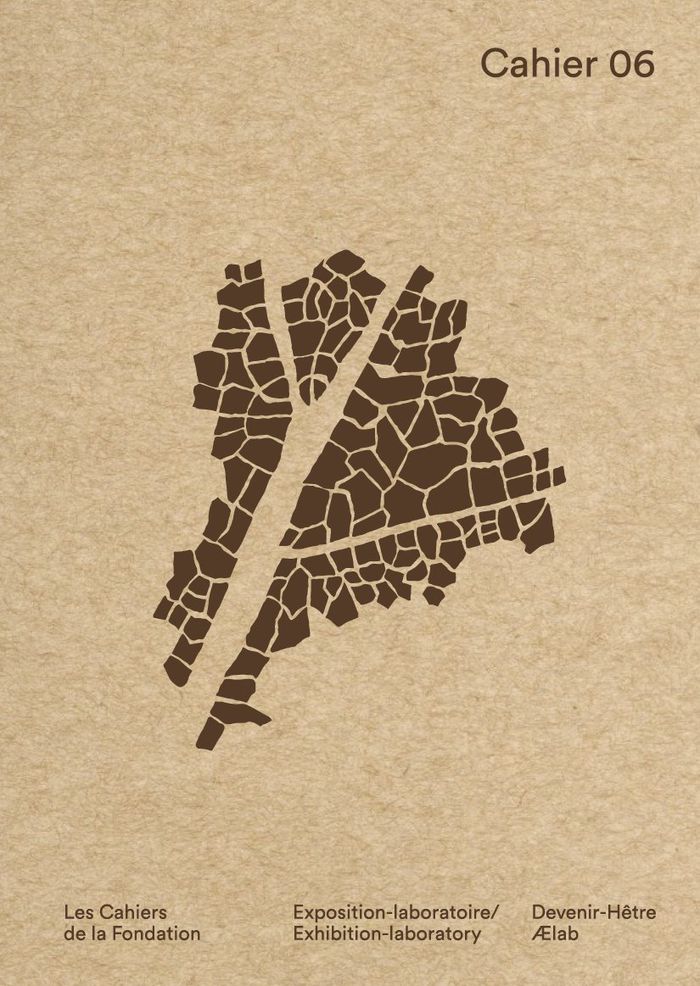
C’est à un chantier de recherche et de création en constante évolution que nous invite Ælab, le duo formé par les artistes Gisèle Trudel et Stéphane Claude. La publication révèle les prémisses de Devenir-hêtre en insistant sur les fondements de la démarche interdisciplinaire d’Ælab. Dans le premier texte, Monique Régimbald-Zeiber et Denise Pérusse abordent l’histoire récente de la recherche-création au Québec. Elles défendent l’importance de la rencontre entre les arts et les sciences pour créer de nouveaux rapports au monde en transformation qu’est le nôtre. Le potentiel du rapprochement qu’elles prônent se trouve illustré de manière concrète dans le texte de l’ingénieur forestier Christoforos Pappas. Il y relate les défis, mais également la richesse de sa collaboration avec MÉDIANE entre 2020 et 2022, notamment en regard de la conscientisation du public aux enjeux climatiques actuels. Enfin, le texte de l’architecte Juliette Pernin se penche sur le support matériel qui permet de présenter les résultats de ces enquêtes informées de savoirs multiples, la structure d’échafaudages. Elle souligne comment cette « limite épaisse » temporaire, qui évoque le monde de la construction et du théâtre, accentue la perception de l’environnement.
Les Cahiers de la Fondation, no. 06 : Devenir-Hêtre, Ælab
Actions:
Prix:
$15.00
(disponible en magasin)
Résumé:
C’est à un chantier de recherche et de création en constante évolution que nous invite Ælab, le duo formé par les artistes Gisèle Trudel et Stéphane Claude. La publication révèle les prémisses de Devenir-hêtre en insistant sur les fondements de la démarche interdisciplinaire d’Ælab. Dans le premier texte, Monique Régimbald-Zeiber et Denise Pérusse abordent l’histoire récente de la recherche-création au Québec. Elles défendent l’importance de la rencontre entre les arts et les sciences pour créer de nouveaux rapports au monde en transformation qu’est le nôtre. Le potentiel du rapprochement qu’elles prônent se trouve illustré de manière concrète dans le texte de l’ingénieur forestier Christoforos Pappas. Il y relate les défis, mais également la richesse de sa collaboration avec MÉDIANE entre 2020 et 2022, notamment en regard de la conscientisation du public aux enjeux climatiques actuels. Enfin, le texte de l’architecte Juliette Pernin se penche sur le support matériel qui permet de présenter les résultats de ces enquêtes informées de savoirs multiples, la structure d’échafaudages. Elle souligne comment cette « limite épaisse » temporaire, qui évoque le monde de la construction et du théâtre, accentue la perception de l’environnement.
Classification:
livres
livres
Publication:
octobre 2023
octobre 2023
Sujet:
Art canadien
Art canadien
Classification:
livres
livres
Titre:
Terres fertiles
Terres fertiles
Actions:
Prix:
$73.00
(disponible sur commande)
Résumé:
« Terres fertiles » traite de la problématique de la fertilité des sols, au regard de différentes sensibilités : scientifiques, paysagères, artistiques, poétiques... Le livre dresse un état des lieux de la santé des sols, de leurs potentiels à leur raréfaction à différentes échelles (mondiale, nationale et locale) et opère un retour d´expériences issu des travaux de(...)
$73.00
(disponible sur commande)
Résumé:
« Terres fertiles » traite de la problématique de la fertilité des sols, au regard de différentes sensibilités : scientifiques, paysagères, artistiques, poétiques... Le livre dresse un état des lieux de la santé des sols, de leurs potentiels à leur raréfaction à différentes échelles (mondiale, nationale et locale) et opère un retour d´expériences issu des travaux de(...)
Titre:
Terres fertiles
Actions:
Prix:
$73.00
(disponible sur commande)
Résumé:
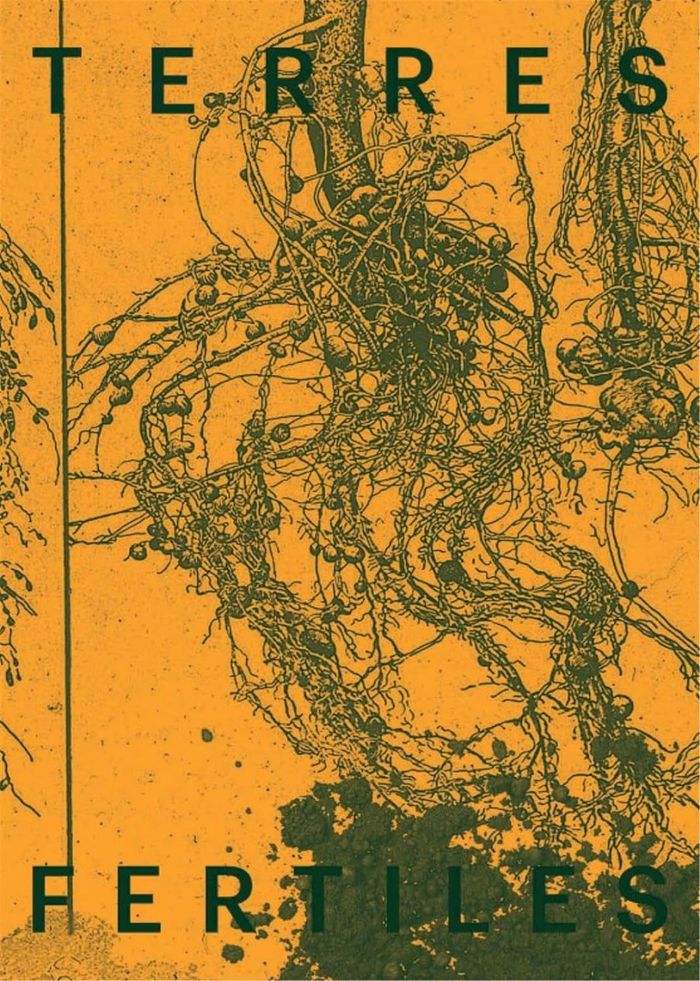
« Terres fertiles » traite de la problématique de la fertilité des sols, au regard de différentes sensibilités : scientifiques, paysagères, artistiques, poétiques... Le livre dresse un état des lieux de la santé des sols, de leurs potentiels à leur raréfaction à différentes échelles (mondiale, nationale et locale) et opère un retour d´expériences issu des travaux de l'agence BASE. Ces derniers témoignent de la nécessité d'un renouvellement des pratiques paysagères. Ils cherchent à mesurer la consommation de terres végétales, au vu de la raréfaction des terres fertiles et retrace le long processus de fabrication de sol comme un écosystème fragile et une ressource bienfaitrice. La nécessité de fabriques de terres selon les besoins métropolitains est interrogée, ainsi que leur intégration dans les politiques urbaines. Les expérimentations s'inscrivent au sein du territoire lyonnais, et tirent parti de la gouvernance spécifique du Grand Lyon, qui teste de nouveaux modèles de production de sols au sein d'une économie circulaire. Ces expériences dévoilent les prémices de nouvelles figures urbaines, de paysages en cours de transformation (appelés paysages productifs), jouant un rôle dans l'économie des ressources et dans l'adaptation au réchauffement climatique.
Terres fertiles
Actions:
Prix:
$73.00
(disponible sur commande)
Résumé:
« Terres fertiles » traite de la problématique de la fertilité des sols, au regard de différentes sensibilités : scientifiques, paysagères, artistiques, poétiques... Le livre dresse un état des lieux de la santé des sols, de leurs potentiels à leur raréfaction à différentes échelles (mondiale, nationale et locale) et opère un retour d´expériences issu des travaux de l'agence BASE. Ces derniers témoignent de la nécessité d'un renouvellement des pratiques paysagères. Ils cherchent à mesurer la consommation de terres végétales, au vu de la raréfaction des terres fertiles et retrace le long processus de fabrication de sol comme un écosystème fragile et une ressource bienfaitrice. La nécessité de fabriques de terres selon les besoins métropolitains est interrogée, ainsi que leur intégration dans les politiques urbaines. Les expérimentations s'inscrivent au sein du territoire lyonnais, et tirent parti de la gouvernance spécifique du Grand Lyon, qui teste de nouveaux modèles de production de sols au sein d'une économie circulaire. Ces expériences dévoilent les prémices de nouvelles figures urbaines, de paysages en cours de transformation (appelés paysages productifs), jouant un rôle dans l'économie des ressources et dans l'adaptation au réchauffement climatique.
Classification:
livres
livres
Publication:
décembre 2023
décembre 2023
Classification:
livres
livres
Actions:
Prix:
$60.00
(disponible sur commande)
Résumé:
After the Bauhaus's closing in 1933, many of its protagonists moved to the United States, where their acceptance had to be cultivated. The key to understanding the American reception of the Bauhaus is to be found not in the émigré success stories or the famous(...)
$60.00
(disponible sur commande)
Résumé:
After the Bauhaus's closing in 1933, many of its protagonists moved to the United States, where their acceptance had to be cultivated. The key to understanding the American reception of the Bauhaus is to be found not in the émigré success stories or the famous(...)
Publication:
juin 1999, Cambridge
juin 1999, Cambridge
Titre:
The Bauhaus and America : first contacts 1919-1936
Actions:
Prix:
$60.00
(disponible sur commande)
Résumé:
After the Bauhaus's closing in 1933, many of its protagonists moved to the United States, where their acceptance had to be cultivated. The key to understanding the American reception of the Bauhaus is to be found not in the émigré success stories or the famous 1938 Bauhaus exhibition at the Museum of Modern Art, but in the course of America's early contact with the Bauhaus. In this book Margret Kentgens-Craig shows that the fame of the Bauhaus in America was the result not only of the inherent qualities of its concepts and products, but also of a unique congruence of cultural supply and demand, of a consistent flow of information, and of fine-tuned marketing. Thus the history of the American reception of the Bauhaus in the 1920s and 1930s foreshadows the patterns of fame-making that became typical of the post-World War II art world. The transfer of artistic, intellectual, and pedagogical concepts from one cultural context to another is a process of transformation and integration. In presenting a case study of this process, the book also provides fresh insights into the German-American cultural history of the period from 1919 to 1936.
The Bauhaus and America : first contacts 1919-1936
Actions:
Prix:
$60.00
(disponible sur commande)
Résumé:
After the Bauhaus's closing in 1933, many of its protagonists moved to the United States, where their acceptance had to be cultivated. The key to understanding the American reception of the Bauhaus is to be found not in the émigré success stories or the famous 1938 Bauhaus exhibition at the Museum of Modern Art, but in the course of America's early contact with the Bauhaus. In this book Margret Kentgens-Craig shows that the fame of the Bauhaus in America was the result not only of the inherent qualities of its concepts and products, but also of a unique congruence of cultural supply and demand, of a consistent flow of information, and of fine-tuned marketing. Thus the history of the American reception of the Bauhaus in the 1920s and 1930s foreshadows the patterns of fame-making that became typical of the post-World War II art world. The transfer of artistic, intellectual, and pedagogical concepts from one cultural context to another is a process of transformation and integration. In presenting a case study of this process, the book also provides fresh insights into the German-American cultural history of the period from 1919 to 1936.
Classification:
livres
livres
Publication:
juin 1999, Cambridge
juin 1999, Cambridge
Classification:
livres
livres
Prix:
$39.00
(disponible sur commande)
Résumé:
Fille de paysans français, Marie-Thérèse Thévard (que tout le monde appelle affectueusement Marie-Thé), a grandi au cœur du terroir loirétain dans les années 1960. Ses parents, vignerons et agriculteurs, vivaient des produits de leur ferme diversifiée. Le train des animaux (vaches, lapins, volaille), la plantation, la récolte, le sarclage, l’accueil des clients, la(...)
$39.00
(disponible sur commande)
Résumé:
Fille de paysans français, Marie-Thérèse Thévard (que tout le monde appelle affectueusement Marie-Thé), a grandi au cœur du terroir loirétain dans les années 1960. Ses parents, vignerons et agriculteurs, vivaient des produits de leur ferme diversifiée. Le train des animaux (vaches, lapins, volaille), la plantation, la récolte, le sarclage, l’accueil des clients, la(...)
Titre:
Le jardin vivrier : autosuffisance et non-travail du sol
Actions:
Prix:
$39.00
(disponible sur commande)
Résumé:
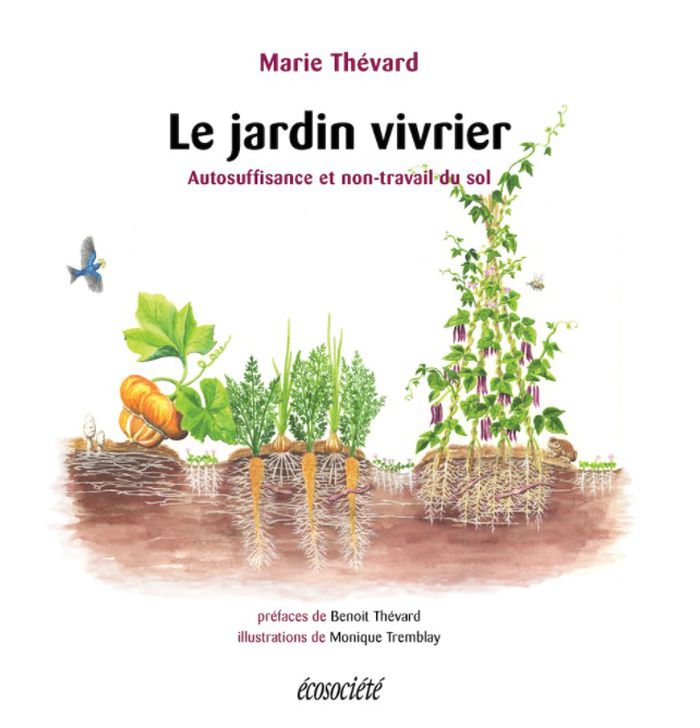
Fille de paysans français, Marie-Thérèse Thévard (que tout le monde appelle affectueusement Marie-Thé), a grandi au cœur du terroir loirétain dans les années 1960. Ses parents, vignerons et agriculteurs, vivaient des produits de leur ferme diversifiée. Le train des animaux (vaches, lapins, volaille), la plantation, la récolte, le sarclage, l’accueil des clients, la transformation alimentaire, la préparation des repas était leur lot quotidien. Sa rencontre avec un Québécois l’amènera finalement à s’établir au Saguenay en 1988, dans le nord du Québec, où elle habite et cultive depuis un terrains dans un écohameau et y expérimente un mode de vie écologique. Marie-Thé fait partie de ces personnes qui cherchent à agir au quotidien selon leurs convictions, et pour elle, cela passe d’abord par maximiser l’autosuffisance alimentaire. Ses recherches, appliquées et en processus continu, sont axées sur un mode de vie écologique, c’est-à-dire axé sur l’indépendance face aux énergies fossiles, la résilience, l’alimentation saine, la permaculture, l’agroécologie et la vie en communauté. C’est le récit de ses pratiques et convictions que rassemble « Le jardin-vivrier », véritable bible pour quiconque souhaite poser les premiers jalons de l’autosuffisance alimentaire.
Le jardin vivrier : autosuffisance et non-travail du sol
Actions:
Prix:
$39.00
(disponible sur commande)
Résumé:
Fille de paysans français, Marie-Thérèse Thévard (que tout le monde appelle affectueusement Marie-Thé), a grandi au cœur du terroir loirétain dans les années 1960. Ses parents, vignerons et agriculteurs, vivaient des produits de leur ferme diversifiée. Le train des animaux (vaches, lapins, volaille), la plantation, la récolte, le sarclage, l’accueil des clients, la transformation alimentaire, la préparation des repas était leur lot quotidien. Sa rencontre avec un Québécois l’amènera finalement à s’établir au Saguenay en 1988, dans le nord du Québec, où elle habite et cultive depuis un terrains dans un écohameau et y expérimente un mode de vie écologique. Marie-Thé fait partie de ces personnes qui cherchent à agir au quotidien selon leurs convictions, et pour elle, cela passe d’abord par maximiser l’autosuffisance alimentaire. Ses recherches, appliquées et en processus continu, sont axées sur un mode de vie écologique, c’est-à-dire axé sur l’indépendance face aux énergies fossiles, la résilience, l’alimentation saine, la permaculture, l’agroécologie et la vie en communauté. C’est le récit de ses pratiques et convictions que rassemble « Le jardin-vivrier », véritable bible pour quiconque souhaite poser les premiers jalons de l’autosuffisance alimentaire.
Classification:
livres
livres
Publication:
mai 2021
mai 2021
Sujet:
Jardins
Jardins
Classification:
livres
livres
Prix:
$34.00
(disponible sur commande)
Résumé:
"Regeneration" offers a visionary new approach to climate change, one that weaves justice, climate, biodiversity, equity, and human dignity into a seamless tapestry of action, policy, and transformation that can end the climate crisis in one generation. It is the first book to describe and define the burgeoning regeneration movement spreading rapidly throughout the(...)
$34.00
(disponible sur commande)
Résumé:
"Regeneration" offers a visionary new approach to climate change, one that weaves justice, climate, biodiversity, equity, and human dignity into a seamless tapestry of action, policy, and transformation that can end the climate crisis in one generation. It is the first book to describe and define the burgeoning regeneration movement spreading rapidly throughout the(...)
Titre:
Regeneration: ending the climate crisis in one generation
Actions:
Prix:
$34.00
(disponible sur commande)
Résumé:
"Regeneration" offers a visionary new approach to climate change, one that weaves justice, climate, biodiversity, equity, and human dignity into a seamless tapestry of action, policy, and transformation that can end the climate crisis in one generation. It is the first book to describe and define the burgeoning regeneration movement spreading rapidly throughout the world. "Regeneration" describes how an inclusive movement can engage the majority of humanity to save the world from the threat of global warming, with climate solutions that directly serve our children, the poor, and the excluded. This means we must address current human needs, not future existential threats, real as they are, with initiatives that include but go well beyond solar, electric vehicles, and tree planting to include such solutions as the fifteen-minute city, bioregions, azolla fern, food localization, fire ecology, decommodification, forests as farms, and the number one solution for the world: electrifying everything. Paul Hawken and the nonprofit Regeneration Organization are launching a series of initiatives to accompany the book, including a streaming video series, curriculum, podcasts, teaching videos, and climate action software. "Regeneration" is the inspiring and necessary guide to inform the rapidly spreading climate movement.
Regeneration: ending the climate crisis in one generation
Actions:
Prix:
$34.00
(disponible sur commande)
Résumé:
"Regeneration" offers a visionary new approach to climate change, one that weaves justice, climate, biodiversity, equity, and human dignity into a seamless tapestry of action, policy, and transformation that can end the climate crisis in one generation. It is the first book to describe and define the burgeoning regeneration movement spreading rapidly throughout the world. "Regeneration" describes how an inclusive movement can engage the majority of humanity to save the world from the threat of global warming, with climate solutions that directly serve our children, the poor, and the excluded. This means we must address current human needs, not future existential threats, real as they are, with initiatives that include but go well beyond solar, electric vehicles, and tree planting to include such solutions as the fifteen-minute city, bioregions, azolla fern, food localization, fire ecology, decommodification, forests as farms, and the number one solution for the world: electrifying everything. Paul Hawken and the nonprofit Regeneration Organization are launching a series of initiatives to accompany the book, including a streaming video series, curriculum, podcasts, teaching videos, and climate action software. "Regeneration" is the inspiring and necessary guide to inform the rapidly spreading climate movement.
Classification:
livres
livres
Publication:
septembre 2021
septembre 2021
Classification:
livres
livres
Actions:
Prix:
$55.00
(disponible en magasin)
Résumé:
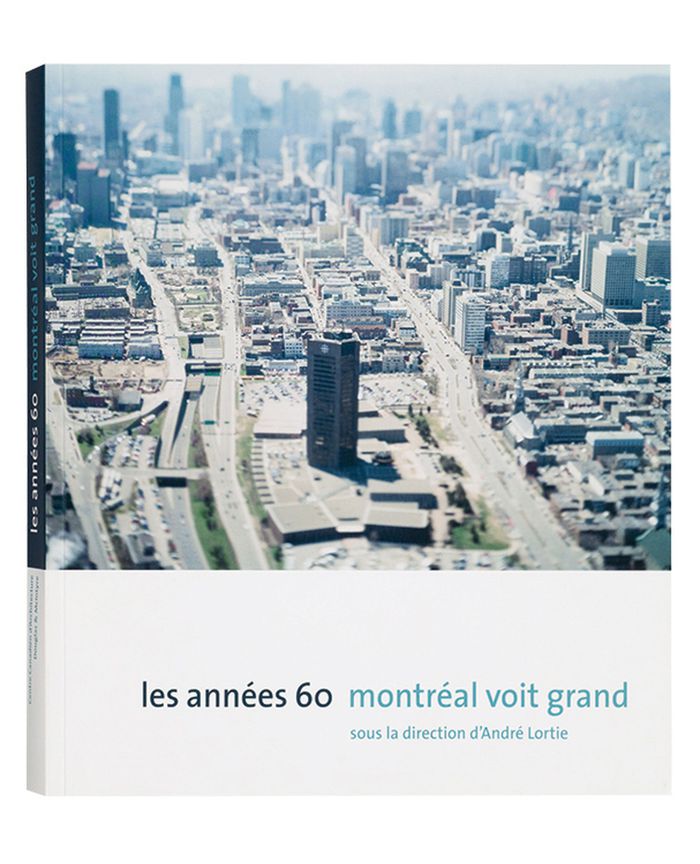
À l'instar de nombreuses grandes villes, dont Paris, Philadelphie ou Rio, Montréal se lance, dans les années 1960, dans un programme de transformation d'une échelle démesurée. Pourtant, avec son métro, ses galeries commerciales souterraines, son Exposition universelle (l'Expo 67), ce projet se distingue dans le choeur des métropoles : ici, gratte-ciel et autoroutes ont(...)
$55.00
(disponible en magasin)
Résumé:
À l'instar de nombreuses grandes villes, dont Paris, Philadelphie ou Rio, Montréal se lance, dans les années 1960, dans un programme de transformation d'une échelle démesurée. Pourtant, avec son métro, ses galeries commerciales souterraines, son Exposition universelle (l'Expo 67), ce projet se distingue dans le choeur des métropoles : ici, gratte-ciel et autoroutes ont(...)
Titre:
Les années 60 : Montréal voit grand
Actions:
Prix:
$55.00
(disponible en magasin)
Résumé:
À l'instar de nombreuses grandes villes, dont Paris, Philadelphie ou Rio, Montréal se lance, dans les années 1960, dans un programme de transformation d'une échelle démesurée. Pourtant, avec son métro, ses galeries commerciales souterraines, son Exposition universelle (l'Expo 67), ce projet se distingue dans le choeur des métropoles : ici, gratte-ciel et autoroutes ont transformé fondamentalement le paysage architectural et urbain, sans compromettre durablement la vitalité du centre. Archétypique parmi les villes américaines et européennes touchées par ce phénomène, Montréal est en même temps unique par la vision qui sous-tend ce projet. Cet ouvrage richement illustré comprend des essais de spécialistes de différentes disciplines, des vignettes faites de courts textes et d'images nombreuses, et un saisissant essai photographique. Les auteurs y explorent les fondements qui on défini le devenir de Montréal - et dont nous n'avons cessé de vivre les effets depuis - et introduisent le lecteur à la vision qu'avaient alors architectes, urbanistes, écrivains, et artistes. Ce catalogue accompagne l'exposition "Les années 60 : Montréal voit grand" organisée par le Centre Canadien d'Architecture. Il propose un regard neuf sur l'héritage social, urbanistique, et architectural que cette décennie nous a légué.
Les années 60 : Montréal voit grand
Actions:
Prix:
$55.00
(disponible en magasin)
Résumé:
À l'instar de nombreuses grandes villes, dont Paris, Philadelphie ou Rio, Montréal se lance, dans les années 1960, dans un programme de transformation d'une échelle démesurée. Pourtant, avec son métro, ses galeries commerciales souterraines, son Exposition universelle (l'Expo 67), ce projet se distingue dans le choeur des métropoles : ici, gratte-ciel et autoroutes ont transformé fondamentalement le paysage architectural et urbain, sans compromettre durablement la vitalité du centre. Archétypique parmi les villes américaines et européennes touchées par ce phénomène, Montréal est en même temps unique par la vision qui sous-tend ce projet. Cet ouvrage richement illustré comprend des essais de spécialistes de différentes disciplines, des vignettes faites de courts textes et d'images nombreuses, et un saisissant essai photographique. Les auteurs y explorent les fondements qui on défini le devenir de Montréal - et dont nous n'avons cessé de vivre les effets depuis - et introduisent le lecteur à la vision qu'avaient alors architectes, urbanistes, écrivains, et artistes. Ce catalogue accompagne l'exposition "Les années 60 : Montréal voit grand" organisée par le Centre Canadien d'Architecture. Il propose un regard neuf sur l'héritage social, urbanistique, et architectural que cette décennie nous a légué.
Classification:
livres
livres
Publication:
octobre 2004, Montréal
octobre 2004, Montréal
Sujet:
Publications du CCA
Publications du CCA
Classification:
livres
livres
Actions:
Prix:
$45.00
(disponible en magasin)
Résumé:
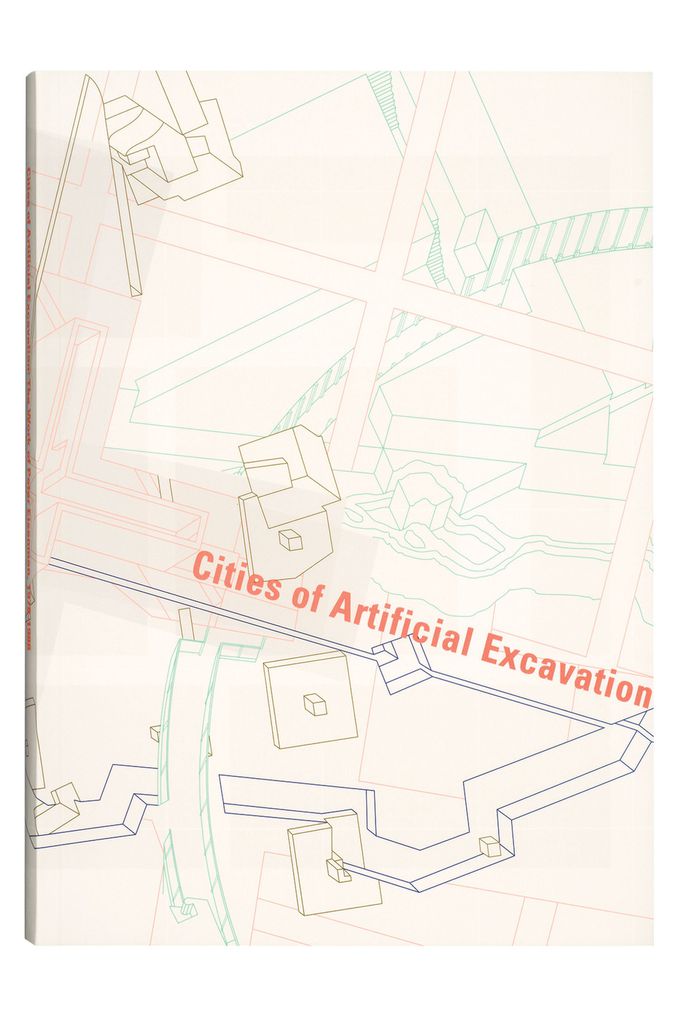
This catalogue to the CCA's exhibition presents four of the most representative and best documented of the artificial excavation projects: an urban design scheme for Cannaregio West in Venice (1978); a housing project near Checkpoint Charlie in Berlin (1980-1981, partially realized 1982-1986); a design for the University Art Museum at California State University, Long(...)
$45.00
(disponible en magasin)
Résumé:
This catalogue to the CCA's exhibition presents four of the most representative and best documented of the artificial excavation projects: an urban design scheme for Cannaregio West in Venice (1978); a housing project near Checkpoint Charlie in Berlin (1980-1981, partially realized 1982-1986); a design for the University Art Museum at California State University, Long(...)
Publication:
février 1994
février 1994
Titre:
Cities of artificial excavation: the work of Peter Eisenman, 1978-1988
Actions:
Prix:
$45.00
(disponible en magasin)
Résumé:
This catalogue to the CCA's exhibition presents four of the most representative and best documented of the artificial excavation projects: an urban design scheme for Cannaregio West in Venice (1978); a housing project near Checkpoint Charlie in Berlin (1980-1981, partially realized 1982-1986); a design for the University Art Museum at California State University, Long Beach (1986); and Chora L Works (1985-1986), a garden for the Parc de La Villette in Paris designed in collaboration with Jacques Derrida. Each project is presented through the architect's drawings and models, over 200 images in all, more than 150 of them in colour, most from the collections of the Canadian Centre for Architecture. Each project sequence begins with a theoretical text by Eisenman, then goes on to a project history describing the site and explaining Eisenman's design strategy. The unprecedented publication of complete series of conceptual drawings not only illustrates Eisenman's design process in detail, but also traces the transformation, through drawing and model making, of his architectural discourse. With essays by Alan Balfour, Yve-Alain Bois, Jean-François Bédard, Jean-Louis Cohen, Kurt W. Forster, K. Michael Hays, Arata Isozaki, and Fredric Jameson.
Cities of artificial excavation: the work of Peter Eisenman, 1978-1988
Actions:
Prix:
$45.00
(disponible en magasin)
Résumé:
This catalogue to the CCA's exhibition presents four of the most representative and best documented of the artificial excavation projects: an urban design scheme for Cannaregio West in Venice (1978); a housing project near Checkpoint Charlie in Berlin (1980-1981, partially realized 1982-1986); a design for the University Art Museum at California State University, Long Beach (1986); and Chora L Works (1985-1986), a garden for the Parc de La Villette in Paris designed in collaboration with Jacques Derrida. Each project is presented through the architect's drawings and models, over 200 images in all, more than 150 of them in colour, most from the collections of the Canadian Centre for Architecture. Each project sequence begins with a theoretical text by Eisenman, then goes on to a project history describing the site and explaining Eisenman's design strategy. The unprecedented publication of complete series of conceptual drawings not only illustrates Eisenman's design process in detail, but also traces the transformation, through drawing and model making, of his architectural discourse. With essays by Alan Balfour, Yve-Alain Bois, Jean-François Bédard, Jean-Louis Cohen, Kurt W. Forster, K. Michael Hays, Arata Isozaki, and Fredric Jameson.
Classification:
livres
livres
Publication:
février 1994
février 1994


