


3021 Résultats
Classification:
livres
livres
Actions:
Prix:
$71.95
(disponible sur commande)
Résumé:
One of the most profound thinkers of the modern age, Friedrich Wilhelm Nietzsche (1844-1900) has been the subject of volumes of literature that document his life and work. Until now there has been no in-depth study devoted to Nietzsche's thoughts and impact on architecture, (...)
$71.95
(disponible sur commande)
Résumé:
One of the most profound thinkers of the modern age, Friedrich Wilhelm Nietzsche (1844-1900) has been the subject of volumes of literature that document his life and work. Until now there has been no in-depth study devoted to Nietzsche's thoughts and impact on architecture, (...)
Titre:
Nietzsche and an architecture of our minds
Actions:
Prix:
$71.95
(disponible sur commande)
Résumé:
One of the most profound thinkers of the modern age, Friedrich Wilhelm Nietzsche (1844-1900) has been the subject of volumes of literature that document his life and work. Until now there has been no in-depth study devoted to Nietzsche's thoughts and impact on architecture, specifically his far-reaching notion of an architecture commensurate with the modern mind. In the essays that comprise this book, thirteen contributors from a wide variety of disciplines (including art history, architecture and architectural theory, literature, philosophy, and city planning) assess the relationship of Nietzschean philosophy to art and architecture, elucidate frequent misunderstandings, and determine patterns of influence. The book is divided into three parts: "The Metaphors of Architecture," "Between Art, Literature, and Architecture," and "Nietzsche and the Architects." Contributors include Paolo Baldacci, the Giorgio and Isa de Chirico Foundation, Rome; Hanne Bergius, Hochschule fur Kunst und Design Burg Giebichenstein, Halle, Germany; Rolf Bothe, Kunstsammlungen zu Weimar, Germany; Claudia Brodsky Lacour, Princeton University; Tilmann Buddensieg, Humbolt-Universität Berlin; Jean-Louis Cohen, Université de Paris and Institute of Fine Arts, New York University; Karsten Harries, Yale University; Werner Hofmann, Germany; Fritz Neumeyer, Technische Universität Berlin; Léon Ploegaerts, University of Ottawa, Canada; and Anthony Vidler, University of California at Los Angeles. Edited by Alexandre Kostka and Irving Wohlfarth.
Nietzsche and an architecture of our minds
Actions:
Prix:
$71.95
(disponible sur commande)
Résumé:
One of the most profound thinkers of the modern age, Friedrich Wilhelm Nietzsche (1844-1900) has been the subject of volumes of literature that document his life and work. Until now there has been no in-depth study devoted to Nietzsche's thoughts and impact on architecture, specifically his far-reaching notion of an architecture commensurate with the modern mind. In the essays that comprise this book, thirteen contributors from a wide variety of disciplines (including art history, architecture and architectural theory, literature, philosophy, and city planning) assess the relationship of Nietzschean philosophy to art and architecture, elucidate frequent misunderstandings, and determine patterns of influence. The book is divided into three parts: "The Metaphors of Architecture," "Between Art, Literature, and Architecture," and "Nietzsche and the Architects." Contributors include Paolo Baldacci, the Giorgio and Isa de Chirico Foundation, Rome; Hanne Bergius, Hochschule fur Kunst und Design Burg Giebichenstein, Halle, Germany; Rolf Bothe, Kunstsammlungen zu Weimar, Germany; Claudia Brodsky Lacour, Princeton University; Tilmann Buddensieg, Humbolt-Universität Berlin; Jean-Louis Cohen, Université de Paris and Institute of Fine Arts, New York University; Karsten Harries, Yale University; Werner Hofmann, Germany; Fritz Neumeyer, Technische Universität Berlin; Léon Ploegaerts, University of Ottawa, Canada; and Anthony Vidler, University of California at Los Angeles. Edited by Alexandre Kostka and Irving Wohlfarth.
Classification:
livres
livres
Publication:
juillet 1999, Los Angeles
juillet 1999, Los Angeles
Sujet:
Théorie de l’architecture
Théorie de l’architecture
Classification:
livres
livres
Prix:
$44.00
(disponible sur commande)
Résumé:
Cities are becoming increasingly fragmented materially, socially, and spatially. From broken toilets and everyday things, to art and forms of writing, fragments are signatures of urban worlds and provocations for change. In "Fragments of the city," Colin McFarlane examines such fragments, what they are and how they come to matter in the experience, politics, and(...)
$44.00
(disponible sur commande)
Résumé:
Cities are becoming increasingly fragmented materially, socially, and spatially. From broken toilets and everyday things, to art and forms of writing, fragments are signatures of urban worlds and provocations for change. In "Fragments of the city," Colin McFarlane examines such fragments, what they are and how they come to matter in the experience, politics, and(...)
Titre:
Fragments of the city: making and remaking urban worlds
Actions:
Prix:
$44.00
(disponible sur commande)
Résumé:
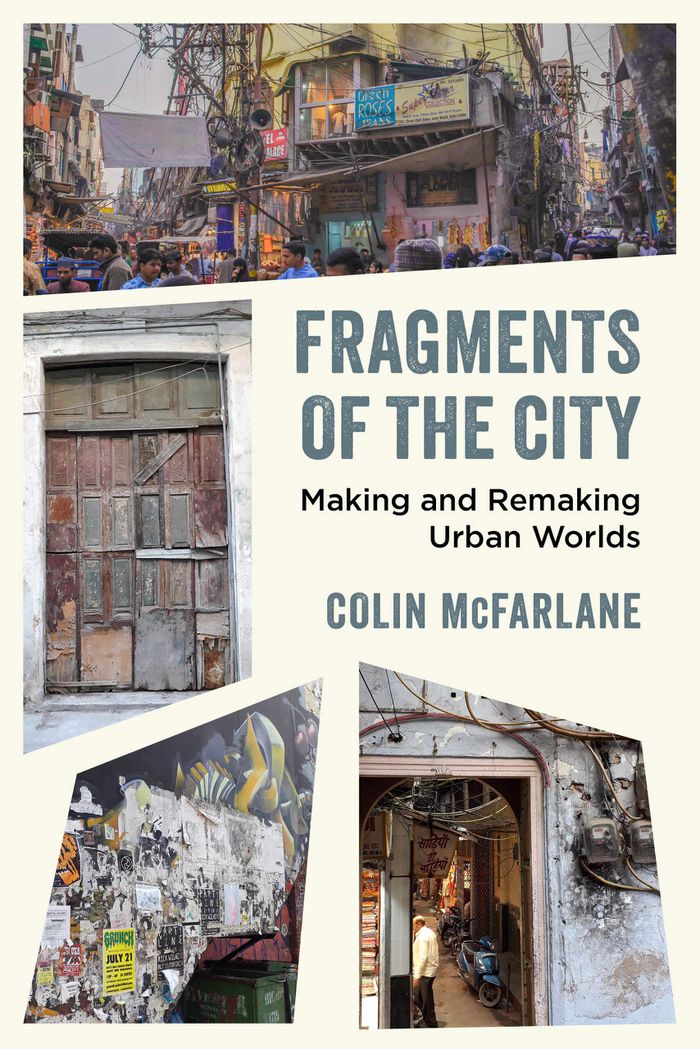
Cities are becoming increasingly fragmented materially, socially, and spatially. From broken toilets and everyday things, to art and forms of writing, fragments are signatures of urban worlds and provocations for change. In "Fragments of the city," Colin McFarlane examines such fragments, what they are and how they come to matter in the experience, politics, and expression of cities. How does the city appear when we look at it through its fragments? For those living on the economic margins, the city is often experienced as a set of fragments. Much of what low-income residents deal with on a daily basis is fragments of stuff, made and remade with and through urban density, social infrastructure, and political practice. In this book, McFarlane explores infrastructure in Mumbai, Kampala, and Cape Town; artistic montages in Los Angeles and Dakar; refugee struggles in Berlin; and the repurposing of fragments in Hong Kong and New York. Fragments surface as material things, as forms of knowledge, as writing strategies. They are used in efforts to politicize the city and in urban writing to capture life and change in the world's major cities. "Fragments of the city" surveys the role of fragments in how urban worlds are understood, revealed, written, and changed.
Fragments of the city: making and remaking urban worlds
Actions:
Prix:
$44.00
(disponible sur commande)
Résumé:
Cities are becoming increasingly fragmented materially, socially, and spatially. From broken toilets and everyday things, to art and forms of writing, fragments are signatures of urban worlds and provocations for change. In "Fragments of the city," Colin McFarlane examines such fragments, what they are and how they come to matter in the experience, politics, and expression of cities. How does the city appear when we look at it through its fragments? For those living on the economic margins, the city is often experienced as a set of fragments. Much of what low-income residents deal with on a daily basis is fragments of stuff, made and remade with and through urban density, social infrastructure, and political practice. In this book, McFarlane explores infrastructure in Mumbai, Kampala, and Cape Town; artistic montages in Los Angeles and Dakar; refugee struggles in Berlin; and the repurposing of fragments in Hong Kong and New York. Fragments surface as material things, as forms of knowledge, as writing strategies. They are used in efforts to politicize the city and in urban writing to capture life and change in the world's major cities. "Fragments of the city" surveys the role of fragments in how urban worlds are understood, revealed, written, and changed.
Classification:
livres
livres
Publication:
octobre 2021
octobre 2021
Sujet:
Théorie de l’urbanisme
Théorie de l’urbanisme
Classification:
livres
livres
Actions:
Prix:
$49.95
(disponible en magasin)
Résumé:
"L'idée de la grande ville : L'architecture moderne d'Europe centrale, 1890 - 1937" examine pour la première fois l'explosion d'idées neuves en architecture qui a marqué les dernières décennies de l'empire des Habsbourg et les premières années aventureuses des nouvelles républiques d'Europe centrale. Véritable champ de(...)
$49.95
(disponible en magasin)
Résumé:
"L'idée de la grande ville : L'architecture moderne d'Europe centrale, 1890 - 1937" examine pour la première fois l'explosion d'idées neuves en architecture qui a marqué les dernières décennies de l'empire des Habsbourg et les premières années aventureuses des nouvelles républiques d'Europe centrale. Véritable champ de(...)
Titre:
L'idée de la grande ville : l'architecture moderne d'Europe centrale, 1890-1937
Actions:
Prix:
$49.95
(disponible en magasin)
Résumé:
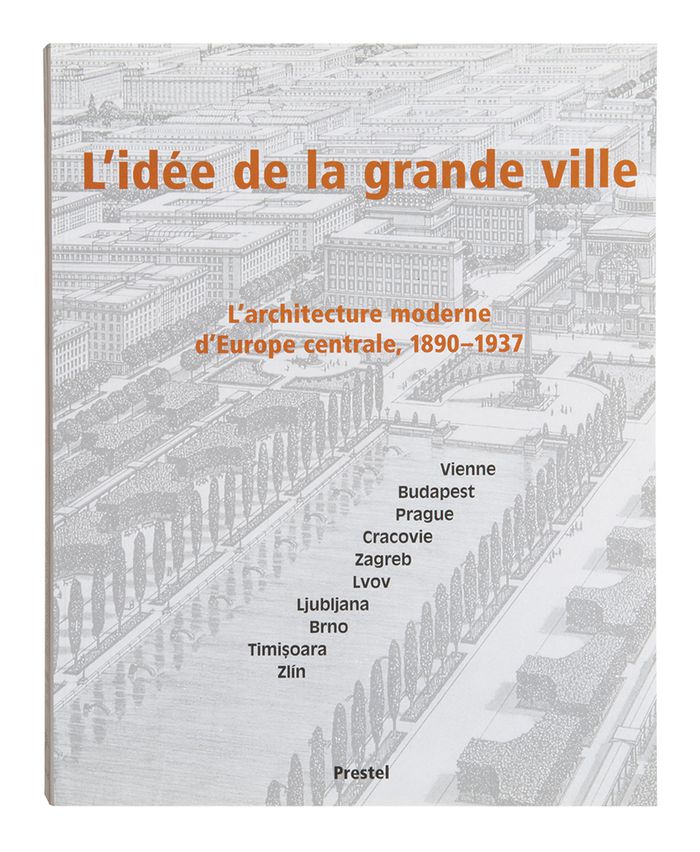
"L'idée de la grande ville : L'architecture moderne d'Europe centrale, 1890 - 1937" examine pour la première fois l'explosion d'idées neuves en architecture qui a marqué les dernières décennies de l'empire des Habsbourg et les premières années aventureuses des nouvelles républiques d'Europe centrale. Véritable champ de bataille culturel entre différentes traditions et aspirations nationales, religieuses, ethniques et linguistiques, la région n'en était pas moins le foyer d'un profond idéal cosmopolite. S'intéressant à la ville en tant que modèle de société et milieu favorable à l'épanouissement d'une vie culturelle intense, le livre permet de découvrir une histoire remarquable où se conjuguent invention, expérimentation, sophistication et imagination - l'histoire d'architectes qui ont voulu exprimer un sens nouveau de l'urbanité et de la modernité. Ce catalogue, sous la direction d’Eve Blau et de Monika Platzer, rassemble des essais des deux directrices, ainsi que de Charles S. Maier, Moritz Csáky, Renate Banik-Schweitzer, Friedrich Achleitner, Petr Krajci et Rostislav Òvácha, Iain Boyd Whyte, Aleksander Laslo, Ihor Zuk, Jacek Purchla, Ileana Pintilie, András Ferkai, Breda Mihelic et Andrew Herscher. L'avant-propos est de Phyllis Lambert et Kurt W. Forster du Centre Canadien d'Architecture, Deborah Marrow du Getty Research Institute de Los Angeles et Rudolf Wran du ministère autrichien de l'éducation et des Affaires culturelles.
L'idée de la grande ville : l'architecture moderne d'Europe centrale, 1890-1937
Actions:
Prix:
$49.95
(disponible en magasin)
Résumé:
"L'idée de la grande ville : L'architecture moderne d'Europe centrale, 1890 - 1937" examine pour la première fois l'explosion d'idées neuves en architecture qui a marqué les dernières décennies de l'empire des Habsbourg et les premières années aventureuses des nouvelles républiques d'Europe centrale. Véritable champ de bataille culturel entre différentes traditions et aspirations nationales, religieuses, ethniques et linguistiques, la région n'en était pas moins le foyer d'un profond idéal cosmopolite. S'intéressant à la ville en tant que modèle de société et milieu favorable à l'épanouissement d'une vie culturelle intense, le livre permet de découvrir une histoire remarquable où se conjuguent invention, expérimentation, sophistication et imagination - l'histoire d'architectes qui ont voulu exprimer un sens nouveau de l'urbanité et de la modernité. Ce catalogue, sous la direction d’Eve Blau et de Monika Platzer, rassemble des essais des deux directrices, ainsi que de Charles S. Maier, Moritz Csáky, Renate Banik-Schweitzer, Friedrich Achleitner, Petr Krajci et Rostislav Òvácha, Iain Boyd Whyte, Aleksander Laslo, Ihor Zuk, Jacek Purchla, Ileana Pintilie, András Ferkai, Breda Mihelic et Andrew Herscher. L'avant-propos est de Phyllis Lambert et Kurt W. Forster du Centre Canadien d'Architecture, Deborah Marrow du Getty Research Institute de Los Angeles et Rudolf Wran du ministère autrichien de l'éducation et des Affaires culturelles.
Classification:
livres
livres
Publication:
mai 2000, Montreal/Munich
mai 2000, Montreal/Munich
Sujet:
Publications du CCA
Publications du CCA
Classification:
livres
livres

Titre:
The sun as error
The sun as error
Actions:
Prix:
$75.50
(disponible sur commande)
Résumé:
The Los Angeles based artist Shannon Ebner extends her exploration of photography, sculpture and language in this book. In collaboration with Dexter Sinister (design duo David Reinfurt and Stuart Bailey), "The Sun as Error" re-investigates the meaning and language of photographs, creating both an open-ended reading of her practice and also rethinking the idea of an(...)
$75.50
(disponible sur commande)
Résumé:
The Los Angeles based artist Shannon Ebner extends her exploration of photography, sculpture and language in this book. In collaboration with Dexter Sinister (design duo David Reinfurt and Stuart Bailey), "The Sun as Error" re-investigates the meaning and language of photographs, creating both an open-ended reading of her practice and also rethinking the idea of an(...)
Titre:
The sun as error
Actions:
Prix:
$75.50
(disponible sur commande)
Résumé:
The Los Angeles based artist Shannon Ebner extends her exploration of photography, sculpture and language in this book. In collaboration with Dexter Sinister (design duo David Reinfurt and Stuart Bailey), "The Sun as Error" re-investigates the meaning and language of photographs, creating both an open-ended reading of her practice and also rethinking the idea of an artist’s monograph. Far from straightforward, the book interweaves her bodies of work, previously unseen one-off pieces, with the language of technical diagrams, optical illusions, and graphic design. One of the persistent motifs through the book’s sequence is an asterisk and, specifically, one imbued with the legacy of the graphic designer Muriel Cooper. As the first design director for MIT Press and the cofounder of the Visible Language Workshop, Cooper’s legacy for reorienting and repositioning the direction of an artist’s monograph is imaginatively explored in the creative partnership of Dexter Sinister and Shannon Ebner. Shannon Ebner’s work has been shown in exhibitions including Trace at The Whitney Museum of American Art at Altria (2006), The 2006 California Biennial at The Orange County Museum of Art, Uncertain States of America, at The Serpentine Gallery, London (2006), Learn to Read, at the Tate Modern, London (2007), and the 2008 Whitney Biennial at The Whitney Museum of American Art.
The sun as error
Actions:
Prix:
$75.50
(disponible sur commande)
Résumé:
The Los Angeles based artist Shannon Ebner extends her exploration of photography, sculpture and language in this book. In collaboration with Dexter Sinister (design duo David Reinfurt and Stuart Bailey), "The Sun as Error" re-investigates the meaning and language of photographs, creating both an open-ended reading of her practice and also rethinking the idea of an artist’s monograph. Far from straightforward, the book interweaves her bodies of work, previously unseen one-off pieces, with the language of technical diagrams, optical illusions, and graphic design. One of the persistent motifs through the book’s sequence is an asterisk and, specifically, one imbued with the legacy of the graphic designer Muriel Cooper. As the first design director for MIT Press and the cofounder of the Visible Language Workshop, Cooper’s legacy for reorienting and repositioning the direction of an artist’s monograph is imaginatively explored in the creative partnership of Dexter Sinister and Shannon Ebner. Shannon Ebner’s work has been shown in exhibitions including Trace at The Whitney Museum of American Art at Altria (2006), The 2006 California Biennial at The Orange County Museum of Art, Uncertain States of America, at The Serpentine Gallery, London (2006), Learn to Read, at the Tate Modern, London (2007), and the 2008 Whitney Biennial at The Whitney Museum of American Art.
Classification:
livres
livres
Publication:
octobre 2009
octobre 2009
Sujet:
Monographies photo
Monographies photo
Classification:
livres
livres
Actions:
Prix:
$48.95
(disponible sur commande)
Résumé:
When the automobile was first introduced, few Americans predicted its fundamental impact, not only on how people would travel, but on the American landscape itself. Instead of reducing the amount of wheeled transport on public roads, the advent of mass-produced cars caused congestion, at the curb and in the right-of-way, from small midwestern farm towns to New York,(...)
$48.95
(disponible sur commande)
Résumé:
When the automobile was first introduced, few Americans predicted its fundamental impact, not only on how people would travel, but on the American landscape itself. Instead of reducing the amount of wheeled transport on public roads, the advent of mass-produced cars caused congestion, at the curb and in the right-of-way, from small midwestern farm towns to New York,(...)
Sujet:
Théorie de l’urbanisme
Théorie de l’urbanisme
Publication:
juin 2004, Charlottesville
juin 2004, Charlottesville
Titre:
Lots of parking : land use in a car culture
Actions:
Prix:
$48.95
(disponible sur commande)
Résumé:
When the automobile was first introduced, few Americans predicted its fundamental impact, not only on how people would travel, but on the American landscape itself. Instead of reducing the amount of wheeled transport on public roads, the advent of mass-produced cars caused congestion, at the curb and in the right-of-way, from small midwestern farm towns to New York, Chicago, Detroit, and Los Angeles. "Lots of Parking" examines a neglected aspect of this rise of the automobile: the impact on America not of cars in motion but of cars at rest. While most studies have tended to focus on highway construction and engineering improvements to accommodate increasing flow and the desire for speed, John A. Jakle and Keith A. Sculle examine a fundamental feature of the urban, and suburban, scene — the parking lot. Their lively and exhaustive exploration traces the history of parking from the curbside to the rise of public and commercial parking lots and garages and the concomitant demolition of the old pedestrian-oriented urban infrastructure. In an accessible style enhanced by a range of interesting and unusual illustrations, Jakle and Sculle discuss the role of parking in downtown revitalization efforts and, by contrast, its role in the promotion of outlying suburban shopping districts and its incorporation into our neighbourhoods and residences.
Lots of parking : land use in a car culture
Actions:
Prix:
$48.95
(disponible sur commande)
Résumé:
When the automobile was first introduced, few Americans predicted its fundamental impact, not only on how people would travel, but on the American landscape itself. Instead of reducing the amount of wheeled transport on public roads, the advent of mass-produced cars caused congestion, at the curb and in the right-of-way, from small midwestern farm towns to New York, Chicago, Detroit, and Los Angeles. "Lots of Parking" examines a neglected aspect of this rise of the automobile: the impact on America not of cars in motion but of cars at rest. While most studies have tended to focus on highway construction and engineering improvements to accommodate increasing flow and the desire for speed, John A. Jakle and Keith A. Sculle examine a fundamental feature of the urban, and suburban, scene — the parking lot. Their lively and exhaustive exploration traces the history of parking from the curbside to the rise of public and commercial parking lots and garages and the concomitant demolition of the old pedestrian-oriented urban infrastructure. In an accessible style enhanced by a range of interesting and unusual illustrations, Jakle and Sculle discuss the role of parking in downtown revitalization efforts and, by contrast, its role in the promotion of outlying suburban shopping districts and its incorporation into our neighbourhoods and residences.
Classification:
livres
livres
Publication:
juin 2004, Charlottesville
juin 2004, Charlottesville
Sujet:
Théorie de l’urbanisme
Théorie de l’urbanisme
Classification:
livres
livres
Actions:
Prix:
$57.50
(disponible sur commande)
Résumé:
The last thirty years of the twentieth century saw the birth of more than six hundred art museums in the United States alone, with equal proliferation in much of Europe. Such projects as Frank Gehry's Guggenheim in Bilbao and Richard Meier's Getty Center in Los Angeles have dominated television newscasts and newspaper headlines worldwide. The success or failure of these(...)
$57.50
(disponible sur commande)
Résumé:
The last thirty years of the twentieth century saw the birth of more than six hundred art museums in the United States alone, with equal proliferation in much of Europe. Such projects as Frank Gehry's Guggenheim in Bilbao and Richard Meier's Getty Center in Los Angeles have dominated television newscasts and newspaper headlines worldwide. The success or failure of these(...)
Publication:
octobre 2006, New York
octobre 2006, New York
Titre:
Towards a new museum, expanded edition
Actions:
Prix:
$57.50
(disponible sur commande)
Résumé:
The last thirty years of the twentieth century saw the birth of more than six hundred art museums in the United States alone, with equal proliferation in much of Europe. Such projects as Frank Gehry's Guggenheim in Bilbao and Richard Meier's Getty Center in Los Angeles have dominated television newscasts and newspaper headlines worldwide. The success or failure of these new museums, in aesthetic, educational and financial terms, results from a variety of factors, none more important than their architecture. In this unique investigation, architectural historian Victoria Newhouse challenges many hitherto accepted premises of museum design. She demonstrates that new museums are often based on old concepts that no longer apply. This unvarnished analysis is informed by interviews with museum directors and curators, collectors, artists and the architects themselves. Newhouse divides her discussion according to the dominant characteristics of the museums : private collections, single-artist museums, sacred spaces, artists' self-created sites, and museum additions. In addition to the Getty and the Guggenheim Bilbao, the author discusses the Menil Collection in Houston, Texas; the Andy Warhol Museum in Pittsburgh; the Kiasma Museum for Contemporary Art in Helsinki; Donald Judd's Chinati Foundation in Marfa, Texas; the Metropolitan Museum of Art and the Museum of Modern Art in New York; the Grand Louvre and the Centre Georges Pompidou in Paris; and many more.
Towards a new museum, expanded edition
Actions:
Prix:
$57.50
(disponible sur commande)
Résumé:
The last thirty years of the twentieth century saw the birth of more than six hundred art museums in the United States alone, with equal proliferation in much of Europe. Such projects as Frank Gehry's Guggenheim in Bilbao and Richard Meier's Getty Center in Los Angeles have dominated television newscasts and newspaper headlines worldwide. The success or failure of these new museums, in aesthetic, educational and financial terms, results from a variety of factors, none more important than their architecture. In this unique investigation, architectural historian Victoria Newhouse challenges many hitherto accepted premises of museum design. She demonstrates that new museums are often based on old concepts that no longer apply. This unvarnished analysis is informed by interviews with museum directors and curators, collectors, artists and the architects themselves. Newhouse divides her discussion according to the dominant characteristics of the museums : private collections, single-artist museums, sacred spaces, artists' self-created sites, and museum additions. In addition to the Getty and the Guggenheim Bilbao, the author discusses the Menil Collection in Houston, Texas; the Andy Warhol Museum in Pittsburgh; the Kiasma Museum for Contemporary Art in Helsinki; Donald Judd's Chinati Foundation in Marfa, Texas; the Metropolitan Museum of Art and the Museum of Modern Art in New York; the Grand Louvre and the Centre Georges Pompidou in Paris; and many more.
Classification:
livres
livres
Publication:
octobre 2006, New York
octobre 2006, New York
Classification:
livres
livres
Prix:
$39.95
(disponible sur commande)
Résumé:
How do cities plan for the unplanned? Do cities plan for recovery from every possible sudden shock? How does one prepare a plan for the recovery after a tragedy, like the September 11, 2001 terrorist attacks on New York? The book discovers the systematic features that contribute to the success of planning institutions. In cities filled with uncertainty and complexity,(...)
$39.95
(disponible sur commande)
Résumé:
How do cities plan for the unplanned? Do cities plan for recovery from every possible sudden shock? How does one prepare a plan for the recovery after a tragedy, like the September 11, 2001 terrorist attacks on New York? The book discovers the systematic features that contribute to the success of planning institutions. In cities filled with uncertainty and complexity,(...)
Titre:
Planning for the unplanned : recovering from crises in megacities
Actions:
Prix:
$39.95
(disponible sur commande)
Résumé:
How do cities plan for the unplanned? Do cities plan for recovery from every possible sudden shock? How does one prepare a plan for the recovery after a tragedy, like the September 11, 2001 terrorist attacks on New York? The book discovers the systematic features that contribute to the success of planning institutions. In cities filled with uncertainty and complexity, planning institutions effectively tackle unexpected and sudden change by relying on the old and the familiar, rather than the new and the innovative. The author argues that planning programs institutions were successful because they were bureaucratic, and relied on standardized routines, rigorous sets of established regimes, familiar programs, and institutionalized hierarchies. Also contrary to popular perception, neither the leaders at the top of the institutions nor those workers at the grassroots level were the most important in the implementation of such routines. The key actors were middle managers, because they knew the institutional structures inside out, what the routines were and how to use them, and were successful go-betweens between national governments and grassroots community groups. Case studies from Mexico City, Los Angeles and New York provide a deeper understanding of urban planning processes. The case studies reveal that systematic institutional analysis helps us understand what works in planning, and why. They also demonstrate the manner in which institutional routines serve as powerful and effective tools for addressing novel situations.
Planning for the unplanned : recovering from crises in megacities
Actions:
Prix:
$39.95
(disponible sur commande)
Résumé:
How do cities plan for the unplanned? Do cities plan for recovery from every possible sudden shock? How does one prepare a plan for the recovery after a tragedy, like the September 11, 2001 terrorist attacks on New York? The book discovers the systematic features that contribute to the success of planning institutions. In cities filled with uncertainty and complexity, planning institutions effectively tackle unexpected and sudden change by relying on the old and the familiar, rather than the new and the innovative. The author argues that planning programs institutions were successful because they were bureaucratic, and relied on standardized routines, rigorous sets of established regimes, familiar programs, and institutionalized hierarchies. Also contrary to popular perception, neither the leaders at the top of the institutions nor those workers at the grassroots level were the most important in the implementation of such routines. The key actors were middle managers, because they knew the institutional structures inside out, what the routines were and how to use them, and were successful go-betweens between national governments and grassroots community groups. Case studies from Mexico City, Los Angeles and New York provide a deeper understanding of urban planning processes. The case studies reveal that systematic institutional analysis helps us understand what works in planning, and why. They also demonstrate the manner in which institutional routines serve as powerful and effective tools for addressing novel situations.
Classification:
livres
livres
Publication:
avril 2005, New York
avril 2005, New York
Sujet:
Théorie de l’urbanisme
Théorie de l’urbanisme
Classification:
livres
livres
Actions:
Prix:
$67.00
(disponible sur commande)
Résumé:
Once the bastion of the haute bourgeoisie, the town house has now been embraced by families with young children, single urban professionals, and retired couples, all looking for more comfortable city or suburban living. Architect Alexander Gorlin explores an array of diverse town house designs (often referred to by different terms in different parts of the country) that(...)
$67.00
(disponible sur commande)
Résumé:
Once the bastion of the haute bourgeoisie, the town house has now been embraced by families with young children, single urban professionals, and retired couples, all looking for more comfortable city or suburban living. Architect Alexander Gorlin explores an array of diverse town house designs (often referred to by different terms in different parts of the country) that(...)
Titre:
Creating the new American town house
Actions:
Prix:
$67.00
(disponible sur commande)
Résumé:
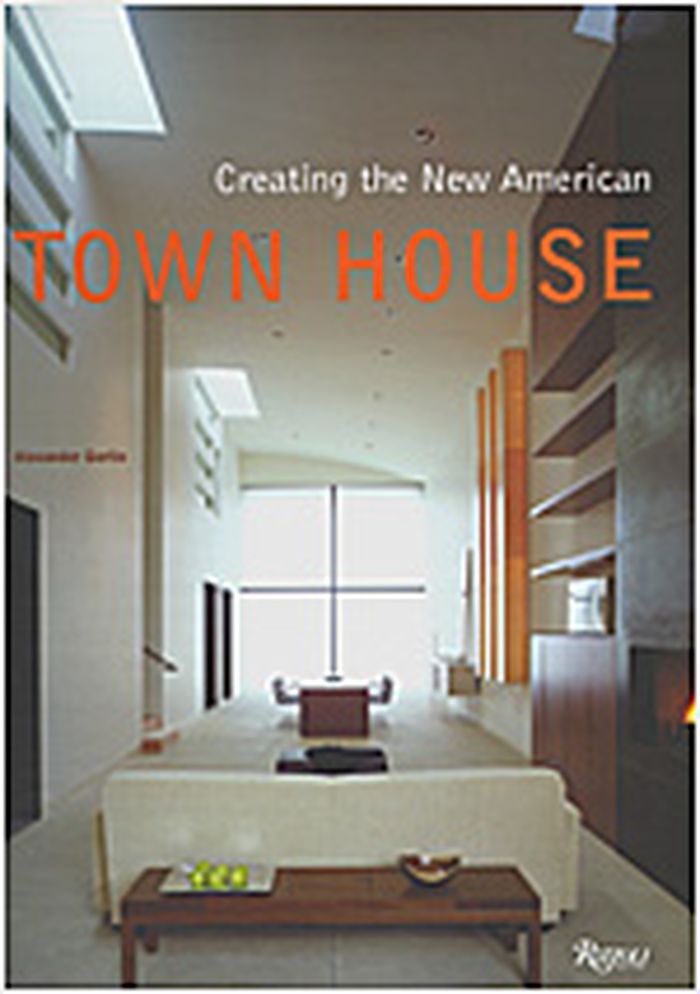
Once the bastion of the haute bourgeoisie, the town house has now been embraced by families with young children, single urban professionals, and retired couples, all looking for more comfortable city or suburban living. Architect Alexander Gorlin explores an array of diverse town house designs (often referred to by different terms in different parts of the country) that carry this familiar symbol of architectural innovation and refinement into the twenty-first century. "Creating the new American town house" features cutting-edge town houses that each draw from architectural tradition while achieving originality by both breaking from and adhering to the limitations of the town house form. Within the typical five-story frame and two parallel walls presented here are livable design solutions to the constraints of this classic housing type. Ranging from sites in New York, San Francisco, Seattle, Los Angeles, and Washington, DC, each of the buildings featured in "Creating the new American town house" is designed by such celebrated architects as Steven Ehrlich, Hugh Newell Jacobson, Stanley Saitowitz, and 1100 Architect. Each project is illustrated with full-color photography that showcases the interior design as well as plans and drawings. Alexander Gorlin’s text continues the discourse begun in his "The new American town house", surveying the adaptation of this beloved urban dwelling to the demands of a new century.
Creating the new American town house
Actions:
Prix:
$67.00
(disponible sur commande)
Résumé:
Once the bastion of the haute bourgeoisie, the town house has now been embraced by families with young children, single urban professionals, and retired couples, all looking for more comfortable city or suburban living. Architect Alexander Gorlin explores an array of diverse town house designs (often referred to by different terms in different parts of the country) that carry this familiar symbol of architectural innovation and refinement into the twenty-first century. "Creating the new American town house" features cutting-edge town houses that each draw from architectural tradition while achieving originality by both breaking from and adhering to the limitations of the town house form. Within the typical five-story frame and two parallel walls presented here are livable design solutions to the constraints of this classic housing type. Ranging from sites in New York, San Francisco, Seattle, Los Angeles, and Washington, DC, each of the buildings featured in "Creating the new American town house" is designed by such celebrated architects as Steven Ehrlich, Hugh Newell Jacobson, Stanley Saitowitz, and 1100 Architect. Each project is illustrated with full-color photography that showcases the interior design as well as plans and drawings. Alexander Gorlin’s text continues the discourse begun in his "The new American town house", surveying the adaptation of this beloved urban dwelling to the demands of a new century.
Classification:
livres
livres
Publication:
août 2005, New York
août 2005, New York
Sujet:
Architecture résidentielle
Architecture résidentielle
Classification:
livres
livres
Titre:
Screening the city
Screening the city
Actions:
Prix:
$29.00
(disponible sur commande)
Résumé:
In this provocative collection of essays, films as diverse as "The Man with a Movie Camera", "Annie Hall", "Street of Crocodiles", "Boyz N the Hood", "Three Colors Red", and "Crash" are examined in terms of the relationship between cinema and the changing urban experience in Europe and the United States since the early twentieth century. Peter Jelavich, for example, links(...)
$29.00
(disponible sur commande)
Résumé:
In this provocative collection of essays, films as diverse as "The Man with a Movie Camera", "Annie Hall", "Street of Crocodiles", "Boyz N the Hood", "Three Colors Red", and "Crash" are examined in terms of the relationship between cinema and the changing urban experience in Europe and the United States since the early twentieth century. Peter Jelavich, for example, links(...)
Sujet:
Théorie de l’urbanisme
Théorie de l’urbanisme
Publication:
mars 2003, London / New York
mars 2003, London / New York
Titre:
Screening the city
Actions:
Prix:
$29.00
(disponible sur commande)
Résumé:
In this provocative collection of essays, films as diverse as "The Man with a Movie Camera", "Annie Hall", "Street of Crocodiles", "Boyz N the Hood", "Three Colors Red", and "Crash" are examined in terms of the relationship between cinema and the changing urban experience in Europe and the United States since the early twentieth century. Peter Jelavich, for example, links the suppression of the creative, liberal Weimar Berlin in the 1931 film "Berlin Alexanderplatz" to the rise of the Nazi regime and the end of one of the great eras of modernist experimentation in German visual culture; Jessie Labov considers Kieslowski’s treatment of the Warsaw housing blok in "Dekalog" in terms of Solidarity’s strategy of resisting totalitarianism in 1980's Poland; Allan Siegel examines the motif of the city in a broad range of American and international cinema to demonstrate how film and society since the 1960's have been driven by the fading of mass political radicalism and the triumph of privatization and capital; Paula Massood uses the socially illuminating theories of Mikhail Bakhtin to examine the representation of the ghetto and urban underclass in recent African-American films such as "Menace II Society"; and Matthew Gandy examines the focus on disease in Todd Haynes’s "[Safe]" as a metaphor for social and spatial breakdown in contemporary Los Angeles.
Screening the city
Actions:
Prix:
$29.00
(disponible sur commande)
Résumé:
In this provocative collection of essays, films as diverse as "The Man with a Movie Camera", "Annie Hall", "Street of Crocodiles", "Boyz N the Hood", "Three Colors Red", and "Crash" are examined in terms of the relationship between cinema and the changing urban experience in Europe and the United States since the early twentieth century. Peter Jelavich, for example, links the suppression of the creative, liberal Weimar Berlin in the 1931 film "Berlin Alexanderplatz" to the rise of the Nazi regime and the end of one of the great eras of modernist experimentation in German visual culture; Jessie Labov considers Kieslowski’s treatment of the Warsaw housing blok in "Dekalog" in terms of Solidarity’s strategy of resisting totalitarianism in 1980's Poland; Allan Siegel examines the motif of the city in a broad range of American and international cinema to demonstrate how film and society since the 1960's have been driven by the fading of mass political radicalism and the triumph of privatization and capital; Paula Massood uses the socially illuminating theories of Mikhail Bakhtin to examine the representation of the ghetto and urban underclass in recent African-American films such as "Menace II Society"; and Matthew Gandy examines the focus on disease in Todd Haynes’s "[Safe]" as a metaphor for social and spatial breakdown in contemporary Los Angeles.
Classification:
livres
livres
Publication:
mars 2003, London / New York
mars 2003, London / New York
Sujet:
Théorie de l’urbanisme
Théorie de l’urbanisme
Classification:
livres
livres
Actions:
Prix:
$37.50
(disponible sur commande)
Résumé:
Ed Ruscha is one of the first Americans to introduce a critique of popular culture and an examination of language into the visual arts. Although he first made his reputation as a painter, Ruscha is also celebrated for his drawings (made both with conventional materials and with food, blood, gunpowder, and shellac), prints, films, photographs, and books. He is often(...)
$37.50
(disponible sur commande)
Résumé:
Ed Ruscha is one of the first Americans to introduce a critique of popular culture and an examination of language into the visual arts. Although he first made his reputation as a painter, Ruscha is also celebrated for his drawings (made both with conventional materials and with food, blood, gunpowder, and shellac), prints, films, photographs, and books. He is often(...)
Publication:
avril 2004, Cambridge, Mass.
avril 2004, Cambridge, Mass.
Titre:
Leave any information at the signal : writings, interviews, bits, pages
Actions:
Prix:
$37.50
(disponible sur commande)
Résumé:
Ed Ruscha is one of the first Americans to introduce a critique of popular culture and an examination of language into the visual arts. Although he first made his reputation as a painter, Ruscha is also celebrated for his drawings (made both with conventional materials and with food, blood, gunpowder, and shellac), prints, films, photographs, and books. He is often associated with Los Angeles as a Pop and Conceptualist hub, but tends to regard such labels with a satirical, if not jaundiced, eye. Indeed, his work is characterized by the tensions between high and low, solemn and irreverent, and serious and nonsensical, and it draws on popular culture as well as Western art traditions. "Leave Any Information at the Signal" not only documents the work of this influential artist as he rose to prominence but also contains his writings and commentaries on other artistic developments of the period. The book is divided into three parts, each of which is arranged chronologically. Part one contains statements, letters, and other writings. Part two consists of more than fifty interviews, some of which have never before been published or translated into English. Part three contains sketchbook pages, word groupings, and other notes that chart how Ruscha develops ideas and solves artistic problems. They are published here for the first time. The book also contains more than eighty illustrations, selected and arranged by the artist.
Leave any information at the signal : writings, interviews, bits, pages
Actions:
Prix:
$37.50
(disponible sur commande)
Résumé:
Ed Ruscha is one of the first Americans to introduce a critique of popular culture and an examination of language into the visual arts. Although he first made his reputation as a painter, Ruscha is also celebrated for his drawings (made both with conventional materials and with food, blood, gunpowder, and shellac), prints, films, photographs, and books. He is often associated with Los Angeles as a Pop and Conceptualist hub, but tends to regard such labels with a satirical, if not jaundiced, eye. Indeed, his work is characterized by the tensions between high and low, solemn and irreverent, and serious and nonsensical, and it draws on popular culture as well as Western art traditions. "Leave Any Information at the Signal" not only documents the work of this influential artist as he rose to prominence but also contains his writings and commentaries on other artistic developments of the period. The book is divided into three parts, each of which is arranged chronologically. Part one contains statements, letters, and other writings. Part two consists of more than fifty interviews, some of which have never before been published or translated into English. Part three contains sketchbook pages, word groupings, and other notes that chart how Ruscha develops ideas and solves artistic problems. They are published here for the first time. The book also contains more than eighty illustrations, selected and arranged by the artist.
Classification:
livres
livres
Publication:
avril 2004, Cambridge, Mass.
avril 2004, Cambridge, Mass.


