


3021 Résultats
Classification:
livres
livres
Prix:
$79.95
(disponible sur commande)
Résumé:
Although both are central to architecture, siting and construction are often treated as separate domains. In "Uncommon Ground", David Leatherbarrow illuminates their relationship, focusing on the years between 1930 and 1960, when utopian ideas about the role of technology in (...)
$79.95
(disponible sur commande)
Résumé:
Although both are central to architecture, siting and construction are often treated as separate domains. In "Uncommon Ground", David Leatherbarrow illuminates their relationship, focusing on the years between 1930 and 1960, when utopian ideas about the role of technology in (...)
Sujet:
Théorie de l’architecture
Théorie de l’architecture
Publication:
mai 2002, Cambridge, Mass.
mai 2002, Cambridge, Mass.
Titre:
Uncommon ground : architecture, technology. and topography
Actions:
Prix:
$79.95
(disponible sur commande)
Résumé:
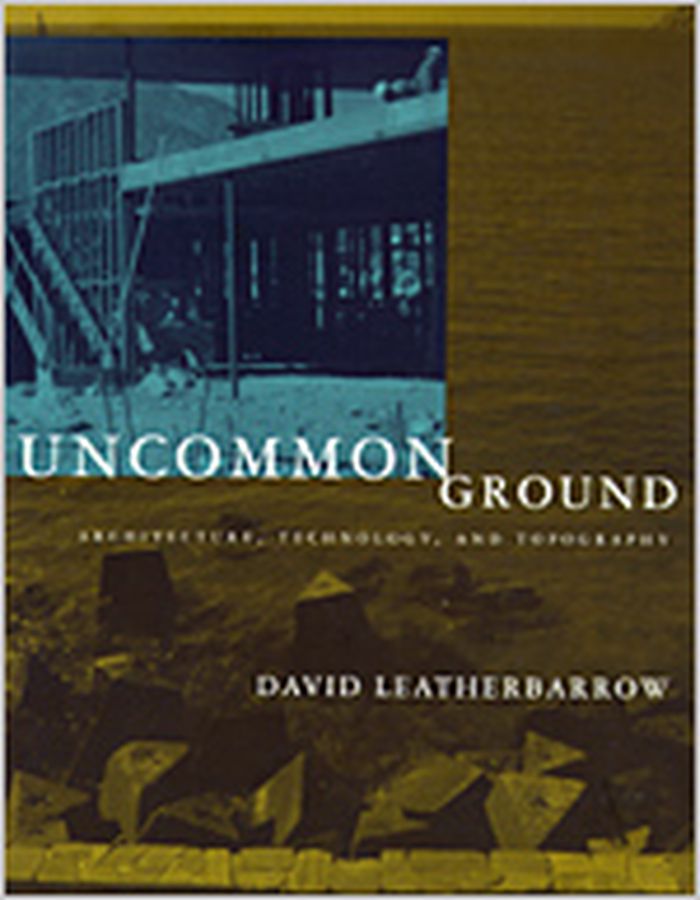
Although both are central to architecture, siting and construction are often treated as separate domains. In "Uncommon Ground", David Leatherbarrow illuminates their relationship, focusing on the years between 1930 and 1960, when utopian ideas about the role of technology in building gave way to an awareness of its disruptive impact on cities and culture. He examines the work of three architects, Richard Neutra, Antonin Raymond, and Aris Konstantinidis, who practiced in the United States, Japan, and Greece respectively. Leatherbarrow rejects the assumption that buildings of the modern period, particularly those that used the latest technology, were designed without regard to their surroundings. Although the prefabricated elements used in the buildings were designed independent of siting considerations, architects used these elements to modulate the environment. Leatherbarrow shows how the role of walls, the traditional element of architectural definition and platform partition, became less significant than that of the platforms themselves, the floors, ceilings, and intermediate levels. He shows how frontality was replaced by the building's four-sided extension into its surroundings, resulting in frontal configurations previously characteristic of the back. Arguing that the boundary between inside and outside was radically redefined, Leatherbarrow challenges cherished notions about the autonomy of the architectural object and about regional coherence. Modern architectural topography, he suggests, is an interplay of buildings, landscapes, and cities, as well as the humans who use them. The conflict between technological progress and cultural continuity, Leatherbarrow claims, exists only in theory, not in the real world of architecture. He argues that the act of building is not a matter of restoring regional identity by re-creating familiar signs, but of incorporating construction into the process of topography's perpetual becoming.
Uncommon ground : architecture, technology. and topography
Actions:
Prix:
$79.95
(disponible sur commande)
Résumé:
Although both are central to architecture, siting and construction are often treated as separate domains. In "Uncommon Ground", David Leatherbarrow illuminates their relationship, focusing on the years between 1930 and 1960, when utopian ideas about the role of technology in building gave way to an awareness of its disruptive impact on cities and culture. He examines the work of three architects, Richard Neutra, Antonin Raymond, and Aris Konstantinidis, who practiced in the United States, Japan, and Greece respectively. Leatherbarrow rejects the assumption that buildings of the modern period, particularly those that used the latest technology, were designed without regard to their surroundings. Although the prefabricated elements used in the buildings were designed independent of siting considerations, architects used these elements to modulate the environment. Leatherbarrow shows how the role of walls, the traditional element of architectural definition and platform partition, became less significant than that of the platforms themselves, the floors, ceilings, and intermediate levels. He shows how frontality was replaced by the building's four-sided extension into its surroundings, resulting in frontal configurations previously characteristic of the back. Arguing that the boundary between inside and outside was radically redefined, Leatherbarrow challenges cherished notions about the autonomy of the architectural object and about regional coherence. Modern architectural topography, he suggests, is an interplay of buildings, landscapes, and cities, as well as the humans who use them. The conflict between technological progress and cultural continuity, Leatherbarrow claims, exists only in theory, not in the real world of architecture. He argues that the act of building is not a matter of restoring regional identity by re-creating familiar signs, but of incorporating construction into the process of topography's perpetual becoming.
Classification:
livres
livres
Publication:
mai 2002, Cambridge, Mass.
mai 2002, Cambridge, Mass.
Sujet:
Théorie de l’architecture
Théorie de l’architecture
Classification:
livres
livres
Prix:
$56.95
(disponible sur commande)
Résumé:
Although both are central to architecture, siting and construction are often treated as separate domains. In "Uncommon Ground", David Leatherbarrow illuminates their relationship, focusing on the years between 1930 and 1960, when utopian ideas about the role of technology in (...)
$56.95
(disponible sur commande)
Résumé:
Although both are central to architecture, siting and construction are often treated as separate domains. In "Uncommon Ground", David Leatherbarrow illuminates their relationship, focusing on the years between 1930 and 1960, when utopian ideas about the role of technology in (...)
Sujet:
Théorie de l’architecture
Théorie de l’architecture
Publication:
octobre 2000, Cambridge, Mass.
octobre 2000, Cambridge, Mass.
Titre:
Uncommon ground : architecture, technology, and topography
Actions:
Prix:
$56.95
(disponible sur commande)
Résumé:
Although both are central to architecture, siting and construction are often treated as separate domains. In "Uncommon Ground", David Leatherbarrow illuminates their relationship, focusing on the years between 1930 and 1960, when utopian ideas about the role of technology in building gave way to an awareness of its disruptive impact on cities and culture. He examines the work of three architects, Richard Neutra, Antonin Raymond, and Aris Konstantinidis, who practiced in the United States, Japan, and Greece respectively. Leatherbarrow rejects the assumption that buildings of the modern period, particularly those that used the latest technology, were designed without regard to their surroundings. Although the prefabricated elements used in the buildings were designed independent of siting considerations, architects used these elements to modulate the environment. Leatherbarrow shows how the role of walls, the traditional element of architectural definition and platform partition, became less significant than that of the platforms themselves, the floors, ceilings, and intermediate levels. He shows how frontality was replaced by the building's four-sided extension into its surroundings, resulting in frontal configurations previously characteristic of the back. Arguing that the boundary between inside and outside was radically redefined, Leatherbarrow challenges cherished notions about the autonomy of the architectural object and about regional coherence. Modern architectural topography, he suggests, is an interplay of buildings, landscapes, and cities, as well as the humans who use them. The conflict between technological progress and cultural continuity, Leatherbarrow claims, exists only in theory, not in the real world of architecture. He argues that the act of building is not a matter of restoring regional identity by re-creating familiar signs, but of incorporating construction into the process of topography's perpetual becoming.
Uncommon ground : architecture, technology, and topography
Actions:
Prix:
$56.95
(disponible sur commande)
Résumé:
Although both are central to architecture, siting and construction are often treated as separate domains. In "Uncommon Ground", David Leatherbarrow illuminates their relationship, focusing on the years between 1930 and 1960, when utopian ideas about the role of technology in building gave way to an awareness of its disruptive impact on cities and culture. He examines the work of three architects, Richard Neutra, Antonin Raymond, and Aris Konstantinidis, who practiced in the United States, Japan, and Greece respectively. Leatherbarrow rejects the assumption that buildings of the modern period, particularly those that used the latest technology, were designed without regard to their surroundings. Although the prefabricated elements used in the buildings were designed independent of siting considerations, architects used these elements to modulate the environment. Leatherbarrow shows how the role of walls, the traditional element of architectural definition and platform partition, became less significant than that of the platforms themselves, the floors, ceilings, and intermediate levels. He shows how frontality was replaced by the building's four-sided extension into its surroundings, resulting in frontal configurations previously characteristic of the back. Arguing that the boundary between inside and outside was radically redefined, Leatherbarrow challenges cherished notions about the autonomy of the architectural object and about regional coherence. Modern architectural topography, he suggests, is an interplay of buildings, landscapes, and cities, as well as the humans who use them. The conflict between technological progress and cultural continuity, Leatherbarrow claims, exists only in theory, not in the real world of architecture. He argues that the act of building is not a matter of restoring regional identity by re-creating familiar signs, but of incorporating construction into the process of topography's perpetual becoming.
Classification:
livres
livres
Publication:
octobre 2000, Cambridge, Mass.
octobre 2000, Cambridge, Mass.
Sujet:
Théorie de l’architecture
Théorie de l’architecture
Classification:
livres
livres
Titre:
Who owns antiquity?
Who owns antiquity?
Actions:
Prix:
$24.95
(disponible sur commande)
Résumé:
Whether antiquities should be returned to the countries where they were found is one of the most urgent and controversial issues in the art world today, and it has pitted museums, private collectors, and dealers against source countries, archaeologists, and academics. Maintaining that the acquisition of undocumented antiquities by museums encourages the looting of(...)
$24.95
(disponible sur commande)
Résumé:
Whether antiquities should be returned to the countries where they were found is one of the most urgent and controversial issues in the art world today, and it has pitted museums, private collectors, and dealers against source countries, archaeologists, and academics. Maintaining that the acquisition of undocumented antiquities by museums encourages the looting of(...)
Titre:
Who owns antiquity?
Actions:
Prix:
$24.95
(disponible sur commande)
Résumé:
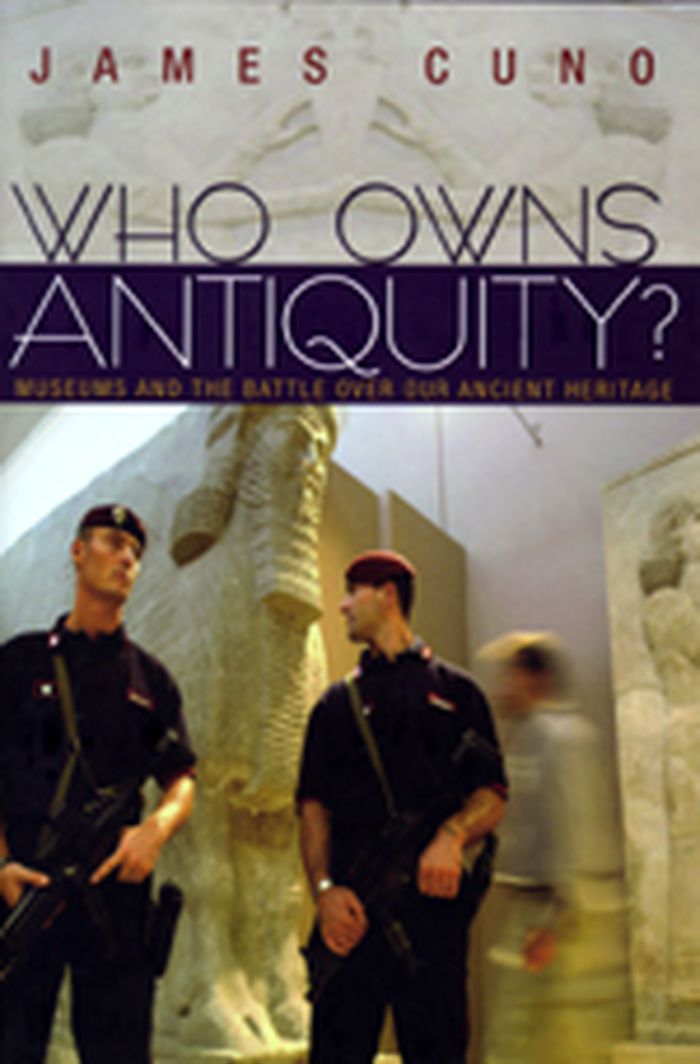
Whether antiquities should be returned to the countries where they were found is one of the most urgent and controversial issues in the art world today, and it has pitted museums, private collectors, and dealers against source countries, archaeologists, and academics. Maintaining that the acquisition of undocumented antiquities by museums encourages the looting of archaeological sites, countries such as Italy, Greece, Egypt, Turkey, and China have claimed ancient artifacts as state property, called for their return from museums around the world, and passed laws against their future export. But in Who Owns Antiquity?, one of the world's leading museum directors vigorously challenges this nationalistic position, arguing that it is damaging and often disingenuous. "Antiquities," James Cuno argues, "are the cultural property of all humankind," "evidence of the world's ancient past and not that of a particular modern nation. They comprise antiquity, and antiquity knows no borders." Cuno argues that nationalistic retention and reclamation policies impede common access to this common heritage and encourage a dubious and dangerous politicization of antiquities--and of culture itself. Antiquities need to be protected from looting but also from nationalistic identity politics. To do this, Cuno calls for measures to broaden rather than restrict international access to antiquities. He advocates restoration of the system under which source countries would share newly discovered artifacts in exchange for archaeological help, and he argues that museums should again be allowed reasonable ways to acquire undocumented antiquities. The first extended defense of the side of museums in the struggle over antiquities, Who Owns Antiquity? is sure to be as important as it is controversial.
Who owns antiquity?
Actions:
Prix:
$24.95
(disponible sur commande)
Résumé:
Whether antiquities should be returned to the countries where they were found is one of the most urgent and controversial issues in the art world today, and it has pitted museums, private collectors, and dealers against source countries, archaeologists, and academics. Maintaining that the acquisition of undocumented antiquities by museums encourages the looting of archaeological sites, countries such as Italy, Greece, Egypt, Turkey, and China have claimed ancient artifacts as state property, called for their return from museums around the world, and passed laws against their future export. But in Who Owns Antiquity?, one of the world's leading museum directors vigorously challenges this nationalistic position, arguing that it is damaging and often disingenuous. "Antiquities," James Cuno argues, "are the cultural property of all humankind," "evidence of the world's ancient past and not that of a particular modern nation. They comprise antiquity, and antiquity knows no borders." Cuno argues that nationalistic retention and reclamation policies impede common access to this common heritage and encourage a dubious and dangerous politicization of antiquities--and of culture itself. Antiquities need to be protected from looting but also from nationalistic identity politics. To do this, Cuno calls for measures to broaden rather than restrict international access to antiquities. He advocates restoration of the system under which source countries would share newly discovered artifacts in exchange for archaeological help, and he argues that museums should again be allowed reasonable ways to acquire undocumented antiquities. The first extended defense of the side of museums in the struggle over antiquities, Who Owns Antiquity? is sure to be as important as it is controversial.
Classification:
livres
livres
Publication:
mai 2008, Princeton, Oxford
mai 2008, Princeton, Oxford
Sujet:
Muséologie
Muséologie
Classification:
livres
livres
Actions:
Exemplaires:
Description:
xv, 267 pages : illustrations (some color), maps ; 29 cm
Description:
xv, 267 pages : illustrations (some color), maps ; 29 cm
Auteur:
Sujet:
- Tombs Egypt Alexandria.,
- Art Egypt Alexandria.,
- Tombeaux Égypte Alexandrie.,
- Art Égypte Alexandrie.,
- Antiquities.,
- Art.,
- Social conditions,
- Tombs.,
- Grabkammer,
- Grabmal,
- Gräberfeld,
- Hellenismus,
- Rezeption,
- Römerzeit,
- Graftomben.,
- Archeologische vondsten.,
- Alexandria (Egypt) Antiquities.,
- Alexandria (Egypt) Social conditions.,
- Alexandrie (Égypte) Antiquités.,
- Alexandrie (Égypte) Conditions sociales.,
- Egypt Alexandria.,
- Alexandria,
- Ägypten
Publication:
Cambridge, U.K. ; New York : Cambridge University Press, 2002.
Cambridge, U.K. ; New York : Cambridge University Press, 2002.
Titre:
The monumental tombs of ancient Alexandria : the theater of the dead / Marjorie Susan Venit.
Actions:
Exemplaires:
Description:
xv, 267 pages : illustrations (some color), maps ; 29 cm
The monumental tombs of ancient Alexandria : the theater of the dead / Marjorie Susan Venit.
Actions:
Exemplaires:
Description:
xv, 267 pages : illustrations (some color), maps ; 29 cm
Classification:
livres
livres
Publication:
Cambridge, U.K. ; New York : Cambridge University Press, 2002.
Cambridge, U.K. ; New York : Cambridge University Press, 2002.
Auteur:
Sujet:
- Tombs Egypt Alexandria.,
- Art Egypt Alexandria.,
- Tombeaux Égypte Alexandrie.,
- Art Égypte Alexandrie.,
- Antiquities.,
- Art.,
- Social conditions,
- Tombs.,
- Grabkammer,
- Grabmal,
- Gräberfeld,
- Hellenismus,
- Rezeption,
- Römerzeit,
- Graftomben.,
- Archeologische vondsten.,
- Alexandria (Egypt) Antiquities.,
- Alexandria (Egypt) Social conditions.,
- Alexandrie (Égypte) Antiquités.,
- Alexandrie (Égypte) Conditions sociales.,
- Egypt Alexandria.,
- Alexandria,
- Ägypten
Classification:
livres
livres
Actions:
Prix:
$48.00
(disponible sur commande)
Résumé:
The forced polarity between form and function in considerations of architecture - opposing art to social interests, ethics to poetic expression - obscures the deep connections between ethical and poetical values in architectural tradition. Architecture has been, and must continue to be, writes Alberto Pérez-Gómez, built upon love. Modernity has rightly rejected past(...)
$48.00
(disponible sur commande)
Résumé:
The forced polarity between form and function in considerations of architecture - opposing art to social interests, ethics to poetic expression - obscures the deep connections between ethical and poetical values in architectural tradition. Architecture has been, and must continue to be, writes Alberto Pérez-Gómez, built upon love. Modernity has rightly rejected past(...)
Sujet:
Théorie de l’architecture
Théorie de l’architecture
Publication:
janvier 2006, Cambridge, Mass.
janvier 2006, Cambridge, Mass.
Titre:
Built upon love : architectural longing after ethics and aesthetics
Actions:
Prix:
$48.00
(disponible sur commande)
Résumé:
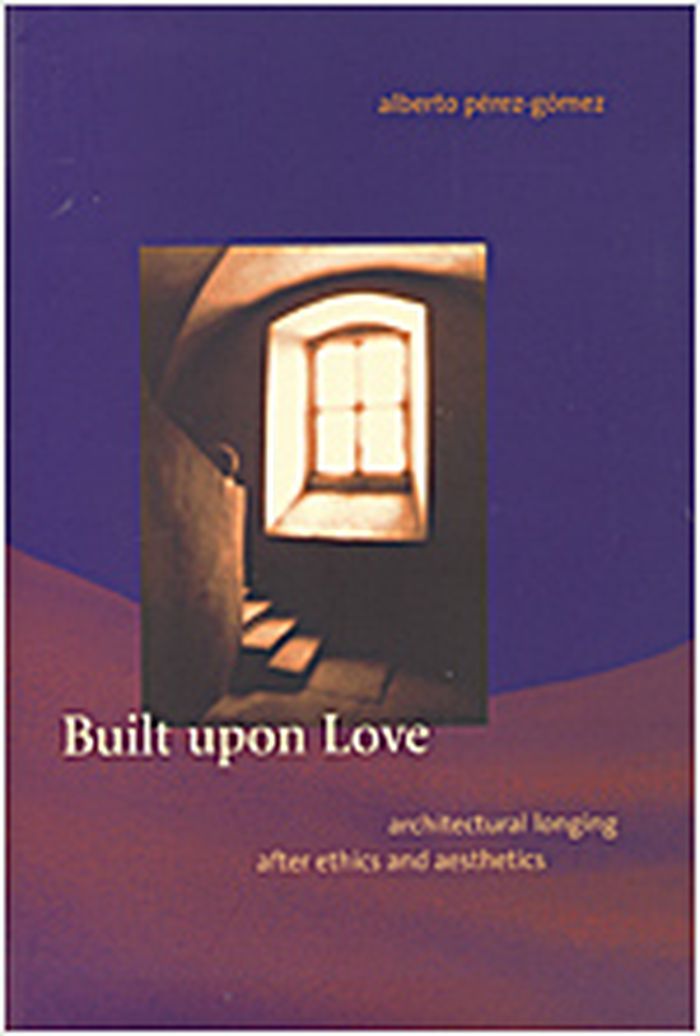
The forced polarity between form and function in considerations of architecture - opposing art to social interests, ethics to poetic expression - obscures the deep connections between ethical and poetical values in architectural tradition. Architecture has been, and must continue to be, writes Alberto Pérez-Gómez, built upon love. Modernity has rightly rejected past architectural excesses, but, Pérez-Gómez argues, the materialistic and technological alternatives it proposes do not answer satisfactorily the complex desire that defines humanity. True architecture is concerned with far more than fashionable form, affordable homes, and sustainable development; it responds to a desire for an eloquent place to dwell- one that lovingly provides a sense of order resonant with our dreams. In "Built upon love" Pérez-Gómez uncovers the relationship between love and architecture in order to find the points of contact between poetics and ethics - between the architect's wish to design a beautiful world and architecture's imperative to provide a better place for society. Eros, as first imagined by the early lyric poets of classical Greece, is the invisible force at the root of our capacity to create and comprehend the poetic image. Pérez-Gómez examines the nature of architectural form in the light of eros, seduction, and the tradition of the poetic image in Western architecture. He charts the ethical dimension of architecture, tracing the connections between philia - the love of friends that entails mutual responsibility among equals - and architectural program. He explores the position of architecture at the limits of language and discusses the analogical language of philia in modernist architectural theory. Finally, he uncovers connections between ethics and poetics, describing a contemporary practice of architecture under the sign of love, incorporating both eros and philia.
Built upon love : architectural longing after ethics and aesthetics
Actions:
Prix:
$48.00
(disponible sur commande)
Résumé:
The forced polarity between form and function in considerations of architecture - opposing art to social interests, ethics to poetic expression - obscures the deep connections between ethical and poetical values in architectural tradition. Architecture has been, and must continue to be, writes Alberto Pérez-Gómez, built upon love. Modernity has rightly rejected past architectural excesses, but, Pérez-Gómez argues, the materialistic and technological alternatives it proposes do not answer satisfactorily the complex desire that defines humanity. True architecture is concerned with far more than fashionable form, affordable homes, and sustainable development; it responds to a desire for an eloquent place to dwell- one that lovingly provides a sense of order resonant with our dreams. In "Built upon love" Pérez-Gómez uncovers the relationship between love and architecture in order to find the points of contact between poetics and ethics - between the architect's wish to design a beautiful world and architecture's imperative to provide a better place for society. Eros, as first imagined by the early lyric poets of classical Greece, is the invisible force at the root of our capacity to create and comprehend the poetic image. Pérez-Gómez examines the nature of architectural form in the light of eros, seduction, and the tradition of the poetic image in Western architecture. He charts the ethical dimension of architecture, tracing the connections between philia - the love of friends that entails mutual responsibility among equals - and architectural program. He explores the position of architecture at the limits of language and discusses the analogical language of philia in modernist architectural theory. Finally, he uncovers connections between ethics and poetics, describing a contemporary practice of architecture under the sign of love, incorporating both eros and philia.
Classification:
livres
livres
Publication:
janvier 2006, Cambridge, Mass.
janvier 2006, Cambridge, Mass.
Sujet:
Théorie de l’architecture
Théorie de l’architecture
Classification:
livres
livres
Actions:
Prix:
$99.00
(disponible sur commande)
Résumé:
The power consumption due to air-conditioning of buildings becomes particularly significant in an urban environment because the temperature of the air of dense urban districts is higher than in the suburbs. This phenomenon, as well as the increase in the standards of living and other factors namely heatwaves, contribute to the growth of the traditionally low demand for(...)
$99.00
(disponible sur commande)
Résumé:
The power consumption due to air-conditioning of buildings becomes particularly significant in an urban environment because the temperature of the air of dense urban districts is higher than in the suburbs. This phenomenon, as well as the increase in the standards of living and other factors namely heatwaves, contribute to the growth of the traditionally low demand for(...)
Titre:
Cooling the cities : Rafraichir les villes
Actions:
Prix:
$99.00
(disponible sur commande)
Résumé:
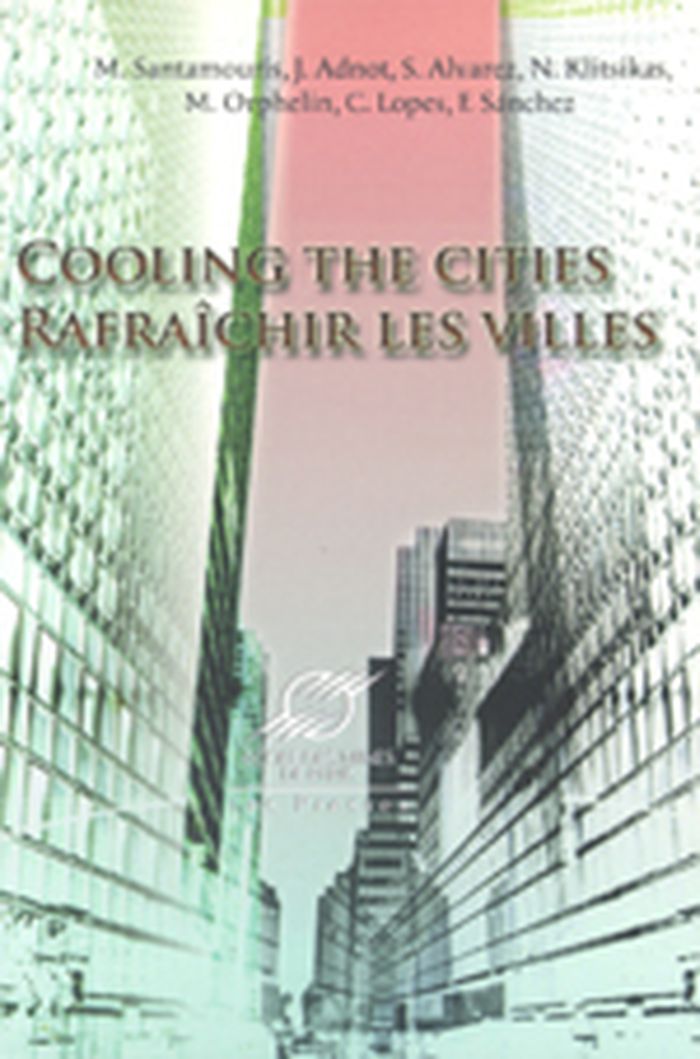
The power consumption due to air-conditioning of buildings becomes particularly significant in an urban environment because the temperature of the air of dense urban districts is higher than in the suburbs. This phenomenon, as well as the increase in the standards of living and other factors namely heatwaves, contribute to the growth of the traditionally low demand for artificial air-conditioning in Europe. Case studies make it possible to measure the heat island effect (the accumulation of heat in cities), to characterize the additional electricity consumption of the buildings in an urban environment, and to give an overall picture of the practices, techniques and materials which can help to cool the cities. Priority is given to the practices which avoid the need for artificial air-conditioning by taking into account the environment, the use of vegetation and " cool " materials for the construction of pavements and buildings. For the remaining needs for air-conditioning, the present systems of air-conditioning can also become more energy efficient. Case studies conducted in Seville made it possible to measure the dispersion of the needs for air-conditioning around their average value for the various zones of the city. One of the case studies evaluates the benefit associated with the systematic plantation of trees and other plants in Athens. Another case study relates to Paris and estimates the importance of centralized solutions for air-conditioning in an urban environment. This book results from a study launched by the European Commission and is written by authors from three European countries very concerned by heatwaves and their effects downtown : Greece (Athens), Spain (Seville) and France (Paris). All of them are professors or researchers in very high level laboratories (Group Building Environmental Studies in Athens University, Energy Laboratory in Ecole des Mines de Paris and in Seville University).
Cooling the cities : Rafraichir les villes
Actions:
Prix:
$99.00
(disponible sur commande)
Résumé:
The power consumption due to air-conditioning of buildings becomes particularly significant in an urban environment because the temperature of the air of dense urban districts is higher than in the suburbs. This phenomenon, as well as the increase in the standards of living and other factors namely heatwaves, contribute to the growth of the traditionally low demand for artificial air-conditioning in Europe. Case studies make it possible to measure the heat island effect (the accumulation of heat in cities), to characterize the additional electricity consumption of the buildings in an urban environment, and to give an overall picture of the practices, techniques and materials which can help to cool the cities. Priority is given to the practices which avoid the need for artificial air-conditioning by taking into account the environment, the use of vegetation and " cool " materials for the construction of pavements and buildings. For the remaining needs for air-conditioning, the present systems of air-conditioning can also become more energy efficient. Case studies conducted in Seville made it possible to measure the dispersion of the needs for air-conditioning around their average value for the various zones of the city. One of the case studies evaluates the benefit associated with the systematic plantation of trees and other plants in Athens. Another case study relates to Paris and estimates the importance of centralized solutions for air-conditioning in an urban environment. This book results from a study launched by the European Commission and is written by authors from three European countries very concerned by heatwaves and their effects downtown : Greece (Athens), Spain (Seville) and France (Paris). All of them are professors or researchers in very high level laboratories (Group Building Environmental Studies in Athens University, Energy Laboratory in Ecole des Mines de Paris and in Seville University).
Classification:
livres
livres
Publication:
septembre 2004, Paris
septembre 2004, Paris
Sujet:
Architecture écologique
Architecture écologique
Classification:
artéfacts
artéfacts
Titre:
Jeu des monuments de Paris.
Jeu des monuments de Paris.
Actions:
Exemplaires:
Description:
1 game (1 board) : illustrations ; 47 x 63 cm + 2 dice
Description:
1 game (1 board) : illustrations ; 47 x 63 cm + 2 dice
Auteur:
Sujet:
- Architecture France Paris.,
- Church architecture France Paris.,
- Church buildings France Paris.,
- Monuments France Paris.,
- Toys France Specimens.,
- Board games France Specimens.,
- Dice games France Specimens.,
- Architecture chrétienne France Paris.,
- Jouets France Spécimens.,
- Dés (Jeu) France Spécimens.,
- Architecture.,
- Board games.,
- Buildings.,
- Church architecture.,
- Church buildings.,
- Dice games.,
- Monuments.,
- Toys.,
- Paris (France) Buildings, structures, etc.,
- France.,
- France Paris.,
- Architecture (object genre) France Paris.,
- Board games France 1800-1900.,
- Gameboards France 1800-1900.,
- Paper Toys (recreational artifacts) France 1800-1900.,
- Dice games France 1800-1900.,
- Gameboards.,
- Paper Toys (recreational artifacts),
- Specimens.
Publication:
[between 1836 and 1854] (Paris : Basset)
[between 1836 and 1854] (Paris : Basset)
Titre:
Jeu des monuments de Paris.
Actions:
Exemplaires:
Description:
1 game (1 board) : illustrations ; 47 x 63 cm + 2 dice
Jeu des monuments de Paris.
Actions:
Exemplaires:
Description:
1 game (1 board) : illustrations ; 47 x 63 cm + 2 dice
Classification:
artéfacts
artéfacts
Publication:
[between 1836 and 1854] (Paris : Basset)
[between 1836 and 1854] (Paris : Basset)
Auteur:
Sujet:
- Architecture France Paris.,
- Church architecture France Paris.,
- Church buildings France Paris.,
- Monuments France Paris.,
- Toys France Specimens.,
- Board games France Specimens.,
- Dice games France Specimens.,
- Architecture chrétienne France Paris.,
- Jouets France Spécimens.,
- Dés (Jeu) France Spécimens.,
- Architecture.,
- Board games.,
- Buildings.,
- Church architecture.,
- Church buildings.,
- Dice games.,
- Monuments.,
- Toys.,
- Paris (France) Buildings, structures, etc.,
- France.,
- France Paris.,
- Architecture (object genre) France Paris.,
- Board games France 1800-1900.,
- Gameboards France 1800-1900.,
- Paper Toys (recreational artifacts) France 1800-1900.,
- Dice games France 1800-1900.,
- Gameboards.,
- Paper Toys (recreational artifacts),
- Specimens.
Classification:
graphique
graphique
Actions:
Exemplaires:
Description:
approximately 137 items : illustrations (some color) ; various sizes
- Bibliothèque main post cards 189618 | NA44.W949.7 (ID:95-A327) | Disponible
Description:
approximately 137 items : illustrations (some color) ; various sizes
Auteur:
Sujet:
- Wright, Frank Lloyd, 1867-1959.,
- Pope-Leighey House (Va.),
- Price Tower (Bartlesville, Okla.),
- Frank Thomas House (Oak Park, Ill.),
- Arthur Heurtley House (Oak Park, Ill.),
- Fallingwater (Pa.),
- Stockman House (Mason City, Iowa),
- Darwin D. Martin House (Buffalo, N.Y.),
- Florida Southern College.,
- Teikoku Hoteru.,
- Yesteryear (Kankakee, Ill.),
- Frank Lloyd Wright House (Oak Park, Ill.),
- Frank Lloyd Wright Studio (Oak Park, Ill.),
- Hollyhock House (Hollywood, Los Angeles, Calif.),
- Solomon R. Guggenheim Museum.,
- Community Christian Church (Kansas City, Mo.),
- Taliesin West (Scottsdale, Ariz.),
- Taliesin III (Spring Green, Wis.),
- Mrs. Thomas Gale House (Oak Park, Ill.),
- Marin County Civic Center.,
- Circle Gallery (San Francisco, Calif.),
- Nathan G. Moore House (Oak Park, Ill.),
- Winslow House (River Forest, Ill.),
- Unity Temple (Oak Park, Ill.),
- Annunciation Greek Orthodox Church (Milwaukee, Wis.),
- Grady Gammage Memorial Auditorium (Tempe, Ariz.),
- Meeting House of the First Unitarian Society (Madison, Wis.),
- V.C. Morris Store (San Francisco, Calif.),
- Isabel Roberts House (River Forest, Ill.),
- Wingspread (Wind Point, Wis.),
- Myonichikan (Tokyo, Japan),
- Kaufmann Office (Victoria and Albert Museum),
- A.D. German Warehouse (Richland Center, Wis.),
- Allentown Art Museum.,
- Pope-Leighey House (Virg.),
- Fallingwater (Penns.),
- Wright-Bock Fountain (Oak Park, Ill.),
- Architectural furniture United States 1890-1960.,
- Houses United States 1890-1960.,
- Skyscrapers United States Oklahoma Bartlesville 1890-1960.,
- Office towers United States Oklahoma Bartlesville 1890-1960.,
- Specialty stores United States California San Francisco 1890-1960.,
- Civic Centers United States California 1890-1960.,
- Churches United States 1890-1960.,
- Meeting Houses United States Wisconsin Madison 1890-1960.,
- Fountains United States Illinois Oak Park 1890-1960.,
- Auditoriums United States Arizona Tempe 1890-1960.,
- Hotels (public accommodations) Japan Tokyo 1890-1960.,
- Studios (work spaces) United States Illinois Oak Park 1890-1960.,
- Museums United States 1890-1960.,
- Convention centers United States Wisconsin Racine 1890-1960.,
- Colleges United States Florida Lakeland 1890-1960.,
- Schools Japan Tokyo 1890-1960.,
- Offices Great Britain England London 1970-1990.,
- Libraries (rooms) United States Pennsylvania Allentown 1990-2000.,
- Warehouses United States Wisconsin Richland Center 1890-1960.,
- Stained glass Windows United States 1890-1960.,
- American Architects.,
- Postcards.
Titre:
Frank Lloyd Wright : postcards, 1950-1995.
Actions:
Exemplaires:
Description:
approximately 137 items : illustrations (some color) ; various sizes
Frank Lloyd Wright : postcards, 1950-1995.
Actions:
Exemplaires:
- Bibliothèque main post cards 189618 | NA44.W949.7 (ID:95-A327) | Disponible
Description:
approximately 137 items : illustrations (some color) ; various sizes
Classification:
graphique
graphique
Auteur:
Sujet:
- Wright, Frank Lloyd, 1867-1959.,
- Pope-Leighey House (Va.),
- Price Tower (Bartlesville, Okla.),
- Frank Thomas House (Oak Park, Ill.),
- Arthur Heurtley House (Oak Park, Ill.),
- Fallingwater (Pa.),
- Stockman House (Mason City, Iowa),
- Darwin D. Martin House (Buffalo, N.Y.),
- Florida Southern College.,
- Teikoku Hoteru.,
- Yesteryear (Kankakee, Ill.),
- Frank Lloyd Wright House (Oak Park, Ill.),
- Frank Lloyd Wright Studio (Oak Park, Ill.),
- Hollyhock House (Hollywood, Los Angeles, Calif.),
- Solomon R. Guggenheim Museum.,
- Community Christian Church (Kansas City, Mo.),
- Taliesin West (Scottsdale, Ariz.),
- Taliesin III (Spring Green, Wis.),
- Mrs. Thomas Gale House (Oak Park, Ill.),
- Marin County Civic Center.,
- Circle Gallery (San Francisco, Calif.),
- Nathan G. Moore House (Oak Park, Ill.),
- Winslow House (River Forest, Ill.),
- Unity Temple (Oak Park, Ill.),
- Annunciation Greek Orthodox Church (Milwaukee, Wis.),
- Grady Gammage Memorial Auditorium (Tempe, Ariz.),
- Meeting House of the First Unitarian Society (Madison, Wis.),
- V.C. Morris Store (San Francisco, Calif.),
- Isabel Roberts House (River Forest, Ill.),
- Wingspread (Wind Point, Wis.),
- Myonichikan (Tokyo, Japan),
- Kaufmann Office (Victoria and Albert Museum),
- A.D. German Warehouse (Richland Center, Wis.),
- Allentown Art Museum.,
- Pope-Leighey House (Virg.),
- Fallingwater (Penns.),
- Wright-Bock Fountain (Oak Park, Ill.),
- Architectural furniture United States 1890-1960.,
- Houses United States 1890-1960.,
- Skyscrapers United States Oklahoma Bartlesville 1890-1960.,
- Office towers United States Oklahoma Bartlesville 1890-1960.,
- Specialty stores United States California San Francisco 1890-1960.,
- Civic Centers United States California 1890-1960.,
- Churches United States 1890-1960.,
- Meeting Houses United States Wisconsin Madison 1890-1960.,
- Fountains United States Illinois Oak Park 1890-1960.,
- Auditoriums United States Arizona Tempe 1890-1960.,
- Hotels (public accommodations) Japan Tokyo 1890-1960.,
- Studios (work spaces) United States Illinois Oak Park 1890-1960.,
- Museums United States 1890-1960.,
- Convention centers United States Wisconsin Racine 1890-1960.,
- Colleges United States Florida Lakeland 1890-1960.,
- Schools Japan Tokyo 1890-1960.,
- Offices Great Britain England London 1970-1990.,
- Libraries (rooms) United States Pennsylvania Allentown 1990-2000.,
- Warehouses United States Wisconsin Richland Center 1890-1960.,
- Stained glass Windows United States 1890-1960.,
- American Architects.,
- Postcards.
Classification:
livres
livres
Actions:
Exemplaires:
Description:
263 pages : illustrations (some color), facsimiles, maps, portraits ; 32 cm
Description:
263 pages : illustrations (some color), facsimiles, maps, portraits ; 32 cm
Auteur:
Sujet:
- Hotels Asia History.,
- Hôtels Asie Histoire.,
- Hotels.,
- Asia.,
- Asia Hotels, 1800-1939,
- History.
Publication:
London : Dent, [1987]
London : Dent, [1987]
Titre:
Grand Oriental hotels / Text, Martin Meade, Joseph Fitchett, Anthony Lawrence / preface, Michel de Grèce.
Actions:
Exemplaires:
Description:
263 pages : illustrations (some color), facsimiles, maps, portraits ; 32 cm
Grand Oriental hotels / Text, Martin Meade, Joseph Fitchett, Anthony Lawrence / preface, Michel de Grèce.
Actions:
Exemplaires:
Description:
263 pages : illustrations (some color), facsimiles, maps, portraits ; 32 cm
Classification:
livres
livres
Publication:
London : Dent, [1987]
London : Dent, [1987]
Auteur:
Sujet:
- Hotels Asia History.,
- Hôtels Asie Histoire.,
- Hotels.,
- Asia.,
- Asia Hotels, 1800-1939,
- History.
Classification:
livres
livres
Exemplaires:
Description:
xi, 272 pages : illustrations, maps ; 27 cm.
Description:
xi, 272 pages : illustrations, maps ; 27 cm.
Auteur:
Sujet:
- Service stations United States History.,
- Architecture United States History.,
- Roadside architecture United States.,
- Architecture United States History 20th century.,
- Architecture United States 20th century.,
- Stations-service États-Unis Histoire.,
- Architecture États-Unis Histoire 20e siècle.,
- Architecture États-Unis Histoire.,
- Constructions des abords de route États-Unis.,
- Architecture,
- Roadside architecture,
- Service stations,
- Tankstations.,
- Benzine.,
- Bouwkunst.,
- Economische geschiedenis.,
- Stations-services Etats-Unis Histoire.,
- Stations-services Etats-Unis Architecture.,
- United States,
- Petroleum Trades History,
- History
Publication:
Baltimore : Johns Hopkins University Press, [1994], ©1994
Baltimore : Johns Hopkins University Press, [1994], ©1994
Titre:
The gas station in America / John A. Jakle & Keith A. Sculle.
Actions:
Exemplaires:
Description:
xi, 272 pages : illustrations, maps ; 27 cm.
The gas station in America / John A. Jakle & Keith A. Sculle.
Actions:
Exemplaires:
Description:
xi, 272 pages : illustrations, maps ; 27 cm.
Classification:
livres
livres
Publication:
Baltimore : Johns Hopkins University Press, [1994], ©1994
Baltimore : Johns Hopkins University Press, [1994], ©1994
Auteur:
Sujet:
- Service stations United States History.,
- Architecture United States History.,
- Roadside architecture United States.,
- Architecture United States History 20th century.,
- Architecture United States 20th century.,
- Stations-service États-Unis Histoire.,
- Architecture États-Unis Histoire 20e siècle.,
- Architecture États-Unis Histoire.,
- Constructions des abords de route États-Unis.,
- Architecture,
- Roadside architecture,
- Service stations,
- Tankstations.,
- Benzine.,
- Bouwkunst.,
- Economische geschiedenis.,
- Stations-services Etats-Unis Histoire.,
- Stations-services Etats-Unis Architecture.,
- United States,
- Petroleum Trades History,
- History


