


3021 Résultats
Classification:
livres
livres

Titre:
Overlook : exploring the internal fringes of America with the Center for land use interpretation
Overlook : exploring the internal fringes of America with the Center for land use interpretation
Actions:
Prix:
$42.00
(disponible sur commande)
Résumé:
The Center for land use interpretation is a research-based educational organization that produces public programs about the built landscape of the United States from its sites in Los Angeles, Utah and the Mojave desert, with an upstate New York location opening in 2006. The Center’s aim is to increase and diffuse information about how the nation’s lands are apportioned,(...)
$42.00
(disponible sur commande)
Résumé:
The Center for land use interpretation is a research-based educational organization that produces public programs about the built landscape of the United States from its sites in Los Angeles, Utah and the Mojave desert, with an upstate New York location opening in 2006. The Center’s aim is to increase and diffuse information about how the nation’s lands are apportioned,(...)
Titre:
Overlook : exploring the internal fringes of America with the Center for land use interpretation
Actions:
Prix:
$42.00
(disponible sur commande)
Résumé:
The Center for land use interpretation is a research-based educational organization that produces public programs about the built landscape of the United States from its sites in Los Angeles, Utah and the Mojave desert, with an upstate New York location opening in 2006. The Center’s aim is to increase and diffuse information about how the nation’s lands are apportioned, utilized and perceived. Recent examples of their work include a two-day "Tour of the monuments of the great American void" by bus and the exhibit "Immersed remains: towns submerged in America". This book takes readers on a tour through the strangely unfamiliar land that Americans live in, demonstrating that we can understand ourselves by examining the clues on display all around us, often clearly visible but ignored. Each chapter explores a different topic, from an in-depth look at Ohio ("the most all-American state"); through scale shifts in model landscapes, exemplified in the three largest hydraulic models in the world; and law-enforcement training environments that "simulate" public space. Readers can dive into the hidden and enchanting world of show caves, where America is on display underground; and come up into the Great Basin, a zone covering most of Nevada, and portions of Utah, California, Oregon, Idaho and Mexico, whose network of watersheds has no outlet to the ocean. Following lines and edges, through cities, suburbs, small towns and wide-open spaces, the Center guides us upstream, toward the heart of another America - the same, but different.
Overlook : exploring the internal fringes of America with the Center for land use interpretation
Actions:
Prix:
$42.00
(disponible sur commande)
Résumé:
The Center for land use interpretation is a research-based educational organization that produces public programs about the built landscape of the United States from its sites in Los Angeles, Utah and the Mojave desert, with an upstate New York location opening in 2006. The Center’s aim is to increase and diffuse information about how the nation’s lands are apportioned, utilized and perceived. Recent examples of their work include a two-day "Tour of the monuments of the great American void" by bus and the exhibit "Immersed remains: towns submerged in America". This book takes readers on a tour through the strangely unfamiliar land that Americans live in, demonstrating that we can understand ourselves by examining the clues on display all around us, often clearly visible but ignored. Each chapter explores a different topic, from an in-depth look at Ohio ("the most all-American state"); through scale shifts in model landscapes, exemplified in the three largest hydraulic models in the world; and law-enforcement training environments that "simulate" public space. Readers can dive into the hidden and enchanting world of show caves, where America is on display underground; and come up into the Great Basin, a zone covering most of Nevada, and portions of Utah, California, Oregon, Idaho and Mexico, whose network of watersheds has no outlet to the ocean. Following lines and edges, through cities, suburbs, small towns and wide-open spaces, the Center guides us upstream, toward the heart of another America - the same, but different.
Classification:
livres
livres
Publication:
juin 2006, New York
juin 2006, New York
Sujet:
Land Art
Land Art
Classification:
livres
livres
Titre:
John Divola : three acts
John Divola : three acts
Actions:
Prix:
$60.00
(disponible sur commande)
Résumé:
In 1973, artist John Divola began the first of three highly ambitious and original bodies of work that together form this publication. The Vandalism series comprises black-and-white photographs of interiors of abandoned houses. Entering illegally, Divola spray painted expressive markings in the forms of dots, lines, and grids, creating a series of conceptual gestures that(...)
$60.00
(disponible sur commande)
Résumé:
In 1973, artist John Divola began the first of three highly ambitious and original bodies of work that together form this publication. The Vandalism series comprises black-and-white photographs of interiors of abandoned houses. Entering illegally, Divola spray painted expressive markings in the forms of dots, lines, and grids, creating a series of conceptual gestures that(...)
Titre:
John Divola : three acts
Actions:
Prix:
$60.00
(disponible sur commande)
Résumé:
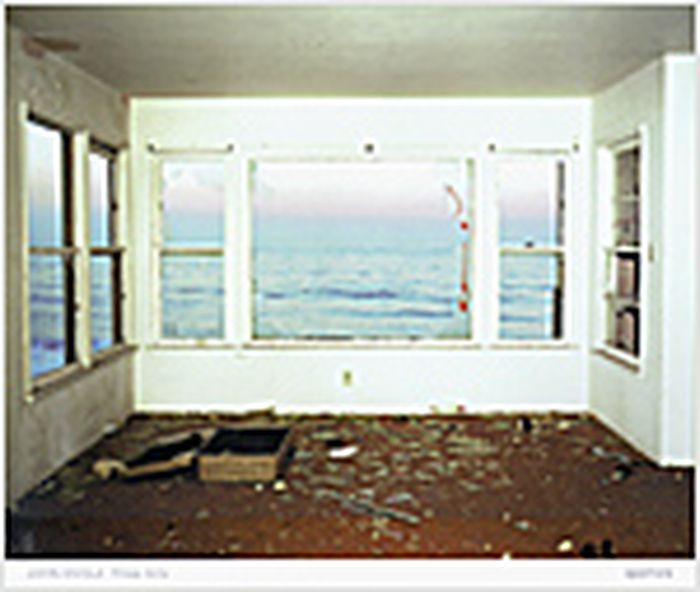
In 1973, artist John Divola began the first of three highly ambitious and original bodies of work that together form this publication. The Vandalism series comprises black-and-white photographs of interiors of abandoned houses. Entering illegally, Divola spray painted expressive markings in the forms of dots, lines, and grids, creating a series of conceptual gestures that referenced “action painting” as readily as the graffiti that was fast becoming a cultural phenomenon. The following year, Divola began the Los Angeles International Airport Noise Abatement series, photographing a condemned neighborhood bought out by the airport to serve as a noise buffer for new runways.An extensive catalog of break-ins, the photographs record the evidence of violent entries: shattered windows, doors torn from hinges, a crowbar resting in the jamb of a door pried open. The final installment in this book, the Zuma series, is the artist’s documentation of the destruction of an abandoned beachfront property. While employing similar strategies of painting and intervention, the Zuma images add variation and complexity to Divola’s established themes as they incorporate color, elements of nature, and meditation on change. These cyclical images skillfully juxtapose romantic skies and sunsets with a seaside structure that, frame by frame, deteriorates into ruin as it is vandalized by the artist and others who eventually set it on fire. Divola’s art practice shares a tradition with conceptual artists such as Bruce Nauman, whose photographs are considered to be performance or sculpture, and Robert Smithson, who used photography to investigate the built environment.
John Divola : three acts
Actions:
Prix:
$60.00
(disponible sur commande)
Résumé:
In 1973, artist John Divola began the first of three highly ambitious and original bodies of work that together form this publication. The Vandalism series comprises black-and-white photographs of interiors of abandoned houses. Entering illegally, Divola spray painted expressive markings in the forms of dots, lines, and grids, creating a series of conceptual gestures that referenced “action painting” as readily as the graffiti that was fast becoming a cultural phenomenon. The following year, Divola began the Los Angeles International Airport Noise Abatement series, photographing a condemned neighborhood bought out by the airport to serve as a noise buffer for new runways.An extensive catalog of break-ins, the photographs record the evidence of violent entries: shattered windows, doors torn from hinges, a crowbar resting in the jamb of a door pried open. The final installment in this book, the Zuma series, is the artist’s documentation of the destruction of an abandoned beachfront property. While employing similar strategies of painting and intervention, the Zuma images add variation and complexity to Divola’s established themes as they incorporate color, elements of nature, and meditation on change. These cyclical images skillfully juxtapose romantic skies and sunsets with a seaside structure that, frame by frame, deteriorates into ruin as it is vandalized by the artist and others who eventually set it on fire. Divola’s art practice shares a tradition with conceptual artists such as Bruce Nauman, whose photographs are considered to be performance or sculpture, and Robert Smithson, who used photography to investigate the built environment.
Classification:
livres
livres
Publication:
mai 2006, New York
mai 2006, New York
Sujet:
Monographies photo
Monographies photo
Classification:
livres
livres
Titre:
Olafur Eliasson
Olafur Eliasson
Actions:
Prix:
$59.95
(disponible sur commande)
Résumé:
Né au Danemark, Eliasson travaille aujourd hui à Berlin. Il reconstitue dans l'espace de la galerie les fragments d'une contrée lointaine et transforme en sculptures des sensations immatérielles ou des phénomènes invisibles. Une simple ouverture circulaire au plafond d'une galerie de Los Angeles, par exemple, suffit à donner l'illusion d'un pâle soleil scandinave et à(...)
$59.95
(disponible sur commande)
Résumé:
Né au Danemark, Eliasson travaille aujourd hui à Berlin. Il reconstitue dans l'espace de la galerie les fragments d'une contrée lointaine et transforme en sculptures des sensations immatérielles ou des phénomènes invisibles. Une simple ouverture circulaire au plafond d'une galerie de Los Angeles, par exemple, suffit à donner l'illusion d'un pâle soleil scandinave et à(...)
Publication:
juin 2007, Paris
juin 2007, Paris
Titre:
Olafur Eliasson
Actions:
Prix:
$59.95
(disponible sur commande)
Résumé:
Né au Danemark, Eliasson travaille aujourd hui à Berlin. Il reconstitue dans l'espace de la galerie les fragments d'une contrée lointaine et transforme en sculptures des sensations immatérielles ou des phénomènes invisibles. Une simple ouverture circulaire au plafond d'une galerie de Los Angeles, par exemple, suffit à donner l'illusion d'un pâle soleil scandinave et à fabriquer un cadran solaire géant, évoquant à la fois les découpes architecturales de Gordon Matta-Clark et l'oculus du Panthéon de Rome. Les ouvres sereines et magnifiques d'Eliasson, inspirées par les thèmes de la nature, de la solitude et de l'introspection, ont été présentées dans les grandes manifestations internationales d'art contemporain, dont la Biennale de Venise en 1999. Dans son essai, la conservatrice Madeleine Grynsztejn étudie la démarche singulière d un artiste qui mêle l'innovation technologique à son art. Le critique et conservateur Daniel Birnbaum s'entretient avec l'artiste de l'implantation des ouvres et de leur environnement immédiat, dans et à l'extérieur du musée. Dans «Focus», le théoricien de l'architecture Michael Speaks se penche sur l'intervention d'Eliasson «Green river» (1998), qu'il compare au film tourné par Antonioni en 1964, «Le Désert rouge». L'artiste a choisi un extrait de L'Évolution créatrice d'Henri Bergson (1907) qui traite de notre rapport subjectif et visuel à la nature, thème également central de son art. Les écrits d'Olafur Eliasson rassemblent un essai sur le plus banal des sujets, le temps qu il fait, et une lettre ouverte intitulée «Chers tous», adressée à tous les spectateurs de ses ouvres sensuelles et sophistiquées.
Olafur Eliasson
Actions:
Prix:
$59.95
(disponible sur commande)
Résumé:
Né au Danemark, Eliasson travaille aujourd hui à Berlin. Il reconstitue dans l'espace de la galerie les fragments d'une contrée lointaine et transforme en sculptures des sensations immatérielles ou des phénomènes invisibles. Une simple ouverture circulaire au plafond d'une galerie de Los Angeles, par exemple, suffit à donner l'illusion d'un pâle soleil scandinave et à fabriquer un cadran solaire géant, évoquant à la fois les découpes architecturales de Gordon Matta-Clark et l'oculus du Panthéon de Rome. Les ouvres sereines et magnifiques d'Eliasson, inspirées par les thèmes de la nature, de la solitude et de l'introspection, ont été présentées dans les grandes manifestations internationales d'art contemporain, dont la Biennale de Venise en 1999. Dans son essai, la conservatrice Madeleine Grynsztejn étudie la démarche singulière d un artiste qui mêle l'innovation technologique à son art. Le critique et conservateur Daniel Birnbaum s'entretient avec l'artiste de l'implantation des ouvres et de leur environnement immédiat, dans et à l'extérieur du musée. Dans «Focus», le théoricien de l'architecture Michael Speaks se penche sur l'intervention d'Eliasson «Green river» (1998), qu'il compare au film tourné par Antonioni en 1964, «Le Désert rouge». L'artiste a choisi un extrait de L'Évolution créatrice d'Henri Bergson (1907) qui traite de notre rapport subjectif et visuel à la nature, thème également central de son art. Les écrits d'Olafur Eliasson rassemblent un essai sur le plus banal des sujets, le temps qu il fait, et une lettre ouverte intitulée «Chers tous», adressée à tous les spectateurs de ses ouvres sensuelles et sophistiquées.
Classification:
livres
livres
Publication:
juin 2007, Paris
juin 2007, Paris
Classification:
livres
livres
Titre:
The new downtown library
The new downtown library
Actions:
Prix:
$45.00
(disponible sur commande)
Résumé:
The past twenty years have seen a building boom for downtown public libraries. From Brooklyn to Seattle, architects, civic leaders, and citizens in major U.S. cities have worked to reassert the relevance of the central library. While the libraries’ primary functions—as public spaces where information is gathered, organized, preserved, and made available for use—have not(...)
$45.00
(disponible sur commande)
Résumé:
The past twenty years have seen a building boom for downtown public libraries. From Brooklyn to Seattle, architects, civic leaders, and citizens in major U.S. cities have worked to reassert the relevance of the central library. While the libraries’ primary functions—as public spaces where information is gathered, organized, preserved, and made available for use—have not(...)
Publication:
janvier 2007, Minneapolis / London
janvier 2007, Minneapolis / London
Titre:
The new downtown library
Actions:
Prix:
$45.00
(disponible sur commande)
Résumé:
The past twenty years have seen a building boom for downtown public libraries. From Brooklyn to Seattle, architects, civic leaders, and citizens in major U.S. cities have worked to reassert the relevance of the central library. While the libraries’ primary functions—as public spaces where information is gathered, organized, preserved, and made available for use—have not changed over the years, the processes by which they accomplish these goals have. These new processes, and the public debates surrounding them, have radically influenced the utility and design of new library buildings. In The New Downtown Library, Shannon Mattern draws on a diverse range of sources to investigate how libraries serve as multiuse public spaces, anchors in urban redevelopment, civic icons, and showcases of renowned architects like Rem Koolhaas, Cesar Pelli, and Enrique Norton. Mattern’s clear and careful analysis reveals the complexity of contemporary dialogues in library design, highlighting the roles that staff, the public, and other special interest groups play. Mattern also describes how the libraries manifest changing demographics, new ways of organizing collections and delivering media, and current philosophies of librarianship. By identifying unifying themes as well as examining the differences among various design projects, Mattern brings to light the social forces, as well as their architectural expressions, that form the essence of new libraries and their vital place in public life. Featured libraries are located in Brooklyn, Cincinnati, Cleveland, Chicago, Denver, Los Angeles, Minneapolis, Nashville, New York, Phoenix, Salt Lake City, San Antonio, San Francisco, Seattle, and Toledo.
The new downtown library
Actions:
Prix:
$45.00
(disponible sur commande)
Résumé:
The past twenty years have seen a building boom for downtown public libraries. From Brooklyn to Seattle, architects, civic leaders, and citizens in major U.S. cities have worked to reassert the relevance of the central library. While the libraries’ primary functions—as public spaces where information is gathered, organized, preserved, and made available for use—have not changed over the years, the processes by which they accomplish these goals have. These new processes, and the public debates surrounding them, have radically influenced the utility and design of new library buildings. In The New Downtown Library, Shannon Mattern draws on a diverse range of sources to investigate how libraries serve as multiuse public spaces, anchors in urban redevelopment, civic icons, and showcases of renowned architects like Rem Koolhaas, Cesar Pelli, and Enrique Norton. Mattern’s clear and careful analysis reveals the complexity of contemporary dialogues in library design, highlighting the roles that staff, the public, and other special interest groups play. Mattern also describes how the libraries manifest changing demographics, new ways of organizing collections and delivering media, and current philosophies of librarianship. By identifying unifying themes as well as examining the differences among various design projects, Mattern brings to light the social forces, as well as their architectural expressions, that form the essence of new libraries and their vital place in public life. Featured libraries are located in Brooklyn, Cincinnati, Cleveland, Chicago, Denver, Los Angeles, Minneapolis, Nashville, New York, Phoenix, Salt Lake City, San Antonio, San Francisco, Seattle, and Toledo.
Classification:
livres
livres
Publication:
janvier 2007, Minneapolis / London
janvier 2007, Minneapolis / London
Classification:
livres
livres
Prix:
$40.95
(disponible sur commande)
Résumé:
Vast interior spaces have become ubiquitous in the contemporary city. The soaring atriums and concourses of mega-hotels, shopping malls and transport interchanges define an increasingly normal experience of being 'inside' in a city. Yet such spaces are also subject to intense criticism and claims that they can destroy the quality of a city's authentic life 'on the(...)
$40.95
(disponible sur commande)
Résumé:
Vast interior spaces have become ubiquitous in the contemporary city. The soaring atriums and concourses of mega-hotels, shopping malls and transport interchanges define an increasingly normal experience of being 'inside' in a city. Yet such spaces are also subject to intense criticism and claims that they can destroy the quality of a city's authentic life 'on the(...)
Titre:
Interior urbanism: architecture, John Portman and downtown America
Actions:
Prix:
$40.95
(disponible sur commande)
Résumé:
Vast interior spaces have become ubiquitous in the contemporary city. The soaring atriums and concourses of mega-hotels, shopping malls and transport interchanges define an increasingly normal experience of being 'inside' in a city. Yet such spaces are also subject to intense criticism and claims that they can destroy the quality of a city's authentic life 'on the outside'. ''Interior Urbanism'' explores the roots of this contemporary tension between inside and outside, identifying and analysing the concept of interior urbanism and tracing its history back to the works of John Portman and Associates in 1960s and 70s America. Portman – increasingly recognised as an influential yet understudied figure – was responsible for projects such as Peachtree Center in Atlanta and the Los Angeles Bonaventure Hotel, developments that employed vast internal atriums to define a world of possibilities not just for hotels and commercial spaces, but for the future of the American downtown amid the upheavals of the 1960s and 70s. The book analyses Portman's architecture in order to reconsider major contexts of debate in architecture and urbanism in this period, including the massive expansion of a commercial imperative in architecture, shifts in the governance and development of cities amid social and economic instability, the rise of postmodernism and critical urban studies, and the defence of the street and public space amid the continual upheavals of urban development. In this way the book reconsiders the American city at a crucial time in its development, identifying lessons for how we consider the forces at work, and the spaces produced, in cities in the present.
Interior urbanism: architecture, John Portman and downtown America
Actions:
Prix:
$40.95
(disponible sur commande)
Résumé:
Vast interior spaces have become ubiquitous in the contemporary city. The soaring atriums and concourses of mega-hotels, shopping malls and transport interchanges define an increasingly normal experience of being 'inside' in a city. Yet such spaces are also subject to intense criticism and claims that they can destroy the quality of a city's authentic life 'on the outside'. ''Interior Urbanism'' explores the roots of this contemporary tension between inside and outside, identifying and analysing the concept of interior urbanism and tracing its history back to the works of John Portman and Associates in 1960s and 70s America. Portman – increasingly recognised as an influential yet understudied figure – was responsible for projects such as Peachtree Center in Atlanta and the Los Angeles Bonaventure Hotel, developments that employed vast internal atriums to define a world of possibilities not just for hotels and commercial spaces, but for the future of the American downtown amid the upheavals of the 1960s and 70s. The book analyses Portman's architecture in order to reconsider major contexts of debate in architecture and urbanism in this period, including the massive expansion of a commercial imperative in architecture, shifts in the governance and development of cities amid social and economic instability, the rise of postmodernism and critical urban studies, and the defence of the street and public space amid the continual upheavals of urban development. In this way the book reconsiders the American city at a crucial time in its development, identifying lessons for how we consider the forces at work, and the spaces produced, in cities in the present.
Classification:
livres
livres
Publication:
août 2016
août 2016
Sujet:
Théorie de l’architecture
Théorie de l’architecture
Classification:
livres
livres
Actions:
Prix:
$66.50
(disponible sur commande)
Résumé:
During the 1970s, the National Endowment for the Arts Photography Surveys granted money to photograph American cities at the bicentennial and years that followed. In “Through the Lens of the City: NEA Photography Surveys of the 1970s”, Mark Rice brings to light this long-neglected photographic endeavour. From 1976 to 1981, the NEA supported more than seventy projects(...)
$66.50
(disponible sur commande)
Résumé:
During the 1970s, the National Endowment for the Arts Photography Surveys granted money to photograph American cities at the bicentennial and years that followed. In “Through the Lens of the City: NEA Photography Surveys of the 1970s”, Mark Rice brings to light this long-neglected photographic endeavour. From 1976 to 1981, the NEA supported more than seventy projects(...)
Titre:
Through the lens of the city : NEA photography surveys of the 1970s
Actions:
Prix:
$66.50
(disponible sur commande)
Résumé:
During the 1970s, the National Endowment for the Arts Photography Surveys granted money to photograph American cities at the bicentennial and years that followed. In “Through the Lens of the City: NEA Photography Surveys of the 1970s”, Mark Rice brings to light this long-neglected photographic endeavour. From 1976 to 1981, the NEA supported more than seventy projects that examined a wide range of people and places in America. Artists involved included such well known photographers as Bruce Davidson, Lee Friedlander, and Joel Meyerowitz and many photographers who became widely known after their work with the surveys, such as Robert Adams, Joe Deal, Terry Evans, and Wendy Ewald. Rice argues that the NEA Photographic Surveys drew from two wells: a widespread sense of nostalgia and an intense public interest in photography. Looking at the works from eight key cities-Atlanta, Buffalo, Durham, East Baltimore, Galveston, Long Beach, Los Angeles, and Venice-the book uncovers marked differences as well as startling similarities in the concerns manifested by different photographers in far-flung places. Although the surveys are interesting both for their artistic merits and for their place in the history of American photography, they are equally important as a documentation of bicentennial-era America and a close examination of American cities. A major shift in the ideals of civil engineering and urban planning was underway in the 1970s. At the same time, ideas and theories about photography were changing along with our notions of what the city could and should be. These surveys, capturing American cities in a fascinating period of flux, show us American photographers matching artistry to subject matter in new and exciting ways.
Through the lens of the city : NEA photography surveys of the 1970s
Actions:
Prix:
$66.50
(disponible sur commande)
Résumé:
During the 1970s, the National Endowment for the Arts Photography Surveys granted money to photograph American cities at the bicentennial and years that followed. In “Through the Lens of the City: NEA Photography Surveys of the 1970s”, Mark Rice brings to light this long-neglected photographic endeavour. From 1976 to 1981, the NEA supported more than seventy projects that examined a wide range of people and places in America. Artists involved included such well known photographers as Bruce Davidson, Lee Friedlander, and Joel Meyerowitz and many photographers who became widely known after their work with the surveys, such as Robert Adams, Joe Deal, Terry Evans, and Wendy Ewald. Rice argues that the NEA Photographic Surveys drew from two wells: a widespread sense of nostalgia and an intense public interest in photography. Looking at the works from eight key cities-Atlanta, Buffalo, Durham, East Baltimore, Galveston, Long Beach, Los Angeles, and Venice-the book uncovers marked differences as well as startling similarities in the concerns manifested by different photographers in far-flung places. Although the surveys are interesting both for their artistic merits and for their place in the history of American photography, they are equally important as a documentation of bicentennial-era America and a close examination of American cities. A major shift in the ideals of civil engineering and urban planning was underway in the 1970s. At the same time, ideas and theories about photography were changing along with our notions of what the city could and should be. These surveys, capturing American cities in a fascinating period of flux, show us American photographers matching artistry to subject matter in new and exciting ways.
Classification:
livres
livres
Publication:
janvier 2005, Jackson, Mississippi
janvier 2005, Jackson, Mississippi
Sujet:
Théorie de la photographie
Théorie de la photographie
Classification:
livres
livres
Actions:
Prix:
$75.00
(disponible sur commande)
Résumé:
This large-format monograph is the first to chronicle exclusively Shigeru Ban’s explorations in "paper architecture." Informed by a thorough and early interest in sustainable forms, his innovative practice pioneered the use of paper as a structural element in buildings. This book features permanent and temporary structures, ranging from one-off museums and exhibition(...)
$75.00
(disponible sur commande)
Résumé:
This large-format monograph is the first to chronicle exclusively Shigeru Ban’s explorations in "paper architecture." Informed by a thorough and early interest in sustainable forms, his innovative practice pioneered the use of paper as a structural element in buildings. This book features permanent and temporary structures, ranging from one-off museums and exhibition(...)
Titre:
Shigeru Ban: paper in architecture
Actions:
Prix:
$75.00
(disponible sur commande)
Résumé:
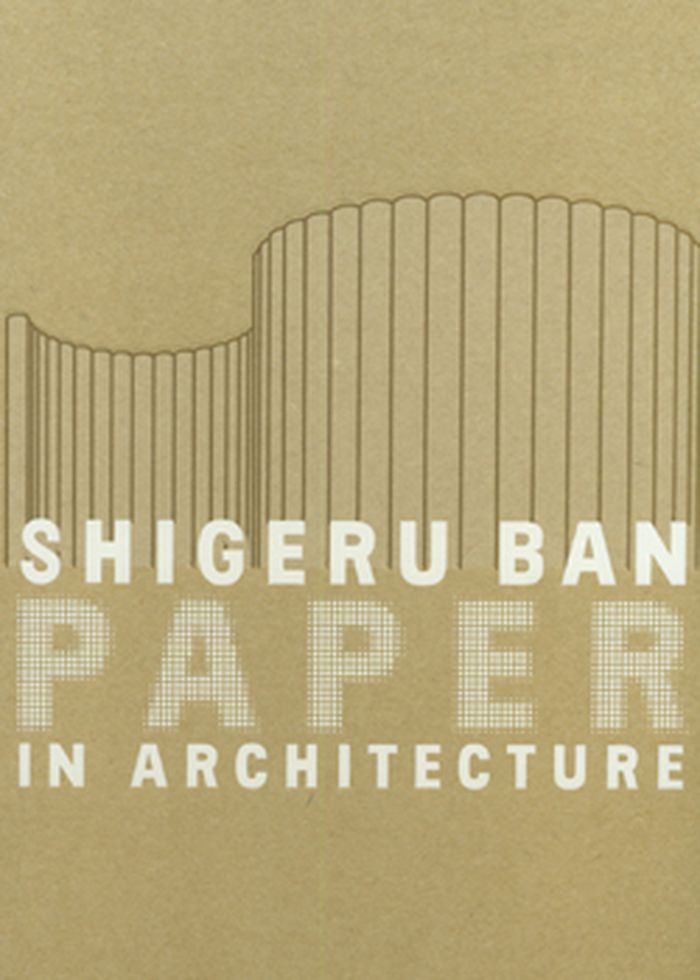
This large-format monograph is the first to chronicle exclusively Shigeru Ban’s explorations in "paper architecture." Informed by a thorough and early interest in sustainable forms, his innovative practice pioneered the use of paper as a structural element in buildings. This book features permanent and temporary structures, ranging from one-off museums and exhibition spaces to emergency structures for communities displaced by natural and man-made catastrophes. The forty projects featured in the book showcase the variety of possible applications for paper and its derivative forms (cardboard, fiber-based composites). As flexible as it is adaptable, when used in tandem with other locally sourced building materials or post-industrial surplus (maritime shipping containers), Ban’s singular use of paper knowingly references paper’s traditional uses in vernacular Japanese buildings, and advances modern construction technology, reducing its environmental impact. A number of prominent works from the last decade are featured, including the Nomadic Museums built in New York, Los Angeles, and Tokyo, his work for the Centre Pompidou in Paris and Metz, the Papertainer Museum in Seoul, his pavilions for design and luxury brands like Louis Vuitton and Artek, as well as a number of landmark residences in Japan, Europe, and North America. Of particular focus will be Ban’s humanitarian work. Documented in a book for the first time are all the relief projects his studio has undertaken in the last two decades for the U.N. High Commission on Refugees. These include housing for tsunami victims in Sri Lanka and earthquake victims in Turkey and Japan, and emergency shelter for war-ravaged communities in Rwanda and the Congo.
Shigeru Ban: paper in architecture
Actions:
Prix:
$75.00
(disponible sur commande)
Résumé:
This large-format monograph is the first to chronicle exclusively Shigeru Ban’s explorations in "paper architecture." Informed by a thorough and early interest in sustainable forms, his innovative practice pioneered the use of paper as a structural element in buildings. This book features permanent and temporary structures, ranging from one-off museums and exhibition spaces to emergency structures for communities displaced by natural and man-made catastrophes. The forty projects featured in the book showcase the variety of possible applications for paper and its derivative forms (cardboard, fiber-based composites). As flexible as it is adaptable, when used in tandem with other locally sourced building materials or post-industrial surplus (maritime shipping containers), Ban’s singular use of paper knowingly references paper’s traditional uses in vernacular Japanese buildings, and advances modern construction technology, reducing its environmental impact. A number of prominent works from the last decade are featured, including the Nomadic Museums built in New York, Los Angeles, and Tokyo, his work for the Centre Pompidou in Paris and Metz, the Papertainer Museum in Seoul, his pavilions for design and luxury brands like Louis Vuitton and Artek, as well as a number of landmark residences in Japan, Europe, and North America. Of particular focus will be Ban’s humanitarian work. Documented in a book for the first time are all the relief projects his studio has undertaken in the last two decades for the U.N. High Commission on Refugees. These include housing for tsunami victims in Sri Lanka and earthquake victims in Turkey and Japan, and emergency shelter for war-ravaged communities in Rwanda and the Congo.
Classification:
livres
livres
Publication:
octobre 2009
octobre 2009
Sujet:
Architecture, monographies
Architecture, monographies
Classification:
livres
livres
Prix:
$90.95
(disponible en magasin)
Résumé:
Roger Fenton (1819-1869) was England’s most celebrated and influential photographer during the 1850s, the “golden age” of this radically new medium. Fenton’s majestic pictures of cathedrals, country houses, and varied countryside were without peer in England--as were his views of the royal castles and Houses of Parliament that embodied Britain’s power. But Fenton’s(...)
$90.95
(disponible en magasin)
Résumé:
Roger Fenton (1819-1869) was England’s most celebrated and influential photographer during the 1850s, the “golden age” of this radically new medium. Fenton’s majestic pictures of cathedrals, country houses, and varied countryside were without peer in England--as were his views of the royal castles and Houses of Parliament that embodied Britain’s power. But Fenton’s(...)
Sujet:
Monographies photo
Monographies photo
Publication:
novembre 2004, New Haven, London
novembre 2004, New Haven, London
Titre:
All the mighty world : the photographs of Roger Fenton, 1852-1860
Actions:
Prix:
$90.95
(disponible en magasin)
Résumé:
Roger Fenton (1819-1869) was England’s most celebrated and influential photographer during the 1850s, the “golden age” of this radically new medium. Fenton’s majestic pictures of cathedrals, country houses, and varied countryside were without peer in England--as were his views of the royal castles and Houses of Parliament that embodied Britain’s power. But Fenton’s choice of subjects ranged more widely still: he was among the first to photograph the Kremlin and other landmarks of Moscow and Kiev; he was commissioned in 1855 to document the Crimean War, producing early war photographs; and he created theatrical Orientalist costume pictures and a startling series of lush still lifes. Fenton had first studied law and painting, but soon after he took up the camera he was making photographs that were technically superb and highly original in their handling of composition, perspective, atmosphere, and light. Always he strove to demonstrate that photography could equal the art of painting and even surpass it. He was the force behind the founding of the Photographic Society (later the Royal Photographic Society), which worked to advance the profession and encouraged the exhibition of members’ works throughout Britain. In a career of a single decade, Fenton did much to transform photography into a medium of powerful expression and visual delight. This exquisitely produced book--the first comprehensive publication on Fenton in almost twenty years--presents eighty-five of the artist’s finest photographs and discusses every aspect of his work and his remarkable career. This catalogue accompanies an exhibition on view at the National Gallery of Art, Washington, D.C. (October 17, 2004, to January 2, 2005); the J. Paul Getty Museum, Los Angeles (February 1 to April 25, 2005); The Metropolitan Museum of Art, New York (May 16 to August 14, 2005); and Tate Britain, London (September 25, 2005, to January 2, 2006).
All the mighty world : the photographs of Roger Fenton, 1852-1860
Actions:
Prix:
$90.95
(disponible en magasin)
Résumé:
Roger Fenton (1819-1869) was England’s most celebrated and influential photographer during the 1850s, the “golden age” of this radically new medium. Fenton’s majestic pictures of cathedrals, country houses, and varied countryside were without peer in England--as were his views of the royal castles and Houses of Parliament that embodied Britain’s power. But Fenton’s choice of subjects ranged more widely still: he was among the first to photograph the Kremlin and other landmarks of Moscow and Kiev; he was commissioned in 1855 to document the Crimean War, producing early war photographs; and he created theatrical Orientalist costume pictures and a startling series of lush still lifes. Fenton had first studied law and painting, but soon after he took up the camera he was making photographs that were technically superb and highly original in their handling of composition, perspective, atmosphere, and light. Always he strove to demonstrate that photography could equal the art of painting and even surpass it. He was the force behind the founding of the Photographic Society (later the Royal Photographic Society), which worked to advance the profession and encouraged the exhibition of members’ works throughout Britain. In a career of a single decade, Fenton did much to transform photography into a medium of powerful expression and visual delight. This exquisitely produced book--the first comprehensive publication on Fenton in almost twenty years--presents eighty-five of the artist’s finest photographs and discusses every aspect of his work and his remarkable career. This catalogue accompanies an exhibition on view at the National Gallery of Art, Washington, D.C. (October 17, 2004, to January 2, 2005); the J. Paul Getty Museum, Los Angeles (February 1 to April 25, 2005); The Metropolitan Museum of Art, New York (May 16 to August 14, 2005); and Tate Britain, London (September 25, 2005, to January 2, 2006).
Classification:
livres
livres
Publication:
novembre 2004, New Haven, London
novembre 2004, New Haven, London
Sujet:
Monographies photo
Monographies photo
Classification:
livres
livres
Titre:
Architecture and film
Architecture and film
Actions:
Prix:
$32.50
(disponible sur commande)
Résumé:
"Architecture and Film" looks at the ways architecture and architects are treated on screen and, conversely, how these depictions filter and shape the ways we understand the built environment. It also examines the significant effect that the film industry has had on the (...)
$32.50
(disponible sur commande)
Résumé:
"Architecture and Film" looks at the ways architecture and architects are treated on screen and, conversely, how these depictions filter and shape the ways we understand the built environment. It also examines the significant effect that the film industry has had on the (...)
Publication:
février 2000, New York
février 2000, New York
Titre:
Architecture and film
Actions:
Prix:
$32.50
(disponible sur commande)
Résumé:
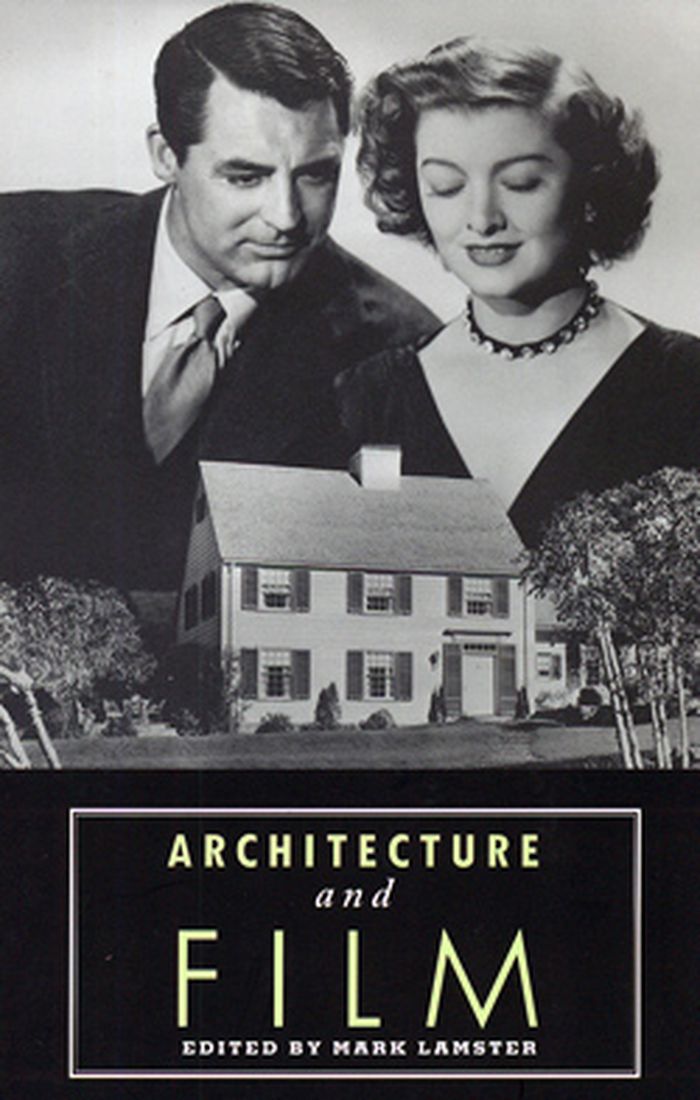
"Architecture and Film" looks at the ways architecture and architects are treated on screen and, conversely, how these depictions filter and shape the ways we understand the built environment. It also examines the significant effect that the film industry has had on the American public's perception of urban, suburban, and rural spaces. Contributors to this collection of essays come from a wide range of disciplines. Nancy Levinson writes on how films from "The Fountainhead" to "Jungle Fever" have depicted architects. Eric Rosenberg looks at how architecture and spatial relations shape the Beatles films "A Hard Day's Night", "Help!", and "Let It Be". Joseph Rosa discusses why modern domestic architecture in recent Hollywood films such as "The Ice Storm", "L.A. Confidential", and "The Big Lebowski" has become synonymous with unstable inhabitants. Peter Hall discusses the history of film titling, focusing on the groundbreaking work of Saul Bass and Maurice Binder. Editor Mark Lamster examines the anti-urbanism of the Star Wars trilogy. The collection also includes the voices of those from within the film industry, who are uniquely able to provide a "behind the scenes" perspective: film editor Bob Eisenhardt comments on the making of "Concert of Wills", a documentary on the construction of the Getty Museum; and Robert Kraft focuses on his work as a location director for Diane Keaton's upcoming film about Los Angeles. Also included are interviews with David Rockwell, architect of numerous Planet Hollywood restaurants worldwide and designer of a new hall to host the Academy Awards ceremony; Kyle Kooper, who created title sequences for "Seven" and "Mission Impossible"; and motion picture art director Jan Roelfs, whose credits include "Gattaca", "Orlando", and "Little Women". Previously priced at $41.50.
Architecture and film
Actions:
Prix:
$32.50
(disponible sur commande)
Résumé:
"Architecture and Film" looks at the ways architecture and architects are treated on screen and, conversely, how these depictions filter and shape the ways we understand the built environment. It also examines the significant effect that the film industry has had on the American public's perception of urban, suburban, and rural spaces. Contributors to this collection of essays come from a wide range of disciplines. Nancy Levinson writes on how films from "The Fountainhead" to "Jungle Fever" have depicted architects. Eric Rosenberg looks at how architecture and spatial relations shape the Beatles films "A Hard Day's Night", "Help!", and "Let It Be". Joseph Rosa discusses why modern domestic architecture in recent Hollywood films such as "The Ice Storm", "L.A. Confidential", and "The Big Lebowski" has become synonymous with unstable inhabitants. Peter Hall discusses the history of film titling, focusing on the groundbreaking work of Saul Bass and Maurice Binder. Editor Mark Lamster examines the anti-urbanism of the Star Wars trilogy. The collection also includes the voices of those from within the film industry, who are uniquely able to provide a "behind the scenes" perspective: film editor Bob Eisenhardt comments on the making of "Concert of Wills", a documentary on the construction of the Getty Museum; and Robert Kraft focuses on his work as a location director for Diane Keaton's upcoming film about Los Angeles. Also included are interviews with David Rockwell, architect of numerous Planet Hollywood restaurants worldwide and designer of a new hall to host the Academy Awards ceremony; Kyle Kooper, who created title sequences for "Seven" and "Mission Impossible"; and motion picture art director Jan Roelfs, whose credits include "Gattaca", "Orlando", and "Little Women". Previously priced at $41.50.
Classification:
livres
livres
Publication:
février 2000, New York
février 2000, New York
Classification:
livres
livres
Titre:
Japan-ness in architecture
Japan-ness in architecture
Actions:
Prix:
$35.95
(disponible sur commande)
Résumé:
Japanese architect Arata Isozaki sees buildings not as dead objects but as events that encompass the social and historical context -- not to be defined forever by their "everlasting materiality" but as texts to be interpreted and reread continually. In "Japan-ness in architecture", he identifies what is essentially Japanese in architecture from the seventh to the(...)
$35.95
(disponible sur commande)
Résumé:
Japanese architect Arata Isozaki sees buildings not as dead objects but as events that encompass the social and historical context -- not to be defined forever by their "everlasting materiality" but as texts to be interpreted and reread continually. In "Japan-ness in architecture", he identifies what is essentially Japanese in architecture from the seventh to the(...)
Sujet:
Histoire jusqu'à 1900, Asie
Histoire jusqu'à 1900, Asie
Publication:
janvier 1900, Cambridge / London
janvier 1900, Cambridge / London
Titre:
Japan-ness in architecture
Actions:
Prix:
$35.95
(disponible sur commande)
Résumé:
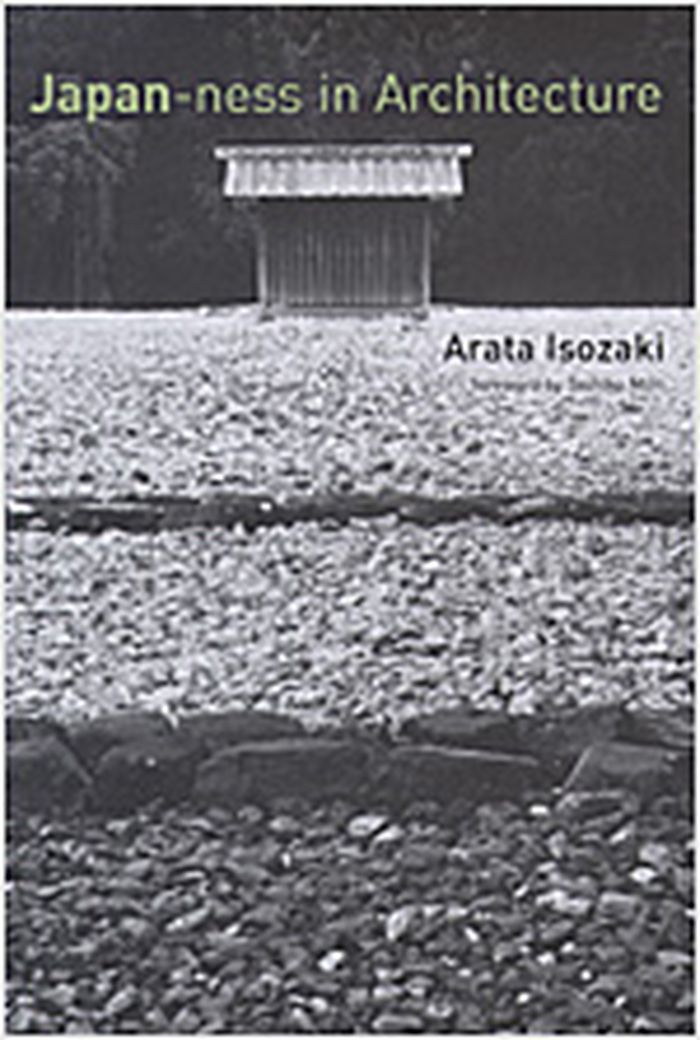
Japanese architect Arata Isozaki sees buildings not as dead objects but as events that encompass the social and historical context -- not to be defined forever by their "everlasting materiality" but as texts to be interpreted and reread continually. In "Japan-ness in architecture", he identifies what is essentially Japanese in architecture from the seventh to the twentieth century. In the opening essay, Isozaki analyzes the struggles of modern Japanese architects, including himself, to create something uniquely Japanese out of modernity. He then circles back in history to find what he calls Japan-ness in the seventh-century Ise shrine, reconstruction of the twelfth-century Todai-ji Temple, and the seventeenth-century Katsura Imperial Villa. He finds the periodic ritual relocation of Ise's precincts a counter to the West's concept of architectural permanence, and the repetition of the ritual an alternative to modernity's anxious quest for origins. He traces the "constructive power" of the Todai-ji Temple to the vision of the director of its reconstruction, the monk Chogen, whose imaginative power he sees as corresponding to the revolutionary turmoil of the times. The Katsura Imperial Villa, with its chimerical spaces, achieved its own Japan-ness as it reinvented the traditional shoin style. And yet, writes Isozaki, what others consider to be the Japanese aesthetic is often the opposite of that essential Japan-ness born in moments of historic self-definition; the purified stylization -- what Isozaki calls "Japanesquization" -- lacks the energy of cultural transformation and reflects an island retrenchment in response to the pressure of other cultures. Combining historical survey, critical analysis, theoretical reflection, and autobiographical account, these essays, written over a period of twenty years, demonstrate Isozaki's standing as one of the world's leading architects and preeminent architectural thinkers. Arata Isosaki is a leading Japanese architect. His works include the Museum of Contemporary Art, Los Angeles, the Olympic Stadium in Barcelona, the Volksbank Center am Postdamer Platz in Berlin, the Team Disney Building in Orlando, and the Tokyo University of Art and Design. Translated by Sabu Kohso. Foreword by Toshiko Mori.
Japan-ness in architecture
Actions:
Prix:
$35.95
(disponible sur commande)
Résumé:
Japanese architect Arata Isozaki sees buildings not as dead objects but as events that encompass the social and historical context -- not to be defined forever by their "everlasting materiality" but as texts to be interpreted and reread continually. In "Japan-ness in architecture", he identifies what is essentially Japanese in architecture from the seventh to the twentieth century. In the opening essay, Isozaki analyzes the struggles of modern Japanese architects, including himself, to create something uniquely Japanese out of modernity. He then circles back in history to find what he calls Japan-ness in the seventh-century Ise shrine, reconstruction of the twelfth-century Todai-ji Temple, and the seventeenth-century Katsura Imperial Villa. He finds the periodic ritual relocation of Ise's precincts a counter to the West's concept of architectural permanence, and the repetition of the ritual an alternative to modernity's anxious quest for origins. He traces the "constructive power" of the Todai-ji Temple to the vision of the director of its reconstruction, the monk Chogen, whose imaginative power he sees as corresponding to the revolutionary turmoil of the times. The Katsura Imperial Villa, with its chimerical spaces, achieved its own Japan-ness as it reinvented the traditional shoin style. And yet, writes Isozaki, what others consider to be the Japanese aesthetic is often the opposite of that essential Japan-ness born in moments of historic self-definition; the purified stylization -- what Isozaki calls "Japanesquization" -- lacks the energy of cultural transformation and reflects an island retrenchment in response to the pressure of other cultures. Combining historical survey, critical analysis, theoretical reflection, and autobiographical account, these essays, written over a period of twenty years, demonstrate Isozaki's standing as one of the world's leading architects and preeminent architectural thinkers. Arata Isosaki is a leading Japanese architect. His works include the Museum of Contemporary Art, Los Angeles, the Olympic Stadium in Barcelona, the Volksbank Center am Postdamer Platz in Berlin, the Team Disney Building in Orlando, and the Tokyo University of Art and Design. Translated by Sabu Kohso. Foreword by Toshiko Mori.
Classification:
livres
livres
Publication:
janvier 1900, Cambridge / London
janvier 1900, Cambridge / London
Sujet:
Histoire jusqu'à 1900, Asie
Histoire jusqu'à 1900, Asie


