


3106 Résultats
Classification:
livres
livres
Actions:
Exemplaires:
Description:
423 pages : illustrations ; 27 cm.
Description:
423 pages : illustrations ; 27 cm.
Auteur:
Sujet:
- Wagner, Otto, 1841-1918 Criticism and interpretation.,
- Wagner, Otto, 1841-1918.,
- Wagner, Otto, 1841-1918 Critique et interprétation.,
- Wagner, Otto (Architekt),
- Architecture Austria History 19th century.,
- Architecture Austria History 20th century.,
- Architecture Austria 19th century.,
- Architecture Austria 20th century.,
- Architecture Autriche 19e siècle.,
- Architecture Autriche 20e siècle.,
- Architecture Autriche Histoire 19e siècle.,
- Architecture Autriche Histoire 20e siècle.,
- 21.62 history of architecture.,
- Architecture.,
- Kongress,
- Bouwkunst.,
- Modernisme (cultuur),
- Architects Austria 19th century.,
- Architects Austria 20th century.,
- Austria.,
- Architecture 19th century Austria,
- Architecture 20th century Austria,
- Wagner, Otto Criticism and interpretation,
- Criticism, interpretation, etc.,
- History.
Publication:
Santa Monica, CA : Getty Center for the History of Art and the Humanities ; Chicago : Distributed by the University of Chicago Press, ©1993.
Santa Monica, CA : Getty Center for the History of Art and the Humanities ; Chicago : Distributed by the University of Chicago Press, ©1993.
Titre:
Otto Wagner : reflections on the raiment of modernity / edited by Harry Francis Mallgrave.
Actions:
Exemplaires:
Description:
423 pages : illustrations ; 27 cm.
Otto Wagner : reflections on the raiment of modernity / edited by Harry Francis Mallgrave.
Actions:
Exemplaires:
Description:
423 pages : illustrations ; 27 cm.
Classification:
livres
livres
Publication:
Santa Monica, CA : Getty Center for the History of Art and the Humanities ; Chicago : Distributed by the University of Chicago Press, ©1993.
Santa Monica, CA : Getty Center for the History of Art and the Humanities ; Chicago : Distributed by the University of Chicago Press, ©1993.
Auteur:
Sujet:
- Wagner, Otto, 1841-1918 Criticism and interpretation.,
- Wagner, Otto, 1841-1918.,
- Wagner, Otto, 1841-1918 Critique et interprétation.,
- Wagner, Otto (Architekt),
- Architecture Austria History 19th century.,
- Architecture Austria History 20th century.,
- Architecture Austria 19th century.,
- Architecture Austria 20th century.,
- Architecture Autriche 19e siècle.,
- Architecture Autriche 20e siècle.,
- Architecture Autriche Histoire 19e siècle.,
- Architecture Autriche Histoire 20e siècle.,
- 21.62 history of architecture.,
- Architecture.,
- Kongress,
- Bouwkunst.,
- Modernisme (cultuur),
- Architects Austria 19th century.,
- Architects Austria 20th century.,
- Austria.,
- Architecture 19th century Austria,
- Architecture 20th century Austria,
- Wagner, Otto Criticism and interpretation,
- Criticism, interpretation, etc.,
- History.
Classification:
livres
livres
Actions:
Exemplaires:
Description:
ix, 380 pages : illustrations, maps ; 24 cm
Description:
ix, 380 pages : illustrations, maps ; 24 cm
Auteur:
Sujet:
- Paris / Exposition Coloniale Internationale <1931>,
- Exposition coloniale internationale de Paris (1931) Buildings.,
- Exposition coloniale internationale de Paris (1931) Buildings),
- Exposition coloniale internationale de Paris (1931) Constructions.,
- Exposition coloniale internationale de Paris,
- Exposition Coloniale Internationale 1931 Paris,
- Exhibition buildings France Paris History 20th century.,
- Expositions Constructions France Paris Histoire 20e siècle.,
- Buildings,
- Exhibition buildings,
- French colonies,
- Ausstellung,
- Ausstellungsbau,
- Kolonialismus,
- Wereldtentoonstellingen.,
- Gebouwen.,
- Modernisme (cultuur),
- Exhibition buildings France Paris 20th century.,
- France Colonies Exhibitions.,
- France Colonies Expositions.,
- France Paris,
- Frankreich,
- Exhibition catalogs,
- History,
- Books.
Publication:
Cambridge, Mass. : MIT Press, ©2000.
Cambridge, Mass. : MIT Press, ©2000.
Titre:
Hybrid modernities : architecture and representation at the 1931 Colonial Exposition, Paris / Patricia A. Morton.
Actions:
Exemplaires:
Description:
ix, 380 pages : illustrations, maps ; 24 cm
Hybrid modernities : architecture and representation at the 1931 Colonial Exposition, Paris / Patricia A. Morton.
Actions:
Exemplaires:
Description:
ix, 380 pages : illustrations, maps ; 24 cm
Classification:
livres
livres
Publication:
Cambridge, Mass. : MIT Press, ©2000.
Cambridge, Mass. : MIT Press, ©2000.
Auteur:
Sujet:
- Paris / Exposition Coloniale Internationale <1931>,
- Exposition coloniale internationale de Paris (1931) Buildings.,
- Exposition coloniale internationale de Paris (1931) Buildings),
- Exposition coloniale internationale de Paris (1931) Constructions.,
- Exposition coloniale internationale de Paris,
- Exposition Coloniale Internationale 1931 Paris,
- Exhibition buildings France Paris History 20th century.,
- Expositions Constructions France Paris Histoire 20e siècle.,
- Buildings,
- Exhibition buildings,
- French colonies,
- Ausstellung,
- Ausstellungsbau,
- Kolonialismus,
- Wereldtentoonstellingen.,
- Gebouwen.,
- Modernisme (cultuur),
- Exhibition buildings France Paris 20th century.,
- France Colonies Exhibitions.,
- France Colonies Expositions.,
- France Paris,
- Frankreich,
- Exhibition catalogs,
- History,
- Books.
Classification:
livres
livres
Actions:
Exemplaires:
Description:
199 pages : illustrations (some color) ; 24 cm
Description:
199 pages : illustrations (some color) ; 24 cm
Auteur:
- Pompidou, Georges, 1911-1974.,
- Galerie nationale du jeu de paume (France),
- Centre Georges Pompidou.
Sujet:
- Pompidou, Georges, 1911-1974 Exhibitions.,
- Pompidou, Georges, 1911-1974,
- Pompidou, Georges, (1911-1974) Et la littérature Catalogues d'exposition.,
- Pompidou, Georges, (1911-1974) Et la culture Catalogues d'exposition.,
- Pompidou, Georges, (1911-1974) Et l'art Catalogues d'exposition.,
- Pompidou, Georges, (1911-1974) Et la musique Catalogues d'exposition.,
- Centre Georges Pompidou Exhibitions.,
- Galerie nationale du jeu de paume (France) Catalogs.,
- Centre Georges Pompidou Expositions.,
- Centre Georges Pompidou Histoire Expositions.,
- Centre Georges Pompidou,
- Galerie nationale du jeu de paume (France),
- Arts, French 20th century Exhibitions.,
- Art and state France Paris History 20th century Exhibitions.,
- Arts français 20e siècle Expositions.,
- Art Politique gouvernementale France Paris Histoire 20e siècle Expositions.,
- 20.30 history of art: general.,
- Art and state,
- Arts, French,
- Modernisme (cultuur),
- Kunst.,
- Collectionneurs et collections France 20e siècle.,
- Art 20e siècle Catalogues d'exposition.,
- Paris Expositions 1999.,
- Paris, Galerie nationale du Jeu de Paume Expositions 1999.,
- France Cultural policy Exhibitions.,
- France Politique culturelle Expositions.,
- France Paris,
- France Politique culturelle 1945- ...,
- Contemporary art,
- Exhibition catalogues.,
- Interviews.,
- Correspondence.,
- Exhibition catalogs.,
- catalogs (documents),
- Catalogs,
- History,
- Exhibitions (form),
- Catalogues.
Publication:
Paris : Editions du Jeu de Paume ; Paris : Centre Georges Pompidou, 1999.
Paris : Editions du Jeu de Paume ; Paris : Centre Georges Pompidou, 1999.
Titre:
Georges Pompidou et la modernité.
Actions:
Exemplaires:
Description:
199 pages : illustrations (some color) ; 24 cm
Georges Pompidou et la modernité.
Actions:
Exemplaires:
Description:
199 pages : illustrations (some color) ; 24 cm
Classification:
livres
livres
Publication:
Paris : Editions du Jeu de Paume ; Paris : Centre Georges Pompidou, 1999.
Paris : Editions du Jeu de Paume ; Paris : Centre Georges Pompidou, 1999.
Auteur:
- Pompidou, Georges, 1911-1974.,
- Galerie nationale du jeu de paume (France),
- Centre Georges Pompidou.
Sujet:
- Pompidou, Georges, 1911-1974 Exhibitions.,
- Pompidou, Georges, 1911-1974,
- Pompidou, Georges, (1911-1974) Et la littérature Catalogues d'exposition.,
- Pompidou, Georges, (1911-1974) Et la culture Catalogues d'exposition.,
- Pompidou, Georges, (1911-1974) Et l'art Catalogues d'exposition.,
- Pompidou, Georges, (1911-1974) Et la musique Catalogues d'exposition.,
- Centre Georges Pompidou Exhibitions.,
- Galerie nationale du jeu de paume (France) Catalogs.,
- Centre Georges Pompidou Expositions.,
- Centre Georges Pompidou Histoire Expositions.,
- Centre Georges Pompidou,
- Galerie nationale du jeu de paume (France),
- Arts, French 20th century Exhibitions.,
- Art and state France Paris History 20th century Exhibitions.,
- Arts français 20e siècle Expositions.,
- Art Politique gouvernementale France Paris Histoire 20e siècle Expositions.,
- 20.30 history of art: general.,
- Art and state,
- Arts, French,
- Modernisme (cultuur),
- Kunst.,
- Collectionneurs et collections France 20e siècle.,
- Art 20e siècle Catalogues d'exposition.,
- Paris Expositions 1999.,
- Paris, Galerie nationale du Jeu de Paume Expositions 1999.,
- France Cultural policy Exhibitions.,
- France Politique culturelle Expositions.,
- France Paris,
- France Politique culturelle 1945- ...,
- Contemporary art,
- Exhibition catalogues.,
- Interviews.,
- Correspondence.,
- Exhibition catalogs.,
- catalogs (documents),
- Catalogs,
- History,
- Exhibitions (form),
- Catalogues.
Classification:
livres
livres
Actions:
Prix:
$56.95
(disponible en magasin)
Résumé:
''Bedtime stories for architects'' is a compendium of texts, built works and graphic work by Peter Wilson. It offers glimpses of buildings by the German based office of BOLLES+WILSON, but it is not a monograph, it presents a cloud of discursive subjects and narratives, evidencing Wilson’s take on a wide range of academic, technical, cultural, and architectural issues. It(...)
$56.95
(disponible en magasin)
Résumé:
''Bedtime stories for architects'' is a compendium of texts, built works and graphic work by Peter Wilson. It offers glimpses of buildings by the German based office of BOLLES+WILSON, but it is not a monograph, it presents a cloud of discursive subjects and narratives, evidencing Wilson’s take on a wide range of academic, technical, cultural, and architectural issues. It(...)
Titre:
Bedtime stories for Architects
Actions:
Prix:
$56.95
(disponible en magasin)
Résumé:
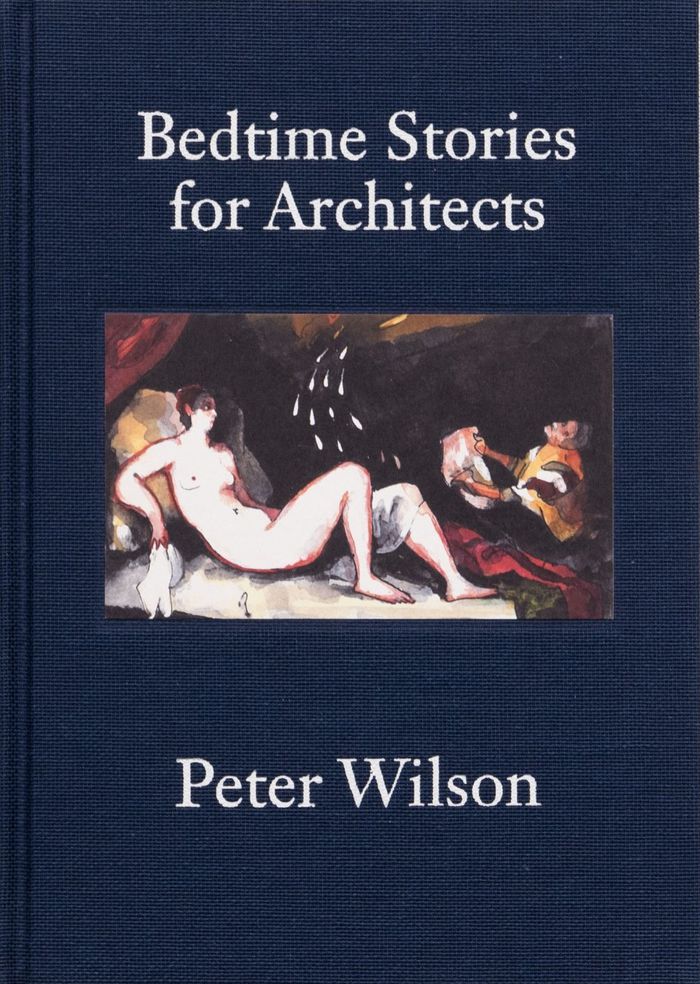
''Bedtime stories for architects'' is a compendium of texts, built works and graphic work by Peter Wilson. It offers glimpses of buildings by the German based office of BOLLES+WILSON, but it is not a monograph, it presents a cloud of discursive subjects and narratives, evidencing Wilson’s take on a wide range of academic, technical, cultural, and architectural issues. It has been called ‘tremendously cutting-edge’, perhaps because of the wry humor of the stories and Wilson’s witty and intelligent drawings – these extend to satirical portraits of – bankers, estate agents, property developers and a few OK people. Much of the book is organized alphabetically like a children’s book – A is for Albania, C is for Counterfactual Histories, G is for Guggenheim, M is for Malevich, O is for Olgiati, R is for Ritual. Counterfactual Histories (a concept from Borges) are paint-shop illustrated as surprising, poetic and enigmatic landscapes. ‘A Blue Review’ deconstructs a book on colour in architecture. Between the enigmatic graphic works are longer texts including Wilson’s extensive analysis of Studio Mumbai (first published in El Croquis), a longer investigation of the Swiss architect Valerio Olgiati and a history of Modernism in Wilson’s home country Australia.
Bedtime stories for Architects
Actions:
Prix:
$56.95
(disponible en magasin)
Résumé:
''Bedtime stories for architects'' is a compendium of texts, built works and graphic work by Peter Wilson. It offers glimpses of buildings by the German based office of BOLLES+WILSON, but it is not a monograph, it presents a cloud of discursive subjects and narratives, evidencing Wilson’s take on a wide range of academic, technical, cultural, and architectural issues. It has been called ‘tremendously cutting-edge’, perhaps because of the wry humor of the stories and Wilson’s witty and intelligent drawings – these extend to satirical portraits of – bankers, estate agents, property developers and a few OK people. Much of the book is organized alphabetically like a children’s book – A is for Albania, C is for Counterfactual Histories, G is for Guggenheim, M is for Malevich, O is for Olgiati, R is for Ritual. Counterfactual Histories (a concept from Borges) are paint-shop illustrated as surprising, poetic and enigmatic landscapes. ‘A Blue Review’ deconstructs a book on colour in architecture. Between the enigmatic graphic works are longer texts including Wilson’s extensive analysis of Studio Mumbai (first published in El Croquis), a longer investigation of the Swiss architect Valerio Olgiati and a history of Modernism in Wilson’s home country Australia.
Classification:
livres
livres
Publication:
juin 2023
juin 2023
Sujet:
Théorie de l’architecture
Théorie de l’architecture
Classification:
livres
livres
Actions:
Prix:
$69.00
(disponible sur commande)
Résumé:
After the Second World War, talented young architects including several from Switzerland, turned to the task of promoting the ideals of Modernism. Their main interest lay in furthering the new design and construction methods which were then being made possible by industrial prefabrication and montage, eve considering and incorporating them at the design stage. The time(...)
$69.00
(disponible sur commande)
Résumé:
After the Second World War, talented young architects including several from Switzerland, turned to the task of promoting the ideals of Modernism. Their main interest lay in furthering the new design and construction methods which were then being made possible by industrial prefabrication and montage, eve considering and incorporating them at the design stage. The time(...)
Publication:
avril 2002, Basel
avril 2002, Basel
Titre:
Post-war modernity in Switzerland : architecture by Werner Frey, Franz Füeg, Jacques Schader, Jakob Zweifel
Actions:
Prix:
$69.00
(disponible sur commande)
Résumé:
After the Second World War, talented young architects including several from Switzerland, turned to the task of promoting the ideals of Modernism. Their main interest lay in furthering the new design and construction methods which were then being made possible by industrial prefabrication and montage, eve considering and incorporating them at the design stage. The time has now come to review this chapter of recent architectural history. This publication focuses on four architects: Werner Frey (1912-1989), Franz Füeg (born 1921), Jacques Schader (born 1917) and Jacob Zweifel (born 1921). This group of Zurich architects created buildings which can be seen to embody the typical features of the architecture emerging from the late 1950s, 1960s, and early 1970s : fastidious construction methods, a structural approach to designing brought about by increased use of prefabricated parts, an awareness of different social needs of the individual and the group which were subsequently reflected in the designs. Using a wealth of historical illustrations together with photographs by Doris Fanconis and 8 documentary films by Georg Radanowicz, visually interpreting the architecture from a contemporary viewpoint, this book is an invaluable documentation and analysis of those buildings which are of consequence for today's architecture.
Post-war modernity in Switzerland : architecture by Werner Frey, Franz Füeg, Jacques Schader, Jakob Zweifel
Actions:
Prix:
$69.00
(disponible sur commande)
Résumé:
After the Second World War, talented young architects including several from Switzerland, turned to the task of promoting the ideals of Modernism. Their main interest lay in furthering the new design and construction methods which were then being made possible by industrial prefabrication and montage, eve considering and incorporating them at the design stage. The time has now come to review this chapter of recent architectural history. This publication focuses on four architects: Werner Frey (1912-1989), Franz Füeg (born 1921), Jacques Schader (born 1917) and Jacob Zweifel (born 1921). This group of Zurich architects created buildings which can be seen to embody the typical features of the architecture emerging from the late 1950s, 1960s, and early 1970s : fastidious construction methods, a structural approach to designing brought about by increased use of prefabricated parts, an awareness of different social needs of the individual and the group which were subsequently reflected in the designs. Using a wealth of historical illustrations together with photographs by Doris Fanconis and 8 documentary films by Georg Radanowicz, visually interpreting the architecture from a contemporary viewpoint, this book is an invaluable documentation and analysis of those buildings which are of consequence for today's architecture.
Classification:
livres
livres
Publication:
avril 2002, Basel
avril 2002, Basel
Classification:
livres
livres
Prix:
$49.95
(disponible sur commande)
Résumé:
For almost ten years, Samuel Mockbee, a recent McArthur "genius grant" recipient, and his architecture students at Auburn University have been designing and building striking houses and community buildings for impoverished residents of Alabama's Hale County. Using salvaged lumber and bricks, discarded tires, hay and waste cardboard bales, concrete rubble, coloured(...)
$49.95
(disponible sur commande)
Résumé:
For almost ten years, Samuel Mockbee, a recent McArthur "genius grant" recipient, and his architecture students at Auburn University have been designing and building striking houses and community buildings for impoverished residents of Alabama's Hale County. Using salvaged lumber and bricks, discarded tires, hay and waste cardboard bales, concrete rubble, coloured(...)
Sujet:
Architecture, monographies
Architecture, monographies
Publication:
février 2002, New York
février 2002, New York
Titre:
Rural Studio : Samuel Mockbee and an architecture of decency
Actions:
Prix:
$49.95
(disponible sur commande)
Résumé:
For almost ten years, Samuel Mockbee, a recent McArthur "genius grant" recipient, and his architecture students at Auburn University have been designing and building striking houses and community buildings for impoverished residents of Alabama's Hale County. Using salvaged lumber and bricks, discarded tires, hay and waste cardboard bales, concrete rubble, coloured bottles, and old license plates, they create inexpensive buildings in a style Mockbee describes as "contemporary modernism grounded in Southern culture." In a time when architectural attention focuses on large, glossy urban projects and palatial homes, the Rural Studio provides an alternative of substance. In addition to being a social welfare venture, the Rural Studio is also and educational experiment and a prod to the architectural profession to act on its best instincts. By giving students hands-on experience in designing and building something real, it extends their education beyond paper architecture. And in scavenging and reusing a variety of unusual materials, it is a model of sustainable architecture. The work of the Rural Studio has struck such a chord--both architecturally and socially--that it has been featured on "Oprah," "Nightline," and "CBS News," as well as "Time" and "People" magazines.
Rural Studio : Samuel Mockbee and an architecture of decency
Actions:
Prix:
$49.95
(disponible sur commande)
Résumé:
For almost ten years, Samuel Mockbee, a recent McArthur "genius grant" recipient, and his architecture students at Auburn University have been designing and building striking houses and community buildings for impoverished residents of Alabama's Hale County. Using salvaged lumber and bricks, discarded tires, hay and waste cardboard bales, concrete rubble, coloured bottles, and old license plates, they create inexpensive buildings in a style Mockbee describes as "contemporary modernism grounded in Southern culture." In a time when architectural attention focuses on large, glossy urban projects and palatial homes, the Rural Studio provides an alternative of substance. In addition to being a social welfare venture, the Rural Studio is also and educational experiment and a prod to the architectural profession to act on its best instincts. By giving students hands-on experience in designing and building something real, it extends their education beyond paper architecture. And in scavenging and reusing a variety of unusual materials, it is a model of sustainable architecture. The work of the Rural Studio has struck such a chord--both architecturally and socially--that it has been featured on "Oprah," "Nightline," and "CBS News," as well as "Time" and "People" magazines.
Classification:
livres
livres
Publication:
février 2002, New York
février 2002, New York
Sujet:
Architecture, monographies
Architecture, monographies
Classification:
livres
livres
Prix:
$38.95
(disponible sur commande)
Résumé:
Thanks to digital technology and post-structuralist thought, architects and artists are facing a brave new world of bodies without organs, buildings that circumscribe their function, and art that forms a prosthetic hard drive for our consciousness. In this schema, technology, which Marshal McLuhan theorized as the extension of our bodies into the world, has become(...)
$38.95
(disponible sur commande)
Résumé:
Thanks to digital technology and post-structuralist thought, architects and artists are facing a brave new world of bodies without organs, buildings that circumscribe their function, and art that forms a prosthetic hard drive for our consciousness. In this schema, technology, which Marshal McLuhan theorized as the extension of our bodies into the world, has become(...)
Sujet:
Théorie de l’architecture
Théorie de l’architecture
Publication:
août 2004, New York
août 2004, New York
Titre:
Beyond form : architecture and art in the space of media
Actions:
Prix:
$38.95
(disponible sur commande)
Résumé:
Thanks to digital technology and post-structuralist thought, architects and artists are facing a brave new world of bodies without organs, buildings that circumscribe their function, and art that forms a prosthetic hard drive for our consciousness. In this schema, technology, which Marshal McLuhan theorized as the extension of our bodies into the world, has become inverted and is now literally seen as modifying and transforming our relation to that world through media's ability to not only create the means of representation, its subject and content, but also organize author and audience alike. Beyond Form is both a celebration of our situation and a critical survival manual. The contributors to this volume, including artists Jennifer Steinkamp and Maureen Connor, respond to the mediating space of technology, aware that the forms of the future lie within the indeterminate content of cultural production and consumption itself, and not within the ideal of the technological sublime of modernism that had in the past reduced this issue, both performatively and iconographically, to a question of form, function and style. Essays by Neil Leach, Jeffrey Kipnis, Omer Fast, Andrew Benjamin, Donald Kunze, et al.
Beyond form : architecture and art in the space of media
Actions:
Prix:
$38.95
(disponible sur commande)
Résumé:
Thanks to digital technology and post-structuralist thought, architects and artists are facing a brave new world of bodies without organs, buildings that circumscribe their function, and art that forms a prosthetic hard drive for our consciousness. In this schema, technology, which Marshal McLuhan theorized as the extension of our bodies into the world, has become inverted and is now literally seen as modifying and transforming our relation to that world through media's ability to not only create the means of representation, its subject and content, but also organize author and audience alike. Beyond Form is both a celebration of our situation and a critical survival manual. The contributors to this volume, including artists Jennifer Steinkamp and Maureen Connor, respond to the mediating space of technology, aware that the forms of the future lie within the indeterminate content of cultural production and consumption itself, and not within the ideal of the technological sublime of modernism that had in the past reduced this issue, both performatively and iconographically, to a question of form, function and style. Essays by Neil Leach, Jeffrey Kipnis, Omer Fast, Andrew Benjamin, Donald Kunze, et al.
Classification:
livres
livres
Publication:
août 2004, New York
août 2004, New York
Sujet:
Théorie de l’architecture
Théorie de l’architecture
Classification:
livres
livres
Titre:
Robert Polidori's metropolis
Robert Polidori's metropolis
Actions:
Prix:
$84.50
(disponible sur commande)
Résumé:
Not only is he one of the world’s preeminent architecture photographers, Robert Polidori is also--as his popular book Havana proved--a master of urban portraiture. The Montreal-born photographer has made haunting studies of bombed-out buildings in Beirut, decaying New York tenements, Versailles rooms in dusty disarray, Brasilia's paean to spare '50s modernism, and, most(...)
$84.50
(disponible sur commande)
Résumé:
Not only is he one of the world’s preeminent architecture photographers, Robert Polidori is also--as his popular book Havana proved--a master of urban portraiture. The Montreal-born photographer has made haunting studies of bombed-out buildings in Beirut, decaying New York tenements, Versailles rooms in dusty disarray, Brasilia's paean to spare '50s modernism, and, most(...)
Sujet:
Monographies photo
Monographies photo
Publication:
novembre 2004, New York
novembre 2004, New York
Titre:
Robert Polidori's metropolis
Actions:
Prix:
$84.50
(disponible sur commande)
Résumé:
Not only is he one of the world’s preeminent architecture photographers, Robert Polidori is also--as his popular book Havana proved--a master of urban portraiture. The Montreal-born photographer has made haunting studies of bombed-out buildings in Beirut, decaying New York tenements, Versailles rooms in dusty disarray, Brasilia's paean to spare '50s modernism, and, most recently, the abandoned, contaminated cities of Chernobyl and Pripyat. Taken together, they add to his ongoing project: the interpretation of the interrupted urban landscape. This new monograph combines the eye of a celebrated photographer with the distinctive voice of an artist and adventurer. Each breathtaking image--meticulously selected by the photographer from his own personal archive--is accompanied by a compelling first person account, based on interviews conducted by Martin C. Pedersen, executive editor of Metropolis magazine. Polidori tells behind-the-scene stories about the making of his photographs, takes us to war-torn Beirut and Brasilia and other world capitals, talks about what makes a building photogenic, how he shoots buildings he doesn’t like, his favorite architects, and his love of mosques. A look at the world’s great cities as seen through the eyes of a sharp social observer
Robert Polidori's metropolis
Actions:
Prix:
$84.50
(disponible sur commande)
Résumé:
Not only is he one of the world’s preeminent architecture photographers, Robert Polidori is also--as his popular book Havana proved--a master of urban portraiture. The Montreal-born photographer has made haunting studies of bombed-out buildings in Beirut, decaying New York tenements, Versailles rooms in dusty disarray, Brasilia's paean to spare '50s modernism, and, most recently, the abandoned, contaminated cities of Chernobyl and Pripyat. Taken together, they add to his ongoing project: the interpretation of the interrupted urban landscape. This new monograph combines the eye of a celebrated photographer with the distinctive voice of an artist and adventurer. Each breathtaking image--meticulously selected by the photographer from his own personal archive--is accompanied by a compelling first person account, based on interviews conducted by Martin C. Pedersen, executive editor of Metropolis magazine. Polidori tells behind-the-scene stories about the making of his photographs, takes us to war-torn Beirut and Brasilia and other world capitals, talks about what makes a building photogenic, how he shoots buildings he doesn’t like, his favorite architects, and his love of mosques. A look at the world’s great cities as seen through the eyes of a sharp social observer
Classification:
livres
livres
Publication:
novembre 2004, New York
novembre 2004, New York
Sujet:
Monographies photo
Monographies photo
Classification:
livres
livres
Actions:
Prix:
$54.95
(disponible sur commande)
Résumé:
This 'image book' presents a themed overview of the work of the graphic designer Piet Gerards. Fifty works chosen and provided with a commentary by Gerards himself show how playful perfectionism and ironic aestheticization have come to typify his iconoclastic style of designing. A recalcitrant commitment and an interest in art history set Piet Gerards on the trail of(...)
$54.95
(disponible sur commande)
Résumé:
This 'image book' presents a themed overview of the work of the graphic designer Piet Gerards. Fifty works chosen and provided with a commentary by Gerards himself show how playful perfectionism and ironic aestheticization have come to typify his iconoclastic style of designing. A recalcitrant commitment and an interest in art history set Piet Gerards on the trail of(...)
Publication:
janvier 1900, Rotterdam
janvier 1900, Rotterdam
Titre:
Working title : Piet Gerards, graphic designer
Actions:
Prix:
$54.95
(disponible sur commande)
Résumé:
This 'image book' presents a themed overview of the work of the graphic designer Piet Gerards. Fifty works chosen and provided with a commentary by Gerards himself show how playful perfectionism and ironic aestheticization have come to typify his iconoclastic style of designing. A recalcitrant commitment and an interest in art history set Piet Gerards on the trail of modernism and the historical avant-garde at an early stage. Experimenting in that spirit, he developed during the course of three decades a wholly individual approach that strikes a balance between aesthetic ideals and usefulness. Ben van Melick describes and interprets Piet Gerards's development step by step: from self-taught man and left-wing activist specializing in posters and pamphlets to publisher and premiated maker of books, organizer of special cultural productions and graphic designer of many facets. Van Melick's penetrating scrutiny of Gerards's work is complemented by an exhaustive documentary overview of major biographical and culture-historical backgrounds. These forge links, unfold narratives and introduce friends in a telling account of Gerards's world. Working title: Piet Gerards, graphic designer is an unconventional portrait of an unconventional designer, agitating against the vagaries of the day.
Working title : Piet Gerards, graphic designer
Actions:
Prix:
$54.95
(disponible sur commande)
Résumé:
This 'image book' presents a themed overview of the work of the graphic designer Piet Gerards. Fifty works chosen and provided with a commentary by Gerards himself show how playful perfectionism and ironic aestheticization have come to typify his iconoclastic style of designing. A recalcitrant commitment and an interest in art history set Piet Gerards on the trail of modernism and the historical avant-garde at an early stage. Experimenting in that spirit, he developed during the course of three decades a wholly individual approach that strikes a balance between aesthetic ideals and usefulness. Ben van Melick describes and interprets Piet Gerards's development step by step: from self-taught man and left-wing activist specializing in posters and pamphlets to publisher and premiated maker of books, organizer of special cultural productions and graphic designer of many facets. Van Melick's penetrating scrutiny of Gerards's work is complemented by an exhaustive documentary overview of major biographical and culture-historical backgrounds. These forge links, unfold narratives and introduce friends in a telling account of Gerards's world. Working title: Piet Gerards, graphic designer is an unconventional portrait of an unconventional designer, agitating against the vagaries of the day.
Classification:
livres
livres
Publication:
janvier 1900, Rotterdam
janvier 1900, Rotterdam
Classification:
livres
livres
Titre:
Smart architecture
Smart architecture
Actions:
Prix:
$30.95
(disponible en magasin)
Résumé:
Consider the notions of time, efficiency and interactivity in the context of architecture and instantly you may find your head clouded with images of technocratic modernism. Think of ecology and environmental issues in relation to buildings and what you get is either a vision of Arcadian green landscapes thinly built-on with small reed-roofed houses, or horrific projects(...)
$30.95
(disponible en magasin)
Résumé:
Consider the notions of time, efficiency and interactivity in the context of architecture and instantly you may find your head clouded with images of technocratic modernism. Think of ecology and environmental issues in relation to buildings and what you get is either a vision of Arcadian green landscapes thinly built-on with small reed-roofed houses, or horrific projects(...)
Sujet:
Théorie de l’architecture
Théorie de l’architecture
Publication:
janvier 2002, Rotterdam
janvier 2002, Rotterdam
Titre:
Smart architecture
Actions:
Prix:
$30.95
(disponible en magasin)
Résumé:
Consider the notions of time, efficiency and interactivity in the context of architecture and instantly you may find your head clouded with images of technocratic modernism. Think of ecology and environmental issues in relation to buildings and what you get is either a vision of Arcadian green landscapes thinly built-on with small reed-roofed houses, or horrific projects with environmentally responsible add-ons. The smart thing to do is to think in terms of interaction, minimum use of materials and energy, and careful planning over longer periods of time, so as to reduce the environmental impact of this major human activity called building. What you then get is smart architecture. "Smart Architecture" is a lavishly illustrated, light-hearted book. The outcome of the research project that SLA Foundation presented on its smartarch website (www.smartarch.nl), it mainly consists of examples involving climate control, supplemented with new ideas on planning, building and construction and the application of intelligent systems, all contributing to sustainability. In the book challenges and opportunities are analysed, guided by numerous inspiring examples. It presents a smart way to fulfil user demands now and in roughly three hundred years' time.
Smart architecture
Actions:
Prix:
$30.95
(disponible en magasin)
Résumé:
Consider the notions of time, efficiency and interactivity in the context of architecture and instantly you may find your head clouded with images of technocratic modernism. Think of ecology and environmental issues in relation to buildings and what you get is either a vision of Arcadian green landscapes thinly built-on with small reed-roofed houses, or horrific projects with environmentally responsible add-ons. The smart thing to do is to think in terms of interaction, minimum use of materials and energy, and careful planning over longer periods of time, so as to reduce the environmental impact of this major human activity called building. What you then get is smart architecture. "Smart Architecture" is a lavishly illustrated, light-hearted book. The outcome of the research project that SLA Foundation presented on its smartarch website (www.smartarch.nl), it mainly consists of examples involving climate control, supplemented with new ideas on planning, building and construction and the application of intelligent systems, all contributing to sustainability. In the book challenges and opportunities are analysed, guided by numerous inspiring examples. It presents a smart way to fulfil user demands now and in roughly three hundred years' time.
Classification:
livres
livres
Publication:
janvier 2002, Rotterdam
janvier 2002, Rotterdam
Sujet:
Théorie de l’architecture
Théorie de l’architecture


