


3318 Résultats
Classification:
livres
livres

Actions:
Prix:
$54.95
(disponible sur commande)
Résumé:
Comment réunir dans un nouveau lieu, l'histoire d'un continent et d'une idée ? Située à Bruxelles, dans le quartier européen, en plein cœur du parc Léopold, la Maison de l'histoire européenne a été inaugurée en 2017. Le concours portant sur la rénovation et l'extension d'un bâtiment historique en musée - ancien Institut dentaire George Eastman - a été remporté, en 2011,(...)
$54.95
(disponible sur commande)
Résumé:
Comment réunir dans un nouveau lieu, l'histoire d'un continent et d'une idée ? Située à Bruxelles, dans le quartier européen, en plein cœur du parc Léopold, la Maison de l'histoire européenne a été inaugurée en 2017. Le concours portant sur la rénovation et l'extension d'un bâtiment historique en musée - ancien Institut dentaire George Eastman - a été remporté, en 2011,(...)
Titre:
Chaix & Morel et Associés / JSWD Architekten: house of European history
Actions:
Prix:
$54.95
(disponible sur commande)
Résumé:
Comment réunir dans un nouveau lieu, l'histoire d'un continent et d'une idée ? Située à Bruxelles, dans le quartier européen, en plein cœur du parc Léopold, la Maison de l'histoire européenne a été inaugurée en 2017. Le concours portant sur la rénovation et l'extension d'un bâtiment historique en musée - ancien Institut dentaire George Eastman - a été remporté, en 2011, par les agences Chaix et Morel et Associés et JSWD Architekten. Sous la direction de Sophie Trelcat, l'ouvrage 'House of European History', conçu par les graphistes Baldinger et Vu-Huu, présente l'histoire du projet architectural, de sa conception à sa réalisation. / How can the history of a continent and an idea be brought together in a new place? In 2009 the European Parliament decided to create an institution dedicated to the history of Europe, an emblematic building located in the heart of the European Quarter in Brussels. The design, a transformation by the team of Chaix & Morel et Associés and JSWD Architekten of an Art Deco building from 1934, was finished in 2017. Their concept addressed how European history could find a spatially sensitive expression. This publication, authored by Sophie Trelcat and designed by Baldinger and Vu-Huu, presents the history of this seminal architectural project from conception to completion.
Chaix & Morel et Associés / JSWD Architekten: house of European history
Actions:
Prix:
$54.95
(disponible sur commande)
Résumé:
Comment réunir dans un nouveau lieu, l'histoire d'un continent et d'une idée ? Située à Bruxelles, dans le quartier européen, en plein cœur du parc Léopold, la Maison de l'histoire européenne a été inaugurée en 2017. Le concours portant sur la rénovation et l'extension d'un bâtiment historique en musée - ancien Institut dentaire George Eastman - a été remporté, en 2011, par les agences Chaix et Morel et Associés et JSWD Architekten. Sous la direction de Sophie Trelcat, l'ouvrage 'House of European History', conçu par les graphistes Baldinger et Vu-Huu, présente l'histoire du projet architectural, de sa conception à sa réalisation. / How can the history of a continent and an idea be brought together in a new place? In 2009 the European Parliament decided to create an institution dedicated to the history of Europe, an emblematic building located in the heart of the European Quarter in Brussels. The design, a transformation by the team of Chaix & Morel et Associés and JSWD Architekten of an Art Deco building from 1934, was finished in 2017. Their concept addressed how European history could find a spatially sensitive expression. This publication, authored by Sophie Trelcat and designed by Baldinger and Vu-Huu, presents the history of this seminal architectural project from conception to completion.
Classification:
livres
livres
Publication:
mai 2019
mai 2019
Sujet:
Architecture, monographies
Architecture, monographies
Classification:
livres
livres
Titre:
Tout peut changer
Tout peut changer
Actions:
Prix:
$34.95
(disponible en magasin)
Résumé:
Oubliez tout ce que vous croyez savoir sur le réchauffement climatique. La « vérité qui dérange » ne tient pas aux gaz à effet de serre, la voici : notre modèle économique est en guerre contre la vie sur Terre. Au-delà de la crise écologique, c’est bien une crise existentielle qui est en jeu – celle d’une humanité défendant à corps perdu un mode de vie qui la mène à sa(...)
$34.95
(disponible en magasin)
Résumé:
Oubliez tout ce que vous croyez savoir sur le réchauffement climatique. La « vérité qui dérange » ne tient pas aux gaz à effet de serre, la voici : notre modèle économique est en guerre contre la vie sur Terre. Au-delà de la crise écologique, c’est bien une crise existentielle qui est en jeu – celle d’une humanité défendant à corps perdu un mode de vie qui la mène à sa(...)
Titre:
Tout peut changer
Actions:
Prix:
$34.95
(disponible en magasin)
Résumé:
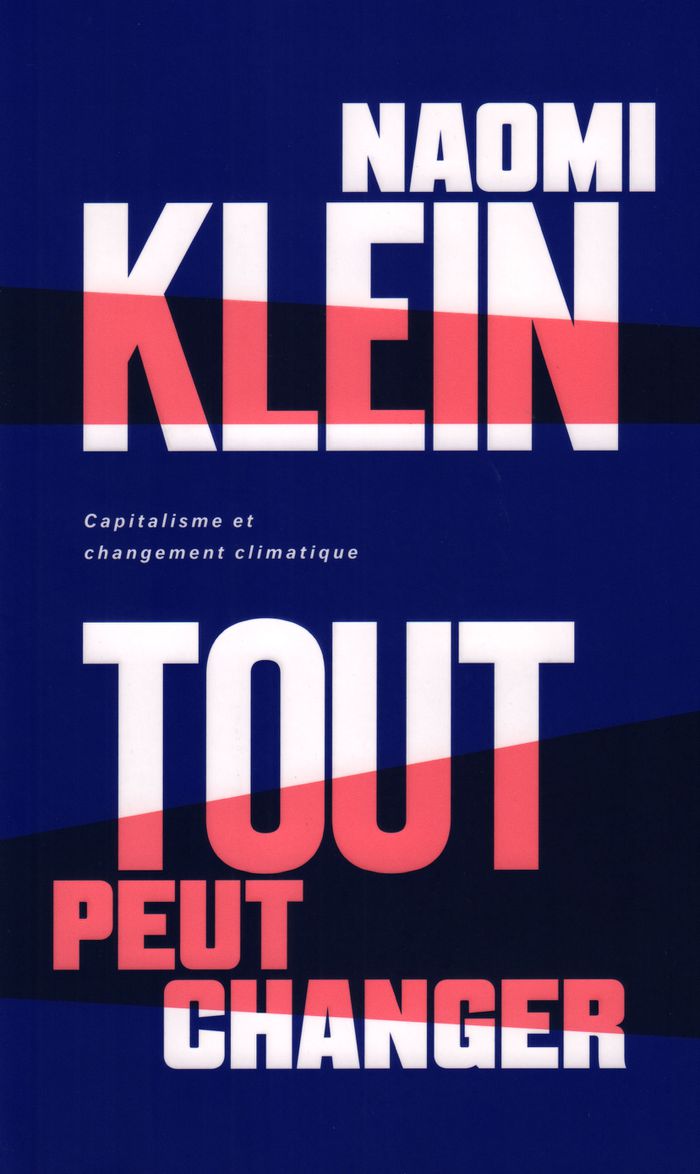
Oubliez tout ce que vous croyez savoir sur le réchauffement climatique. La « vérité qui dérange » ne tient pas aux gaz à effet de serre, la voici : notre modèle économique est en guerre contre la vie sur Terre. Au-delà de la crise écologique, c’est bien une crise existentielle qui est en jeu – celle d’une humanité défendant à corps perdu un mode de vie qui la mène à sa perte. Pourtant, prise à rebours, cette crise pourrait bien ouvrir la voie à une transformation sociale radicale susceptible de faire advenir un monde non seulement habitable, mais aussi plus juste. On nous a dit que le marché allait nous sauver, alors que notre dépendance au profit et à la croissance nous fait sombrer chaque jour davantage. On nous a dit qu’il était impossible de sortir des combustibles fossiles, alors que nous savons exactement comment nous y prendre – il suffit d’enfreindre toutes les règles du libre marché : brider le pouvoir des entreprises, reconstruire les économies locales et refonder nos démocraties. On nous a aussi dit que l’humanité était par trop avide pour relever un tel défi. En fait, partout dans le monde, des luttes contre l’extraction effrénée des ressources ont déjà abouti et posé les jalons de l’économie à venir.
Tout peut changer
Actions:
Prix:
$34.95
(disponible en magasin)
Résumé:
Oubliez tout ce que vous croyez savoir sur le réchauffement climatique. La « vérité qui dérange » ne tient pas aux gaz à effet de serre, la voici : notre modèle économique est en guerre contre la vie sur Terre. Au-delà de la crise écologique, c’est bien une crise existentielle qui est en jeu – celle d’une humanité défendant à corps perdu un mode de vie qui la mène à sa perte. Pourtant, prise à rebours, cette crise pourrait bien ouvrir la voie à une transformation sociale radicale susceptible de faire advenir un monde non seulement habitable, mais aussi plus juste. On nous a dit que le marché allait nous sauver, alors que notre dépendance au profit et à la croissance nous fait sombrer chaque jour davantage. On nous a dit qu’il était impossible de sortir des combustibles fossiles, alors que nous savons exactement comment nous y prendre – il suffit d’enfreindre toutes les règles du libre marché : brider le pouvoir des entreprises, reconstruire les économies locales et refonder nos démocraties. On nous a aussi dit que l’humanité était par trop avide pour relever un tel défi. En fait, partout dans le monde, des luttes contre l’extraction effrénée des ressources ont déjà abouti et posé les jalons de l’économie à venir.
Classification:
livres
livres
Publication:
mars 2015
mars 2015
Classification:
livres
livres
Titre:
Visionary cities
Visionary cities
Actions:
Prix:
$25.00
(disponible sur commande)
Résumé:
Recognizing that our civic responsibilities towards our environments have drastically increased, Visionary Cities ambitiously sets the agenda for the city of the future. Amid crippling bureaucracies and economic crises, present-day thinking on city design remains woefully inadequate, and this first publication in NAi's Future Cities Series announces 12 civic issues that(...)
$25.00
(disponible sur commande)
Résumé:
Recognizing that our civic responsibilities towards our environments have drastically increased, Visionary Cities ambitiously sets the agenda for the city of the future. Amid crippling bureaucracies and economic crises, present-day thinking on city design remains woefully inadequate, and this first publication in NAi's Future Cities Series announces 12 civic issues that(...)
Titre:
Visionary cities
Actions:
Prix:
$25.00
(disponible sur commande)
Résumé:
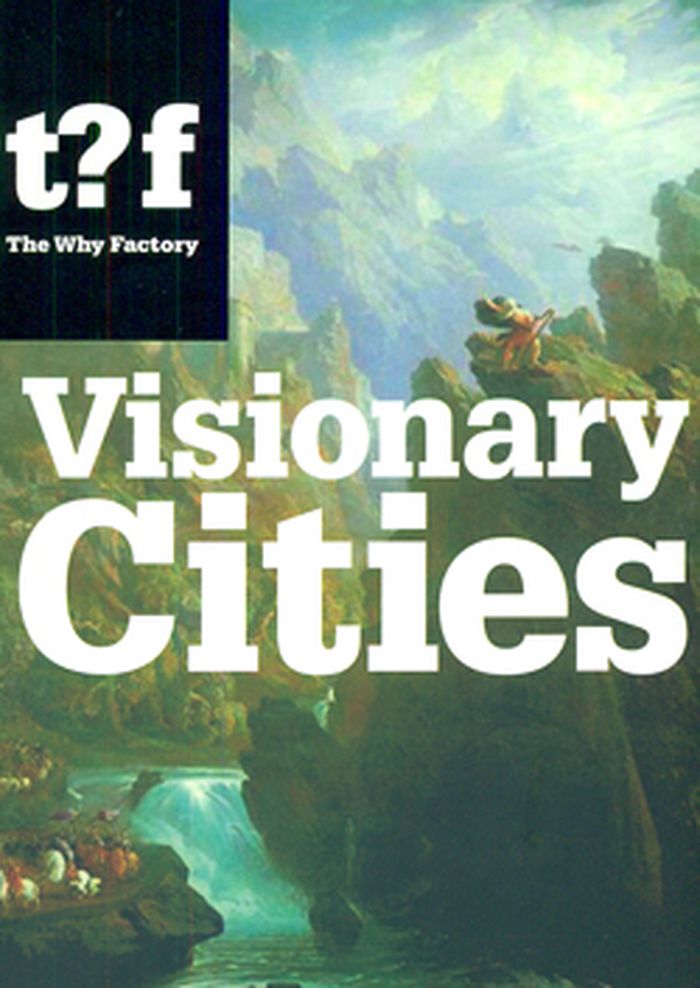
Recognizing that our civic responsibilities towards our environments have drastically increased, Visionary Cities ambitiously sets the agenda for the city of the future. Amid crippling bureaucracies and economic crises, present-day thinking on city design remains woefully inadequate, and this first publication in NAi's Future Cities Series announces 12 civic issues that are in need of transformation through the researches of The Why Factory, a global urban-studies thinktank operated in part by the Delft University of Technology. These issues include: “The Solitary (Our Dreams are Undermining the City)”; “The Iconic (Our Idols Have Been Compromised)”; “The Fun (We Are Having Too Much Fun)”; “The Cautious (Being Careful Is Killing Us)”; “The Poor (Slums Are Growing Bigger Than The Cities They Are Part Of”; and “The Future (Our Future Is Being Imagined Without Us).” A howl against civic impotence and the apathy of citizens in the face of incompetence and decay, Visionary Cities makes a manifesto of these and other topics to loudly demand large-scale change on a collective rather than individual level. In an afterword, Winy Maas, of the innovative Dutch architecture firm MVRDV, argues that architecture possesses a visionary dimension waiting to be applied to the cities of the future.
Visionary cities
Actions:
Prix:
$25.00
(disponible sur commande)
Résumé:
Recognizing that our civic responsibilities towards our environments have drastically increased, Visionary Cities ambitiously sets the agenda for the city of the future. Amid crippling bureaucracies and economic crises, present-day thinking on city design remains woefully inadequate, and this first publication in NAi's Future Cities Series announces 12 civic issues that are in need of transformation through the researches of The Why Factory, a global urban-studies thinktank operated in part by the Delft University of Technology. These issues include: “The Solitary (Our Dreams are Undermining the City)”; “The Iconic (Our Idols Have Been Compromised)”; “The Fun (We Are Having Too Much Fun)”; “The Cautious (Being Careful Is Killing Us)”; “The Poor (Slums Are Growing Bigger Than The Cities They Are Part Of”; and “The Future (Our Future Is Being Imagined Without Us).” A howl against civic impotence and the apathy of citizens in the face of incompetence and decay, Visionary Cities makes a manifesto of these and other topics to loudly demand large-scale change on a collective rather than individual level. In an afterword, Winy Maas, of the innovative Dutch architecture firm MVRDV, argues that architecture possesses a visionary dimension waiting to be applied to the cities of the future.
Classification:
livres
livres
Publication:
mars 2010
mars 2010
Sujet:
Théorie de l’urbanisme
Théorie de l’urbanisme
Classification:
livres
livres

Titre:
Felix Gonzalez-Torres
Felix Gonzalez-Torres
Actions:
Prix:
$85.00
(disponible sur commande)
Résumé:
Felix Gonzalez-Torres, one of the most influential artists of his generation, lived and worked resolutely according to his own democratic ideology, determined to “make this a better place for everyone.” Combining principles of conceptual art, minimalism, political activism and poetic beauty, Gonzalez-Torres’s ever-changing arsenal included public billboards, give-away(...)
$85.00
(disponible sur commande)
Résumé:
Felix Gonzalez-Torres, one of the most influential artists of his generation, lived and worked resolutely according to his own democratic ideology, determined to “make this a better place for everyone.” Combining principles of conceptual art, minimalism, political activism and poetic beauty, Gonzalez-Torres’s ever-changing arsenal included public billboards, give-away(...)
Titre:
Felix Gonzalez-Torres
Actions:
Prix:
$85.00
(disponible sur commande)
Résumé:
Felix Gonzalez-Torres, one of the most influential artists of his generation, lived and worked resolutely according to his own democratic ideology, determined to “make this a better place for everyone.” Combining principles of conceptual art, minimalism, political activism and poetic beauty, Gonzalez-Torres’s ever-changing arsenal included public billboards, give-away piles of candy or posters, and ordinary objects (clocks, mirrors, light fixtures) often used to startling effect. His work challenged the notions of public and private space, originality, authorship and—most significantly—the authoritative structure in which he functioned. Now in its second edition, Gonzalez-Torres’s editor Julie Ault has amassed a comprehensive monograph of this important artist. In the spirit of the artist’s method, Ault rethinks the very idea of what a monograph should be. The book, which places strong emphasis on the written word, contains texts by Robert Storr and Miwon Kwon among other notables, as well as significant critical essays, exhibition statements, transcripts from lectures, personal correspondence, and writings that influenced Gonzalez-Torres and his work. Ample visual documentation adds another decisive layer of content. We see works not just in their finality, but often witness their transformation over a lifespan. This collection is a critical reference for the history of contemporary art.
Felix Gonzalez-Torres
Actions:
Prix:
$85.00
(disponible sur commande)
Résumé:
Felix Gonzalez-Torres, one of the most influential artists of his generation, lived and worked resolutely according to his own democratic ideology, determined to “make this a better place for everyone.” Combining principles of conceptual art, minimalism, political activism and poetic beauty, Gonzalez-Torres’s ever-changing arsenal included public billboards, give-away piles of candy or posters, and ordinary objects (clocks, mirrors, light fixtures) often used to startling effect. His work challenged the notions of public and private space, originality, authorship and—most significantly—the authoritative structure in which he functioned. Now in its second edition, Gonzalez-Torres’s editor Julie Ault has amassed a comprehensive monograph of this important artist. In the spirit of the artist’s method, Ault rethinks the very idea of what a monograph should be. The book, which places strong emphasis on the written word, contains texts by Robert Storr and Miwon Kwon among other notables, as well as significant critical essays, exhibition statements, transcripts from lectures, personal correspondence, and writings that influenced Gonzalez-Torres and his work. Ample visual documentation adds another decisive layer of content. We see works not just in their finality, but often witness their transformation over a lifespan. This collection is a critical reference for the history of contemporary art.
Classification:
livres
livres
Publication:
septembre 2016
septembre 2016
Classification:
audio
audio
Actions:
Description:
1 online resource.
Auteur:
Sujet:
Publication:
[Place of publication not identified] : e-flux, 2022.
[Place of publication not identified] : e-flux, 2022.
Titre:
Isabelle Fremeaux and Jay Jordan on We Are "Nature" Defending Itself.
Actions:
Description:
1 online resource.
Isabelle Fremeaux and Jay Jordan on We Are "Nature" Defending Itself.
Actions:
Description:
1 online resource.
Classification:
audio
audio
Publication:
[Place of publication not identified] : e-flux, 2022.
[Place of publication not identified] : e-flux, 2022.
Auteur:
Sujet:
Classification:
livres
livres
Actions:
Exemplaires:
Description:
237 pages : illustrations (some color), maps ; 23 cm
Description:
237 pages : illustrations (some color), maps ; 23 cm
Auteur:
Sujet:
Publication:
Montréal : Pointe-à-Callière, musée d'archéologie et d'histoire de Montréal, ©2010.
Montréal : Pointe-à-Callière, musée d'archéologie et d'histoire de Montréal, ©2010.
Titre:
La rue Sainte-Catherine : au coeur de la vie montréalaise / Paul-André Linteau ; avec la collaboration de Geneviève Létourneau-Guillon et Claude-Sylvie Lemery.
Actions:
Exemplaires:
Description:
237 pages : illustrations (some color), maps ; 23 cm
La rue Sainte-Catherine : au coeur de la vie montréalaise / Paul-André Linteau ; avec la collaboration de Geneviève Létourneau-Guillon et Claude-Sylvie Lemery.
Actions:
Exemplaires:
Description:
237 pages : illustrations (some color), maps ; 23 cm
Classification:
livres
livres
Publication:
Montréal : Pointe-à-Callière, musée d'archéologie et d'histoire de Montréal, ©2010.
Montréal : Pointe-à-Callière, musée d'archéologie et d'histoire de Montréal, ©2010.
Auteur:
Sujet:
Classification:
livres
livres
Actions:
Sujet:
Publication:
ZHdK 2024
ZHdK 2024
Classification:
livres
livres
Publication:
ZHdK 2024
ZHdK 2024
Sujet:
Classification:
livres
livres
Actions:
Sujet:
Publication:
L'Internationale Online 2021
L'Internationale Online 2021
Classification:
livres
livres
Publication:
L'Internationale Online 2021
L'Internationale Online 2021
Sujet:
Classification:
livres
livres
Exemplaires:
Description:
200 pages
Description:
200 pages
Auteur:
Sujet:
Publication:
Silvana, 2019.
Silvana, 2019.
Titre:
Russian Avant-Garde : Pioneers and Direct Descendants.
Actions:
Exemplaires:
Description:
200 pages
Russian Avant-Garde : Pioneers and Direct Descendants.
Actions:
Exemplaires:
Description:
200 pages
Classification:
livres
livres
Publication:
Silvana, 2019.
Silvana, 2019.
Auteur:
Sujet:
Classification:
livres
livres
Actions:
Exemplaires:
Description:
xi, 147 pages : illustrations, plans ; 22 cm
Description:
xi, 147 pages : illustrations, plans ; 22 cm
Auteur:
Sujet:
Publication:
Abingdon, Oxon ; New York : Routledge, 2022., ©2022
Abingdon, Oxon ; New York : Routledge, 2022., ©2022
Titre:
Poetics of underground space : architecture, literature, cinema / Antonello Boschi ; foreword by Michael Jakob.
Actions:
Exemplaires:
Description:
xi, 147 pages : illustrations, plans ; 22 cm
Poetics of underground space : architecture, literature, cinema / Antonello Boschi ; foreword by Michael Jakob.
Actions:
Exemplaires:
Description:
xi, 147 pages : illustrations, plans ; 22 cm
Classification:
livres
livres
Publication:
Abingdon, Oxon ; New York : Routledge, 2022., ©2022
Abingdon, Oxon ; New York : Routledge, 2022., ©2022
Auteur:
Sujet:


