


3106 Résultats
Classification:
livres
livres

Actions:
Prix:
$45.00
(disponible sur commande)
Résumé:
Building Happiness discusses the nature of happiness within our built environment. In association with Building Futures, the book includes ideas and debates informed by architects such as Herman Hertzberger and Aldo van Eyck, with these brought up to date through the work of contemporary architects and commentators. The nature of our environment and how we use it and how(...)
$45.00
(disponible sur commande)
Résumé:
Building Happiness discusses the nature of happiness within our built environment. In association with Building Futures, the book includes ideas and debates informed by architects such as Herman Hertzberger and Aldo van Eyck, with these brought up to date through the work of contemporary architects and commentators. The nature of our environment and how we use it and how(...)
Titre:
Building happiness: architecture to make you smile
Actions:
Prix:
$45.00
(disponible sur commande)
Résumé:
Building Happiness discusses the nature of happiness within our built environment. In association with Building Futures, the book includes ideas and debates informed by architects such as Herman Hertzberger and Aldo van Eyck, with these brought up to date through the work of contemporary architects and commentators. The nature of our environment and how we use it and how we are conditioned by it is considered in detail, particularly the ways this affects our sense of wellbeing or happiness. Is this a personal feeling or is it how space is used in our community that constructs happiness? Is it green eco-houses, traditional cottages or 1970s modernism that makes you happy? Building Happiness comprises both short commentaries and longer essays concerned with the impact of our built environment. The book also provides a visual representation of the themes addressed through evocative illustrations, sketches and photography. With an introduction by Jane Wernick, and contributions by architectural and social critics such as Jeremy Till, Shami Chakrabarti, and Kirsty Wark, as well as commentaries from Glenda Jackson and prestigious architects and artists such as Richard Rogers and Richard Wentworth, amongst others.
Building happiness: architecture to make you smile
Actions:
Prix:
$45.00
(disponible sur commande)
Résumé:
Building Happiness discusses the nature of happiness within our built environment. In association with Building Futures, the book includes ideas and debates informed by architects such as Herman Hertzberger and Aldo van Eyck, with these brought up to date through the work of contemporary architects and commentators. The nature of our environment and how we use it and how we are conditioned by it is considered in detail, particularly the ways this affects our sense of wellbeing or happiness. Is this a personal feeling or is it how space is used in our community that constructs happiness? Is it green eco-houses, traditional cottages or 1970s modernism that makes you happy? Building Happiness comprises both short commentaries and longer essays concerned with the impact of our built environment. The book also provides a visual representation of the themes addressed through evocative illustrations, sketches and photography. With an introduction by Jane Wernick, and contributions by architectural and social critics such as Jeremy Till, Shami Chakrabarti, and Kirsty Wark, as well as commentaries from Glenda Jackson and prestigious architects and artists such as Richard Rogers and Richard Wentworth, amongst others.
Classification:
livres
livres
Publication:
décembre 2008, London
décembre 2008, London
Sujet:
Théorie de l’architecture
Théorie de l’architecture
Classification:
livres
livres
Prix:
$62.00
(disponible sur commande)
Résumé:
When we think of the gardens of Southern California, we tend to think of the enormous semiarid landscapes of the Huntington and Rancho Los Alamitos, often built on the sprawling grounds of former ranches. But there is another garden tradition in Southern California: the modest, rectangular suburban plots designed by the most famous architects of mid-century modernism:(...)
$62.00
(disponible sur commande)
Résumé:
When we think of the gardens of Southern California, we tend to think of the enormous semiarid landscapes of the Huntington and Rancho Los Alamitos, often built on the sprawling grounds of former ranches. But there is another garden tradition in Southern California: the modest, rectangular suburban plots designed by the most famous architects of mid-century modernism:(...)
Titre:
Private landscapes : modernist gardens in Southern California
Actions:
Prix:
$62.00
(disponible sur commande)
Résumé:
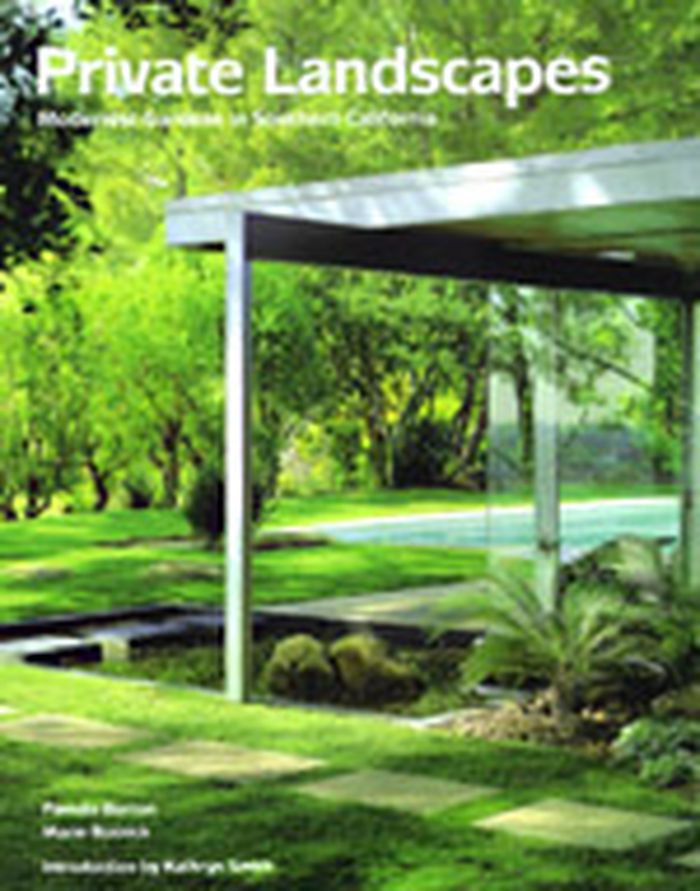
When we think of the gardens of Southern California, we tend to think of the enormous semiarid landscapes of the Huntington and Rancho Los Alamitos, often built on the sprawling grounds of former ranches. But there is another garden tradition in Southern California: the modest, rectangular suburban plots designed by the most famous architects of mid-century modernism: Richard Neutra, Rudolph Schindler, Gregory Ain, Raphael Soriano, Harwell Hamilton Harris, A. Quincy Jones, and John Lautner. These architects saw the garden as an outdoor extension of the space of the houses they designed, rather than a neo-Spanish fantasy to be added later by a "landscapist." Their modern gardens made use of low-maintenance, drought-resistant plants, and made room for informal outdoor living by children and adults with an emphasis on recreation and exercise. «Private Landscapes» profiles twenty significant gardens-and their accompanying houses-by these celebrated architects. Using contemporary photographs by Julius Shulman and newly commissioned color images, along with plans and plant lists, «Private Landscapes» provides a never-before-seen look at these gardens. As beautiful and practical now as they were 50 years ago, these designs continue to provide inspiration for gardeners and designers everywhere.
Private landscapes : modernist gardens in Southern California
Actions:
Prix:
$62.00
(disponible sur commande)
Résumé:
When we think of the gardens of Southern California, we tend to think of the enormous semiarid landscapes of the Huntington and Rancho Los Alamitos, often built on the sprawling grounds of former ranches. But there is another garden tradition in Southern California: the modest, rectangular suburban plots designed by the most famous architects of mid-century modernism: Richard Neutra, Rudolph Schindler, Gregory Ain, Raphael Soriano, Harwell Hamilton Harris, A. Quincy Jones, and John Lautner. These architects saw the garden as an outdoor extension of the space of the houses they designed, rather than a neo-Spanish fantasy to be added later by a "landscapist." Their modern gardens made use of low-maintenance, drought-resistant plants, and made room for informal outdoor living by children and adults with an emphasis on recreation and exercise. «Private Landscapes» profiles twenty significant gardens-and their accompanying houses-by these celebrated architects. Using contemporary photographs by Julius Shulman and newly commissioned color images, along with plans and plant lists, «Private Landscapes» provides a never-before-seen look at these gardens. As beautiful and practical now as they were 50 years ago, these designs continue to provide inspiration for gardeners and designers everywhere.
Classification:
livres
livres
Publication:
mars 2003, New York
mars 2003, New York
Sujet:
Jardins
Jardins
Classification:
livres
livres
Titre:
Aalto and America
Aalto and America
Actions:
Prix:
$79.95
(disponible sur commande)
Résumé:
The internationally renowned Finnish architect and designer Alvar Aalto (1898-1976) created several landmarks of modern design in the United States. The first, the Finland Pavilion at the New York World's Fair in 1939, introduced his pioneering style to the country and established his reputation among his American peers. Subsequent designs produced in the United States(...)
$79.95
(disponible sur commande)
Résumé:
The internationally renowned Finnish architect and designer Alvar Aalto (1898-1976) created several landmarks of modern design in the United States. The first, the Finland Pavilion at the New York World's Fair in 1939, introduced his pioneering style to the country and established his reputation among his American peers. Subsequent designs produced in the United States(...)
Titre:
Aalto and America
Actions:
Prix:
$79.95
(disponible sur commande)
Résumé:
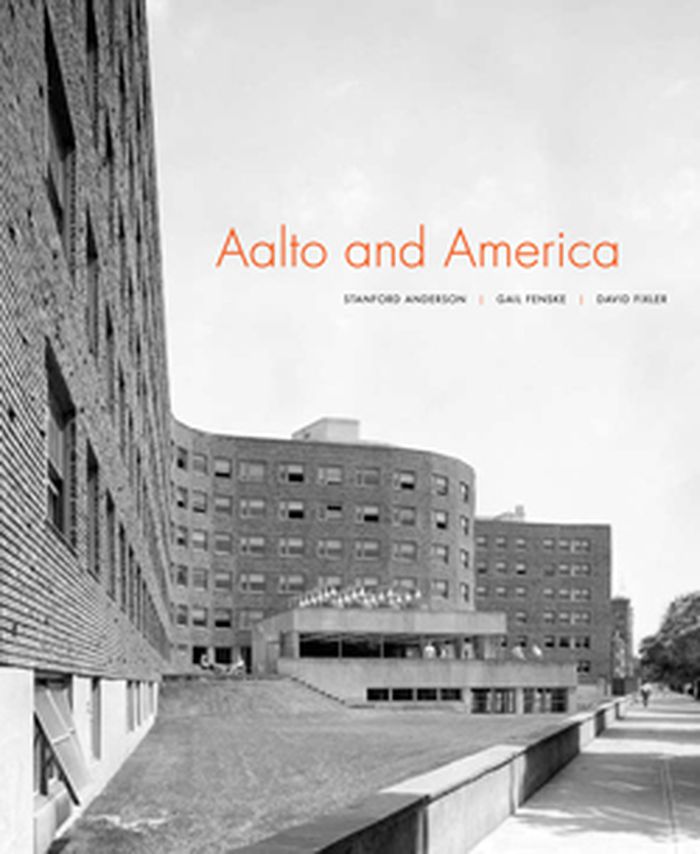
The internationally renowned Finnish architect and designer Alvar Aalto (1898-1976) created several landmarks of modern design in the United States. The first, the Finland Pavilion at the New York World's Fair in 1939, introduced his pioneering style to the country and established his reputation among his American peers. Subsequent designs produced in the United States marked major turning points in his evolving position as an architect. His commissioned project for the Massachusetts Institute of Technology's Baker House dormitory (completed 1949) features an undulating facade of red brick, a material that references the building's Boston surroundings. Aalto's fan-shaped plan for the Mount Angel Abbey Library (completed 1970) in St. Benedict, Oregon, his consummate exploration of the library type, capitalizes on the local terrain and the use of natural light. Aalto's designs had a lasting impact on American modernism, but his experiences in America also profoundly influenced his own stylistic development. Aalto and America is a detailed survey of this beneficial relationship, with contributions by fifteen experts who explore these key designs in relation to larger themes in international politics, architectural culture, housing research, and modern criticism and design.
Aalto and America
Actions:
Prix:
$79.95
(disponible sur commande)
Résumé:
The internationally renowned Finnish architect and designer Alvar Aalto (1898-1976) created several landmarks of modern design in the United States. The first, the Finland Pavilion at the New York World's Fair in 1939, introduced his pioneering style to the country and established his reputation among his American peers. Subsequent designs produced in the United States marked major turning points in his evolving position as an architect. His commissioned project for the Massachusetts Institute of Technology's Baker House dormitory (completed 1949) features an undulating facade of red brick, a material that references the building's Boston surroundings. Aalto's fan-shaped plan for the Mount Angel Abbey Library (completed 1970) in St. Benedict, Oregon, his consummate exploration of the library type, capitalizes on the local terrain and the use of natural light. Aalto's designs had a lasting impact on American modernism, but his experiences in America also profoundly influenced his own stylistic development. Aalto and America is a detailed survey of this beneficial relationship, with contributions by fifteen experts who explore these key designs in relation to larger themes in international politics, architectural culture, housing research, and modern criticism and design.
Classification:
livres
livres
Publication:
octobre 2011
octobre 2011
Sujet:
Architecture, monographies
Architecture, monographies
Classification:
livres
livres
Actions:
Prix:
$85.00
(disponible sur commande)
Résumé:
This book revisits the history of modernism in architecture through the legacy of one of its protagonists, Armenian architect Gabriel Guevrekian (c. 1900–70). Born in Istanbul, Guevrekian grew up in Tehran and then moved to Vienna to study architecture at the Kunstgewerbeschule; he later worked with Oskar Strnad, Josef Hoffmann, Adolf Loos, Henri Sauvage and Robert(...)
$85.00
(disponible sur commande)
Résumé:
This book revisits the history of modernism in architecture through the legacy of one of its protagonists, Armenian architect Gabriel Guevrekian (c. 1900–70). Born in Istanbul, Guevrekian grew up in Tehran and then moved to Vienna to study architecture at the Kunstgewerbeschule; he later worked with Oskar Strnad, Josef Hoffmann, Adolf Loos, Henri Sauvage and Robert(...)
Titre:
Gabriel Guevrekian: the elusive modernist
Actions:
Prix:
$85.00
(disponible sur commande)
Résumé:
This book revisits the history of modernism in architecture through the legacy of one of its protagonists, Armenian architect Gabriel Guevrekian (c. 1900–70). Born in Istanbul, Guevrekian grew up in Tehran and then moved to Vienna to study architecture at the Kunstgewerbeschule; he later worked with Oskar Strnad, Josef Hoffmann, Adolf Loos, Henri Sauvage and Robert Mallet-Stevens. Among Guevrekian’s famous designs are the Cubist Garden for Villa Noailles in France and two houses for the Vienna Werkbund exhibition. Before he turned 30, Guevrekian was recognized as one of the protagonists of the European avant-garde in Paris. During the 1930s, Guevrekian spent a few years in Iran designing public buildings. Later, after the World War II, he took up teaching positions in Europe and America. All of Guevrekian’s various pursuits, and the homes and nationalities he held in Asia, Europe and then America, led the architect to a serial adoption of personae. Guevrekian was an architect, an avant-gardist and a cosmopolitan. He made every discipline meaningful, every city central, every period epochal, simply by his own very tangible engagement with it.
Gabriel Guevrekian: the elusive modernist
Actions:
Prix:
$85.00
(disponible sur commande)
Résumé:
This book revisits the history of modernism in architecture through the legacy of one of its protagonists, Armenian architect Gabriel Guevrekian (c. 1900–70). Born in Istanbul, Guevrekian grew up in Tehran and then moved to Vienna to study architecture at the Kunstgewerbeschule; he later worked with Oskar Strnad, Josef Hoffmann, Adolf Loos, Henri Sauvage and Robert Mallet-Stevens. Among Guevrekian’s famous designs are the Cubist Garden for Villa Noailles in France and two houses for the Vienna Werkbund exhibition. Before he turned 30, Guevrekian was recognized as one of the protagonists of the European avant-garde in Paris. During the 1930s, Guevrekian spent a few years in Iran designing public buildings. Later, after the World War II, he took up teaching positions in Europe and America. All of Guevrekian’s various pursuits, and the homes and nationalities he held in Asia, Europe and then America, led the architect to a serial adoption of personae. Guevrekian was an architect, an avant-gardist and a cosmopolitan. He made every discipline meaningful, every city central, every period epochal, simply by his own very tangible engagement with it.
Classification:
livres
livres
Publication:
janvier 2021
janvier 2021
Sujet:
Architecture, monographies
Architecture, monographies
Classification:
livres
livres
Actions:
Prix:
$29.95
(disponible sur commande)
Résumé:
Transnational markets hold sway over all aspects of contemporary culture, and that has transformed the environment of recent art, blurring the previously discrete realms of price and value, capital and creativity. Artists have responded not only critically but imaginatively to the many issues this raises, including the treatment of artworks as analogous to capital goods,(...)
$29.95
(disponible sur commande)
Résumé:
Transnational markets hold sway over all aspects of contemporary culture, and that has transformed the environment of recent art, blurring the previously discrete realms of price and value, capital and creativity. Artists have responded not only critically but imaginatively to the many issues this raises, including the treatment of artworks as analogous to capital goods,(...)
Titre:
The Market : documents of contemporary art
Actions:
Prix:
$29.95
(disponible sur commande)
Résumé:
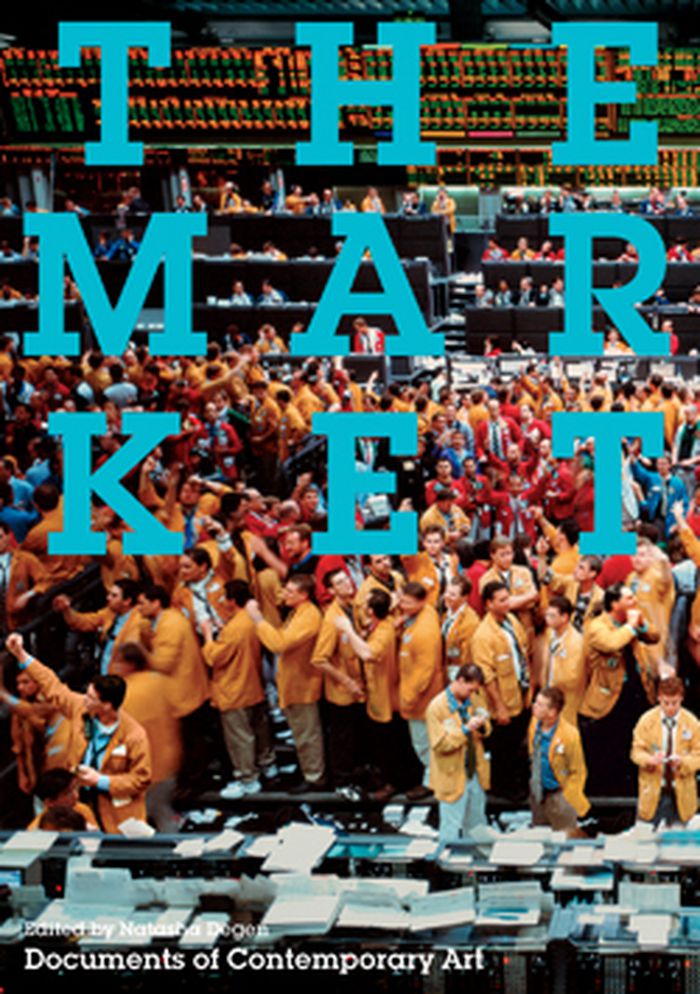
Transnational markets hold sway over all aspects of contemporary culture, and that has transformed the environment of recent art, blurring the previously discrete realms of price and value, capital and creativity. Artists have responded not only critically but imaginatively to the many issues this raises, including the treatment of artworks as analogous to capital goods, the assertion that art's value is best measured by the market, and the notion that art and money share an internal logic. Some artists have investigated the market's pressures on creative democracy, its ubiquity, vulgarity, and fetishizing force, while others have embraced the creative possibilities the market offers. And for a decade curators and theorists have speculated on the implications of this new symbiosis between art and money, cultural and economic value. Drawing on a wide range of interdisciplinary sources, in dialogue with artists' writings, this anthology traces the historic origins of these debates in different versions of modernism and surveys the relationships among art, value, and price; the evolution and influence of patronage; the actors and institutions of the art market; and the diversity of artistic practices that either criticize or embrace the conditions of the contemporary market.
The Market : documents of contemporary art
Actions:
Prix:
$29.95
(disponible sur commande)
Résumé:
Transnational markets hold sway over all aspects of contemporary culture, and that has transformed the environment of recent art, blurring the previously discrete realms of price and value, capital and creativity. Artists have responded not only critically but imaginatively to the many issues this raises, including the treatment of artworks as analogous to capital goods, the assertion that art's value is best measured by the market, and the notion that art and money share an internal logic. Some artists have investigated the market's pressures on creative democracy, its ubiquity, vulgarity, and fetishizing force, while others have embraced the creative possibilities the market offers. And for a decade curators and theorists have speculated on the implications of this new symbiosis between art and money, cultural and economic value. Drawing on a wide range of interdisciplinary sources, in dialogue with artists' writings, this anthology traces the historic origins of these debates in different versions of modernism and surveys the relationships among art, value, and price; the evolution and influence of patronage; the actors and institutions of the art market; and the diversity of artistic practices that either criticize or embrace the conditions of the contemporary market.
Classification:
livres
livres
Publication:
septembre 2013
septembre 2013
Sujet:
Théorie de l’art
Théorie de l’art
Classification:
livres
livres
Actions:
Prix:
$80.00
(disponible en magasin)
Résumé:
Aditya Prakash (1924-2008) belonged to the first generation of Indian modernists that came into its own in the Nehruvian era. Built around a multi-disciplinary oeuvre that was unique amongst his peers, Prakash's life was dedicated to finding the 'one continuous line' which linked art - as the search for the beautiful, architecture - as the enabler of life, and planning -(...)
$80.00
(disponible en magasin)
Résumé:
Aditya Prakash (1924-2008) belonged to the first generation of Indian modernists that came into its own in the Nehruvian era. Built around a multi-disciplinary oeuvre that was unique amongst his peers, Prakash's life was dedicated to finding the 'one continuous line' which linked art - as the search for the beautiful, architecture - as the enabler of life, and planning -(...)
Titre:
Onecontinuousline: art, architecture and urbanism of Aditya Prakash
Actions:
Prix:
$80.00
(disponible en magasin)
Résumé:
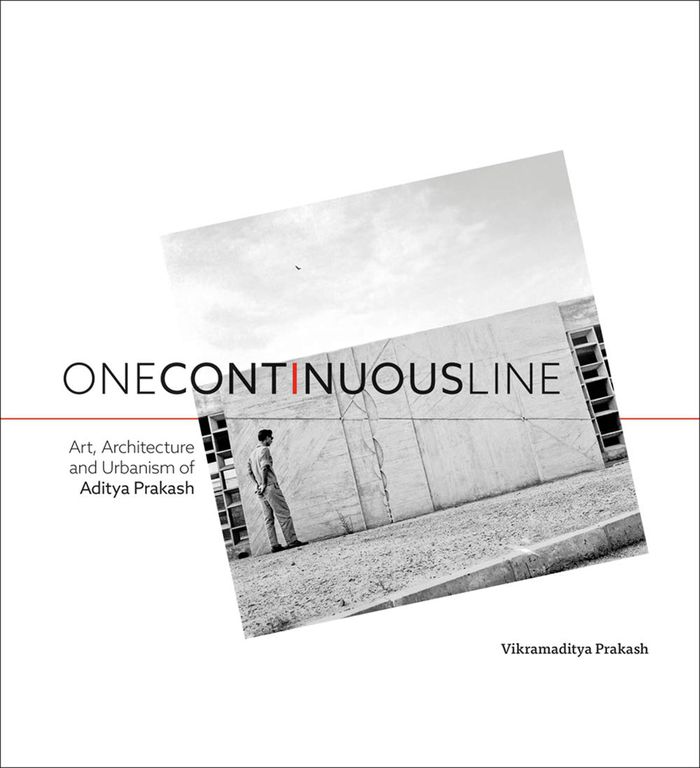
Aditya Prakash (1924-2008) belonged to the first generation of Indian modernists that came into its own in the Nehruvian era. Built around a multi-disciplinary oeuvre that was unique amongst his peers, Prakash's life was dedicated to finding the 'one continuous line' which linked art - as the search for the beautiful, architecture - as the enabler of life, and planning - as the ethic of protecting the interests of poor. nterspersed with a series of visual essays, this book is conceived as an introduction to Prakash's vast body of work. Besides practicing architecture, he was an academic, a prolific painter, sculptor, furniture designer, stage set-designer, poet and public speaker. This volume documents Prakash's education as an architect in Delhi and London, his early modernist works, his deep artistic impulses, his love of theatre, and his efforts to rally a culture of academic inquiry. The narrative describes his successes and failures, his arguments for and against modernism, postmodernism and globalization, and his passion for sustainable urbanism, the animal and the acoustic. The book concludes with an interpretive essay on Prakash's life and legacy, along with illustrations of a portfolio of select works.
Onecontinuousline: art, architecture and urbanism of Aditya Prakash
Actions:
Prix:
$80.00
(disponible en magasin)
Résumé:
Aditya Prakash (1924-2008) belonged to the first generation of Indian modernists that came into its own in the Nehruvian era. Built around a multi-disciplinary oeuvre that was unique amongst his peers, Prakash's life was dedicated to finding the 'one continuous line' which linked art - as the search for the beautiful, architecture - as the enabler of life, and planning - as the ethic of protecting the interests of poor. nterspersed with a series of visual essays, this book is conceived as an introduction to Prakash's vast body of work. Besides practicing architecture, he was an academic, a prolific painter, sculptor, furniture designer, stage set-designer, poet and public speaker. This volume documents Prakash's education as an architect in Delhi and London, his early modernist works, his deep artistic impulses, his love of theatre, and his efforts to rally a culture of academic inquiry. The narrative describes his successes and failures, his arguments for and against modernism, postmodernism and globalization, and his passion for sustainable urbanism, the animal and the acoustic. The book concludes with an interpretive essay on Prakash's life and legacy, along with illustrations of a portfolio of select works.
Classification:
livres
livres
Publication:
janvier 2021
janvier 2021
Sujet:
Architecture, monographies
Architecture, monographies
Classification:
livres
livres
Prix:
$57.95
(disponible sur commande)
Résumé:
Complex, controversial, and prolific, Howard Barnstone was a central figure in the world of twentieth-century modern architecture. Recognized as Houston’s foremost modern architect in the 1950s, Barnstone came to prominence for his designs with partner Preston M. Bolton, which transposed the rigorous and austere architectural practices of Ludwig Mies van der Rohe to the(...)
$57.95
(disponible sur commande)
Résumé:
Complex, controversial, and prolific, Howard Barnstone was a central figure in the world of twentieth-century modern architecture. Recognized as Houston’s foremost modern architect in the 1950s, Barnstone came to prominence for his designs with partner Preston M. Bolton, which transposed the rigorous and austere architectural practices of Ludwig Mies van der Rohe to the(...)
Sujet:
Architecture, monographies
Architecture, monographies
Publication:
août 2020
août 2020
Titre:
Making Houston modern: the life and architecture of Howard
Actions:
Prix:
$57.95
(disponible sur commande)
Résumé:
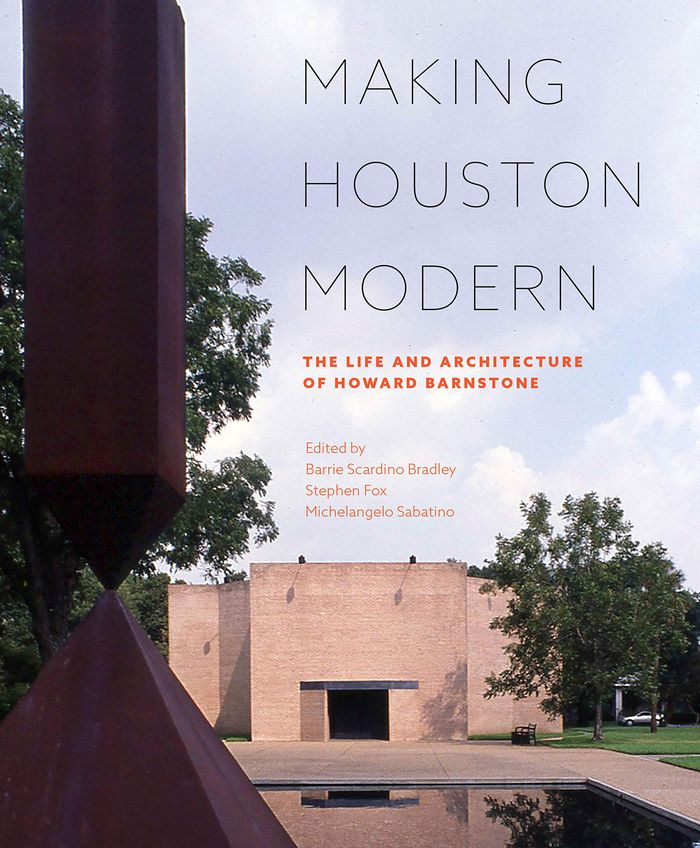
Complex, controversial, and prolific, Howard Barnstone was a central figure in the world of twentieth-century modern architecture. Recognized as Houston’s foremost modern architect in the 1950s, Barnstone came to prominence for his designs with partner Preston M. Bolton, which transposed the rigorous and austere architectural practices of Ludwig Mies van der Rohe to the hot, steamy coastal plain of Texas. Barnstone was a man of contradictions - charming and witty but also self-centered, caustic, and abusive - who shaped new settings that were imbued, at once, with spatial calm and emotional intensity. ''Making Houston Modern'' explores the provocative architect’s life and work, not only through the lens of his architectural practice but also by delving into his personal life, class identity, and connections to the artists, critics, collectors, and museum directors who forged Houston’s distinctive culture in the postwar era. Edited by three renowned voices in the architecture world, this volume situates Barnstone within the contexts of American architecture, modernism, and Jewish culture to unravel the legacy of a charismatic personality whose imaginative work as an architect, author, teacher, and civic commentator helped redefine architecture in Texas.
Making Houston modern: the life and architecture of Howard
Actions:
Prix:
$57.95
(disponible sur commande)
Résumé:
Complex, controversial, and prolific, Howard Barnstone was a central figure in the world of twentieth-century modern architecture. Recognized as Houston’s foremost modern architect in the 1950s, Barnstone came to prominence for his designs with partner Preston M. Bolton, which transposed the rigorous and austere architectural practices of Ludwig Mies van der Rohe to the hot, steamy coastal plain of Texas. Barnstone was a man of contradictions - charming and witty but also self-centered, caustic, and abusive - who shaped new settings that were imbued, at once, with spatial calm and emotional intensity. ''Making Houston Modern'' explores the provocative architect’s life and work, not only through the lens of his architectural practice but also by delving into his personal life, class identity, and connections to the artists, critics, collectors, and museum directors who forged Houston’s distinctive culture in the postwar era. Edited by three renowned voices in the architecture world, this volume situates Barnstone within the contexts of American architecture, modernism, and Jewish culture to unravel the legacy of a charismatic personality whose imaginative work as an architect, author, teacher, and civic commentator helped redefine architecture in Texas.
Classification:
livres
livres
Publication:
août 2020
août 2020
Sujet:
Architecture, monographies
Architecture, monographies
Classification:
livres
livres
Prix:
$62.95
(disponible en magasin)
Résumé:
Throughout the early twentieth century, waves of migration brought working-class people to the outskirts of Buenos Aires. This prompted a dilemma: Where should these restive populations be situated relative to the city’s spatial politics? Enter Antonio Bonet, a Catalan architect inspired by the transatlantic modernist and surrealist movements. Ana María León follows(...)
$62.95
(disponible en magasin)
Résumé:
Throughout the early twentieth century, waves of migration brought working-class people to the outskirts of Buenos Aires. This prompted a dilemma: Where should these restive populations be situated relative to the city’s spatial politics? Enter Antonio Bonet, a Catalan architect inspired by the transatlantic modernist and surrealist movements. Ana María León follows(...)
Titre:
Modernity for the masses: Antonio Bonet's Dreams for Buenos Aires
Actions:
Prix:
$62.95
(disponible en magasin)
Résumé:
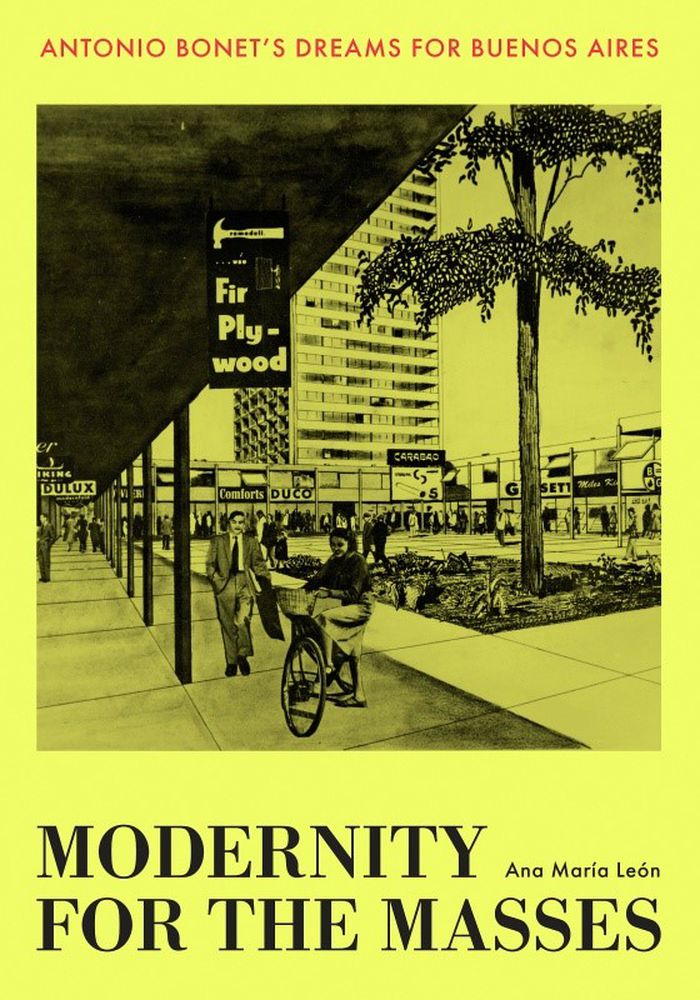
Throughout the early twentieth century, waves of migration brought working-class people to the outskirts of Buenos Aires. This prompted a dilemma: Where should these restive populations be situated relative to the city’s spatial politics? Enter Antonio Bonet, a Catalan architect inspired by the transatlantic modernist and surrealist movements. Ana María León follows Bonet's decades-long, state-backed quest to house Buenos Aires's diverse and fractious population. Working with totalitarian and populist regimes, Bonet developed three large-scale housing plans, each scuttled as a new government took over. Yet these incomplete plans—Bonet's dreams—teach us much about the relationship between modernism and state power. This volume finds in Bonet's projects the disconnect between modern architecture’s discourse of emancipation and the reality of its rationalizing control. Although he and his patrons constantly glorified the people and depicted them in housing plans, Bonet never consulted them. Instead he succumbed to official and elite fears of the people's latent political power. In careful readings of Bonet's work, León discovers the progressive erasure of surrealism's psychological sensitivity, replaced with an impulse, realized in modernist design, to contain the increasingly empowered population.
Modernity for the masses: Antonio Bonet's Dreams for Buenos Aires
Actions:
Prix:
$62.95
(disponible en magasin)
Résumé:
Throughout the early twentieth century, waves of migration brought working-class people to the outskirts of Buenos Aires. This prompted a dilemma: Where should these restive populations be situated relative to the city’s spatial politics? Enter Antonio Bonet, a Catalan architect inspired by the transatlantic modernist and surrealist movements. Ana María León follows Bonet's decades-long, state-backed quest to house Buenos Aires's diverse and fractious population. Working with totalitarian and populist regimes, Bonet developed three large-scale housing plans, each scuttled as a new government took over. Yet these incomplete plans—Bonet's dreams—teach us much about the relationship between modernism and state power. This volume finds in Bonet's projects the disconnect between modern architecture’s discourse of emancipation and the reality of its rationalizing control. Although he and his patrons constantly glorified the people and depicted them in housing plans, Bonet never consulted them. Instead he succumbed to official and elite fears of the people's latent political power. In careful readings of Bonet's work, León discovers the progressive erasure of surrealism's psychological sensitivity, replaced with an impulse, realized in modernist design, to contain the increasingly empowered population.
Classification:
livres
livres
Publication:
avril 2021
avril 2021
Sujet:
Théorie de l’urbanisme
Théorie de l’urbanisme
Classification:
livres
livres
Actions:
Exemplaires:
Description:
191 pages : illustrations (some color) ; 24 cm
Description:
191 pages : illustrations (some color) ; 24 cm
Auteur:
Sujet:
Publication:
Montréal : Éditions Écosociété, 2019., ©2019
Montréal : Éditions Écosociété, 2019., ©2019
Titre:
La vie dans l'espace public : comment l'étudier / Jan Gehl et Birgitte Svarre ; traduit de l'anglais par Nicolas Calvé ; préface d'Anne Hidalgo et Valérie Plante ; postface de Jayne Engle.
Actions:
Exemplaires:
Description:
191 pages : illustrations (some color) ; 24 cm
La vie dans l'espace public : comment l'étudier / Jan Gehl et Birgitte Svarre ; traduit de l'anglais par Nicolas Calvé ; préface d'Anne Hidalgo et Valérie Plante ; postface de Jayne Engle.
Actions:
Exemplaires:
Description:
191 pages : illustrations (some color) ; 24 cm
Classification:
livres
livres
Publication:
Montréal : Éditions Écosociété, 2019., ©2019
Montréal : Éditions Écosociété, 2019., ©2019
Auteur:
Sujet:
Classification:
livres
livres
Actions:
Exemplaires:
Description:
207 pages, 3 unnumbered pages : illustrations (some color), facsimiles, plans (some color), portraits (some color) ; 24 cm
Description:
207 pages, 3 unnumbered pages : illustrations (some color), facsimiles, plans (some color), portraits (some color) ; 24 cm
Auteur:
Sujet:
Publication:
Los Angeles, California : Chronicle Chroma : imprint of Chronicle Books, [2021], ©2021
Los Angeles, California : Chronicle Chroma : imprint of Chronicle Books, [2021], ©2021
Titre:
The Stahl House : Case Study House #22 : the making of a modernist icon / by Shari Stahl Gronwald, Bruce Stahl, and Kim Cross.
Actions:
Exemplaires:
Description:
207 pages, 3 unnumbered pages : illustrations (some color), facsimiles, plans (some color), portraits (some color) ; 24 cm
The Stahl House : Case Study House #22 : the making of a modernist icon / by Shari Stahl Gronwald, Bruce Stahl, and Kim Cross.
Actions:
Exemplaires:
Description:
207 pages, 3 unnumbered pages : illustrations (some color), facsimiles, plans (some color), portraits (some color) ; 24 cm
Classification:
livres
livres
Publication:
Los Angeles, California : Chronicle Chroma : imprint of Chronicle Books, [2021], ©2021
Los Angeles, California : Chronicle Chroma : imprint of Chronicle Books, [2021], ©2021
Auteur:
Sujet:


