


3068 Résultats
Classification:
livres
livres

Actions:
Prix:
$136.00
(disponible sur commande)
Résumé:
Bâtir, c'est concevoir, inventer, réaliser, et cet art s'inscrit dans les limites de règles de construction précises liées aux contraintes extérieures naturelles ou artificielles ainsi qu'aux exigences des utilisateurs. Ce Manuel de la construction offre un synopsis exhaustif des méthodes de construction. Il apporte au bâtisseur une assistance dans la partie technique de(...)
$136.00
(disponible sur commande)
Résumé:
Bâtir, c'est concevoir, inventer, réaliser, et cet art s'inscrit dans les limites de règles de construction précises liées aux contraintes extérieures naturelles ou artificielles ainsi qu'aux exigences des utilisateurs. Ce Manuel de la construction offre un synopsis exhaustif des méthodes de construction. Il apporte au bâtisseur une assistance dans la partie technique de(...)
Titre:
Bâtir: Manuel de la construction, 2è ed
Actions:
Prix:
$136.00
(disponible sur commande)
Résumé:
Bâtir, c'est concevoir, inventer, réaliser, et cet art s'inscrit dans les limites de règles de construction précises liées aux contraintes extérieures naturelles ou artificielles ainsi qu'aux exigences des utilisateurs. Ce Manuel de la construction offre un synopsis exhaustif des méthodes de construction. Il apporte au bâtisseur une assistance dans la partie technique de ses prestations et constitue pour lui un instrument pratique de consultation. A cet effet, il se subdivise en six parties fondamentales : la première rassemble les principales contraintes et exigences que constituent les données du problème de bâtir ; les suivantes présentent les éléments constitutifs de la construction et leur mise en oeuvre. Véritable " bible " de l'art de bâtir, très vite devenue la référence en la matière, cet ouvrage est illustré de plus de 1500 dessins de construction ; il est l'aboutissement d'une double expérience, celle d'une pratique professionnelle d'architecte façonnée par les multiples tribulations de la 'construction et celle d'une activité d'enseignant enrichie par la curiosité critique des étudiants. Le livre se propose donc d'offrir autant aux étudiants en architecture, génie civil ou génie rural qu'aux bureaux d'architectes, ingénieurs ou entreprises de construction la meilleure connaissance de l'art de construire ainsi qu'une aide précieuse dans cette extraordinaire aventure qu'est le projet architectural. Cette nouvelle édition a été entièrement revue sous l'angle des exigences contemporaines d'économies d'énergie et de la prise en compte du concept de développement durable, dont les répercussions sont importantes et inévitables sur l'art de bâtir. Elle fait ainsi état de l'ensemble des contraintes actuelles et des nouvelles normes en la matière.
Bâtir: Manuel de la construction, 2è ed
Actions:
Prix:
$136.00
(disponible sur commande)
Résumé:
Bâtir, c'est concevoir, inventer, réaliser, et cet art s'inscrit dans les limites de règles de construction précises liées aux contraintes extérieures naturelles ou artificielles ainsi qu'aux exigences des utilisateurs. Ce Manuel de la construction offre un synopsis exhaustif des méthodes de construction. Il apporte au bâtisseur une assistance dans la partie technique de ses prestations et constitue pour lui un instrument pratique de consultation. A cet effet, il se subdivise en six parties fondamentales : la première rassemble les principales contraintes et exigences que constituent les données du problème de bâtir ; les suivantes présentent les éléments constitutifs de la construction et leur mise en oeuvre. Véritable " bible " de l'art de bâtir, très vite devenue la référence en la matière, cet ouvrage est illustré de plus de 1500 dessins de construction ; il est l'aboutissement d'une double expérience, celle d'une pratique professionnelle d'architecte façonnée par les multiples tribulations de la 'construction et celle d'une activité d'enseignant enrichie par la curiosité critique des étudiants. Le livre se propose donc d'offrir autant aux étudiants en architecture, génie civil ou génie rural qu'aux bureaux d'architectes, ingénieurs ou entreprises de construction la meilleure connaissance de l'art de construire ainsi qu'une aide précieuse dans cette extraordinaire aventure qu'est le projet architectural. Cette nouvelle édition a été entièrement revue sous l'angle des exigences contemporaines d'économies d'énergie et de la prise en compte du concept de développement durable, dont les répercussions sont importantes et inévitables sur l'art de bâtir. Elle fait ainsi état de l'ensemble des contraintes actuelles et des nouvelles normes en la matière.
Classification:
livres
livres
Publication:
juin 2010
juin 2010
Classification:
livres
livres
Actions:
Prix:
$32.00
(disponible sur commande)
Résumé:
In this brilliantly written, fast-paced book, based on three years of uncompromising reporting, a bewildering age of global change and inequality is made human. Annawadi is a makeshift settlement in the shadow of luxury hotels near the Mumbai airport, and as India starts to prosper, Annawadians are electric with hope. Abdul, a reflective and enterprising Muslim(...)
$32.00
(disponible sur commande)
Résumé:
In this brilliantly written, fast-paced book, based on three years of uncompromising reporting, a bewildering age of global change and inequality is made human. Annawadi is a makeshift settlement in the shadow of luxury hotels near the Mumbai airport, and as India starts to prosper, Annawadians are electric with hope. Abdul, a reflective and enterprising Muslim(...)
Titre:
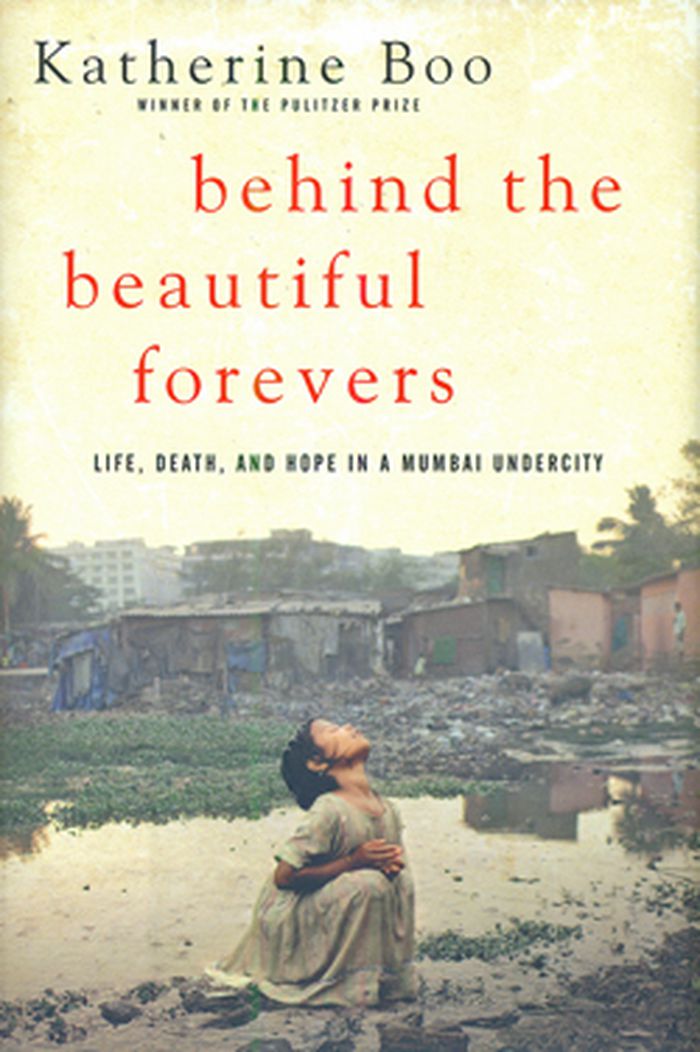
Behind the beautiful forevers : life, death and hope in a Mumbai undercity
Actions:
Prix:
$32.00
(disponible sur commande)
Résumé:
In this brilliantly written, fast-paced book, based on three years of uncompromising reporting, a bewildering age of global change and inequality is made human. Annawadi is a makeshift settlement in the shadow of luxury hotels near the Mumbai airport, and as India starts to prosper, Annawadians are electric with hope. Abdul, a reflective and enterprising Muslim teenager, sees “a fortune beyond counting” in the recyclable garbage that richer people throw away. Asha, a woman of formidable wit and deep scars from a childhood in rural poverty, has identified an alternate route to the middle class: political corruption. With a little luck, her sensitive, beautiful daughter—Annawadi’s “most-everything girl”—will soon become its first female college graduate. And even the poorest Annawadians, like Kalu, a fifteen-year-old scrap-metal thief, believe themselves inching closer to the good lives and good times they call “the full enjoy.” But then Abdul the garbage sorter is falsely accused in a shocking tragedy; terror and a global recession rock the city; and suppressed tensions over religion, caste, sex, power and economic envy turn brutal. As the tenderest individual hopes intersect with the greatest global truths, the true contours of a competitive age are revealed. And so, too, are the imaginations and courage of the people of Annawadi. With intelligence, humor, and deep insight into what connects human beings to one another in an era of tumultuous change, Behind the Beautiful Forevers carries the reader headlong into one of the twenty-first century’s hidden worlds, and into the lives of people impossible to forget.
Behind the beautiful forevers : life, death and hope in a Mumbai undercity
Actions:
Prix:
$32.00
(disponible sur commande)
Résumé:
In this brilliantly written, fast-paced book, based on three years of uncompromising reporting, a bewildering age of global change and inequality is made human. Annawadi is a makeshift settlement in the shadow of luxury hotels near the Mumbai airport, and as India starts to prosper, Annawadians are electric with hope. Abdul, a reflective and enterprising Muslim teenager, sees “a fortune beyond counting” in the recyclable garbage that richer people throw away. Asha, a woman of formidable wit and deep scars from a childhood in rural poverty, has identified an alternate route to the middle class: political corruption. With a little luck, her sensitive, beautiful daughter—Annawadi’s “most-everything girl”—will soon become its first female college graduate. And even the poorest Annawadians, like Kalu, a fifteen-year-old scrap-metal thief, believe themselves inching closer to the good lives and good times they call “the full enjoy.” But then Abdul the garbage sorter is falsely accused in a shocking tragedy; terror and a global recession rock the city; and suppressed tensions over religion, caste, sex, power and economic envy turn brutal. As the tenderest individual hopes intersect with the greatest global truths, the true contours of a competitive age are revealed. And so, too, are the imaginations and courage of the people of Annawadi. With intelligence, humor, and deep insight into what connects human beings to one another in an era of tumultuous change, Behind the Beautiful Forevers carries the reader headlong into one of the twenty-first century’s hidden worlds, and into the lives of people impossible to forget.
Classification:
livres
livres
Publication:
février 2012
février 2012
Classification:
livres
livres
Actions:
Exemplaires:
Description:
192 pages : illustrations ; 23 cm
Description:
192 pages : illustrations ; 23 cm
Auteur:
Sujet:
Publication:
Berkeley : University of California Press, ©1977.
Berkeley : University of California Press, ©1977.
Titre:
The country house in English Renaissance poetry / William A. McClung.
Actions:
Exemplaires:
Description:
192 pages : illustrations ; 23 cm
The country house in English Renaissance poetry / William A. McClung.
Actions:
Exemplaires:
Description:
192 pages : illustrations ; 23 cm
Classification:
livres
livres
Publication:
Berkeley : University of California Press, ©1977.
Berkeley : University of California Press, ©1977.
Auteur:
Sujet:
Classification:
livres
livres
Titre:
The minimum dwelling
The minimum dwelling
Actions:
Prix:
$96.00
(disponible en magasin)
Résumé:
Karel Teige (1900–1951), one of the most important figures of avant-garde modernism of the 1920s and 1930s, influenced virtually every area of art, design, and urban thinking in his native Czechoslovakia. His "Minimum dwelling", originally published in Czech in 1932, and appearing now for the first time in English, is one of the landmark architectural books of the(...)
$96.00
(disponible en magasin)
Résumé:
Karel Teige (1900–1951), one of the most important figures of avant-garde modernism of the 1920s and 1930s, influenced virtually every area of art, design, and urban thinking in his native Czechoslovakia. His "Minimum dwelling", originally published in Czech in 1932, and appearing now for the first time in English, is one of the landmark architectural books of the(...)
Titre:
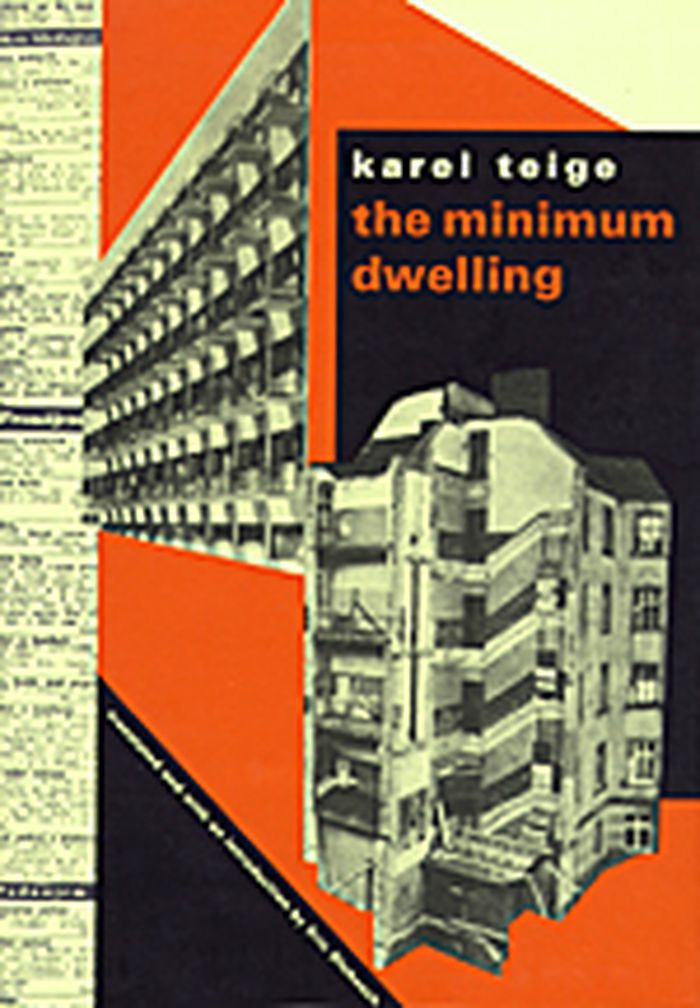
The minimum dwelling
Actions:
Prix:
$96.00
(disponible en magasin)
Résumé:
Karel Teige (1900–1951), one of the most important figures of avant-garde modernism of the 1920s and 1930s, influenced virtually every area of art, design, and urban thinking in his native Czechoslovakia. His "Minimum dwelling", originally published in Czech in 1932, and appearing now for the first time in English, is one of the landmark architectural books of the twentieth century. "The minimum dwelling" is not just a book on architecture, but also a blueprint for a new way of living. It calls for a radical rethinking of domestic space and of the role of modern architecture in the planning, design, and construction of new dwelling types for the proletariat. Teige shows how Gropius, Le Corbusier, Mies van der Rohe, and others designed little more than new versions of baroque palaces, mainly for the new financial aristocracy. Teige envisioned the minimum dwelling not as a reduced version of a bourgeois apartment or rural cottage, but as a wholly new dwelling type built on the cooperation of architects, sociologists, economists, health officials, physicians, social workers, politicians, and trade unionists. The book covers many subjects that are still of great relevance. Of particular interest are Teige’s rejection of traditional notions of the kitchen as the core of family-centered plans and of marriage as the foundation of modern cohabitation. He describes alternative lifestyles and new ways of cohabitation of sexes, generations, and classes. The detailed programmatic chapters on collective housing remain far ahead of current thinking, and his comments on collective dwelling presage communal living experiments of the 1960s and 1970s, as well as the communal facilities in contemporary condominium buildings and retirement communities. Translated and introduced by Eric Dluhosch.
The minimum dwelling
Actions:
Prix:
$96.00
(disponible en magasin)
Résumé:
Karel Teige (1900–1951), one of the most important figures of avant-garde modernism of the 1920s and 1930s, influenced virtually every area of art, design, and urban thinking in his native Czechoslovakia. His "Minimum dwelling", originally published in Czech in 1932, and appearing now for the first time in English, is one of the landmark architectural books of the twentieth century. "The minimum dwelling" is not just a book on architecture, but also a blueprint for a new way of living. It calls for a radical rethinking of domestic space and of the role of modern architecture in the planning, design, and construction of new dwelling types for the proletariat. Teige shows how Gropius, Le Corbusier, Mies van der Rohe, and others designed little more than new versions of baroque palaces, mainly for the new financial aristocracy. Teige envisioned the minimum dwelling not as a reduced version of a bourgeois apartment or rural cottage, but as a wholly new dwelling type built on the cooperation of architects, sociologists, economists, health officials, physicians, social workers, politicians, and trade unionists. The book covers many subjects that are still of great relevance. Of particular interest are Teige’s rejection of traditional notions of the kitchen as the core of family-centered plans and of marriage as the foundation of modern cohabitation. He describes alternative lifestyles and new ways of cohabitation of sexes, generations, and classes. The detailed programmatic chapters on collective housing remain far ahead of current thinking, and his comments on collective dwelling presage communal living experiments of the 1960s and 1970s, as well as the communal facilities in contemporary condominium buildings and retirement communities. Translated and introduced by Eric Dluhosch.
Classification:
livres
livres
Publication:
mai 2002, Cambridge, Mass.
mai 2002, Cambridge, Mass.
Sujet:
Théorie de l’architecture
Théorie de l’architecture
Classification:
livres
livres
Actions:
Prix:
$56.95
(disponible sur commande)
Résumé:
Utopia tends to generate a bad press - regarded as impracticable, perhaps nostalgic, or contradictory when visions of a perfect world cannot accommodate the change that is necessary to a free and self-organizing society. But people from diverse backgrounds are currently building a new society within the old, balancing literal and metaphorical utopianism, and demonstrating(...)
$56.95
(disponible sur commande)
Résumé:
Utopia tends to generate a bad press - regarded as impracticable, perhaps nostalgic, or contradictory when visions of a perfect world cannot accommodate the change that is necessary to a free and self-organizing society. But people from diverse backgrounds are currently building a new society within the old, balancing literal and metaphorical utopianism, and demonstrating(...)
Titre:
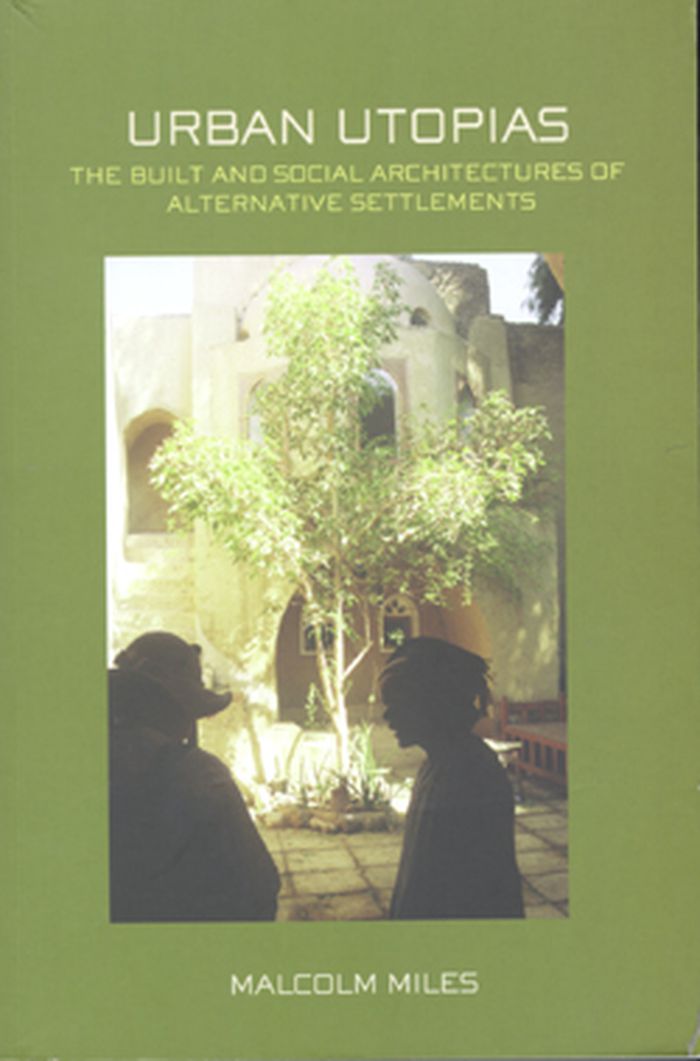
Urban utopias : the built and social architectures of alternative settlements
Actions:
Prix:
$56.95
(disponible sur commande)
Résumé:
Utopia tends to generate a bad press - regarded as impracticable, perhaps nostalgic, or contradictory when visions of a perfect world cannot accommodate the change that is necessary to a free and self-organizing society. But people from diverse backgrounds are currently building a new society within the old, balancing literal and metaphorical utopianism, and demonstrating plural possibilities for alternative futures and types of settlement. Thousands of such places exist around the world, including intentional communities, eco-villages, permaculture plots, religious and secular retreats, co-housing projects, self-build schemes, projects for low-impact housing, and activist squats in urban and rural sites. This experience suggests, however, that when planning and design are not integral to alternative social formations, the modern dream to engineer a new society cannot be realized. The book is structured in four parts. In part one, literary and theoretical utopias from the early modern period to the nineteenth-century are reconsidered. Part two investigates twentieth-century urban utopianism and contemporary alternative settlements focusing on social and environmental issues, activism and eco-village living. Part three looks to wider horizons in recent practices in the non-affluent world, and Part four reviews a range of cases from the author’s visits to specific sites. This is followed by a short conclusion in which a discussion of key issues is resumed. This book brings together insights from literary, theoretical and practical utopias, drawing out the characteristics of groups and places that are part of a new society. It links today’s utopian experiments to historical and literary utopias, and to theoretical problems in utopian thought.
Urban utopias : the built and social architectures of alternative settlements
Actions:
Prix:
$56.95
(disponible sur commande)
Résumé:
Utopia tends to generate a bad press - regarded as impracticable, perhaps nostalgic, or contradictory when visions of a perfect world cannot accommodate the change that is necessary to a free and self-organizing society. But people from diverse backgrounds are currently building a new society within the old, balancing literal and metaphorical utopianism, and demonstrating plural possibilities for alternative futures and types of settlement. Thousands of such places exist around the world, including intentional communities, eco-villages, permaculture plots, religious and secular retreats, co-housing projects, self-build schemes, projects for low-impact housing, and activist squats in urban and rural sites. This experience suggests, however, that when planning and design are not integral to alternative social formations, the modern dream to engineer a new society cannot be realized. The book is structured in four parts. In part one, literary and theoretical utopias from the early modern period to the nineteenth-century are reconsidered. Part two investigates twentieth-century urban utopianism and contemporary alternative settlements focusing on social and environmental issues, activism and eco-village living. Part three looks to wider horizons in recent practices in the non-affluent world, and Part four reviews a range of cases from the author’s visits to specific sites. This is followed by a short conclusion in which a discussion of key issues is resumed. This book brings together insights from literary, theoretical and practical utopias, drawing out the characteristics of groups and places that are part of a new society. It links today’s utopian experiments to historical and literary utopias, and to theoretical problems in utopian thought.
Classification:
livres
livres
Publication:
décembre 2007, New York, London
décembre 2007, New York, London
Sujet:
Théorie de l’urbanisme
Théorie de l’urbanisme
Classification:
périodiques
périodiques
Actions:
Prix:
$52.00
(disponible en magasin)
Résumé:
Good design has the power to influence and support the human healing process. Because recovery is a process rather than a static state, it requires transitional spaces that foster transformation and facilitate social interaction. In this context, space does not merely serve as a form of complementary medicine; it is an environment with an agency of its own. Often, it(...)
$52.00
(disponible en magasin)
Résumé:
Good design has the power to influence and support the human healing process. Because recovery is a process rather than a static state, it requires transitional spaces that foster transformation and facilitate social interaction. In this context, space does not merely serve as a form of complementary medicine; it is an environment with an agency of its own. Often, it(...)
Titre:
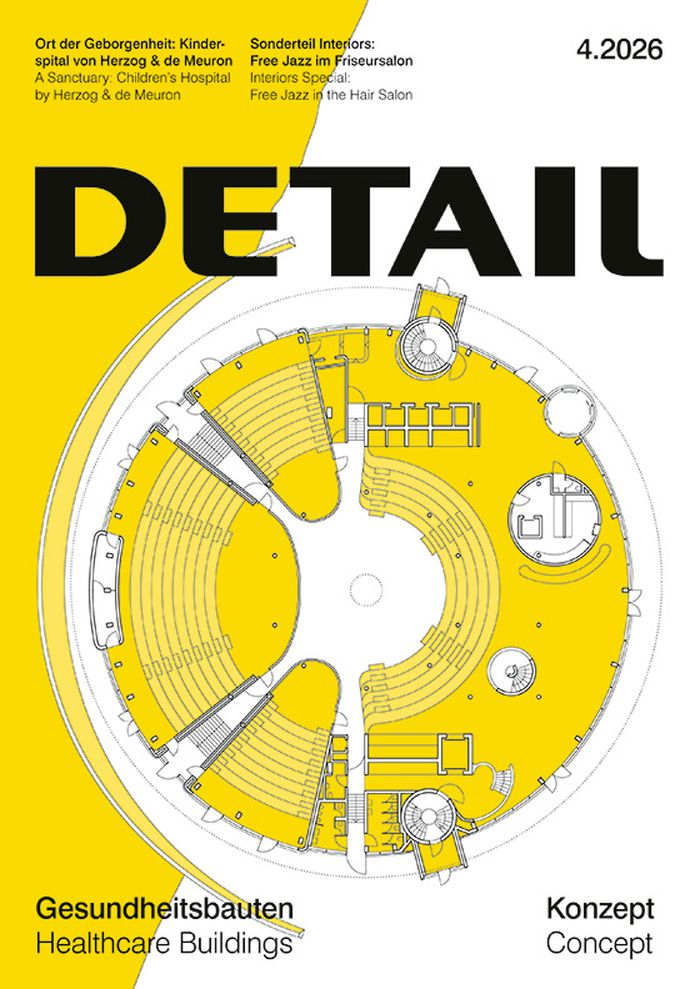
Detail 4 2026 : Healthcare buildings
Actions:
Prix:
$52.00
(disponible en magasin)
Résumé:
Good design has the power to influence and support the human healing process. Because recovery is a process rather than a static state, it requires transitional spaces that foster transformation and facilitate social interaction. In this context, space does not merely serve as a form of complementary medicine; it is an environment with an agency of its own. Often, it is only the absence of health that prompts us to truly examine it. This was the case for Charles Jencks, who, following his wife’s cancer diagnosis, laid the foundations for the therapy centres named after Maggie Keswick Jencks. Jencks described the first Maggie’s Centre, which opened 20 years ago in Edinburgh, as an “architecture of hope”. Similarly, Roger S. Ulrich, most recently a professor of architecture in Sweden, investigated the impact of nature on health in the mid-1980s while facing his own illness. His personal experience of nature’s restorative power led him to publish the seminal study that underpins all subsequent design approaches within the field of “healing architecture”. This issue presents exemplary special-purpose buildings from the healthcare sector that achieve exactly this. The mental health clinic by C. F. Møller in London, Dorte Mandrup Arkitekter’s healthcare centre in Copenhagen, and the Children’s Hospital in Zurich by Herzog & de Meuron are contrasted with smaller-scale pilot projects, such as the health kiosks designed by Pasel-K Architects as rural primary care infrastructure in Thüringen. Healing, it seems, knows no scale. The complex correlations between architecture and life are far from fully understood. As a young discipline, this field of architecture remains in constant flux.
Detail 4 2026 : Healthcare buildings
Actions:
Prix:
$52.00
(disponible en magasin)
Résumé:
Good design has the power to influence and support the human healing process. Because recovery is a process rather than a static state, it requires transitional spaces that foster transformation and facilitate social interaction. In this context, space does not merely serve as a form of complementary medicine; it is an environment with an agency of its own. Often, it is only the absence of health that prompts us to truly examine it. This was the case for Charles Jencks, who, following his wife’s cancer diagnosis, laid the foundations for the therapy centres named after Maggie Keswick Jencks. Jencks described the first Maggie’s Centre, which opened 20 years ago in Edinburgh, as an “architecture of hope”. Similarly, Roger S. Ulrich, most recently a professor of architecture in Sweden, investigated the impact of nature on health in the mid-1980s while facing his own illness. His personal experience of nature’s restorative power led him to publish the seminal study that underpins all subsequent design approaches within the field of “healing architecture”. This issue presents exemplary special-purpose buildings from the healthcare sector that achieve exactly this. The mental health clinic by C. F. Møller in London, Dorte Mandrup Arkitekter’s healthcare centre in Copenhagen, and the Children’s Hospital in Zurich by Herzog & de Meuron are contrasted with smaller-scale pilot projects, such as the health kiosks designed by Pasel-K Architects as rural primary care infrastructure in Thüringen. Healing, it seems, knows no scale. The complex correlations between architecture and life are far from fully understood. As a young discipline, this field of architecture remains in constant flux.
Classification:
périodiques
périodiques
Publication:
avril 2026
avril 2026
Sujet:
Revues
Revues
Classification:
livres
livres
Titre:
Valerio Olgiati: Villa Além
Valerio Olgiati: Villa Além
Actions:
Prix:
$95.00
(disponible en magasin)
Résumé:
"For many years, my wife Tamara and I had been searching for a place for which we could leave our current home in the Swiss mountains on social, cultural and climatic grounds. In the Alentejo region in Portugal, we found the perfect situation. A wonderful climate, a wide empty landscape and an existing culture that we like. Here, we spend a couple of months a year. From(...)
$95.00
(disponible en magasin)
Résumé:
"For many years, my wife Tamara and I had been searching for a place for which we could leave our current home in the Swiss mountains on social, cultural and climatic grounds. In the Alentejo region in Portugal, we found the perfect situation. A wonderful climate, a wide empty landscape and an existing culture that we like. Here, we spend a couple of months a year. From(...)
Titre:
Valerio Olgiati: Villa Além
Actions:
Prix:
$95.00
(disponible en magasin)
Résumé:
"For many years, my wife Tamara and I had been searching for a place for which we could leave our current home in the Swiss mountains on social, cultural and climatic grounds. In the Alentejo region in Portugal, we found the perfect situation. A wonderful climate, a wide empty landscape and an existing culture that we like. Here, we spend a couple of months a year. From here, we work – my wife is also an architect – close to our office in Flims. The basic idea and the all-influencing aim of our project was to create a garden, even more than a shelter, which, of course, we also have. The form of our house indeed should not primarily express ‘shelter’. It is the ‘garden’ that has to essentially find its form and that we want to experience. To date, three main forms are known to me in terms of housing. The first, ‘urban living’, I understand as living in the dense fabric of an urban setting. Then, ‘suburban living’, which takes place in a typical one-family home with a small garden in suburbia, and finally, ‘country living’, where people live socially and infrastructurally connected at large rural intervals. We excluded all three of these forms for our house. This was not what we were looking for. Our home is far away from the next town. It is disconnected in every respect. There is only the vast empty landscape around us. In Villa Além, a sense of loneliness and independence arises. It is a real retreat. I was looking for a term for this type of housing and have arrived at ‘landscape living’." – Valerio Olgiati
Valerio Olgiati: Villa Além
Actions:
Prix:
$95.00
(disponible en magasin)
Résumé:
"For many years, my wife Tamara and I had been searching for a place for which we could leave our current home in the Swiss mountains on social, cultural and climatic grounds. In the Alentejo region in Portugal, we found the perfect situation. A wonderful climate, a wide empty landscape and an existing culture that we like. Here, we spend a couple of months a year. From here, we work – my wife is also an architect – close to our office in Flims. The basic idea and the all-influencing aim of our project was to create a garden, even more than a shelter, which, of course, we also have. The form of our house indeed should not primarily express ‘shelter’. It is the ‘garden’ that has to essentially find its form and that we want to experience. To date, three main forms are known to me in terms of housing. The first, ‘urban living’, I understand as living in the dense fabric of an urban setting. Then, ‘suburban living’, which takes place in a typical one-family home with a small garden in suburbia, and finally, ‘country living’, where people live socially and infrastructurally connected at large rural intervals. We excluded all three of these forms for our house. This was not what we were looking for. Our home is far away from the next town. It is disconnected in every respect. There is only the vast empty landscape around us. In Villa Além, a sense of loneliness and independence arises. It is a real retreat. I was looking for a term for this type of housing and have arrived at ‘landscape living’." – Valerio Olgiati
Classification:
livres
livres
Publication:
janvier 2016
janvier 2016
Sujet:
Architecture, monographies
Architecture, monographies
Classification:
livres
livres
Actions:
Exemplaires:
Description:
357 pages : illustrations (some color) ; 24 cm
Description:
357 pages : illustrations (some color) ; 24 cm
Auteur:
Sujet:
Publication:
Paris : Ministère de la culture, de la communication, des grands travaux et du Bicentenaire, Editions de la Réunion des musées nationaux, 1988.
Paris : Ministère de la culture, de la communication, des grands travaux et du Bicentenaire, Editions de la Réunion des musées nationaux, 1988.
Titre:
Un Village au temps de Charlemagne : moines et paysans de l'abbaye de Saint-Denis, du VIIe siècle à l'an mil : Musée national des arts et traditions populaires, 29 novembre 1988-30 avril 1989 : [exposition / [organisée par la Réunion des musées nationaux ; sous la direction de Jean Cuisenier et Rémy Guadagnin].
Actions:
Exemplaires:
Description:
357 pages : illustrations (some color) ; 24 cm
Un Village au temps de Charlemagne : moines et paysans de l'abbaye de Saint-Denis, du VIIe siècle à l'an mil : Musée national des arts et traditions populaires, 29 novembre 1988-30 avril 1989 : [exposition / [organisée par la Réunion des musées nationaux ; sous la direction de Jean Cuisenier et Rémy Guadagnin].
Actions:
Exemplaires:
Description:
357 pages : illustrations (some color) ; 24 cm
Classification:
livres
livres
Publication:
Paris : Ministère de la culture, de la communication, des grands travaux et du Bicentenaire, Editions de la Réunion des musées nationaux, 1988.
Paris : Ministère de la culture, de la communication, des grands travaux et du Bicentenaire, Editions de la Réunion des musées nationaux, 1988.
Auteur:
Sujet:
Classification:
livres
livres
Titre:
Sprawl : a compact history
Sprawl : a compact history
Actions:
Prix:
$34.50
(disponible sur commande)
Résumé:
As anyone who has flown into Los Angeles at dusk or Houston at midday knows, urban areas today defy traditional notions of what a city is. Our old definitions of urban, suburban, and rural fail to capture the complexity of these vast regions with their superhighways, subdivisions, industrial areas, office parks, and resort areas pushing far out into the countryside.(...)
$34.50
(disponible sur commande)
Résumé:
As anyone who has flown into Los Angeles at dusk or Houston at midday knows, urban areas today defy traditional notions of what a city is. Our old definitions of urban, suburban, and rural fail to capture the complexity of these vast regions with their superhighways, subdivisions, industrial areas, office parks, and resort areas pushing far out into the countryside.(...)
Titre:
Sprawl : a compact history
Actions:
Prix:
$34.50
(disponible sur commande)
Résumé:
As anyone who has flown into Los Angeles at dusk or Houston at midday knows, urban areas today defy traditional notions of what a city is. Our old definitions of urban, suburban, and rural fail to capture the complexity of these vast regions with their superhighways, subdivisions, industrial areas, office parks, and resort areas pushing far out into the countryside. Detractors call it sprawl and assert that it is economically inefficient, socially inequitable, environmentally irresponsible, and aesthetically ugly. Robert Bruegmann calls it a logical consequence of economic growth and the democratization of society, with benefits that urban planners have failed to recognize. In his history of the expanded city, Bruegmann overturns every assumption we have about sprawl. Taking a long view of urban development, he demonstrates that sprawl is neither recent nor particularly American but as old as cities themselves, just as characteristic of ancient Rome and eighteenth-century Paris as it is of Atlanta or Los Angeles. Nor is sprawl the disaster claimed by many contemporary observers. Although sprawl, like any settlement pattern, has undoubtedly produced problems that must be addressed, it has also provided millions of people with the kinds of mobility, privacy, and choice that were once the exclusive prerogatives of the rich and powerful. The first major book to strip urban sprawl of its pejorative connotations, Sprawl offers a completely new vision of the city and its growth. Bruegmann leads readers to the powerful conclusion that ''in its immense complexity and constant change, the city-whether dense and concentrated at its core, looser and more sprawling in suburbia, or in the vast tracts of exurban penumbra that extend dozens, even hundreds, of miles-is the grandest and most marvelous work of mankind.''
Sprawl : a compact history
Actions:
Prix:
$34.50
(disponible sur commande)
Résumé:
As anyone who has flown into Los Angeles at dusk or Houston at midday knows, urban areas today defy traditional notions of what a city is. Our old definitions of urban, suburban, and rural fail to capture the complexity of these vast regions with their superhighways, subdivisions, industrial areas, office parks, and resort areas pushing far out into the countryside. Detractors call it sprawl and assert that it is economically inefficient, socially inequitable, environmentally irresponsible, and aesthetically ugly. Robert Bruegmann calls it a logical consequence of economic growth and the democratization of society, with benefits that urban planners have failed to recognize. In his history of the expanded city, Bruegmann overturns every assumption we have about sprawl. Taking a long view of urban development, he demonstrates that sprawl is neither recent nor particularly American but as old as cities themselves, just as characteristic of ancient Rome and eighteenth-century Paris as it is of Atlanta or Los Angeles. Nor is sprawl the disaster claimed by many contemporary observers. Although sprawl, like any settlement pattern, has undoubtedly produced problems that must be addressed, it has also provided millions of people with the kinds of mobility, privacy, and choice that were once the exclusive prerogatives of the rich and powerful. The first major book to strip urban sprawl of its pejorative connotations, Sprawl offers a completely new vision of the city and its growth. Bruegmann leads readers to the powerful conclusion that ''in its immense complexity and constant change, the city-whether dense and concentrated at its core, looser and more sprawling in suburbia, or in the vast tracts of exurban penumbra that extend dozens, even hundreds, of miles-is the grandest and most marvelous work of mankind.''
Classification:
livres
livres
Publication:
octobre 2005, Chicago, London
octobre 2005, Chicago, London
Sujet:
Théorie de l’urbanisme
Théorie de l’urbanisme
Classification:
livres
livres
Titre:
The place we live
The place we live
Actions:
Prix:
$42.00
(disponible sur commande)
Résumé:
The year 2008 has witnessed a major shift in the way people across the world live: for the first time in human history more people live in cities than in rural areas. This triumph of the urban, however, does not entirely represent progress, as the number of people living in urban slums—often in abject conditions—will soon exceed one billion. From 2005 to 2007 Jonas(...)
$42.00
(disponible sur commande)
Résumé:
The year 2008 has witnessed a major shift in the way people across the world live: for the first time in human history more people live in cities than in rural areas. This triumph of the urban, however, does not entirely represent progress, as the number of people living in urban slums—often in abject conditions—will soon exceed one billion. From 2005 to 2007 Jonas(...)
Titre:
The place we live
Actions:
Prix:
$42.00
(disponible sur commande)
Résumé:
The year 2008 has witnessed a major shift in the way people across the world live: for the first time in human history more people live in cities than in rural areas. This triumph of the urban, however, does not entirely represent progress, as the number of people living in urban slums—often in abject conditions—will soon exceed one billion. From 2005 to 2007 Jonas Bendiksen documented life in the slums of four different cities: Nairobi, Kenya; Mumbai, India; Jakarta, Indonesia; and Caracas, Venezuela. His lyrical images capture the diversity of personal histories and outlooks found in these dense neighborhoods that, despite commonly held assumptions, are not simply places of poverty and misery. Yet, slum residents continuously face enormous challenges, such as the lack of health care, sanitation, and electricity. The Places We Live includes twenty double-gatefold images, each representing an individual home and its denizen’s story. Through its innovative design and experiential approach, The Places We Live brings the modern-day Dickensian reality of these individuals into sharp focus. Artist / Writer Biography A member of Magnum Photos, Jonas Bendiksen (born in Tønsberg, Norway, 1977) has received numerous awards, including the 2003 Infinity Award from the International Center of Photography and first prize in the Pictures of the Year International Awards. His photographs have appeared in National Geographic, Geo , Newsweek, and the Sunday Times Magazine, among other publications. His bestselling first book, Satellites: Photographs from the Fringes of the Former Soviet Union, was published in 2006 by Aperture. In 2007, the Paris Review received a National Magazine Award for Bendiksen’s project The Places We Live. Philip Gourevitch (introduction) is editor of the Paris Review and author of Standard Operating Procedure (a collaboration with Errol Morris) and We Wish to Inform You That Tomorrow We Will Be Killed With Our Families: Stories from Rwanda.
The place we live
Actions:
Prix:
$42.00
(disponible sur commande)
Résumé:
The year 2008 has witnessed a major shift in the way people across the world live: for the first time in human history more people live in cities than in rural areas. This triumph of the urban, however, does not entirely represent progress, as the number of people living in urban slums—often in abject conditions—will soon exceed one billion. From 2005 to 2007 Jonas Bendiksen documented life in the slums of four different cities: Nairobi, Kenya; Mumbai, India; Jakarta, Indonesia; and Caracas, Venezuela. His lyrical images capture the diversity of personal histories and outlooks found in these dense neighborhoods that, despite commonly held assumptions, are not simply places of poverty and misery. Yet, slum residents continuously face enormous challenges, such as the lack of health care, sanitation, and electricity. The Places We Live includes twenty double-gatefold images, each representing an individual home and its denizen’s story. Through its innovative design and experiential approach, The Places We Live brings the modern-day Dickensian reality of these individuals into sharp focus. Artist / Writer Biography A member of Magnum Photos, Jonas Bendiksen (born in Tønsberg, Norway, 1977) has received numerous awards, including the 2003 Infinity Award from the International Center of Photography and first prize in the Pictures of the Year International Awards. His photographs have appeared in National Geographic, Geo , Newsweek, and the Sunday Times Magazine, among other publications. His bestselling first book, Satellites: Photographs from the Fringes of the Former Soviet Union, was published in 2006 by Aperture. In 2007, the Paris Review received a National Magazine Award for Bendiksen’s project The Places We Live. Philip Gourevitch (introduction) is editor of the Paris Review and author of Standard Operating Procedure (a collaboration with Errol Morris) and We Wish to Inform You That Tomorrow We Will Be Killed With Our Families: Stories from Rwanda.
Classification:
livres
livres
Publication:
août 2008, New York
août 2008, New York
Sujet:
Monographies photo
Monographies photo


