


3068 Résultats
Classification:
livres
livres
Titre:
Architecture and film
Architecture and film
Actions:
Prix:
$32.50
(disponible sur commande)
Résumé:
"Architecture and Film" looks at the ways architecture and architects are treated on screen and, conversely, how these depictions filter and shape the ways we understand the built environment. It also examines the significant effect that the film industry has had on the (...)
$32.50
(disponible sur commande)
Résumé:
"Architecture and Film" looks at the ways architecture and architects are treated on screen and, conversely, how these depictions filter and shape the ways we understand the built environment. It also examines the significant effect that the film industry has had on the (...)
Publication:
février 2000, New York
février 2000, New York
Titre:
Architecture and film
Actions:
Prix:
$32.50
(disponible sur commande)
Résumé:
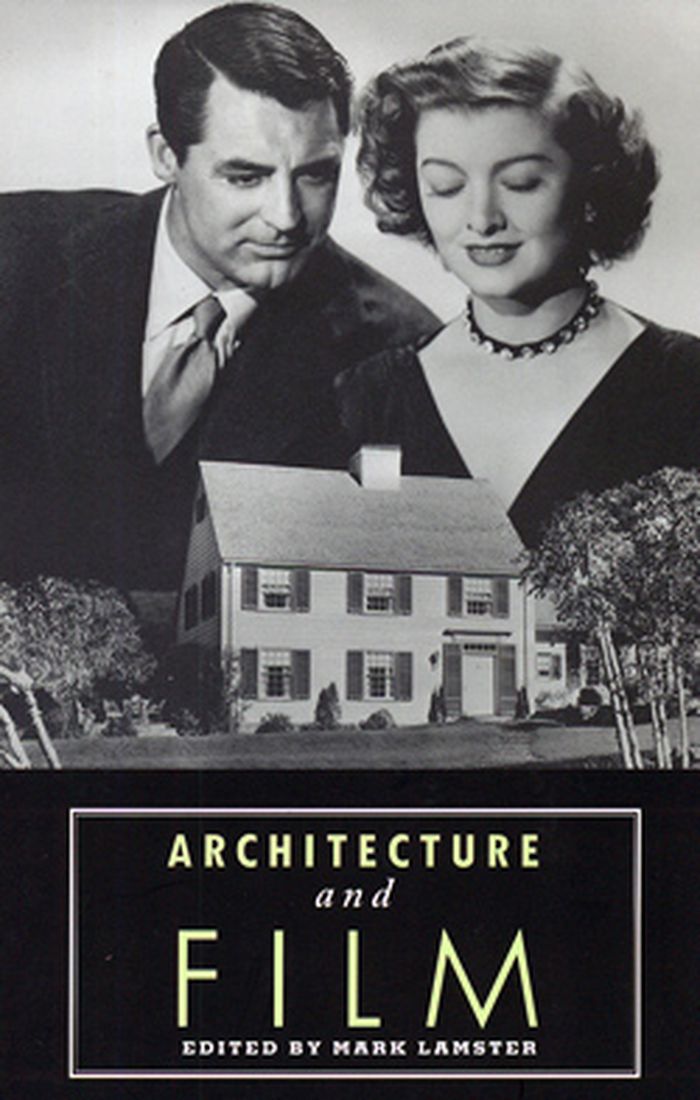
"Architecture and Film" looks at the ways architecture and architects are treated on screen and, conversely, how these depictions filter and shape the ways we understand the built environment. It also examines the significant effect that the film industry has had on the American public's perception of urban, suburban, and rural spaces. Contributors to this collection of essays come from a wide range of disciplines. Nancy Levinson writes on how films from "The Fountainhead" to "Jungle Fever" have depicted architects. Eric Rosenberg looks at how architecture and spatial relations shape the Beatles films "A Hard Day's Night", "Help!", and "Let It Be". Joseph Rosa discusses why modern domestic architecture in recent Hollywood films such as "The Ice Storm", "L.A. Confidential", and "The Big Lebowski" has become synonymous with unstable inhabitants. Peter Hall discusses the history of film titling, focusing on the groundbreaking work of Saul Bass and Maurice Binder. Editor Mark Lamster examines the anti-urbanism of the Star Wars trilogy. The collection also includes the voices of those from within the film industry, who are uniquely able to provide a "behind the scenes" perspective: film editor Bob Eisenhardt comments on the making of "Concert of Wills", a documentary on the construction of the Getty Museum; and Robert Kraft focuses on his work as a location director for Diane Keaton's upcoming film about Los Angeles. Also included are interviews with David Rockwell, architect of numerous Planet Hollywood restaurants worldwide and designer of a new hall to host the Academy Awards ceremony; Kyle Kooper, who created title sequences for "Seven" and "Mission Impossible"; and motion picture art director Jan Roelfs, whose credits include "Gattaca", "Orlando", and "Little Women". Previously priced at $41.50.
Architecture and film
Actions:
Prix:
$32.50
(disponible sur commande)
Résumé:
"Architecture and Film" looks at the ways architecture and architects are treated on screen and, conversely, how these depictions filter and shape the ways we understand the built environment. It also examines the significant effect that the film industry has had on the American public's perception of urban, suburban, and rural spaces. Contributors to this collection of essays come from a wide range of disciplines. Nancy Levinson writes on how films from "The Fountainhead" to "Jungle Fever" have depicted architects. Eric Rosenberg looks at how architecture and spatial relations shape the Beatles films "A Hard Day's Night", "Help!", and "Let It Be". Joseph Rosa discusses why modern domestic architecture in recent Hollywood films such as "The Ice Storm", "L.A. Confidential", and "The Big Lebowski" has become synonymous with unstable inhabitants. Peter Hall discusses the history of film titling, focusing on the groundbreaking work of Saul Bass and Maurice Binder. Editor Mark Lamster examines the anti-urbanism of the Star Wars trilogy. The collection also includes the voices of those from within the film industry, who are uniquely able to provide a "behind the scenes" perspective: film editor Bob Eisenhardt comments on the making of "Concert of Wills", a documentary on the construction of the Getty Museum; and Robert Kraft focuses on his work as a location director for Diane Keaton's upcoming film about Los Angeles. Also included are interviews with David Rockwell, architect of numerous Planet Hollywood restaurants worldwide and designer of a new hall to host the Academy Awards ceremony; Kyle Kooper, who created title sequences for "Seven" and "Mission Impossible"; and motion picture art director Jan Roelfs, whose credits include "Gattaca", "Orlando", and "Little Women". Previously priced at $41.50.
Classification:
livres
livres
Publication:
février 2000, New York
février 2000, New York
Classification:
livres
livres
Prix:
$50.95
(disponible sur commande)
Résumé:
Entre recherche archivistique, enquête de terrain et travail de mémoire, l'ouvrage de Marina Gasnier aborde le paysage industriel de l'Ille-et-Vilaine à travers son histoire, son patrimoine bâti, mais aussi ses équipements technologiques et ses concepteurs. Quel point commun existe-t-il entre le moulin à marée de Beauchet, l'usine de construction automobile Citroën, la(...)
$50.95
(disponible sur commande)
Résumé:
Entre recherche archivistique, enquête de terrain et travail de mémoire, l'ouvrage de Marina Gasnier aborde le paysage industriel de l'Ille-et-Vilaine à travers son histoire, son patrimoine bâti, mais aussi ses équipements technologiques et ses concepteurs. Quel point commun existe-t-il entre le moulin à marée de Beauchet, l'usine de construction automobile Citroën, la(...)
Titre:
Le paysage de l'industrie en Ille-et-Vilaine : XIXe - XXe siècles
Actions:
Prix:
$50.95
(disponible sur commande)
Résumé:
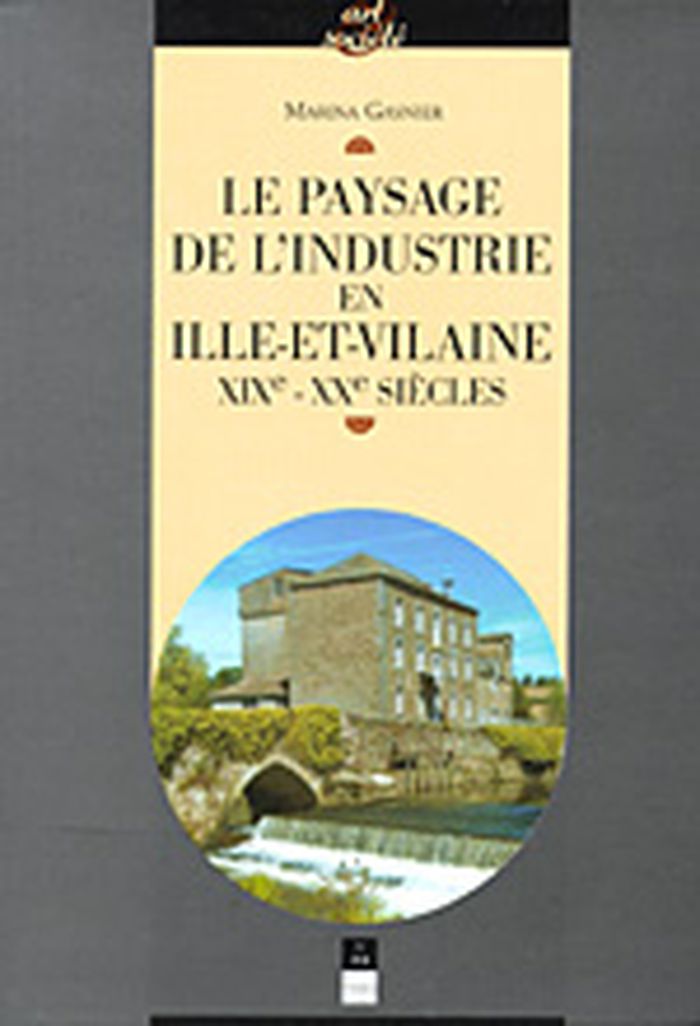
Entre recherche archivistique, enquête de terrain et travail de mémoire, l'ouvrage de Marina Gasnier aborde le paysage industriel de l'Ille-et-Vilaine à travers son histoire, son patrimoine bâti, mais aussi ses équipements technologiques et ses concepteurs. Quel point commun existe-t-il entre le moulin à marée de Beauchet, l'usine de construction automobile Citroën, la mine d'or de Martigné-Ferchaud, la brasserie Kronenbourg, l'usine marémotrice de la Rance ou encore une usine de chaussures fougeraise ? Aucun, hormis le fait que chacun de ces ensembles appartient au patrimoine industriel du département de l'Ille-et-Vilaine. L'heure étant à la préoccupation de la gestion de ce type de patrimoine, cet ouvrage donne un panorama général de l'héritage qui a été conservé, des activités industrielles qui jalonnaient autrefois ce territoire. Aussi nombreuses que variées, ces activités relevaient aussi bien du labeur souterrain des mineurs dont l'existence sur terre était signalée par la présence d'un chevalement, que des sites de forges au cœur desquels la fonte, rougie, coulait des hauts fourneaux ; aussi bien de la mouture du blé impulsée par le mouvement de roues hydrauliques que du travail des paysans qui, pour subvenir aux besoins de leur famille, exerçaient une seconde activité telle que l'extraction au fond d'une ardoisière ou d'une carrière, ou encore le filage et le tissage des toiles à voiles. La plupart de ces activités transparaît encore au travers de notre paysage, aussi bien en territoire rural, urbain, que maritime. Dotée de ses propres spécificités liées à son appartenance sectorielle et à son terrain d'élection, chacune d'entre elles présente une lecture distincte tout à fait perceptible, mais qui ne se conçoit que dans son rapport avec son environnement géographique, socio-économique et architectural.
Le paysage de l'industrie en Ille-et-Vilaine : XIXe - XXe siècles
Actions:
Prix:
$50.95
(disponible sur commande)
Résumé:
Entre recherche archivistique, enquête de terrain et travail de mémoire, l'ouvrage de Marina Gasnier aborde le paysage industriel de l'Ille-et-Vilaine à travers son histoire, son patrimoine bâti, mais aussi ses équipements technologiques et ses concepteurs. Quel point commun existe-t-il entre le moulin à marée de Beauchet, l'usine de construction automobile Citroën, la mine d'or de Martigné-Ferchaud, la brasserie Kronenbourg, l'usine marémotrice de la Rance ou encore une usine de chaussures fougeraise ? Aucun, hormis le fait que chacun de ces ensembles appartient au patrimoine industriel du département de l'Ille-et-Vilaine. L'heure étant à la préoccupation de la gestion de ce type de patrimoine, cet ouvrage donne un panorama général de l'héritage qui a été conservé, des activités industrielles qui jalonnaient autrefois ce territoire. Aussi nombreuses que variées, ces activités relevaient aussi bien du labeur souterrain des mineurs dont l'existence sur terre était signalée par la présence d'un chevalement, que des sites de forges au cœur desquels la fonte, rougie, coulait des hauts fourneaux ; aussi bien de la mouture du blé impulsée par le mouvement de roues hydrauliques que du travail des paysans qui, pour subvenir aux besoins de leur famille, exerçaient une seconde activité telle que l'extraction au fond d'une ardoisière ou d'une carrière, ou encore le filage et le tissage des toiles à voiles. La plupart de ces activités transparaît encore au travers de notre paysage, aussi bien en territoire rural, urbain, que maritime. Dotée de ses propres spécificités liées à son appartenance sectorielle et à son terrain d'élection, chacune d'entre elles présente une lecture distincte tout à fait perceptible, mais qui ne se conçoit que dans son rapport avec son environnement géographique, socio-économique et architectural.
Classification:
livres
livres
Publication:
septembre 2003, Rennes
septembre 2003, Rennes
Sujet:
Structures d’ingénierie
Structures d’ingénierie
Classification:
livres
livres
Actions:
Exemplaires:
Description:
xiv, 234 pages : illustrations (black and white) ; 29 cm
Description:
xiv, 234 pages : illustrations (black and white) ; 29 cm
Auteur:
Sujet:
Publication:
New York : Crown Publishers, [1955], ©1955
New York : Crown Publishers, [1955], ©1955
Titre:
The living past of America : pictorial treasury of our historic houses and villages that have been preserved and restored / by Cornelius Vanderbilt, Jr.
Actions:
Exemplaires:
Description:
xiv, 234 pages : illustrations (black and white) ; 29 cm
The living past of America : pictorial treasury of our historic houses and villages that have been preserved and restored / by Cornelius Vanderbilt, Jr.
Actions:
Exemplaires:
Description:
xiv, 234 pages : illustrations (black and white) ; 29 cm
Classification:
livres
livres
Publication:
New York : Crown Publishers, [1955], ©1955
New York : Crown Publishers, [1955], ©1955
Auteur:
Sujet:
Classification:
livres
livres
Actions:
Exemplaires:
Description:
xiii, 210 p., [24] p. of plates : ill. ; 24 cm.
Description:
xiii, 210 p., [24] p. of plates : ill. ; 24 cm.
Auteur:
Sujet:
Publication:
New York : Columbia University Press, c1993.
New York : Columbia University Press, c1993.
Titre:
The great good place : the country house and English literature / Malcolm Kelsall.
Actions:
Exemplaires:
Description:
xiii, 210 p., [24] p. of plates : ill. ; 24 cm.
The great good place : the country house and English literature / Malcolm Kelsall.
Actions:
Exemplaires:
Description:
xiii, 210 p., [24] p. of plates : ill. ; 24 cm.
Classification:
livres
livres
Publication:
New York : Columbia University Press, c1993.
New York : Columbia University Press, c1993.
Auteur:
Sujet:
Classification:
livres
livres
Titre:
Around
Around
Actions:
Prix:
$44.95
(disponible sur commande)
Résumé:
This book addresses the status of the periphery and of the peripheric -the state of being around something- as an antiquated space, a space fallen into disuse or discredit, where all defunct fashions are absorbed, and takes it as a starting point for revising the idea in which a recently acquired historical perspective plays an essential role. That as a common place, the(...)
$44.95
(disponible sur commande)
Résumé:
This book addresses the status of the periphery and of the peripheric -the state of being around something- as an antiquated space, a space fallen into disuse or discredit, where all defunct fashions are absorbed, and takes it as a starting point for revising the idea in which a recently acquired historical perspective plays an essential role. That as a common place, the(...)
Titre:
Around
Actions:
Prix:
$44.95
(disponible sur commande)
Résumé:
This book addresses the status of the periphery and of the peripheric -the state of being around something- as an antiquated space, a space fallen into disuse or discredit, where all defunct fashions are absorbed, and takes it as a starting point for revising the idea in which a recently acquired historical perspective plays an essential role. That as a common place, the periphery belongs to the past is an advantage which, along with the interventions making up this book, we intend to make good use of. The first part of this book, "Prepositions: A Journey to the Periphery", attempts to juxtapose examples of architectural and photographic interventions that have contributed, and contribute, to turning the periphery into an easily identifiable spatial signifier, and likewise to propose a rereading of these spaces which permits us to decipher their more or less diverse yearnings, utopias and social spaces. In all these interventions the periphery is always comparable to a concrete geographical reality to which one directs oneself, towards which one travels, with the aim of appropriating it, of defining it. This always involves the same preposition: around. The second part, "Propositions: The Journey of the Periphery", will be taken up with the rehabilitation or reutilization of the concept of the periphery. Once the concept of the periphery is considered as being obsolete, it is possible -and this is the chief theoretical contribution of this project- to recycle it, to convert the preposition "around" into a theoretical proposition that gives a number of new twists to the concept and explores its possibilities. The projects and photos included in this second part reflect a fundamental change in the perception of the periphery. The periphery escapes its geographical location and occupies the city's historic center, rural/natural surroundings, technological fantasies, the social utopias of postmodernity, etc. The periphery ceases to mean "around" as a physical location and becomes an invitation to reflection "around" the periphery as both concept and possibility. This doesn't so much mean a colonizing journey to the periphery, as in the first part, as a journey of the periphery to places where it was proscribed until quite recently. The periphery turns out to mean a mobile discourse that uses the common places of the classical periphery in order to dislodge and deterritorialize these.
Around
Actions:
Prix:
$44.95
(disponible sur commande)
Résumé:
This book addresses the status of the periphery and of the peripheric -the state of being around something- as an antiquated space, a space fallen into disuse or discredit, where all defunct fashions are absorbed, and takes it as a starting point for revising the idea in which a recently acquired historical perspective plays an essential role. That as a common place, the periphery belongs to the past is an advantage which, along with the interventions making up this book, we intend to make good use of. The first part of this book, "Prepositions: A Journey to the Periphery", attempts to juxtapose examples of architectural and photographic interventions that have contributed, and contribute, to turning the periphery into an easily identifiable spatial signifier, and likewise to propose a rereading of these spaces which permits us to decipher their more or less diverse yearnings, utopias and social spaces. In all these interventions the periphery is always comparable to a concrete geographical reality to which one directs oneself, towards which one travels, with the aim of appropriating it, of defining it. This always involves the same preposition: around. The second part, "Propositions: The Journey of the Periphery", will be taken up with the rehabilitation or reutilization of the concept of the periphery. Once the concept of the periphery is considered as being obsolete, it is possible -and this is the chief theoretical contribution of this project- to recycle it, to convert the preposition "around" into a theoretical proposition that gives a number of new twists to the concept and explores its possibilities. The projects and photos included in this second part reflect a fundamental change in the perception of the periphery. The periphery escapes its geographical location and occupies the city's historic center, rural/natural surroundings, technological fantasies, the social utopias of postmodernity, etc. The periphery ceases to mean "around" as a physical location and becomes an invitation to reflection "around" the periphery as both concept and possibility. This doesn't so much mean a colonizing journey to the periphery, as in the first part, as a journey of the periphery to places where it was proscribed until quite recently. The periphery turns out to mean a mobile discourse that uses the common places of the classical periphery in order to dislodge and deterritorialize these.
Classification:
livres
livres
Publication:
avril 2003, Barcelona
avril 2003, Barcelona
Sujet:
Théorie de l’urbanisme
Théorie de l’urbanisme
Classification:
livres
livres
Actions:
Exemplaires:
Description:
xviii, 341 pages : illustrations, portraits ; 26 cm
Description:
xviii, 341 pages : illustrations, portraits ; 26 cm
Auteur:
Sujet:
Publication:
[Toronto] : University of Toronto Press, 1969.
[Toronto] : University of Toronto Press, 1969.
Titre:
The garden and the city : retirement and politics in the later poetry of Pope, 1731-1743 / Maynard Mack.
Actions:
Exemplaires:
Description:
xviii, 341 pages : illustrations, portraits ; 26 cm
The garden and the city : retirement and politics in the later poetry of Pope, 1731-1743 / Maynard Mack.
Actions:
Exemplaires:
Description:
xviii, 341 pages : illustrations, portraits ; 26 cm
Classification:
livres
livres
Publication:
[Toronto] : University of Toronto Press, 1969.
[Toronto] : University of Toronto Press, 1969.
Auteur:
Sujet:
Classification:
périodiques
périodiques
Actions:
Prix:
$71.50
(disponible sur commande)
Résumé:
A ‘Pacific’ century, an Asian century or a Chinese century? On the threshold between the 20th and the 21st century, the transit from the Atlantic to the Pacific is forecasted by all; the move from America to Asia is noticed by many; and the replacement of the United States by China is feared by some: the awakening of the dragon provokes both wonder and distrust. After the(...)
$71.50
(disponible sur commande)
Résumé:
A ‘Pacific’ century, an Asian century or a Chinese century? On the threshold between the 20th and the 21st century, the transit from the Atlantic to the Pacific is forecasted by all; the move from America to Asia is noticed by many; and the replacement of the United States by China is feared by some: the awakening of the dragon provokes both wonder and distrust. After the(...)
Titre:
AV Monografias / Monographs 109-110 (2004) : China boom, growth unlimited
Actions:
Prix:
$71.50
(disponible sur commande)
Résumé:
A ‘Pacific’ century, an Asian century or a Chinese century? On the threshold between the 20th and the 21st century, the transit from the Atlantic to the Pacific is forecasted by all; the move from America to Asia is noticed by many; and the replacement of the United States by China is feared by some: the awakening of the dragon provokes both wonder and distrust. After the reforms of Deng Xiaoping in 1978, in the last 25 years China has grown at a rate of 9 percent; in this period, its GNP has tripled, and the percentage of population living in cities has doubled, exceeding 40%. Fueled by exports, and backed by the postotalitarian protectionism of a single-party government, the stunning growth of China has not yet created global companies – the Sony or Hyundai that led the Japanese or Korean booms – but its large oil firms (PetroChina, Sinopec, CNOOC) try to find in several continents the energy needed by the world’s second importer; its technological companies (from Lenovo, that has purchased a division of IBM, to Huawei, that has created in Shenzhen a Silicon Valley-style campus, Doric Disney designs included) make up for scarce innovation with low labor costs; and its new breed of fancy millionaires, who build chateaux or buy French cosmetic brands, spearhead a large consumerist middle class, supplying a strong domestic demand that adds to the thrust of foreign markets. China’s unequal growth does not appear to be a large risk: the differences in income are similar to those of the US, and the contrast between the wealthy coast and the rural inland – where most upheavals have started, from Boxers to communists – is blurred as the development of Shanghai extends upriver along the Yangtze corridor, and as Hong Kong’s dynamism expands in concentric waves over the superregion of Guangdong, from that Pearl River Delta known as ‘the factory of the world’. More dangerous seem to be the weakness of the financial system, the persistence of administrative corruption and the scarcity of energy resources, the supply of which is being secured by heavy investments on the military, something that upsets its neighbors – Japan and Taiwan most of all, but also Korea and another awakening giant, India –, its competitors, and even the US, that urges its European allies to maintain the arms ban on China. On top of all this, in a country that has reached 1,300 million inhabitants in 2005, is the demographic scenario created by the single child policy and the accelerated ageing of the population, with an increasing number of 4+2+1 families, where now there are four grandparents and two parents satisfying the needs of a little emperor, but where in just 30 years a single adult will have to take care of six retirees. This huge economic and social transformation has expressed itself via an unprecedented urban explosion, shaped by titanic public works – large dams and suspended bridges, elevated highways and submarine tunnels – and with the foreseeable devastating impact on the environment and cultural heritage. The building frenzy that has attracted so many foreign architects to China – initially for technically complex or symbolically significant works, like some of the skyscrapers of Shanghai or the olympic projects in Beijing, but now more often for urban plans or conventional commercial developments – receives, according to The Economist, the added boost of a real-estate bubble that feeds on hot money placing its bets on the yuan’s revaluation. This process has turned some districts of Shanghai such as Pudong or Puxi into the most sought-after office areas in the world, and has caused in cities like Beijing an increasing decay of its architectural legacy, which barely respects World Heritage sites (The Great Wall, the Forbidden City, the Summer Palace, the Ming Imperial Tombs and the Temple of Heaven), besieged already by a unanimous tide of trivial constructions.
AV Monografias / Monographs 109-110 (2004) : China boom, growth unlimited
Actions:
Prix:
$71.50
(disponible sur commande)
Résumé:
A ‘Pacific’ century, an Asian century or a Chinese century? On the threshold between the 20th and the 21st century, the transit from the Atlantic to the Pacific is forecasted by all; the move from America to Asia is noticed by many; and the replacement of the United States by China is feared by some: the awakening of the dragon provokes both wonder and distrust. After the reforms of Deng Xiaoping in 1978, in the last 25 years China has grown at a rate of 9 percent; in this period, its GNP has tripled, and the percentage of population living in cities has doubled, exceeding 40%. Fueled by exports, and backed by the postotalitarian protectionism of a single-party government, the stunning growth of China has not yet created global companies – the Sony or Hyundai that led the Japanese or Korean booms – but its large oil firms (PetroChina, Sinopec, CNOOC) try to find in several continents the energy needed by the world’s second importer; its technological companies (from Lenovo, that has purchased a division of IBM, to Huawei, that has created in Shenzhen a Silicon Valley-style campus, Doric Disney designs included) make up for scarce innovation with low labor costs; and its new breed of fancy millionaires, who build chateaux or buy French cosmetic brands, spearhead a large consumerist middle class, supplying a strong domestic demand that adds to the thrust of foreign markets. China’s unequal growth does not appear to be a large risk: the differences in income are similar to those of the US, and the contrast between the wealthy coast and the rural inland – where most upheavals have started, from Boxers to communists – is blurred as the development of Shanghai extends upriver along the Yangtze corridor, and as Hong Kong’s dynamism expands in concentric waves over the superregion of Guangdong, from that Pearl River Delta known as ‘the factory of the world’. More dangerous seem to be the weakness of the financial system, the persistence of administrative corruption and the scarcity of energy resources, the supply of which is being secured by heavy investments on the military, something that upsets its neighbors – Japan and Taiwan most of all, but also Korea and another awakening giant, India –, its competitors, and even the US, that urges its European allies to maintain the arms ban on China. On top of all this, in a country that has reached 1,300 million inhabitants in 2005, is the demographic scenario created by the single child policy and the accelerated ageing of the population, with an increasing number of 4+2+1 families, where now there are four grandparents and two parents satisfying the needs of a little emperor, but where in just 30 years a single adult will have to take care of six retirees. This huge economic and social transformation has expressed itself via an unprecedented urban explosion, shaped by titanic public works – large dams and suspended bridges, elevated highways and submarine tunnels – and with the foreseeable devastating impact on the environment and cultural heritage. The building frenzy that has attracted so many foreign architects to China – initially for technically complex or symbolically significant works, like some of the skyscrapers of Shanghai or the olympic projects in Beijing, but now more often for urban plans or conventional commercial developments – receives, according to The Economist, the added boost of a real-estate bubble that feeds on hot money placing its bets on the yuan’s revaluation. This process has turned some districts of Shanghai such as Pudong or Puxi into the most sought-after office areas in the world, and has caused in cities like Beijing an increasing decay of its architectural legacy, which barely respects World Heritage sites (The Great Wall, the Forbidden City, the Summer Palace, the Ming Imperial Tombs and the Temple of Heaven), besieged already by a unanimous tide of trivial constructions.
Classification:
périodiques
périodiques
Publication:
août 2005, Madrid
août 2005, Madrid
Sujet:
Revues
Revues
Classification:
audio
audio
Description:
1 online resource.
Auteur:
Sujet:
Publication:
[Place of publication not identified] : Lateral Addition, 2018.
[Place of publication not identified] : Lateral Addition, 2018.
Titre:
June 21, 2018 : Listening for Southwest Key in San Diego.
Actions:
Description:
1 online resource.
June 21, 2018 : Listening for Southwest Key in San Diego.
Actions:
Description:
1 online resource.
Classification:
audio
audio
Publication:
[Place of publication not identified] : Lateral Addition, 2018.
[Place of publication not identified] : Lateral Addition, 2018.
Auteur:
Sujet:


