


3318 Résultats
Classification:
livres
livres
Actions:
Description:
1 online resource
Auteur:
Sujet:
Publication:
[Moscow, Russia] : Strelka Institute Preass, 2019., [New Haven, Connecticut] : Library Stack, [2021]
[Moscow, Russia] : Strelka Institute Preass, 2019., [New Haven, Connecticut] : Library Stack, [2021]
Classification:
livres
livres
Publication:
[Moscow, Russia] : Strelka Institute Preass, 2019., [New Haven, Connecticut] : Library Stack, [2021]
[Moscow, Russia] : Strelka Institute Preass, 2019., [New Haven, Connecticut] : Library Stack, [2021]
Auteur:
Sujet:
Classification:
livres
livres
Titre:
The new suburban history
The new suburban history
Actions:
Prix:
$29.95
(disponible sur commande)
Résumé:
America has become a nation of suburbs. Confronting the popular image of suburbia as simply a refuge for affluent whites, "The new suburban history" rejects the stereotypes of a conformist and conflict-free suburbia. The seemingly calm streets of suburbia were, in fact, battlegrounds over race, class, and politics. With this collection, Kevin Kruse and Thomas Sugrue argue(...)
$29.95
(disponible sur commande)
Résumé:
America has become a nation of suburbs. Confronting the popular image of suburbia as simply a refuge for affluent whites, "The new suburban history" rejects the stereotypes of a conformist and conflict-free suburbia. The seemingly calm streets of suburbia were, in fact, battlegrounds over race, class, and politics. With this collection, Kevin Kruse and Thomas Sugrue argue(...)
Titre:
The new suburban history
Actions:
Prix:
$29.95
(disponible sur commande)
Résumé:
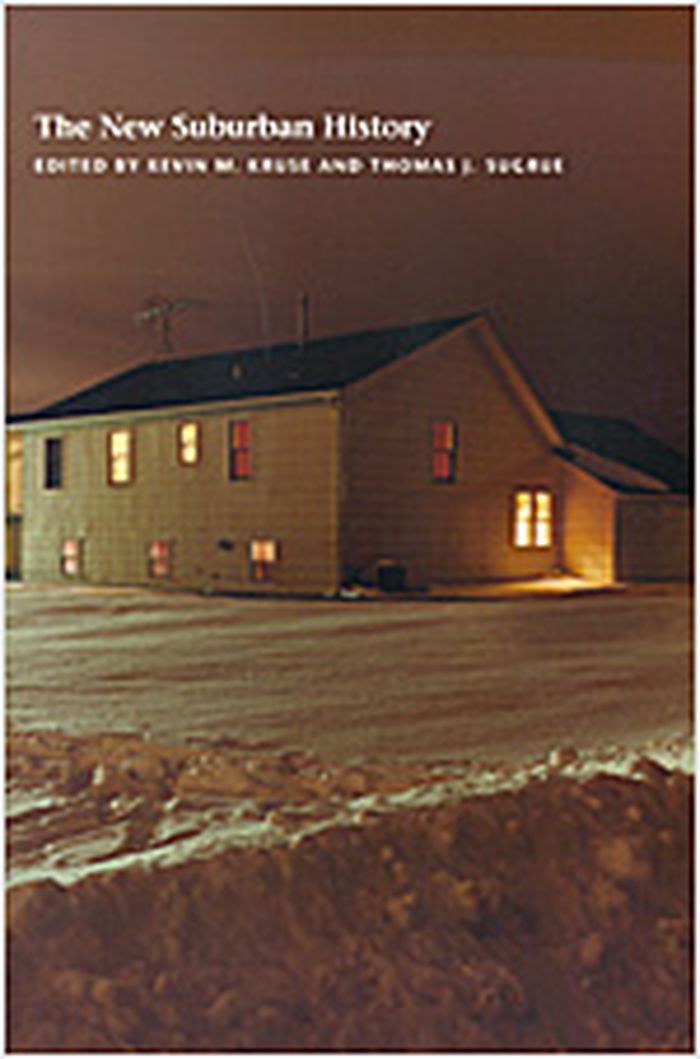
America has become a nation of suburbs. Confronting the popular image of suburbia as simply a refuge for affluent whites, "The new suburban history" rejects the stereotypes of a conformist and conflict-free suburbia. The seemingly calm streets of suburbia were, in fact, battlegrounds over race, class, and politics. With this collection, Kevin Kruse and Thomas Sugrue argue that suburbia must be understood as a central factor in the modern American experience. Kruse and Sugrue here collect ten essays—augmented by their provocative introduction—that challenge our understanding of suburbia. Drawing from original research on suburbs across the country, the contributors recast important political and social issues in the context of suburbanization. Their essays reveal the role suburbs have played in the transformation of American liberalism and conservatism; the contentious politics of race, class, and ethnicity; and debates about the environment, land use, and taxation. The contributors move the history of African Americans, Latinos, Asians, and blue-collar workers from the margins to the mainstream of suburban history. From this broad perspective, these historians explore the way suburbs affect—and are affected by—central cities, competing suburbs, and entire regions. The results, they show, are far-reaching: the emergence of a suburban America has reshaped national politics, fostered new social movements, and remade the American landscape. "The new suburban history" offers nothing less than a new American history—one that claims the nation cannot be fully understood without a history of American suburbs at its very center.
The new suburban history
Actions:
Prix:
$29.95
(disponible sur commande)
Résumé:
America has become a nation of suburbs. Confronting the popular image of suburbia as simply a refuge for affluent whites, "The new suburban history" rejects the stereotypes of a conformist and conflict-free suburbia. The seemingly calm streets of suburbia were, in fact, battlegrounds over race, class, and politics. With this collection, Kevin Kruse and Thomas Sugrue argue that suburbia must be understood as a central factor in the modern American experience. Kruse and Sugrue here collect ten essays—augmented by their provocative introduction—that challenge our understanding of suburbia. Drawing from original research on suburbs across the country, the contributors recast important political and social issues in the context of suburbanization. Their essays reveal the role suburbs have played in the transformation of American liberalism and conservatism; the contentious politics of race, class, and ethnicity; and debates about the environment, land use, and taxation. The contributors move the history of African Americans, Latinos, Asians, and blue-collar workers from the margins to the mainstream of suburban history. From this broad perspective, these historians explore the way suburbs affect—and are affected by—central cities, competing suburbs, and entire regions. The results, they show, are far-reaching: the emergence of a suburban America has reshaped national politics, fostered new social movements, and remade the American landscape. "The new suburban history" offers nothing less than a new American history—one that claims the nation cannot be fully understood without a history of American suburbs at its very center.
Classification:
livres
livres
Publication:
janvier 1900, Chicago, London
janvier 1900, Chicago, London
Sujet:
Banlieues
Banlieues
Classification:
livres
livres

Actions:
Prix:
$22.95
(disponible en magasin)
Résumé:
Les panneaux d'affichage publicitaires sont des dispositifs urbains qui offrent un potentiel important pour explorer les mécanismes qui façonnent notre perception des photographies dans la vie quotidienne. En tant que «?monuments visuels contemporains?» accessibles à tous, ils favorisent les discussions ouvertes sur le contenu visuel et l'imagerie quotidienne qui(...)
$22.95
(disponible en magasin)
Résumé:
Les panneaux d'affichage publicitaires sont des dispositifs urbains qui offrent un potentiel important pour explorer les mécanismes qui façonnent notre perception des photographies dans la vie quotidienne. En tant que «?monuments visuels contemporains?» accessibles à tous, ils favorisent les discussions ouvertes sur le contenu visuel et l'imagerie quotidienne qui(...)
Titre:
Faire - Regarder le graphisme n.55 : De l'image du panneau publicitaire
Actions:
Prix:
$22.95
(disponible en magasin)
Résumé:
Les panneaux d'affichage publicitaires sont des dispositifs urbains qui offrent un potentiel important pour explorer les mécanismes qui façonnent notre perception des photographies dans la vie quotidienne. En tant que «?monuments visuels contemporains?» accessibles à tous, ils favorisent les discussions ouvertes sur le contenu visuel et l'imagerie quotidienne qui emplissent notre champ de vision dans les lieux publics. Cette publication, fondée sur la conscience du rôle essentiel de la photographie dans la définition de l'identité personnelle et de l'appartenance sociale, examine des pratiques diverses?: l'avènement des panneaux d'affichage comme espaces publicitaires prisés, les œuvres d'artistes historiques et contemporains qui les utilisent comme des espaces de réflexion, et les projets culturels qui les transforment en format d'exposition démocratique. À une époque dominée par la consommation d'images en ligne, «?De l'image du panneau publicitaire?» souligne l'importance de se focaliser à nouveau sur notre expérience dans l'espace physique, et de cultiver une attention particulière envers les photographies que nous voyons passivement dans l'espace public. Car c'est là où les opinions, les systèmes de valeurs, les dynamiques de pouvoir et la conscience civique prennent forme. À mesure que ces espaces publics se fragmentent sous l'effet de la privatisation, de la gentrification et de l'individualisme, une étape est essentielle pour se réapproprier les espaces que nous habitons?: celle de comprendre le rôle des panneaux d'affichage dans la transformation du territoire urbain, et surtout de notre imaginaire collectif.
Faire - Regarder le graphisme n.55 : De l'image du panneau publicitaire
Actions:
Prix:
$22.95
(disponible en magasin)
Résumé:
Les panneaux d'affichage publicitaires sont des dispositifs urbains qui offrent un potentiel important pour explorer les mécanismes qui façonnent notre perception des photographies dans la vie quotidienne. En tant que «?monuments visuels contemporains?» accessibles à tous, ils favorisent les discussions ouvertes sur le contenu visuel et l'imagerie quotidienne qui emplissent notre champ de vision dans les lieux publics. Cette publication, fondée sur la conscience du rôle essentiel de la photographie dans la définition de l'identité personnelle et de l'appartenance sociale, examine des pratiques diverses?: l'avènement des panneaux d'affichage comme espaces publicitaires prisés, les œuvres d'artistes historiques et contemporains qui les utilisent comme des espaces de réflexion, et les projets culturels qui les transforment en format d'exposition démocratique. À une époque dominée par la consommation d'images en ligne, «?De l'image du panneau publicitaire?» souligne l'importance de se focaliser à nouveau sur notre expérience dans l'espace physique, et de cultiver une attention particulière envers les photographies que nous voyons passivement dans l'espace public. Car c'est là où les opinions, les systèmes de valeurs, les dynamiques de pouvoir et la conscience civique prennent forme. À mesure que ces espaces publics se fragmentent sous l'effet de la privatisation, de la gentrification et de l'individualisme, une étape est essentielle pour se réapproprier les espaces que nous habitons?: celle de comprendre le rôle des panneaux d'affichage dans la transformation du territoire urbain, et surtout de notre imaginaire collectif.
Classification:
livres
livres
Publication:
janvier 2026
janvier 2026
Sujet:
Revues
Revues
Classification:
livres
livres
Actions:
Prix:
$46.95
(disponible sur commande)
Résumé:
Jean-Pierre Barillet-Deschamps (1824-1873), premier jardinier en chef du service des promenades et plantations de la ville de Paris, est l’auteur de l’aménagement paysager de la capitale au moment de sa transformation par le préfet Haussmann. Transformant notamment les bois de Boulogne et de Vincennes, le parc Monceau, réalisant le parc des Buttes-Chaumont, il inaugure(...)
$46.95
(disponible sur commande)
Résumé:
Jean-Pierre Barillet-Deschamps (1824-1873), premier jardinier en chef du service des promenades et plantations de la ville de Paris, est l’auteur de l’aménagement paysager de la capitale au moment de sa transformation par le préfet Haussmann. Transformant notamment les bois de Boulogne et de Vincennes, le parc Monceau, réalisant le parc des Buttes-Chaumont, il inaugure(...)
Titre:
L'art des jardins sous le Second Empire : Jean-Pierre Barillet-Deschamps (1824-1873)
Actions:
Prix:
$46.95
(disponible sur commande)
Résumé:
Jean-Pierre Barillet-Deschamps (1824-1873), premier jardinier en chef du service des promenades et plantations de la ville de Paris, est l’auteur de l’aménagement paysager de la capitale au moment de sa transformation par le préfet Haussmann. Transformant notamment les bois de Boulogne et de Vincennes, le parc Monceau, réalisant le parc des Buttes-Chaumont, il inaugure un nouveau type de jardin, caractérisé par les vallonnements, les formes sinueuses des allées et des pelouses, la richesse de la décoration végétale, qui exalte la modernité du Second Empire et de la bourgeoisie, nouvelle classe dominante. Les nouveaux jardins parisiens se font le reflet de cette société, de ses désirs, ses principes et ses valeurs; et révèlent en même temps ses faiblesses et ses contradictions. Image fidèle de la bourgeoisie parisienne, le nouveau jardin est diversement accueilli dans les pays où il est exporté: en province, à Lille, Marseille, Avignon, Hyères, ainsi qu’à l’étranger, à Genève, Milan, Turin, Vienne et Le Caire. Le jardin parisien du Second Empire caractérisera ainsi l’art des jardins du XIXè siècle, et marquera de son empreinte la plupart des réalisations paysagères du XXè siècle. Luisa Limido est née en Italie en 1964. Architecte, Docteur en géographie à l’Université de Paris I, elle a préparé une thèse sur les jardins publics parisiens sous le Second Empire. Elle travaille actuellement sur le rapport ville-nature et société dans la ville du XIXè et XXè siècles.
L'art des jardins sous le Second Empire : Jean-Pierre Barillet-Deschamps (1824-1873)
Actions:
Prix:
$46.95
(disponible sur commande)
Résumé:
Jean-Pierre Barillet-Deschamps (1824-1873), premier jardinier en chef du service des promenades et plantations de la ville de Paris, est l’auteur de l’aménagement paysager de la capitale au moment de sa transformation par le préfet Haussmann. Transformant notamment les bois de Boulogne et de Vincennes, le parc Monceau, réalisant le parc des Buttes-Chaumont, il inaugure un nouveau type de jardin, caractérisé par les vallonnements, les formes sinueuses des allées et des pelouses, la richesse de la décoration végétale, qui exalte la modernité du Second Empire et de la bourgeoisie, nouvelle classe dominante. Les nouveaux jardins parisiens se font le reflet de cette société, de ses désirs, ses principes et ses valeurs; et révèlent en même temps ses faiblesses et ses contradictions. Image fidèle de la bourgeoisie parisienne, le nouveau jardin est diversement accueilli dans les pays où il est exporté: en province, à Lille, Marseille, Avignon, Hyères, ainsi qu’à l’étranger, à Genève, Milan, Turin, Vienne et Le Caire. Le jardin parisien du Second Empire caractérisera ainsi l’art des jardins du XIXè siècle, et marquera de son empreinte la plupart des réalisations paysagères du XXè siècle. Luisa Limido est née en Italie en 1964. Architecte, Docteur en géographie à l’Université de Paris I, elle a préparé une thèse sur les jardins publics parisiens sous le Second Empire. Elle travaille actuellement sur le rapport ville-nature et société dans la ville du XIXè et XXè siècles.
Classification:
livres
livres
Publication:
mars 2002, Seyssel
mars 2002, Seyssel
Sujet:
Théorie du paysage
Théorie du paysage
Classification:
livres
livres

Titre:
Shaping things
Shaping things
Actions:
Prix:
$27.50
(disponible sur commande)
Résumé:
Sterling offers a brilliant, often hilarious history of shaped things. We have moved from an age of artefacts, made by hand, through complex machines, to the current era of "gizmos." New forms of design and manufacture are appearing that lack historical precedent, he writes; but the production methods, using archaic forms of energy and materials that are finite and toxic,(...)
$27.50
(disponible sur commande)
Résumé:
Sterling offers a brilliant, often hilarious history of shaped things. We have moved from an age of artefacts, made by hand, through complex machines, to the current era of "gizmos." New forms of design and manufacture are appearing that lack historical precedent, he writes; but the production methods, using archaic forms of energy and materials that are finite and toxic,(...)
Sujet:
Théorie du design
Théorie du design
Publication:
septembre 2005, Cambridge, Massachusetts
septembre 2005, Cambridge, Massachusetts
Titre:
Shaping things
Actions:
Prix:
$27.50
(disponible sur commande)
Résumé:
Sterling offers a brilliant, often hilarious history of shaped things. We have moved from an age of artefacts, made by hand, through complex machines, to the current era of "gizmos." New forms of design and manufacture are appearing that lack historical precedent, he writes; but the production methods, using archaic forms of energy and materials that are finite and toxic, are not sustainable. The future will see a new kind of object - we have the primitive forms of them now in our pockets and briefcases: user-alterable, baroquely multi-featured, and programmable - that will be sustainable, enhanceable, and uniquely identifiable. Sterling coins the term "spime" for them, these future manufactured objects with informational support so extensive and rich that they are regarded as material instantiations of an immaterial system. Spimes are designed on screens, fabricated by digital means, and precisely tracked through space and time. They are made of substances that can be folded back into the production stream of future spimes, challenging all of us to become involved in their production. Spimes are coming, says Sterling. We will need these objects in order to live; we won't be able to surrender their advantages without awful consequences. The vision of ‘Shaping Things’ is given material form by the intricate design of Lorraine Wild. ‘Shaping Things’ is for designers and thinkers, engineers and scientists, entrepreneurs and financiers - and anyone who wants to understand and be part of the process of techno-social transformation.
Shaping things
Actions:
Prix:
$27.50
(disponible sur commande)
Résumé:
Sterling offers a brilliant, often hilarious history of shaped things. We have moved from an age of artefacts, made by hand, through complex machines, to the current era of "gizmos." New forms of design and manufacture are appearing that lack historical precedent, he writes; but the production methods, using archaic forms of energy and materials that are finite and toxic, are not sustainable. The future will see a new kind of object - we have the primitive forms of them now in our pockets and briefcases: user-alterable, baroquely multi-featured, and programmable - that will be sustainable, enhanceable, and uniquely identifiable. Sterling coins the term "spime" for them, these future manufactured objects with informational support so extensive and rich that they are regarded as material instantiations of an immaterial system. Spimes are designed on screens, fabricated by digital means, and precisely tracked through space and time. They are made of substances that can be folded back into the production stream of future spimes, challenging all of us to become involved in their production. Spimes are coming, says Sterling. We will need these objects in order to live; we won't be able to surrender their advantages without awful consequences. The vision of ‘Shaping Things’ is given material form by the intricate design of Lorraine Wild. ‘Shaping Things’ is for designers and thinkers, engineers and scientists, entrepreneurs and financiers - and anyone who wants to understand and be part of the process of techno-social transformation.
Classification:
livres
livres
Publication:
septembre 2005, Cambridge, Massachusetts
septembre 2005, Cambridge, Massachusetts
Sujet:
Théorie du design
Théorie du design
Classification:
livres
livres
Titre:
The Paul Virilio reader
The Paul Virilio reader
Actions:
Prix:
$31.95
(disponible sur commande)
Résumé:
If nothing else, the war in Iraq and the 1991 Gulf War have taught us much about media and technology as key players in how war is waged, packaged for public consumption, and exported in real time to the rest of the globe. A critic of the art of technology, Paul Virilio has keenly observed that media images quite often constitute a strategy of war and that accident is(...)
$31.95
(disponible sur commande)
Résumé:
If nothing else, the war in Iraq and the 1991 Gulf War have taught us much about media and technology as key players in how war is waged, packaged for public consumption, and exported in real time to the rest of the globe. A critic of the art of technology, Paul Virilio has keenly observed that media images quite often constitute a strategy of war and that accident is(...)
Titre:
The Paul Virilio reader
Actions:
Prix:
$31.95
(disponible sur commande)
Résumé:
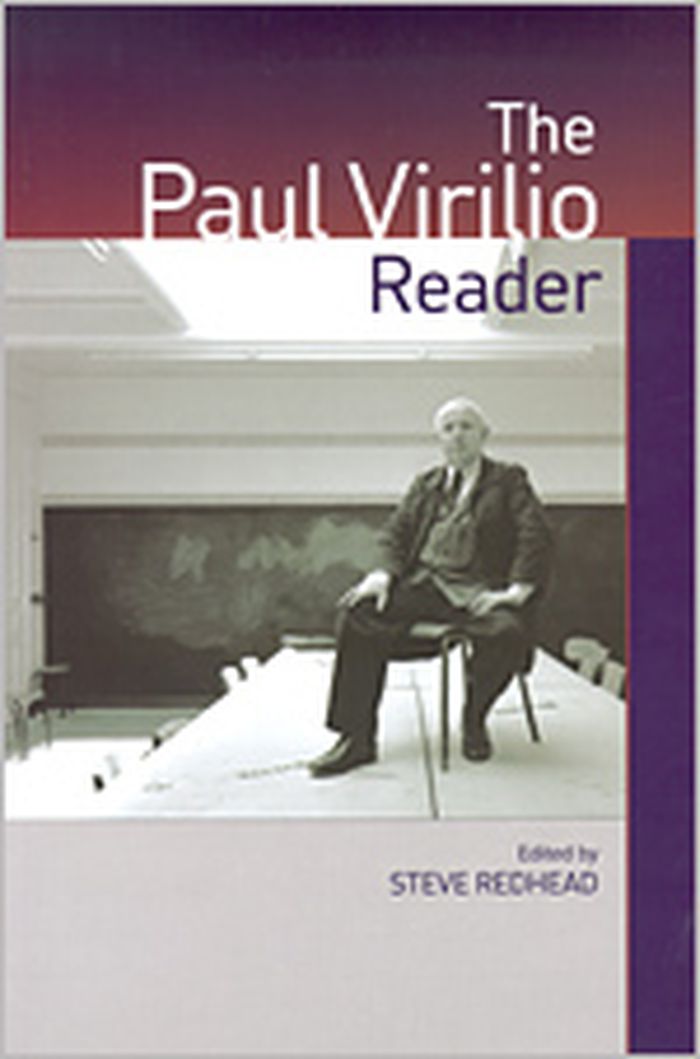
If nothing else, the war in Iraq and the 1991 Gulf War have taught us much about media and technology as key players in how war is waged, packaged for public consumption, and exported in real time to the rest of the globe. A critic of the art of technology, Paul Virilio has keenly observed that media images quite often constitute a strategy of war and that accident is becoming indistinguishable from attack. For more than fifty years Virilio has offered incisive and provocative criticism on technology and its moral, political, and cultural implications. Yet until now, much of his work, originally published in French, remains elusive in full English translation. "The Paul Virilio Reader" collects for the first time English extracts reflecting the entire range of Virilio’s diverse career. The book’s introduction demonstrates that Virilio has produced an important—if controversial—“theory at the speed of light” that uncannily illuminates the impact of new information and communications technologies in a world that collapses time and distance as never before. The inventor of “dromology,” which views speed as a defining concept for contemporary civilization, Virilio is noted for his proclamation that the logic of ever-increasing acceleration lies at the heart of the organization and transformation of the contemporary world. Arranged chronologically, "The Paul Virilio Reader" illustrates the development and interconnectedness of Virilio’s work. Each extract is prefaced by bibliographical and contextual commentary, and the book includes an innovative guide to reading Virilio.
The Paul Virilio reader
Actions:
Prix:
$31.95
(disponible sur commande)
Résumé:
If nothing else, the war in Iraq and the 1991 Gulf War have taught us much about media and technology as key players in how war is waged, packaged for public consumption, and exported in real time to the rest of the globe. A critic of the art of technology, Paul Virilio has keenly observed that media images quite often constitute a strategy of war and that accident is becoming indistinguishable from attack. For more than fifty years Virilio has offered incisive and provocative criticism on technology and its moral, political, and cultural implications. Yet until now, much of his work, originally published in French, remains elusive in full English translation. "The Paul Virilio Reader" collects for the first time English extracts reflecting the entire range of Virilio’s diverse career. The book’s introduction demonstrates that Virilio has produced an important—if controversial—“theory at the speed of light” that uncannily illuminates the impact of new information and communications technologies in a world that collapses time and distance as never before. The inventor of “dromology,” which views speed as a defining concept for contemporary civilization, Virilio is noted for his proclamation that the logic of ever-increasing acceleration lies at the heart of the organization and transformation of the contemporary world. Arranged chronologically, "The Paul Virilio Reader" illustrates the development and interconnectedness of Virilio’s work. Each extract is prefaced by bibliographical and contextual commentary, and the book includes an innovative guide to reading Virilio.
Classification:
livres
livres
Publication:
janvier 1900, New York
janvier 1900, New York
Sujet:
Théorie de l’architecture
Théorie de l’architecture
Classification:
livres
livres

Prix:
$45.00
(disponible sur commande)
Résumé:
"The Canadians" playfully and affectionately reimagines one of the most revered photography books of the 20th century, Robert Frank’s The Americans. The source for the imagery is the print archive of The Globe and Mail, which contains more than 500,000 prints—24,000 of which have been donated to the newly formed Canadian Institute of Photography, housed within the(...)
$45.00
(disponible sur commande)
Résumé:
"The Canadians" playfully and affectionately reimagines one of the most revered photography books of the 20th century, Robert Frank’s The Americans. The source for the imagery is the print archive of The Globe and Mail, which contains more than 500,000 prints—24,000 of which have been donated to the newly formed Canadian Institute of Photography, housed within the(...)
Sujet:
Photographie- collections
Photographie- collections
Publication:
septembre 2017
septembre 2017
Titre:
The Canadians: photographs from the Globe and Mail archives
Actions:
Prix:
$45.00
(disponible sur commande)
Résumé:
"The Canadians" playfully and affectionately reimagines one of the most revered photography books of the 20th century, Robert Frank’s The Americans. The source for the imagery is the print archive of The Globe and Mail, which contains more than 500,000 prints—24,000 of which have been donated to the newly formed Canadian Institute of Photography, housed within the National Gallery of Canada. Nearly 80 of these photographs have been selected for this book, and also form the basis for a national touring exhibition. These functionary press photographs, made to illustrate news stories—the state of the roads after a severe winter; a politician on the campaign trail; the opening of a new laundromat—hold no pretentions to be works of photographic art. However, taken together, they describe Canadian culture during an era of great transformation. Published in association with the Archive of Modern Conflict, the book begins with an insightful and irreverent introduction by Douglas Coupland, bringing together themes illuminated in these photographs, and taking us on a guided tour of a Canada gone, but not forgotten. "How strange it is to look at these photos of a Canada that was almost dead when I was a child," he writes, "the Canada of my parents and my grandparents, the Canada of the late 1950s and early ‘60s, a country in which, it would seem, people were born, became teenagers, and then, magically, at the age of 21, turned into chain-smoking 50-year olds with undiagnosed cancers."
The Canadians: photographs from the Globe and Mail archives
Actions:
Prix:
$45.00
(disponible sur commande)
Résumé:
"The Canadians" playfully and affectionately reimagines one of the most revered photography books of the 20th century, Robert Frank’s The Americans. The source for the imagery is the print archive of The Globe and Mail, which contains more than 500,000 prints—24,000 of which have been donated to the newly formed Canadian Institute of Photography, housed within the National Gallery of Canada. Nearly 80 of these photographs have been selected for this book, and also form the basis for a national touring exhibition. These functionary press photographs, made to illustrate news stories—the state of the roads after a severe winter; a politician on the campaign trail; the opening of a new laundromat—hold no pretentions to be works of photographic art. However, taken together, they describe Canadian culture during an era of great transformation. Published in association with the Archive of Modern Conflict, the book begins with an insightful and irreverent introduction by Douglas Coupland, bringing together themes illuminated in these photographs, and taking us on a guided tour of a Canada gone, but not forgotten. "How strange it is to look at these photos of a Canada that was almost dead when I was a child," he writes, "the Canada of my parents and my grandparents, the Canada of the late 1950s and early ‘60s, a country in which, it would seem, people were born, became teenagers, and then, magically, at the age of 21, turned into chain-smoking 50-year olds with undiagnosed cancers."
Classification:
livres
livres
Publication:
septembre 2017
septembre 2017
Sujet:
Photographie- collections
Photographie- collections
Classification:
livres
livres

Actions:
Prix:
$44.95
(disponible sur commande)
Résumé:
Dans la foulée des ouvrages Architectures du spectacle au Québec (2011) et Architectures de la connaissance au Québec (2013), Jacques Plante et Nicholas Roquet présentent ici le troisième volet d’une trilogie exceptionnelle sur les lieux culturels. Ils nous font découvrir la qualité et l’innovation du travail de nos architectes et nous proposent la visite en mots, en(...)
$44.95
(disponible sur commande)
Résumé:
Dans la foulée des ouvrages Architectures du spectacle au Québec (2011) et Architectures de la connaissance au Québec (2013), Jacques Plante et Nicholas Roquet présentent ici le troisième volet d’une trilogie exceptionnelle sur les lieux culturels. Ils nous font découvrir la qualité et l’innovation du travail de nos architectes et nous proposent la visite en mots, en(...)
Titre:
Architectures d'exposition au Québec
Actions:
Prix:
$44.95
(disponible sur commande)
Résumé:
Dans la foulée des ouvrages Architectures du spectacle au Québec (2011) et Architectures de la connaissance au Québec (2013), Jacques Plante et Nicholas Roquet présentent ici le troisième volet d’une trilogie exceptionnelle sur les lieux culturels. Ils nous font découvrir la qualité et l’innovation du travail de nos architectes et nous proposent la visite en mots, en dessins et en images de musées, de centres d’interprétation et de lieux d’exposition disséminés aux quatre coins de la province. Ils nous font comprendre l’importance des grands musées nationaux et celle des musées et centres d’interprétation régionaux, notamment ceux des Premières Nations, qui diffusent et protègent notre patrimoine culturel et scientifique. Cet ouvrage remarquable sur les lieux d’exposition contient 11 textes inédits d’auteurs reconnus sur les grands enjeux des musées d’hier et d’aujourd’hui, des présentations détaillées de 36 projets d’architecture, 377 photographies et illustrations et 200 dessins en plan et en coupe. L’architecture contemporaine, souvent alliée à des lieux patrimoniaux de différentes époques, traduit notre identité à travers des constructions qui s’inspirent de grandes thématiques, comme les beaux-arts, les sciences, les sociétés, le temps, le paysage et l’événement. Les auteurs – architectes, directeurs de musées et professeurs – nous invitent donc à découvrir l’évolution et la spécialisation de ces établissements culturels du Québec et à admirer la transformation spatiale, fonctionnelle et muséographique qu’ils connaissent depuis plus d’un quart de siècle, au gré d’une culture internationale, nationale et régionale en pleine mutation.
Architectures d'exposition au Québec
Actions:
Prix:
$44.95
(disponible sur commande)
Résumé:
Dans la foulée des ouvrages Architectures du spectacle au Québec (2011) et Architectures de la connaissance au Québec (2013), Jacques Plante et Nicholas Roquet présentent ici le troisième volet d’une trilogie exceptionnelle sur les lieux culturels. Ils nous font découvrir la qualité et l’innovation du travail de nos architectes et nous proposent la visite en mots, en dessins et en images de musées, de centres d’interprétation et de lieux d’exposition disséminés aux quatre coins de la province. Ils nous font comprendre l’importance des grands musées nationaux et celle des musées et centres d’interprétation régionaux, notamment ceux des Premières Nations, qui diffusent et protègent notre patrimoine culturel et scientifique. Cet ouvrage remarquable sur les lieux d’exposition contient 11 textes inédits d’auteurs reconnus sur les grands enjeux des musées d’hier et d’aujourd’hui, des présentations détaillées de 36 projets d’architecture, 377 photographies et illustrations et 200 dessins en plan et en coupe. L’architecture contemporaine, souvent alliée à des lieux patrimoniaux de différentes époques, traduit notre identité à travers des constructions qui s’inspirent de grandes thématiques, comme les beaux-arts, les sciences, les sociétés, le temps, le paysage et l’événement. Les auteurs – architectes, directeurs de musées et professeurs – nous invitent donc à découvrir l’évolution et la spécialisation de ces établissements culturels du Québec et à admirer la transformation spatiale, fonctionnelle et muséographique qu’ils connaissent depuis plus d’un quart de siècle, au gré d’une culture internationale, nationale et régionale en pleine mutation.
Classification:
livres
livres
Publication:
avril 2016
avril 2016
Sujet:
Architecture du Québec
Architecture du Québec
Classification:
livres
livres
Titre:
Capital and language
Capital and language
Actions:
Prix:
$14.95
(disponible sur commande)
Résumé:
The Swiss-Italian economist Christian Marazzi is one of the core theorists of the Italian postfordist movement, along with Antonio Negri, Paolo Virno, and Bifo (Franco Berardi). But although his work is often cited by scholars (particularly by those in the field of "Cognitive Capitalism"), his writing has never appeared in English. This translation of his most recent(...)
$14.95
(disponible sur commande)
Résumé:
The Swiss-Italian economist Christian Marazzi is one of the core theorists of the Italian postfordist movement, along with Antonio Negri, Paolo Virno, and Bifo (Franco Berardi). But although his work is often cited by scholars (particularly by those in the field of "Cognitive Capitalism"), his writing has never appeared in English. This translation of his most recent(...)
Titre:
Capital and language
Actions:
Prix:
$14.95
(disponible sur commande)
Résumé:
The Swiss-Italian economist Christian Marazzi is one of the core theorists of the Italian postfordist movement, along with Antonio Negri, Paolo Virno, and Bifo (Franco Berardi). But although his work is often cited by scholars (particularly by those in the field of "Cognitive Capitalism"), his writing has never appeared in English. This translation of his most recent work, Capital and Language (published in Italian in 2002), finally makes Marazzi's work available to an English-speaking audience. Capital and Language takes as its starting point the fact that the extreme volatility of financial markets is generally attributed to the discrepancy between the "real economy" (that of material goods produced and sold) and the more speculative monetary-financial economy. But this distinction has long ceased to apply in the postfordist New Economy, in which both spheres are structurally affected by language and communication. In Capital and Language Marazzi argues that the changes in financial markets and the transformation of labor into immaterial labor (that is, its reliance on abstract knowledge, general intellect, and social cooperation) are just two sides of the same coin. Capital and Language focuses on the causes behind the international economic and financial depression of 2001, and on the primary instrument that the U.S. government has since been using to face them: war. Marazzi points to capitalism’s fourth stage (after mercantilism, industrialism, and the postfordist culmination of the New Economy): the "War Economy" that is already upon us.
Capital and language
Actions:
Prix:
$14.95
(disponible sur commande)
Résumé:
The Swiss-Italian economist Christian Marazzi is one of the core theorists of the Italian postfordist movement, along with Antonio Negri, Paolo Virno, and Bifo (Franco Berardi). But although his work is often cited by scholars (particularly by those in the field of "Cognitive Capitalism"), his writing has never appeared in English. This translation of his most recent work, Capital and Language (published in Italian in 2002), finally makes Marazzi's work available to an English-speaking audience. Capital and Language takes as its starting point the fact that the extreme volatility of financial markets is generally attributed to the discrepancy between the "real economy" (that of material goods produced and sold) and the more speculative monetary-financial economy. But this distinction has long ceased to apply in the postfordist New Economy, in which both spheres are structurally affected by language and communication. In Capital and Language Marazzi argues that the changes in financial markets and the transformation of labor into immaterial labor (that is, its reliance on abstract knowledge, general intellect, and social cooperation) are just two sides of the same coin. Capital and Language focuses on the causes behind the international economic and financial depression of 2001, and on the primary instrument that the U.S. government has since been using to face them: war. Marazzi points to capitalism’s fourth stage (after mercantilism, industrialism, and the postfordist culmination of the New Economy): the "War Economy" that is already upon us.
Classification:
livres
livres
Publication:
septembre 2008, Los Angeles
septembre 2008, Los Angeles
Sujet:
Théorie/ philosophie
Théorie/ philosophie
Classification:
livres
livres
Titre:
La ville à trois vitesses
La ville à trois vitesses
Actions:
Prix:
$24.95
(disponible sur commande)
Résumé:
Loin des effets journalistiques à caractère sensationnel sur les banlieues, il est temps de comprendre la présente transformation de la question sociale, la remise en cause des réponses apportées à celle-ci, à travers les politiques urbaine, sociale et de sécurité par l'État providence et les tentatives actuelles de renouvellement de ces politiques. L'analyse développée(...)
$24.95
(disponible sur commande)
Résumé:
Loin des effets journalistiques à caractère sensationnel sur les banlieues, il est temps de comprendre la présente transformation de la question sociale, la remise en cause des réponses apportées à celle-ci, à travers les politiques urbaine, sociale et de sécurité par l'État providence et les tentatives actuelles de renouvellement de ces politiques. L'analyse développée(...)
Titre:
La ville à trois vitesses
Actions:
Prix:
$24.95
(disponible sur commande)
Résumé:
Loin des effets journalistiques à caractère sensationnel sur les banlieues, il est temps de comprendre la présente transformation de la question sociale, la remise en cause des réponses apportées à celle-ci, à travers les politiques urbaine, sociale et de sécurité par l'État providence et les tentatives actuelles de renouvellement de ces politiques. L'analyse développée ici par Jacques Donzelot montre, d'un côté, un processus d'altération de la condition salariale qui s'accroît à mesure que l'on va du centre de la société ou de la ville vers la périphérie, des emplois les plus qualifiés vers ceux qui le sont le moins, voire point - un processus qui, dans les faits, conduit à déplacer la population la plus fragilisée et le plus souvent issue de l'immigration vers les territoires de relégation que constituent beaucoup de cités et de grands ensembles. D'un autre côté, on assiste simultanément à un mouvement en sens inverse, produit par ceux qui veulent quitter la périphérie et éviter toute possible promiscuité. L'effet couplé de ces mouvements contraires amène à observer un changement de nature de la question sociale, et pas simplement de forme. Parce que le repli identitaire des populations installe au coeur de la société une logique de séparation où l'évitement remplace la confrontation. Se développe ainsi un urbanisme affinitaire qui modifie complètement les termes traditionnels de la cité et installe pernicieusement une ville -comme une société - à plusieurs vitesses.
La ville à trois vitesses
Actions:
Prix:
$24.95
(disponible sur commande)
Résumé:
Loin des effets journalistiques à caractère sensationnel sur les banlieues, il est temps de comprendre la présente transformation de la question sociale, la remise en cause des réponses apportées à celle-ci, à travers les politiques urbaine, sociale et de sécurité par l'État providence et les tentatives actuelles de renouvellement de ces politiques. L'analyse développée ici par Jacques Donzelot montre, d'un côté, un processus d'altération de la condition salariale qui s'accroît à mesure que l'on va du centre de la société ou de la ville vers la périphérie, des emplois les plus qualifiés vers ceux qui le sont le moins, voire point - un processus qui, dans les faits, conduit à déplacer la population la plus fragilisée et le plus souvent issue de l'immigration vers les territoires de relégation que constituent beaucoup de cités et de grands ensembles. D'un autre côté, on assiste simultanément à un mouvement en sens inverse, produit par ceux qui veulent quitter la périphérie et éviter toute possible promiscuité. L'effet couplé de ces mouvements contraires amène à observer un changement de nature de la question sociale, et pas simplement de forme. Parce que le repli identitaire des populations installe au coeur de la société une logique de séparation où l'évitement remplace la confrontation. Se développe ainsi un urbanisme affinitaire qui modifie complètement les termes traditionnels de la cité et installe pernicieusement une ville -comme une société - à plusieurs vitesses.
Classification:
livres
livres
Publication:
mai 2009
mai 2009
Sujet:
Théorie de l’architecture
Théorie de l’architecture


