


318 Résultats
Classification:
livres
livres
Actions:
Prix:
$46.99
(disponible sur commande)
Résumé:
"Biennials: The exhibitions we love to hate" examines one of the most significant recent transitions in the contemporary art world: the proliferation of large-scale international recurrent survey shows of contemporary art, commonly referred to as contemporary biennials. Since the mid-1980s biennials have been instrumental in shaping curating as an autonomous practice.(...)
$46.99
(disponible sur commande)
Résumé:
"Biennials: The exhibitions we love to hate" examines one of the most significant recent transitions in the contemporary art world: the proliferation of large-scale international recurrent survey shows of contemporary art, commonly referred to as contemporary biennials. Since the mid-1980s biennials have been instrumental in shaping curating as an autonomous practice.(...)
Titre:
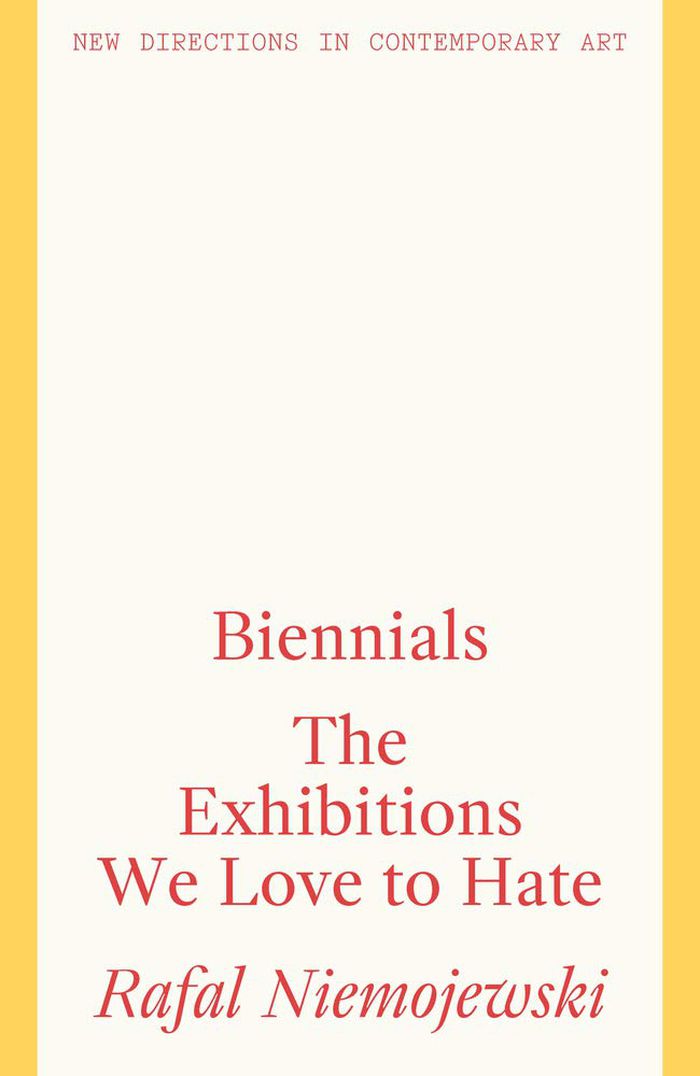
Biennials: The exhibitions we love to hate
Actions:
Prix:
$46.99
(disponible sur commande)
Résumé:
"Biennials: The exhibitions we love to hate" examines one of the most significant recent transitions in the contemporary art world: the proliferation of large-scale international recurrent survey shows of contemporary art, commonly referred to as contemporary biennials. Since the mid-1980s biennials have been instrumental in shaping curating as an autonomous practice. These exhibitions are also said to have provided increased visibility for certain types of new art practices, notably those that are socially and politically committed, research-based and site-specific, and to have undermined some of the more traditional art media, such as painting, drawing or sculpture. They have been responsible for substantially reshaping the contemporary art world and disrupting the existing value chain of the art market, which now relies on biennials as much as it does on major museums’ acquisitions and exhibitions. Rafal Niemojewski, Director of the Biennial Foundation, deftly unpicks the critical discussion and controversy surrounding contemporary biennials. Branded by some critics as showcases of neo-liberalism run amok, in which culture has become synonymous with the dollar-generating leisure industry, biennials have also been associated with the production of monumental artworks which are both highly consumable and photogenic (Instagrammable). The exhibitions we love to hate? This engaging publication makes an essential contribution to a fascinating cultural debate.
Biennials: The exhibitions we love to hate
Actions:
Prix:
$46.99
(disponible sur commande)
Résumé:
"Biennials: The exhibitions we love to hate" examines one of the most significant recent transitions in the contemporary art world: the proliferation of large-scale international recurrent survey shows of contemporary art, commonly referred to as contemporary biennials. Since the mid-1980s biennials have been instrumental in shaping curating as an autonomous practice. These exhibitions are also said to have provided increased visibility for certain types of new art practices, notably those that are socially and politically committed, research-based and site-specific, and to have undermined some of the more traditional art media, such as painting, drawing or sculpture. They have been responsible for substantially reshaping the contemporary art world and disrupting the existing value chain of the art market, which now relies on biennials as much as it does on major museums’ acquisitions and exhibitions. Rafal Niemojewski, Director of the Biennial Foundation, deftly unpicks the critical discussion and controversy surrounding contemporary biennials. Branded by some critics as showcases of neo-liberalism run amok, in which culture has become synonymous with the dollar-generating leisure industry, biennials have also been associated with the production of monumental artworks which are both highly consumable and photogenic (Instagrammable). The exhibitions we love to hate? This engaging publication makes an essential contribution to a fascinating cultural debate.
Classification:
livres
livres
Publication:
mai 2021
mai 2021
Sujet:
Muséologie
Muséologie
Classification:
livres
livres
Actions:
Prix:
$77.00
(disponible sur commande)
Résumé:
Established by Riek Bakker and Ank Bleeker in 1977, the Bakker & Bleeker Bureau has functioned as a laboratory for the landscape design and urban planning community. Operating as Bureau B+B since 1990, the office has always taken an interdisciplinary approach, employing not just landscape architects and urban planners but also land development experts, architects and(...)
$77.00
(disponible sur commande)
Résumé:
Established by Riek Bakker and Ank Bleeker in 1977, the Bakker & Bleeker Bureau has functioned as a laboratory for the landscape design and urban planning community. Operating as Bureau B+B since 1990, the office has always taken an interdisciplinary approach, employing not just landscape architects and urban planners but also land development experts, architects and(...)
Titre:
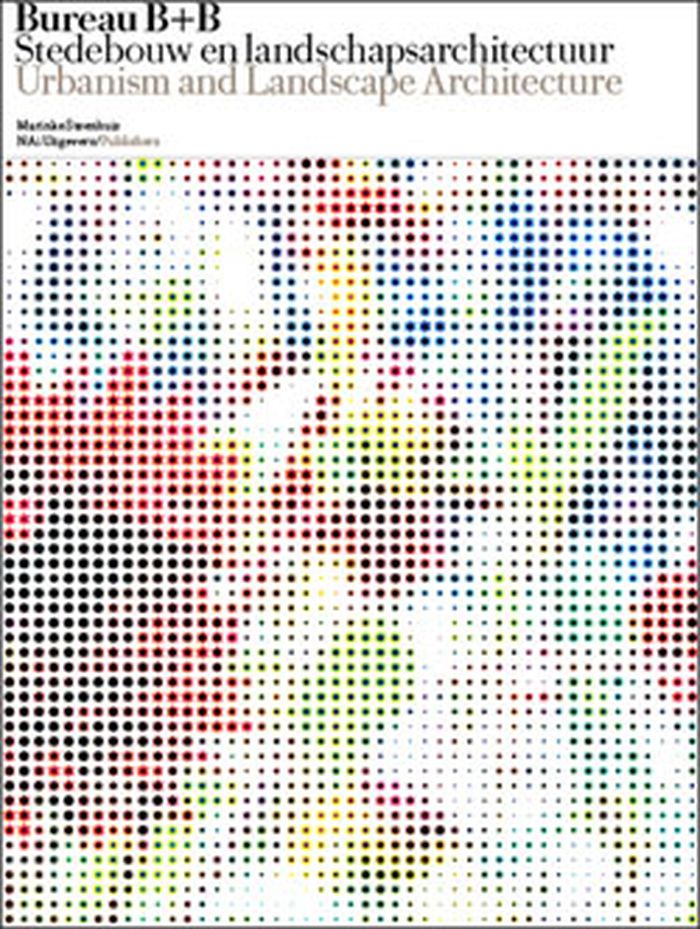
Bureau B+B : urbanism and landscape architecture, collective genius 1977-2010
Actions:
Prix:
$77.00
(disponible sur commande)
Résumé:
Established by Riek Bakker and Ank Bleeker in 1977, the Bakker & Bleeker Bureau has functioned as a laboratory for the landscape design and urban planning community. Operating as Bureau B+B since 1990, the office has always taken an interdisciplinary approach, employing not just landscape architects and urban planners but also land development experts, architects and industrial designers. It has served as an incubator for some of the Netherlands' leading creative professionals : Winy Maas, Adriaan Geuze, Michael van Gessel, West 8, Karres en Brands and Rietveld Landscape, amog others. The development of Bureau B+B coincides with the emancipation of Dutch postwar landscape architecture and urbanism; self-assured and autonomous, the Bureau soon ranked among the world’s foremost urban institutes, thanks among other things to its design for the Parc de la Villette in Paris (1982), a commission won ex aequo with designers such as Rem Koolhaas and Bernard Tschumi. The bureau has always been interdisciplinary, employing landscape architects, urban planners, architects, land development experts and industrial designers. This publication presents a generous selection from its 1,500 projects, including the Dutch Pavilion for the World Expo 2000 in Hanover, the Waldpark in Potsdam and the Wollefoppenpark in Rotterdam. The book features essays on the Bureau's practice over three decades, focusing on its core qualities of analytical craftsmanship and experimental rigor.
Bureau B+B : urbanism and landscape architecture, collective genius 1977-2010
Actions:
Prix:
$77.00
(disponible sur commande)
Résumé:
Established by Riek Bakker and Ank Bleeker in 1977, the Bakker & Bleeker Bureau has functioned as a laboratory for the landscape design and urban planning community. Operating as Bureau B+B since 1990, the office has always taken an interdisciplinary approach, employing not just landscape architects and urban planners but also land development experts, architects and industrial designers. It has served as an incubator for some of the Netherlands' leading creative professionals : Winy Maas, Adriaan Geuze, Michael van Gessel, West 8, Karres en Brands and Rietveld Landscape, amog others. The development of Bureau B+B coincides with the emancipation of Dutch postwar landscape architecture and urbanism; self-assured and autonomous, the Bureau soon ranked among the world’s foremost urban institutes, thanks among other things to its design for the Parc de la Villette in Paris (1982), a commission won ex aequo with designers such as Rem Koolhaas and Bernard Tschumi. The bureau has always been interdisciplinary, employing landscape architects, urban planners, architects, land development experts and industrial designers. This publication presents a generous selection from its 1,500 projects, including the Dutch Pavilion for the World Expo 2000 in Hanover, the Waldpark in Potsdam and the Wollefoppenpark in Rotterdam. The book features essays on the Bureau's practice over three decades, focusing on its core qualities of analytical craftsmanship and experimental rigor.
Classification:
livres
livres
Publication:
février 2011
février 2011
Sujet:
Architecture, monographies
Architecture, monographies
Classification:
livres
livres
Actions:
Exemplaires:
Description:
343 pages : illustrations (chiefly color), maps ; 28 cm.
Description:
343 pages : illustrations (chiefly color), maps ; 28 cm.
Auteur:
Sujet:
Publication:
Turnhout, Belgium : Brepols, [2024], ©2024
Turnhout, Belgium : Brepols, [2024], ©2024
Titre:
Building the presence of the prince : the institutions responsible for the construction and management of the buildings of European courts (14th-17th centuries) / edited by José Eloy Hortal Muñoz and Merlijn Hurx.
Actions:
Exemplaires:
Description:
343 pages : illustrations (chiefly color), maps ; 28 cm.
Building the presence of the prince : the institutions responsible for the construction and management of the buildings of European courts (14th-17th centuries) / edited by José Eloy Hortal Muñoz and Merlijn Hurx.
Actions:
Exemplaires:
Description:
343 pages : illustrations (chiefly color), maps ; 28 cm.
Classification:
livres
livres
Publication:
Turnhout, Belgium : Brepols, [2024], ©2024
Turnhout, Belgium : Brepols, [2024], ©2024
Auteur:
Sujet:
Classification:
livres
livres

Actions:
Prix:
$85.00
(disponible sur commande)
Résumé:
In 1988 Design Gallery Milano started its business by displaying the exhibition “Bharata” by Ettore Sottsass (with exhibition planning by Michele De Lucchi). Since then, Design Gallery produced hundreds of objects – few of which in more than some dozens copies – that had in common the aim of going beyond the conventional standards of the market circulation. Even if(...)
$85.00
(disponible sur commande)
Résumé:
In 1988 Design Gallery Milano started its business by displaying the exhibition “Bharata” by Ettore Sottsass (with exhibition planning by Michele De Lucchi). Since then, Design Gallery produced hundreds of objects – few of which in more than some dozens copies – that had in common the aim of going beyond the conventional standards of the market circulation. Even if(...)
Titre:
Design Gallery Milano versus design industry
Actions:
Prix:
$85.00
(disponible sur commande)
Résumé:
In 1988 Design Gallery Milano started its business by displaying the exhibition “Bharata” by Ettore Sottsass (with exhibition planning by Michele De Lucchi). Since then, Design Gallery produced hundreds of objects – few of which in more than some dozens copies – that had in common the aim of going beyond the conventional standards of the market circulation. Even if autonomous and independent from the classic industrial market, Design Gallery is a structural phenomenon in the dynamic system of design, since it represents its complementary avant-garde. Through its interpretation of design, conceived as a discipline rather than a profession – research rather than product – Design Gallery marked in fact a story of radical creativity and unbroken experimentation. This book presents through images and words the history of Design Gallery and outlines the philosophy of its development over the past twenty years. The first part of the book features photographs of the Design Gallery warehouse, taken by Michele De Lucchi in the Autumn of 2009. Published in the second part are the texts gathered together during a lunch at Michele De Lucchi’s office on 30th October 2009 with Andrea Branzi, Michele De Lucchi, Brunella and Mario Godani, Alessandro Mendini. The photographs of the objects were chosen from Design Gallery’s historical archives, and are the work of photographers who have followed and encouraged the Gallery’s work. Lastly, the chronology at the end of the book gives the fullest possible details of the Gallery’s annual collections, produced by groups or individual designers and artists.
Design Gallery Milano versus design industry
Actions:
Prix:
$85.00
(disponible sur commande)
Résumé:
In 1988 Design Gallery Milano started its business by displaying the exhibition “Bharata” by Ettore Sottsass (with exhibition planning by Michele De Lucchi). Since then, Design Gallery produced hundreds of objects – few of which in more than some dozens copies – that had in common the aim of going beyond the conventional standards of the market circulation. Even if autonomous and independent from the classic industrial market, Design Gallery is a structural phenomenon in the dynamic system of design, since it represents its complementary avant-garde. Through its interpretation of design, conceived as a discipline rather than a profession – research rather than product – Design Gallery marked in fact a story of radical creativity and unbroken experimentation. This book presents through images and words the history of Design Gallery and outlines the philosophy of its development over the past twenty years. The first part of the book features photographs of the Design Gallery warehouse, taken by Michele De Lucchi in the Autumn of 2009. Published in the second part are the texts gathered together during a lunch at Michele De Lucchi’s office on 30th October 2009 with Andrea Branzi, Michele De Lucchi, Brunella and Mario Godani, Alessandro Mendini. The photographs of the objects were chosen from Design Gallery’s historical archives, and are the work of photographers who have followed and encouraged the Gallery’s work. Lastly, the chronology at the end of the book gives the fullest possible details of the Gallery’s annual collections, produced by groups or individual designers and artists.
Classification:
livres
livres
Publication:
juillet 2010
juillet 2010
Sujet:
Design, époques et styles
Design, époques et styles
Classification:
livres
livres
Actions:
Prix:
$29.95
(disponible sur commande)
Résumé:
The red maple leaf is the quintessential symbol of Canada and the flag that popularized it throughout the world was designed in the 1960s as a result of government legislation aimed at creating a vital, new Canadian national identity through objects, events, and building projects. Made in Canada looks at the development of Canadian craft, design, and culture through(...)
$29.95
(disponible sur commande)
Résumé:
The red maple leaf is the quintessential symbol of Canada and the flag that popularized it throughout the world was designed in the 1960s as a result of government legislation aimed at creating a vital, new Canadian national identity through objects, events, and building projects. Made in Canada looks at the development of Canadian craft, design, and culture through(...)
Titre:
Made in Canada : craft and design in the sixties
Actions:
Prix:
$29.95
(disponible sur commande)
Résumé:
The red maple leaf is the quintessential symbol of Canada and the flag that popularized it throughout the world was designed in the 1960s as a result of government legislation aimed at creating a vital, new Canadian national identity through objects, events, and building projects. Made in Canada looks at the development of Canadian craft, design, and culture through ambitious government programs meant to reinforce the country's identity as a modern, sophisticated, and autonomous nation. As well, it documents the demise of a singular notion of modern life and its replacement with a focus on personal identity and consumerism. Changes in the 1960s included the building of modern airports, first space satellite, and new national symbols such as the maple leaf flag. Canadians embraced this heightened sense of individuality and demanded products that were equally individual. As a result pop culture objects sat on cool furniture influenced by Scandinavian modernism while handmade crafts reflected a growing concern with environmental issues. Expo 67 was the turning point - one final expression of optimism before Canada was rocked by social change and varied struggles for identity. Made in Canada examines national dreams and expressions of individuality in thoughtful and illuminating essays. Contributors include Sandra Alfoldy (NSCAD University), Paul Bourassa (Musée des beaux-arts de Québec), Brent Cordner (designer and educator, Toronto), Douglas Coupland (artist and author, Vancouver), Bernard Flaman (Government of Saskatchewan), Rachel Gotlieb (freelance curator and writer, Toronto), Michael Large (Sheridan College Institute of Technology and Advanced Learning), and Michael Prokopow (Design Exchange).
Made in Canada : craft and design in the sixties
Actions:
Prix:
$29.95
(disponible sur commande)
Résumé:
The red maple leaf is the quintessential symbol of Canada and the flag that popularized it throughout the world was designed in the 1960s as a result of government legislation aimed at creating a vital, new Canadian national identity through objects, events, and building projects. Made in Canada looks at the development of Canadian craft, design, and culture through ambitious government programs meant to reinforce the country's identity as a modern, sophisticated, and autonomous nation. As well, it documents the demise of a singular notion of modern life and its replacement with a focus on personal identity and consumerism. Changes in the 1960s included the building of modern airports, first space satellite, and new national symbols such as the maple leaf flag. Canadians embraced this heightened sense of individuality and demanded products that were equally individual. As a result pop culture objects sat on cool furniture influenced by Scandinavian modernism while handmade crafts reflected a growing concern with environmental issues. Expo 67 was the turning point - one final expression of optimism before Canada was rocked by social change and varied struggles for identity. Made in Canada examines national dreams and expressions of individuality in thoughtful and illuminating essays. Contributors include Sandra Alfoldy (NSCAD University), Paul Bourassa (Musée des beaux-arts de Québec), Brent Cordner (designer and educator, Toronto), Douglas Coupland (artist and author, Vancouver), Bernard Flaman (Government of Saskatchewan), Rachel Gotlieb (freelance curator and writer, Toronto), Michael Large (Sheridan College Institute of Technology and Advanced Learning), and Michael Prokopow (Design Exchange).
Classification:
livres
livres
Publication:
février 2005, Montreal
février 2005, Montreal
Sujet:
Architecture du Canada
Architecture du Canada
Classification:
livres
livres
Actions:
Prix:
$24.95
(disponible sur commande)
Résumé:
The old dream of social belonging and political sovereignty--the dream of nation--was fraught with anxiety and contradiction for many artists and intellectuals in the 1950s. On the one hand, memories of the Second World War remained vivid and the chauvinism that had enabled it threatened to return with the growing tensions of the Cold War. On the other hand, the need to(...)
$24.95
(disponible sur commande)
Résumé:
The old dream of social belonging and political sovereignty--the dream of nation--was fraught with anxiety and contradiction for many artists and intellectuals in the 1950s. On the one hand, memories of the Second World War remained vivid and the chauvinism that had enabled it threatened to return with the growing tensions of the Cold War. On the other hand, the need to(...)
Titre:
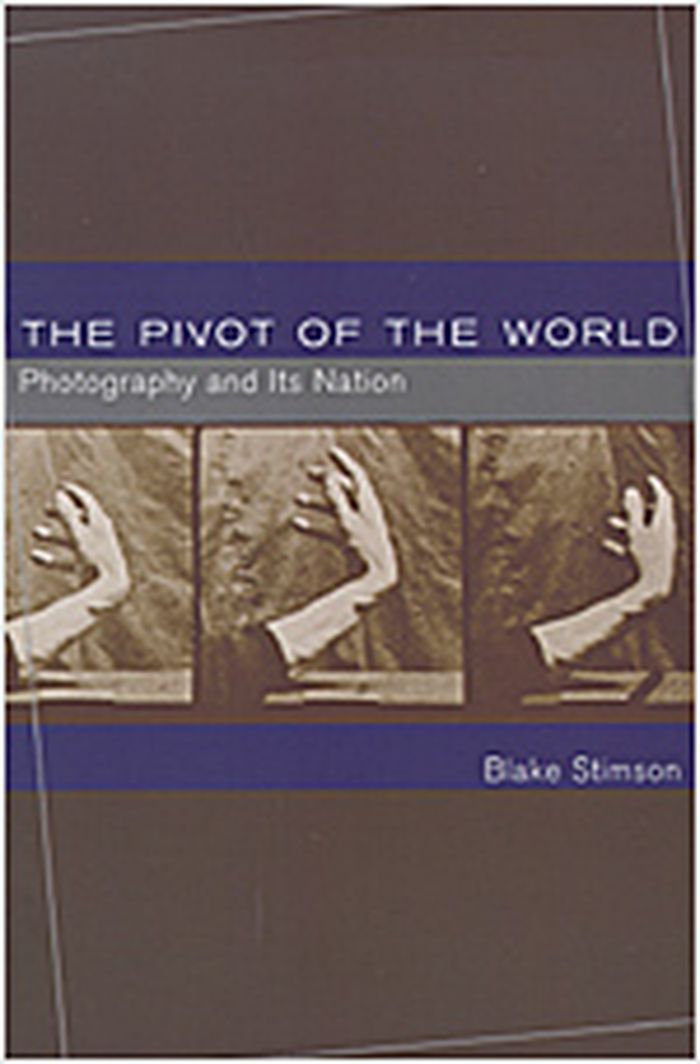
The pivot of the world : photography and its nation
Actions:
Prix:
$24.95
(disponible sur commande)
Résumé:
The old dream of social belonging and political sovereignty--the dream of nation--was fraught with anxiety and contradiction for many artists and intellectuals in the 1950s. On the one hand, memories of the Second World War remained vivid and the chauvinism that had enabled it threatened to return with the growing tensions of the Cold War. On the other hand, the need to bind together into a new global identity--into a world nation or "family of man"--seemed ever more pressing as a bulwark against the rapidly expanding threat of a nuclear World War III. The Pivot of the World looks at an exceptional effort to work out that geopolitical tension by cultural means as developed in three hugely ambitious photographic projects: The Family of Man exhibition that opened in 1955 and traveled the world for the next decade; Robert Frank's influential book The Americans, photographed in 1955-1956 and first published in 1958; and Bernd and Hilla Becher's typological record of industrial architecture, begun in 1957 and continuing today. Each of these projects worked to release the dream of nation--of belonging and sovereignty--from its old civic trappings through the medium of photography's serial form, in the experience of one photograph followed by another and another and another, so that all seem at once intimately connected and at the same time autonomous and distinct. Innovations in the serial composition of photographic form could open new possibilities for social form while the modern desire for political belonging could be made cosmopolitan, could be globalized--but in the most human of ways. This epic sense of purpose lasted only for a moment--it had already passed by the beginning of the 1960s--but it bears particular interest for any historical understanding of the contest over globalization that continues to hold such great consequence for us now.
The pivot of the world : photography and its nation
Actions:
Prix:
$24.95
(disponible sur commande)
Résumé:
The old dream of social belonging and political sovereignty--the dream of nation--was fraught with anxiety and contradiction for many artists and intellectuals in the 1950s. On the one hand, memories of the Second World War remained vivid and the chauvinism that had enabled it threatened to return with the growing tensions of the Cold War. On the other hand, the need to bind together into a new global identity--into a world nation or "family of man"--seemed ever more pressing as a bulwark against the rapidly expanding threat of a nuclear World War III. The Pivot of the World looks at an exceptional effort to work out that geopolitical tension by cultural means as developed in three hugely ambitious photographic projects: The Family of Man exhibition that opened in 1955 and traveled the world for the next decade; Robert Frank's influential book The Americans, photographed in 1955-1956 and first published in 1958; and Bernd and Hilla Becher's typological record of industrial architecture, begun in 1957 and continuing today. Each of these projects worked to release the dream of nation--of belonging and sovereignty--from its old civic trappings through the medium of photography's serial form, in the experience of one photograph followed by another and another and another, so that all seem at once intimately connected and at the same time autonomous and distinct. Innovations in the serial composition of photographic form could open new possibilities for social form while the modern desire for political belonging could be made cosmopolitan, could be globalized--but in the most human of ways. This epic sense of purpose lasted only for a moment--it had already passed by the beginning of the 1960s--but it bears particular interest for any historical understanding of the contest over globalization that continues to hold such great consequence for us now.
Classification:
livres
livres
Publication:
janvier 2006, Cambridge, Mass.
janvier 2006, Cambridge, Mass.
Sujet:
Théorie de la photographie
Théorie de la photographie
Classification:
audio
audio
Titre:
Lattina.
Lattina.
Actions:
Description:
1 online resource.
Auteur:
Sujet:
Publication:
[Place of publication not identified] : Lateral Addition, 2015.
[Place of publication not identified] : Lateral Addition, 2015.
Classification:
audio
audio
Publication:
[Place of publication not identified] : Lateral Addition, 2015.
[Place of publication not identified] : Lateral Addition, 2015.
Auteur:
Sujet:
Classification:
audio
audio
Titre:
These are They.
These are They.
Actions:
Description:
1 online resource.
Auteur:
Sujet:
Publication:
[Place of publication not identified] : Lateral Addition, 2019.
[Place of publication not identified] : Lateral Addition, 2019.
Classification:
audio
audio
Publication:
[Place of publication not identified] : Lateral Addition, 2019.
[Place of publication not identified] : Lateral Addition, 2019.
Auteur:
Sujet:


