


13362 Résultats
Classification:
archives
Niveau de description archivistique:
Fonds
archives
Niveau de description archivistique:
Fonds
Numéro de référence:
AP190
Résumé:
The Preston Scott Cohen Eyebeam project records, 2001-2016, consist of 281 digital files that document the architect’s competition entry for the Eyebeam Atelier Museum in New York City, developed in 2001. The archive includes 154 digital models in Rhinoceros, 30 digital models in STL, approximately 90 digital images, one video, and a number of Illustrator, Photoshop, PDF, and Microsoft Word files.
AP190
Résumé:
The Preston Scott Cohen Eyebeam project records, 2001-2016, consist of 281 digital files that document the architect’s competition entry for the Eyebeam Atelier Museum in New York City, developed in 2001. The archive includes 154 digital models in Rhinoceros, 30 digital models in STL, approximately 90 digital images, one video, and a number of Illustrator, Photoshop, PDF, and Microsoft Word files.
Personnes et institutions:
Date:
2001-2016
2001-2016
Titre:
Documents d’archives de Preston Scott Cohen pour le projet Eyebeam
Actions:
AP190
Résumé:
The Preston Scott Cohen Eyebeam project records, 2001-2016, consist of 281 digital files that document the architect’s competition entry for the Eyebeam Atelier Museum in New York City, developed in 2001. The archive includes 154 digital models in Rhinoceros, 30 digital models in STL, approximately 90 digital images, one video, and a number of Illustrator, Photoshop, PDF, and Microsoft Word files.
Documents d’archives de Preston Scott Cohen pour le projet Eyebeam
Actions:
AP190
Résumé:
The Preston Scott Cohen Eyebeam project records, 2001-2016, consist of 281 digital files that document the architect’s competition entry for the Eyebeam Atelier Museum in New York City, developed in 2001. The archive includes 154 digital models in Rhinoceros, 30 digital models in STL, approximately 90 digital images, one video, and a number of Illustrator, Photoshop, PDF, and Microsoft Word files.
Classification:
archives
Niveau de description archivistique:
Fonds
archives
Niveau de description archivistique:
Fonds
Date:
2001-2016
2001-2016
Personnes et institutions:
Classification:
archives
Niveau de description archivistique:
Fonds
archives
Niveau de description archivistique:
Fonds
Titre:
Fonds Álvaro Siza
Fonds Álvaro Siza
Numéro de référence:
AP178
Description:
The Álvaro Siza fonds documents the architectural work of Portuguese architect Álvaro Siza. Records in this fonds document Siza’s projects from 1958-2012, including built and unbuilt designs. A collaborative project was established between the Canadian Centre for Architecture (CCA), Fundação de Serralves, and Fundação Calouste Gulbenkian to allow for international research and access to the archive. The archive is shared by the three institutions with each institution holding different projects while collaborating on the descriptive work and increasing the visibility of the archive. The holdings at both the Fundação de Serralves and Fundação Calouste Gulbenkian focus on Siza’s Portuguese projects, while the portion of the archive held by the CCA mainly includes Siza’s projects abroad. All three institutions are committed to describing the archive and making it accessible for scholarly research. The processing of the Siza archive held by the CCA has been divided into four phases to allow for access to parts of the archive while still in process. For the first, second, and third phases, the processing archivist has described the projects from the fifties, sixties, and seventies, as well as projects for the IBA competition in Berlin, urban renewal projects in The Hague from the eighties, urban plans, museums, and individual houses between 1980 and 2000. The processing archivist has also described approximately 203 sketchbooks. Many of these sketchbooks include sketches related to architectural projects which were processed. The complete list of projects processed by the CCA to date can be found in series AP178.S1. The bulk of the Álvaro Siza fonds is arranged in Series AP178.S1, which contains documentation for over 200 of Siza’s architectural projects. Records in this archive are predominantly from 1970 to 2000. Series AP178.S1 mainly contains conceptual, design development, presentation, and working drawings. Also included are photographic materials, models, born digital records, and textual documentation, which include correspondence, project proposals, and notes. The architect’s creative process is captured in 282 sketchbooks arranged in Series AP178.S2. In all there are approximately 60 000 drawings, 3000 folders of textual documentation, 9.46 linear meters of photographs and negatives, 6,545 slides, 250 CD-ROMS, 101 floppy disks, and 371 models that document the architectural activities of Siza and his office. Among the drawings are sketches by Siza on various items, such as napkins, receipts, envelopes, or on the back of working drawings. The fonds contains several types of architectural projects including residential buildings, museums, universities, urban plans, offices, and city restorations. Of particular significance are the sketchbooks, comprised of sketches for architectural projects, Siza’s travels, people, and animals as well as notes and draft letters. The sketchbooks are organized in chronological order, starting in the late 1970’s to the beginning of the 2000’s. Locations, notes, and dates have also been identified on the front of each sketchbook along with the sketchbook number. The sketchbooks provide a unique perspective of Siza’s use of drawing as part of his work process.
AP178
Description:
The Álvaro Siza fonds documents the architectural work of Portuguese architect Álvaro Siza. Records in this fonds document Siza’s projects from 1958-2012, including built and unbuilt designs. A collaborative project was established between the Canadian Centre for Architecture (CCA), Fundação de Serralves, and Fundação Calouste Gulbenkian to allow for international research and access to the archive. The archive is shared by the three institutions with each institution holding different projects while collaborating on the descriptive work and increasing the visibility of the archive. The holdings at both the Fundação de Serralves and Fundação Calouste Gulbenkian focus on Siza’s Portuguese projects, while the portion of the archive held by the CCA mainly includes Siza’s projects abroad. All three institutions are committed to describing the archive and making it accessible for scholarly research. The processing of the Siza archive held by the CCA has been divided into four phases to allow for access to parts of the archive while still in process. For the first, second, and third phases, the processing archivist has described the projects from the fifties, sixties, and seventies, as well as projects for the IBA competition in Berlin, urban renewal projects in The Hague from the eighties, urban plans, museums, and individual houses between 1980 and 2000. The processing archivist has also described approximately 203 sketchbooks. Many of these sketchbooks include sketches related to architectural projects which were processed. The complete list of projects processed by the CCA to date can be found in series AP178.S1. The bulk of the Álvaro Siza fonds is arranged in Series AP178.S1, which contains documentation for over 200 of Siza’s architectural projects. Records in this archive are predominantly from 1970 to 2000. Series AP178.S1 mainly contains conceptual, design development, presentation, and working drawings. Also included are photographic materials, models, born digital records, and textual documentation, which include correspondence, project proposals, and notes. The architect’s creative process is captured in 282 sketchbooks arranged in Series AP178.S2. In all there are approximately 60 000 drawings, 3000 folders of textual documentation, 9.46 linear meters of photographs and negatives, 6,545 slides, 250 CD-ROMS, 101 floppy disks, and 371 models that document the architectural activities of Siza and his office. Among the drawings are sketches by Siza on various items, such as napkins, receipts, envelopes, or on the back of working drawings. The fonds contains several types of architectural projects including residential buildings, museums, universities, urban plans, offices, and city restorations. Of particular significance are the sketchbooks, comprised of sketches for architectural projects, Siza’s travels, people, and animals as well as notes and draft letters. The sketchbooks are organized in chronological order, starting in the late 1970’s to the beginning of the 2000’s. Locations, notes, and dates have also been identified on the front of each sketchbook along with the sketchbook number. The sketchbooks provide a unique perspective of Siza’s use of drawing as part of his work process.
Personnes et institutions:
Date:
1958-2002
1958-2002
Titre:
Fonds Álvaro Siza
Actions:
AP178
Description:
The Álvaro Siza fonds documents the architectural work of Portuguese architect Álvaro Siza. Records in this fonds document Siza’s projects from 1958-2012, including built and unbuilt designs. A collaborative project was established between the Canadian Centre for Architecture (CCA), Fundação de Serralves, and Fundação Calouste Gulbenkian to allow for international research and access to the archive. The archive is shared by the three institutions with each institution holding different projects while collaborating on the descriptive work and increasing the visibility of the archive. The holdings at both the Fundação de Serralves and Fundação Calouste Gulbenkian focus on Siza’s Portuguese projects, while the portion of the archive held by the CCA mainly includes Siza’s projects abroad. All three institutions are committed to describing the archive and making it accessible for scholarly research. The processing of the Siza archive held by the CCA has been divided into four phases to allow for access to parts of the archive while still in process. For the first, second, and third phases, the processing archivist has described the projects from the fifties, sixties, and seventies, as well as projects for the IBA competition in Berlin, urban renewal projects in The Hague from the eighties, urban plans, museums, and individual houses between 1980 and 2000. The processing archivist has also described approximately 203 sketchbooks. Many of these sketchbooks include sketches related to architectural projects which were processed. The complete list of projects processed by the CCA to date can be found in series AP178.S1. The bulk of the Álvaro Siza fonds is arranged in Series AP178.S1, which contains documentation for over 200 of Siza’s architectural projects. Records in this archive are predominantly from 1970 to 2000. Series AP178.S1 mainly contains conceptual, design development, presentation, and working drawings. Also included are photographic materials, models, born digital records, and textual documentation, which include correspondence, project proposals, and notes. The architect’s creative process is captured in 282 sketchbooks arranged in Series AP178.S2. In all there are approximately 60 000 drawings, 3000 folders of textual documentation, 9.46 linear meters of photographs and negatives, 6,545 slides, 250 CD-ROMS, 101 floppy disks, and 371 models that document the architectural activities of Siza and his office. Among the drawings are sketches by Siza on various items, such as napkins, receipts, envelopes, or on the back of working drawings. The fonds contains several types of architectural projects including residential buildings, museums, universities, urban plans, offices, and city restorations. Of particular significance are the sketchbooks, comprised of sketches for architectural projects, Siza’s travels, people, and animals as well as notes and draft letters. The sketchbooks are organized in chronological order, starting in the late 1970’s to the beginning of the 2000’s. Locations, notes, and dates have also been identified on the front of each sketchbook along with the sketchbook number. The sketchbooks provide a unique perspective of Siza’s use of drawing as part of his work process.
Fonds Álvaro Siza
Actions:
AP178
Description:
The Álvaro Siza fonds documents the architectural work of Portuguese architect Álvaro Siza. Records in this fonds document Siza’s projects from 1958-2012, including built and unbuilt designs. A collaborative project was established between the Canadian Centre for Architecture (CCA), Fundação de Serralves, and Fundação Calouste Gulbenkian to allow for international research and access to the archive. The archive is shared by the three institutions with each institution holding different projects while collaborating on the descriptive work and increasing the visibility of the archive. The holdings at both the Fundação de Serralves and Fundação Calouste Gulbenkian focus on Siza’s Portuguese projects, while the portion of the archive held by the CCA mainly includes Siza’s projects abroad. All three institutions are committed to describing the archive and making it accessible for scholarly research. The processing of the Siza archive held by the CCA has been divided into four phases to allow for access to parts of the archive while still in process. For the first, second, and third phases, the processing archivist has described the projects from the fifties, sixties, and seventies, as well as projects for the IBA competition in Berlin, urban renewal projects in The Hague from the eighties, urban plans, museums, and individual houses between 1980 and 2000. The processing archivist has also described approximately 203 sketchbooks. Many of these sketchbooks include sketches related to architectural projects which were processed. The complete list of projects processed by the CCA to date can be found in series AP178.S1. The bulk of the Álvaro Siza fonds is arranged in Series AP178.S1, which contains documentation for over 200 of Siza’s architectural projects. Records in this archive are predominantly from 1970 to 2000. Series AP178.S1 mainly contains conceptual, design development, presentation, and working drawings. Also included are photographic materials, models, born digital records, and textual documentation, which include correspondence, project proposals, and notes. The architect’s creative process is captured in 282 sketchbooks arranged in Series AP178.S2. In all there are approximately 60 000 drawings, 3000 folders of textual documentation, 9.46 linear meters of photographs and negatives, 6,545 slides, 250 CD-ROMS, 101 floppy disks, and 371 models that document the architectural activities of Siza and his office. Among the drawings are sketches by Siza on various items, such as napkins, receipts, envelopes, or on the back of working drawings. The fonds contains several types of architectural projects including residential buildings, museums, universities, urban plans, offices, and city restorations. Of particular significance are the sketchbooks, comprised of sketches for architectural projects, Siza’s travels, people, and animals as well as notes and draft letters. The sketchbooks are organized in chronological order, starting in the late 1970’s to the beginning of the 2000’s. Locations, notes, and dates have also been identified on the front of each sketchbook along with the sketchbook number. The sketchbooks provide a unique perspective of Siza’s use of drawing as part of his work process.
Classification:
archives
Niveau de description archivistique:
Fonds
archives
Niveau de description archivistique:
Fonds
Date:
1958-2002
1958-2002
Personnes et institutions:
Classification:
événements
événements
Description:
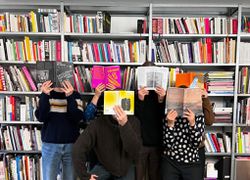
Rejoignez-nous pour une conversation à propos de la maison dédition internationale indépendante Valiz, avec Guy Cools et Pascal Gielen. Principalement axés sur lart contemporain, la théorie, la critique, le design et les questions urbaines, les ouvrages publiés par Valiz proposent une pensée analytique d’inspiration interdisciplinaire et établissent souvent un lien(...)
Rejoignez-nous pour une conversation à propos de la maison dédition internationale indépendante Valiz, avec Guy Cools et Pascal Gielen. Principalement axés sur lart contemporain, la théorie, la critique, le design et les questions urbaines, les ouvrages publiés par Valiz proposent une pensée analytique d’inspiration interdisciplinaire et établissent souvent un lien(...)
Date:
27 novembre 2025, 19h
27 novembre 2025, 19h
Titre:
Valiz avec Guy Cools, Pascal Gielen et Carolyn F. Strauss
Actions:
Description:
Rejoignez-nous pour une conversation à propos de la maison dédition internationale indépendante Valiz, avec Guy Cools et Pascal Gielen. Principalement axés sur lart contemporain, la théorie, la critique, le design et les questions urbaines, les ouvrages publiés par Valiz proposent une pensée analytique d’inspiration interdisciplinaire et établissent souvent un lien(...)
Valiz avec Guy Cools, Pascal Gielen et Carolyn F. Strauss
Actions:
Description:
Rejoignez-nous pour une conversation à propos de la maison dédition internationale indépendante Valiz, avec Guy Cools et Pascal Gielen. Principalement axés sur lart contemporain, la théorie, la critique, le design et les questions urbaines, les ouvrages publiés par Valiz proposent une pensée analytique d’inspiration interdisciplinaire et établissent souvent un lien(...)
Classification:
événements
événements
Date:
27 novembre 2025
19h
27 novembre 2025
19h
Classification:
événements
événements

Actions:
Date:
5 octobre 2023, 18h30
5 octobre 2023, 18h30
Classification:
événements
événements
Date:
5 octobre 2023
18h30
5 octobre 2023
18h30
Niveau de description archivistique:
Projet
Projet
Titre:
Carbon Tower (2001)
Carbon Tower (2001)
Numéro de référence:
AP174.S1.2001.D1
Description:
This project file documents an unbuilt design by Testa & Weiser for Carbon Tower (2001), a forty-storey building made almost entirely of carbon fibre. The project was developed in parallel with scripting software designed while Peter Testa and Devyn Weiser co-directed the Emergent Design Group at MIT. "The tower consists of an interdependent set of parts: floor plates hang from a diagrid structure of bundled fibres reinforced by two double-helix covered ramps, which are run in and out of the structure and are themselves made of strands woven at a finer scale. A thin composite skin—glass would be too heavy—wraps the tower’s parts together. A collaboration with Arup in 2002 allowed Testa & Weiser to simplify the scheme even further, by moving all core elements, from elevators to structural supports, to the tower’s perimeter. To take full advantage of the flexibility and energy efficiency of composite materials, Testa & Weiser also imagined that the carbon fibre structures would be formed on site through a process called pultrusion."[1] The file contains a large number of digital files documenting the conceptual and design development of the project; consultation with Arup Consulting Engineers, New York; research on composite materials; fabrication of 3D printed physical models by 3D Systems and Windform; and exhibition of the project at several museums and galleries, including the Museum of Contemporary Art, Los Angeles and the Cooper-Hewitt Smithsonian Design Museum, New York. Also contained in the file are 56 paper drawings (including some sketches done on top of printed computer-aided designs) and two 3D printed physical models produced by 3D Systems. Sources: [1] Canadian Centre for Architecture. Archaeology of the Digital 12: Testa & Weiser, Carbon Tower, ed. Greg Lynn (2015), ISBN 978-1-927071-25-0.
AP174.S1.2001.D1
Description:
This project file documents an unbuilt design by Testa & Weiser for Carbon Tower (2001), a forty-storey building made almost entirely of carbon fibre. The project was developed in parallel with scripting software designed while Peter Testa and Devyn Weiser co-directed the Emergent Design Group at MIT. "The tower consists of an interdependent set of parts: floor plates hang from a diagrid structure of bundled fibres reinforced by two double-helix covered ramps, which are run in and out of the structure and are themselves made of strands woven at a finer scale. A thin composite skin—glass would be too heavy—wraps the tower’s parts together. A collaboration with Arup in 2002 allowed Testa & Weiser to simplify the scheme even further, by moving all core elements, from elevators to structural supports, to the tower’s perimeter. To take full advantage of the flexibility and energy efficiency of composite materials, Testa & Weiser also imagined that the carbon fibre structures would be formed on site through a process called pultrusion."[1] The file contains a large number of digital files documenting the conceptual and design development of the project; consultation with Arup Consulting Engineers, New York; research on composite materials; fabrication of 3D printed physical models by 3D Systems and Windform; and exhibition of the project at several museums and galleries, including the Museum of Contemporary Art, Los Angeles and the Cooper-Hewitt Smithsonian Design Museum, New York. Also contained in the file are 56 paper drawings (including some sketches done on top of printed computer-aided designs) and two 3D printed physical models produced by 3D Systems. Sources: [1] Canadian Centre for Architecture. Archaeology of the Digital 12: Testa & Weiser, Carbon Tower, ed. Greg Lynn (2015), ISBN 978-1-927071-25-0.
Personnes et institutions:
Date:
2002-2014
2002-2014
Titre:
Carbon Tower (2001)
Actions:
AP174.S1.2001.D1
Description:
This project file documents an unbuilt design by Testa & Weiser for Carbon Tower (2001), a forty-storey building made almost entirely of carbon fibre. The project was developed in parallel with scripting software designed while Peter Testa and Devyn Weiser co-directed the Emergent Design Group at MIT. "The tower consists of an interdependent set of parts: floor plates hang from a diagrid structure of bundled fibres reinforced by two double-helix covered ramps, which are run in and out of the structure and are themselves made of strands woven at a finer scale. A thin composite skin—glass would be too heavy—wraps the tower’s parts together. A collaboration with Arup in 2002 allowed Testa & Weiser to simplify the scheme even further, by moving all core elements, from elevators to structural supports, to the tower’s perimeter. To take full advantage of the flexibility and energy efficiency of composite materials, Testa & Weiser also imagined that the carbon fibre structures would be formed on site through a process called pultrusion."[1] The file contains a large number of digital files documenting the conceptual and design development of the project; consultation with Arup Consulting Engineers, New York; research on composite materials; fabrication of 3D printed physical models by 3D Systems and Windform; and exhibition of the project at several museums and galleries, including the Museum of Contemporary Art, Los Angeles and the Cooper-Hewitt Smithsonian Design Museum, New York. Also contained in the file are 56 paper drawings (including some sketches done on top of printed computer-aided designs) and two 3D printed physical models produced by 3D Systems. Sources: [1] Canadian Centre for Architecture. Archaeology of the Digital 12: Testa & Weiser, Carbon Tower, ed. Greg Lynn (2015), ISBN 978-1-927071-25-0.
Carbon Tower (2001)
Actions:
AP174.S1.2001.D1
Description:
This project file documents an unbuilt design by Testa & Weiser for Carbon Tower (2001), a forty-storey building made almost entirely of carbon fibre. The project was developed in parallel with scripting software designed while Peter Testa and Devyn Weiser co-directed the Emergent Design Group at MIT. "The tower consists of an interdependent set of parts: floor plates hang from a diagrid structure of bundled fibres reinforced by two double-helix covered ramps, which are run in and out of the structure and are themselves made of strands woven at a finer scale. A thin composite skin—glass would be too heavy—wraps the tower’s parts together. A collaboration with Arup in 2002 allowed Testa & Weiser to simplify the scheme even further, by moving all core elements, from elevators to structural supports, to the tower’s perimeter. To take full advantage of the flexibility and energy efficiency of composite materials, Testa & Weiser also imagined that the carbon fibre structures would be formed on site through a process called pultrusion."[1] The file contains a large number of digital files documenting the conceptual and design development of the project; consultation with Arup Consulting Engineers, New York; research on composite materials; fabrication of 3D printed physical models by 3D Systems and Windform; and exhibition of the project at several museums and galleries, including the Museum of Contemporary Art, Los Angeles and the Cooper-Hewitt Smithsonian Design Museum, New York. Also contained in the file are 56 paper drawings (including some sketches done on top of printed computer-aided designs) and two 3D printed physical models produced by 3D Systems. Sources: [1] Canadian Centre for Architecture. Archaeology of the Digital 12: Testa & Weiser, Carbon Tower, ed. Greg Lynn (2015), ISBN 978-1-927071-25-0.
Niveau de description archivistique:
Project
Project
Date:
2002-2014
2002-2014
Personnes et institutions:
Niveau de description archivistique:
Série(s)
Série(s)
Numéro de référence:
AP179.S3
Description:
Series 3, Tongxian Art Center, Beijing, 2000 – 2007, documents the development of a multiphase project for a public arts complex thirty miles from Beijing. Phases are distinguished when possible. Phase I of the project is the gatehouse (realized), which consists of housing and studio space for artists-in-residence. It is conceived as a brick monolith that has been shrink-wrapped or vacuumed into its shape – a metaphor for the optimization of the building’s limited space. Regional materials are incorporated through the use of local brick and native chudumu wood on the exterior. The gatehouse was completed in 2003. Phase II of the project is the art center (unrealized), which consists of public spaces, sculpture courts, administrative spaces and infrastructural needs of the institution, connected through a series of alleyways. The layout is organized to maximize interaction between inhabitants while maintaining a level of privacy. In addition to phases I and II, records in the series document a design referred to as Tongxian Gatekeeper (unrealized). Drawings, circa 2006, illustrate a building to house animals and agriculture in the southwest corner of the Tongxian Art complex grounds. The series contains sketches, drawings and reprographic copies from pre-design to construction stages of the project, two models including a wood model of the art center and a cardboard model of the gatekeeper wall, and photographic materials. The series also contains textual documents including correspondence with on-site project coordinator Timothy Clark, as well as meeting agendas, project schedules, agreements and proposals, and other project documentation. Digital material includes photographs of construction, CAD drawings, renderings, e-mail, and a video featuring the project team. The majority of material in the series relates to phase I of the project, the gatehouse. Some files include documentation about the involvement of contemporary artist Ai Wei Wei in a supervisory role for the project.
AP179.S3
Description:
Series 3, Tongxian Art Center, Beijing, 2000 – 2007, documents the development of a multiphase project for a public arts complex thirty miles from Beijing. Phases are distinguished when possible. Phase I of the project is the gatehouse (realized), which consists of housing and studio space for artists-in-residence. It is conceived as a brick monolith that has been shrink-wrapped or vacuumed into its shape – a metaphor for the optimization of the building’s limited space. Regional materials are incorporated through the use of local brick and native chudumu wood on the exterior. The gatehouse was completed in 2003. Phase II of the project is the art center (unrealized), which consists of public spaces, sculpture courts, administrative spaces and infrastructural needs of the institution, connected through a series of alleyways. The layout is organized to maximize interaction between inhabitants while maintaining a level of privacy. In addition to phases I and II, records in the series document a design referred to as Tongxian Gatekeeper (unrealized). Drawings, circa 2006, illustrate a building to house animals and agriculture in the southwest corner of the Tongxian Art complex grounds. The series contains sketches, drawings and reprographic copies from pre-design to construction stages of the project, two models including a wood model of the art center and a cardboard model of the gatekeeper wall, and photographic materials. The series also contains textual documents including correspondence with on-site project coordinator Timothy Clark, as well as meeting agendas, project schedules, agreements and proposals, and other project documentation. Digital material includes photographs of construction, CAD drawings, renderings, e-mail, and a video featuring the project team. The majority of material in the series relates to phase I of the project, the gatehouse. Some files include documentation about the involvement of contemporary artist Ai Wei Wei in a supervisory role for the project.
Personnes et institutions:
Date:
2000 - 2007
2000 - 2007
Titre:
Tongxian Art Center, Beijing, China (2000 - 2007)
Actions:
AP179.S3
Description:
Series 3, Tongxian Art Center, Beijing, 2000 – 2007, documents the development of a multiphase project for a public arts complex thirty miles from Beijing. Phases are distinguished when possible. Phase I of the project is the gatehouse (realized), which consists of housing and studio space for artists-in-residence. It is conceived as a brick monolith that has been shrink-wrapped or vacuumed into its shape – a metaphor for the optimization of the building’s limited space. Regional materials are incorporated through the use of local brick and native chudumu wood on the exterior. The gatehouse was completed in 2003. Phase II of the project is the art center (unrealized), which consists of public spaces, sculpture courts, administrative spaces and infrastructural needs of the institution, connected through a series of alleyways. The layout is organized to maximize interaction between inhabitants while maintaining a level of privacy. In addition to phases I and II, records in the series document a design referred to as Tongxian Gatekeeper (unrealized). Drawings, circa 2006, illustrate a building to house animals and agriculture in the southwest corner of the Tongxian Art complex grounds. The series contains sketches, drawings and reprographic copies from pre-design to construction stages of the project, two models including a wood model of the art center and a cardboard model of the gatekeeper wall, and photographic materials. The series also contains textual documents including correspondence with on-site project coordinator Timothy Clark, as well as meeting agendas, project schedules, agreements and proposals, and other project documentation. Digital material includes photographs of construction, CAD drawings, renderings, e-mail, and a video featuring the project team. The majority of material in the series relates to phase I of the project, the gatehouse. Some files include documentation about the involvement of contemporary artist Ai Wei Wei in a supervisory role for the project.
Tongxian Art Center, Beijing, China (2000 - 2007)
Actions:
AP179.S3
Description:
Series 3, Tongxian Art Center, Beijing, 2000 – 2007, documents the development of a multiphase project for a public arts complex thirty miles from Beijing. Phases are distinguished when possible. Phase I of the project is the gatehouse (realized), which consists of housing and studio space for artists-in-residence. It is conceived as a brick monolith that has been shrink-wrapped or vacuumed into its shape – a metaphor for the optimization of the building’s limited space. Regional materials are incorporated through the use of local brick and native chudumu wood on the exterior. The gatehouse was completed in 2003. Phase II of the project is the art center (unrealized), which consists of public spaces, sculpture courts, administrative spaces and infrastructural needs of the institution, connected through a series of alleyways. The layout is organized to maximize interaction between inhabitants while maintaining a level of privacy. In addition to phases I and II, records in the series document a design referred to as Tongxian Gatekeeper (unrealized). Drawings, circa 2006, illustrate a building to house animals and agriculture in the southwest corner of the Tongxian Art complex grounds. The series contains sketches, drawings and reprographic copies from pre-design to construction stages of the project, two models including a wood model of the art center and a cardboard model of the gatekeeper wall, and photographic materials. The series also contains textual documents including correspondence with on-site project coordinator Timothy Clark, as well as meeting agendas, project schedules, agreements and proposals, and other project documentation. Digital material includes photographs of construction, CAD drawings, renderings, e-mail, and a video featuring the project team. The majority of material in the series relates to phase I of the project, the gatehouse. Some files include documentation about the involvement of contemporary artist Ai Wei Wei in a supervisory role for the project.
Niveau de description archivistique:
Series
Series
Date:
2000 - 2007
2000 - 2007
Personnes et institutions:
Classification:
événements
événements
Actions:
Description:
None
None
Date:
25 janvier 2018
25 janvier 2018
Classification:
événements
événements
Date:
25 janvier 2018
25 janvier 2018
Classification:
archives
Niveau de description archivistique:
Fonds
archives
Niveau de description archivistique:
Fonds
Titre:
Fonds Cedric Price
Fonds Cedric Price
Numéro de référence:
AP144
Résumé:
The Cedric Price fonds documents the personal activities and professional practice of architect Cedric Price, and includes his student work and architectural and urban planning projects. The fonds also contains records that document Cedric Price's teaching, publication, and exhibition activities. The archive comprises over 200 projects, from Price's student work in the 1950s at the University of Cambridge and the Architectural Association to projects he undertook as late as 2000. Key projects that are represented include New Aviary (1960-1966), Fun Palace (1961-1974), Potteries Thinkbelt (1963-1967), Inter-Action Centre (1971-1979), Generator (1976-1980), and Magnet (1995-1996).
AP144
Résumé:
The Cedric Price fonds documents the personal activities and professional practice of architect Cedric Price, and includes his student work and architectural and urban planning projects. The fonds also contains records that document Cedric Price's teaching, publication, and exhibition activities. The archive comprises over 200 projects, from Price's student work in the 1950s at the University of Cambridge and the Architectural Association to projects he undertook as late as 2000. Key projects that are represented include New Aviary (1960-1966), Fun Palace (1961-1974), Potteries Thinkbelt (1963-1967), Inter-Action Centre (1971-1979), Generator (1976-1980), and Magnet (1995-1996).
Personnes et institutions:
Date:
1903-2006, predominant 1953-2000
1903-2006, predominant 1953-2000
Titre:
Fonds Cedric Price
Actions:
AP144
Résumé:
The Cedric Price fonds documents the personal activities and professional practice of architect Cedric Price, and includes his student work and architectural and urban planning projects. The fonds also contains records that document Cedric Price's teaching, publication, and exhibition activities. The archive comprises over 200 projects, from Price's student work in the 1950s at the University of Cambridge and the Architectural Association to projects he undertook as late as 2000. Key projects that are represented include New Aviary (1960-1966), Fun Palace (1961-1974), Potteries Thinkbelt (1963-1967), Inter-Action Centre (1971-1979), Generator (1976-1980), and Magnet (1995-1996).
Fonds Cedric Price
Actions:
AP144
Résumé:
The Cedric Price fonds documents the personal activities and professional practice of architect Cedric Price, and includes his student work and architectural and urban planning projects. The fonds also contains records that document Cedric Price's teaching, publication, and exhibition activities. The archive comprises over 200 projects, from Price's student work in the 1950s at the University of Cambridge and the Architectural Association to projects he undertook as late as 2000. Key projects that are represented include New Aviary (1960-1966), Fun Palace (1961-1974), Potteries Thinkbelt (1963-1967), Inter-Action Centre (1971-1979), Generator (1976-1980), and Magnet (1995-1996).
Classification:
archives
Niveau de description archivistique:
Fonds
archives
Niveau de description archivistique:
Fonds
Date:
1903-2006, predominant 1953-2000
1903-2006, predominant 1953-2000
Personnes et institutions:
Classification:
articles
articles
Titre:
Proximités commerciales
Proximités commerciales
Actions:
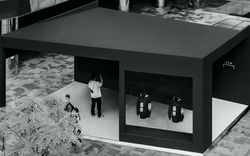
Jack Self s'entretient avec Samuel Ross, designer et directeur de A-COLD-WALL*, sur la manière dont le design commercial crée des communs contemporains
Titre:
Proximités commerciales
Jack Self s'entretient avec Samuel Ross, designer et directeur de A-COLD-WALL*, sur la manière dont le design commercial crée des communs contemporains
Actions:
Proximités commerciales
Jack Self s'entretient avec Samuel Ross, designer et directeur de A-COLD-WALL*, sur la manière dont le design commercial crée des communs contemporains
Actions:
Classification:
documents textuels
documents textuels
Numéro de référence:
AP197.S1.SS9.015
Description:
The box contains drafts, final copies, correspondence and notes for various articles, book projects, interviews, keynote addresses, and lectures by Kenneth Frampton. The materials are organized in alphabetical order, from I-K. The largest portion of this box consists of: drafts and transcripts of interviews with Kenneth Frampton; drafts, articles, correspondence and research materials for an unpublished book project on Japanese Building Practices/Japanese Contemporary Architecture; correspondence and drafts for the Jerusalem Seminar in Architecture; and correspondence and notes for a Panos Koulermos book project. Other subjects and architects explored in these texts include Arata Isozaki, Kritsin Jaramund, Michael Kagan, Louis Kahn, Rem Koolhaas, Kengo Kuma, and Kisho Kurakawa.
AP197.S1.SS9.015
Description:
The box contains drafts, final copies, correspondence and notes for various articles, book projects, interviews, keynote addresses, and lectures by Kenneth Frampton. The materials are organized in alphabetical order, from I-K. The largest portion of this box consists of: drafts and transcripts of interviews with Kenneth Frampton; drafts, articles, correspondence and research materials for an unpublished book project on Japanese Building Practices/Japanese Contemporary Architecture; correspondence and drafts for the Jerusalem Seminar in Architecture; and correspondence and notes for a Panos Koulermos book project. Other subjects and architects explored in these texts include Arata Isozaki, Kritsin Jaramund, Michael Kagan, Louis Kahn, Rem Koolhaas, Kengo Kuma, and Kisho Kurakawa.
Personnes et institutions:
Date:
1985-2016
1985-2016
Titre:
Kenneth Frampton writings (I-K)
Actions:
AP197.S1.SS9.015
Description:
The box contains drafts, final copies, correspondence and notes for various articles, book projects, interviews, keynote addresses, and lectures by Kenneth Frampton. The materials are organized in alphabetical order, from I-K. The largest portion of this box consists of: drafts and transcripts of interviews with Kenneth Frampton; drafts, articles, correspondence and research materials for an unpublished book project on Japanese Building Practices/Japanese Contemporary Architecture; correspondence and drafts for the Jerusalem Seminar in Architecture; and correspondence and notes for a Panos Koulermos book project. Other subjects and architects explored in these texts include Arata Isozaki, Kritsin Jaramund, Michael Kagan, Louis Kahn, Rem Koolhaas, Kengo Kuma, and Kisho Kurakawa.
Kenneth Frampton writings (I-K)
Actions:
AP197.S1.SS9.015
Description:
The box contains drafts, final copies, correspondence and notes for various articles, book projects, interviews, keynote addresses, and lectures by Kenneth Frampton. The materials are organized in alphabetical order, from I-K. The largest portion of this box consists of: drafts and transcripts of interviews with Kenneth Frampton; drafts, articles, correspondence and research materials for an unpublished book project on Japanese Building Practices/Japanese Contemporary Architecture; correspondence and drafts for the Jerusalem Seminar in Architecture; and correspondence and notes for a Panos Koulermos book project. Other subjects and architects explored in these texts include Arata Isozaki, Kritsin Jaramund, Michael Kagan, Louis Kahn, Rem Koolhaas, Kengo Kuma, and Kisho Kurakawa.
Classification:
documents textuels
documents textuels
Date:
1985-2016
1985-2016
Personnes et institutions:


