


10583 Résultats
Classification:
livres
livres
Actions:
Prix:
$15.95
(disponible sur commande)
Résumé:
La stupidité, moteur de notre société ? L'idée est moins absurde qu'il n'y paraît. Un homme s'y consacre d'ailleurs depuis plus de vingt-cinq ans. Il s'appelle Matthijs van Boxsel. Du célèbre Club des Gaffeurs créé dans les années 1970 à la mystérieuse amstellodamoisitude, en passant par le ahah français et le haha anglais, ou encore le hodja Nasreddin, il traque la(...)
$15.95
(disponible sur commande)
Résumé:
La stupidité, moteur de notre société ? L'idée est moins absurde qu'il n'y paraît. Un homme s'y consacre d'ailleurs depuis plus de vingt-cinq ans. Il s'appelle Matthijs van Boxsel. Du célèbre Club des Gaffeurs créé dans les années 1970 à la mystérieuse amstellodamoisitude, en passant par le ahah français et le haha anglais, ou encore le hodja Nasreddin, il traque la(...)
Titre:
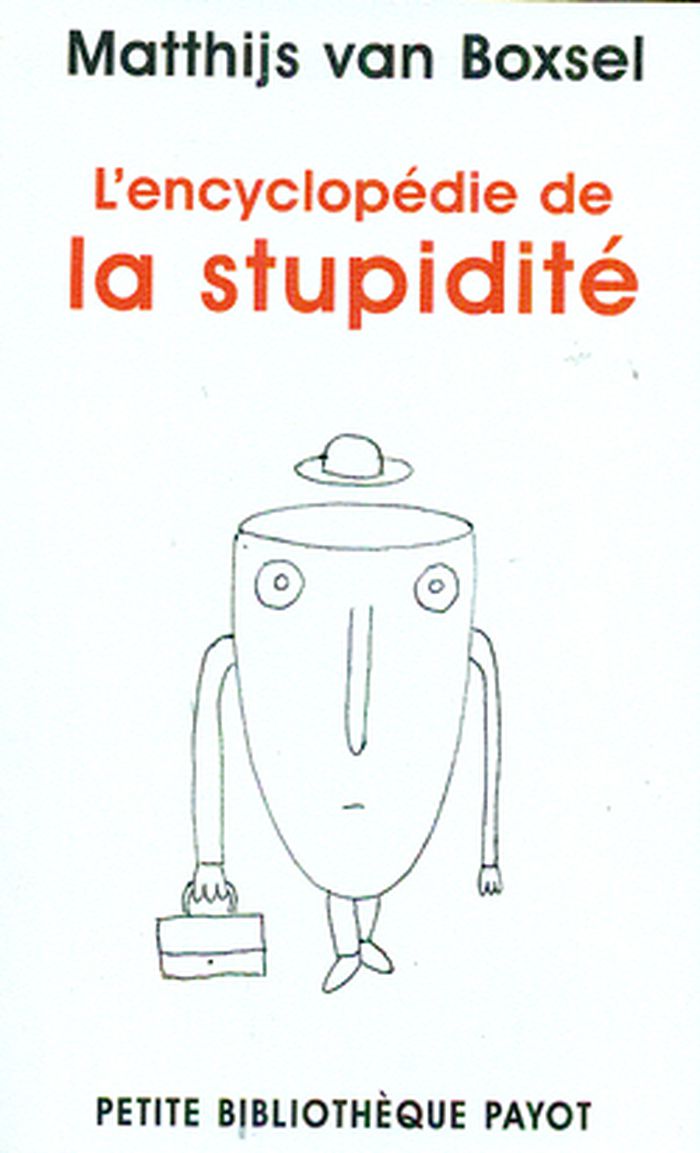
L'encyclopédie de la stupidité
Actions:
Prix:
$15.95
(disponible sur commande)
Résumé:
La stupidité, moteur de notre société ? L'idée est moins absurde qu'il n'y paraît. Un homme s'y consacre d'ailleurs depuis plus de vingt-cinq ans. Il s'appelle Matthijs van Boxsel. Du célèbre Club des Gaffeurs créé dans les années 1970 à la mystérieuse amstellodamoisitude, en passant par le ahah français et le haha anglais, ou encore le hodja Nasreddin, il traque la stupidité sous toutes ses formes à travers les contes de fées, les dessins animés, les jardins paysagers, les oeuvres de science-fiction, la littérature, la peinture, la politique, la religion, les théories les plus sérieusement délirantes et... l'intelligence. Résultat : ce livre-ci, qui montre que la stupidité se manifeste partout, en chaque individu, depuis toujours, et qu'elle pourrait bien être la marque de la grandeur de l'homme.
L'encyclopédie de la stupidité
Actions:
Prix:
$15.95
(disponible sur commande)
Résumé:
La stupidité, moteur de notre société ? L'idée est moins absurde qu'il n'y paraît. Un homme s'y consacre d'ailleurs depuis plus de vingt-cinq ans. Il s'appelle Matthijs van Boxsel. Du célèbre Club des Gaffeurs créé dans les années 1970 à la mystérieuse amstellodamoisitude, en passant par le ahah français et le haha anglais, ou encore le hodja Nasreddin, il traque la stupidité sous toutes ses formes à travers les contes de fées, les dessins animés, les jardins paysagers, les oeuvres de science-fiction, la littérature, la peinture, la politique, la religion, les théories les plus sérieusement délirantes et... l'intelligence. Résultat : ce livre-ci, qui montre que la stupidité se manifeste partout, en chaque individu, depuis toujours, et qu'elle pourrait bien être la marque de la grandeur de l'homme.
Classification:
livres
livres
Publication:
novembre 2011
novembre 2011
Sujet:
Théorie/ philosophie
Théorie/ philosophie
Classification:
livres
livres
Actions:
Prix:
$11.95
(disponible sur commande)
Résumé:
Critical theory emerged in the 1920s from the work of the Frankfurt School, the circle of German-Jewish academics who sought to diagnose - and, if at all possible, cure - the ills of society, particularly fascism and capitalism. In this book, Stephen Eric Bronner provides sketches of leading representatives of the critical tradition (such as George Lukács and Ernst Bloch,(...)
$11.95
(disponible sur commande)
Résumé:
Critical theory emerged in the 1920s from the work of the Frankfurt School, the circle of German-Jewish academics who sought to diagnose - and, if at all possible, cure - the ills of society, particularly fascism and capitalism. In this book, Stephen Eric Bronner provides sketches of leading representatives of the critical tradition (such as George Lukács and Ernst Bloch,(...)
Titre:
Critical theory: a very short introduction
Actions:
Prix:
$11.95
(disponible sur commande)
Résumé:
Critical theory emerged in the 1920s from the work of the Frankfurt School, the circle of German-Jewish academics who sought to diagnose - and, if at all possible, cure - the ills of society, particularly fascism and capitalism. In this book, Stephen Eric Bronner provides sketches of leading representatives of the critical tradition (such as George Lukács and Ernst Bloch, Theodor Adorno and Walter Benjamin, Herbert Marcuse and Jurgen Habermas) as well as many of its seminal texts and empirical investigations.
Critical theory: a very short introduction
Actions:
Prix:
$11.95
(disponible sur commande)
Résumé:
Critical theory emerged in the 1920s from the work of the Frankfurt School, the circle of German-Jewish academics who sought to diagnose - and, if at all possible, cure - the ills of society, particularly fascism and capitalism. In this book, Stephen Eric Bronner provides sketches of leading representatives of the critical tradition (such as George Lukács and Ernst Bloch, Theodor Adorno and Walter Benjamin, Herbert Marcuse and Jurgen Habermas) as well as many of its seminal texts and empirical investigations.
Classification:
livres
livres
Publication:
avril 2011
avril 2011
Sujet:
Théorie/ philosophie
Théorie/ philosophie
Classification:
livres
livres
Titre:
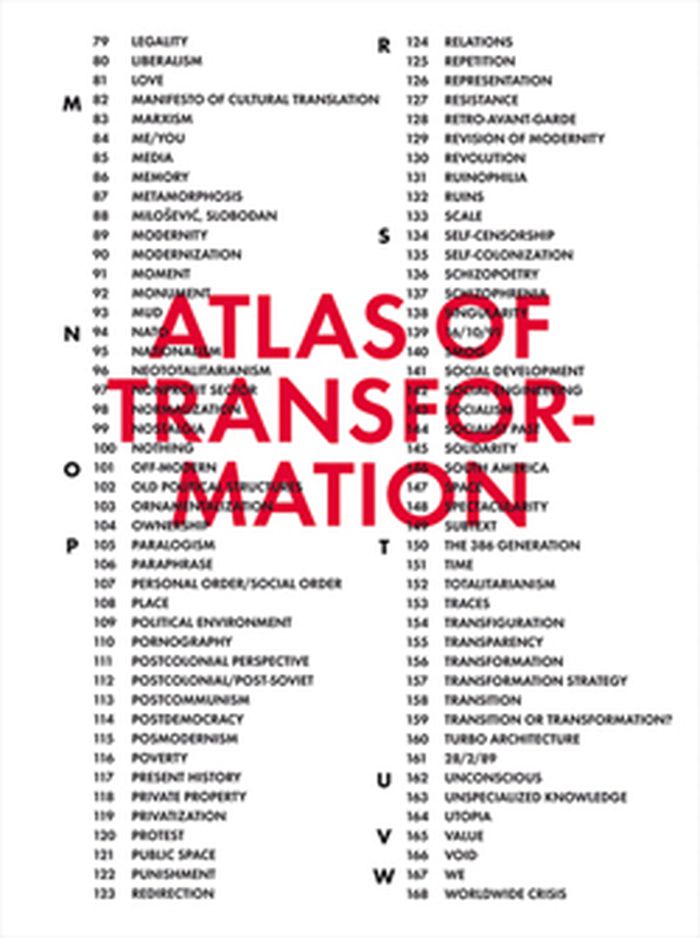
Atlas of transformation
Atlas of transformation
Actions:
Prix:
$50.00
(disponible sur commande)
Résumé:
What happens to a country when it undergoes change on a revolutionary scale? And how does one grasp such monumental transformation? In over 200 entries, the Atlas of Transformation offers a massive glossary of key terms for the effects and consequences of social political change, based on the transformations seen over the past two decades in Eastern Europe. Including(...)
$50.00
(disponible sur commande)
Résumé:
What happens to a country when it undergoes change on a revolutionary scale? And how does one grasp such monumental transformation? In over 200 entries, the Atlas of Transformation offers a massive glossary of key terms for the effects and consequences of social political change, based on the transformations seen over the past two decades in Eastern Europe. Including(...)
Titre:
Atlas of transformation
Actions:
Prix:
$50.00
(disponible sur commande)
Résumé:
What happens to a country when it undergoes change on a revolutionary scale? And how does one grasp such monumental transformation? In over 200 entries, the Atlas of Transformation offers a massive glossary of key terms for the effects and consequences of social political change, based on the transformations seen over the past two decades in Eastern Europe. Including relevant historical texts alongside new writing, among the authors contributing to the Atlas are Timothy Garton Ash, Hakim Bey, Homi K. Bhabha, Deleuze and Guattari, Boris Groys, Karl Holmqvist, Frederic Jameson, Franz Kafka and Slavoj Zizek.
Atlas of transformation
Actions:
Prix:
$50.00
(disponible sur commande)
Résumé:
What happens to a country when it undergoes change on a revolutionary scale? And how does one grasp such monumental transformation? In over 200 entries, the Atlas of Transformation offers a massive glossary of key terms for the effects and consequences of social political change, based on the transformations seen over the past two decades in Eastern Europe. Including relevant historical texts alongside new writing, among the authors contributing to the Atlas are Timothy Garton Ash, Hakim Bey, Homi K. Bhabha, Deleuze and Guattari, Boris Groys, Karl Holmqvist, Frederic Jameson, Franz Kafka and Slavoj Zizek.
Classification:
livres
livres
Publication:
janvier 2011
janvier 2011
Sujet:
Théorie/ philosophie
Théorie/ philosophie
Classification:
livres
livres
Titre:
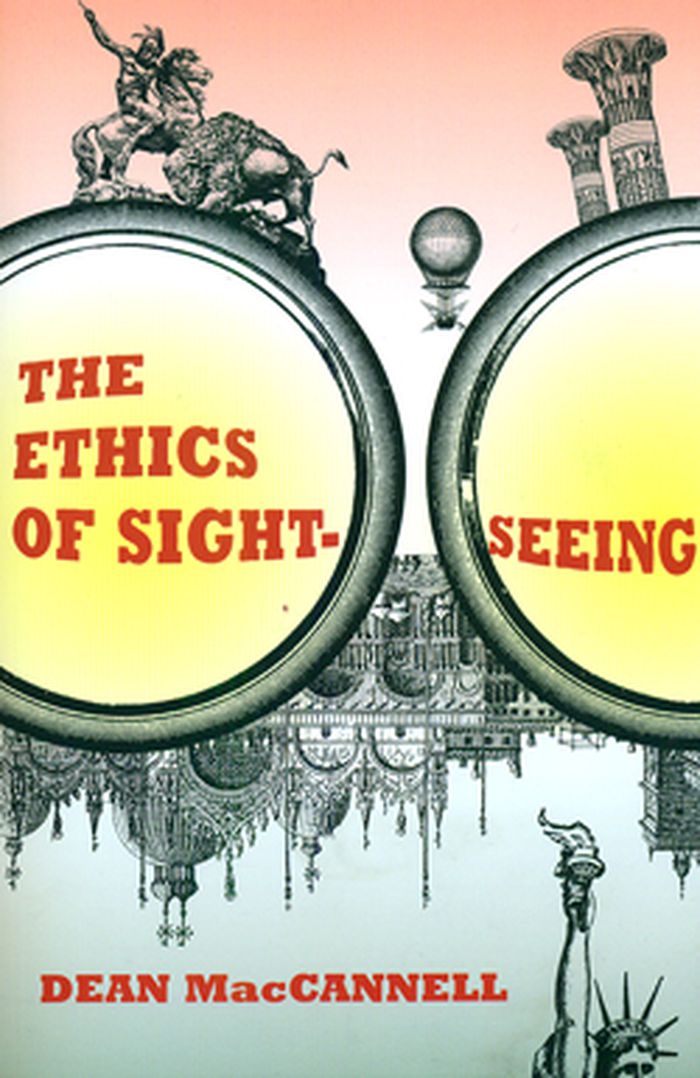
The ethics of sightseeing
The ethics of sightseeing
Actions:
Prix:
$25.95
(disponible sur commande)
Résumé:
The ethics of sightseeing identifies and overcomes common obstacles to ethical sightseeing. Through a combination of personal observation and in-depth scholarship, MacCannell ventures into specific tourist destinations and attractions: "picturesque" rural and natural landscapes, "hip" urban scenes, historic locations of tragic events, Disney theme parks, beaches, and(...)
$25.95
(disponible sur commande)
Résumé:
The ethics of sightseeing identifies and overcomes common obstacles to ethical sightseeing. Through a combination of personal observation and in-depth scholarship, MacCannell ventures into specific tourist destinations and attractions: "picturesque" rural and natural landscapes, "hip" urban scenes, historic locations of tragic events, Disney theme parks, beaches, and(...)
Titre:
The ethics of sightseeing
Actions:
Prix:
$25.95
(disponible sur commande)
Résumé:
The ethics of sightseeing identifies and overcomes common obstacles to ethical sightseeing. Through a combination of personal observation and in-depth scholarship, MacCannell ventures into specific tourist destinations and attractions: "picturesque" rural and natural landscapes, "hip" urban scenes, historic locations of tragic events, Disney theme parks, beaches, and travel poster ideals. Demonstrating each act of sightseeing as an ethical test, the book shows how tourists can realize the productive potential of their travel desires, penetrate the collective unconscious, and gain character, insight, and connection to the world.
The ethics of sightseeing
Actions:
Prix:
$25.95
(disponible sur commande)
Résumé:
The ethics of sightseeing identifies and overcomes common obstacles to ethical sightseeing. Through a combination of personal observation and in-depth scholarship, MacCannell ventures into specific tourist destinations and attractions: "picturesque" rural and natural landscapes, "hip" urban scenes, historic locations of tragic events, Disney theme parks, beaches, and travel poster ideals. Demonstrating each act of sightseeing as an ethical test, the book shows how tourists can realize the productive potential of their travel desires, penetrate the collective unconscious, and gain character, insight, and connection to the world.
Classification:
livres
livres
Publication:
juin 2011
juin 2011
Sujet:
Théorie/ philosophie
Théorie/ philosophie
Classification:
livres
livres
Prix:
$27.50
(disponible en magasin)
Résumé:
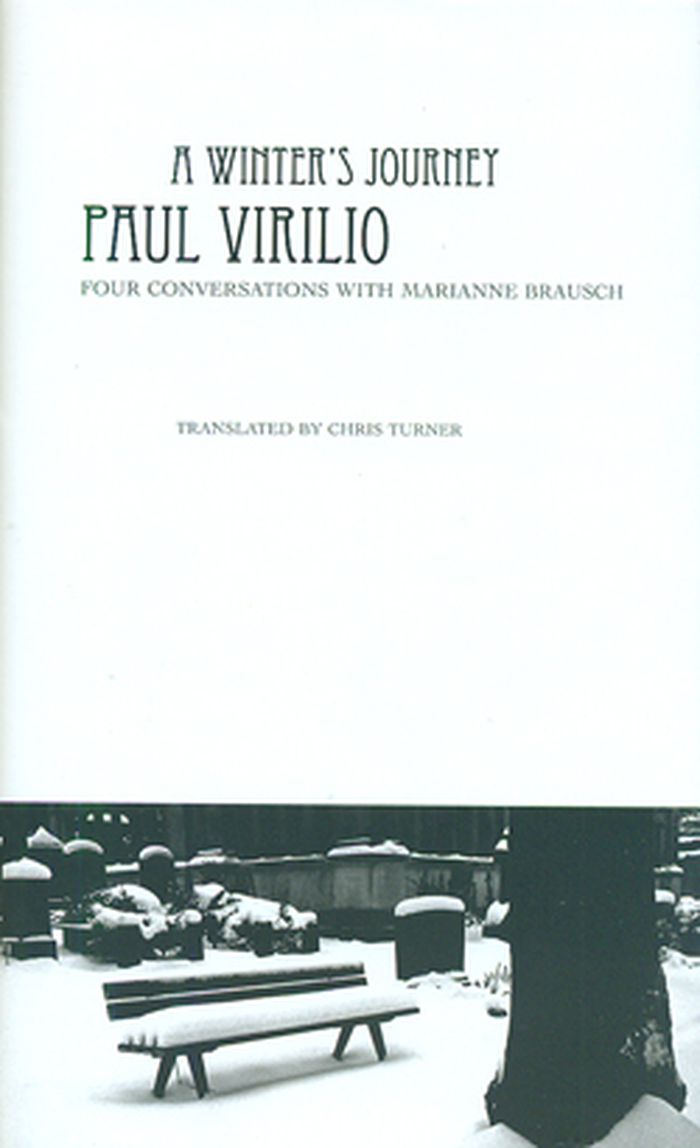
French cultural theorist and urbanist Paul Virilio is best known for his writings on media, technology, and architecture. Gathered here in this publication are four conversations in which Virilio and architectural writer Marianne Brausch look at a twentieth century characterized by enormous technological acceleration and by technocultural accidents of barbarism and(...)
$27.50
(disponible en magasin)
Résumé:
French cultural theorist and urbanist Paul Virilio is best known for his writings on media, technology, and architecture. Gathered here in this publication are four conversations in which Virilio and architectural writer Marianne Brausch look at a twentieth century characterized by enormous technological acceleration and by technocultural accidents of barbarism and(...)
Titre:
A winter's journey: four conversations with Marianne Brausch
Actions:
Prix:
$27.50
(disponible en magasin)
Résumé:
French cultural theorist and urbanist Paul Virilio is best known for his writings on media, technology, and architecture. Gathered here in this publication are four conversations in which Virilio and architectural writer Marianne Brausch look at a twentieth century characterized by enormous technological acceleration and by technocultural accidents of barbarism and horror. The dialogues in "A Winter’s Journey" —structured loosely around the dates 1940, 1950, 1960, and 1980— chart Virilio’s intimate intellectual biography, from his childhood lived against the unstable backdrop of a heavily bombed, wartime Nantes to maturity in a crisis space that is neither entirely militarized nor yet fully civilian, but somewhere between the two. In the course of these conversations, Virilio and Brausch ultimately find hope that in understanding the events of the last century and the cultural responses spawned by them, we can create a more humane era that is more adept at handling the transformations of its technology and culture.
A winter's journey: four conversations with Marianne Brausch
Actions:
Prix:
$27.50
(disponible en magasin)
Résumé:
French cultural theorist and urbanist Paul Virilio is best known for his writings on media, technology, and architecture. Gathered here in this publication are four conversations in which Virilio and architectural writer Marianne Brausch look at a twentieth century characterized by enormous technological acceleration and by technocultural accidents of barbarism and horror. The dialogues in "A Winter’s Journey" —structured loosely around the dates 1940, 1950, 1960, and 1980— chart Virilio’s intimate intellectual biography, from his childhood lived against the unstable backdrop of a heavily bombed, wartime Nantes to maturity in a crisis space that is neither entirely militarized nor yet fully civilian, but somewhere between the two. In the course of these conversations, Virilio and Brausch ultimately find hope that in understanding the events of the last century and the cultural responses spawned by them, we can create a more humane era that is more adept at handling the transformations of its technology and culture.
Classification:
livres
livres
Publication:
mai 2011
mai 2011
Sujet:
Théorie/ philosophie
Théorie/ philosophie
Classification:
livres
livres

Titre:
The Baudrillard dictionary
The Baudrillard dictionary
Actions:
Prix:
$40.50
(disponible sur commande)
Résumé:
This is the first dictionary dedicated to the work of Jean Baudrillard (1929-2007). It explains and contextualises more than a hundred key concepts, terms, influences and topics within his thought. An essential reference for students and scholars of Baudrillard, it also serves as an overview of how his ideas have shaped a broad range of disciplines, from art,(...)
$40.50
(disponible sur commande)
Résumé:
This is the first dictionary dedicated to the work of Jean Baudrillard (1929-2007). It explains and contextualises more than a hundred key concepts, terms, influences and topics within his thought. An essential reference for students and scholars of Baudrillard, it also serves as an overview of how his ideas have shaped a broad range of disciplines, from art,(...)
Titre:
The Baudrillard dictionary
Actions:
Prix:
$40.50
(disponible sur commande)
Résumé:
This is the first dictionary dedicated to the work of Jean Baudrillard (1929-2007). It explains and contextualises more than a hundred key concepts, terms, influences and topics within his thought. An essential reference for students and scholars of Baudrillard, it also serves as an overview of how his ideas have shaped a broad range of disciplines, from art, architecture, film and photography to sociology, philosophy, human geography, media studies and cultural studies. The entries are written by 35 Baudrillard specialists from around the world, including Rex Butler, Mike Gane, Gary Genosko, Victoria Grace, Diane Rubenstein and Andrew Wernick.
The Baudrillard dictionary
Actions:
Prix:
$40.50
(disponible sur commande)
Résumé:
This is the first dictionary dedicated to the work of Jean Baudrillard (1929-2007). It explains and contextualises more than a hundred key concepts, terms, influences and topics within his thought. An essential reference for students and scholars of Baudrillard, it also serves as an overview of how his ideas have shaped a broad range of disciplines, from art, architecture, film and photography to sociology, philosophy, human geography, media studies and cultural studies. The entries are written by 35 Baudrillard specialists from around the world, including Rex Butler, Mike Gane, Gary Genosko, Victoria Grace, Diane Rubenstein and Andrew Wernick.
Classification:
livres
livres
Publication:
octobre 2010
octobre 2010
Sujet:
Théorie/ philosophie
Théorie/ philosophie
Classification:
livres
livres
Actions:
Prix:
$32.95
(disponible sur commande)
Résumé:
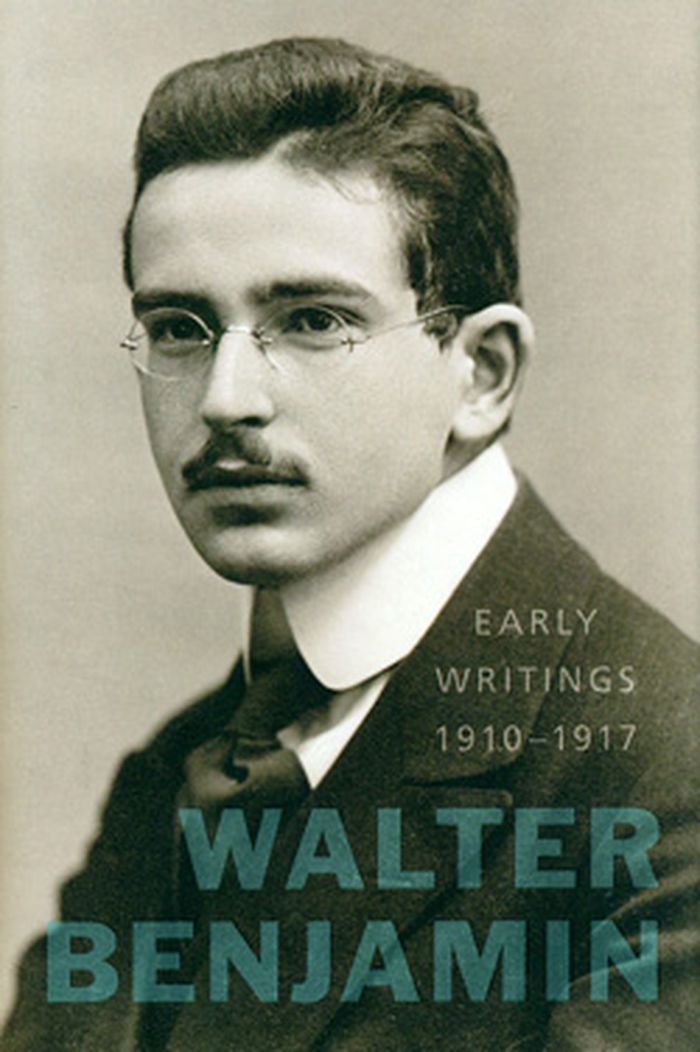
Early Writings, 1910-1917 documents the formative intellectual experiences of one of the twentieth century's most independent thinkers.
$32.95
(disponible sur commande)
Résumé:
Early Writings, 1910-1917 documents the formative intellectual experiences of one of the twentieth century's most independent thinkers.
Titre:
Walter Benjamin: Early writings 1910-1917
Actions:
Prix:
$32.95
(disponible sur commande)
Résumé:
Early Writings, 1910-1917 documents the formative intellectual experiences of one of the twentieth century's most independent thinkers.
Walter Benjamin: Early writings 1910-1917
Actions:
Prix:
$32.95
(disponible sur commande)
Résumé:
Early Writings, 1910-1917 documents the formative intellectual experiences of one of the twentieth century's most independent thinkers.
Classification:
livres
livres
Publication:
juin 2011
juin 2011
Sujet:
Théorie/ philosophie
Théorie/ philosophie
Classification:
livres
livres
Actions:
Prix:
$14.00
(disponible sur commande)
Résumé:
Admired by Marx and Engels, the Surrealists, the Situationists, Walter Benjamin and Roland Barthes, the great utopian socialist Charles Fourier (1772-1837) has been many things to many people: a proto-feminist, a Surrealist ancestor, a cantankerous cosmologist, a social critic and humorist and to this day one of France's truest visionary thinkers. He was also, as this(...)
$14.00
(disponible sur commande)
Résumé:
Admired by Marx and Engels, the Surrealists, the Situationists, Walter Benjamin and Roland Barthes, the great utopian socialist Charles Fourier (1772-1837) has been many things to many people: a proto-feminist, a Surrealist ancestor, a cantankerous cosmologist, a social critic and humorist and to this day one of France's truest visionary thinkers. He was also, as this(...)
Titre:
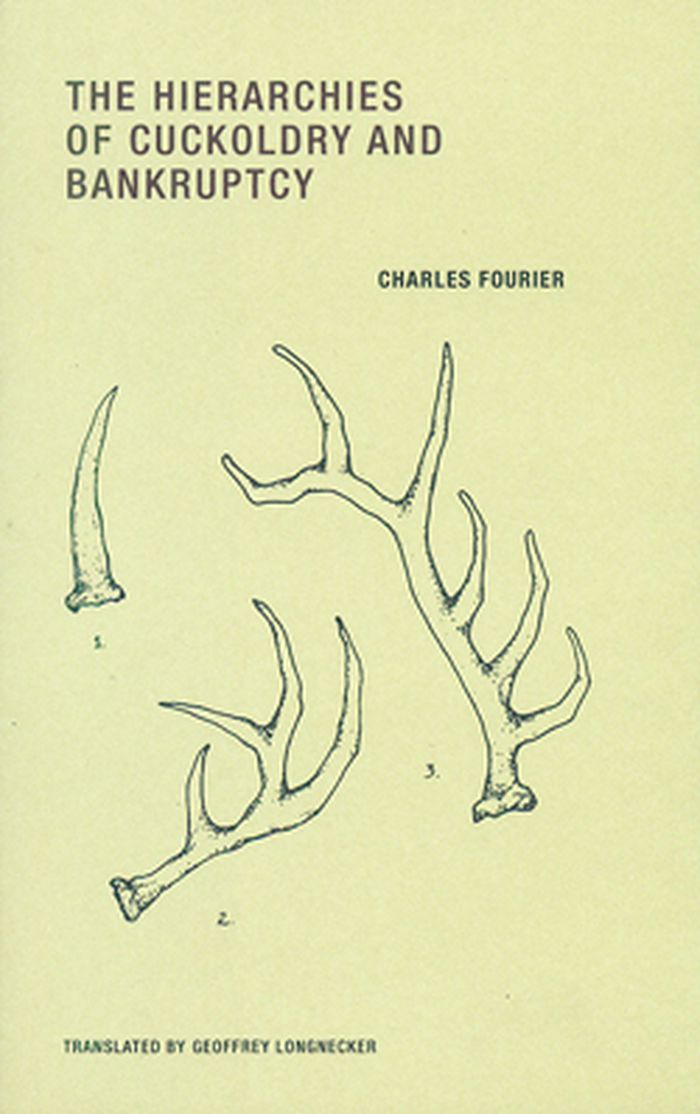
The hierarchies of cuckoldry and bankruptcy
Actions:
Prix:
$14.00
(disponible sur commande)
Résumé:
Admired by Marx and Engels, the Surrealists, the Situationists, Walter Benjamin and Roland Barthes, the great utopian socialist Charles Fourier (1772-1837) has been many things to many people: a proto-feminist, a Surrealist ancestor, a cantankerous cosmologist, a social critic and humorist and to this day one of France's truest visionary thinkers. He was also, as this volume demonstrates, a maniacal taxonomist. In this zoological guidebook to cuckoldry and commerce, Fourier offers a caustic critique of the bankruptcy of marriage and the prostitution of the economy, and the hypocrisies of a civilization that over-regulates sexual congress while allowing the financial sector to screw over the public. Gathered together here for the first time are Fourier's two “Hierarchies” --humorously regimented parades of civilization's cheaters and cheated-on in the domestic sphere of sex and the economic sphere of buying and selling commodities. “The Hierarchy of Cuckoldry” --translated into English for the first time--presents 72 species of the male cuckold, ranging from such “common class” cases as the Health-Conscious Cuckolds, to the short-horned Sympathetic, Optimist and Mystical Cuckolds, and the Long-horned varieties of the Irate, Disgraced and Posthumous Cuckolds. For Fourier, these amount to 72 manifestations of women's “secret insurrection” against the institution of marriage. “The Hierarchy of Bankruptcy” presents 36 species of the fraudulent bankrupt: a range of Light, Grandiose, and Contemptible shades of financial manipulators who force creditors, cities and even nations to bail them out of ultimately profitable bankruptcies. In these attacks on the morality of monogamy and the perils of laissez-faire capitalism, Fourier's “Hierarchies” resonate uncannily with our contemporary world.
The hierarchies of cuckoldry and bankruptcy
Actions:
Prix:
$14.00
(disponible sur commande)
Résumé:
Admired by Marx and Engels, the Surrealists, the Situationists, Walter Benjamin and Roland Barthes, the great utopian socialist Charles Fourier (1772-1837) has been many things to many people: a proto-feminist, a Surrealist ancestor, a cantankerous cosmologist, a social critic and humorist and to this day one of France's truest visionary thinkers. He was also, as this volume demonstrates, a maniacal taxonomist. In this zoological guidebook to cuckoldry and commerce, Fourier offers a caustic critique of the bankruptcy of marriage and the prostitution of the economy, and the hypocrisies of a civilization that over-regulates sexual congress while allowing the financial sector to screw over the public. Gathered together here for the first time are Fourier's two “Hierarchies” --humorously regimented parades of civilization's cheaters and cheated-on in the domestic sphere of sex and the economic sphere of buying and selling commodities. “The Hierarchy of Cuckoldry” --translated into English for the first time--presents 72 species of the male cuckold, ranging from such “common class” cases as the Health-Conscious Cuckolds, to the short-horned Sympathetic, Optimist and Mystical Cuckolds, and the Long-horned varieties of the Irate, Disgraced and Posthumous Cuckolds. For Fourier, these amount to 72 manifestations of women's “secret insurrection” against the institution of marriage. “The Hierarchy of Bankruptcy” presents 36 species of the fraudulent bankrupt: a range of Light, Grandiose, and Contemptible shades of financial manipulators who force creditors, cities and even nations to bail them out of ultimately profitable bankruptcies. In these attacks on the morality of monogamy and the perils of laissez-faire capitalism, Fourier's “Hierarchies” resonate uncannily with our contemporary world.
Classification:
livres
livres
Publication:
octobre 2011
octobre 2011
Sujet:
Théorie/ philosophie
Théorie/ philosophie
Classification:
livres
livres
Actions:
Prix:
$39.95
(disponible sur commande)
Résumé:
An epic project in both size and purview, Peter Sloterdijk's three-volume, 2,500-page Spheres is the late-twentieth-century bookend to Heidegger's Being and Time. Rejecting the century's predominant philosophical focus on temporality, Sloterdijk, a self-described "student of the air," reinterprets the history of Western metaphysics as an inherently spatial and(...)
$39.95
(disponible sur commande)
Résumé:
An epic project in both size and purview, Peter Sloterdijk's three-volume, 2,500-page Spheres is the late-twentieth-century bookend to Heidegger's Being and Time. Rejecting the century's predominant philosophical focus on temporality, Sloterdijk, a self-described "student of the air," reinterprets the history of Western metaphysics as an inherently spatial and(...)
Titre:
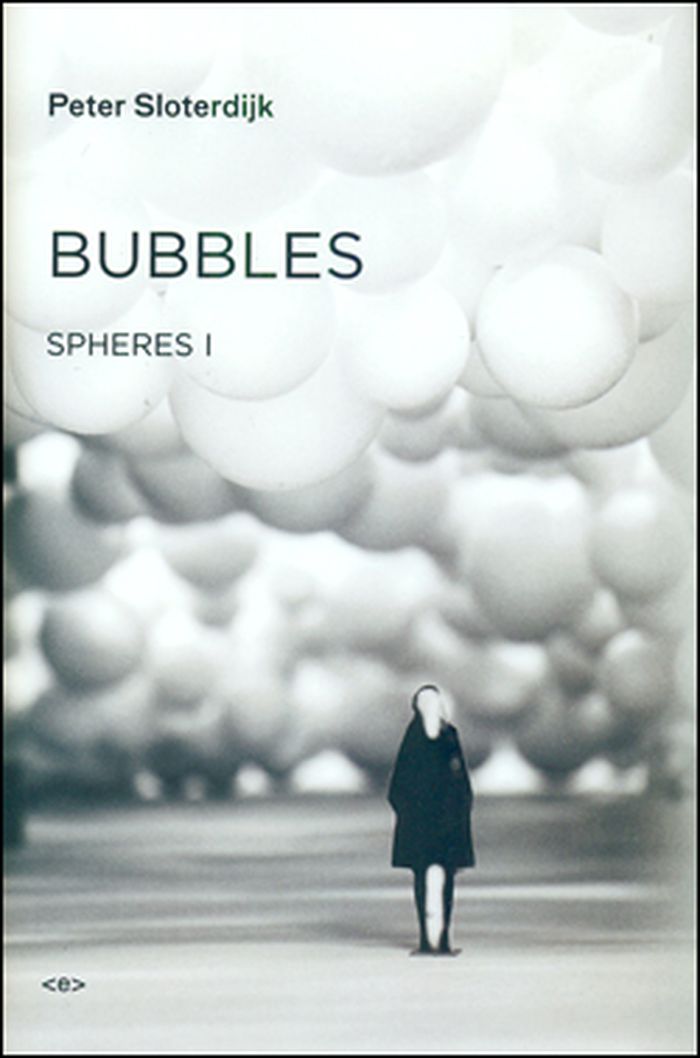
Spheres1 : Bubbles, microspherology
Actions:
Prix:
$39.95
(disponible sur commande)
Résumé:
An epic project in both size and purview, Peter Sloterdijk's three-volume, 2,500-page Spheres is the late-twentieth-century bookend to Heidegger's Being and Time. Rejecting the century's predominant philosophical focus on temporality, Sloterdijk, a self-described "student of the air," reinterprets the history of Western metaphysics as an inherently spatial and immunological project, from the discovery of self (bubble) to the exploration of world (globe) to the poetics of plurality (foam). Exploring macro- and micro-space from the Greek agora to the contemporary urban apartment, Sloterdijk is able to synthesize, with immense erudition, the spatial theories of Aristotle, René Descartes, Gaston Bachelard, Walter Benjamin, and Georges Bataille into a morphology of shared, or multipolar, dwelling - identifying the question of being as one bound up with the aerial technology of architectonics and anthropogenesis. Sloterdijk describes Bubbles, the first volume of Spheres, as a general theory of the structures that allow couplings - or as the book's original intended subtitle put it, an "archeology of the intimate." Bubbles includes a wide array of images, not to illustrate Sloterdijk's discourse, but to offer a spatial and visual "parallel narrative" to his exploration of bubbles. Written over the course of a decade, the Spheres trilogy has waited another decade for its much-anticipated English translation from Semiotext(e). Volumes II, Globes, and III, Foam, will be published in the coming seasons.
Spheres1 : Bubbles, microspherology
Actions:
Prix:
$39.95
(disponible sur commande)
Résumé:
An epic project in both size and purview, Peter Sloterdijk's three-volume, 2,500-page Spheres is the late-twentieth-century bookend to Heidegger's Being and Time. Rejecting the century's predominant philosophical focus on temporality, Sloterdijk, a self-described "student of the air," reinterprets the history of Western metaphysics as an inherently spatial and immunological project, from the discovery of self (bubble) to the exploration of world (globe) to the poetics of plurality (foam). Exploring macro- and micro-space from the Greek agora to the contemporary urban apartment, Sloterdijk is able to synthesize, with immense erudition, the spatial theories of Aristotle, René Descartes, Gaston Bachelard, Walter Benjamin, and Georges Bataille into a morphology of shared, or multipolar, dwelling - identifying the question of being as one bound up with the aerial technology of architectonics and anthropogenesis. Sloterdijk describes Bubbles, the first volume of Spheres, as a general theory of the structures that allow couplings - or as the book's original intended subtitle put it, an "archeology of the intimate." Bubbles includes a wide array of images, not to illustrate Sloterdijk's discourse, but to offer a spatial and visual "parallel narrative" to his exploration of bubbles. Written over the course of a decade, the Spheres trilogy has waited another decade for its much-anticipated English translation from Semiotext(e). Volumes II, Globes, and III, Foam, will be published in the coming seasons.
Classification:
livres
livres
Publication:
novembre 2011
novembre 2011
Sujet:
Théorie/ philosophie
Théorie/ philosophie
Classification:
livres
livres
Prix:
$32.95
(disponible sur commande)
Résumé:
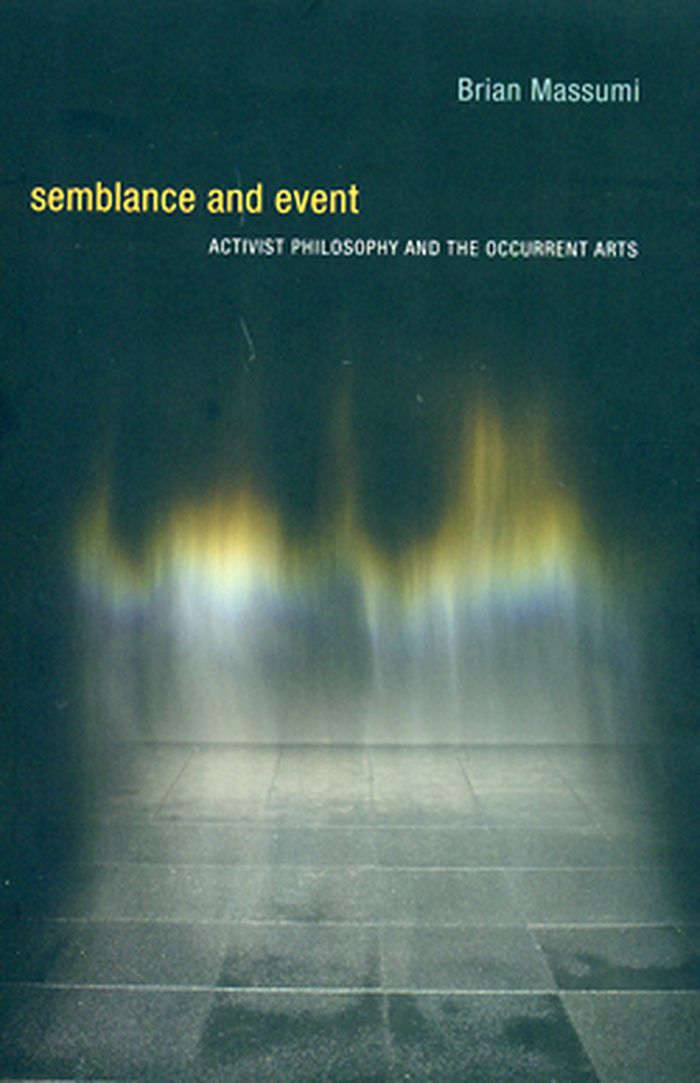
Events are always passing; to experience an event is to experience the passing. But how do we perceive an experience that encompasses the just-was and the is-about-to-be as much as what is actually present? In Semblance and Event, Brian Massumi, drawing on the work of William James, Alfred North Whitehead, Gilles Deleuze, and others, develops the concept of "semblance" as(...)
$32.95
(disponible sur commande)
Résumé:
Events are always passing; to experience an event is to experience the passing. But how do we perceive an experience that encompasses the just-was and the is-about-to-be as much as what is actually present? In Semblance and Event, Brian Massumi, drawing on the work of William James, Alfred North Whitehead, Gilles Deleuze, and others, develops the concept of "semblance" as(...)
Titre:
Semblance and event : activist philosophy and the occurrent arts
Actions:
Prix:
$32.95
(disponible sur commande)
Résumé:
Events are always passing; to experience an event is to experience the passing. But how do we perceive an experience that encompasses the just-was and the is-about-to-be as much as what is actually present? In Semblance and Event, Brian Massumi, drawing on the work of William James, Alfred North Whitehead, Gilles Deleuze, and others, develops the concept of "semblance" as a way to approach this question. It is, he argues, a question of abstraction, not as the opposite of the concrete but as a dimension of it: "lived abstraction." A semblance is a lived abstraction. Massumi uses the category of the semblance to investigate practices of art that are relational and event-oriented - variously known as interactive art, ephemeral art, performance art, art intervention - which he refers to collectively as the "occurrent arts."
Semblance and event : activist philosophy and the occurrent arts
Actions:
Prix:
$32.95
(disponible sur commande)
Résumé:
Events are always passing; to experience an event is to experience the passing. But how do we perceive an experience that encompasses the just-was and the is-about-to-be as much as what is actually present? In Semblance and Event, Brian Massumi, drawing on the work of William James, Alfred North Whitehead, Gilles Deleuze, and others, develops the concept of "semblance" as a way to approach this question. It is, he argues, a question of abstraction, not as the opposite of the concrete but as a dimension of it: "lived abstraction." A semblance is a lived abstraction. Massumi uses the category of the semblance to investigate practices of art that are relational and event-oriented - variously known as interactive art, ephemeral art, performance art, art intervention - which he refers to collectively as the "occurrent arts."
Classification:
livres
livres
Publication:
juillet 2011
juillet 2011
Sujet:
Théorie/ philosophie
Théorie/ philosophie


