


5204 Résultats
Niveau de description archivistique:
Projet
Projet
Numéro de référence:
AP018.S1.1970.PR05
Description:
This project series documents an expansion to a warehouse at the Toronto International Airport in Mississauga, Ontario in 1970. The office identified the project number as 70059. During this time, John B. Parkin Associates, and later John C. Parkin's new firm Parkin Architects Planners, were commissioned by the government Department of Transport Air Services to complete more than a dozen projects at the Toronto International Airport, including terminals one and two. This project consisted of an expansion of the existing cargo block B warehouse, with the planning of future expansions to this building and its adjacent offices. The project is recorded through reprographic copies of drawings dating from 1970, which include site and floor plans, details, sections, elevations and electrical drawings.
AP018.S1.1970.PR05
Description:
This project series documents an expansion to a warehouse at the Toronto International Airport in Mississauga, Ontario in 1970. The office identified the project number as 70059. During this time, John B. Parkin Associates, and later John C. Parkin's new firm Parkin Architects Planners, were commissioned by the government Department of Transport Air Services to complete more than a dozen projects at the Toronto International Airport, including terminals one and two. This project consisted of an expansion of the existing cargo block B warehouse, with the planning of future expansions to this building and its adjacent offices. The project is recorded through reprographic copies of drawings dating from 1970, which include site and floor plans, details, sections, elevations and electrical drawings.
Personnes et institutions:
Date:
1970
1970
Titre:
Warehouse Expansion Block B, Toronto International Airport, Mississauga, Ontario (1970)
Actions:
AP018.S1.1970.PR05
Description:
This project series documents an expansion to a warehouse at the Toronto International Airport in Mississauga, Ontario in 1970. The office identified the project number as 70059. During this time, John B. Parkin Associates, and later John C. Parkin's new firm Parkin Architects Planners, were commissioned by the government Department of Transport Air Services to complete more than a dozen projects at the Toronto International Airport, including terminals one and two. This project consisted of an expansion of the existing cargo block B warehouse, with the planning of future expansions to this building and its adjacent offices. The project is recorded through reprographic copies of drawings dating from 1970, which include site and floor plans, details, sections, elevations and electrical drawings.
Warehouse Expansion Block B, Toronto International Airport, Mississauga, Ontario (1970)
Actions:
AP018.S1.1970.PR05
Description:
This project series documents an expansion to a warehouse at the Toronto International Airport in Mississauga, Ontario in 1970. The office identified the project number as 70059. During this time, John B. Parkin Associates, and later John C. Parkin's new firm Parkin Architects Planners, were commissioned by the government Department of Transport Air Services to complete more than a dozen projects at the Toronto International Airport, including terminals one and two. This project consisted of an expansion of the existing cargo block B warehouse, with the planning of future expansions to this building and its adjacent offices. The project is recorded through reprographic copies of drawings dating from 1970, which include site and floor plans, details, sections, elevations and electrical drawings.
Niveau de description archivistique:
Project
Project
Date:
1970
1970
Personnes et institutions:
Niveau de description archivistique:
Projet
Projet
Numéro de référence:
AP018.S1.1983.PR14
Description:
This project series documents the National Aviation Museum which is part of Rockliffe Airport in Ottawa Ontario from 1983-1987. The office identified the project number as 8320. This project consisted of a building, commissioned by Public Works Canada, to house Canada's aviation museum collections. The basementless building was approximately five storeys in height, triangular shaped, and located between a runway and base building at the Rockcliffe Airport. This project is recorded through drawings, photographic materials and textual records dating from 1983-1987. The majority of the drawings are reprographic copies of details, arranged within the textual materials. Photographs and negative strips show the construction progress of the project. The textual records include correspondence, specifications, instructions to tenderers, schedules and financial documentation.
AP018.S1.1983.PR14
Description:
This project series documents the National Aviation Museum which is part of Rockliffe Airport in Ottawa Ontario from 1983-1987. The office identified the project number as 8320. This project consisted of a building, commissioned by Public Works Canada, to house Canada's aviation museum collections. The basementless building was approximately five storeys in height, triangular shaped, and located between a runway and base building at the Rockcliffe Airport. This project is recorded through drawings, photographic materials and textual records dating from 1983-1987. The majority of the drawings are reprographic copies of details, arranged within the textual materials. Photographs and negative strips show the construction progress of the project. The textual records include correspondence, specifications, instructions to tenderers, schedules and financial documentation.
Personnes et institutions:
Date:
1983-1987
1983-1987
Titre:
National Aviation Museum, Rockcliffe Airport, Ottawa, Ontario (1983-1987)
Actions:
AP018.S1.1983.PR14
Description:
This project series documents the National Aviation Museum which is part of Rockliffe Airport in Ottawa Ontario from 1983-1987. The office identified the project number as 8320. This project consisted of a building, commissioned by Public Works Canada, to house Canada's aviation museum collections. The basementless building was approximately five storeys in height, triangular shaped, and located between a runway and base building at the Rockcliffe Airport. This project is recorded through drawings, photographic materials and textual records dating from 1983-1987. The majority of the drawings are reprographic copies of details, arranged within the textual materials. Photographs and negative strips show the construction progress of the project. The textual records include correspondence, specifications, instructions to tenderers, schedules and financial documentation.
National Aviation Museum, Rockcliffe Airport, Ottawa, Ontario (1983-1987)
Actions:
AP018.S1.1983.PR14
Description:
This project series documents the National Aviation Museum which is part of Rockliffe Airport in Ottawa Ontario from 1983-1987. The office identified the project number as 8320. This project consisted of a building, commissioned by Public Works Canada, to house Canada's aviation museum collections. The basementless building was approximately five storeys in height, triangular shaped, and located between a runway and base building at the Rockcliffe Airport. This project is recorded through drawings, photographic materials and textual records dating from 1983-1987. The majority of the drawings are reprographic copies of details, arranged within the textual materials. Photographs and negative strips show the construction progress of the project. The textual records include correspondence, specifications, instructions to tenderers, schedules and financial documentation.
Niveau de description archivistique:
Project
Project
Date:
1983-1987
1983-1987
Personnes et institutions:
Classification:
expositions
expositions
Actions:
Description:
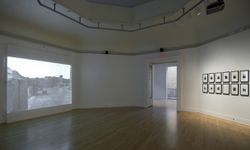
L’artiste conceptuel britannique Victor Burgin exerce une grande influence à la fois comme artiste et comme théoricien de l’image statique et mobile. Commandé par le CCA, Voyage en Italie comprend deux séries de photographies en noir et blanc, de même qu’une vidéo évocatrice, qui illustrent la beauté intemporelle et la résonance d’une photographie du XIXe siècle de Carlo(...)
L’artiste conceptuel britannique Victor Burgin exerce une grande influence à la fois comme artiste et comme théoricien de l’image statique et mobile. Commandé par le CCA, Voyage en Italie comprend deux séries de photographies en noir et blanc, de même qu’une vidéo évocatrice, qui illustrent la beauté intemporelle et la résonance d’une photographie du XIXe siècle de Carlo(...)
Localisation:
Salle octogonale
Salle octogonale
Date:
7 décembre 2006 au 25 mars 2007
7 décembre 2006 au 25 mars 2007
Titre:
Victor Burgin : voyage en Italie
Actions:
Description:
L’artiste conceptuel britannique Victor Burgin exerce une grande influence à la fois comme artiste et comme théoricien de l’image statique et mobile. Commandé par le CCA, Voyage en Italie comprend deux séries de photographies en noir et blanc, de même qu’une vidéo évocatrice, qui illustrent la beauté intemporelle et la résonance d’une photographie du XIXe siècle de Carlo(...)
Victor Burgin : voyage en Italie
Actions:
Description:
L’artiste conceptuel britannique Victor Burgin exerce une grande influence à la fois comme artiste et comme théoricien de l’image statique et mobile. Commandé par le CCA, Voyage en Italie comprend deux séries de photographies en noir et blanc, de même qu’une vidéo évocatrice, qui illustrent la beauté intemporelle et la résonance d’une photographie du XIXe siècle de Carlo(...)
Classification:
expositions
expositions
Date:
7 décembre 2006 au
25 mars 2007
7 décembre 2006 au
25 mars 2007
Localisation:
Salle octogonale
Salle octogonale
Classification:
archives
Niveau de description archivistique:
Collection
archives
Niveau de description archivistique:
Collection
Numéro de référence:
CI007
Résumé:
The Ludwig Mies van der Rohe and his students collection documents Mies's work as an architect, a designer and a consulting architect, between 1918 and 1981, as well as the work of his students at the Illinois Institute of Technology in Chicago, between 1938 and 1943. The collection is focussed on Mies's architectural projects and exhibition designs, mainly in Germany and in the United States.
CI007
Résumé:
The Ludwig Mies van der Rohe and his students collection documents Mies's work as an architect, a designer and a consulting architect, between 1918 and 1981, as well as the work of his students at the Illinois Institute of Technology in Chicago, between 1938 and 1943. The collection is focussed on Mies's architectural projects and exhibition designs, mainly in Germany and in the United States.
Personnes et institutions:
Date:
1918-2000
1918-2000
Titre:
Collection Ludwig Mies van der Rohe et ses étudiants
CI007
Résumé:
The Ludwig Mies van der Rohe and his students collection documents Mies's work as an architect, a designer and a consulting architect, between 1918 and 1981, as well as the work of his students at the Illinois Institute of Technology in Chicago, between 1938 and 1943. The collection is focussed on Mies's architectural projects and exhibition designs, mainly in Germany and in the United States.
Collection Ludwig Mies van der Rohe et ses étudiants
CI007
Résumé:
The Ludwig Mies van der Rohe and his students collection documents Mies's work as an architect, a designer and a consulting architect, between 1918 and 1981, as well as the work of his students at the Illinois Institute of Technology in Chicago, between 1938 and 1943. The collection is focussed on Mies's architectural projects and exhibition designs, mainly in Germany and in the United States.
Classification:
archives
Niveau de description archivistique:
Collection institutionnelle
archives
Niveau de description archivistique:
Collection institutionnelle
Date:
1918-2000
1918-2000
Personnes et institutions:
Niveau de description archivistique:
Projet
Projet
Actions:
Numéro de référence:
CI005.S1.1922.PR1
Description:
The city of Rotterdam in May 1922 commissioned a project to re-house homeless slum-dwellers and to alleviate Rotterdam's crisis in housing shortage: the housing unit was known as The Witte Dorp housing community, in the polder of Oud-Mathenesse. Oud designed the site plan and dwellings for this municipal housing project of 343 dwellings, eight shop units and a fire-engine shed. Oud created a geometric street plan with short axes that joined at the playground and townscape with identical facades of row houses facing one another. The houses were white with contrasting red roofs, blue front doors and yellow door frames and window casings (Taverne et al. 2001, 250). Project series includes drawings of plans and eighteen photographs, including exterior views and photographs of a plan.
CI005.S1.1922.PR1
Description:
The city of Rotterdam in May 1922 commissioned a project to re-house homeless slum-dwellers and to alleviate Rotterdam's crisis in housing shortage: the housing unit was known as The Witte Dorp housing community, in the polder of Oud-Mathenesse. Oud designed the site plan and dwellings for this municipal housing project of 343 dwellings, eight shop units and a fire-engine shed. Oud created a geometric street plan with short axes that joined at the playground and townscape with identical facades of row houses facing one another. The houses were white with contrasting red roofs, blue front doors and yellow door frames and window casings (Taverne et al. 2001, 250). Project series includes drawings of plans and eighteen photographs, including exterior views and photographs of a plan.
Personnes et institutions:
Date:
1922-1924
1922-1924
Titre:
Oud-Mathenesse Municipal Housing Scheme, Rotterdam, Netherlands (1922-1924)
Actions:
CI005.S1.1922.PR1
Description:
The city of Rotterdam in May 1922 commissioned a project to re-house homeless slum-dwellers and to alleviate Rotterdam's crisis in housing shortage: the housing unit was known as The Witte Dorp housing community, in the polder of Oud-Mathenesse. Oud designed the site plan and dwellings for this municipal housing project of 343 dwellings, eight shop units and a fire-engine shed. Oud created a geometric street plan with short axes that joined at the playground and townscape with identical facades of row houses facing one another. The houses were white with contrasting red roofs, blue front doors and yellow door frames and window casings (Taverne et al. 2001, 250). Project series includes drawings of plans and eighteen photographs, including exterior views and photographs of a plan.
Oud-Mathenesse Municipal Housing Scheme, Rotterdam, Netherlands (1922-1924)
Actions:
CI005.S1.1922.PR1
Description:
The city of Rotterdam in May 1922 commissioned a project to re-house homeless slum-dwellers and to alleviate Rotterdam's crisis in housing shortage: the housing unit was known as The Witte Dorp housing community, in the polder of Oud-Mathenesse. Oud designed the site plan and dwellings for this municipal housing project of 343 dwellings, eight shop units and a fire-engine shed. Oud created a geometric street plan with short axes that joined at the playground and townscape with identical facades of row houses facing one another. The houses were white with contrasting red roofs, blue front doors and yellow door frames and window casings (Taverne et al. 2001, 250). Project series includes drawings of plans and eighteen photographs, including exterior views and photographs of a plan.
Niveau de description archivistique:
project
project
Date:
1922-1924
1922-1924
Personnes et institutions:
Niveau de description archivistique:
Projet
Projet
Actions:
Numéro de référence:
CI005.S1.1925.PR1
Description:
The Rotterdam building inspectorate, Bouwpolite & Woningdienst, rejected the original plans for the design of the Café de Unie by a private developer, and instead commissioned Oud, as municipal architect, to design the building on Calandplein. This design marked a departure for Oud from public and private buildings to the design of a commercial building. Oud's design incorporated advertisement from its conception as he designed a facade of boards, cement, and glass with an illuminated sign – this was in keeping with the contemporary aesthetic of De Stijl, which explored creative uses of advertisement. Oud designed the signs to be turned inward, to draw attention away from the surrounding buildings, and incorporated bright colours (Taverne et al. 2001, 342). Project series includes drawings of plans as well as photographs of exterior views and of the principal facade of the Café de Unie.
CI005.S1.1925.PR1
Description:
The Rotterdam building inspectorate, Bouwpolite & Woningdienst, rejected the original plans for the design of the Café de Unie by a private developer, and instead commissioned Oud, as municipal architect, to design the building on Calandplein. This design marked a departure for Oud from public and private buildings to the design of a commercial building. Oud's design incorporated advertisement from its conception as he designed a facade of boards, cement, and glass with an illuminated sign – this was in keeping with the contemporary aesthetic of De Stijl, which explored creative uses of advertisement. Oud designed the signs to be turned inward, to draw attention away from the surrounding buildings, and incorporated bright colours (Taverne et al. 2001, 342). Project series includes drawings of plans as well as photographs of exterior views and of the principal facade of the Café de Unie.
Personnes et institutions:
Date:
1925
1925
Titre:
Café de Unie, Rotterdam, Netherlands (1925)
Actions:
CI005.S1.1925.PR1
Description:
The Rotterdam building inspectorate, Bouwpolite & Woningdienst, rejected the original plans for the design of the Café de Unie by a private developer, and instead commissioned Oud, as municipal architect, to design the building on Calandplein. This design marked a departure for Oud from public and private buildings to the design of a commercial building. Oud's design incorporated advertisement from its conception as he designed a facade of boards, cement, and glass with an illuminated sign – this was in keeping with the contemporary aesthetic of De Stijl, which explored creative uses of advertisement. Oud designed the signs to be turned inward, to draw attention away from the surrounding buildings, and incorporated bright colours (Taverne et al. 2001, 342). Project series includes drawings of plans as well as photographs of exterior views and of the principal facade of the Café de Unie.
Café de Unie, Rotterdam, Netherlands (1925)
Actions:
CI005.S1.1925.PR1
Description:
The Rotterdam building inspectorate, Bouwpolite & Woningdienst, rejected the original plans for the design of the Café de Unie by a private developer, and instead commissioned Oud, as municipal architect, to design the building on Calandplein. This design marked a departure for Oud from public and private buildings to the design of a commercial building. Oud's design incorporated advertisement from its conception as he designed a facade of boards, cement, and glass with an illuminated sign – this was in keeping with the contemporary aesthetic of De Stijl, which explored creative uses of advertisement. Oud designed the signs to be turned inward, to draw attention away from the surrounding buildings, and incorporated bright colours (Taverne et al. 2001, 342). Project series includes drawings of plans as well as photographs of exterior views and of the principal facade of the Café de Unie.
Niveau de description archivistique:
project
project
Date:
1925
1925
Personnes et institutions:
Niveau de description archivistique:
Projet
Projet
Actions:
Numéro de référence:
CI005.S1.1924.PR2
Description:
The village of Hoek van Holland – which had been annexed to Rotterdam in 1914 – successfully appealed to the city council in 1923 to develop public housing to address the city's shortage of affordable housing. Oud was commissioned to sketch 40 dwellings for working class residents. The original plan consisted of three separate rows of housing, which were later amended to two two-storey rows of housing. City council sent back the plans with a request to change the facade, but in 1925 accepted the original design before construction began in 1927. The design comprehended 41 dwellings, a library, four warehouses and four shop fronts with unique curved facades (Taverne et al. 2001, 260-265). Project series includes photographs of facades and exteriors of housing as well as plans.
CI005.S1.1924.PR2
Description:
The village of Hoek van Holland – which had been annexed to Rotterdam in 1914 – successfully appealed to the city council in 1923 to develop public housing to address the city's shortage of affordable housing. Oud was commissioned to sketch 40 dwellings for working class residents. The original plan consisted of three separate rows of housing, which were later amended to two two-storey rows of housing. City council sent back the plans with a request to change the facade, but in 1925 accepted the original design before construction began in 1927. The design comprehended 41 dwellings, a library, four warehouses and four shop fronts with unique curved facades (Taverne et al. 2001, 260-265). Project series includes photographs of facades and exteriors of housing as well as plans.
Personnes et institutions:
Date:
1924-1927
1924-1927
Titre:
Hoek van Holland Housing Scheme, Hoek van Holland, Netherlands (1924-1927)
Actions:
CI005.S1.1924.PR2
Description:
The village of Hoek van Holland – which had been annexed to Rotterdam in 1914 – successfully appealed to the city council in 1923 to develop public housing to address the city's shortage of affordable housing. Oud was commissioned to sketch 40 dwellings for working class residents. The original plan consisted of three separate rows of housing, which were later amended to two two-storey rows of housing. City council sent back the plans with a request to change the facade, but in 1925 accepted the original design before construction began in 1927. The design comprehended 41 dwellings, a library, four warehouses and four shop fronts with unique curved facades (Taverne et al. 2001, 260-265). Project series includes photographs of facades and exteriors of housing as well as plans.
Hoek van Holland Housing Scheme, Hoek van Holland, Netherlands (1924-1927)
Actions:
CI005.S1.1924.PR2
Description:
The village of Hoek van Holland – which had been annexed to Rotterdam in 1914 – successfully appealed to the city council in 1923 to develop public housing to address the city's shortage of affordable housing. Oud was commissioned to sketch 40 dwellings for working class residents. The original plan consisted of three separate rows of housing, which were later amended to two two-storey rows of housing. City council sent back the plans with a request to change the facade, but in 1925 accepted the original design before construction began in 1927. The design comprehended 41 dwellings, a library, four warehouses and four shop fronts with unique curved facades (Taverne et al. 2001, 260-265). Project series includes photographs of facades and exteriors of housing as well as plans.
Niveau de description archivistique:
project
project
Date:
1924-1927
1924-1927
Personnes et institutions:
Niveau de description archivistique:
Projet
Projet
Numéro de référence:
CI005.S1.1925.PR3
Description:
Because of the shortage of social housing for low income families in Rotterdam, the city commissioned the Kiefhoek housing scheme and invited Oud to assist with designing the dwellings. The plans underwent several revisions: it was reduced from the planned construction of 300 buildings in 1925, to 291 dwellings in 1928. The revised complex consisted of two units of shops and dwellings and one dwelling with a hotwater boiler, as well as two warehouses. Oud revised the plans to accommodate 300 dwellings on the chosen site, incorporating existing features, such as the church and public garden, into the site. The site features two symmetric and curved shops facing the central estate street (Taverne et al. 2001, 274-277). Project series includes drawings of plans for site and units as well as photographs of exterior and interior views of Kiefhoek Workers' housing.
CI005.S1.1925.PR3
Description:
Because of the shortage of social housing for low income families in Rotterdam, the city commissioned the Kiefhoek housing scheme and invited Oud to assist with designing the dwellings. The plans underwent several revisions: it was reduced from the planned construction of 300 buildings in 1925, to 291 dwellings in 1928. The revised complex consisted of two units of shops and dwellings and one dwelling with a hotwater boiler, as well as two warehouses. Oud revised the plans to accommodate 300 dwellings on the chosen site, incorporating existing features, such as the church and public garden, into the site. The site features two symmetric and curved shops facing the central estate street (Taverne et al. 2001, 274-277). Project series includes drawings of plans for site and units as well as photographs of exterior and interior views of Kiefhoek Workers' housing.
Personnes et institutions:
Date:
1925-1930
1925-1930
Titre:
Kiefhoek Workers' Housing, Rotterdam, Netherlands (1925-1930)
Actions:
CI005.S1.1925.PR3
Description:
Because of the shortage of social housing for low income families in Rotterdam, the city commissioned the Kiefhoek housing scheme and invited Oud to assist with designing the dwellings. The plans underwent several revisions: it was reduced from the planned construction of 300 buildings in 1925, to 291 dwellings in 1928. The revised complex consisted of two units of shops and dwellings and one dwelling with a hotwater boiler, as well as two warehouses. Oud revised the plans to accommodate 300 dwellings on the chosen site, incorporating existing features, such as the church and public garden, into the site. The site features two symmetric and curved shops facing the central estate street (Taverne et al. 2001, 274-277). Project series includes drawings of plans for site and units as well as photographs of exterior and interior views of Kiefhoek Workers' housing.
Kiefhoek Workers' Housing, Rotterdam, Netherlands (1925-1930)
Actions:
CI005.S1.1925.PR3
Description:
Because of the shortage of social housing for low income families in Rotterdam, the city commissioned the Kiefhoek housing scheme and invited Oud to assist with designing the dwellings. The plans underwent several revisions: it was reduced from the planned construction of 300 buildings in 1925, to 291 dwellings in 1928. The revised complex consisted of two units of shops and dwellings and one dwelling with a hotwater boiler, as well as two warehouses. Oud revised the plans to accommodate 300 dwellings on the chosen site, incorporating existing features, such as the church and public garden, into the site. The site features two symmetric and curved shops facing the central estate street (Taverne et al. 2001, 274-277). Project series includes drawings of plans for site and units as well as photographs of exterior and interior views of Kiefhoek Workers' housing.
Niveau de description archivistique:
project
project
Date:
1925-1930
1925-1930
Personnes et institutions:
Niveau de description archivistique:
Projet
Projet
Numéro de référence:
AP178.S1.1967.PR04
Description:
This project series documents the Casa Manuel Magalhães in Porto, Portugal. While the records were held in the office’s archives this project was assigned the number 29/60; in the past the office identified the project as number 119. The office assigned the dates 1967-1971 for this project. The project consisted of a concrete house located on Avenida dos Combatentes in Porto. There was no direct opening to the street and the building was surrounded by a cement wall. Client Manuel Magalhães commissioned the house as a rental home, but became personally involved during the construction and decided to move in with his family. In 2001, Siza designed an intercom for the house. Documenting this project are sketches, studies, plans, elevations, and details. Photographs, negatives, and slides document the site and building work. Textual documentation includes correspondence with the city of Porto, Manuel Magalhães and Fernando Teixeira Rodrigues.
AP178.S1.1967.PR04
Description:
This project series documents the Casa Manuel Magalhães in Porto, Portugal. While the records were held in the office’s archives this project was assigned the number 29/60; in the past the office identified the project as number 119. The office assigned the dates 1967-1971 for this project. The project consisted of a concrete house located on Avenida dos Combatentes in Porto. There was no direct opening to the street and the building was surrounded by a cement wall. Client Manuel Magalhães commissioned the house as a rental home, but became personally involved during the construction and decided to move in with his family. In 2001, Siza designed an intercom for the house. Documenting this project are sketches, studies, plans, elevations, and details. Photographs, negatives, and slides document the site and building work. Textual documentation includes correspondence with the city of Porto, Manuel Magalhães and Fernando Teixeira Rodrigues.
Personnes et institutions:
Date:
1967-2001
1967-2001
Titre:
Casa Manuel Magalhães [Manuel Magalhães house], Porto, Portugal (1967-1971)
Actions:
AP178.S1.1967.PR04
Description:
This project series documents the Casa Manuel Magalhães in Porto, Portugal. While the records were held in the office’s archives this project was assigned the number 29/60; in the past the office identified the project as number 119. The office assigned the dates 1967-1971 for this project. The project consisted of a concrete house located on Avenida dos Combatentes in Porto. There was no direct opening to the street and the building was surrounded by a cement wall. Client Manuel Magalhães commissioned the house as a rental home, but became personally involved during the construction and decided to move in with his family. In 2001, Siza designed an intercom for the house. Documenting this project are sketches, studies, plans, elevations, and details. Photographs, negatives, and slides document the site and building work. Textual documentation includes correspondence with the city of Porto, Manuel Magalhães and Fernando Teixeira Rodrigues.
Casa Manuel Magalhães [Manuel Magalhães house], Porto, Portugal (1967-1971)
Actions:
AP178.S1.1967.PR04
Description:
This project series documents the Casa Manuel Magalhães in Porto, Portugal. While the records were held in the office’s archives this project was assigned the number 29/60; in the past the office identified the project as number 119. The office assigned the dates 1967-1971 for this project. The project consisted of a concrete house located on Avenida dos Combatentes in Porto. There was no direct opening to the street and the building was surrounded by a cement wall. Client Manuel Magalhães commissioned the house as a rental home, but became personally involved during the construction and decided to move in with his family. In 2001, Siza designed an intercom for the house. Documenting this project are sketches, studies, plans, elevations, and details. Photographs, negatives, and slides document the site and building work. Textual documentation includes correspondence with the city of Porto, Manuel Magalhães and Fernando Teixeira Rodrigues.
Niveau de description archivistique:
Project
Project
Date:
1967-2001
1967-2001
Personnes et institutions:
Niveau de description archivistique:
Projet
Projet
Numéro de référence:
AP207.S1.1995.PR01
Description:
The project series documents Pettena's research and study for the restoration and conversion of the Tonnara dell’Enfola, the promontory of the Enfola in Portoferraio, Italy. The project, on which Pettena worked from 1995 to 2000, was commissioned by the Parco Nazionale of the Arcipelago Toscano. The project included the restoration and conversion of the 18th century former tuna factory building into a museum and a theme park. The project was not realized as the general plan for the project is yet to be defined. The project series contains a complete set of plans for Pettena's proposal, including site plans, elevations, sections and floor plans, and a report on the project. The project series also includes contracts, cost estimates, project descriptions, handwritten notes (possibly by Pettena), correspondence and a list of work for the project. It also contains research material such as reference photographs and a set of reference plans for the building.
AP207.S1.1995.PR01
Description:
The project series documents Pettena's research and study for the restoration and conversion of the Tonnara dell’Enfola, the promontory of the Enfola in Portoferraio, Italy. The project, on which Pettena worked from 1995 to 2000, was commissioned by the Parco Nazionale of the Arcipelago Toscano. The project included the restoration and conversion of the 18th century former tuna factory building into a museum and a theme park. The project was not realized as the general plan for the project is yet to be defined. The project series contains a complete set of plans for Pettena's proposal, including site plans, elevations, sections and floor plans, and a report on the project. The project series also includes contracts, cost estimates, project descriptions, handwritten notes (possibly by Pettena), correspondence and a list of work for the project. It also contains research material such as reference photographs and a set of reference plans for the building.
Personnes et institutions:
Date:
1995-2014
1995-2014
Titre:
Restauro E Riconversione dell’Edifico Storico "Tonnara dell’Enfola" [Restoration and Conversion of the Historic “Tonnara Dell’Enfola”], Portoferraio, Italy (1995)
Actions:
AP207.S1.1995.PR01
Description:
The project series documents Pettena's research and study for the restoration and conversion of the Tonnara dell’Enfola, the promontory of the Enfola in Portoferraio, Italy. The project, on which Pettena worked from 1995 to 2000, was commissioned by the Parco Nazionale of the Arcipelago Toscano. The project included the restoration and conversion of the 18th century former tuna factory building into a museum and a theme park. The project was not realized as the general plan for the project is yet to be defined. The project series contains a complete set of plans for Pettena's proposal, including site plans, elevations, sections and floor plans, and a report on the project. The project series also includes contracts, cost estimates, project descriptions, handwritten notes (possibly by Pettena), correspondence and a list of work for the project. It also contains research material such as reference photographs and a set of reference plans for the building.
Restauro E Riconversione dell’Edifico Storico "Tonnara dell’Enfola" [Restoration and Conversion of the Historic “Tonnara Dell’Enfola”], Portoferraio, Italy (1995)
Actions:
AP207.S1.1995.PR01
Description:
The project series documents Pettena's research and study for the restoration and conversion of the Tonnara dell’Enfola, the promontory of the Enfola in Portoferraio, Italy. The project, on which Pettena worked from 1995 to 2000, was commissioned by the Parco Nazionale of the Arcipelago Toscano. The project included the restoration and conversion of the 18th century former tuna factory building into a museum and a theme park. The project was not realized as the general plan for the project is yet to be defined. The project series contains a complete set of plans for Pettena's proposal, including site plans, elevations, sections and floor plans, and a report on the project. The project series also includes contracts, cost estimates, project descriptions, handwritten notes (possibly by Pettena), correspondence and a list of work for the project. It also contains research material such as reference photographs and a set of reference plans for the building.
Niveau de description archivistique:
Project
Project
Date:
1995-2014
1995-2014
Personnes et institutions:


