


3264 Résultats
Classification:
livres
livres
Actions:
Prix:
$143.00
(disponible sur commande)
Résumé:
The Stedelijk Museum opened its doors in 1895, the same year as the first Venice Biennale. It was a "quiet, civilized museum for the Amsterdam bourgeoisie in a time when there was nothing as troublesome as modern art." Initially, the museum exhibited the legacy of the eccentric Sophia Augusta de Bruyn, Douairière Lopez Suasso: a heterogeneous collection of antiques,(...)
$143.00
(disponible sur commande)
Résumé:
The Stedelijk Museum opened its doors in 1895, the same year as the first Venice Biennale. It was a "quiet, civilized museum for the Amsterdam bourgeoisie in a time when there was nothing as troublesome as modern art." Initially, the museum exhibited the legacy of the eccentric Sophia Augusta de Bruyn, Douairière Lopez Suasso: a heterogeneous collection of antiques,(...)
Sujet:
Design d’intérieur
Design d’intérieur
Publication:
août 2004, Amsterdam
août 2004, Amsterdam
Titre:
The furniture collection, Stedelijk Mueum, Amsterdam : 1850-2000 from Michael Thonet to Marcel Wanders
Actions:
Prix:
$143.00
(disponible sur commande)
Résumé:
The Stedelijk Museum opened its doors in 1895, the same year as the first Venice Biennale. It was a "quiet, civilized museum for the Amsterdam bourgeoisie in a time when there was nothing as troublesome as modern art." Initially, the museum exhibited the legacy of the eccentric Sophia Augusta de Bruyn, Douairière Lopez Suasso: a heterogeneous collection of antiques, coins, jewels, timepieces, silver knickknacks, and other curiosa. Period rooms, from canal houses that had been demolished when Raadhuisstraat was driven through, helped create a presentable whole. The museum's renowned furniture collection was not begun until 1934, but since then it has grown to include more than 1000 objects from circa 1850 to the present, with an accent on the twentieth century. Chairs, settees, tables, folding screens, cabinets, and even complete interiors are included.~This publication provides a comprehensive overview of the Stedelijk Museum’s furniture collecting activities from 1934 to 2000. It charts the museum's rich collection, which includes work by H.P. Berlage, K.P.C de Bazel, Piet Kramer, Gerrit T. Rietveld, Martin Visser, Piet Hein Eek, and Marcel Wanders, as well as international furniture classics designed by Michael Thonet, Charlotte Perriand, Ludwig Mies van der Rohe, Marcel Breuer, Joe Colombo, Arne Jacobsen, Ettore Sottsass, Philippe Starck, and Ron Arad. Besides a complete overview of the furniture collection, this annotated catalogue includes an introduction to the history of the collection and its exhibition activities. In addition, the volume explores various themes, such as international and Dutch icons, and contrasts and evolutions, in greater depth in a number of short essays.
The furniture collection, Stedelijk Mueum, Amsterdam : 1850-2000 from Michael Thonet to Marcel Wanders
Actions:
Prix:
$143.00
(disponible sur commande)
Résumé:
The Stedelijk Museum opened its doors in 1895, the same year as the first Venice Biennale. It was a "quiet, civilized museum for the Amsterdam bourgeoisie in a time when there was nothing as troublesome as modern art." Initially, the museum exhibited the legacy of the eccentric Sophia Augusta de Bruyn, Douairière Lopez Suasso: a heterogeneous collection of antiques, coins, jewels, timepieces, silver knickknacks, and other curiosa. Period rooms, from canal houses that had been demolished when Raadhuisstraat was driven through, helped create a presentable whole. The museum's renowned furniture collection was not begun until 1934, but since then it has grown to include more than 1000 objects from circa 1850 to the present, with an accent on the twentieth century. Chairs, settees, tables, folding screens, cabinets, and even complete interiors are included.~This publication provides a comprehensive overview of the Stedelijk Museum’s furniture collecting activities from 1934 to 2000. It charts the museum's rich collection, which includes work by H.P. Berlage, K.P.C de Bazel, Piet Kramer, Gerrit T. Rietveld, Martin Visser, Piet Hein Eek, and Marcel Wanders, as well as international furniture classics designed by Michael Thonet, Charlotte Perriand, Ludwig Mies van der Rohe, Marcel Breuer, Joe Colombo, Arne Jacobsen, Ettore Sottsass, Philippe Starck, and Ron Arad. Besides a complete overview of the furniture collection, this annotated catalogue includes an introduction to the history of the collection and its exhibition activities. In addition, the volume explores various themes, such as international and Dutch icons, and contrasts and evolutions, in greater depth in a number of short essays.
Classification:
livres
livres
Publication:
août 2004, Amsterdam
août 2004, Amsterdam
Sujet:
Design d’intérieur
Design d’intérieur
Classification:
livres
livres
Actions:
Prix:
$66.50
(disponible sur commande)
Résumé:
During the 1970s, the National Endowment for the Arts Photography Surveys granted money to photograph American cities at the bicentennial and years that followed. In “Through the Lens of the City: NEA Photography Surveys of the 1970s”, Mark Rice brings to light this long-neglected photographic endeavour. From 1976 to 1981, the NEA supported more than seventy projects(...)
$66.50
(disponible sur commande)
Résumé:
During the 1970s, the National Endowment for the Arts Photography Surveys granted money to photograph American cities at the bicentennial and years that followed. In “Through the Lens of the City: NEA Photography Surveys of the 1970s”, Mark Rice brings to light this long-neglected photographic endeavour. From 1976 to 1981, the NEA supported more than seventy projects(...)
Titre:
Through the lens of the city : NEA photography surveys of the 1970s
Actions:
Prix:
$66.50
(disponible sur commande)
Résumé:
During the 1970s, the National Endowment for the Arts Photography Surveys granted money to photograph American cities at the bicentennial and years that followed. In “Through the Lens of the City: NEA Photography Surveys of the 1970s”, Mark Rice brings to light this long-neglected photographic endeavour. From 1976 to 1981, the NEA supported more than seventy projects that examined a wide range of people and places in America. Artists involved included such well known photographers as Bruce Davidson, Lee Friedlander, and Joel Meyerowitz and many photographers who became widely known after their work with the surveys, such as Robert Adams, Joe Deal, Terry Evans, and Wendy Ewald. Rice argues that the NEA Photographic Surveys drew from two wells: a widespread sense of nostalgia and an intense public interest in photography. Looking at the works from eight key cities-Atlanta, Buffalo, Durham, East Baltimore, Galveston, Long Beach, Los Angeles, and Venice-the book uncovers marked differences as well as startling similarities in the concerns manifested by different photographers in far-flung places. Although the surveys are interesting both for their artistic merits and for their place in the history of American photography, they are equally important as a documentation of bicentennial-era America and a close examination of American cities. A major shift in the ideals of civil engineering and urban planning was underway in the 1970s. At the same time, ideas and theories about photography were changing along with our notions of what the city could and should be. These surveys, capturing American cities in a fascinating period of flux, show us American photographers matching artistry to subject matter in new and exciting ways.
Through the lens of the city : NEA photography surveys of the 1970s
Actions:
Prix:
$66.50
(disponible sur commande)
Résumé:
During the 1970s, the National Endowment for the Arts Photography Surveys granted money to photograph American cities at the bicentennial and years that followed. In “Through the Lens of the City: NEA Photography Surveys of the 1970s”, Mark Rice brings to light this long-neglected photographic endeavour. From 1976 to 1981, the NEA supported more than seventy projects that examined a wide range of people and places in America. Artists involved included such well known photographers as Bruce Davidson, Lee Friedlander, and Joel Meyerowitz and many photographers who became widely known after their work with the surveys, such as Robert Adams, Joe Deal, Terry Evans, and Wendy Ewald. Rice argues that the NEA Photographic Surveys drew from two wells: a widespread sense of nostalgia and an intense public interest in photography. Looking at the works from eight key cities-Atlanta, Buffalo, Durham, East Baltimore, Galveston, Long Beach, Los Angeles, and Venice-the book uncovers marked differences as well as startling similarities in the concerns manifested by different photographers in far-flung places. Although the surveys are interesting both for their artistic merits and for their place in the history of American photography, they are equally important as a documentation of bicentennial-era America and a close examination of American cities. A major shift in the ideals of civil engineering and urban planning was underway in the 1970s. At the same time, ideas and theories about photography were changing along with our notions of what the city could and should be. These surveys, capturing American cities in a fascinating period of flux, show us American photographers matching artistry to subject matter in new and exciting ways.
Classification:
livres
livres
Publication:
janvier 2005, Jackson, Mississippi
janvier 2005, Jackson, Mississippi
Sujet:
Théorie de la photographie
Théorie de la photographie
Classification:
livres
livres
Prix:
$29.95
(disponible sur commande)
Résumé:
Once considered a mere caretaker for collections, the curator is now widely viewed as a globally connected auteur. Over the last twenty-five years, as international group exhibitions and biennials have become the dominant mode of presenting contemporary art to the public, curatorship has begun to be perceived as a constellation of creative activities not unlike artistic(...)
$29.95
(disponible sur commande)
Résumé:
Once considered a mere caretaker for collections, the curator is now widely viewed as a globally connected auteur. Over the last twenty-five years, as international group exhibitions and biennials have become the dominant mode of presenting contemporary art to the public, curatorship has begun to be perceived as a constellation of creative activities not unlike artistic(...)
Titre:
The culture of curating and the curating of culture(s)
Actions:
Prix:
$29.95
(disponible sur commande)
Résumé:
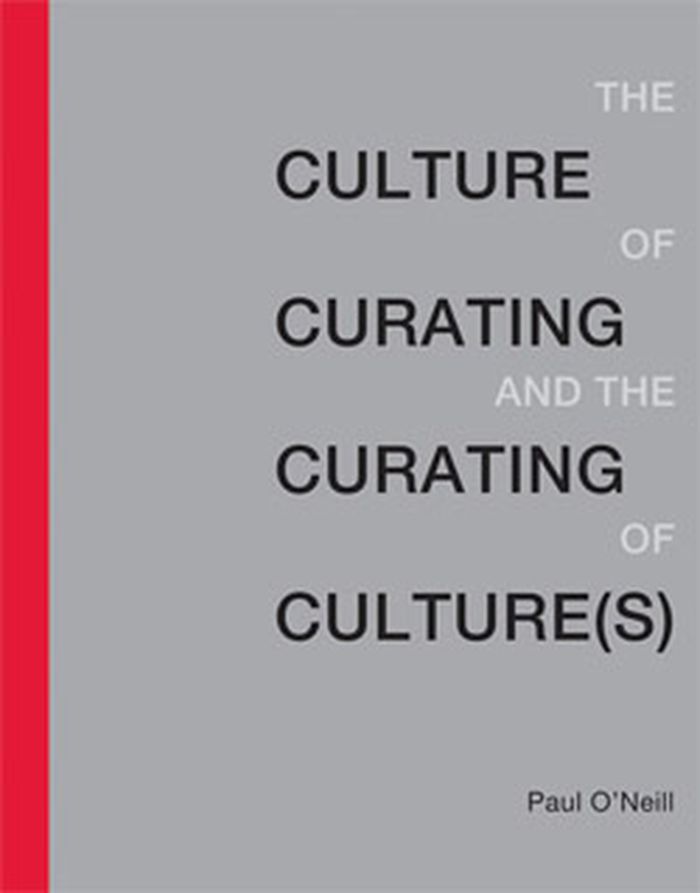
Once considered a mere caretaker for collections, the curator is now widely viewed as a globally connected auteur. Over the last twenty-five years, as international group exhibitions and biennials have become the dominant mode of presenting contemporary art to the public, curatorship has begun to be perceived as a constellation of creative activities not unlike artistic praxis. The curator has gone from being a behind-the-scenes organizer and selector to a visible, centrally important cultural producer. In The Culture of Curating and the Curating of Culture(s), Paul O’Neill examines the emergence of independent curatorship and the discourse that helped to establish it. O’Neill describes how, by the 1980s, curated group exhibitions - large-scale, temporary projects with artworks cast as illustrative fragments - came to be understood as the creative work of curator-auteurs. The proliferation of new biennials and other large international exhibitions in the 1990s created a cohort of high-profile, globally mobile curators, moving from Venice to Paris to Kassel. In the 1990s, curatorial and artistic practice converged, blurring the distinction between artist and curator. O’Neill argues that this change in the understanding of curatorship was shaped by a curator-centered discourse that effectively advocated - and authorized - the new independent curatorial practice. Drawing on the extensive curatorial literature and his own interviews with leading curators, critics, art historians, and artists, O’Neill traces the development of the curator-as-artist model and the ways it has been contested. The Culture of Curating and the Curating of Culture(s) documents the many ways in which our perception of art has been transformed by curating and the discourses surrounding it.
The culture of curating and the curating of culture(s)
Actions:
Prix:
$29.95
(disponible sur commande)
Résumé:
Once considered a mere caretaker for collections, the curator is now widely viewed as a globally connected auteur. Over the last twenty-five years, as international group exhibitions and biennials have become the dominant mode of presenting contemporary art to the public, curatorship has begun to be perceived as a constellation of creative activities not unlike artistic praxis. The curator has gone from being a behind-the-scenes organizer and selector to a visible, centrally important cultural producer. In The Culture of Curating and the Curating of Culture(s), Paul O’Neill examines the emergence of independent curatorship and the discourse that helped to establish it. O’Neill describes how, by the 1980s, curated group exhibitions - large-scale, temporary projects with artworks cast as illustrative fragments - came to be understood as the creative work of curator-auteurs. The proliferation of new biennials and other large international exhibitions in the 1990s created a cohort of high-profile, globally mobile curators, moving from Venice to Paris to Kassel. In the 1990s, curatorial and artistic practice converged, blurring the distinction between artist and curator. O’Neill argues that this change in the understanding of curatorship was shaped by a curator-centered discourse that effectively advocated - and authorized - the new independent curatorial practice. Drawing on the extensive curatorial literature and his own interviews with leading curators, critics, art historians, and artists, O’Neill traces the development of the curator-as-artist model and the ways it has been contested. The Culture of Curating and the Curating of Culture(s) documents the many ways in which our perception of art has been transformed by curating and the discourses surrounding it.
Classification:
livres
livres
Publication:
septembre 2012
septembre 2012
Sujet:
Muséologie
Muséologie
Classification:
livres
livres
Actions:
Prix:
$19.95
(disponible en magasin)
Résumé:
Ce Dictionnaire de l’artiste architecte et urbaniste Melvin Charney se pre´sente comme une collection de de´coupages d’articles de presse illustre´s d’une photographie, classe´s par se´ries the´matiques. Ces de´coupages, ou` compte surtout l’image, sont partiellement couverts de le´gers traits de peinture qui accentuent la valeur d’exposition de l’ensemble; le(...)
$19.95
(disponible en magasin)
Résumé:
Ce Dictionnaire de l’artiste architecte et urbaniste Melvin Charney se pre´sente comme une collection de de´coupages d’articles de presse illustre´s d’une photographie, classe´s par se´ries the´matiques. Ces de´coupages, ou` compte surtout l’image, sont partiellement couverts de le´gers traits de peinture qui accentuent la valeur d’exposition de l’ensemble; le(...)
Sujet:
Publications du CCA
Publications du CCA
Publication:
juin 2000, Montréal
juin 2000, Montréal
Titre:
Tracking images : Melvin Charney, un dictionnaire...
Actions:
Prix:
$19.95
(disponible en magasin)
Résumé:
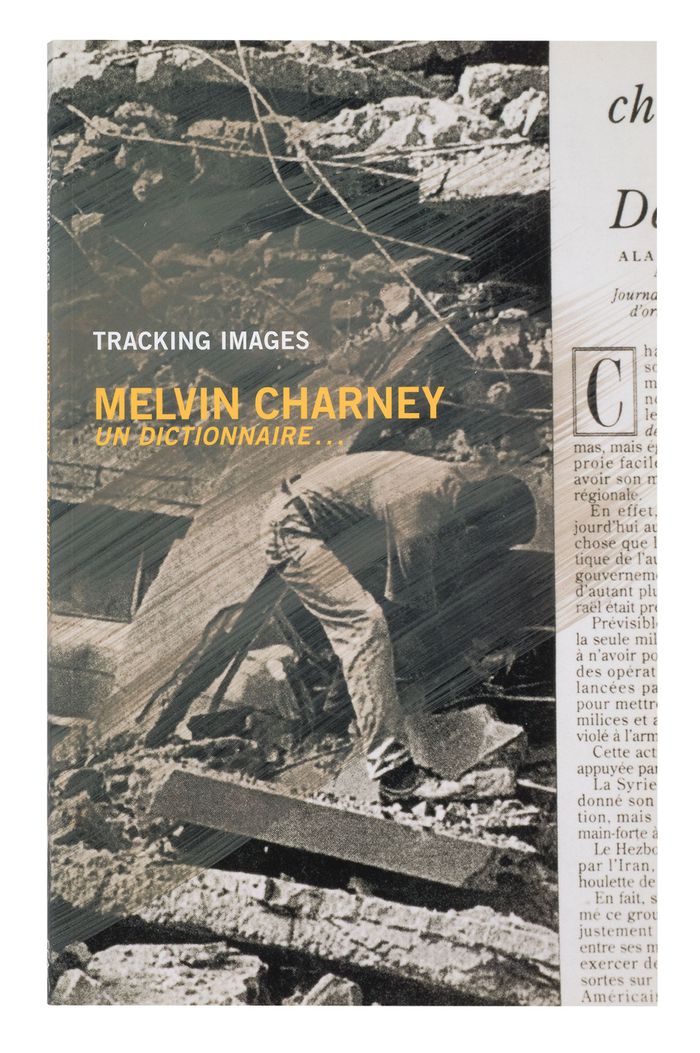
Ce Dictionnaire de l’artiste architecte et urbaniste Melvin Charney se pre´sente comme une collection de de´coupages d’articles de presse illustre´s d’une photographie, classe´s par se´ries the´matiques. Ces de´coupages, ou` compte surtout l’image, sont partiellement couverts de le´gers traits de peinture qui accentuent la valeur d’exposition de l’ensemble; le de´placement de la page imprime´e a` l’espace de la galerie ou du muse´e. Ce dictionnaire est une forme composite qui re´sulte d’une activite´ a` re´sonances multiples dans l’histoire des relations entre art et information, dans l’histoire de la critique architec- turale et dans celle de l’architecture critique. Les e´ve´nements fortuits que transmettent ces images collige´es par Charney nous forcent a` voir l’architecture dans un cadre qui n’est plus celui de sa repre´sentation comme construction monumentale isole´e. Cette publication accompagnait la participation canadienne a` la 7e Exposition internationale d’architecture de la Biennale de Venise, dont le the`me e´tait « La ville : moins d’esthe´tique, plus d’e´thique ». The Montre´al-based Canadian artist and architect Melvin Charney describes the history of modern architecture as a series of significant monuments that have been reproduced and documented. Here, the unexpected events transmitted by wire-service news photographs—selected, classified into various thematic areas, and collated by Charney—confront us with the shock or recognition that allows us to see architecture from outside its presentation as an isolated monument. The choices made by Charney from the ideas enclosed in the pre-packaged “news” images order them into a “dictionary,” and show the built and inhabited world as it appears through journalistic information. This publication accompanied the Canadian entry to the Venice Biennale’s 7th International Architecture Exhibition, whose theme was “The City: Less Aesthetics, More Ethics.”
Tracking images : Melvin Charney, un dictionnaire...
Actions:
Prix:
$19.95
(disponible en magasin)
Résumé:
Ce Dictionnaire de l’artiste architecte et urbaniste Melvin Charney se pre´sente comme une collection de de´coupages d’articles de presse illustre´s d’une photographie, classe´s par se´ries the´matiques. Ces de´coupages, ou` compte surtout l’image, sont partiellement couverts de le´gers traits de peinture qui accentuent la valeur d’exposition de l’ensemble; le de´placement de la page imprime´e a` l’espace de la galerie ou du muse´e. Ce dictionnaire est une forme composite qui re´sulte d’une activite´ a` re´sonances multiples dans l’histoire des relations entre art et information, dans l’histoire de la critique architec- turale et dans celle de l’architecture critique. Les e´ve´nements fortuits que transmettent ces images collige´es par Charney nous forcent a` voir l’architecture dans un cadre qui n’est plus celui de sa repre´sentation comme construction monumentale isole´e. Cette publication accompagnait la participation canadienne a` la 7e Exposition internationale d’architecture de la Biennale de Venise, dont le the`me e´tait « La ville : moins d’esthe´tique, plus d’e´thique ». The Montre´al-based Canadian artist and architect Melvin Charney describes the history of modern architecture as a series of significant monuments that have been reproduced and documented. Here, the unexpected events transmitted by wire-service news photographs—selected, classified into various thematic areas, and collated by Charney—confront us with the shock or recognition that allows us to see architecture from outside its presentation as an isolated monument. The choices made by Charney from the ideas enclosed in the pre-packaged “news” images order them into a “dictionary,” and show the built and inhabited world as it appears through journalistic information. This publication accompanied the Canadian entry to the Venice Biennale’s 7th International Architecture Exhibition, whose theme was “The City: Less Aesthetics, More Ethics.”
Classification:
livres
livres
Publication:
juin 2000, Montréal
juin 2000, Montréal
Sujet:
Publications du CCA
Publications du CCA


