


4031 Résultats
Classification:
documents textuels, photographies
documents textuels, photographies
Numéro de référence:
DR2012:0012:106:006
Description:
File containing documents in English (predominant) and French, including printouts, sketches, photographs, a slide, inventories of Melvin Charney's work, invoices, and notes related to the following projects: - Une oeuvre d'art publique à l'intersection de la rue Centre et de l'avenue Atwater dans le quartier Pointe St-Charles; - Usines, poteaux, maisons, drapeaux: célébration d'un quartier populaire ... Château d'eau d'usine dénoué; - In flight series ... TACA, Guatamala City, 1993; - In flight series ... an airbus on the ground at Warsaw Airport; - In flight series ... Libyan aircraft smolders at Entebbé; - In flight series ... Dienbienphu, May 7, 1954; - Rough cuts ... 4 studies; - Canada Memorial, Green Park, London ... study no. 8; - Toronto construction; - Floating houses ... Fabreville no. 2; - Floating houses ... Fabreville no. 3; - Floating houses ... Fabreville no. 4; - Floating houses ... Fabreville no. 5; - Floating houses ... Tree-House. Original folder inscribed in graphite: MC ARTWORK-CAT ENTRY NOTES
DR2012:0012:106:006
Description:
File containing documents in English (predominant) and French, including printouts, sketches, photographs, a slide, inventories of Melvin Charney's work, invoices, and notes related to the following projects: - Une oeuvre d'art publique à l'intersection de la rue Centre et de l'avenue Atwater dans le quartier Pointe St-Charles; - Usines, poteaux, maisons, drapeaux: célébration d'un quartier populaire ... Château d'eau d'usine dénoué; - In flight series ... TACA, Guatamala City, 1993; - In flight series ... an airbus on the ground at Warsaw Airport; - In flight series ... Libyan aircraft smolders at Entebbé; - In flight series ... Dienbienphu, May 7, 1954; - Rough cuts ... 4 studies; - Canada Memorial, Green Park, London ... study no. 8; - Toronto construction; - Floating houses ... Fabreville no. 2; - Floating houses ... Fabreville no. 3; - Floating houses ... Fabreville no. 4; - Floating houses ... Fabreville no. 5; - Floating houses ... Tree-House. Original folder inscribed in graphite: MC ARTWORK-CAT ENTRY NOTES
Personnes et institutions:
Date:
2009-2011
2009-2011
Titre:
Projects lists and invoices, notes, sketches and photographs related to various projects
Actions:
DR2012:0012:106:006
Description:
File containing documents in English (predominant) and French, including printouts, sketches, photographs, a slide, inventories of Melvin Charney's work, invoices, and notes related to the following projects: - Une oeuvre d'art publique à l'intersection de la rue Centre et de l'avenue Atwater dans le quartier Pointe St-Charles; - Usines, poteaux, maisons, drapeaux: célébration d'un quartier populaire ... Château d'eau d'usine dénoué; - In flight series ... TACA, Guatamala City, 1993; - In flight series ... an airbus on the ground at Warsaw Airport; - In flight series ... Libyan aircraft smolders at Entebbé; - In flight series ... Dienbienphu, May 7, 1954; - Rough cuts ... 4 studies; - Canada Memorial, Green Park, London ... study no. 8; - Toronto construction; - Floating houses ... Fabreville no. 2; - Floating houses ... Fabreville no. 3; - Floating houses ... Fabreville no. 4; - Floating houses ... Fabreville no. 5; - Floating houses ... Tree-House. Original folder inscribed in graphite: MC ARTWORK-CAT ENTRY NOTES
Projects lists and invoices, notes, sketches and photographs related to various projects
Actions:
DR2012:0012:106:006
Description:
File containing documents in English (predominant) and French, including printouts, sketches, photographs, a slide, inventories of Melvin Charney's work, invoices, and notes related to the following projects: - Une oeuvre d'art publique à l'intersection de la rue Centre et de l'avenue Atwater dans le quartier Pointe St-Charles; - Usines, poteaux, maisons, drapeaux: célébration d'un quartier populaire ... Château d'eau d'usine dénoué; - In flight series ... TACA, Guatamala City, 1993; - In flight series ... an airbus on the ground at Warsaw Airport; - In flight series ... Libyan aircraft smolders at Entebbé; - In flight series ... Dienbienphu, May 7, 1954; - Rough cuts ... 4 studies; - Canada Memorial, Green Park, London ... study no. 8; - Toronto construction; - Floating houses ... Fabreville no. 2; - Floating houses ... Fabreville no. 3; - Floating houses ... Fabreville no. 4; - Floating houses ... Fabreville no. 5; - Floating houses ... Tree-House. Original folder inscribed in graphite: MC ARTWORK-CAT ENTRY NOTES
Classification:
documents textuels, photographies
documents textuels, photographies
Date:
2009-2011
2009-2011
Personnes et institutions:
Classification:
archives
Niveau de description archivistique:
Fonds
archives
Niveau de description archivistique:
Fonds
Numéro de référence:
AP171
Résumé:
This fonds documents the professional practice and activities of the Foreign Office Architects between 1989 and 2011, with a primary focus on their architectural projects. The documents in the fonds include drawings and plans, photographic materials, presentation panels, models, textual records, and digital files relating to 192 projects and international exhibitions . Additionally, the fonds includes material relating to publications, office activities, and research.
AP171
Résumé:
This fonds documents the professional practice and activities of the Foreign Office Architects between 1989 and 2011, with a primary focus on their architectural projects. The documents in the fonds include drawings and plans, photographic materials, presentation panels, models, textual records, and digital files relating to 192 projects and international exhibitions . Additionally, the fonds includes material relating to publications, office activities, and research.
Personnes et institutions:
Date:
circa 1983-2011
circa 1983-2011
Titre:
Fonds Foreign Office Architects
Actions:
AP171
Résumé:
This fonds documents the professional practice and activities of the Foreign Office Architects between 1989 and 2011, with a primary focus on their architectural projects. The documents in the fonds include drawings and plans, photographic materials, presentation panels, models, textual records, and digital files relating to 192 projects and international exhibitions . Additionally, the fonds includes material relating to publications, office activities, and research.
Fonds Foreign Office Architects
Actions:
AP171
Résumé:
This fonds documents the professional practice and activities of the Foreign Office Architects between 1989 and 2011, with a primary focus on their architectural projects. The documents in the fonds include drawings and plans, photographic materials, presentation panels, models, textual records, and digital files relating to 192 projects and international exhibitions . Additionally, the fonds includes material relating to publications, office activities, and research.
Classification:
archives
Niveau de description archivistique:
Fonds
archives
Niveau de description archivistique:
Fonds
Date:
circa 1983-2011
circa 1983-2011
Personnes et institutions:
Classification:
dessins, oeuvres d'art
dessins, oeuvres d'art
Actions:
Numéro de référence:
DR1974:0002:014:001-104
Description:
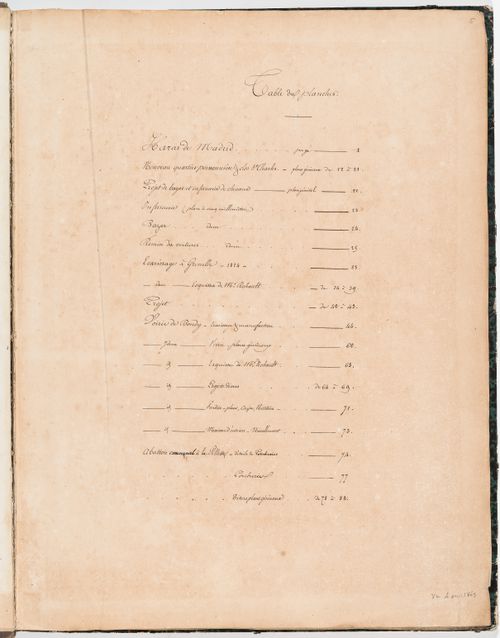
- This album contains drawings by Hubert and Charles Rohault de Fleury for six projects related to horses, with some pertaining to larger issues of urban development. The drawings range from design development drawings to highly finished renderings - mostly plans, elevations and sections. The proposed projects are in a pared-down classical style typical of the Rohault de Fleury's utilitarian structures. The projects include a stud-farm, Haras de Madrid, Bois de Boulogne (1819); a horse auction house (bazaar) and infirmary, Clos St. Charles, nouveau quartier Poissonnière, including studies for the development of the quartier (1823-1825); Clos d'équarrissage, fôret de Bondy (probably 1825-1827); and three projects for horse slaughterhouses: Plaine de Grenelle (1824), an unnamed project (probably between 1825 and 1827), and La Villette (1835-1836). Hubert's project for a stud-farm on the site of the old Château de Madrid consists mostly of highly finished plans, elevations, and sections for the stables (DR1974:0002:014:001 - DR1974:0002:014:013). Hubert's project for a horse auction house (bazaar) and infirmary for the Clos St. Charles area is apparently part of a larger project to develop the nouveau quartier Poissonnière (DR1974:0002:014:014 - DR1974:0002:014:029). The numerous site plans show the horse auction house (bazaar) and infirmary, proposed roads, and properties to be purchased and sold. Included is a property lots plan for the quartier (DR1974:0002:014:014). Hubert's Clos d'équarrissage is the most extensive project in the album. Forty-three finished drawings - including construction drawings and plans showing variant configurations for the disposition of buildings - depict a slaughterhouse, a factory for the preservation of muscles, buildings for the preservation and processing of offal, and workers' housing (DR1974:0002:014:051 - DR1974:0002:014:088, DR1974:0002:014:091 - DR1974:0002:014:093, DR1974:0002:014:095 and DR1974:002:014:096). Hubert's drawings for a horse slaughterhouse, Plaine de Grenelle, range from detailed design development drawings to highly finished site plans (DR1974:0002:014:030 - DR1974:0002:014:048) and a bird's-eye view of the slaughterhouse (DR1974:0002:014:033). The drawings for an unidentified slaughterhouse are possibly for this project (DR1974:0002:014:049 - DR1974:0002:014:051). Charles's project for a slaughterhouse at La Villette consists of variant site plans (DR1974:0002:014:089 - DR1974:00002:014:090, DR1974:0002:014:095, DR1974:0002:014:104).
DR1974:0002:014:001-104
Description:
- This album contains drawings by Hubert and Charles Rohault de Fleury for six projects related to horses, with some pertaining to larger issues of urban development. The drawings range from design development drawings to highly finished renderings - mostly plans, elevations and sections. The proposed projects are in a pared-down classical style typical of the Rohault de Fleury's utilitarian structures. The projects include a stud-farm, Haras de Madrid, Bois de Boulogne (1819); a horse auction house (bazaar) and infirmary, Clos St. Charles, nouveau quartier Poissonnière, including studies for the development of the quartier (1823-1825); Clos d'équarrissage, fôret de Bondy (probably 1825-1827); and three projects for horse slaughterhouses: Plaine de Grenelle (1824), an unnamed project (probably between 1825 and 1827), and La Villette (1835-1836). Hubert's project for a stud-farm on the site of the old Château de Madrid consists mostly of highly finished plans, elevations, and sections for the stables (DR1974:0002:014:001 - DR1974:0002:014:013). Hubert's project for a horse auction house (bazaar) and infirmary for the Clos St. Charles area is apparently part of a larger project to develop the nouveau quartier Poissonnière (DR1974:0002:014:014 - DR1974:0002:014:029). The numerous site plans show the horse auction house (bazaar) and infirmary, proposed roads, and properties to be purchased and sold. Included is a property lots plan for the quartier (DR1974:0002:014:014). Hubert's Clos d'équarrissage is the most extensive project in the album. Forty-three finished drawings - including construction drawings and plans showing variant configurations for the disposition of buildings - depict a slaughterhouse, a factory for the preservation of muscles, buildings for the preservation and processing of offal, and workers' housing (DR1974:0002:014:051 - DR1974:0002:014:088, DR1974:0002:014:091 - DR1974:0002:014:093, DR1974:0002:014:095 and DR1974:002:014:096). Hubert's drawings for a horse slaughterhouse, Plaine de Grenelle, range from detailed design development drawings to highly finished site plans (DR1974:0002:014:030 - DR1974:0002:014:048) and a bird's-eye view of the slaughterhouse (DR1974:0002:014:033). The drawings for an unidentified slaughterhouse are possibly for this project (DR1974:0002:014:049 - DR1974:0002:014:051). Charles's project for a slaughterhouse at La Villette consists of variant site plans (DR1974:0002:014:089 - DR1974:00002:014:090, DR1974:0002:014:095, DR1974:0002:014:104).
Personnes et institutions:
Sujet:
architecture, urbanisme
architecture, urbanisme
Date:
1835-1836, printed 1819-1827 ?
1835-1836, printed 1819-1827 ?
Titre:
Album of drawings for six projects related to horses: a stud-farm, an auction house and infirmary, and slaughterhouses, France
Actions:
DR1974:0002:014:001-104
Description:
- This album contains drawings by Hubert and Charles Rohault de Fleury for six projects related to horses, with some pertaining to larger issues of urban development. The drawings range from design development drawings to highly finished renderings - mostly plans, elevations and sections. The proposed projects are in a pared-down classical style typical of the Rohault de Fleury's utilitarian structures. The projects include a stud-farm, Haras de Madrid, Bois de Boulogne (1819); a horse auction house (bazaar) and infirmary, Clos St. Charles, nouveau quartier Poissonnière, including studies for the development of the quartier (1823-1825); Clos d'équarrissage, fôret de Bondy (probably 1825-1827); and three projects for horse slaughterhouses: Plaine de Grenelle (1824), an unnamed project (probably between 1825 and 1827), and La Villette (1835-1836). Hubert's project for a stud-farm on the site of the old Château de Madrid consists mostly of highly finished plans, elevations, and sections for the stables (DR1974:0002:014:001 - DR1974:0002:014:013). Hubert's project for a horse auction house (bazaar) and infirmary for the Clos St. Charles area is apparently part of a larger project to develop the nouveau quartier Poissonnière (DR1974:0002:014:014 - DR1974:0002:014:029). The numerous site plans show the horse auction house (bazaar) and infirmary, proposed roads, and properties to be purchased and sold. Included is a property lots plan for the quartier (DR1974:0002:014:014). Hubert's Clos d'équarrissage is the most extensive project in the album. Forty-three finished drawings - including construction drawings and plans showing variant configurations for the disposition of buildings - depict a slaughterhouse, a factory for the preservation of muscles, buildings for the preservation and processing of offal, and workers' housing (DR1974:0002:014:051 - DR1974:0002:014:088, DR1974:0002:014:091 - DR1974:0002:014:093, DR1974:0002:014:095 and DR1974:002:014:096). Hubert's drawings for a horse slaughterhouse, Plaine de Grenelle, range from detailed design development drawings to highly finished site plans (DR1974:0002:014:030 - DR1974:0002:014:048) and a bird's-eye view of the slaughterhouse (DR1974:0002:014:033). The drawings for an unidentified slaughterhouse are possibly for this project (DR1974:0002:014:049 - DR1974:0002:014:051). Charles's project for a slaughterhouse at La Villette consists of variant site plans (DR1974:0002:014:089 - DR1974:00002:014:090, DR1974:0002:014:095, DR1974:0002:014:104).
Album of drawings for six projects related to horses: a stud-farm, an auction house and infirmary, and slaughterhouses, France
Actions:
DR1974:0002:014:001-104
Description:
- This album contains drawings by Hubert and Charles Rohault de Fleury for six projects related to horses, with some pertaining to larger issues of urban development. The drawings range from design development drawings to highly finished renderings - mostly plans, elevations and sections. The proposed projects are in a pared-down classical style typical of the Rohault de Fleury's utilitarian structures. The projects include a stud-farm, Haras de Madrid, Bois de Boulogne (1819); a horse auction house (bazaar) and infirmary, Clos St. Charles, nouveau quartier Poissonnière, including studies for the development of the quartier (1823-1825); Clos d'équarrissage, fôret de Bondy (probably 1825-1827); and three projects for horse slaughterhouses: Plaine de Grenelle (1824), an unnamed project (probably between 1825 and 1827), and La Villette (1835-1836). Hubert's project for a stud-farm on the site of the old Château de Madrid consists mostly of highly finished plans, elevations, and sections for the stables (DR1974:0002:014:001 - DR1974:0002:014:013). Hubert's project for a horse auction house (bazaar) and infirmary for the Clos St. Charles area is apparently part of a larger project to develop the nouveau quartier Poissonnière (DR1974:0002:014:014 - DR1974:0002:014:029). The numerous site plans show the horse auction house (bazaar) and infirmary, proposed roads, and properties to be purchased and sold. Included is a property lots plan for the quartier (DR1974:0002:014:014). Hubert's Clos d'équarrissage is the most extensive project in the album. Forty-three finished drawings - including construction drawings and plans showing variant configurations for the disposition of buildings - depict a slaughterhouse, a factory for the preservation of muscles, buildings for the preservation and processing of offal, and workers' housing (DR1974:0002:014:051 - DR1974:0002:014:088, DR1974:0002:014:091 - DR1974:0002:014:093, DR1974:0002:014:095 and DR1974:002:014:096). Hubert's drawings for a horse slaughterhouse, Plaine de Grenelle, range from detailed design development drawings to highly finished site plans (DR1974:0002:014:030 - DR1974:0002:014:048) and a bird's-eye view of the slaughterhouse (DR1974:0002:014:033). The drawings for an unidentified slaughterhouse are possibly for this project (DR1974:0002:014:049 - DR1974:0002:014:051). Charles's project for a slaughterhouse at La Villette consists of variant site plans (DR1974:0002:014:089 - DR1974:00002:014:090, DR1974:0002:014:095, DR1974:0002:014:104).
Classification:
dessins, oeuvres d'art
dessins, oeuvres d'art
Date:
1835-1836, printed 1819-1827 ?
1835-1836, printed 1819-1827 ?
Personnes et institutions:
Sujet:
architecture, urbanisme
architecture, urbanisme
Niveau de description archivistique:
Série(s)
Série(s)
Numéro de référence:
AP144.S2
Description:
Series documents Cedric Price's projects from his early work in the late 1950s to work dating from the time he founded his own practice in 1960 until 2000. Material includes numerous competition entries, planning and building projects, transportation-related projects, exhibitions, conceptual projects, furniture and interior designs, and monuments, follies, and decorations. Some projects also reflect his teaching, research, lecture and publication activities. Price also worked on several competition juries (see projects Musique, Elephant). Many of Cedric Price's projects in the series are unexecuted. Significant unrealized projects from the 1960s and 1970s include Fun Palace (1961-1974), Potteries Thinkbelt (1963-1967), Oxford Corner House (1965-1966), and Generator (1976-1980). Significant built projects from the same period include the New Aviary (1960-1966), his first major realized project (with Lord Snowdon and Frank Newby), and Inter-Action Centre (1971-1979). Other realized projects include an office building (BTDB Computer, 1968-1973) and restaurant (Blackpool Project, 1971-1975). Planning projects from the 1960s and 1970s include Potteries Thinkbelt, Detroit Think Grid (1969-1971) and Rice University's design charette, Atom (1967). In the 1980s and 1990s, Cedric Price worked on several building proposals including greenhouses (Serre, Serre (2)), museums, galleries, and pavilions (Trafalgar, Pertpavs, Snake), a railway station (Strate (2)), a cultural centre (Tiff), houses (Perthut, Castel), a bus station (Walsall), an aviary (CP Aviary) and office buildings (Domain, Berlin). Planning projects from the same time include parks and cultural complexes, (Parc, South Bank), urban areas, (Strate, Stratton, IFPRI, Haven, Mills), university campuses (Frankfurt, Unibad, Bedford), and rural areas (Stark, Arkage). Transportation-related projects include railways (Strate, Control, Rink), roadways (Stratton) and pedestrian links (Magnet, Halmag, South Bank). Only a few of his projects from that period were executed and those include the renovation projects Congress and SAS 29; a mobile market stall design for Westminster City Council (Westal) for which prototypes were built; a coffee cup design (Crowbar); and building conversion projects Gatard and Juke. Exhibition projects in the series include some devoted to Cedric Price's works (AA Exhibition, Aedes, AFX, Afella), some designed by him (Strike, Food for the Future, Topolski/Waterloo, Ashmole, Mean, AFX), as well as projects designed for exhibition (Citlin, Castel). The series also contains self-financed research and client-less projects, which form a significant part of Cedric Price's practice. Undertaken in anticipation of future clients or new planning needs, they include research into air structures and lightweight enclosures as well as integrated construction and transportation solutions (Trucksafe Air Portable Dock Ahoy), and housing research. South Bank, Magnet, and Duck Land represent a few of the client-less projects. The material in this series documents Cedric Price's work in the United Kingdom, in particular England (the Greater London area, and other areas) and Scotland, Germany, France, Austria, Australia, Japan, the United Arab Emirates, and the United States and other locations such as Canada, Nigeria, and Norway. Major clients include J. Lyons & Co. (Oxford Corner House), David Keddie (Two Tree Island, Southend Roof), Howard Gilman (Generator), British Railways (Strate and Strate (2), and others), the McAlpine family , particularly Alistair McAlpine, and their company Sir Robert McAlpine & Sons Ltd. (McAppy, Perthut, Trafalgar, Pertpavs, Ashmole, Perth, Obeliq, McVance); Établissement Public du Parc de la Villette (Parc, Serre, Serre (2), Musique) and the Canadian Centre for Architecture (IFPRI, Mean). He collaborated with several architects and engineers during the course of his career, his closest association being with engineer Frank Newby and quantity surveyor Douglas Smith. Some of his other collaborators include engineer Max Fordham (Strate (2), Tiff, Berlin), engineering firms Scott Wilson Kirkpatrick and Partners (Stratton, Rink, Control), and Sir Frederick Snow & Partners (South Bank), cybernetician Gordon Pask (Kawasaki/Japnet), architectural firm YRM/Yorke Rosenberg Mardall (Unibad), and architect Richard Rogers (Marman). He also collaborated with members of Archigram on the Trondheim Competition, (1972-1974), and with John and Julia Frazer who provided the computer modelling for Generator. David Price, Cedric Price's brother was the model maker for several projects. The series contains conceptual drawings, design development drawings, reference drawings and maps, presentation drawings (particularly for competitions), and working drawings. A significant amount of textual records are included, especially for projects involving a large amount of research or publicity (Air Structures, Lightweight Enclosures, South Bank, CP Aviary, Stratton), for executed projects, and for the larger unrealized projects like Fun Palace and Generator. Also includes photographic materials of project sites and models. Some models included in the series are made from durable materials (wood, metal, plastic), while others are in-office constructions made out of paper, cardboard and Fome-Cor (TM). Of particular note are the 11 models for Magnet, and a full-size prototype of a market stall for Westal. Series also contains publication layouts, including material for the "Cedric Price Supplement", 'Architectural Design' vols. 40- 42 (1970-1972). Changes in office practice are noted around 1971, evident in the Blackpool Project and later, including the adoption of the metric system, and the creation of working and detail drawings on A4 size paper and filed with textual records (e.g. approximately 300 such drawings are included in the textual records for Blackpool Project). At the same time fewer preamble drawings that relate to site sensing, progress and life-cycle graphs and tables are created for the projects (a common feature from the 1960s), although project progress tables are still used. Of particular interest is material in the Early Work and Miscellaneous Records file (AP144.S2.D1) that relates to office work methods and programmes.
AP144.S2
Description:
Series documents Cedric Price's projects from his early work in the late 1950s to work dating from the time he founded his own practice in 1960 until 2000. Material includes numerous competition entries, planning and building projects, transportation-related projects, exhibitions, conceptual projects, furniture and interior designs, and monuments, follies, and decorations. Some projects also reflect his teaching, research, lecture and publication activities. Price also worked on several competition juries (see projects Musique, Elephant). Many of Cedric Price's projects in the series are unexecuted. Significant unrealized projects from the 1960s and 1970s include Fun Palace (1961-1974), Potteries Thinkbelt (1963-1967), Oxford Corner House (1965-1966), and Generator (1976-1980). Significant built projects from the same period include the New Aviary (1960-1966), his first major realized project (with Lord Snowdon and Frank Newby), and Inter-Action Centre (1971-1979). Other realized projects include an office building (BTDB Computer, 1968-1973) and restaurant (Blackpool Project, 1971-1975). Planning projects from the 1960s and 1970s include Potteries Thinkbelt, Detroit Think Grid (1969-1971) and Rice University's design charette, Atom (1967). In the 1980s and 1990s, Cedric Price worked on several building proposals including greenhouses (Serre, Serre (2)), museums, galleries, and pavilions (Trafalgar, Pertpavs, Snake), a railway station (Strate (2)), a cultural centre (Tiff), houses (Perthut, Castel), a bus station (Walsall), an aviary (CP Aviary) and office buildings (Domain, Berlin). Planning projects from the same time include parks and cultural complexes, (Parc, South Bank), urban areas, (Strate, Stratton, IFPRI, Haven, Mills), university campuses (Frankfurt, Unibad, Bedford), and rural areas (Stark, Arkage). Transportation-related projects include railways (Strate, Control, Rink), roadways (Stratton) and pedestrian links (Magnet, Halmag, South Bank). Only a few of his projects from that period were executed and those include the renovation projects Congress and SAS 29; a mobile market stall design for Westminster City Council (Westal) for which prototypes were built; a coffee cup design (Crowbar); and building conversion projects Gatard and Juke. Exhibition projects in the series include some devoted to Cedric Price's works (AA Exhibition, Aedes, AFX, Afella), some designed by him (Strike, Food for the Future, Topolski/Waterloo, Ashmole, Mean, AFX), as well as projects designed for exhibition (Citlin, Castel). The series also contains self-financed research and client-less projects, which form a significant part of Cedric Price's practice. Undertaken in anticipation of future clients or new planning needs, they include research into air structures and lightweight enclosures as well as integrated construction and transportation solutions (Trucksafe Air Portable Dock Ahoy), and housing research. South Bank, Magnet, and Duck Land represent a few of the client-less projects. The material in this series documents Cedric Price's work in the United Kingdom, in particular England (the Greater London area, and other areas) and Scotland, Germany, France, Austria, Australia, Japan, the United Arab Emirates, and the United States and other locations such as Canada, Nigeria, and Norway. Major clients include J. Lyons & Co. (Oxford Corner House), David Keddie (Two Tree Island, Southend Roof), Howard Gilman (Generator), British Railways (Strate and Strate (2), and others), the McAlpine family , particularly Alistair McAlpine, and their company Sir Robert McAlpine & Sons Ltd. (McAppy, Perthut, Trafalgar, Pertpavs, Ashmole, Perth, Obeliq, McVance); Établissement Public du Parc de la Villette (Parc, Serre, Serre (2), Musique) and the Canadian Centre for Architecture (IFPRI, Mean). He collaborated with several architects and engineers during the course of his career, his closest association being with engineer Frank Newby and quantity surveyor Douglas Smith. Some of his other collaborators include engineer Max Fordham (Strate (2), Tiff, Berlin), engineering firms Scott Wilson Kirkpatrick and Partners (Stratton, Rink, Control), and Sir Frederick Snow & Partners (South Bank), cybernetician Gordon Pask (Kawasaki/Japnet), architectural firm YRM/Yorke Rosenberg Mardall (Unibad), and architect Richard Rogers (Marman). He also collaborated with members of Archigram on the Trondheim Competition, (1972-1974), and with John and Julia Frazer who provided the computer modelling for Generator. David Price, Cedric Price's brother was the model maker for several projects. The series contains conceptual drawings, design development drawings, reference drawings and maps, presentation drawings (particularly for competitions), and working drawings. A significant amount of textual records are included, especially for projects involving a large amount of research or publicity (Air Structures, Lightweight Enclosures, South Bank, CP Aviary, Stratton), for executed projects, and for the larger unrealized projects like Fun Palace and Generator. Also includes photographic materials of project sites and models. Some models included in the series are made from durable materials (wood, metal, plastic), while others are in-office constructions made out of paper, cardboard and Fome-Cor (TM). Of particular note are the 11 models for Magnet, and a full-size prototype of a market stall for Westal. Series also contains publication layouts, including material for the "Cedric Price Supplement", 'Architectural Design' vols. 40- 42 (1970-1972). Changes in office practice are noted around 1971, evident in the Blackpool Project and later, including the adoption of the metric system, and the creation of working and detail drawings on A4 size paper and filed with textual records (e.g. approximately 300 such drawings are included in the textual records for Blackpool Project). At the same time fewer preamble drawings that relate to site sensing, progress and life-cycle graphs and tables are created for the projects (a common feature from the 1960s), although project progress tables are still used. Of particular interest is material in the Early Work and Miscellaneous Records file (AP144.S2.D1) that relates to office work methods and programmes.
Personnes et institutions:
Date:
1903-2003, predominant 1960-2000
1903-2003, predominant 1960-2000
Titre:
Projects
Actions:
AP144.S2
Description:
Series documents Cedric Price's projects from his early work in the late 1950s to work dating from the time he founded his own practice in 1960 until 2000. Material includes numerous competition entries, planning and building projects, transportation-related projects, exhibitions, conceptual projects, furniture and interior designs, and monuments, follies, and decorations. Some projects also reflect his teaching, research, lecture and publication activities. Price also worked on several competition juries (see projects Musique, Elephant). Many of Cedric Price's projects in the series are unexecuted. Significant unrealized projects from the 1960s and 1970s include Fun Palace (1961-1974), Potteries Thinkbelt (1963-1967), Oxford Corner House (1965-1966), and Generator (1976-1980). Significant built projects from the same period include the New Aviary (1960-1966), his first major realized project (with Lord Snowdon and Frank Newby), and Inter-Action Centre (1971-1979). Other realized projects include an office building (BTDB Computer, 1968-1973) and restaurant (Blackpool Project, 1971-1975). Planning projects from the 1960s and 1970s include Potteries Thinkbelt, Detroit Think Grid (1969-1971) and Rice University's design charette, Atom (1967). In the 1980s and 1990s, Cedric Price worked on several building proposals including greenhouses (Serre, Serre (2)), museums, galleries, and pavilions (Trafalgar, Pertpavs, Snake), a railway station (Strate (2)), a cultural centre (Tiff), houses (Perthut, Castel), a bus station (Walsall), an aviary (CP Aviary) and office buildings (Domain, Berlin). Planning projects from the same time include parks and cultural complexes, (Parc, South Bank), urban areas, (Strate, Stratton, IFPRI, Haven, Mills), university campuses (Frankfurt, Unibad, Bedford), and rural areas (Stark, Arkage). Transportation-related projects include railways (Strate, Control, Rink), roadways (Stratton) and pedestrian links (Magnet, Halmag, South Bank). Only a few of his projects from that period were executed and those include the renovation projects Congress and SAS 29; a mobile market stall design for Westminster City Council (Westal) for which prototypes were built; a coffee cup design (Crowbar); and building conversion projects Gatard and Juke. Exhibition projects in the series include some devoted to Cedric Price's works (AA Exhibition, Aedes, AFX, Afella), some designed by him (Strike, Food for the Future, Topolski/Waterloo, Ashmole, Mean, AFX), as well as projects designed for exhibition (Citlin, Castel). The series also contains self-financed research and client-less projects, which form a significant part of Cedric Price's practice. Undertaken in anticipation of future clients or new planning needs, they include research into air structures and lightweight enclosures as well as integrated construction and transportation solutions (Trucksafe Air Portable Dock Ahoy), and housing research. South Bank, Magnet, and Duck Land represent a few of the client-less projects. The material in this series documents Cedric Price's work in the United Kingdom, in particular England (the Greater London area, and other areas) and Scotland, Germany, France, Austria, Australia, Japan, the United Arab Emirates, and the United States and other locations such as Canada, Nigeria, and Norway. Major clients include J. Lyons & Co. (Oxford Corner House), David Keddie (Two Tree Island, Southend Roof), Howard Gilman (Generator), British Railways (Strate and Strate (2), and others), the McAlpine family , particularly Alistair McAlpine, and their company Sir Robert McAlpine & Sons Ltd. (McAppy, Perthut, Trafalgar, Pertpavs, Ashmole, Perth, Obeliq, McVance); Établissement Public du Parc de la Villette (Parc, Serre, Serre (2), Musique) and the Canadian Centre for Architecture (IFPRI, Mean). He collaborated with several architects and engineers during the course of his career, his closest association being with engineer Frank Newby and quantity surveyor Douglas Smith. Some of his other collaborators include engineer Max Fordham (Strate (2), Tiff, Berlin), engineering firms Scott Wilson Kirkpatrick and Partners (Stratton, Rink, Control), and Sir Frederick Snow & Partners (South Bank), cybernetician Gordon Pask (Kawasaki/Japnet), architectural firm YRM/Yorke Rosenberg Mardall (Unibad), and architect Richard Rogers (Marman). He also collaborated with members of Archigram on the Trondheim Competition, (1972-1974), and with John and Julia Frazer who provided the computer modelling for Generator. David Price, Cedric Price's brother was the model maker for several projects. The series contains conceptual drawings, design development drawings, reference drawings and maps, presentation drawings (particularly for competitions), and working drawings. A significant amount of textual records are included, especially for projects involving a large amount of research or publicity (Air Structures, Lightweight Enclosures, South Bank, CP Aviary, Stratton), for executed projects, and for the larger unrealized projects like Fun Palace and Generator. Also includes photographic materials of project sites and models. Some models included in the series are made from durable materials (wood, metal, plastic), while others are in-office constructions made out of paper, cardboard and Fome-Cor (TM). Of particular note are the 11 models for Magnet, and a full-size prototype of a market stall for Westal. Series also contains publication layouts, including material for the "Cedric Price Supplement", 'Architectural Design' vols. 40- 42 (1970-1972). Changes in office practice are noted around 1971, evident in the Blackpool Project and later, including the adoption of the metric system, and the creation of working and detail drawings on A4 size paper and filed with textual records (e.g. approximately 300 such drawings are included in the textual records for Blackpool Project). At the same time fewer preamble drawings that relate to site sensing, progress and life-cycle graphs and tables are created for the projects (a common feature from the 1960s), although project progress tables are still used. Of particular interest is material in the Early Work and Miscellaneous Records file (AP144.S2.D1) that relates to office work methods and programmes.
Projects
Actions:
AP144.S2
Description:
Series documents Cedric Price's projects from his early work in the late 1950s to work dating from the time he founded his own practice in 1960 until 2000. Material includes numerous competition entries, planning and building projects, transportation-related projects, exhibitions, conceptual projects, furniture and interior designs, and monuments, follies, and decorations. Some projects also reflect his teaching, research, lecture and publication activities. Price also worked on several competition juries (see projects Musique, Elephant). Many of Cedric Price's projects in the series are unexecuted. Significant unrealized projects from the 1960s and 1970s include Fun Palace (1961-1974), Potteries Thinkbelt (1963-1967), Oxford Corner House (1965-1966), and Generator (1976-1980). Significant built projects from the same period include the New Aviary (1960-1966), his first major realized project (with Lord Snowdon and Frank Newby), and Inter-Action Centre (1971-1979). Other realized projects include an office building (BTDB Computer, 1968-1973) and restaurant (Blackpool Project, 1971-1975). Planning projects from the 1960s and 1970s include Potteries Thinkbelt, Detroit Think Grid (1969-1971) and Rice University's design charette, Atom (1967). In the 1980s and 1990s, Cedric Price worked on several building proposals including greenhouses (Serre, Serre (2)), museums, galleries, and pavilions (Trafalgar, Pertpavs, Snake), a railway station (Strate (2)), a cultural centre (Tiff), houses (Perthut, Castel), a bus station (Walsall), an aviary (CP Aviary) and office buildings (Domain, Berlin). Planning projects from the same time include parks and cultural complexes, (Parc, South Bank), urban areas, (Strate, Stratton, IFPRI, Haven, Mills), university campuses (Frankfurt, Unibad, Bedford), and rural areas (Stark, Arkage). Transportation-related projects include railways (Strate, Control, Rink), roadways (Stratton) and pedestrian links (Magnet, Halmag, South Bank). Only a few of his projects from that period were executed and those include the renovation projects Congress and SAS 29; a mobile market stall design for Westminster City Council (Westal) for which prototypes were built; a coffee cup design (Crowbar); and building conversion projects Gatard and Juke. Exhibition projects in the series include some devoted to Cedric Price's works (AA Exhibition, Aedes, AFX, Afella), some designed by him (Strike, Food for the Future, Topolski/Waterloo, Ashmole, Mean, AFX), as well as projects designed for exhibition (Citlin, Castel). The series also contains self-financed research and client-less projects, which form a significant part of Cedric Price's practice. Undertaken in anticipation of future clients or new planning needs, they include research into air structures and lightweight enclosures as well as integrated construction and transportation solutions (Trucksafe Air Portable Dock Ahoy), and housing research. South Bank, Magnet, and Duck Land represent a few of the client-less projects. The material in this series documents Cedric Price's work in the United Kingdom, in particular England (the Greater London area, and other areas) and Scotland, Germany, France, Austria, Australia, Japan, the United Arab Emirates, and the United States and other locations such as Canada, Nigeria, and Norway. Major clients include J. Lyons & Co. (Oxford Corner House), David Keddie (Two Tree Island, Southend Roof), Howard Gilman (Generator), British Railways (Strate and Strate (2), and others), the McAlpine family , particularly Alistair McAlpine, and their company Sir Robert McAlpine & Sons Ltd. (McAppy, Perthut, Trafalgar, Pertpavs, Ashmole, Perth, Obeliq, McVance); Établissement Public du Parc de la Villette (Parc, Serre, Serre (2), Musique) and the Canadian Centre for Architecture (IFPRI, Mean). He collaborated with several architects and engineers during the course of his career, his closest association being with engineer Frank Newby and quantity surveyor Douglas Smith. Some of his other collaborators include engineer Max Fordham (Strate (2), Tiff, Berlin), engineering firms Scott Wilson Kirkpatrick and Partners (Stratton, Rink, Control), and Sir Frederick Snow & Partners (South Bank), cybernetician Gordon Pask (Kawasaki/Japnet), architectural firm YRM/Yorke Rosenberg Mardall (Unibad), and architect Richard Rogers (Marman). He also collaborated with members of Archigram on the Trondheim Competition, (1972-1974), and with John and Julia Frazer who provided the computer modelling for Generator. David Price, Cedric Price's brother was the model maker for several projects. The series contains conceptual drawings, design development drawings, reference drawings and maps, presentation drawings (particularly for competitions), and working drawings. A significant amount of textual records are included, especially for projects involving a large amount of research or publicity (Air Structures, Lightweight Enclosures, South Bank, CP Aviary, Stratton), for executed projects, and for the larger unrealized projects like Fun Palace and Generator. Also includes photographic materials of project sites and models. Some models included in the series are made from durable materials (wood, metal, plastic), while others are in-office constructions made out of paper, cardboard and Fome-Cor (TM). Of particular note are the 11 models for Magnet, and a full-size prototype of a market stall for Westal. Series also contains publication layouts, including material for the "Cedric Price Supplement", 'Architectural Design' vols. 40- 42 (1970-1972). Changes in office practice are noted around 1971, evident in the Blackpool Project and later, including the adoption of the metric system, and the creation of working and detail drawings on A4 size paper and filed with textual records (e.g. approximately 300 such drawings are included in the textual records for Blackpool Project). At the same time fewer preamble drawings that relate to site sensing, progress and life-cycle graphs and tables are created for the projects (a common feature from the 1960s), although project progress tables are still used. Of particular interest is material in the Early Work and Miscellaneous Records file (AP144.S2.D1) that relates to office work methods and programmes.
Niveau de description archivistique:
Series
Series
Date:
1903-2003, predominant 1960-2000
1903-2003, predominant 1960-2000
Personnes et institutions:
Niveau de description archivistique:
Sous-série
Sous-série
Numéro de référence:
CI001.S2.D5
Description:
Charles Rohault de Fleury was architect for the Muséum national d'histoire naturelle from 1833 to 1862. His work for the Muséum is represented in the CCA collection by a diverse group of prints and drawings. In addition to documenting his built and unbuilt projects, the inclusion of prints and drawings of museum and zoo buildings by other architects record, if only partially, the resources available to Charles in designing his buildings. This reference material provides insight into the influences on Charles' work as well as the nature of the design process itself. His built works, with the exception of the 1854 addition to the greenhouses, are illustrated in a book of prints with a brief accompanying text - "Muséum d'histoire naturelle: serres chaudes, galeries de minéralogie, etc. etc." (published 1837) (DR1974:0002:004:001; a second copy is held by the CCA library) (1). While prints are included for the Galerie de minéralogie et de géologie, the monkey house and the reservoirs, the majority of the prints are of the greenhouses (serres chaudes) begun 1833 (2). Known for their technological innovations in iron construction, these greenhouses utilized the first multi-storey load-bearing cast-iron façades for the central pavilions as well as space frame roof structures and prefabricated parts. This structural system is well documented in the prints in the CCA collection. The design was apparently inspired by the English greenhouses - a plate of which are included in the book - that Charles saw on a tour of England. The use of prestressed beams and curved roofs in the lateral wings attest to this influence. Charles' greenhouses, in turn, influenced the design of other greenhouses in Europe especially those at the Jardins Botanique in Liège and Ghent, Belgium (3). Although Joseph Paxton saw the greenhouses in 1833, it is unclear if they had an impact on the design of the Crystal Palace constructed 1850-1851 (4). The innovations of Charles' greenhouses continued to be acknowledged into the 20th century. Giedion in "Space, Time and Architecture", while erroneously attributing them to Rouhault (5)(6), refers to the greenhouses as "the prototype of all large iron-framed conservatories" (7). In addition to the greenhouses for the Muséum, the CCA collection includes three proposals (dated 1841) for a private greenhouse designed by Charles Rohault de Fleury (DR1974:0002:002:008 - DR1974:0002:002:013). The designs utilize the same curved roofs as the wings of the greenhouses at the Muséum combined with classically detailed stonework. An different aspect of Charles' work for the Muséum national d'histoire naturelle is represented in the album of unexecuted proposals -the only design drawings for the Muséum in the collection - for a Galerie de zoologie (DR1974:0002:024:001-079). Building on the typology of his earlier classical Galerie de minéralogie et de géologie (constructed 1833 -1841), the proposals, which date from between 1838 and 1862, illustrate a gradual enrichment of Charles' classical architectural vocabulary (8). They vary in their spatial configurations and façade treatments ranging from austere colonnaded designs with little ornament to more elaborate ones with richly encrusted facades, complex rooflines and more dramatic interior spaces characteristic of the Second Empire. The majority of the proposals consist of preliminary drawings illustrating the essential formal, spatial and ornamental aspects of the building. One proposal, dated January 1846, is substantially more developed than the others; in addition to general plans, sections and elevations, more detailed drawings are included for the layout of spaces, the elaboration of the facades, the configuration of the structure and even the designs for the specimen display cases. It is also worth noting that this album includes several plans outlining Rohault de Fleury's ideas for the overall development of the Muséum national d'histoire naturelle. In 1846, an album of prints of the Museo di fiscia e storia naturelle in Florence (DR1974:0002:005:001-018) was presented to Charles by the Grand Duke of Tuscany in response to his request for tracings of that building. These prints were probably used as reference material for the design of the new Galerie de zoologie described above. The portfolio of record drawings (ca. 1862) of the zoos in Antwerp, Brussels, Marseille and Amsterdam (DR1974:0002:018:001-027) is probably a dummy for a publication on zoological gardens as well as background documentation for the renovation and expansion of the zoo at the Muséum national d'histoire naturelle in Paris. Both drawings of the facilities for the animals and visitors and general plans of the zoological gardens are included. The Paris zoo project was apparently never undertaken. (1) These prints were reused in the "Oeuvre de C. Rohault de Fleury, architecte" (published 1884) (DR1974:0002:029:001-044). (2) Rohault de Fleury's greenhouses were destroyed in the Prussian bombardments of 1870. The greenhouses, which now stand in their place, are similar in layout and appearance to the original design, but their structural system is different. (3) John Hix, 'The Glass House' (Cambridge, Mass.: The MIT Press, 1981), p. 115. (4) Ibid., p. 115. (5) This error has been repeated by other authors including Henry-Russell Hitchcock, 'Architecture: Nineteenth and Twentieth Centuries' (Baltimore, Maryland: Penguin Books, 1968), p. 120. (6) Leonardo Benevolo, 'History of Modern Architecture' Volume 1: The tradition of modern architecture (Cambridge, Mass.: The M.I.T. Press, 1971), p. 22. (7) Sigfried Giedion, 'Space, Time and Architecture; the growth of a new tradition' (Cambridge: Harvard University Press, 1941), p. 181. (8) Barry Bergdoll, "Charles Rohault de Fleury: Part two: Muséum d'Histoire Naturelle and Studies on analogous Constructions in Europe", 'CCA Research Report", n.d., p. 1.
CI001.S2.D5
Description:
Charles Rohault de Fleury was architect for the Muséum national d'histoire naturelle from 1833 to 1862. His work for the Muséum is represented in the CCA collection by a diverse group of prints and drawings. In addition to documenting his built and unbuilt projects, the inclusion of prints and drawings of museum and zoo buildings by other architects record, if only partially, the resources available to Charles in designing his buildings. This reference material provides insight into the influences on Charles' work as well as the nature of the design process itself. His built works, with the exception of the 1854 addition to the greenhouses, are illustrated in a book of prints with a brief accompanying text - "Muséum d'histoire naturelle: serres chaudes, galeries de minéralogie, etc. etc." (published 1837) (DR1974:0002:004:001; a second copy is held by the CCA library) (1). While prints are included for the Galerie de minéralogie et de géologie, the monkey house and the reservoirs, the majority of the prints are of the greenhouses (serres chaudes) begun 1833 (2). Known for their technological innovations in iron construction, these greenhouses utilized the first multi-storey load-bearing cast-iron façades for the central pavilions as well as space frame roof structures and prefabricated parts. This structural system is well documented in the prints in the CCA collection. The design was apparently inspired by the English greenhouses - a plate of which are included in the book - that Charles saw on a tour of England. The use of prestressed beams and curved roofs in the lateral wings attest to this influence. Charles' greenhouses, in turn, influenced the design of other greenhouses in Europe especially those at the Jardins Botanique in Liège and Ghent, Belgium (3). Although Joseph Paxton saw the greenhouses in 1833, it is unclear if they had an impact on the design of the Crystal Palace constructed 1850-1851 (4). The innovations of Charles' greenhouses continued to be acknowledged into the 20th century. Giedion in "Space, Time and Architecture", while erroneously attributing them to Rouhault (5)(6), refers to the greenhouses as "the prototype of all large iron-framed conservatories" (7). In addition to the greenhouses for the Muséum, the CCA collection includes three proposals (dated 1841) for a private greenhouse designed by Charles Rohault de Fleury (DR1974:0002:002:008 - DR1974:0002:002:013). The designs utilize the same curved roofs as the wings of the greenhouses at the Muséum combined with classically detailed stonework. An different aspect of Charles' work for the Muséum national d'histoire naturelle is represented in the album of unexecuted proposals -the only design drawings for the Muséum in the collection - for a Galerie de zoologie (DR1974:0002:024:001-079). Building on the typology of his earlier classical Galerie de minéralogie et de géologie (constructed 1833 -1841), the proposals, which date from between 1838 and 1862, illustrate a gradual enrichment of Charles' classical architectural vocabulary (8). They vary in their spatial configurations and façade treatments ranging from austere colonnaded designs with little ornament to more elaborate ones with richly encrusted facades, complex rooflines and more dramatic interior spaces characteristic of the Second Empire. The majority of the proposals consist of preliminary drawings illustrating the essential formal, spatial and ornamental aspects of the building. One proposal, dated January 1846, is substantially more developed than the others; in addition to general plans, sections and elevations, more detailed drawings are included for the layout of spaces, the elaboration of the facades, the configuration of the structure and even the designs for the specimen display cases. It is also worth noting that this album includes several plans outlining Rohault de Fleury's ideas for the overall development of the Muséum national d'histoire naturelle. In 1846, an album of prints of the Museo di fiscia e storia naturelle in Florence (DR1974:0002:005:001-018) was presented to Charles by the Grand Duke of Tuscany in response to his request for tracings of that building. These prints were probably used as reference material for the design of the new Galerie de zoologie described above. The portfolio of record drawings (ca. 1862) of the zoos in Antwerp, Brussels, Marseille and Amsterdam (DR1974:0002:018:001-027) is probably a dummy for a publication on zoological gardens as well as background documentation for the renovation and expansion of the zoo at the Muséum national d'histoire naturelle in Paris. Both drawings of the facilities for the animals and visitors and general plans of the zoological gardens are included. The Paris zoo project was apparently never undertaken. (1) These prints were reused in the "Oeuvre de C. Rohault de Fleury, architecte" (published 1884) (DR1974:0002:029:001-044). (2) Rohault de Fleury's greenhouses were destroyed in the Prussian bombardments of 1870. The greenhouses, which now stand in their place, are similar in layout and appearance to the original design, but their structural system is different. (3) John Hix, 'The Glass House' (Cambridge, Mass.: The MIT Press, 1981), p. 115. (4) Ibid., p. 115. (5) This error has been repeated by other authors including Henry-Russell Hitchcock, 'Architecture: Nineteenth and Twentieth Centuries' (Baltimore, Maryland: Penguin Books, 1968), p. 120. (6) Leonardo Benevolo, 'History of Modern Architecture' Volume 1: The tradition of modern architecture (Cambridge, Mass.: The M.I.T. Press, 1971), p. 22. (7) Sigfried Giedion, 'Space, Time and Architecture; the growth of a new tradition' (Cambridge: Harvard University Press, 1941), p. 181. (8) Barry Bergdoll, "Charles Rohault de Fleury: Part two: Muséum d'Histoire Naturelle and Studies on analogous Constructions in Europe", 'CCA Research Report", n.d., p. 1.
Personnes et institutions:
Date:
[1837-ca. 1862]
[1837-ca. 1862]
Titre:
Muséum nationale d'histoire naturelle
CI001.S2.D5
Description:
Charles Rohault de Fleury was architect for the Muséum national d'histoire naturelle from 1833 to 1862. His work for the Muséum is represented in the CCA collection by a diverse group of prints and drawings. In addition to documenting his built and unbuilt projects, the inclusion of prints and drawings of museum and zoo buildings by other architects record, if only partially, the resources available to Charles in designing his buildings. This reference material provides insight into the influences on Charles' work as well as the nature of the design process itself. His built works, with the exception of the 1854 addition to the greenhouses, are illustrated in a book of prints with a brief accompanying text - "Muséum d'histoire naturelle: serres chaudes, galeries de minéralogie, etc. etc." (published 1837) (DR1974:0002:004:001; a second copy is held by the CCA library) (1). While prints are included for the Galerie de minéralogie et de géologie, the monkey house and the reservoirs, the majority of the prints are of the greenhouses (serres chaudes) begun 1833 (2). Known for their technological innovations in iron construction, these greenhouses utilized the first multi-storey load-bearing cast-iron façades for the central pavilions as well as space frame roof structures and prefabricated parts. This structural system is well documented in the prints in the CCA collection. The design was apparently inspired by the English greenhouses - a plate of which are included in the book - that Charles saw on a tour of England. The use of prestressed beams and curved roofs in the lateral wings attest to this influence. Charles' greenhouses, in turn, influenced the design of other greenhouses in Europe especially those at the Jardins Botanique in Liège and Ghent, Belgium (3). Although Joseph Paxton saw the greenhouses in 1833, it is unclear if they had an impact on the design of the Crystal Palace constructed 1850-1851 (4). The innovations of Charles' greenhouses continued to be acknowledged into the 20th century. Giedion in "Space, Time and Architecture", while erroneously attributing them to Rouhault (5)(6), refers to the greenhouses as "the prototype of all large iron-framed conservatories" (7). In addition to the greenhouses for the Muséum, the CCA collection includes three proposals (dated 1841) for a private greenhouse designed by Charles Rohault de Fleury (DR1974:0002:002:008 - DR1974:0002:002:013). The designs utilize the same curved roofs as the wings of the greenhouses at the Muséum combined with classically detailed stonework. An different aspect of Charles' work for the Muséum national d'histoire naturelle is represented in the album of unexecuted proposals -the only design drawings for the Muséum in the collection - for a Galerie de zoologie (DR1974:0002:024:001-079). Building on the typology of his earlier classical Galerie de minéralogie et de géologie (constructed 1833 -1841), the proposals, which date from between 1838 and 1862, illustrate a gradual enrichment of Charles' classical architectural vocabulary (8). They vary in their spatial configurations and façade treatments ranging from austere colonnaded designs with little ornament to more elaborate ones with richly encrusted facades, complex rooflines and more dramatic interior spaces characteristic of the Second Empire. The majority of the proposals consist of preliminary drawings illustrating the essential formal, spatial and ornamental aspects of the building. One proposal, dated January 1846, is substantially more developed than the others; in addition to general plans, sections and elevations, more detailed drawings are included for the layout of spaces, the elaboration of the facades, the configuration of the structure and even the designs for the specimen display cases. It is also worth noting that this album includes several plans outlining Rohault de Fleury's ideas for the overall development of the Muséum national d'histoire naturelle. In 1846, an album of prints of the Museo di fiscia e storia naturelle in Florence (DR1974:0002:005:001-018) was presented to Charles by the Grand Duke of Tuscany in response to his request for tracings of that building. These prints were probably used as reference material for the design of the new Galerie de zoologie described above. The portfolio of record drawings (ca. 1862) of the zoos in Antwerp, Brussels, Marseille and Amsterdam (DR1974:0002:018:001-027) is probably a dummy for a publication on zoological gardens as well as background documentation for the renovation and expansion of the zoo at the Muséum national d'histoire naturelle in Paris. Both drawings of the facilities for the animals and visitors and general plans of the zoological gardens are included. The Paris zoo project was apparently never undertaken. (1) These prints were reused in the "Oeuvre de C. Rohault de Fleury, architecte" (published 1884) (DR1974:0002:029:001-044). (2) Rohault de Fleury's greenhouses were destroyed in the Prussian bombardments of 1870. The greenhouses, which now stand in their place, are similar in layout and appearance to the original design, but their structural system is different. (3) John Hix, 'The Glass House' (Cambridge, Mass.: The MIT Press, 1981), p. 115. (4) Ibid., p. 115. (5) This error has been repeated by other authors including Henry-Russell Hitchcock, 'Architecture: Nineteenth and Twentieth Centuries' (Baltimore, Maryland: Penguin Books, 1968), p. 120. (6) Leonardo Benevolo, 'History of Modern Architecture' Volume 1: The tradition of modern architecture (Cambridge, Mass.: The M.I.T. Press, 1971), p. 22. (7) Sigfried Giedion, 'Space, Time and Architecture; the growth of a new tradition' (Cambridge: Harvard University Press, 1941), p. 181. (8) Barry Bergdoll, "Charles Rohault de Fleury: Part two: Muséum d'Histoire Naturelle and Studies on analogous Constructions in Europe", 'CCA Research Report", n.d., p. 1.
Muséum nationale d'histoire naturelle
CI001.S2.D5
Description:
Charles Rohault de Fleury was architect for the Muséum national d'histoire naturelle from 1833 to 1862. His work for the Muséum is represented in the CCA collection by a diverse group of prints and drawings. In addition to documenting his built and unbuilt projects, the inclusion of prints and drawings of museum and zoo buildings by other architects record, if only partially, the resources available to Charles in designing his buildings. This reference material provides insight into the influences on Charles' work as well as the nature of the design process itself. His built works, with the exception of the 1854 addition to the greenhouses, are illustrated in a book of prints with a brief accompanying text - "Muséum d'histoire naturelle: serres chaudes, galeries de minéralogie, etc. etc." (published 1837) (DR1974:0002:004:001; a second copy is held by the CCA library) (1). While prints are included for the Galerie de minéralogie et de géologie, the monkey house and the reservoirs, the majority of the prints are of the greenhouses (serres chaudes) begun 1833 (2). Known for their technological innovations in iron construction, these greenhouses utilized the first multi-storey load-bearing cast-iron façades for the central pavilions as well as space frame roof structures and prefabricated parts. This structural system is well documented in the prints in the CCA collection. The design was apparently inspired by the English greenhouses - a plate of which are included in the book - that Charles saw on a tour of England. The use of prestressed beams and curved roofs in the lateral wings attest to this influence. Charles' greenhouses, in turn, influenced the design of other greenhouses in Europe especially those at the Jardins Botanique in Liège and Ghent, Belgium (3). Although Joseph Paxton saw the greenhouses in 1833, it is unclear if they had an impact on the design of the Crystal Palace constructed 1850-1851 (4). The innovations of Charles' greenhouses continued to be acknowledged into the 20th century. Giedion in "Space, Time and Architecture", while erroneously attributing them to Rouhault (5)(6), refers to the greenhouses as "the prototype of all large iron-framed conservatories" (7). In addition to the greenhouses for the Muséum, the CCA collection includes three proposals (dated 1841) for a private greenhouse designed by Charles Rohault de Fleury (DR1974:0002:002:008 - DR1974:0002:002:013). The designs utilize the same curved roofs as the wings of the greenhouses at the Muséum combined with classically detailed stonework. An different aspect of Charles' work for the Muséum national d'histoire naturelle is represented in the album of unexecuted proposals -the only design drawings for the Muséum in the collection - for a Galerie de zoologie (DR1974:0002:024:001-079). Building on the typology of his earlier classical Galerie de minéralogie et de géologie (constructed 1833 -1841), the proposals, which date from between 1838 and 1862, illustrate a gradual enrichment of Charles' classical architectural vocabulary (8). They vary in their spatial configurations and façade treatments ranging from austere colonnaded designs with little ornament to more elaborate ones with richly encrusted facades, complex rooflines and more dramatic interior spaces characteristic of the Second Empire. The majority of the proposals consist of preliminary drawings illustrating the essential formal, spatial and ornamental aspects of the building. One proposal, dated January 1846, is substantially more developed than the others; in addition to general plans, sections and elevations, more detailed drawings are included for the layout of spaces, the elaboration of the facades, the configuration of the structure and even the designs for the specimen display cases. It is also worth noting that this album includes several plans outlining Rohault de Fleury's ideas for the overall development of the Muséum national d'histoire naturelle. In 1846, an album of prints of the Museo di fiscia e storia naturelle in Florence (DR1974:0002:005:001-018) was presented to Charles by the Grand Duke of Tuscany in response to his request for tracings of that building. These prints were probably used as reference material for the design of the new Galerie de zoologie described above. The portfolio of record drawings (ca. 1862) of the zoos in Antwerp, Brussels, Marseille and Amsterdam (DR1974:0002:018:001-027) is probably a dummy for a publication on zoological gardens as well as background documentation for the renovation and expansion of the zoo at the Muséum national d'histoire naturelle in Paris. Both drawings of the facilities for the animals and visitors and general plans of the zoological gardens are included. The Paris zoo project was apparently never undertaken. (1) These prints were reused in the "Oeuvre de C. Rohault de Fleury, architecte" (published 1884) (DR1974:0002:029:001-044). (2) Rohault de Fleury's greenhouses were destroyed in the Prussian bombardments of 1870. The greenhouses, which now stand in their place, are similar in layout and appearance to the original design, but their structural system is different. (3) John Hix, 'The Glass House' (Cambridge, Mass.: The MIT Press, 1981), p. 115. (4) Ibid., p. 115. (5) This error has been repeated by other authors including Henry-Russell Hitchcock, 'Architecture: Nineteenth and Twentieth Centuries' (Baltimore, Maryland: Penguin Books, 1968), p. 120. (6) Leonardo Benevolo, 'History of Modern Architecture' Volume 1: The tradition of modern architecture (Cambridge, Mass.: The M.I.T. Press, 1971), p. 22. (7) Sigfried Giedion, 'Space, Time and Architecture; the growth of a new tradition' (Cambridge: Harvard University Press, 1941), p. 181. (8) Barry Bergdoll, "Charles Rohault de Fleury: Part two: Muséum d'Histoire Naturelle and Studies on analogous Constructions in Europe", 'CCA Research Report", n.d., p. 1.
Niveau de description archivistique:
File 5
File 5
Date:
[1837-ca. 1862]
[1837-ca. 1862]
Personnes et institutions:
Classification:
archives
Niveau de description archivistique:
Fonds
archives
Niveau de description archivistique:
Fonds
Titre:
Fonds Shim-Sutcliffe
Fonds Shim-Sutcliffe
Numéro de référence:
AP110
Résumé:
The Shim-Sutcliffe fonds documents the work of the architectural firm Shim-Sutcliffe. The fonds includes drawings, models, and objects related to architectural projects dating from 1988-2009.
AP110
Résumé:
The Shim-Sutcliffe fonds documents the work of the architectural firm Shim-Sutcliffe. The fonds includes drawings, models, and objects related to architectural projects dating from 1988-2009.
Personnes et institutions:
Date:
1988-2009
1988-2009
Titre:
Fonds Shim-Sutcliffe
Actions:
AP110
Résumé:
The Shim-Sutcliffe fonds documents the work of the architectural firm Shim-Sutcliffe. The fonds includes drawings, models, and objects related to architectural projects dating from 1988-2009.
Fonds Shim-Sutcliffe
Actions:
AP110
Résumé:
The Shim-Sutcliffe fonds documents the work of the architectural firm Shim-Sutcliffe. The fonds includes drawings, models, and objects related to architectural projects dating from 1988-2009.
Classification:
archives
Niveau de description archivistique:
Fonds
archives
Niveau de description archivistique:
Fonds
Date:
1988-2009
1988-2009
Personnes et institutions:
Niveau de description archivistique:
Projet
Projet
Titre:
Generator
Generator
Numéro de référence:
AP144.S2.D100
Description:
File documents Generator, an unexecuted project for the Gilman Paper Company, at the White Oak Plantation, in Yulee, Florida. After an initial investigation Cedric Price proposed a complex that could accommodate company activities, cultural events, and artist residencies and would provide "a menu of items for individual and group demands of space, control, containment and delight. A place to work, create, think, and stare." ('Architectural Review', Jan. 1980, 16). The design called for timber-framed structures with variable infill panels and cladding, along with screens, to be placed on a grid of concrete pads by cranes with the help of computers in response to users' needs. Conceptual, schematic and design development drawings show grid placement, site layout, landscaping, designs for cubes and components, proposed activities, axonometric views, and design notes with sketches. Development sketches, site plans, and charts include site analysis examining future growth, activity charts, shadow study plans, and axonometric details. Drawings of the structures include: plans, elevations, details, and perspective views for cubes, screens, and cladding; shadow studies for cube variations; and axonometric views of cube arrangements. Other drawings include: site plans and sections; landscaping and parking layouts; plans for circulation patterns; drawings for boardwalks; and electrical and drainage plans. Charts study design validity, activities, networks, project feasibility, component life-cycle, and cube and component placement/construction sequencing. Computer generated printouts by John Frazer, et al show perspective views of cubes from various viewpoints. Two sets of annotated reprographic copies show details for a typical cube and the foundation. Presentation and publication materials include: photographs and reprographic copies of design models; coloured reprographic copies of computer parts and facilities; a coloured air-brushed rendering of cubes and screens by "Jeremie '77"; two perspective renderings; and reprographic copies made from published material. Some material in this file was published in 'Building Design', 23 February 1979; 'Building Design', 9 November 1979; 'Architectural Review' (January 1980), 16-17; 'L'Architecture d'Aujourd'hui', December 1980; 'Techniques et Architecture', December 1980; 'Design', January 1981; 'New Scientist', 19 March 1981; 'Schemes: Cedric Price' (ex. cat.; London: Waddington Galleries, 1981); 'Cedric Price-Works II' (London: Architectural Press, 1984), 90, 92-97. Material in this file was produced between 1959 and 1995, but predominantly between 1976 and 1980. Main consultants for Generator in the United Kingdom include Felix J. Samuely & Partners, consulting engineers; Baker, Wilkins and Smith, quantity surveyors; John Frazer, computer modelling and systems; Sandy Brown Associates, acoustic consultants. Main consultants in the United States include Marvin Boutwell; Law Engineering Testing Company as consulting engineers; and WTCA; Robertson Ward Jr., as architects. Computer printouts in group DR1995:0280:538-552 in Generator (AP144.S2.D100) are attributed to John and Julia Frazer, Art and Design Research, Ulster Polytechnic and the Department of Architecture, Liverpool Polytechnic. Some material in group DR1995:0280:567-576 is attributed to Felix J. Samuely & Partners. File contains conceptual drawings, design, development drawings, presentation drawings, photographic materials, boxes, an artefact, models, and textual records.
AP144.S2.D100
Description:
File documents Generator, an unexecuted project for the Gilman Paper Company, at the White Oak Plantation, in Yulee, Florida. After an initial investigation Cedric Price proposed a complex that could accommodate company activities, cultural events, and artist residencies and would provide "a menu of items for individual and group demands of space, control, containment and delight. A place to work, create, think, and stare." ('Architectural Review', Jan. 1980, 16). The design called for timber-framed structures with variable infill panels and cladding, along with screens, to be placed on a grid of concrete pads by cranes with the help of computers in response to users' needs. Conceptual, schematic and design development drawings show grid placement, site layout, landscaping, designs for cubes and components, proposed activities, axonometric views, and design notes with sketches. Development sketches, site plans, and charts include site analysis examining future growth, activity charts, shadow study plans, and axonometric details. Drawings of the structures include: plans, elevations, details, and perspective views for cubes, screens, and cladding; shadow studies for cube variations; and axonometric views of cube arrangements. Other drawings include: site plans and sections; landscaping and parking layouts; plans for circulation patterns; drawings for boardwalks; and electrical and drainage plans. Charts study design validity, activities, networks, project feasibility, component life-cycle, and cube and component placement/construction sequencing. Computer generated printouts by John Frazer, et al show perspective views of cubes from various viewpoints. Two sets of annotated reprographic copies show details for a typical cube and the foundation. Presentation and publication materials include: photographs and reprographic copies of design models; coloured reprographic copies of computer parts and facilities; a coloured air-brushed rendering of cubes and screens by "Jeremie '77"; two perspective renderings; and reprographic copies made from published material. Some material in this file was published in 'Building Design', 23 February 1979; 'Building Design', 9 November 1979; 'Architectural Review' (January 1980), 16-17; 'L'Architecture d'Aujourd'hui', December 1980; 'Techniques et Architecture', December 1980; 'Design', January 1981; 'New Scientist', 19 March 1981; 'Schemes: Cedric Price' (ex. cat.; London: Waddington Galleries, 1981); 'Cedric Price-Works II' (London: Architectural Press, 1984), 90, 92-97. Material in this file was produced between 1959 and 1995, but predominantly between 1976 and 1980. Main consultants for Generator in the United Kingdom include Felix J. Samuely & Partners, consulting engineers; Baker, Wilkins and Smith, quantity surveyors; John Frazer, computer modelling and systems; Sandy Brown Associates, acoustic consultants. Main consultants in the United States include Marvin Boutwell; Law Engineering Testing Company as consulting engineers; and WTCA; Robertson Ward Jr., as architects. Computer printouts in group DR1995:0280:538-552 in Generator (AP144.S2.D100) are attributed to John and Julia Frazer, Art and Design Research, Ulster Polytechnic and the Department of Architecture, Liverpool Polytechnic. Some material in group DR1995:0280:567-576 is attributed to Felix J. Samuely & Partners. File contains conceptual drawings, design, development drawings, presentation drawings, photographic materials, boxes, an artefact, models, and textual records.
Personnes et institutions:
Date:
1959-1995, predominant 1976-1980
1959-1995, predominant 1976-1980
Titre:
Generator
Actions:
AP144.S2.D100
Description:
File documents Generator, an unexecuted project for the Gilman Paper Company, at the White Oak Plantation, in Yulee, Florida. After an initial investigation Cedric Price proposed a complex that could accommodate company activities, cultural events, and artist residencies and would provide "a menu of items for individual and group demands of space, control, containment and delight. A place to work, create, think, and stare." ('Architectural Review', Jan. 1980, 16). The design called for timber-framed structures with variable infill panels and cladding, along with screens, to be placed on a grid of concrete pads by cranes with the help of computers in response to users' needs. Conceptual, schematic and design development drawings show grid placement, site layout, landscaping, designs for cubes and components, proposed activities, axonometric views, and design notes with sketches. Development sketches, site plans, and charts include site analysis examining future growth, activity charts, shadow study plans, and axonometric details. Drawings of the structures include: plans, elevations, details, and perspective views for cubes, screens, and cladding; shadow studies for cube variations; and axonometric views of cube arrangements. Other drawings include: site plans and sections; landscaping and parking layouts; plans for circulation patterns; drawings for boardwalks; and electrical and drainage plans. Charts study design validity, activities, networks, project feasibility, component life-cycle, and cube and component placement/construction sequencing. Computer generated printouts by John Frazer, et al show perspective views of cubes from various viewpoints. Two sets of annotated reprographic copies show details for a typical cube and the foundation. Presentation and publication materials include: photographs and reprographic copies of design models; coloured reprographic copies of computer parts and facilities; a coloured air-brushed rendering of cubes and screens by "Jeremie '77"; two perspective renderings; and reprographic copies made from published material. Some material in this file was published in 'Building Design', 23 February 1979; 'Building Design', 9 November 1979; 'Architectural Review' (January 1980), 16-17; 'L'Architecture d'Aujourd'hui', December 1980; 'Techniques et Architecture', December 1980; 'Design', January 1981; 'New Scientist', 19 March 1981; 'Schemes: Cedric Price' (ex. cat.; London: Waddington Galleries, 1981); 'Cedric Price-Works II' (London: Architectural Press, 1984), 90, 92-97. Material in this file was produced between 1959 and 1995, but predominantly between 1976 and 1980. Main consultants for Generator in the United Kingdom include Felix J. Samuely & Partners, consulting engineers; Baker, Wilkins and Smith, quantity surveyors; John Frazer, computer modelling and systems; Sandy Brown Associates, acoustic consultants. Main consultants in the United States include Marvin Boutwell; Law Engineering Testing Company as consulting engineers; and WTCA; Robertson Ward Jr., as architects. Computer printouts in group DR1995:0280:538-552 in Generator (AP144.S2.D100) are attributed to John and Julia Frazer, Art and Design Research, Ulster Polytechnic and the Department of Architecture, Liverpool Polytechnic. Some material in group DR1995:0280:567-576 is attributed to Felix J. Samuely & Partners. File contains conceptual drawings, design, development drawings, presentation drawings, photographic materials, boxes, an artefact, models, and textual records.
Generator
Actions:
AP144.S2.D100
Description:
File documents Generator, an unexecuted project for the Gilman Paper Company, at the White Oak Plantation, in Yulee, Florida. After an initial investigation Cedric Price proposed a complex that could accommodate company activities, cultural events, and artist residencies and would provide "a menu of items for individual and group demands of space, control, containment and delight. A place to work, create, think, and stare." ('Architectural Review', Jan. 1980, 16). The design called for timber-framed structures with variable infill panels and cladding, along with screens, to be placed on a grid of concrete pads by cranes with the help of computers in response to users' needs. Conceptual, schematic and design development drawings show grid placement, site layout, landscaping, designs for cubes and components, proposed activities, axonometric views, and design notes with sketches. Development sketches, site plans, and charts include site analysis examining future growth, activity charts, shadow study plans, and axonometric details. Drawings of the structures include: plans, elevations, details, and perspective views for cubes, screens, and cladding; shadow studies for cube variations; and axonometric views of cube arrangements. Other drawings include: site plans and sections; landscaping and parking layouts; plans for circulation patterns; drawings for boardwalks; and electrical and drainage plans. Charts study design validity, activities, networks, project feasibility, component life-cycle, and cube and component placement/construction sequencing. Computer generated printouts by John Frazer, et al show perspective views of cubes from various viewpoints. Two sets of annotated reprographic copies show details for a typical cube and the foundation. Presentation and publication materials include: photographs and reprographic copies of design models; coloured reprographic copies of computer parts and facilities; a coloured air-brushed rendering of cubes and screens by "Jeremie '77"; two perspective renderings; and reprographic copies made from published material. Some material in this file was published in 'Building Design', 23 February 1979; 'Building Design', 9 November 1979; 'Architectural Review' (January 1980), 16-17; 'L'Architecture d'Aujourd'hui', December 1980; 'Techniques et Architecture', December 1980; 'Design', January 1981; 'New Scientist', 19 March 1981; 'Schemes: Cedric Price' (ex. cat.; London: Waddington Galleries, 1981); 'Cedric Price-Works II' (London: Architectural Press, 1984), 90, 92-97. Material in this file was produced between 1959 and 1995, but predominantly between 1976 and 1980. Main consultants for Generator in the United Kingdom include Felix J. Samuely & Partners, consulting engineers; Baker, Wilkins and Smith, quantity surveyors; John Frazer, computer modelling and systems; Sandy Brown Associates, acoustic consultants. Main consultants in the United States include Marvin Boutwell; Law Engineering Testing Company as consulting engineers; and WTCA; Robertson Ward Jr., as architects. Computer printouts in group DR1995:0280:538-552 in Generator (AP144.S2.D100) are attributed to John and Julia Frazer, Art and Design Research, Ulster Polytechnic and the Department of Architecture, Liverpool Polytechnic. Some material in group DR1995:0280:567-576 is attributed to Felix J. Samuely & Partners. File contains conceptual drawings, design, development drawings, presentation drawings, photographic materials, boxes, an artefact, models, and textual records.
Niveau de description archivistique:
File 100
File 100
Date:
1959-1995, predominant 1976-1980
1959-1995, predominant 1976-1980
Personnes et institutions:
Niveau de description archivistique:
Projet
Projet
Numéro de référence:
AP144.S2.D1
Description:
Project series documents Cedric Price's early work (before 1960), some of it undertaken on behalf of other architects (Drew Drake & Lasdun), smaller projects, and miscellaneous project records, including unrealized project proposals, architectural competitions, self-financed research, and consultation. Material includes mostly conceptual and presentation drawings, some design development drawings and photographic material, as well as, a few detail and construction drawings. Many of the smaller projects include only a few drawings or photographs and some only contain textual records. Early projects include: renovations to the premises of Balding & Mansell; a model titled 'Projural at Cadogan Place/for N. Fraser Esq'; Oldham Pub; Corby Civic Centre and Small Jobs; Department Store display; Bradwell Lodge (Essex); Pearson House; Bachelors' quarters, Nigeria; Guest house Gachsaran, Iran; display and service table for the Architectural Association dining room (London); Decorative panel for the School of Engineering, University of Liverpool; basement extension for Sheila Delaney; shop conversion at 25 Pembridge Road (London); proposed exhibition stand for Granwood Flooring Co. Ltd; Ardyne Point; Trocadero; material on fish farming (see also DR2004:1298 in Series 3); renovation at 41 Newport Street (Oldham); and renovations at 27 Witley Court on Coram Street (Bloomsbury). Project series also contains material for the following minor projects: Theatre Project, New York; Competition Vaux Brewery; Competition Liverpool University; Cinema Picadilly; Cap Benat Villa (Cote d'Azur, France); U.S. Trade Centre (St James's Street, London); Tunisia (Report on Tourism); design for Kasmin Gallery, for the Anthony Hill Exhibit; Trog; Anti-University (London); Army; Ellis Hillman Extension; Chelsea FC Sports; Picstate; C.S.P.; J.R.D.; Seaside; R.H.D.R.; Glubble; Crucifix; Oil; Cardington; Commin; Trust; Jubilee; SS '91; USIT; FRIAR; Sensor; Trak; Pruda; Yorskhire, AA 150th Competition; Viaduct; Island; ECH; Plaspot; GEE; Donew; INIVA; Treehouse; and Stuttgart Competition. The project National School Plan (1964-1966) contains a proposal by Cedric Price for restructuring architectural education in the United Kingdom. Project series also contains material for Almshouses, at Lindow Lodge in Lancaster, England, and Parish Hall, in Middleton, Lancaster by C. B. Pearson & Son, Architects, for which Price's involvement is unclear. Miscellaneous record files include an unidentified interior perspective drawing; office instructions for pre-planning considerations for large festival sites; drawings that illustrate the office working method; a summary of Australian work; a summary of current ideas, as well as, various unidentified projects. 'TRDG' appears as a variant title for Trog (DR1995:0234). 'Comstutt' and 'Stuttgart' appear as variants titles for 'Stuttgart Competition' (DR1995:0258). 'Placemark' appears as a variant title for 'Plaspot' (DR2004:1286). 'Boys House, Stowe School', 'Stowe Buckingham', and 'New Boys House, Stowe School', appear as variant titles for 'Treehouse' (DR2004:1293). 'New Aviary, Cap Benat' and 'Aviary Project - Cap Benat, France' appear as variant titles for 'Cap Benat Villa'. 'Platou - Oil Platforms' appears as a variant title for 'Oil' (DR2004:1299 and DR2004:1300). DR1995:0168:001-003 and DR1995:0169:001-008 are attributed to Fry Drew Drake & Lasdun, although Cedric Price appears as the draughtsman. Group DR1995:0173 contains drawings attributed to C. B. Pearson & Son, Architects. Group DR2004:1354 contains a site plan attributed to SAG Cook, RIBA, Borough Architect. Photographs in DR2006:0086 and DR2004:1276 in Early Work and Miscellaneous Records (AP144.S2.D1) are attributed to Charles B. Pearson & Son Architects. Simister and Sutcliffe are associate architects for the renovations at 41 Newport Street, Oldham (DR2006:0080).
AP144.S2.D1
Description:
Project series documents Cedric Price's early work (before 1960), some of it undertaken on behalf of other architects (Drew Drake & Lasdun), smaller projects, and miscellaneous project records, including unrealized project proposals, architectural competitions, self-financed research, and consultation. Material includes mostly conceptual and presentation drawings, some design development drawings and photographic material, as well as, a few detail and construction drawings. Many of the smaller projects include only a few drawings or photographs and some only contain textual records. Early projects include: renovations to the premises of Balding & Mansell; a model titled 'Projural at Cadogan Place/for N. Fraser Esq'; Oldham Pub; Corby Civic Centre and Small Jobs; Department Store display; Bradwell Lodge (Essex); Pearson House; Bachelors' quarters, Nigeria; Guest house Gachsaran, Iran; display and service table for the Architectural Association dining room (London); Decorative panel for the School of Engineering, University of Liverpool; basement extension for Sheila Delaney; shop conversion at 25 Pembridge Road (London); proposed exhibition stand for Granwood Flooring Co. Ltd; Ardyne Point; Trocadero; material on fish farming (see also DR2004:1298 in Series 3); renovation at 41 Newport Street (Oldham); and renovations at 27 Witley Court on Coram Street (Bloomsbury). Project series also contains material for the following minor projects: Theatre Project, New York; Competition Vaux Brewery; Competition Liverpool University; Cinema Picadilly; Cap Benat Villa (Cote d'Azur, France); U.S. Trade Centre (St James's Street, London); Tunisia (Report on Tourism); design for Kasmin Gallery, for the Anthony Hill Exhibit; Trog; Anti-University (London); Army; Ellis Hillman Extension; Chelsea FC Sports; Picstate; C.S.P.; J.R.D.; Seaside; R.H.D.R.; Glubble; Crucifix; Oil; Cardington; Commin; Trust; Jubilee; SS '91; USIT; FRIAR; Sensor; Trak; Pruda; Yorskhire, AA 150th Competition; Viaduct; Island; ECH; Plaspot; GEE; Donew; INIVA; Treehouse; and Stuttgart Competition. The project National School Plan (1964-1966) contains a proposal by Cedric Price for restructuring architectural education in the United Kingdom. Project series also contains material for Almshouses, at Lindow Lodge in Lancaster, England, and Parish Hall, in Middleton, Lancaster by C. B. Pearson & Son, Architects, for which Price's involvement is unclear. Miscellaneous record files include an unidentified interior perspective drawing; office instructions for pre-planning considerations for large festival sites; drawings that illustrate the office working method; a summary of Australian work; a summary of current ideas, as well as, various unidentified projects. 'TRDG' appears as a variant title for Trog (DR1995:0234). 'Comstutt' and 'Stuttgart' appear as variants titles for 'Stuttgart Competition' (DR1995:0258). 'Placemark' appears as a variant title for 'Plaspot' (DR2004:1286). 'Boys House, Stowe School', 'Stowe Buckingham', and 'New Boys House, Stowe School', appear as variant titles for 'Treehouse' (DR2004:1293). 'New Aviary, Cap Benat' and 'Aviary Project - Cap Benat, France' appear as variant titles for 'Cap Benat Villa'. 'Platou - Oil Platforms' appears as a variant title for 'Oil' (DR2004:1299 and DR2004:1300). DR1995:0168:001-003 and DR1995:0169:001-008 are attributed to Fry Drew Drake & Lasdun, although Cedric Price appears as the draughtsman. Group DR1995:0173 contains drawings attributed to C. B. Pearson & Son, Architects. Group DR2004:1354 contains a site plan attributed to SAG Cook, RIBA, Borough Architect. Photographs in DR2006:0086 and DR2004:1276 in Early Work and Miscellaneous Records (AP144.S2.D1) are attributed to Charles B. Pearson & Son Architects. Simister and Sutcliffe are associate architects for the renovations at 41 Newport Street, Oldham (DR2006:0080).
Personnes et institutions:
Date:
1955-2002
1955-2002
Titre:
Early Work and Miscellaneous Records
Actions:
AP144.S2.D1
Description:
Project series documents Cedric Price's early work (before 1960), some of it undertaken on behalf of other architects (Drew Drake & Lasdun), smaller projects, and miscellaneous project records, including unrealized project proposals, architectural competitions, self-financed research, and consultation. Material includes mostly conceptual and presentation drawings, some design development drawings and photographic material, as well as, a few detail and construction drawings. Many of the smaller projects include only a few drawings or photographs and some only contain textual records. Early projects include: renovations to the premises of Balding & Mansell; a model titled 'Projural at Cadogan Place/for N. Fraser Esq'; Oldham Pub; Corby Civic Centre and Small Jobs; Department Store display; Bradwell Lodge (Essex); Pearson House; Bachelors' quarters, Nigeria; Guest house Gachsaran, Iran; display and service table for the Architectural Association dining room (London); Decorative panel for the School of Engineering, University of Liverpool; basement extension for Sheila Delaney; shop conversion at 25 Pembridge Road (London); proposed exhibition stand for Granwood Flooring Co. Ltd; Ardyne Point; Trocadero; material on fish farming (see also DR2004:1298 in Series 3); renovation at 41 Newport Street (Oldham); and renovations at 27 Witley Court on Coram Street (Bloomsbury). Project series also contains material for the following minor projects: Theatre Project, New York; Competition Vaux Brewery; Competition Liverpool University; Cinema Picadilly; Cap Benat Villa (Cote d'Azur, France); U.S. Trade Centre (St James's Street, London); Tunisia (Report on Tourism); design for Kasmin Gallery, for the Anthony Hill Exhibit; Trog; Anti-University (London); Army; Ellis Hillman Extension; Chelsea FC Sports; Picstate; C.S.P.; J.R.D.; Seaside; R.H.D.R.; Glubble; Crucifix; Oil; Cardington; Commin; Trust; Jubilee; SS '91; USIT; FRIAR; Sensor; Trak; Pruda; Yorskhire, AA 150th Competition; Viaduct; Island; ECH; Plaspot; GEE; Donew; INIVA; Treehouse; and Stuttgart Competition. The project National School Plan (1964-1966) contains a proposal by Cedric Price for restructuring architectural education in the United Kingdom. Project series also contains material for Almshouses, at Lindow Lodge in Lancaster, England, and Parish Hall, in Middleton, Lancaster by C. B. Pearson & Son, Architects, for which Price's involvement is unclear. Miscellaneous record files include an unidentified interior perspective drawing; office instructions for pre-planning considerations for large festival sites; drawings that illustrate the office working method; a summary of Australian work; a summary of current ideas, as well as, various unidentified projects. 'TRDG' appears as a variant title for Trog (DR1995:0234). 'Comstutt' and 'Stuttgart' appear as variants titles for 'Stuttgart Competition' (DR1995:0258). 'Placemark' appears as a variant title for 'Plaspot' (DR2004:1286). 'Boys House, Stowe School', 'Stowe Buckingham', and 'New Boys House, Stowe School', appear as variant titles for 'Treehouse' (DR2004:1293). 'New Aviary, Cap Benat' and 'Aviary Project - Cap Benat, France' appear as variant titles for 'Cap Benat Villa'. 'Platou - Oil Platforms' appears as a variant title for 'Oil' (DR2004:1299 and DR2004:1300). DR1995:0168:001-003 and DR1995:0169:001-008 are attributed to Fry Drew Drake & Lasdun, although Cedric Price appears as the draughtsman. Group DR1995:0173 contains drawings attributed to C. B. Pearson & Son, Architects. Group DR2004:1354 contains a site plan attributed to SAG Cook, RIBA, Borough Architect. Photographs in DR2006:0086 and DR2004:1276 in Early Work and Miscellaneous Records (AP144.S2.D1) are attributed to Charles B. Pearson & Son Architects. Simister and Sutcliffe are associate architects for the renovations at 41 Newport Street, Oldham (DR2006:0080).
Early Work and Miscellaneous Records
Actions:
AP144.S2.D1
Description:
Project series documents Cedric Price's early work (before 1960), some of it undertaken on behalf of other architects (Drew Drake & Lasdun), smaller projects, and miscellaneous project records, including unrealized project proposals, architectural competitions, self-financed research, and consultation. Material includes mostly conceptual and presentation drawings, some design development drawings and photographic material, as well as, a few detail and construction drawings. Many of the smaller projects include only a few drawings or photographs and some only contain textual records. Early projects include: renovations to the premises of Balding & Mansell; a model titled 'Projural at Cadogan Place/for N. Fraser Esq'; Oldham Pub; Corby Civic Centre and Small Jobs; Department Store display; Bradwell Lodge (Essex); Pearson House; Bachelors' quarters, Nigeria; Guest house Gachsaran, Iran; display and service table for the Architectural Association dining room (London); Decorative panel for the School of Engineering, University of Liverpool; basement extension for Sheila Delaney; shop conversion at 25 Pembridge Road (London); proposed exhibition stand for Granwood Flooring Co. Ltd; Ardyne Point; Trocadero; material on fish farming (see also DR2004:1298 in Series 3); renovation at 41 Newport Street (Oldham); and renovations at 27 Witley Court on Coram Street (Bloomsbury). Project series also contains material for the following minor projects: Theatre Project, New York; Competition Vaux Brewery; Competition Liverpool University; Cinema Picadilly; Cap Benat Villa (Cote d'Azur, France); U.S. Trade Centre (St James's Street, London); Tunisia (Report on Tourism); design for Kasmin Gallery, for the Anthony Hill Exhibit; Trog; Anti-University (London); Army; Ellis Hillman Extension; Chelsea FC Sports; Picstate; C.S.P.; J.R.D.; Seaside; R.H.D.R.; Glubble; Crucifix; Oil; Cardington; Commin; Trust; Jubilee; SS '91; USIT; FRIAR; Sensor; Trak; Pruda; Yorskhire, AA 150th Competition; Viaduct; Island; ECH; Plaspot; GEE; Donew; INIVA; Treehouse; and Stuttgart Competition. The project National School Plan (1964-1966) contains a proposal by Cedric Price for restructuring architectural education in the United Kingdom. Project series also contains material for Almshouses, at Lindow Lodge in Lancaster, England, and Parish Hall, in Middleton, Lancaster by C. B. Pearson & Son, Architects, for which Price's involvement is unclear. Miscellaneous record files include an unidentified interior perspective drawing; office instructions for pre-planning considerations for large festival sites; drawings that illustrate the office working method; a summary of Australian work; a summary of current ideas, as well as, various unidentified projects. 'TRDG' appears as a variant title for Trog (DR1995:0234). 'Comstutt' and 'Stuttgart' appear as variants titles for 'Stuttgart Competition' (DR1995:0258). 'Placemark' appears as a variant title for 'Plaspot' (DR2004:1286). 'Boys House, Stowe School', 'Stowe Buckingham', and 'New Boys House, Stowe School', appear as variant titles for 'Treehouse' (DR2004:1293). 'New Aviary, Cap Benat' and 'Aviary Project - Cap Benat, France' appear as variant titles for 'Cap Benat Villa'. 'Platou - Oil Platforms' appears as a variant title for 'Oil' (DR2004:1299 and DR2004:1300). DR1995:0168:001-003 and DR1995:0169:001-008 are attributed to Fry Drew Drake & Lasdun, although Cedric Price appears as the draughtsman. Group DR1995:0173 contains drawings attributed to C. B. Pearson & Son, Architects. Group DR2004:1354 contains a site plan attributed to SAG Cook, RIBA, Borough Architect. Photographs in DR2006:0086 and DR2004:1276 in Early Work and Miscellaneous Records (AP144.S2.D1) are attributed to Charles B. Pearson & Son Architects. Simister and Sutcliffe are associate architects for the renovations at 41 Newport Street, Oldham (DR2006:0080).
Niveau de description archivistique:
Subseries
Subseries
Date:
1955-2002
1955-2002
Personnes et institutions:
Classification:
dessins
dessins
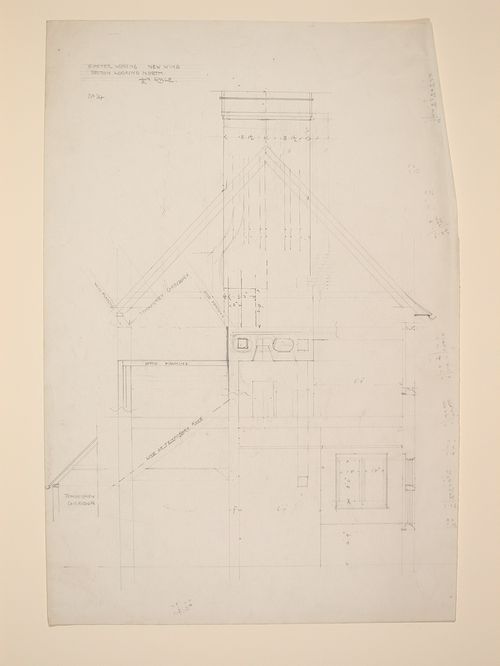
Actions:
Numéro de référence:
DR1989:0015:062
Description:
- This drawing shows a section through the kitchen of the main building for the new wing, identified in comparison with the plan DR1989:0015:049. This drawing also shows a superimposed plan for the chimney at the first-floor level, c. and temporary corridors for use during the construction, l.l. - This work is part of a group of drawings and reprographic prints of drawings for St. Peter's Home, Woking, and St. Peter's Convent, Woking, from the offices of John Loughborough Pearson and Frank Loughborough Pearson (DR1989:0015:011 - DR1989:0015:085 R/V). Composed of contract and working drawings including plans, site plans, sections, and elevations dated between 1881 and 1936, these drawings were sold at auction by the convent along with those for the older institution of St. Peter's Home, Kilburn (DR1989:0015:001 - DR1989:0015:010). Both St. Peter's Home, Kilburn, and St. Peter's Home, Woking were commissioned from John Loughborough Pearson by Benjamin Lancaster. The alterations to the Home at Kilburn were commissioned on behalf of Lancaster's wife, who founded the home and a lay nursing order which ran it. The institution at Woking was founded by Lancaster as a home for incurables in 1882 and dedicated to the memory of his deceased wife (Quiney 67-68, 254-255, and 284). It was probably first known as St. Peter's Home, Woking, not becoming a convent until ca. 1934.
DR1989:0015:062
Description:
- This drawing shows a section through the kitchen of the main building for the new wing, identified in comparison with the plan DR1989:0015:049. This drawing also shows a superimposed plan for the chimney at the first-floor level, c. and temporary corridors for use during the construction, l.l. - This work is part of a group of drawings and reprographic prints of drawings for St. Peter's Home, Woking, and St. Peter's Convent, Woking, from the offices of John Loughborough Pearson and Frank Loughborough Pearson (DR1989:0015:011 - DR1989:0015:085 R/V). Composed of contract and working drawings including plans, site plans, sections, and elevations dated between 1881 and 1936, these drawings were sold at auction by the convent along with those for the older institution of St. Peter's Home, Kilburn (DR1989:0015:001 - DR1989:0015:010). Both St. Peter's Home, Kilburn, and St. Peter's Home, Woking were commissioned from John Loughborough Pearson by Benjamin Lancaster. The alterations to the Home at Kilburn were commissioned on behalf of Lancaster's wife, who founded the home and a lay nursing order which ran it. The institution at Woking was founded by Lancaster as a home for incurables in 1882 and dedicated to the memory of his deceased wife (Quiney 67-68, 254-255, and 284). It was probably first known as St. Peter's Home, Woking, not becoming a convent until ca. 1934.
Personnes et institutions:
Sujet:
architecture
architecture
Date:
1926 ?
1926 ?
Titre:
St. Peter's Home, Woking: Section for the main portion of the new wing, looking north, with a plan for the chimney flues
Actions:
DR1989:0015:062
Description:
- This drawing shows a section through the kitchen of the main building for the new wing, identified in comparison with the plan DR1989:0015:049. This drawing also shows a superimposed plan for the chimney at the first-floor level, c. and temporary corridors for use during the construction, l.l. - This work is part of a group of drawings and reprographic prints of drawings for St. Peter's Home, Woking, and St. Peter's Convent, Woking, from the offices of John Loughborough Pearson and Frank Loughborough Pearson (DR1989:0015:011 - DR1989:0015:085 R/V). Composed of contract and working drawings including plans, site plans, sections, and elevations dated between 1881 and 1936, these drawings were sold at auction by the convent along with those for the older institution of St. Peter's Home, Kilburn (DR1989:0015:001 - DR1989:0015:010). Both St. Peter's Home, Kilburn, and St. Peter's Home, Woking were commissioned from John Loughborough Pearson by Benjamin Lancaster. The alterations to the Home at Kilburn were commissioned on behalf of Lancaster's wife, who founded the home and a lay nursing order which ran it. The institution at Woking was founded by Lancaster as a home for incurables in 1882 and dedicated to the memory of his deceased wife (Quiney 67-68, 254-255, and 284). It was probably first known as St. Peter's Home, Woking, not becoming a convent until ca. 1934.
St. Peter's Home, Woking: Section for the main portion of the new wing, looking north, with a plan for the chimney flues
Actions:
DR1989:0015:062
Description:
- This drawing shows a section through the kitchen of the main building for the new wing, identified in comparison with the plan DR1989:0015:049. This drawing also shows a superimposed plan for the chimney at the first-floor level, c. and temporary corridors for use during the construction, l.l. - This work is part of a group of drawings and reprographic prints of drawings for St. Peter's Home, Woking, and St. Peter's Convent, Woking, from the offices of John Loughborough Pearson and Frank Loughborough Pearson (DR1989:0015:011 - DR1989:0015:085 R/V). Composed of contract and working drawings including plans, site plans, sections, and elevations dated between 1881 and 1936, these drawings were sold at auction by the convent along with those for the older institution of St. Peter's Home, Kilburn (DR1989:0015:001 - DR1989:0015:010). Both St. Peter's Home, Kilburn, and St. Peter's Home, Woking were commissioned from John Loughborough Pearson by Benjamin Lancaster. The alterations to the Home at Kilburn were commissioned on behalf of Lancaster's wife, who founded the home and a lay nursing order which ran it. The institution at Woking was founded by Lancaster as a home for incurables in 1882 and dedicated to the memory of his deceased wife (Quiney 67-68, 254-255, and 284). It was probably first known as St. Peter's Home, Woking, not becoming a convent until ca. 1934.
Classification:
dessins
dessins
Date:
1926 ?
1926 ?
Personnes et institutions:
Sujet:
architecture
architecture
Niveau de description archivistique:
Projet
Projet
Titre:
Inter-Action Centre
Inter-Action Centre
Numéro de référence:
AP144.S2.D82
Description:
File documents Inter-Action Centre, a completed project for a community centre commissioned by Ed Berman and the Inter-Action Trust, for a disused site at Talacre Public Open Space in Kentish Town, Camden, London. The construction was divided into two phases. Foundations, steel frame and trusses were constructed first and could be used for open-air community events while funds were being raised for the second phase. Phase II included cladding, fittings, finishes, services prefabricated units, and log cabins. The building was intended as a flexible short life-span building in which the interior spaces would be independent of the roof and exterior walls. Functional areas suggested by Cedric Price include: assembly halls, classrooms, rehearsal rooms, studios, areas for performance, media resources, lounging and dining, and a gym and a nursery. Cedric Price had been engaged by the concepts of flexible architecture, indeterminacy, impermanence, and the fusion of information technology, entertainment, and educational activities in earlier unrealized projects such as Fun Palace (AP144.S2.D46) and Oxford Corner House (AP144.S2.D59). Existing conditions drawings include photographs of the site; reprographic copies of electrical and drainage systems; ordinance surveys of Kentish Town; and landscape and playground layout. Conceptual drawings include sketches of overall massing; diagrammatic plans; drawings and diagrams of site conditions; notes for the structural framework; rendered interior elevations; plans showing impact of site context on building design; diagrammatic sketches of relationship between functional requirements and structural form. Schematic drawings include diagrammatic plans; sections of structural system and exterior wall; cladding details; and axonometric views of supports. Design development drawings and working drawings include plans, elevations, sections, details and axonometric views. Presentation drawings include watercolours and other renderings; reprographic copies, possibly for publication; and perspectives drawings. Some material from this file was published in "Inter-action Centre." 'RIBA Journal'. (November 1977), 458-465; "Intervista A Cedric Price: London Interaction Centre." 'Domus'. (April 1978), 17-21; "Kentish Town West Amalgam, London." 'Architectural Record'. (January 1973), 19; Lyall, Sutherland. 'The State of British Architecture'. (London: Architectural Press, 1980), 107-109; 130 and 'Cedric Price-Works II' (London: Architectural Press, 1984), 54, 62-63. Material in this file was produced between 1964 and 1992, but predominantly between 1970 and 1981. File contains technical drawings that are attributed to the following consultants, contractors, and manufacturers: Coseley Buildings Ltd; H.G. Deacon Ltd; Kayanson Engineers; H.J. Knights & Co. Ltd; Woodcemair; Metal Sections Ltd; Spaceway; Gascoigne, Gush & Dent (Engineering Ltd); UBM Engineering; J. Murphy & Sons Ltd; Maurice Pickering Associates, Architects & Landscape Consultants; David Lee Architect & Landscape Architect; J. Starkie Gardner Ltd; Dibben Structural Engineers; Zisman, Bowyer & Partners; Felix J. Samuely and Partners; Ruberoid Contracts Ltd; Whitbread London Limited; and Portakabin. Paul Hyett and Will Alsop were Cedric Price's main assistants for this project. 'Inter-Action Trust Limited', 'Inter-Action Centre', and 'Talacre Centre Limited' appear as the client(s) at various stages of this project. File contains cartographic materials, conceptual drawings, consultant drawings, design development drawings, models, panels, photographic materials, presentation drawings, an illustration, textual records, and working drawings.
AP144.S2.D82
Description:
File documents Inter-Action Centre, a completed project for a community centre commissioned by Ed Berman and the Inter-Action Trust, for a disused site at Talacre Public Open Space in Kentish Town, Camden, London. The construction was divided into two phases. Foundations, steel frame and trusses were constructed first and could be used for open-air community events while funds were being raised for the second phase. Phase II included cladding, fittings, finishes, services prefabricated units, and log cabins. The building was intended as a flexible short life-span building in which the interior spaces would be independent of the roof and exterior walls. Functional areas suggested by Cedric Price include: assembly halls, classrooms, rehearsal rooms, studios, areas for performance, media resources, lounging and dining, and a gym and a nursery. Cedric Price had been engaged by the concepts of flexible architecture, indeterminacy, impermanence, and the fusion of information technology, entertainment, and educational activities in earlier unrealized projects such as Fun Palace (AP144.S2.D46) and Oxford Corner House (AP144.S2.D59). Existing conditions drawings include photographs of the site; reprographic copies of electrical and drainage systems; ordinance surveys of Kentish Town; and landscape and playground layout. Conceptual drawings include sketches of overall massing; diagrammatic plans; drawings and diagrams of site conditions; notes for the structural framework; rendered interior elevations; plans showing impact of site context on building design; diagrammatic sketches of relationship between functional requirements and structural form. Schematic drawings include diagrammatic plans; sections of structural system and exterior wall; cladding details; and axonometric views of supports. Design development drawings and working drawings include plans, elevations, sections, details and axonometric views. Presentation drawings include watercolours and other renderings; reprographic copies, possibly for publication; and perspectives drawings. Some material from this file was published in "Inter-action Centre." 'RIBA Journal'. (November 1977), 458-465; "Intervista A Cedric Price: London Interaction Centre." 'Domus'. (April 1978), 17-21; "Kentish Town West Amalgam, London." 'Architectural Record'. (January 1973), 19; Lyall, Sutherland. 'The State of British Architecture'. (London: Architectural Press, 1980), 107-109; 130 and 'Cedric Price-Works II' (London: Architectural Press, 1984), 54, 62-63. Material in this file was produced between 1964 and 1992, but predominantly between 1970 and 1981. File contains technical drawings that are attributed to the following consultants, contractors, and manufacturers: Coseley Buildings Ltd; H.G. Deacon Ltd; Kayanson Engineers; H.J. Knights & Co. Ltd; Woodcemair; Metal Sections Ltd; Spaceway; Gascoigne, Gush & Dent (Engineering Ltd); UBM Engineering; J. Murphy & Sons Ltd; Maurice Pickering Associates, Architects & Landscape Consultants; David Lee Architect & Landscape Architect; J. Starkie Gardner Ltd; Dibben Structural Engineers; Zisman, Bowyer & Partners; Felix J. Samuely and Partners; Ruberoid Contracts Ltd; Whitbread London Limited; and Portakabin. Paul Hyett and Will Alsop were Cedric Price's main assistants for this project. 'Inter-Action Trust Limited', 'Inter-Action Centre', and 'Talacre Centre Limited' appear as the client(s) at various stages of this project. File contains cartographic materials, conceptual drawings, consultant drawings, design development drawings, models, panels, photographic materials, presentation drawings, an illustration, textual records, and working drawings.
Personnes et institutions:
Date:
1964-1992, predominant 1970-1981
1964-1992, predominant 1970-1981
Titre:
Inter-Action Centre
Actions:
AP144.S2.D82
Description:
File documents Inter-Action Centre, a completed project for a community centre commissioned by Ed Berman and the Inter-Action Trust, for a disused site at Talacre Public Open Space in Kentish Town, Camden, London. The construction was divided into two phases. Foundations, steel frame and trusses were constructed first and could be used for open-air community events while funds were being raised for the second phase. Phase II included cladding, fittings, finishes, services prefabricated units, and log cabins. The building was intended as a flexible short life-span building in which the interior spaces would be independent of the roof and exterior walls. Functional areas suggested by Cedric Price include: assembly halls, classrooms, rehearsal rooms, studios, areas for performance, media resources, lounging and dining, and a gym and a nursery. Cedric Price had been engaged by the concepts of flexible architecture, indeterminacy, impermanence, and the fusion of information technology, entertainment, and educational activities in earlier unrealized projects such as Fun Palace (AP144.S2.D46) and Oxford Corner House (AP144.S2.D59). Existing conditions drawings include photographs of the site; reprographic copies of electrical and drainage systems; ordinance surveys of Kentish Town; and landscape and playground layout. Conceptual drawings include sketches of overall massing; diagrammatic plans; drawings and diagrams of site conditions; notes for the structural framework; rendered interior elevations; plans showing impact of site context on building design; diagrammatic sketches of relationship between functional requirements and structural form. Schematic drawings include diagrammatic plans; sections of structural system and exterior wall; cladding details; and axonometric views of supports. Design development drawings and working drawings include plans, elevations, sections, details and axonometric views. Presentation drawings include watercolours and other renderings; reprographic copies, possibly for publication; and perspectives drawings. Some material from this file was published in "Inter-action Centre." 'RIBA Journal'. (November 1977), 458-465; "Intervista A Cedric Price: London Interaction Centre." 'Domus'. (April 1978), 17-21; "Kentish Town West Amalgam, London." 'Architectural Record'. (January 1973), 19; Lyall, Sutherland. 'The State of British Architecture'. (London: Architectural Press, 1980), 107-109; 130 and 'Cedric Price-Works II' (London: Architectural Press, 1984), 54, 62-63. Material in this file was produced between 1964 and 1992, but predominantly between 1970 and 1981. File contains technical drawings that are attributed to the following consultants, contractors, and manufacturers: Coseley Buildings Ltd; H.G. Deacon Ltd; Kayanson Engineers; H.J. Knights & Co. Ltd; Woodcemair; Metal Sections Ltd; Spaceway; Gascoigne, Gush & Dent (Engineering Ltd); UBM Engineering; J. Murphy & Sons Ltd; Maurice Pickering Associates, Architects & Landscape Consultants; David Lee Architect & Landscape Architect; J. Starkie Gardner Ltd; Dibben Structural Engineers; Zisman, Bowyer & Partners; Felix J. Samuely and Partners; Ruberoid Contracts Ltd; Whitbread London Limited; and Portakabin. Paul Hyett and Will Alsop were Cedric Price's main assistants for this project. 'Inter-Action Trust Limited', 'Inter-Action Centre', and 'Talacre Centre Limited' appear as the client(s) at various stages of this project. File contains cartographic materials, conceptual drawings, consultant drawings, design development drawings, models, panels, photographic materials, presentation drawings, an illustration, textual records, and working drawings.
Inter-Action Centre
Actions:
AP144.S2.D82
Description:
File documents Inter-Action Centre, a completed project for a community centre commissioned by Ed Berman and the Inter-Action Trust, for a disused site at Talacre Public Open Space in Kentish Town, Camden, London. The construction was divided into two phases. Foundations, steel frame and trusses were constructed first and could be used for open-air community events while funds were being raised for the second phase. Phase II included cladding, fittings, finishes, services prefabricated units, and log cabins. The building was intended as a flexible short life-span building in which the interior spaces would be independent of the roof and exterior walls. Functional areas suggested by Cedric Price include: assembly halls, classrooms, rehearsal rooms, studios, areas for performance, media resources, lounging and dining, and a gym and a nursery. Cedric Price had been engaged by the concepts of flexible architecture, indeterminacy, impermanence, and the fusion of information technology, entertainment, and educational activities in earlier unrealized projects such as Fun Palace (AP144.S2.D46) and Oxford Corner House (AP144.S2.D59). Existing conditions drawings include photographs of the site; reprographic copies of electrical and drainage systems; ordinance surveys of Kentish Town; and landscape and playground layout. Conceptual drawings include sketches of overall massing; diagrammatic plans; drawings and diagrams of site conditions; notes for the structural framework; rendered interior elevations; plans showing impact of site context on building design; diagrammatic sketches of relationship between functional requirements and structural form. Schematic drawings include diagrammatic plans; sections of structural system and exterior wall; cladding details; and axonometric views of supports. Design development drawings and working drawings include plans, elevations, sections, details and axonometric views. Presentation drawings include watercolours and other renderings; reprographic copies, possibly for publication; and perspectives drawings. Some material from this file was published in "Inter-action Centre." 'RIBA Journal'. (November 1977), 458-465; "Intervista A Cedric Price: London Interaction Centre." 'Domus'. (April 1978), 17-21; "Kentish Town West Amalgam, London." 'Architectural Record'. (January 1973), 19; Lyall, Sutherland. 'The State of British Architecture'. (London: Architectural Press, 1980), 107-109; 130 and 'Cedric Price-Works II' (London: Architectural Press, 1984), 54, 62-63. Material in this file was produced between 1964 and 1992, but predominantly between 1970 and 1981. File contains technical drawings that are attributed to the following consultants, contractors, and manufacturers: Coseley Buildings Ltd; H.G. Deacon Ltd; Kayanson Engineers; H.J. Knights & Co. Ltd; Woodcemair; Metal Sections Ltd; Spaceway; Gascoigne, Gush & Dent (Engineering Ltd); UBM Engineering; J. Murphy & Sons Ltd; Maurice Pickering Associates, Architects & Landscape Consultants; David Lee Architect & Landscape Architect; J. Starkie Gardner Ltd; Dibben Structural Engineers; Zisman, Bowyer & Partners; Felix J. Samuely and Partners; Ruberoid Contracts Ltd; Whitbread London Limited; and Portakabin. Paul Hyett and Will Alsop were Cedric Price's main assistants for this project. 'Inter-Action Trust Limited', 'Inter-Action Centre', and 'Talacre Centre Limited' appear as the client(s) at various stages of this project. File contains cartographic materials, conceptual drawings, consultant drawings, design development drawings, models, panels, photographic materials, presentation drawings, an illustration, textual records, and working drawings.
Niveau de description archivistique:
File 82
File 82
Date:
1964-1992, predominant 1970-1981
1964-1992, predominant 1970-1981
Personnes et institutions:


