


3335 Résultats
Classification:
livres
livres

Titre:
Light art
Light art
Actions:
Prix:
$55.00
(disponible sur commande)
Résumé:
This is a volume on Light Art, the current in contemporary art that uses artificial light as its primary expressive instrument. In the first section an extensive introductory essay by Amnon Barzel underlines how practically interrupted study into the chromatic values of light have been part of the history of art from its very beginnings right through to the most(...)
$55.00
(disponible sur commande)
Résumé:
This is a volume on Light Art, the current in contemporary art that uses artificial light as its primary expressive instrument. In the first section an extensive introductory essay by Amnon Barzel underlines how practically interrupted study into the chromatic values of light have been part of the history of art from its very beginnings right through to the most(...)
Publication:
juillet 2006, 2005
juillet 2006, 2005
Titre:
Light art
Actions:
Prix:
$55.00
(disponible sur commande)
Résumé:
This is a volume on Light Art, the current in contemporary art that uses artificial light as its primary expressive instrument. In the first section an extensive introductory essay by Amnon Barzel underlines how practically interrupted study into the chromatic values of light have been part of the history of art from its very beginnings right through to the most recent developments, recalling the experiences of Caravaggio and de La Tour regarding internal light and the expressionists for external light, thus underlining how the invention of artificial light has enriched the light-art relationship opening a fascinating new chapter, inaugurated by the experiments carried out from the fifties by artists such as Fontana, Flavin, Merz and others. A text by Paolo Targetti follows dealing with the fundamental role played by the relationship between art and industry in contemporary art. Consuelo de Gara conducts an extended interview of James Turrell, the US artist unanimously considered the greatest master of Light Art. The second section is devoted to the Targetti Light Art Collection, one of the most prestigious collections in the world dealing with artificial light. The images and description of each of the works which make up the collection are accompanied by a retrospective critical text on the artists who created them. Among the artists presented are some of considerable fame including Olafur Eliasson, Gilberto Zorio, Anne and Patrick Poirier, Fabrizio Plessi and Hidetoshi Nagasawa as well as young up-and-coming talents, winners of the first four editions of the International Targetti Light Art Prize.
Light art
Actions:
Prix:
$55.00
(disponible sur commande)
Résumé:
This is a volume on Light Art, the current in contemporary art that uses artificial light as its primary expressive instrument. In the first section an extensive introductory essay by Amnon Barzel underlines how practically interrupted study into the chromatic values of light have been part of the history of art from its very beginnings right through to the most recent developments, recalling the experiences of Caravaggio and de La Tour regarding internal light and the expressionists for external light, thus underlining how the invention of artificial light has enriched the light-art relationship opening a fascinating new chapter, inaugurated by the experiments carried out from the fifties by artists such as Fontana, Flavin, Merz and others. A text by Paolo Targetti follows dealing with the fundamental role played by the relationship between art and industry in contemporary art. Consuelo de Gara conducts an extended interview of James Turrell, the US artist unanimously considered the greatest master of Light Art. The second section is devoted to the Targetti Light Art Collection, one of the most prestigious collections in the world dealing with artificial light. The images and description of each of the works which make up the collection are accompanied by a retrospective critical text on the artists who created them. Among the artists presented are some of considerable fame including Olafur Eliasson, Gilberto Zorio, Anne and Patrick Poirier, Fabrizio Plessi and Hidetoshi Nagasawa as well as young up-and-coming talents, winners of the first four editions of the International Targetti Light Art Prize.
Classification:
livres
livres
Publication:
juillet 2006, 2005
juillet 2006, 2005
Classification:
livres
livres
Actions:
Prix:
$64.95
(disponible en magasin)
Résumé:
La question du logement de masse est au cœur de la réflexion urbanistique et architecturale des villes européennes. Elle a donné lieu à des réponses hétéroclites, proposant une grande diversité d’approche et de solutions. Dans ce cadre, Vienne et Francfort s’affirment comme les résultats les plus convaincants : le Hof et la Siedlung constituent ainsi deux modèles(...)
$64.95
(disponible en magasin)
Résumé:
La question du logement de masse est au cœur de la réflexion urbanistique et architecturale des villes européennes. Elle a donné lieu à des réponses hétéroclites, proposant une grande diversité d’approche et de solutions. Dans ce cadre, Vienne et Francfort s’affirment comme les résultats les plus convaincants : le Hof et la Siedlung constituent ainsi deux modèles(...)
Titre:
L’intelligence des formes : le projet de logements collectifs à Vienne et Francfort
Actions:
Prix:
$64.95
(disponible en magasin)
Résumé:
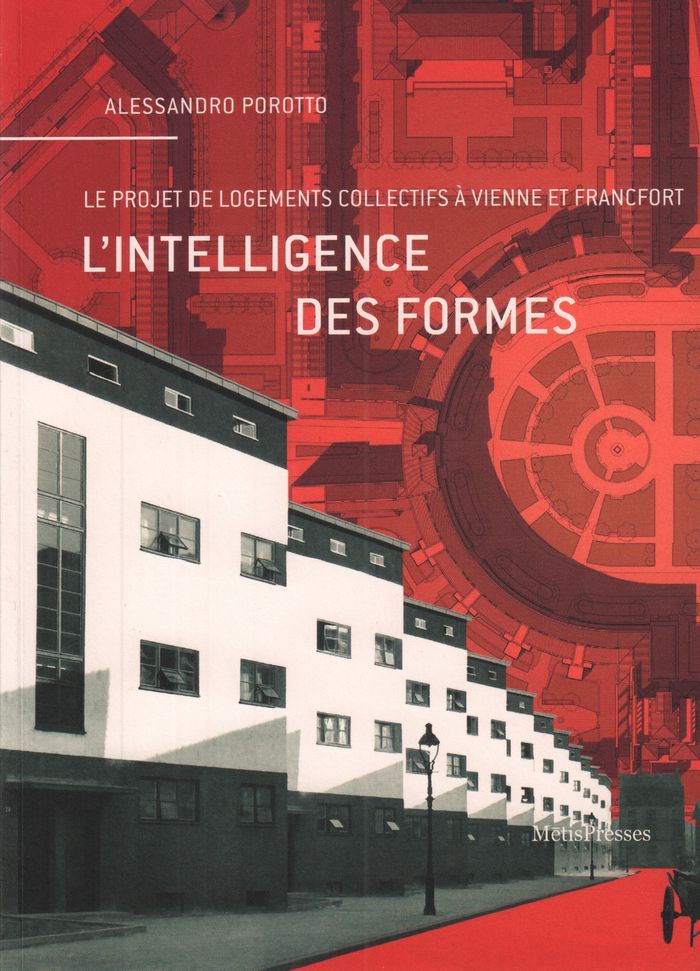
La question du logement de masse est au cœur de la réflexion urbanistique et architecturale des villes européennes. Elle a donné lieu à des réponses hétéroclites, proposant une grande diversité d’approche et de solutions. Dans ce cadre, Vienne et Francfort s’affirment comme les résultats les plus convaincants : le Hof et la Siedlung constituent ainsi deux modèles distincts et cohérents pour aborder des problématiques communes. Nous proposons ici de considérer ces deux modèles comme complémentaires d’un point de vue architectural et urbanistique, tant au niveau des choix qu’au niveau des résultats. Dans cette perspective, Vienne et Francfort sont les « polarités extrêmes » qui constituent des références exemplaires pour l’histoire du logement de masse en Europe. L’analyse applique une approche comparative qui vise à observer sans préjugés, de l’échelle urbaine à celle du logement, les résultats de ces deux alternatives. Les critères analytiques adoptés – densité, typologie du logement et morphologie urbaine, espaces extérieurs – peuvent être à leur tour utilisés pour aborder des questions cruciales à l’égard des discussions actuelles concernant le projet de logement. Le propos, loin de se limiter à la compréhension historique de ces expériences, considère ainsi les cas analysés en tant qu’organismes urbains appartenant à plein titre à la ville contemporaine, afin de relever l’actualité et de restituer la richesse des expériences architecturales de l’entre-deux-guerres, étudiée jusqu’à présent de façon fragmentaire. La version numérique enrichit le propos d’une vaste documentation iconographique, constituée d’un atlas de plans (14 projets sur 4 niveaux) redessinés à partir de documents originaux d’archives, qui montre pour la première fois les caractéristiques typo-morphologiques des complexes d’habitation.
L’intelligence des formes : le projet de logements collectifs à Vienne et Francfort
Actions:
Prix:
$64.95
(disponible en magasin)
Résumé:
La question du logement de masse est au cœur de la réflexion urbanistique et architecturale des villes européennes. Elle a donné lieu à des réponses hétéroclites, proposant une grande diversité d’approche et de solutions. Dans ce cadre, Vienne et Francfort s’affirment comme les résultats les plus convaincants : le Hof et la Siedlung constituent ainsi deux modèles distincts et cohérents pour aborder des problématiques communes. Nous proposons ici de considérer ces deux modèles comme complémentaires d’un point de vue architectural et urbanistique, tant au niveau des choix qu’au niveau des résultats. Dans cette perspective, Vienne et Francfort sont les « polarités extrêmes » qui constituent des références exemplaires pour l’histoire du logement de masse en Europe. L’analyse applique une approche comparative qui vise à observer sans préjugés, de l’échelle urbaine à celle du logement, les résultats de ces deux alternatives. Les critères analytiques adoptés – densité, typologie du logement et morphologie urbaine, espaces extérieurs – peuvent être à leur tour utilisés pour aborder des questions cruciales à l’égard des discussions actuelles concernant le projet de logement. Le propos, loin de se limiter à la compréhension historique de ces expériences, considère ainsi les cas analysés en tant qu’organismes urbains appartenant à plein titre à la ville contemporaine, afin de relever l’actualité et de restituer la richesse des expériences architecturales de l’entre-deux-guerres, étudiée jusqu’à présent de façon fragmentaire. La version numérique enrichit le propos d’une vaste documentation iconographique, constituée d’un atlas de plans (14 projets sur 4 niveaux) redessinés à partir de documents originaux d’archives, qui montre pour la première fois les caractéristiques typo-morphologiques des complexes d’habitation.
Classification:
livres
livres
Publication:
décembre 2019
décembre 2019
Sujet:
Logements collectifs
Logements collectifs
Classification:
livres
livres
Actions:
Prix:
$26.95
(disponible sur commande)
Résumé:
Many years have passed since architect Andrea Ponsi settled in Florence, and still he feels he does not fully comprehend this mysterious city. The way Florence eludes understanding, however, can be an opportunity — to keep seeking, to keep exploring. Ponsi’s Florence is endlessly suggestive. His tour of the city is one of continually shifting light and perspective, of(...)
$26.95
(disponible sur commande)
Résumé:
Many years have passed since architect Andrea Ponsi settled in Florence, and still he feels he does not fully comprehend this mysterious city. The way Florence eludes understanding, however, can be an opportunity — to keep seeking, to keep exploring. Ponsi’s Florence is endlessly suggestive. His tour of the city is one of continually shifting light and perspective, of(...)
Titre:
Florence : a map of perceptions
Actions:
Prix:
$26.95
(disponible sur commande)
Résumé:
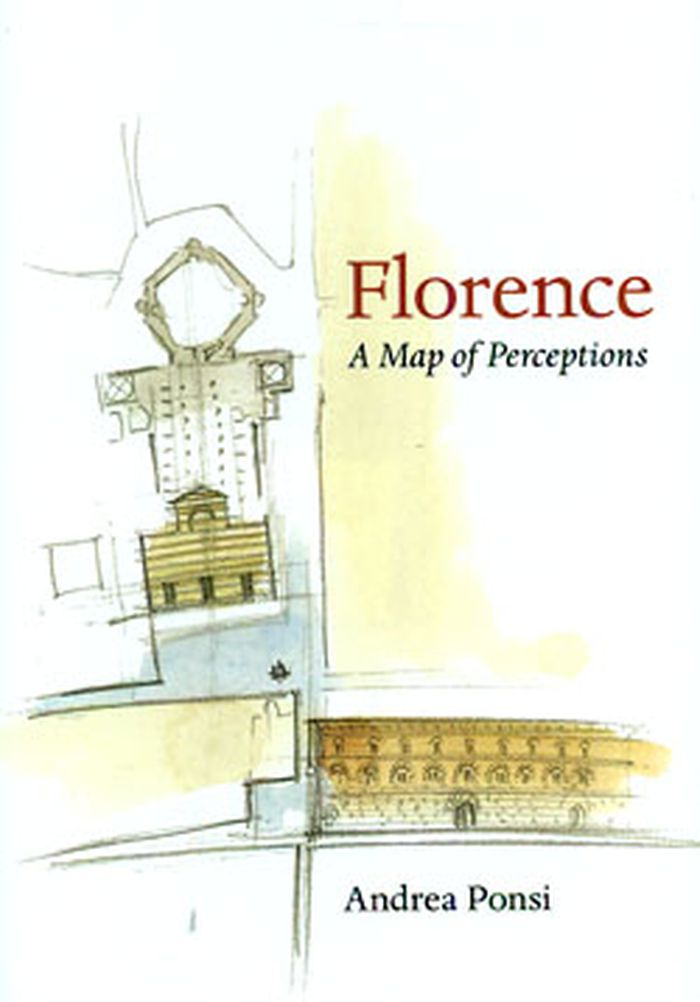
Many years have passed since architect Andrea Ponsi settled in Florence, and still he feels he does not fully comprehend this mysterious city. The way Florence eludes understanding, however, can be an opportunity — to keep seeking, to keep exploring. Ponsi’s Florence is endlessly suggestive. His tour of the city is one of continually shifting light and perspective, of stunning symmetry and an even more compelling asymmetry, of sudden transitions from bustling streets to the most perfect silence. While Ponsi does consider such celebrated sites as the Piazza Santa Croce, the Ponte Vecchio, and the Duomo, the book is a decidedly personal view of Florence. The author notes the city’s recurring geometry — the square courtyards, triangular spires, octagonal plaques and pillars — and marvels at a room almost too big to be called a room. He views the city from various terraces and likens the expanse of rising and falling rooftops to ocean waves. Here is Florence as labyrinth, possessing a medieval density that is relieved only by the sudden views of sky framed by its piazzas. Ponsi shows us a six-street intersection and ponders the abundance of acute angles, both indoors and out, in this city of infinite corners. In Florence, humans and buildings commingle. The author equates haircuts and changes of clothes with fresh coats of paint and re-shingling jobs, and contemplates the way a human hand, feeling its way down a city block, adds to the patina of a stucco wall. Ponsi sees the city itself as a living body, through whose veins its inhabitants course.
Florence : a map of perceptions
Actions:
Prix:
$26.95
(disponible sur commande)
Résumé:
Many years have passed since architect Andrea Ponsi settled in Florence, and still he feels he does not fully comprehend this mysterious city. The way Florence eludes understanding, however, can be an opportunity — to keep seeking, to keep exploring. Ponsi’s Florence is endlessly suggestive. His tour of the city is one of continually shifting light and perspective, of stunning symmetry and an even more compelling asymmetry, of sudden transitions from bustling streets to the most perfect silence. While Ponsi does consider such celebrated sites as the Piazza Santa Croce, the Ponte Vecchio, and the Duomo, the book is a decidedly personal view of Florence. The author notes the city’s recurring geometry — the square courtyards, triangular spires, octagonal plaques and pillars — and marvels at a room almost too big to be called a room. He views the city from various terraces and likens the expanse of rising and falling rooftops to ocean waves. Here is Florence as labyrinth, possessing a medieval density that is relieved only by the sudden views of sky framed by its piazzas. Ponsi shows us a six-street intersection and ponders the abundance of acute angles, both indoors and out, in this city of infinite corners. In Florence, humans and buildings commingle. The author equates haircuts and changes of clothes with fresh coats of paint and re-shingling jobs, and contemplates the way a human hand, feeling its way down a city block, adds to the patina of a stucco wall. Ponsi sees the city itself as a living body, through whose veins its inhabitants course.
Classification:
livres
livres
Publication:
avril 2010
avril 2010
Sujet:
Guides des villes
Guides des villes
Classification:
livres
livres
Titre:
AIA guide to New York City
AIA guide to New York City
Actions:
Prix:
$43.95
(disponible sur commande)
Résumé:
The AIA Guide to New York City, Fourth Edition New York Chapter, American Institute of Architects Norval White and Elliot Willensky Architecture | Times Books | Trade Paperback | June 2000 | $35.00 | 0-8129-3107-6 (...)
$43.95
(disponible sur commande)
Résumé:
The AIA Guide to New York City, Fourth Edition New York Chapter, American Institute of Architects Norval White and Elliot Willensky Architecture | Times Books | Trade Paperback | June 2000 | $35.00 | 0-8129-3107-6 (...)
Titre:
AIA guide to New York City
Actions:
Prix:
$43.95
(disponible sur commande)
Résumé:
The AIA Guide to New York City, Fourth Edition New York Chapter, American Institute of Architects Norval White and Elliot Willensky Architecture | Times Books | Trade Paperback | June 2000 | $35.00 | 0-8129-3107-6 Since the "AIA Guide to New York City" was first published in 1967, it has been recognized as the ultimate guide to the metropolis's buildings, in all five boroughs -- Manhattan, Brooklyn, Queens, the Bronx, and Staten Island -- from nineteenth-century brownstones and tenements to modern high-rise apartments and museums. The latest edition of this urban classic takes a fresh look at the architectural treasures that define New York -- from its most characteristic landmarks to its less famous local favorites. To prepare this edition -- the first revision since 1987 -- Norval White has visited and revisited more than 5,000 buildings, making this by far the most complete guide of its kind. This generously illustrated handbook presents the structures of the New York City--from the magnificent to the obscure -- in over 3,000 new photographs, more than 130 new maps, and hundreds of revised and new entries. Beyond the skyscrapers and historical buildings, the guide also leads the way to the city's bridges, parks, and public monuments. From the tip of the Empire State Building to the brownstones in Brooklyn, the AIA Guide to New York City reveals how the city's spirit, fortitude, and character are captured and expressed in its architecture. Thoughtful and humorous descriptions include bits of local information that bring the city's history to life, telling the stories behind the bricks and mortar. Together, the maps, photographs, and critiques invite you to tour of the city at your own pace.
AIA guide to New York City
Actions:
Prix:
$43.95
(disponible sur commande)
Résumé:
The AIA Guide to New York City, Fourth Edition New York Chapter, American Institute of Architects Norval White and Elliot Willensky Architecture | Times Books | Trade Paperback | June 2000 | $35.00 | 0-8129-3107-6 Since the "AIA Guide to New York City" was first published in 1967, it has been recognized as the ultimate guide to the metropolis's buildings, in all five boroughs -- Manhattan, Brooklyn, Queens, the Bronx, and Staten Island -- from nineteenth-century brownstones and tenements to modern high-rise apartments and museums. The latest edition of this urban classic takes a fresh look at the architectural treasures that define New York -- from its most characteristic landmarks to its less famous local favorites. To prepare this edition -- the first revision since 1987 -- Norval White has visited and revisited more than 5,000 buildings, making this by far the most complete guide of its kind. This generously illustrated handbook presents the structures of the New York City--from the magnificent to the obscure -- in over 3,000 new photographs, more than 130 new maps, and hundreds of revised and new entries. Beyond the skyscrapers and historical buildings, the guide also leads the way to the city's bridges, parks, and public monuments. From the tip of the Empire State Building to the brownstones in Brooklyn, the AIA Guide to New York City reveals how the city's spirit, fortitude, and character are captured and expressed in its architecture. Thoughtful and humorous descriptions include bits of local information that bring the city's history to life, telling the stories behind the bricks and mortar. Together, the maps, photographs, and critiques invite you to tour of the city at your own pace.
Classification:
livres
livres
Publication:
avril 2000, New York
avril 2000, New York
Sujet:
Guides des villes
Guides des villes
Classification:
livres
livres
Actions:
Prix:
$77.95
(disponible sur commande)
Résumé:
In 1911, Le Corbusier (1887–1965), then twenty-four and still going by the name of Charles-Edouard Jeanneret, embarked on a grand tour of Eastern Europe, Turkey, and the Balkans with his friend, August Klipstein (1885–1951), an art history scholar. Together, the two visited Prague, Vienna, Budapest, Bulgaria and Serbia, Constantinople, Mount Athos, and Athens, as well as(...)
$77.95
(disponible sur commande)
Résumé:
In 1911, Le Corbusier (1887–1965), then twenty-four and still going by the name of Charles-Edouard Jeanneret, embarked on a grand tour of Eastern Europe, Turkey, and the Balkans with his friend, August Klipstein (1885–1951), an art history scholar. Together, the two visited Prague, Vienna, Budapest, Bulgaria and Serbia, Constantinople, Mount Athos, and Athens, as well as(...)
Titre:
Klip and Corb on the road: the dual diaries of August Klipstein and Le Corbusier, 1911
Actions:
Prix:
$77.95
(disponible sur commande)
Résumé:
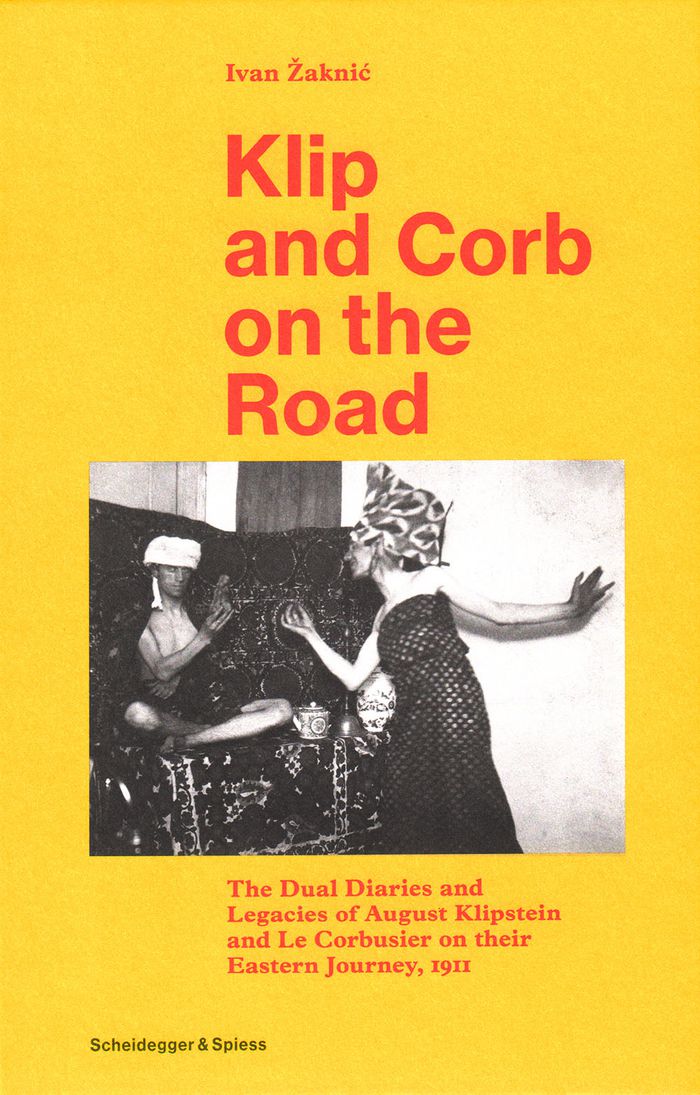
In 1911, Le Corbusier (1887–1965), then twenty-four and still going by the name of Charles-Edouard Jeanneret, embarked on a grand tour of Eastern Europe, Turkey, and the Balkans with his friend, August Klipstein (1885–1951), an art history scholar. Together, the two visited Prague, Vienna, Budapest, Bulgaria and Serbia, Constantinople, Mount Athos, and Athens, as well as Rome and Pompeii. Both young men kept detailed notebooks throughout their journey with drawings, sketches, and photographs created en route. While Le Corbusier’s notebooks were published in 1966 as “Journey to the East” and went on to attain wide renown, Klipstein’s records of their travels have remained relatively unknown. In “Klip and Corb on the Road”, Ivan Žaknic´ brings the notebooks together for the first time to explore the fruitful creative symbiosis of this friendship and offer a new perspective on this seemingly well-known undertaking. The two men sometimes address the same events or subjects—a seasick passage, the bustle of a Turkish bazaar—and even copy one another’s work. But while Klipstein’s reflections tend to focus on research for his thesis, Jeanneret’s impressions evince a more romantic mindset inspired by his immediate surroundings. The book includes copious previously unpublished material, including the complete text of Klipstein’s diary, as well as that of the correspondence between Jeanneret and Klipstein. Reintroducing readers to Klipstein, who went on to a career as a prominent art dealer, it also offers insight into a key influence in the artistic development of Le Corbusier in his formative years. The book also includes an essay by British architectural historian Tim Benton.
Klip and Corb on the road: the dual diaries of August Klipstein and Le Corbusier, 1911
Actions:
Prix:
$77.95
(disponible sur commande)
Résumé:
In 1911, Le Corbusier (1887–1965), then twenty-four and still going by the name of Charles-Edouard Jeanneret, embarked on a grand tour of Eastern Europe, Turkey, and the Balkans with his friend, August Klipstein (1885–1951), an art history scholar. Together, the two visited Prague, Vienna, Budapest, Bulgaria and Serbia, Constantinople, Mount Athos, and Athens, as well as Rome and Pompeii. Both young men kept detailed notebooks throughout their journey with drawings, sketches, and photographs created en route. While Le Corbusier’s notebooks were published in 1966 as “Journey to the East” and went on to attain wide renown, Klipstein’s records of their travels have remained relatively unknown. In “Klip and Corb on the Road”, Ivan Žaknic´ brings the notebooks together for the first time to explore the fruitful creative symbiosis of this friendship and offer a new perspective on this seemingly well-known undertaking. The two men sometimes address the same events or subjects—a seasick passage, the bustle of a Turkish bazaar—and even copy one another’s work. But while Klipstein’s reflections tend to focus on research for his thesis, Jeanneret’s impressions evince a more romantic mindset inspired by his immediate surroundings. The book includes copious previously unpublished material, including the complete text of Klipstein’s diary, as well as that of the correspondence between Jeanneret and Klipstein. Reintroducing readers to Klipstein, who went on to a career as a prominent art dealer, it also offers insight into a key influence in the artistic development of Le Corbusier in his formative years. The book also includes an essay by British architectural historian Tim Benton.
Classification:
livres
livres
Publication:
janvier 2020
janvier 2020
Sujet:
Architecture, monographies
Architecture, monographies
Classification:
livres
livres
Prix:
$47.00
(disponible sur commande)
Résumé:
In this survey of the politics and meanings of urban landscapes, leading sociologist Göran Therborn offers a tour of the world’s major capital cities, showing how they have been shaped by national, popular, and global forces. Their stories begin with the emergence of various kinds of nation-state, each with its own special capital city problematic. In turn, radical shifts(...)
$47.00
(disponible sur commande)
Résumé:
In this survey of the politics and meanings of urban landscapes, leading sociologist Göran Therborn offers a tour of the world’s major capital cities, showing how they have been shaped by national, popular, and global forces. Their stories begin with the emergence of various kinds of nation-state, each with its own special capital city problematic. In turn, radical shifts(...)
Titre:
Cities of power: the urban, the national, the popular, the global
Actions:
Prix:
$47.00
(disponible sur commande)
Résumé:
In this survey of the politics and meanings of urban landscapes, leading sociologist Göran Therborn offers a tour of the world’s major capital cities, showing how they have been shaped by national, popular, and global forces. Their stories begin with the emergence of various kinds of nation-state, each with its own special capital city problematic. In turn, radical shifts of power have impacted on these cities’ development, in popular urban reforms or movements of protest and resistance; in the rise and fall of fascism and military dictatorships; and the coming and going of Communism. Therborn also analyzes global moments of urban formation, of historical globalized nationalism, as well as the cities of current global image capitalism and their variations of skyscraping, gating, and displays of novelty. Through a global, historical lens, and with a thematic range extending from the mutations of modernist architecture to the contemporary return of urban revolutions, Therborn questions received assumptions about the source, manifestations, and reach of urban power, combining perspectives on politics, sociology, urban planning, architecture, and urban iconography. He argues that, at a time when they seem to be moving apart, there is a strong link between the city and the nation-state, and that the current globalization of cities is largely driven by the global aspirations of politicians as well as those of national and local capital. With its unique systematic overview, from Washington, D.C. and revolutionary Paris to the flamboyant twenty- first-century capital Astana in Kazakhstan, its wealth of urban observations from all the populated continents, and its sharp and multi-faceted analyses, Cities of Power forces us to rethink our urban future, as well as our historically shaped present.
Cities of power: the urban, the national, the popular, the global
Actions:
Prix:
$47.00
(disponible sur commande)
Résumé:
In this survey of the politics and meanings of urban landscapes, leading sociologist Göran Therborn offers a tour of the world’s major capital cities, showing how they have been shaped by national, popular, and global forces. Their stories begin with the emergence of various kinds of nation-state, each with its own special capital city problematic. In turn, radical shifts of power have impacted on these cities’ development, in popular urban reforms or movements of protest and resistance; in the rise and fall of fascism and military dictatorships; and the coming and going of Communism. Therborn also analyzes global moments of urban formation, of historical globalized nationalism, as well as the cities of current global image capitalism and their variations of skyscraping, gating, and displays of novelty. Through a global, historical lens, and with a thematic range extending from the mutations of modernist architecture to the contemporary return of urban revolutions, Therborn questions received assumptions about the source, manifestations, and reach of urban power, combining perspectives on politics, sociology, urban planning, architecture, and urban iconography. He argues that, at a time when they seem to be moving apart, there is a strong link between the city and the nation-state, and that the current globalization of cities is largely driven by the global aspirations of politicians as well as those of national and local capital. With its unique systematic overview, from Washington, D.C. and revolutionary Paris to the flamboyant twenty- first-century capital Astana in Kazakhstan, its wealth of urban observations from all the populated continents, and its sharp and multi-faceted analyses, Cities of Power forces us to rethink our urban future, as well as our historically shaped present.
Classification:
livres
livres
Publication:
mai 2017
mai 2017
Sujet:
Théorie de l’urbanisme
Théorie de l’urbanisme
Classification:
livres
livres

Titre:
Palestine
Palestine
Actions:
Prix:
$26.00
(disponible sur commande)
Résumé:
«Plomb durci» (2008-2009), «Pilier de défense» (2012), «Bordure protectrice» (2014): les trois dernières offensives militaires d'envergure menées par Israël contre Gaza ont fait des milliers de morts du côté palestinien et donné lieu à de nouvelles expropriations de terres en Cisjordanie. Ces guerres de conquête israélienne ont ravivé, chez les militant.e.s de la justice(...)
$26.00
(disponible sur commande)
Résumé:
«Plomb durci» (2008-2009), «Pilier de défense» (2012), «Bordure protectrice» (2014): les trois dernières offensives militaires d'envergure menées par Israël contre Gaza ont fait des milliers de morts du côté palestinien et donné lieu à de nouvelles expropriations de terres en Cisjordanie. Ces guerres de conquête israélienne ont ravivé, chez les militant.e.s de la justice(...)
Titre:
Palestine
Actions:
Prix:
$26.00
(disponible sur commande)
Résumé:
«Plomb durci» (2008-2009), «Pilier de défense» (2012), «Bordure protectrice» (2014): les trois dernières offensives militaires d'envergure menées par Israël contre Gaza ont fait des milliers de morts du côté palestinien et donné lieu à de nouvelles expropriations de terres en Cisjordanie. Ces guerres de conquête israélienne ont ravivé, chez les militant.e.s de la justice sociale, le besoin d'exprimer leur solidarité avec le peuple palestinien et l'importance de renouveler le vocabulaire politique lié à cette question.Dans cet ouvrage en partie rédigé dans le feu de l'action, à l'été 2014, Noam Chomsky et Ilan Pappé, deux ardents défenseurs de la cause palestinienne, mènent une longue conversation dirigée par Frank Barat, militant des droits de la personne. Pour eux, le problème palestinien est depuis le début un cas évident de colonialisme et de dépossession, même si on préfère le traiter comme une affaire complexe soi-disant difficile à comprendre et, plus encore, à résoudre.Leurs échanges portent à la fois sur le sionisme en tant que phénomène historique, la pertinence d'analyser la situation en Palestine comme un apartheid, l'efficacité de la campagne Boycott, désinvestissement et sanctions (BDS) et la viabilité de la solution à un ou à deux États...Tour d'horizon de la question palestinienne, ce livre a le mérite d'envisager la situation en Palestine comme un baromètre de la répression politique. Car l'injustice qui accable le peuple palestinien a des ramifications partout dans le monde. «De Ferguson à Barcelone, en passant par Mexico, nombreux sont les gouvernements qui calquent les méthodes employées par Israël pour opprimer les Palestiniens. Leur recours aux mêmes tactiques et, souvent, aux mêmes armes démontre que les Palestiniens servent maintenant de cobayes - et que la Palestine est devenue un grand laboratoire» -- Frank Barat.
Palestine
Actions:
Prix:
$26.00
(disponible sur commande)
Résumé:
«Plomb durci» (2008-2009), «Pilier de défense» (2012), «Bordure protectrice» (2014): les trois dernières offensives militaires d'envergure menées par Israël contre Gaza ont fait des milliers de morts du côté palestinien et donné lieu à de nouvelles expropriations de terres en Cisjordanie. Ces guerres de conquête israélienne ont ravivé, chez les militant.e.s de la justice sociale, le besoin d'exprimer leur solidarité avec le peuple palestinien et l'importance de renouveler le vocabulaire politique lié à cette question.Dans cet ouvrage en partie rédigé dans le feu de l'action, à l'été 2014, Noam Chomsky et Ilan Pappé, deux ardents défenseurs de la cause palestinienne, mènent une longue conversation dirigée par Frank Barat, militant des droits de la personne. Pour eux, le problème palestinien est depuis le début un cas évident de colonialisme et de dépossession, même si on préfère le traiter comme une affaire complexe soi-disant difficile à comprendre et, plus encore, à résoudre.Leurs échanges portent à la fois sur le sionisme en tant que phénomène historique, la pertinence d'analyser la situation en Palestine comme un apartheid, l'efficacité de la campagne Boycott, désinvestissement et sanctions (BDS) et la viabilité de la solution à un ou à deux États...Tour d'horizon de la question palestinienne, ce livre a le mérite d'envisager la situation en Palestine comme un baromètre de la répression politique. Car l'injustice qui accable le peuple palestinien a des ramifications partout dans le monde. «De Ferguson à Barcelone, en passant par Mexico, nombreux sont les gouvernements qui calquent les méthodes employées par Israël pour opprimer les Palestiniens. Leur recours aux mêmes tactiques et, souvent, aux mêmes armes démontre que les Palestiniens servent maintenant de cobayes - et que la Palestine est devenue un grand laboratoire» -- Frank Barat.
Classification:
livres
livres
Publication:
février 2016
février 2016
Sujet:
Arch Moyen-Orient
Arch Moyen-Orient
Classification:
périodiques
périodiques
Actions:
Prix:
$43.00
(disponible sur commande)
Résumé:
Le dossier « Hôpital, hospitalité » est consacré aux lieux d’hospitalisation. Les projets présentés témoignent des approches et conceptions qui prennent en compte aussi bien les nouveaux besoins humains que les nouvelles technologies. Recherches d’échelles, exploration de typologies. Le rite festif du salon du meuble de Milan a encore eu lieu cette année, associant les(...)
$43.00
(disponible sur commande)
Résumé:
Le dossier « Hôpital, hospitalité » est consacré aux lieux d’hospitalisation. Les projets présentés témoignent des approches et conceptions qui prennent en compte aussi bien les nouveaux besoins humains que les nouvelles technologies. Recherches d’échelles, exploration de typologies. Le rite festif du salon du meuble de Milan a encore eu lieu cette année, associant les(...)
Titre:
Techniques & architecture 460 : hôpital, hospitalité / hospital, hospitality, actualité Suisse expo.02
Actions:
Prix:
$43.00
(disponible sur commande)
Résumé:
Le dossier « Hôpital, hospitalité » est consacré aux lieux d’hospitalisation. Les projets présentés témoignent des approches et conceptions qui prennent en compte aussi bien les nouveaux besoins humains que les nouvelles technologies. Recherches d’échelles, exploration de typologies. Le rite festif du salon du meuble de Milan a encore eu lieu cette année, associant les galeries alentour. Plus industrielle et économe en matière, ainsi pourrait-on qualifier la tendance actuelle. Un nouveau matériau : l’air. Dans ce numéro, un tour d’horizon des événements qui ont jalonné la saison estivale. Parmi eux, Archilab à Orléans : autour du thème « Economie de la Terre », les démarches écologico-humano-contextuelles se groupent de manière un peu convenue autour des réalisations dont on retrouvera certaines (M. Gautrand, Périphériques, Jakob et MacFarlane et de nouvelles têtes : dZO, RMDM, Avignon-Clouet, etc.) à la Biennale de Venise. Une manifestation sous la houlette de Deyan Sudjic qui privilégie réalités matérielles par rapport aux représentations virtuelles des années précédentes. Mais le point fort de notre actualité est sans conteste le souffle qui passe cet été, jusqu’au 15 octobre, sur les lacs suisses – dans quatre sites, Neuchâtel, Bienne, Morat, Yverdon-les-Bains, et sur une barge. Là, les palais provisoires d’Expo.O2 émergent des eaux et des brumes vaporisées par Diller & Scofidio. A visiter. Dans une tonalité plus urbaine, à l’Est de Paris, les friches industrielles du quartier Masséna de la Zac Paris Rive Gauche, frigos, entrepôts et moulins portent des projets d’universités et de jeunesse – un ballon d’oxygène. Une initiative heureuse, également, venant de la Mission Arts et Culture : les enfants d’écoles maternelles exposent leurs cabanes inventées avec leur maître ou maîtresse, des architectes et des artistes. Soline Nivet, enseignante en architecture, évoque dans Humeur, comment les étudiants composent avec l’enseignement en architecture pour se frayer leur propre chemin. Pour apporter des solutions aux nouvelles pollutions que nous rencontrons quotidiennement, la rubrique Mise en œuvre fait le point sur les modes de ventilation intérieure et la réglementation en vigueur.
Techniques & architecture 460 : hôpital, hospitalité / hospital, hospitality, actualité Suisse expo.02
Actions:
Prix:
$43.00
(disponible sur commande)
Résumé:
Le dossier « Hôpital, hospitalité » est consacré aux lieux d’hospitalisation. Les projets présentés témoignent des approches et conceptions qui prennent en compte aussi bien les nouveaux besoins humains que les nouvelles technologies. Recherches d’échelles, exploration de typologies. Le rite festif du salon du meuble de Milan a encore eu lieu cette année, associant les galeries alentour. Plus industrielle et économe en matière, ainsi pourrait-on qualifier la tendance actuelle. Un nouveau matériau : l’air. Dans ce numéro, un tour d’horizon des événements qui ont jalonné la saison estivale. Parmi eux, Archilab à Orléans : autour du thème « Economie de la Terre », les démarches écologico-humano-contextuelles se groupent de manière un peu convenue autour des réalisations dont on retrouvera certaines (M. Gautrand, Périphériques, Jakob et MacFarlane et de nouvelles têtes : dZO, RMDM, Avignon-Clouet, etc.) à la Biennale de Venise. Une manifestation sous la houlette de Deyan Sudjic qui privilégie réalités matérielles par rapport aux représentations virtuelles des années précédentes. Mais le point fort de notre actualité est sans conteste le souffle qui passe cet été, jusqu’au 15 octobre, sur les lacs suisses – dans quatre sites, Neuchâtel, Bienne, Morat, Yverdon-les-Bains, et sur une barge. Là, les palais provisoires d’Expo.O2 émergent des eaux et des brumes vaporisées par Diller & Scofidio. A visiter. Dans une tonalité plus urbaine, à l’Est de Paris, les friches industrielles du quartier Masséna de la Zac Paris Rive Gauche, frigos, entrepôts et moulins portent des projets d’universités et de jeunesse – un ballon d’oxygène. Une initiative heureuse, également, venant de la Mission Arts et Culture : les enfants d’écoles maternelles exposent leurs cabanes inventées avec leur maître ou maîtresse, des architectes et des artistes. Soline Nivet, enseignante en architecture, évoque dans Humeur, comment les étudiants composent avec l’enseignement en architecture pour se frayer leur propre chemin. Pour apporter des solutions aux nouvelles pollutions que nous rencontrons quotidiennement, la rubrique Mise en œuvre fait le point sur les modes de ventilation intérieure et la réglementation en vigueur.
Classification:
périodiques
périodiques
Publication:
juin 2002, Paris
juin 2002, Paris
Sujet:
Revues
Revues
Classification:
livres
livres
Actions:
Prix:
$69.95
(disponible sur commande)
Résumé:
Ralf Coussée and Klaas Goris. Over a period of twenty years, the two architects have built up a solid oeuvre. The proof can be found in this book, which offers a survey of the architecture of the due, both of works on paper and of designs that have been built. This book takes you on a guided tour of their work that is full of surprises. It shows you why Coussée & Goris do(...)
$69.95
(disponible sur commande)
Résumé:
Ralf Coussée and Klaas Goris. Over a period of twenty years, the two architects have built up a solid oeuvre. The proof can be found in this book, which offers a survey of the architecture of the due, both of works on paper and of designs that have been built. This book takes you on a guided tour of their work that is full of surprises. It shows you why Coussée & Goris do(...)
Titre:
Coussée & Goris : architectuur/architecture
Actions:
Prix:
$69.95
(disponible sur commande)
Résumé:
Ralf Coussée and Klaas Goris. Over a period of twenty years, the two architects have built up a solid oeuvre. The proof can be found in this book, which offers a survey of the architecture of the due, both of works on paper and of designs that have been built. This book takes you on a guided tour of their work that is full of surprises. It shows you why Coussée & Goris do not strive inflexibly for an absolute, radical Modernist renewal, but to let old and new flow into one another harmoniously. You discover an oeuvre that is evidence of an architecture with a style of its own, based on an intriguing play of patterns, themes and constructional methods, and that at the same time reveals the 'thinking in doing' of architecture. You learn how remote their work is from doctrines, manifestos and concepts that alienate the design process from the architectural traditions of making and building. This book is more than just a monograph. It is a real architects' book, like an artist's book. After all, the architecture of Coussée & Goris should not be read as a series of individual buildings, but as an imaginary landscape, a capriccio, in which the principles are made visible of an architecture that inscribes itself in a contemporary framework. To understand the working and scenographic force of the landscape as the supporting element in the architecture of Coussée & Goris, the architecture theoretician Koen Van Synghel confronts pairs of designs: the master plan for the Jeugd- en Natuurdomein De Hoge Rielen, the reconversion of an industrial transformer complex near Kortrijk into a multifunctional urban landscape, the building of a factory shed in Roeselare, the conversion of a furniture store into a school of architecture in Brussels, and the award-winning submission for a crematorium in Hofheide. The art and poetry from which the artists draw their inspiration have forced their way into this book, show the world behind the designs, and make this publication unique.
Coussée & Goris : architectuur/architecture
Actions:
Prix:
$69.95
(disponible sur commande)
Résumé:
Ralf Coussée and Klaas Goris. Over a period of twenty years, the two architects have built up a solid oeuvre. The proof can be found in this book, which offers a survey of the architecture of the due, both of works on paper and of designs that have been built. This book takes you on a guided tour of their work that is full of surprises. It shows you why Coussée & Goris do not strive inflexibly for an absolute, radical Modernist renewal, but to let old and new flow into one another harmoniously. You discover an oeuvre that is evidence of an architecture with a style of its own, based on an intriguing play of patterns, themes and constructional methods, and that at the same time reveals the 'thinking in doing' of architecture. You learn how remote their work is from doctrines, manifestos and concepts that alienate the design process from the architectural traditions of making and building. This book is more than just a monograph. It is a real architects' book, like an artist's book. After all, the architecture of Coussée & Goris should not be read as a series of individual buildings, but as an imaginary landscape, a capriccio, in which the principles are made visible of an architecture that inscribes itself in a contemporary framework. To understand the working and scenographic force of the landscape as the supporting element in the architecture of Coussée & Goris, the architecture theoretician Koen Van Synghel confronts pairs of designs: the master plan for the Jeugd- en Natuurdomein De Hoge Rielen, the reconversion of an industrial transformer complex near Kortrijk into a multifunctional urban landscape, the building of a factory shed in Roeselare, the conversion of a furniture store into a school of architecture in Brussels, and the award-winning submission for a crematorium in Hofheide. The art and poetry from which the artists draw their inspiration have forced their way into this book, show the world behind the designs, and make this publication unique.
Classification:
livres
livres
Publication:
octobre 2006, Gent
octobre 2006, Gent
Sujet:
Architecture, monographies
Architecture, monographies
Classification:
livres
livres
Actions:
Exemplaires:
Description:
403 pages : illustrations (some color), maps, plans ; 31 cm
Description:
403 pages : illustrations (some color), maps, plans ; 31 cm
Auteur:
Sujet:
Publication:
New York : Museum of Modern Art, 2013.
New York : Museum of Modern Art, 2013.
Titre:
Le Corbusier : an atlas of modern landscapes / Jean-Louis Cohen.
Actions:
Exemplaires:
Description:
403 pages : illustrations (some color), maps, plans ; 31 cm
Le Corbusier : an atlas of modern landscapes / Jean-Louis Cohen.
Actions:
Exemplaires:
Description:
403 pages : illustrations (some color), maps, plans ; 31 cm
Classification:
livres
livres
Publication:
New York : Museum of Modern Art, 2013.
New York : Museum of Modern Art, 2013.
Auteur:
Sujet:


