


3347 Résultats
Classification:
livres
livres
Actions:
Prix:
$34.95
(disponible sur commande)
Résumé:
Do Glaciers Listen? explores the conflicting depictions of glaciers to show how natural and cultural histories are objectively entangled in the Mount Saint Elias ranges. This rugged area, where Alaska, British Columbia, and the Yukon Territory now meet, underwent significant geophysical change in the late eighteenth and nineteenth centuries, which coincided with dramatic(...)
$34.95
(disponible sur commande)
Résumé:
Do Glaciers Listen? explores the conflicting depictions of glaciers to show how natural and cultural histories are objectively entangled in the Mount Saint Elias ranges. This rugged area, where Alaska, British Columbia, and the Yukon Territory now meet, underwent significant geophysical change in the late eighteenth and nineteenth centuries, which coincided with dramatic(...)
Titre:
Do glaciers listen? Local knowledge, colonial encounters, and social imagination
Actions:
Prix:
$34.95
(disponible sur commande)
Résumé:
Do Glaciers Listen? explores the conflicting depictions of glaciers to show how natural and cultural histories are objectively entangled in the Mount Saint Elias ranges. This rugged area, where Alaska, British Columbia, and the Yukon Territory now meet, underwent significant geophysical change in the late eighteenth and nineteenth centuries, which coincided with dramatic social upheaval resulting from European exploration and increased travel and trade among Aboriginal peoples. European visitors brought with them varying conceptions of nature as sublime, as spiritual, or as a resource for human progress. They saw glaciers as inanimate, subject to empirical investigation and measurement. Aboriginal oral histories, conversely, described glaciers as sentient, animate, and quick to respond to human behaviour. In each case, however, the experiences and ideas surrounding glaciers were incorporated into interpretations of social relations. Focusing on these contrasting views during the late stages of the Little Ice Age (1550-1900), Cruikshank demonstrates how local knowledge is produced, rather than discovered, through colonial encounters, and how it often conjoins social and biophysical processes. She then traces how the divergent views weave through contemporary debates about cultural meanings as well as current discussions about protected areas, parks, and the new World Heritage site.
Do glaciers listen? Local knowledge, colonial encounters, and social imagination
Actions:
Prix:
$34.95
(disponible sur commande)
Résumé:
Do Glaciers Listen? explores the conflicting depictions of glaciers to show how natural and cultural histories are objectively entangled in the Mount Saint Elias ranges. This rugged area, where Alaska, British Columbia, and the Yukon Territory now meet, underwent significant geophysical change in the late eighteenth and nineteenth centuries, which coincided with dramatic social upheaval resulting from European exploration and increased travel and trade among Aboriginal peoples. European visitors brought with them varying conceptions of nature as sublime, as spiritual, or as a resource for human progress. They saw glaciers as inanimate, subject to empirical investigation and measurement. Aboriginal oral histories, conversely, described glaciers as sentient, animate, and quick to respond to human behaviour. In each case, however, the experiences and ideas surrounding glaciers were incorporated into interpretations of social relations. Focusing on these contrasting views during the late stages of the Little Ice Age (1550-1900), Cruikshank demonstrates how local knowledge is produced, rather than discovered, through colonial encounters, and how it often conjoins social and biophysical processes. She then traces how the divergent views weave through contemporary debates about cultural meanings as well as current discussions about protected areas, parks, and the new World Heritage site.
Classification:
livres
livres
Publication:
avril 2006
avril 2006
Sujet:
Théorie de l’architecture
Théorie de l’architecture
Classification:
livres
livres
Actions:
Prix:
$98.00
(disponible sur commande)
Résumé:
Robert A. M. Stern is dedicated to the synthesis of tradition and innovation. In more than thirty-five years of practice, he has produced a wide range of building types with a variety of stylistic influences, all inspired by the great legacy of American architecture. His firm, Robert A. M. Stern architects, was first recognized for its distinguished houses, and(...)
$98.00
(disponible sur commande)
Résumé:
Robert A. M. Stern is dedicated to the synthesis of tradition and innovation. In more than thirty-five years of practice, he has produced a wide range of building types with a variety of stylistic influences, all inspired by the great legacy of American architecture. His firm, Robert A. M. Stern architects, was first recognized for its distinguished houses, and(...)
Titre:
Robert A. M. Stern : houses and gardens
Actions:
Prix:
$98.00
(disponible sur commande)
Résumé:
Robert A. M. Stern is dedicated to the synthesis of tradition and innovation. In more than thirty-five years of practice, he has produced a wide range of building types with a variety of stylistic influences, all inspired by the great legacy of American architecture. His firm, Robert A. M. Stern architects, was first recognized for its distinguished houses, and residential design remains the cornerstone of the practice. This illustrated monograph-a companion to "Robert A. M. Stern: houses"- presents twenty-six of the firm's most memorable houses. Located in diverse settings across North America-from a valley in Colorado with views of the Aspen mountains to a bluff overlooking Long Island Sound to an island off the coast of British Columbia-these houses reveal the architect's emphasis on the importance of context and his dedication to exploring the nature of space. Each house invokes the vernacular architectural heritage particular to its region while reflecting its unique natural surroundings. Whether they are Shingle style "cottages" by the sea, colonial Georgian country estates, or elegant Regency designs, Stern's houses are unique both for their timelessness and their ability to evoke a conversation with the past-a dialogue he believes lies at the heart of architecture.
Robert A. M. Stern : houses and gardens
Actions:
Prix:
$98.00
(disponible sur commande)
Résumé:
Robert A. M. Stern is dedicated to the synthesis of tradition and innovation. In more than thirty-five years of practice, he has produced a wide range of building types with a variety of stylistic influences, all inspired by the great legacy of American architecture. His firm, Robert A. M. Stern architects, was first recognized for its distinguished houses, and residential design remains the cornerstone of the practice. This illustrated monograph-a companion to "Robert A. M. Stern: houses"- presents twenty-six of the firm's most memorable houses. Located in diverse settings across North America-from a valley in Colorado with views of the Aspen mountains to a bluff overlooking Long Island Sound to an island off the coast of British Columbia-these houses reveal the architect's emphasis on the importance of context and his dedication to exploring the nature of space. Each house invokes the vernacular architectural heritage particular to its region while reflecting its unique natural surroundings. Whether they are Shingle style "cottages" by the sea, colonial Georgian country estates, or elegant Regency designs, Stern's houses are unique both for their timelessness and their ability to evoke a conversation with the past-a dialogue he believes lies at the heart of architecture.
Classification:
livres
livres
Publication:
décembre 2005, New York
décembre 2005, New York
Sujet:
Architecture, monographies
Architecture, monographies
Classification:
livres
livres
Actions:
Prix:
$44.95
(disponible sur commande)
Résumé:
Green design is the major architectural movement of our time. Throughout the world architects are producing sustainable buildings in an attempt to preserve the environment and our globe's natural resources. However, current strategies for forming sustainable solutions are typically too general and fail to take advantage of critical geographical, environmental, and(...)
$44.95
(disponible sur commande)
Résumé:
Green design is the major architectural movement of our time. Throughout the world architects are producing sustainable buildings in an attempt to preserve the environment and our globe's natural resources. However, current strategies for forming sustainable solutions are typically too general and fail to take advantage of critical geographical, environmental, and(...)
Titre:
Towards a new regionalism : environmental architecture in the Pacific northwest
Actions:
Prix:
$44.95
(disponible sur commande)
Résumé:
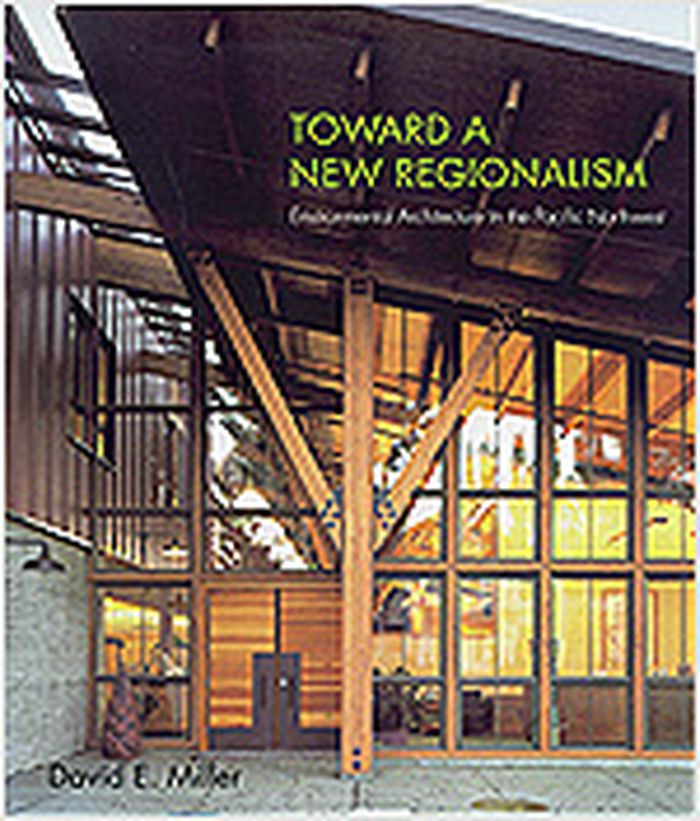
Green design is the major architectural movement of our time. Throughout the world architects are producing sustainable buildings in an attempt to preserve the environment and our globe's natural resources. However, current strategies for forming sustainable solutions are typically too general and fail to take advantage of critical geographical, environmental, and cultural factors particular to a specific place. By focusing on the Pacific northwest, this book provides essential lessons to architects and students on how sustainable architecture can and should be shaped by the unique conditions of a region. Pacific northwest regionalism has consistently supported an architecture aimed at environmental needs and priorities. This book illuminates the history of a "green trail" in the work of key architects of the northwest. It discusses environmental strategies that work in the region, organized according to nature's most basic elements - earth, air, water, and fire - and their underlying principles and forces. The book focuses on technologies, materials, and methods, with a final section that examines thirteen exceptional northwest buildings in detail and in light of their contributions to sustainable architecture. Critical case studies by northwest architects illustrate some of the best environmental design work in North America. Notable architects from Seattle, Portland, and British Columbia are included. These projects feature innovative design in water and site stewardship, intelligent technologies, passive energy strategies, ecologically sound building materials, and environmentally sensitive energy management systems.
Towards a new regionalism : environmental architecture in the Pacific northwest
Actions:
Prix:
$44.95
(disponible sur commande)
Résumé:
Green design is the major architectural movement of our time. Throughout the world architects are producing sustainable buildings in an attempt to preserve the environment and our globe's natural resources. However, current strategies for forming sustainable solutions are typically too general and fail to take advantage of critical geographical, environmental, and cultural factors particular to a specific place. By focusing on the Pacific northwest, this book provides essential lessons to architects and students on how sustainable architecture can and should be shaped by the unique conditions of a region. Pacific northwest regionalism has consistently supported an architecture aimed at environmental needs and priorities. This book illuminates the history of a "green trail" in the work of key architects of the northwest. It discusses environmental strategies that work in the region, organized according to nature's most basic elements - earth, air, water, and fire - and their underlying principles and forces. The book focuses on technologies, materials, and methods, with a final section that examines thirteen exceptional northwest buildings in detail and in light of their contributions to sustainable architecture. Critical case studies by northwest architects illustrate some of the best environmental design work in North America. Notable architects from Seattle, Portland, and British Columbia are included. These projects feature innovative design in water and site stewardship, intelligent technologies, passive energy strategies, ecologically sound building materials, and environmentally sensitive energy management systems.
Classification:
livres
livres
Publication:
juillet 2005, Seattle, London
juillet 2005, Seattle, London
Sujet:
Architecture écologique
Architecture écologique
Classification:
livres
livres
Actions:
Prix:
$60.00
(disponible sur commande)
Résumé:
In 1892 seventeen Haida artists were commissioned to carve a model of HlGaagilda Llnagaay (the village of Skidegate on Haida Gwaii, British Columbia) for the 1893 World’s Fair in Chicago. The Skidegate model, featuring twenty-nine large houses and forty-two poles, is the only known model village in North America carved by nineteenth-century Indigenous residents of the(...)
$60.00
(disponible sur commande)
Résumé:
In 1892 seventeen Haida artists were commissioned to carve a model of HlGaagilda Llnagaay (the village of Skidegate on Haida Gwaii, British Columbia) for the 1893 World’s Fair in Chicago. The Skidegate model, featuring twenty-nine large houses and forty-two poles, is the only known model village in North America carved by nineteenth-century Indigenous residents of the(...)
Titre:
Skidegate House Models: From Haida Gwaii to the Chicago World's Fair and Beyond
Actions:
Prix:
$60.00
(disponible sur commande)
Résumé:
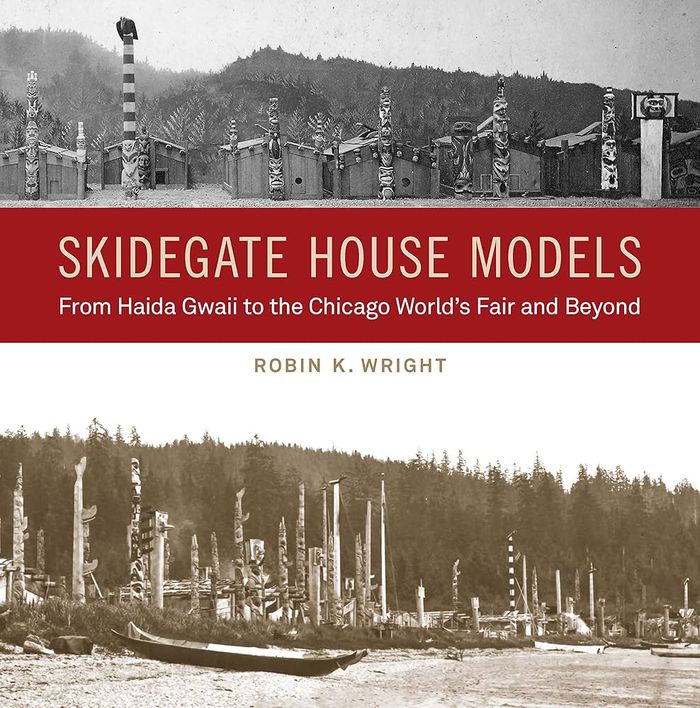
In 1892 seventeen Haida artists were commissioned to carve a model of HlGaagilda Llnagaay (the village of Skidegate on Haida Gwaii, British Columbia) for the 1893 World’s Fair in Chicago. The Skidegate model, featuring twenty-nine large houses and forty-two poles, is the only known model village in North America carved by nineteenth-century Indigenous residents of the village it portrayed. Based on over twenty years of collaborative research with the Skidegate Haida community, the book features vital cultural context. Robin K. Wright explores how Haida people represented their culture to the outside world at a time when they were suffering from devastating population loss due to introduced diseases and from ongoing attempts by the settler government to suppress their culture by making the potlatch illegal. While promoters of the Chicago World’s Fair used the village to celebrate the perceived “progress” of the dominant society, for Skidegate residents it provided a means to preserve their history and culture. After the exposition, many models were dispersed to the Field Museum of Natural History and other collections, but fourteen of the model houses have not yet been located. The book provides extensive archival information and photographs that contextualize the model village and might help locate the missing houses. Wright’s community-engaged research offers valuable insights into Northwest Coast art history.
Skidegate House Models: From Haida Gwaii to the Chicago World's Fair and Beyond
Actions:
Prix:
$60.00
(disponible sur commande)
Résumé:
In 1892 seventeen Haida artists were commissioned to carve a model of HlGaagilda Llnagaay (the village of Skidegate on Haida Gwaii, British Columbia) for the 1893 World’s Fair in Chicago. The Skidegate model, featuring twenty-nine large houses and forty-two poles, is the only known model village in North America carved by nineteenth-century Indigenous residents of the village it portrayed. Based on over twenty years of collaborative research with the Skidegate Haida community, the book features vital cultural context. Robin K. Wright explores how Haida people represented their culture to the outside world at a time when they were suffering from devastating population loss due to introduced diseases and from ongoing attempts by the settler government to suppress their culture by making the potlatch illegal. While promoters of the Chicago World’s Fair used the village to celebrate the perceived “progress” of the dominant society, for Skidegate residents it provided a means to preserve their history and culture. After the exposition, many models were dispersed to the Field Museum of Natural History and other collections, but fourteen of the model houses have not yet been located. The book provides extensive archival information and photographs that contextualize the model village and might help locate the missing houses. Wright’s community-engaged research offers valuable insights into Northwest Coast art history.
Classification:
livres
livres
Publication:
avril 2024
avril 2024
Sujet:
Architecture autochtone
Architecture autochtone
Classification:
livres
livres
Prix:
$39.95
(disponible sur commande)
Résumé:
"Substance over Spectacle" presents the best and brightest architectural work in Canada in the last ten years, providing a representative sample of Canadian architectural practice since the early nineties, and demonstrating a specific Canadian sensibility that is unlike any architectural trend elsewhere in the world. The book also explores issues of viability,(...)
$39.95
(disponible sur commande)
Résumé:
"Substance over Spectacle" presents the best and brightest architectural work in Canada in the last ten years, providing a representative sample of Canadian architectural practice since the early nineties, and demonstrating a specific Canadian sensibility that is unlike any architectural trend elsewhere in the world. The book also explores issues of viability,(...)
Titre:
Substance over spectacle : contemporary Canadian architecture
Actions:
Prix:
$39.95
(disponible sur commande)
Résumé:
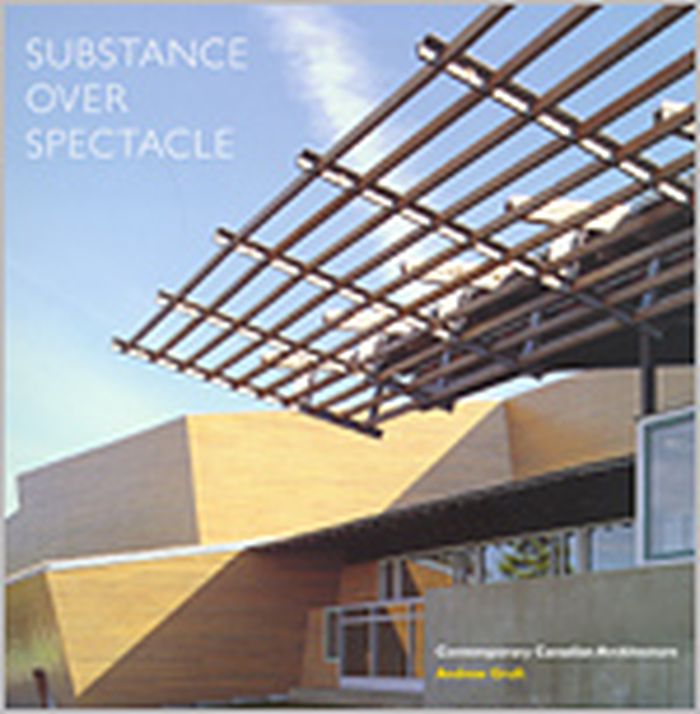
"Substance over Spectacle" presents the best and brightest architectural work in Canada in the last ten years, providing a representative sample of Canadian architectural practice since the early nineties, and demonstrating a specific Canadian sensibility that is unlike any architectural trend elsewhere in the world. The book also explores issues of viability, sustainability, community, and utility as they relate to the Canadian architectural experience. Included is the work of twenty-five architects from every area of the country, each represented by an installation of their own design and construction. In addition to photographs of the finished projects, "Substance over Spectacle" also features images of models and architectural drawings, together with analytical/critical text demonstrating the architectural ideas embedded in the work. Five essays deal with different aspects of contemporary Canadian architecture, written by some of Canada’s leading thinkers on architecture: George Baird, Sherry McKay, Marco Polo, Georges Adamczyk, and Andrew Gruft. Publication of the book coincides with an exhibition of the same name mounted by the Morris and Helen Belkin Art Gallery at the University of British Columbia, in April 2005, during the international conference of the Society of Architectural Historians, which is taking place at UBC. "Substance over Spectacle", the first national critical overview of Canadian architecture in some eighteen years, offers fresh new perspectives on how our architecture defines us as we approach the first mid-decade of the new century.
Substance over spectacle : contemporary Canadian architecture
Actions:
Prix:
$39.95
(disponible sur commande)
Résumé:
"Substance over Spectacle" presents the best and brightest architectural work in Canada in the last ten years, providing a representative sample of Canadian architectural practice since the early nineties, and demonstrating a specific Canadian sensibility that is unlike any architectural trend elsewhere in the world. The book also explores issues of viability, sustainability, community, and utility as they relate to the Canadian architectural experience. Included is the work of twenty-five architects from every area of the country, each represented by an installation of their own design and construction. In addition to photographs of the finished projects, "Substance over Spectacle" also features images of models and architectural drawings, together with analytical/critical text demonstrating the architectural ideas embedded in the work. Five essays deal with different aspects of contemporary Canadian architecture, written by some of Canada’s leading thinkers on architecture: George Baird, Sherry McKay, Marco Polo, Georges Adamczyk, and Andrew Gruft. Publication of the book coincides with an exhibition of the same name mounted by the Morris and Helen Belkin Art Gallery at the University of British Columbia, in April 2005, during the international conference of the Society of Architectural Historians, which is taking place at UBC. "Substance over Spectacle", the first national critical overview of Canadian architecture in some eighteen years, offers fresh new perspectives on how our architecture defines us as we approach the first mid-decade of the new century.
Classification:
livres
livres
Publication:
mai 2005, Vancouver
mai 2005, Vancouver
Sujet:
Architecture du Canada
Architecture du Canada
Classification:
livres
livres
Titre:
The language of ornament
The language of ornament
Actions:
Prix:
$22.99
(disponible sur commande)
Résumé:
Ornament, the art of decorative patterning, includes some of the most spectacular creations of human imagination and skill. Although the fashion for unadorned form pushed ornament to the(...)
$22.99
(disponible sur commande)
Résumé:
Ornament, the art of decorative patterning, includes some of the most spectacular creations of human imagination and skill. Although the fashion for unadorned form pushed ornament to the(...)
Titre:
The language of ornament
Actions:
Prix:
$22.99
(disponible sur commande)
Résumé:
Ornament, the art of decorative patterning, includes some of the most spectacular creations of human imagination and skill. Although the fashion for unadorned form pushed ornament to the margins of Western taste in the twentieth century, an ornamental revival is now under way. This book introduces the global panorama of ornament and will be of value to crafts people, collectors, and students of art history. Trilling's approach is both visual and historical. With over 200 illustrations, he presents the dazzling variety of ornament so that the reader can appreciate both its inherent form and the role it has played in everything from the monumental architecture of Mycenaean Greece to the inlaid vessels of Zhou Dynasty China, from the bronze mirrors of Early Celtic Britain to the carved and woven ornament of the Indians of Alaska and British Columbia. The characteristics of individual styles are balanced against their evolution and interaction from the Paleolithic Age to the present day. Special attention is paid to patterns that migrate across large stretches of space and time, showing how ornament becomes a record of cultural interaction through trade, conquest, and the spread of religions. Finally, Trilling explores the fate of ornament since the beginning of modernism in the early twentieth century. Modernism actually nurtured a vibrant and original ornamental style of its own, one so different from traditional ornament that its true nature went virtually unrecognized. Ornament in the postmodern era is open to any number of possible innovations, combining the modernist legacy with forms and principles from the world of traditional ornament.
The language of ornament
Actions:
Prix:
$22.99
(disponible sur commande)
Résumé:
Ornament, the art of decorative patterning, includes some of the most spectacular creations of human imagination and skill. Although the fashion for unadorned form pushed ornament to the margins of Western taste in the twentieth century, an ornamental revival is now under way. This book introduces the global panorama of ornament and will be of value to crafts people, collectors, and students of art history. Trilling's approach is both visual and historical. With over 200 illustrations, he presents the dazzling variety of ornament so that the reader can appreciate both its inherent form and the role it has played in everything from the monumental architecture of Mycenaean Greece to the inlaid vessels of Zhou Dynasty China, from the bronze mirrors of Early Celtic Britain to the carved and woven ornament of the Indians of Alaska and British Columbia. The characteristics of individual styles are balanced against their evolution and interaction from the Paleolithic Age to the present day. Special attention is paid to patterns that migrate across large stretches of space and time, showing how ornament becomes a record of cultural interaction through trade, conquest, and the spread of religions. Finally, Trilling explores the fate of ornament since the beginning of modernism in the early twentieth century. Modernism actually nurtured a vibrant and original ornamental style of its own, one so different from traditional ornament that its true nature went virtually unrecognized. Ornament in the postmodern era is open to any number of possible innovations, combining the modernist legacy with forms and principles from the world of traditional ornament.
Classification:
livres
livres
Publication:
juin 2001, London
juin 2001, London
Sujet:
Ornementation
Ornementation
Classification:
livres
livres
Prix:
$34.95
(disponible sur commande)
Résumé:
A world-leading expert shares her amazing story of discovering the communication that exists between trees, and shares her own story of family and grief. Now, in her first book, Suzanne Simard brings us into her world, the intimate world of the trees, in which she brilliantly illuminates the fascinating and vital truths—that trees are not simply the source of timber(...)
$34.95
(disponible sur commande)
Résumé:
A world-leading expert shares her amazing story of discovering the communication that exists between trees, and shares her own story of family and grief. Now, in her first book, Suzanne Simard brings us into her world, the intimate world of the trees, in which she brilliantly illuminates the fascinating and vital truths—that trees are not simply the source of timber(...)
Titre:
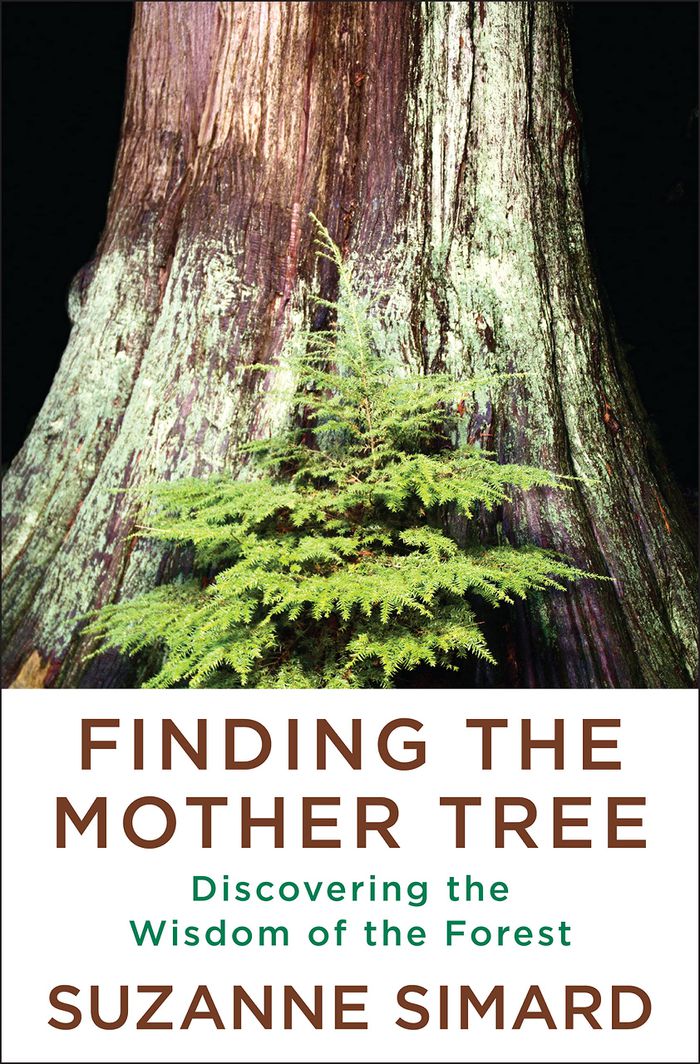
Finding the mother-tree: discovering the wisdom of the forest
Actions:
Prix:
$34.95
(disponible sur commande)
Résumé:
A world-leading expert shares her amazing story of discovering the communication that exists between trees, and shares her own story of family and grief. Now, in her first book, Suzanne Simard brings us into her world, the intimate world of the trees, in which she brilliantly illuminates the fascinating and vital truths—that trees are not simply the source of timber or pulp but are a complicated, interdependent circle of life; that forests are social, cooperative creatures connected through underground networks by which trees communicate their vitality and vulnerabilities with communal lives not that different from our own. Simard describes up close—in revealing and accessible ways—how trees, living side by side for hundreds of years, have evolved; how they perceive one another, learn and adapt their behaviors, recognize neighbors, and remember the past; how they have agency about their future; how they elicit warnings and mount defenses, compete and cooperate with one another with sophistication: characteristics previously ascribed to human intelligence, traits that are the essence of civil societies. And, at the center of it all, the Mother Trees: the mysterious, powerful forces that connect and sustain the others that surround them.Simard, born and raised in the rain forests of British Columbia, spent her days as a child cataloging the trees from the forest; she came to love and respect them and embarked on a journey of discovery and struggle. Her powerful story is one of love and loss, of observation and change, of risk and reward. And it is a testament to how deeply human scientific inquiry exists beyond data and technology: it’s about understanding who we are and our place in the world.
Finding the mother-tree: discovering the wisdom of the forest
Actions:
Prix:
$34.95
(disponible sur commande)
Résumé:
A world-leading expert shares her amazing story of discovering the communication that exists between trees, and shares her own story of family and grief. Now, in her first book, Suzanne Simard brings us into her world, the intimate world of the trees, in which she brilliantly illuminates the fascinating and vital truths—that trees are not simply the source of timber or pulp but are a complicated, interdependent circle of life; that forests are social, cooperative creatures connected through underground networks by which trees communicate their vitality and vulnerabilities with communal lives not that different from our own. Simard describes up close—in revealing and accessible ways—how trees, living side by side for hundreds of years, have evolved; how they perceive one another, learn and adapt their behaviors, recognize neighbors, and remember the past; how they have agency about their future; how they elicit warnings and mount defenses, compete and cooperate with one another with sophistication: characteristics previously ascribed to human intelligence, traits that are the essence of civil societies. And, at the center of it all, the Mother Trees: the mysterious, powerful forces that connect and sustain the others that surround them.Simard, born and raised in the rain forests of British Columbia, spent her days as a child cataloging the trees from the forest; she came to love and respect them and embarked on a journey of discovery and struggle. Her powerful story is one of love and loss, of observation and change, of risk and reward. And it is a testament to how deeply human scientific inquiry exists beyond data and technology: it’s about understanding who we are and our place in the world.
Classification:
livres
livres
Publication:
mai 2021
mai 2021
Sujet:
Théorie du paysage
Théorie du paysage


