


3857 Résultats
Classification:
archives
Niveau de description archivistique:
Fonds
archives
Niveau de description archivistique:
Fonds
Titre:
Fonds Günter Günschel
Fonds Günter Günschel
Numéro de référence:
AP187
Résumé:
The Günter Günschel fonds documents the architectural work of Günter Günschel. The fonds spans the years 1943 to 2006 and consists of drawings, photographic materials, and textual documentation related to over 50 projects, such as Kristallwucherungen (1953-1988), Geodätische Hallen (1955-1978), Wohnheim in Raumzellenbauweise für das Studentenwerk Göttingen (1969), Stadtquartiere (1977-1988), Emtwurf zur Bebauung der Weserinsel Teerhof in Bremen (1977-1978), and Stühle, Computergrafiken (1998).
AP187
Résumé:
The Günter Günschel fonds documents the architectural work of Günter Günschel. The fonds spans the years 1943 to 2006 and consists of drawings, photographic materials, and textual documentation related to over 50 projects, such as Kristallwucherungen (1953-1988), Geodätische Hallen (1955-1978), Wohnheim in Raumzellenbauweise für das Studentenwerk Göttingen (1969), Stadtquartiere (1977-1988), Emtwurf zur Bebauung der Weserinsel Teerhof in Bremen (1977-1978), and Stühle, Computergrafiken (1998).
Personnes et institutions:
Date:
1943-2006
1943-2006
Titre:
Fonds Günter Günschel
Actions:
AP187
Résumé:
The Günter Günschel fonds documents the architectural work of Günter Günschel. The fonds spans the years 1943 to 2006 and consists of drawings, photographic materials, and textual documentation related to over 50 projects, such as Kristallwucherungen (1953-1988), Geodätische Hallen (1955-1978), Wohnheim in Raumzellenbauweise für das Studentenwerk Göttingen (1969), Stadtquartiere (1977-1988), Emtwurf zur Bebauung der Weserinsel Teerhof in Bremen (1977-1978), and Stühle, Computergrafiken (1998).
Fonds Günter Günschel
Actions:
AP187
Résumé:
The Günter Günschel fonds documents the architectural work of Günter Günschel. The fonds spans the years 1943 to 2006 and consists of drawings, photographic materials, and textual documentation related to over 50 projects, such as Kristallwucherungen (1953-1988), Geodätische Hallen (1955-1978), Wohnheim in Raumzellenbauweise für das Studentenwerk Göttingen (1969), Stadtquartiere (1977-1988), Emtwurf zur Bebauung der Weserinsel Teerhof in Bremen (1977-1978), and Stühle, Computergrafiken (1998).
Classification:
archives
Niveau de description archivistique:
Fonds
archives
Niveau de description archivistique:
Fonds
Date:
1943-2006
1943-2006
Personnes et institutions:
Classification:
archives
Niveau de description archivistique:
Fonds
archives
Niveau de description archivistique:
Fonds
Titre:
Fonds Myron Goldsmith
Fonds Myron Goldsmith
Numéro de référence:
AP032
Résumé:
The Myron Goldsmith fonds consists primarily of 30.4 metres of textual documents, including notebooks, research and reading notes, travel journals, documentation files, correspondence, sketchbooks and personal and office papers. There are also 2,800 original drawings and prints, 10,000 photographs and slides, and 5 architectural models. The material ranges in date from c.1933 to 1996. In shedding light on Goldsmith's student years and working career, the fonds' rich collection of documents also provides material on activities in the architectural profession, architectural education, and architectural and engineering theory and building techniques through the 1940s to the 1990s.
AP032
Résumé:
The Myron Goldsmith fonds consists primarily of 30.4 metres of textual documents, including notebooks, research and reading notes, travel journals, documentation files, correspondence, sketchbooks and personal and office papers. There are also 2,800 original drawings and prints, 10,000 photographs and slides, and 5 architectural models. The material ranges in date from c.1933 to 1996. In shedding light on Goldsmith's student years and working career, the fonds' rich collection of documents also provides material on activities in the architectural profession, architectural education, and architectural and engineering theory and building techniques through the 1940s to the 1990s.
Personnes et institutions:
Date:
1933-1996
1933-1996
Titre:
Fonds Myron Goldsmith
Actions:
AP032
Résumé:
The Myron Goldsmith fonds consists primarily of 30.4 metres of textual documents, including notebooks, research and reading notes, travel journals, documentation files, correspondence, sketchbooks and personal and office papers. There are also 2,800 original drawings and prints, 10,000 photographs and slides, and 5 architectural models. The material ranges in date from c.1933 to 1996. In shedding light on Goldsmith's student years and working career, the fonds' rich collection of documents also provides material on activities in the architectural profession, architectural education, and architectural and engineering theory and building techniques through the 1940s to the 1990s.
Fonds Myron Goldsmith
Actions:
AP032
Résumé:
The Myron Goldsmith fonds consists primarily of 30.4 metres of textual documents, including notebooks, research and reading notes, travel journals, documentation files, correspondence, sketchbooks and personal and office papers. There are also 2,800 original drawings and prints, 10,000 photographs and slides, and 5 architectural models. The material ranges in date from c.1933 to 1996. In shedding light on Goldsmith's student years and working career, the fonds' rich collection of documents also provides material on activities in the architectural profession, architectural education, and architectural and engineering theory and building techniques through the 1940s to the 1990s.
Classification:
archives
Niveau de description archivistique:
Fonds
archives
Niveau de description archivistique:
Fonds
Date:
1933-1996
1933-1996
Personnes et institutions:
Classification:
archives
Niveau de description archivistique:
Collection
archives
Niveau de description archivistique:
Collection
Titre:
Collection Georg Lippsmeier
Collection Georg Lippsmeier
Numéro de référence:
CD037
Résumé:
The Georg Lippsmeier collection comprises the research collection of the Institut für Tropenbau. Founded by Georg Lippsmeier the Institute was active from the 1960s to the early 1990s. The collection includes research material on architecture in tropical climates and building technologies.
CD037
Résumé:
The Georg Lippsmeier collection comprises the research collection of the Institut für Tropenbau. Founded by Georg Lippsmeier the Institute was active from the 1960s to the early 1990s. The collection includes research material on architecture in tropical climates and building technologies.
Personnes et institutions:
Date:
1960s-2010
1960s-2010
Titre:
Collection Georg Lippsmeier
Actions:
CD037
Résumé:
The Georg Lippsmeier collection comprises the research collection of the Institut für Tropenbau. Founded by Georg Lippsmeier the Institute was active from the 1960s to the early 1990s. The collection includes research material on architecture in tropical climates and building technologies.
Collection Georg Lippsmeier
Actions:
CD037
Résumé:
The Georg Lippsmeier collection comprises the research collection of the Institut für Tropenbau. Founded by Georg Lippsmeier the Institute was active from the 1960s to the early 1990s. The collection includes research material on architecture in tropical climates and building technologies.
Classification:
archives
Niveau de description archivistique:
Collection
archives
Niveau de description archivistique:
Collection
Date:
1960s-2010
1960s-2010
Personnes et institutions:
Classification:
dessins
dessins
Actions:
Numéro de référence:
DR1987:0353
Description:
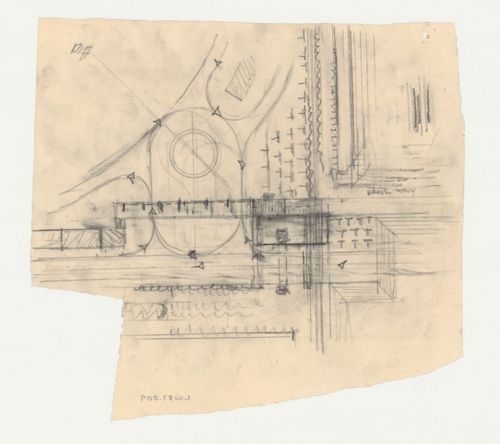
- The lower right corner of the airport is shown, including amphibian landing, station and part of the hangars. Graphite lines with arrows indicate the circulation route of taxiing airplanes as they pick up and deposit passengers under the station. This drawing is one of a series of eight drawings in which the architect works out airplane circulation (DR1987:0347 - DR1987:0349, DR1987:0352 - DR1987:0354, DR1987:0358 and DR1987:0390). For a more detailed discussion of this drawing and its relationship to others in the series, consult Shubert.
DR1987:0353
Description:
- The lower right corner of the airport is shown, including amphibian landing, station and part of the hangars. Graphite lines with arrows indicate the circulation route of taxiing airplanes as they pick up and deposit passengers under the station. This drawing is one of a series of eight drawings in which the architect works out airplane circulation (DR1987:0347 - DR1987:0349, DR1987:0352 - DR1987:0354, DR1987:0358 and DR1987:0390). For a more detailed discussion of this drawing and its relationship to others in the series, consult Shubert.
Personnes et institutions:
Sujet:
architecture
architecture
Date:
1929
1929
Titre:
Lehigh Airports Competition Entry: Detail for airport plan showing airplane circulation
Actions:
DR1987:0353
Description:
- The lower right corner of the airport is shown, including amphibian landing, station and part of the hangars. Graphite lines with arrows indicate the circulation route of taxiing airplanes as they pick up and deposit passengers under the station. This drawing is one of a series of eight drawings in which the architect works out airplane circulation (DR1987:0347 - DR1987:0349, DR1987:0352 - DR1987:0354, DR1987:0358 and DR1987:0390). For a more detailed discussion of this drawing and its relationship to others in the series, consult Shubert.
Lehigh Airports Competition Entry: Detail for airport plan showing airplane circulation
Actions:
DR1987:0353
Description:
- The lower right corner of the airport is shown, including amphibian landing, station and part of the hangars. Graphite lines with arrows indicate the circulation route of taxiing airplanes as they pick up and deposit passengers under the station. This drawing is one of a series of eight drawings in which the architect works out airplane circulation (DR1987:0347 - DR1987:0349, DR1987:0352 - DR1987:0354, DR1987:0358 and DR1987:0390). For a more detailed discussion of this drawing and its relationship to others in the series, consult Shubert.
Classification:
dessins
dessins
Date:
1929
1929
Personnes et institutions:
Sujet:
architecture
architecture
Classification:
dessins, documents textuels, photographies
dessins, documents textuels, photographies
Numéro de référence:
DR1988:0015:001-029
Description:
Part of a miscellaneous group of visual and textual documents collected by Oswald Mathias Ungers, apparently to represent the work of artists/architects in Die gläserne Kette. Primarily formal studies and other material relating to projects for buildings but also includes biographical material. Includes 17 drawings, 12 photographs, 9 prints, and 4 sheets of text. Most of the drawings are studies of architectonic massing of forms, a few are identified by project name, such as "Das Maler Haus" (the Painter's house) and the Christian Science Cathedral. Design of the subject of the photograph, drawing, or reproduction is attributed to Carl Krayl, following Ungers's attributions, unless otherwise stated. Many of the works in this group are inscribed with the name "Krayl" in blue ball-point pen; this might be the hand-writing of Frau L. Krayl who wrote the note on DR1988:0015:026 R/V. The photographs DR1988:0015:001 to DR1988:0015:006 are of the same model. Tim Benson has suggested that the model is a competition entry for changes to Alexanderplatz, Berlin (Shubert). DR1988:0015:007 to DR1988:0015:009 illustrate different views of the same plaster model. DR1988:0015:010 appears to be a photograph of a model for "Das Maler Haus", which is represented by the prints DR1988:0015:024 and DR1988:0015:025.
DR1988:0015:001-029
Description:
Part of a miscellaneous group of visual and textual documents collected by Oswald Mathias Ungers, apparently to represent the work of artists/architects in Die gläserne Kette. Primarily formal studies and other material relating to projects for buildings but also includes biographical material. Includes 17 drawings, 12 photographs, 9 prints, and 4 sheets of text. Most of the drawings are studies of architectonic massing of forms, a few are identified by project name, such as "Das Maler Haus" (the Painter's house) and the Christian Science Cathedral. Design of the subject of the photograph, drawing, or reproduction is attributed to Carl Krayl, following Ungers's attributions, unless otherwise stated. Many of the works in this group are inscribed with the name "Krayl" in blue ball-point pen; this might be the hand-writing of Frau L. Krayl who wrote the note on DR1988:0015:026 R/V. The photographs DR1988:0015:001 to DR1988:0015:006 are of the same model. Tim Benson has suggested that the model is a competition entry for changes to Alexanderplatz, Berlin (Shubert). DR1988:0015:007 to DR1988:0015:009 illustrate different views of the same plaster model. DR1988:0015:010 appears to be a photograph of a model for "Das Maler Haus", which is represented by the prints DR1988:0015:024 and DR1988:0015:025.
Personnes et institutions:
Date:
circa 1918-1945
circa 1918-1945
Titre:
Material from Carl Krayl mostly for Die gläserne Kette
Actions:
DR1988:0015:001-029
Description:
Part of a miscellaneous group of visual and textual documents collected by Oswald Mathias Ungers, apparently to represent the work of artists/architects in Die gläserne Kette. Primarily formal studies and other material relating to projects for buildings but also includes biographical material. Includes 17 drawings, 12 photographs, 9 prints, and 4 sheets of text. Most of the drawings are studies of architectonic massing of forms, a few are identified by project name, such as "Das Maler Haus" (the Painter's house) and the Christian Science Cathedral. Design of the subject of the photograph, drawing, or reproduction is attributed to Carl Krayl, following Ungers's attributions, unless otherwise stated. Many of the works in this group are inscribed with the name "Krayl" in blue ball-point pen; this might be the hand-writing of Frau L. Krayl who wrote the note on DR1988:0015:026 R/V. The photographs DR1988:0015:001 to DR1988:0015:006 are of the same model. Tim Benson has suggested that the model is a competition entry for changes to Alexanderplatz, Berlin (Shubert). DR1988:0015:007 to DR1988:0015:009 illustrate different views of the same plaster model. DR1988:0015:010 appears to be a photograph of a model for "Das Maler Haus", which is represented by the prints DR1988:0015:024 and DR1988:0015:025.
Material from Carl Krayl mostly for Die gläserne Kette
Actions:
DR1988:0015:001-029
Description:
Part of a miscellaneous group of visual and textual documents collected by Oswald Mathias Ungers, apparently to represent the work of artists/architects in Die gläserne Kette. Primarily formal studies and other material relating to projects for buildings but also includes biographical material. Includes 17 drawings, 12 photographs, 9 prints, and 4 sheets of text. Most of the drawings are studies of architectonic massing of forms, a few are identified by project name, such as "Das Maler Haus" (the Painter's house) and the Christian Science Cathedral. Design of the subject of the photograph, drawing, or reproduction is attributed to Carl Krayl, following Ungers's attributions, unless otherwise stated. Many of the works in this group are inscribed with the name "Krayl" in blue ball-point pen; this might be the hand-writing of Frau L. Krayl who wrote the note on DR1988:0015:026 R/V. The photographs DR1988:0015:001 to DR1988:0015:006 are of the same model. Tim Benson has suggested that the model is a competition entry for changes to Alexanderplatz, Berlin (Shubert). DR1988:0015:007 to DR1988:0015:009 illustrate different views of the same plaster model. DR1988:0015:010 appears to be a photograph of a model for "Das Maler Haus", which is represented by the prints DR1988:0015:024 and DR1988:0015:025.
Classification:
dessins, documents textuels, photographies
dessins, documents textuels, photographies
Date:
circa 1918-1945
circa 1918-1945
Personnes et institutions:
Niveau de description archivistique:
Projet
Projet
Numéro de référence:
AP143.S4.D14
Description:
File documents an executed project for House VI, a weekend/vacation house designed for Richard and Suzanne Frank for a six-acre lot at Great Hollow Road, Cornwall, Connecticut. The file also includes material for renovations to House VI undertaken in 1983, 1986, and 1989-1990. Material in this file was produced between 1971 and 1989. The 1,500 square foot plan of House VI comprises a kitchen, dining room, living room and study on the ground floor, and a bedroom and bathroom on the second floor. The most notable formal and compositional ambiguities of House VI are the two staircases, one green, and the other red and positioned on the ceiling. Documents include drawings by Eisenman concerning the geometric operations at the origin of House VI (DR1994:0134:055-067), conceptual drawings (DR1994:0134:001-068; DR1994:0134:086-130; DR1994:0134:131-160), numerous colour studies of the elevations (DR1994:0134:262-343), a presentation panel (DR1994:0134:521) notes (DR1994:0134:779-782), and a first set of working drawings and "check set," completed on 30 Aug. 1973, (DR1994:0134:667-689). Documents also include drawings for major revisions which occurred from 3 October 1973 through August 1974, photocopies of photographs of the house under construction (DR1994:0134:783-805), and a copy of the site survey (DR1994:0134:806). Planned and executed renovations to House VI began in 1983. Documents relating to unexecuted renovations and additions of 1983 includes drawings (DR1994:0134:604-615), a "bid set" and annotated copies (DR1994:0134:552 and DR1994:0134:554-570; copies: DR1994:0134:646-655), and a photocopy of the site plan indicating Eisenman's initial ideas (DR1994:0134:224). Documents relating to unexecuted renovations and additions of 1986 includes seven drawings (DR1994:0134:553 and DR1994:0134:628-633). House VI was extensively rebuilt between 1988 and 1990. The renovations included the replacement of the exterior plywood walls, the insertion of steel reinforcement, a new roof with skylights, the replacement of the original stucco by a coat of Finestone, the repainting of the interior, and the addition of a plexiglas barrier to the staircase. Documents relating to the renovations of 1988-90 include original and photocopied detail drawings, an interior paint schedule by Eisenman's office, correspondence, original and photocopied technical literature, an incomplete copy of the specifications, and a copy of the original survey map (identical to DR1994:0134:806). There are also numerous photographs of the building before, during and after renovation, one photograph of presentation axonometrics for House VI, and one photograph of Eisenman's office. Documents relating to a publication on House VI include: notes (DR1994:0134:807-853), the book mock-up (DR1994:0134:854-855), and fragments of the original coloured transformation diagrams (DR1994:0134:530-531). File contains conceptual drawings, including plans, axonometrics, and sections - many black felt-tip pen and/or coloured felt-tip pen on tracing paper; and reprographic copies - mostly photocopies on wove paper. Design development drawings include site plans, plans, elevations, sections, and axonometrics - some graphite and/or coloured pencil on tracing paper and some pen and black ink and/or graphite on tracing vellum; and reprographic copies - some photocopies on wove paper and some sepia prints on mylar. Schematic drawings include site plans, plans, elevations, and sections - all pen and black ink on mylar; and reprographic copies - many blackline prints on wove paper. Working drawings include site plans, plans, elevations, sections, electrical drawings, HVAC drawings, structural drawings, and detail drawings - some coloured pencil on blueline prints on wove paper; and reprographic copies - mostly blueline prints on wove paper. Presentation drawings include plans, elevations, and axonometrics - some pen and black ink and/or transparent coloured adhesive film on mylar and some translucent adhesive coloured film on cardboard; and reprographic copies - mostly photocopies on wove paper. Model includes one finished model - grey, white, and silver paint on wood and Fome-Cor with plastic sheets. Notes and documents include manuscripts - mostly black felt-tip pen on wove paper; reprographic copies - mostly photocopies on wove paper; and a land surveyor plan - one blueline print on wove paper. Book project includes layout drawings - some black felt-tip pen on ruled paper; reprographic copies - all photocopies on wove paper; manuscripts - mostly black felt-tip pen on wove or ruled paper; one sample piece of grey cardboard used as backing for some of the presentation drawings; and sets of drawings in the form of book dummies - mostly pen and coloured ink and/or black felt-tip pen on photocopies on wove paper. Detail drawings include elevations, sections, details - mostly graphite on tracing paper. The linear cm of documents includes sets, reprographic copies and manuscripts. Notes and documents include elevations, sections, and details - some graphite on photocopies on wove paper; two sets of drawing copies, some with changes - mostly photocopies on wove paper; reprographic copies - mostly photocopies on wove paper; manuscripts - many graphite on wove paper; ephemera includes trade pamphlets; and photographs include colour images of House X prior to and during one of the renovations.
AP143.S4.D14
Description:
File documents an executed project for House VI, a weekend/vacation house designed for Richard and Suzanne Frank for a six-acre lot at Great Hollow Road, Cornwall, Connecticut. The file also includes material for renovations to House VI undertaken in 1983, 1986, and 1989-1990. Material in this file was produced between 1971 and 1989. The 1,500 square foot plan of House VI comprises a kitchen, dining room, living room and study on the ground floor, and a bedroom and bathroom on the second floor. The most notable formal and compositional ambiguities of House VI are the two staircases, one green, and the other red and positioned on the ceiling. Documents include drawings by Eisenman concerning the geometric operations at the origin of House VI (DR1994:0134:055-067), conceptual drawings (DR1994:0134:001-068; DR1994:0134:086-130; DR1994:0134:131-160), numerous colour studies of the elevations (DR1994:0134:262-343), a presentation panel (DR1994:0134:521) notes (DR1994:0134:779-782), and a first set of working drawings and "check set," completed on 30 Aug. 1973, (DR1994:0134:667-689). Documents also include drawings for major revisions which occurred from 3 October 1973 through August 1974, photocopies of photographs of the house under construction (DR1994:0134:783-805), and a copy of the site survey (DR1994:0134:806). Planned and executed renovations to House VI began in 1983. Documents relating to unexecuted renovations and additions of 1983 includes drawings (DR1994:0134:604-615), a "bid set" and annotated copies (DR1994:0134:552 and DR1994:0134:554-570; copies: DR1994:0134:646-655), and a photocopy of the site plan indicating Eisenman's initial ideas (DR1994:0134:224). Documents relating to unexecuted renovations and additions of 1986 includes seven drawings (DR1994:0134:553 and DR1994:0134:628-633). House VI was extensively rebuilt between 1988 and 1990. The renovations included the replacement of the exterior plywood walls, the insertion of steel reinforcement, a new roof with skylights, the replacement of the original stucco by a coat of Finestone, the repainting of the interior, and the addition of a plexiglas barrier to the staircase. Documents relating to the renovations of 1988-90 include original and photocopied detail drawings, an interior paint schedule by Eisenman's office, correspondence, original and photocopied technical literature, an incomplete copy of the specifications, and a copy of the original survey map (identical to DR1994:0134:806). There are also numerous photographs of the building before, during and after renovation, one photograph of presentation axonometrics for House VI, and one photograph of Eisenman's office. Documents relating to a publication on House VI include: notes (DR1994:0134:807-853), the book mock-up (DR1994:0134:854-855), and fragments of the original coloured transformation diagrams (DR1994:0134:530-531). File contains conceptual drawings, including plans, axonometrics, and sections - many black felt-tip pen and/or coloured felt-tip pen on tracing paper; and reprographic copies - mostly photocopies on wove paper. Design development drawings include site plans, plans, elevations, sections, and axonometrics - some graphite and/or coloured pencil on tracing paper and some pen and black ink and/or graphite on tracing vellum; and reprographic copies - some photocopies on wove paper and some sepia prints on mylar. Schematic drawings include site plans, plans, elevations, and sections - all pen and black ink on mylar; and reprographic copies - many blackline prints on wove paper. Working drawings include site plans, plans, elevations, sections, electrical drawings, HVAC drawings, structural drawings, and detail drawings - some coloured pencil on blueline prints on wove paper; and reprographic copies - mostly blueline prints on wove paper. Presentation drawings include plans, elevations, and axonometrics - some pen and black ink and/or transparent coloured adhesive film on mylar and some translucent adhesive coloured film on cardboard; and reprographic copies - mostly photocopies on wove paper. Model includes one finished model - grey, white, and silver paint on wood and Fome-Cor with plastic sheets. Notes and documents include manuscripts - mostly black felt-tip pen on wove paper; reprographic copies - mostly photocopies on wove paper; and a land surveyor plan - one blueline print on wove paper. Book project includes layout drawings - some black felt-tip pen on ruled paper; reprographic copies - all photocopies on wove paper; manuscripts - mostly black felt-tip pen on wove or ruled paper; one sample piece of grey cardboard used as backing for some of the presentation drawings; and sets of drawings in the form of book dummies - mostly pen and coloured ink and/or black felt-tip pen on photocopies on wove paper. Detail drawings include elevations, sections, details - mostly graphite on tracing paper. The linear cm of documents includes sets, reprographic copies and manuscripts. Notes and documents include elevations, sections, and details - some graphite on photocopies on wove paper; two sets of drawing copies, some with changes - mostly photocopies on wove paper; reprographic copies - mostly photocopies on wove paper; manuscripts - many graphite on wove paper; ephemera includes trade pamphlets; and photographs include colour images of House X prior to and during one of the renovations.
Personnes et institutions:
Date:
1971-1989
1971-1989
Titre:
House VI, Cornwall, Connecticut
Actions:
AP143.S4.D14
Description:
File documents an executed project for House VI, a weekend/vacation house designed for Richard and Suzanne Frank for a six-acre lot at Great Hollow Road, Cornwall, Connecticut. The file also includes material for renovations to House VI undertaken in 1983, 1986, and 1989-1990. Material in this file was produced between 1971 and 1989. The 1,500 square foot plan of House VI comprises a kitchen, dining room, living room and study on the ground floor, and a bedroom and bathroom on the second floor. The most notable formal and compositional ambiguities of House VI are the two staircases, one green, and the other red and positioned on the ceiling. Documents include drawings by Eisenman concerning the geometric operations at the origin of House VI (DR1994:0134:055-067), conceptual drawings (DR1994:0134:001-068; DR1994:0134:086-130; DR1994:0134:131-160), numerous colour studies of the elevations (DR1994:0134:262-343), a presentation panel (DR1994:0134:521) notes (DR1994:0134:779-782), and a first set of working drawings and "check set," completed on 30 Aug. 1973, (DR1994:0134:667-689). Documents also include drawings for major revisions which occurred from 3 October 1973 through August 1974, photocopies of photographs of the house under construction (DR1994:0134:783-805), and a copy of the site survey (DR1994:0134:806). Planned and executed renovations to House VI began in 1983. Documents relating to unexecuted renovations and additions of 1983 includes drawings (DR1994:0134:604-615), a "bid set" and annotated copies (DR1994:0134:552 and DR1994:0134:554-570; copies: DR1994:0134:646-655), and a photocopy of the site plan indicating Eisenman's initial ideas (DR1994:0134:224). Documents relating to unexecuted renovations and additions of 1986 includes seven drawings (DR1994:0134:553 and DR1994:0134:628-633). House VI was extensively rebuilt between 1988 and 1990. The renovations included the replacement of the exterior plywood walls, the insertion of steel reinforcement, a new roof with skylights, the replacement of the original stucco by a coat of Finestone, the repainting of the interior, and the addition of a plexiglas barrier to the staircase. Documents relating to the renovations of 1988-90 include original and photocopied detail drawings, an interior paint schedule by Eisenman's office, correspondence, original and photocopied technical literature, an incomplete copy of the specifications, and a copy of the original survey map (identical to DR1994:0134:806). There are also numerous photographs of the building before, during and after renovation, one photograph of presentation axonometrics for House VI, and one photograph of Eisenman's office. Documents relating to a publication on House VI include: notes (DR1994:0134:807-853), the book mock-up (DR1994:0134:854-855), and fragments of the original coloured transformation diagrams (DR1994:0134:530-531). File contains conceptual drawings, including plans, axonometrics, and sections - many black felt-tip pen and/or coloured felt-tip pen on tracing paper; and reprographic copies - mostly photocopies on wove paper. Design development drawings include site plans, plans, elevations, sections, and axonometrics - some graphite and/or coloured pencil on tracing paper and some pen and black ink and/or graphite on tracing vellum; and reprographic copies - some photocopies on wove paper and some sepia prints on mylar. Schematic drawings include site plans, plans, elevations, and sections - all pen and black ink on mylar; and reprographic copies - many blackline prints on wove paper. Working drawings include site plans, plans, elevations, sections, electrical drawings, HVAC drawings, structural drawings, and detail drawings - some coloured pencil on blueline prints on wove paper; and reprographic copies - mostly blueline prints on wove paper. Presentation drawings include plans, elevations, and axonometrics - some pen and black ink and/or transparent coloured adhesive film on mylar and some translucent adhesive coloured film on cardboard; and reprographic copies - mostly photocopies on wove paper. Model includes one finished model - grey, white, and silver paint on wood and Fome-Cor with plastic sheets. Notes and documents include manuscripts - mostly black felt-tip pen on wove paper; reprographic copies - mostly photocopies on wove paper; and a land surveyor plan - one blueline print on wove paper. Book project includes layout drawings - some black felt-tip pen on ruled paper; reprographic copies - all photocopies on wove paper; manuscripts - mostly black felt-tip pen on wove or ruled paper; one sample piece of grey cardboard used as backing for some of the presentation drawings; and sets of drawings in the form of book dummies - mostly pen and coloured ink and/or black felt-tip pen on photocopies on wove paper. Detail drawings include elevations, sections, details - mostly graphite on tracing paper. The linear cm of documents includes sets, reprographic copies and manuscripts. Notes and documents include elevations, sections, and details - some graphite on photocopies on wove paper; two sets of drawing copies, some with changes - mostly photocopies on wove paper; reprographic copies - mostly photocopies on wove paper; manuscripts - many graphite on wove paper; ephemera includes trade pamphlets; and photographs include colour images of House X prior to and during one of the renovations.
House VI, Cornwall, Connecticut
Actions:
AP143.S4.D14
Description:
File documents an executed project for House VI, a weekend/vacation house designed for Richard and Suzanne Frank for a six-acre lot at Great Hollow Road, Cornwall, Connecticut. The file also includes material for renovations to House VI undertaken in 1983, 1986, and 1989-1990. Material in this file was produced between 1971 and 1989. The 1,500 square foot plan of House VI comprises a kitchen, dining room, living room and study on the ground floor, and a bedroom and bathroom on the second floor. The most notable formal and compositional ambiguities of House VI are the two staircases, one green, and the other red and positioned on the ceiling. Documents include drawings by Eisenman concerning the geometric operations at the origin of House VI (DR1994:0134:055-067), conceptual drawings (DR1994:0134:001-068; DR1994:0134:086-130; DR1994:0134:131-160), numerous colour studies of the elevations (DR1994:0134:262-343), a presentation panel (DR1994:0134:521) notes (DR1994:0134:779-782), and a first set of working drawings and "check set," completed on 30 Aug. 1973, (DR1994:0134:667-689). Documents also include drawings for major revisions which occurred from 3 October 1973 through August 1974, photocopies of photographs of the house under construction (DR1994:0134:783-805), and a copy of the site survey (DR1994:0134:806). Planned and executed renovations to House VI began in 1983. Documents relating to unexecuted renovations and additions of 1983 includes drawings (DR1994:0134:604-615), a "bid set" and annotated copies (DR1994:0134:552 and DR1994:0134:554-570; copies: DR1994:0134:646-655), and a photocopy of the site plan indicating Eisenman's initial ideas (DR1994:0134:224). Documents relating to unexecuted renovations and additions of 1986 includes seven drawings (DR1994:0134:553 and DR1994:0134:628-633). House VI was extensively rebuilt between 1988 and 1990. The renovations included the replacement of the exterior plywood walls, the insertion of steel reinforcement, a new roof with skylights, the replacement of the original stucco by a coat of Finestone, the repainting of the interior, and the addition of a plexiglas barrier to the staircase. Documents relating to the renovations of 1988-90 include original and photocopied detail drawings, an interior paint schedule by Eisenman's office, correspondence, original and photocopied technical literature, an incomplete copy of the specifications, and a copy of the original survey map (identical to DR1994:0134:806). There are also numerous photographs of the building before, during and after renovation, one photograph of presentation axonometrics for House VI, and one photograph of Eisenman's office. Documents relating to a publication on House VI include: notes (DR1994:0134:807-853), the book mock-up (DR1994:0134:854-855), and fragments of the original coloured transformation diagrams (DR1994:0134:530-531). File contains conceptual drawings, including plans, axonometrics, and sections - many black felt-tip pen and/or coloured felt-tip pen on tracing paper; and reprographic copies - mostly photocopies on wove paper. Design development drawings include site plans, plans, elevations, sections, and axonometrics - some graphite and/or coloured pencil on tracing paper and some pen and black ink and/or graphite on tracing vellum; and reprographic copies - some photocopies on wove paper and some sepia prints on mylar. Schematic drawings include site plans, plans, elevations, and sections - all pen and black ink on mylar; and reprographic copies - many blackline prints on wove paper. Working drawings include site plans, plans, elevations, sections, electrical drawings, HVAC drawings, structural drawings, and detail drawings - some coloured pencil on blueline prints on wove paper; and reprographic copies - mostly blueline prints on wove paper. Presentation drawings include plans, elevations, and axonometrics - some pen and black ink and/or transparent coloured adhesive film on mylar and some translucent adhesive coloured film on cardboard; and reprographic copies - mostly photocopies on wove paper. Model includes one finished model - grey, white, and silver paint on wood and Fome-Cor with plastic sheets. Notes and documents include manuscripts - mostly black felt-tip pen on wove paper; reprographic copies - mostly photocopies on wove paper; and a land surveyor plan - one blueline print on wove paper. Book project includes layout drawings - some black felt-tip pen on ruled paper; reprographic copies - all photocopies on wove paper; manuscripts - mostly black felt-tip pen on wove or ruled paper; one sample piece of grey cardboard used as backing for some of the presentation drawings; and sets of drawings in the form of book dummies - mostly pen and coloured ink and/or black felt-tip pen on photocopies on wove paper. Detail drawings include elevations, sections, details - mostly graphite on tracing paper. The linear cm of documents includes sets, reprographic copies and manuscripts. Notes and documents include elevations, sections, and details - some graphite on photocopies on wove paper; two sets of drawing copies, some with changes - mostly photocopies on wove paper; reprographic copies - mostly photocopies on wove paper; manuscripts - many graphite on wove paper; ephemera includes trade pamphlets; and photographs include colour images of House X prior to and during one of the renovations.
Niveau de description archivistique:
File 14
File 14
Date:
1971-1989
1971-1989
Personnes et institutions:
Classification:
archives
Niveau de description archivistique:
Fonds
archives
Niveau de description archivistique:
Fonds
Numéro de référence:
AP183
Résumé:
The Ulrich Königs Chemnitz Stadium project records, 1995-1996, document the competition entry and design for an innovative stadium in Chemnitz, Germany. The project was a collaboration between Peter Kulka, Ulrich Königs, Cecil Balmond, and Arup Group, Ltd. The design was primarily driven by the theoretical and methodological processes made possible by computer-aided design, rather than aesthetics. The project records have both digital and physical components, which chiefly include renderings, wireframe drawings, digital 3D models, photographs, slides, video, and a booklet.
AP183
Résumé:
The Ulrich Königs Chemnitz Stadium project records, 1995-1996, document the competition entry and design for an innovative stadium in Chemnitz, Germany. The project was a collaboration between Peter Kulka, Ulrich Königs, Cecil Balmond, and Arup Group, Ltd. The design was primarily driven by the theoretical and methodological processes made possible by computer-aided design, rather than aesthetics. The project records have both digital and physical components, which chiefly include renderings, wireframe drawings, digital 3D models, photographs, slides, video, and a booklet.
Personnes et institutions:
Date:
1995-1996
1995-1996
Titre:
Documents d’archives d’Ulrich Königs pour le projet Chemnitz Stadium
Actions:
AP183
Résumé:
The Ulrich Königs Chemnitz Stadium project records, 1995-1996, document the competition entry and design for an innovative stadium in Chemnitz, Germany. The project was a collaboration between Peter Kulka, Ulrich Königs, Cecil Balmond, and Arup Group, Ltd. The design was primarily driven by the theoretical and methodological processes made possible by computer-aided design, rather than aesthetics. The project records have both digital and physical components, which chiefly include renderings, wireframe drawings, digital 3D models, photographs, slides, video, and a booklet.
Documents d’archives d’Ulrich Königs pour le projet Chemnitz Stadium
Actions:
AP183
Résumé:
The Ulrich Königs Chemnitz Stadium project records, 1995-1996, document the competition entry and design for an innovative stadium in Chemnitz, Germany. The project was a collaboration between Peter Kulka, Ulrich Königs, Cecil Balmond, and Arup Group, Ltd. The design was primarily driven by the theoretical and methodological processes made possible by computer-aided design, rather than aesthetics. The project records have both digital and physical components, which chiefly include renderings, wireframe drawings, digital 3D models, photographs, slides, video, and a booklet.
Classification:
archives
Niveau de description archivistique:
Fonds
archives
Niveau de description archivistique:
Fonds
Date:
1995-1996
1995-1996
Personnes et institutions:
Niveau de description archivistique:
Projet
Projet
Numéro de référence:
AP178.S1.1988.PR07
Description:
This project series documents the Reconstrução do Chiado in Lisbon, Portugal. The office's archives identified this project as 58/80. The office assigned the dates 1988-1998 for this project. Chiado is a historic district in the center of Lisbon, Portugal, and a linchpin between the Baixa Pombalina and the Bairro Alto Hill. After a devastating earthquake in 1755, the city was rebuilt and reorganized by military architects and engineers. The Pombaline style, specific to Lisbon, includes pre-fabricated anti-seismic structure and sober style. On August 25, 1988, a fire started in one of the oldest department stores of Lisbon, the Grandella building, damaging partially or totally seventeen buildings, between the Rua Do Carmo, Rua Nova do Almada and Rua Garret. Álvaro Siza was selected by the mayor of Lisbon, Nuno Krus Abecasis, to reorganize and rebuild the district. After public consultations, it was decided to maintain the historic image of the Chiado by restoring the façades and ornamentations. Adjustments by Siza include introducing residential and cultural functions to the district, with the exception of the Grandes Armazéns building and the Grandella building, which had their own program. As Siza said himself: "It’s not about drawing a new section of the city, but rather just introducing corrections and adjustments, reinforce the whole city." Siza started to work on the layout plan in January 1989 and presented it to the municipal authorities of Lisbon in April 1990. The reconstruction of the Chiado had several goals, but there were two general concepts behind his plan. The aesthetic aspect of the program included restorations of buildings to reinstitute the historical spirit of the district. The spatial reorganization, in a really Siza way, focused on finding architectural solutions that would bring more functionality to the city. The idea was to think of the reconstruction in relation with the urban revitalization of the Baixa Pombalina and to maintain as much as possible the patrimonial value of the district. Siza's intentions were to stimulate the commercial and residential functions of the district, which was on the decline over the last years prior to the fire. Some of the measures taken were: improving the traffic fluidity; creating parking spaces for the future residents and shopkeepers, improving the access to stores and others facilities, creating a staired passageway between Rua do Crucifixo and Rua Nova do Almada, and a pedestrian passageway between the rear of those buildings giving onto Rua Garret and Rua Do Carmo. They also studied the integration of a subway station to the district. Municipal authorities decided to rebuild or restore the original facades, reorganize the interior and improve the safety of the buildings. The biggest challenge was to convert the Grandes Armazéns do Chiado into a hotel and rebuild the Grandella with its original 20th century façade, while rethinking the interior division(s?) in order to add different functions to the building, including offices and leisure and cultural facilities. The reconstruction plan was divided into six distinct blocks: Bloco A, Bloco B, Bloco C, Bloco D, Bloco E, and Bloco F. Each Block includes several buildings and each was individually numbered. The first three blocks (A, B, C) were the most damaged, and required massive work, stonework, technical and mechanical work, replacing doors and windows, as well as repainting, repaving, and restoring decorative elements. Reconstruction for Blocks D, E, and F, which are less documented in the fonds, focused on making changes that complemented the neighboring building. Siza also worked specifically on the Edifício Castro e Melo, Câmara Chaves, Edifício Leonel, Edifício Grandella, and Recuperaçäo do Edifício dos Grandes Armazéns. The rest of the buildings were restored by other architects and firms. "Chiado" is often referring to two different things: the districts between the Baixa Pombalina and the Bairro Alto Hill, as well as a building, also known as the Hotel do Chiado. To avoid confusion, in this finding aid the term "Chiado" is always referring to the district, and the Chiado building will be referred to as the Grandes Armazéns do Chiado building. To fully understand the nature of the project, it is important to comprehend the reconstruction of the Chiado as a whole project, rather than as individual components. Siza himself saw the Chiado as one big building. Bloco A (plots 7,8,9,10,11 and 20) Bloco B (plots 12, 13, 14/15 and 16) Bloco C (plots 2, 3 and 6) Bloco D (plots 4 and 5) Bloco E (plots 1,17,18 and 19) This project series includes eleven subseries : Subseries 1) AP178.S1.1988.PR07.SS1 Master plans and exterior spaces, Reconstruction of Chiado, 2) AP178.S1.1988.PR07.SS2 Bloco A, 3) AP178.S1.1988.PR07.SS3 Edificio Camara Chaves building, 4) AP178.S1.1988.PR07.SS4 Edifício Castro e Melo, 5) AP178.S1.1988.PR07.SS5 Bloco B, 6) AP178.S1.1988.PR07.SS6– Bloco, B Chiado, Edifício Leonel, Lisboa, Portugal (1988-1998), 7) AP178.S1.1988.PR07.SS7 Bloco C, 8) AP178.S1.1988.PR07.SS8 - Bloco C, Chiado, Recuperaçäo do Edifício Grandella, 9) AP178.S1.1988.PR07.SS9 - Bloco C, Chiado, Recuperaçäo do Edifício dos Grandes Armazéns, 10) AP178.S1.1988.PR07.SS10 Ligacao Pedonal do Patio B, 11) AP178.S1.1988.PR07.SS11 Chiado, Estação de Metropolitano Baixa Chiado. It is important to note that the project AP178.S1.1994.PR08 Renovação do Elevador de Santa Justa, Chiado, 1994 is also related to the Reconstruction of the Chiado. All documentation for this project series, including the project subseries, has been kept together to maintain the office's arrangement.
AP178.S1.1988.PR07
Description:
This project series documents the Reconstrução do Chiado in Lisbon, Portugal. The office's archives identified this project as 58/80. The office assigned the dates 1988-1998 for this project. Chiado is a historic district in the center of Lisbon, Portugal, and a linchpin between the Baixa Pombalina and the Bairro Alto Hill. After a devastating earthquake in 1755, the city was rebuilt and reorganized by military architects and engineers. The Pombaline style, specific to Lisbon, includes pre-fabricated anti-seismic structure and sober style. On August 25, 1988, a fire started in one of the oldest department stores of Lisbon, the Grandella building, damaging partially or totally seventeen buildings, between the Rua Do Carmo, Rua Nova do Almada and Rua Garret. Álvaro Siza was selected by the mayor of Lisbon, Nuno Krus Abecasis, to reorganize and rebuild the district. After public consultations, it was decided to maintain the historic image of the Chiado by restoring the façades and ornamentations. Adjustments by Siza include introducing residential and cultural functions to the district, with the exception of the Grandes Armazéns building and the Grandella building, which had their own program. As Siza said himself: "It’s not about drawing a new section of the city, but rather just introducing corrections and adjustments, reinforce the whole city." Siza started to work on the layout plan in January 1989 and presented it to the municipal authorities of Lisbon in April 1990. The reconstruction of the Chiado had several goals, but there were two general concepts behind his plan. The aesthetic aspect of the program included restorations of buildings to reinstitute the historical spirit of the district. The spatial reorganization, in a really Siza way, focused on finding architectural solutions that would bring more functionality to the city. The idea was to think of the reconstruction in relation with the urban revitalization of the Baixa Pombalina and to maintain as much as possible the patrimonial value of the district. Siza's intentions were to stimulate the commercial and residential functions of the district, which was on the decline over the last years prior to the fire. Some of the measures taken were: improving the traffic fluidity; creating parking spaces for the future residents and shopkeepers, improving the access to stores and others facilities, creating a staired passageway between Rua do Crucifixo and Rua Nova do Almada, and a pedestrian passageway between the rear of those buildings giving onto Rua Garret and Rua Do Carmo. They also studied the integration of a subway station to the district. Municipal authorities decided to rebuild or restore the original facades, reorganize the interior and improve the safety of the buildings. The biggest challenge was to convert the Grandes Armazéns do Chiado into a hotel and rebuild the Grandella with its original 20th century façade, while rethinking the interior division(s?) in order to add different functions to the building, including offices and leisure and cultural facilities. The reconstruction plan was divided into six distinct blocks: Bloco A, Bloco B, Bloco C, Bloco D, Bloco E, and Bloco F. Each Block includes several buildings and each was individually numbered. The first three blocks (A, B, C) were the most damaged, and required massive work, stonework, technical and mechanical work, replacing doors and windows, as well as repainting, repaving, and restoring decorative elements. Reconstruction for Blocks D, E, and F, which are less documented in the fonds, focused on making changes that complemented the neighboring building. Siza also worked specifically on the Edifício Castro e Melo, Câmara Chaves, Edifício Leonel, Edifício Grandella, and Recuperaçäo do Edifício dos Grandes Armazéns. The rest of the buildings were restored by other architects and firms. "Chiado" is often referring to two different things: the districts between the Baixa Pombalina and the Bairro Alto Hill, as well as a building, also known as the Hotel do Chiado. To avoid confusion, in this finding aid the term "Chiado" is always referring to the district, and the Chiado building will be referred to as the Grandes Armazéns do Chiado building. To fully understand the nature of the project, it is important to comprehend the reconstruction of the Chiado as a whole project, rather than as individual components. Siza himself saw the Chiado as one big building. Bloco A (plots 7,8,9,10,11 and 20) Bloco B (plots 12, 13, 14/15 and 16) Bloco C (plots 2, 3 and 6) Bloco D (plots 4 and 5) Bloco E (plots 1,17,18 and 19) This project series includes eleven subseries : Subseries 1) AP178.S1.1988.PR07.SS1 Master plans and exterior spaces, Reconstruction of Chiado, 2) AP178.S1.1988.PR07.SS2 Bloco A, 3) AP178.S1.1988.PR07.SS3 Edificio Camara Chaves building, 4) AP178.S1.1988.PR07.SS4 Edifício Castro e Melo, 5) AP178.S1.1988.PR07.SS5 Bloco B, 6) AP178.S1.1988.PR07.SS6– Bloco, B Chiado, Edifício Leonel, Lisboa, Portugal (1988-1998), 7) AP178.S1.1988.PR07.SS7 Bloco C, 8) AP178.S1.1988.PR07.SS8 - Bloco C, Chiado, Recuperaçäo do Edifício Grandella, 9) AP178.S1.1988.PR07.SS9 - Bloco C, Chiado, Recuperaçäo do Edifício dos Grandes Armazéns, 10) AP178.S1.1988.PR07.SS10 Ligacao Pedonal do Patio B, 11) AP178.S1.1988.PR07.SS11 Chiado, Estação de Metropolitano Baixa Chiado. It is important to note that the project AP178.S1.1994.PR08 Renovação do Elevador de Santa Justa, Chiado, 1994 is also related to the Reconstruction of the Chiado. All documentation for this project series, including the project subseries, has been kept together to maintain the office's arrangement.
Personnes et institutions:
Date:
1942-2012
1942-2012
Titre:
Reconstrução do Chiado [Reconstruction of the Chiado area], Lisbon, Portugal (1988-1998)
Actions:
AP178.S1.1988.PR07
Description:
This project series documents the Reconstrução do Chiado in Lisbon, Portugal. The office's archives identified this project as 58/80. The office assigned the dates 1988-1998 for this project. Chiado is a historic district in the center of Lisbon, Portugal, and a linchpin between the Baixa Pombalina and the Bairro Alto Hill. After a devastating earthquake in 1755, the city was rebuilt and reorganized by military architects and engineers. The Pombaline style, specific to Lisbon, includes pre-fabricated anti-seismic structure and sober style. On August 25, 1988, a fire started in one of the oldest department stores of Lisbon, the Grandella building, damaging partially or totally seventeen buildings, between the Rua Do Carmo, Rua Nova do Almada and Rua Garret. Álvaro Siza was selected by the mayor of Lisbon, Nuno Krus Abecasis, to reorganize and rebuild the district. After public consultations, it was decided to maintain the historic image of the Chiado by restoring the façades and ornamentations. Adjustments by Siza include introducing residential and cultural functions to the district, with the exception of the Grandes Armazéns building and the Grandella building, which had their own program. As Siza said himself: "It’s not about drawing a new section of the city, but rather just introducing corrections and adjustments, reinforce the whole city." Siza started to work on the layout plan in January 1989 and presented it to the municipal authorities of Lisbon in April 1990. The reconstruction of the Chiado had several goals, but there were two general concepts behind his plan. The aesthetic aspect of the program included restorations of buildings to reinstitute the historical spirit of the district. The spatial reorganization, in a really Siza way, focused on finding architectural solutions that would bring more functionality to the city. The idea was to think of the reconstruction in relation with the urban revitalization of the Baixa Pombalina and to maintain as much as possible the patrimonial value of the district. Siza's intentions were to stimulate the commercial and residential functions of the district, which was on the decline over the last years prior to the fire. Some of the measures taken were: improving the traffic fluidity; creating parking spaces for the future residents and shopkeepers, improving the access to stores and others facilities, creating a staired passageway between Rua do Crucifixo and Rua Nova do Almada, and a pedestrian passageway between the rear of those buildings giving onto Rua Garret and Rua Do Carmo. They also studied the integration of a subway station to the district. Municipal authorities decided to rebuild or restore the original facades, reorganize the interior and improve the safety of the buildings. The biggest challenge was to convert the Grandes Armazéns do Chiado into a hotel and rebuild the Grandella with its original 20th century façade, while rethinking the interior division(s?) in order to add different functions to the building, including offices and leisure and cultural facilities. The reconstruction plan was divided into six distinct blocks: Bloco A, Bloco B, Bloco C, Bloco D, Bloco E, and Bloco F. Each Block includes several buildings and each was individually numbered. The first three blocks (A, B, C) were the most damaged, and required massive work, stonework, technical and mechanical work, replacing doors and windows, as well as repainting, repaving, and restoring decorative elements. Reconstruction for Blocks D, E, and F, which are less documented in the fonds, focused on making changes that complemented the neighboring building. Siza also worked specifically on the Edifício Castro e Melo, Câmara Chaves, Edifício Leonel, Edifício Grandella, and Recuperaçäo do Edifício dos Grandes Armazéns. The rest of the buildings were restored by other architects and firms. "Chiado" is often referring to two different things: the districts between the Baixa Pombalina and the Bairro Alto Hill, as well as a building, also known as the Hotel do Chiado. To avoid confusion, in this finding aid the term "Chiado" is always referring to the district, and the Chiado building will be referred to as the Grandes Armazéns do Chiado building. To fully understand the nature of the project, it is important to comprehend the reconstruction of the Chiado as a whole project, rather than as individual components. Siza himself saw the Chiado as one big building. Bloco A (plots 7,8,9,10,11 and 20) Bloco B (plots 12, 13, 14/15 and 16) Bloco C (plots 2, 3 and 6) Bloco D (plots 4 and 5) Bloco E (plots 1,17,18 and 19) This project series includes eleven subseries : Subseries 1) AP178.S1.1988.PR07.SS1 Master plans and exterior spaces, Reconstruction of Chiado, 2) AP178.S1.1988.PR07.SS2 Bloco A, 3) AP178.S1.1988.PR07.SS3 Edificio Camara Chaves building, 4) AP178.S1.1988.PR07.SS4 Edifício Castro e Melo, 5) AP178.S1.1988.PR07.SS5 Bloco B, 6) AP178.S1.1988.PR07.SS6– Bloco, B Chiado, Edifício Leonel, Lisboa, Portugal (1988-1998), 7) AP178.S1.1988.PR07.SS7 Bloco C, 8) AP178.S1.1988.PR07.SS8 - Bloco C, Chiado, Recuperaçäo do Edifício Grandella, 9) AP178.S1.1988.PR07.SS9 - Bloco C, Chiado, Recuperaçäo do Edifício dos Grandes Armazéns, 10) AP178.S1.1988.PR07.SS10 Ligacao Pedonal do Patio B, 11) AP178.S1.1988.PR07.SS11 Chiado, Estação de Metropolitano Baixa Chiado. It is important to note that the project AP178.S1.1994.PR08 Renovação do Elevador de Santa Justa, Chiado, 1994 is also related to the Reconstruction of the Chiado. All documentation for this project series, including the project subseries, has been kept together to maintain the office's arrangement.
Reconstrução do Chiado [Reconstruction of the Chiado area], Lisbon, Portugal (1988-1998)
Actions:
AP178.S1.1988.PR07
Description:
This project series documents the Reconstrução do Chiado in Lisbon, Portugal. The office's archives identified this project as 58/80. The office assigned the dates 1988-1998 for this project. Chiado is a historic district in the center of Lisbon, Portugal, and a linchpin between the Baixa Pombalina and the Bairro Alto Hill. After a devastating earthquake in 1755, the city was rebuilt and reorganized by military architects and engineers. The Pombaline style, specific to Lisbon, includes pre-fabricated anti-seismic structure and sober style. On August 25, 1988, a fire started in one of the oldest department stores of Lisbon, the Grandella building, damaging partially or totally seventeen buildings, between the Rua Do Carmo, Rua Nova do Almada and Rua Garret. Álvaro Siza was selected by the mayor of Lisbon, Nuno Krus Abecasis, to reorganize and rebuild the district. After public consultations, it was decided to maintain the historic image of the Chiado by restoring the façades and ornamentations. Adjustments by Siza include introducing residential and cultural functions to the district, with the exception of the Grandes Armazéns building and the Grandella building, which had their own program. As Siza said himself: "It’s not about drawing a new section of the city, but rather just introducing corrections and adjustments, reinforce the whole city." Siza started to work on the layout plan in January 1989 and presented it to the municipal authorities of Lisbon in April 1990. The reconstruction of the Chiado had several goals, but there were two general concepts behind his plan. The aesthetic aspect of the program included restorations of buildings to reinstitute the historical spirit of the district. The spatial reorganization, in a really Siza way, focused on finding architectural solutions that would bring more functionality to the city. The idea was to think of the reconstruction in relation with the urban revitalization of the Baixa Pombalina and to maintain as much as possible the patrimonial value of the district. Siza's intentions were to stimulate the commercial and residential functions of the district, which was on the decline over the last years prior to the fire. Some of the measures taken were: improving the traffic fluidity; creating parking spaces for the future residents and shopkeepers, improving the access to stores and others facilities, creating a staired passageway between Rua do Crucifixo and Rua Nova do Almada, and a pedestrian passageway between the rear of those buildings giving onto Rua Garret and Rua Do Carmo. They also studied the integration of a subway station to the district. Municipal authorities decided to rebuild or restore the original facades, reorganize the interior and improve the safety of the buildings. The biggest challenge was to convert the Grandes Armazéns do Chiado into a hotel and rebuild the Grandella with its original 20th century façade, while rethinking the interior division(s?) in order to add different functions to the building, including offices and leisure and cultural facilities. The reconstruction plan was divided into six distinct blocks: Bloco A, Bloco B, Bloco C, Bloco D, Bloco E, and Bloco F. Each Block includes several buildings and each was individually numbered. The first three blocks (A, B, C) were the most damaged, and required massive work, stonework, technical and mechanical work, replacing doors and windows, as well as repainting, repaving, and restoring decorative elements. Reconstruction for Blocks D, E, and F, which are less documented in the fonds, focused on making changes that complemented the neighboring building. Siza also worked specifically on the Edifício Castro e Melo, Câmara Chaves, Edifício Leonel, Edifício Grandella, and Recuperaçäo do Edifício dos Grandes Armazéns. The rest of the buildings were restored by other architects and firms. "Chiado" is often referring to two different things: the districts between the Baixa Pombalina and the Bairro Alto Hill, as well as a building, also known as the Hotel do Chiado. To avoid confusion, in this finding aid the term "Chiado" is always referring to the district, and the Chiado building will be referred to as the Grandes Armazéns do Chiado building. To fully understand the nature of the project, it is important to comprehend the reconstruction of the Chiado as a whole project, rather than as individual components. Siza himself saw the Chiado as one big building. Bloco A (plots 7,8,9,10,11 and 20) Bloco B (plots 12, 13, 14/15 and 16) Bloco C (plots 2, 3 and 6) Bloco D (plots 4 and 5) Bloco E (plots 1,17,18 and 19) This project series includes eleven subseries : Subseries 1) AP178.S1.1988.PR07.SS1 Master plans and exterior spaces, Reconstruction of Chiado, 2) AP178.S1.1988.PR07.SS2 Bloco A, 3) AP178.S1.1988.PR07.SS3 Edificio Camara Chaves building, 4) AP178.S1.1988.PR07.SS4 Edifício Castro e Melo, 5) AP178.S1.1988.PR07.SS5 Bloco B, 6) AP178.S1.1988.PR07.SS6– Bloco, B Chiado, Edifício Leonel, Lisboa, Portugal (1988-1998), 7) AP178.S1.1988.PR07.SS7 Bloco C, 8) AP178.S1.1988.PR07.SS8 - Bloco C, Chiado, Recuperaçäo do Edifício Grandella, 9) AP178.S1.1988.PR07.SS9 - Bloco C, Chiado, Recuperaçäo do Edifício dos Grandes Armazéns, 10) AP178.S1.1988.PR07.SS10 Ligacao Pedonal do Patio B, 11) AP178.S1.1988.PR07.SS11 Chiado, Estação de Metropolitano Baixa Chiado. It is important to note that the project AP178.S1.1994.PR08 Renovação do Elevador de Santa Justa, Chiado, 1994 is also related to the Reconstruction of the Chiado. All documentation for this project series, including the project subseries, has been kept together to maintain the office's arrangement.
Niveau de description archivistique:
Project
Project
Date:
1942-2012
1942-2012
Personnes et institutions:
Classification:
expositions
expositions
Description:
Le rapport révolutionnaire établi entre bâtiment et paysage, conçus ensemble selon des idéaux américains particuliers est au centre de Frank Lloyd Wright : Inventer un paysage américain, 1922-1932. Avec cette exposition, le CCA reconstitue cinq projets visionnaires qui ne devaient représenter rien de moins qu’un nouveau paysage, intégrant sur une vaste échelle terrain,(...)
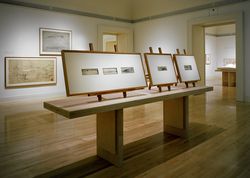
Le rapport révolutionnaire établi entre bâtiment et paysage, conçus ensemble selon des idéaux américains particuliers est au centre de Frank Lloyd Wright : Inventer un paysage américain, 1922-1932. Avec cette exposition, le CCA reconstitue cinq projets visionnaires qui ne devaient représenter rien de moins qu’un nouveau paysage, intégrant sur une vaste échelle terrain,(...)
Localisation:
Salles principales
Salles principales
Date:
18 juin 1996 au 29 septembre 1996
18 juin 1996 au 29 septembre 1996
Titre:
Frank Lloyd Wright : inventer un paysage américain, 1922-1932
Actions:
Description:
Le rapport révolutionnaire établi entre bâtiment et paysage, conçus ensemble selon des idéaux américains particuliers est au centre de Frank Lloyd Wright : Inventer un paysage américain, 1922-1932. Avec cette exposition, le CCA reconstitue cinq projets visionnaires qui ne devaient représenter rien de moins qu’un nouveau paysage, intégrant sur une vaste échelle terrain,(...)
Frank Lloyd Wright : inventer un paysage américain, 1922-1932
Actions:
Description:
Le rapport révolutionnaire établi entre bâtiment et paysage, conçus ensemble selon des idéaux américains particuliers est au centre de Frank Lloyd Wright : Inventer un paysage américain, 1922-1932. Avec cette exposition, le CCA reconstitue cinq projets visionnaires qui ne devaient représenter rien de moins qu’un nouveau paysage, intégrant sur une vaste échelle terrain,(...)
Classification:
expositions
expositions
Date:
18 juin 1996 au
29 septembre 1996
18 juin 1996 au
29 septembre 1996
Localisation:
Salles principales
Salles principales
Classification:
expositions
expositions
Actions:
Description:
À partir du travail d’architectes de renommée internationale, cetteexposition démontre la présence d’idées utopiques modernes qui auraient été rejetées au tournant de l’ère postmoderne. Selon Reinhold Martin, commissaire principal de l’exposition, presque toute la production architecturale des cinquante dernières années a été hantée par le « revenant » de l’utopie(...)
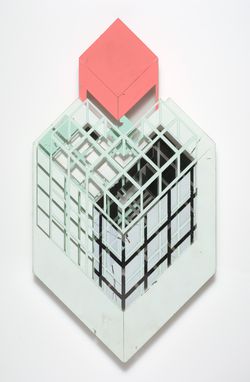
À partir du travail d’architectes de renommée internationale, cetteexposition démontre la présence d’idées utopiques modernes qui auraient été rejetées au tournant de l’ère postmoderne. Selon Reinhold Martin, commissaire principal de l’exposition, presque toute la production architecturale des cinquante dernières années a été hantée par le « revenant » de l’utopie(...)
Localisation:
Salle octogonale
Salle octogonale
Date:
28 février 2008 au 25 mai 2008
28 février 2008 au 25 mai 2008
Titre:
Le revenant de l'utopie: Le postmodernisme revisité
Actions:
Description:
À partir du travail d’architectes de renommée internationale, cetteexposition démontre la présence d’idées utopiques modernes qui auraient été rejetées au tournant de l’ère postmoderne. Selon Reinhold Martin, commissaire principal de l’exposition, presque toute la production architecturale des cinquante dernières années a été hantée par le « revenant » de l’utopie(...)
Le revenant de l'utopie: Le postmodernisme revisité
Actions:
Description:
À partir du travail d’architectes de renommée internationale, cetteexposition démontre la présence d’idées utopiques modernes qui auraient été rejetées au tournant de l’ère postmoderne. Selon Reinhold Martin, commissaire principal de l’exposition, presque toute la production architecturale des cinquante dernières années a été hantée par le « revenant » de l’utopie(...)
Classification:
expositions
expositions
Date:
28 février 2008 au
25 mai 2008
28 février 2008 au
25 mai 2008
Localisation:
Salle octogonale
Salle octogonale


