


435 Résultats
Classification:
livres
livres
Actions:
Prix:
$21.95
(disponible sur commande)
Résumé:
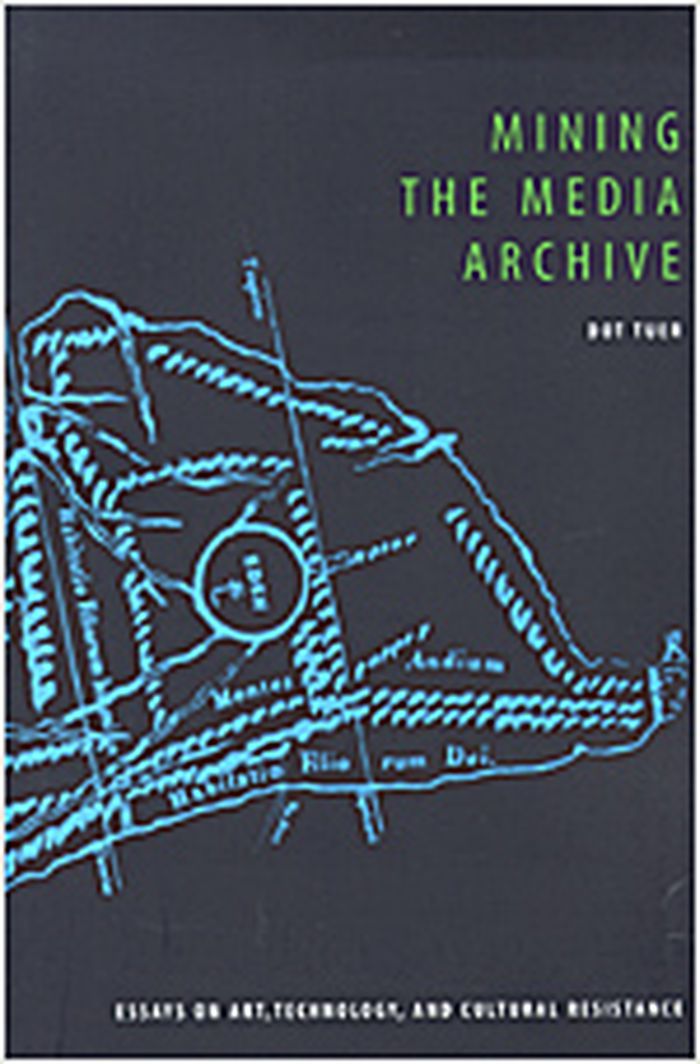
Ranging from monographs on new-media artists, to a history of Canada's most controversial artist-run center, the CEAC, to testimonial writing on cultural politics and post-colonialism in Canada and Argentina, Tuer's writing address global media and local remembrance through a bland of storytelling, archival research, and cultural analysis.
$21.95
(disponible sur commande)
Résumé:
Ranging from monographs on new-media artists, to a history of Canada's most controversial artist-run center, the CEAC, to testimonial writing on cultural politics and post-colonialism in Canada and Argentina, Tuer's writing address global media and local remembrance through a bland of storytelling, archival research, and cultural analysis.
Titre:
Mining the media archive : essays on art, technology, and culture resistance
Actions:
Prix:
$21.95
(disponible sur commande)
Résumé:
Ranging from monographs on new-media artists, to a history of Canada's most controversial artist-run center, the CEAC, to testimonial writing on cultural politics and post-colonialism in Canada and Argentina, Tuer's writing address global media and local remembrance through a bland of storytelling, archival research, and cultural analysis.
Mining the media archive : essays on art, technology, and culture resistance
Actions:
Prix:
$21.95
(disponible sur commande)
Résumé:
Ranging from monographs on new-media artists, to a history of Canada's most controversial artist-run center, the CEAC, to testimonial writing on cultural politics and post-colonialism in Canada and Argentina, Tuer's writing address global media and local remembrance through a bland of storytelling, archival research, and cultural analysis.
Classification:
livres
livres
Publication:
mars 2006, Toronto
mars 2006, Toronto
Sujet:
Épistémologie et réseau
Épistémologie et réseau
Classification:
livres
livres
Titre:
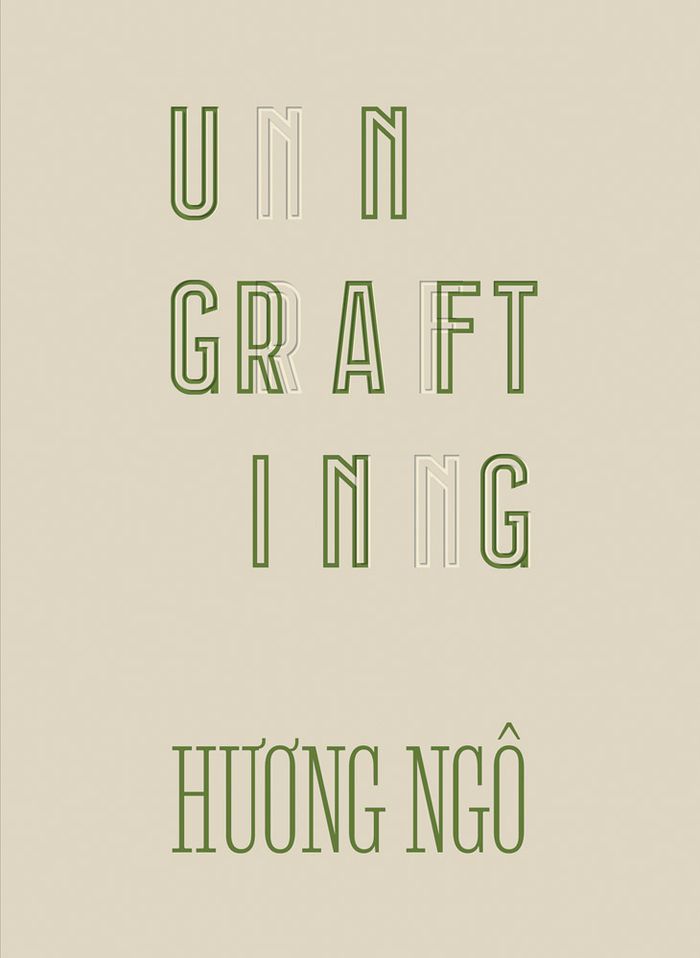
Huong Ngo: Ungrafting
Huong Ngo: Ungrafting
Actions:
Prix:
$44.00
(disponible sur commande)
Résumé:
Huong Ngô (born 1979) is a Hong Kong–born artist based in Santa Barbara. Her conceptual, research-based practice often takes the form of installation, printmaking and nontraditional mediums. Ungrafting looks at histories of colonial violence, specifically French colonialism in Vietnam, as well as resistance movements, through image-making, translations and material(...)
$44.00
(disponible sur commande)
Résumé:
Huong Ngô (born 1979) is a Hong Kong–born artist based in Santa Barbara. Her conceptual, research-based practice often takes the form of installation, printmaking and nontraditional mediums. Ungrafting looks at histories of colonial violence, specifically French colonialism in Vietnam, as well as resistance movements, through image-making, translations and material(...)
Publication:
octobre 2024
octobre 2024
Titre:
Huong Ngo: Ungrafting
Actions:
Prix:
$44.00
(disponible sur commande)
Résumé:
Huong Ngô (born 1979) is a Hong Kong–born artist based in Santa Barbara. Her conceptual, research-based practice often takes the form of installation, printmaking and nontraditional mediums. Ungrafting looks at histories of colonial violence, specifically French colonialism in Vietnam, as well as resistance movements, through image-making, translations and material investigations. Ngô turns to a series of early 20th-century photographs showing foreign trees and tree grafts planted in Vietnam by the French. For the artist, grafting—a procedure that involves cutting and splicing different species into a single plant—serves as a powerful metaphor for the physical violence inherent in colonialism. An essay by Justin Quang Nguyên Phan, and conversations between Ngô and Aline Lo and Evyn Lê Espiritu Gandhi and Chadwick Allen, reflect on the connection between Ngô’s exhibition and global anticolonialism, the trans-Indigenous and the role of the archive in artistic production.
Huong Ngo: Ungrafting
Actions:
Prix:
$44.00
(disponible sur commande)
Résumé:
Huong Ngô (born 1979) is a Hong Kong–born artist based in Santa Barbara. Her conceptual, research-based practice often takes the form of installation, printmaking and nontraditional mediums. Ungrafting looks at histories of colonial violence, specifically French colonialism in Vietnam, as well as resistance movements, through image-making, translations and material investigations. Ngô turns to a series of early 20th-century photographs showing foreign trees and tree grafts planted in Vietnam by the French. For the artist, grafting—a procedure that involves cutting and splicing different species into a single plant—serves as a powerful metaphor for the physical violence inherent in colonialism. An essay by Justin Quang Nguyên Phan, and conversations between Ngô and Aline Lo and Evyn Lê Espiritu Gandhi and Chadwick Allen, reflect on the connection between Ngô’s exhibition and global anticolonialism, the trans-Indigenous and the role of the archive in artistic production.
Classification:
livres
livres
Publication:
octobre 2024
octobre 2024
Classification:
livres
livres
Actions:
Prix:
$13.99
(disponible sur commande)
Résumé:
Kathryn Yusoff examines how the grammar of geology is foundational to establishing the extractive economies of subjective life and the earth under colonialism and slavery. She initiates a transdisciplinary conversation between black feminist theory, geography, and the earth sciences, addressing the politics of the Anthropocene within the context of race, materiality, deep(...)
$13.99
(disponible sur commande)
Résumé:
Kathryn Yusoff examines how the grammar of geology is foundational to establishing the extractive economies of subjective life and the earth under colonialism and slavery. She initiates a transdisciplinary conversation between black feminist theory, geography, and the earth sciences, addressing the politics of the Anthropocene within the context of race, materiality, deep(...)
Titre:
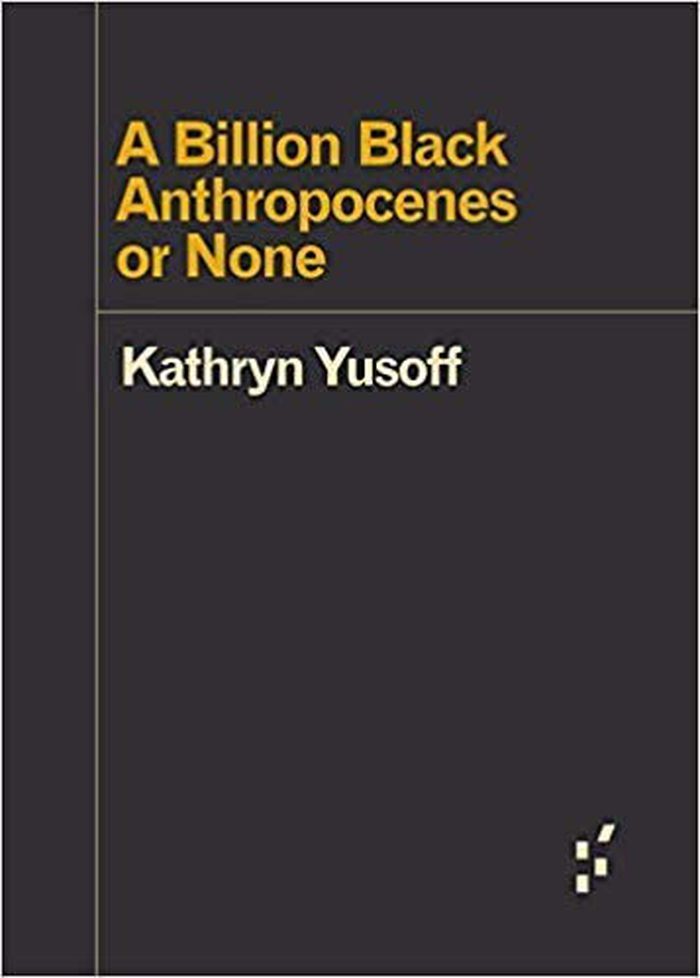
A billion black anthropocenes or none
Actions:
Prix:
$13.99
(disponible sur commande)
Résumé:
Kathryn Yusoff examines how the grammar of geology is foundational to establishing the extractive economies of subjective life and the earth under colonialism and slavery. She initiates a transdisciplinary conversation between black feminist theory, geography, and the earth sciences, addressing the politics of the Anthropocene within the context of race, materiality, deep time, and the afterlives of geology.
A billion black anthropocenes or none
Actions:
Prix:
$13.99
(disponible sur commande)
Résumé:
Kathryn Yusoff examines how the grammar of geology is foundational to establishing the extractive economies of subjective life and the earth under colonialism and slavery. She initiates a transdisciplinary conversation between black feminist theory, geography, and the earth sciences, addressing the politics of the Anthropocene within the context of race, materiality, deep time, and the afterlives of geology.
Classification:
livres
livres
Publication:
janvier 2019
janvier 2019
Classification:
livres
livres
Titre:
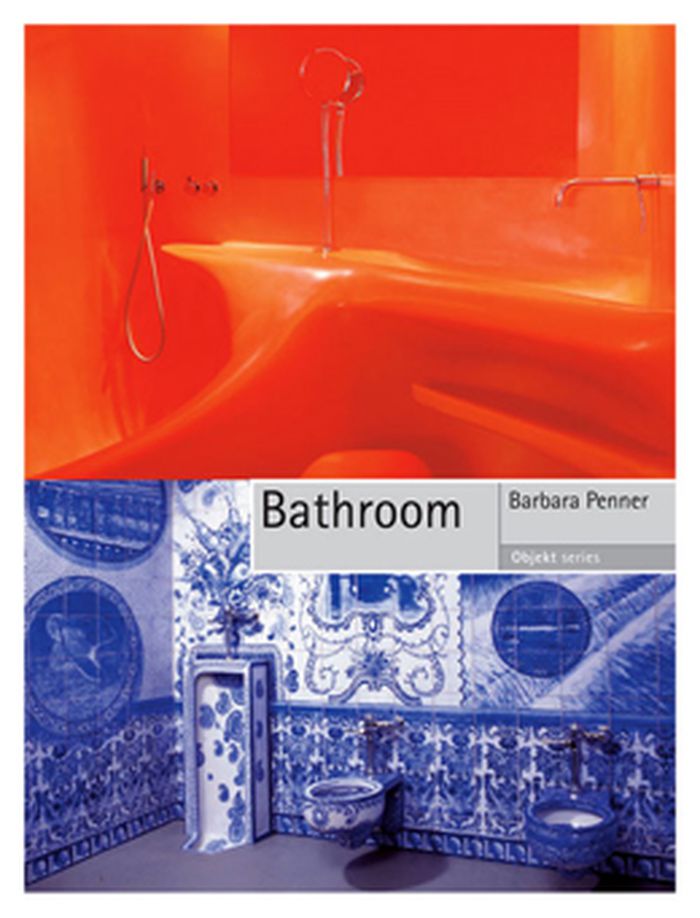
Bathroom
Bathroom
Actions:
Prix:
$29.95
(disponible sur commande)
Résumé:
Bathroom charts the evolution of the bathroom and the habits and lifestyles to which it gave rise. It shows how and why the bathroom emerged and how it became an international symbol of key modern values, such as cleanliness, order and progress. The modern bathroom, its technologies and its customs have been exported globally through colonialism, the media, fashion, world(...)
$29.95
(disponible sur commande)
Résumé:
Bathroom charts the evolution of the bathroom and the habits and lifestyles to which it gave rise. It shows how and why the bathroom emerged and how it became an international symbol of key modern values, such as cleanliness, order and progress. The modern bathroom, its technologies and its customs have been exported globally through colonialism, the media, fashion, world(...)
Titre:
Bathroom
Actions:
Prix:
$29.95
(disponible sur commande)
Résumé:
Bathroom charts the evolution of the bathroom and the habits and lifestyles to which it gave rise. It shows how and why the bathroom emerged and how it became an international symbol of key modern values, such as cleanliness, order and progress. The modern bathroom, its technologies and its customs have been exported globally through colonialism, the media, fashion, world expositions and tourism.
Bathroom
Actions:
Prix:
$29.95
(disponible sur commande)
Résumé:
Bathroom charts the evolution of the bathroom and the habits and lifestyles to which it gave rise. It shows how and why the bathroom emerged and how it became an international symbol of key modern values, such as cleanliness, order and progress. The modern bathroom, its technologies and its customs have been exported globally through colonialism, the media, fashion, world expositions and tourism.
Classification:
livres
livres
Publication:
novembre 2013
novembre 2013
Classification:
livres
livres
Actions:
Prix:
$60.00
(disponible sur commande)
Résumé:
The 1931 international colonial exposition in Paris was a demonstration of French colonial policy, colonial architecture and urban planning, and the scientific and philosophical theories that justified colonialism. The exposition displayed the people, material(...)
$60.00
(disponible sur commande)
Résumé:
The 1931 international colonial exposition in Paris was a demonstration of French colonial policy, colonial architecture and urban planning, and the scientific and philosophical theories that justified colonialism. The exposition displayed the people, material(...)
Publication:
avril 2000, Cambridge
avril 2000, Cambridge
Titre:
Hybrid modernities : architecture and representation at the 1931 colonial exposition, Paris
Actions:
Prix:
$60.00
(disponible sur commande)
Résumé:
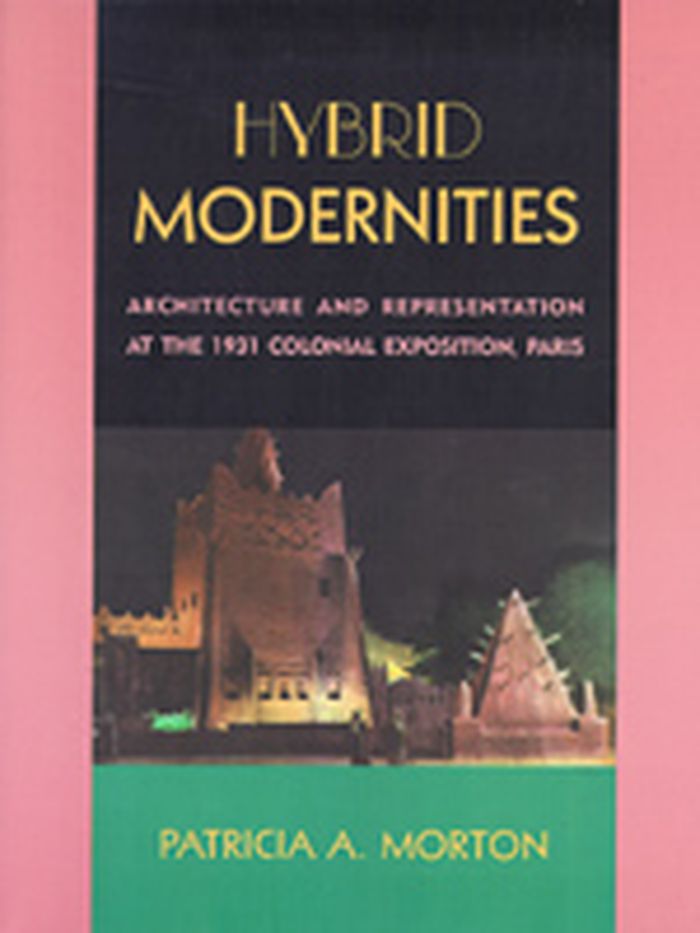
The 1931 international colonial exposition in Paris was a demonstration of French colonial policy, colonial architecture and urban planning, and the scientific and philosophical theories that justified colonialism. The exposition displayed the people, material culture, raw materials, manufactured goods, and arts of the global colonial empires. Yet the event gave a contradictory message of the colonies as the "Orient"--the site of rampant sensuality, decadence, and irrationality--and as the laboratory of Western rationality. In "Hybrid modernities", Patricia Morton shows how the exposition failed to keep colonialism's two spheres separate, instead creating hybrids of French and native culture. At the exposition, French pavilions demonstrated Europe's sophistication in art deco style, while the colonial pavilions were "authentic" native environments for displaying indigenous peoples and artifacts from the colonies. The authenticity of these pavilions' exteriors was contradicted by vaguely exotic interiors filled with didactic exhibition stands and dioramas. Intended to maintain a segregation of colonized and colonizer, the colonial pavilions instead were mixtures of European and native architecture. Anticolonial resistance erupted around the Exposition in the form of protests, anticolonial tracts, and a countercolonial exposition produced by the Surrealists. Thus the Exposition occupied a "middle region" of experience where the norms, rules, and systems of French colonialism both emerged and broke down, unsustainable because of their internal contradictions. As Morton shows, the effort to segregate France and her colonies failed, both at the colonial exposition and in greater France, because it was constantly undermined by the hybrids that modern colonialism itself produced.
Hybrid modernities : architecture and representation at the 1931 colonial exposition, Paris
Actions:
Prix:
$60.00
(disponible sur commande)
Résumé:
The 1931 international colonial exposition in Paris was a demonstration of French colonial policy, colonial architecture and urban planning, and the scientific and philosophical theories that justified colonialism. The exposition displayed the people, material culture, raw materials, manufactured goods, and arts of the global colonial empires. Yet the event gave a contradictory message of the colonies as the "Orient"--the site of rampant sensuality, decadence, and irrationality--and as the laboratory of Western rationality. In "Hybrid modernities", Patricia Morton shows how the exposition failed to keep colonialism's two spheres separate, instead creating hybrids of French and native culture. At the exposition, French pavilions demonstrated Europe's sophistication in art deco style, while the colonial pavilions were "authentic" native environments for displaying indigenous peoples and artifacts from the colonies. The authenticity of these pavilions' exteriors was contradicted by vaguely exotic interiors filled with didactic exhibition stands and dioramas. Intended to maintain a segregation of colonized and colonizer, the colonial pavilions instead were mixtures of European and native architecture. Anticolonial resistance erupted around the Exposition in the form of protests, anticolonial tracts, and a countercolonial exposition produced by the Surrealists. Thus the Exposition occupied a "middle region" of experience where the norms, rules, and systems of French colonialism both emerged and broke down, unsustainable because of their internal contradictions. As Morton shows, the effort to segregate France and her colonies failed, both at the colonial exposition and in greater France, because it was constantly undermined by the hybrids that modern colonialism itself produced.
Classification:
livres
livres
Publication:
avril 2000, Cambridge
avril 2000, Cambridge
Classification:
livres
livres
Actions:
Prix:
$39.95
(disponible sur commande)
Résumé:
The 1931 international colonial exposition in Paris was a demonstration of French colonial policy, colonial architecture and urban planning, and the scientific and philosophical theories that justified colonialism. The exposition displayed the people, material culture, raw materials,(...)
$39.95
(disponible sur commande)
Résumé:
The 1931 international colonial exposition in Paris was a demonstration of French colonial policy, colonial architecture and urban planning, and the scientific and philosophical theories that justified colonialism. The exposition displayed the people, material culture, raw materials,(...)
Publication:
avril 2003, Cambridge / London
avril 2003, Cambridge / London
Titre:
Hybrid modernities : architecture and representation at the 1931 colonial exposition, Paris
Actions:
Prix:
$39.95
(disponible sur commande)
Résumé:
The 1931 international colonial exposition in Paris was a demonstration of French colonial policy, colonial architecture and urban planning, and the scientific and philosophical theories that justified colonialism. The exposition displayed the people, material culture, raw materials, manufactured goods, and arts of the global colonial empires. Yet the event gave a contradictory message of the colonies as the "Orient"--the site of rampant sensuality, decadence, and irrationality--and as the laboratory of Western rationality. In "Hybrid modernities", Patricia Morton shows how the exposition failed to keep colonialism's two spheres separate, instead creating hybrids of French and native culture. At the exposition, French pavilions demonstrated Europe's sophistication in art deco style, while the colonial pavilions were "authentic" native environments for displaying indigenous peoples and artifacts from the colonies. The authenticity of these pavilions' exteriors was contradicted by vaguely exotic interiors filled with didactic exhibition stands and dioramas. Intended to maintain a segregation of colonized and colonizer, the colonial pavilions instead were mixtures of European and native architecture. Anticolonial resistance erupted around the Exposition in the form of protests, anticolonial tracts, and a countercolonial exposition produced by the Surrealists. Thus the Exposition occupied a "middle region" of experience where the norms, rules, and systems of French colonialism both emerged and broke down, unsustainable because of their internal contradictions. As Morton shows, the effort to segregate France and her colonies failed, both at the colonial exposition and in greater France, because it was constantly undermined by the hybrids that modern colonialism itself produced.
Hybrid modernities : architecture and representation at the 1931 colonial exposition, Paris
Actions:
Prix:
$39.95
(disponible sur commande)
Résumé:
The 1931 international colonial exposition in Paris was a demonstration of French colonial policy, colonial architecture and urban planning, and the scientific and philosophical theories that justified colonialism. The exposition displayed the people, material culture, raw materials, manufactured goods, and arts of the global colonial empires. Yet the event gave a contradictory message of the colonies as the "Orient"--the site of rampant sensuality, decadence, and irrationality--and as the laboratory of Western rationality. In "Hybrid modernities", Patricia Morton shows how the exposition failed to keep colonialism's two spheres separate, instead creating hybrids of French and native culture. At the exposition, French pavilions demonstrated Europe's sophistication in art deco style, while the colonial pavilions were "authentic" native environments for displaying indigenous peoples and artifacts from the colonies. The authenticity of these pavilions' exteriors was contradicted by vaguely exotic interiors filled with didactic exhibition stands and dioramas. Intended to maintain a segregation of colonized and colonizer, the colonial pavilions instead were mixtures of European and native architecture. Anticolonial resistance erupted around the Exposition in the form of protests, anticolonial tracts, and a countercolonial exposition produced by the Surrealists. Thus the Exposition occupied a "middle region" of experience where the norms, rules, and systems of French colonialism both emerged and broke down, unsustainable because of their internal contradictions. As Morton shows, the effort to segregate France and her colonies failed, both at the colonial exposition and in greater France, because it was constantly undermined by the hybrids that modern colonialism itself produced.
Classification:
livres
livres
Publication:
avril 2003, Cambridge / London
avril 2003, Cambridge / London
Classification:
livres
livres
Actions:
Prix:
$46.95
(disponible en magasin)
Résumé:
Le collectif Rybn.org traque les manifestations physiques et concrètes de la finance offshore dans les territoires sur lesquels elle opère. Empruntant les stratégies radicales de l’extra-disciplinaire, cet ouvrage collectif qui rassemble les écrits de vingt-et-un artistes, hackers et philosophes, dresse l’inventaire des mutations les plus récentes du capitalisme offshore.(...)
$46.95
(disponible en magasin)
Résumé:
Le collectif Rybn.org traque les manifestations physiques et concrètes de la finance offshore dans les territoires sur lesquels elle opère. Empruntant les stratégies radicales de l’extra-disciplinaire, cet ouvrage collectif qui rassemble les écrits de vingt-et-un artistes, hackers et philosophes, dresse l’inventaire des mutations les plus récentes du capitalisme offshore.(...)
Titre:
The great offshore : art, argent, souveraineté, gouvernance, colonialisme
Actions:
Prix:
$46.95
(disponible en magasin)
Résumé:
Le collectif Rybn.org traque les manifestations physiques et concrètes de la finance offshore dans les territoires sur lesquels elle opère. Empruntant les stratégies radicales de l’extra-disciplinaire, cet ouvrage collectif qui rassemble les écrits de vingt-et-un artistes, hackers et philosophes, dresse l’inventaire des mutations les plus récentes du capitalisme offshore. De la politique des proxys à l’extractivisme spatial et à la marchandisation des communs, en passant par la citoyenneté par investissement et le marché de l’art, tout nous indique que la «gouvernance offshore» est devenue la norme, qu’elle est le capitalisme globalisé.
The great offshore : art, argent, souveraineté, gouvernance, colonialisme
Actions:
Prix:
$46.95
(disponible en magasin)
Résumé:
Le collectif Rybn.org traque les manifestations physiques et concrètes de la finance offshore dans les territoires sur lesquels elle opère. Empruntant les stratégies radicales de l’extra-disciplinaire, cet ouvrage collectif qui rassemble les écrits de vingt-et-un artistes, hackers et philosophes, dresse l’inventaire des mutations les plus récentes du capitalisme offshore. De la politique des proxys à l’extractivisme spatial et à la marchandisation des communs, en passant par la citoyenneté par investissement et le marché de l’art, tout nous indique que la «gouvernance offshore» est devenue la norme, qu’elle est le capitalisme globalisé.
Classification:
livres
livres
Publication:
avril 2021
avril 2021
Sujet:
Théorie de l’art
Théorie de l’art
Classification:
livres
livres
Actions:
Prix:
$44.95
(disponible en magasin)
Résumé:
Indigenous relations are often described in anthropological terms, or as expressions of timeless, unchanging kinship ties. In ''Speculative Relations'', Joseph M. Pierce challenges this view, considering the potential of these relations as a means of repairing the damages of history. Pierce approaches Indigenous art and culture not as objects of study, but through(...)
$44.95
(disponible en magasin)
Résumé:
Indigenous relations are often described in anthropological terms, or as expressions of timeless, unchanging kinship ties. In ''Speculative Relations'', Joseph M. Pierce challenges this view, considering the potential of these relations as a means of repairing the damages of history. Pierce approaches Indigenous art and culture not as objects of study, but through(...)
Titre:
Speculative relations: Indigenous worling and repair
Actions:
Prix:
$44.95
(disponible en magasin)
Résumé:
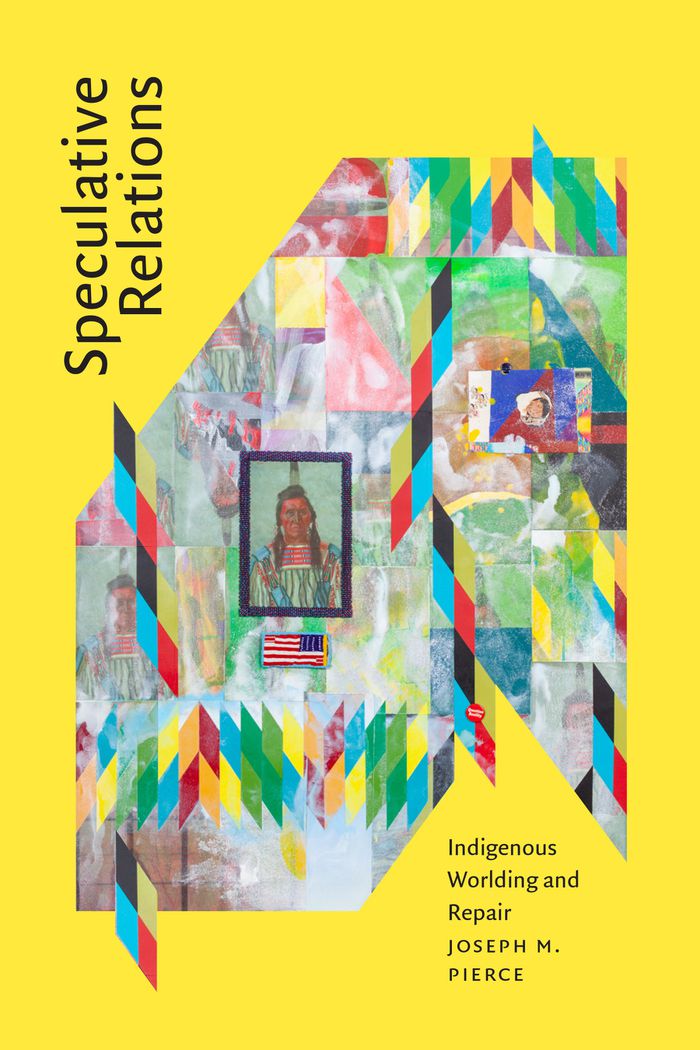
Indigenous relations are often described in anthropological terms, or as expressions of timeless, unchanging kinship ties. In ''Speculative Relations'', Joseph M. Pierce challenges this view, considering the potential of these relations as a means of repairing the damages of history. Pierce approaches Indigenous art and culture not as objects of study, but through relations committed to reciprocity and care for human and more-than-human beings. Drawing on Cherokee thinking, Indigenous queer theory, literary and cultural studies, and art criticism, he illuminates pathways for understanding and resisting the ongoing damages of colonialism while pointing to future worlds and imaginaries that breathe life into Indigenous thought and practice. Analyzing a range of materials—from photography, literature, and sculpture to film and ethnography—Pierce reveals how speculation, as a form of situated knowledge production, can repair and reimagine the worlds that colonialism sought to destroy. In doing so, Pierce highlights how gestures, poetics, and embodiment can uphold tradition and harness the imaginative power of speculation to create pathways for living in good relations.
Speculative relations: Indigenous worling and repair
Actions:
Prix:
$44.95
(disponible en magasin)
Résumé:
Indigenous relations are often described in anthropological terms, or as expressions of timeless, unchanging kinship ties. In ''Speculative Relations'', Joseph M. Pierce challenges this view, considering the potential of these relations as a means of repairing the damages of history. Pierce approaches Indigenous art and culture not as objects of study, but through relations committed to reciprocity and care for human and more-than-human beings. Drawing on Cherokee thinking, Indigenous queer theory, literary and cultural studies, and art criticism, he illuminates pathways for understanding and resisting the ongoing damages of colonialism while pointing to future worlds and imaginaries that breathe life into Indigenous thought and practice. Analyzing a range of materials—from photography, literature, and sculpture to film and ethnography—Pierce reveals how speculation, as a form of situated knowledge production, can repair and reimagine the worlds that colonialism sought to destroy. In doing so, Pierce highlights how gestures, poetics, and embodiment can uphold tradition and harness the imaginative power of speculation to create pathways for living in good relations.
Classification:
livres
livres
Publication:
août 2025
août 2025
Sujet:
Autochtone
Autochtone
Classification:
livres
livres
Prix:
$27.95
(disponible sur commande)
Résumé:
As early as the end of the 19th century, anarchists such as Peter Kropotkin and Élisée Reclus became interested in indigenous peoples, many of whom they saw as societies without a state or private property, living a form of communism. Thinkers such as David Graeber and John Holloway have continued this tradition of engagement with the practices of indigenous societies and(...)
$27.95
(disponible sur commande)
Résumé:
As early as the end of the 19th century, anarchists such as Peter Kropotkin and Élisée Reclus became interested in indigenous peoples, many of whom they saw as societies without a state or private property, living a form of communism. Thinkers such as David Graeber and John Holloway have continued this tradition of engagement with the practices of indigenous societies and(...)
Titre:
Anarcho-Indigenism: Conversations on land and freedom
Actions:
Prix:
$27.95
(disponible sur commande)
Résumé:
As early as the end of the 19th century, anarchists such as Peter Kropotkin and Élisée Reclus became interested in indigenous peoples, many of whom they saw as societies without a state or private property, living a form of communism. Thinkers such as David Graeber and John Holloway have continued this tradition of engagement with the practices of indigenous societies and their politics. There has also been a long history of (often imperfect) collaboration between anarchists and indigenous activists, over land rights and environmental issues, including recent high-profile anti-pipeline campaigns. ''Anarcho-Indigenism'' is a dialogue between anarchism and indigenous politics, featuring interviews from indigenous contributors Véronique Hébert, Gord Hill, Freda Huson, J. Kehaulani Kauanui, Clifton Ariwakehte Nicholas and Toghestiy, as well as the Marxist scholar specialist in indigenous people’s history and politics, Roxanne Dunbar-Ortiz. The contributors reveal what indigenous thought and traditions and anarchism have in common, without denying the scars left by colonialism even within this anti-authoritarian movement. They ultimately offer a vision of the world that combines anti-colonialism, feminism, ecology, anti-capitalism and anti-statism.
Anarcho-Indigenism: Conversations on land and freedom
Actions:
Prix:
$27.95
(disponible sur commande)
Résumé:
As early as the end of the 19th century, anarchists such as Peter Kropotkin and Élisée Reclus became interested in indigenous peoples, many of whom they saw as societies without a state or private property, living a form of communism. Thinkers such as David Graeber and John Holloway have continued this tradition of engagement with the practices of indigenous societies and their politics. There has also been a long history of (often imperfect) collaboration between anarchists and indigenous activists, over land rights and environmental issues, including recent high-profile anti-pipeline campaigns. ''Anarcho-Indigenism'' is a dialogue between anarchism and indigenous politics, featuring interviews from indigenous contributors Véronique Hébert, Gord Hill, Freda Huson, J. Kehaulani Kauanui, Clifton Ariwakehte Nicholas and Toghestiy, as well as the Marxist scholar specialist in indigenous people’s history and politics, Roxanne Dunbar-Ortiz. The contributors reveal what indigenous thought and traditions and anarchism have in common, without denying the scars left by colonialism even within this anti-authoritarian movement. They ultimately offer a vision of the world that combines anti-colonialism, feminism, ecology, anti-capitalism and anti-statism.
Classification:
livres
livres
Publication:
septembre 2023
septembre 2023
Sujet:
Autochtone
Autochtone
Classification:
livres
livres
Actions:
Prix:
$42.95
(disponible sur commande)
Résumé:
A unique documentation of how ideology translated into colonialism, settlement, urbanization, infrastructure, and mechanized agriculture radically reshaped the environment of Palestine-Israel. The biblical metaphor of a ''Land of Milk and Honey'' has denoted for millennia a prophecy and promise for plenitude. This book, published in conjunction with the Israeli(...)
$42.95
(disponible sur commande)
Résumé:
A unique documentation of how ideology translated into colonialism, settlement, urbanization, infrastructure, and mechanized agriculture radically reshaped the environment of Palestine-Israel. The biblical metaphor of a ''Land of Milk and Honey'' has denoted for millennia a prophecy and promise for plenitude. This book, published in conjunction with the Israeli(...)
Publication:
octobre 2021
octobre 2021
Titre:
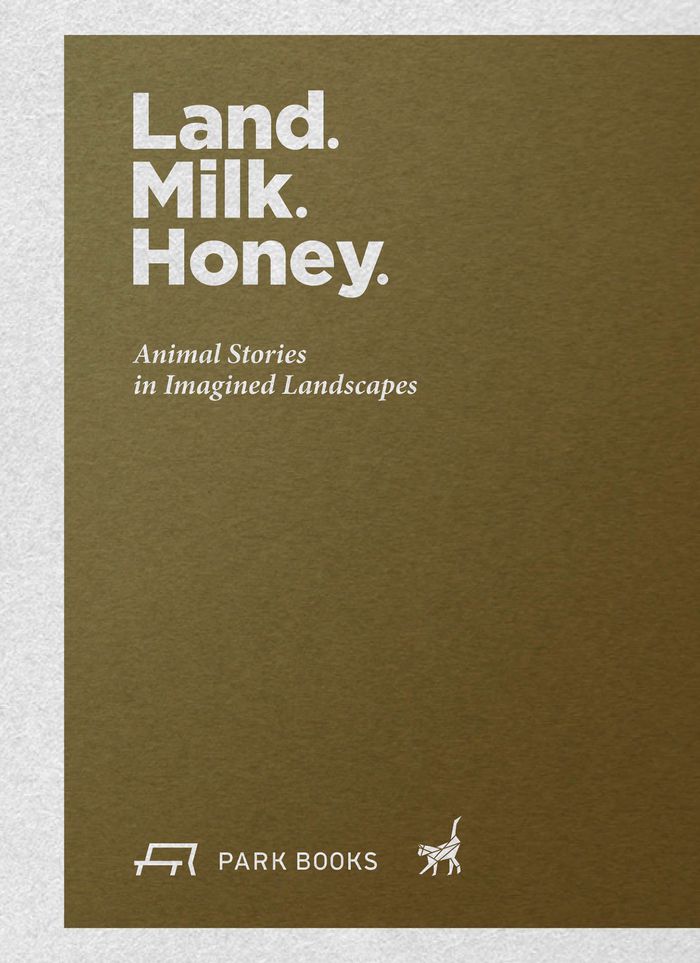
Land. Milk. Honey. Animal stories in imagined landscapes. 17th Venice Biennale
Actions:
Prix:
$42.95
(disponible sur commande)
Résumé:
A unique documentation of how ideology translated into colonialism, settlement, urbanization, infrastructure, and mechanized agriculture radically reshaped the environment of Palestine-Israel. The biblical metaphor of a ''Land of Milk and Honey'' has denoted for millennia a prophecy and promise for plenitude. This book, published in conjunction with the Israeli Pavilion at the seventeenth International Architecture Exhibition of the Venice Biennale, examines the reciprocal relations between humans, animals, and the environment within the context of modern Palestine-Israel, and demonstrates how this promise has become an action-plan over the course of the twentieth century. ''Land. Milk. Honey'' investigates how colonialism, urbanization, and mechanized agriculture radically reshaped the environment and altered human-animal relationships. It shows how the celebrated metamorphosis of the region into a prosperous agricultural landscape was entangled with irreparable damage to the environment, as well as the disruption of human communities. And it highlights the predicaments that both the environment and its inhabitants are facing after the territory has, over a century, been the testbed of modernist aspirations for plenitude.
Land. Milk. Honey. Animal stories in imagined landscapes. 17th Venice Biennale
Actions:
Prix:
$42.95
(disponible sur commande)
Résumé:
A unique documentation of how ideology translated into colonialism, settlement, urbanization, infrastructure, and mechanized agriculture radically reshaped the environment of Palestine-Israel. The biblical metaphor of a ''Land of Milk and Honey'' has denoted for millennia a prophecy and promise for plenitude. This book, published in conjunction with the Israeli Pavilion at the seventeenth International Architecture Exhibition of the Venice Biennale, examines the reciprocal relations between humans, animals, and the environment within the context of modern Palestine-Israel, and demonstrates how this promise has become an action-plan over the course of the twentieth century. ''Land. Milk. Honey'' investigates how colonialism, urbanization, and mechanized agriculture radically reshaped the environment and altered human-animal relationships. It shows how the celebrated metamorphosis of the region into a prosperous agricultural landscape was entangled with irreparable damage to the environment, as well as the disruption of human communities. And it highlights the predicaments that both the environment and its inhabitants are facing after the territory has, over a century, been the testbed of modernist aspirations for plenitude.
Classification:
livres
livres
Publication:
octobre 2021
octobre 2021


