


3443 Résultats
Classification:
livres
livres
Actions:
Prix:
$93.70
(disponible en magasin)
Résumé:
"David Goldblatt: No ulterior motive" coincides with a major traveling retrospective of the renowned South African photographer’s work. From vintage handprints of the artist’s black-and-white photography, taken between the 1950s and the 1990s, to his post-apartheid, large-format, color work, photographs in the volume are approached thematically—under headers such as(...)
$93.70
(disponible en magasin)
Résumé:
"David Goldblatt: No ulterior motive" coincides with a major traveling retrospective of the renowned South African photographer’s work. From vintage handprints of the artist’s black-and-white photography, taken between the 1950s and the 1990s, to his post-apartheid, large-format, color work, photographs in the volume are approached thematically—under headers such as(...)
Titre:
David Goldblatt: No ulterior motive
Actions:
Prix:
$93.70
(disponible en magasin)
Résumé:
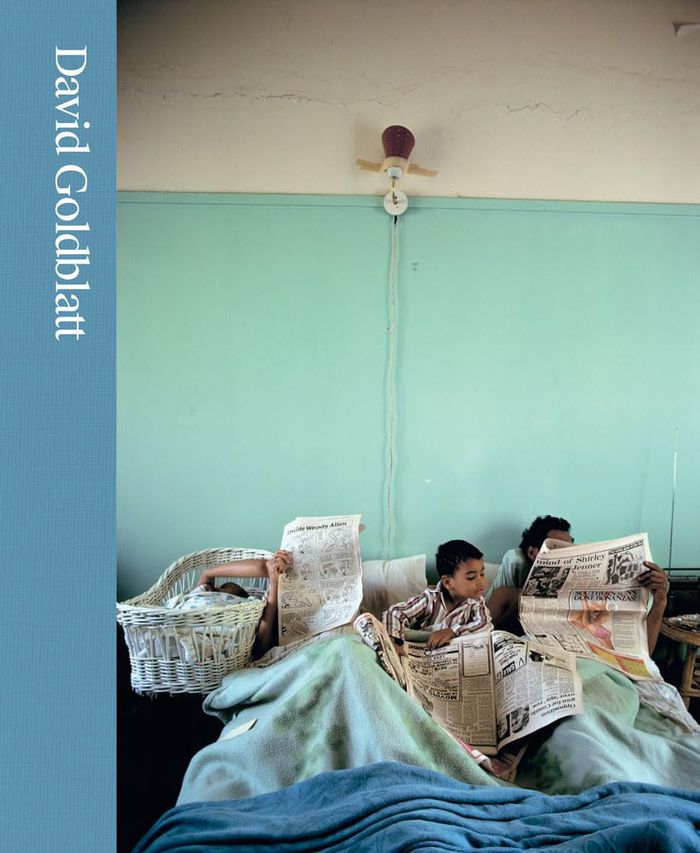
"David Goldblatt: No ulterior motive" coincides with a major traveling retrospective of the renowned South African photographer’s work. From vintage handprints of the artist’s black-and-white photography, taken between the 1950s and the 1990s, to his post-apartheid, large-format, color work, photographs in the volume are approached thematically—under headers such as "Assembly," "Disbelief," "Dialogues," and "Extraction"—to draw out the artist’s core interests in working-class people, the landscape, and the built environment. Objects from Goldblatt’s (1930–2018) personal archive are also included. In an effort to create a more inclusive dialogue around Goldblatt’s work, the catalogue features images and texts by contemporary photographers and scholars, many of whom were mentored by Goldblatt, including Zanele Muholi and Sabelo Mlangeni. Some write on Goldblatt’s photographs, while others discuss his influence on their own work. Goldblatt devoted his life to documenting his country and its people. Known for his nuanced portrayals of life under apartheid, he covered a wide range of subjects, all of them intimately connected to South African history and politics. The wide-ranging voices in this catalogue foster a broad frame of reference for his work, thus countering a frequent misunderstanding of apartheid as a situation peculiar to South Africa.
David Goldblatt: No ulterior motive
Actions:
Prix:
$93.70
(disponible en magasin)
Résumé:
"David Goldblatt: No ulterior motive" coincides with a major traveling retrospective of the renowned South African photographer’s work. From vintage handprints of the artist’s black-and-white photography, taken between the 1950s and the 1990s, to his post-apartheid, large-format, color work, photographs in the volume are approached thematically—under headers such as "Assembly," "Disbelief," "Dialogues," and "Extraction"—to draw out the artist’s core interests in working-class people, the landscape, and the built environment. Objects from Goldblatt’s (1930–2018) personal archive are also included. In an effort to create a more inclusive dialogue around Goldblatt’s work, the catalogue features images and texts by contemporary photographers and scholars, many of whom were mentored by Goldblatt, including Zanele Muholi and Sabelo Mlangeni. Some write on Goldblatt’s photographs, while others discuss his influence on their own work. Goldblatt devoted his life to documenting his country and its people. Known for his nuanced portrayals of life under apartheid, he covered a wide range of subjects, all of them intimately connected to South African history and politics. The wide-ranging voices in this catalogue foster a broad frame of reference for his work, thus countering a frequent misunderstanding of apartheid as a situation peculiar to South Africa.
Classification:
livres
livres
Publication:
janvier 2024
janvier 2024
Sujet:
Monographies photo
Monographies photo
Classification:
livres
livres

Actions:
Prix:
$22.95
(disponible sur commande)
Résumé:
Some central questions in the natural and social sciences can’t be answered by controlled laboratory experiments, often considered to be the hallmark of the scientific method. This impossibility holds for any science concerned with the past. In addition, many manipulative experiments, while possible, would be considered immoral or illegal. One has to devise other methods(...)
$22.95
(disponible sur commande)
Résumé:
Some central questions in the natural and social sciences can’t be answered by controlled laboratory experiments, often considered to be the hallmark of the scientific method. This impossibility holds for any science concerned with the past. In addition, many manipulative experiments, while possible, would be considered immoral or illegal. One has to devise other methods(...)
Titre:
Natural experiments of history
Actions:
Prix:
$22.95
(disponible sur commande)
Résumé:
Some central questions in the natural and social sciences can’t be answered by controlled laboratory experiments, often considered to be the hallmark of the scientific method. This impossibility holds for any science concerned with the past. In addition, many manipulative experiments, while possible, would be considered immoral or illegal. One has to devise other methods of observing, describing, and explaining the world. In the historical disciplines, a fruitful approach has been to use natural experiments or the comparative method. This book consists of eight comparative studies drawn from history, archeology, economics, economic history, geography, and political science. The studies cover a spectrum of approaches, ranging from a non-quantitative narrative style in the early chapters to quantitative statistical analyses in the later chapters. The studies range from a simple two-way comparison of Haiti and the Dominican Republic, which share the island of Hispaniola, to comparisons of 81 Pacific islands and 233 areas of India. The societies discussed are contemporary ones, literate societies of recent centuries, and non-literate past societies. Geographically, they include the United States, Mexico, Brazil, western Europe, tropical Africa, India, Siberia, Australia, New Zealand, and other Pacific islands. In an Afterword, the editors discuss how to cope with methodological problems common to these and other natural experiments of history.
Natural experiments of history
Actions:
Prix:
$22.95
(disponible sur commande)
Résumé:
Some central questions in the natural and social sciences can’t be answered by controlled laboratory experiments, often considered to be the hallmark of the scientific method. This impossibility holds for any science concerned with the past. In addition, many manipulative experiments, while possible, would be considered immoral or illegal. One has to devise other methods of observing, describing, and explaining the world. In the historical disciplines, a fruitful approach has been to use natural experiments or the comparative method. This book consists of eight comparative studies drawn from history, archeology, economics, economic history, geography, and political science. The studies cover a spectrum of approaches, ranging from a non-quantitative narrative style in the early chapters to quantitative statistical analyses in the later chapters. The studies range from a simple two-way comparison of Haiti and the Dominican Republic, which share the island of Hispaniola, to comparisons of 81 Pacific islands and 233 areas of India. The societies discussed are contemporary ones, literate societies of recent centuries, and non-literate past societies. Geographically, they include the United States, Mexico, Brazil, western Europe, tropical Africa, India, Siberia, Australia, New Zealand, and other Pacific islands. In an Afterword, the editors discuss how to cope with methodological problems common to these and other natural experiments of history.
Classification:
livres
livres
Publication:
avril 2011
avril 2011
Sujet:
Théorie de l’urbanisme
Théorie de l’urbanisme
Classification:
livres
livres

Actions:
Prix:
$48.00
(disponible sur commande)
Résumé:
Ever since the landmark publication of Susan Sontag’s On Photography, it has been impossible to look at photographs, particularly those of violence and suffering, without questioning our role as photographic voyeur. Are we desensitized by the proliferation of these images, and does this make it easier to be passive and uninvolved? Or do the images immediately stir our own(...)
$48.00
(disponible sur commande)
Résumé:
Ever since the landmark publication of Susan Sontag’s On Photography, it has been impossible to look at photographs, particularly those of violence and suffering, without questioning our role as photographic voyeur. Are we desensitized by the proliferation of these images, and does this make it easier to be passive and uninvolved? Or do the images immediately stir our own(...)
Titre:
Picturing atrocity: photography in crisis
Actions:
Prix:
$48.00
(disponible sur commande)
Résumé:
Ever since the landmark publication of Susan Sontag’s On Photography, it has been impossible to look at photographs, particularly those of violence and suffering, without questioning our role as photographic voyeur. Are we desensitized by the proliferation of these images, and does this make it easier to be passive and uninvolved? Or do the images immediately stir our own sense of justice and act as a call to arms? Are we consuming the suffering of others as a form of intrigue? Or is it an act of empathy? To answer these questions, Picturing Atrocity brings together writers and critics on photography today to offer close readings of images that reveal the realities behind the photographs, the subjects, and the photographers. From the massacre of the Sioux Indians at Wounded Knee to the torture of prisoners at Abu Ghraib, from famine in China to apartheid in South Africa, Picturing Atrocity examines a broad spectrum of photographs. Each of the essays focuses specifically on an iconic image, offering a distinct approach and context, in order to enable us to look again—and this time more closely—at the picture. In addition, four photo-essays showcase the work of photographers involved in the making of photographs of brutality as well as the artists’ own reflections on these images.
Picturing atrocity: photography in crisis
Actions:
Prix:
$48.00
(disponible sur commande)
Résumé:
Ever since the landmark publication of Susan Sontag’s On Photography, it has been impossible to look at photographs, particularly those of violence and suffering, without questioning our role as photographic voyeur. Are we desensitized by the proliferation of these images, and does this make it easier to be passive and uninvolved? Or do the images immediately stir our own sense of justice and act as a call to arms? Are we consuming the suffering of others as a form of intrigue? Or is it an act of empathy? To answer these questions, Picturing Atrocity brings together writers and critics on photography today to offer close readings of images that reveal the realities behind the photographs, the subjects, and the photographers. From the massacre of the Sioux Indians at Wounded Knee to the torture of prisoners at Abu Ghraib, from famine in China to apartheid in South Africa, Picturing Atrocity examines a broad spectrum of photographs. Each of the essays focuses specifically on an iconic image, offering a distinct approach and context, in order to enable us to look again—and this time more closely—at the picture. In addition, four photo-essays showcase the work of photographers involved in the making of photographs of brutality as well as the artists’ own reflections on these images.
Classification:
livres
livres
Publication:
novembre 2011
novembre 2011
Sujet:
Théorie de la photographie
Théorie de la photographie
Classification:
livres
livres

Prix:
$63.50
(disponible sur commande)
Résumé:
From its invention in Europe at the end of the nineteenth century, the automobile crisscrossed the world, completely took over the cities, and became a feature of daily life. Considered basic to the American lifestyle, the car reflected individualism, pragmatism, comfort, and above all modernity. In Latin America, it served as a symbol of distinction, similar to jewelry(...)
$63.50
(disponible sur commande)
Résumé:
From its invention in Europe at the end of the nineteenth century, the automobile crisscrossed the world, completely took over the cities, and became a feature of daily life. Considered basic to the American lifestyle, the car reflected individualism, pragmatism, comfort, and above all modernity. In Latin America, it served as a symbol of distinction, similar to jewelry(...)
Titre:
The cultural life of the automobile: roads to modernity
Actions:
Prix:
$63.50
(disponible sur commande)
Résumé:
From its invention in Europe at the end of the nineteenth century, the automobile crisscrossed the world, completely took over the cities, and became a feature of daily life. Considered basic to the American lifestyle, the car reflected individualism, pragmatism, comfort, and above all modernity. In Latin America, it served as a symbol of distinction, similar to jewelry or fine clothing. In The Cultural Life of the Automobile, Guillermo Giucci focuses on the automobile as an instrument of social change through its "kinetic modernity" and as an embodiment of the tremendous social impact of technology on cultural life. Material culture--how certain objects generate a wide array of cultural responses--has been the focus of much scholarly discussion in recent years. The automobile wrought major changes and inspired images in language, literature, and popular culture. Focusing primarily on Latin America but also covering the United States, Europe, Asia, and Africa, Giucci examines how the automobile was variously adapted by different cultures and how its use shaped and changed social and economic relationships within them. At the same time, he shows how the "automobilization" of society became an essential support for the development of modern individualism, and the automobile its clearest material manifestation.
The cultural life of the automobile: roads to modernity
Actions:
Prix:
$63.50
(disponible sur commande)
Résumé:
From its invention in Europe at the end of the nineteenth century, the automobile crisscrossed the world, completely took over the cities, and became a feature of daily life. Considered basic to the American lifestyle, the car reflected individualism, pragmatism, comfort, and above all modernity. In Latin America, it served as a symbol of distinction, similar to jewelry or fine clothing. In The Cultural Life of the Automobile, Guillermo Giucci focuses on the automobile as an instrument of social change through its "kinetic modernity" and as an embodiment of the tremendous social impact of technology on cultural life. Material culture--how certain objects generate a wide array of cultural responses--has been the focus of much scholarly discussion in recent years. The automobile wrought major changes and inspired images in language, literature, and popular culture. Focusing primarily on Latin America but also covering the United States, Europe, Asia, and Africa, Giucci examines how the automobile was variously adapted by different cultures and how its use shaped and changed social and economic relationships within them. At the same time, he shows how the "automobilization" of society became an essential support for the development of modern individualism, and the automobile its clearest material manifestation.
Classification:
livres
livres
Publication:
août 2012
août 2012
Classification:
archives
archives
Titre:
Shim-Sutcliffe fonds, 1988-.
Shim-Sutcliffe fonds, 1988-.
Actions:
Exemplaires:
Description:
9176 drawings, 160 maquettes, 63 v., other materials., The fonds is organized into 2 series.
Description:
9176 drawings, 160 maquettes, 63 v., other materials., The fonds is organized into 2 series.
Auteur:
Sujet:
Titre:
Shim-Sutcliffe fonds, 1988-.
Actions:
Exemplaires:
Description:
9176 drawings, 160 maquettes, 63 v., other materials., The fonds is organized into 2 series.
Shim-Sutcliffe fonds, 1988-.
Actions:
Exemplaires:
Description:
9176 drawings, 160 maquettes, 63 v., other materials., The fonds is organized into 2 series.
Classification:
archives
archives
Auteur:
Sujet:
Classification:
livres
livres
Actions:
Exemplaires:
Description:
160 pages : illustrations (some color), maps (some color) ; 26 cm
Description:
160 pages : illustrations (some color), maps (some color) ; 26 cm
Auteur:
Sujet:
Publication:
St. Louis, Missouri : Mildred Lane Kemper Art Museum, Sam Fox School of Design & Visual Arts, Washington University in St. Louis, [2024], Chicago, Illinois : The University of Chicago Press, [2024], ©2024
St. Louis, Missouri : Mildred Lane Kemper Art Museum, Sam Fox School of Design & Visual Arts, Washington University in St. Louis, [2024], Chicago, Illinois : The University of Chicago Press, [2024], ©2024
Titre:
Design agendas : modern architecture in St. Louis, 1930s-1970s / edited by Eric P. Mumford ; with contributions by Shantel Blakely, John C. Guenther, Kathleen James-Chakraborty, Eric P. Mumford, Winifred Elysse Newman, Michael E. Willis.
Actions:
Exemplaires:
Description:
160 pages : illustrations (some color), maps (some color) ; 26 cm
Design agendas : modern architecture in St. Louis, 1930s-1970s / edited by Eric P. Mumford ; with contributions by Shantel Blakely, John C. Guenther, Kathleen James-Chakraborty, Eric P. Mumford, Winifred Elysse Newman, Michael E. Willis.
Actions:
Exemplaires:
Description:
160 pages : illustrations (some color), maps (some color) ; 26 cm
Classification:
livres
livres
Publication:
St. Louis, Missouri : Mildred Lane Kemper Art Museum, Sam Fox School of Design & Visual Arts, Washington University in St. Louis, [2024], Chicago, Illinois : The University of Chicago Press, [2024], ©2024
St. Louis, Missouri : Mildred Lane Kemper Art Museum, Sam Fox School of Design & Visual Arts, Washington University in St. Louis, [2024], Chicago, Illinois : The University of Chicago Press, [2024], ©2024
Auteur:
Sujet:
Classification:
audio
audio
Actions:
Description:
1 online resource.
Auteur:
Sujet:
Publication:
[Place of publication not identified] : The Funambulist, 2014.
[Place of publication not identified] : The Funambulist, 2014.
Titre:
A Weaponized Urbanity : Morning Drift in Militarized Downtown Oakland.
Actions:
Description:
1 online resource.
A Weaponized Urbanity : Morning Drift in Militarized Downtown Oakland.
Actions:
Description:
1 online resource.
Classification:
audio
audio
Publication:
[Place of publication not identified] : The Funambulist, 2014.
[Place of publication not identified] : The Funambulist, 2014.
Auteur:
Sujet:
Classification:
livres
livres

Actions:
Prix:
$22.95
(disponible sur commande)
Résumé:
Why do walls marking national boundaries proliferate amid widespread proclamations of global connectedness and despite anticipation of a world without borders? Why are barricades built of concrete, steel, and barbed wire when threats to the nation today are so often miniaturized, vaporous, clandestine, dispersed, or networked? In "Walled states, waning sovereignty", Wendy(...)
$22.95
(disponible sur commande)
Résumé:
Why do walls marking national boundaries proliferate amid widespread proclamations of global connectedness and despite anticipation of a world without borders? Why are barricades built of concrete, steel, and barbed wire when threats to the nation today are so often miniaturized, vaporous, clandestine, dispersed, or networked? In "Walled states, waning sovereignty", Wendy(...)
Titre:
Walled states, waning sovereignty, New edition
Actions:
Prix:
$22.95
(disponible sur commande)
Résumé:
Why do walls marking national boundaries proliferate amid widespread proclamations of global connectedness and despite anticipation of a world without borders? Why are barricades built of concrete, steel, and barbed wire when threats to the nation today are so often miniaturized, vaporous, clandestine, dispersed, or networked? In "Walled states, waning sovereignty", Wendy Brown considers the recent spate of wall building in contrast to the erosion of nation-state sovereignty. Drawing on classical and contemporary political theories of state sovereignty in order to understand how state power and national identity persist amid its decline, Brown considers both the need of the state for legitimacy and the popular desires that incite the contemporary building of walls. The new walls—dividing Texas from Mexico, Israel from Palestine, South Africa from Zimbabwe—consecrate the broken boundaries they would seem to contest and signify the ungovernability of a range of forces unleashed by globalization. Yet these same walls often amount to little more than theatrical props, frequently breached, and blur the distinction between law and lawlessness that they are intended to represent. But if today’s walls fail to resolve the conflicts between globalization and national identity, they nonetheless project a stark image of sovereign power. Walls, Brown argues, address human desires for containment and protection in a world increasingly without these provisions. Walls respond to the wish for horizons even as horizons are vanquished.
Walled states, waning sovereignty, New edition
Actions:
Prix:
$22.95
(disponible sur commande)
Résumé:
Why do walls marking national boundaries proliferate amid widespread proclamations of global connectedness and despite anticipation of a world without borders? Why are barricades built of concrete, steel, and barbed wire when threats to the nation today are so often miniaturized, vaporous, clandestine, dispersed, or networked? In "Walled states, waning sovereignty", Wendy Brown considers the recent spate of wall building in contrast to the erosion of nation-state sovereignty. Drawing on classical and contemporary political theories of state sovereignty in order to understand how state power and national identity persist amid its decline, Brown considers both the need of the state for legitimacy and the popular desires that incite the contemporary building of walls. The new walls—dividing Texas from Mexico, Israel from Palestine, South Africa from Zimbabwe—consecrate the broken boundaries they would seem to contest and signify the ungovernability of a range of forces unleashed by globalization. Yet these same walls often amount to little more than theatrical props, frequently breached, and blur the distinction between law and lawlessness that they are intended to represent. But if today’s walls fail to resolve the conflicts between globalization and national identity, they nonetheless project a stark image of sovereign power. Walls, Brown argues, address human desires for containment and protection in a world increasingly without these provisions. Walls respond to the wish for horizons even as horizons are vanquished.
Classification:
livres
livres
Publication:
avril 2017
avril 2017
Sujet:
Théorie de l’architecture
Théorie de l’architecture
Classification:
livres
livres
Actions:
Prix:
$52.00
(disponible sur commande)
Résumé:
Getting the picture, constructing (and deconstructing) the picture, finding the picture, viewing the picture, being in the picture , changing the pictures --these are all phrases that apply to the fascinating world of 'putting people in the picture' in visual research within the Social Sciences. Putting People in the Picture: Visual Methodologies for Social Change focuses(...)
$52.00
(disponible sur commande)
Résumé:
Getting the picture, constructing (and deconstructing) the picture, finding the picture, viewing the picture, being in the picture , changing the pictures --these are all phrases that apply to the fascinating world of 'putting people in the picture' in visual research within the Social Sciences. Putting People in the Picture: Visual Methodologies for Social Change focuses(...)
Sujet:
Théorie de la photographie
Théorie de la photographie
Publication:
mai 2008, Rotterdam
mai 2008, Rotterdam
Titre:
Putting people in the picture: visual methodologies for social change
Actions:
Prix:
$52.00
(disponible sur commande)
Résumé:
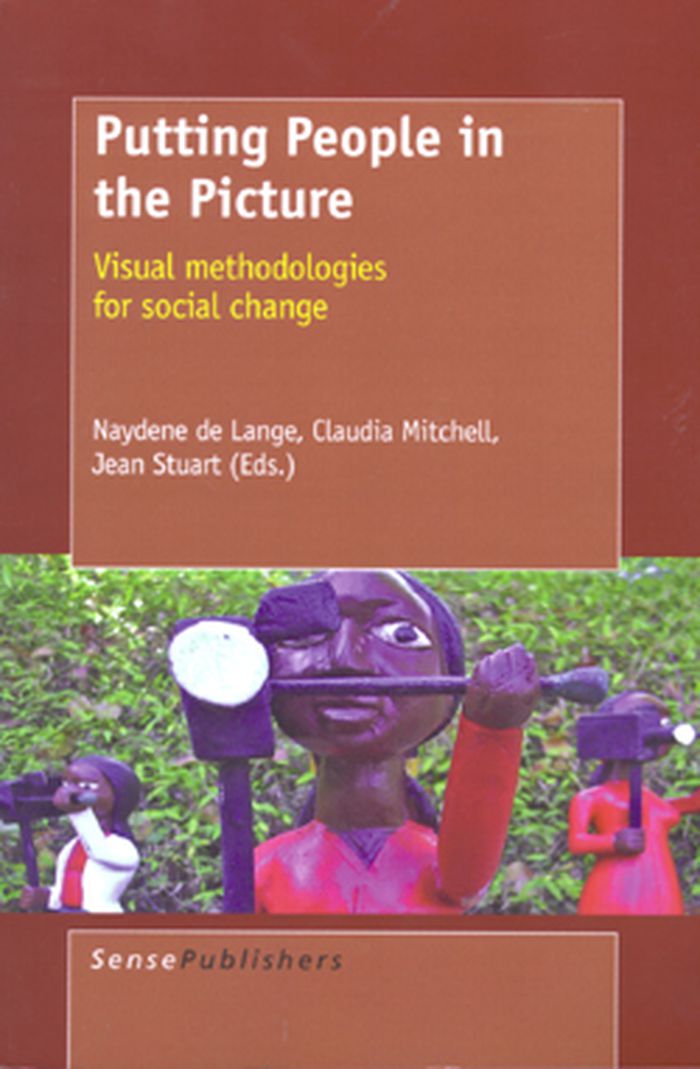
Getting the picture, constructing (and deconstructing) the picture, finding the picture, viewing the picture, being in the picture , changing the pictures --these are all phrases that apply to the fascinating world of 'putting people in the picture' in visual research within the Social Sciences. Putting People in the Picture: Visual Methodologies for Social Change focuses on the ways in which researchers, practitioners and activists are using such techniques as photo voice, collaborative video, drawings and other visual and arts-based tools as modes of inquiry, as modes of representation and as modes of disseminating findings in social research. The various chapters address methodological, analytical, interpretive, aesthetic, technical and ethical concerns in using visual methodologies in work with young people, teachers, community health care workers -- and even the self-as-researcher. The range of issues addressed in the work is broad, and includes work in the areas of HIV & AIDS, schooling, poverty, gender violence, race, and children's visions for the future. While the studies are situated within a variety of social contexts, the focus is primarily on work in Southern Africa. The book takes up some of the theoretical and practical challenges offered by Visual Sociology, Image- based Research, Media Studies, Rural Development, and Community-based and Participatory Research, and in so doing offers audiences an array of visual approaches to studying and bringing about social change.
Putting people in the picture: visual methodologies for social change
Actions:
Prix:
$52.00
(disponible sur commande)
Résumé:
Getting the picture, constructing (and deconstructing) the picture, finding the picture, viewing the picture, being in the picture , changing the pictures --these are all phrases that apply to the fascinating world of 'putting people in the picture' in visual research within the Social Sciences. Putting People in the Picture: Visual Methodologies for Social Change focuses on the ways in which researchers, practitioners and activists are using such techniques as photo voice, collaborative video, drawings and other visual and arts-based tools as modes of inquiry, as modes of representation and as modes of disseminating findings in social research. The various chapters address methodological, analytical, interpretive, aesthetic, technical and ethical concerns in using visual methodologies in work with young people, teachers, community health care workers -- and even the self-as-researcher. The range of issues addressed in the work is broad, and includes work in the areas of HIV & AIDS, schooling, poverty, gender violence, race, and children's visions for the future. While the studies are situated within a variety of social contexts, the focus is primarily on work in Southern Africa. The book takes up some of the theoretical and practical challenges offered by Visual Sociology, Image- based Research, Media Studies, Rural Development, and Community-based and Participatory Research, and in so doing offers audiences an array of visual approaches to studying and bringing about social change.
Classification:
livres
livres
Publication:
mai 2008, Rotterdam
mai 2008, Rotterdam
Sujet:
Théorie de la photographie
Théorie de la photographie
Classification:
livres
livres

Actions:
Prix:
$25.95
(disponible sur commande)
Résumé:
We are living in the Anthropocene—an era of dramatic and violent climate change featuring warming oceans, melting icecaps, extreme weather events, habitat loss, species extinction, and more. What will life be like in a climate-changed world? In ''Tomorrow’s parties,'' science fiction authors speculate how we might be able to live and even thrive through the advancing(...)
$25.95
(disponible sur commande)
Résumé:
We are living in the Anthropocene—an era of dramatic and violent climate change featuring warming oceans, melting icecaps, extreme weather events, habitat loss, species extinction, and more. What will life be like in a climate-changed world? In ''Tomorrow’s parties,'' science fiction authors speculate how we might be able to live and even thrive through the advancing(...)
Titre:
Tomorrow's parties: Life in the Anthropocene
Actions:
Prix:
$25.95
(disponible sur commande)
Résumé:
We are living in the Anthropocene—an era of dramatic and violent climate change featuring warming oceans, melting icecaps, extreme weather events, habitat loss, species extinction, and more. What will life be like in a climate-changed world? In ''Tomorrow’s parties,'' science fiction authors speculate how we might be able to live and even thrive through the advancing Anthropocene. In ten original stories by writers from around the world, an interview with celebrated writer Kim Stanley Robinson, and a series of intricate and elegant artworks by Sean Bodley, ''Tomorrow’s parties'' takes rational optimism as a moral imperative, or at least a pragmatic alternative to despair. In these stories—by writers from the United Kingdom, the United States, Nigeria, China, Bangladesh, and Australia—a young man steals from delivery drones; a political community lives on an island made of ocean-borne plastic waste; and a climate change denier tries to unmask ''crisis actors.'' Climate-changed life also has its pleasures and epiphanies, as when a father in Africa works to make his son’s dreams of ''Viking adventure'' a reality, and an IT professional dispatched to a distant village encounters a marvelous predigital fungal network. Contributors include Pascall Prize for Criticism winner James Bradley, Hugo Award winners Greg Egan and Sarah Gailey, Philip K Dick Award winner Meg Elison, and New York Times bestselling author Daryl Gregory.
Tomorrow's parties: Life in the Anthropocene
Actions:
Prix:
$25.95
(disponible sur commande)
Résumé:
We are living in the Anthropocene—an era of dramatic and violent climate change featuring warming oceans, melting icecaps, extreme weather events, habitat loss, species extinction, and more. What will life be like in a climate-changed world? In ''Tomorrow’s parties,'' science fiction authors speculate how we might be able to live and even thrive through the advancing Anthropocene. In ten original stories by writers from around the world, an interview with celebrated writer Kim Stanley Robinson, and a series of intricate and elegant artworks by Sean Bodley, ''Tomorrow’s parties'' takes rational optimism as a moral imperative, or at least a pragmatic alternative to despair. In these stories—by writers from the United Kingdom, the United States, Nigeria, China, Bangladesh, and Australia—a young man steals from delivery drones; a political community lives on an island made of ocean-borne plastic waste; and a climate change denier tries to unmask ''crisis actors.'' Climate-changed life also has its pleasures and epiphanies, as when a father in Africa works to make his son’s dreams of ''Viking adventure'' a reality, and an IT professional dispatched to a distant village encounters a marvelous predigital fungal network. Contributors include Pascall Prize for Criticism winner James Bradley, Hugo Award winners Greg Egan and Sarah Gailey, Philip K Dick Award winner Meg Elison, and New York Times bestselling author Daryl Gregory.
Classification:
livres
livres
Publication:
août 2022
août 2022
Sujet:
Littérature et poésie
Littérature et poésie


