


3435 Résultats
Classification:
livres
livres
Titre:
Paul Rousteau: Seascapes
Paul Rousteau: Seascapes
Actions:
Prix:
$60.00
(disponible sur commande)
Résumé:
French artist Paul Rousteau is known for his alchemic light and colour-bending approach to photography. Seascapes is a series made by Rousteau while artist-in-residence on a boat off the Coral Sea, in Australia. Inspired by the unending horizons around him, Rousteau retreated to the darkroom to invent mental topographies of his own, reducing the landscape down to the(...)
$60.00
(disponible sur commande)
Résumé:
French artist Paul Rousteau is known for his alchemic light and colour-bending approach to photography. Seascapes is a series made by Rousteau while artist-in-residence on a boat off the Coral Sea, in Australia. Inspired by the unending horizons around him, Rousteau retreated to the darkroom to invent mental topographies of his own, reducing the landscape down to the(...)
Titre:
Paul Rousteau: Seascapes
Actions:
Prix:
$60.00
(disponible sur commande)
Résumé:
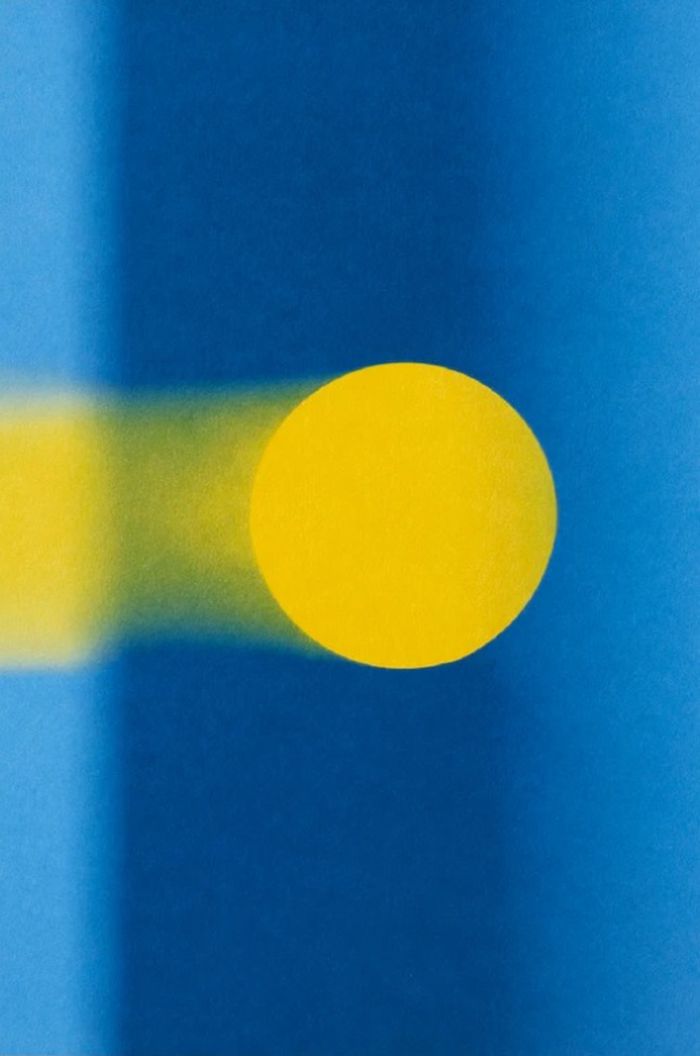
French artist Paul Rousteau is known for his alchemic light and colour-bending approach to photography. Seascapes is a series made by Rousteau while artist-in-residence on a boat off the Coral Sea, in Australia. Inspired by the unending horizons around him, Rousteau retreated to the darkroom to invent mental topographies of his own, reducing the landscape down to the barest constituent elements – water, air and light. Often saturated, interrupted or out of focus, his photographs are series of playful experiments navigating between figuration and abstraction, painting and digital art. These constructed landscapes invite us to consider the point where human imagination interacts with the landscape - how fantasies of distance, displacement and faraway places are projected onto the horizon. Existing somewhere between vision, imagination and a surreal, submerged reality, Rousteau extends this fiction through globetrotting captions and an innovative design that invites readers to rip away and reappropriate the seascapes as their own.
Paul Rousteau: Seascapes
Actions:
Prix:
$60.00
(disponible sur commande)
Résumé:
French artist Paul Rousteau is known for his alchemic light and colour-bending approach to photography. Seascapes is a series made by Rousteau while artist-in-residence on a boat off the Coral Sea, in Australia. Inspired by the unending horizons around him, Rousteau retreated to the darkroom to invent mental topographies of his own, reducing the landscape down to the barest constituent elements – water, air and light. Often saturated, interrupted or out of focus, his photographs are series of playful experiments navigating between figuration and abstraction, painting and digital art. These constructed landscapes invite us to consider the point where human imagination interacts with the landscape - how fantasies of distance, displacement and faraway places are projected onto the horizon. Existing somewhere between vision, imagination and a surreal, submerged reality, Rousteau extends this fiction through globetrotting captions and an innovative design that invites readers to rip away and reappropriate the seascapes as their own.
Classification:
livres
livres
Publication:
juillet 2021
juillet 2021
Sujet:
Monographies photo
Monographies photo
Classification:
livres
livres
Actions:
Prix:
$70.00
(disponible sur commande)
Résumé:
Dick van Gameren, a partner with the Dutch architecture firm Mecanoo, has engaged in housing design for the past 25 years through his work as an architect as well as in his research and teaching at TU Delft’s Global Housing Study Center. In this book, he presents around 40 of his own projects, through concise texts and photographs with explanatory captions as well as(...)
$70.00
(disponible sur commande)
Résumé:
Dick van Gameren, a partner with the Dutch architecture firm Mecanoo, has engaged in housing design for the past 25 years through his work as an architect as well as in his research and teaching at TU Delft’s Global Housing Study Center. In this book, he presents around 40 of his own projects, through concise texts and photographs with explanatory captions as well as(...)
Titre:
Dutch dwellings: The architecture of housing
Actions:
Prix:
$70.00
(disponible sur commande)
Résumé:
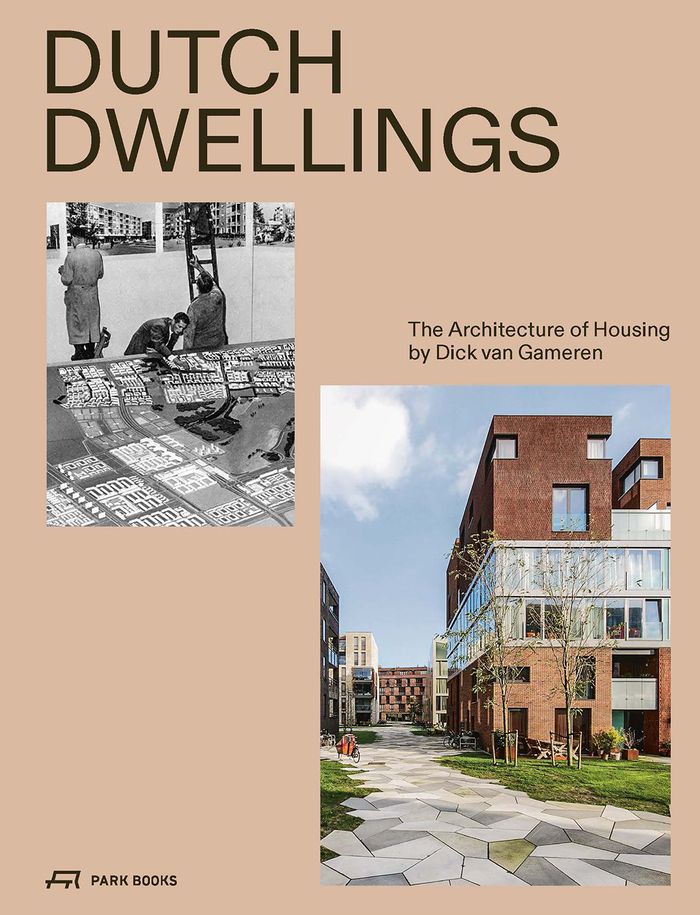
Dick van Gameren, a partner with the Dutch architecture firm Mecanoo, has engaged in housing design for the past 25 years through his work as an architect as well as in his research and teaching at TU Delft’s Global Housing Study Center. In this book, he presents around 40 of his own projects, through concise texts and photographs with explanatory captions as well as plans and drawings. The projects are grouped to illustrate seven specific aspects of housing design: Streets and Squares, Courtyards and Patios, Gardens, Halls, the Fireplace, Walls, and Roofs. Together, they constitute a multifaceted catalog of housing typologies. The author explores evolutions in residential architecture in the Netherlands. He positions his own concepts in the context of these developments and expands on what he considers the key factors of good housing design. He places particular focus on affordable housing, a pressing issue in so many countries and metropolitan areas around the world.
Dutch dwellings: The architecture of housing
Actions:
Prix:
$70.00
(disponible sur commande)
Résumé:
Dick van Gameren, a partner with the Dutch architecture firm Mecanoo, has engaged in housing design for the past 25 years through his work as an architect as well as in his research and teaching at TU Delft’s Global Housing Study Center. In this book, he presents around 40 of his own projects, through concise texts and photographs with explanatory captions as well as plans and drawings. The projects are grouped to illustrate seven specific aspects of housing design: Streets and Squares, Courtyards and Patios, Gardens, Halls, the Fireplace, Walls, and Roofs. Together, they constitute a multifaceted catalog of housing typologies. The author explores evolutions in residential architecture in the Netherlands. He positions his own concepts in the context of these developments and expands on what he considers the key factors of good housing design. He places particular focus on affordable housing, a pressing issue in so many countries and metropolitan areas around the world.
Classification:
livres
livres
Publication:
mars 2023
mars 2023
Sujet:
Architecture, monographies
Architecture, monographies
Classification:
livres
livres
Actions:
Exemplaires:
Description:
320 pages : illustrations ; 30 cm + 1 audio disc (72 min., 20 sec. : digital ; 4 3/4 in.)
Description:
320 pages : illustrations ; 30 cm + 1 audio disc (72 min., 20 sec. : digital ; 4 3/4 in.)
Auteur:
Sujet:
Publication:
New York : Harry N. Abrams, 1994., ©1994
New York : Harry N. Abrams, 1994., ©1994
Titre:
The oral history of modern architecture : interviews with the greatest architects of the twentieth century / John Peter.
Actions:
Exemplaires:
Description:
320 pages : illustrations ; 30 cm + 1 audio disc (72 min., 20 sec. : digital ; 4 3/4 in.)
The oral history of modern architecture : interviews with the greatest architects of the twentieth century / John Peter.
Actions:
Exemplaires:
Description:
320 pages : illustrations ; 30 cm + 1 audio disc (72 min., 20 sec. : digital ; 4 3/4 in.)
Classification:
livres
livres
Publication:
New York : Harry N. Abrams, 1994., ©1994
New York : Harry N. Abrams, 1994., ©1994
Auteur:
Sujet:
Classification:
livres
livres
Actions:
Prix:
$48.95
(disponible sur commande)
Résumé:
From 1906 to 1934, Eugene de Salignac shot over twenty thousand 8-by-10-inch glass-plate negatives of New York City. As sole photographer at the Department of Bridges/Plant and Structures during that period of dizzying growth, he documented the creation of the city's modern infrastructure—bridges, major municipal buildings, roads, and subways. For years these(...)
$48.95
(disponible sur commande)
Résumé:
From 1906 to 1934, Eugene de Salignac shot over twenty thousand 8-by-10-inch glass-plate negatives of New York City. As sole photographer at the Department of Bridges/Plant and Structures during that period of dizzying growth, he documented the creation of the city's modern infrastructure—bridges, major municipal buildings, roads, and subways. For years these(...)
Sujet:
Monographies photo
Monographies photo
Publication:
avril 2007, New York
avril 2007, New York
Titre:
New York rises : photographs by Eugene de Salignac
Actions:
Prix:
$48.95
(disponible sur commande)
Résumé:
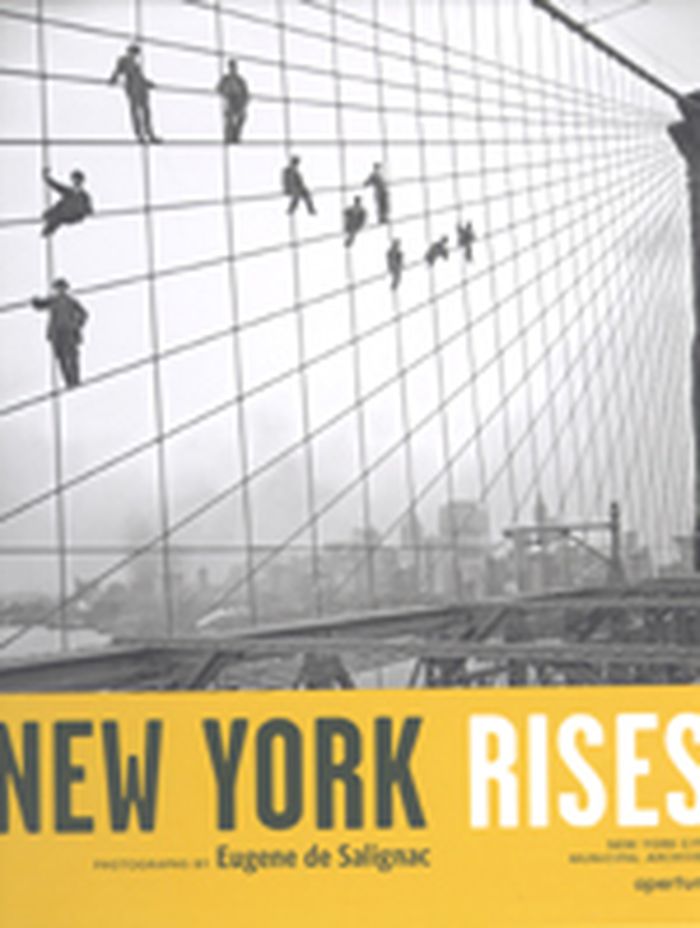
From 1906 to 1934, Eugene de Salignac shot over twenty thousand 8-by-10-inch glass-plate negatives of New York City. As sole photographer at the Department of Bridges/Plant and Structures during that period of dizzying growth, he documented the creation of the city's modern infrastructure—bridges, major municipal buildings, roads, and subways. For years these remarkably lyrical photographs have been used in books and films, but never credited to de Salignac. New York Rises is the first monograph to present them as an aesthetically coherent oeuvre by a photographer with a unique vision. As meticulous in his record keeping as he was creative in his photography, de Salignac left five handwritten logs that identify each negative by place and exact date. This information is complemented throughout the book by narrative captions expanding on themes such as accidents, bridges, workers, and the Depression. Michael Lorenzini has unearthed primary sources to reconstruct de Salignac's biography. Kevin Moore explores his work in the context of other photographers of the period, including Eugène Atget and Berenice Abbott.
New York rises : photographs by Eugene de Salignac
Actions:
Prix:
$48.95
(disponible sur commande)
Résumé:
From 1906 to 1934, Eugene de Salignac shot over twenty thousand 8-by-10-inch glass-plate negatives of New York City. As sole photographer at the Department of Bridges/Plant and Structures during that period of dizzying growth, he documented the creation of the city's modern infrastructure—bridges, major municipal buildings, roads, and subways. For years these remarkably lyrical photographs have been used in books and films, but never credited to de Salignac. New York Rises is the first monograph to present them as an aesthetically coherent oeuvre by a photographer with a unique vision. As meticulous in his record keeping as he was creative in his photography, de Salignac left five handwritten logs that identify each negative by place and exact date. This information is complemented throughout the book by narrative captions expanding on themes such as accidents, bridges, workers, and the Depression. Michael Lorenzini has unearthed primary sources to reconstruct de Salignac's biography. Kevin Moore explores his work in the context of other photographers of the period, including Eugène Atget and Berenice Abbott.
Classification:
livres
livres
Publication:
avril 2007, New York
avril 2007, New York
Sujet:
Monographies photo
Monographies photo
Classification:
livres
livres
Actions:
Prix:
$32.50
(disponible en magasin)
Résumé:
In the spring of 2010, the Brooklyn-based quarterly magazine Cabinet invited poet and cultural critic Wayne Koestenbaum to begin writing a regular column. Entitled "Legend," the column had a highly unusual premise. Every three months, the editors of the magazine would ask Koestenbaum to write one or more extended captions for a single photograph with which they had(...)
$32.50
(disponible en magasin)
Résumé:
In the spring of 2010, the Brooklyn-based quarterly magazine Cabinet invited poet and cultural critic Wayne Koestenbaum to begin writing a regular column. Entitled "Legend," the column had a highly unusual premise. Every three months, the editors of the magazine would ask Koestenbaum to write one or more extended captions for a single photograph with which they had(...)
Titre:
Notes on glaze: 18 photographic investigations
Actions:
Prix:
$32.50
(disponible en magasin)
Résumé:
In the spring of 2010, the Brooklyn-based quarterly magazine Cabinet invited poet and cultural critic Wayne Koestenbaum to begin writing a regular column. Entitled "Legend," the column had a highly unusual premise. Every three months, the editors of the magazine would ask Koestenbaum to write one or more extended captions for a single photograph with which they had provided him; drawn from obscure vernacular, commercial and scientific sources, all of the images were unfamiliar to the author. After 18 installments, Koestenbaum concluded his column in the winter of 2015. 'Notes on Glaze', featuring an introductory essay by the author, collects all the "Legend" columns, as well as their accompanying photographs. Refusing the distancing language of critical disinterest, Koestenbaum’s columns always locate the author in intimate proximity to the subjects portrayed in the photographs and to the impossibly variegated cast of characters—ranging from Debbie Reynolds to Duccio, the Dalai Lama to Barbra Streisand; from Hegel to Pee-wee Herman, and Emily Dickinson to Cicciolina—that pass through these texts.
Notes on glaze: 18 photographic investigations
Actions:
Prix:
$32.50
(disponible en magasin)
Résumé:
In the spring of 2010, the Brooklyn-based quarterly magazine Cabinet invited poet and cultural critic Wayne Koestenbaum to begin writing a regular column. Entitled "Legend," the column had a highly unusual premise. Every three months, the editors of the magazine would ask Koestenbaum to write one or more extended captions for a single photograph with which they had provided him; drawn from obscure vernacular, commercial and scientific sources, all of the images were unfamiliar to the author. After 18 installments, Koestenbaum concluded his column in the winter of 2015. 'Notes on Glaze', featuring an introductory essay by the author, collects all the "Legend" columns, as well as their accompanying photographs. Refusing the distancing language of critical disinterest, Koestenbaum’s columns always locate the author in intimate proximity to the subjects portrayed in the photographs and to the impossibly variegated cast of characters—ranging from Debbie Reynolds to Duccio, the Dalai Lama to Barbra Streisand; from Hegel to Pee-wee Herman, and Emily Dickinson to Cicciolina—that pass through these texts.
Classification:
livres
livres
Publication:
avril 2016
avril 2016
Sujet:
Théorie de la photographie
Théorie de la photographie
Classification:
livres
livres
Actions:
Exemplaires:
Description:
x, 435 pages : illustrations, maps, plans ; 26 cm
Description:
x, 435 pages : illustrations, maps, plans ; 26 cm
Auteur:
Sujet:
Publication:
Princeton, N.J. : D. Van Nostrand Company, Inc., [1963]
Princeton, N.J. : D. Van Nostrand Company, Inc., [1963]
Titre:
The urban pattern : city planning and design / by Arthur B. Gallion and Simon Eisner ; chapter title sketches by Anthony Stoner.
Actions:
Exemplaires:
Description:
x, 435 pages : illustrations, maps, plans ; 26 cm
The urban pattern : city planning and design / by Arthur B. Gallion and Simon Eisner ; chapter title sketches by Anthony Stoner.
Actions:
Exemplaires:
Description:
x, 435 pages : illustrations, maps, plans ; 26 cm
Classification:
livres
livres
Publication:
Princeton, N.J. : D. Van Nostrand Company, Inc., [1963]
Princeton, N.J. : D. Van Nostrand Company, Inc., [1963]
Auteur:
Sujet:
Classification:
livres
livres
Actions:
Prix:
$70.00
(disponible sur commande)
Résumé:
From its birth as a remote trading outpost on the fringes of the Dutch empire to its current status as the so-called Capital of the World, New York has always captivated visual artists. The extraordinary prints collected by the New-York Historical Society over the course of its history vividly preserve these impressions on paper. In this handsome volume more than 150 of(...)
$70.00
(disponible sur commande)
Résumé:
From its birth as a remote trading outpost on the fringes of the Dutch empire to its current status as the so-called Capital of the World, New York has always captivated visual artists. The extraordinary prints collected by the New-York Historical Society over the course of its history vividly preserve these impressions on paper. In this handsome volume more than 150 of(...)
Titre:
Impressions of New York : prints from the New-York historical society
Actions:
Prix:
$70.00
(disponible sur commande)
Résumé:
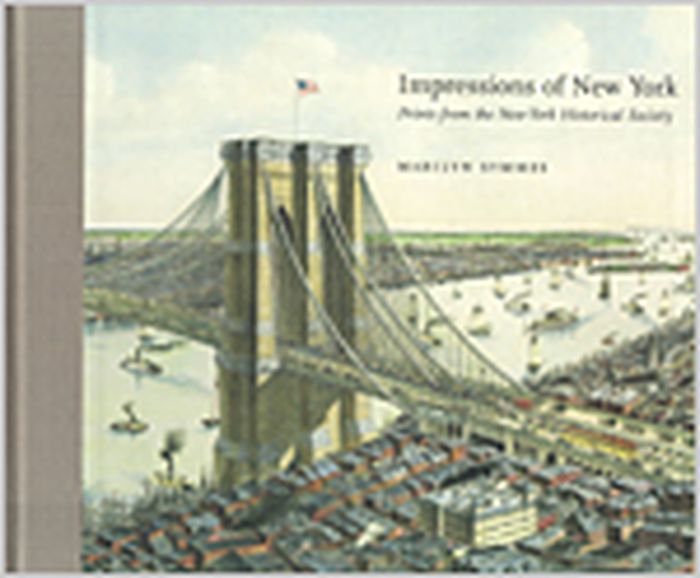
From its birth as a remote trading outpost on the fringes of the Dutch empire to its current status as the so-called Capital of the World, New York has always captivated visual artists. The extraordinary prints collected by the New-York Historical Society over the course of its history vividly preserve these impressions on paper. In this handsome volume more than 150 of these views of the city—including two spectacular gatefold panoramas—speak eloquently of the surging power of this dynamic urban centre. At the same time, they present an intimate portrait of everyday life as it has been lived and savoured in this great city for more than three centuries. The companion to an exhibition celebrating the New-York Historical Society's bicentennial anniversary, this beautifully printed volume presents a full range of historic images, from 1672 to the present. In the lively essay and information-filled captions, curator and historian Marilyn Symmes tells the unique stories behind the people and places, parks and buildings, streets and neighbourhoods, parades and events depicted in each image—in essence, the story of New York City itself.
Impressions of New York : prints from the New-York historical society
Actions:
Prix:
$70.00
(disponible sur commande)
Résumé:
From its birth as a remote trading outpost on the fringes of the Dutch empire to its current status as the so-called Capital of the World, New York has always captivated visual artists. The extraordinary prints collected by the New-York Historical Society over the course of its history vividly preserve these impressions on paper. In this handsome volume more than 150 of these views of the city—including two spectacular gatefold panoramas—speak eloquently of the surging power of this dynamic urban centre. At the same time, they present an intimate portrait of everyday life as it has been lived and savoured in this great city for more than three centuries. The companion to an exhibition celebrating the New-York Historical Society's bicentennial anniversary, this beautifully printed volume presents a full range of historic images, from 1672 to the present. In the lively essay and information-filled captions, curator and historian Marilyn Symmes tells the unique stories behind the people and places, parks and buildings, streets and neighbourhoods, parades and events depicted in each image—in essence, the story of New York City itself.
Classification:
livres
livres
Publication:
décembre 2004, New York
décembre 2004, New York
Sujet:
Histoire jusqu’à 1900
Histoire jusqu’à 1900
Classification:
livres
livres
Actions:
Prix:
$78.00
(disponible sur commande)
Résumé:
László Moholy-Nagy (1895–1946) was one of the most ardent seekers of the ‘New Vision’ among the early twentieth century avant-garde artists. His ongoing preoccupation with the phenomenon of light defined all periods of his artistic creativity, and his strength lay in his effortless skill translating light and spatial dimensions from one medium to another. In the early(...)
$78.00
(disponible sur commande)
Résumé:
László Moholy-Nagy (1895–1946) was one of the most ardent seekers of the ‘New Vision’ among the early twentieth century avant-garde artists. His ongoing preoccupation with the phenomenon of light defined all periods of his artistic creativity, and his strength lay in his effortless skill translating light and spatial dimensions from one medium to another. In the early(...)
Sujet:
Monographies photo
Monographies photo
Publication:
janvier 1900, Göttingen
janvier 1900, Göttingen
Titre:
Laszlo Moholy-Nagy : color in transparency, photographic experiments in color
Actions:
Prix:
$78.00
(disponible sur commande)
Résumé:
László Moholy-Nagy (1895–1946) was one of the most ardent seekers of the ‘New Vision’ among the early twentieth century avant-garde artists. His ongoing preoccupation with the phenomenon of light defined all periods of his artistic creativity, and his strength lay in his effortless skill translating light and spatial dimensions from one medium to another. In the early 1930s the first color processes became widely available. After he had mastered the different fields of black/white photography, it was only to be expected that Moholy would focus his creative energy on the next hot issue among photographers. Color photography proved to be one of Moholy’s most important media of artistic production, but until now, with a few exceptions, his work in the field of color photography is unknown. This book presents 100 works — advertisements, portraits, urban views, New Bauhaus studies, and abstract compositions — from the early days of Moholy’s experimentation with color in 1934 until his death in 1946. A foreword by Hattula Moholy-Nagy, an introductory essay and extended captions by Jeannine Fiedler, a chronology and bibliography will present the history of color photography and the significance of these works in Moholy’s own oeuvre.
Laszlo Moholy-Nagy : color in transparency, photographic experiments in color
Actions:
Prix:
$78.00
(disponible sur commande)
Résumé:
László Moholy-Nagy (1895–1946) was one of the most ardent seekers of the ‘New Vision’ among the early twentieth century avant-garde artists. His ongoing preoccupation with the phenomenon of light defined all periods of his artistic creativity, and his strength lay in his effortless skill translating light and spatial dimensions from one medium to another. In the early 1930s the first color processes became widely available. After he had mastered the different fields of black/white photography, it was only to be expected that Moholy would focus his creative energy on the next hot issue among photographers. Color photography proved to be one of Moholy’s most important media of artistic production, but until now, with a few exceptions, his work in the field of color photography is unknown. This book presents 100 works — advertisements, portraits, urban views, New Bauhaus studies, and abstract compositions — from the early days of Moholy’s experimentation with color in 1934 until his death in 1946. A foreword by Hattula Moholy-Nagy, an introductory essay and extended captions by Jeannine Fiedler, a chronology and bibliography will present the history of color photography and the significance of these works in Moholy’s own oeuvre.
Classification:
livres
livres
Publication:
janvier 1900, Göttingen
janvier 1900, Göttingen
Sujet:
Monographies photo
Monographies photo
Classification:
livres
livres
Actions:
Prix:
$42.95
(disponible sur commande)
Résumé:
American visual artist and scholar Joseph Grigely (born 1956) here brings together writings, lectures, interviews and documentation of his work spanning 40 years. Deaf since the age of 10, his art and writing have long questioned and made use of various modes of communication—photographs, handwritten notes, lipreading, newspaper headlines, paintings and TV captions—to(...)
$42.95
(disponible sur commande)
Résumé:
American visual artist and scholar Joseph Grigely (born 1956) here brings together writings, lectures, interviews and documentation of his work spanning 40 years. Deaf since the age of 10, his art and writing have long questioned and made use of various modes of communication—photographs, handwritten notes, lipreading, newspaper headlines, paintings and TV captions—to(...)
Titre:
Joseph Grigely: Otherhow: Essays and documents on art and disability, 1985-2024
Actions:
Prix:
$42.95
(disponible sur commande)
Résumé:
American visual artist and scholar Joseph Grigely (born 1956) here brings together writings, lectures, interviews and documentation of his work spanning 40 years. Deaf since the age of 10, his art and writing have long questioned and made use of various modes of communication—photographs, handwritten notes, lipreading, newspaper headlines, paintings and TV captions—to examine and scrutinize the ableism embedded in cultural and media production. ''Otherhow'' interrogates modes of access and analyzes how issues of accessibility and their resolution provide a benefit to everyone, not just the disabled. Chapters devoted to art, access and advocacy underpin the interconnected nature of these issues. Letters of complaint, faxes and emails, unpublished op-eds, exhibition proposals, statements on equality and access: each provides a glimpse into how Grigely’s work has been shaped by—or constructed from—the "tangled process" of opening access. The book is rounded out by a series of visual inventories: collections of images that document failures of access or, in the case of the obituaries, highlight those who had a disability or were activists working to establish greater access for those with disabilities.
Joseph Grigely: Otherhow: Essays and documents on art and disability, 1985-2024
Actions:
Prix:
$42.95
(disponible sur commande)
Résumé:
American visual artist and scholar Joseph Grigely (born 1956) here brings together writings, lectures, interviews and documentation of his work spanning 40 years. Deaf since the age of 10, his art and writing have long questioned and made use of various modes of communication—photographs, handwritten notes, lipreading, newspaper headlines, paintings and TV captions—to examine and scrutinize the ableism embedded in cultural and media production. ''Otherhow'' interrogates modes of access and analyzes how issues of accessibility and their resolution provide a benefit to everyone, not just the disabled. Chapters devoted to art, access and advocacy underpin the interconnected nature of these issues. Letters of complaint, faxes and emails, unpublished op-eds, exhibition proposals, statements on equality and access: each provides a glimpse into how Grigely’s work has been shaped by—or constructed from—the "tangled process" of opening access. The book is rounded out by a series of visual inventories: collections of images that document failures of access or, in the case of the obituaries, highlight those who had a disability or were activists working to establish greater access for those with disabilities.
Classification:
livres
livres
Publication:
février 2026
février 2026
Classification:
livres
livres
Titre:
Montreal moods
Montreal moods
Actions:
Prix:
$49.95
(disponible sur commande)
Résumé:
Millions of people love Montreal with a passion. It has a beauty of its own that sets it apart from the other great cities of the world. Over the years, Montreal has never ceased to change or grow in beauty. In this volume, Georges-Hébert Germain paints an arresting portrait of this fascinating metropolis. In this precise, colourful writing style, he describes, with(...)
$49.95
(disponible sur commande)
Résumé:
Millions of people love Montreal with a passion. It has a beauty of its own that sets it apart from the other great cities of the world. Over the years, Montreal has never ceased to change or grow in beauty. In this volume, Georges-Hébert Germain paints an arresting portrait of this fascinating metropolis. In this precise, colourful writing style, he describes, with(...)
Sujet:
Architecture de Montréal
Architecture de Montréal
Publication:
septembre 2006, Québec
septembre 2006, Québec
Titre:
Montreal moods
Actions:
Prix:
$49.95
(disponible sur commande)
Résumé:
Millions of people love Montreal with a passion. It has a beauty of its own that sets it apart from the other great cities of the world. Over the years, Montreal has never ceased to change or grow in beauty. In this volume, Georges-Hébert Germain paints an arresting portrait of this fascinating metropolis. In this precise, colourful writing style, he describes, with remarkable evocatory power, the charm and seductiveness of Montreal. Linda Turgeon's photographs and Rose Élise Cialdella's captions portray the multiple facets-history, architecture, cultural life and human dimension-of this great city. Experience the special moods that permeate it. You will be captivated by the visual treasure trove scattered throughout Montreal. You will almost smell the scents wafting through the city's parks. You will imagine you can hear the hubbub of this teeming metropolis and its cosmopolitan population. The cultural and historical face of Montréal, the principal city of French America, has been shaped by the torment and fantasies of a people besieged but outspoken in their demands. This volume is a reminder that Montreal is a setting for gems occasionaly unbeknownst to even its own inhabitants. Discover them here and let yourself be bewitched by this city lovingly stretched out on its island.
Montreal moods
Actions:
Prix:
$49.95
(disponible sur commande)
Résumé:
Millions of people love Montreal with a passion. It has a beauty of its own that sets it apart from the other great cities of the world. Over the years, Montreal has never ceased to change or grow in beauty. In this volume, Georges-Hébert Germain paints an arresting portrait of this fascinating metropolis. In this precise, colourful writing style, he describes, with remarkable evocatory power, the charm and seductiveness of Montreal. Linda Turgeon's photographs and Rose Élise Cialdella's captions portray the multiple facets-history, architecture, cultural life and human dimension-of this great city. Experience the special moods that permeate it. You will be captivated by the visual treasure trove scattered throughout Montreal. You will almost smell the scents wafting through the city's parks. You will imagine you can hear the hubbub of this teeming metropolis and its cosmopolitan population. The cultural and historical face of Montréal, the principal city of French America, has been shaped by the torment and fantasies of a people besieged but outspoken in their demands. This volume is a reminder that Montreal is a setting for gems occasionaly unbeknownst to even its own inhabitants. Discover them here and let yourself be bewitched by this city lovingly stretched out on its island.
Classification:
livres
livres
Publication:
septembre 2006, Québec
septembre 2006, Québec
Sujet:
Architecture de Montréal
Architecture de Montréal


