


3445 Résultats
Classification:
livres
livres
Titre:
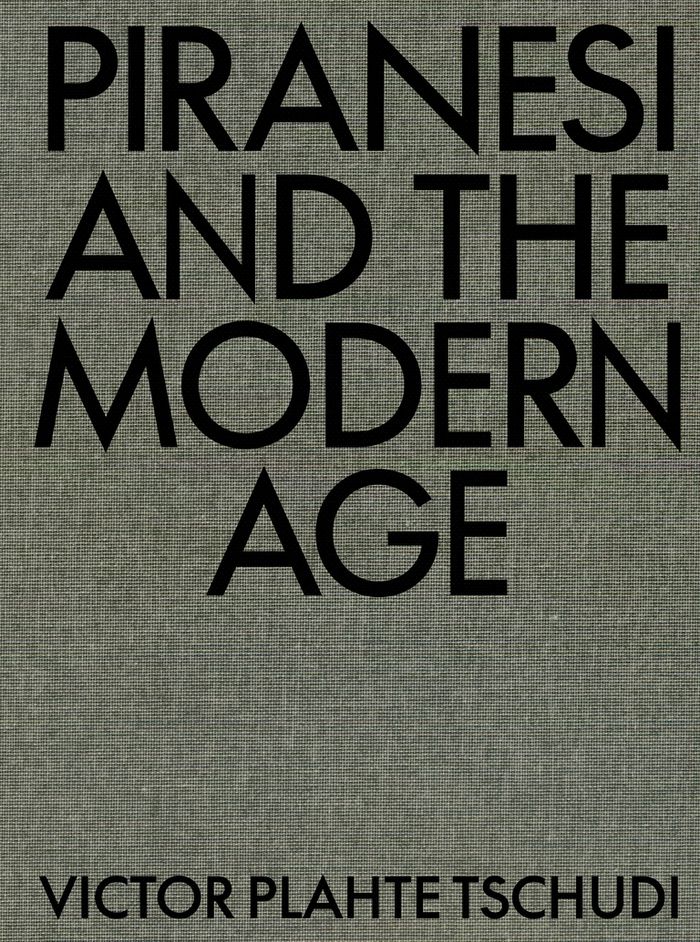
Piranesi and the modern age
Piranesi and the modern age
Actions:
Prix:
$65.95
(disponible sur commande)
Résumé:
The etchings of the Italian printmaker, architect, and antiquarian Giovanni Battista Piranesi (1720–78) have long mesmerized viewers. But, as Victor Plahte Tschudi shows, artists and writers of the modern era found in these works—Piranesi's visions of contradictory space, endless vistas, and self-perpetuating architecture—a formulation of the modern. In this volume,(...)
$65.95
(disponible sur commande)
Résumé:
The etchings of the Italian printmaker, architect, and antiquarian Giovanni Battista Piranesi (1720–78) have long mesmerized viewers. But, as Victor Plahte Tschudi shows, artists and writers of the modern era found in these works—Piranesi's visions of contradictory space, endless vistas, and self-perpetuating architecture—a formulation of the modern. In this volume,(...)
Titre:
Piranesi and the modern age
Actions:
Prix:
$65.95
(disponible sur commande)
Résumé:
The etchings of the Italian printmaker, architect, and antiquarian Giovanni Battista Piranesi (1720–78) have long mesmerized viewers. But, as Victor Plahte Tschudi shows, artists and writers of the modern era found in these works—Piranesi's visions of contradictory space, endless vistas, and self-perpetuating architecture—a formulation of the modern. In this volume, Tschudi explores the complex appropriation and continual rediscoveries of Piranesi by modern literature, photography, art, film, and architecture. Tracing the ways that the modern age constructed itself and its origin through Piranesi across genres, he shows, for example, how Piranesi's work formulates the ideas of “contrast” in photography, “abstraction” in painting and “montage” in cinema. Tschudi's exploration of Piranesi's influence on modern architectural discourse includes interviews with such distinguished architects as Peter Eisenman, Bernard Tschumi, Steven Holl, and Rem Koolhaas.
Piranesi and the modern age
Actions:
Prix:
$65.95
(disponible sur commande)
Résumé:
The etchings of the Italian printmaker, architect, and antiquarian Giovanni Battista Piranesi (1720–78) have long mesmerized viewers. But, as Victor Plahte Tschudi shows, artists and writers of the modern era found in these works—Piranesi's visions of contradictory space, endless vistas, and self-perpetuating architecture—a formulation of the modern. In this volume, Tschudi explores the complex appropriation and continual rediscoveries of Piranesi by modern literature, photography, art, film, and architecture. Tracing the ways that the modern age constructed itself and its origin through Piranesi across genres, he shows, for example, how Piranesi's work formulates the ideas of “contrast” in photography, “abstraction” in painting and “montage” in cinema. Tschudi's exploration of Piranesi's influence on modern architectural discourse includes interviews with such distinguished architects as Peter Eisenman, Bernard Tschumi, Steven Holl, and Rem Koolhaas.
Classification:
livres
livres
Publication:
novembre 2022
novembre 2022
Sujet:
Théorie de l’architecture
Théorie de l’architecture
Classification:
livres
livres
Actions:
Prix:
$75.00
(disponible sur commande)
Résumé:
This publication contains photographs taken between 1974 and 2009 of buildings designed by 17 well-known architects including: Peter Eisenman, Louis Kahn, Fumihiko Maki, Norman Foster, Frank Lloyd Wright, Le Corbusier, Frank Gehry, Zaha Hadid, Alvar Aalto, Shigeru Ban and Renzo Piano. From the beginning of her career, Turner has used architecture as subject matter.(...)
$75.00
(disponible sur commande)
Résumé:
This publication contains photographs taken between 1974 and 2009 of buildings designed by 17 well-known architects including: Peter Eisenman, Louis Kahn, Fumihiko Maki, Norman Foster, Frank Lloyd Wright, Le Corbusier, Frank Gehry, Zaha Hadid, Alvar Aalto, Shigeru Ban and Renzo Piano. From the beginning of her career, Turner has used architecture as subject matter.(...)
Titre:
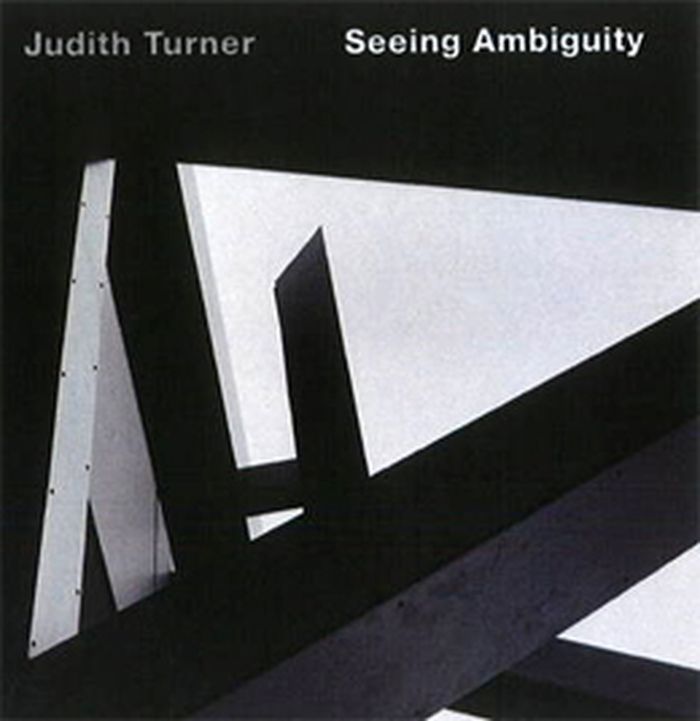
Judith Turner: seeing ambiguity
Actions:
Prix:
$75.00
(disponible sur commande)
Résumé:
This publication contains photographs taken between 1974 and 2009 of buildings designed by 17 well-known architects including: Peter Eisenman, Louis Kahn, Fumihiko Maki, Norman Foster, Frank Lloyd Wright, Le Corbusier, Frank Gehry, Zaha Hadid, Alvar Aalto, Shigeru Ban and Renzo Piano. From the beginning of her career, Turner has used architecture as subject matter. Ambiguity has always been a hallmark of her work where solids become voids, causing positive and negative to reverse. The photos are small fragments of architecture taken out of context. Through her eyes, the subject is decomposed and recreated, assuming a new meaning. The photographs are quiet, yet dynamic, beautifully framed compositions. Architects have commented that she exposes elements of their work they never imagined existed. Thus, while using architecture as subject matter to invent her own worlds, Turner is also revealing some of its inherent complexities.
Judith Turner: seeing ambiguity
Actions:
Prix:
$75.00
(disponible sur commande)
Résumé:
This publication contains photographs taken between 1974 and 2009 of buildings designed by 17 well-known architects including: Peter Eisenman, Louis Kahn, Fumihiko Maki, Norman Foster, Frank Lloyd Wright, Le Corbusier, Frank Gehry, Zaha Hadid, Alvar Aalto, Shigeru Ban and Renzo Piano. From the beginning of her career, Turner has used architecture as subject matter. Ambiguity has always been a hallmark of her work where solids become voids, causing positive and negative to reverse. The photos are small fragments of architecture taken out of context. Through her eyes, the subject is decomposed and recreated, assuming a new meaning. The photographs are quiet, yet dynamic, beautifully framed compositions. Architects have commented that she exposes elements of their work they never imagined existed. Thus, while using architecture as subject matter to invent her own worlds, Turner is also revealing some of its inherent complexities.
Classification:
livres
livres
Publication:
janvier 2012
janvier 2012
Sujet:
Monographies photo
Monographies photo
Classification:
livres
livres
Actions:
Prix:
$47.75
(disponible en magasin)
Résumé:
Comment comprendre l'architecture? Comment rendre compte de ce qui est à la fois expérience perceptive, projet artistique, décision d'urbanisme et choix politique? " Le plan et le détail " expose la philosophie d'un nouvel esprit architectural, déconstruit et remodèle les convictions et les notions sur lesquelles se fonde le travail de l'architecte : la valeur du plan,(...)
$47.75
(disponible en magasin)
Résumé:
Comment comprendre l'architecture? Comment rendre compte de ce qui est à la fois expérience perceptive, projet artistique, décision d'urbanisme et choix politique? " Le plan et le détail " expose la philosophie d'un nouvel esprit architectural, déconstruit et remodèle les convictions et les notions sur lesquelles se fonde le travail de l'architecte : la valeur du plan,(...)
Titre:
Le plan et le détail : une philosophie de l'architecture et de la ville
Actions:
Prix:
$47.75
(disponible en magasin)
Résumé:
Comment comprendre l'architecture? Comment rendre compte de ce qui est à la fois expérience perceptive, projet artistique, décision d'urbanisme et choix politique? " Le plan et le détail " expose la philosophie d'un nouvel esprit architectural, déconstruit et remodèle les convictions et les notions sur lesquelles se fonde le travail de l'architecte : la valeur du plan, la construction du cadre de l'habitat, l'insertion du bâti dans le tissu urbain, la relation de l'architecture et de l'urbanisme, le rationalisme technique, l'invention du détail. L'auteur permet de repenser les problèmes généraux de l'espace urbain aujourd'hui - dans un dialogue serré et fécond avec de grands créateurs du XX°siècle, et avec leurs oeuvres : Loos et Le Corbusier, Mies van der Rohe, Louis Kahn, Aldo Rossi, Peter Eisenman, et Rem Koolhaas. Fortement documenté, et illustré (52 illustrations et photographies noir et blanc; 8 planches couleurs).
Le plan et le détail : une philosophie de l'architecture et de la ville
Actions:
Prix:
$47.75
(disponible en magasin)
Résumé:
Comment comprendre l'architecture? Comment rendre compte de ce qui est à la fois expérience perceptive, projet artistique, décision d'urbanisme et choix politique? " Le plan et le détail " expose la philosophie d'un nouvel esprit architectural, déconstruit et remodèle les convictions et les notions sur lesquelles se fonde le travail de l'architecte : la valeur du plan, la construction du cadre de l'habitat, l'insertion du bâti dans le tissu urbain, la relation de l'architecture et de l'urbanisme, le rationalisme technique, l'invention du détail. L'auteur permet de repenser les problèmes généraux de l'espace urbain aujourd'hui - dans un dialogue serré et fécond avec de grands créateurs du XX°siècle, et avec leurs oeuvres : Loos et Le Corbusier, Mies van der Rohe, Louis Kahn, Aldo Rossi, Peter Eisenman, et Rem Koolhaas. Fortement documenté, et illustré (52 illustrations et photographies noir et blanc; 8 planches couleurs).
Classification:
livres
livres
Publication:
novembre 2001, Nîmes
novembre 2001, Nîmes
Sujet:
Théorie de l’architecture
Théorie de l’architecture
Classification:
livres
livres
Actions:
Prix:
$12.99
(disponible sur commande)
Résumé:
The model is one of the oldest means of architectural representation and comes in an extravagant variety of forms, from miniaturizations of reality mesmerizing in their exactness to wildly energetic sculptural representations. "Modeling Messages: The Architect and the Model" is a study of the contemporary model, American and international, and its myriad uses in(...)
$12.99
(disponible sur commande)
Résumé:
The model is one of the oldest means of architectural representation and comes in an extravagant variety of forms, from miniaturizations of reality mesmerizing in their exactness to wildly energetic sculptural representations. "Modeling Messages: The Architect and the Model" is a study of the contemporary model, American and international, and its myriad uses in(...)
Titre:
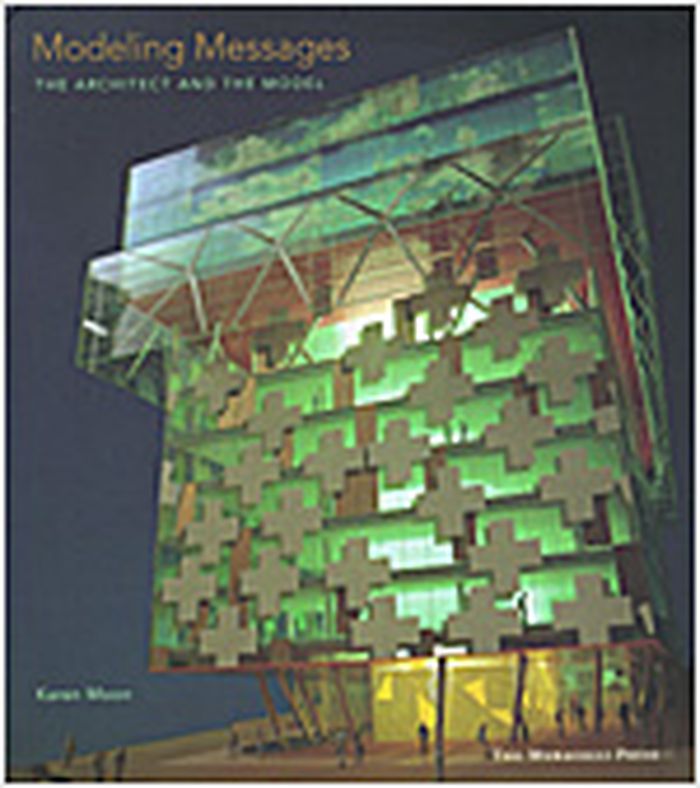
Modeling messages : the architect and the model
Actions:
Prix:
$12.99
(disponible sur commande)
Résumé:
The model is one of the oldest means of architectural representation and comes in an extravagant variety of forms, from miniaturizations of reality mesmerizing in their exactness to wildly energetic sculptural representations. "Modeling Messages: The Architect and the Model" is a study of the contemporary model, American and international, and its myriad uses in architectural practice. Among the illustrations are inventive designs by architects Peter Eisenman, Frank Gehry, Zaha Hadid, and Rem Koolhaas. Author Karen Moon discusses the meaning of the model for the architect, the relationship between model and building, and the impact of scale. She also explores how architects use models for presentation and the creation of a public image. In addition, she focuses on the practice of model making: the relationship between the architect and the maker; the materials and new technologies that are transforming model making.
Modeling messages : the architect and the model
Actions:
Prix:
$12.99
(disponible sur commande)
Résumé:
The model is one of the oldest means of architectural representation and comes in an extravagant variety of forms, from miniaturizations of reality mesmerizing in their exactness to wildly energetic sculptural representations. "Modeling Messages: The Architect and the Model" is a study of the contemporary model, American and international, and its myriad uses in architectural practice. Among the illustrations are inventive designs by architects Peter Eisenman, Frank Gehry, Zaha Hadid, and Rem Koolhaas. Author Karen Moon discusses the meaning of the model for the architect, the relationship between model and building, and the impact of scale. She also explores how architects use models for presentation and the creation of a public image. In addition, she focuses on the practice of model making: the relationship between the architect and the maker; the materials and new technologies that are transforming model making.
Classification:
livres
livres
Publication:
juin 2004, New York
juin 2004, New York
Classification:
livres
livres
Actions:
Prix:
$45.95
(disponible sur commande)
Résumé:
"Inside design now" looks at American design in the new millennium, providing a fascinating tour of cutting-edge trends in architecture, interiors, landscape, fashion, graphics, and new media. Featuring eighty emerging and established designers – including 2 x 4, Mike Mills, Peter Eisenman, Fuse Project, Tod Machover, Paula Scher, Jennifer Siegal, and Isaac Mizrahi –(...)
$45.95
(disponible sur commande)
Résumé:
"Inside design now" looks at American design in the new millennium, providing a fascinating tour of cutting-edge trends in architecture, interiors, landscape, fashion, graphics, and new media. Featuring eighty emerging and established designers – including 2 x 4, Mike Mills, Peter Eisenman, Fuse Project, Tod Machover, Paula Scher, Jennifer Siegal, and Isaac Mizrahi –(...)
Publication:
avril 2003, New York
avril 2003, New York
Titre:
National design triennal : inside design now
Actions:
Prix:
$45.95
(disponible sur commande)
Résumé:
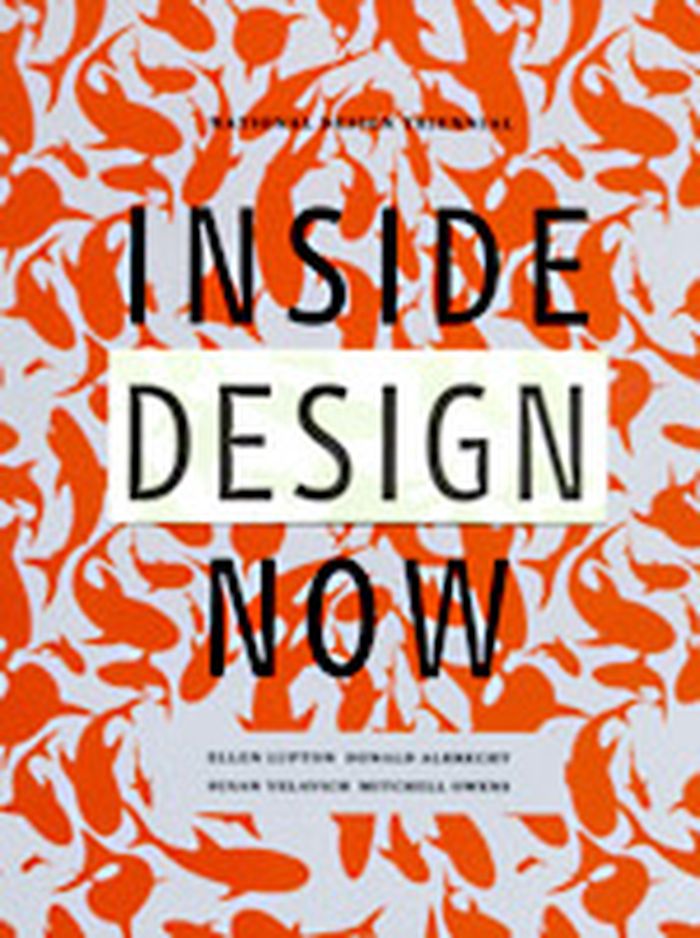
"Inside design now" looks at American design in the new millennium, providing a fascinating tour of cutting-edge trends in architecture, interiors, landscape, fashion, graphics, and new media. Featuring eighty emerging and established designers – including 2 x 4, Mike Mills, Peter Eisenman, Fuse Project, Tod Machover, Paula Scher, Jennifer Siegal, and Isaac Mizrahi – "Inside design now" illustrates the most innovative and provocative thinking in design today. Essays explore the role of the designer in today’s culture, contemporary ideas of beauty and functionality, and what the future holds in the realm of design. Sensuous materials, lush patterns, and exquisite details come together with new technologies, pop imagery, and fresh approaches to scale, colour, and construction in the works reproduced in this volume. This book accompanies the exhibition of the same name at the Cooper Hewitt Museum of National Design beginning in April 2003.
National design triennal : inside design now
Actions:
Prix:
$45.95
(disponible sur commande)
Résumé:
"Inside design now" looks at American design in the new millennium, providing a fascinating tour of cutting-edge trends in architecture, interiors, landscape, fashion, graphics, and new media. Featuring eighty emerging and established designers – including 2 x 4, Mike Mills, Peter Eisenman, Fuse Project, Tod Machover, Paula Scher, Jennifer Siegal, and Isaac Mizrahi – "Inside design now" illustrates the most innovative and provocative thinking in design today. Essays explore the role of the designer in today’s culture, contemporary ideas of beauty and functionality, and what the future holds in the realm of design. Sensuous materials, lush patterns, and exquisite details come together with new technologies, pop imagery, and fresh approaches to scale, colour, and construction in the works reproduced in this volume. This book accompanies the exhibition of the same name at the Cooper Hewitt Museum of National Design beginning in April 2003.
Classification:
livres
livres
Publication:
avril 2003, New York
avril 2003, New York
Classification:
livres
livres

Actions:
Prix:
$56.00
(disponible sur commande)
Résumé:
Since the end of World War II, Jewish architects have risen to unprecedented international prominence. Whether as modernists, postmodernists, or deconstructivists, architects such as Peter Eisenman, Frank Gehry, Louis I. Kahn, Daniel Libeskind, Richard Meier, Moshe Safdie, Robert A.M. Stern, and Stanley Tigerman have made pivotal contributions to postwar architecture.(...)
$56.00
(disponible sur commande)
Résumé:
Since the end of World War II, Jewish architects have risen to unprecedented international prominence. Whether as modernists, postmodernists, or deconstructivists, architects such as Peter Eisenman, Frank Gehry, Louis I. Kahn, Daniel Libeskind, Richard Meier, Moshe Safdie, Robert A.M. Stern, and Stanley Tigerman have made pivotal contributions to postwar architecture.(...)
Titre:
Building after Auschwitz: Jewish architecture and the memory of the Holocaust
Actions:
Prix:
$56.00
(disponible sur commande)
Résumé:
Since the end of World War II, Jewish architects have risen to unprecedented international prominence. Whether as modernists, postmodernists, or deconstructivists, architects such as Peter Eisenman, Frank Gehry, Louis I. Kahn, Daniel Libeskind, Richard Meier, Moshe Safdie, Robert A.M. Stern, and Stanley Tigerman have made pivotal contributions to postwar architecture. They have also decisively shaped Jewish architectural history, as many of their designs are influenced by Jewish themes, ideas, and imagery. Building After Auschwitz is the first major study to examine the origins of this new Jewish architecture. Historian Gavriel D. Rosenfeld describes this cultural development as the result of important shifts in Jewish memory and identity since the Holocaust, and cites the rise of postmodernism, multiculturalism, and Holocaust consciousness as a catalyst. In showing how Jewish architects responded to the Nazi genocide in their work, Rosenfeld's study sheds new light on the evolution of Holocaust memory.
Building after Auschwitz: Jewish architecture and the memory of the Holocaust
Actions:
Prix:
$56.00
(disponible sur commande)
Résumé:
Since the end of World War II, Jewish architects have risen to unprecedented international prominence. Whether as modernists, postmodernists, or deconstructivists, architects such as Peter Eisenman, Frank Gehry, Louis I. Kahn, Daniel Libeskind, Richard Meier, Moshe Safdie, Robert A.M. Stern, and Stanley Tigerman have made pivotal contributions to postwar architecture. They have also decisively shaped Jewish architectural history, as many of their designs are influenced by Jewish themes, ideas, and imagery. Building After Auschwitz is the first major study to examine the origins of this new Jewish architecture. Historian Gavriel D. Rosenfeld describes this cultural development as the result of important shifts in Jewish memory and identity since the Holocaust, and cites the rise of postmodernism, multiculturalism, and Holocaust consciousness as a catalyst. In showing how Jewish architects responded to the Nazi genocide in their work, Rosenfeld's study sheds new light on the evolution of Holocaust memory.
Classification:
livres
livres
Publication:
octobre 2011
octobre 2011
Sujet:
Théorie de l’architecture
Théorie de l’architecture
Classification:
livres
livres
Actions:
Prix:
$80.00
(disponible sur commande)
Résumé:
During a tumultuous period in the 1960s and 70s, a new generation of architects began their careers amidst a period of profound social change, new conditions for architecture and the city and lasting changes to popular and critical forms of cultural production. First Works tells the story of this period and reassesses the conditions of architecture and the beginnings of(...)
$80.00
(disponible sur commande)
Résumé:
During a tumultuous period in the 1960s and 70s, a new generation of architects began their careers amidst a period of profound social change, new conditions for architecture and the city and lasting changes to popular and critical forms of cultural production. First Works tells the story of this period and reassesses the conditions of architecture and the beginnings of(...)
Publication:
décembre 2009
décembre 2009
Titre:
First works: emerging architectural experimentation of the 1960s and 1970s
Actions:
Prix:
$80.00
(disponible sur commande)
Résumé:
During a tumultuous period in the 1960s and 70s, a new generation of architects began their careers amidst a period of profound social change, new conditions for architecture and the city and lasting changes to popular and critical forms of cultural production. First Works tells the story of this period and reassesses the conditions of architecture and the beginnings of architectural careers through a selection of projects undertaken during the 60s and 70s. The book, accompanying a major travelling exhibition, presents a single key early project, in the form of models, sketches, photographs and drawings, by 20 young architectural practices, including Archigram, Aldo Rossi, Robert Venturi, Renzo Piano, Peter Eisenman, Herzog & de Meuron and Zaha Hadid. Alongside these ‘first works’, 20 invited critics, including Kenneth Frampton, Sylvia Lavin and Pier Vittorio Aureli, offer contemporary commentaries on these projects and their place within the architects’ subsequent careers.
First works: emerging architectural experimentation of the 1960s and 1970s
Actions:
Prix:
$80.00
(disponible sur commande)
Résumé:
During a tumultuous period in the 1960s and 70s, a new generation of architects began their careers amidst a period of profound social change, new conditions for architecture and the city and lasting changes to popular and critical forms of cultural production. First Works tells the story of this period and reassesses the conditions of architecture and the beginnings of architectural careers through a selection of projects undertaken during the 60s and 70s. The book, accompanying a major travelling exhibition, presents a single key early project, in the form of models, sketches, photographs and drawings, by 20 young architectural practices, including Archigram, Aldo Rossi, Robert Venturi, Renzo Piano, Peter Eisenman, Herzog & de Meuron and Zaha Hadid. Alongside these ‘first works’, 20 invited critics, including Kenneth Frampton, Sylvia Lavin and Pier Vittorio Aureli, offer contemporary commentaries on these projects and their place within the architects’ subsequent careers.
Classification:
livres
livres
Publication:
décembre 2009
décembre 2009
Classification:
livres
livres
Actions:
Prix:
$59.95
(disponible sur commande)
Résumé:
The Spanish architect Rafael Moneo has won numerous awards (including the prestigious Pritzker Architecture Prize), yet this publication is the first to offer a critical study of his career as a whole—not only his many built works and projects but also his contributions to teaching and his writings. The book begins with a comprehensive biography, covering Moneo’s(...)
$59.95
(disponible sur commande)
Résumé:
The Spanish architect Rafael Moneo has won numerous awards (including the prestigious Pritzker Architecture Prize), yet this publication is the first to offer a critical study of his career as a whole—not only his many built works and projects but also his contributions to teaching and his writings. The book begins with a comprehensive biography, covering Moneo’s(...)
Sujet:
Architecture, monographies
Architecture, monographies
Publication:
juin 2015
juin 2015
Titre:
Rafael Moneo: building, teaching, writing
Actions:
Prix:
$59.95
(disponible sur commande)
Résumé:
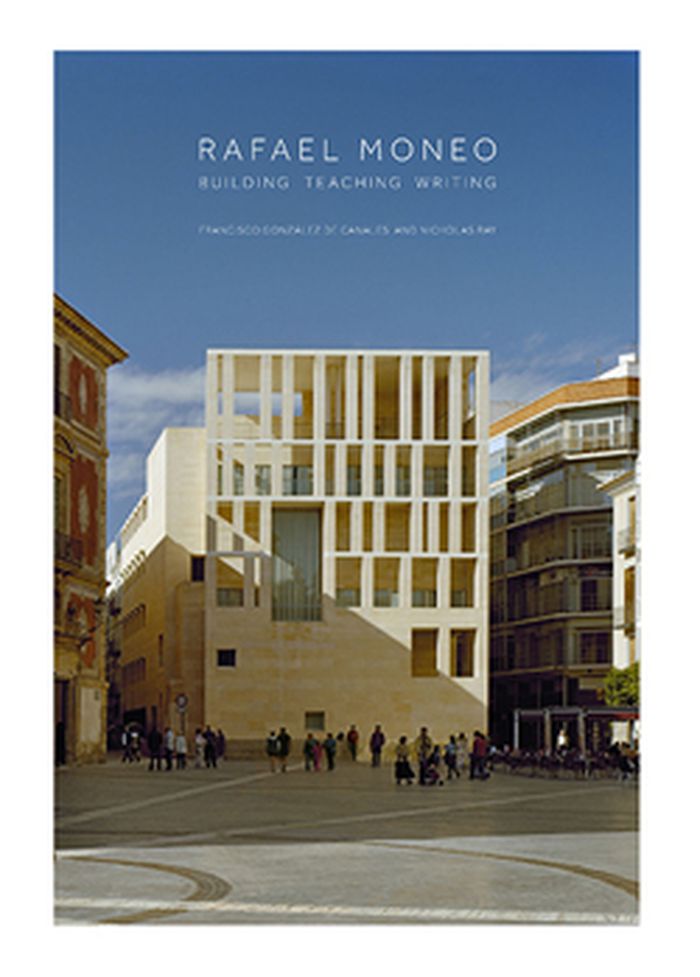
The Spanish architect Rafael Moneo has won numerous awards (including the prestigious Pritzker Architecture Prize), yet this publication is the first to offer a critical study of his career as a whole—not only his many built works and projects but also his contributions to teaching and his writings. The book begins with a comprehensive biography, covering Moneo’s education, teaching appointments, and encounters with historians and architects in Europe and the United States, such as Peter Eisenman, Jørn Utzon, and Bruno Zevi. Also included is a discussion of some of the buildings that he has designed, notably the Prado Museum extension and Atocha Station in Madrid. The following section examines in more detail seven key buildings chosen to illustrate crucial developments in Moneo’s thinking, from the Bankinter, Madrid, to the Cathedral of Our Lady of the Angels, Los Angeles. The last a section considers his architectural philosophy: his design approach, his idea of the canon, his theory of composition, his notion of form, and his confrontation with reality—in construction and context.
Rafael Moneo: building, teaching, writing
Actions:
Prix:
$59.95
(disponible sur commande)
Résumé:
The Spanish architect Rafael Moneo has won numerous awards (including the prestigious Pritzker Architecture Prize), yet this publication is the first to offer a critical study of his career as a whole—not only his many built works and projects but also his contributions to teaching and his writings. The book begins with a comprehensive biography, covering Moneo’s education, teaching appointments, and encounters with historians and architects in Europe and the United States, such as Peter Eisenman, Jørn Utzon, and Bruno Zevi. Also included is a discussion of some of the buildings that he has designed, notably the Prado Museum extension and Atocha Station in Madrid. The following section examines in more detail seven key buildings chosen to illustrate crucial developments in Moneo’s thinking, from the Bankinter, Madrid, to the Cathedral of Our Lady of the Angels, Los Angeles. The last a section considers his architectural philosophy: his design approach, his idea of the canon, his theory of composition, his notion of form, and his confrontation with reality—in construction and context.
Classification:
livres
livres
Publication:
juin 2015
juin 2015
Sujet:
Architecture, monographies
Architecture, monographies
Classification:
livres
livres
Titre:
Nietzsche for architects
Nietzsche for architects
Actions:
Prix:
$48.95
(disponible sur commande)
Résumé:
Nietzsche’s philosophy is provocative and complex and has been hugely influential on modern intellectual history and European culture. But his critical approach and writing style invites misunderstandings, sometimes with disastrous consequences. His ideas—or those loosely associated with him—are often briefly cited in scholarly studies in architectural theory and history.(...)
$48.95
(disponible sur commande)
Résumé:
Nietzsche’s philosophy is provocative and complex and has been hugely influential on modern intellectual history and European culture. But his critical approach and writing style invites misunderstandings, sometimes with disastrous consequences. His ideas—or those loosely associated with him—are often briefly cited in scholarly studies in architectural theory and history.(...)
Titre:
Nietzsche for architects
Actions:
Prix:
$48.95
(disponible sur commande)
Résumé:
Nietzsche’s philosophy is provocative and complex and has been hugely influential on modern intellectual history and European culture. But his critical approach and writing style invites misunderstandings, sometimes with disastrous consequences. His ideas—or those loosely associated with him—are often briefly cited in scholarly studies in architectural theory and history. His ideas are thought to have influenced the theories and designs of such iconic architects as Le Corbusier, Henry van de Velde, Bruno Taut, Louis H. Sullivan, Lebbeus Woods, and Peter Eisenman, as well as competing approaches to architecture and design, such as those adopted by the Bauhaus School and the Nazis. In the bewildering array of architectural positions that lay claim to Nietzsche as an influence, how can we begin to make sense of Nietzsche’s own approach to architecture? And how can we identify within his complex philosophy the key ideas and themes we require to make sense of his contribution to architecture? This first introduction to Nietzsche’s philosophy written specifically for architects locates his evaluation of appropriate and inappropriate architecture in the body of his writings and presents a clear overview of Nietzsche’s insights into architectural design alongside his advice for architects and designers.
Nietzsche for architects
Actions:
Prix:
$48.95
(disponible sur commande)
Résumé:
Nietzsche’s philosophy is provocative and complex and has been hugely influential on modern intellectual history and European culture. But his critical approach and writing style invites misunderstandings, sometimes with disastrous consequences. His ideas—or those loosely associated with him—are often briefly cited in scholarly studies in architectural theory and history. His ideas are thought to have influenced the theories and designs of such iconic architects as Le Corbusier, Henry van de Velde, Bruno Taut, Louis H. Sullivan, Lebbeus Woods, and Peter Eisenman, as well as competing approaches to architecture and design, such as those adopted by the Bauhaus School and the Nazis. In the bewildering array of architectural positions that lay claim to Nietzsche as an influence, how can we begin to make sense of Nietzsche’s own approach to architecture? And how can we identify within his complex philosophy the key ideas and themes we require to make sense of his contribution to architecture? This first introduction to Nietzsche’s philosophy written specifically for architects locates his evaluation of appropriate and inappropriate architecture in the body of his writings and presents a clear overview of Nietzsche’s insights into architectural design alongside his advice for architects and designers.
Classification:
livres
livres
Publication:
novembre 2025
novembre 2025
Sujet:
Théorie/ philosophie
Théorie/ philosophie
Classification:
livres
livres
Titre:
Anymore
Anymore
Actions:
Prix:
$13.00
(disponible sur commande)
Résumé:
At the turn of the millennium--the end of a calibrated period of time--it seems necessary to ask certain questions, foremost among them: Anymore? Anymore history and theory? Anymore architecture? Of particular concern are the last two hundred years, a self-conscious (...)
$13.00
(disponible sur commande)
Résumé:
At the turn of the millennium--the end of a calibrated period of time--it seems necessary to ask certain questions, foremost among them: Anymore? Anymore history and theory? Anymore architecture? Of particular concern are the last two hundred years, a self-conscious (...)
Sujet:
Théorie de l’architecture
Théorie de l’architecture
Publication:
septembre 2000, Cambridge, Mass.
septembre 2000, Cambridge, Mass.
Titre:
Anymore
Actions:
Prix:
$13.00
(disponible sur commande)
Résumé:
At the turn of the millennium--the end of a calibrated period of time--it seems necessary to ask certain questions, foremost among them: Anymore? Anymore history and theory? Anymore architecture? Of particular concern are the last two hundred years, a self-conscious period known as modernism. Can we assume that a simple calendar change signals an end or a time of end? Is there anymore? The contributions in "Anymore" are by architects, critics, historians, philosophers, sociologists, urbanists, and others. They include Akira Asada, Hubert Damisch, Peter Eisenman, Arata Isozki, Rem Koolhaas, Rosalind Krauss, Ignasi de Solà-Morales, Mark C. Taylor, Bernard Tschumi, and Anthony Vidler, as well as young architects from France whose work many American readers will encounter here for the first time. Anymore is the ninth book in the ongoing series that began in 1991 with "Anyone" and was followed by "Anywhere", "Anyway", "Anyplace", "Anywise", "Anybody", "Anyhow", and "Anytime". Each volume is based on a conference at which architects and leaders in other fields come together to present papers and discuss a particular idea in architecture from a cross-cultural and multidisciplinary perspective. The conference upon which "Anymore" is based took place in Paris in June 1999 and will be followed by "Anything".
Anymore
Actions:
Prix:
$13.00
(disponible sur commande)
Résumé:
At the turn of the millennium--the end of a calibrated period of time--it seems necessary to ask certain questions, foremost among them: Anymore? Anymore history and theory? Anymore architecture? Of particular concern are the last two hundred years, a self-conscious period known as modernism. Can we assume that a simple calendar change signals an end or a time of end? Is there anymore? The contributions in "Anymore" are by architects, critics, historians, philosophers, sociologists, urbanists, and others. They include Akira Asada, Hubert Damisch, Peter Eisenman, Arata Isozki, Rem Koolhaas, Rosalind Krauss, Ignasi de Solà-Morales, Mark C. Taylor, Bernard Tschumi, and Anthony Vidler, as well as young architects from France whose work many American readers will encounter here for the first time. Anymore is the ninth book in the ongoing series that began in 1991 with "Anyone" and was followed by "Anywhere", "Anyway", "Anyplace", "Anywise", "Anybody", "Anyhow", and "Anytime". Each volume is based on a conference at which architects and leaders in other fields come together to present papers and discuss a particular idea in architecture from a cross-cultural and multidisciplinary perspective. The conference upon which "Anymore" is based took place in Paris in June 1999 and will be followed by "Anything".
Classification:
livres
livres
Publication:
septembre 2000, Cambridge, Mass.
septembre 2000, Cambridge, Mass.
Sujet:
Théorie de l’architecture
Théorie de l’architecture


