


3445 Résultats
Classification:
livres
livres
Titre:
Archéologie du numérique
Archéologie du numérique
Actions:
Prix:
$42.00
(disponible en magasin)
Résumé:
L’archéologie du numérique creuse en profondeur un aspect des plus essentiels : la genèse et la mise en oeuvre, à la fin des années 1980, d’outils numériques servant à la conceptualisation, la visualisation et la fabrication dans le domaine du design. Quels ont été les défis soulevés par ces technologies novatrices et les nouveaux champs de recherche qu’elles ont ouverts(...)
$42.00
(disponible en magasin)
Résumé:
L’archéologie du numérique creuse en profondeur un aspect des plus essentiels : la genèse et la mise en oeuvre, à la fin des années 1980, d’outils numériques servant à la conceptualisation, la visualisation et la fabrication dans le domaine du design. Quels ont été les défis soulevés par ces technologies novatrices et les nouveaux champs de recherche qu’elles ont ouverts(...)
Titre:
Archéologie du numérique
Actions:
Prix:
$42.00
(disponible en magasin)
Résumé:
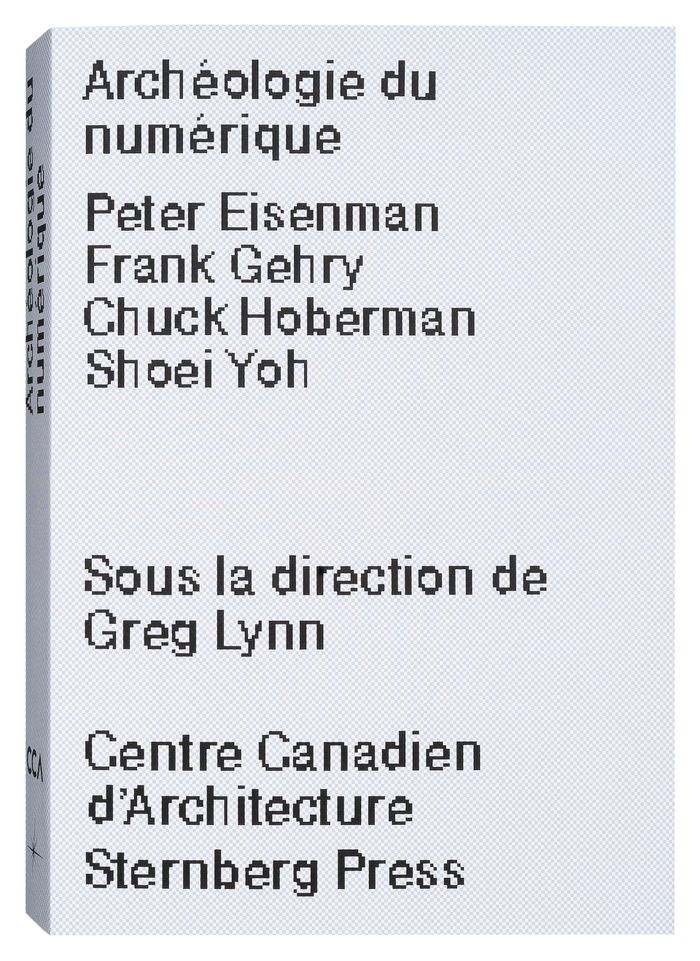
L’archéologie du numérique creuse en profondeur un aspect des plus essentiels : la genèse et la mise en oeuvre, à la fin des années 1980, d’outils numériques servant à la conceptualisation, la visualisation et la fabrication dans le domaine du design. Quels ont été les défis soulevés par ces technologies novatrices et les nouveaux champs de recherche qu’elles ont ouverts aux concepteurs ? Comment s’est faite la transition entre pratiques analogiques et outils numériques, et comment le dialogue entre eux a-t-il été exploité ? Ces questions sont au coeur de la présente publication et de l’exposition qu’elle accompagne, qui se déploient autour de quatre projets choisis comme étant des moments charnières des premières étapes du développement de l’architecture numérique : la résidence Lewis (1989–1995), de Frank Gehry, le Biozentrum de Francfort (1987), de Peter Eisenman, la conception de la toiture du complexe sportif municipal d’Odawara et celle du gymnase Galaxy de Toyama (1990 –1992), de Shoei Yoh, ainsi que la sphère déployable (1991) et le dôme Iris (1994) de Chuck Hoberman. Chacun des projets a imprimé une orientation certaine à la recherche architecturale en permettant d’expérimenter les possibilités qu’offraient les nouveaux outils numériques. Le dialogue entre informatique, architecture et génie est au coeur de ces expériences, qui peuvent être considérées comme les précurseurs de méthodes encore opérationnelles aujourd’hui.
Archéologie du numérique
Actions:
Prix:
$42.00
(disponible en magasin)
Résumé:
L’archéologie du numérique creuse en profondeur un aspect des plus essentiels : la genèse et la mise en oeuvre, à la fin des années 1980, d’outils numériques servant à la conceptualisation, la visualisation et la fabrication dans le domaine du design. Quels ont été les défis soulevés par ces technologies novatrices et les nouveaux champs de recherche qu’elles ont ouverts aux concepteurs ? Comment s’est faite la transition entre pratiques analogiques et outils numériques, et comment le dialogue entre eux a-t-il été exploité ? Ces questions sont au coeur de la présente publication et de l’exposition qu’elle accompagne, qui se déploient autour de quatre projets choisis comme étant des moments charnières des premières étapes du développement de l’architecture numérique : la résidence Lewis (1989–1995), de Frank Gehry, le Biozentrum de Francfort (1987), de Peter Eisenman, la conception de la toiture du complexe sportif municipal d’Odawara et celle du gymnase Galaxy de Toyama (1990 –1992), de Shoei Yoh, ainsi que la sphère déployable (1991) et le dôme Iris (1994) de Chuck Hoberman. Chacun des projets a imprimé une orientation certaine à la recherche architecturale en permettant d’expérimenter les possibilités qu’offraient les nouveaux outils numériques. Le dialogue entre informatique, architecture et génie est au coeur de ces expériences, qui peuvent être considérées comme les précurseurs de méthodes encore opérationnelles aujourd’hui.
Classification:
livres
livres
Publication:
mai 2013
mai 2013
Sujet:
Publications du CCA
Publications du CCA
Classification:
livres
livres
![[Re] reading Perspecta : the first 50 years of the Yale Architectural Journal](/img-bookstore/U2zEypAg4vNoqdQ07aKvxPIdXbM=/700x919/MIG-13694.jpg)
Actions:
Prix:
$93.95
(disponible sur commande)
Résumé:
"Perspecta", the oldest and most respected student-edited architectural journal in the United States, marks its fiftieth anniversary with this selection of influential and provocative pieces published in its pages from the 1950s through the 1990s. The essays and portfolios in "[Re]Reading Perspecta" trace the development of architectural culture and discourse over the(...)
$93.95
(disponible sur commande)
Résumé:
"Perspecta", the oldest and most respected student-edited architectural journal in the United States, marks its fiftieth anniversary with this selection of influential and provocative pieces published in its pages from the 1950s through the 1990s. The essays and portfolios in "[Re]Reading Perspecta" trace the development of architectural culture and discourse over the(...)
Sujet:
Théorie de l’architecture
Théorie de l’architecture
Publication:
mai 2004, Cambridge, Massachusetts
mai 2004, Cambridge, Massachusetts
Titre:
[Re] reading Perspecta : the first 50 years of the Yale Architectural Journal
Actions:
Prix:
$93.95
(disponible sur commande)
Résumé:
"Perspecta", the oldest and most respected student-edited architectural journal in the United States, marks its fiftieth anniversary with this selection of influential and provocative pieces published in its pages from the 1950s through the 1990s. The essays and portfolios in "[Re]Reading Perspecta" trace the development of architectural culture and discourse over the past fifty years and bear witness to the influential role played by "Perspecta" in a time of crucial debate about the function and future of architecture. This collection (with over 800 pages and 900 images) presents engaging and stimulating essays published in "Perspecta", written by such well-known historians, theorists, and architects as Vincent Scully, Colin Rowe, Roland Barthes, Karsten Harries, K. Michael Hays, Allan Greenberg, Sibyl Moholy-Nagy, John Hejduk, Francesco Dal Co, Bernard Tschumi, and Mark Wigley. "[Re]Reading Perspecta" also assembles the best examples of the richly-illustrated portfolios of projects published over the years, including work by Paul Rudolph, Louis Kahn, Robert Venturi, Eero Saarinen, Charles Moore, Philip Johnson, Peter Eisenman, John Hejduk, Steven Holl, Thomas Leeser, Hani Rashid, and others. The editors introduce each section with essays that offer historical context and critical commentary. "[Re]Reading Perspecta" also includes essays by Kenneth Frampton, K. Michael Hays, Joan Ockman, and Sandy Isenstadt on the history of "Perspecta" and its role in architectural discourse. This selection of the best of "Perspecta" covers a broad and lively spectrum of American architectural design, history, theory, and criticism.
[Re] reading Perspecta : the first 50 years of the Yale Architectural Journal
Actions:
Prix:
$93.95
(disponible sur commande)
Résumé:
"Perspecta", the oldest and most respected student-edited architectural journal in the United States, marks its fiftieth anniversary with this selection of influential and provocative pieces published in its pages from the 1950s through the 1990s. The essays and portfolios in "[Re]Reading Perspecta" trace the development of architectural culture and discourse over the past fifty years and bear witness to the influential role played by "Perspecta" in a time of crucial debate about the function and future of architecture. This collection (with over 800 pages and 900 images) presents engaging and stimulating essays published in "Perspecta", written by such well-known historians, theorists, and architects as Vincent Scully, Colin Rowe, Roland Barthes, Karsten Harries, K. Michael Hays, Allan Greenberg, Sibyl Moholy-Nagy, John Hejduk, Francesco Dal Co, Bernard Tschumi, and Mark Wigley. "[Re]Reading Perspecta" also assembles the best examples of the richly-illustrated portfolios of projects published over the years, including work by Paul Rudolph, Louis Kahn, Robert Venturi, Eero Saarinen, Charles Moore, Philip Johnson, Peter Eisenman, John Hejduk, Steven Holl, Thomas Leeser, Hani Rashid, and others. The editors introduce each section with essays that offer historical context and critical commentary. "[Re]Reading Perspecta" also includes essays by Kenneth Frampton, K. Michael Hays, Joan Ockman, and Sandy Isenstadt on the history of "Perspecta" and its role in architectural discourse. This selection of the best of "Perspecta" covers a broad and lively spectrum of American architectural design, history, theory, and criticism.
Classification:
livres
livres
Publication:
mai 2004, Cambridge, Massachusetts
mai 2004, Cambridge, Massachusetts
Sujet:
Théorie de l’architecture
Théorie de l’architecture
Classification:
livres
livres
Actions:
Prix:
$32.95
(disponible sur commande)
Résumé:
De nombreuses disciplines ont contribué au développement d'une nouvelle forme de pensée apparue récemment qui conteste, critique, cherche à dépasser un rationalisme hérité du XVIIe siècle et jugé par trop simplificateur, inapte à rendre compte de la complexité du réel sur lequel on doit travailler aujourd'hui. Qu'en est-il de l'architecture?. Peut-elle rester à l'écart de(...)
$32.95
(disponible sur commande)
Résumé:
De nombreuses disciplines ont contribué au développement d'une nouvelle forme de pensée apparue récemment qui conteste, critique, cherche à dépasser un rationalisme hérité du XVIIe siècle et jugé par trop simplificateur, inapte à rendre compte de la complexité du réel sur lequel on doit travailler aujourd'hui. Qu'en est-il de l'architecture?. Peut-elle rester à l'écart de(...)
Titre:
Architecture et complexité : le troisième labyrinthe
Actions:
Prix:
$32.95
(disponible sur commande)
Résumé:
De nombreuses disciplines ont contribué au développement d'une nouvelle forme de pensée apparue récemment qui conteste, critique, cherche à dépasser un rationalisme hérité du XVIIe siècle et jugé par trop simplificateur, inapte à rendre compte de la complexité du réel sur lequel on doit travailler aujourd'hui. Qu'en est-il de l'architecture?. Peut-elle rester à l'écart de ce mouvement des idées? La mythique cabane des origines, le temple, le palais, la villa, l'immeuble de rapport, le grand ensemble marquent une évolution, parallèle à celle des sociétés, caractérisée par l'accroissement de la complexité des facteurs intervenant dans la conception. La critique du rationalisme en architecture développée dans la première partie du livre contribue à dépasser toutes les pensées simplificatrices à propos de l'architecture et de la ville. L'architecture ne peut pas se penser aujourd'hui sans la ville, ni la ville sans ses habitants. L'architecture doit donc convoquer à son chevet non seulement la technique et le design, mais également l'urbanisme, la sociologie, la psychologie, l'histoire voire la mythologie, la culture, la démographie, l'économie, l'écologie. La seconde partie (parcourant l'œuvre de Louis Kahn, Luis Barragàn, Henri Gaudin, Vittorio Gregotti, John Hejduk, Peter Eisenman, Bernard Tschumi, Christian de Portzamparc, Renzo Piano) vise à faire prendre conscience de la pertinence et de la puissance des outils conceptuels qui ont été forgés par des penseurs issus de domaines très divers, aussi bien en sciences exactes qu'en sciences humaines, et que l'on peut regrouper sous le label "pensée de la complexité"
Architecture et complexité : le troisième labyrinthe
Actions:
Prix:
$32.95
(disponible sur commande)
Résumé:
De nombreuses disciplines ont contribué au développement d'une nouvelle forme de pensée apparue récemment qui conteste, critique, cherche à dépasser un rationalisme hérité du XVIIe siècle et jugé par trop simplificateur, inapte à rendre compte de la complexité du réel sur lequel on doit travailler aujourd'hui. Qu'en est-il de l'architecture?. Peut-elle rester à l'écart de ce mouvement des idées? La mythique cabane des origines, le temple, le palais, la villa, l'immeuble de rapport, le grand ensemble marquent une évolution, parallèle à celle des sociétés, caractérisée par l'accroissement de la complexité des facteurs intervenant dans la conception. La critique du rationalisme en architecture développée dans la première partie du livre contribue à dépasser toutes les pensées simplificatrices à propos de l'architecture et de la ville. L'architecture ne peut pas se penser aujourd'hui sans la ville, ni la ville sans ses habitants. L'architecture doit donc convoquer à son chevet non seulement la technique et le design, mais également l'urbanisme, la sociologie, la psychologie, l'histoire voire la mythologie, la culture, la démographie, l'économie, l'écologie. La seconde partie (parcourant l'œuvre de Louis Kahn, Luis Barragàn, Henri Gaudin, Vittorio Gregotti, John Hejduk, Peter Eisenman, Bernard Tschumi, Christian de Portzamparc, Renzo Piano) vise à faire prendre conscience de la pertinence et de la puissance des outils conceptuels qui ont été forgés par des penseurs issus de domaines très divers, aussi bien en sciences exactes qu'en sciences humaines, et que l'on peut regrouper sous le label "pensée de la complexité"
Classification:
livres
livres
Publication:
mars 2008
mars 2008
Sujet:
Théorie de l’architecture
Théorie de l’architecture
Classification:
livres
livres
Actions:
Prix:
$46.95
(disponible sur commande)
Résumé:
The internationally acclaimed architect Rafael Moneo is known to be a courageous architect. His major works include the Houston Museum of Fine Art, Davis Art Museum at Wellesley College, the Stockholm Museum of Modern Art and Architecture, and the Potzdammer Platz Hotel in Berlin. Now Moneo will be known as a daring critic as well. In this book he looks at eight of his(...)
$46.95
(disponible sur commande)
Résumé:
The internationally acclaimed architect Rafael Moneo is known to be a courageous architect. His major works include the Houston Museum of Fine Art, Davis Art Museum at Wellesley College, the Stockholm Museum of Modern Art and Architecture, and the Potzdammer Platz Hotel in Berlin. Now Moneo will be known as a daring critic as well. In this book he looks at eight of his(...)
Titre:
Theoretical anxiety and design strategies in the work of eight contemporary architects
Actions:
Prix:
$46.95
(disponible sur commande)
Résumé:
The internationally acclaimed architect Rafael Moneo is known to be a courageous architect. His major works include the Houston Museum of Fine Art, Davis Art Museum at Wellesley College, the Stockholm Museum of Modern Art and Architecture, and the Potzdammer Platz Hotel in Berlin. Now Moneo will be known as a daring critic as well. In this book he looks at eight of his contemporaries -- all architects of international stature -- and discusses the theoretical positions, technical innovations, and design contributions of each. Moneo's discussion of these eight architects -- James Stirling, Robert Venturi, Aldo Rossi, Peter Eisenman, Alvaro Siza, Frank Gehry, Rem Koolhaas, and the partnership of Jacques Herzog and Pierre De Meuron -- has the colloquial, engaging tone of a series of lectures on modern architecture by a master architect; the reader hears not the dispassionate theorizing of an academic, but Moneo's own deeply held convictions as he considers the work of his contemporaries. Discussing each of the eight architects in turn, Moneo first gives an introductory profile, emphasizing intentions, theoretical concerns, and construction procedures. He then turns to the work, offering detailed critical analyses of the works he considers to be crucial for an informed understanding of this architect's work. The many images he uses to illustrate his points resemble the rapid-fire flash of slides in a lecture, but Moneo's perspective is unique among lecturers. These profiles are not what Moneo calls the "tacit treatises" that can be found on the shelves of a university library, but lively encounters of architectural equals. More than 500 illustrations accompany the text.
Theoretical anxiety and design strategies in the work of eight contemporary architects
Actions:
Prix:
$46.95
(disponible sur commande)
Résumé:
The internationally acclaimed architect Rafael Moneo is known to be a courageous architect. His major works include the Houston Museum of Fine Art, Davis Art Museum at Wellesley College, the Stockholm Museum of Modern Art and Architecture, and the Potzdammer Platz Hotel in Berlin. Now Moneo will be known as a daring critic as well. In this book he looks at eight of his contemporaries -- all architects of international stature -- and discusses the theoretical positions, technical innovations, and design contributions of each. Moneo's discussion of these eight architects -- James Stirling, Robert Venturi, Aldo Rossi, Peter Eisenman, Alvaro Siza, Frank Gehry, Rem Koolhaas, and the partnership of Jacques Herzog and Pierre De Meuron -- has the colloquial, engaging tone of a series of lectures on modern architecture by a master architect; the reader hears not the dispassionate theorizing of an academic, but Moneo's own deeply held convictions as he considers the work of his contemporaries. Discussing each of the eight architects in turn, Moneo first gives an introductory profile, emphasizing intentions, theoretical concerns, and construction procedures. He then turns to the work, offering detailed critical analyses of the works he considers to be crucial for an informed understanding of this architect's work. The many images he uses to illustrate his points resemble the rapid-fire flash of slides in a lecture, but Moneo's perspective is unique among lecturers. These profiles are not what Moneo calls the "tacit treatises" that can be found on the shelves of a university library, but lively encounters of architectural equals. More than 500 illustrations accompany the text.
Classification:
livres
livres
Publication:
mai 2004, Cambridge, Mass.
mai 2004, Cambridge, Mass.
Sujet:
Théorie de l’architecture
Théorie de l’architecture
Classification:
livres
livres
Actions:
Prix:
$65.99
(disponible sur commande)
Résumé:
Today, the physical scale model is a centrepiece for design education, celebrated practices and architecture’s public relations. The development of digital fabrication devices has made model manufacture even more pervasive. The physical model is the most accessible form of architectural communication. Clients and the general public seem to immediately respond to and(...)
$65.99
(disponible sur commande)
Résumé:
Today, the physical scale model is a centrepiece for design education, celebrated practices and architecture’s public relations. The development of digital fabrication devices has made model manufacture even more pervasive. The physical model is the most accessible form of architectural communication. Clients and the general public seem to immediately respond to and(...)
Titre:
Architecture and the miniature : models
Actions:
Prix:
$65.99
(disponible sur commande)
Résumé:
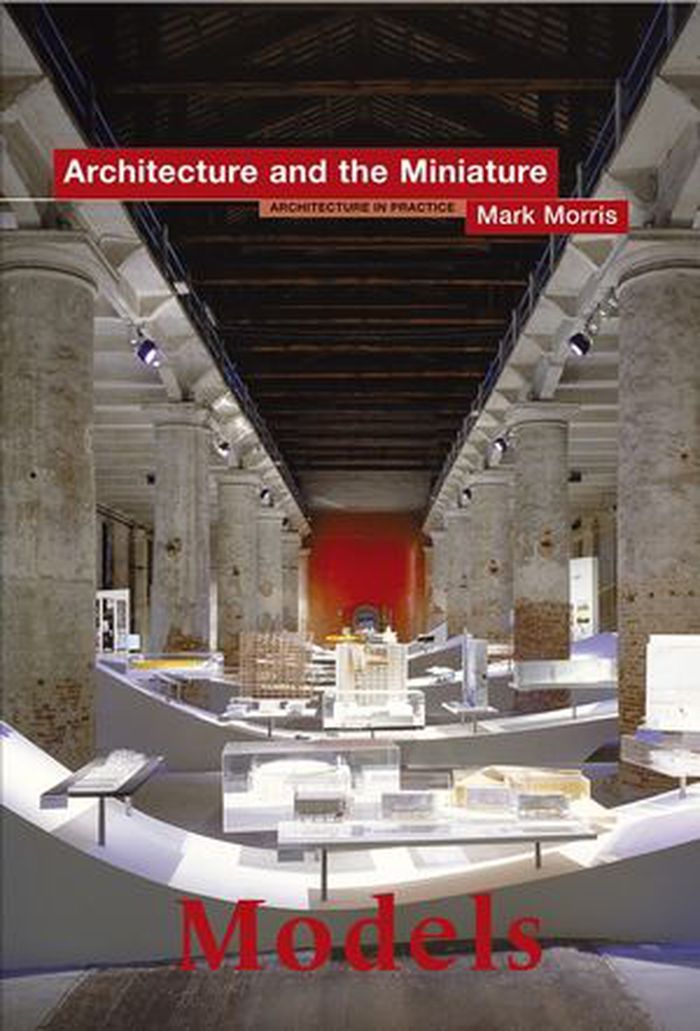
Today, the physical scale model is a centrepiece for design education, celebrated practices and architecture’s public relations. The development of digital fabrication devices has made model manufacture even more pervasive. The physical model is the most accessible form of architectural communication. Clients and the general public seem to immediately respond to and understand the model, over blueprints and computer simulations. Many architects use finished models for presentations, competitions and exhibitions. Others also embrace sketch models as quick, economic and flexible generative tools. It is only with the rise of the virtual that the advantages and disadvantages of more traditional models can be fully evaluated. As attested by this book, we are now at an important watershed for the model in architecture. Practitioners and educators alike are seeking to fully understand the multiplicity of model types and how they might be strategically deployed at appropriate stages in the design process. The historic role that the model has played is outlined with attention paid to Alberti, John Soane, the Bauhaus and education reforms. A cultural history is offered by examining models in the guise of toys, food, cinema, product design, souvenirs, narrative and art. Model theories are considered and tied to specific examples in the field. New technologies and creative combinations of traditional model-making techniques are evaluated. Kinetic, multi-media, nightscape and interdisciplinary models reveal the broad scope and exceptional versatility offered by this important tool. Models: Architecture and the Miniature focuses on current model use and experimentation by architects across the globe including David Chipperfield, Peter Eisenman, Frank Gehry, Zaha Hadid, Coop Himmelb(l)au, Daniel Libeskind, Greg Lynn and UN Studio.
Architecture and the miniature : models
Actions:
Prix:
$65.99
(disponible sur commande)
Résumé:
Today, the physical scale model is a centrepiece for design education, celebrated practices and architecture’s public relations. The development of digital fabrication devices has made model manufacture even more pervasive. The physical model is the most accessible form of architectural communication. Clients and the general public seem to immediately respond to and understand the model, over blueprints and computer simulations. Many architects use finished models for presentations, competitions and exhibitions. Others also embrace sketch models as quick, economic and flexible generative tools. It is only with the rise of the virtual that the advantages and disadvantages of more traditional models can be fully evaluated. As attested by this book, we are now at an important watershed for the model in architecture. Practitioners and educators alike are seeking to fully understand the multiplicity of model types and how they might be strategically deployed at appropriate stages in the design process. The historic role that the model has played is outlined with attention paid to Alberti, John Soane, the Bauhaus and education reforms. A cultural history is offered by examining models in the guise of toys, food, cinema, product design, souvenirs, narrative and art. Model theories are considered and tied to specific examples in the field. New technologies and creative combinations of traditional model-making techniques are evaluated. Kinetic, multi-media, nightscape and interdisciplinary models reveal the broad scope and exceptional versatility offered by this important tool. Models: Architecture and the Miniature focuses on current model use and experimentation by architects across the globe including David Chipperfield, Peter Eisenman, Frank Gehry, Zaha Hadid, Coop Himmelb(l)au, Daniel Libeskind, Greg Lynn and UN Studio.
Classification:
livres
livres
Publication:
octobre 2005, Chichester
octobre 2005, Chichester
Sujet:
Maquettes
Maquettes


