


3767 Résultats
Classification:
livres
livres
Prix:
$64.95
(disponible en magasin)
Résumé:
Lucius Burckhardt (1925-2003)founded the science of strollology -¨promenadology¨ - in the 1980s then further developped it as a complex and far-sighted planning and design discipline. Strollology is a sprinboard for a realistic approach to perception of the world around us, for an alternative reading of landscape and urban space, and for a new vision of architecture and(...)
$64.95
(disponible en magasin)
Résumé:
Lucius Burckhardt (1925-2003)founded the science of strollology -¨promenadology¨ - in the 1980s then further developped it as a complex and far-sighted planning and design discipline. Strollology is a sprinboard for a realistic approach to perception of the world around us, for an alternative reading of landscape and urban space, and for a new vision of architecture and(...)
Sujet:
Théorie du paysage
Théorie du paysage
Publication:
septembre 2015
septembre 2015
Titre:
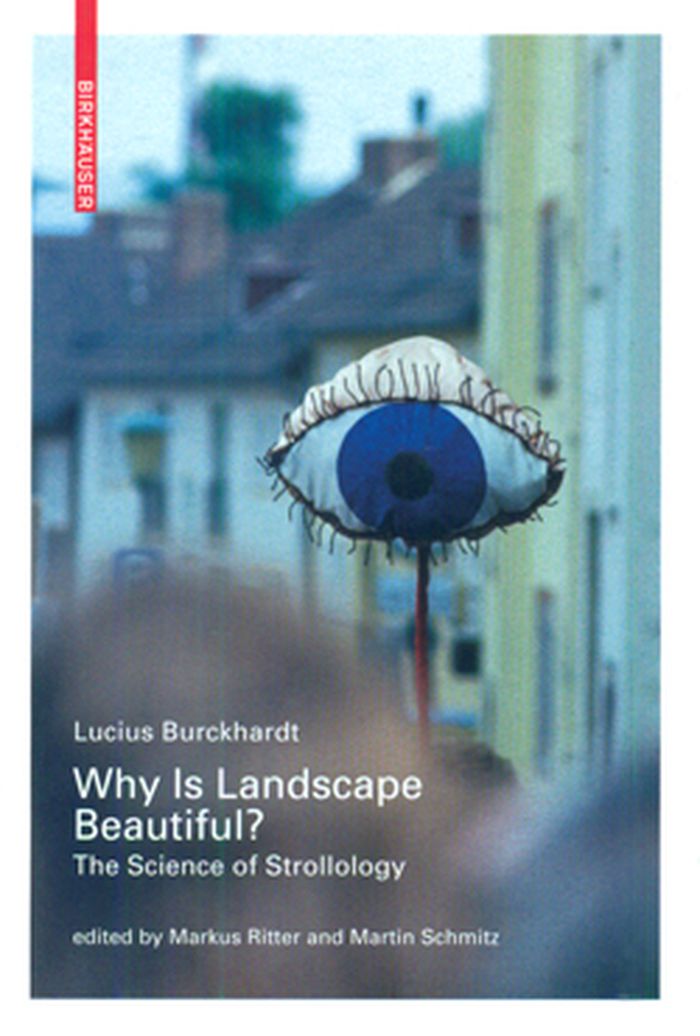
Why is landscape beautiful? The science of strollology
Actions:
Prix:
$64.95
(disponible en magasin)
Résumé:
Lucius Burckhardt (1925-2003)founded the science of strollology -¨promenadology¨ - in the 1980s then further developped it as a complex and far-sighted planning and design discipline. Strollology is a sprinboard for a realistic approach to perception of the world around us, for an alternative reading of landscape and urban space, and for a new vision of architecture and urban planning.
Why is landscape beautiful? The science of strollology
Actions:
Prix:
$64.95
(disponible en magasin)
Résumé:
Lucius Burckhardt (1925-2003)founded the science of strollology -¨promenadology¨ - in the 1980s then further developped it as a complex and far-sighted planning and design discipline. Strollology is a sprinboard for a realistic approach to perception of the world around us, for an alternative reading of landscape and urban space, and for a new vision of architecture and urban planning.
Classification:
livres
livres
Publication:
septembre 2015
septembre 2015
Sujet:
Théorie du paysage
Théorie du paysage
Classification:
livres
livres
Actions:
Prix:
$50.00
(disponible sur commande)
Résumé:
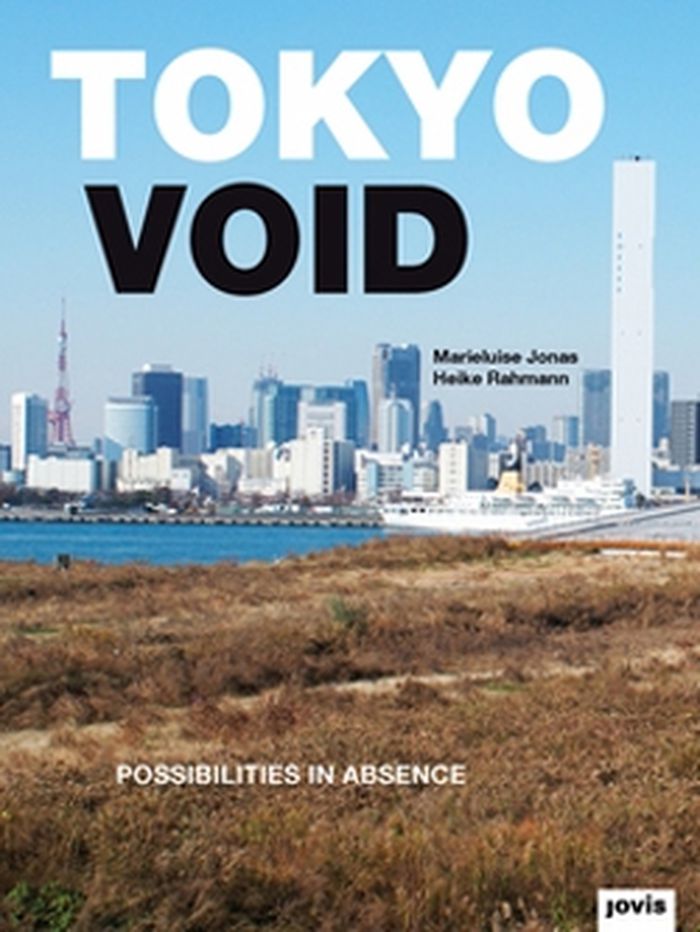
Tokyo's urban landscape is full of contradictions: a densely packed megalopolis, it affords thousands of vacant spaces. This volume explores possibilities for rethinking these spaces in creative ways such as "space agencies" and various architectural interventions.
$50.00
(disponible sur commande)
Résumé:
Tokyo's urban landscape is full of contradictions: a densely packed megalopolis, it affords thousands of vacant spaces. This volume explores possibilities for rethinking these spaces in creative ways such as "space agencies" and various architectural interventions.
Publication:
août 2014
août 2014
Titre:
Tokyo void : possiblilities in absence
Actions:
Prix:
$50.00
(disponible sur commande)
Résumé:
Tokyo's urban landscape is full of contradictions: a densely packed megalopolis, it affords thousands of vacant spaces. This volume explores possibilities for rethinking these spaces in creative ways such as "space agencies" and various architectural interventions.
Tokyo void : possiblilities in absence
Actions:
Prix:
$50.00
(disponible sur commande)
Résumé:
Tokyo's urban landscape is full of contradictions: a densely packed megalopolis, it affords thousands of vacant spaces. This volume explores possibilities for rethinking these spaces in creative ways such as "space agencies" and various architectural interventions.
Classification:
livres
livres
Publication:
août 2014
août 2014
Classification:
livres
livres
Actions:
Prix:
$33.00
(disponible sur commande)
Résumé:
Utopian models for urban planning have noticeably declined in popularity since the late 1970s, and their decline has led to the neglect of vestigial social pilot projects--simple leisure facilities like parks and public swimming pools. Austrian photographer Isabella Hollauf (born 1956) traces a changing value system by visiting these orphaned sites, contrasting former(...)
$33.00
(disponible sur commande)
Résumé:
Utopian models for urban planning have noticeably declined in popularity since the late 1970s, and their decline has led to the neglect of vestigial social pilot projects--simple leisure facilities like parks and public swimming pools. Austrian photographer Isabella Hollauf (born 1956) traces a changing value system by visiting these orphaned sites, contrasting former(...)
Titre:
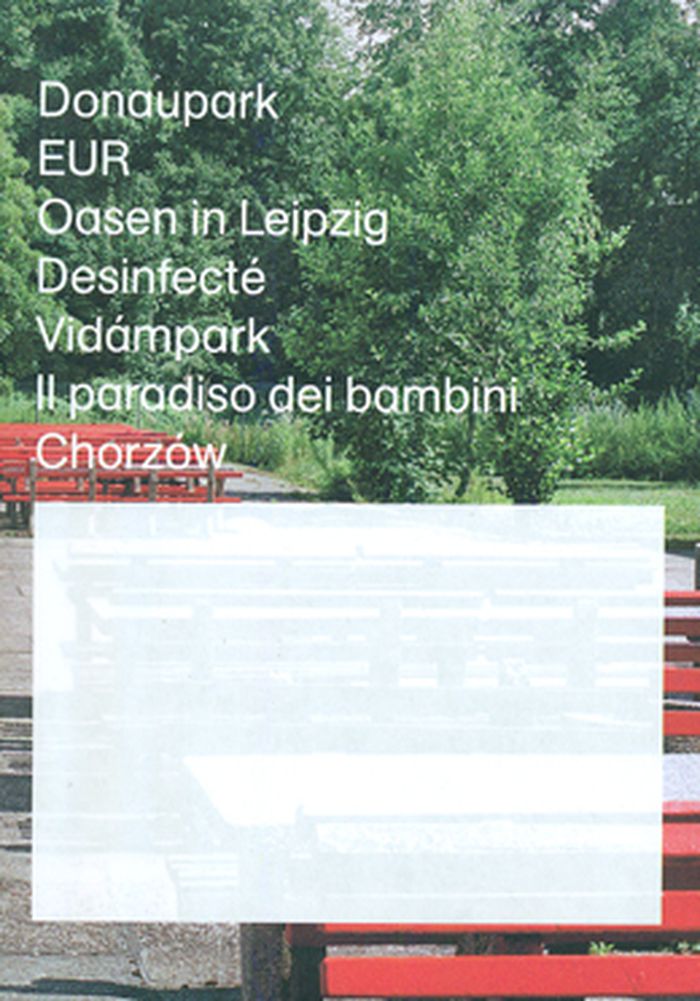
Isabella Hollauf: Spaces for recreation
Actions:
Prix:
$33.00
(disponible sur commande)
Résumé:
Utopian models for urban planning have noticeably declined in popularity since the late 1970s, and their decline has led to the neglect of vestigial social pilot projects--simple leisure facilities like parks and public swimming pools. Austrian photographer Isabella Hollauf (born 1956) traces a changing value system by visiting these orphaned sites, contrasting former utopian hopes with the dismal reality of today's less ambitious aspirations.
Isabella Hollauf: Spaces for recreation
Actions:
Prix:
$33.00
(disponible sur commande)
Résumé:
Utopian models for urban planning have noticeably declined in popularity since the late 1970s, and their decline has led to the neglect of vestigial social pilot projects--simple leisure facilities like parks and public swimming pools. Austrian photographer Isabella Hollauf (born 1956) traces a changing value system by visiting these orphaned sites, contrasting former utopian hopes with the dismal reality of today's less ambitious aspirations.
Classification:
livres
livres
Publication:
novembre 2010
novembre 2010
Sujet:
Monographies photo
Monographies photo
Classification:
livres
livres
Actions:
Prix:
$66.00
(disponible sur commande)
Résumé:
Contemporary urban development is increasingly characterized by a reliance on diagrams to convey the rational statistical point of view of the professional urban planner. In his new book Urbanisms architect Steven Holl suggests that just as modern medicine has recognized the power of the irrational psyche urban planners need to realize that the experiential power of(...)
$66.00
(disponible sur commande)
Résumé:
Contemporary urban development is increasingly characterized by a reliance on diagrams to convey the rational statistical point of view of the professional urban planner. In his new book Urbanisms architect Steven Holl suggests that just as modern medicine has recognized the power of the irrational psyche urban planners need to realize that the experiential power of(...)
Titre:
Urbanisms: working with doubt
Actions:
Prix:
$66.00
(disponible sur commande)
Résumé:
Contemporary urban development is increasingly characterized by a reliance on diagrams to convey the rational statistical point of view of the professional urban planner. In his new book Urbanisms architect Steven Holl suggests that just as modern medicine has recognized the power of the irrational psyche urban planners need to realize that the experiential power of cities cannot be completely rationalized and must be studied subjectively. With a selection of urban and architectural projects from his thirty year practice Holl stretches urban planning into the domain of uncertainty. Analyzing a wide range of matters from everyday experiences to spatial data Urbanisms examines how perception and the senses are intertwined with the material space and light of urban form
Urbanisms: working with doubt
Actions:
Prix:
$66.00
(disponible sur commande)
Résumé:
Contemporary urban development is increasingly characterized by a reliance on diagrams to convey the rational statistical point of view of the professional urban planner. In his new book Urbanisms architect Steven Holl suggests that just as modern medicine has recognized the power of the irrational psyche urban planners need to realize that the experiential power of cities cannot be completely rationalized and must be studied subjectively. With a selection of urban and architectural projects from his thirty year practice Holl stretches urban planning into the domain of uncertainty. Analyzing a wide range of matters from everyday experiences to spatial data Urbanisms examines how perception and the senses are intertwined with the material space and light of urban form
Classification:
livres
livres
Publication:
décembre 2008
décembre 2008
Sujet:
Architecture, monographies
Architecture, monographies
Classification:
livres
livres
Actions:
Prix:
$16.95
(disponible en magasin)
Résumé:
This publication focuses on a lecture given by Harun Farocki in March 1994 at the "Cine City: Film and Perceptions of Urban Space, 1895–1995" conference at the Getty Center for the History of Art and the Humanities in Los Angeles. Here, Farocki wove an associative web of thoughts on the relationship between film, architecture, material worlds, political economy, dwelling,(...)
$16.95
(disponible en magasin)
Résumé:
This publication focuses on a lecture given by Harun Farocki in March 1994 at the "Cine City: Film and Perceptions of Urban Space, 1895–1995" conference at the Getty Center for the History of Art and the Humanities in Los Angeles. Here, Farocki wove an associative web of thoughts on the relationship between film, architecture, material worlds, political economy, dwelling,(...)
Titre:
Harun Farocki : Building and filming
Actions:
Prix:
$16.95
(disponible en magasin)
Résumé:
This publication focuses on a lecture given by Harun Farocki in March 1994 at the "Cine City: Film and Perceptions of Urban Space, 1895–1995" conference at the Getty Center for the History of Art and the Humanities in Los Angeles. Here, Farocki wove an associative web of thoughts on the relationship between film, architecture, material worlds, political economy, dwelling, sexuality, space, and time. Although an interest in buildings, spatial relationships, and power relations, as well as the interpenetration of technical media and urban space, was central to Farocki's practice, this is one of the few explicit explorations of the relationship between architecture and cinema. The (German and English) manuscripts of Farocki's lecture are supplemented by press material from the Getty Center's extensive film and lecture series. In their postface, the editors provide elements of interpretation and contextualization with regard to Farocki's previous and subsequent projects on spatiality and architecture.
Harun Farocki : Building and filming
Actions:
Prix:
$16.95
(disponible en magasin)
Résumé:
This publication focuses on a lecture given by Harun Farocki in March 1994 at the "Cine City: Film and Perceptions of Urban Space, 1895–1995" conference at the Getty Center for the History of Art and the Humanities in Los Angeles. Here, Farocki wove an associative web of thoughts on the relationship between film, architecture, material worlds, political economy, dwelling, sexuality, space, and time. Although an interest in buildings, spatial relationships, and power relations, as well as the interpenetration of technical media and urban space, was central to Farocki's practice, this is one of the few explicit explorations of the relationship between architecture and cinema. The (German and English) manuscripts of Farocki's lecture are supplemented by press material from the Getty Center's extensive film and lecture series. In their postface, the editors provide elements of interpretation and contextualization with regard to Farocki's previous and subsequent projects on spatiality and architecture.
Classification:
livres
livres
Publication:
mai 2026
mai 2026
Classification:
livres
livres

Titre:
Mapping tourism
Mapping tourism
Actions:
Prix:
$24.95
(disponible sur commande)
Résumé:
At first glance, the relationships among tourists, tourism maps, and the spaces of tourism seem straightforward enough: tourists use maps to find their way to and through the sites of history, culture, nature, or recreation represented there. Less apparent is how tourism maps and those using them construct such spaces and identities. As the essays in "Mapping Tourism"(...)
$24.95
(disponible sur commande)
Résumé:
At first glance, the relationships among tourists, tourism maps, and the spaces of tourism seem straightforward enough: tourists use maps to find their way to and through the sites of history, culture, nature, or recreation represented there. Less apparent is how tourism maps and those using them construct such spaces and identities. As the essays in "Mapping Tourism"(...)
Sujet:
Théorie de l’urbanisme
Théorie de l’urbanisme
Publication:
avril 2003, Minneapolis
avril 2003, Minneapolis
Titre:
Mapping tourism
Actions:
Prix:
$24.95
(disponible sur commande)
Résumé:
At first glance, the relationships among tourists, tourism maps, and the spaces of tourism seem straightforward enough: tourists use maps to find their way to and through the sites of history, culture, nature, or recreation represented there. Less apparent is how tourism maps and those using them construct such spaces and identities. As the essays in "Mapping Tourism" clearly demonstrate, the extraordinary interactions of work with leisure and the everyday with the exotic make tourism maps ideal sites for exploring the contested construction of place and identity. Construction sites in the "New Berlin," Alabama's civil rights trail, Québec City, a California ghost town, and Bangkok's sex trade are among the spaces the essays examine. Taken together, these essays allow us to see tourist space as it truly is: contested, ever changing, and replete with issues of power.
Mapping tourism
Actions:
Prix:
$24.95
(disponible sur commande)
Résumé:
At first glance, the relationships among tourists, tourism maps, and the spaces of tourism seem straightforward enough: tourists use maps to find their way to and through the sites of history, culture, nature, or recreation represented there. Less apparent is how tourism maps and those using them construct such spaces and identities. As the essays in "Mapping Tourism" clearly demonstrate, the extraordinary interactions of work with leisure and the everyday with the exotic make tourism maps ideal sites for exploring the contested construction of place and identity. Construction sites in the "New Berlin," Alabama's civil rights trail, Québec City, a California ghost town, and Bangkok's sex trade are among the spaces the essays examine. Taken together, these essays allow us to see tourist space as it truly is: contested, ever changing, and replete with issues of power.
Classification:
livres
livres
Publication:
avril 2003, Minneapolis
avril 2003, Minneapolis
Sujet:
Théorie de l’urbanisme
Théorie de l’urbanisme
Classification:
livres
livres
Actions:
Prix:
$34.95
(disponible sur commande)
Résumé:
Piecing Together Los Angeles: An Esther McCoy Reader is the first anthology of McCoy's writing. It features a selection of some 70 pieces--ranging from her 1945 article "Schindler, Space Architect" to "Arts & Architecture: Case Study Houses," a 1989 essay commissioned by the Museum of Contemporary Art, Los Angeles. From fiction for The New Yorker to seminal essays on(...)
$34.95
(disponible sur commande)
Résumé:
Piecing Together Los Angeles: An Esther McCoy Reader is the first anthology of McCoy's writing. It features a selection of some 70 pieces--ranging from her 1945 article "Schindler, Space Architect" to "Arts & Architecture: Case Study Houses," a 1989 essay commissioned by the Museum of Contemporary Art, Los Angeles. From fiction for The New Yorker to seminal essays on(...)
Titre:
Piecing together Los Angeles: an Esther McCoy reader
Actions:
Prix:
$34.95
(disponible sur commande)
Résumé:
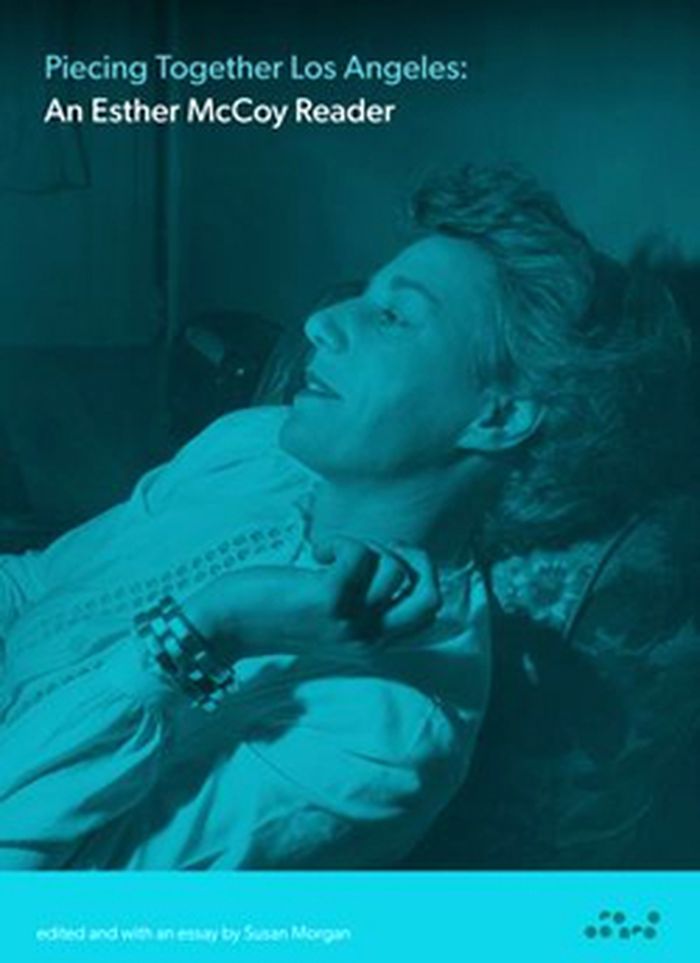
Piecing Together Los Angeles: An Esther McCoy Reader is the first anthology of McCoy's writing. It features a selection of some 70 pieces--ranging from her 1945 article "Schindler, Space Architect" to "Arts & Architecture: Case Study Houses," a 1989 essay commissioned by the Museum of Contemporary Art, Los Angeles. From fiction for The New Yorker to seminal essays on new architectural forms, McCoy charts the progressive edge of American idealism, from the collective utopian spirit of Jazz Age Greenwich Village, through the Depression and the war years, to the optimism of the 1950s and 1960s. In preparing this volume, writer and editor Susan Morgan extensively researched the McCoy papers at the Archives of American Art. Her editorial decisions were based, in part, on McCoy's original selections for an unrealized anthology solicited by W. W. Norton in 1968.
Piecing together Los Angeles: an Esther McCoy reader
Actions:
Prix:
$34.95
(disponible sur commande)
Résumé:
Piecing Together Los Angeles: An Esther McCoy Reader is the first anthology of McCoy's writing. It features a selection of some 70 pieces--ranging from her 1945 article "Schindler, Space Architect" to "Arts & Architecture: Case Study Houses," a 1989 essay commissioned by the Museum of Contemporary Art, Los Angeles. From fiction for The New Yorker to seminal essays on new architectural forms, McCoy charts the progressive edge of American idealism, from the collective utopian spirit of Jazz Age Greenwich Village, through the Depression and the war years, to the optimism of the 1950s and 1960s. In preparing this volume, writer and editor Susan Morgan extensively researched the McCoy papers at the Archives of American Art. Her editorial decisions were based, in part, on McCoy's original selections for an unrealized anthology solicited by W. W. Norton in 1968.
Classification:
livres
livres
Publication:
mai 2012
mai 2012
Sujet:
Théorie de l’urbanisme
Théorie de l’urbanisme
Classification:
livres
livres
Prix:
$34.95
(disponible sur commande)
Résumé:
Portland, Oregon, is one of the most beautiful, livable cities in the United States. It has walkable neighborhoods, bike lanes, low-density housing, public transportation, and significant green space—not to mention craft-beer bars and locavore food trucks. But liberal Portland is also the whitest city in the country. This is not circumstance; the city has a long history(...)
$34.95
(disponible sur commande)
Résumé:
Portland, Oregon, is one of the most beautiful, livable cities in the United States. It has walkable neighborhoods, bike lanes, low-density housing, public transportation, and significant green space—not to mention craft-beer bars and locavore food trucks. But liberal Portland is also the whitest city in the country. This is not circumstance; the city has a long history(...)
Titre:
What a city is for : remaking the politics of displacement
Actions:
Prix:
$34.95
(disponible sur commande)
Résumé:
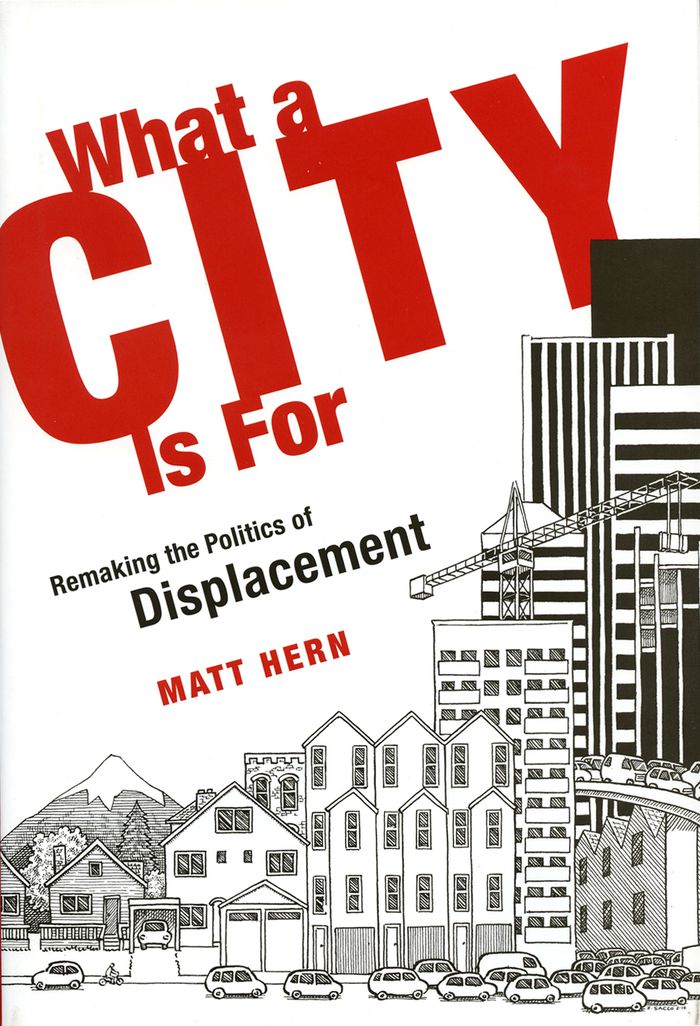
Portland, Oregon, is one of the most beautiful, livable cities in the United States. It has walkable neighborhoods, bike lanes, low-density housing, public transportation, and significant green space—not to mention craft-beer bars and locavore food trucks. But liberal Portland is also the whitest city in the country. This is not circumstance; the city has a long history of officially sanctioned racialized displacement that continues today. Over the last two and half decades, Albina—the one major Black neighborhood in Portland—has been systematically uprooted by market-driven gentrification and city-renewal policies. African Americans in Portland were first pushed into Albina and then contained there through exclusionary zoning, predatory lending, and racist real estate practices. Since the 1990s, they’ve been aggressively displaced—by rising housing costs, developers eager to get rid of low-income residents, and overt city policies of gentrification.
What a city is for : remaking the politics of displacement
Actions:
Prix:
$34.95
(disponible sur commande)
Résumé:
Portland, Oregon, is one of the most beautiful, livable cities in the United States. It has walkable neighborhoods, bike lanes, low-density housing, public transportation, and significant green space—not to mention craft-beer bars and locavore food trucks. But liberal Portland is also the whitest city in the country. This is not circumstance; the city has a long history of officially sanctioned racialized displacement that continues today. Over the last two and half decades, Albina—the one major Black neighborhood in Portland—has been systematically uprooted by market-driven gentrification and city-renewal policies. African Americans in Portland were first pushed into Albina and then contained there through exclusionary zoning, predatory lending, and racist real estate practices. Since the 1990s, they’ve been aggressively displaced—by rising housing costs, developers eager to get rid of low-income residents, and overt city policies of gentrification.
Classification:
livres
livres
Publication:
septembre 2016
septembre 2016
Sujet:
Théorie de l’urbanisme
Théorie de l’urbanisme
Classification:
livres
livres
Titre:
A matter of things
A matter of things
Actions:
Prix:
$59.99
(disponible sur commande)
Résumé:
This monograph brings together the work of the Spanish architect and urban planner Manuel de Solà-Morales in book form for the first time. The publication concentrates on his most important projects and realizations of recent years. Solà-Morales has achieved successful interventions in the urban landscape in many places in Europe: from Antwerp to Trieste, from Groningen(...)
$59.99
(disponible sur commande)
Résumé:
This monograph brings together the work of the Spanish architect and urban planner Manuel de Solà-Morales in book form for the first time. The publication concentrates on his most important projects and realizations of recent years. Solà-Morales has achieved successful interventions in the urban landscape in many places in Europe: from Antwerp to Trieste, from Groningen(...)
Titre:
A matter of things
Actions:
Prix:
$59.99
(disponible sur commande)
Résumé:
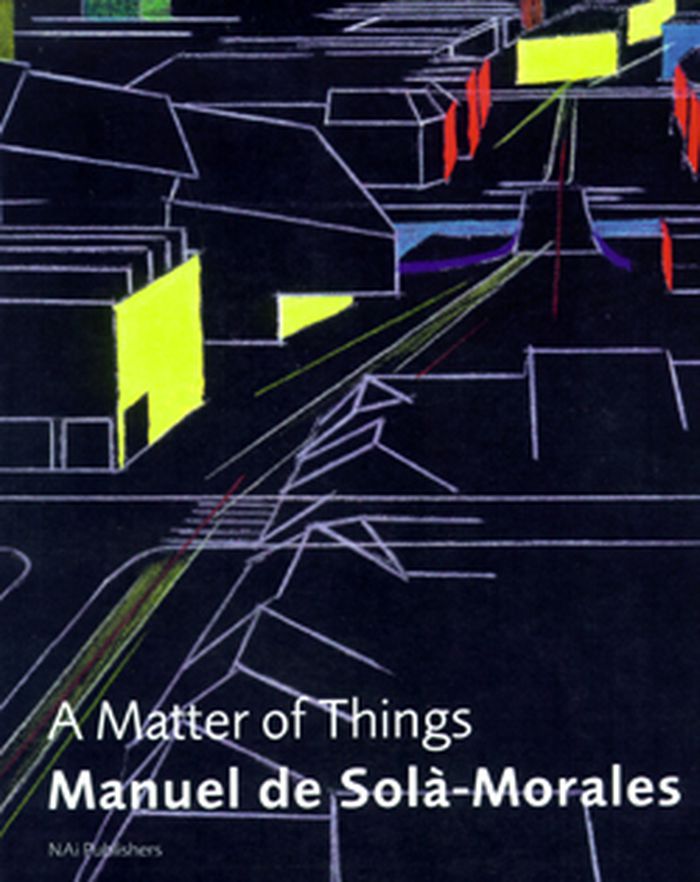
This monograph brings together the work of the Spanish architect and urban planner Manuel de Solà-Morales in book form for the first time. The publication concentrates on his most important projects and realizations of recent years. Solà-Morales has achieved successful interventions in the urban landscape in many places in Europe: from Antwerp to Trieste, from Groningen to Porto, and from Barcelona to The Hague. For Solà-Morales the city does not consist of abstractions, but of concrete, tangible things. His projects could be regarded as an urban architecture, at the interface of architecture and urban planning. By intervening in this physical reality in a precise manner, with a building, with public space, or sometimes with nothing more than the layout of a public space, but always with concrete things, Solà-Morales effects changes in the city that often transcend the physical or spatial dimensions of the intervention. All the projects are documented extensively in word and image. Besides texts by Manuel de Solà-Morales himself, the book includes a comprehensive essay by Kenneth Frampton about the architect's work and ideas.
A matter of things
Actions:
Prix:
$59.99
(disponible sur commande)
Résumé:
This monograph brings together the work of the Spanish architect and urban planner Manuel de Solà-Morales in book form for the first time. The publication concentrates on his most important projects and realizations of recent years. Solà-Morales has achieved successful interventions in the urban landscape in many places in Europe: from Antwerp to Trieste, from Groningen to Porto, and from Barcelona to The Hague. For Solà-Morales the city does not consist of abstractions, but of concrete, tangible things. His projects could be regarded as an urban architecture, at the interface of architecture and urban planning. By intervening in this physical reality in a precise manner, with a building, with public space, or sometimes with nothing more than the layout of a public space, but always with concrete things, Solà-Morales effects changes in the city that often transcend the physical or spatial dimensions of the intervention. All the projects are documented extensively in word and image. Besides texts by Manuel de Solà-Morales himself, the book includes a comprehensive essay by Kenneth Frampton about the architect's work and ideas.
Classification:
livres
livres
Publication:
avril 2007, Rotterdam
avril 2007, Rotterdam
Sujet:
Architecture, monographies
Architecture, monographies
Classification:
livres
livres
Actions:
Prix:
$56.95
(disponible sur commande)
Résumé:
Film noir remains one of the most enduring legacies of 1940's and 1950's Hollywood. Populated by double-crossing, unsavory characters, this pioneering film style explored a shadow side of American life during a period of tremendous prosperity and optimism. Edward Dimendberg compellingly demonstrates how film noir is preoccupied with modernity, particularly the urban(...)
$56.95
(disponible sur commande)
Résumé:
Film noir remains one of the most enduring legacies of 1940's and 1950's Hollywood. Populated by double-crossing, unsavory characters, this pioneering film style explored a shadow side of American life during a period of tremendous prosperity and optimism. Edward Dimendberg compellingly demonstrates how film noir is preoccupied with modernity, particularly the urban(...)
Publication:
avril 2004, Cambridge, Mass.
avril 2004, Cambridge, Mass.
Titre:
Film noir and the spaces of modernity
Actions:
Prix:
$56.95
(disponible sur commande)
Résumé:
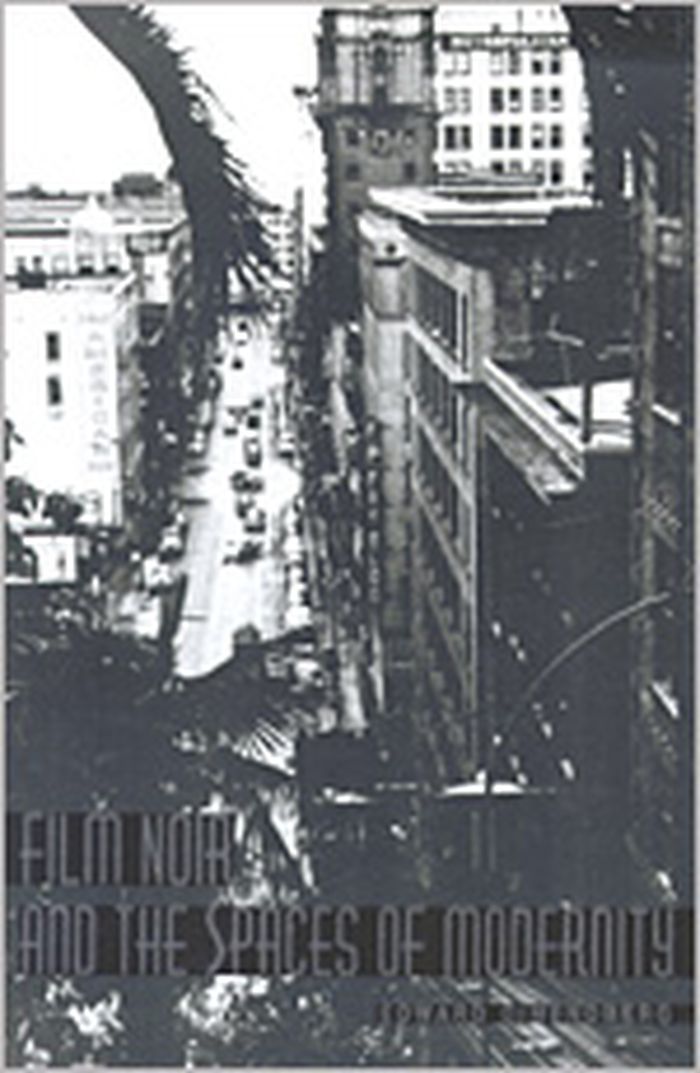
Film noir remains one of the most enduring legacies of 1940's and 1950's Hollywood. Populated by double-crossing, unsavory characters, this pioneering film style explored a shadow side of American life during a period of tremendous prosperity and optimism. Edward Dimendberg compellingly demonstrates how film noir is preoccupied with modernity, particularly the urban landscape. The originality of Dimendberg's approach lies in his examining these films in tandem with historical developments in architecture, city planning, and modern communications systems. He confirms that noir is not simply a reflection of modernity but a virtual continuation of the spaces of the metropolis. He convincingly shows that Hollywood's dark thrillers of the postwar decades were determined by the same forces that shaped the city itself. Exploring classic examples of film noir such as "The Asphalt Jungle", "Double Indemnity", "Kiss Me Deadly", and "The Naked City" alongside many lesser-known works, Dimendberg masterfully interweaves film history and urban history while perceptively analyzing works by Raymond Chandler, Edward Hopper, Siegfried Kracauer, and Henri Lefebvre. A bold intervention in cultural studies and a major contribution to film history, Film Noir and the Spaces of Modernity will provoke debate by cinema scholars, urban historians, and students of modern culture - and will captivate admirers of a vital period in American cinema.
Film noir and the spaces of modernity
Actions:
Prix:
$56.95
(disponible sur commande)
Résumé:
Film noir remains one of the most enduring legacies of 1940's and 1950's Hollywood. Populated by double-crossing, unsavory characters, this pioneering film style explored a shadow side of American life during a period of tremendous prosperity and optimism. Edward Dimendberg compellingly demonstrates how film noir is preoccupied with modernity, particularly the urban landscape. The originality of Dimendberg's approach lies in his examining these films in tandem with historical developments in architecture, city planning, and modern communications systems. He confirms that noir is not simply a reflection of modernity but a virtual continuation of the spaces of the metropolis. He convincingly shows that Hollywood's dark thrillers of the postwar decades were determined by the same forces that shaped the city itself. Exploring classic examples of film noir such as "The Asphalt Jungle", "Double Indemnity", "Kiss Me Deadly", and "The Naked City" alongside many lesser-known works, Dimendberg masterfully interweaves film history and urban history while perceptively analyzing works by Raymond Chandler, Edward Hopper, Siegfried Kracauer, and Henri Lefebvre. A bold intervention in cultural studies and a major contribution to film history, Film Noir and the Spaces of Modernity will provoke debate by cinema scholars, urban historians, and students of modern culture - and will captivate admirers of a vital period in American cinema.
Classification:
livres
livres
Publication:
avril 2004, Cambridge, Mass.
avril 2004, Cambridge, Mass.


