


3611 Résultats
Classification:
audio
audio
Actions:
Description:
1 online resource.
Auteur:
Sujet:
Publication:
[Place of publication not identified] : The Funambulist, 2014.
[Place of publication not identified] : The Funambulist, 2014.
Titre:
A Weaponized Urbanity : Morning Drift in Militarized Downtown Oakland.
Actions:
Description:
1 online resource.
A Weaponized Urbanity : Morning Drift in Militarized Downtown Oakland.
Actions:
Description:
1 online resource.
Classification:
audio
audio
Publication:
[Place of publication not identified] : The Funambulist, 2014.
[Place of publication not identified] : The Funambulist, 2014.
Auteur:
Sujet:
Classification:
livres
livres
Actions:
Prix:
$34.95
(disponible sur commande)
Résumé:
S'appuyant sur des plans et des documents photographiques inédits, cet ouvrage ne prétend pas dresser un plan exhaustif de l'histoire urbaine de Tunis de 1800 à 1950. Il propose plutôt une introduction au patrimoine urbain de cette période, mettant en relief les principales oeuvres architecturales qui y ont vu le jour. Le lecteur découvrira les différentes tendances qui(...)
$34.95
(disponible sur commande)
Résumé:
S'appuyant sur des plans et des documents photographiques inédits, cet ouvrage ne prétend pas dresser un plan exhaustif de l'histoire urbaine de Tunis de 1800 à 1950. Il propose plutôt une introduction au patrimoine urbain de cette période, mettant en relief les principales oeuvres architecturales qui y ont vu le jour. Le lecteur découvrira les différentes tendances qui(...)
Publication:
avril 2007, Tunis
avril 2007, Tunis
Titre:
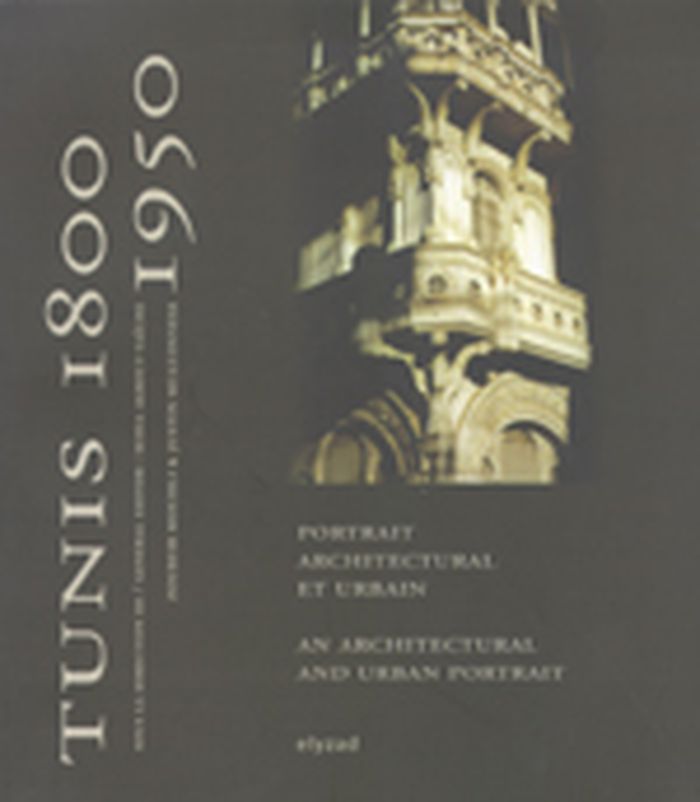
Tunis 1800-1950 : portrait architectural et urbain
Actions:
Prix:
$34.95
(disponible sur commande)
Résumé:
S'appuyant sur des plans et des documents photographiques inédits, cet ouvrage ne prétend pas dresser un plan exhaustif de l'histoire urbaine de Tunis de 1800 à 1950. Il propose plutôt une introduction au patrimoine urbain de cette période, mettant en relief les principales oeuvres architecturales qui y ont vu le jour. Le lecteur découvrira les différentes tendances qui ont modelé l'environnement architectural et urbain du centre de Tunis tel que nous le connaissons aujourd'hui.
Tunis 1800-1950 : portrait architectural et urbain
Actions:
Prix:
$34.95
(disponible sur commande)
Résumé:
S'appuyant sur des plans et des documents photographiques inédits, cet ouvrage ne prétend pas dresser un plan exhaustif de l'histoire urbaine de Tunis de 1800 à 1950. Il propose plutôt une introduction au patrimoine urbain de cette période, mettant en relief les principales oeuvres architecturales qui y ont vu le jour. Le lecteur découvrira les différentes tendances qui ont modelé l'environnement architectural et urbain du centre de Tunis tel que nous le connaissons aujourd'hui.
Classification:
livres
livres
Publication:
avril 2007, Tunis
avril 2007, Tunis
Classification:
livres
livres

Actions:
Prix:
$22.95
(disponible sur commande)
Résumé:
Why do walls marking national boundaries proliferate amid widespread proclamations of global connectedness and despite anticipation of a world without borders? Why are barricades built of concrete, steel, and barbed wire when threats to the nation today are so often miniaturized, vaporous, clandestine, dispersed, or networked? In "Walled states, waning sovereignty", Wendy(...)
$22.95
(disponible sur commande)
Résumé:
Why do walls marking national boundaries proliferate amid widespread proclamations of global connectedness and despite anticipation of a world without borders? Why are barricades built of concrete, steel, and barbed wire when threats to the nation today are so often miniaturized, vaporous, clandestine, dispersed, or networked? In "Walled states, waning sovereignty", Wendy(...)
Titre:
Walled states, waning sovereignty, New edition
Actions:
Prix:
$22.95
(disponible sur commande)
Résumé:
Why do walls marking national boundaries proliferate amid widespread proclamations of global connectedness and despite anticipation of a world without borders? Why are barricades built of concrete, steel, and barbed wire when threats to the nation today are so often miniaturized, vaporous, clandestine, dispersed, or networked? In "Walled states, waning sovereignty", Wendy Brown considers the recent spate of wall building in contrast to the erosion of nation-state sovereignty. Drawing on classical and contemporary political theories of state sovereignty in order to understand how state power and national identity persist amid its decline, Brown considers both the need of the state for legitimacy and the popular desires that incite the contemporary building of walls. The new walls—dividing Texas from Mexico, Israel from Palestine, South Africa from Zimbabwe—consecrate the broken boundaries they would seem to contest and signify the ungovernability of a range of forces unleashed by globalization. Yet these same walls often amount to little more than theatrical props, frequently breached, and blur the distinction between law and lawlessness that they are intended to represent. But if today’s walls fail to resolve the conflicts between globalization and national identity, they nonetheless project a stark image of sovereign power. Walls, Brown argues, address human desires for containment and protection in a world increasingly without these provisions. Walls respond to the wish for horizons even as horizons are vanquished.
Walled states, waning sovereignty, New edition
Actions:
Prix:
$22.95
(disponible sur commande)
Résumé:
Why do walls marking national boundaries proliferate amid widespread proclamations of global connectedness and despite anticipation of a world without borders? Why are barricades built of concrete, steel, and barbed wire when threats to the nation today are so often miniaturized, vaporous, clandestine, dispersed, or networked? In "Walled states, waning sovereignty", Wendy Brown considers the recent spate of wall building in contrast to the erosion of nation-state sovereignty. Drawing on classical and contemporary political theories of state sovereignty in order to understand how state power and national identity persist amid its decline, Brown considers both the need of the state for legitimacy and the popular desires that incite the contemporary building of walls. The new walls—dividing Texas from Mexico, Israel from Palestine, South Africa from Zimbabwe—consecrate the broken boundaries they would seem to contest and signify the ungovernability of a range of forces unleashed by globalization. Yet these same walls often amount to little more than theatrical props, frequently breached, and blur the distinction between law and lawlessness that they are intended to represent. But if today’s walls fail to resolve the conflicts between globalization and national identity, they nonetheless project a stark image of sovereign power. Walls, Brown argues, address human desires for containment and protection in a world increasingly without these provisions. Walls respond to the wish for horizons even as horizons are vanquished.
Classification:
livres
livres
Publication:
avril 2017
avril 2017
Sujet:
Théorie de l’architecture
Théorie de l’architecture
Classification:
livres
livres
Actions:
Prix:
$52.00
(disponible sur commande)
Résumé:
Getting the picture, constructing (and deconstructing) the picture, finding the picture, viewing the picture, being in the picture , changing the pictures --these are all phrases that apply to the fascinating world of 'putting people in the picture' in visual research within the Social Sciences. Putting People in the Picture: Visual Methodologies for Social Change focuses(...)
$52.00
(disponible sur commande)
Résumé:
Getting the picture, constructing (and deconstructing) the picture, finding the picture, viewing the picture, being in the picture , changing the pictures --these are all phrases that apply to the fascinating world of 'putting people in the picture' in visual research within the Social Sciences. Putting People in the Picture: Visual Methodologies for Social Change focuses(...)
Sujet:
Théorie de la photographie
Théorie de la photographie
Publication:
mai 2008, Rotterdam
mai 2008, Rotterdam
Titre:
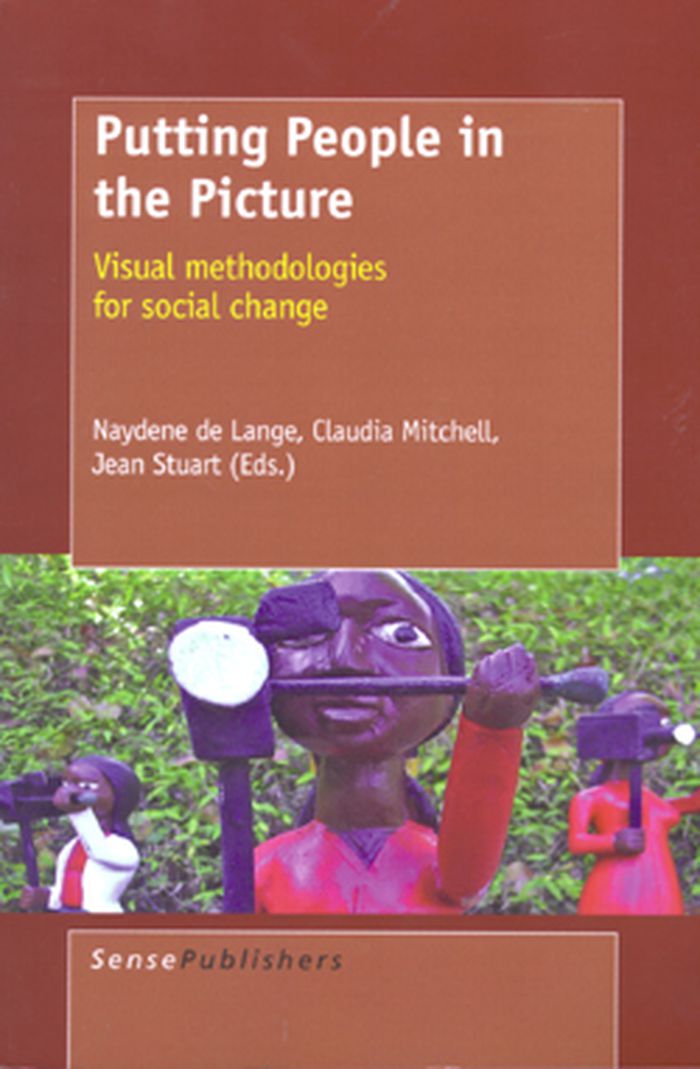
Putting people in the picture: visual methodologies for social change
Actions:
Prix:
$52.00
(disponible sur commande)
Résumé:
Getting the picture, constructing (and deconstructing) the picture, finding the picture, viewing the picture, being in the picture , changing the pictures --these are all phrases that apply to the fascinating world of 'putting people in the picture' in visual research within the Social Sciences. Putting People in the Picture: Visual Methodologies for Social Change focuses on the ways in which researchers, practitioners and activists are using such techniques as photo voice, collaborative video, drawings and other visual and arts-based tools as modes of inquiry, as modes of representation and as modes of disseminating findings in social research. The various chapters address methodological, analytical, interpretive, aesthetic, technical and ethical concerns in using visual methodologies in work with young people, teachers, community health care workers -- and even the self-as-researcher. The range of issues addressed in the work is broad, and includes work in the areas of HIV & AIDS, schooling, poverty, gender violence, race, and children's visions for the future. While the studies are situated within a variety of social contexts, the focus is primarily on work in Southern Africa. The book takes up some of the theoretical and practical challenges offered by Visual Sociology, Image- based Research, Media Studies, Rural Development, and Community-based and Participatory Research, and in so doing offers audiences an array of visual approaches to studying and bringing about social change.
Putting people in the picture: visual methodologies for social change
Actions:
Prix:
$52.00
(disponible sur commande)
Résumé:
Getting the picture, constructing (and deconstructing) the picture, finding the picture, viewing the picture, being in the picture , changing the pictures --these are all phrases that apply to the fascinating world of 'putting people in the picture' in visual research within the Social Sciences. Putting People in the Picture: Visual Methodologies for Social Change focuses on the ways in which researchers, practitioners and activists are using such techniques as photo voice, collaborative video, drawings and other visual and arts-based tools as modes of inquiry, as modes of representation and as modes of disseminating findings in social research. The various chapters address methodological, analytical, interpretive, aesthetic, technical and ethical concerns in using visual methodologies in work with young people, teachers, community health care workers -- and even the self-as-researcher. The range of issues addressed in the work is broad, and includes work in the areas of HIV & AIDS, schooling, poverty, gender violence, race, and children's visions for the future. While the studies are situated within a variety of social contexts, the focus is primarily on work in Southern Africa. The book takes up some of the theoretical and practical challenges offered by Visual Sociology, Image- based Research, Media Studies, Rural Development, and Community-based and Participatory Research, and in so doing offers audiences an array of visual approaches to studying and bringing about social change.
Classification:
livres
livres
Publication:
mai 2008, Rotterdam
mai 2008, Rotterdam
Sujet:
Théorie de la photographie
Théorie de la photographie
Classification:
livres
livres

Actions:
Prix:
$25.95
(disponible sur commande)
Résumé:
We are living in the Anthropocene—an era of dramatic and violent climate change featuring warming oceans, melting icecaps, extreme weather events, habitat loss, species extinction, and more. What will life be like in a climate-changed world? In ''Tomorrow’s parties,'' science fiction authors speculate how we might be able to live and even thrive through the advancing(...)
$25.95
(disponible sur commande)
Résumé:
We are living in the Anthropocene—an era of dramatic and violent climate change featuring warming oceans, melting icecaps, extreme weather events, habitat loss, species extinction, and more. What will life be like in a climate-changed world? In ''Tomorrow’s parties,'' science fiction authors speculate how we might be able to live and even thrive through the advancing(...)
Titre:
Tomorrow's parties: Life in the Anthropocene
Actions:
Prix:
$25.95
(disponible sur commande)
Résumé:
We are living in the Anthropocene—an era of dramatic and violent climate change featuring warming oceans, melting icecaps, extreme weather events, habitat loss, species extinction, and more. What will life be like in a climate-changed world? In ''Tomorrow’s parties,'' science fiction authors speculate how we might be able to live and even thrive through the advancing Anthropocene. In ten original stories by writers from around the world, an interview with celebrated writer Kim Stanley Robinson, and a series of intricate and elegant artworks by Sean Bodley, ''Tomorrow’s parties'' takes rational optimism as a moral imperative, or at least a pragmatic alternative to despair. In these stories—by writers from the United Kingdom, the United States, Nigeria, China, Bangladesh, and Australia—a young man steals from delivery drones; a political community lives on an island made of ocean-borne plastic waste; and a climate change denier tries to unmask ''crisis actors.'' Climate-changed life also has its pleasures and epiphanies, as when a father in Africa works to make his son’s dreams of ''Viking adventure'' a reality, and an IT professional dispatched to a distant village encounters a marvelous predigital fungal network. Contributors include Pascall Prize for Criticism winner James Bradley, Hugo Award winners Greg Egan and Sarah Gailey, Philip K Dick Award winner Meg Elison, and New York Times bestselling author Daryl Gregory.
Tomorrow's parties: Life in the Anthropocene
Actions:
Prix:
$25.95
(disponible sur commande)
Résumé:
We are living in the Anthropocene—an era of dramatic and violent climate change featuring warming oceans, melting icecaps, extreme weather events, habitat loss, species extinction, and more. What will life be like in a climate-changed world? In ''Tomorrow’s parties,'' science fiction authors speculate how we might be able to live and even thrive through the advancing Anthropocene. In ten original stories by writers from around the world, an interview with celebrated writer Kim Stanley Robinson, and a series of intricate and elegant artworks by Sean Bodley, ''Tomorrow’s parties'' takes rational optimism as a moral imperative, or at least a pragmatic alternative to despair. In these stories—by writers from the United Kingdom, the United States, Nigeria, China, Bangladesh, and Australia—a young man steals from delivery drones; a political community lives on an island made of ocean-borne plastic waste; and a climate change denier tries to unmask ''crisis actors.'' Climate-changed life also has its pleasures and epiphanies, as when a father in Africa works to make his son’s dreams of ''Viking adventure'' a reality, and an IT professional dispatched to a distant village encounters a marvelous predigital fungal network. Contributors include Pascall Prize for Criticism winner James Bradley, Hugo Award winners Greg Egan and Sarah Gailey, Philip K Dick Award winner Meg Elison, and New York Times bestselling author Daryl Gregory.
Classification:
livres
livres
Publication:
août 2022
août 2022
Sujet:
Littérature et poésie
Littérature et poésie
Classification:
périodiques
périodiques
Titre:
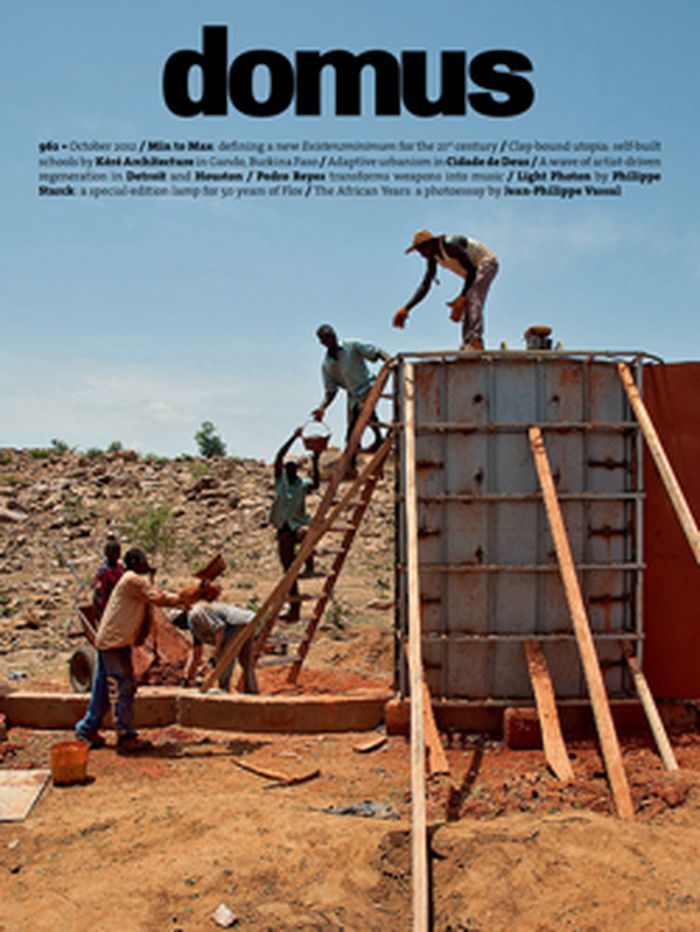
Domus 962
Domus 962
Actions:
Prix:
$35.00
(disponible sur commande)
Résumé:
The October issue of Domus focuses on the theme of affordable housing, tackling the question of what "minimum subsistence dwelling" could mean in the 21st century. It builds on the investigation started at the Min to Max international architecture symposium in Berlin. Guest edited by Ilka and Andreas Ruby, it starts with Berlin-based architecture studio Something(...)
$35.00
(disponible sur commande)
Résumé:
The October issue of Domus focuses on the theme of affordable housing, tackling the question of what "minimum subsistence dwelling" could mean in the 21st century. It builds on the investigation started at the Min to Max international architecture symposium in Berlin. Guest edited by Ilka and Andreas Ruby, it starts with Berlin-based architecture studio Something(...)
Titre:
Domus 962
Actions:
Prix:
$35.00
(disponible sur commande)
Résumé:
The October issue of Domus focuses on the theme of affordable housing, tackling the question of what "minimum subsistence dwelling" could mean in the 21st century. It builds on the investigation started at the Min to Max international architecture symposium in Berlin. Guest edited by Ilka and Andreas Ruby, it starts with Berlin-based architecture studio Something Fantastic's manifesto on the creative opportunities and innovation allowed by the world recession. Domus then surveys the globe in search of positive strategies where design is subjected to constant experimentation, from Burkina Faso — where, in Gando, Diébédo Francis Kéré runs his experimental architecture workshop —, to Athens — where a group of teachers and researchers finds in the typical Greek polykatoikia the possibility of generating a host of collective and shared spaces —, passing through Detroit, Houston, New York City, Berlin, and Rio de Janeiro. Fresh after the opening of the Venice Architecture Biennale, issue 962 presents Gabriele Basilico's photographic survey of the Biennale's national pavilions, empty and waiting for their annual occupation. Jean-Philippe Vassal's photo essay captures extraordinary moments in the production of everyday space in Africa, and, in Mexico, artist Pedro Reyes transforms agents of death into instruments of life: by converting half a tonne of confiscated weapons into musical instruments, Reyes challenges us to imagine a change for the better.
Domus 962
Actions:
Prix:
$35.00
(disponible sur commande)
Résumé:
The October issue of Domus focuses on the theme of affordable housing, tackling the question of what "minimum subsistence dwelling" could mean in the 21st century. It builds on the investigation started at the Min to Max international architecture symposium in Berlin. Guest edited by Ilka and Andreas Ruby, it starts with Berlin-based architecture studio Something Fantastic's manifesto on the creative opportunities and innovation allowed by the world recession. Domus then surveys the globe in search of positive strategies where design is subjected to constant experimentation, from Burkina Faso — where, in Gando, Diébédo Francis Kéré runs his experimental architecture workshop —, to Athens — where a group of teachers and researchers finds in the typical Greek polykatoikia the possibility of generating a host of collective and shared spaces —, passing through Detroit, Houston, New York City, Berlin, and Rio de Janeiro. Fresh after the opening of the Venice Architecture Biennale, issue 962 presents Gabriele Basilico's photographic survey of the Biennale's national pavilions, empty and waiting for their annual occupation. Jean-Philippe Vassal's photo essay captures extraordinary moments in the production of everyday space in Africa, and, in Mexico, artist Pedro Reyes transforms agents of death into instruments of life: by converting half a tonne of confiscated weapons into musical instruments, Reyes challenges us to imagine a change for the better.
Classification:
périodiques
périodiques
Publication:
novembre 2012
novembre 2012
Sujet:
Revues
Revues
Classification:
livres
livres

Actions:
Prix:
$84.00
(disponible sur commande)
Résumé:
The book opens with a history of the country and its many cultural influences. An overview of Thai architecture in its context is followed by a look at its basic elements in their variety and structural detail. All types of structures are featured, from Thai houses and rice barns to elaborate temples and breathtaking palaces. The different materials used to achieve the(...)
$84.00
(disponible sur commande)
Résumé:
The book opens with a history of the country and its many cultural influences. An overview of Thai architecture in its context is followed by a look at its basic elements in their variety and structural detail. All types of structures are featured, from Thai houses and rice barns to elaborate temples and breathtaking palaces. The different materials used to achieve the(...)
Publication:
mai 2006, London
mai 2006, London
Titre:
Architecture of Thailand : a guide to traditional and contemporary forms
Actions:
Prix:
$84.00
(disponible sur commande)
Résumé:
The book opens with a history of the country and its many cultural influences. An overview of Thai architecture in its context is followed by a look at its basic elements in their variety and structural detail. All types of structures are featured, from Thai houses and rice barns to elaborate temples and breathtaking palaces. The different materials used to achieve the distinctive Thai style are also discussed. The book also examines the hybrid forms that reflect the confluence of Thai and Western or other Asian styles. It ends with a look at contemporary Thai architecture and how traditional architectural practices have been adapted to suit modern needs.
Architecture of Thailand : a guide to traditional and contemporary forms
Actions:
Prix:
$84.00
(disponible sur commande)
Résumé:
The book opens with a history of the country and its many cultural influences. An overview of Thai architecture in its context is followed by a look at its basic elements in their variety and structural detail. All types of structures are featured, from Thai houses and rice barns to elaborate temples and breathtaking palaces. The different materials used to achieve the distinctive Thai style are also discussed. The book also examines the hybrid forms that reflect the confluence of Thai and Western or other Asian styles. It ends with a look at contemporary Thai architecture and how traditional architectural practices have been adapted to suit modern needs.
Classification:
livres
livres
Publication:
mai 2006, London
mai 2006, London
Classification:
livres
livres

Titre:
Orientalism
Orientalism
Actions:
Prix:
$19.95
(disponible sur commande)
Résumé:
The noted critic and a Palestinian now teaching at Columbia University,examines the way in which the West observes the Arabs.
$19.95
(disponible sur commande)
Résumé:
The noted critic and a Palestinian now teaching at Columbia University,examines the way in which the West observes the Arabs.
Publication:
juin 2003, New York
juin 2003, New York
Titre:
Orientalism
Actions:
Prix:
$19.95
(disponible sur commande)
Résumé:
The noted critic and a Palestinian now teaching at Columbia University,examines the way in which the West observes the Arabs.
Orientalism
Actions:
Prix:
$19.95
(disponible sur commande)
Résumé:
The noted critic and a Palestinian now teaching at Columbia University,examines the way in which the West observes the Arabs.
Classification:
livres
livres
Publication:
juin 2003, New York
juin 2003, New York
Classification:
livres
livres
Actions:
Exemplaires:
Description:
xxiii : illustrations ; 25 cm.
Description:
xxiii : illustrations ; 25 cm.
Auteur:
Sujet:
Publication:
Lieden ; Boston : Brill, 2013.
Lieden ; Boston : Brill, 2013.
Titre:
Early Buddhist architecture in context : the great stūpa at Amarāvatī (ca. 300 BCE-300 CE) / by Akira Shimada.
Actions:
Exemplaires:
Description:
xxiii : illustrations ; 25 cm.
Early Buddhist architecture in context : the great stūpa at Amarāvatī (ca. 300 BCE-300 CE) / by Akira Shimada.
Actions:
Exemplaires:
Description:
xxiii : illustrations ; 25 cm.
Classification:
livres
livres
Publication:
Lieden ; Boston : Brill, 2013.
Lieden ; Boston : Brill, 2013.
Auteur:
Sujet:
Classification:
livres
livres
Actions:
Prix:
$65.00
(disponible sur commande)
Résumé:
Before the invention of photography, civil engineers employed topographic artists to record the progression of their projects. Termed "record pictures," these illustrations followed the tradition of the Dutch topographical landscapes of the 17th century, combining the qualities of detail and clarity with the objectivity of technical drawings. As such, record pictures had(...)
$65.00
(disponible sur commande)
Résumé:
Before the invention of photography, civil engineers employed topographic artists to record the progression of their projects. Termed "record pictures," these illustrations followed the tradition of the Dutch topographical landscapes of the 17th century, combining the qualities of detail and clarity with the objectivity of technical drawings. As such, record pictures had(...)
Publication:
janvier 2004, Göttingen, Germany
janvier 2004, Göttingen, Germany
Titre:
Record pictures : photographs from the archives of the Institution of Civil Engineers
Actions:
Prix:
$65.00
(disponible sur commande)
Résumé:
Before the invention of photography, civil engineers employed topographic artists to record the progression of their projects. Termed "record pictures," these illustrations followed the tradition of the Dutch topographical landscapes of the 17th century, combining the qualities of detail and clarity with the objectivity of technical drawings. As such, record pictures had a scientific rather than an artistic purpose, just as most photography did in its infancy. Photography’s prime value was historically regarded as its ability to make highly detailed, objective (and relatively inexpensive) records. Industry was quick to harness the new medium to make record pictures. Significantly, one of the founders of Britain’s Photographic Society was a leading civil engineer. This original application gave rise to a genre of landscape photography that has not been properly recognized. Record Pictures: Photographs from the Archive of the Institution of Civil Engineers represents the photographic jewels of arguably the finest collection in Britain. Spanning a period of 75 years from the mid-19th century, the book contains previously unpublished examples drawn from across Europe, Africa, Australasia, the Far East, and Latin America. Record pictures are the unacknowledged foundation of the history of photography. In his introductory essay, Michael Collins demonstrates how this fundamental approach continues unchanged, only now it is no longer industry that applies these principles but such eminent artists as Bernd & Hilla Becher and Thomas Struth, proponents of contemporary art photography.
Record pictures : photographs from the archives of the Institution of Civil Engineers
Actions:
Prix:
$65.00
(disponible sur commande)
Résumé:
Before the invention of photography, civil engineers employed topographic artists to record the progression of their projects. Termed "record pictures," these illustrations followed the tradition of the Dutch topographical landscapes of the 17th century, combining the qualities of detail and clarity with the objectivity of technical drawings. As such, record pictures had a scientific rather than an artistic purpose, just as most photography did in its infancy. Photography’s prime value was historically regarded as its ability to make highly detailed, objective (and relatively inexpensive) records. Industry was quick to harness the new medium to make record pictures. Significantly, one of the founders of Britain’s Photographic Society was a leading civil engineer. This original application gave rise to a genre of landscape photography that has not been properly recognized. Record Pictures: Photographs from the Archive of the Institution of Civil Engineers represents the photographic jewels of arguably the finest collection in Britain. Spanning a period of 75 years from the mid-19th century, the book contains previously unpublished examples drawn from across Europe, Africa, Australasia, the Far East, and Latin America. Record pictures are the unacknowledged foundation of the history of photography. In his introductory essay, Michael Collins demonstrates how this fundamental approach continues unchanged, only now it is no longer industry that applies these principles but such eminent artists as Bernd & Hilla Becher and Thomas Struth, proponents of contemporary art photography.
Classification:
livres
livres
Publication:
janvier 2004, Göttingen, Germany
janvier 2004, Göttingen, Germany


