


369 Résultats
Classification:
livres
livres
Prix:
$43.95
(disponible sur commande)
Résumé:
In this publication, Daniel Purdy surveys the volatile state of architectural theory in the Enlightenment, brought on by the newly emerged scientific critiques of Renaissance cosmology, then shows how German writers redeployed Renaissance terminology so that "harmony," "unity," "synthesis," "foundation," and "orderliness" became states of consciousness, rather than(...)
$43.95
(disponible sur commande)
Résumé:
In this publication, Daniel Purdy surveys the volatile state of architectural theory in the Enlightenment, brought on by the newly emerged scientific critiques of Renaissance cosmology, then shows how German writers redeployed Renaissance terminology so that "harmony," "unity," "synthesis," "foundation," and "orderliness" became states of consciousness, rather than(...)
Titre:
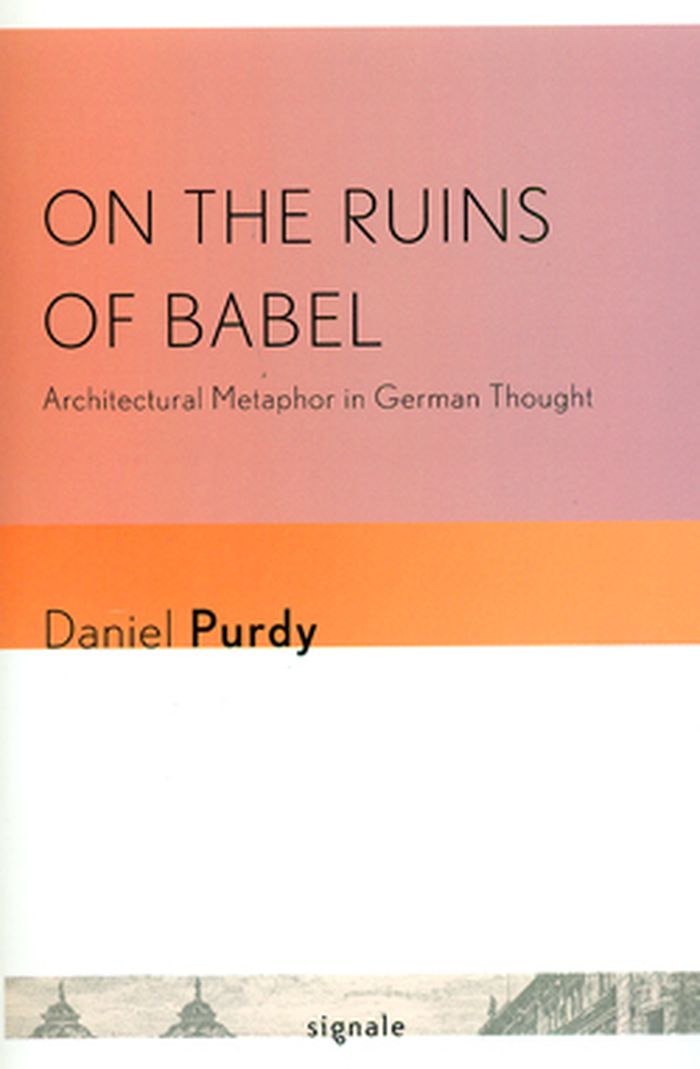
On the ruins of Babel : architectural metaphor in German thought
Actions:
Prix:
$43.95
(disponible sur commande)
Résumé:
In this publication, Daniel Purdy surveys the volatile state of architectural theory in the Enlightenment, brought on by the newly emerged scientific critiques of Renaissance cosmology, then shows how German writers redeployed Renaissance terminology so that "harmony," "unity," "synthesis," "foundation," and "orderliness" became states of consciousness, rather than terms used to describe the built world. Purdy's distinctly new interpretation of German theory reveals how metaphors constitute interior life as an architectural space to be designed, constructed, renovated, or demolished. He elucidates the close affinity between Hegel's Romantic aesthetic of space and Daniel Libeskind's deconstruction of monumental architecture in Berlin's Jewish Museum. Through a careful reading of Walter Benjamin's writing on architecture as myth, Purdy details how classical architecture shaped Benjamin's modernist interpretations of urban life, particularly his elaboration on Freud's archaeology of the unconscious. Benjamin's essays on dreams and architecture turn the individualist sensibility of the Enlightenment into a collective and mythic identification between humans and buildings.
On the ruins of Babel : architectural metaphor in German thought
Actions:
Prix:
$43.95
(disponible sur commande)
Résumé:
In this publication, Daniel Purdy surveys the volatile state of architectural theory in the Enlightenment, brought on by the newly emerged scientific critiques of Renaissance cosmology, then shows how German writers redeployed Renaissance terminology so that "harmony," "unity," "synthesis," "foundation," and "orderliness" became states of consciousness, rather than terms used to describe the built world. Purdy's distinctly new interpretation of German theory reveals how metaphors constitute interior life as an architectural space to be designed, constructed, renovated, or demolished. He elucidates the close affinity between Hegel's Romantic aesthetic of space and Daniel Libeskind's deconstruction of monumental architecture in Berlin's Jewish Museum. Through a careful reading of Walter Benjamin's writing on architecture as myth, Purdy details how classical architecture shaped Benjamin's modernist interpretations of urban life, particularly his elaboration on Freud's archaeology of the unconscious. Benjamin's essays on dreams and architecture turn the individualist sensibility of the Enlightenment into a collective and mythic identification between humans and buildings.
Classification:
livres
livres
Publication:
décembre 2010
décembre 2010
Sujet:
Théorie de l’architecture
Théorie de l’architecture
Classification:
livres
livres
Actions:
Exemplaires:
Description:
147 pages : color illustrations ; 21 cm
Description:
147 pages : color illustrations ; 21 cm
Auteur:
Sujet:
Publication:
Detroit : MOCAD, Museum of Contemporary Art Detroit ; Paris/San Francisco : Kadist Art Foundation ; Berlin : Sternberg Press, [2016], ©2016
Detroit : MOCAD, Museum of Contemporary Art Detroit ; Paris/San Francisco : Kadist Art Foundation ; Berlin : Sternberg Press, [2016], ©2016
Titre:
United States of Latin America / organized by Museum of Contemporary Art Detroit ; with Kadist Art Foundation Paris/San Francisco ; curated by Jens Hoffmann, Susanne Feld Hilberry, and Pablo León de la Barra ; editor, Jens Hoffmann.
Actions:
Exemplaires:
Description:
147 pages : color illustrations ; 21 cm
United States of Latin America / organized by Museum of Contemporary Art Detroit ; with Kadist Art Foundation Paris/San Francisco ; curated by Jens Hoffmann, Susanne Feld Hilberry, and Pablo León de la Barra ; editor, Jens Hoffmann.
Actions:
Exemplaires:
Description:
147 pages : color illustrations ; 21 cm
Classification:
livres
livres
Publication:
Detroit : MOCAD, Museum of Contemporary Art Detroit ; Paris/San Francisco : Kadist Art Foundation ; Berlin : Sternberg Press, [2016], ©2016
Detroit : MOCAD, Museum of Contemporary Art Detroit ; Paris/San Francisco : Kadist Art Foundation ; Berlin : Sternberg Press, [2016], ©2016
Auteur:
Sujet:
Classification:
livres
livres
Actions:
Prix:
$57.95
(disponible sur commande)
Résumé:
Novartis Campus at Basel will be an international significant place of knowledge, innovation and encounters, characterized by far-reaching visions of urban space and architecture. Peter Märklis Visitor Center is the second building to be finished in that area and will be followed by others to be designed and realized by invited architects. With his building Peter(...)
$57.95
(disponible sur commande)
Résumé:
Novartis Campus at Basel will be an international significant place of knowledge, innovation and encounters, characterized by far-reaching visions of urban space and architecture. Peter Märklis Visitor Center is the second building to be finished in that area and will be followed by others to be designed and realized by invited architects. With his building Peter(...)
Sujet:
Architecture, monographies
Architecture, monographies
Publication:
janvier 2007, Basel
janvier 2007, Basel
Titre:
Peter Märkli : Novartis Campus - Fabrikstrasse 6
Actions:
Prix:
$57.95
(disponible sur commande)
Résumé:
Novartis Campus at Basel will be an international significant place of knowledge, innovation and encounters, characterized by far-reaching visions of urban space and architecture. Peter Märklis Visitor Center is the second building to be finished in that area and will be followed by others to be designed and realized by invited architects. With his building Peter Märkli is relying on architecture's traditional terminology in order to win back lost or forgotten values. This is achieved within contemporary forms and composition and also means exposing the inherent qualities of the materials. Champagne-coloured profiles at the outside, gleaming marble at the inside, yew- and olive-wood as well as cast aluminium at the banisters and the lettering create a richness and variety of materialisation. This publication presents photos of Paolo Rosselli und Goran Potkonjak as well as drawings and sketches by Peter Märkli, showing his design strategy. Ulrike Jehle-Schulte Strathaus has written an introduction to the building, also appreciating the artistic contributions by Jenny Holzer, Alex Herter und Bringolf, Irion, Vögeli as integral parts of the building.
Peter Märkli : Novartis Campus - Fabrikstrasse 6
Actions:
Prix:
$57.95
(disponible sur commande)
Résumé:
Novartis Campus at Basel will be an international significant place of knowledge, innovation and encounters, characterized by far-reaching visions of urban space and architecture. Peter Märklis Visitor Center is the second building to be finished in that area and will be followed by others to be designed and realized by invited architects. With his building Peter Märkli is relying on architecture's traditional terminology in order to win back lost or forgotten values. This is achieved within contemporary forms and composition and also means exposing the inherent qualities of the materials. Champagne-coloured profiles at the outside, gleaming marble at the inside, yew- and olive-wood as well as cast aluminium at the banisters and the lettering create a richness and variety of materialisation. This publication presents photos of Paolo Rosselli und Goran Potkonjak as well as drawings and sketches by Peter Märkli, showing his design strategy. Ulrike Jehle-Schulte Strathaus has written an introduction to the building, also appreciating the artistic contributions by Jenny Holzer, Alex Herter und Bringolf, Irion, Vögeli as integral parts of the building.
Classification:
livres
livres
Publication:
janvier 2007, Basel
janvier 2007, Basel
Sujet:
Architecture, monographies
Architecture, monographies
Classification:
livres
livres
Actions:
Prix:
$36.95
(disponible sur commande)
Résumé:
‘Borgata’, ‘favela’, ‘périurbain’, and ‘suburb’ are but a few of the different terms used throughout the world that refer specifically to communities that develop on the periphery of urban centres. "In what’s in a name?" editors Richard Harris and Charlotte Vorms have gathered together experts from around the world in order to provide a truly global framework for the(...)
$36.95
(disponible sur commande)
Résumé:
‘Borgata’, ‘favela’, ‘périurbain’, and ‘suburb’ are but a few of the different terms used throughout the world that refer specifically to communities that develop on the periphery of urban centres. "In what’s in a name?" editors Richard Harris and Charlotte Vorms have gathered together experts from around the world in order to provide a truly global framework for the(...)
Titre:
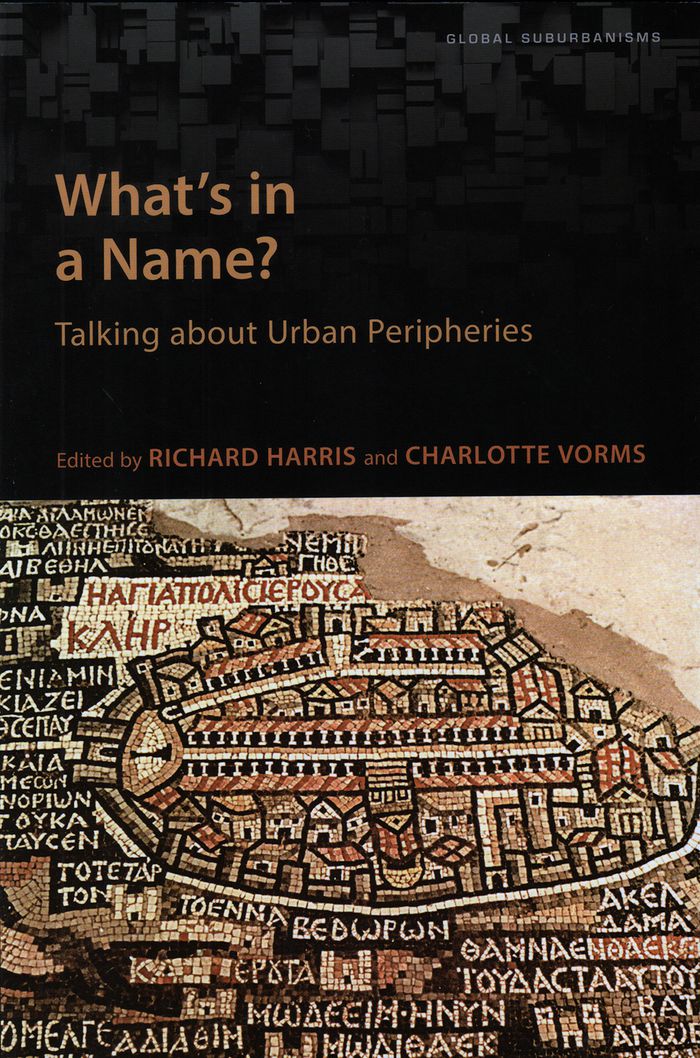
What's in a name? Talking about urban peripheries
Actions:
Prix:
$36.95
(disponible sur commande)
Résumé:
‘Borgata’, ‘favela’, ‘périurbain’, and ‘suburb’ are but a few of the different terms used throughout the world that refer specifically to communities that develop on the periphery of urban centres. "In what’s in a name?" editors Richard Harris and Charlotte Vorms have gathered together experts from around the world in order to provide a truly global framework for the study of the urban periphery. Rather than view these distinct communities through the lens of the western notion of urban sprawl, the contributors focus on the variety of everyday terms that are used, together with their connotations. This volume explores the local terminology used in cities such as Beijing, Bucharest, Montreal, Mumbai, Rio de Janeiro, Rome, Sofia, as well as more broadly across North America, Australia, Southeast Asia, and elsewhere. What’s in a Name? is the first book in English to pay serious and sustained attention to the naming of the urban periphery worldwide. By exploring the ways in which local individuals speak about the urban periphery Harris and Vorms bridge the assumed divide between the global North and the global South.
What's in a name? Talking about urban peripheries
Actions:
Prix:
$36.95
(disponible sur commande)
Résumé:
‘Borgata’, ‘favela’, ‘périurbain’, and ‘suburb’ are but a few of the different terms used throughout the world that refer specifically to communities that develop on the periphery of urban centres. "In what’s in a name?" editors Richard Harris and Charlotte Vorms have gathered together experts from around the world in order to provide a truly global framework for the study of the urban periphery. Rather than view these distinct communities through the lens of the western notion of urban sprawl, the contributors focus on the variety of everyday terms that are used, together with their connotations. This volume explores the local terminology used in cities such as Beijing, Bucharest, Montreal, Mumbai, Rio de Janeiro, Rome, Sofia, as well as more broadly across North America, Australia, Southeast Asia, and elsewhere. What’s in a Name? is the first book in English to pay serious and sustained attention to the naming of the urban periphery worldwide. By exploring the ways in which local individuals speak about the urban periphery Harris and Vorms bridge the assumed divide between the global North and the global South.
Classification:
livres
livres
Publication:
août 2017
août 2017
Sujet:
Théorie de l’urbanisme
Théorie de l’urbanisme
Classification:
livres
livres
Actions:
Prix:
$83.00
(disponible sur commande)
Résumé:
The ecological approach to building is the great untold story in the architectural history of the past century. This book is essential reading for architects and students. As an urgent wake-up call on the state of our built environment, it will be of interest to everyone who cares about the future of our planet. In the past, many of the key tenets of the ecological(...)
$83.00
(disponible sur commande)
Résumé:
The ecological approach to building is the great untold story in the architectural history of the past century. This book is essential reading for architects and students. As an urgent wake-up call on the state of our built environment, it will be of interest to everyone who cares about the future of our planet. In the past, many of the key tenets of the ecological(...)
Titre:
Ecological architecture : a critical history
Actions:
Prix:
$83.00
(disponible sur commande)
Résumé:
The ecological approach to building is the great untold story in the architectural history of the past century. This book is essential reading for architects and students. As an urgent wake-up call on the state of our built environment, it will be of interest to everyone who cares about the future of our planet. In the past, many of the key tenets of the ecological philosophy - sustainability, energy efficiency, harmonious relationship with the environment - appeared to stand contrast to the sweep of science-led ‘progress’ that characterized the modern movement. Today, however, past visionaries are vindicated and yesterday’s eccentricities are today’s legal requirements: every architect has an obligation to the environment as well as to his or her client. After an introduction to the terminology of ecological architecture - including terms such as ‘green’ and ‘sustainable’, ’Part one’ identifies recurring themes in ecological architecture. ‘Part two’ features twenty-five case studies each focusing on a specific architect, movement or topic. Some of the names are familiar in this context - Rasem Badran, Hassan Fathy - but there are also plenty of surprises - Le Corbusier, Buckminster Fuller, Rudolf Schindler. ‘Part three’ looks to the future as ecological architecture struggles to deal with global urbanization.
Ecological architecture : a critical history
Actions:
Prix:
$83.00
(disponible sur commande)
Résumé:
The ecological approach to building is the great untold story in the architectural history of the past century. This book is essential reading for architects and students. As an urgent wake-up call on the state of our built environment, it will be of interest to everyone who cares about the future of our planet. In the past, many of the key tenets of the ecological philosophy - sustainability, energy efficiency, harmonious relationship with the environment - appeared to stand contrast to the sweep of science-led ‘progress’ that characterized the modern movement. Today, however, past visionaries are vindicated and yesterday’s eccentricities are today’s legal requirements: every architect has an obligation to the environment as well as to his or her client. After an introduction to the terminology of ecological architecture - including terms such as ‘green’ and ‘sustainable’, ’Part one’ identifies recurring themes in ecological architecture. ‘Part two’ features twenty-five case studies each focusing on a specific architect, movement or topic. Some of the names are familiar in this context - Rasem Badran, Hassan Fathy - but there are also plenty of surprises - Le Corbusier, Buckminster Fuller, Rudolf Schindler. ‘Part three’ looks to the future as ecological architecture struggles to deal with global urbanization.
Classification:
livres
livres
Publication:
octobre 2005, London
octobre 2005, London
Sujet:
Architecture écologique
Architecture écologique
Classification:
livres
livres
Titre:
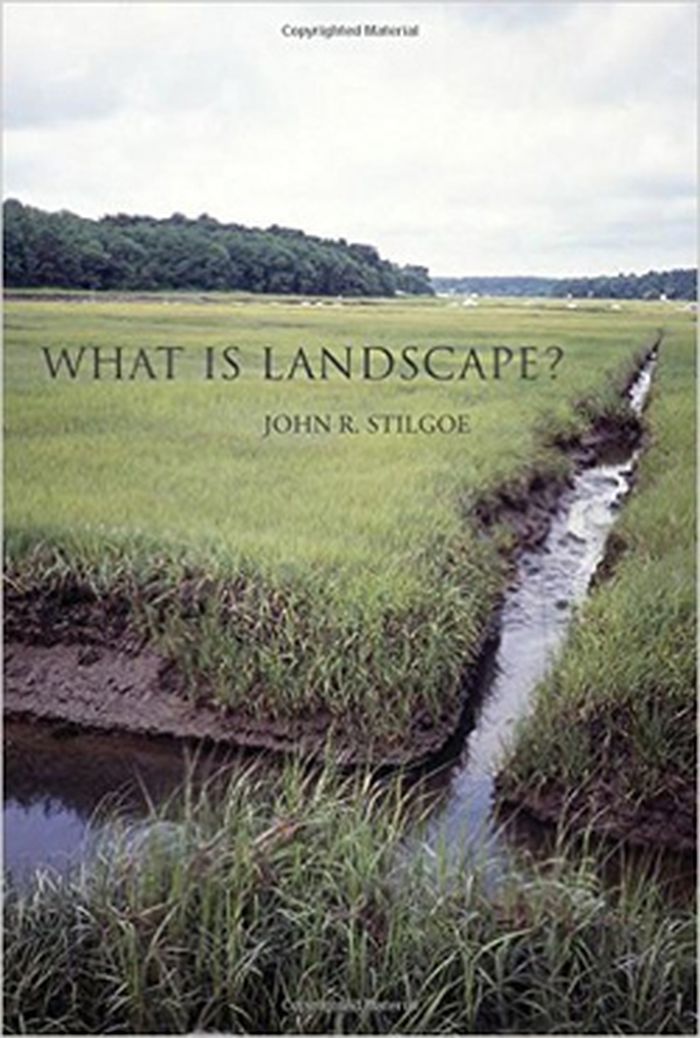
What is landscape?
What is landscape?
Actions:
Prix:
$29.50
(disponible sur commande)
Résumé:
Landscape, John Stilgoe tells us, is a noun. From the old Frisian language (once spoken in coastal parts of the Netherlands and Germany), it meant shoveled land: landschop. Sixteenth-century Englishmen misheard or mispronounced this as landskep, which became landskip, then landscape, designating the surface of the earth shaped for human habitation. In What Is Landscape?(...)
$29.50
(disponible sur commande)
Résumé:
Landscape, John Stilgoe tells us, is a noun. From the old Frisian language (once spoken in coastal parts of the Netherlands and Germany), it meant shoveled land: landschop. Sixteenth-century Englishmen misheard or mispronounced this as landskep, which became landskip, then landscape, designating the surface of the earth shaped for human habitation. In What Is Landscape?(...)
Titre:
What is landscape?
Actions:
Prix:
$29.50
(disponible sur commande)
Résumé:
Landscape, John Stilgoe tells us, is a noun. From the old Frisian language (once spoken in coastal parts of the Netherlands and Germany), it meant shoveled land: landschop. Sixteenth-century Englishmen misheard or mispronounced this as landskep, which became landskip, then landscape, designating the surface of the earth shaped for human habitation. In What Is Landscape? Stilgoe maps the discovery of landscape by putting words to things, zeroing in on landscape’s essence but also leading sideways expeditions through such sources as children’s picture books, folklore, deeds, antique terminology, out-of-print dictionaries, and conversations with locals. (“What is that?” “Well, it’s not really a slough, not really, it’s a bayou . . .”) He offers a written narrative lexicon of landscape as word, concept, and path to discoveries. What Is Landscape? is an invitation to walk, to notice, to ask: to see a sandcastle with a pinwheel at the beach and think of Dutch windmills—icons of triumph, markers of territory won from the sea; to walk in the woods and be amused by the Elizabethans’ misuse of the Latin silvaticus (people of the woods) to coin the word savages; to see in a suburban front lawn a representation of the meadow of a medieval freehold.
What is landscape?
Actions:
Prix:
$29.50
(disponible sur commande)
Résumé:
Landscape, John Stilgoe tells us, is a noun. From the old Frisian language (once spoken in coastal parts of the Netherlands and Germany), it meant shoveled land: landschop. Sixteenth-century Englishmen misheard or mispronounced this as landskep, which became landskip, then landscape, designating the surface of the earth shaped for human habitation. In What Is Landscape? Stilgoe maps the discovery of landscape by putting words to things, zeroing in on landscape’s essence but also leading sideways expeditions through such sources as children’s picture books, folklore, deeds, antique terminology, out-of-print dictionaries, and conversations with locals. (“What is that?” “Well, it’s not really a slough, not really, it’s a bayou . . .”) He offers a written narrative lexicon of landscape as word, concept, and path to discoveries. What Is Landscape? is an invitation to walk, to notice, to ask: to see a sandcastle with a pinwheel at the beach and think of Dutch windmills—icons of triumph, markers of territory won from the sea; to walk in the woods and be amused by the Elizabethans’ misuse of the Latin silvaticus (people of the woods) to coin the word savages; to see in a suburban front lawn a representation of the meadow of a medieval freehold.
Classification:
livres
livres
Publication:
août 2015
août 2015
Sujet:
Théorie du paysage
Théorie du paysage
Classification:
livres
livres
Titre:
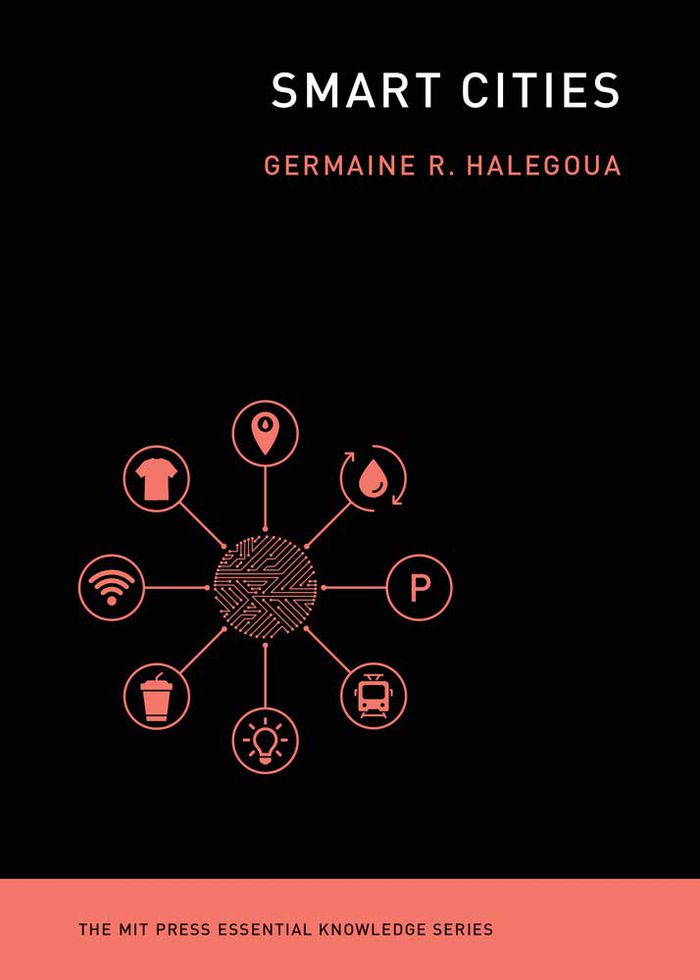
Smart cities
Smart cities
Actions:
Prix:
$19.95
(disponible sur commande)
Résumé:
Over the past ten years, urban planners, technology companies, and governments have promoted smart cities with a somewhat utopian vision of urban life made knowable and manageable through data collection and analysis. Emerging smart cities have become both crucibles and showrooms for the practical application of the Internet of Things, cloud computing, and the integration(...)
$19.95
(disponible sur commande)
Résumé:
Over the past ten years, urban planners, technology companies, and governments have promoted smart cities with a somewhat utopian vision of urban life made knowable and manageable through data collection and analysis. Emerging smart cities have become both crucibles and showrooms for the practical application of the Internet of Things, cloud computing, and the integration(...)
Titre:
Smart cities
Actions:
Prix:
$19.95
(disponible sur commande)
Résumé:
Over the past ten years, urban planners, technology companies, and governments have promoted smart cities with a somewhat utopian vision of urban life made knowable and manageable through data collection and analysis. Emerging smart cities have become both crucibles and showrooms for the practical application of the Internet of Things, cloud computing, and the integration of big data into everyday life. Are smart cities optimized, sustainable, digitally networked solutions to urban problems? Or are they neoliberal, corporate-controlled, undemocratic non-places? This volume in the MIT Press Essential Knowledge series offers a concise introduction to smart cities, presenting key concepts, definitions, examples, and historical contexts, along with discussions of both the drawbacks and the benefits of this approach to urban life. After reviewing current terminology and justifications employed by technology designers, journalists, and researchers, the book describes three models for smart city development?smart-from-the-start cities, retrofitted cities, and social cities?and offers examples of each. It covers technologies and methods, including sensors, public wi-fi, big data, and smartphone apps, and discusses how developers conceive of interactions among the built environment, technological and urban infrastructures, citizens, and citizen engagement. Throughout, the author?who has studied smart cities around the world?argues that smart city developers should work more closely with local communities, recognizing their preexisting relationship to urban place and realizing the limits of technological fixes. Smartness is a means to an end: improving the quality of urban life.
Smart cities
Actions:
Prix:
$19.95
(disponible sur commande)
Résumé:
Over the past ten years, urban planners, technology companies, and governments have promoted smart cities with a somewhat utopian vision of urban life made knowable and manageable through data collection and analysis. Emerging smart cities have become both crucibles and showrooms for the practical application of the Internet of Things, cloud computing, and the integration of big data into everyday life. Are smart cities optimized, sustainable, digitally networked solutions to urban problems? Or are they neoliberal, corporate-controlled, undemocratic non-places? This volume in the MIT Press Essential Knowledge series offers a concise introduction to smart cities, presenting key concepts, definitions, examples, and historical contexts, along with discussions of both the drawbacks and the benefits of this approach to urban life. After reviewing current terminology and justifications employed by technology designers, journalists, and researchers, the book describes three models for smart city development?smart-from-the-start cities, retrofitted cities, and social cities?and offers examples of each. It covers technologies and methods, including sensors, public wi-fi, big data, and smartphone apps, and discusses how developers conceive of interactions among the built environment, technological and urban infrastructures, citizens, and citizen engagement. Throughout, the author?who has studied smart cities around the world?argues that smart city developers should work more closely with local communities, recognizing their preexisting relationship to urban place and realizing the limits of technological fixes. Smartness is a means to an end: improving the quality of urban life.
Classification:
livres
livres
Publication:
mars 2020
mars 2020
Sujet:
Architecture numérique
Architecture numérique
Classification:
livres
livres
Actions:
Exemplaires:
Description:
xviii, 278 pages : illustrations ; 25 cm
Description:
xviii, 278 pages : illustrations ; 25 cm
Auteur:
Sujet:
Publication:
Farnham, Surrey ; Burlington : Ashgate, [2014], ©2014
Farnham, Surrey ; Burlington : Ashgate, [2014], ©2014
Titre:
Reading the architecture of the underprivileged classes : a perspective on the protests and upheavals in our cities / edited by Nnamdi Elleh.
Actions:
Exemplaires:
Description:
xviii, 278 pages : illustrations ; 25 cm
Reading the architecture of the underprivileged classes : a perspective on the protests and upheavals in our cities / edited by Nnamdi Elleh.
Actions:
Exemplaires:
Description:
xviii, 278 pages : illustrations ; 25 cm
Classification:
livres
livres
Publication:
Farnham, Surrey ; Burlington : Ashgate, [2014], ©2014
Farnham, Surrey ; Burlington : Ashgate, [2014], ©2014
Auteur:
Sujet:
Classification:
audio
audio
Titre:
These are They.
These are They.
Actions:
Description:
1 online resource.
Auteur:
Sujet:
Publication:
[Place of publication not identified] : Lateral Addition, 2019.
[Place of publication not identified] : Lateral Addition, 2019.
Classification:
audio
audio
Publication:
[Place of publication not identified] : Lateral Addition, 2019.
[Place of publication not identified] : Lateral Addition, 2019.
Auteur:
Sujet:


