


3717 Résultats
Classification:
livres
livres
Actions:
Prix:
$36.95
(disponible sur commande)
Résumé:
The Rise and Fall of Artist's Soho documents how a little-known industrial neighborhood in New York unintentionally became-for a brief period-a lexus of creative activity. Part personal memoir, part cultural history, the book examines how a group of urban pioneers were able to transform a neighborhood, while also creating new and classic works of American art, music,(...)
$36.95
(disponible sur commande)
Résumé:
The Rise and Fall of Artist's Soho documents how a little-known industrial neighborhood in New York unintentionally became-for a brief period-a lexus of creative activity. Part personal memoir, part cultural history, the book examines how a group of urban pioneers were able to transform a neighborhood, while also creating new and classic works of American art, music,(...)
Titre:
SoHo : the rise and fall of an artists' colony
Actions:
Prix:
$36.95
(disponible sur commande)
Résumé:
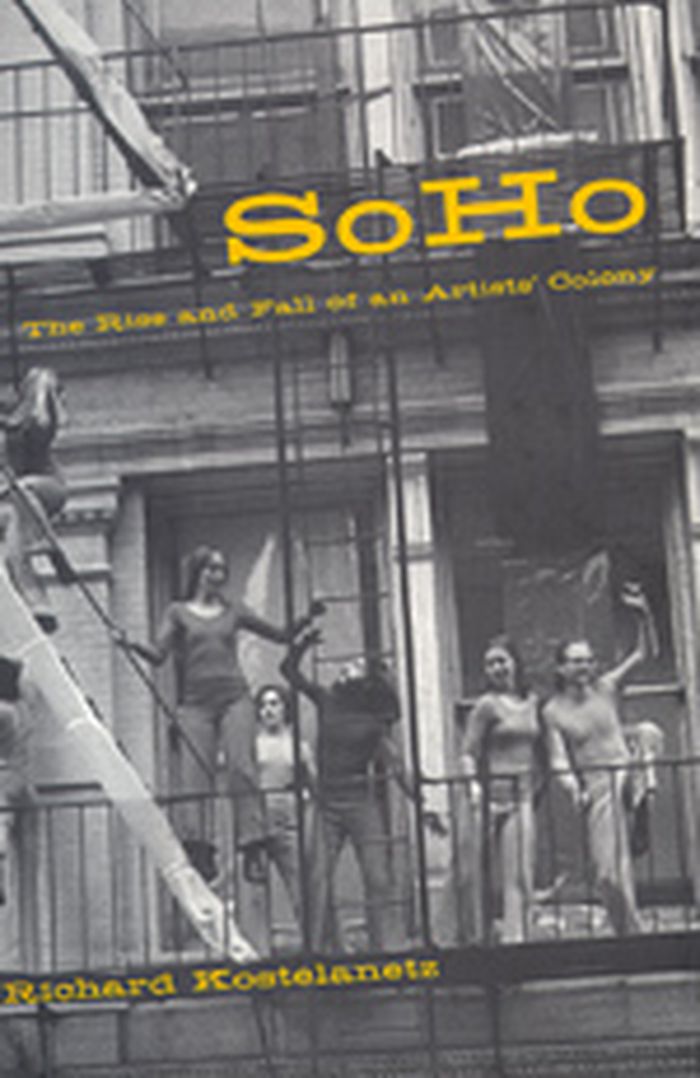
The Rise and Fall of Artist's Soho documents how a little-known industrial neighborhood in New York unintentionally became-for a brief period-a lexus of creative activity. Part personal memoir, part cultural history, the book examines how a group of urban pioneers were able to transform a neighborhood, while also creating new and classic works of American art, music, dance, and theater. Taking advantage of loft occupancy laws that allowed artists to live in buildings not available to the general public, a band of enterprising and creative people began settling in New York's SoHo (so called because it lies South of Houston Street), renovating previously industrial spaces for personal living and work space. Fueled by word-of-mouth-and unsupported either by local or national governments or wealthy individuals-the area grew to be a center for artistic creation. This book not only discusses how the artists came and why, it also focuses on some of the most creative, describing both their lives and work. Such an ideal situation-totally unplanned-could not last forever; the author shows how market forces squeezed out this art utopia, to be replaced by a shadow of itself, "SoMall," with the coming of trendy chain stores, boutiques, and restaurants. European tourists crowd the streets, but the real SoHo is long gone, never to be recreated in quite the same way again.
SoHo : the rise and fall of an artists' colony
Actions:
Prix:
$36.95
(disponible sur commande)
Résumé:
The Rise and Fall of Artist's Soho documents how a little-known industrial neighborhood in New York unintentionally became-for a brief period-a lexus of creative activity. Part personal memoir, part cultural history, the book examines how a group of urban pioneers were able to transform a neighborhood, while also creating new and classic works of American art, music, dance, and theater. Taking advantage of loft occupancy laws that allowed artists to live in buildings not available to the general public, a band of enterprising and creative people began settling in New York's SoHo (so called because it lies South of Houston Street), renovating previously industrial spaces for personal living and work space. Fueled by word-of-mouth-and unsupported either by local or national governments or wealthy individuals-the area grew to be a center for artistic creation. This book not only discusses how the artists came and why, it also focuses on some of the most creative, describing both their lives and work. Such an ideal situation-totally unplanned-could not last forever; the author shows how market forces squeezed out this art utopia, to be replaced by a shadow of itself, "SoMall," with the coming of trendy chain stores, boutiques, and restaurants. European tourists crowd the streets, but the real SoHo is long gone, never to be recreated in quite the same way again.
Classification:
livres
livres
Publication:
juin 2003, New York
juin 2003, New York
Sujet:
Théorie de l’urbanisme
Théorie de l’urbanisme
Classification:
livres
livres
Prix:
$40.00
(disponible sur commande)
Résumé:
More than an exhibition catalogue, this reference book is lavishly illustrated with the works from the 25 exhibitions of the event, and includes essays by leading commentators on contemporary art and technology. The camera is not a tool just waiting to be picked up and used, but a sophisticated instrument with its own laws, its own ways of working, and even its own life.(...)
$40.00
(disponible sur commande)
Résumé:
More than an exhibition catalogue, this reference book is lavishly illustrated with the works from the 25 exhibitions of the event, and includes essays by leading commentators on contemporary art and technology. The camera is not a tool just waiting to be picked up and used, but a sophisticated instrument with its own laws, its own ways of working, and even its own life.(...)
Titre:
Drone: The automated image. Le Mois de la photo à Montréal 2013
Actions:
Prix:
$40.00
(disponible sur commande)
Résumé:
More than an exhibition catalogue, this reference book is lavishly illustrated with the works from the 25 exhibitions of the event, and includes essays by leading commentators on contemporary art and technology. The camera is not a tool just waiting to be picked up and used, but a sophisticated instrument with its own laws, its own ways of working, and even its own life. With the incorporation of automatic devices – and, more recently, computers – the camera has its own agency. It can see what is invisible to the human eye; it can work continuously; it can travel to places that humans would find impossible or dangerous to visit; it can enter the human body and travel into outer space. It has been taken for granted that the photographic image is the most important aspect of the photographic process. However, the artists and writers in Drone: The Automated Image suggest something completely different. At the centre of their concerns is the changing relationship between the camera and the body and how the camera can function with little human involvement. As humans rely more and more on technology to extend vision, the camera takes on behaviours associated with the body. From CCTV to Google Street View, from remote cameras to robots, and from photo booths to drones, cameras are remaking the conditions of human existence.
Drone: The automated image. Le Mois de la photo à Montréal 2013
Actions:
Prix:
$40.00
(disponible sur commande)
Résumé:
More than an exhibition catalogue, this reference book is lavishly illustrated with the works from the 25 exhibitions of the event, and includes essays by leading commentators on contemporary art and technology. The camera is not a tool just waiting to be picked up and used, but a sophisticated instrument with its own laws, its own ways of working, and even its own life. With the incorporation of automatic devices – and, more recently, computers – the camera has its own agency. It can see what is invisible to the human eye; it can work continuously; it can travel to places that humans would find impossible or dangerous to visit; it can enter the human body and travel into outer space. It has been taken for granted that the photographic image is the most important aspect of the photographic process. However, the artists and writers in Drone: The Automated Image suggest something completely different. At the centre of their concerns is the changing relationship between the camera and the body and how the camera can function with little human involvement. As humans rely more and more on technology to extend vision, the camera takes on behaviours associated with the body. From CCTV to Google Street View, from remote cameras to robots, and from photo booths to drones, cameras are remaking the conditions of human existence.
Classification:
livres
livres
Publication:
septembre 2013
septembre 2013
Classification:
livres
livres
Actions:
Exemplaires:
Description:
xi, 623 pages : illustrations ; 25 cm
Description:
xi, 623 pages : illustrations ; 25 cm
Auteur:
Sujet:
Publication:
Ithaca, N.Y. : Cornell University Press, 1992.
Ithaca, N.Y. : Cornell University Press, 1992.
Titre:
The park and the people : a history of Central Park / Roy Rosenzweig, Elizabeth Blackmar.
Actions:
Exemplaires:
Description:
xi, 623 pages : illustrations ; 25 cm
The park and the people : a history of Central Park / Roy Rosenzweig, Elizabeth Blackmar.
Actions:
Exemplaires:
Description:
xi, 623 pages : illustrations ; 25 cm
Classification:
livres
livres
Publication:
Ithaca, N.Y. : Cornell University Press, 1992.
Ithaca, N.Y. : Cornell University Press, 1992.
Auteur:
Sujet:
Classification:
livres
livres
Actions:
Exemplaires:
Description:
xi, 387 pages : illustrations (some color) ; 28 cm
Description:
xi, 387 pages : illustrations (some color) ; 28 cm
Auteur:
Sujet:
Publication:
[Ottawa, Ont.] : Public Archives Canada, ©1982.
[Ottawa, Ont.] : Public Archives Canada, ©1982.
Titre:
Dreams of empire : Canada before 1700 / by André Vachon of the Royal Society of Canada in collaboration with Victorin Chabot and André Desrosiers ; [English translation by John F. Flinn].
Actions:
Exemplaires:
Description:
xi, 387 pages : illustrations (some color) ; 28 cm
Dreams of empire : Canada before 1700 / by André Vachon of the Royal Society of Canada in collaboration with Victorin Chabot and André Desrosiers ; [English translation by John F. Flinn].
Actions:
Exemplaires:
Description:
xi, 387 pages : illustrations (some color) ; 28 cm
Classification:
livres
livres
Publication:
[Ottawa, Ont.] : Public Archives Canada, ©1982.
[Ottawa, Ont.] : Public Archives Canada, ©1982.
Auteur:
Sujet:
Classification:
livres
livres
Prix:
$38.95
(disponible sur commande)
Résumé:
In the middle of the night they quickly build houses and seize land before the police destroy their fragile homes. They're squatters, families that risk the wrath of governments and property owners by building dwellings on land they don't own, and they represent one out of every ten people on the planet. Investigative journalist Robert Neuwirth lived among squatter(...)
$38.95
(disponible sur commande)
Résumé:
In the middle of the night they quickly build houses and seize land before the police destroy their fragile homes. They're squatters, families that risk the wrath of governments and property owners by building dwellings on land they don't own, and they represent one out of every ten people on the planet. Investigative journalist Robert Neuwirth lived among squatter(...)
Titre:
Shadow cities: a billion squatters, a new urban world
Actions:
Prix:
$38.95
(disponible sur commande)
Résumé:
In the middle of the night they quickly build houses and seize land before the police destroy their fragile homes. They're squatters, families that risk the wrath of governments and property owners by building dwellings on land they don't own, and they represent one out of every ten people on the planet. Investigative journalist Robert Neuwirth lived among squatter communities from Rio to Bombay to Nairobi to Istanbul to give us an impassioned, inside view of squatter life and a glimpse into the urban future. He met people in Nairobi who built homes with their bare hands, Turkish families who plot land invasions, and children in Rio whose parents justify outfoxing the authorities as the only path to a better life. And he shows us that in cities like Rio, squatter settlements have become decent places to live for formerly landless people. Tracing the notion of private property from the enclosure movement in Europe to the settlement of the U.S., Neuwirth shows how squatting rights may actually be seen as more "natural" than the current laws practiced in the U.S. In almost every country of the developing world, the most active builders are squatters, creating complex local economies with high rises, shopping strips, banks, and self-government. As they invent new social structures, Neuwirth argues, squatters are at the forefront of the worldwide movement to develop new visions of what constitutes property and community.
Shadow cities: a billion squatters, a new urban world
Actions:
Prix:
$38.95
(disponible sur commande)
Résumé:
In the middle of the night they quickly build houses and seize land before the police destroy their fragile homes. They're squatters, families that risk the wrath of governments and property owners by building dwellings on land they don't own, and they represent one out of every ten people on the planet. Investigative journalist Robert Neuwirth lived among squatter communities from Rio to Bombay to Nairobi to Istanbul to give us an impassioned, inside view of squatter life and a glimpse into the urban future. He met people in Nairobi who built homes with their bare hands, Turkish families who plot land invasions, and children in Rio whose parents justify outfoxing the authorities as the only path to a better life. And he shows us that in cities like Rio, squatter settlements have become decent places to live for formerly landless people. Tracing the notion of private property from the enclosure movement in Europe to the settlement of the U.S., Neuwirth shows how squatting rights may actually be seen as more "natural" than the current laws practiced in the U.S. In almost every country of the developing world, the most active builders are squatters, creating complex local economies with high rises, shopping strips, banks, and self-government. As they invent new social structures, Neuwirth argues, squatters are at the forefront of the worldwide movement to develop new visions of what constitutes property and community.
Classification:
livres
livres
Publication:
décembre 2004, New York
décembre 2004, New York
Sujet:
Théorie de l’urbanisme
Théorie de l’urbanisme
Classification:
livres
livres
Actions:
Prix:
$45.95
(disponible sur commande)
Résumé:
First published in 1917, On Growth and Form was at once revolutionary and conservative. Scottish embryologist D'Arcy Wentworth Thompson (1860-1948) grew up in the newly cast shadow of Darwinism, and he took issue with some of the orthodoxies of the day--not because they were necessarily wrong, he said, but because they violated the spirit of Occam's razor, in which simple(...)
$45.95
(disponible sur commande)
Résumé:
First published in 1917, On Growth and Form was at once revolutionary and conservative. Scottish embryologist D'Arcy Wentworth Thompson (1860-1948) grew up in the newly cast shadow of Darwinism, and he took issue with some of the orthodoxies of the day--not because they were necessarily wrong, he said, but because they violated the spirit of Occam's razor, in which simple(...)
Publication:
janvier 1900, New York
janvier 1900, New York
Titre:
On growth and form: the complete revised edition
Actions:
Prix:
$45.95
(disponible sur commande)
Résumé:
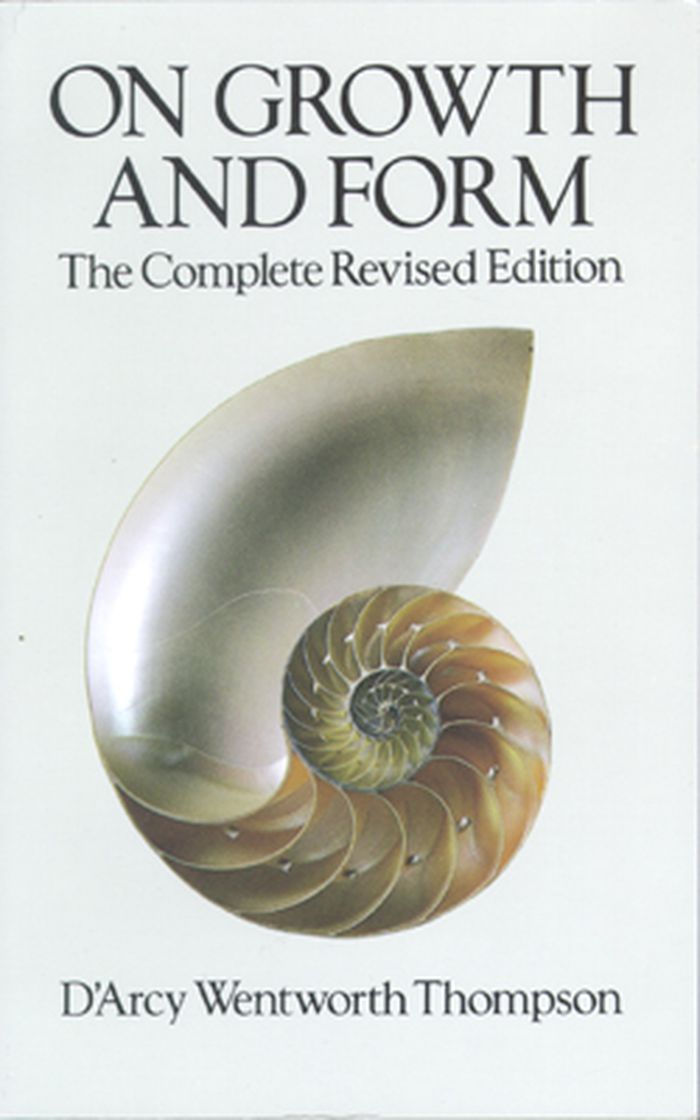
First published in 1917, On Growth and Form was at once revolutionary and conservative. Scottish embryologist D'Arcy Wentworth Thompson (1860-1948) grew up in the newly cast shadow of Darwinism, and he took issue with some of the orthodoxies of the day--not because they were necessarily wrong, he said, but because they violated the spirit of Occam's razor, in which simple explanations are preferable to complex ones. In the case of such subjects as the growth of eggs, skeletons, and crystals, Thompson cited mathematical authority: these were matters of "economy and transformation," and they could be explained by laws governing surface tension and the like. (He doubtless would have enjoyed the study of fractals, which came after his time.) In On Growth and Form, he examines such matters as the curve of frequency or bell curve (which explains variations in height among 10-year-old schoolboys, the florets of a daisy, the distribution of darts on a cork board, the thickness of stripes along a zebra's flanks, the shape of mountain ranges and sand dunes) and spirals (which turn up everywhere in nature you look: in the curve of a seashell, the swirl of water boiling in a saucepan, the sweep of faraway nebulae, the twist of a strand of DNA, the turns of the labyrinth in which the legendary Minotaur lived out its days). The result is an astonishingly varied book that repays skimming and close reading alike.
On growth and form: the complete revised edition
Actions:
Prix:
$45.95
(disponible sur commande)
Résumé:
First published in 1917, On Growth and Form was at once revolutionary and conservative. Scottish embryologist D'Arcy Wentworth Thompson (1860-1948) grew up in the newly cast shadow of Darwinism, and he took issue with some of the orthodoxies of the day--not because they were necessarily wrong, he said, but because they violated the spirit of Occam's razor, in which simple explanations are preferable to complex ones. In the case of such subjects as the growth of eggs, skeletons, and crystals, Thompson cited mathematical authority: these were matters of "economy and transformation," and they could be explained by laws governing surface tension and the like. (He doubtless would have enjoyed the study of fractals, which came after his time.) In On Growth and Form, he examines such matters as the curve of frequency or bell curve (which explains variations in height among 10-year-old schoolboys, the florets of a daisy, the distribution of darts on a cork board, the thickness of stripes along a zebra's flanks, the shape of mountain ranges and sand dunes) and spirals (which turn up everywhere in nature you look: in the curve of a seashell, the swirl of water boiling in a saucepan, the sweep of faraway nebulae, the twist of a strand of DNA, the turns of the labyrinth in which the legendary Minotaur lived out its days). The result is an astonishingly varied book that repays skimming and close reading alike.
Classification:
livres
livres
Publication:
janvier 1900, New York
janvier 1900, New York
Classification:
livres
livres
Actions:
Exemplaires:
Description:
xxxi, 638 pages : illustrations, facsimile ; 28 cm
Description:
xxxi, 638 pages : illustrations, facsimile ; 28 cm
Auteur:
Sujet:
Publication:
New York : Dover Publications, 1950., 1912.
New York : Dover Publications, 1950., 1912.
Titre:
De re metallica / translated from the first Latin ed. of 1556, with biographical introd., annotations, and appendices upon the development of mining methods, metallurgical processes, geology, mineralogy & mining law from the earliest times to the 16th century, by Herbert Clark Hoover and Lou Henry Hoover.
Actions:
Exemplaires:
Description:
xxxi, 638 pages : illustrations, facsimile ; 28 cm
De re metallica / translated from the first Latin ed. of 1556, with biographical introd., annotations, and appendices upon the development of mining methods, metallurgical processes, geology, mineralogy & mining law from the earliest times to the 16th century, by Herbert Clark Hoover and Lou Henry Hoover.
Actions:
Exemplaires:
Description:
xxxi, 638 pages : illustrations, facsimile ; 28 cm
Classification:
livres
livres
Publication:
New York : Dover Publications, 1950., 1912.
New York : Dover Publications, 1950., 1912.
Auteur:
Sujet:
Classification:
livres
livres
Prix:
$54.00
(disponible sur commande)
Résumé:
We tend to think of architecture as a practice in permanence, but what if we looked instead for an architecture of transience? In "Things that move," Tim Anstey does just that: rather than assuming that architecture is, at a certain level, stationary, he considers how architecture moves subjects (referring to its emotive potential in the experience it creates); how it(...)
$54.00
(disponible sur commande)
Résumé:
We tend to think of architecture as a practice in permanence, but what if we looked instead for an architecture of transience? In "Things that move," Tim Anstey does just that: rather than assuming that architecture is, at a certain level, stationary, he considers how architecture moves subjects (referring to its emotive potential in the experience it creates); how it(...)
Titre:
Things that move: A hinterland in architectural history
Actions:
Prix:
$54.00
(disponible sur commande)
Résumé:
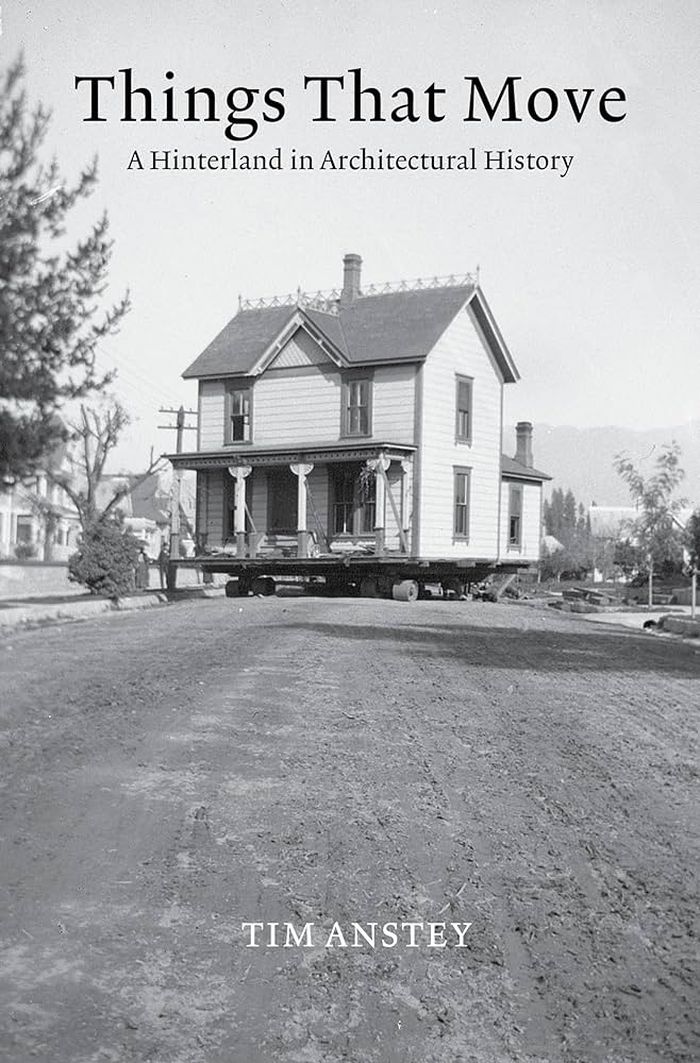
We tend to think of architecture as a practice in permanence, but what if we looked instead for an architecture of transience? In "Things that move," Tim Anstey does just that: rather than assuming that architecture is, at a certain level, stationary, he considers how architecture moves subjects (referring to its emotive potential in the experience it creates); how it moves objects (referring to how it choreographs bodies in motion); and how it is itself moved (referring to the mixture of materials, laws, affordances, and images that introduce movement into any architectural condition). The first of the book's three sections, "Cargoes," highlights the mobile peripheries of architectural history through the eighteenth and nineteenth centuries. It asks what kinds of knowledge can be included in a discussion of architecture, noting the connections between discourses of the lithe and the technical, on the one hand, and those associated with the production of monumental, static compositions on the other. The second section, “Dispatches,” reinterprets early architectural theory by examining the Renaissance ideal of decorum, the nature of the architectural work, and the ways in which architects are constituted as authors. The last part of the book, “Vehicles,” considers building in terms of literal and metaphorical movement, using two cases from the twentieth century that investigate the relationship between architecture and cultural memory. Using a broadly forensic approach to connect details in otherwise disparate cases, "Things that move" is a breathtakingly capacious architectural account that will change the way readers understand buildings, their becoming, and their significance.
Things that move: A hinterland in architectural history
Actions:
Prix:
$54.00
(disponible sur commande)
Résumé:
We tend to think of architecture as a practice in permanence, but what if we looked instead for an architecture of transience? In "Things that move," Tim Anstey does just that: rather than assuming that architecture is, at a certain level, stationary, he considers how architecture moves subjects (referring to its emotive potential in the experience it creates); how it moves objects (referring to how it choreographs bodies in motion); and how it is itself moved (referring to the mixture of materials, laws, affordances, and images that introduce movement into any architectural condition). The first of the book's three sections, "Cargoes," highlights the mobile peripheries of architectural history through the eighteenth and nineteenth centuries. It asks what kinds of knowledge can be included in a discussion of architecture, noting the connections between discourses of the lithe and the technical, on the one hand, and those associated with the production of monumental, static compositions on the other. The second section, “Dispatches,” reinterprets early architectural theory by examining the Renaissance ideal of decorum, the nature of the architectural work, and the ways in which architects are constituted as authors. The last part of the book, “Vehicles,” considers building in terms of literal and metaphorical movement, using two cases from the twentieth century that investigate the relationship between architecture and cultural memory. Using a broadly forensic approach to connect details in otherwise disparate cases, "Things that move" is a breathtakingly capacious architectural account that will change the way readers understand buildings, their becoming, and their significance.
Classification:
livres
livres
Publication:
avril 2024
avril 2024
Sujet:
Théorie de l’architecture
Théorie de l’architecture
Classification:
livres
livres
Prix:
$72.95
(disponible sur commande)
Résumé:
Landforms are a fast-developing art form that enjoy a wide following today, because of their multiple uses and their enveloping beauty. As formal landscapes that often arise from necessity - recycling a coal site for human use or making new use of excess earth - they are a pleasure to walk over and through. In this collection of his recent work, Charles Jencks explains(...)
$72.95
(disponible sur commande)
Résumé:
Landforms are a fast-developing art form that enjoy a wide following today, because of their multiple uses and their enveloping beauty. As formal landscapes that often arise from necessity - recycling a coal site for human use or making new use of excess earth - they are a pleasure to walk over and through. In this collection of his recent work, Charles Jencks explains(...)
Titre:
The universe in the landscape: landforms by Charles Jencks
Actions:
Prix:
$72.95
(disponible sur commande)
Résumé:
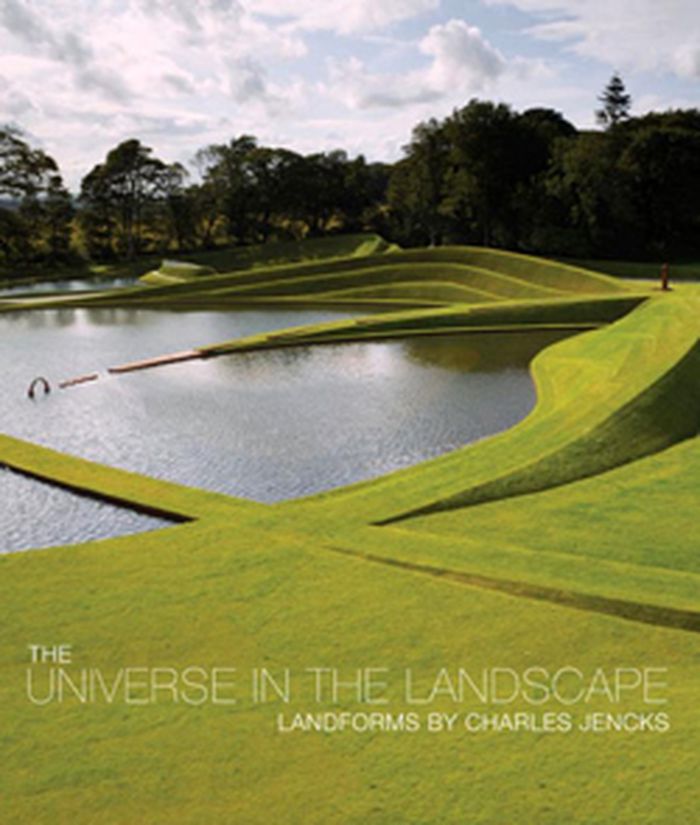
Landforms are a fast-developing art form that enjoy a wide following today, because of their multiple uses and their enveloping beauty. As formal landscapes that often arise from necessity - recycling a coal site for human use or making new use of excess earth - they are a pleasure to walk over and through. In this collection of his recent work, Charles Jencks explains his particular approach to the landform. Like the prehistoric earthworks of Britain that have been an inspiration, such as Stonehenge, his landforms contain cosmic symbolism, and they draw together sculpture, epigraphy, water, gardens, scrap metal and architecture. They address perennial themes - identity, patterns of nature, death and the power of life - but in a contemporary way, based on the insights of science. So Jencks portrays universal aspects of DNA, the spacetime warp of a black hole, the extraordinary way cells divide and unite and some basic forms of life. In this publication Jencks seeks to define a new landscape iconography based on forms and themes that may be eternal, in the sense that they crystallise nature's laws, some of which have been recently discovered. To see a world in a grain of sand was a poetic quest of William Blake and, in a different sense, to find the universe in a ritual landscape was a goal of prehistoric cultures. Jencks allies these spiritual affinities with the view of science that stresses the common patterns that underlie all parts of the cosmos, thus making them like our home planet, and the universe in a landscape.
The universe in the landscape: landforms by Charles Jencks
Actions:
Prix:
$72.95
(disponible sur commande)
Résumé:
Landforms are a fast-developing art form that enjoy a wide following today, because of their multiple uses and their enveloping beauty. As formal landscapes that often arise from necessity - recycling a coal site for human use or making new use of excess earth - they are a pleasure to walk over and through. In this collection of his recent work, Charles Jencks explains his particular approach to the landform. Like the prehistoric earthworks of Britain that have been an inspiration, such as Stonehenge, his landforms contain cosmic symbolism, and they draw together sculpture, epigraphy, water, gardens, scrap metal and architecture. They address perennial themes - identity, patterns of nature, death and the power of life - but in a contemporary way, based on the insights of science. So Jencks portrays universal aspects of DNA, the spacetime warp of a black hole, the extraordinary way cells divide and unite and some basic forms of life. In this publication Jencks seeks to define a new landscape iconography based on forms and themes that may be eternal, in the sense that they crystallise nature's laws, some of which have been recently discovered. To see a world in a grain of sand was a poetic quest of William Blake and, in a different sense, to find the universe in a ritual landscape was a goal of prehistoric cultures. Jencks allies these spiritual affinities with the view of science that stresses the common patterns that underlie all parts of the cosmos, thus making them like our home planet, and the universe in a landscape.
Classification:
livres
livres
Publication:
juin 2011
juin 2011
Classification:
livres
livres
Actions:
Exemplaires:
Description:
144 pages : illustrations (chiefly color), charts, map ; 24 cm
Description:
144 pages : illustrations (chiefly color), charts, map ; 24 cm
Auteur:
Sujet:
Publication:
Berlin : Hatje Cantz Verlag GmbH ; Cambridge, Massachusetts : The MIT Press, [2022], ©2022
Berlin : Hatje Cantz Verlag GmbH ; Cambridge, Massachusetts : The MIT Press, [2022], ©2022
Titre:
Spatializing justice : building blocks / Teddy Cruz and Fonna Forman.
Actions:
Exemplaires:
Description:
144 pages : illustrations (chiefly color), charts, map ; 24 cm
Spatializing justice : building blocks / Teddy Cruz and Fonna Forman.
Actions:
Exemplaires:
Description:
144 pages : illustrations (chiefly color), charts, map ; 24 cm
Classification:
livres
livres
Publication:
Berlin : Hatje Cantz Verlag GmbH ; Cambridge, Massachusetts : The MIT Press, [2022], ©2022
Berlin : Hatje Cantz Verlag GmbH ; Cambridge, Massachusetts : The MIT Press, [2022], ©2022
Auteur:
Sujet:


