


4165 Résultats
Classification:
livres
livres
Titre:
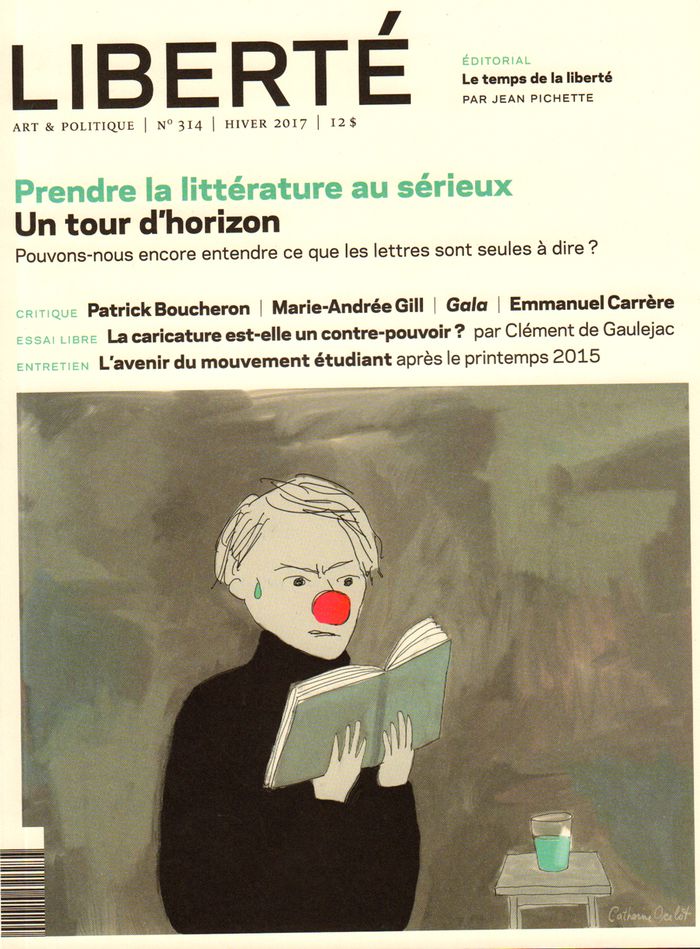
Liberté 314, hiver 2017
Liberté 314, hiver 2017
Actions:
Prix:
$12.00
(disponible sur commande)
Résumé:
Dernier numéro disponible en librairie.
$12.00
(disponible sur commande)
Résumé:
Dernier numéro disponible en librairie.
Titre:
Liberté 314, hiver 2017
Actions:
Prix:
$12.00
(disponible sur commande)
Résumé:
Dernier numéro disponible en librairie.
Liberté 314, hiver 2017
Actions:
Prix:
$12.00
(disponible sur commande)
Résumé:
Dernier numéro disponible en librairie.
Classification:
livres
livres
Publication:
novembre 2016
novembre 2016
Sujet:
Revues
Revues
Classification:
livres
livres
Titre:
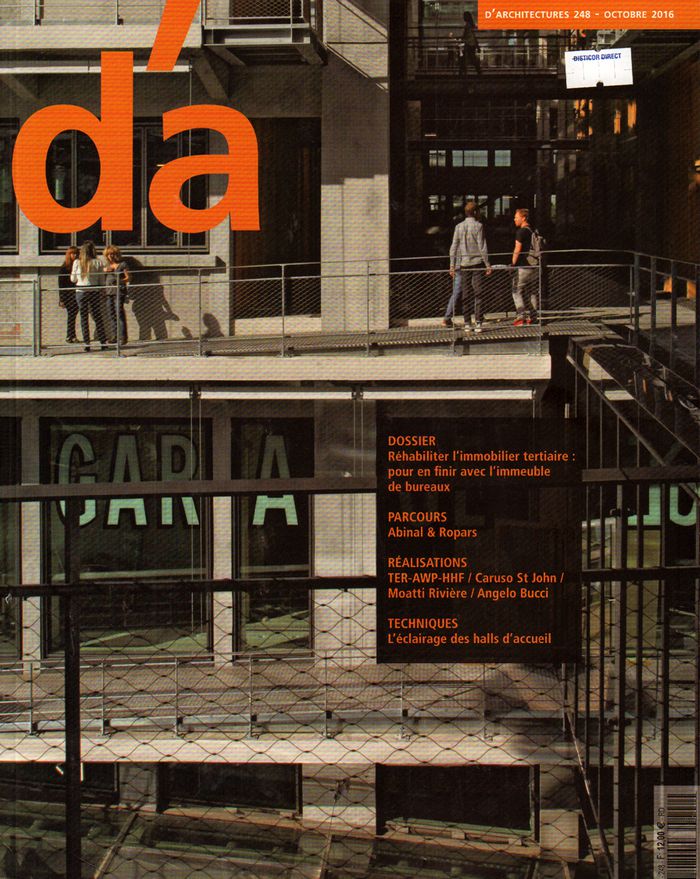
D'a (D'architectures) 248
D'a (D'architectures) 248
Actions:
Prix:
$16.99
(disponible sur commande)
Résumé:
Le numéro le plus récent de "D'a (D'architectures)".
$16.99
(disponible sur commande)
Résumé:
Le numéro le plus récent de "D'a (D'architectures)".
Titre:
D'a (D'architectures) 248
Actions:
Prix:
$16.99
(disponible sur commande)
Résumé:
Le numéro le plus récent de "D'a (D'architectures)".
D'a (D'architectures) 248
Actions:
Prix:
$16.99
(disponible sur commande)
Résumé:
Le numéro le plus récent de "D'a (D'architectures)".
Classification:
livres
livres
Publication:
octobre 2016
octobre 2016
Sujet:
Revues
Revues
Classification:
livres
livres
Titre:
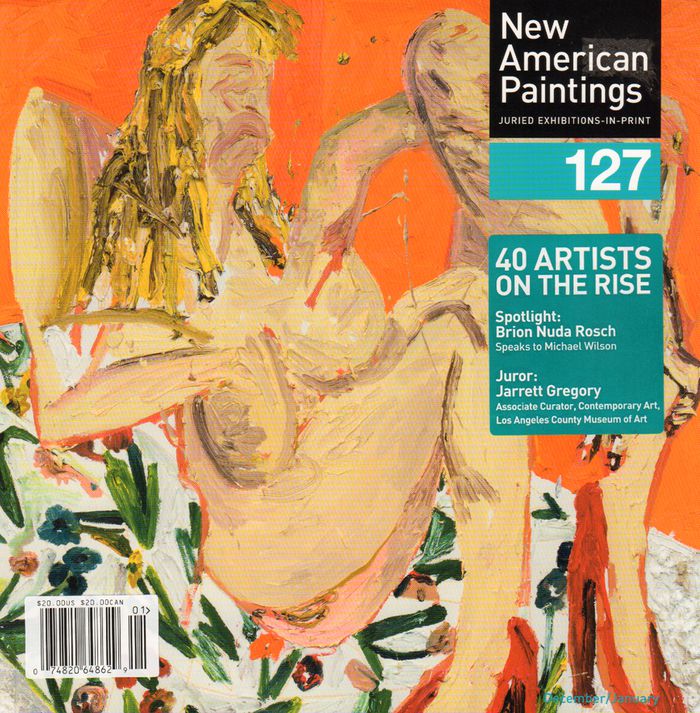
New American paintings 127
New American paintings 127
Actions:
Prix:
$20.00
(disponible sur commande)
Résumé:
Dernier numéro disponible en librairie. Latest issue available at the bookstore.
$20.00
(disponible sur commande)
Résumé:
Dernier numéro disponible en librairie. Latest issue available at the bookstore.
Titre:
New American paintings 127
Actions:
Prix:
$20.00
(disponible sur commande)
Résumé:
Dernier numéro disponible en librairie. Latest issue available at the bookstore.
New American paintings 127
Actions:
Prix:
$20.00
(disponible sur commande)
Résumé:
Dernier numéro disponible en librairie. Latest issue available at the bookstore.
Classification:
livres
livres
Publication:
décembre 2016
décembre 2016
Sujet:
Revues
Revues
Classification:
livres
livres
Titre:
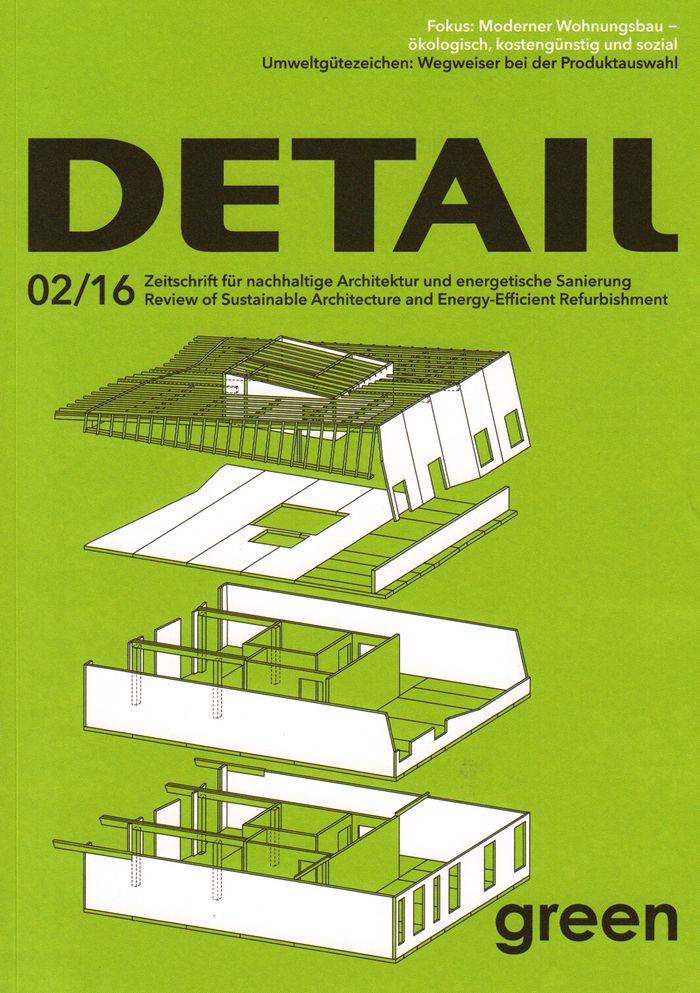
Detail green 02 2016
Detail green 02 2016
Actions:
Prix:
$30.95
(disponible en magasin)
Résumé:
Dernier numéro en librairie. Latest issue available at the bookstore.
$30.95
(disponible en magasin)
Résumé:
Dernier numéro en librairie. Latest issue available at the bookstore.
Titre:
Detail green 02 2016
Actions:
Prix:
$30.95
(disponible en magasin)
Résumé:
Dernier numéro en librairie. Latest issue available at the bookstore.
Detail green 02 2016
Actions:
Prix:
$30.95
(disponible en magasin)
Résumé:
Dernier numéro en librairie. Latest issue available at the bookstore.
Classification:
livres
livres
Publication:
décembre 2016
décembre 2016
Sujet:
Revues
Revues
Classification:
livres
livres
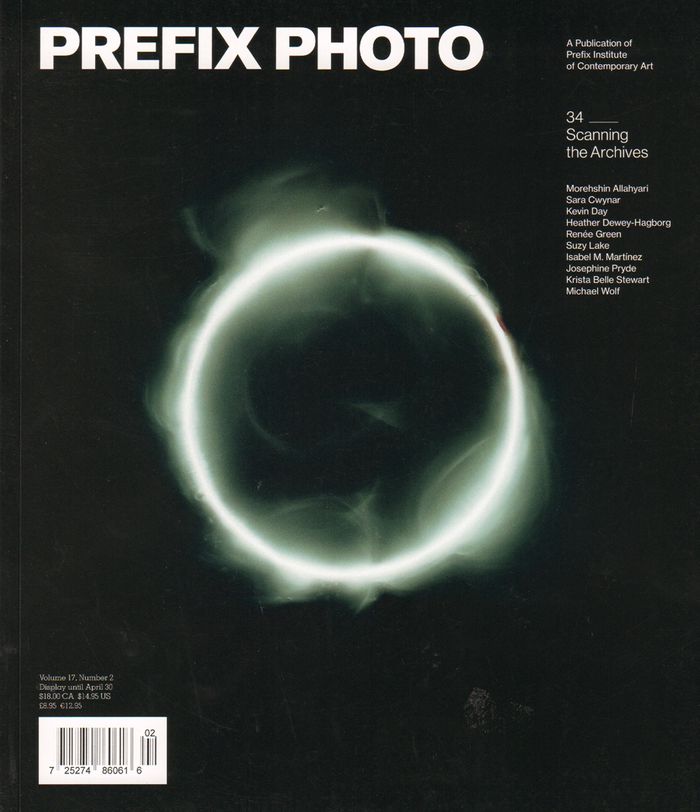
Actions:
Prix:
$18.00
(disponible sur commande)
Résumé:
The current issue in store.
$18.00
(disponible sur commande)
Résumé:
The current issue in store.
Titre:
Prefix photo 34: scanning the archives
Actions:
Prix:
$18.00
(disponible sur commande)
Résumé:
The current issue in store.
Prefix photo 34: scanning the archives
Actions:
Prix:
$18.00
(disponible sur commande)
Résumé:
The current issue in store.
Classification:
livres
livres
Publication:
décembre 2016
décembre 2016
Sujet:
Revues
Revues
Classification:
livres
livres
Actions:
Prix:
$42.95
(disponible sur commande)
Résumé:
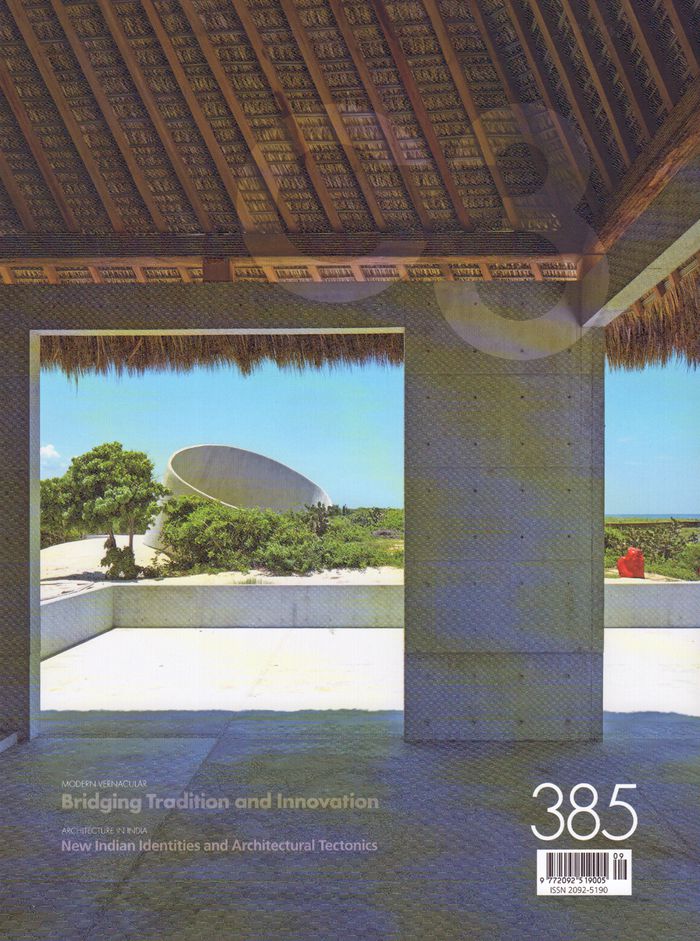
In the main feature, five projects are examined that deal with the theme of modern vernacular, addressing the question of how architects today can reconcile the two seemingly disparate approaches of contemporary gestures and historic traditions into a single, cohesive design. This reinterpretation by architects of regional building practices and vernacular style in a(...)
$42.95
(disponible sur commande)
Résumé:
In the main feature, five projects are examined that deal with the theme of modern vernacular, addressing the question of how architects today can reconcile the two seemingly disparate approaches of contemporary gestures and historic traditions into a single, cohesive design. This reinterpretation by architects of regional building practices and vernacular style in a(...)
Titre:
C3 385: bridging tradition and innovation
Actions:
Prix:
$42.95
(disponible sur commande)
Résumé:
In the main feature, five projects are examined that deal with the theme of modern vernacular, addressing the question of how architects today can reconcile the two seemingly disparate approaches of contemporary gestures and historic traditions into a single, cohesive design. This reinterpretation by architects of regional building practices and vernacular style in a modern context comes to the fore in Tadao Ando’s Bosco Studio & House, the Fan Zeng Art Gallery by Original Design Studio, and Chinmaya Mission Austin by Miro Rivera Architects, for example. Also featured, the output of new offices in India like Architecture Brio, Sameep Padora, S+PS Architects, and more.
C3 385: bridging tradition and innovation
Actions:
Prix:
$42.95
(disponible sur commande)
Résumé:
In the main feature, five projects are examined that deal with the theme of modern vernacular, addressing the question of how architects today can reconcile the two seemingly disparate approaches of contemporary gestures and historic traditions into a single, cohesive design. This reinterpretation by architects of regional building practices and vernacular style in a modern context comes to the fore in Tadao Ando’s Bosco Studio & House, the Fan Zeng Art Gallery by Original Design Studio, and Chinmaya Mission Austin by Miro Rivera Architects, for example. Also featured, the output of new offices in India like Architecture Brio, Sameep Padora, S+PS Architects, and more.
Classification:
livres
livres
Publication:
décembre 2016
décembre 2016
Sujet:
Revues
Revues
Classification:
livres
livres

Actions:
Prix:
$32.95
(disponible sur commande)
Résumé:
This issue focusses on refurbishments, rehabilitations, and additions. And these need not be associated with converting the building to a new use: many interventions also improve upon existing concepts. Following the restructuring by Studio Marco Vermeulen, the museum in De Biesbosch, a nature sancturay in the Netherlands, flows seemlessly into the surrounding polder(...)
$32.95
(disponible sur commande)
Résumé:
This issue focusses on refurbishments, rehabilitations, and additions. And these need not be associated with converting the building to a new use: many interventions also improve upon existing concepts. Following the restructuring by Studio Marco Vermeulen, the museum in De Biesbosch, a nature sancturay in the Netherlands, flows seemlessly into the surrounding polder(...)
Titre:
Detail 1/2 2017: refurbishment, conversion
Actions:
Prix:
$32.95
(disponible sur commande)
Résumé:
This issue focusses on refurbishments, rehabilitations, and additions. And these need not be associated with converting the building to a new use: many interventions also improve upon existing concepts. Following the restructuring by Studio Marco Vermeulen, the museum in De Biesbosch, a nature sancturay in the Netherlands, flows seemlessly into the surrounding polder landscape. And the historic Fondaco dei Tedeschi on the Canal Grande in Venice – which OMA has renovated for use as a high-end department store – has always been a platform for commerce. An interview with Reinier de Graaf gives a glimpse of the philosophy that lies behind the Office for Metropolitan Architecture’s refurbishment projects.
Detail 1/2 2017: refurbishment, conversion
Actions:
Prix:
$32.95
(disponible sur commande)
Résumé:
This issue focusses on refurbishments, rehabilitations, and additions. And these need not be associated with converting the building to a new use: many interventions also improve upon existing concepts. Following the restructuring by Studio Marco Vermeulen, the museum in De Biesbosch, a nature sancturay in the Netherlands, flows seemlessly into the surrounding polder landscape. And the historic Fondaco dei Tedeschi on the Canal Grande in Venice – which OMA has renovated for use as a high-end department store – has always been a platform for commerce. An interview with Reinier de Graaf gives a glimpse of the philosophy that lies behind the Office for Metropolitan Architecture’s refurbishment projects.
Classification:
livres
livres
Publication:
janvier 2017
janvier 2017
Sujet:
Revues
Revues
Classification:
livres
livres
Titre:
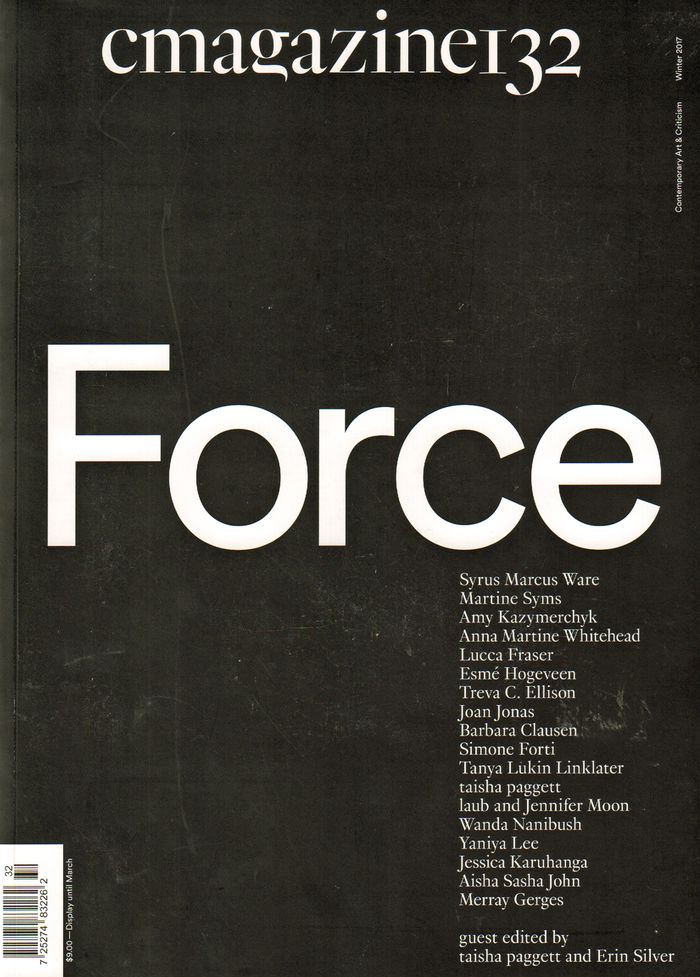
c magazine 132 : force
c magazine 132 : force
Actions:
Prix:
$9.00
(disponible sur commande)
Résumé:
Dernier numéro disponible en librairie. Latest issue available in the bookstore.
$9.00
(disponible sur commande)
Résumé:
Dernier numéro disponible en librairie. Latest issue available in the bookstore.
Titre:
c magazine 132 : force
Actions:
Prix:
$9.00
(disponible sur commande)
Résumé:
Dernier numéro disponible en librairie. Latest issue available in the bookstore.
c magazine 132 : force
Actions:
Prix:
$9.00
(disponible sur commande)
Résumé:
Dernier numéro disponible en librairie. Latest issue available in the bookstore.
Classification:
livres
livres
Publication:
janvier 2017
janvier 2017
Sujet:
Revues
Revues
Classification:
livres
livres
Actions:
Prix:
$21.48
(disponible sur commande)
Résumé:
This issue of Harvard Design Magazine investigates and unpacks the contents, containers, and systems of storage that organize our world. Storage is the aggregation and containment of the material and immaterial stuff of culture; but also the safeguarding—or hoarding—of energy and tools for some imagined future purpose. How does all this stuff mask or overcompensate for(...)
$21.48
(disponible sur commande)
Résumé:
This issue of Harvard Design Magazine investigates and unpacks the contents, containers, and systems of storage that organize our world. Storage is the aggregation and containment of the material and immaterial stuff of culture; but also the safeguarding—or hoarding—of energy and tools for some imagined future purpose. How does all this stuff mask or overcompensate for(...)
Titre:
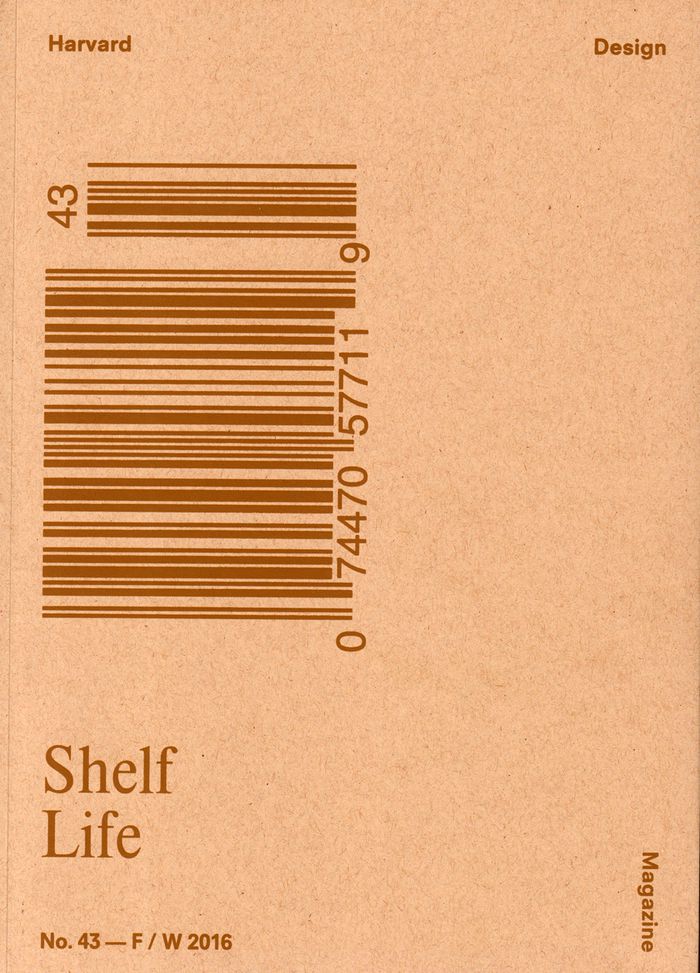
Harvard Design magazine 43: shelf life
Actions:
Prix:
$21.48
(disponible sur commande)
Résumé:
This issue of Harvard Design Magazine investigates and unpacks the contents, containers, and systems of storage that organize our world. Storage is the aggregation and containment of the material and immaterial stuff of culture; but also the safeguarding—or hoarding—of energy and tools for some imagined future purpose. How does all this stuff mask or overcompensate for economic and ecological bankruptcy? Is storage about greed or need? Storage, perhaps, is everything we can live without but insist on living with. "Shelf Life" explores what’s inside the box (shed, tank, urn, vault, crypt, crate, case, pot, bag, vat, morgue, safe, bin, archive, warehouse, cabinet, cellar, cemetery, depository, locker, freezer, landfill, library). Even as we attempt to reduce and recycle, the stuff that we dispose of also needs to be stored. Where do we put it? Our planet is now a saturated receptacle. This warehouse is full, and we’re all inside it.
Harvard Design magazine 43: shelf life
Actions:
Prix:
$21.48
(disponible sur commande)
Résumé:
This issue of Harvard Design Magazine investigates and unpacks the contents, containers, and systems of storage that organize our world. Storage is the aggregation and containment of the material and immaterial stuff of culture; but also the safeguarding—or hoarding—of energy and tools for some imagined future purpose. How does all this stuff mask or overcompensate for economic and ecological bankruptcy? Is storage about greed or need? Storage, perhaps, is everything we can live without but insist on living with. "Shelf Life" explores what’s inside the box (shed, tank, urn, vault, crypt, crate, case, pot, bag, vat, morgue, safe, bin, archive, warehouse, cabinet, cellar, cemetery, depository, locker, freezer, landfill, library). Even as we attempt to reduce and recycle, the stuff that we dispose of also needs to be stored. Where do we put it? Our planet is now a saturated receptacle. This warehouse is full, and we’re all inside it.
Classification:
livres
livres
Publication:
janvier 2017
janvier 2017
Sujet:
Revues
Revues
Classification:
livres
livres
Titre:
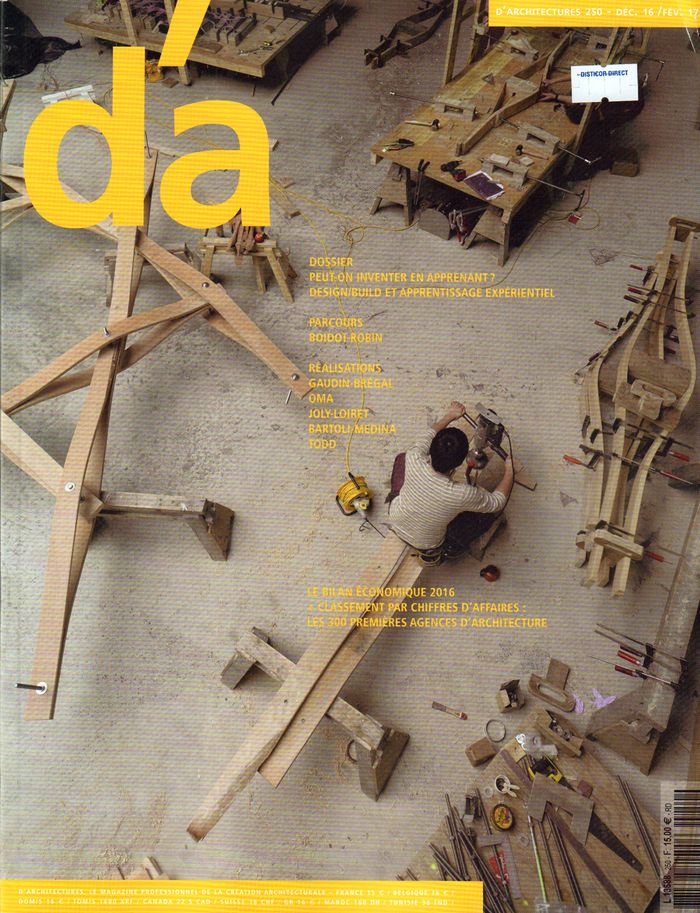
D'a (D'architectures) 250
D'a (D'architectures) 250
Actions:
Prix:
$22.00
(disponible sur commande)
Résumé:
Les historiens ont souvent dénoncé l’anti-intellectualisme du milieu de l’architecture française. Les architectes sont-ils pour autant des professionnels préparés à affronter la réalité de la commande et du chantier et formés aux savoir-faire constructifs ? Non, car il y a toujours eu en France une méfiance envers un enseignement trop professionnalisant, comme si la(...)
$22.00
(disponible sur commande)
Résumé:
Les historiens ont souvent dénoncé l’anti-intellectualisme du milieu de l’architecture française. Les architectes sont-ils pour autant des professionnels préparés à affronter la réalité de la commande et du chantier et formés aux savoir-faire constructifs ? Non, car il y a toujours eu en France une méfiance envers un enseignement trop professionnalisant, comme si la(...)
Titre:
D'a (D'architectures) 250
Actions:
Prix:
$22.00
(disponible sur commande)
Résumé:
Les historiens ont souvent dénoncé l’anti-intellectualisme du milieu de l’architecture française. Les architectes sont-ils pour autant des professionnels préparés à affronter la réalité de la commande et du chantier et formés aux savoir-faire constructifs ? Non, car il y a toujours eu en France une méfiance envers un enseignement trop professionnalisant, comme si la trivialité du BTP bridait la créativité et empêchait de réfléchir. Ni théorie ni pratique ; mais que reste-t-il aux architectes ? Le cliché de l’artiste socialement irresponsable, capricieux et dispendieux serait-il fondé ? Une voie pourtant échappe à cette fausse opposition et rencontre un succès grandissant auprès des nouvelles générations : le design/build – ou apprentissage expérientiel – se propose justement de concilier l’acte de concevoir et celui de construire. L’idée n’est pas tant de soumettre immédiatement celui qui apprend à la dure réalité du monde du bâtiment que d’infléchir puis de nourrir sa réflexion dans l’expérience pluridisciplinaire d’un projet concret. Né dans l’effervescence de la contre-culture américaine des années 1960, ce mouvement essaime aujourd’hui partout dans le monde. De Yale dans le Connecticut à Talca au Chili ou des Grands Ateliers à l’Isle-d’Abeau à Hooke Park dans le Dorset, naissent des architectures qui ne se réduisent pas à des maquettes d’étudiant agrandies. Souvent associées à des laboratoires de recherche, ces expériences sont un véritable terreau d’innovation. Élargissant le champ d’action de l’architecte, elle lui offre aussi l’opportunité d’une relégitimation sociale.
D'a (D'architectures) 250
Actions:
Prix:
$22.00
(disponible sur commande)
Résumé:
Les historiens ont souvent dénoncé l’anti-intellectualisme du milieu de l’architecture française. Les architectes sont-ils pour autant des professionnels préparés à affronter la réalité de la commande et du chantier et formés aux savoir-faire constructifs ? Non, car il y a toujours eu en France une méfiance envers un enseignement trop professionnalisant, comme si la trivialité du BTP bridait la créativité et empêchait de réfléchir. Ni théorie ni pratique ; mais que reste-t-il aux architectes ? Le cliché de l’artiste socialement irresponsable, capricieux et dispendieux serait-il fondé ? Une voie pourtant échappe à cette fausse opposition et rencontre un succès grandissant auprès des nouvelles générations : le design/build – ou apprentissage expérientiel – se propose justement de concilier l’acte de concevoir et celui de construire. L’idée n’est pas tant de soumettre immédiatement celui qui apprend à la dure réalité du monde du bâtiment que d’infléchir puis de nourrir sa réflexion dans l’expérience pluridisciplinaire d’un projet concret. Né dans l’effervescence de la contre-culture américaine des années 1960, ce mouvement essaime aujourd’hui partout dans le monde. De Yale dans le Connecticut à Talca au Chili ou des Grands Ateliers à l’Isle-d’Abeau à Hooke Park dans le Dorset, naissent des architectures qui ne se réduisent pas à des maquettes d’étudiant agrandies. Souvent associées à des laboratoires de recherche, ces expériences sont un véritable terreau d’innovation. Élargissant le champ d’action de l’architecte, elle lui offre aussi l’opportunité d’une relégitimation sociale.
Classification:
livres
livres
Publication:
décembre 2016
décembre 2016
Sujet:
Revues
Revues


