


3810 Résultats
Classification:
livres
livres

Actions:
Prix:
$25.95
(disponible sur commande)
Résumé:
We are living in the Anthropocene—an era of dramatic and violent climate change featuring warming oceans, melting icecaps, extreme weather events, habitat loss, species extinction, and more. What will life be like in a climate-changed world? In ''Tomorrow’s parties,'' science fiction authors speculate how we might be able to live and even thrive through the advancing(...)
$25.95
(disponible sur commande)
Résumé:
We are living in the Anthropocene—an era of dramatic and violent climate change featuring warming oceans, melting icecaps, extreme weather events, habitat loss, species extinction, and more. What will life be like in a climate-changed world? In ''Tomorrow’s parties,'' science fiction authors speculate how we might be able to live and even thrive through the advancing(...)
Titre:
Tomorrow's parties: Life in the Anthropocene
Actions:
Prix:
$25.95
(disponible sur commande)
Résumé:
We are living in the Anthropocene—an era of dramatic and violent climate change featuring warming oceans, melting icecaps, extreme weather events, habitat loss, species extinction, and more. What will life be like in a climate-changed world? In ''Tomorrow’s parties,'' science fiction authors speculate how we might be able to live and even thrive through the advancing Anthropocene. In ten original stories by writers from around the world, an interview with celebrated writer Kim Stanley Robinson, and a series of intricate and elegant artworks by Sean Bodley, ''Tomorrow’s parties'' takes rational optimism as a moral imperative, or at least a pragmatic alternative to despair. In these stories—by writers from the United Kingdom, the United States, Nigeria, China, Bangladesh, and Australia—a young man steals from delivery drones; a political community lives on an island made of ocean-borne plastic waste; and a climate change denier tries to unmask ''crisis actors.'' Climate-changed life also has its pleasures and epiphanies, as when a father in Africa works to make his son’s dreams of ''Viking adventure'' a reality, and an IT professional dispatched to a distant village encounters a marvelous predigital fungal network. Contributors include Pascall Prize for Criticism winner James Bradley, Hugo Award winners Greg Egan and Sarah Gailey, Philip K Dick Award winner Meg Elison, and New York Times bestselling author Daryl Gregory.
Tomorrow's parties: Life in the Anthropocene
Actions:
Prix:
$25.95
(disponible sur commande)
Résumé:
We are living in the Anthropocene—an era of dramatic and violent climate change featuring warming oceans, melting icecaps, extreme weather events, habitat loss, species extinction, and more. What will life be like in a climate-changed world? In ''Tomorrow’s parties,'' science fiction authors speculate how we might be able to live and even thrive through the advancing Anthropocene. In ten original stories by writers from around the world, an interview with celebrated writer Kim Stanley Robinson, and a series of intricate and elegant artworks by Sean Bodley, ''Tomorrow’s parties'' takes rational optimism as a moral imperative, or at least a pragmatic alternative to despair. In these stories—by writers from the United Kingdom, the United States, Nigeria, China, Bangladesh, and Australia—a young man steals from delivery drones; a political community lives on an island made of ocean-borne plastic waste; and a climate change denier tries to unmask ''crisis actors.'' Climate-changed life also has its pleasures and epiphanies, as when a father in Africa works to make his son’s dreams of ''Viking adventure'' a reality, and an IT professional dispatched to a distant village encounters a marvelous predigital fungal network. Contributors include Pascall Prize for Criticism winner James Bradley, Hugo Award winners Greg Egan and Sarah Gailey, Philip K Dick Award winner Meg Elison, and New York Times bestselling author Daryl Gregory.
Classification:
livres
livres
Publication:
août 2022
août 2022
Sujet:
Littérature et poésie
Littérature et poésie
Classification:
livres
livres
Prix:
$29.95
(disponible sur commande)
Résumé:
This publication illuminates the dynamic relationship between the visual media, particularly film and theater, and the planning and development of cities in China and Taiwan, from the emergence of the People’s Republic in 1949 to the staging of the Beijing Olympics in 2008. Yomi Braester argues that the transformation of Chinese cities in recent decades is a result not(...)
$29.95
(disponible sur commande)
Résumé:
This publication illuminates the dynamic relationship between the visual media, particularly film and theater, and the planning and development of cities in China and Taiwan, from the emergence of the People’s Republic in 1949 to the staging of the Beijing Olympics in 2008. Yomi Braester argues that the transformation of Chinese cities in recent decades is a result not(...)
Publication:
avril 2010
avril 2010
Titre:
Painting the city red : Chinese cinema and the urban contract
Actions:
Prix:
$29.95
(disponible sur commande)
Résumé:
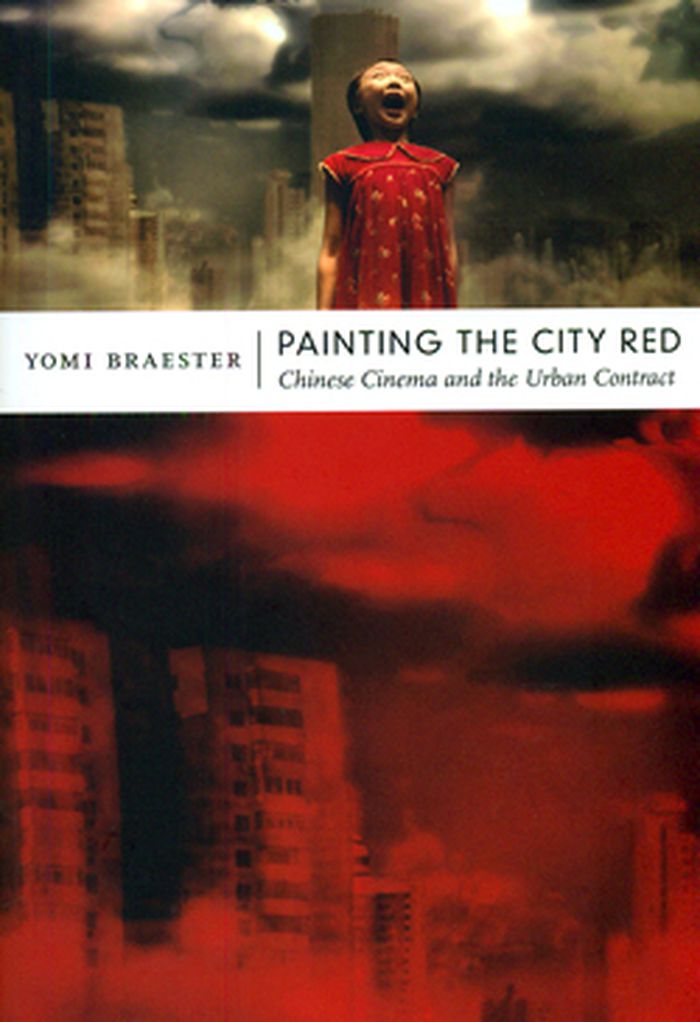
This publication illuminates the dynamic relationship between the visual media, particularly film and theater, and the planning and development of cities in China and Taiwan, from the emergence of the People’s Republic in 1949 to the staging of the Beijing Olympics in 2008. Yomi Braester argues that the transformation of Chinese cities in recent decades is a result not only of China’s abandonment of Maoist economic planning in favor of capitalist globalization but also of a shift in visual practices. Rather than simply reflect urban culture, movies and stage dramas have facilitated the development of new perceptions of space and time, representing the future city variously as an ideal socialist city, a metropolis integrated into the global economy, and a site for preserving cultural heritage. Drawing on extensive archival research, interviews with leading filmmakers and urban planners, and close readings of scripts and images, Braester describes how films and stage plays have promoted and opposed official urban plans and policies as they have addressed issues such as demolition-and-relocation plans, the preservation of vernacular architecture, and the global real estate market. He shows how the cinematic rewriting of historical narratives has accompanied the spatial reorganization of specific urban sites, including Nanjing Road in Shanghai; veterans’ villages in Taipei; and Tiananmen Square, centuries-old courtyards, and postmodern architectural landmarks in Beijing.
Painting the city red : Chinese cinema and the urban contract
Actions:
Prix:
$29.95
(disponible sur commande)
Résumé:
This publication illuminates the dynamic relationship between the visual media, particularly film and theater, and the planning and development of cities in China and Taiwan, from the emergence of the People’s Republic in 1949 to the staging of the Beijing Olympics in 2008. Yomi Braester argues that the transformation of Chinese cities in recent decades is a result not only of China’s abandonment of Maoist economic planning in favor of capitalist globalization but also of a shift in visual practices. Rather than simply reflect urban culture, movies and stage dramas have facilitated the development of new perceptions of space and time, representing the future city variously as an ideal socialist city, a metropolis integrated into the global economy, and a site for preserving cultural heritage. Drawing on extensive archival research, interviews with leading filmmakers and urban planners, and close readings of scripts and images, Braester describes how films and stage plays have promoted and opposed official urban plans and policies as they have addressed issues such as demolition-and-relocation plans, the preservation of vernacular architecture, and the global real estate market. He shows how the cinematic rewriting of historical narratives has accompanied the spatial reorganization of specific urban sites, including Nanjing Road in Shanghai; veterans’ villages in Taipei; and Tiananmen Square, centuries-old courtyards, and postmodern architectural landmarks in Beijing.
Classification:
livres
livres
Publication:
avril 2010
avril 2010
Classification:
livres
livres
Actions:
Prix:
$67.50
(disponible sur commande)
Résumé:
"Wang Shu Amateur Architecture Studio" is the first major book on the recent work of architect Wang Shu, Pritzker Price winner in 2012, and his wife Lu Wenyu. Together they have run Amateur Architecture Studio, based in Hangzhou, China, for nearly 20 years. At a time when China’s explosive urbanization is making inroads into rural areas and leaving the marks of cheap(...)
$67.50
(disponible sur commande)
Résumé:
"Wang Shu Amateur Architecture Studio" is the first major book on the recent work of architect Wang Shu, Pritzker Price winner in 2012, and his wife Lu Wenyu. Together they have run Amateur Architecture Studio, based in Hangzhou, China, for nearly 20 years. At a time when China’s explosive urbanization is making inroads into rural areas and leaving the marks of cheap(...)
Titre:
Wang Shu and Amateur Architecture Studio
Actions:
Prix:
$67.50
(disponible sur commande)
Résumé:
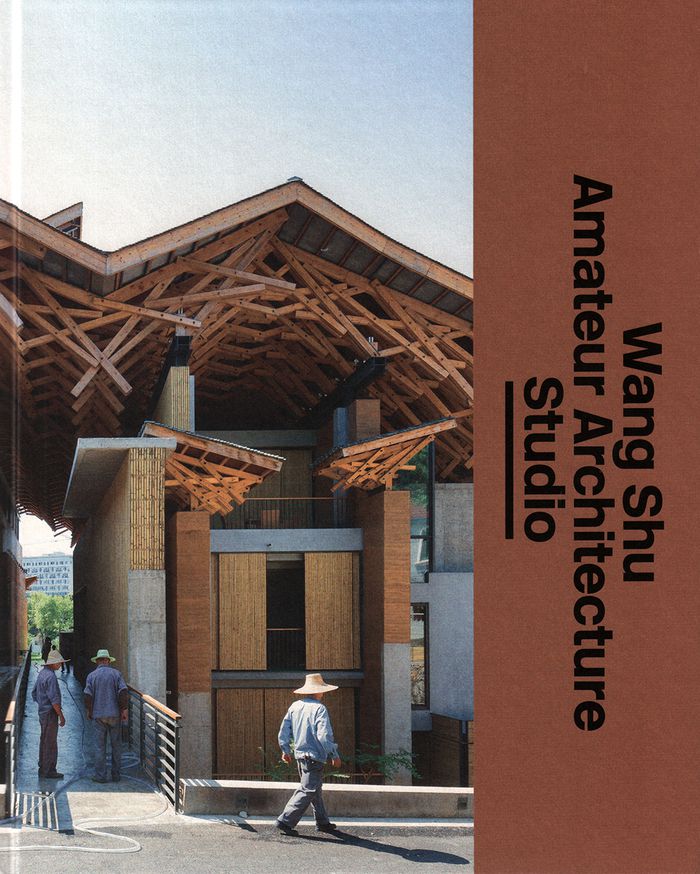
"Wang Shu Amateur Architecture Studio" is the first major book on the recent work of architect Wang Shu, Pritzker Price winner in 2012, and his wife Lu Wenyu. Together they have run Amateur Architecture Studio, based in Hangzhou, China, for nearly 20 years. At a time when China’s explosive urbanization is making inroads into rural areas and leaving the marks of cheap concrete construction everywhere, Amateur Architecture Studio is keen to work against this tendency by reusing materials from the buildings that Chinese authorities are systematically tearing down. Amateur Architecture Studio’s working ways successfully represent socially conscious and sustainable new architecture. Wang Shu’s architecture reveals a thoughtful attitude toward both design and implementation, as well as the ability to react flexibly to the surroundings and history of a particular site. At heart, it comes down to preserving Chinese building customs and local awareness of material in a nation that is fast losing its building culture. The studio’s projects inhabit a fascinating field between allusions to traditional Chinese culture and large-scale modern architecture. This book is published on the occasion of the Louisiana Museum of Modern Art exhibition in 2017 of Wang Shu and Amateur Architecture Studio’s work. Featuring a wealth of images by architecture photographer Iwan Baan this is a detailed and reflective guide to Amateur Architecture Studio’s projects, philosophy and methodology
Wang Shu and Amateur Architecture Studio
Actions:
Prix:
$67.50
(disponible sur commande)
Résumé:
"Wang Shu Amateur Architecture Studio" is the first major book on the recent work of architect Wang Shu, Pritzker Price winner in 2012, and his wife Lu Wenyu. Together they have run Amateur Architecture Studio, based in Hangzhou, China, for nearly 20 years. At a time when China’s explosive urbanization is making inroads into rural areas and leaving the marks of cheap concrete construction everywhere, Amateur Architecture Studio is keen to work against this tendency by reusing materials from the buildings that Chinese authorities are systematically tearing down. Amateur Architecture Studio’s working ways successfully represent socially conscious and sustainable new architecture. Wang Shu’s architecture reveals a thoughtful attitude toward both design and implementation, as well as the ability to react flexibly to the surroundings and history of a particular site. At heart, it comes down to preserving Chinese building customs and local awareness of material in a nation that is fast losing its building culture. The studio’s projects inhabit a fascinating field between allusions to traditional Chinese culture and large-scale modern architecture. This book is published on the occasion of the Louisiana Museum of Modern Art exhibition in 2017 of Wang Shu and Amateur Architecture Studio’s work. Featuring a wealth of images by architecture photographer Iwan Baan this is a detailed and reflective guide to Amateur Architecture Studio’s projects, philosophy and methodology
Classification:
livres
livres
Publication:
février 2017
février 2017
Sujet:
Architecture, monographies
Architecture, monographies
Classification:
livres
livres
Titre:
Mike Mills : fireworks
Mike Mills : fireworks
Actions:
Prix:
$17.99
(disponible sur commande)
Résumé:
"Some things that may or may not relate to these drawings: A professional suggested I take anti-depressants. I declined. About the same time I started drawing fireworks. I didn’t know what they meant or why I was drawing them. I was confused and embarrassed by this lack of meaning, but they kept coming. I could draw them no matter how I felt. I read that fireworks were(...)
$17.99
(disponible sur commande)
Résumé:
"Some things that may or may not relate to these drawings: A professional suggested I take anti-depressants. I declined. About the same time I started drawing fireworks. I didn’t know what they meant or why I was drawing them. I was confused and embarrassed by this lack of meaning, but they kept coming. I could draw them no matter how I felt. I read that fireworks were(...)
Titre:
Mike Mills : fireworks
Actions:
Prix:
$17.99
(disponible sur commande)
Résumé:
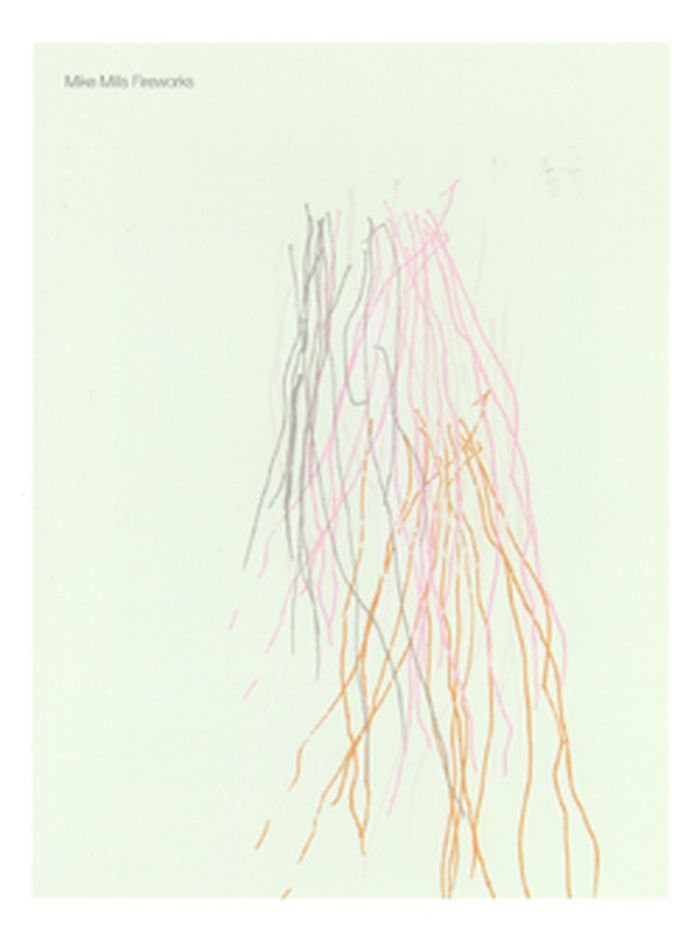
"Some things that may or may not relate to these drawings: A professional suggested I take anti-depressants. I declined. About the same time I started drawing fireworks. I didn’t know what they meant or why I was drawing them. I was confused and embarrassed by this lack of meaning, but they kept coming. I could draw them no matter how I felt. I read that fireworks were first used in China in the 12th century to scare away negative spirits. I envied a world that not only recognized spirits, but scared the negative ones away with small man made explosions. About the same time, I read in a magazine that antidepressants have a hard time performing better than the placebo pills they are tested against. Scientist cannot explain it, but almost as many people who take the fake pills say they feel relief from their depression. The blood flow in their brains actually changes in the same positive way that it does for the people who take the real pills. I felt a connection between the Chinese fireworks and the placebo effect, and some relief in all the things we don’t understand. At some point the fireworks grew more and more abstract, and messy, and complicated, and I became if not content then at least willing to make things that didn’t have any apparent meaning." Mike Mills
Mike Mills : fireworks
Actions:
Prix:
$17.99
(disponible sur commande)
Résumé:
"Some things that may or may not relate to these drawings: A professional suggested I take anti-depressants. I declined. About the same time I started drawing fireworks. I didn’t know what they meant or why I was drawing them. I was confused and embarrassed by this lack of meaning, but they kept coming. I could draw them no matter how I felt. I read that fireworks were first used in China in the 12th century to scare away negative spirits. I envied a world that not only recognized spirits, but scared the negative ones away with small man made explosions. About the same time, I read in a magazine that antidepressants have a hard time performing better than the placebo pills they are tested against. Scientist cannot explain it, but almost as many people who take the fake pills say they feel relief from their depression. The blood flow in their brains actually changes in the same positive way that it does for the people who take the real pills. I felt a connection between the Chinese fireworks and the placebo effect, and some relief in all the things we don’t understand. At some point the fireworks grew more and more abstract, and messy, and complicated, and I became if not content then at least willing to make things that didn’t have any apparent meaning." Mike Mills
Classification:
livres
livres
Publication:
janvier 1900, Zürich
janvier 1900, Zürich
Classification:
livres
livres
Prix:
$52.95
(disponible sur commande)
Résumé:
In recent years the idea of sacred space has not been considered a relevant topic in contemporary architecture, a neglect that is even more pronounced in terms of debates about the city. The texts and projects collected together in this book aim to redress this oversight, and re-open a contemporary understanding and discussion of the architecture of sacred space. The book(...)
$52.95
(disponible sur commande)
Résumé:
In recent years the idea of sacred space has not been considered a relevant topic in contemporary architecture, a neglect that is even more pronounced in terms of debates about the city. The texts and projects collected together in this book aim to redress this oversight, and re-open a contemporary understanding and discussion of the architecture of sacred space. The book(...)
Sujet:
Architecture contemporaine
Architecture contemporaine
Publication:
novembre 2016
novembre 2016
Titre:
AA Agendas: Rituals and walls. The architecture of sacred space
Actions:
Prix:
$52.95
(disponible sur commande)
Résumé:
In recent years the idea of sacred space has not been considered a relevant topic in contemporary architecture, a neglect that is even more pronounced in terms of debates about the city. The texts and projects collected together in this book aim to redress this oversight, and re-open a contemporary understanding and discussion of the architecture of sacred space. The book itself is the result of a year-long investigation on the nature of sacred space and its manifestation developed in the AA’s Diploma Unit 14. It consists of design proposals that range from a multi-faith school in Strasbourg to the reconstruction of a festival hall in the city of Xian, China; from a Jesuit monastery in Detroit to a women’s Islamic centre in Paris. Each proposal is introduced by critical texts that analyse the political and ideological meaning of religious architecture. The book is complemented by essays by Pier Vittorio Aureli, Maria Sheherazade Giudici and Hamed Khosravi that focus on the relationship between forms of worship and architecture, and argue that within sacred space form must follow function – in other words, architectural space must adhere to the rituals through which the sacred is enacted, and that the meaning of sacred space goes far beyond the stereotypes of contemplation and spirituality, and instead aligns with the political and social ethos of the city.
AA Agendas: Rituals and walls. The architecture of sacred space
Actions:
Prix:
$52.95
(disponible sur commande)
Résumé:
In recent years the idea of sacred space has not been considered a relevant topic in contemporary architecture, a neglect that is even more pronounced in terms of debates about the city. The texts and projects collected together in this book aim to redress this oversight, and re-open a contemporary understanding and discussion of the architecture of sacred space. The book itself is the result of a year-long investigation on the nature of sacred space and its manifestation developed in the AA’s Diploma Unit 14. It consists of design proposals that range from a multi-faith school in Strasbourg to the reconstruction of a festival hall in the city of Xian, China; from a Jesuit monastery in Detroit to a women’s Islamic centre in Paris. Each proposal is introduced by critical texts that analyse the political and ideological meaning of religious architecture. The book is complemented by essays by Pier Vittorio Aureli, Maria Sheherazade Giudici and Hamed Khosravi that focus on the relationship between forms of worship and architecture, and argue that within sacred space form must follow function – in other words, architectural space must adhere to the rituals through which the sacred is enacted, and that the meaning of sacred space goes far beyond the stereotypes of contemplation and spirituality, and instead aligns with the political and social ethos of the city.
Classification:
livres
livres
Publication:
novembre 2016
novembre 2016
Sujet:
Architecture contemporaine
Architecture contemporaine
Classification:
livres
livres
Titre:
Conversations
Conversations
Actions:
Prix:
$25.95
(disponible sur commande)
Résumé:
Ai Weiwei is one of the world’s most acclaimed artists and dissidents. This book presents him in conversation with theorists, critics, journalists, and curators about key moments in his life and career. These wide-ranging conversations flow between topics such as his relationship with China, the meaning of citizenship, moving his studio to Lesbos to be on the front lines(...)
$25.95
(disponible sur commande)
Résumé:
Ai Weiwei is one of the world’s most acclaimed artists and dissidents. This book presents him in conversation with theorists, critics, journalists, and curators about key moments in his life and career. These wide-ranging conversations flow between topics such as his relationship with China, the meaning of citizenship, moving his studio to Lesbos to be on the front lines(...)
Titre:
Conversations
Actions:
Prix:
$25.95
(disponible sur commande)
Résumé:
Ai Weiwei is one of the world’s most acclaimed artists and dissidents. This book presents him in conversation with theorists, critics, journalists, and curators about key moments in his life and career. These wide-ranging conversations flow between topics such as his relationship with China, the meaning of citizenship, moving his studio to Lesbos to be on the front lines of the migrant crisis, how to make art, and technology as a tool for freedom or oppression. Ai opens up about his relationship to his father as a poet and as a dissident forced into hard labor in a small village after the Cultural Revolution. He shares his thoughts on formal education and the importance of finding your own way as an artist. New York- both the city and its people- were formative for Ai Weiwei, and he speaks eloquently about how these experiences continue to influence him. Ai conjures up scenes from his long relationship with the city: dropping out of Parsons School of Design because he couldn’t afford tuition, making portraits in Washington Square Park as an undocumented immigrant in the 1980s, taking photos for the New York Times at demonstrations in Tompkins Square Park, and returning to set up the ''Good Fences Make Good Neighbors'' project across the city. These candid, spontaneous conversations reveal why Ai Weiwei has become such a major force in contemporary art and political life.
Conversations
Actions:
Prix:
$25.95
(disponible sur commande)
Résumé:
Ai Weiwei is one of the world’s most acclaimed artists and dissidents. This book presents him in conversation with theorists, critics, journalists, and curators about key moments in his life and career. These wide-ranging conversations flow between topics such as his relationship with China, the meaning of citizenship, moving his studio to Lesbos to be on the front lines of the migrant crisis, how to make art, and technology as a tool for freedom or oppression. Ai opens up about his relationship to his father as a poet and as a dissident forced into hard labor in a small village after the Cultural Revolution. He shares his thoughts on formal education and the importance of finding your own way as an artist. New York- both the city and its people- were formative for Ai Weiwei, and he speaks eloquently about how these experiences continue to influence him. Ai conjures up scenes from his long relationship with the city: dropping out of Parsons School of Design because he couldn’t afford tuition, making portraits in Washington Square Park as an undocumented immigrant in the 1980s, taking photos for the New York Times at demonstrations in Tompkins Square Park, and returning to set up the ''Good Fences Make Good Neighbors'' project across the city. These candid, spontaneous conversations reveal why Ai Weiwei has become such a major force in contemporary art and political life.
Classification:
livres
livres
Publication:
février 2021
février 2021
Classification:
livres
livres
Actions:
Prix:
$60.00
(disponible en magasin)
Résumé:
The concepts of "Indonesian architecture" and "architecture in Indonesia" are both quite difficult to pin down. For the architecture of this small country incorporates influences from many important cultures--from India, China and the Middle East to countries in the West--and is therefore extremely multifaceted. In fact, one might reasonably ask whether a "real"(...)
$60.00
(disponible en magasin)
Résumé:
The concepts of "Indonesian architecture" and "architecture in Indonesia" are both quite difficult to pin down. For the architecture of this small country incorporates influences from many important cultures--from India, China and the Middle East to countries in the West--and is therefore extremely multifaceted. In fact, one might reasonably ask whether a "real"(...)
Publication:
juillet 2007, Rotterdam
juillet 2007, Rotterdam
Titre:
The past in the present : Architecture in Indonesia
Actions:
Prix:
$60.00
(disponible en magasin)
Résumé:
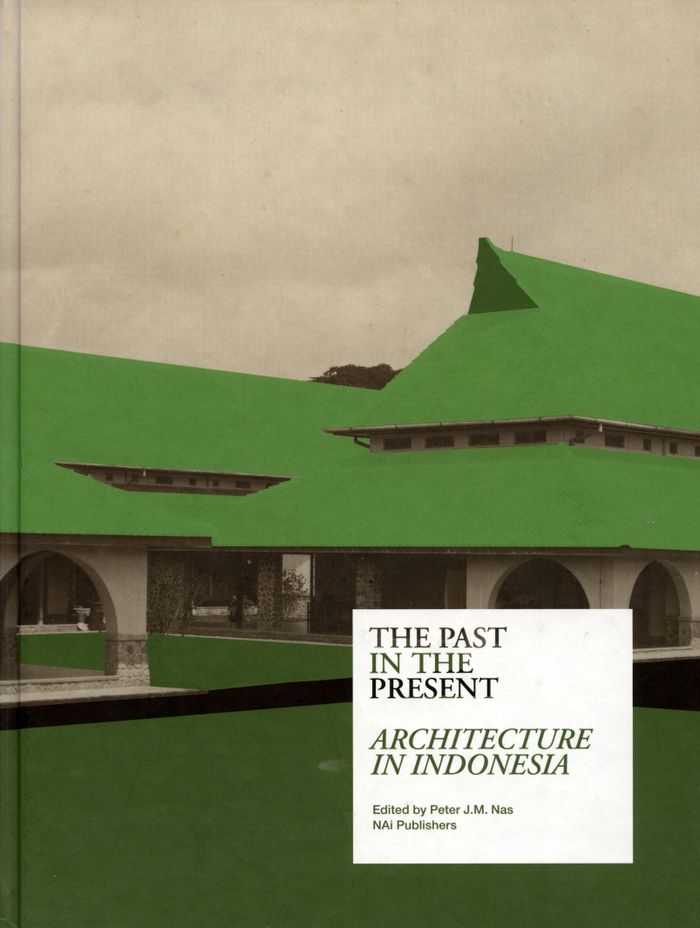
The concepts of "Indonesian architecture" and "architecture in Indonesia" are both quite difficult to pin down. For the architecture of this small country incorporates influences from many important cultures--from India, China and the Middle East to countries in the West--and is therefore extremely multifaceted. In fact, one might reasonably ask whether a "real" Indonesian architecture actually exists, even with reference to the country's vernacular work, which is highly diverse from an ethnic perspective in and of itself. The quest for an authentic Indonesian architecture has in fact been the subject of debate among architects there for many years, especially in regards to the work has been exported to other countries--in particular, its former colonizer, the Netherlands. (In fact, there is even a name for the hybrid style that originated during that era: Indische).This very nicely designed collection of illustrated essays, which features a special section of pictures and drawings of colonial architecture, provides a real sense of the diversity of building in modern-day Indonesia--while at the same time recognizing that such a perspective cannot be productive without taking history into account. With chapters on Modern Indonesian architecture, vernacular traditions, mosques, the effect of the Chinese diaspora, hybrid historic/contemporary Balinese architecture, the colonial period, Indische architecture and Art Deco and more, this publication provides an amazing overview and a long-overdue investigation of Indische work. Preface by Aaron Betsky.
The past in the present : Architecture in Indonesia
Actions:
Prix:
$60.00
(disponible en magasin)
Résumé:
The concepts of "Indonesian architecture" and "architecture in Indonesia" are both quite difficult to pin down. For the architecture of this small country incorporates influences from many important cultures--from India, China and the Middle East to countries in the West--and is therefore extremely multifaceted. In fact, one might reasonably ask whether a "real" Indonesian architecture actually exists, even with reference to the country's vernacular work, which is highly diverse from an ethnic perspective in and of itself. The quest for an authentic Indonesian architecture has in fact been the subject of debate among architects there for many years, especially in regards to the work has been exported to other countries--in particular, its former colonizer, the Netherlands. (In fact, there is even a name for the hybrid style that originated during that era: Indische).This very nicely designed collection of illustrated essays, which features a special section of pictures and drawings of colonial architecture, provides a real sense of the diversity of building in modern-day Indonesia--while at the same time recognizing that such a perspective cannot be productive without taking history into account. With chapters on Modern Indonesian architecture, vernacular traditions, mosques, the effect of the Chinese diaspora, hybrid historic/contemporary Balinese architecture, the colonial period, Indische architecture and Art Deco and more, this publication provides an amazing overview and a long-overdue investigation of Indische work. Preface by Aaron Betsky.
Classification:
livres
livres
Publication:
juillet 2007, Rotterdam
juillet 2007, Rotterdam
Classification:
livres
livres
Actions:
Prix:
$24.50
(disponible sur commande)
Résumé:
The successful conversion and expansion of abandoned buildings and relics from the industrial past have been the mission of Atelier Deshaus from Shanghai since 2001. The question of how formerly closed industrial complexes can be transformed into new, attractive places for the public is the core theme of this exhibition. It focuses on the transformation along the Huangpu(...)
$24.50
(disponible sur commande)
Résumé:
The successful conversion and expansion of abandoned buildings and relics from the industrial past have been the mission of Atelier Deshaus from Shanghai since 2001. The question of how formerly closed industrial complexes can be transformed into new, attractive places for the public is the core theme of this exhibition. It focuses on the transformation along the Huangpu(...)
Titre:
Atelier Deshaus, Shanghai: Common Landscape, Re-Cultivating Industrial Sites
Actions:
Prix:
$24.50
(disponible sur commande)
Résumé:
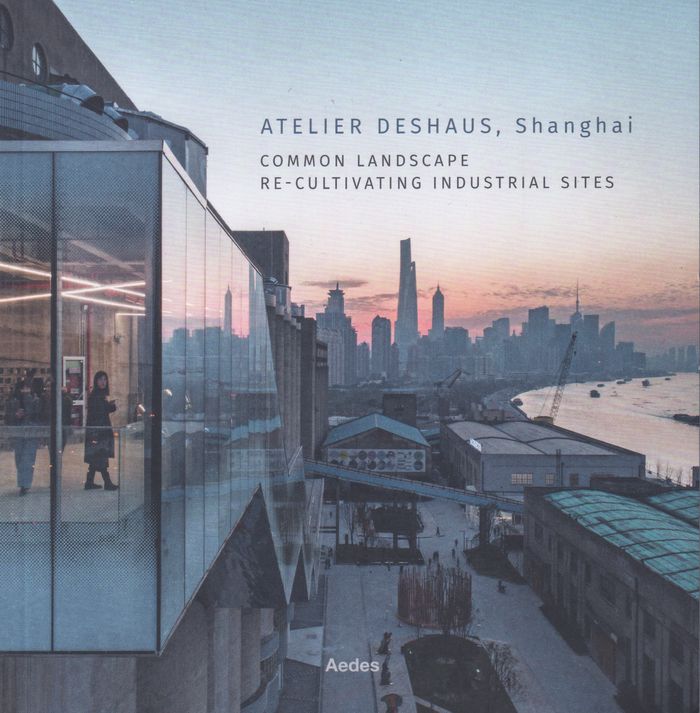
The successful conversion and expansion of abandoned buildings and relics from the industrial past have been the mission of Atelier Deshaus from Shanghai since 2001. The question of how formerly closed industrial complexes can be transformed into new, attractive places for the public is the core theme of this exhibition. It focuses on the transformation along the Huangpu River in Shanghai, whose seamless accessibility as a public space was heralded by Expo 2010 Better City - Better Life. Aedes is showing seven projects that have used the potential of former industrial sites to bring new functions to the riverbank and to which the residents attach both emotional and cultural significance. Abandoned production sites and relics of inner-city heavy industry, warehouses, and port facilities can be a huge burden on the sustainable development of a city, especially if they are seen as waste to be disposed of. With its projects, Atelier Deshaus shows how the grey energy used in them can be preserved, at least in parts, through conversion and reconstruction, and how new functions can be assigned. In the face of climate change and the generally far too energy-hungry construction industry, it is also an obvious necessity in China to take an unbiased look at existing buildings. Nevertheless, demolition is still often the priority. Atelier Deshaus counters this with a strategy of minimal intervention that sensitively heralds the transformation of the existing buildings without destroying the historical reminders.
Atelier Deshaus, Shanghai: Common Landscape, Re-Cultivating Industrial Sites
Actions:
Prix:
$24.50
(disponible sur commande)
Résumé:
The successful conversion and expansion of abandoned buildings and relics from the industrial past have been the mission of Atelier Deshaus from Shanghai since 2001. The question of how formerly closed industrial complexes can be transformed into new, attractive places for the public is the core theme of this exhibition. It focuses on the transformation along the Huangpu River in Shanghai, whose seamless accessibility as a public space was heralded by Expo 2010 Better City - Better Life. Aedes is showing seven projects that have used the potential of former industrial sites to bring new functions to the riverbank and to which the residents attach both emotional and cultural significance. Abandoned production sites and relics of inner-city heavy industry, warehouses, and port facilities can be a huge burden on the sustainable development of a city, especially if they are seen as waste to be disposed of. With its projects, Atelier Deshaus shows how the grey energy used in them can be preserved, at least in parts, through conversion and reconstruction, and how new functions can be assigned. In the face of climate change and the generally far too energy-hungry construction industry, it is also an obvious necessity in China to take an unbiased look at existing buildings. Nevertheless, demolition is still often the priority. Atelier Deshaus counters this with a strategy of minimal intervention that sensitively heralds the transformation of the existing buildings without destroying the historical reminders.
Classification:
livres
livres
Publication:
avril 2023
avril 2023
Sujet:
Architecture, monographies
Architecture, monographies
Classification:
livres
livres
Actions:
Prix:
$15.95
(disponible en magasin)
Résumé:
This volume contains work, both built and unbuilt, both large-scale and small, designed in the 1990s by the firm of Philip Johnson/Alan Ritchie Architects. Alan Ritchie has worked with Johnson since 1969; the firm was established in 1994. The projects shown may be divided into two groups. Johnson’s interest in the past decade in sculptural form - or the way in which(...)
$15.95
(disponible en magasin)
Résumé:
This volume contains work, both built and unbuilt, both large-scale and small, designed in the 1990s by the firm of Philip Johnson/Alan Ritchie Architects. Alan Ritchie has worked with Johnson since 1969; the firm was established in 1994. The projects shown may be divided into two groups. Johnson’s interest in the past decade in sculptural form - or the way in which(...)
Sujet:
Architecture, monographies
Architecture, monographies
Publication:
janvier 2003, New York
janvier 2003, New York
Titre:
Philip Johnson / Alan Ritchie architects
Actions:
Prix:
$15.95
(disponible en magasin)
Résumé:
This volume contains work, both built and unbuilt, both large-scale and small, designed in the 1990s by the firm of Philip Johnson/Alan Ritchie Architects. Alan Ritchie has worked with Johnson since 1969; the firm was established in 1994. The projects shown may be divided into two groups. Johnson’s interest in the past decade in sculptural form - or the way in which sculptural form translates into architectural presence - has led to designs that involve both new kinds of shapes and new ways of using classic architectural form to make entirely new works of architecture. Such sculptural works, for the most part small in scale, include Da Monsta, the new visitors pavilion at Johnson’s famed Glass House in New Canaan, Connecticut, and a spectacular folly consisting of four pyramids made of chain-link fencing at an estate in New York State. Simultaneously, the firm has continued its ongoing work with larger projects, such as a 27-story apartment tower for Tribeca, in lower Manhattan; the Cathedral of Hope in Dallas; an addition to the Amon Carter Museum, originally designed by Johnson in 1961, in Forth Worth, Texas; and a proposal for the architecture school at Texas A University in College Station. Also included are a pair of proposals for La Défense in Paris; three large houses; a new china design for the Four Seasons restaurant in New York; and a new public clock, sponsored by Movado, for Lincoln Center. Introduction by Paul Goldberger.
Philip Johnson / Alan Ritchie architects
Actions:
Prix:
$15.95
(disponible en magasin)
Résumé:
This volume contains work, both built and unbuilt, both large-scale and small, designed in the 1990s by the firm of Philip Johnson/Alan Ritchie Architects. Alan Ritchie has worked with Johnson since 1969; the firm was established in 1994. The projects shown may be divided into two groups. Johnson’s interest in the past decade in sculptural form - or the way in which sculptural form translates into architectural presence - has led to designs that involve both new kinds of shapes and new ways of using classic architectural form to make entirely new works of architecture. Such sculptural works, for the most part small in scale, include Da Monsta, the new visitors pavilion at Johnson’s famed Glass House in New Canaan, Connecticut, and a spectacular folly consisting of four pyramids made of chain-link fencing at an estate in New York State. Simultaneously, the firm has continued its ongoing work with larger projects, such as a 27-story apartment tower for Tribeca, in lower Manhattan; the Cathedral of Hope in Dallas; an addition to the Amon Carter Museum, originally designed by Johnson in 1961, in Forth Worth, Texas; and a proposal for the architecture school at Texas A University in College Station. Also included are a pair of proposals for La Défense in Paris; three large houses; a new china design for the Four Seasons restaurant in New York; and a new public clock, sponsored by Movado, for Lincoln Center. Introduction by Paul Goldberger.
Classification:
livres
livres
Publication:
janvier 2003, New York
janvier 2003, New York
Sujet:
Architecture, monographies
Architecture, monographies
Classification:
livres
livres
Titre:
Debt: The first 5,000 years
Debt: The first 5,000 years
Actions:
Prix:
$29.99
(disponible sur commande)
Résumé:
Before there was money, there was debt. Every economics textbook says the same thing: Money was invented to replace onerous and complicated barter systems—to relieve ancient people from having to haul their goods to market. The problem with this version of history? There’s not a shred of evidence to support it. Here anthropologist David Graeber presents a stunning(...)
$29.99
(disponible sur commande)
Résumé:
Before there was money, there was debt. Every economics textbook says the same thing: Money was invented to replace onerous and complicated barter systems—to relieve ancient people from having to haul their goods to market. The problem with this version of history? There’s not a shred of evidence to support it. Here anthropologist David Graeber presents a stunning(...)
Titre:
Debt: The first 5,000 years
Actions:
Prix:
$29.99
(disponible sur commande)
Résumé:
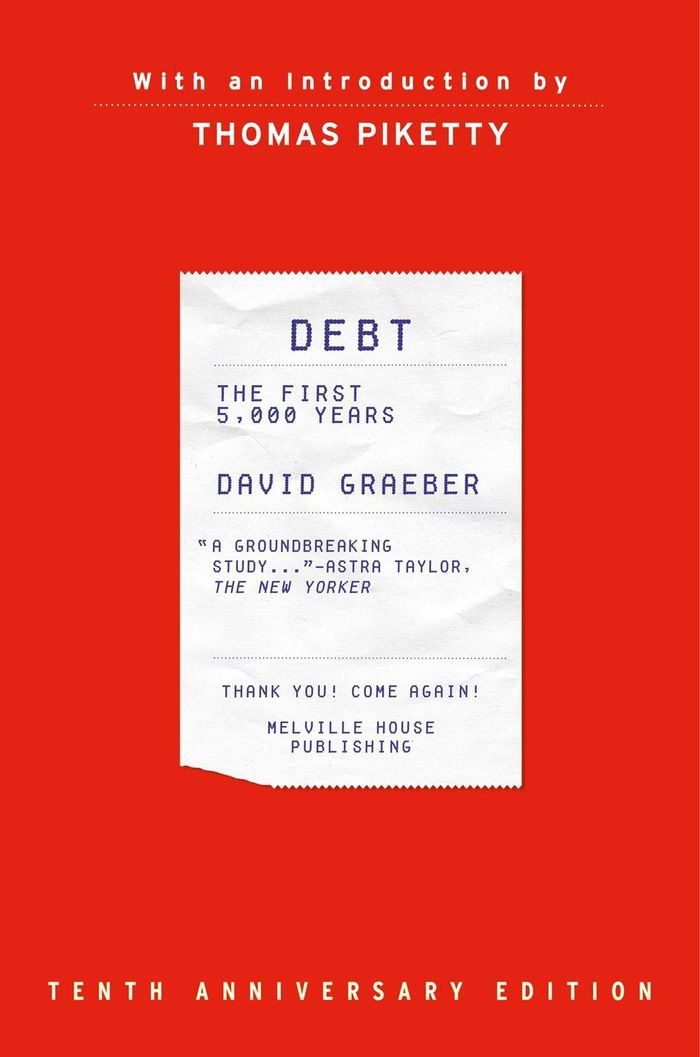
Before there was money, there was debt. Every economics textbook says the same thing: Money was invented to replace onerous and complicated barter systems—to relieve ancient people from having to haul their goods to market. The problem with this version of history? There’s not a shred of evidence to support it. Here anthropologist David Graeber presents a stunning reversal of conventional wisdom. He shows that for more than 5,000 years, since the beginnings of the first agrarian empires, humans have used elaborate credit systems to buy and sell goods—that is, long before the invention of coins or cash. It is in this era, Graeber argues, that we also first encounter a society divided into debtors and creditors. Graeber shows that arguments about debt and debt forgiveness have been at the center of political debates from Italy to China, as well as sparking innumerable insurrections. He also brilliantly demonstrates that the language of the ancient works of law and religion (words like ''guilt,'' ''sin,'' and ''redemption'') derive in large part from ancient debates about debt, and shape even our most basic ideas of right and wrong. We are still fighting these battles today without knowing it. ''Debt: The first 5,000 years'' is a fascinating chronicle of this little known history—as well as how it has defined human history. It shows how debt has defined our human past, and what that means for our economic future.
Debt: The first 5,000 years
Actions:
Prix:
$29.99
(disponible sur commande)
Résumé:
Before there was money, there was debt. Every economics textbook says the same thing: Money was invented to replace onerous and complicated barter systems—to relieve ancient people from having to haul their goods to market. The problem with this version of history? There’s not a shred of evidence to support it. Here anthropologist David Graeber presents a stunning reversal of conventional wisdom. He shows that for more than 5,000 years, since the beginnings of the first agrarian empires, humans have used elaborate credit systems to buy and sell goods—that is, long before the invention of coins or cash. It is in this era, Graeber argues, that we also first encounter a society divided into debtors and creditors. Graeber shows that arguments about debt and debt forgiveness have been at the center of political debates from Italy to China, as well as sparking innumerable insurrections. He also brilliantly demonstrates that the language of the ancient works of law and religion (words like ''guilt,'' ''sin,'' and ''redemption'') derive in large part from ancient debates about debt, and shape even our most basic ideas of right and wrong. We are still fighting these battles today without knowing it. ''Debt: The first 5,000 years'' is a fascinating chronicle of this little known history—as well as how it has defined human history. It shows how debt has defined our human past, and what that means for our economic future.
Classification:
livres
livres
Publication:
octobre 2014
octobre 2014
Sujet:
Théorie/ philosophie
Théorie/ philosophie


