


3820 Résultats
Classification:
livres
livres
Actions:
Exemplaires:
Description:
250 pages, 1 page non numérotée : illustrations ; 21 cm.
Description:
250 pages, 1 page non numérotée : illustrations ; 21 cm.
Auteur:
Sujet:
Publication:
Paris : Éditions Les Pérégrines, [2025], ©2025.
Paris : Éditions Les Pérégrines, [2025], ©2025.
Titre:
L'envers de la tech : ce que le numérique fait au monde / Mathilde Saliou.
Actions:
Exemplaires:
Description:
250 pages, 1 page non numérotée : illustrations ; 21 cm.
L'envers de la tech : ce que le numérique fait au monde / Mathilde Saliou.
Actions:
Exemplaires:
Description:
250 pages, 1 page non numérotée : illustrations ; 21 cm.
Classification:
livres
livres
Publication:
Paris : Éditions Les Pérégrines, [2025], ©2025.
Paris : Éditions Les Pérégrines, [2025], ©2025.
Auteur:
Sujet:
Classification:
livres
livres
Actions:
Exemplaires:
Description:
91 pages : illustrations ; 18 cm
Description:
91 pages : illustrations ; 18 cm
Auteur:
Sujet:
Publication:
Montréal (Québec) : Atelier 10, [2022]
Montréal (Québec) : Atelier 10, [2022]
Titre:
La ville analogique : repenser l'urbanité à l'ère numérique / Guillaume Ethier.
Actions:
Exemplaires:
Description:
91 pages : illustrations ; 18 cm
La ville analogique : repenser l'urbanité à l'ère numérique / Guillaume Ethier.
Actions:
Exemplaires:
Description:
91 pages : illustrations ; 18 cm
Classification:
livres
livres
Publication:
Montréal (Québec) : Atelier 10, [2022]
Montréal (Québec) : Atelier 10, [2022]
Auteur:
Sujet:
Classification:
livres
livres
Actions:
Prix:
$25.00
(disponible sur commande)
Résumé:
Cette publication anniversaire bilingue dont la première édition de 1000 copies sera numérotée, redonne vie de manière critique aux dix ans de production artistique de l’ATSA et rassemble une sélection de magnifiques photographies d’archives de leurs interventions urbaines majeures, le tout mis en page par Orangetango. Son lancement est intégré à une nouvelle(...)
$25.00
(disponible sur commande)
Résumé:
Cette publication anniversaire bilingue dont la première édition de 1000 copies sera numérotée, redonne vie de manière critique aux dix ans de production artistique de l’ATSA et rassemble une sélection de magnifiques photographies d’archives de leurs interventions urbaines majeures, le tout mis en page par Orangetango. Son lancement est intégré à une nouvelle(...)
Titre:
ATSA: quand l'art passe à l'action
Actions:
Prix:
$25.00
(disponible sur commande)
Résumé:
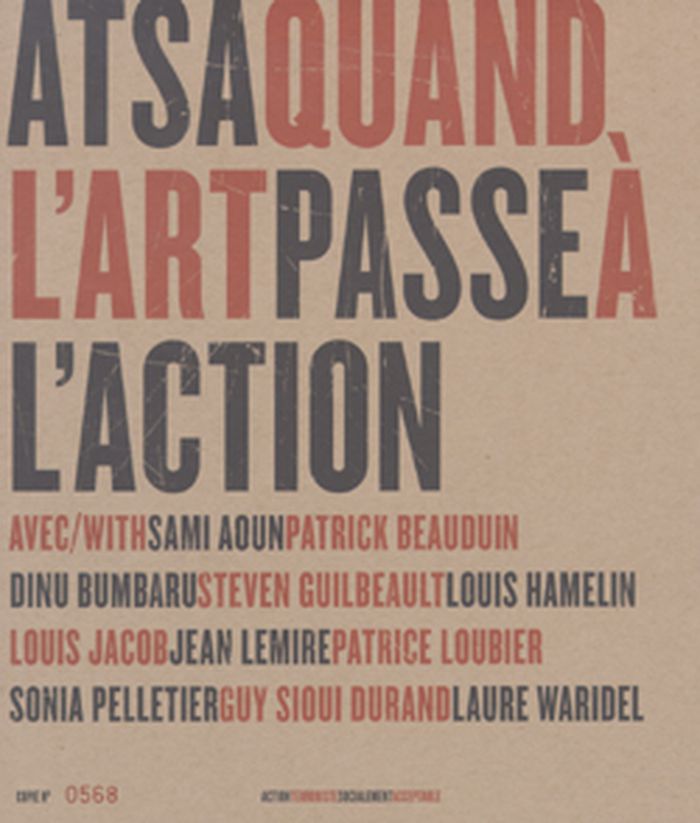
Cette publication anniversaire bilingue dont la première édition de 1000 copies sera numérotée, redonne vie de manière critique aux dix ans de production artistique de l’ATSA et rassemble une sélection de magnifiques photographies d’archives de leurs interventions urbaines majeures, le tout mis en page par Orangetango. Son lancement est intégré à une nouvelle intervention urbaine de leur cru sur le marketing intitulée CHANGE avec l’ouverture d’un magasin temporaire. L’ouvrage de 144 pages comprend des textes inédits, ponctués d’annotations manuscrites des artistes, d’analystes et de communicateurs de renoms: Sami Aoun (politicologue), Patrick Beauduin (spécialiste du marketing), Dinu Bumbaru (Héritage Montréal), Guy Sioui Durand (sociologue de l’art), Steven Guilbeault (porte-parole de Équiterre), Louis Hamelin (écrivain), Louis Jacob (historien de l’art), Jean Lemire (cinéaste et biologiste), Patrice Loubier (critique d’art) et Laure Waridel (sociologue et co-fondatrice d’Équiterre). Ils ont été conviés à livrer leurs réflexions sur la démarche engagée de l’ATSA et sur les enjeux sociaux, environnementaux et patrimoniaux qui ont menés aux réalisations provocantes de ce duo d’artistes. Un entretien avec les artistes fondateurs Annie Roy et Pierre Allard, réalisé par Sonia Pelletier (critique d'art, commissaire et éditrice indépendante), met la table à cet ouvrage, disponible en librairie dès la semaine du 22 septembre par Édipresse inc. et en version dédicacée par les artistes au magasin CHANGE et ici sur le site internet de l’ATSA.
ATSA: quand l'art passe à l'action
Actions:
Prix:
$25.00
(disponible sur commande)
Résumé:
Cette publication anniversaire bilingue dont la première édition de 1000 copies sera numérotée, redonne vie de manière critique aux dix ans de production artistique de l’ATSA et rassemble une sélection de magnifiques photographies d’archives de leurs interventions urbaines majeures, le tout mis en page par Orangetango. Son lancement est intégré à une nouvelle intervention urbaine de leur cru sur le marketing intitulée CHANGE avec l’ouverture d’un magasin temporaire. L’ouvrage de 144 pages comprend des textes inédits, ponctués d’annotations manuscrites des artistes, d’analystes et de communicateurs de renoms: Sami Aoun (politicologue), Patrick Beauduin (spécialiste du marketing), Dinu Bumbaru (Héritage Montréal), Guy Sioui Durand (sociologue de l’art), Steven Guilbeault (porte-parole de Équiterre), Louis Hamelin (écrivain), Louis Jacob (historien de l’art), Jean Lemire (cinéaste et biologiste), Patrice Loubier (critique d’art) et Laure Waridel (sociologue et co-fondatrice d’Équiterre). Ils ont été conviés à livrer leurs réflexions sur la démarche engagée de l’ATSA et sur les enjeux sociaux, environnementaux et patrimoniaux qui ont menés aux réalisations provocantes de ce duo d’artistes. Un entretien avec les artistes fondateurs Annie Roy et Pierre Allard, réalisé par Sonia Pelletier (critique d'art, commissaire et éditrice indépendante), met la table à cet ouvrage, disponible en librairie dès la semaine du 22 septembre par Édipresse inc. et en version dédicacée par les artistes au magasin CHANGE et ici sur le site internet de l’ATSA.
Classification:
livres
livres
Publication:
septembre 2008, Montréal
septembre 2008, Montréal
Sujet:
Art canadien
Art canadien
Classification:
livres
livres
Titre:
Public space? Lost and found
Public space? Lost and found
Actions:
Prix:
$52.50
(disponible sur commande)
Résumé:
“Public space” is a potent and contentious topic among artists, architects, and cultural producers. Public Space? Lost and Found considers the role of aesthetic practices within the construction, identification, and critique of shared territories, and how artists or architects—the “antennae of the race”—can heighten our awareness of rapidly changing formulations of public(...)
$52.50
(disponible sur commande)
Résumé:
“Public space” is a potent and contentious topic among artists, architects, and cultural producers. Public Space? Lost and Found considers the role of aesthetic practices within the construction, identification, and critique of shared territories, and how artists or architects—the “antennae of the race”—can heighten our awareness of rapidly changing formulations of public(...)
Sujet:
Théorie de l’architecture
Théorie de l’architecture
Publication:
juillet 2017
juillet 2017
Titre:
Public space? Lost and found
Actions:
Prix:
$52.50
(disponible sur commande)
Résumé:
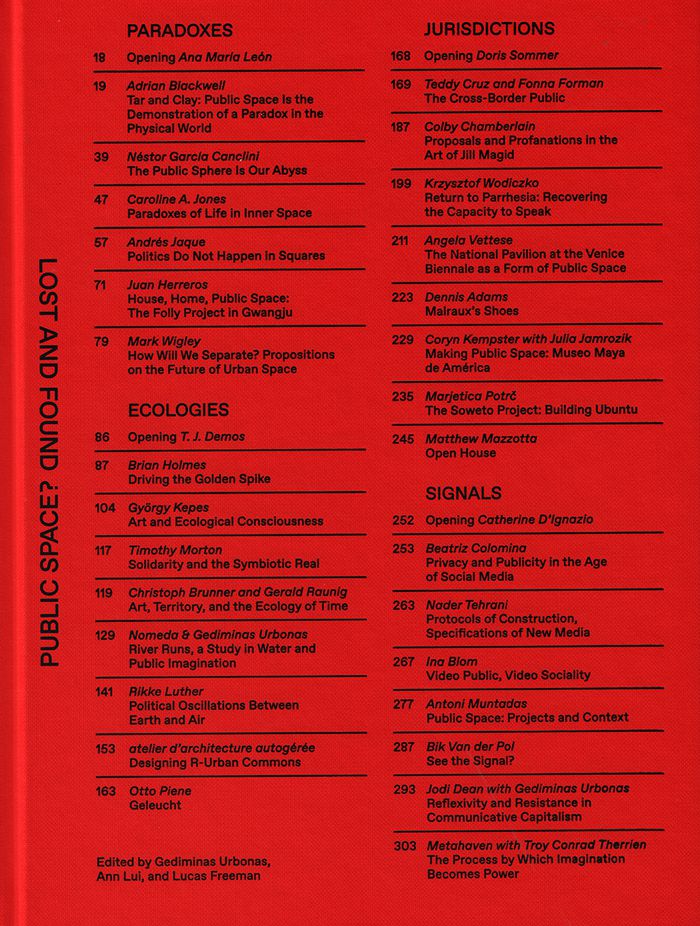
“Public space” is a potent and contentious topic among artists, architects, and cultural producers. Public Space? Lost and Found considers the role of aesthetic practices within the construction, identification, and critique of shared territories, and how artists or architects—the “antennae of the race”—can heighten our awareness of rapidly changing formulations of public space in the age of digital media, vast ecological crises, and civic uprisings. "Public Space? Lost and found" combines significant recent projects in art and architecture with writings by historians and theorists. Contributors investigate strategies for responding to underrepresented communities and areas of conflict through the work of Marjetica Potrc in Johannesburg and Teddy Cruz on the Mexico-U.S. border, among others. They explore our collective stakes in ecological catastrophe through artistic research such as atelier d’architecture autogérée’s hubs for community action and recycling in Colombes, France, and Brian Holmes’s theoretical investigation of new forms of aesthetic perception in the age of the Anthropocene. Inspired by artist and MIT professor Antoni Muntadas’ early coining of the term “media landscape,” contributors also look ahead, casting a critical eye on the fraught impact of digital media and the internet on public space. This book is the first in a new series of volumes produced by the MIT School of Architecture and Planning’s Program in Art, Culture and Technology.
Public space? Lost and found
Actions:
Prix:
$52.50
(disponible sur commande)
Résumé:
“Public space” is a potent and contentious topic among artists, architects, and cultural producers. Public Space? Lost and Found considers the role of aesthetic practices within the construction, identification, and critique of shared territories, and how artists or architects—the “antennae of the race”—can heighten our awareness of rapidly changing formulations of public space in the age of digital media, vast ecological crises, and civic uprisings. "Public Space? Lost and found" combines significant recent projects in art and architecture with writings by historians and theorists. Contributors investigate strategies for responding to underrepresented communities and areas of conflict through the work of Marjetica Potrc in Johannesburg and Teddy Cruz on the Mexico-U.S. border, among others. They explore our collective stakes in ecological catastrophe through artistic research such as atelier d’architecture autogérée’s hubs for community action and recycling in Colombes, France, and Brian Holmes’s theoretical investigation of new forms of aesthetic perception in the age of the Anthropocene. Inspired by artist and MIT professor Antoni Muntadas’ early coining of the term “media landscape,” contributors also look ahead, casting a critical eye on the fraught impact of digital media and the internet on public space. This book is the first in a new series of volumes produced by the MIT School of Architecture and Planning’s Program in Art, Culture and Technology.
Classification:
livres
livres
Publication:
juillet 2017
juillet 2017
Sujet:
Théorie de l’architecture
Théorie de l’architecture
Classification:
livres
livres
Titre:
Mute magazine graphic design
Mute magazine graphic design
Actions:
Prix:
$37.00
(disponible sur commande)
Résumé:
In the early 1990s, long before the internet became an integral part of life, a handful of pioneering magazines took it upon themselves to imagine the web into existence. Using fiction, interviews, speculative theory and experimental graphic design, these titles helped create a lexicon and iconography every bit as powerful as the architecture of the World Wide Web.(...)
$37.00
(disponible sur commande)
Résumé:
In the early 1990s, long before the internet became an integral part of life, a handful of pioneering magazines took it upon themselves to imagine the web into existence. Using fiction, interviews, speculative theory and experimental graphic design, these titles helped create a lexicon and iconography every bit as powerful as the architecture of the World Wide Web.(...)
Publication:
août 2008, London
août 2008, London
Titre:
Mute magazine graphic design
Actions:
Prix:
$37.00
(disponible sur commande)
Résumé:
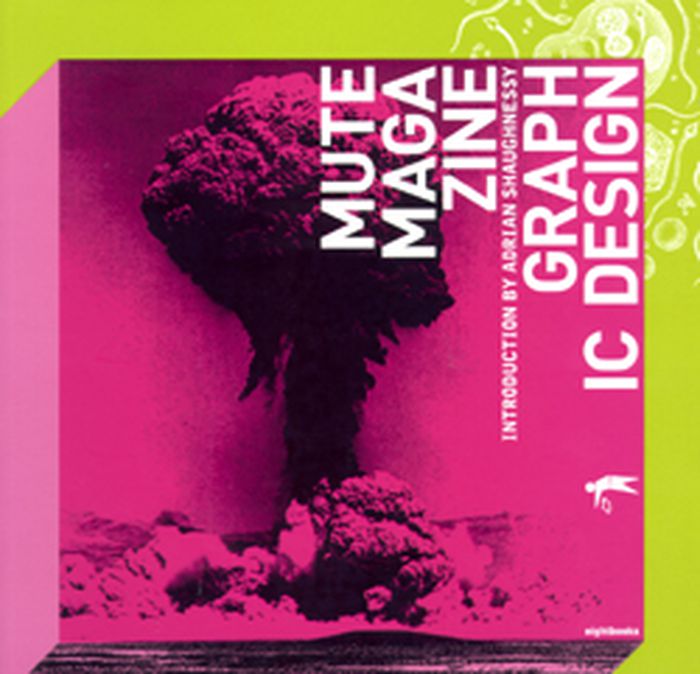
In the early 1990s, long before the internet became an integral part of life, a handful of pioneering magazines took it upon themselves to imagine the web into existence. Using fiction, interviews, speculative theory and experimental graphic design, these titles helped create a lexicon and iconography every bit as powerful as the architecture of the World Wide Web. London-based Mute occupied a central position here, wielding an influence vastly disproportionate to its size. The product of a period of intense creative ferment, Mute engaged boldly with allcomers. The magazine offered a platform to authors Bruce Sterling, Arthur Kroker, Mark Dery, Geert Lovink, Hari Kunzru, James Flint and Lev Manovich, just as it did to artists Keith Tyson, VNS Matrix and the Bureau of Inverse Technology. As new technologies forced a collapse of disciplinary boundaries and the intermingling of communities, Mute became part of a dynamic London scene, featuring many of the artists, writers and photographers who came to epitomise London’s status as a creative hotbed. The resulting collection of magazines defines an era, telling the fascinating tale of one publisher's relationship with the ‘digital revolution’ – the nineties’ very own Big Bang. This book presents a full overview of the magazine over a decade, showing its entire output – logos, covers and spreads. Using generous illustrations and in-depth captions, it details recurrent graphic themes and places Mute's evolution in perspective
Mute magazine graphic design
Actions:
Prix:
$37.00
(disponible sur commande)
Résumé:
In the early 1990s, long before the internet became an integral part of life, a handful of pioneering magazines took it upon themselves to imagine the web into existence. Using fiction, interviews, speculative theory and experimental graphic design, these titles helped create a lexicon and iconography every bit as powerful as the architecture of the World Wide Web. London-based Mute occupied a central position here, wielding an influence vastly disproportionate to its size. The product of a period of intense creative ferment, Mute engaged boldly with allcomers. The magazine offered a platform to authors Bruce Sterling, Arthur Kroker, Mark Dery, Geert Lovink, Hari Kunzru, James Flint and Lev Manovich, just as it did to artists Keith Tyson, VNS Matrix and the Bureau of Inverse Technology. As new technologies forced a collapse of disciplinary boundaries and the intermingling of communities, Mute became part of a dynamic London scene, featuring many of the artists, writers and photographers who came to epitomise London’s status as a creative hotbed. The resulting collection of magazines defines an era, telling the fascinating tale of one publisher's relationship with the ‘digital revolution’ – the nineties’ very own Big Bang. This book presents a full overview of the magazine over a decade, showing its entire output – logos, covers and spreads. Using generous illustrations and in-depth captions, it details recurrent graphic themes and places Mute's evolution in perspective
Classification:
livres
livres
Publication:
août 2008, London
août 2008, London
Classification:
livres
livres
Actions:
Prix:
$69.95
(disponible sur commande)
Résumé:
Le 12 août 2010, Lek et Sowat ont trouvé un supermarché abandonné dans le nord de Paris. Situé entre un atelier de maintenance RATP, le périphérique et des tours de béton, le bâtiment déserté n'attirait pas l'attention. Et pourtant... Une fois à l'intérieur, ils ont découvert 40 000 m2 de murs vierges répartis sur quatre étages dont deux plongés dans l'obscurité. Des(...)
$69.95
(disponible sur commande)
Résumé:
Le 12 août 2010, Lek et Sowat ont trouvé un supermarché abandonné dans le nord de Paris. Situé entre un atelier de maintenance RATP, le périphérique et des tours de béton, le bâtiment déserté n'attirait pas l'attention. Et pourtant... Une fois à l'intérieur, ils ont découvert 40 000 m2 de murs vierges répartis sur quatre étages dont deux plongés dans l'obscurité. Des(...)
Titre:
Mausolée: résidence artistique sauvage
Actions:
Prix:
$69.95
(disponible sur commande)
Résumé:
Le 12 août 2010, Lek et Sowat ont trouvé un supermarché abandonné dans le nord de Paris. Situé entre un atelier de maintenance RATP, le périphérique et des tours de béton, le bâtiment déserté n'attirait pas l'attention. Et pourtant... Une fois à l'intérieur, ils ont découvert 40 000 m2 de murs vierges répartis sur quatre étages dont deux plongés dans l'obscurité. Des salles immenses et sans fin où des centaines de personnes avaient vécu avant d'être chassées par la force publique du jour au lendemain... Pendant un an, dans le plus grand secret, les deux artistes se sont rendus dans ce lieu mystique quasi quotidiennement pour y peindre et organiser une résidence artistique sauvage unique en son genre. Ils ont demandé à une quarantaine de graffeurs français et de photographes, issus de la première à la dernière génération du mouvement, de les y accompagner, pour un jour ou une semaine. Chacun a promis ne pas rien révéler du bâtiment ou du projet... Ensemble, ils ont créé un mausolée, un temple dédié à leur culture underground en passe de disparaître à l'ère du street art et de son esthétique pop mondialisée. De cette expérience, ils ont tiré un film en stop motion de plus de 8 000 images qu'ils comptent diffuser gratuitement sur internet. Ce livre se propose de retracer les grandes étapes visuelles de cette expérience hors du commun.
Mausolée: résidence artistique sauvage
Actions:
Prix:
$69.95
(disponible sur commande)
Résumé:
Le 12 août 2010, Lek et Sowat ont trouvé un supermarché abandonné dans le nord de Paris. Situé entre un atelier de maintenance RATP, le périphérique et des tours de béton, le bâtiment déserté n'attirait pas l'attention. Et pourtant... Une fois à l'intérieur, ils ont découvert 40 000 m2 de murs vierges répartis sur quatre étages dont deux plongés dans l'obscurité. Des salles immenses et sans fin où des centaines de personnes avaient vécu avant d'être chassées par la force publique du jour au lendemain... Pendant un an, dans le plus grand secret, les deux artistes se sont rendus dans ce lieu mystique quasi quotidiennement pour y peindre et organiser une résidence artistique sauvage unique en son genre. Ils ont demandé à une quarantaine de graffeurs français et de photographes, issus de la première à la dernière génération du mouvement, de les y accompagner, pour un jour ou une semaine. Chacun a promis ne pas rien révéler du bâtiment ou du projet... Ensemble, ils ont créé un mausolée, un temple dédié à leur culture underground en passe de disparaître à l'ère du street art et de son esthétique pop mondialisée. De cette expérience, ils ont tiré un film en stop motion de plus de 8 000 images qu'ils comptent diffuser gratuitement sur internet. Ce livre se propose de retracer les grandes étapes visuelles de cette expérience hors du commun.
Classification:
livres
livres
Publication:
mai 2012
mai 2012
Classification:
livres
livres
Titre:
The Remembered film
The Remembered film
Actions:
Prix:
$24.95
(disponible sur commande)
Résumé:
Most books about cinema, whether popular or academic, concentrate on what we might call the ‘inside’ of the film: from star performances to narrative structures. The relatively few books about the ‘outside’ of films speak mainly of such aspects of production and reception as the organization of the film industry and the sociology of audiences: the Hollywood studio system,(...)
$24.95
(disponible sur commande)
Résumé:
Most books about cinema, whether popular or academic, concentrate on what we might call the ‘inside’ of the film: from star performances to narrative structures. The relatively few books about the ‘outside’ of films speak mainly of such aspects of production and reception as the organization of the film industry and the sociology of audiences: the Hollywood studio system,(...)
Titre:
The Remembered film
Actions:
Prix:
$24.95
(disponible sur commande)
Résumé:
Most books about cinema, whether popular or academic, concentrate on what we might call the ‘inside’ of the film: from star performances to narrative structures. The relatively few books about the ‘outside’ of films speak mainly of such aspects of production and reception as the organization of the film industry and the sociology of audiences: the Hollywood studio system, for example, or fan clubs. The Remembered Film is unique in addressing a previously overlooked aspect of cinema: the isolated fragments of films, iconic images or scenes, that fleetingly cross our perceptions and thoughts in the course of everyday life. Victor Burgin examines a kaleidescope of film fragments drawn from a variety of media, the internet, memory and fantasy. Among these are sequences of such brevity they might almost be stills. Such ‘sequence-images’, as Burgin calls them, are neither strictly ‘image’ nor ‘image sequence’ and have not been considered before by either film or photography theory. He also considers some typical individual experiences ‘sampled’ from mainstream cinema. He reflects on such disparate occurrences as the association in memory of fragments from otherwise unrelated films, of the relation of a recollected film image to an architectural setting, or of a feeling ‘marked’ by an image remembered from a film. The Remembered Film provides a radical new way of thinking about film outside conventional cinema, and in relation to our everyday lives. It will appeal to a wide audience interested in film and media.
The Remembered film
Actions:
Prix:
$24.95
(disponible sur commande)
Résumé:
Most books about cinema, whether popular or academic, concentrate on what we might call the ‘inside’ of the film: from star performances to narrative structures. The relatively few books about the ‘outside’ of films speak mainly of such aspects of production and reception as the organization of the film industry and the sociology of audiences: the Hollywood studio system, for example, or fan clubs. The Remembered Film is unique in addressing a previously overlooked aspect of cinema: the isolated fragments of films, iconic images or scenes, that fleetingly cross our perceptions and thoughts in the course of everyday life. Victor Burgin examines a kaleidescope of film fragments drawn from a variety of media, the internet, memory and fantasy. Among these are sequences of such brevity they might almost be stills. Such ‘sequence-images’, as Burgin calls them, are neither strictly ‘image’ nor ‘image sequence’ and have not been considered before by either film or photography theory. He also considers some typical individual experiences ‘sampled’ from mainstream cinema. He reflects on such disparate occurrences as the association in memory of fragments from otherwise unrelated films, of the relation of a recollected film image to an architectural setting, or of a feeling ‘marked’ by an image remembered from a film. The Remembered Film provides a radical new way of thinking about film outside conventional cinema, and in relation to our everyday lives. It will appeal to a wide audience interested in film and media.
Classification:
livres
livres
Publication:
octobre 2004, London
octobre 2004, London
Sujet:
Monographies photo
Monographies photo
Classification:
livres
livres
Titre:
Smart cities
Smart cities
Actions:
Prix:
$19.95
(disponible sur commande)
Résumé:
Over the past ten years, urban planners, technology companies, and governments have promoted smart cities with a somewhat utopian vision of urban life made knowable and manageable through data collection and analysis. Emerging smart cities have become both crucibles and showrooms for the practical application of the Internet of Things, cloud computing, and the integration(...)
$19.95
(disponible sur commande)
Résumé:
Over the past ten years, urban planners, technology companies, and governments have promoted smart cities with a somewhat utopian vision of urban life made knowable and manageable through data collection and analysis. Emerging smart cities have become both crucibles and showrooms for the practical application of the Internet of Things, cloud computing, and the integration(...)
Titre:
Smart cities
Actions:
Prix:
$19.95
(disponible sur commande)
Résumé:
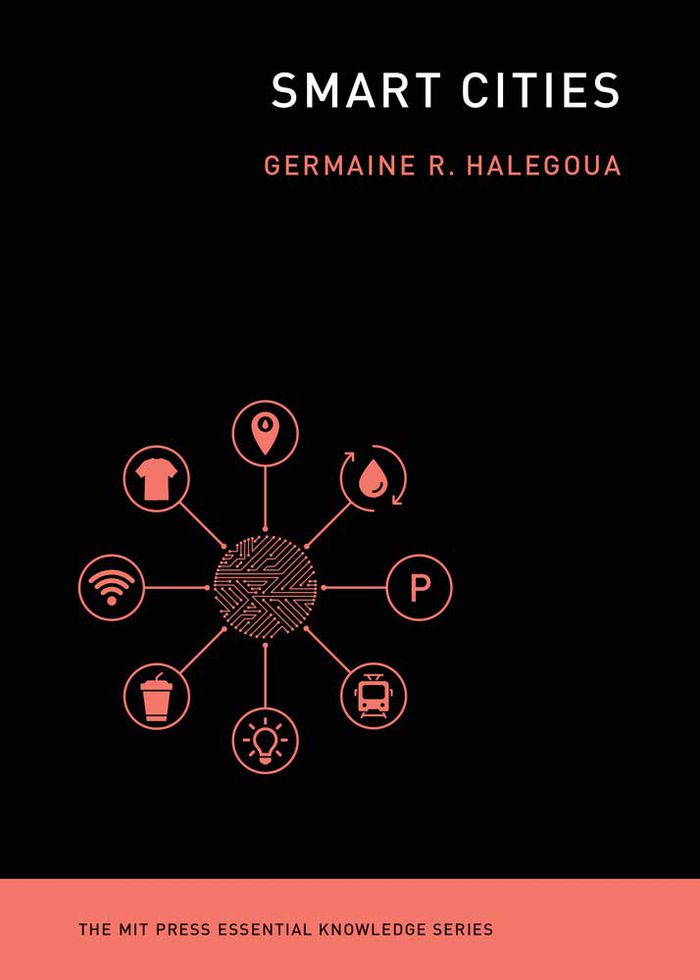
Over the past ten years, urban planners, technology companies, and governments have promoted smart cities with a somewhat utopian vision of urban life made knowable and manageable through data collection and analysis. Emerging smart cities have become both crucibles and showrooms for the practical application of the Internet of Things, cloud computing, and the integration of big data into everyday life. Are smart cities optimized, sustainable, digitally networked solutions to urban problems? Or are they neoliberal, corporate-controlled, undemocratic non-places? This volume in the MIT Press Essential Knowledge series offers a concise introduction to smart cities, presenting key concepts, definitions, examples, and historical contexts, along with discussions of both the drawbacks and the benefits of this approach to urban life. After reviewing current terminology and justifications employed by technology designers, journalists, and researchers, the book describes three models for smart city development?smart-from-the-start cities, retrofitted cities, and social cities?and offers examples of each. It covers technologies and methods, including sensors, public wi-fi, big data, and smartphone apps, and discusses how developers conceive of interactions among the built environment, technological and urban infrastructures, citizens, and citizen engagement. Throughout, the author?who has studied smart cities around the world?argues that smart city developers should work more closely with local communities, recognizing their preexisting relationship to urban place and realizing the limits of technological fixes. Smartness is a means to an end: improving the quality of urban life.
Smart cities
Actions:
Prix:
$19.95
(disponible sur commande)
Résumé:
Over the past ten years, urban planners, technology companies, and governments have promoted smart cities with a somewhat utopian vision of urban life made knowable and manageable through data collection and analysis. Emerging smart cities have become both crucibles and showrooms for the practical application of the Internet of Things, cloud computing, and the integration of big data into everyday life. Are smart cities optimized, sustainable, digitally networked solutions to urban problems? Or are they neoliberal, corporate-controlled, undemocratic non-places? This volume in the MIT Press Essential Knowledge series offers a concise introduction to smart cities, presenting key concepts, definitions, examples, and historical contexts, along with discussions of both the drawbacks and the benefits of this approach to urban life. After reviewing current terminology and justifications employed by technology designers, journalists, and researchers, the book describes three models for smart city development?smart-from-the-start cities, retrofitted cities, and social cities?and offers examples of each. It covers technologies and methods, including sensors, public wi-fi, big data, and smartphone apps, and discusses how developers conceive of interactions among the built environment, technological and urban infrastructures, citizens, and citizen engagement. Throughout, the author?who has studied smart cities around the world?argues that smart city developers should work more closely with local communities, recognizing their preexisting relationship to urban place and realizing the limits of technological fixes. Smartness is a means to an end: improving the quality of urban life.
Classification:
livres
livres
Publication:
mars 2020
mars 2020
Sujet:
Architecture numérique
Architecture numérique
Classification:
livres
livres
Titre:
Privacy a manifesto
Privacy a manifesto
Actions:
Prix:
$24.95
(disponible sur commande)
Résumé:
What ever happened to privacy? The simple right to be left alone? Surveillance cameras track our movements. Governments monitor our phone calls, e-mails, and Internet habits. Insurance companies know what drugs we take. Banks and credit agencies keep tabs on our smallest purchases. And new technologies - which gather, store, and share information as never before - have(...)
$24.95
(disponible sur commande)
Résumé:
What ever happened to privacy? The simple right to be left alone? Surveillance cameras track our movements. Governments monitor our phone calls, e-mails, and Internet habits. Insurance companies know what drugs we take. Banks and credit agencies keep tabs on our smallest purchases. And new technologies - which gather, store, and share information as never before - have(...)
Titre:
Privacy a manifesto
Actions:
Prix:
$24.95
(disponible sur commande)
Résumé:
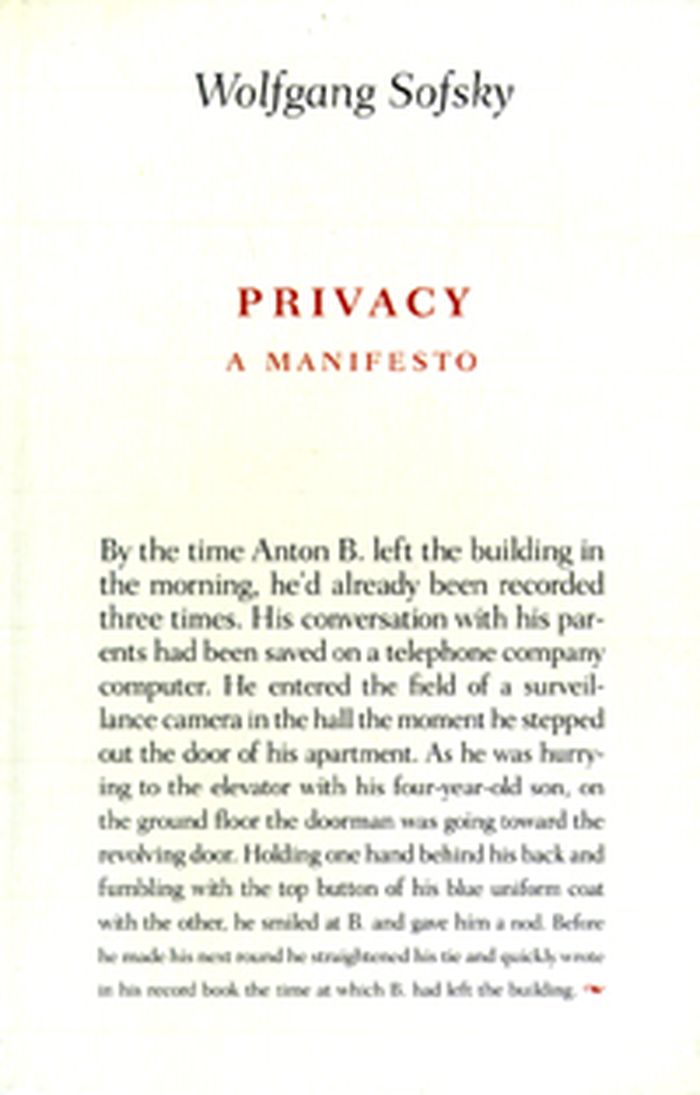
What ever happened to privacy? The simple right to be left alone? Surveillance cameras track our movements. Governments monitor our phone calls, e-mails, and Internet habits. Insurance companies know what drugs we take. Banks and credit agencies keep tabs on our smallest purchases. And new technologies - which gather, store, and share information as never before - have made all of this possible. But, as the acclaimed social thinker Wolfgang Sofsky shows in this brief and powerful defense of privacy, neither technology nor fears of terrorism deserve all the blame. Rather, through indifference and the desire for attention, we have been accomplices in the loss of our privacy. When we aren't resigning ourselves to privacy's disappearance as the inevitable price of living in a new age, we are eagerly embracing opportunities to divulge personal information to people we know - and, increasingly, to people we don't. Dramatically demonstrating how much privacy we have already surrendered, Sofsky describes a day in the life of an average modern citizen - in other words, a person under almost constant scrutiny. He also briefly traces the changing status of privacy from ancient Rome to today, explains how liberty and freedom of thought depend on privacy, and points to some of the places where privacy is under greatest threat, from health to personal space. Privacy is a timely and compelling reminder of just how important privacy is - and just how devastating its loss would be.
Privacy a manifesto
Actions:
Prix:
$24.95
(disponible sur commande)
Résumé:
What ever happened to privacy? The simple right to be left alone? Surveillance cameras track our movements. Governments monitor our phone calls, e-mails, and Internet habits. Insurance companies know what drugs we take. Banks and credit agencies keep tabs on our smallest purchases. And new technologies - which gather, store, and share information as never before - have made all of this possible. But, as the acclaimed social thinker Wolfgang Sofsky shows in this brief and powerful defense of privacy, neither technology nor fears of terrorism deserve all the blame. Rather, through indifference and the desire for attention, we have been accomplices in the loss of our privacy. When we aren't resigning ourselves to privacy's disappearance as the inevitable price of living in a new age, we are eagerly embracing opportunities to divulge personal information to people we know - and, increasingly, to people we don't. Dramatically demonstrating how much privacy we have already surrendered, Sofsky describes a day in the life of an average modern citizen - in other words, a person under almost constant scrutiny. He also briefly traces the changing status of privacy from ancient Rome to today, explains how liberty and freedom of thought depend on privacy, and points to some of the places where privacy is under greatest threat, from health to personal space. Privacy is a timely and compelling reminder of just how important privacy is - and just how devastating its loss would be.
Classification:
livres
livres
Publication:
octobre 2008, Princeton, Oxford
octobre 2008, Princeton, Oxford
Sujet:
Théorie/ philosophie
Théorie/ philosophie
Classification:
livres
livres
Actions:
Exemplaires:
Description:
xii, 302 pages, 43 pages of plates : frontispiece, illustrations, plates, maps (some folded) ; 20 cm
Description:
xii, 302 pages, 43 pages of plates : frontispiece, illustrations, plates, maps (some folded) ; 20 cm
Auteur:
Sujet:
Publication:
San Francisco : Paul Elder and Company, [1915], ©1915
San Francisco : Paul Elder and Company, [1915], ©1915
Titre:
Nature and science on the Pacific coast : a guide-book for scientific travelers in the West / edited under the auspices of the Pacific Coast Committee of the American Association for the Advancement of Science ; illustrated with nineteen text figures, twenty-nine half-tone plates and fourteen maps.
Actions:
Exemplaires:
Description:
xii, 302 pages, 43 pages of plates : frontispiece, illustrations, plates, maps (some folded) ; 20 cm
Nature and science on the Pacific coast : a guide-book for scientific travelers in the West / edited under the auspices of the Pacific Coast Committee of the American Association for the Advancement of Science ; illustrated with nineteen text figures, twenty-nine half-tone plates and fourteen maps.
Actions:
Exemplaires:
Description:
xii, 302 pages, 43 pages of plates : frontispiece, illustrations, plates, maps (some folded) ; 20 cm
Classification:
livres
livres
Publication:
San Francisco : Paul Elder and Company, [1915], ©1915
San Francisco : Paul Elder and Company, [1915], ©1915
Auteur:
Sujet:


