


3934 Résultats
Classification:
livres
livres
Actions:
Exemplaires:
Description:
144 pages : illustrations (chiefly color), charts, map ; 24 cm
Description:
144 pages : illustrations (chiefly color), charts, map ; 24 cm
Auteur:
Sujet:
Publication:
Berlin : Hatje Cantz Verlag GmbH ; Cambridge, Massachusetts : The MIT Press, [2022], ©2022
Berlin : Hatje Cantz Verlag GmbH ; Cambridge, Massachusetts : The MIT Press, [2022], ©2022
Titre:
Spatializing justice : building blocks / Teddy Cruz and Fonna Forman.
Actions:
Exemplaires:
Description:
144 pages : illustrations (chiefly color), charts, map ; 24 cm
Spatializing justice : building blocks / Teddy Cruz and Fonna Forman.
Actions:
Exemplaires:
Description:
144 pages : illustrations (chiefly color), charts, map ; 24 cm
Classification:
livres
livres
Publication:
Berlin : Hatje Cantz Verlag GmbH ; Cambridge, Massachusetts : The MIT Press, [2022], ©2022
Berlin : Hatje Cantz Verlag GmbH ; Cambridge, Massachusetts : The MIT Press, [2022], ©2022
Auteur:
Sujet:
Classification:
livres
livres
Actions:
Prix:
$45.00
(disponible en magasin)
Résumé:
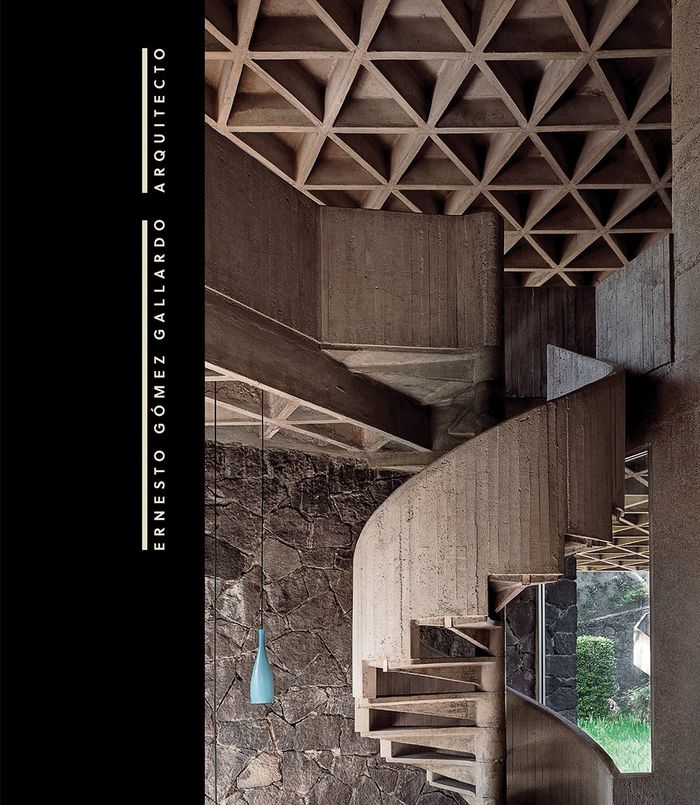
Mexican architect and designer Ernesto Gómez Gallardo (1917–2012) is known for designing desks and chairs for schools and the Universidad Nacional Autónoma de México. This monograph is devoted to his designs and photographs.
$45.00
(disponible en magasin)
Résumé:
Mexican architect and designer Ernesto Gómez Gallardo (1917–2012) is known for designing desks and chairs for schools and the Universidad Nacional Autónoma de México. This monograph is devoted to his designs and photographs.
Sujet:
Architecture, monographies
Architecture, monographies
Publication:
avril 2016
avril 2016
Titre:
Ernesto Gomez Gallardo: architect
Actions:
Prix:
$45.00
(disponible en magasin)
Résumé:
Mexican architect and designer Ernesto Gómez Gallardo (1917–2012) is known for designing desks and chairs for schools and the Universidad Nacional Autónoma de México. This monograph is devoted to his designs and photographs.
Ernesto Gomez Gallardo: architect
Actions:
Prix:
$45.00
(disponible en magasin)
Résumé:
Mexican architect and designer Ernesto Gómez Gallardo (1917–2012) is known for designing desks and chairs for schools and the Universidad Nacional Autónoma de México. This monograph is devoted to his designs and photographs.
Classification:
livres
livres
Publication:
avril 2016
avril 2016
Sujet:
Architecture, monographies
Architecture, monographies
Classification:
livres
livres
Prix:
$63.00
(disponible sur commande)
Résumé:
Emmet Gowin has been taking aerial photographs of the landscape in the United States, Mexico, Czechoslovakia, Asia, and the Middle East for over twenty years. In his most compelling photographs, one witnesses how man’s footprint has visually scarred and continually altered the earth’s surface. This book, published in conjunction with the first major touring exhibition of(...)
$63.00
(disponible sur commande)
Résumé:
Emmet Gowin has been taking aerial photographs of the landscape in the United States, Mexico, Czechoslovakia, Asia, and the Middle East for over twenty years. In his most compelling photographs, one witnesses how man’s footprint has visually scarred and continually altered the earth’s surface. This book, published in conjunction with the first major touring exhibition of(...)
Titre:
Emmet Gowin : changing the earth - aerial photographs
Actions:
Prix:
$63.00
(disponible sur commande)
Résumé:
Emmet Gowin has been taking aerial photographs of the landscape in the United States, Mexico, Czechoslovakia, Asia, and the Middle East for over twenty years. In his most compelling photographs, one witnesses how man’s footprint has visually scarred and continually altered the earth’s surface. This book, published in conjunction with the first major touring exhibition of Gowin’s photographs in over ten years, focuses on images created after 1986. That was the year Gowin began to extend his aerial photography explorations in America by recording images of military test sites, missile silos, ammunition storage and disposal facilities, coal mining, pivot irrigation, offroad motor traffic, and more. The book also surveys his more recent works, which focus on other regions of the world, including the battlefields of Kuwait, new golf courses in Japan, and the chemo-petrol industries of the Czech Republic. Gowin’s richly toned black-and-white images have been characterized as "immorally gorgeous," since at a distance even his most disturbing images can appear to be beautiful. In this volume, Jock Reynolds provides an overview of Gowin’s aerial photography and places it in the context of his earlier work and that of such photographers as Carleton Watkins, Alfred Stieglitz, Ansel Adams, and Frederick Sommer. Philip Brookman illuminates Gowin’s recent work in the Czech Republic, while Terry Tempest Williams discusses Gowin’s images from the American West, especially his Nevada Test Site series.
Emmet Gowin : changing the earth - aerial photographs
Actions:
Prix:
$63.00
(disponible sur commande)
Résumé:
Emmet Gowin has been taking aerial photographs of the landscape in the United States, Mexico, Czechoslovakia, Asia, and the Middle East for over twenty years. In his most compelling photographs, one witnesses how man’s footprint has visually scarred and continually altered the earth’s surface. This book, published in conjunction with the first major touring exhibition of Gowin’s photographs in over ten years, focuses on images created after 1986. That was the year Gowin began to extend his aerial photography explorations in America by recording images of military test sites, missile silos, ammunition storage and disposal facilities, coal mining, pivot irrigation, offroad motor traffic, and more. The book also surveys his more recent works, which focus on other regions of the world, including the battlefields of Kuwait, new golf courses in Japan, and the chemo-petrol industries of the Czech Republic. Gowin’s richly toned black-and-white images have been characterized as "immorally gorgeous," since at a distance even his most disturbing images can appear to be beautiful. In this volume, Jock Reynolds provides an overview of Gowin’s aerial photography and places it in the context of his earlier work and that of such photographers as Carleton Watkins, Alfred Stieglitz, Ansel Adams, and Frederick Sommer. Philip Brookman illuminates Gowin’s recent work in the Czech Republic, while Terry Tempest Williams discusses Gowin’s images from the American West, especially his Nevada Test Site series.
Classification:
livres
livres
Publication:
mai 2002, New Haven / London
mai 2002, New Haven / London
Sujet:
Monographies photo
Monographies photo
Classification:
livres
livres
Prix:
$39.95
(disponible sur commande)
Résumé:
How do cities plan for the unplanned? Do cities plan for recovery from every possible sudden shock? How does one prepare a plan for the recovery after a tragedy, like the September 11, 2001 terrorist attacks on New York? The book discovers the systematic features that contribute to the success of planning institutions. In cities filled with uncertainty and complexity,(...)
$39.95
(disponible sur commande)
Résumé:
How do cities plan for the unplanned? Do cities plan for recovery from every possible sudden shock? How does one prepare a plan for the recovery after a tragedy, like the September 11, 2001 terrorist attacks on New York? The book discovers the systematic features that contribute to the success of planning institutions. In cities filled with uncertainty and complexity,(...)
Titre:
Planning for the unplanned : recovering from crises in megacities
Actions:
Prix:
$39.95
(disponible sur commande)
Résumé:
How do cities plan for the unplanned? Do cities plan for recovery from every possible sudden shock? How does one prepare a plan for the recovery after a tragedy, like the September 11, 2001 terrorist attacks on New York? The book discovers the systematic features that contribute to the success of planning institutions. In cities filled with uncertainty and complexity, planning institutions effectively tackle unexpected and sudden change by relying on the old and the familiar, rather than the new and the innovative. The author argues that planning programs institutions were successful because they were bureaucratic, and relied on standardized routines, rigorous sets of established regimes, familiar programs, and institutionalized hierarchies. Also contrary to popular perception, neither the leaders at the top of the institutions nor those workers at the grassroots level were the most important in the implementation of such routines. The key actors were middle managers, because they knew the institutional structures inside out, what the routines were and how to use them, and were successful go-betweens between national governments and grassroots community groups. Case studies from Mexico City, Los Angeles and New York provide a deeper understanding of urban planning processes. The case studies reveal that systematic institutional analysis helps us understand what works in planning, and why. They also demonstrate the manner in which institutional routines serve as powerful and effective tools for addressing novel situations.
Planning for the unplanned : recovering from crises in megacities
Actions:
Prix:
$39.95
(disponible sur commande)
Résumé:
How do cities plan for the unplanned? Do cities plan for recovery from every possible sudden shock? How does one prepare a plan for the recovery after a tragedy, like the September 11, 2001 terrorist attacks on New York? The book discovers the systematic features that contribute to the success of planning institutions. In cities filled with uncertainty and complexity, planning institutions effectively tackle unexpected and sudden change by relying on the old and the familiar, rather than the new and the innovative. The author argues that planning programs institutions were successful because they were bureaucratic, and relied on standardized routines, rigorous sets of established regimes, familiar programs, and institutionalized hierarchies. Also contrary to popular perception, neither the leaders at the top of the institutions nor those workers at the grassroots level were the most important in the implementation of such routines. The key actors were middle managers, because they knew the institutional structures inside out, what the routines were and how to use them, and were successful go-betweens between national governments and grassroots community groups. Case studies from Mexico City, Los Angeles and New York provide a deeper understanding of urban planning processes. The case studies reveal that systematic institutional analysis helps us understand what works in planning, and why. They also demonstrate the manner in which institutional routines serve as powerful and effective tools for addressing novel situations.
Classification:
livres
livres
Publication:
avril 2005, New York
avril 2005, New York
Sujet:
Théorie de l’urbanisme
Théorie de l’urbanisme
Classification:
livres
livres

Actions:
Prix:
$55.95
(disponible sur commande)
Résumé:
In 1988, photographer Sandy Sorlien set out on a series of journeys to document the rich architectural heritage that America is losing to the cheap and banal design aesthetic of tract housing, strip malls, and big-box stores. Her eight-year odyssey took her over ninety thousand miles of back roads to every state in the Union in search of homes that reflect and define the(...)
$55.95
(disponible sur commande)
Résumé:
In 1988, photographer Sandy Sorlien set out on a series of journeys to document the rich architectural heritage that America is losing to the cheap and banal design aesthetic of tract housing, strip malls, and big-box stores. Her eight-year odyssey took her over ninety thousand miles of back roads to every state in the Union in search of homes that reflect and define the(...)
Titre:
Fifty houses : images from the American road
Actions:
Prix:
$55.95
(disponible sur commande)
Résumé:
In 1988, photographer Sandy Sorlien set out on a series of journeys to document the rich architectural heritage that America is losing to the cheap and banal design aesthetic of tract housing, strip malls, and big-box stores. Her eight-year odyssey took her over ninety thousand miles of back roads to every state in the Union in search of homes that reflect and define the region in which they stand. After making over a thousand "house portraits," Sorlien has chosen one representative image from each state and collected them in Fifty Houses. Shot with black-and-white infrared film, the homes captured through Sorlien's lens range from the grand to the humble, from the historic to the commonplace. Included here are a classic saltbox in Newtown, Connecticut; the House on the Rocks in Rhode Island's Narragansett Bay; a mobile home in Bushnell, Florida; a Stick-style folk Victorian in Biloxi, Mississippi; a limestone cottage in Fredericksburg, Texas; a false-front house in Rollins, Montana; a log cabin in Dubois, Wyoming; an adobe dwelling in Sante Fe, New Mexico; and a platform tent in Healy, Alaska. Each image is accompanied by a vignette from Sorlien's road journal, offering details of the house depicted, its owners and history, other houses in the region, or her travel experiences in the state.
Fifty houses : images from the American road
Actions:
Prix:
$55.95
(disponible sur commande)
Résumé:
In 1988, photographer Sandy Sorlien set out on a series of journeys to document the rich architectural heritage that America is losing to the cheap and banal design aesthetic of tract housing, strip malls, and big-box stores. Her eight-year odyssey took her over ninety thousand miles of back roads to every state in the Union in search of homes that reflect and define the region in which they stand. After making over a thousand "house portraits," Sorlien has chosen one representative image from each state and collected them in Fifty Houses. Shot with black-and-white infrared film, the homes captured through Sorlien's lens range from the grand to the humble, from the historic to the commonplace. Included here are a classic saltbox in Newtown, Connecticut; the House on the Rocks in Rhode Island's Narragansett Bay; a mobile home in Bushnell, Florida; a Stick-style folk Victorian in Biloxi, Mississippi; a limestone cottage in Fredericksburg, Texas; a false-front house in Rollins, Montana; a log cabin in Dubois, Wyoming; an adobe dwelling in Sante Fe, New Mexico; and a platform tent in Healy, Alaska. Each image is accompanied by a vignette from Sorlien's road journal, offering details of the house depicted, its owners and history, other houses in the region, or her travel experiences in the state.
Classification:
livres
livres
Publication:
septembre 2002, Baltimore
septembre 2002, Baltimore
Sujet:
Histoire jusqu’à 1900
Histoire jusqu’à 1900
Classification:
livres
livres

Titre:
Planet of slums
Planet of slums
Actions:
Prix:
$25.00
(disponible sur commande)
Résumé:
Urban theorist Davis takes a global approach to documenting the astonishing depth of squalid poverty that dominates the lives of the planet's increasingly urban population, detailing poor urban communities from Cape Town and Caracas to Casablanca and Khartoum. Davis argues health, justice and social issues associated with gargantuan slums (the largest, in Mexico City, has(...)
$25.00
(disponible sur commande)
Résumé:
Urban theorist Davis takes a global approach to documenting the astonishing depth of squalid poverty that dominates the lives of the planet's increasingly urban population, detailing poor urban communities from Cape Town and Caracas to Casablanca and Khartoum. Davis argues health, justice and social issues associated with gargantuan slums (the largest, in Mexico City, has(...)
Titre:
Planet of slums
Actions:
Prix:
$25.00
(disponible sur commande)
Résumé:
Urban theorist Davis takes a global approach to documenting the astonishing depth of squalid poverty that dominates the lives of the planet's increasingly urban population, detailing poor urban communities from Cape Town and Caracas to Casablanca and Khartoum. Davis argues health, justice and social issues associated with gargantuan slums (the largest, in Mexico City, has an estimated population of 4 million) get overlooked in world politics: "The demonizing rhetorics of the various international 'wars' on terrorism, drugs, and crime are so much semantic apartheid: they construct epistemological walls around gecekondus, favelas, and chawls that disable any honest debate about the daily violence of economic exclusion." Though Davis focuses on individual communities, he presents statistics showing the skyrocketing population and number of "megaslums" (informally, "stinking mountains of shit" or, formally, "when shanty-towns and squatter communities merge in continuous belts of informal housing and poverty, usually on the urban periphery") since the 1960s. Layered over the hard numbers are a fascinating grid of specific area studies and sub-topics ranging from how the Olympics has spurred the forceful relocation of thousands (and, sometimes, hundreds of thousands) of the urban poor, to the conversion of formerly second world countries to third world status. Davis paints a bleak picture of the upward trend in urbanization and maintains a stark outlook for slum-dwellers' futures
Planet of slums
Actions:
Prix:
$25.00
(disponible sur commande)
Résumé:
Urban theorist Davis takes a global approach to documenting the astonishing depth of squalid poverty that dominates the lives of the planet's increasingly urban population, detailing poor urban communities from Cape Town and Caracas to Casablanca and Khartoum. Davis argues health, justice and social issues associated with gargantuan slums (the largest, in Mexico City, has an estimated population of 4 million) get overlooked in world politics: "The demonizing rhetorics of the various international 'wars' on terrorism, drugs, and crime are so much semantic apartheid: they construct epistemological walls around gecekondus, favelas, and chawls that disable any honest debate about the daily violence of economic exclusion." Though Davis focuses on individual communities, he presents statistics showing the skyrocketing population and number of "megaslums" (informally, "stinking mountains of shit" or, formally, "when shanty-towns and squatter communities merge in continuous belts of informal housing and poverty, usually on the urban periphery") since the 1960s. Layered over the hard numbers are a fascinating grid of specific area studies and sub-topics ranging from how the Olympics has spurred the forceful relocation of thousands (and, sometimes, hundreds of thousands) of the urban poor, to the conversion of formerly second world countries to third world status. Davis paints a bleak picture of the upward trend in urbanization and maintains a stark outlook for slum-dwellers' futures
Classification:
livres
livres
Publication:
août 2007, London New York
août 2007, London New York
Sujet:
Théorie de l’urbanisme
Théorie de l’urbanisme
Classification:
livres
livres
Actions:
Prix:
$49.95
(disponible sur commande)
Résumé:
Over the past decade, a seismic shift in economic and political forces has transformed life in the second-largest city on the West Coast, situated at the most heavily trafficked international border crossing in the world. Tijuana’s newfound wealth and haphazard expansion have changed patterns of migration for the city’s many artists, who once routinely moved north to Los(...)
$49.95
(disponible sur commande)
Résumé:
Over the past decade, a seismic shift in economic and political forces has transformed life in the second-largest city on the West Coast, situated at the most heavily trafficked international border crossing in the world. Tijuana’s newfound wealth and haphazard expansion have changed patterns of migration for the city’s many artists, who once routinely moved north to Los(...)
Titre:
Strange new world : art and design from Tijuana
Actions:
Prix:
$49.95
(disponible sur commande)
Résumé:
Over the past decade, a seismic shift in economic and political forces has transformed life in the second-largest city on the West Coast, situated at the most heavily trafficked international border crossing in the world. Tijuana’s newfound wealth and haphazard expansion have changed patterns of migration for the city’s many artists, who once routinely moved north to Los Angeles but are now staying or returning, and being joined by friends from Mexico City and beyond. This flourishing, strengthening artistic community has responded to the city’s accelerated evolution with a broad range of work, from painting to conceptually driven installations; from street-level digital video to ambitious photo-documentation, filmmaking and political work; from architectural proposals to product design associated with the "Nortec" musical movement. The work gathered in "Strange new world" embraces Tijuana as a paradigm of a new postmodern form of urbanization shaped by the pressures of economic globalization and cultural transnationalism since 1994. It struggles to make sense of new realities changing the ways in which people live in cities around the globe. Like Aldous Huxley's Brave New World, it is part science fiction, part political commentary and part artistic revolution and cultural critique. Arranged around the concepts of the urban theorist Michael Smith, it features work by ERRE, Einar and Jamex de la Torre and Yvonne Venegas, among others.
Strange new world : art and design from Tijuana
Actions:
Prix:
$49.95
(disponible sur commande)
Résumé:
Over the past decade, a seismic shift in economic and political forces has transformed life in the second-largest city on the West Coast, situated at the most heavily trafficked international border crossing in the world. Tijuana’s newfound wealth and haphazard expansion have changed patterns of migration for the city’s many artists, who once routinely moved north to Los Angeles but are now staying or returning, and being joined by friends from Mexico City and beyond. This flourishing, strengthening artistic community has responded to the city’s accelerated evolution with a broad range of work, from painting to conceptually driven installations; from street-level digital video to ambitious photo-documentation, filmmaking and political work; from architectural proposals to product design associated with the "Nortec" musical movement. The work gathered in "Strange new world" embraces Tijuana as a paradigm of a new postmodern form of urbanization shaped by the pressures of economic globalization and cultural transnationalism since 1994. It struggles to make sense of new realities changing the ways in which people live in cities around the globe. Like Aldous Huxley's Brave New World, it is part science fiction, part political commentary and part artistic revolution and cultural critique. Arranged around the concepts of the urban theorist Michael Smith, it features work by ERRE, Einar and Jamex de la Torre and Yvonne Venegas, among others.
Classification:
livres
livres
Publication:
août 2006, La Jolla
août 2006, La Jolla
Classification:
livres
livres
Titre:
Public space? Lost and found
Public space? Lost and found
Actions:
Prix:
$52.50
(disponible sur commande)
Résumé:
“Public space” is a potent and contentious topic among artists, architects, and cultural producers. Public Space? Lost and Found considers the role of aesthetic practices within the construction, identification, and critique of shared territories, and how artists or architects—the “antennae of the race”—can heighten our awareness of rapidly changing formulations of public(...)
$52.50
(disponible sur commande)
Résumé:
“Public space” is a potent and contentious topic among artists, architects, and cultural producers. Public Space? Lost and Found considers the role of aesthetic practices within the construction, identification, and critique of shared territories, and how artists or architects—the “antennae of the race”—can heighten our awareness of rapidly changing formulations of public(...)
Sujet:
Théorie de l’architecture
Théorie de l’architecture
Publication:
juillet 2017
juillet 2017
Titre:
Public space? Lost and found
Actions:
Prix:
$52.50
(disponible sur commande)
Résumé:
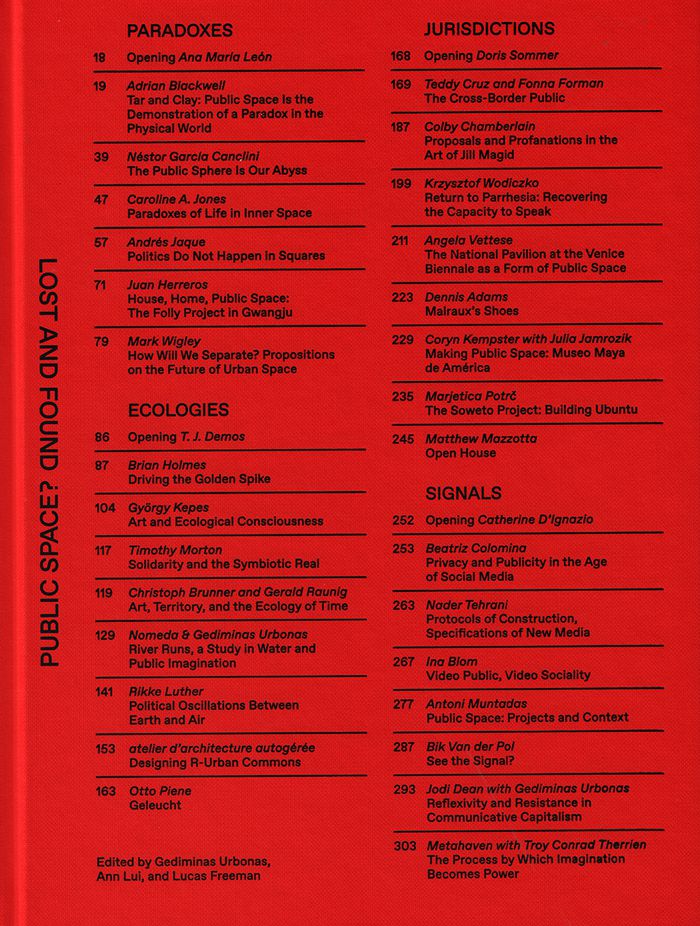
“Public space” is a potent and contentious topic among artists, architects, and cultural producers. Public Space? Lost and Found considers the role of aesthetic practices within the construction, identification, and critique of shared territories, and how artists or architects—the “antennae of the race”—can heighten our awareness of rapidly changing formulations of public space in the age of digital media, vast ecological crises, and civic uprisings. "Public Space? Lost and found" combines significant recent projects in art and architecture with writings by historians and theorists. Contributors investigate strategies for responding to underrepresented communities and areas of conflict through the work of Marjetica Potrc in Johannesburg and Teddy Cruz on the Mexico-U.S. border, among others. They explore our collective stakes in ecological catastrophe through artistic research such as atelier d’architecture autogérée’s hubs for community action and recycling in Colombes, France, and Brian Holmes’s theoretical investigation of new forms of aesthetic perception in the age of the Anthropocene. Inspired by artist and MIT professor Antoni Muntadas’ early coining of the term “media landscape,” contributors also look ahead, casting a critical eye on the fraught impact of digital media and the internet on public space. This book is the first in a new series of volumes produced by the MIT School of Architecture and Planning’s Program in Art, Culture and Technology.
Public space? Lost and found
Actions:
Prix:
$52.50
(disponible sur commande)
Résumé:
“Public space” is a potent and contentious topic among artists, architects, and cultural producers. Public Space? Lost and Found considers the role of aesthetic practices within the construction, identification, and critique of shared territories, and how artists or architects—the “antennae of the race”—can heighten our awareness of rapidly changing formulations of public space in the age of digital media, vast ecological crises, and civic uprisings. "Public Space? Lost and found" combines significant recent projects in art and architecture with writings by historians and theorists. Contributors investigate strategies for responding to underrepresented communities and areas of conflict through the work of Marjetica Potrc in Johannesburg and Teddy Cruz on the Mexico-U.S. border, among others. They explore our collective stakes in ecological catastrophe through artistic research such as atelier d’architecture autogérée’s hubs for community action and recycling in Colombes, France, and Brian Holmes’s theoretical investigation of new forms of aesthetic perception in the age of the Anthropocene. Inspired by artist and MIT professor Antoni Muntadas’ early coining of the term “media landscape,” contributors also look ahead, casting a critical eye on the fraught impact of digital media and the internet on public space. This book is the first in a new series of volumes produced by the MIT School of Architecture and Planning’s Program in Art, Culture and Technology.
Classification:
livres
livres
Publication:
juillet 2017
juillet 2017
Sujet:
Théorie de l’architecture
Théorie de l’architecture
Classification:
livres
livres
Actions:
Prix:
$22.95
(disponible sur commande)
Résumé:
Why do walls marking national boundaries proliferate amid widespread proclamations of global connectedness and despite anticipation of a world without borders? Why are barricades built of concrete, steel, and barbed wire when threats to the nation today are so often miniaturized, vaporous, clandestine, dispersed, or networked? In "Walled states, waning sovereignty", Wendy(...)
$22.95
(disponible sur commande)
Résumé:
Why do walls marking national boundaries proliferate amid widespread proclamations of global connectedness and despite anticipation of a world without borders? Why are barricades built of concrete, steel, and barbed wire when threats to the nation today are so often miniaturized, vaporous, clandestine, dispersed, or networked? In "Walled states, waning sovereignty", Wendy(...)
Titre:
Walled states, waning sovereignty, New edition
Actions:
Prix:
$22.95
(disponible sur commande)
Résumé:
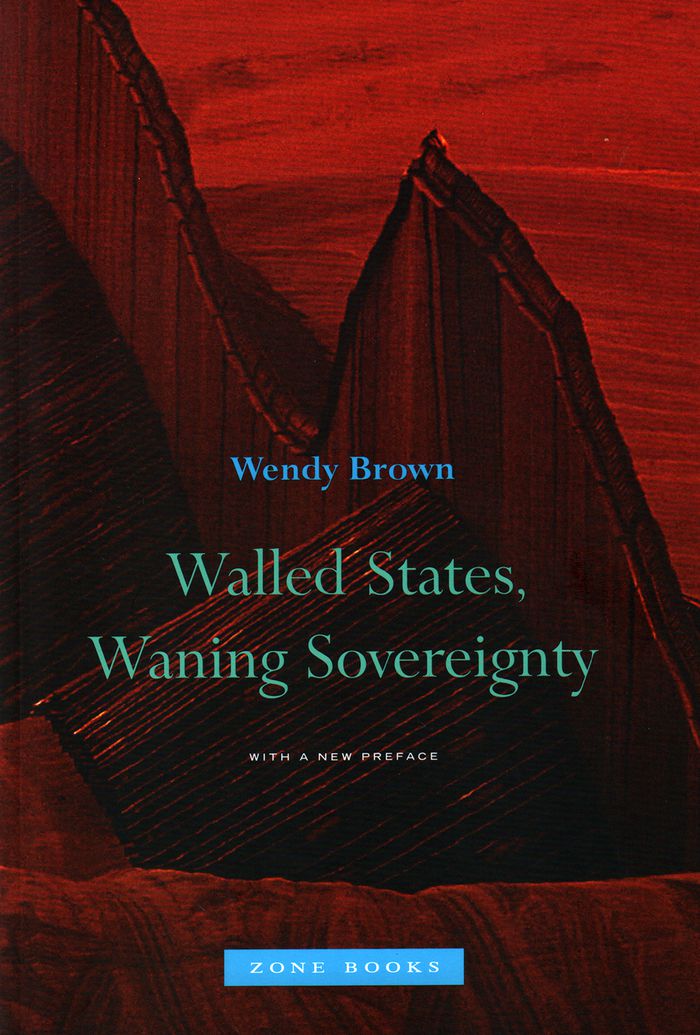
Why do walls marking national boundaries proliferate amid widespread proclamations of global connectedness and despite anticipation of a world without borders? Why are barricades built of concrete, steel, and barbed wire when threats to the nation today are so often miniaturized, vaporous, clandestine, dispersed, or networked? In "Walled states, waning sovereignty", Wendy Brown considers the recent spate of wall building in contrast to the erosion of nation-state sovereignty. Drawing on classical and contemporary political theories of state sovereignty in order to understand how state power and national identity persist amid its decline, Brown considers both the need of the state for legitimacy and the popular desires that incite the contemporary building of walls. The new walls—dividing Texas from Mexico, Israel from Palestine, South Africa from Zimbabwe—consecrate the broken boundaries they would seem to contest and signify the ungovernability of a range of forces unleashed by globalization. Yet these same walls often amount to little more than theatrical props, frequently breached, and blur the distinction between law and lawlessness that they are intended to represent. But if today’s walls fail to resolve the conflicts between globalization and national identity, they nonetheless project a stark image of sovereign power. Walls, Brown argues, address human desires for containment and protection in a world increasingly without these provisions. Walls respond to the wish for horizons even as horizons are vanquished.
Walled states, waning sovereignty, New edition
Actions:
Prix:
$22.95
(disponible sur commande)
Résumé:
Why do walls marking national boundaries proliferate amid widespread proclamations of global connectedness and despite anticipation of a world without borders? Why are barricades built of concrete, steel, and barbed wire when threats to the nation today are so often miniaturized, vaporous, clandestine, dispersed, or networked? In "Walled states, waning sovereignty", Wendy Brown considers the recent spate of wall building in contrast to the erosion of nation-state sovereignty. Drawing on classical and contemporary political theories of state sovereignty in order to understand how state power and national identity persist amid its decline, Brown considers both the need of the state for legitimacy and the popular desires that incite the contemporary building of walls. The new walls—dividing Texas from Mexico, Israel from Palestine, South Africa from Zimbabwe—consecrate the broken boundaries they would seem to contest and signify the ungovernability of a range of forces unleashed by globalization. Yet these same walls often amount to little more than theatrical props, frequently breached, and blur the distinction between law and lawlessness that they are intended to represent. But if today’s walls fail to resolve the conflicts between globalization and national identity, they nonetheless project a stark image of sovereign power. Walls, Brown argues, address human desires for containment and protection in a world increasingly without these provisions. Walls respond to the wish for horizons even as horizons are vanquished.
Classification:
livres
livres
Publication:
avril 2017
avril 2017
Sujet:
Théorie de l’architecture
Théorie de l’architecture
Classification:
livres
livres
Actions:
Prix:
$39.95
(disponible sur commande)
Résumé:
We shape ourselves, and are shaped in return, by the walls that contain us. Buildings affect how we sleep, work, socialise and even breathe. They can isolate and endanger us but they can also heal us. We project our hopes and fears onto buildings, while they absorb our histories. In Living With Buildings, Iain Sinclair embarks on a series of expeditions - through(...)
$39.95
(disponible sur commande)
Résumé:
We shape ourselves, and are shaped in return, by the walls that contain us. Buildings affect how we sleep, work, socialise and even breathe. They can isolate and endanger us but they can also heal us. We project our hopes and fears onto buildings, while they absorb our histories. In Living With Buildings, Iain Sinclair embarks on a series of expeditions - through(...)
Titre:
Living with buildings and walking with ghosts: on health and architecture
Actions:
Prix:
$39.95
(disponible sur commande)
Résumé:
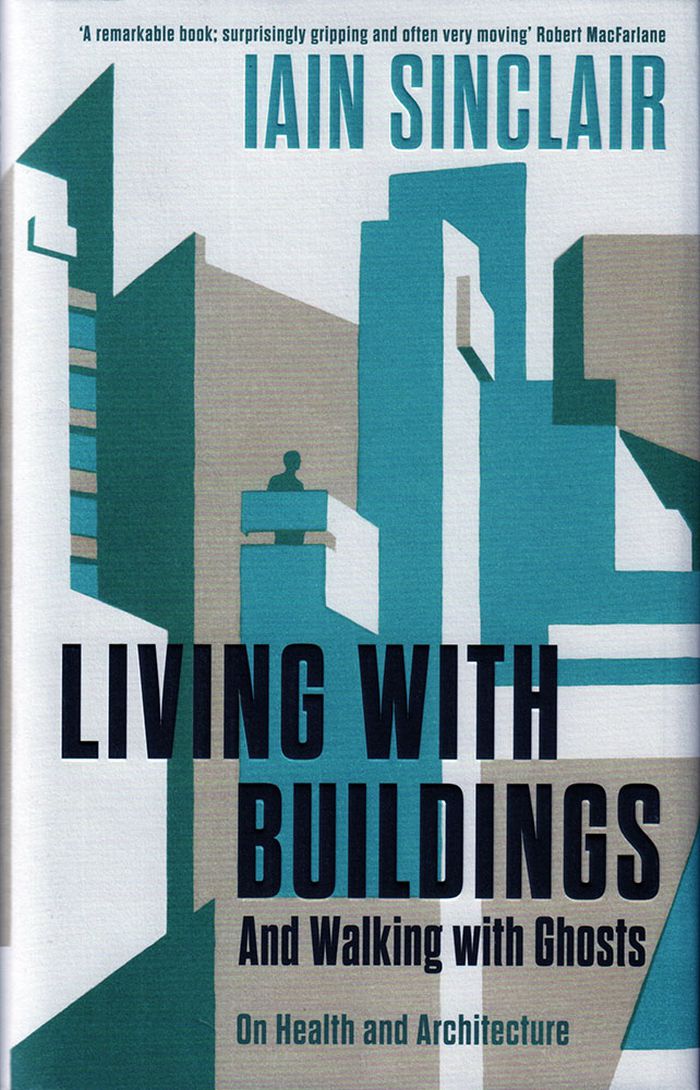
We shape ourselves, and are shaped in return, by the walls that contain us. Buildings affect how we sleep, work, socialise and even breathe. They can isolate and endanger us but they can also heal us. We project our hopes and fears onto buildings, while they absorb our histories. In Living With Buildings, Iain Sinclair embarks on a series of expeditions - through London, Marseille, Mexico and the Outer Hebrides. He explores the relationship between sickness and structure, and between art, architecture, social planning and health, taking plenty of detours along the way. Walking is Sinclair's defensive magic against illness and, as he moves, he observes his surroundings: stacked tower blocks and behemoth estates; halogen-lit glasshouse offices and humming hospitals; the blackened hull of a Spitalfields church and the floating mass of Le Corbusier's radiant city. Sinclair also peels back layers of life. A father and his daughter (who has a rare syndrome) visit the estate where they once lived. Developers clink champagne glasses as residents are 'decanted' from their homes. A box sculpted from whalebone, thought to contain healing properties, is returned to its origins with unexpected consequences. Part investigation, part travelogue, ‘Living with Buildings’ brings the spaces we inhabit to life as never before. Published in association with the Wellcome Collection exhibition Living with Buildings, 4 October 2018- 3 March 2019.
Living with buildings and walking with ghosts: on health and architecture
Actions:
Prix:
$39.95
(disponible sur commande)
Résumé:
We shape ourselves, and are shaped in return, by the walls that contain us. Buildings affect how we sleep, work, socialise and even breathe. They can isolate and endanger us but they can also heal us. We project our hopes and fears onto buildings, while they absorb our histories. In Living With Buildings, Iain Sinclair embarks on a series of expeditions - through London, Marseille, Mexico and the Outer Hebrides. He explores the relationship between sickness and structure, and between art, architecture, social planning and health, taking plenty of detours along the way. Walking is Sinclair's defensive magic against illness and, as he moves, he observes his surroundings: stacked tower blocks and behemoth estates; halogen-lit glasshouse offices and humming hospitals; the blackened hull of a Spitalfields church and the floating mass of Le Corbusier's radiant city. Sinclair also peels back layers of life. A father and his daughter (who has a rare syndrome) visit the estate where they once lived. Developers clink champagne glasses as residents are 'decanted' from their homes. A box sculpted from whalebone, thought to contain healing properties, is returned to its origins with unexpected consequences. Part investigation, part travelogue, ‘Living with Buildings’ brings the spaces we inhabit to life as never before. Published in association with the Wellcome Collection exhibition Living with Buildings, 4 October 2018- 3 March 2019.
Classification:
livres
livres
Publication:
octobre 2018
octobre 2018
Sujet:
Expositions en cours
Expositions en cours


