


5485 Résultats
Classification:
livres
livres

Actions:
Prix:
$41.50
(disponible sur commande)
Résumé:
Cheryl D. Holmes-Miller is one of the design field's most respected figures. She is legendary for her decades of scholarship and activism and is known as a touchstone and conscience for the design profession. This long-awaited book documents the history of the question she has been asking for decades: "Where are the Black designers?" along with related questions that are(...)
$41.50
(disponible sur commande)
Résumé:
Cheryl D. Holmes-Miller is one of the design field's most respected figures. She is legendary for her decades of scholarship and activism and is known as a touchstone and conscience for the design profession. This long-awaited book documents the history of the question she has been asking for decades: "Where are the Black designers?" along with related questions that are(...)
Titre:
Here: Where the black designers are
Actions:
Prix:
$41.50
(disponible sur commande)
Résumé:
Cheryl D. Holmes-Miller is one of the design field's most respected figures. She is legendary for her decades of scholarship and activism and is known as a touchstone and conscience for the design profession. This long-awaited book documents the history of the question she has been asking for decades: "Where are the Black designers?" along with related questions that are urgent to the design profession: Where did they originate? Where have they been? Why haven't they been represented in design histories and canons? Holmes-Miller traces her development as a designer and leader, beginning with her own family and its rich multiethnic history. She narrates her experiences as a design student at Rhode Island School of Design, Maryland Institute College of Art, and Pratt, leading up to her oft-cited Pratt thesis examining barriers to success for Black designers. Holmes-Miller describes the work of her eponymous studio for noted clients that included NASA, Time Inc., and the nascent Black Entertainment Television, as well as the story of her later critiques of the industry in the design press, most notably in Print magazine. Miller also recounts the parallel history of collective efforts by fellow scholars and advocates over the past fifty years to identify and celebrate Black designers.
Here: Where the black designers are
Actions:
Prix:
$41.50
(disponible sur commande)
Résumé:
Cheryl D. Holmes-Miller is one of the design field's most respected figures. She is legendary for her decades of scholarship and activism and is known as a touchstone and conscience for the design profession. This long-awaited book documents the history of the question she has been asking for decades: "Where are the Black designers?" along with related questions that are urgent to the design profession: Where did they originate? Where have they been? Why haven't they been represented in design histories and canons? Holmes-Miller traces her development as a designer and leader, beginning with her own family and its rich multiethnic history. She narrates her experiences as a design student at Rhode Island School of Design, Maryland Institute College of Art, and Pratt, leading up to her oft-cited Pratt thesis examining barriers to success for Black designers. Holmes-Miller describes the work of her eponymous studio for noted clients that included NASA, Time Inc., and the nascent Black Entertainment Television, as well as the story of her later critiques of the industry in the design press, most notably in Print magazine. Miller also recounts the parallel history of collective efforts by fellow scholars and advocates over the past fifty years to identify and celebrate Black designers.
Classification:
livres
livres
Publication:
octobre 2024
octobre 2024
Sujet:
Théorie du design
Théorie du design
Classification:
livres
livres
Actions:
Prix:
$45.00
(disponible en magasin)
Résumé:
Dating from the early 1970s, ‘'Design and the Building Site'’ is Sérgio Ferro’s most influential theoretical work. Written just after Ferro had arrived in France after fleeing the military dictatorship that took power in Brazil in 1964 and arrested him in 1970 for his involvement in active resistance, the essay reflects much of what he had left behind: encounters with(...)
$45.00
(disponible en magasin)
Résumé:
Dating from the early 1970s, ‘'Design and the Building Site'’ is Sérgio Ferro’s most influential theoretical work. Written just after Ferro had arrived in France after fleeing the military dictatorship that took power in Brazil in 1964 and arrested him in 1970 for his involvement in active resistance, the essay reflects much of what he had left behind: encounters with(...)
Sujet:
Théorie de l’architecture
Théorie de l’architecture
Publication:
avril 2025
avril 2025
Titre:
The building site and the design
Actions:
Prix:
$45.00
(disponible en magasin)
Résumé:
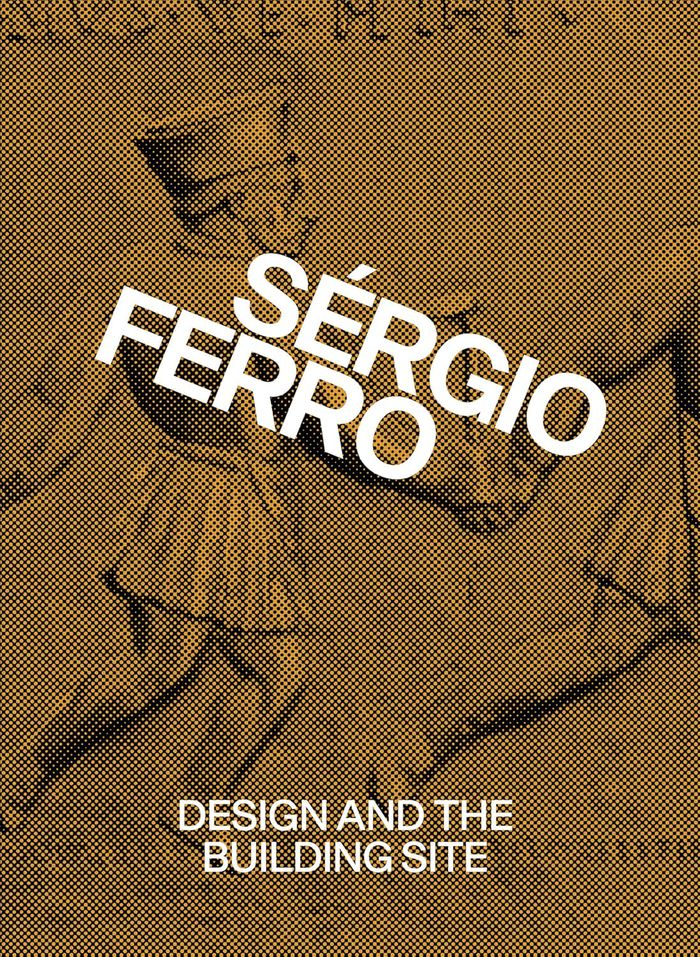
Dating from the early 1970s, ‘'Design and the Building Site'’ is Sérgio Ferro’s most influential theoretical work. Written just after Ferro had arrived in France after fleeing the military dictatorship that took power in Brazil in 1964 and arrested him in 1970 for his involvement in active resistance, the essay reflects much of what he had left behind: encounters with Brasilia’s harsh construction sites; experiences with the collective ''Arquitetura Nova''; work on the editorial committee of the journal ''Teoria e Prática''; and the year Ferro spent in prison, befriending construction workers and reading Freud. The text constitutes a critique of architectural production under capitalism, surveying the political economy of architectural production and its influence on the contemporary practice of architecture. Half a century after its first publication, and in the face of capitalism’s greatest crisis, it has never offered such a pressingly relevant call for action. This edition contextualises and expands on Ferro’s essay with earlier and later texts, clarifying both the contextual and theoretical elements at play in its argument. A preface written by Ferro especially for this first English-language edition recounts his journey from Brasilia’s building sites to the experiments of ''Arquitetura Nova'', as well as a topic he has rarely touched on before: postmodernism.
The building site and the design
Actions:
Prix:
$45.00
(disponible en magasin)
Résumé:
Dating from the early 1970s, ‘'Design and the Building Site'’ is Sérgio Ferro’s most influential theoretical work. Written just after Ferro had arrived in France after fleeing the military dictatorship that took power in Brazil in 1964 and arrested him in 1970 for his involvement in active resistance, the essay reflects much of what he had left behind: encounters with Brasilia’s harsh construction sites; experiences with the collective ''Arquitetura Nova''; work on the editorial committee of the journal ''Teoria e Prática''; and the year Ferro spent in prison, befriending construction workers and reading Freud. The text constitutes a critique of architectural production under capitalism, surveying the political economy of architectural production and its influence on the contemporary practice of architecture. Half a century after its first publication, and in the face of capitalism’s greatest crisis, it has never offered such a pressingly relevant call for action. This edition contextualises and expands on Ferro’s essay with earlier and later texts, clarifying both the contextual and theoretical elements at play in its argument. A preface written by Ferro especially for this first English-language edition recounts his journey from Brasilia’s building sites to the experiments of ''Arquitetura Nova'', as well as a topic he has rarely touched on before: postmodernism.
Classification:
livres
livres
Publication:
avril 2025
avril 2025
Sujet:
Théorie de l’architecture
Théorie de l’architecture
Classification:
livres
livres
Actions:
Prix:
$39.95
(disponible en magasin)
Résumé:
In the mid 1960s Aldo Rossi launched what in retrospect appears a heroic endeavour: a redefinition of architecture founded in the knowledge of the rules and forms that constitute "the European city". Understanding this type of city as a collective artefact, Rossi sought to lead architecture out of the impasse created by a technocratic interpretation of functionalism after(...)
$39.95
(disponible en magasin)
Résumé:
In the mid 1960s Aldo Rossi launched what in retrospect appears a heroic endeavour: a redefinition of architecture founded in the knowledge of the rules and forms that constitute "the European city". Understanding this type of city as a collective artefact, Rossi sought to lead architecture out of the impasse created by a technocratic interpretation of functionalism after(...)
Titre:
OASE 62 : architecture and the project of the city
Actions:
Prix:
$39.95
(disponible en magasin)
Résumé:
In the mid 1960s Aldo Rossi launched what in retrospect appears a heroic endeavour: a redefinition of architecture founded in the knowledge of the rules and forms that constitute "the European city". Understanding this type of city as a collective artefact, Rossi sought to lead architecture out of the impasse created by a technocratic interpretation of functionalism after World War II. Tendenza, with Aldo Rossi and Giorgio Grassi as its main protagonists, proposed the study of existing cities as architectural phenomena, intending to identify enduring formal patterns that could be reworked into elements of a new design. In this issue of "OASE" these ideas and their bearings on architectural practice are traced through the work of Carel Weeber, arguably the most controversial and successful architect to adopt the Italian ideas and transform them in the Dutch context. This issue will examine the relevance of the experience of Tendenza now, against the background of the almost complete erosion of the urban nature of much of suburbanized Europe. Is the reference to "the European city" still tenable? The transformation of these ideas and design solutions in Holland allows us to gauge their effect on the architectural discipline and their contribution to rethinking existing cities.
OASE 62 : architecture and the project of the city
Actions:
Prix:
$39.95
(disponible en magasin)
Résumé:
In the mid 1960s Aldo Rossi launched what in retrospect appears a heroic endeavour: a redefinition of architecture founded in the knowledge of the rules and forms that constitute "the European city". Understanding this type of city as a collective artefact, Rossi sought to lead architecture out of the impasse created by a technocratic interpretation of functionalism after World War II. Tendenza, with Aldo Rossi and Giorgio Grassi as its main protagonists, proposed the study of existing cities as architectural phenomena, intending to identify enduring formal patterns that could be reworked into elements of a new design. In this issue of "OASE" these ideas and their bearings on architectural practice are traced through the work of Carel Weeber, arguably the most controversial and successful architect to adopt the Italian ideas and transform them in the Dutch context. This issue will examine the relevance of the experience of Tendenza now, against the background of the almost complete erosion of the urban nature of much of suburbanized Europe. Is the reference to "the European city" still tenable? The transformation of these ideas and design solutions in Holland allows us to gauge their effect on the architectural discipline and their contribution to rethinking existing cities.
Classification:
livres
livres
Publication:
octobre 2003, Rotterdam
octobre 2003, Rotterdam
Sujet:
Revues, anciens numéros
Revues, anciens numéros
Classification:
livres
livres
Actions:
Prix:
$50.00
(disponible sur commande)
Résumé:
How did the great architects of this century reconcile their vision of architecture with the realities of building? "The details of modern architecture" provides comprehensive analysis of both the technical and the aesthetic importance of details in the development of architecture. With more than 500 illustrations, this book is providing a valuable collective(...)
$50.00
(disponible sur commande)
Résumé:
How did the great architects of this century reconcile their vision of architecture with the realities of building? "The details of modern architecture" provides comprehensive analysis of both the technical and the aesthetic importance of details in the development of architecture. With more than 500 illustrations, this book is providing a valuable collective(...)
Titre:
The details of modern architecture volume 1
Actions:
Prix:
$50.00
(disponible sur commande)
Résumé:
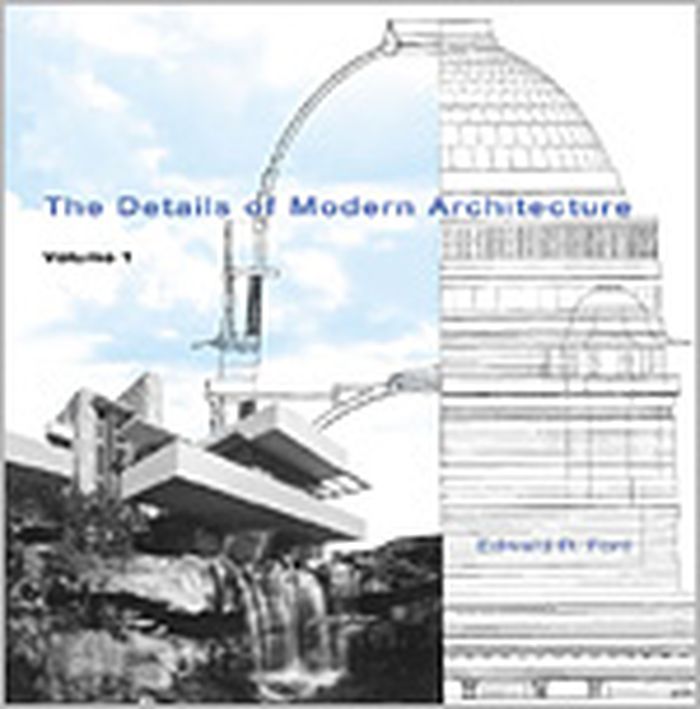
How did the great architects of this century reconcile their vision of architecture with the realities of building? "The details of modern architecture" provides comprehensive analysis of both the technical and the aesthetic importance of details in the development of architecture. With more than 500 illustrations, this book is providing a valuable collective resource. They present the details of notable architectural works drawn in similar styles and formats, allowing comparisons between works of different scales, periods, and styles. Covering the period 1890-1932, Ford focuses on various recognized masters, explaining the detailing and construction techniques that distort, camouflage, or enhance a building. He looks at the source of each architect's ideas, the translation of those ideas into practice, and the success or failure of the technical execution. Ford examines Frank Lloyd Wright's Robie House and Fallingwater Le Corbusier's Villa Savoye, and buildings by McKim, Mead & White, Lutyens, Mies van der Rohe, and Schindler from a point of view that acknowledges the importance of tradition, precedent, style, and ideology in architectural construction. He discusses critical details from a technical and contextual standpoint, considering how they perform how they add to or detract from the building as a whole, and how some have persisted and been adapted through time.
The details of modern architecture volume 1
Actions:
Prix:
$50.00
(disponible sur commande)
Résumé:
How did the great architects of this century reconcile their vision of architecture with the realities of building? "The details of modern architecture" provides comprehensive analysis of both the technical and the aesthetic importance of details in the development of architecture. With more than 500 illustrations, this book is providing a valuable collective resource. They present the details of notable architectural works drawn in similar styles and formats, allowing comparisons between works of different scales, periods, and styles. Covering the period 1890-1932, Ford focuses on various recognized masters, explaining the detailing and construction techniques that distort, camouflage, or enhance a building. He looks at the source of each architect's ideas, the translation of those ideas into practice, and the success or failure of the technical execution. Ford examines Frank Lloyd Wright's Robie House and Fallingwater Le Corbusier's Villa Savoye, and buildings by McKim, Mead & White, Lutyens, Mies van der Rohe, and Schindler from a point of view that acknowledges the importance of tradition, precedent, style, and ideology in architectural construction. He discusses critical details from a technical and contextual standpoint, considering how they perform how they add to or detract from the building as a whole, and how some have persisted and been adapted through time.
Classification:
livres
livres
Publication:
octobre 2003, Cambridge, Mass.
octobre 2003, Cambridge, Mass.
Sujet:
Modernisme
Modernisme
Classification:
livres
livres
Prix:
$18.95
(disponible sur commande)
Résumé:
The fictitious hero of this 1984 installation is a lonely dreamer who develops an impossible project: to fly alone in cosmic space. But this dream is also an individual appropriation of a collective Soviet project and the official Soviet propaganda connected to it. Having built a makeshift slingshot, the hero apparently flies through the ceiling of his shabby room and(...)
$18.95
(disponible sur commande)
Résumé:
The fictitious hero of this 1984 installation is a lonely dreamer who develops an impossible project: to fly alone in cosmic space. But this dream is also an individual appropriation of a collective Soviet project and the official Soviet propaganda connected to it. Having built a makeshift slingshot, the hero apparently flies through the ceiling of his shabby room and(...)
Titre:
Ilka Kabakov: the man who flew into space from his apartment
Actions:
Prix:
$18.95
(disponible sur commande)
Résumé:
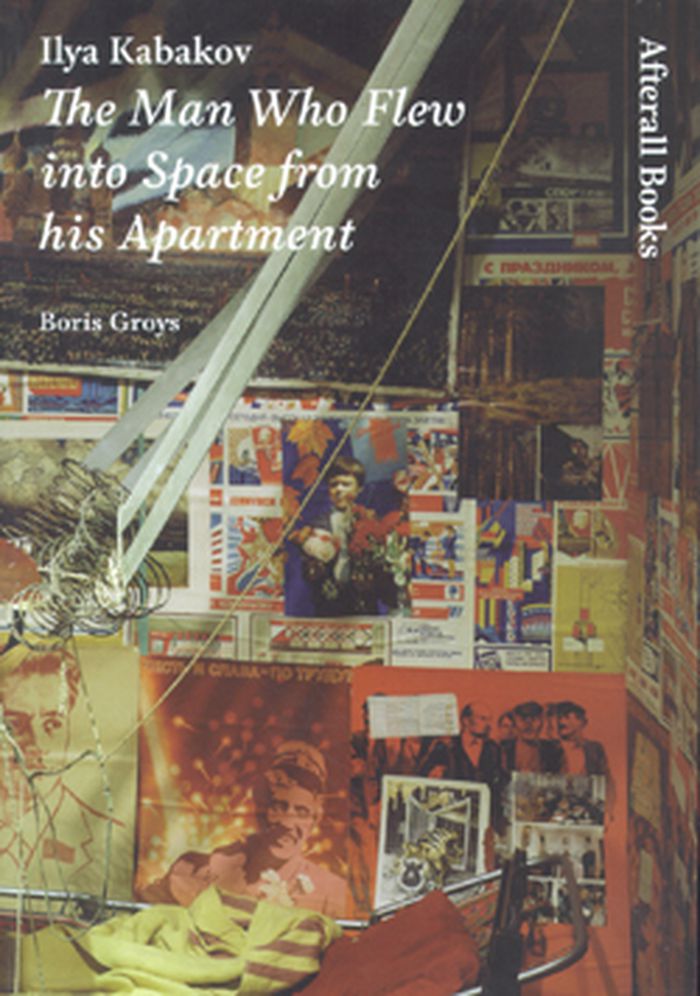
The fictitious hero of this 1984 installation is a lonely dreamer who develops an impossible project: to fly alone in cosmic space. But this dream is also an individual appropriation of a collective Soviet project and the official Soviet propaganda connected to it. Having built a makeshift slingshot, the hero apparently flies through the ceiling of his shabby room and vanishes into space. The miserable room and the primitive slingshot suggest the reality behind the Soviet utopia, in which where cosmic vision and the political project of the Communist revolution are seen as indissoluble. The Man who Flew into Space from His Apartment also raises questions of authorship in modernity. All of Kabakov's work is made in the name of other, fictitious artists. This reveals a hidden rule of the modern art system: only an artist who doesn't want to be an artist or who doesn't even know that he is an artist is a real artist—just as only an artwork that does not look like an artwork is a real artwork. The installation is a narrative, the documentation of a fictitious event. Boris Groys is Professor of Philosophy and Art Theory at the Academy for Design in Karlsruhe, Germany, and Global Professor at New York University.
Ilka Kabakov: the man who flew into space from his apartment
Actions:
Prix:
$18.95
(disponible sur commande)
Résumé:
The fictitious hero of this 1984 installation is a lonely dreamer who develops an impossible project: to fly alone in cosmic space. But this dream is also an individual appropriation of a collective Soviet project and the official Soviet propaganda connected to it. Having built a makeshift slingshot, the hero apparently flies through the ceiling of his shabby room and vanishes into space. The miserable room and the primitive slingshot suggest the reality behind the Soviet utopia, in which where cosmic vision and the political project of the Communist revolution are seen as indissoluble. The Man who Flew into Space from His Apartment also raises questions of authorship in modernity. All of Kabakov's work is made in the name of other, fictitious artists. This reveals a hidden rule of the modern art system: only an artist who doesn't want to be an artist or who doesn't even know that he is an artist is a real artist—just as only an artwork that does not look like an artwork is a real artwork. The installation is a narrative, the documentation of a fictitious event. Boris Groys is Professor of Philosophy and Art Theory at the Academy for Design in Karlsruhe, Germany, and Global Professor at New York University.
Classification:
livres
livres
Publication:
mai 2006, London
mai 2006, London
Sujet:
Théorie de l’art
Théorie de l’art
Classification:
livres
livres
Actions:
Prix:
$54.50
(disponible sur commande)
Résumé:
What does the Western city at the end of the twentieth century look like? How did the modern metropolis of congestion and density turn into a posturban or even postsuburban cityscape? What are edge cities and technoburbs? How has the social composition of cities changed in the postwar era? What do gated communities tell us about social fragmentation? Is public space in(...)
$54.50
(disponible sur commande)
Résumé:
What does the Western city at the end of the twentieth century look like? How did the modern metropolis of congestion and density turn into a posturban or even postsuburban cityscape? What are edge cities and technoburbs? How has the social composition of cities changed in the postwar era? What do gated communities tell us about social fragmentation? Is public space in(...)
Publication:
janvier 1900, Rotterdam
janvier 1900, Rotterdam
Titre:
The urban condition : space, community, and self in the contemporary metropolis
Actions:
Prix:
$54.50
(disponible sur commande)
Résumé:
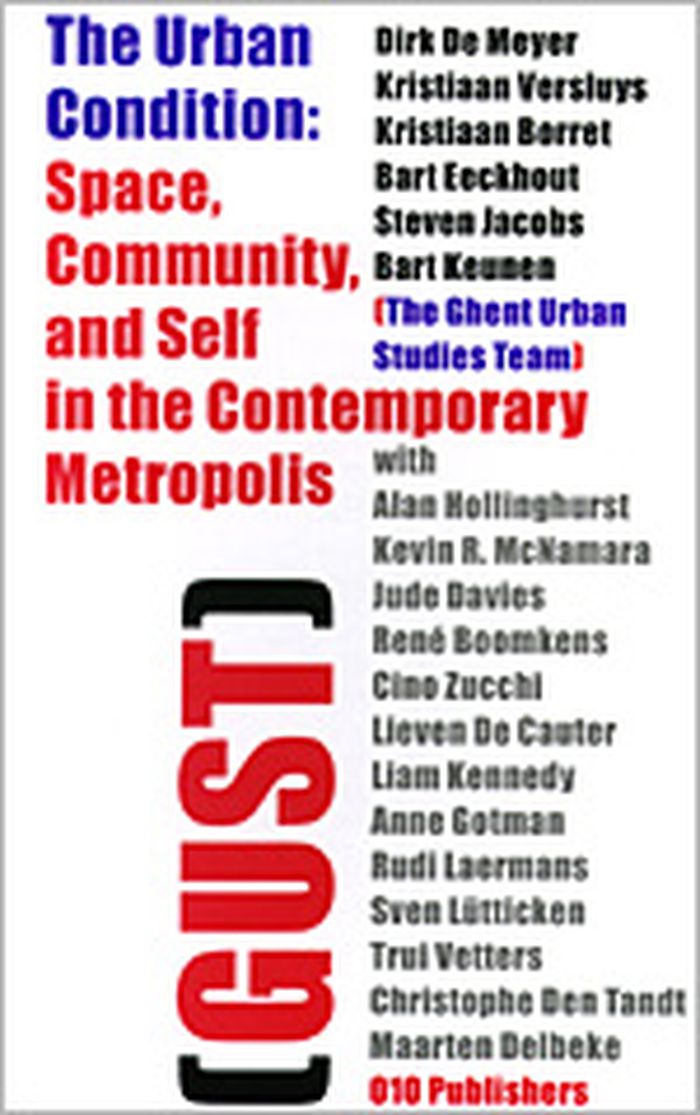
What does the Western city at the end of the twentieth century look like? How did the modern metropolis of congestion and density turn into a posturban or even postsuburban cityscape? What are edge cities and technoburbs? How has the social composition of cities changed in the postwar era? What do gated communities tell us about social fragmentation? Is public space in the contemporary city being privatized and militarized? How can the urban self still be defined? What role does consumer aestheticism have to play in this? These and many more questions are addressed by this uniquely conceived multidisciplinary study. "The Urban Condition" seeks to interfere in current debates over the future and interpretation of our urban landscapes by reuniting studies of the city as a physical and material phenomenon and as a cultural and mental (arte)fact. The Ghent Urban Studies Team responsible for the writing and editing of this volume is directed by Kristiaan Versluys and Dirk De Meyer at the University of Ghent, Belgium. It is an interdisciplinary research team of young academics that further consists of Kristiaan Borret, Bart Eeckhout, Steven Jacobs, and Bart Keunen. The collective expertise of GUST ranges from architectural theory, urban planning, and art history to philosophy, literary criticism and cultural theory.
The urban condition : space, community, and self in the contemporary metropolis
Actions:
Prix:
$54.50
(disponible sur commande)
Résumé:
What does the Western city at the end of the twentieth century look like? How did the modern metropolis of congestion and density turn into a posturban or even postsuburban cityscape? What are edge cities and technoburbs? How has the social composition of cities changed in the postwar era? What do gated communities tell us about social fragmentation? Is public space in the contemporary city being privatized and militarized? How can the urban self still be defined? What role does consumer aestheticism have to play in this? These and many more questions are addressed by this uniquely conceived multidisciplinary study. "The Urban Condition" seeks to interfere in current debates over the future and interpretation of our urban landscapes by reuniting studies of the city as a physical and material phenomenon and as a cultural and mental (arte)fact. The Ghent Urban Studies Team responsible for the writing and editing of this volume is directed by Kristiaan Versluys and Dirk De Meyer at the University of Ghent, Belgium. It is an interdisciplinary research team of young academics that further consists of Kristiaan Borret, Bart Eeckhout, Steven Jacobs, and Bart Keunen. The collective expertise of GUST ranges from architectural theory, urban planning, and art history to philosophy, literary criticism and cultural theory.
Classification:
livres
livres
Publication:
janvier 1900, Rotterdam
janvier 1900, Rotterdam
Classification:
livres
livres

Prix:
$35.95
(disponible sur commande)
Résumé:
Anti-racist design interventions can be difficult. Well-intentioned conversations can fuel tensions, activate racialized trauma, and lead to misunderstandings, especially in spaces not typically focused on diversity, equity, and inclusion. Even when progress is made, white supremacy culture can resurface. We need anti-racist guidelines and approaches that lay bare(...)
$35.95
(disponible sur commande)
Résumé:
Anti-racist design interventions can be difficult. Well-intentioned conversations can fuel tensions, activate racialized trauma, and lead to misunderstandings, especially in spaces not typically focused on diversity, equity, and inclusion. Even when progress is made, white supremacy culture can resurface. We need anti-racist guidelines and approaches that lay bare(...)
Titre:
Racism untaught: Revealing and unlearning racialized design
Actions:
Prix:
$35.95
(disponible sur commande)
Résumé:
Anti-racist design interventions can be difficult. Well-intentioned conversations can fuel tensions, activate racialized trauma, and lead to misunderstandings, especially in spaces not typically focused on diversity, equity, and inclusion. Even when progress is made, white supremacy culture can resurface. We need anti-racist guidelines and approaches that lay bare racialized systems of oppression and fundamentally disrupt their replication. In Racism Untaught, Lisa E. Mercer and Terresa Moses, two veteran anti-racist educators, deliver this exact approach. Mercer and Moses provide a step-by-step guide to anti-racist interventions in academic, business, and community settings that benefits all participants. Adapted from their successful workshop series and filled with concrete examples and ample case studies, their book teaches participants how to analyze design—and reimagine racialized artifacts, systems, and experiences guided by anti-oppressive principles. They demonstrate how to examine positionality within the context of racism and oppression; help us understand how design can reinforce and perpetuate oppression; and reveal the unique relationship among equity, ethics, and responsibility that constitutes the core value of an anti-racist design discipline. In ''Racism untaught'', Mercer and Moses provide the framework we need to unlearn racialized design practices and move more generatively toward collective liberation.
Racism untaught: Revealing and unlearning racialized design
Actions:
Prix:
$35.95
(disponible sur commande)
Résumé:
Anti-racist design interventions can be difficult. Well-intentioned conversations can fuel tensions, activate racialized trauma, and lead to misunderstandings, especially in spaces not typically focused on diversity, equity, and inclusion. Even when progress is made, white supremacy culture can resurface. We need anti-racist guidelines and approaches that lay bare racialized systems of oppression and fundamentally disrupt their replication. In Racism Untaught, Lisa E. Mercer and Terresa Moses, two veteran anti-racist educators, deliver this exact approach. Mercer and Moses provide a step-by-step guide to anti-racist interventions in academic, business, and community settings that benefits all participants. Adapted from their successful workshop series and filled with concrete examples and ample case studies, their book teaches participants how to analyze design—and reimagine racialized artifacts, systems, and experiences guided by anti-oppressive principles. They demonstrate how to examine positionality within the context of racism and oppression; help us understand how design can reinforce and perpetuate oppression; and reveal the unique relationship among equity, ethics, and responsibility that constitutes the core value of an anti-racist design discipline. In ''Racism untaught'', Mercer and Moses provide the framework we need to unlearn racialized design practices and move more generatively toward collective liberation.
Classification:
livres
livres
Publication:
octobre 2023
octobre 2023
Sujet:
Théorie du design
Théorie du design
Classification:
livres
livres
Prix:
$33.95
(disponible sur commande)
Résumé:
A social history of AI that finally reveals its roots in the spatial computation of industrial factories and the surveillance of collective behaviour. What is AI? A dominant view describes it as the quest ''to solve intelligence,'' a solution supposedly to be found in the secret logic of the mind or in the deep physiology of the brain, such as in its complex neural(...)
$33.95
(disponible sur commande)
Résumé:
A social history of AI that finally reveals its roots in the spatial computation of industrial factories and the surveillance of collective behaviour. What is AI? A dominant view describes it as the quest ''to solve intelligence,'' a solution supposedly to be found in the secret logic of the mind or in the deep physiology of the brain, such as in its complex neural(...)
Titre:
The eye of the master: A social history of artificial intelligence
Actions:
Prix:
$33.95
(disponible sur commande)
Résumé:
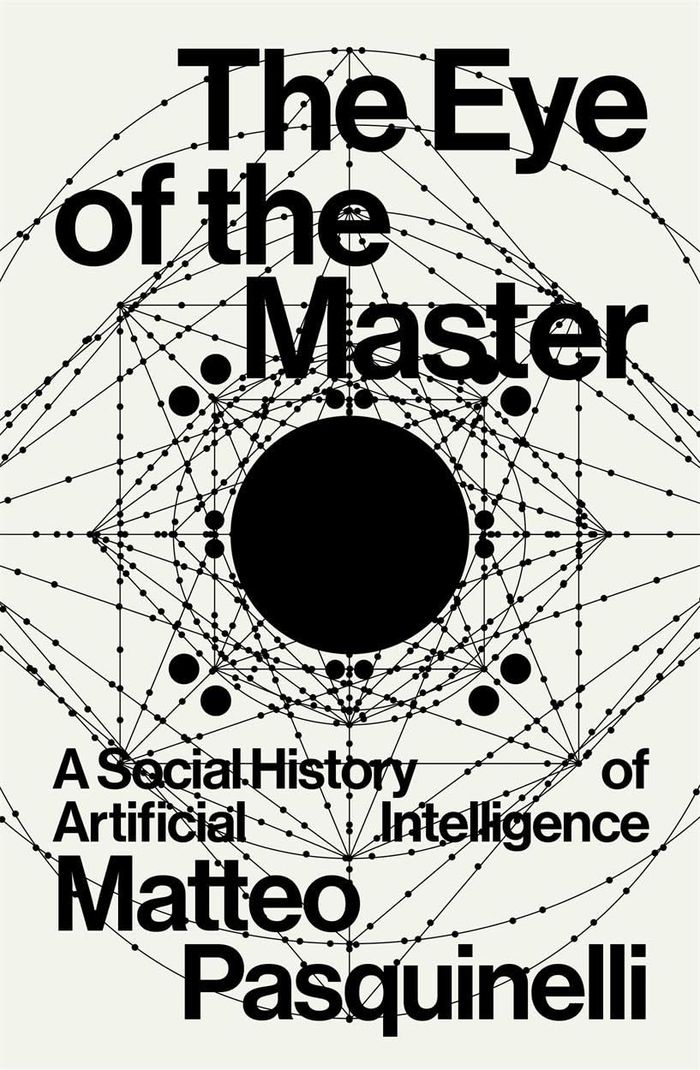
A social history of AI that finally reveals its roots in the spatial computation of industrial factories and the surveillance of collective behaviour. What is AI? A dominant view describes it as the quest ''to solve intelligence,'' a solution supposedly to be found in the secret logic of the mind or in the deep physiology of the brain, such as in its complex neural networks. ''The eye of the master'' argues, to the contrary, that the inner code of AI is shaped not by the imitation of biological intelligence, but the intelligence of labour and social relations, as it is found in Babbage's ''calculating engines'' of the industrial age as well as in the recent algorithms for image recognition and surveillance. The idea that AI may one day become autonomous (or ''sentient'', as someone thought of Google's LaMDA) is pure fantasy. Computer algorithms have always imitated the form of social relations and the organisation of labour in their own inner structure and their purpose remains blind automation. ''The eye of the master'' urges a new literacy on AI for scientists, journalists and new generations of activists, who should recognise that the ''mystery'' of AI is just the automation of labour at the highest degree, not intelligence per se.
The eye of the master: A social history of artificial intelligence
Actions:
Prix:
$33.95
(disponible sur commande)
Résumé:
A social history of AI that finally reveals its roots in the spatial computation of industrial factories and the surveillance of collective behaviour. What is AI? A dominant view describes it as the quest ''to solve intelligence,'' a solution supposedly to be found in the secret logic of the mind or in the deep physiology of the brain, such as in its complex neural networks. ''The eye of the master'' argues, to the contrary, that the inner code of AI is shaped not by the imitation of biological intelligence, but the intelligence of labour and social relations, as it is found in Babbage's ''calculating engines'' of the industrial age as well as in the recent algorithms for image recognition and surveillance. The idea that AI may one day become autonomous (or ''sentient'', as someone thought of Google's LaMDA) is pure fantasy. Computer algorithms have always imitated the form of social relations and the organisation of labour in their own inner structure and their purpose remains blind automation. ''The eye of the master'' urges a new literacy on AI for scientists, journalists and new generations of activists, who should recognise that the ''mystery'' of AI is just the automation of labour at the highest degree, not intelligence per se.
Classification:
livres
livres
Publication:
octobre 2023
octobre 2023
Classification:
périodiques
périodiques
Prix:
$54.00
(disponible sur commande)
Résumé:
Multispace exists at the intersection of the physical and digital, and in the blurring of their previously clear dividing lines. Multispace is not a single space, but a hybrid space where, in effect, we occupy multiple spaces simultaneously. We enter it on a Zoom call, when we are in our office and in a meeting with 20 people; when we are cycling down a country lane(...)
$54.00
(disponible sur commande)
Résumé:
Multispace exists at the intersection of the physical and digital, and in the blurring of their previously clear dividing lines. Multispace is not a single space, but a hybrid space where, in effect, we occupy multiple spaces simultaneously. We enter it on a Zoom call, when we are in our office and in a meeting with 20 people; when we are cycling down a country lane(...)
Titre:
AD Multispace: Architecture at the dawn of the metaverse
Actions:
Prix:
$54.00
(disponible sur commande)
Résumé:
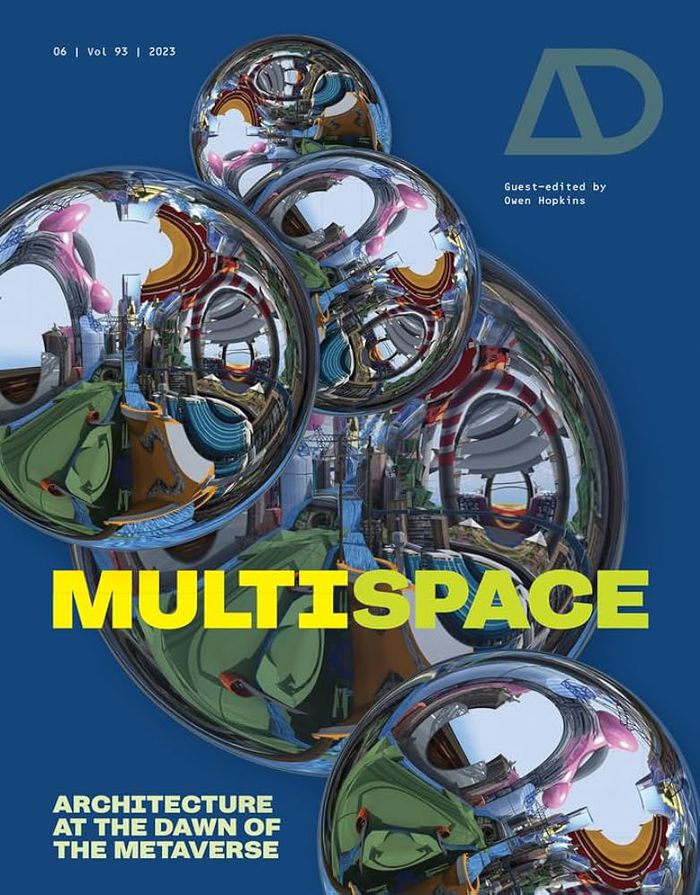
Multispace exists at the intersection of the physical and digital, and in the blurring of their previously clear dividing lines. Multispace is not a single space, but a hybrid space where, in effect, we occupy multiple spaces simultaneously. We enter it on a Zoom call, when we are in our office and in a meeting with 20 people; when we are cycling down a country lane whilst racing against thousands of others who also use the Strava app; when we are watching a TV show while live tweeting; or, perhaps most literally, when wandering around the local park looking for creatures that only appear on a smartphone screen. A fundamental question of this AD is why the phenomena that multispace describes are of concern to architects. The answer is that multispace points to a situation that is at root an architectural one. Offering both a collective and highly personalised experience, static and dynamically customisable, and above all at the same time public and private, multispace lies at the centre of a set of tensions, concerns and preoccupations at the core of our conception of architecture as theory and practice. It is the messy space between, with rough and uneven edges that are constantly shifting.
AD Multispace: Architecture at the dawn of the metaverse
Actions:
Prix:
$54.00
(disponible sur commande)
Résumé:
Multispace exists at the intersection of the physical and digital, and in the blurring of their previously clear dividing lines. Multispace is not a single space, but a hybrid space where, in effect, we occupy multiple spaces simultaneously. We enter it on a Zoom call, when we are in our office and in a meeting with 20 people; when we are cycling down a country lane whilst racing against thousands of others who also use the Strava app; when we are watching a TV show while live tweeting; or, perhaps most literally, when wandering around the local park looking for creatures that only appear on a smartphone screen. A fundamental question of this AD is why the phenomena that multispace describes are of concern to architects. The answer is that multispace points to a situation that is at root an architectural one. Offering both a collective and highly personalised experience, static and dynamically customisable, and above all at the same time public and private, multispace lies at the centre of a set of tensions, concerns and preoccupations at the core of our conception of architecture as theory and practice. It is the messy space between, with rough and uneven edges that are constantly shifting.
Classification:
périodiques
périodiques
Publication:
novembre 2023
novembre 2023
Sujet:
Revues
Revues
Classification:
livres
livres
Titre:
Vacant Spaces NY
Vacant Spaces NY
Actions:
Prix:
$80.00
(disponible sur commande)
Résumé:
This project began by walking around our neighborhood noticing empty storefronts. Once we saw them, they were everywhere. They followed us, appearing quietly throughout New York City. Many with no signage, no “for rent,” no “coming soon.” Usually empty, sometimes dusty, sometimes with brown paper covering the glass. Now, vacancy has only increased. In the densest city in(...)
$80.00
(disponible sur commande)
Résumé:
This project began by walking around our neighborhood noticing empty storefronts. Once we saw them, they were everywhere. They followed us, appearing quietly throughout New York City. Many with no signage, no “for rent,” no “coming soon.” Usually empty, sometimes dusty, sometimes with brown paper covering the glass. Now, vacancy has only increased. In the densest city in(...)
Sujet:
Architecture, monographies
Architecture, monographies
Publication:
octobre 2021
octobre 2021
Titre:
Vacant Spaces NY
Actions:
Prix:
$80.00
(disponible sur commande)
Résumé:
This project began by walking around our neighborhood noticing empty storefronts. Once we saw them, they were everywhere. They followed us, appearing quietly throughout New York City. Many with no signage, no “for rent,” no “coming soon.” Usually empty, sometimes dusty, sometimes with brown paper covering the glass. Now, vacancy has only increased. In the densest city in the United States. During a housing crisis. Throughout a pandemic. The quantity of vacant spaces is anyone’s best guess. It’s only partially documented. They hide in plain sight. This volume is organized from large to small, general to specific. It begins by looking at vacancy within the United States and continues down to each Manhattan neighborhood, where we zoom into specific vacant spaces, where we have provided as case studies that imagine some possibilities for transforming current vacant spaces into housing or social services. There is also a section on Covid 19, which infiltrated New York during our research. As a whole, this document is not meant to provide specific solutions. The data is incomplete. Case studies are limited. We are not policy experts or data analysts or urban planners. Instead, it is simply meant to show something we have taken for granted, vacant spaces, taking part in a collective process of imagining a better city.
Vacant Spaces NY
Actions:
Prix:
$80.00
(disponible sur commande)
Résumé:
This project began by walking around our neighborhood noticing empty storefronts. Once we saw them, they were everywhere. They followed us, appearing quietly throughout New York City. Many with no signage, no “for rent,” no “coming soon.” Usually empty, sometimes dusty, sometimes with brown paper covering the glass. Now, vacancy has only increased. In the densest city in the United States. During a housing crisis. Throughout a pandemic. The quantity of vacant spaces is anyone’s best guess. It’s only partially documented. They hide in plain sight. This volume is organized from large to small, general to specific. It begins by looking at vacancy within the United States and continues down to each Manhattan neighborhood, where we zoom into specific vacant spaces, where we have provided as case studies that imagine some possibilities for transforming current vacant spaces into housing or social services. There is also a section on Covid 19, which infiltrated New York during our research. As a whole, this document is not meant to provide specific solutions. The data is incomplete. Case studies are limited. We are not policy experts or data analysts or urban planners. Instead, it is simply meant to show something we have taken for granted, vacant spaces, taking part in a collective process of imagining a better city.
Classification:
livres
livres
Publication:
octobre 2021
octobre 2021
Sujet:
Architecture, monographies
Architecture, monographies


