


5485 Résultats
Classification:
livres
livres
Actions:
Prix:
$53.95
(disponible sur commande)
Résumé:
La réglementation relative à l’accessibilité des bâtiments aux personnes handicapées, de plus en plus exigeante et complexe, définit de nombreuses règles qui visent à assurer la continuité du cheminement et l’accessibilité des bâtiments à tous, quel que soit le handicap. Ce mémento présente les principes et exigences de la réglementation applicables aux bâtiments(...)
$53.95
(disponible sur commande)
Résumé:
La réglementation relative à l’accessibilité des bâtiments aux personnes handicapées, de plus en plus exigeante et complexe, définit de nombreuses règles qui visent à assurer la continuité du cheminement et l’accessibilité des bâtiments à tous, quel que soit le handicap. Ce mémento présente les principes et exigences de la réglementation applicables aux bâtiments(...)
Publication:
février 2010
février 2010
Titre:
Accessibilité des bâtiments aux personnes handicapées : établissements recevant du public, installations ouvertes au public, bâtiments d'habitation collectifs, maisons individuelles, 2ième édition
Actions:
Prix:
$53.95
(disponible sur commande)
Résumé:
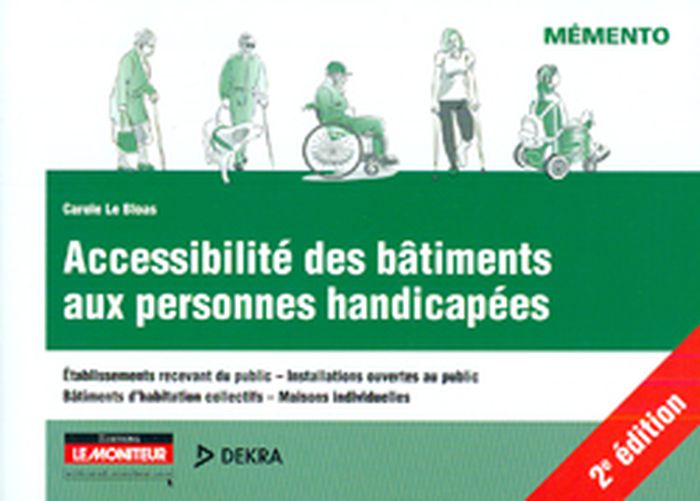
La réglementation relative à l’accessibilité des bâtiments aux personnes handicapées, de plus en plus exigeante et complexe, définit de nombreuses règles qui visent à assurer la continuité du cheminement et l’accessibilité des bâtiments à tous, quel que soit le handicap. Ce mémento présente les principes et exigences de la réglementation applicables aux bâtiments d’habitation, ERP et IOP, neufs et existants, au moyen de tableaux synoptiques, échéanciers, schémas d’ensemble et de détail. Ainsi, il récapitule les obligations et procédures : dates d’entrée en vigueur, diagnostic, autorisations, attestations, contrôle technique, possibilités de dérogation, etc. Il détaille ensuite, sous forme de fiches illustrées, l’ensemble des prescriptions techniques à respecter. De nombreuses recommandations pratiques, issues de l’expérience de terrain des ingénieurs et contrôleurs techniques de DEKRA, facilitent l’application de la réglementation. Ce mémento au format pratique, facile à transporter et à consulter, a été conçu pour guider au quotidien les maîtres d’ouvrage, maîtres d’œuvre, architectes, bureaux d’études et entreprises dans la mise en œuvre des règles d’accessibilité.
Accessibilité des bâtiments aux personnes handicapées : établissements recevant du public, installations ouvertes au public, bâtiments d'habitation collectifs, maisons individuelles, 2ième édition
Actions:
Prix:
$53.95
(disponible sur commande)
Résumé:
La réglementation relative à l’accessibilité des bâtiments aux personnes handicapées, de plus en plus exigeante et complexe, définit de nombreuses règles qui visent à assurer la continuité du cheminement et l’accessibilité des bâtiments à tous, quel que soit le handicap. Ce mémento présente les principes et exigences de la réglementation applicables aux bâtiments d’habitation, ERP et IOP, neufs et existants, au moyen de tableaux synoptiques, échéanciers, schémas d’ensemble et de détail. Ainsi, il récapitule les obligations et procédures : dates d’entrée en vigueur, diagnostic, autorisations, attestations, contrôle technique, possibilités de dérogation, etc. Il détaille ensuite, sous forme de fiches illustrées, l’ensemble des prescriptions techniques à respecter. De nombreuses recommandations pratiques, issues de l’expérience de terrain des ingénieurs et contrôleurs techniques de DEKRA, facilitent l’application de la réglementation. Ce mémento au format pratique, facile à transporter et à consulter, a été conçu pour guider au quotidien les maîtres d’ouvrage, maîtres d’œuvre, architectes, bureaux d’études et entreprises dans la mise en œuvre des règles d’accessibilité.
Classification:
livres
livres
Publication:
février 2010
février 2010
Classification:
livres
livres
Actions:
Exemplaires:
Description:
222 pages : illustrations (some color), plans, portraits (some color) ; 30 cm
Description:
222 pages : illustrations (some color), plans, portraits (some color) ; 30 cm
Auteur:
Sujet:
Publication:
[Paris] : [La Délégation à l'action artistique de la ville de Paris], [©1987]
[Paris] : [La Délégation à l'action artistique de la ville de Paris], [©1987]
Titre:
Louis XVII / ouvrage collectif présenté par la Délégation à l'action artistique de la ville de Paris ; rédigé par Jacques Charles ; avec le concours de Béatrice de Andia [and others].
Actions:
Exemplaires:
Description:
222 pages : illustrations (some color), plans, portraits (some color) ; 30 cm
Louis XVII / ouvrage collectif présenté par la Délégation à l'action artistique de la ville de Paris ; rédigé par Jacques Charles ; avec le concours de Béatrice de Andia [and others].
Actions:
Exemplaires:
Description:
222 pages : illustrations (some color), plans, portraits (some color) ; 30 cm
Classification:
livres
livres
Publication:
[Paris] : [La Délégation à l'action artistique de la ville de Paris], [©1987]
[Paris] : [La Délégation à l'action artistique de la ville de Paris], [©1987]
Auteur:
Sujet:
Classification:
livres
livres

Prix:
$34.95
(disponible sur commande)
Résumé:
From April to October in 1964 and 1965, some 52 million people from around the world flocked to the New York World's Fair, an experience that lives on in the memory of many individuals and in America's collective consciousness. Lawrence R. Samuel offers a thought-provoking portrait of this seminal event and of the cultural climate that surrounded it, countering critics'(...)
$34.95
(disponible sur commande)
Résumé:
From April to October in 1964 and 1965, some 52 million people from around the world flocked to the New York World's Fair, an experience that lives on in the memory of many individuals and in America's collective consciousness. Lawrence R. Samuel offers a thought-provoking portrait of this seminal event and of the cultural climate that surrounded it, countering critics'(...)
Publication:
octobre 2007, Syracuse
octobre 2007, Syracuse
Titre:
The end of innocence : The 1964-1965 New York world's fair
Actions:
Prix:
$34.95
(disponible sur commande)
Résumé:
From April to October in 1964 and 1965, some 52 million people from around the world flocked to the New York World's Fair, an experience that lives on in the memory of many individuals and in America's collective consciousness. Lawrence R. Samuel offers a thought-provoking portrait of this seminal event and of the cultural climate that surrounded it, countering critics' assessment of the Fair as the "ugly duckling" of global expositions. Although much attention has been paid to the controversial role of Fair president Robert Moses, who tried to use the event to ensure his personal legacy, the Fair itself was for the great majority of visitors an overwhelmingly positive, often inspirational, and sometimes transcendent experience that truly delivered on its theme of "peace through understanding." Much of the Fair's popularity, Samuel suggests, stemmed from its looking backward as much as forward, offering visitors sanctuary from the cultural storm that was rapidly approaching in the mid-1960s. Opening just five months after President Kennedy's assassination, the Fair allowed millions to celebrate international brotherhood while the conflict in Vietnam came to a boil. The Fair glorified the postwar American dream of limitless optimism just as a counterculture of sex, drugs, and rock 'n' roll was coming into being. It was, in short, the last gasp of the American Dream: The End of the Innocence.
The end of innocence : The 1964-1965 New York world's fair
Actions:
Prix:
$34.95
(disponible sur commande)
Résumé:
From April to October in 1964 and 1965, some 52 million people from around the world flocked to the New York World's Fair, an experience that lives on in the memory of many individuals and in America's collective consciousness. Lawrence R. Samuel offers a thought-provoking portrait of this seminal event and of the cultural climate that surrounded it, countering critics' assessment of the Fair as the "ugly duckling" of global expositions. Although much attention has been paid to the controversial role of Fair president Robert Moses, who tried to use the event to ensure his personal legacy, the Fair itself was for the great majority of visitors an overwhelmingly positive, often inspirational, and sometimes transcendent experience that truly delivered on its theme of "peace through understanding." Much of the Fair's popularity, Samuel suggests, stemmed from its looking backward as much as forward, offering visitors sanctuary from the cultural storm that was rapidly approaching in the mid-1960s. Opening just five months after President Kennedy's assassination, the Fair allowed millions to celebrate international brotherhood while the conflict in Vietnam came to a boil. The Fair glorified the postwar American dream of limitless optimism just as a counterculture of sex, drugs, and rock 'n' roll was coming into being. It was, in short, the last gasp of the American Dream: The End of the Innocence.
Classification:
livres
livres
Publication:
octobre 2007, Syracuse
octobre 2007, Syracuse
Classification:
livres
livres
Prix:
$33.95
(disponible sur commande)
Résumé:
Big Tech firms dominate the global economy. But what value do they actually produce? In this brilliant survey of global tech economy, Nick Dyer-Witheford and Alessandra Mularoni argue that the role of firms like Amazon and Google, Palantir and Uber, is in the automation of circulation. By applying digital technologies to processes of market exchange—everything from(...)
$33.95
(disponible sur commande)
Résumé:
Big Tech firms dominate the global economy. But what value do they actually produce? In this brilliant survey of global tech economy, Nick Dyer-Witheford and Alessandra Mularoni argue that the role of firms like Amazon and Google, Palantir and Uber, is in the automation of circulation. By applying digital technologies to processes of market exchange—everything from(...)
Titre:
Cybernetic circulation complex: Big tech and planetary crisis
Actions:
Prix:
$33.95
(disponible sur commande)
Résumé:
Big Tech firms dominate the global economy. But what value do they actually produce? In this brilliant survey of global tech economy, Nick Dyer-Witheford and Alessandra Mularoni argue that the role of firms like Amazon and Google, Palantir and Uber, is in the automation of circulation. By applying digital technologies to processes of market exchange—everything from advertising and shopping, to logistics and financial services—Big Tech aims to subject these activities to the level of control and predictability that capital has secured in industrial production. But there is a way out of the multiple crises that Big Tech has helped precipitate. If we are to break their grip on the global economy then it’ll take more than just antitrust legislation or reducing individual time online. By understanding the central role Big Tech plays in contemporary capitalism, Dyer-Witheford and Mularoni argue that what is required instead is a new, ambitious and comprehensive program of democratic collective planning that can move us beyond capitalism. ''Cybernetic Circulation Complex'' offers not only a compelling analysis of the power of Big Tech and their role in our current global crises, but a roadmap for a new form of life: biocommunism, a digital degrowth that can help us steer between the double boundaries of ecological sustainability and equitable social development.
Cybernetic circulation complex: Big tech and planetary crisis
Actions:
Prix:
$33.95
(disponible sur commande)
Résumé:
Big Tech firms dominate the global economy. But what value do they actually produce? In this brilliant survey of global tech economy, Nick Dyer-Witheford and Alessandra Mularoni argue that the role of firms like Amazon and Google, Palantir and Uber, is in the automation of circulation. By applying digital technologies to processes of market exchange—everything from advertising and shopping, to logistics and financial services—Big Tech aims to subject these activities to the level of control and predictability that capital has secured in industrial production. But there is a way out of the multiple crises that Big Tech has helped precipitate. If we are to break their grip on the global economy then it’ll take more than just antitrust legislation or reducing individual time online. By understanding the central role Big Tech plays in contemporary capitalism, Dyer-Witheford and Mularoni argue that what is required instead is a new, ambitious and comprehensive program of democratic collective planning that can move us beyond capitalism. ''Cybernetic Circulation Complex'' offers not only a compelling analysis of the power of Big Tech and their role in our current global crises, but a roadmap for a new form of life: biocommunism, a digital degrowth that can help us steer between the double boundaries of ecological sustainability and equitable social development.
Classification:
livres
livres
Publication:
février 2025
février 2025
Sujet:
Social
Social
Classification:
livres
livres
Actions:
Prix:
$29.95
(disponible sur commande)
Résumé:
Mondialisation capitaliste de la production des échanges, évolutions démographiques, formes de vie nouvelles, ébranlement des repères d'appartenance collective, risques technologiques... tout converge au cours des années quatre-vingt-dix pour mettre en question notre capacité à gouverner l'urbanisation contemporaine caractérisée par ses conurbations envahissant les(...)
$29.95
(disponible sur commande)
Résumé:
Mondialisation capitaliste de la production des échanges, évolutions démographiques, formes de vie nouvelles, ébranlement des repères d'appartenance collective, risques technologiques... tout converge au cours des années quatre-vingt-dix pour mettre en question notre capacité à gouverner l'urbanisation contemporaine caractérisée par ses conurbations envahissant les(...)
Titre:
Entre-ville : une lecture de la Zwischenstadt
Actions:
Prix:
$29.95
(disponible sur commande)
Résumé:
Mondialisation capitaliste de la production des échanges, évolutions démographiques, formes de vie nouvelles, ébranlement des repères d'appartenance collective, risques technologiques... tout converge au cours des années quatre-vingt-dix pour mettre en question notre capacité à gouverner l'urbanisation contemporaine caractérisée par ses conurbations envahissant les campagnes, ses régions urbaines plus structurées par les sites industriels que par les centres historiques et une opinion sensibilisée aux enjeux écologiques. L'essai de Thomas Sieverts prend la mesure de ce défi et s'annonce comme un écrit polémique, une provocation au débat, d'autant qu'il a gagné en urgence. L'inventeur du concept de Zwischenstadt ne propose pas de modèle de ville ni de procédure, il ne se fait pas le chantre de la ville compacte ni de la ville dispersée ; il constate et analyse la multiplicité des décisions qui tissent le processus d'urbanisation réel et surtout il alerte : dégageons-nous de l'emprise de la représentation idéalisée de la ville européenne et ceci dans une démarche tendue vers le projet et porteuse de nouvelles perspectives d'aménagement adaptées à la ville européenne. Le néologisme d'entre-ville, ou plus précisément de la "ville-entre", cherche à exprimer "l'encore non conçu", quelque chose d'autre que le paysage urbanisé ou la ville territoire, une incertitude de ville,une ville hors d'elle-même qui attend d'être vue comme telle.
Entre-ville : une lecture de la Zwischenstadt
Actions:
Prix:
$29.95
(disponible sur commande)
Résumé:
Mondialisation capitaliste de la production des échanges, évolutions démographiques, formes de vie nouvelles, ébranlement des repères d'appartenance collective, risques technologiques... tout converge au cours des années quatre-vingt-dix pour mettre en question notre capacité à gouverner l'urbanisation contemporaine caractérisée par ses conurbations envahissant les campagnes, ses régions urbaines plus structurées par les sites industriels que par les centres historiques et une opinion sensibilisée aux enjeux écologiques. L'essai de Thomas Sieverts prend la mesure de ce défi et s'annonce comme un écrit polémique, une provocation au débat, d'autant qu'il a gagné en urgence. L'inventeur du concept de Zwischenstadt ne propose pas de modèle de ville ni de procédure, il ne se fait pas le chantre de la ville compacte ni de la ville dispersée ; il constate et analyse la multiplicité des décisions qui tissent le processus d'urbanisation réel et surtout il alerte : dégageons-nous de l'emprise de la représentation idéalisée de la ville européenne et ceci dans une démarche tendue vers le projet et porteuse de nouvelles perspectives d'aménagement adaptées à la ville européenne. Le néologisme d'entre-ville, ou plus précisément de la "ville-entre", cherche à exprimer "l'encore non conçu", quelque chose d'autre que le paysage urbanisé ou la ville territoire, une incertitude de ville,une ville hors d'elle-même qui attend d'être vue comme telle.
Classification:
livres
livres
Publication:
août 2004,
août 2004,
Sujet:
Théorie de l’urbanisme
Théorie de l’urbanisme
Classification:
livres
livres
Titre:
La case obus
La case obus
Actions:
Prix:
$54.95
(disponible sur commande)
Résumé:
La case obus est cette forme architecturale si singulière qu’elle avait marqué André Gide et Marc Allégret lors de leur séjour en Afrique (Carnets du Congo, 1927). Notées par tous les voyageurs et missionnaires comme formes inédites, ces architectures ont été attestées dans le Nord Cameroun et au Tchad, régions des Musgums, peuple de pêcheurs et d’éleveurs de poneys,(...)
$54.95
(disponible sur commande)
Résumé:
La case obus est cette forme architecturale si singulière qu’elle avait marqué André Gide et Marc Allégret lors de leur séjour en Afrique (Carnets du Congo, 1927). Notées par tous les voyageurs et missionnaires comme formes inédites, ces architectures ont été attestées dans le Nord Cameroun et au Tchad, régions des Musgums, peuple de pêcheurs et d’éleveurs de poneys,(...)
Titre:
La case obus
Actions:
Prix:
$54.95
(disponible sur commande)
Résumé:
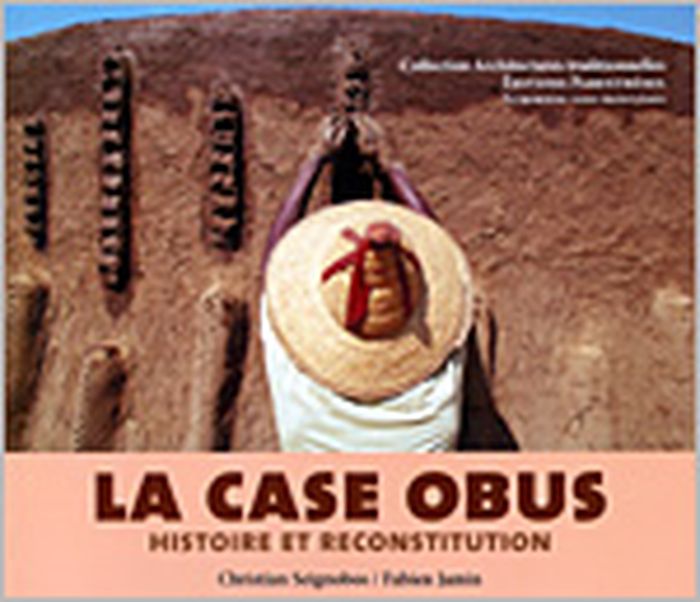
La case obus est cette forme architecturale si singulière qu’elle avait marqué André Gide et Marc Allégret lors de leur séjour en Afrique (Carnets du Congo, 1927). Notées par tous les voyageurs et missionnaires comme formes inédites, ces architectures ont été attestées dans le Nord Cameroun et au Tchad, régions des Musgums, peuple de pêcheurs et d’éleveurs de poneys, avant de disparaître.Véritable curiosité coloniale, elles ont suscité de nombreuses descriptions imagées : « poterie cuite par le soleil ardent », « pains de sucre », « coquille d’œuf » ; mais le terme « case obus » s’est vite imposé, à cause de la métaphore de l’obus pour les premiers observateurs, tous militaires. Ces cases étaient construites dans un mélange de terre et d’herbe, sur un plan circulaire, par superposition d’assises successives, pour des unités pouvant atteindre quinze à vingt mètres de hauteur. Cet ouvrage propose une redécouverte de cette architecture. D’abord par une approche historique du peuple Musgum et des formes d’habitat rencontrées dans la région. Ensuite par le compte rendu d’un chantier-école mené par Patrimoine sans frontières, qui a conduit à la construction de cinq cases obus grâce à une redécouverte des savoir-faire locaux. Outre la description détaillée des techniques constructives originales que cette forme spectaculaire impose, le livre aborde les problèmes liés à la transmission des savoirs dans les sociétés traditionnelles et à la résurgence puis l’appropriation d’espaces inscrits dans la mémoire collective des Musgums.
La case obus
Actions:
Prix:
$54.95
(disponible sur commande)
Résumé:
La case obus est cette forme architecturale si singulière qu’elle avait marqué André Gide et Marc Allégret lors de leur séjour en Afrique (Carnets du Congo, 1927). Notées par tous les voyageurs et missionnaires comme formes inédites, ces architectures ont été attestées dans le Nord Cameroun et au Tchad, régions des Musgums, peuple de pêcheurs et d’éleveurs de poneys, avant de disparaître.Véritable curiosité coloniale, elles ont suscité de nombreuses descriptions imagées : « poterie cuite par le soleil ardent », « pains de sucre », « coquille d’œuf » ; mais le terme « case obus » s’est vite imposé, à cause de la métaphore de l’obus pour les premiers observateurs, tous militaires. Ces cases étaient construites dans un mélange de terre et d’herbe, sur un plan circulaire, par superposition d’assises successives, pour des unités pouvant atteindre quinze à vingt mètres de hauteur. Cet ouvrage propose une redécouverte de cette architecture. D’abord par une approche historique du peuple Musgum et des formes d’habitat rencontrées dans la région. Ensuite par le compte rendu d’un chantier-école mené par Patrimoine sans frontières, qui a conduit à la construction de cinq cases obus grâce à une redécouverte des savoir-faire locaux. Outre la description détaillée des techniques constructives originales que cette forme spectaculaire impose, le livre aborde les problèmes liés à la transmission des savoirs dans les sociétés traditionnelles et à la résurgence puis l’appropriation d’espaces inscrits dans la mémoire collective des Musgums.
Classification:
livres
livres
Publication:
mars 2004, Marseille
mars 2004, Marseille
Sujet:
Arch Moyen-Orient
Arch Moyen-Orient
Classification:
livres
livres
Titre:
Museums and memory
Museums and memory
Actions:
Prix:
$28.50
(disponible sur commande)
Résumé:
Museums today are more than familiar cultural institutions and showplaces of accumulated objects; they are the sites of interaction between personal and collective identities, between memory and history. The essays in this volume consider museums from personal experience and historical study, and from the memories of museum visitors, curators, and(...)
$28.50
(disponible sur commande)
Résumé:
Museums today are more than familiar cultural institutions and showplaces of accumulated objects; they are the sites of interaction between personal and collective identities, between memory and history. The essays in this volume consider museums from personal experience and historical study, and from the memories of museum visitors, curators, and(...)
Titre:
Museums and memory
Actions:
Prix:
$28.50
(disponible sur commande)
Résumé:
Museums today are more than familiar cultural institutions and showplaces of accumulated objects; they are the sites of interaction between personal and collective identities, between memory and history. The essays in this volume consider museums from personal experience and historical study, and from the memories of museum visitors, curators, and scholars. Representing a variety of fields—history, anthropology, art history, and museum scholarship—the contributors discuss museums across disciplinary boundaries that have separated art museums from natural history museums or local history museums from national galleries. The essays range widely over time (from the Renaissance to the second half of the twentieth century), and place (China, Japan, the United States, and Germany), in exhibitions explored (photography, Native American history, and “Jurassic technology”), and institution (the Chinese Imperial Collection, Renaissance curiosity cabinets, and modern art museums). Memory operates thematically among the essays in diverse and provocative ways. The papers are organized according to three suggestive themes: experimental ways of theorizing and designing contemporary museums with an explicit interest in history and memory; discussions of personal encounters with historical exhibits; and the professional risks at stake for collectors and curators who shape the institutional presentation of history and memory. The contributors are Susan A. Crane, Wolfgang Ernst, Michael Fehr, Paula Findlen, Tamara Hamlish, Alexis Joachimides, Suzanne Marchand, Julia A. Thomas, and Diana Drake Wilson.
Museums and memory
Actions:
Prix:
$28.50
(disponible sur commande)
Résumé:
Museums today are more than familiar cultural institutions and showplaces of accumulated objects; they are the sites of interaction between personal and collective identities, between memory and history. The essays in this volume consider museums from personal experience and historical study, and from the memories of museum visitors, curators, and scholars. Representing a variety of fields—history, anthropology, art history, and museum scholarship—the contributors discuss museums across disciplinary boundaries that have separated art museums from natural history museums or local history museums from national galleries. The essays range widely over time (from the Renaissance to the second half of the twentieth century), and place (China, Japan, the United States, and Germany), in exhibitions explored (photography, Native American history, and “Jurassic technology”), and institution (the Chinese Imperial Collection, Renaissance curiosity cabinets, and modern art museums). Memory operates thematically among the essays in diverse and provocative ways. The papers are organized according to three suggestive themes: experimental ways of theorizing and designing contemporary museums with an explicit interest in history and memory; discussions of personal encounters with historical exhibits; and the professional risks at stake for collectors and curators who shape the institutional presentation of history and memory. The contributors are Susan A. Crane, Wolfgang Ernst, Michael Fehr, Paula Findlen, Tamara Hamlish, Alexis Joachimides, Suzanne Marchand, Julia A. Thomas, and Diana Drake Wilson.
Classification:
livres
livres
Publication:
juin 2000, Stanford
juin 2000, Stanford
Classification:
livres
livres
Actions:
Prix:
$67.95
(disponible en magasin)
Résumé:
Munich, notorious in recent history as the capital of the Nazi movement, is the site of Gavriel Rosenfeld's inquiry into the German collective memory of the Third Reich. Rosenfeld shows, with how the city's urban form developed after 1945 in direct reflection of its inhabitants'(...)
$67.95
(disponible en magasin)
Résumé:
Munich, notorious in recent history as the capital of the Nazi movement, is the site of Gavriel Rosenfeld's inquiry into the German collective memory of the Third Reich. Rosenfeld shows, with how the city's urban form developed after 1945 in direct reflection of its inhabitants'(...)
Titre:
Munich and memory : architecture, monuments, and the legacy of the third Reich
Actions:
Prix:
$67.95
(disponible en magasin)
Résumé:
Munich, notorious in recent history as the capital of the Nazi movement, is the site of Gavriel Rosenfeld's inquiry into the German collective memory of the Third Reich. Rosenfeld shows, with how the city's urban form developed after 1945 in direct reflection of its inhabitants' evolving memory of the Second World War and the Nazi dictatorship. In the second half of the twentieth century, the German people's struggle to come to terms with the legacy of Nazism has dramatically shaped nearly all dimensions of their political, social, and cultural life. The area of urban development and the built environment, little explored until now, offers visible evidence of the struggle. By examining the ways in which the people of Munich reconstructed the ruins of their historic buildings, created new works of architecture, dealt with surviving Nazi buildings, and erected new monuments to commemorate the horrors of the recent past, Rosenfeld identifies a spectrum of competing memories of the Nazi experience. Examining the debates between traditionalists, modernists, postmodernists, and critical preservationists, Rosenfeld shows that the memory of Nazism in Munich has never been "repressed" but has rather been defined by constant dissension and evolution. On balance, however, he concludes that Munich came to embody in its urban form a conservative view of the past that was inclined to diminish local responsibility for the Third Reich.
Munich and memory : architecture, monuments, and the legacy of the third Reich
Actions:
Prix:
$67.95
(disponible en magasin)
Résumé:
Munich, notorious in recent history as the capital of the Nazi movement, is the site of Gavriel Rosenfeld's inquiry into the German collective memory of the Third Reich. Rosenfeld shows, with how the city's urban form developed after 1945 in direct reflection of its inhabitants' evolving memory of the Second World War and the Nazi dictatorship. In the second half of the twentieth century, the German people's struggle to come to terms with the legacy of Nazism has dramatically shaped nearly all dimensions of their political, social, and cultural life. The area of urban development and the built environment, little explored until now, offers visible evidence of the struggle. By examining the ways in which the people of Munich reconstructed the ruins of their historic buildings, created new works of architecture, dealt with surviving Nazi buildings, and erected new monuments to commemorate the horrors of the recent past, Rosenfeld identifies a spectrum of competing memories of the Nazi experience. Examining the debates between traditionalists, modernists, postmodernists, and critical preservationists, Rosenfeld shows that the memory of Nazism in Munich has never been "repressed" but has rather been defined by constant dissension and evolution. On balance, however, he concludes that Munich came to embody in its urban form a conservative view of the past that was inclined to diminish local responsibility for the Third Reich.
Classification:
livres
livres
Publication:
avril 2000, Berkeley
avril 2000, Berkeley
Sujet:
Théorie de l’urbanisme
Théorie de l’urbanisme
Classification:
livres
livres
Titre:
Public space? Lost and found
Public space? Lost and found
Actions:
Prix:
$52.50
(disponible sur commande)
Résumé:
“Public space” is a potent and contentious topic among artists, architects, and cultural producers. Public Space? Lost and Found considers the role of aesthetic practices within the construction, identification, and critique of shared territories, and how artists or architects—the “antennae of the race”—can heighten our awareness of rapidly changing formulations of public(...)
$52.50
(disponible sur commande)
Résumé:
“Public space” is a potent and contentious topic among artists, architects, and cultural producers. Public Space? Lost and Found considers the role of aesthetic practices within the construction, identification, and critique of shared territories, and how artists or architects—the “antennae of the race”—can heighten our awareness of rapidly changing formulations of public(...)
Sujet:
Théorie de l’architecture
Théorie de l’architecture
Publication:
juillet 2017
juillet 2017
Titre:
Public space? Lost and found
Actions:
Prix:
$52.50
(disponible sur commande)
Résumé:
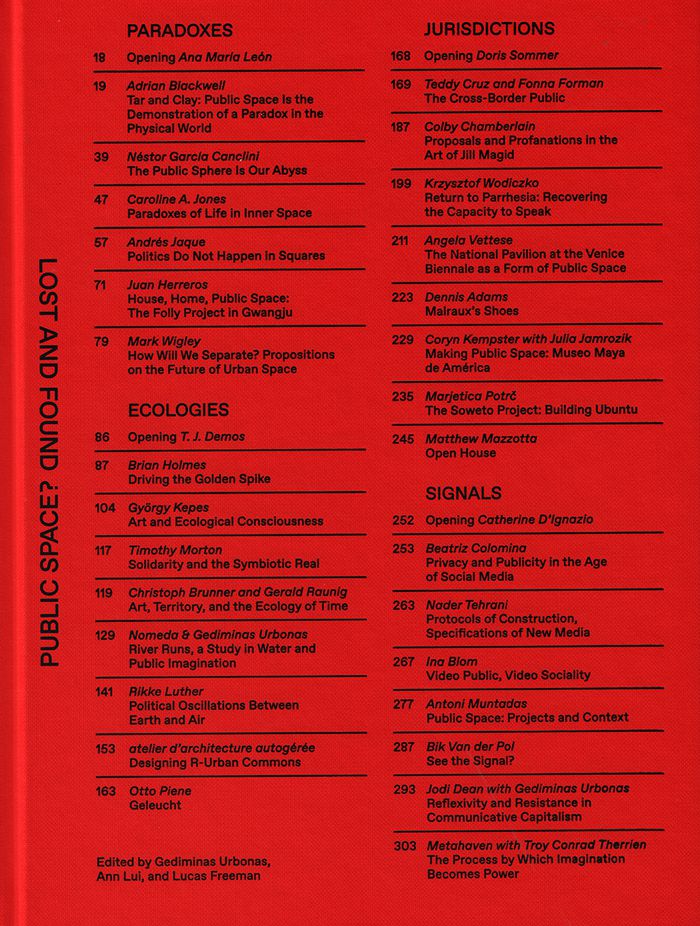
“Public space” is a potent and contentious topic among artists, architects, and cultural producers. Public Space? Lost and Found considers the role of aesthetic practices within the construction, identification, and critique of shared territories, and how artists or architects—the “antennae of the race”—can heighten our awareness of rapidly changing formulations of public space in the age of digital media, vast ecological crises, and civic uprisings. "Public Space? Lost and found" combines significant recent projects in art and architecture with writings by historians and theorists. Contributors investigate strategies for responding to underrepresented communities and areas of conflict through the work of Marjetica Potrc in Johannesburg and Teddy Cruz on the Mexico-U.S. border, among others. They explore our collective stakes in ecological catastrophe through artistic research such as atelier d’architecture autogérée’s hubs for community action and recycling in Colombes, France, and Brian Holmes’s theoretical investigation of new forms of aesthetic perception in the age of the Anthropocene. Inspired by artist and MIT professor Antoni Muntadas’ early coining of the term “media landscape,” contributors also look ahead, casting a critical eye on the fraught impact of digital media and the internet on public space. This book is the first in a new series of volumes produced by the MIT School of Architecture and Planning’s Program in Art, Culture and Technology.
Public space? Lost and found
Actions:
Prix:
$52.50
(disponible sur commande)
Résumé:
“Public space” is a potent and contentious topic among artists, architects, and cultural producers. Public Space? Lost and Found considers the role of aesthetic practices within the construction, identification, and critique of shared territories, and how artists or architects—the “antennae of the race”—can heighten our awareness of rapidly changing formulations of public space in the age of digital media, vast ecological crises, and civic uprisings. "Public Space? Lost and found" combines significant recent projects in art and architecture with writings by historians and theorists. Contributors investigate strategies for responding to underrepresented communities and areas of conflict through the work of Marjetica Potrc in Johannesburg and Teddy Cruz on the Mexico-U.S. border, among others. They explore our collective stakes in ecological catastrophe through artistic research such as atelier d’architecture autogérée’s hubs for community action and recycling in Colombes, France, and Brian Holmes’s theoretical investigation of new forms of aesthetic perception in the age of the Anthropocene. Inspired by artist and MIT professor Antoni Muntadas’ early coining of the term “media landscape,” contributors also look ahead, casting a critical eye on the fraught impact of digital media and the internet on public space. This book is the first in a new series of volumes produced by the MIT School of Architecture and Planning’s Program in Art, Culture and Technology.
Classification:
livres
livres
Publication:
juillet 2017
juillet 2017
Sujet:
Théorie de l’architecture
Théorie de l’architecture
Classification:
livres
livres
Actions:
Prix:
$33.95
(disponible sur commande)
Résumé:
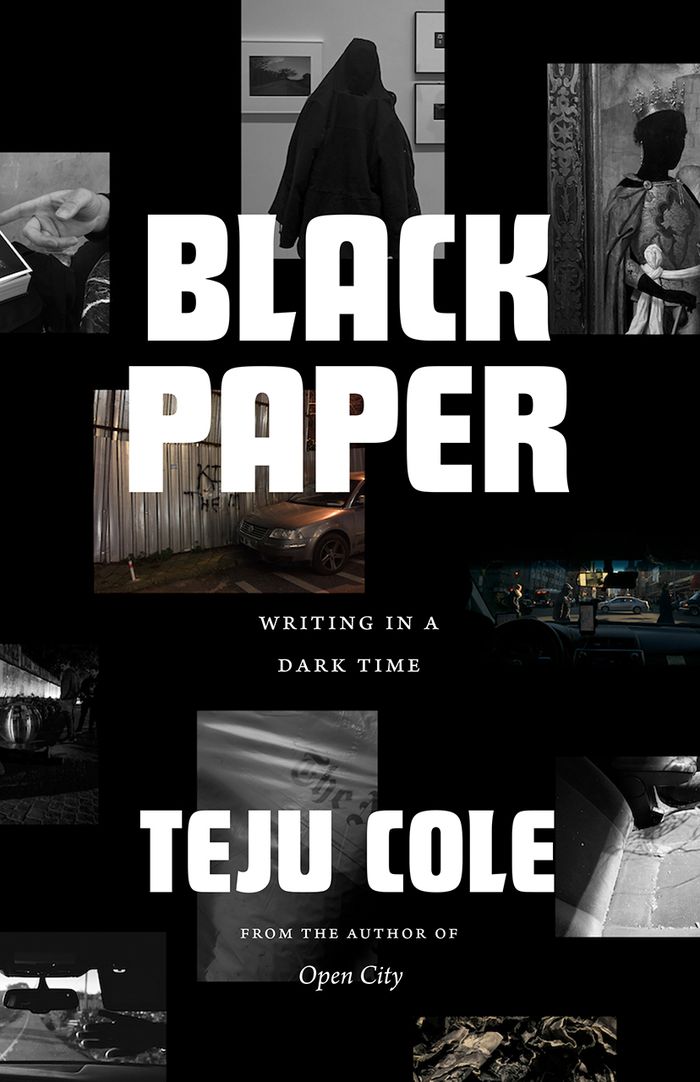
'Darkness is not empty,' writes Teju Cole in ''Black Paper,'' a book that meditates on what it means to sustain our humanity—and witness the humanity of others—in a time of darkness. One of the most celebrated essayists of his generation, Cole here plays variations on the essay form, modeling ways to attend to experience—not just to take in but to think critically about(...)
$33.95
(disponible sur commande)
Résumé:
'Darkness is not empty,' writes Teju Cole in ''Black Paper,'' a book that meditates on what it means to sustain our humanity—and witness the humanity of others—in a time of darkness. One of the most celebrated essayists of his generation, Cole here plays variations on the essay form, modeling ways to attend to experience—not just to take in but to think critically about(...)
Titre:
Black paper : writing in a dark time
Actions:
Prix:
$33.95
(disponible sur commande)
Résumé:
'Darkness is not empty,' writes Teju Cole in ''Black Paper,'' a book that meditates on what it means to sustain our humanity—and witness the humanity of others—in a time of darkness. One of the most celebrated essayists of his generation, Cole here plays variations on the essay form, modeling ways to attend to experience—not just to take in but to think critically about what we sense and what we don’t. Wide-ranging but thematically unified, the essays address ethical questions about what it means to be human and what it means to bear witness, recognizing how our individual present is informed by a collective past. Cole’s writings in ''Black Paper'' approach the fractured moment of our history through a constellation of interrelated concerns: confrontation with unsettling art, elegies both public and private, the defense of writing in a time of political upheaval, the role of the color black in the visual arts, the use of shadow in photography, and the links between literature and activism. Throughout, Cole gives us intriguing new ways of thinking about blackness and its numerous connotations. As he describes the carbon-copy process in his epilogue: 'Writing on the top white sheet would transfer the carbon from the black paper onto the bottom white sheet. Black transported the meaning.'
Black paper : writing in a dark time
Actions:
Prix:
$33.95
(disponible sur commande)
Résumé:
'Darkness is not empty,' writes Teju Cole in ''Black Paper,'' a book that meditates on what it means to sustain our humanity—and witness the humanity of others—in a time of darkness. One of the most celebrated essayists of his generation, Cole here plays variations on the essay form, modeling ways to attend to experience—not just to take in but to think critically about what we sense and what we don’t. Wide-ranging but thematically unified, the essays address ethical questions about what it means to be human and what it means to bear witness, recognizing how our individual present is informed by a collective past. Cole’s writings in ''Black Paper'' approach the fractured moment of our history through a constellation of interrelated concerns: confrontation with unsettling art, elegies both public and private, the defense of writing in a time of political upheaval, the role of the color black in the visual arts, the use of shadow in photography, and the links between literature and activism. Throughout, Cole gives us intriguing new ways of thinking about blackness and its numerous connotations. As he describes the carbon-copy process in his epilogue: 'Writing on the top white sheet would transfer the carbon from the black paper onto the bottom white sheet. Black transported the meaning.'
Classification:
livres
livres
Publication:
octobre 2021
octobre 2021
Sujet:
Social
Social


