


5063 Résultats
Classification:
livres
livres
Actions:
Prix:
$29.95
(disponible sur commande)
Résumé:
Patterns are everywhere in nature: in the ranks of clouds in the sky, the stripes of an angelfish, the arrangement of petals in flowers. Where does this order and regularity come from? As Philip Ball reveals in this third part of the trilogy, this order creates itself. The patterns we see come from self-organization. Indeed, scientists have found that there is a(...)
$29.95
(disponible sur commande)
Résumé:
Patterns are everywhere in nature: in the ranks of clouds in the sky, the stripes of an angelfish, the arrangement of petals in flowers. Where does this order and regularity come from? As Philip Ball reveals in this third part of the trilogy, this order creates itself. The patterns we see come from self-organization. Indeed, scientists have found that there is a(...)
Titre:
Branches: a tapestry in three parts
Actions:
Prix:
$29.95
(disponible sur commande)
Résumé:
Patterns are everywhere in nature: in the ranks of clouds in the sky, the stripes of an angelfish, the arrangement of petals in flowers. Where does this order and regularity come from? As Philip Ball reveals in this third part of the trilogy, this order creates itself. The patterns we see come from self-organization. Indeed, scientists have found that there is a pattern-forming tendency inherent in the basic structure and processes of nature, whether living or non-living, so that from a few simple themes, and the repetition of simple rules, endless beautiful variations can arise.
Branches: a tapestry in three parts
Actions:
Prix:
$29.95
(disponible sur commande)
Résumé:
Patterns are everywhere in nature: in the ranks of clouds in the sky, the stripes of an angelfish, the arrangement of petals in flowers. Where does this order and regularity come from? As Philip Ball reveals in this third part of the trilogy, this order creates itself. The patterns we see come from self-organization. Indeed, scientists have found that there is a pattern-forming tendency inherent in the basic structure and processes of nature, whether living or non-living, so that from a few simple themes, and the repetition of simple rules, endless beautiful variations can arise.
Classification:
livres
livres
Publication:
avril 2008
avril 2008
Sujet:
Théorie du paysage
Théorie du paysage
Classification:
livres
livres
Actions:
Prix:
$21.95
(disponible sur commande)
Résumé:
Then first part of a trilogy of books exploring the science of patterns in nature, this book looks at how shapes form. From soap bubbles to honeycombs, delicate shell patterns, and even the developing body parts of a complex animal like ourselves, the author uncovers patterns in growth and form in all corners of the natural world, explains how these patterns are(...)
$21.95
(disponible sur commande)
Résumé:
Then first part of a trilogy of books exploring the science of patterns in nature, this book looks at how shapes form. From soap bubbles to honeycombs, delicate shell patterns, and even the developing body parts of a complex animal like ourselves, the author uncovers patterns in growth and form in all corners of the natural world, explains how these patterns are(...)
Titre:
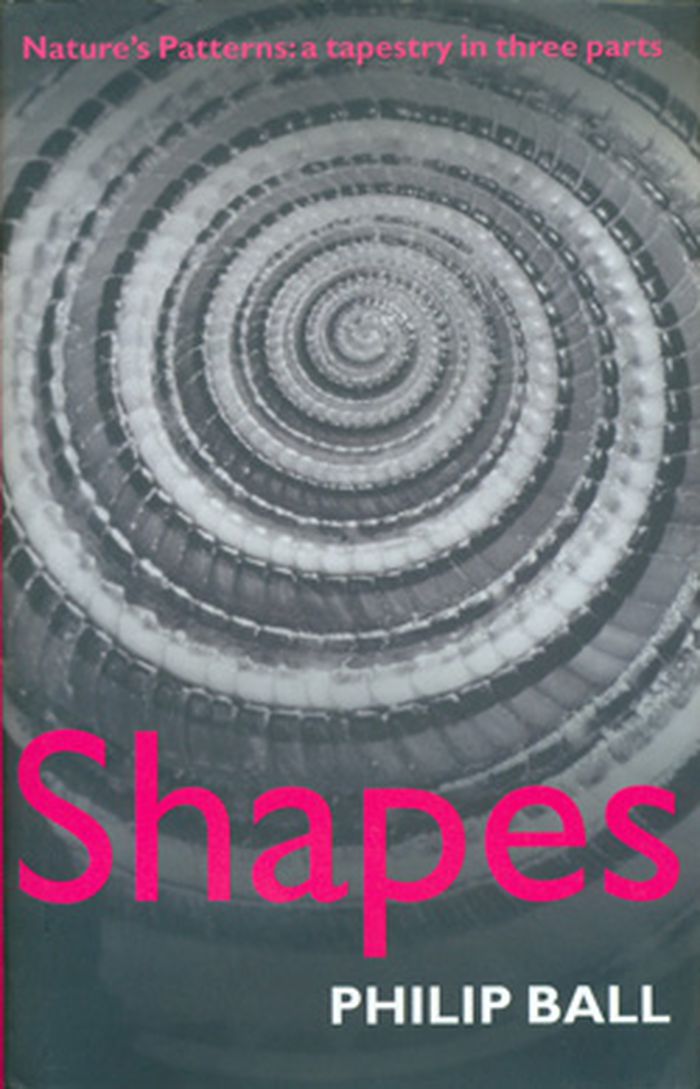
Shapes: nature's patterns: a tapertry in three parts
Actions:
Prix:
$21.95
(disponible sur commande)
Résumé:
Then first part of a trilogy of books exploring the science of patterns in nature, this book looks at how shapes form. From soap bubbles to honeycombs, delicate shell patterns, and even the developing body parts of a complex animal like ourselves, the author uncovers patterns in growth and form in all corners of the natural world, explains how these patterns are self-made, and describes why similar shapes and structures may be found in very different settings, orchestrated by nothing more than simple physical forces. This book will make you look at the world with fresh eyes, seeing order and form in places you'd least expect.
Shapes: nature's patterns: a tapertry in three parts
Actions:
Prix:
$21.95
(disponible sur commande)
Résumé:
Then first part of a trilogy of books exploring the science of patterns in nature, this book looks at how shapes form. From soap bubbles to honeycombs, delicate shell patterns, and even the developing body parts of a complex animal like ourselves, the author uncovers patterns in growth and form in all corners of the natural world, explains how these patterns are self-made, and describes why similar shapes and structures may be found in very different settings, orchestrated by nothing more than simple physical forces. This book will make you look at the world with fresh eyes, seeing order and form in places you'd least expect.
Classification:
livres
livres
Publication:
avril 2008, Oxford
avril 2008, Oxford
Sujet:
Théorie du paysage
Théorie du paysage
Classification:
livres
livres
Prix:
$29.00
(disponible sur commande)
Résumé:
Preface by Fritz Haeg. Texts by Fritz Haeg, Diana Balmori, Rosalind Creasy, Michael Pollan, Lesley Stern, Michelle Christman, Stan Cox, Michael Foti. The Edible Estates project proposes the replacement of the domestic front lawn with a highly productive edible landscape. It was initiated by architect and artist Fritz Haeg on Independence Day, 2005, with the planting of(...)
$29.00
(disponible sur commande)
Résumé:
Preface by Fritz Haeg. Texts by Fritz Haeg, Diana Balmori, Rosalind Creasy, Michael Pollan, Lesley Stern, Michelle Christman, Stan Cox, Michael Foti. The Edible Estates project proposes the replacement of the domestic front lawn with a highly productive edible landscape. It was initiated by architect and artist Fritz Haeg on Independence Day, 2005, with the planting of(...)
Titre:
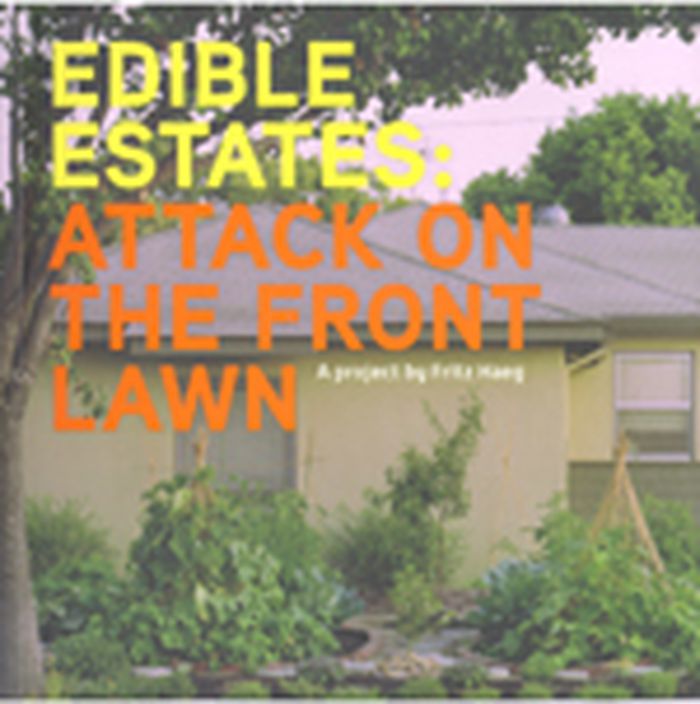
Edible estates: Attack on the front lawn. A project by Fritz Haeg
Actions:
Prix:
$29.00
(disponible sur commande)
Résumé:
Preface by Fritz Haeg. Texts by Fritz Haeg, Diana Balmori, Rosalind Creasy, Michael Pollan, Lesley Stern, Michelle Christman, Stan Cox, Michael Foti. The Edible Estates project proposes the replacement of the domestic front lawn with a highly productive edible landscape. It was initiated by architect and artist Fritz Haeg on Independence Day, 2005, with the planting of the first regional prototype garden in the geographic center of the United States, Salina, Kansas. Since then three more prototype gardens have been created, in Lakewood, California; Maplewood, New Jersey and London, England. Edible Estates regional prototype gardens will ultimately be established in nine cities across the United States. Edible Estates: Attack on the Front Lawn documents the first four gardens with personal accounts written by the owners, garden plans and photographs illustrating the creation of the gardens--from ripping up the grass to harvesting a wide variety of fruits, vegetables and herbs. Essays by Haeg, landscape architect Diana Balmori, garden and food writer Rosalind Creasy, author Michael Pollan and artist and writer Lesley Stern set the Edible Estates project in the context of larger issues concerning the environment, global food production and the imperative to generate a sense of community in our urban and suburban neighborhoods. This smart, affordable and well-designed book also includes reports and photographs from the owners of other edible front yards around the country, as well as helpful resources to guide you in making your own Edible Estate.
Edible estates: Attack on the front lawn. A project by Fritz Haeg
Actions:
Prix:
$29.00
(disponible sur commande)
Résumé:
Preface by Fritz Haeg. Texts by Fritz Haeg, Diana Balmori, Rosalind Creasy, Michael Pollan, Lesley Stern, Michelle Christman, Stan Cox, Michael Foti. The Edible Estates project proposes the replacement of the domestic front lawn with a highly productive edible landscape. It was initiated by architect and artist Fritz Haeg on Independence Day, 2005, with the planting of the first regional prototype garden in the geographic center of the United States, Salina, Kansas. Since then three more prototype gardens have been created, in Lakewood, California; Maplewood, New Jersey and London, England. Edible Estates regional prototype gardens will ultimately be established in nine cities across the United States. Edible Estates: Attack on the Front Lawn documents the first four gardens with personal accounts written by the owners, garden plans and photographs illustrating the creation of the gardens--from ripping up the grass to harvesting a wide variety of fruits, vegetables and herbs. Essays by Haeg, landscape architect Diana Balmori, garden and food writer Rosalind Creasy, author Michael Pollan and artist and writer Lesley Stern set the Edible Estates project in the context of larger issues concerning the environment, global food production and the imperative to generate a sense of community in our urban and suburban neighborhoods. This smart, affordable and well-designed book also includes reports and photographs from the owners of other edible front yards around the country, as well as helpful resources to guide you in making your own Edible Estate.
Classification:
livres
livres
Publication:
février 2008, New York
février 2008, New York
Sujet:
Théorie du paysage
Théorie du paysage
Classification:
livres
livres
Actions:
Prix:
$75.95
(disponible sur commande)
Résumé:
This book is a systematically structured reference work about the techniques and theories applied when constructing outdoor spaces. All the relevant topics are covered, from materials and surfaces via building outdoor features to the use of plants. The book shows how landscape designers and architects can implement their creative ideas with expertise and technical skill.
$75.95
(disponible sur commande)
Résumé:
This book is a systematically structured reference work about the techniques and theories applied when constructing outdoor spaces. All the relevant topics are covered, from materials and surfaces via building outdoor features to the use of plants. The book shows how landscape designers and architects can implement their creative ideas with expertise and technical skill.
Sujet:
Théorie du paysage
Théorie du paysage
Publication:
septembre 2006, Basel, Boston, Berlin
septembre 2006, Basel, Boston, Berlin
Titre:
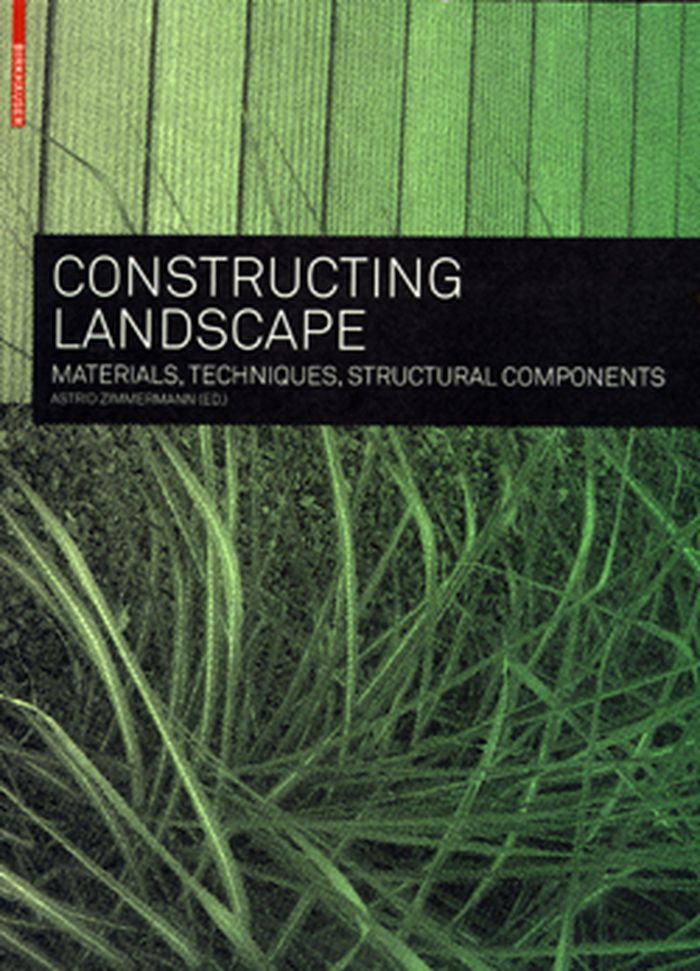
Constructing landscape : materials. techniques, structural components
Actions:
Prix:
$75.95
(disponible sur commande)
Résumé:
This book is a systematically structured reference work about the techniques and theories applied when constructing outdoor spaces. All the relevant topics are covered, from materials and surfaces via building outdoor features to the use of plants. The book shows how landscape designers and architects can implement their creative ideas with expertise and technical skill.
Constructing landscape : materials. techniques, structural components
Actions:
Prix:
$75.95
(disponible sur commande)
Résumé:
This book is a systematically structured reference work about the techniques and theories applied when constructing outdoor spaces. All the relevant topics are covered, from materials and surfaces via building outdoor features to the use of plants. The book shows how landscape designers and architects can implement their creative ideas with expertise and technical skill.
Classification:
livres
livres
Publication:
septembre 2006, Basel, Boston, Berlin
septembre 2006, Basel, Boston, Berlin
Sujet:
Théorie du paysage
Théorie du paysage
Classification:
livres
livres
Titre:
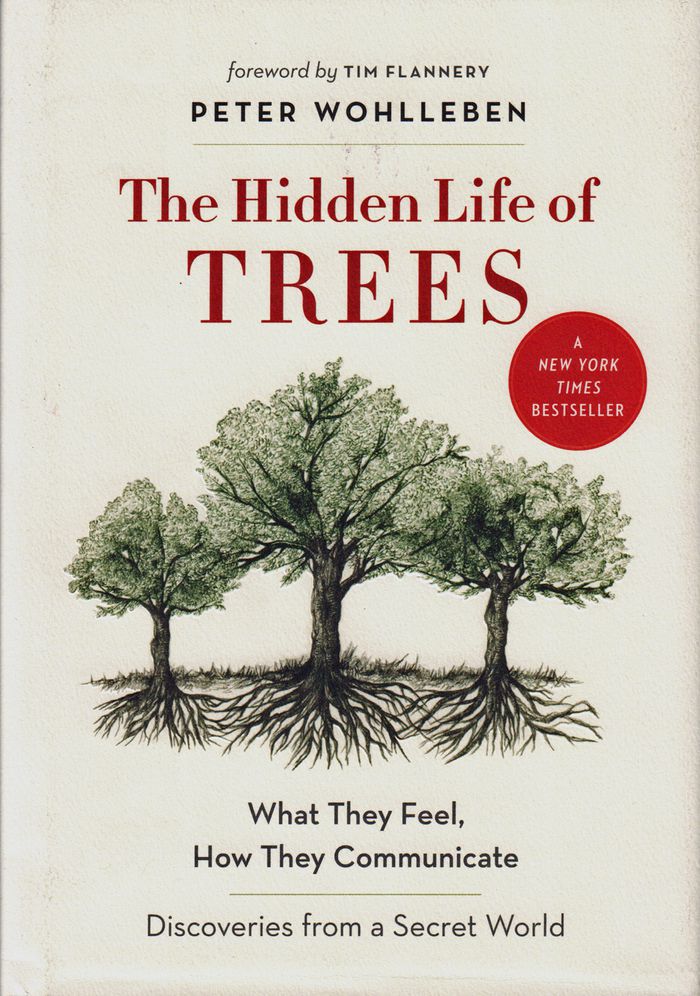
The hidden life of trees: what they feel, how they comunicate- discoveries from a secret world
The hidden life of trees: what they feel, how they comunicate- discoveries from a secret world
Actions:
Prix:
$32.95
(disponible sur commande)
Résumé:
Are trees social beings? In this international bestseller, forester and author Peter Wohlleben convincingly makes the case that, yes, the forest is a social network. He draws on groundbreaking scientific discoveries to describe how trees are like human families: tree parents live together with their children, communicate with them, support them as they grow, share(...)
$32.95
(disponible sur commande)
Résumé:
Are trees social beings? In this international bestseller, forester and author Peter Wohlleben convincingly makes the case that, yes, the forest is a social network. He draws on groundbreaking scientific discoveries to describe how trees are like human families: tree parents live together with their children, communicate with them, support them as they grow, share(...)
Titre:
The hidden life of trees: what they feel, how they comunicate- discoveries from a secret world
Actions:
Prix:
$32.95
(disponible sur commande)
Résumé:
Are trees social beings? In this international bestseller, forester and author Peter Wohlleben convincingly makes the case that, yes, the forest is a social network. He draws on groundbreaking scientific discoveries to describe how trees are like human families: tree parents live together with their children, communicate with them, support them as they grow, share nutrients with those who are sick or struggling, and even warn each other of impending dangers. Wohlleben also shares his deep love of woods and forests, explaining the amazing processes of life, death, and regeneration he has observed in his woodland. After learning about the complex life of trees, a walk in the woods will never be the same again.
The hidden life of trees: what they feel, how they comunicate- discoveries from a secret world
Actions:
Prix:
$32.95
(disponible sur commande)
Résumé:
Are trees social beings? In this international bestseller, forester and author Peter Wohlleben convincingly makes the case that, yes, the forest is a social network. He draws on groundbreaking scientific discoveries to describe how trees are like human families: tree parents live together with their children, communicate with them, support them as they grow, share nutrients with those who are sick or struggling, and even warn each other of impending dangers. Wohlleben also shares his deep love of woods and forests, explaining the amazing processes of life, death, and regeneration he has observed in his woodland. After learning about the complex life of trees, a walk in the woods will never be the same again.
Classification:
livres
livres
Publication:
septembre 2016
septembre 2016
Sujet:
Théorie du paysage
Théorie du paysage
Classification:
livres
livres
Actions:
Prix:
$26.95
(disponible sur commande)
Résumé:
"Accidental gravity" moves from upstate New York to the contemporary western U.S. and into Canada, from urban and suburban places to wild lands. The essays are informative, but the focus is personal. Quetchenbach writes about urban and suburban places as well as wild lands. In the first section of the book, he focuses on suburban neighborhoods, “the places where tensions(...)
$26.95
(disponible sur commande)
Résumé:
"Accidental gravity" moves from upstate New York to the contemporary western U.S. and into Canada, from urban and suburban places to wild lands. The essays are informative, but the focus is personal. Quetchenbach writes about urban and suburban places as well as wild lands. In the first section of the book, he focuses on suburban neighborhoods, “the places where tensions(...)
Titre:
Accidental gravity: residents, travelers, and the landscape of memory
Actions:
Prix:
$26.95
(disponible sur commande)
Résumé:
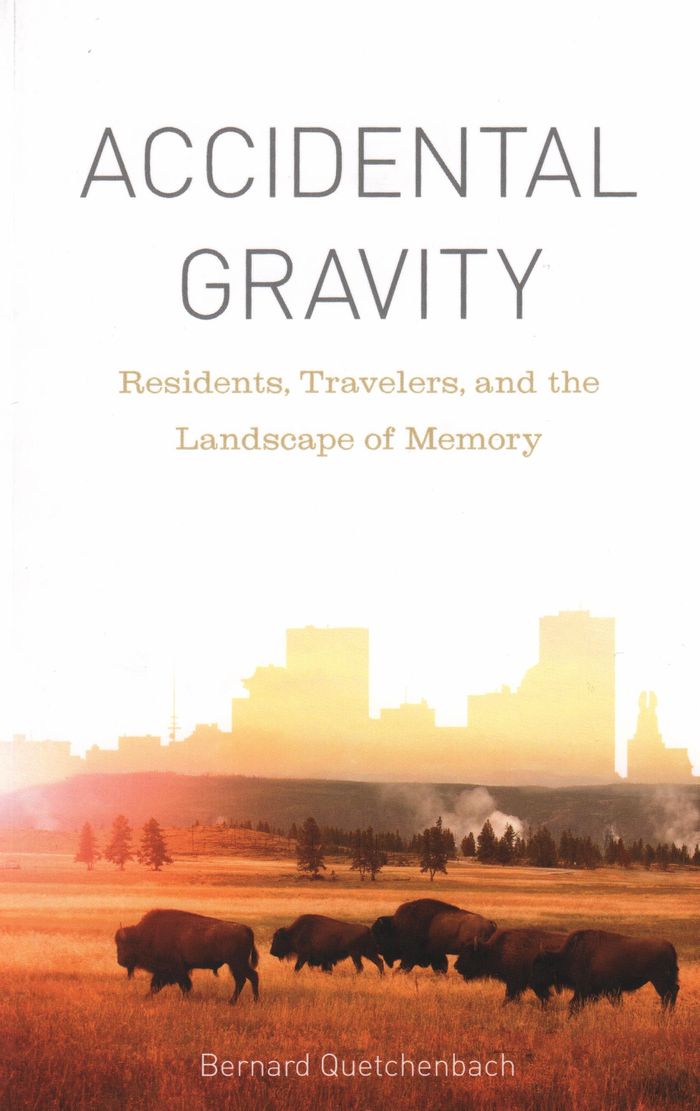
"Accidental gravity" moves from upstate New York to the contemporary western U.S. and into Canada, from urban and suburban places to wild lands. The essays are informative, but the focus is personal. Quetchenbach writes about urban and suburban places as well as wild lands. In the first section of the book, he focuses on suburban neighborhoods, “the places where tensions between human and animal nature, and between differing concepts of the natural world, come to the fore.” In the second section, he juxtaposes these humanized places with Yellowstone National Park, in the context of climate change and other contemporary pressures. This is nature writing at its finest.
Accidental gravity: residents, travelers, and the landscape of memory
Actions:
Prix:
$26.95
(disponible sur commande)
Résumé:
"Accidental gravity" moves from upstate New York to the contemporary western U.S. and into Canada, from urban and suburban places to wild lands. The essays are informative, but the focus is personal. Quetchenbach writes about urban and suburban places as well as wild lands. In the first section of the book, he focuses on suburban neighborhoods, “the places where tensions between human and animal nature, and between differing concepts of the natural world, come to the fore.” In the second section, he juxtaposes these humanized places with Yellowstone National Park, in the context of climate change and other contemporary pressures. This is nature writing at its finest.
Classification:
livres
livres
Publication:
mai 2017
mai 2017
Sujet:
Théorie du paysage
Théorie du paysage
Classification:
livres
livres
Prix:
$76.90
(disponible sur commande)
Résumé:
Today, designers are shifting the practice of landscape architecture towards the need for a more complex understanding of ecological science. Constructed Ecologies presents ecology as critical theory for design, and provides major ideas for design that are supported with solid and imaginative science. Margaret Grose presents wide-ranging new approaches and shows the(...)
$76.90
(disponible sur commande)
Résumé:
Today, designers are shifting the practice of landscape architecture towards the need for a more complex understanding of ecological science. Constructed Ecologies presents ecology as critical theory for design, and provides major ideas for design that are supported with solid and imaginative science. Margaret Grose presents wide-ranging new approaches and shows the(...)
Titre:
Constructed ecologies: critical reflections on ecology with design
Actions:
Prix:
$76.90
(disponible sur commande)
Résumé:
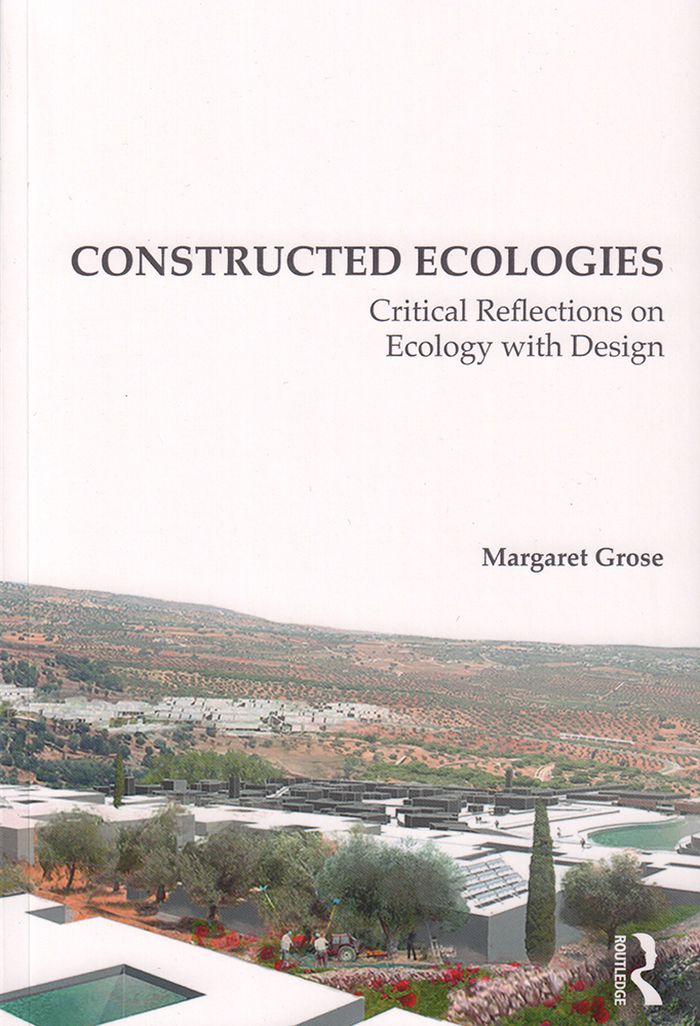
Today, designers are shifting the practice of landscape architecture towards the need for a more complex understanding of ecological science. Constructed Ecologies presents ecology as critical theory for design, and provides major ideas for design that are supported with solid and imaginative science. Margaret Grose presents wide-ranging new approaches and shows the importance of learning from science for design, of going beyond assumptions, of working in multiple rather than single issues, of disrupting linear design thinking, and of dealing with data.
Constructed ecologies: critical reflections on ecology with design
Actions:
Prix:
$76.90
(disponible sur commande)
Résumé:
Today, designers are shifting the practice of landscape architecture towards the need for a more complex understanding of ecological science. Constructed Ecologies presents ecology as critical theory for design, and provides major ideas for design that are supported with solid and imaginative science. Margaret Grose presents wide-ranging new approaches and shows the importance of learning from science for design, of going beyond assumptions, of working in multiple rather than single issues, of disrupting linear design thinking, and of dealing with data.
Classification:
livres
livres
Publication:
avril 2017
avril 2017
Sujet:
Théorie du paysage
Théorie du paysage
Classification:
livres
livres
Titre:
Clouds: nature and culture
Clouds: nature and culture
Actions:
Prix:
$35.50
(disponible sur commande)
Résumé:
Richard Hamblyn explores the notable presence of clouds in literature and the arts (including music and sculpture) while outlining their growing scientific significance in the context of climate change. The book covers the history, science and art of clouds, including the controversial history of cloud modification. All the major cloud types are discussed and illustrated,(...)
$35.50
(disponible sur commande)
Résumé:
Richard Hamblyn explores the notable presence of clouds in literature and the arts (including music and sculpture) while outlining their growing scientific significance in the context of climate change. The book covers the history, science and art of clouds, including the controversial history of cloud modification. All the major cloud types are discussed and illustrated,(...)
Titre:
Clouds: nature and culture
Actions:
Prix:
$35.50
(disponible sur commande)
Résumé:
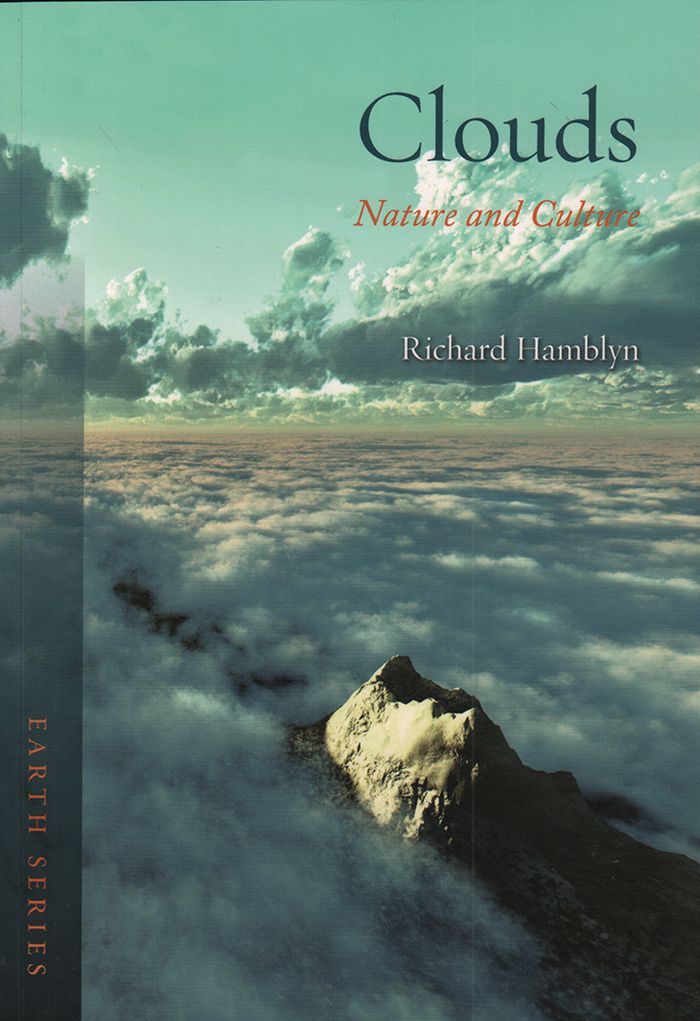
Richard Hamblyn explores the notable presence of clouds in literature and the arts (including music and sculpture) while outlining their growing scientific significance in the context of climate change. The book covers the history, science and art of clouds, including the controversial history of cloud modification. All the major cloud types are discussed and illustrated, including clouds on other planets, as well as the increasing number of man-made clouds that fill our changeable skies.
Clouds: nature and culture
Actions:
Prix:
$35.50
(disponible sur commande)
Résumé:
Richard Hamblyn explores the notable presence of clouds in literature and the arts (including music and sculpture) while outlining their growing scientific significance in the context of climate change. The book covers the history, science and art of clouds, including the controversial history of cloud modification. All the major cloud types are discussed and illustrated, including clouds on other planets, as well as the increasing number of man-made clouds that fill our changeable skies.
Classification:
livres
livres
Publication:
juillet 2017
juillet 2017
Sujet:
Théorie du paysage
Théorie du paysage
Classification:
livres
livres
Titre:
J'ai vu une fleur sauvage
J'ai vu une fleur sauvage
Actions:
Prix:
$27.95
(disponible sur commande)
Résumé:
« Le but de ces pages est de faire connaître un des domaines les plus admirables de la nature : celui des fleurs sauvages dans nos campagnes. Des splendeurs à portée de chacun, mais que l’on peut piétiner toute sa vie sans jamais se pencher pour les admirer. On passe ainsi à côté de joies, à coup sûr renouvelables chaque année. Ce plaisir intense exige un apprentissage :(...)
$27.95
(disponible sur commande)
Résumé:
« Le but de ces pages est de faire connaître un des domaines les plus admirables de la nature : celui des fleurs sauvages dans nos campagnes. Des splendeurs à portée de chacun, mais que l’on peut piétiner toute sa vie sans jamais se pencher pour les admirer. On passe ainsi à côté de joies, à coup sûr renouvelables chaque année. Ce plaisir intense exige un apprentissage :(...)
Titre:
J'ai vu une fleur sauvage
Actions:
Prix:
$27.95
(disponible sur commande)
Résumé:
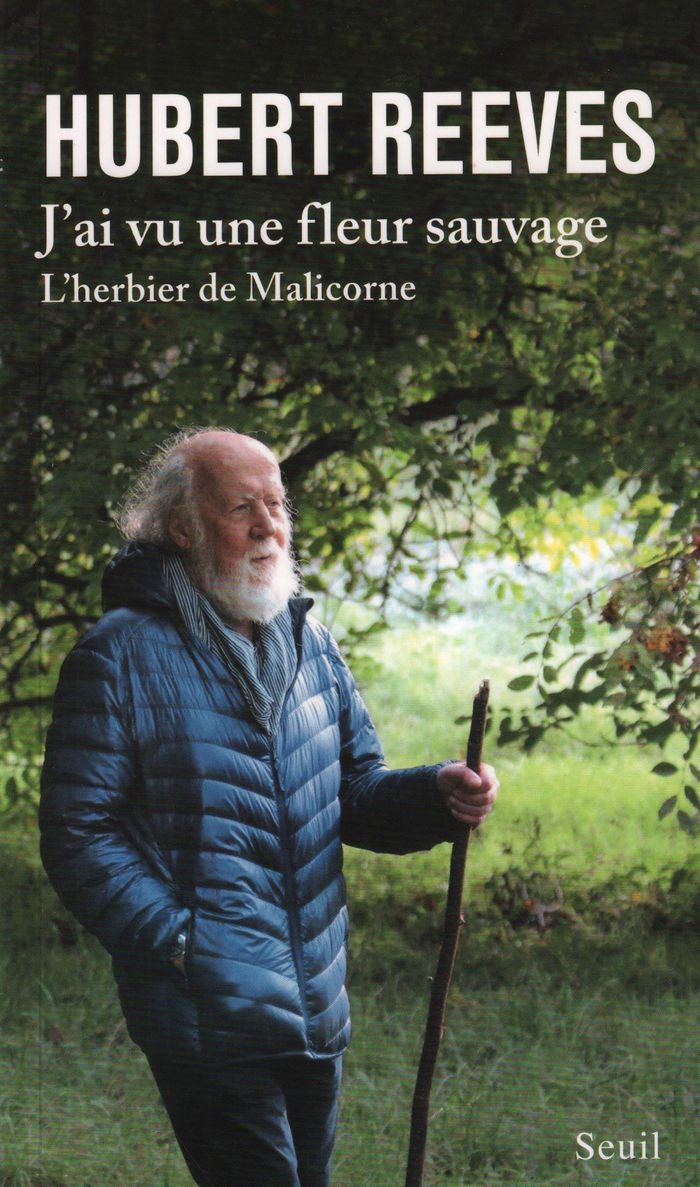
« Le but de ces pages est de faire connaître un des domaines les plus admirables de la nature : celui des fleurs sauvages dans nos campagnes. Des splendeurs à portée de chacun, mais que l’on peut piétiner toute sa vie sans jamais se pencher pour les admirer. On passe ainsi à côté de joies, à coup sûr renouvelables chaque année. Ce plaisir intense exige un apprentissage : savoir reconnaître ces fleurs demande un peu de patience mais se révèle gratifiant au possible, tant est grande la diversité des fleurs sauvages et leurs variations selon les moments de leur vie – et de la nôtre. Pour faciliter cette initiation, j’ai souhaité ici livrer mon rapport personnel à chacune de ces fleurs. » H. R. Ainsi, l’auteur présente avec tendresse plusieurs dizaines de fleurs observées au quotidien sous ses fenêtres et dans les bois de Malicorne, mais que nous pouvons tous croiser au cours de nos promenades : du Millepertuis perforé à l'altière Reine-des-prés, du Pissenlit Dent-de-lion (sur lequel tous les enfants ont soufflé un jour) à la délicate Véronique de Perse en passant par le Bouillon-blanc (surnommé Mars attacks à Malicorne tellement ils est partout) et la Monnaie-du-Pape (dont le nom fait référence à ses fruits plats). Pour chacune de ces fleurs aux noms évocateurs, Hubert Reeves nous dévoile une anecdote, une histoire, une sensation. Puis, à travers ses « Propos botaniques », il nous rappelle la science de la ronde des saisons, de la minutieuse pollinisation, des incroyables copies de l’ADN... Et oui ! C’est plus beau maintenant que l’on sait !
J'ai vu une fleur sauvage
Actions:
Prix:
$27.95
(disponible sur commande)
Résumé:
« Le but de ces pages est de faire connaître un des domaines les plus admirables de la nature : celui des fleurs sauvages dans nos campagnes. Des splendeurs à portée de chacun, mais que l’on peut piétiner toute sa vie sans jamais se pencher pour les admirer. On passe ainsi à côté de joies, à coup sûr renouvelables chaque année. Ce plaisir intense exige un apprentissage : savoir reconnaître ces fleurs demande un peu de patience mais se révèle gratifiant au possible, tant est grande la diversité des fleurs sauvages et leurs variations selon les moments de leur vie – et de la nôtre. Pour faciliter cette initiation, j’ai souhaité ici livrer mon rapport personnel à chacune de ces fleurs. » H. R. Ainsi, l’auteur présente avec tendresse plusieurs dizaines de fleurs observées au quotidien sous ses fenêtres et dans les bois de Malicorne, mais que nous pouvons tous croiser au cours de nos promenades : du Millepertuis perforé à l'altière Reine-des-prés, du Pissenlit Dent-de-lion (sur lequel tous les enfants ont soufflé un jour) à la délicate Véronique de Perse en passant par le Bouillon-blanc (surnommé Mars attacks à Malicorne tellement ils est partout) et la Monnaie-du-Pape (dont le nom fait référence à ses fruits plats). Pour chacune de ces fleurs aux noms évocateurs, Hubert Reeves nous dévoile une anecdote, une histoire, une sensation. Puis, à travers ses « Propos botaniques », il nous rappelle la science de la ronde des saisons, de la minutieuse pollinisation, des incroyables copies de l’ADN... Et oui ! C’est plus beau maintenant que l’on sait !
Classification:
livres
livres
Publication:
avril 2017
avril 2017
Sujet:
Théorie du paysage
Théorie du paysage
Classification:
livres
livres
Titre:
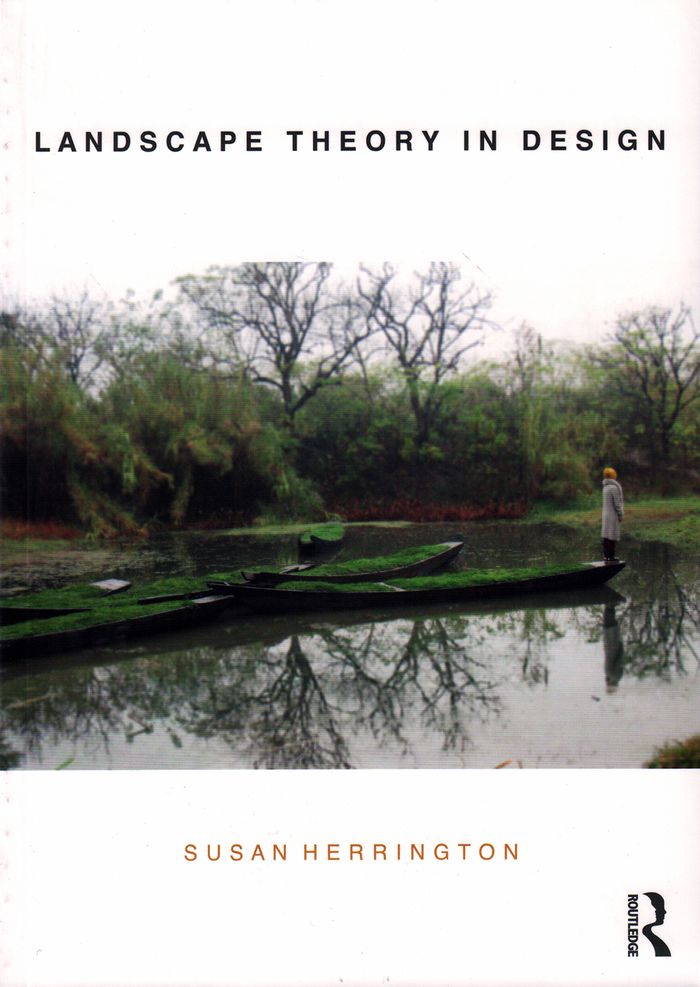
Landscape theory in design
Landscape theory in design
Actions:
Prix:
$90.90
(disponible sur commande)
Résumé:
Phenomenology, Materiality, Cybernetics, Palimpsest, Cyborgs, Landscape Urbanism, Typology, Semiotics, Deconstruction - the minefield of theoretical ideas that students must navigate today can be utterly confusing, and how do these theories translate to the design studio? "Landscape theory in design" introduces theoretical ideas to students without the use of jargon or an(...)
$90.90
(disponible sur commande)
Résumé:
Phenomenology, Materiality, Cybernetics, Palimpsest, Cyborgs, Landscape Urbanism, Typology, Semiotics, Deconstruction - the minefield of theoretical ideas that students must navigate today can be utterly confusing, and how do these theories translate to the design studio? "Landscape theory in design" introduces theoretical ideas to students without the use of jargon or an(...)
Titre:
Landscape theory in design
Actions:
Prix:
$90.90
(disponible sur commande)
Résumé:
Phenomenology, Materiality, Cybernetics, Palimpsest, Cyborgs, Landscape Urbanism, Typology, Semiotics, Deconstruction - the minefield of theoretical ideas that students must navigate today can be utterly confusing, and how do these theories translate to the design studio? "Landscape theory in design" introduces theoretical ideas to students without the use of jargon or an assumption of extensive knowledge in other fields, and in doing so, links these ideas to the processes of design. In five thematic chapters Susan Herrington explains: the theoretic groundings of the theory of philosophy, why it matters to design, an example of the theory in a work of landscape architecture from the twentieth and twenty-first centuries, debates surrounding the theory (particularly as they elaborate modern and postmodern thought) and primary readings that can be read as companions to her text. An extensive glossary of theoretical terms also adds a vital contribution to students’ comprehension of theories relevant to the design of landscapes and gardens.
Landscape theory in design
Actions:
Prix:
$90.90
(disponible sur commande)
Résumé:
Phenomenology, Materiality, Cybernetics, Palimpsest, Cyborgs, Landscape Urbanism, Typology, Semiotics, Deconstruction - the minefield of theoretical ideas that students must navigate today can be utterly confusing, and how do these theories translate to the design studio? "Landscape theory in design" introduces theoretical ideas to students without the use of jargon or an assumption of extensive knowledge in other fields, and in doing so, links these ideas to the processes of design. In five thematic chapters Susan Herrington explains: the theoretic groundings of the theory of philosophy, why it matters to design, an example of the theory in a work of landscape architecture from the twentieth and twenty-first centuries, debates surrounding the theory (particularly as they elaborate modern and postmodern thought) and primary readings that can be read as companions to her text. An extensive glossary of theoretical terms also adds a vital contribution to students’ comprehension of theories relevant to the design of landscapes and gardens.
Classification:
livres
livres
Publication:
janvier 2017
janvier 2017
Sujet:
Théorie du paysage
Théorie du paysage


