


414 Résultats
Classification:
vidéo
vidéo
Actions:
Description:
1 online resource.
Auteur:
Sujet:
Publication:
[Place of publication not identified] : Center for Experimental Lectures, 2011.
[Place of publication not identified] : Center for Experimental Lectures, 2011.
Classification:
vidéo
vidéo
Publication:
[Place of publication not identified] : Center for Experimental Lectures, 2011.
[Place of publication not identified] : Center for Experimental Lectures, 2011.
Auteur:
Sujet:
Classification:
livres
livres
Actions:
Exemplaires:
Description:
xviii, 364 pages, 64 unnumbered pages of plates : illustrations, portraits ; 23 cm
Description:
xviii, 364 pages, 64 unnumbered pages of plates : illustrations, portraits ; 23 cm
Auteur:
Sujet:
Publication:
Chicago : The University of Chicago Press, 1982., ©1955
Chicago : The University of Chicago Press, 1982., ©1955
Titre:
Meaning in the visual arts / Erwin Panofsky.
Actions:
Exemplaires:
Description:
xviii, 364 pages, 64 unnumbered pages of plates : illustrations, portraits ; 23 cm
Meaning in the visual arts / Erwin Panofsky.
Actions:
Exemplaires:
Description:
xviii, 364 pages, 64 unnumbered pages of plates : illustrations, portraits ; 23 cm
Classification:
livres
livres
Publication:
Chicago : The University of Chicago Press, 1982., ©1955
Chicago : The University of Chicago Press, 1982., ©1955
Auteur:
Sujet:
Classification:
livres
livres
Actions:
Prix:
$57.00
(disponible sur commande)
Résumé:
This volume collects the Phoenix-based photographer's images of the Sonoran desert, which he has been shooting since 2003. Using the desert's constant flux to his advantage, Lundgren records the shifting effects of light and atmosphere to create stunning black-and-white images. These photographs express a lust for the primitive, and they reinvigorate the realm of(...)
$57.00
(disponible sur commande)
Résumé:
This volume collects the Phoenix-based photographer's images of the Sonoran desert, which he has been shooting since 2003. Using the desert's constant flux to his advantage, Lundgren records the shifting effects of light and atmosphere to create stunning black-and-white images. These photographs express a lust for the primitive, and they reinvigorate the realm of(...)
Titre:
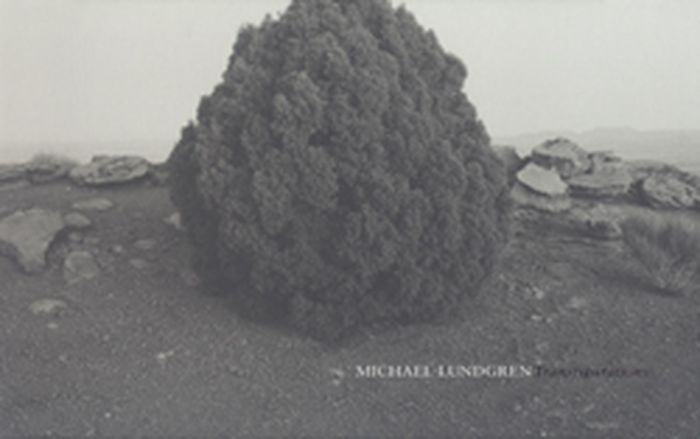
Michael Lundgren: transfigurations
Actions:
Prix:
$57.00
(disponible sur commande)
Résumé:
This volume collects the Phoenix-based photographer's images of the Sonoran desert, which he has been shooting since 2003. Using the desert's constant flux to his advantage, Lundgren records the shifting effects of light and atmosphere to create stunning black-and-white images. These photographs express a lust for the primitive, and they reinvigorate the realm of landscape photography with notions of the sublime. Lundgren elaborates in his statement, "The landscape is only discernible because of the presence of what is fundamentally absent. Myth and metaphor remain unfixed, open." This volume includes a text by the acclaimed critic, historian and best-selling author, Rebecca Solnit, as well as an afterword by the noted scholar and professor William Jenkins, who curated the influential 1975 New Topographics exhibition.
Michael Lundgren: transfigurations
Actions:
Prix:
$57.00
(disponible sur commande)
Résumé:
This volume collects the Phoenix-based photographer's images of the Sonoran desert, which he has been shooting since 2003. Using the desert's constant flux to his advantage, Lundgren records the shifting effects of light and atmosphere to create stunning black-and-white images. These photographs express a lust for the primitive, and they reinvigorate the realm of landscape photography with notions of the sublime. Lundgren elaborates in his statement, "The landscape is only discernible because of the presence of what is fundamentally absent. Myth and metaphor remain unfixed, open." This volume includes a text by the acclaimed critic, historian and best-selling author, Rebecca Solnit, as well as an afterword by the noted scholar and professor William Jenkins, who curated the influential 1975 New Topographics exhibition.
Classification:
livres
livres
Publication:
octobre 2008, Santa Fe
octobre 2008, Santa Fe
Sujet:
Monographies photo
Monographies photo
Classification:
livres
livres
Actions:
Prix:
$95.00
(disponible sur commande)
Résumé:
"Emilio Ambasz" is a monograph devoted to the internationally celebrated architect and designer who is known for designs that skilfully unite architecture and city landscapes and showcase spatial and urbanistic proposals of an absolute originality. Ambasz creates urban complexes that rise like volcanoes of glass-works of architecture that are natural landscapes and(...)
$95.00
(disponible sur commande)
Résumé:
"Emilio Ambasz" is a monograph devoted to the internationally celebrated architect and designer who is known for designs that skilfully unite architecture and city landscapes and showcase spatial and urbanistic proposals of an absolute originality. Ambasz creates urban complexes that rise like volcanoes of glass-works of architecture that are natural landscapes and(...)
Titre:
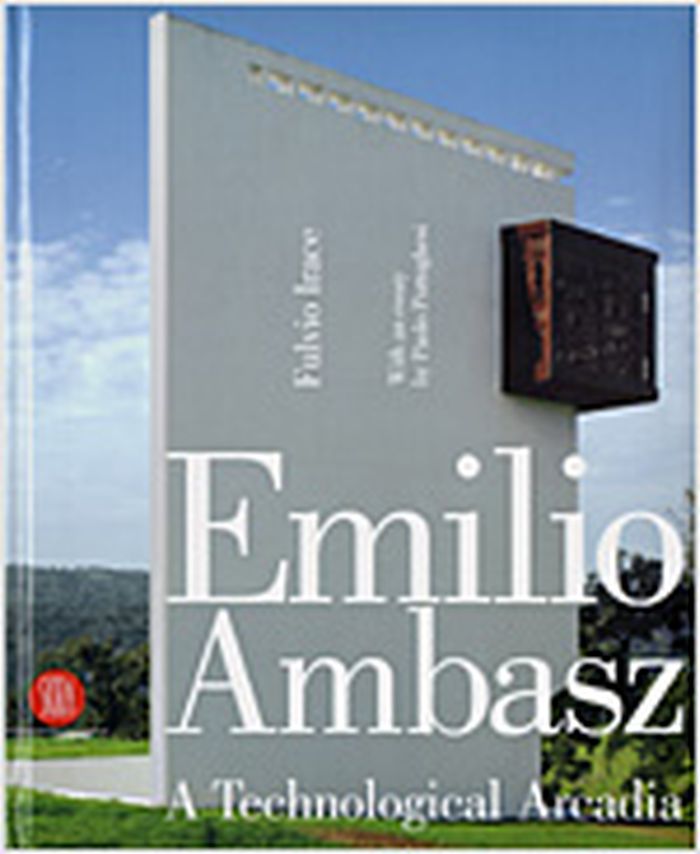
Emilio Ambasz : a technological Arcadia
Actions:
Prix:
$95.00
(disponible sur commande)
Résumé:
"Emilio Ambasz" is a monograph devoted to the internationally celebrated architect and designer who is known for designs that skilfully unite architecture and city landscapes and showcase spatial and urbanistic proposals of an absolute originality. Ambasz creates urban complexes that rise like volcanoes of glass-works of architecture that are natural landscapes and gardens that turn into artificial mechanisms. This monograph documents the creative world of this New York-based architect-designer in both large- and small-scale designs: from the crystalline complex of the San Antonio Botanical Center in Texas (1982) to the Aqua Dove Mineral Water Bottle and an opaque and granite office tower in Phoenix (1998). Ambasz is a master designer at the height of his genius and this book focuses on his more recent works throughout North America.
Emilio Ambasz : a technological Arcadia
Actions:
Prix:
$95.00
(disponible sur commande)
Résumé:
"Emilio Ambasz" is a monograph devoted to the internationally celebrated architect and designer who is known for designs that skilfully unite architecture and city landscapes and showcase spatial and urbanistic proposals of an absolute originality. Ambasz creates urban complexes that rise like volcanoes of glass-works of architecture that are natural landscapes and gardens that turn into artificial mechanisms. This monograph documents the creative world of this New York-based architect-designer in both large- and small-scale designs: from the crystalline complex of the San Antonio Botanical Center in Texas (1982) to the Aqua Dove Mineral Water Bottle and an opaque and granite office tower in Phoenix (1998). Ambasz is a master designer at the height of his genius and this book focuses on his more recent works throughout North America.
Classification:
livres
livres
Publication:
novembre 2004, Milan
novembre 2004, Milan
Sujet:
Architecture, monographies
Architecture, monographies
Classification:
livres
livres

Actions:
Prix:
$36.95
(disponible sur commande)
Résumé:
In the spring of 1966, the architects Umberto Riva and Luisa Castiglioni, the flaneur Enzo Muzii and the art patron Hans Deichmann hired a car in San Francisco in which to travel the length and breadth of the United States and photograph the architecture of Ludwig Mies van der Rohe, Louis Kahn, Frank Lloyd Wright and many others. They visited California and the South(...)
$36.95
(disponible sur commande)
Résumé:
In the spring of 1966, the architects Umberto Riva and Luisa Castiglioni, the flaneur Enzo Muzii and the art patron Hans Deichmann hired a car in San Francisco in which to travel the length and breadth of the United States and photograph the architecture of Ludwig Mies van der Rohe, Louis Kahn, Frank Lloyd Wright and many others. They visited California and the South(...)
Sujet:
Monographies photo
Monographies photo
Publication:
novembre 2024
novembre 2024
Titre:
Luisa Castiglioni, Hans Deichmann, Enzo Muzii, Umberto Riva : USA 1966
Actions:
Prix:
$36.95
(disponible sur commande)
Résumé:
In the spring of 1966, the architects Umberto Riva and Luisa Castiglioni, the flaneur Enzo Muzii and the art patron Hans Deichmann hired a car in San Francisco in which to travel the length and breadth of the United States and photograph the architecture of Ludwig Mies van der Rohe, Louis Kahn, Frank Lloyd Wright and many others. They visited California and the South (Phoenix, Dallas, New Orleans and Atlanta) before heading up to Chicago and Philadelphia, only to reach New York after a month on the road. A Grand Tour comprising cities, architecture, deserts and encounters. An educational journey, but also a discoveryof America in its heyday, captured in magnificent black and white by a group of cultured European travellers. That journey became issue 17 of Zodiac, the international architecture magazine published by Olivetti, while the contact sheets containing the photographs of the four travellers has re-emerged only recently.
Luisa Castiglioni, Hans Deichmann, Enzo Muzii, Umberto Riva : USA 1966
Actions:
Prix:
$36.95
(disponible sur commande)
Résumé:
In the spring of 1966, the architects Umberto Riva and Luisa Castiglioni, the flaneur Enzo Muzii and the art patron Hans Deichmann hired a car in San Francisco in which to travel the length and breadth of the United States and photograph the architecture of Ludwig Mies van der Rohe, Louis Kahn, Frank Lloyd Wright and many others. They visited California and the South (Phoenix, Dallas, New Orleans and Atlanta) before heading up to Chicago and Philadelphia, only to reach New York after a month on the road. A Grand Tour comprising cities, architecture, deserts and encounters. An educational journey, but also a discoveryof America in its heyday, captured in magnificent black and white by a group of cultured European travellers. That journey became issue 17 of Zodiac, the international architecture magazine published by Olivetti, while the contact sheets containing the photographs of the four travellers has re-emerged only recently.
Classification:
livres
livres
Publication:
novembre 2024
novembre 2024
Sujet:
Monographies photo
Monographies photo
Classification:
livres
livres
Actions:
Prix:
$33.95
(disponible sur commande)
Résumé:
Is the capital of Latin America a small island at the mouth of the Hudson River? Will California soon hold the balance of power in Mexican national politics? Will Latinos reinvigorate the US labor movement? These are some of the provocative questions that Mike Davis explores in this fascinating account of the Latinization of the US urban landscape. As he forefully shows,(...)
$33.95
(disponible sur commande)
Résumé:
Is the capital of Latin America a small island at the mouth of the Hudson River? Will California soon hold the balance of power in Mexican national politics? Will Latinos reinvigorate the US labor movement? These are some of the provocative questions that Mike Davis explores in this fascinating account of the Latinization of the US urban landscape. As he forefully shows,(...)
Titre:
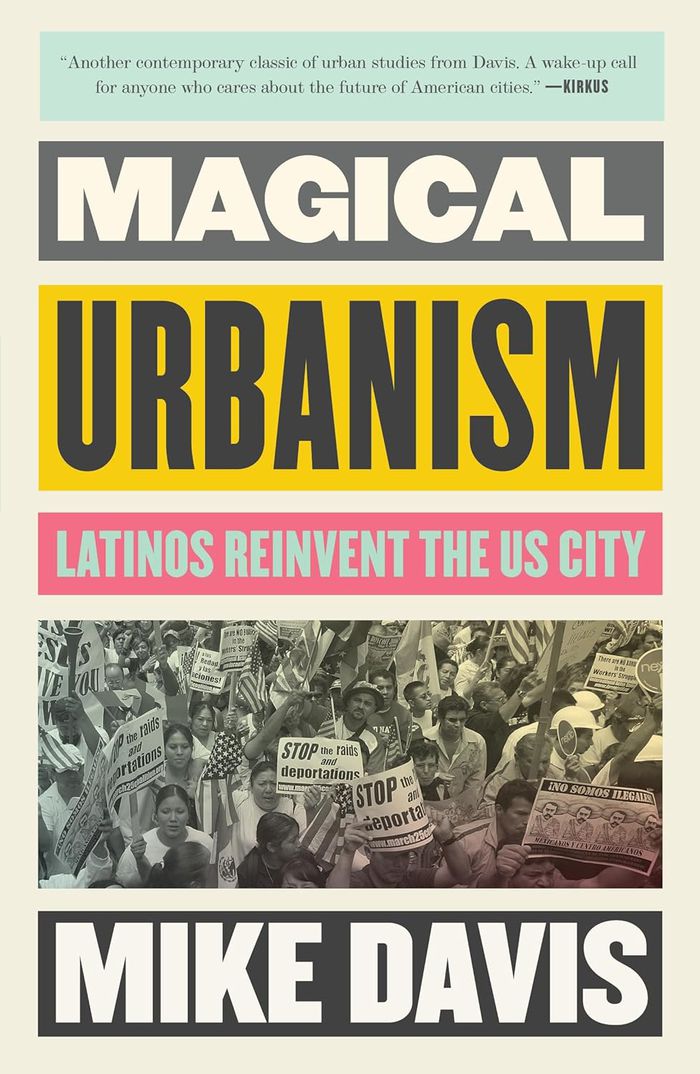
Magical urbanism: Latinos reinvent the US city
Actions:
Prix:
$33.95
(disponible sur commande)
Résumé:
Is the capital of Latin America a small island at the mouth of the Hudson River? Will California soon hold the balance of power in Mexican national politics? Will Latinos reinvigorate the US labor movement? These are some of the provocative questions that Mike Davis explores in this fascinating account of the Latinization of the US urban landscape. As he forefully shows, this is a demographic and cultural revolution with extraordinary implications. With Spanish surnames increasing five times faster than the general population, salsa is becoming the predominant ethnic rhythm (and flavor) of contemporary city life. In Los Angeles, Houston, San Antonio, and (shortly) Dallas, Latinos outnumber non-Hispanic whites; in New York, San Diego and Phoenix they outnumber Blacks. According to the Bureau of the Census, Latinos will supply fully two-thirds of the nation’s population growth between now and the middle of the 21st century when nearly 100 millions Americans will boast Latin American ancestry.
Magical urbanism: Latinos reinvent the US city
Actions:
Prix:
$33.95
(disponible sur commande)
Résumé:
Is the capital of Latin America a small island at the mouth of the Hudson River? Will California soon hold the balance of power in Mexican national politics? Will Latinos reinvigorate the US labor movement? These are some of the provocative questions that Mike Davis explores in this fascinating account of the Latinization of the US urban landscape. As he forefully shows, this is a demographic and cultural revolution with extraordinary implications. With Spanish surnames increasing five times faster than the general population, salsa is becoming the predominant ethnic rhythm (and flavor) of contemporary city life. In Los Angeles, Houston, San Antonio, and (shortly) Dallas, Latinos outnumber non-Hispanic whites; in New York, San Diego and Phoenix they outnumber Blacks. According to the Bureau of the Census, Latinos will supply fully two-thirds of the nation’s population growth between now and the middle of the 21st century when nearly 100 millions Americans will boast Latin American ancestry.
Classification:
livres
livres
Publication:
juin 2024
juin 2024
Sujet:
Théorie de l’urbanisme
Théorie de l’urbanisme
Classification:
livres
livres
Actions:
Prix:
$54.99
(disponible sur commande)
Résumé:
A "new alliance" is being forged between designers and commercial property developers, who are championing progressive design, in projects as diverse as apartment blocks, houses, hotels and offices. While some architects are taking a proactive role in development, others are cutting out a new position for themselves as designer-developers. This is all happening at a time(...)
$54.99
(disponible sur commande)
Résumé:
A "new alliance" is being forged between designers and commercial property developers, who are championing progressive design, in projects as diverse as apartment blocks, houses, hotels and offices. While some architects are taking a proactive role in development, others are cutting out a new position for themselves as designer-developers. This is all happening at a time(...)
Titre:
Property development and progressive architecture : the new alliance
Actions:
Prix:
$54.99
(disponible sur commande)
Résumé:
A "new alliance" is being forged between designers and commercial property developers, who are championing progressive design, in projects as diverse as apartment blocks, houses, hotels and offices. While some architects are taking a proactive role in development, others are cutting out a new position for themselves as designer-developers. This is all happening at a time that property developers are starting to recognise the added value that an architect can bring to a scheme. By taking a truly international look at the projects architects and developers are achieving together, this publication explores the economic and demographic opportunities that are now driving architect-developer alliance in cities as diverse as Amsterdam, Hong Kong, London, Malmo, Melbourne, Montréal, New York, Phoenix and Tokyo. As architects and property developers break boundaries together, they are also beginning to transcend an established pattern of notorious and longstanding ill will. Could this herald a new age of economic saviness in architecture and an appreciation of design input in development?
Property development and progressive architecture : the new alliance
Actions:
Prix:
$54.99
(disponible sur commande)
Résumé:
A "new alliance" is being forged between designers and commercial property developers, who are championing progressive design, in projects as diverse as apartment blocks, houses, hotels and offices. While some architects are taking a proactive role in development, others are cutting out a new position for themselves as designer-developers. This is all happening at a time that property developers are starting to recognise the added value that an architect can bring to a scheme. By taking a truly international look at the projects architects and developers are achieving together, this publication explores the economic and demographic opportunities that are now driving architect-developer alliance in cities as diverse as Amsterdam, Hong Kong, London, Malmo, Melbourne, Montréal, New York, Phoenix and Tokyo. As architects and property developers break boundaries together, they are also beginning to transcend an established pattern of notorious and longstanding ill will. Could this herald a new age of economic saviness in architecture and an appreciation of design input in development?
Classification:
livres
livres
Publication:
janvier 2004, London
janvier 2004, London
Sujet:
Revues, anciens numéros
Revues, anciens numéros
Classification:
audio
audio
Titre:
Lucky Dip.
Lucky Dip.
Actions:
Description:
1 online resource.
Auteur:
Sujet:
Publication:
[Place of publication not identified] : Lateral Addition, 2021.
[Place of publication not identified] : Lateral Addition, 2021.
Classification:
audio
audio
Publication:
[Place of publication not identified] : Lateral Addition, 2021.
[Place of publication not identified] : Lateral Addition, 2021.
Auteur:
Sujet:
Classification:
livres
livres
Prix:
$63.00
(disponible sur commande)
Résumé:
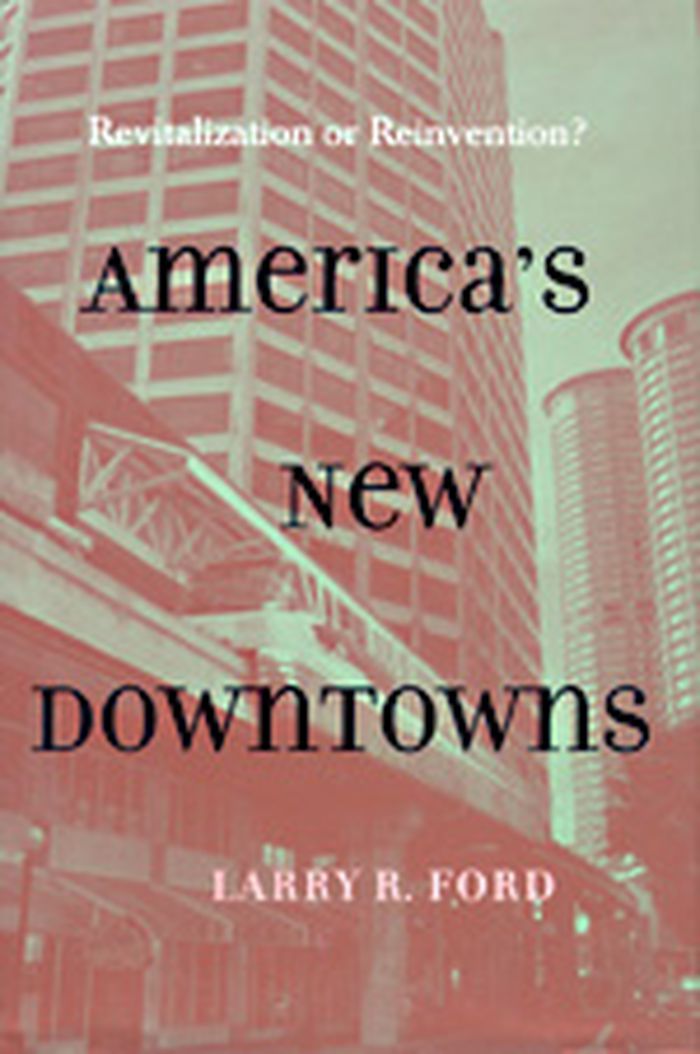
In this book, Larry Ford casts a critical and practiced eye on sixteen contemporary urban centers to offer an expert's view of the best--and worst--of downtown America. Ford begins with a brief history of U.S. urban development. He then explains his criteria for evaluating downtowns before proceeding with an on-the-street examination of the featured sixteen cities.(...)
$63.00
(disponible sur commande)
Résumé:
In this book, Larry Ford casts a critical and practiced eye on sixteen contemporary urban centers to offer an expert's view of the best--and worst--of downtown America. Ford begins with a brief history of U.S. urban development. He then explains his criteria for evaluating downtowns before proceeding with an on-the-street examination of the featured sixteen cities.(...)
Titre:
America's new downtown : revitalization or reinvention ?
Actions:
Prix:
$63.00
(disponible sur commande)
Résumé:
In this book, Larry Ford casts a critical and practiced eye on sixteen contemporary urban centers to offer an expert's view of the best--and worst--of downtown America. Ford begins with a brief history of U.S. urban development. He then explains his criteria for evaluating downtowns before proceeding with an on-the-street examination of the featured sixteen cities. Each is rated based on use of physical site, particularly for housing (unlike suburbs, Ford notes, most downtowns are located in challenging physical locales, such as harbors, rivers, hills, or peninsulas), street morphology, civic space, functional aspects (office space, retail stores, and convention centers), and the support districts in the fringe areas surrounding the downtown core. Ford concludes with a suggested model of downtown structure based upon the case studies and with a look at the possible effects of increasing globalization on the downtowns of the late twenty-first century. Featured cities: Atlanta, Baltimore, Charlotte, Cleveland, Columbus, Denver, Indianapolis, Minneapolis, Phoenix, Pittsburgh, Portland, Providence, San Antonio, San Diego, Seattle, and St. Louis.
America's new downtown : revitalization or reinvention ?
Actions:
Prix:
$63.00
(disponible sur commande)
Résumé:
In this book, Larry Ford casts a critical and practiced eye on sixteen contemporary urban centers to offer an expert's view of the best--and worst--of downtown America. Ford begins with a brief history of U.S. urban development. He then explains his criteria for evaluating downtowns before proceeding with an on-the-street examination of the featured sixteen cities. Each is rated based on use of physical site, particularly for housing (unlike suburbs, Ford notes, most downtowns are located in challenging physical locales, such as harbors, rivers, hills, or peninsulas), street morphology, civic space, functional aspects (office space, retail stores, and convention centers), and the support districts in the fringe areas surrounding the downtown core. Ford concludes with a suggested model of downtown structure based upon the case studies and with a look at the possible effects of increasing globalization on the downtowns of the late twenty-first century. Featured cities: Atlanta, Baltimore, Charlotte, Cleveland, Columbus, Denver, Indianapolis, Minneapolis, Phoenix, Pittsburgh, Portland, Providence, San Antonio, San Diego, Seattle, and St. Louis.
Classification:
livres
livres
Publication:
juillet 2003, Baltimore / London
juillet 2003, Baltimore / London
Sujet:
Théorie de l’urbanisme
Théorie de l’urbanisme
Classification:
livres
livres

Titre:
The break
The break
Actions:
Prix:
$22.95
(disponible en magasin)
Résumé:
When Stella, a young Métis mother, looks out her window one evening and spots someone in trouble on the Break — a barren field on an isolated strip of land outside her house — she calls the police to alert them to a possible crime. In a series of shifting narratives, people who are connected, both directly and indirectly, with the victim — police, family, and friends —(...)
$22.95
(disponible en magasin)
Résumé:
When Stella, a young Métis mother, looks out her window one evening and spots someone in trouble on the Break — a barren field on an isolated strip of land outside her house — she calls the police to alert them to a possible crime. In a series of shifting narratives, people who are connected, both directly and indirectly, with the victim — police, family, and friends —(...)
Titre:
The break
Actions:
Prix:
$22.95
(disponible en magasin)
Résumé:
When Stella, a young Métis mother, looks out her window one evening and spots someone in trouble on the Break — a barren field on an isolated strip of land outside her house — she calls the police to alert them to a possible crime. In a series of shifting narratives, people who are connected, both directly and indirectly, with the victim — police, family, and friends — tell their personal stories leading up to that fateful night. Lou, a social worker, grapples with the departure of her live-in boyfriend. Cheryl, an artist, mourns the premature death of her sister Rain. Paulina, a single mother, struggles to trust her new partner. Phoenix, a homeless teenager, is released from a youth detention centre. Officer Scott, a Métis policeman, feels caught between two worlds as he patrols the city. Through their various perspectives a larger, more comprehensive story about lives of the residents in Winnipeg’s North End is exposed. A powerful intergenerational family saga, ''The Break'' showcases Vermette’s abundant writing talent and positions her as an exciting new voice in Canadian literature.
The break
Actions:
Prix:
$22.95
(disponible en magasin)
Résumé:
When Stella, a young Métis mother, looks out her window one evening and spots someone in trouble on the Break — a barren field on an isolated strip of land outside her house — she calls the police to alert them to a possible crime. In a series of shifting narratives, people who are connected, both directly and indirectly, with the victim — police, family, and friends — tell their personal stories leading up to that fateful night. Lou, a social worker, grapples with the departure of her live-in boyfriend. Cheryl, an artist, mourns the premature death of her sister Rain. Paulina, a single mother, struggles to trust her new partner. Phoenix, a homeless teenager, is released from a youth detention centre. Officer Scott, a Métis policeman, feels caught between two worlds as he patrols the city. Through their various perspectives a larger, more comprehensive story about lives of the residents in Winnipeg’s North End is exposed. A powerful intergenerational family saga, ''The Break'' showcases Vermette’s abundant writing talent and positions her as an exciting new voice in Canadian literature.
Classification:
livres
livres
Publication:
octobre 2016
octobre 2016
Sujet:
Littérature et poésie
Littérature et poésie


