


4173 Résultats
Classification:
périodiques
périodiques
Actions:
Prix:
$80.00
(disponible en magasin)
Résumé:
This new monograph from TC Cuadernos brings us closer to the recent work of Portuguese architect Nuno Brandão Costa, one of the most interesting contemporary voices in Portuguese architecture. This publication follows issue 90, which we released in 2009 featuring his early works, and now covers a period of intense creative activity and professional consolidation from 2010(...)
$80.00
(disponible en magasin)
Résumé:
This new monograph from TC Cuadernos brings us closer to the recent work of Portuguese architect Nuno Brandão Costa, one of the most interesting contemporary voices in Portuguese architecture. This publication follows issue 90, which we released in 2009 featuring his early works, and now covers a period of intense creative activity and professional consolidation from 2010(...)
Titre:
TC 162: Nuno Brandão. Architecture 2010-2023
Actions:
Prix:
$80.00
(disponible en magasin)
Résumé:
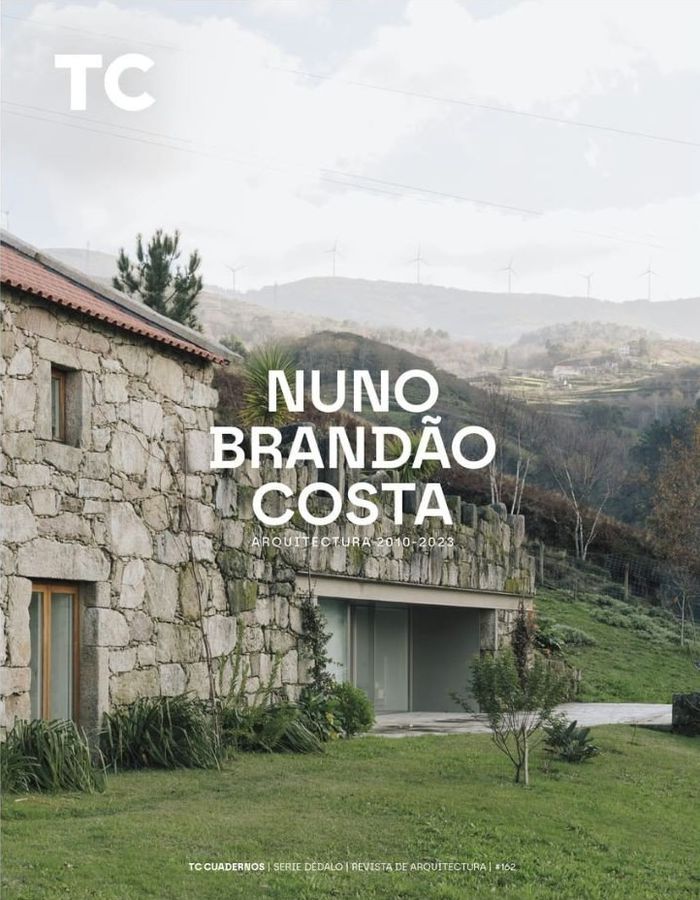
This new monograph from TC Cuadernos brings us closer to the recent work of Portuguese architect Nuno Brandão Costa, one of the most interesting contemporary voices in Portuguese architecture. This publication follows issue 90, which we released in 2009 featuring his early works, and now covers a period of intense creative activity and professional consolidation from 2010 to 2023. It is a meticulous journey through fifteen selected works that demonstrate the maturity reached by this architect over the last decade. The works span various typologies and scales, from single-family homes to large complexes. Projects such as the Campanhã Intermodal Terminal and the rehabilitation of the S. João de Deus neighborhood are studied with special attention, showing how Brandão Costa has expanded his field of action towards large-scale urban projects without losing the artisanal quality of the details that characterize his most intimate residential interventions. In all cases, his conceptual coherence, the harmonious relationship of his works with the landscape, and especially the masterful use of elementary geometries, refined volumes, and care for constructive details stand out.
TC 162: Nuno Brandão. Architecture 2010-2023
Actions:
Prix:
$80.00
(disponible en magasin)
Résumé:
This new monograph from TC Cuadernos brings us closer to the recent work of Portuguese architect Nuno Brandão Costa, one of the most interesting contemporary voices in Portuguese architecture. This publication follows issue 90, which we released in 2009 featuring his early works, and now covers a period of intense creative activity and professional consolidation from 2010 to 2023. It is a meticulous journey through fifteen selected works that demonstrate the maturity reached by this architect over the last decade. The works span various typologies and scales, from single-family homes to large complexes. Projects such as the Campanhã Intermodal Terminal and the rehabilitation of the S. João de Deus neighborhood are studied with special attention, showing how Brandão Costa has expanded his field of action towards large-scale urban projects without losing the artisanal quality of the details that characterize his most intimate residential interventions. In all cases, his conceptual coherence, the harmonious relationship of his works with the landscape, and especially the masterful use of elementary geometries, refined volumes, and care for constructive details stand out.
Classification:
périodiques
périodiques
Publication:
décembre 2023
décembre 2023
Sujet:
Architecture, monographies
Architecture, monographies
Classification:
livres
livres
Actions:
Prix:
$31.50
(disponible sur commande)
Résumé:
Frank Lloyd Wright’s Larkin building has become an icon of modern architecture. And the fact that it was demolished only forty-six years after its 1904 completion makes Jack Quinan’s study of the building — which housed a Buffalo, New York, soap company — all the more valuable. Quinan’s history draws on engineering documents, personal accounts of the building, and(...)
$31.50
(disponible sur commande)
Résumé:
Frank Lloyd Wright’s Larkin building has become an icon of modern architecture. And the fact that it was demolished only forty-six years after its 1904 completion makes Jack Quinan’s study of the building — which housed a Buffalo, New York, soap company — all the more valuable. Quinan’s history draws on engineering documents, personal accounts of the building, and(...)
Titre:
Frank Lloyd Wright's Larkin building : myth and fact
Actions:
Prix:
$31.50
(disponible sur commande)
Résumé:
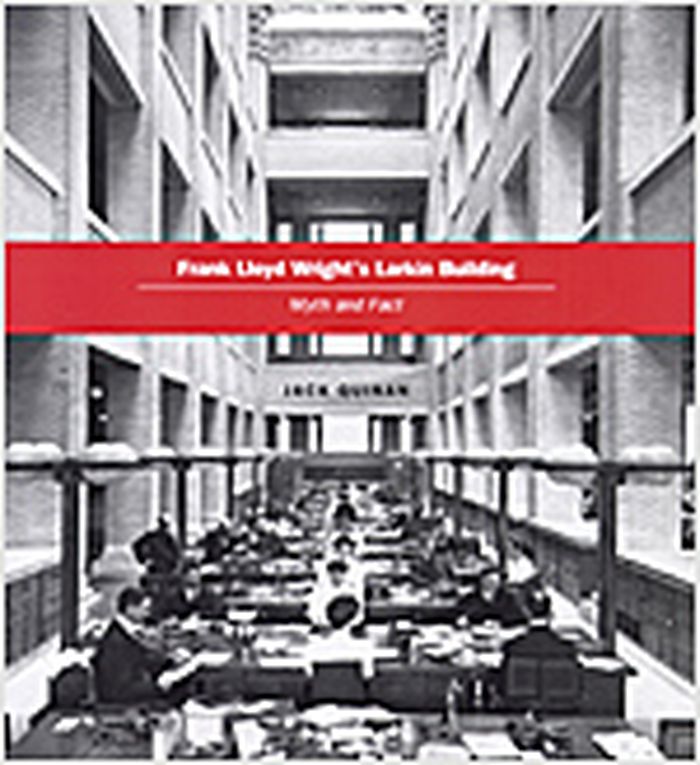
Frank Lloyd Wright’s Larkin building has become an icon of modern architecture. And the fact that it was demolished only forty-six years after its 1904 completion makes Jack Quinan’s study of the building — which housed a Buffalo, New York, soap company — all the more valuable. Quinan’s history draws on engineering documents, personal accounts of the building, and other papers he acquired from the family of Darwin D. Martin, a Larkin executive who proposed commissioning Wright to design the company’s offices. With access to these rare sources, Quinan reveals how a young Wright landed the commission and traces the evolution of his cutting-edge plans. Quinan then takes Wright studies to a new level, examining the Larkin building as a structure at the center of economic and personal relationships. Illustrated with more than one hundred photographs, floor plans, maps, and diagrams, Frank Lloyd Wright’s Larkin Building provides a concise but complete record of how the building was conceived, built, evaluated, and finally demolished in what has been called a tragic loss for American architecture.
Frank Lloyd Wright's Larkin building : myth and fact
Actions:
Prix:
$31.50
(disponible sur commande)
Résumé:
Frank Lloyd Wright’s Larkin building has become an icon of modern architecture. And the fact that it was demolished only forty-six years after its 1904 completion makes Jack Quinan’s study of the building — which housed a Buffalo, New York, soap company — all the more valuable. Quinan’s history draws on engineering documents, personal accounts of the building, and other papers he acquired from the family of Darwin D. Martin, a Larkin executive who proposed commissioning Wright to design the company’s offices. With access to these rare sources, Quinan reveals how a young Wright landed the commission and traces the evolution of his cutting-edge plans. Quinan then takes Wright studies to a new level, examining the Larkin building as a structure at the center of economic and personal relationships. Illustrated with more than one hundred photographs, floor plans, maps, and diagrams, Frank Lloyd Wright’s Larkin Building provides a concise but complete record of how the building was conceived, built, evaluated, and finally demolished in what has been called a tragic loss for American architecture.
Classification:
livres
livres
Publication:
mai 2006, Chicago, London
mai 2006, Chicago, London
Sujet:
Architecture, monographies
Architecture, monographies
Classification:
livres
livres
Titre:
Territorium : Theo Baart
Territorium : Theo Baart
Actions:
Prix:
$38.95
(disponible en magasin)
Résumé:
Five years ago, the celebrated Dutch photographer Theo Baart (Snelweg/Highways in the Netherlands, 1996; Bouwlust, 1999; Atlas of Change, 2000) moved from the center of Amsterdam to Amsterdam Southeast, to an area known as the Bijlmermeer. Designed in accordance with modernist urban planning principles, with a lot of high-rise flats in a park-like setting, the Bijlmer(...)
$38.95
(disponible en magasin)
Résumé:
Five years ago, the celebrated Dutch photographer Theo Baart (Snelweg/Highways in the Netherlands, 1996; Bouwlust, 1999; Atlas of Change, 2000) moved from the center of Amsterdam to Amsterdam Southeast, to an area known as the Bijlmermeer. Designed in accordance with modernist urban planning principles, with a lot of high-rise flats in a park-like setting, the Bijlmer(...)
Titre:
Territorium : Theo Baart
Actions:
Prix:
$38.95
(disponible en magasin)
Résumé:
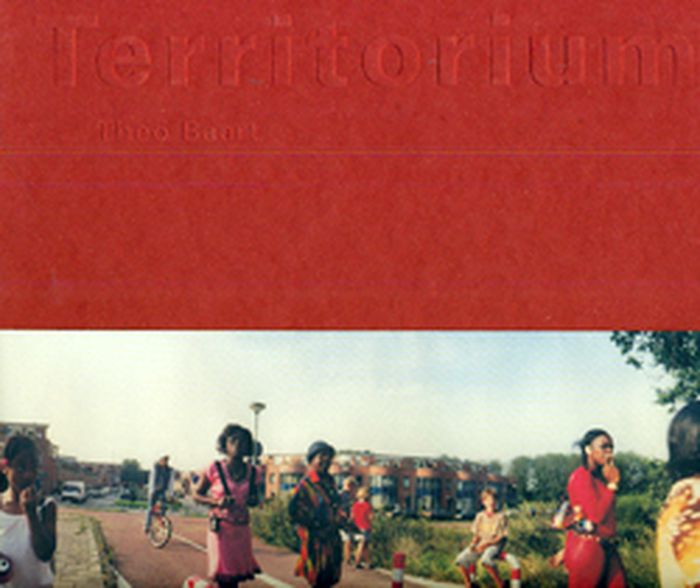
Five years ago, the celebrated Dutch photographer Theo Baart (Snelweg/Highways in the Netherlands, 1996; Bouwlust, 1999; Atlas of Change, 2000) moved from the center of Amsterdam to Amsterdam Southeast, to an area known as the Bijlmermeer. Designed in accordance with modernist urban planning principles, with a lot of high-rise flats in a park-like setting, the Bijlmer experiment in social engineering was quickly overtaken by reality and the Bijlmer became notorious for its intractable social problems and exceptionally high crime rate. A mammoth, fifteen-year regeneration scheme (1992 - 2009) is set to change all that. Much of the existing high-rise is being replaced by less anonymous neighbourhoods of low-rise. It is here that Theo Baart and his family settled. Since their relocation, Baart has photographed the gradual transformation of an area of the Bijlmer defined by the radius of action of his two school-age children. Baart's interviews with his neighbours, discussions with policymakers and his superb photography provide a fascinating insight into the regeneration process currently taking place in the Bijlmer.
Territorium : Theo Baart
Actions:
Prix:
$38.95
(disponible en magasin)
Résumé:
Five years ago, the celebrated Dutch photographer Theo Baart (Snelweg/Highways in the Netherlands, 1996; Bouwlust, 1999; Atlas of Change, 2000) moved from the center of Amsterdam to Amsterdam Southeast, to an area known as the Bijlmermeer. Designed in accordance with modernist urban planning principles, with a lot of high-rise flats in a park-like setting, the Bijlmer experiment in social engineering was quickly overtaken by reality and the Bijlmer became notorious for its intractable social problems and exceptionally high crime rate. A mammoth, fifteen-year regeneration scheme (1992 - 2009) is set to change all that. Much of the existing high-rise is being replaced by less anonymous neighbourhoods of low-rise. It is here that Theo Baart and his family settled. Since their relocation, Baart has photographed the gradual transformation of an area of the Bijlmer defined by the radius of action of his two school-age children. Baart's interviews with his neighbours, discussions with policymakers and his superb photography provide a fascinating insight into the regeneration process currently taking place in the Bijlmer.
Classification:
livres
livres
Publication:
août 2003, Rotterdam
août 2003, Rotterdam
Sujet:
Monographies photo
Monographies photo
Classification:
livres
livres
Actions:
Prix:
$27.95
(disponible sur commande)
Résumé:
Cemeteries are virtual encyclopaedias of symbolism. Engravings on tombstones, mausoleums and memorials tell us just about everything there is to know about a person- date of birth and death as well as religion, ethnicity, occupation, community interests, and much more. In the fascinating new book "Stories in Stone: A Field Guide to Cemetery Symbolism and Iconography" by(...)
$27.95
(disponible sur commande)
Résumé:
Cemeteries are virtual encyclopaedias of symbolism. Engravings on tombstones, mausoleums and memorials tell us just about everything there is to know about a person- date of birth and death as well as religion, ethnicity, occupation, community interests, and much more. In the fascinating new book "Stories in Stone: A Field Guide to Cemetery Symbolism and Iconography" by(...)
Titre:
Stories in stone : a field guide to cemetery symbolism and iconography
Actions:
Prix:
$27.95
(disponible sur commande)
Résumé:
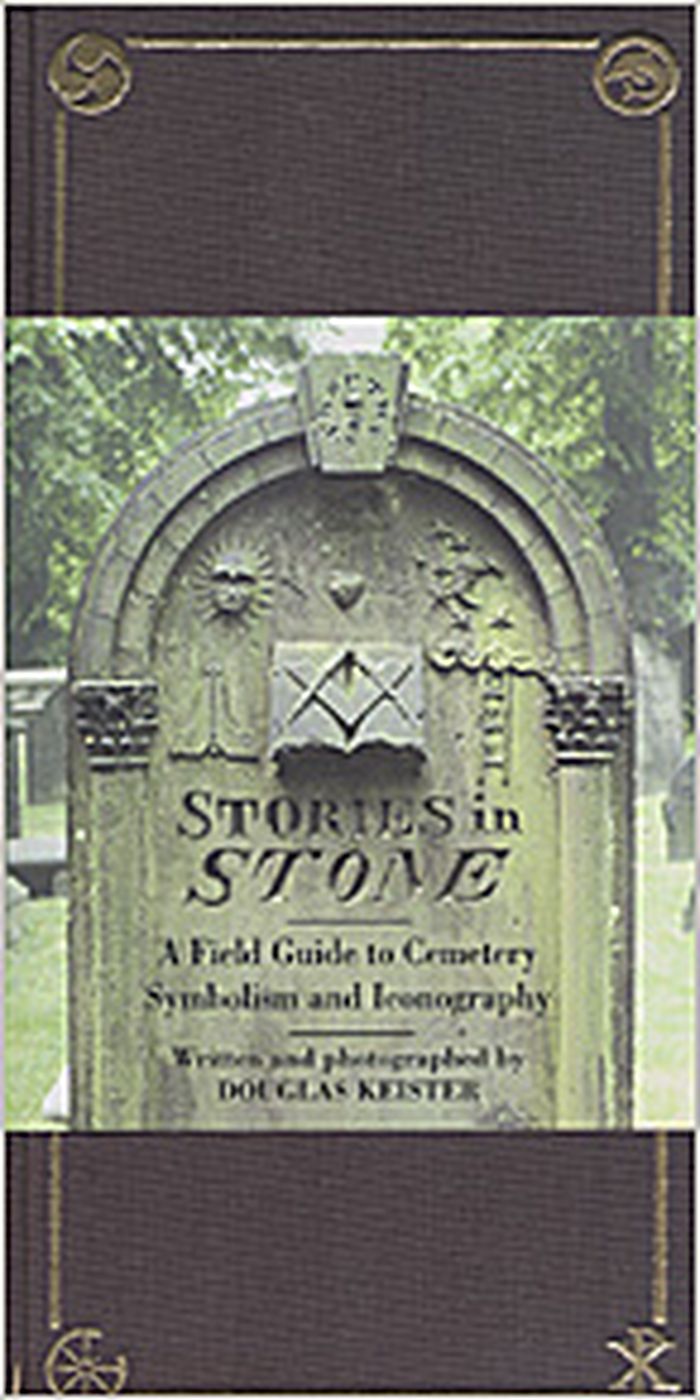
Cemeteries are virtual encyclopaedias of symbolism. Engravings on tombstones, mausoleums and memorials tell us just about everything there is to know about a person- date of birth and death as well as religion, ethnicity, occupation, community interests, and much more. In the fascinating new book "Stories in Stone: A Field Guide to Cemetery Symbolism and Iconography" by noted author Douglas Keister, the secrets of cemetery symbolism are finally revealed. "Stories in Stone" provides history along with images of a wide variety of common and not-so-common cemetery symbols, and offers an in-depth examination of stone relics and the personal and intimate details they display - flora and fauna, religious icons, society symbols, and final impressions of how the deceased wished to be remembered. Douglas Keister has created a practical field guide that is compact and portable, perfect for those interested in family histories and genealogical research, and is the only book of its kind that unlocks the language of symbols in a comprehensive and easy-to-understand manner.
Stories in stone : a field guide to cemetery symbolism and iconography
Actions:
Prix:
$27.95
(disponible sur commande)
Résumé:
Cemeteries are virtual encyclopaedias of symbolism. Engravings on tombstones, mausoleums and memorials tell us just about everything there is to know about a person- date of birth and death as well as religion, ethnicity, occupation, community interests, and much more. In the fascinating new book "Stories in Stone: A Field Guide to Cemetery Symbolism and Iconography" by noted author Douglas Keister, the secrets of cemetery symbolism are finally revealed. "Stories in Stone" provides history along with images of a wide variety of common and not-so-common cemetery symbols, and offers an in-depth examination of stone relics and the personal and intimate details they display - flora and fauna, religious icons, society symbols, and final impressions of how the deceased wished to be remembered. Douglas Keister has created a practical field guide that is compact and portable, perfect for those interested in family histories and genealogical research, and is the only book of its kind that unlocks the language of symbols in a comprehensive and easy-to-understand manner.
Classification:
livres
livres
Publication:
avril 2004, Salt Lake City
avril 2004, Salt Lake City
Sujet:
Bouffe
Bouffe
Classification:
livres
livres
Actions:
Prix:
$5.95
(disponible sur commande)
Résumé:
In this first English-language edition of Oscar Niemeyer’s memoirs, the architect reveals how his many passions – among them his large family, many friends, the sensuous landscape of Brazil, women, communism, art and literature – have influenced his life and in turn inspired his architecture. Born in Rio de Janeiro, Niemeyer graduated from the National School of Fine Arts(...)
$5.95
(disponible sur commande)
Résumé:
In this first English-language edition of Oscar Niemeyer’s memoirs, the architect reveals how his many passions – among them his large family, many friends, the sensuous landscape of Brazil, women, communism, art and literature – have influenced his life and in turn inspired his architecture. Born in Rio de Janeiro, Niemeyer graduated from the National School of Fine Arts(...)
Titre:
The curves of time : the memoirs of Oscar Niemeyer
Actions:
Prix:
$5.95
(disponible sur commande)
Résumé:
In this first English-language edition of Oscar Niemeyer’s memoirs, the architect reveals how his many passions – among them his large family, many friends, the sensuous landscape of Brazil, women, communism, art and literature – have influenced his life and in turn inspired his architecture. Born in Rio de Janeiro, Niemeyer graduated from the National School of Fine Arts in 1934. As a student he worked in the office of Lucio Costa, and on graduation he began collaborating with Le Corbusier on a new Ministry of Education and Health Building in Rio. Yet in contrast to the International Style, Niemeyer’s curvilinear forms reflected Brazil’s lush, undulating landscape and the emotive style of its music and dance. Here Niemeyer recounts his life in an informal, fluid narrative that moves from his childhood in Rio to friendships with intellectuals and politicians such as Jean-Paul Sartre and Fidel Castro, to tales of adventurous road trips. The book includes forty sketches by Niemeyer executed specially for these memoirs, a chronology of his life and career, notes and an index.
The curves of time : the memoirs of Oscar Niemeyer
Actions:
Prix:
$5.95
(disponible sur commande)
Résumé:
In this first English-language edition of Oscar Niemeyer’s memoirs, the architect reveals how his many passions – among them his large family, many friends, the sensuous landscape of Brazil, women, communism, art and literature – have influenced his life and in turn inspired his architecture. Born in Rio de Janeiro, Niemeyer graduated from the National School of Fine Arts in 1934. As a student he worked in the office of Lucio Costa, and on graduation he began collaborating with Le Corbusier on a new Ministry of Education and Health Building in Rio. Yet in contrast to the International Style, Niemeyer’s curvilinear forms reflected Brazil’s lush, undulating landscape and the emotive style of its music and dance. Here Niemeyer recounts his life in an informal, fluid narrative that moves from his childhood in Rio to friendships with intellectuals and politicians such as Jean-Paul Sartre and Fidel Castro, to tales of adventurous road trips. The book includes forty sketches by Niemeyer executed specially for these memoirs, a chronology of his life and career, notes and an index.
Classification:
livres
livres
Publication:
octobre 2000, London
octobre 2000, London
Sujet:
livres soldés
livres soldés
Classification:
livres
livres
Titre:
Momus
Momus
Actions:
Prix:
$47.95
(disponible sur commande)
Résumé:
Momus is the most ambitious literary creation of Leon Battista Alberti, the famous humanist-scientist-artist and "universal man" of the Italian Renaissance. In this dark comedy, written around 1450, Alberti charts the lively fortunes of his anti-hero Momus, the unscrupulous and vitriolic god of criticism. Alberti deploys his singular erudition and wit to satirize subjects(...)
$47.95
(disponible sur commande)
Résumé:
Momus is the most ambitious literary creation of Leon Battista Alberti, the famous humanist-scientist-artist and "universal man" of the Italian Renaissance. In this dark comedy, written around 1450, Alberti charts the lively fortunes of his anti-hero Momus, the unscrupulous and vitriolic god of criticism. Alberti deploys his singular erudition and wit to satirize subjects(...)
Titre:
Momus
Actions:
Prix:
$47.95
(disponible sur commande)
Résumé:
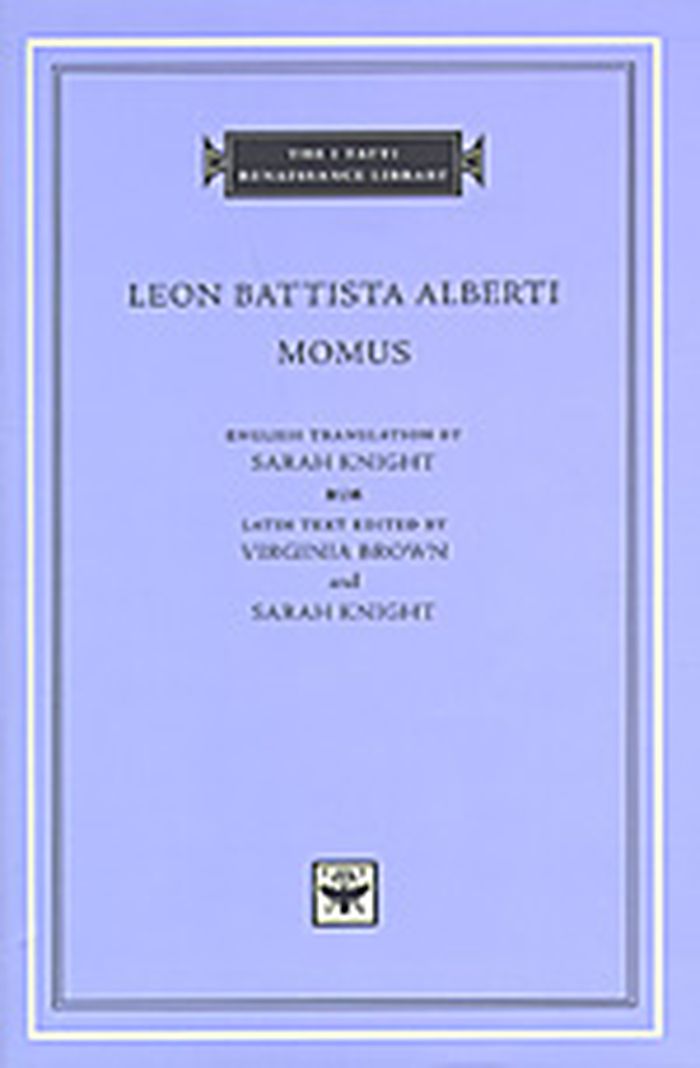
Momus is the most ambitious literary creation of Leon Battista Alberti, the famous humanist-scientist-artist and "universal man" of the Italian Renaissance. In this dark comedy, written around 1450, Alberti charts the lively fortunes of his anti-hero Momus, the unscrupulous and vitriolic god of criticism. Alberti deploys his singular erudition and wit to satirize subjects from court life and politics to philosophy and intellectuals, from grand architectural designs to human and divine folly. The possible contemporary resonance of Alberti's satire, read variously as a humanist roman-à-clef and as a veiled mockery of the mid-Quattrocento papacy, is among its most intriguing aspects. While his more famous books on architecture, painting, and family life have long been regarded as indispensable to a study of Renaissance culture, Momus has recently attracted increasing attention from scholars as a work anticipating the realism of Machiavelli and the satiric wit of Erasmus. This edition provides a new Latin text, the first to be based on the two earliest manuscripts, both corrected by Alberti himself, and includes the first full translation into English.
Momus
Actions:
Prix:
$47.95
(disponible sur commande)
Résumé:
Momus is the most ambitious literary creation of Leon Battista Alberti, the famous humanist-scientist-artist and "universal man" of the Italian Renaissance. In this dark comedy, written around 1450, Alberti charts the lively fortunes of his anti-hero Momus, the unscrupulous and vitriolic god of criticism. Alberti deploys his singular erudition and wit to satirize subjects from court life and politics to philosophy and intellectuals, from grand architectural designs to human and divine folly. The possible contemporary resonance of Alberti's satire, read variously as a humanist roman-à-clef and as a veiled mockery of the mid-Quattrocento papacy, is among its most intriguing aspects. While his more famous books on architecture, painting, and family life have long been regarded as indispensable to a study of Renaissance culture, Momus has recently attracted increasing attention from scholars as a work anticipating the realism of Machiavelli and the satiric wit of Erasmus. This edition provides a new Latin text, the first to be based on the two earliest manuscripts, both corrected by Alberti himself, and includes the first full translation into English.
Classification:
livres
livres
Publication:
mai 2003, Cambridge, Mass.
mai 2003, Cambridge, Mass.
Sujet:
Traités
Traités
Classification:
livres
livres
Prix:
$75.00
(disponible sur commande)
Résumé:
Seamlessly interweaving the new with the historic, the renovation by Selldorf Architects preserves The Frick Collection’s Gilded Age grandeur and sense of tranquillity while making more of the museum accessible and adding important new amenities. A museum of memorable rooms and superb Old Master holdings, The Frick Collection, the former home of industrialist Henry Clay(...)
$75.00
(disponible sur commande)
Résumé:
Seamlessly interweaving the new with the historic, the renovation by Selldorf Architects preserves The Frick Collection’s Gilded Age grandeur and sense of tranquillity while making more of the museum accessible and adding important new amenities. A museum of memorable rooms and superb Old Master holdings, The Frick Collection, the former home of industrialist Henry Clay(...)
Publication:
janvier 2026
janvier 2026
Titre:
A Design for Continuity and Change: The Frick Collection
Actions:
Prix:
$75.00
(disponible sur commande)
Résumé:
Seamlessly interweaving the new with the historic, the renovation by Selldorf Architects preserves The Frick Collection’s Gilded Age grandeur and sense of tranquillity while making more of the museum accessible and adding important new amenities. A museum of memorable rooms and superb Old Master holdings, The Frick Collection, the former home of industrialist Henry Clay Frick, is one of New York City’s most beloved art institutions. Designed by Thomas Hastings of the New York firm of Carrère and Hastings, the original Fifth Avenue mansion was completed in 1914 and served the Frick family until 1931. With John Russell Pope’s expansion of the mansion in 1935, which included the addition of a library (today’s esteemed Frick Art Research Library), the residence was converted into a public museum. The goal of the renovation was to honor the architectural legacy and unique contemplative atmosphere of the Frick while adding new space and critical infrastructure updates. Visitors will enjoy the enhanced functionality of the institution, and its improved climate controls will ensure the preservation of the collection and the house for generations to come.
A Design for Continuity and Change: The Frick Collection
Actions:
Prix:
$75.00
(disponible sur commande)
Résumé:
Seamlessly interweaving the new with the historic, the renovation by Selldorf Architects preserves The Frick Collection’s Gilded Age grandeur and sense of tranquillity while making more of the museum accessible and adding important new amenities. A museum of memorable rooms and superb Old Master holdings, The Frick Collection, the former home of industrialist Henry Clay Frick, is one of New York City’s most beloved art institutions. Designed by Thomas Hastings of the New York firm of Carrère and Hastings, the original Fifth Avenue mansion was completed in 1914 and served the Frick family until 1931. With John Russell Pope’s expansion of the mansion in 1935, which included the addition of a library (today’s esteemed Frick Art Research Library), the residence was converted into a public museum. The goal of the renovation was to honor the architectural legacy and unique contemplative atmosphere of the Frick while adding new space and critical infrastructure updates. Visitors will enjoy the enhanced functionality of the institution, and its improved climate controls will ensure the preservation of the collection and the house for generations to come.
Classification:
livres
livres
Publication:
janvier 2026
janvier 2026
Classification:
livres
livres
Actions:
Prix:
$25.00
(disponible sur commande)
Résumé:
Translates by Thomas Goddard Bergin and Max Harold Fisch. A bold new translation of a masterpiece of early social science that has found enthusiasts among such artists and scholars as James Joyce and Harold Bloom. Although Vico lived his whole life as an obscure academic in Naples, his New Science is an astonishingly ambitious attempt to provide a comprehensive(...)
$25.00
(disponible sur commande)
Résumé:
Translates by Thomas Goddard Bergin and Max Harold Fisch. A bold new translation of a masterpiece of early social science that has found enthusiasts among such artists and scholars as James Joyce and Harold Bloom. Although Vico lived his whole life as an obscure academic in Naples, his New Science is an astonishingly ambitious attempt to provide a comprehensive(...)
Titre:
The new science of Giambattista Vico
Actions:
Prix:
$25.00
(disponible sur commande)
Résumé:
Translates by Thomas Goddard Bergin and Max Harold Fisch. A bold new translation of a masterpiece of early social science that has found enthusiasts among such artists and scholars as James Joyce and Harold Bloom. Although Vico lived his whole life as an obscure academic in Naples, his New Science is an astonishingly ambitious attempt to provide a comprehensive science of all human society by decoding the history, mythology, and law of the ancient world. It argues that the key to true understanding lies in accepting that the customs and emotional lives of the Greeks and Romans, Egyptians, Jews, and Babylonians were utterly different from our own. In examining these huge themes, Vico offers countless fresh insights into topics ranging from physics to politics, money to monsters, and family structures to the Flood. Deeply influential since the dawn of Romanticism, the New Science even inspired the framework for Joyce's Finnegans Wake. This powerful new translation makes it clear why this work marked a turning-point in humanist thinking as significant as Newton's contemporary revolution in physics.
The new science of Giambattista Vico
Actions:
Prix:
$25.00
(disponible sur commande)
Résumé:
Translates by Thomas Goddard Bergin and Max Harold Fisch. A bold new translation of a masterpiece of early social science that has found enthusiasts among such artists and scholars as James Joyce and Harold Bloom. Although Vico lived his whole life as an obscure academic in Naples, his New Science is an astonishingly ambitious attempt to provide a comprehensive science of all human society by decoding the history, mythology, and law of the ancient world. It argues that the key to true understanding lies in accepting that the customs and emotional lives of the Greeks and Romans, Egyptians, Jews, and Babylonians were utterly different from our own. In examining these huge themes, Vico offers countless fresh insights into topics ranging from physics to politics, money to monsters, and family structures to the Flood. Deeply influential since the dawn of Romanticism, the New Science even inspired the framework for Joyce's Finnegans Wake. This powerful new translation makes it clear why this work marked a turning-point in humanist thinking as significant as Newton's contemporary revolution in physics.
Classification:
livres
livres
Publication:
janvier 1984, Ithaca, London
janvier 1984, Ithaca, London
Sujet:
Théorie/ philosophie
Théorie/ philosophie
Classification:
livres
livres
Actions:
Prix:
$78.00
(disponible sur commande)
Résumé:
Alberto Ponis "Costruire nella Natura" ("Building in Nature") analyses 22 buildings, highlighting the importance of drawing and photography as the first act of design, as in the Genius Loci series in which he photographed Sardinian vernacular architecture. This publication aims primarily to analyse of Alberto Ponis's work as a whole, including single-family houses and(...)
$78.00
(disponible sur commande)
Résumé:
Alberto Ponis "Costruire nella Natura" ("Building in Nature") analyses 22 buildings, highlighting the importance of drawing and photography as the first act of design, as in the Genius Loci series in which he photographed Sardinian vernacular architecture. This publication aims primarily to analyse of Alberto Ponis's work as a whole, including single-family houses and(...)
Titre:
Alberto Ponis: Costruire nella Natura
Actions:
Prix:
$78.00
(disponible sur commande)
Résumé:
Alberto Ponis "Costruire nella Natura" ("Building in Nature") analyses 22 buildings, highlighting the importance of drawing and photography as the first act of design, as in the Genius Loci series in which he photographed Sardinian vernacular architecture. This publication aims primarily to analyse of Alberto Ponis's work as a whole, including single-family houses and collective houses built in Palau and Costa Paradiso, investigating the relationship with the natural site formed by granite rocks, strawberry trees and holm oaks. These elements become part of the architecture, generating its form. Meticulous work in the Ponis Archive has revealed little-known materials, such as slides of trips to America to visit the Sea Ranch and the architecture of Louis Kahn; visits to Ronchamp and La Tourette and the architecture of Arno Jacobsen and Alvar Aalto. But above all, his letters with clients, the photographs Ponis took of his houses, the sketchbooks during site inspections, the Thought notes, his design vocabulary that he continually defined over time, right down to his "pictorial obsessions" for the Nervi marina and Bonifacio.
Alberto Ponis: Costruire nella Natura
Actions:
Prix:
$78.00
(disponible sur commande)
Résumé:
Alberto Ponis "Costruire nella Natura" ("Building in Nature") analyses 22 buildings, highlighting the importance of drawing and photography as the first act of design, as in the Genius Loci series in which he photographed Sardinian vernacular architecture. This publication aims primarily to analyse of Alberto Ponis's work as a whole, including single-family houses and collective houses built in Palau and Costa Paradiso, investigating the relationship with the natural site formed by granite rocks, strawberry trees and holm oaks. These elements become part of the architecture, generating its form. Meticulous work in the Ponis Archive has revealed little-known materials, such as slides of trips to America to visit the Sea Ranch and the architecture of Louis Kahn; visits to Ronchamp and La Tourette and the architecture of Arno Jacobsen and Alvar Aalto. But above all, his letters with clients, the photographs Ponis took of his houses, the sketchbooks during site inspections, the Thought notes, his design vocabulary that he continually defined over time, right down to his "pictorial obsessions" for the Nervi marina and Bonifacio.
Classification:
livres
livres
Publication:
décembre 2024
décembre 2024
Sujet:
Architecture, monographies
Architecture, monographies
Classification:
livres
livres
Actions:
Prix:
$39.00
(disponible sur commande)
Résumé:
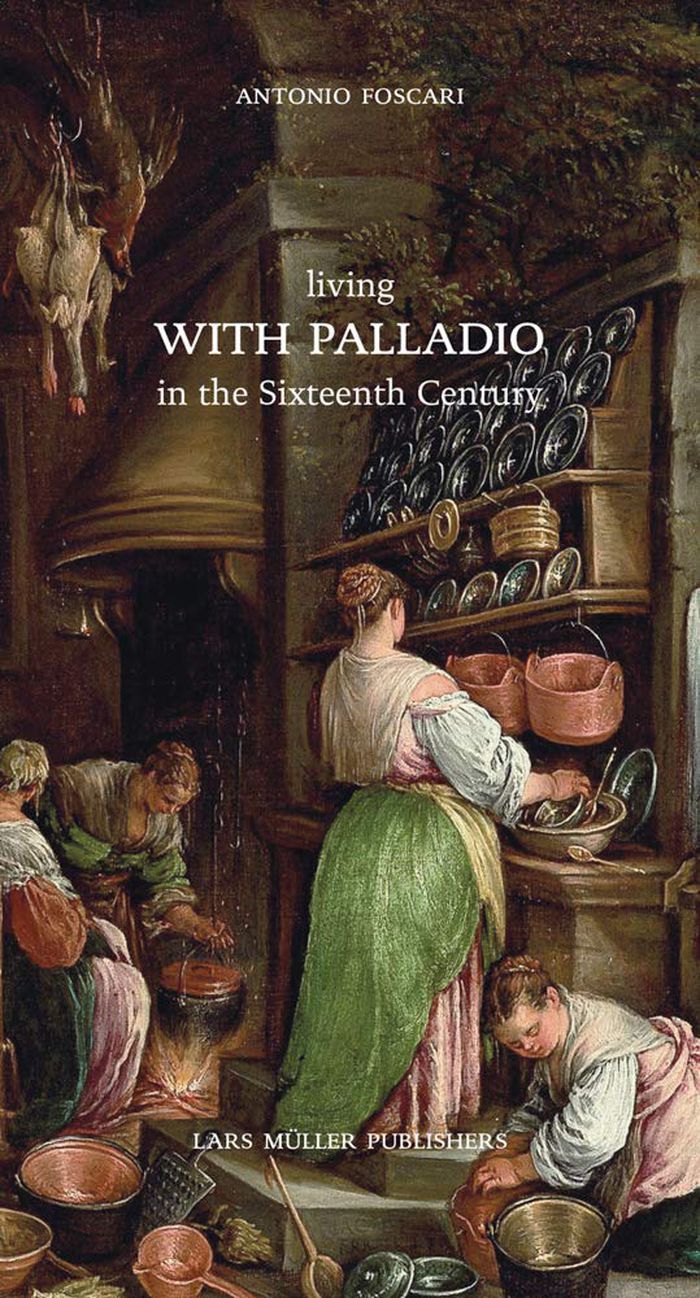
Visiting the villas of Renaissance architect Andrea Palladio (1508-80), one inevitably asks oneself how people actually occupied them. Palladio conceived his villas as ''small towns'' (piccole città) that formed a single unit with adjacent service buildings and farm fields. Within their walls lived people of all ages, social backgrounds and skills. These buildings were(...)
$39.00
(disponible sur commande)
Résumé:
Visiting the villas of Renaissance architect Andrea Palladio (1508-80), one inevitably asks oneself how people actually occupied them. Palladio conceived his villas as ''small towns'' (piccole città) that formed a single unit with adjacent service buildings and farm fields. Within their walls lived people of all ages, social backgrounds and skills. These buildings were(...)
Titre:
Living with Palladio in the sixteenth century
Actions:
Prix:
$39.00
(disponible sur commande)
Résumé:
Visiting the villas of Renaissance architect Andrea Palladio (1508-80), one inevitably asks oneself how people actually occupied them. Palladio conceived his villas as ''small towns'' (piccole città) that formed a single unit with adjacent service buildings and farm fields. Within their walls lived people of all ages, social backgrounds and skills. These buildings were the venue for significant moments of public life, and the principles of hygiene, privacy and comfort, which we consider so defining and essential today, did not apply- in a sense furniture as such did not exist. ''Living with Palladio in the sixteenth century'' investigates how Palladio’s houses, their floors, rooms and measurements, were designed to structure the life of such a heterogeneous family of people. It analyses their hierarchical structure with the owner (padrone) at the top and everyone involved in the everyday running of the household (famiglia minuta) at the bottom. This book fills a decisive gap in research literature on the famous Italian architect by looking at how Palladio prioritized the domestic functions of his private buildings.
Living with Palladio in the sixteenth century
Actions:
Prix:
$39.00
(disponible sur commande)
Résumé:
Visiting the villas of Renaissance architect Andrea Palladio (1508-80), one inevitably asks oneself how people actually occupied them. Palladio conceived his villas as ''small towns'' (piccole città) that formed a single unit with adjacent service buildings and farm fields. Within their walls lived people of all ages, social backgrounds and skills. These buildings were the venue for significant moments of public life, and the principles of hygiene, privacy and comfort, which we consider so defining and essential today, did not apply- in a sense furniture as such did not exist. ''Living with Palladio in the sixteenth century'' investigates how Palladio’s houses, their floors, rooms and measurements, were designed to structure the life of such a heterogeneous family of people. It analyses their hierarchical structure with the owner (padrone) at the top and everyone involved in the everyday running of the household (famiglia minuta) at the bottom. This book fills a decisive gap in research literature on the famous Italian architect by looking at how Palladio prioritized the domestic functions of his private buildings.
Classification:
livres
livres
Publication:
juin 2020
juin 2020
Sujet:
Architecture, monographies
Architecture, monographies


