


4079 Résultats
Classification:
livres
livres
Prix:
$75.00
(disponible sur commande)
Résumé:
Although highly regarded during his short life--and honored by artists and architects today--the American artist Gordon Matta-Clark (1943-78) has been largely ignored within the history of art. Matta-Clark is best remembered for site-specific projects known as(...)
$75.00
(disponible sur commande)
Résumé:
Although highly regarded during his short life--and honored by artists and architects today--the American artist Gordon Matta-Clark (1943-78) has been largely ignored within the history of art. Matta-Clark is best remembered for site-specific projects known as(...)
Publication:
décembre 1999, Cambridge, Mass.
décembre 1999, Cambridge, Mass.
Titre:
Object to be destroyed : the work of Gordon Matta-Clark
Actions:
Prix:
$75.00
(disponible sur commande)
Résumé:
Although highly regarded during his short life--and honored by artists and architects today--the American artist Gordon Matta-Clark (1943-78) has been largely ignored within the history of art. Matta-Clark is best remembered for site-specific projects known as "building cuts." Sculptural transformations of architecture produced through direct cuts into buildings scheduled for demolition, these works now exist only as sculptural fragments, photographs, and film and video documentations. Matta-Clark is also remembered as a catalytic force in the creation of SoHo in the early 1970s. Through loft activities, site projects at the exhibition space 112 Greene Street, and his work at the restaurant Food, he participated in the production of a new social and artistic space. In this first critical account of Matta-Clark's work, Lee considers it in the context of the art of the 1970s--particularly site-specific, conceptual, and minimalist practices--and its confrontation with issues of community, property, the alienation of urban space, the "right to the city," and the ideologies of progress that have defined modern building programs.
Object to be destroyed : the work of Gordon Matta-Clark
Actions:
Prix:
$75.00
(disponible sur commande)
Résumé:
Although highly regarded during his short life--and honored by artists and architects today--the American artist Gordon Matta-Clark (1943-78) has been largely ignored within the history of art. Matta-Clark is best remembered for site-specific projects known as "building cuts." Sculptural transformations of architecture produced through direct cuts into buildings scheduled for demolition, these works now exist only as sculptural fragments, photographs, and film and video documentations. Matta-Clark is also remembered as a catalytic force in the creation of SoHo in the early 1970s. Through loft activities, site projects at the exhibition space 112 Greene Street, and his work at the restaurant Food, he participated in the production of a new social and artistic space. In this first critical account of Matta-Clark's work, Lee considers it in the context of the art of the 1970s--particularly site-specific, conceptual, and minimalist practices--and its confrontation with issues of community, property, the alienation of urban space, the "right to the city," and the ideologies of progress that have defined modern building programs.
Classification:
livres
livres
Publication:
décembre 1999, Cambridge, Mass.
décembre 1999, Cambridge, Mass.
Classification:
livres
livres
Actions:
Prix:
$22.95
(disponible sur commande)
Résumé:
At the turn of the last century, Adolf Loos wrote: "The evolution of culture is synonymous with the removal of ornament from objects of daily use." Ornament had exhausted its purpose, and the persistence of it, Loos argued, was indicative of a degenerative culture. The simple, undecorated form was celebrated as a signal of the movement of modern man toward some truer,(...)
$22.95
(disponible sur commande)
Résumé:
At the turn of the last century, Adolf Loos wrote: "The evolution of culture is synonymous with the removal of ornament from objects of daily use." Ornament had exhausted its purpose, and the persistence of it, Loos argued, was indicative of a degenerative culture. The simple, undecorated form was celebrated as a signal of the movement of modern man toward some truer,(...)
Sujet:
Théorie de l’architecture
Théorie de l’architecture
Publication:
janvier 1900, Toronto
janvier 1900, Toronto
Titre:
Crime and ornament : the arts and popular culture in the shadow of Adolf Loos
Actions:
Prix:
$22.95
(disponible sur commande)
Résumé:
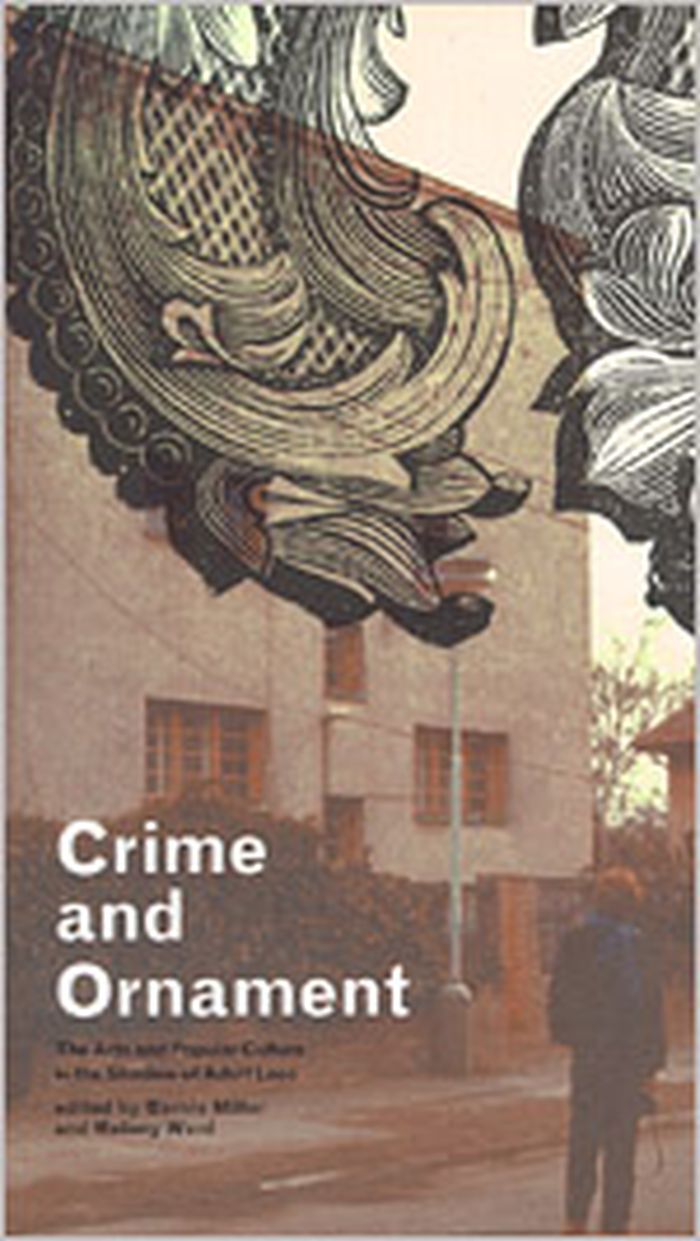
At the turn of the last century, Adolf Loos wrote: "The evolution of culture is synonymous with the removal of ornament from objects of daily use." Ornament had exhausted its purpose, and the persistence of it, Loos argued, was indicative of a degenerative culture. The simple, undecorated form was celebrated as a signal of the movement of modern man toward some truer, more powerful expression of his self. Debates about ornament have returned: recent thinking questions the assumption that ornament is inessential, and its artistic and political implications continue to be hotly debated. The writers in "Crime and Ornament" bring these debates together by addressing the role of ornament in a variety of disciplines: film, visual art, video, literature, fashion, sports, gay imagery and, of course, architecture are explored in relation to this key concept. With a distinguished group of contributors including Felicity Scott, Brian Pronger, Jeanne Randolph, Ignasi de Solà-Morales, Graham Ramsay, Katherine Milligan, Jan Zwicky, Jim Drobnick, "Crime and Ornament" provides a diverse, multi-disciplinary approach to a salient concern in architectural, artistic and aesthetic discourse.
Crime and ornament : the arts and popular culture in the shadow of Adolf Loos
Actions:
Prix:
$22.95
(disponible sur commande)
Résumé:
At the turn of the last century, Adolf Loos wrote: "The evolution of culture is synonymous with the removal of ornament from objects of daily use." Ornament had exhausted its purpose, and the persistence of it, Loos argued, was indicative of a degenerative culture. The simple, undecorated form was celebrated as a signal of the movement of modern man toward some truer, more powerful expression of his self. Debates about ornament have returned: recent thinking questions the assumption that ornament is inessential, and its artistic and political implications continue to be hotly debated. The writers in "Crime and Ornament" bring these debates together by addressing the role of ornament in a variety of disciplines: film, visual art, video, literature, fashion, sports, gay imagery and, of course, architecture are explored in relation to this key concept. With a distinguished group of contributors including Felicity Scott, Brian Pronger, Jeanne Randolph, Ignasi de Solà-Morales, Graham Ramsay, Katherine Milligan, Jan Zwicky, Jim Drobnick, "Crime and Ornament" provides a diverse, multi-disciplinary approach to a salient concern in architectural, artistic and aesthetic discourse.
Classification:
livres
livres
Publication:
janvier 1900, Toronto
janvier 1900, Toronto
Sujet:
Théorie de l’architecture
Théorie de l’architecture
Classification:
livres
livres
Titre:
Dark mirrors
Dark mirrors
Actions:
Prix:
$50.00
(disponible en magasin)
Résumé:
''Dark mirrors'' assembles sixteen essays by photographer and critic Stanley Wolukau-Wanambwa focusing on contemporary fine art photographic and video practices that are principally, though not exclusively, rooted in the United States, written between 2015 and 2021. Wolukau-Wanambwa analyses the image’s relationship to the urgent and complex questions that define our era,(...)
$50.00
(disponible en magasin)
Résumé:
''Dark mirrors'' assembles sixteen essays by photographer and critic Stanley Wolukau-Wanambwa focusing on contemporary fine art photographic and video practices that are principally, though not exclusively, rooted in the United States, written between 2015 and 2021. Wolukau-Wanambwa analyses the image’s relationship to the urgent and complex questions that define our era,(...)
Titre:
Dark mirrors
Actions:
Prix:
$50.00
(disponible en magasin)
Résumé:
''Dark mirrors'' assembles sixteen essays by photographer and critic Stanley Wolukau-Wanambwa focusing on contemporary fine art photographic and video practices that are principally, though not exclusively, rooted in the United States, written between 2015 and 2021. Wolukau-Wanambwa analyses the image’s relationship to the urgent and complex questions that define our era, through the lens of artistic practices and works which insightfully engage with the ongoing contemporaneity of disparate histories and the ever-changing status of the visual in social life. The book sets out an argument that one of the most dynamic sites of artistic invention in photographic practice over the past decade has been the photographic book, and thus many of the essays in the volume assess artistic works as they are bodied forth in that form. Among the recurrent themes that emerge from these rigorous, probing essays are the complex interrelationship of anti-blackness and visuality, the fragility and complexity of embodied difference in portraiture, the potency of verbal and visual media as social forms, and the politics of attention.
Dark mirrors
Actions:
Prix:
$50.00
(disponible en magasin)
Résumé:
''Dark mirrors'' assembles sixteen essays by photographer and critic Stanley Wolukau-Wanambwa focusing on contemporary fine art photographic and video practices that are principally, though not exclusively, rooted in the United States, written between 2015 and 2021. Wolukau-Wanambwa analyses the image’s relationship to the urgent and complex questions that define our era, through the lens of artistic practices and works which insightfully engage with the ongoing contemporaneity of disparate histories and the ever-changing status of the visual in social life. The book sets out an argument that one of the most dynamic sites of artistic invention in photographic practice over the past decade has been the photographic book, and thus many of the essays in the volume assess artistic works as they are bodied forth in that form. Among the recurrent themes that emerge from these rigorous, probing essays are the complex interrelationship of anti-blackness and visuality, the fragility and complexity of embodied difference in portraiture, the potency of verbal and visual media as social forms, and the politics of attention.
Classification:
livres
livres
Publication:
octobre 2021
octobre 2021
Sujet:
Théorie de la photographie
Théorie de la photographie
Classification:
livres
livres
Actions:
Prix:
$39.95
(disponible sur commande)
Résumé:
Since the early twentieth century, contemporary art and art theory have creatively challenged the status of representation. During that time, the court of law has come to rely on a variety of new representational modes and technologies. The law is increasingly staged on a screen and the photographs, video documents, audio recordings used as evidence are not entirely(...)
$39.95
(disponible sur commande)
Résumé:
Since the early twentieth century, contemporary art and art theory have creatively challenged the status of representation. During that time, the court of law has come to rely on a variety of new representational modes and technologies. The law is increasingly staged on a screen and the photographs, video documents, audio recordings used as evidence are not entirely(...)
Publication:
janvier 2012
janvier 2012
Titre:
A thousand eyes: media technology, law and esthetics
Actions:
Prix:
$39.95
(disponible sur commande)
Résumé:
Since the early twentieth century, contemporary art and art theory have creatively challenged the status of representation. During that time, the court of law has come to rely on a variety of new representational modes and technologies. The law is increasingly staged on a screen and the photographs, video documents, audio recordings used as evidence are not entirely distinct from their correlates in contemporary art, cinema and mass media. What questions of representation, judgment and justice cross borders between art and the law? Through the contribution of internationally renowned artists and scholars, this anthology explores how the aesthetics of new media technology and its spatial implementations affect the judicial system in relation to fundamental concepts such as truth and representation. Artistic contributions by John Baldessari, Dan Graham, Harun Farocki, Stan Douglas, Aernout Mik, Agency, Judy Radul, Renzo Martens, Ana Torfs, The Atlas Group, René Magritte, Model Court, Rana Hamadeh, Thomas Demand, Les Levine Essays by Julie A. Cassiday, Costas Douzinas, Piyel Haldar, Martin Jay, Peter Goodrich, Richard Mohr, Judy Radul, Avital Ronell, Eyal Sivan, Cornelia Vismann
A thousand eyes: media technology, law and esthetics
Actions:
Prix:
$39.95
(disponible sur commande)
Résumé:
Since the early twentieth century, contemporary art and art theory have creatively challenged the status of representation. During that time, the court of law has come to rely on a variety of new representational modes and technologies. The law is increasingly staged on a screen and the photographs, video documents, audio recordings used as evidence are not entirely distinct from their correlates in contemporary art, cinema and mass media. What questions of representation, judgment and justice cross borders between art and the law? Through the contribution of internationally renowned artists and scholars, this anthology explores how the aesthetics of new media technology and its spatial implementations affect the judicial system in relation to fundamental concepts such as truth and representation. Artistic contributions by John Baldessari, Dan Graham, Harun Farocki, Stan Douglas, Aernout Mik, Agency, Judy Radul, Renzo Martens, Ana Torfs, The Atlas Group, René Magritte, Model Court, Rana Hamadeh, Thomas Demand, Les Levine Essays by Julie A. Cassiday, Costas Douzinas, Piyel Haldar, Martin Jay, Peter Goodrich, Richard Mohr, Judy Radul, Avital Ronell, Eyal Sivan, Cornelia Vismann
Classification:
livres
livres
Publication:
janvier 2012
janvier 2012
Classification:
livres
livres
Prix:
$41.95
(disponible sur commande)
Résumé:
Art is big business, with some artists able to command huge sums of money for their works, while the vast majority are ignored or dismissed by critics. This book shows that these marginalised artists, the 'dark matter' of the art world, are essential to the survival of the mainstream and that they frequently organize in opposition to it. Gregory Sholette, a(...)
$41.95
(disponible sur commande)
Résumé:
Art is big business, with some artists able to command huge sums of money for their works, while the vast majority are ignored or dismissed by critics. This book shows that these marginalised artists, the 'dark matter' of the art world, are essential to the survival of the mainstream and that they frequently organize in opposition to it. Gregory Sholette, a(...)
Titre:
Dark matter: art and politics in the age of enterprise culture
Actions:
Prix:
$41.95
(disponible sur commande)
Résumé:
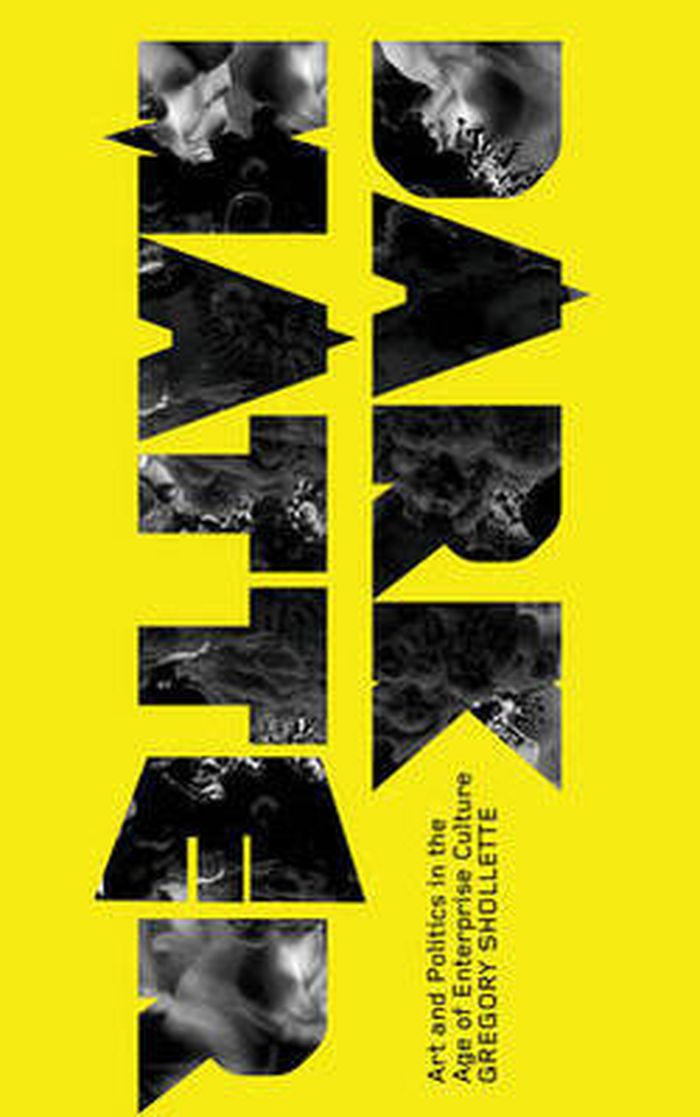
Art is big business, with some artists able to command huge sums of money for their works, while the vast majority are ignored or dismissed by critics. This book shows that these marginalised artists, the 'dark matter' of the art world, are essential to the survival of the mainstream and that they frequently organize in opposition to it. Gregory Sholette, a politically engaged artist, argues that imagination and creativity in the art world originate thrive in the non-commercial sector shut off from prestigious galleries and champagne receptions. This broader creative culture feeds the mainstream with new forms and styles that can be commodified and used to sustain the few artists admitted into the elite. This dependency, and the advent of inexpensive communication, audio and video technology, has allowed this 'dark matter' of the alternative art world to increasingly subvert the mainstream and intervene politically as both new and old forms of non-capitalist, public art. This book is essential for anyone interested in interventionist art, collectivism, and the political economy of the art world.
Dark matter: art and politics in the age of enterprise culture
Actions:
Prix:
$41.95
(disponible sur commande)
Résumé:
Art is big business, with some artists able to command huge sums of money for their works, while the vast majority are ignored or dismissed by critics. This book shows that these marginalised artists, the 'dark matter' of the art world, are essential to the survival of the mainstream and that they frequently organize in opposition to it. Gregory Sholette, a politically engaged artist, argues that imagination and creativity in the art world originate thrive in the non-commercial sector shut off from prestigious galleries and champagne receptions. This broader creative culture feeds the mainstream with new forms and styles that can be commodified and used to sustain the few artists admitted into the elite. This dependency, and the advent of inexpensive communication, audio and video technology, has allowed this 'dark matter' of the alternative art world to increasingly subvert the mainstream and intervene politically as both new and old forms of non-capitalist, public art. This book is essential for anyone interested in interventionist art, collectivism, and the political economy of the art world.
Classification:
livres
livres
Publication:
décembre 2010
décembre 2010
Sujet:
Théorie de l’art
Théorie de l’art
Classification:
livres
livres
Titre:
James Magee: The hill
James Magee: The hill
Actions:
Prix:
$43.95
(disponible sur commande)
Résumé:
This book presents The Hill - a massive and enigmatic work of art engineered, built, and designed by an equally enigmatic American artist. For more than a quarter of a century, the American artist James Magee has been engaged in a largely secret and solitary endeavour that takes up 52,000 square feet of vast plain in West Texas, USA. A former lawyer, taxi driver, and(...)
$43.95
(disponible sur commande)
Résumé:
This book presents The Hill - a massive and enigmatic work of art engineered, built, and designed by an equally enigmatic American artist. For more than a quarter of a century, the American artist James Magee has been engaged in a largely secret and solitary endeavour that takes up 52,000 square feet of vast plain in West Texas, USA. A former lawyer, taxi driver, and(...)
Titre:
James Magee: The hill
Actions:
Prix:
$43.95
(disponible sur commande)
Résumé:
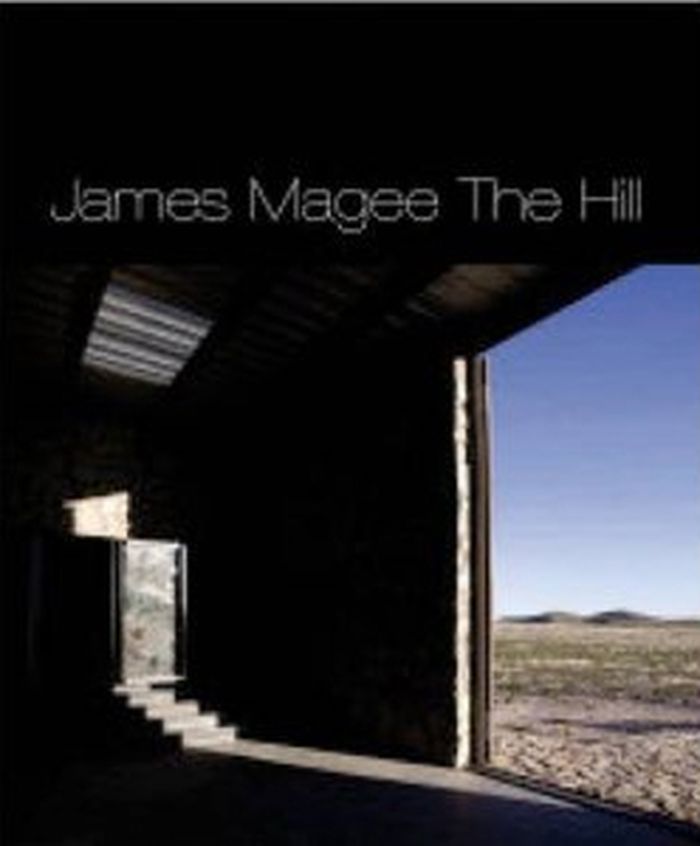
This book presents The Hill - a massive and enigmatic work of art engineered, built, and designed by an equally enigmatic American artist. For more than a quarter of a century, the American artist James Magee has been engaged in a largely secret and solitary endeavour that takes up 52,000 square feet of vast plain in West Texas, USA. A former lawyer, taxi driver, and offshore roughneck, Magee settled in El Paso where he has made a name for himself as a painter, sculptor, poet, and video maker. With 'The Hill', a complex of pavilions joined by ramps and walkways, Magee reveals himself to be an architect, engineer, and builder as well. Luminous photographs of the four buildings in 'The Hill' capture their stark presence in the desert. In addition this book takes readers inside the complex to view enormous installations and sculptures made from natural objects: stone, flowers, wood, iron, and glass. Reminiscent of ruins from the Mayan, Egyptian, and European cultures, 'The Hill' is nonetheless distinctively American.
James Magee: The hill
Actions:
Prix:
$43.95
(disponible sur commande)
Résumé:
This book presents The Hill - a massive and enigmatic work of art engineered, built, and designed by an equally enigmatic American artist. For more than a quarter of a century, the American artist James Magee has been engaged in a largely secret and solitary endeavour that takes up 52,000 square feet of vast plain in West Texas, USA. A former lawyer, taxi driver, and offshore roughneck, Magee settled in El Paso where he has made a name for himself as a painter, sculptor, poet, and video maker. With 'The Hill', a complex of pavilions joined by ramps and walkways, Magee reveals himself to be an architect, engineer, and builder as well. Luminous photographs of the four buildings in 'The Hill' capture their stark presence in the desert. In addition this book takes readers inside the complex to view enormous installations and sculptures made from natural objects: stone, flowers, wood, iron, and glass. Reminiscent of ruins from the Mayan, Egyptian, and European cultures, 'The Hill' is nonetheless distinctively American.
Classification:
livres
livres
Publication:
septembre 2010
septembre 2010
Classification:
livres
livres
Prix:
$37.95
(disponible sur commande)
Résumé:
In ''Beyond the World's End,'' T. J. Demos explores cultural practices that provide radical propositions for living in a world beset by environmental and political crises. Rethinking relationships between aesthetics and an expanded political ecology that foregrounds just futurity, Demos examines how contemporary artists are diversely addressing urgent themes, including(...)
$37.95
(disponible sur commande)
Résumé:
In ''Beyond the World's End,'' T. J. Demos explores cultural practices that provide radical propositions for living in a world beset by environmental and political crises. Rethinking relationships between aesthetics and an expanded political ecology that foregrounds just futurity, Demos examines how contemporary artists are diversely addressing urgent themes, including(...)
Titre:
Beyond the world's end: arts of living at the crossing
Actions:
Prix:
$37.95
(disponible sur commande)
Résumé:
In ''Beyond the World's End,'' T. J. Demos explores cultural practices that provide radical propositions for living in a world beset by environmental and political crises. Rethinking relationships between aesthetics and an expanded political ecology that foregrounds just futurity, Demos examines how contemporary artists are diversely addressing urgent themes, including John Akomfrah's cinematic entanglements of racial capitalism with current environmental threats, the visual politics of climate refugees in work by Forensic Architecture and Teddy Cruz and Fonna Forman, and moving images of Afrofuturist climate justice in projects by Arthur Jafa and Martine Syms. Demos considers video and mixed-media art that responds to resource extraction in works by Angela Melitopoulos, Allora & Calzadilla, and Ursula Biemann, as well as the multispecies ecologies of Terike Haapoja and Public Studio. Throughout Demos contends that contemporary intersections of aesthetics and politics, as exemplified in the Standing Rock #NoDAPL campaign and the Zad's autonomous zone in France, are creating the imaginaries that will be crucial to building a socially just and flourishing future.
Beyond the world's end: arts of living at the crossing
Actions:
Prix:
$37.95
(disponible sur commande)
Résumé:
In ''Beyond the World's End,'' T. J. Demos explores cultural practices that provide radical propositions for living in a world beset by environmental and political crises. Rethinking relationships between aesthetics and an expanded political ecology that foregrounds just futurity, Demos examines how contemporary artists are diversely addressing urgent themes, including John Akomfrah's cinematic entanglements of racial capitalism with current environmental threats, the visual politics of climate refugees in work by Forensic Architecture and Teddy Cruz and Fonna Forman, and moving images of Afrofuturist climate justice in projects by Arthur Jafa and Martine Syms. Demos considers video and mixed-media art that responds to resource extraction in works by Angela Melitopoulos, Allora & Calzadilla, and Ursula Biemann, as well as the multispecies ecologies of Terike Haapoja and Public Studio. Throughout Demos contends that contemporary intersections of aesthetics and politics, as exemplified in the Standing Rock #NoDAPL campaign and the Zad's autonomous zone in France, are creating the imaginaries that will be crucial to building a socially just and flourishing future.
Classification:
livres
livres
Publication:
septembre 2020
septembre 2020
Classification:
livres
livres
Actions:
Prix:
$25.95
(disponible sur commande)
Résumé:
Between 1979 and 1981, Alfredo Jaar asked Chileans a deceptively simple question: "Are you happy?" Through private interviews, sidewalk polls and video-recorded forums, among other interventions, Jaar's three-year and seven-phase project, ''Studies on happiness'', addressed a furtive and fearful population living under Augusto Pinochet's military dictatorship. It also(...)
$25.95
(disponible sur commande)
Résumé:
Between 1979 and 1981, Alfredo Jaar asked Chileans a deceptively simple question: "Are you happy?" Through private interviews, sidewalk polls and video-recorded forums, among other interventions, Jaar's three-year and seven-phase project, ''Studies on happiness'', addressed a furtive and fearful population living under Augusto Pinochet's military dictatorship. It also(...)
Titre:
Alfredo Jaar: Studies on happiness
Actions:
Prix:
$25.95
(disponible sur commande)
Résumé:
Between 1979 and 1981, Alfredo Jaar asked Chileans a deceptively simple question: "Are you happy?" Through private interviews, sidewalk polls and video-recorded forums, among other interventions, Jaar's three-year and seven-phase project, ''Studies on happiness'', addressed a furtive and fearful population living under Augusto Pinochet's military dictatorship. It also spoke to a country in transition, as a newly adopted constitution remade Chile through privatisation and other neoliberal reforms. In its varied interventions and direct mode of address, ''Studies on happiness'' functioned as a feedback device meant to catalyse a critical awareness with its blunt questioning. Edward A. Vazquez contextualises Studies on Happiness within Jaar's early production and situates his practice within a Chilean art world haunted by the residues of political violence. This study foregrounds the project's historical embeddedness and the deep political stakes of its apparent sociality, recognising the crucial role that context has always played in Jaar's practice. By turning to the Santiago of Studies on Happiness, Vazquez explores the work's political and art historical environment and provides a wedge to realign current interpretations of Chilean art and hemispheric conceptualism with the openness central to Jaar's project.
Alfredo Jaar: Studies on happiness
Actions:
Prix:
$25.95
(disponible sur commande)
Résumé:
Between 1979 and 1981, Alfredo Jaar asked Chileans a deceptively simple question: "Are you happy?" Through private interviews, sidewalk polls and video-recorded forums, among other interventions, Jaar's three-year and seven-phase project, ''Studies on happiness'', addressed a furtive and fearful population living under Augusto Pinochet's military dictatorship. It also spoke to a country in transition, as a newly adopted constitution remade Chile through privatisation and other neoliberal reforms. In its varied interventions and direct mode of address, ''Studies on happiness'' functioned as a feedback device meant to catalyse a critical awareness with its blunt questioning. Edward A. Vazquez contextualises Studies on Happiness within Jaar's early production and situates his practice within a Chilean art world haunted by the residues of political violence. This study foregrounds the project's historical embeddedness and the deep political stakes of its apparent sociality, recognising the crucial role that context has always played in Jaar's practice. By turning to the Santiago of Studies on Happiness, Vazquez explores the work's political and art historical environment and provides a wedge to realign current interpretations of Chilean art and hemispheric conceptualism with the openness central to Jaar's project.
Classification:
livres
livres
Publication:
novembre 2023
novembre 2023
Sujet:
Théorie de l’art
Théorie de l’art
Classification:
livres
livres
Prix:
$94.00
(disponible sur commande)
Résumé:
The 1960s and 1970s marked a period of exceptional change in Korea, propelled by rapid urbanization and modernization, and influenced by an authoritarian state at home and a globalizing world beyond. Young artists of the era were not immune to these unprecedented socioeconomic, political, and material conditions, responding with a groundbreaking and genre-defying body of(...)
$94.00
(disponible sur commande)
Résumé:
The 1960s and 1970s marked a period of exceptional change in Korea, propelled by rapid urbanization and modernization, and influenced by an authoritarian state at home and a globalizing world beyond. Young artists of the era were not immune to these unprecedented socioeconomic, political, and material conditions, responding with a groundbreaking and genre-defying body of(...)
Publication:
octobre 2023
octobre 2023
Titre:
Only the young: Expermental art in Korea, 1960s-1970s
Actions:
Prix:
$94.00
(disponible sur commande)
Résumé:
The 1960s and 1970s marked a period of exceptional change in Korea, propelled by rapid urbanization and modernization, and influenced by an authoritarian state at home and a globalizing world beyond. Young artists of the era were not immune to these unprecedented socioeconomic, political, and material conditions, responding with a groundbreaking and genre-defying body of avant-garde art known broadly as ''Experimental art'' (silheom misul). Both as individuals and in collectives, these artists broke definitively with their predecessors, redefining the boundaries of traditional painting and sculpture while embracing innovative and often provocative approaches to materials and process through performance, installation, photography, and video. ''Only the Young: Experimental Art in Korea, 1960s–1970s'' accompanies the first exhibition in North America to examine this influential but understudied period. Featuring incisive new scholarship and lavish photography of works drawn from public and private collections across the globe, the volume also brings together translations of articles, artist manifestos, and other primary sources that offer a firsthand perspective on the ideas and discourses then shaping Korean art. What emerges is the story of how this generation of young Korean artists harnessed the power of art to confront and reimagine an ever-shifting present.
Only the young: Expermental art in Korea, 1960s-1970s
Actions:
Prix:
$94.00
(disponible sur commande)
Résumé:
The 1960s and 1970s marked a period of exceptional change in Korea, propelled by rapid urbanization and modernization, and influenced by an authoritarian state at home and a globalizing world beyond. Young artists of the era were not immune to these unprecedented socioeconomic, political, and material conditions, responding with a groundbreaking and genre-defying body of avant-garde art known broadly as ''Experimental art'' (silheom misul). Both as individuals and in collectives, these artists broke definitively with their predecessors, redefining the boundaries of traditional painting and sculpture while embracing innovative and often provocative approaches to materials and process through performance, installation, photography, and video. ''Only the Young: Experimental Art in Korea, 1960s–1970s'' accompanies the first exhibition in North America to examine this influential but understudied period. Featuring incisive new scholarship and lavish photography of works drawn from public and private collections across the globe, the volume also brings together translations of articles, artist manifestos, and other primary sources that offer a firsthand perspective on the ideas and discourses then shaping Korean art. What emerges is the story of how this generation of young Korean artists harnessed the power of art to confront and reimagine an ever-shifting present.
Classification:
livres
livres
Publication:
octobre 2023
octobre 2023
Classification:
livres
livres
Prix:
$42.00
(disponible sur commande)
Résumé:
"The Unknown City" takes its place in the emerging architectural literature that looks beyond design process and buildings to discover new ways of looking at the urban experience. A multistranded contemplation of the notion of "knowing a place," it is about both the existence and the possibilities of architecture and the city. An important inspiration for the book is(...)
$42.00
(disponible sur commande)
Résumé:
"The Unknown City" takes its place in the emerging architectural literature that looks beyond design process and buildings to discover new ways of looking at the urban experience. A multistranded contemplation of the notion of "knowing a place," it is about both the existence and the possibilities of architecture and the city. An important inspiration for the book is(...)
Sujet:
Théorie de l’urbanisme
Théorie de l’urbanisme
Publication:
octobre 2002, Cambridge, Massachusetts
octobre 2002, Cambridge, Massachusetts
Titre:
The unknown city : contesting architecture and social space
Actions:
Prix:
$42.00
(disponible sur commande)
Résumé:
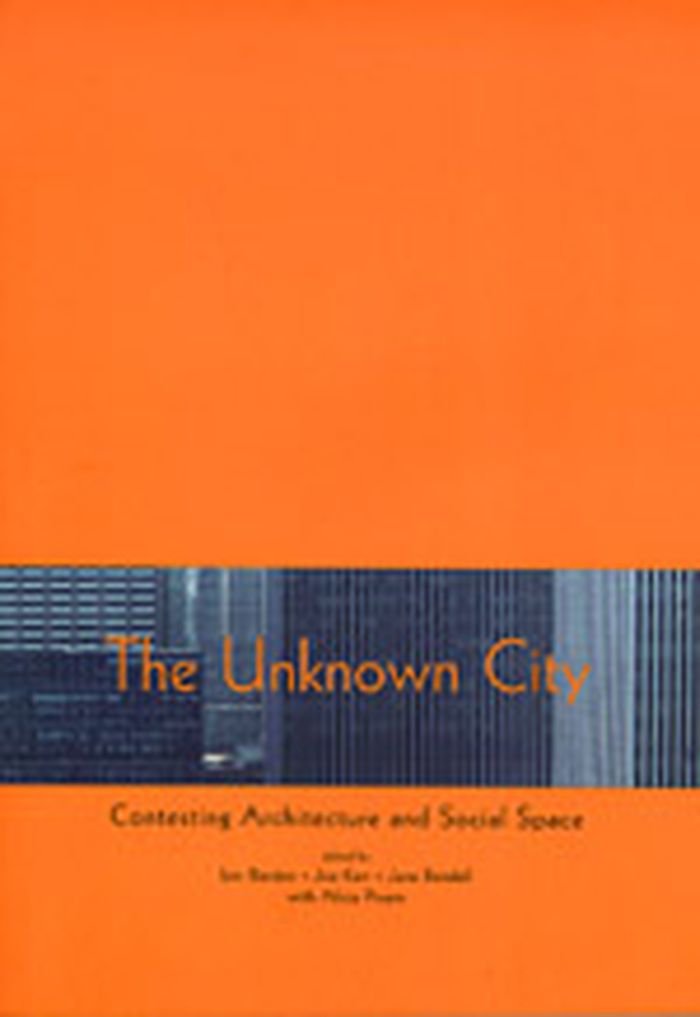
"The Unknown City" takes its place in the emerging architectural literature that looks beyond design process and buildings to discover new ways of looking at the urban experience. A multistranded contemplation of the notion of "knowing a place," it is about both the existence and the possibilities of architecture and the city. An important inspiration for the book is the work of Henri Lefebvre, in particular his ideas on space as a historical production. Many of the essays also draw on the social critique and tactics of the Situationist movement. The international gathering of contributors includes art, architectural, and urban historians and theorists; urban geographers; architects, artists, and filmmakers; and literary and cultural theorists. The essays range from abstract considerations of spatial production and representation to such concrete examples of urban domination as video surveillance and Regency London as the site of male pleasure. Although many of the essays are driven by social, cultural, and urban theory, they also tell real stories about real places. Each piece is in some way a critique of capitalism and a thought experiment about how designers and city dwellers working together can shape the cities of tomorrow.
The unknown city : contesting architecture and social space
Actions:
Prix:
$42.00
(disponible sur commande)
Résumé:
"The Unknown City" takes its place in the emerging architectural literature that looks beyond design process and buildings to discover new ways of looking at the urban experience. A multistranded contemplation of the notion of "knowing a place," it is about both the existence and the possibilities of architecture and the city. An important inspiration for the book is the work of Henri Lefebvre, in particular his ideas on space as a historical production. Many of the essays also draw on the social critique and tactics of the Situationist movement. The international gathering of contributors includes art, architectural, and urban historians and theorists; urban geographers; architects, artists, and filmmakers; and literary and cultural theorists. The essays range from abstract considerations of spatial production and representation to such concrete examples of urban domination as video surveillance and Regency London as the site of male pleasure. Although many of the essays are driven by social, cultural, and urban theory, they also tell real stories about real places. Each piece is in some way a critique of capitalism and a thought experiment about how designers and city dwellers working together can shape the cities of tomorrow.
Classification:
livres
livres
Publication:
octobre 2002, Cambridge, Massachusetts
octobre 2002, Cambridge, Massachusetts
Sujet:
Théorie de l’urbanisme
Théorie de l’urbanisme


