


4193 Résultats
Classification:
livres
livres
Actions:
Prix:
$85.00
(disponible sur commande)
Résumé:
Iranian artist Reza Shafahi (b. 1940) began his career in his 70s, having spent the preceding decades largely disconnected from his family, working through an addiction to gambling. Art became a way out when his son, artist Mamali Shafahi, invited him to participate in a daily drawing exercise. For the first time, a generous selection of Reza’s works are collected within(...)
$85.00
(disponible sur commande)
Résumé:
Iranian artist Reza Shafahi (b. 1940) began his career in his 70s, having spent the preceding decades largely disconnected from his family, working through an addiction to gambling. Art became a way out when his son, artist Mamali Shafahi, invited him to participate in a daily drawing exercise. For the first time, a generous selection of Reza’s works are collected within(...)
Titre:
Reza Shafahi, Diary of a gambler
Actions:
Prix:
$85.00
(disponible sur commande)
Résumé:
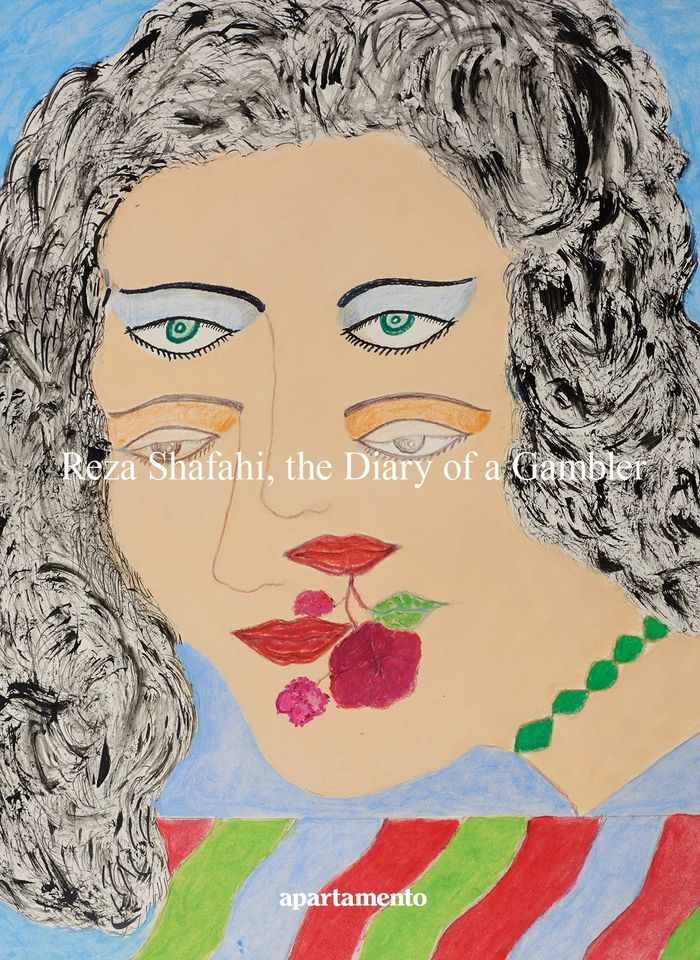
Iranian artist Reza Shafahi (b. 1940) began his career in his 70s, having spent the preceding decades largely disconnected from his family, working through an addiction to gambling. Art became a way out when his son, artist Mamali Shafahi, invited him to participate in a daily drawing exercise. For the first time, a generous selection of Reza’s works are collected within a stand-alone volume, celebrating the full scope of his artistic practice. Edited by Jina Khayyer, ''Reza Shafahi, The Diary of a Gambler'' features a selection of art curated by Mamali and by Tony Cox, owner and founder of Club Rhubarb in New York City, where Reza had his first solo show in 2019. Apartamento magazine first told Reza’s captivating story in issue #29, and ''Reza Shafahi, the Diary of a Gambler'' is punctuated by a first-person reimagining of Khayyer’s original interview. Classic poems by Rumi, Khayyam, Saadi, and the more modern Forough Farrokhzad—clear influences on Reza’s vibrant and sensual creations—are presented here in Farsi and in English translation. Contributions by Mamali, Cox, Michael Bullock, and Martha Kirszenbaum lend further context to Reza’s artistic journey, into a world that, as Kirszenbaum notes, shines with ‘a touch of glow and softness.’
Reza Shafahi, Diary of a gambler
Actions:
Prix:
$85.00
(disponible sur commande)
Résumé:
Iranian artist Reza Shafahi (b. 1940) began his career in his 70s, having spent the preceding decades largely disconnected from his family, working through an addiction to gambling. Art became a way out when his son, artist Mamali Shafahi, invited him to participate in a daily drawing exercise. For the first time, a generous selection of Reza’s works are collected within a stand-alone volume, celebrating the full scope of his artistic practice. Edited by Jina Khayyer, ''Reza Shafahi, The Diary of a Gambler'' features a selection of art curated by Mamali and by Tony Cox, owner and founder of Club Rhubarb in New York City, where Reza had his first solo show in 2019. Apartamento magazine first told Reza’s captivating story in issue #29, and ''Reza Shafahi, the Diary of a Gambler'' is punctuated by a first-person reimagining of Khayyer’s original interview. Classic poems by Rumi, Khayyam, Saadi, and the more modern Forough Farrokhzad—clear influences on Reza’s vibrant and sensual creations—are presented here in Farsi and in English translation. Contributions by Mamali, Cox, Michael Bullock, and Martha Kirszenbaum lend further context to Reza’s artistic journey, into a world that, as Kirszenbaum notes, shines with ‘a touch of glow and softness.’
Classification:
livres
livres
Publication:
mai 2023
mai 2023
Classification:
livres
livres
Titre:
Radical intimacy
Radical intimacy
Actions:
Prix:
$29.95
(disponible en magasin)
Résumé:
Capitalist ideology wants us to believe that there is an optimal way to live. 'Making connections' means networking for work. Our emotional needs are to be fulfilled by a single romantic partner, and self-care equates to taking personal responsibility for our suffering. We must be productive and heterosexual, we must have babies and buy a house. But the kicker is most(...)
$29.95
(disponible en magasin)
Résumé:
Capitalist ideology wants us to believe that there is an optimal way to live. 'Making connections' means networking for work. Our emotional needs are to be fulfilled by a single romantic partner, and self-care equates to taking personal responsibility for our suffering. We must be productive and heterosexual, we must have babies and buy a house. But the kicker is most(...)
Titre:
Radical intimacy
Actions:
Prix:
$29.95
(disponible en magasin)
Résumé:
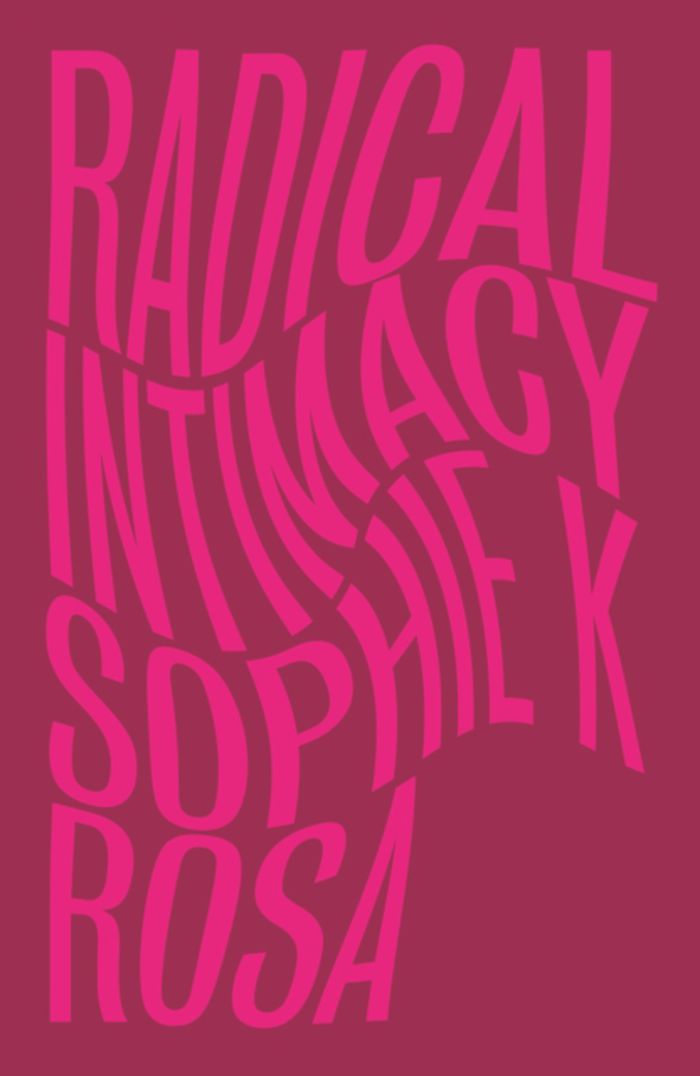
Capitalist ideology wants us to believe that there is an optimal way to live. 'Making connections' means networking for work. Our emotional needs are to be fulfilled by a single romantic partner, and self-care equates to taking personal responsibility for our suffering. We must be productive and heterosexual, we must have babies and buy a house. But the kicker is most people cannot and do not want to achieve all, or any of these life goals. Instead we are left feeling atomised, exhausted and disempowered. ''Radical intimacy'' shows that it doesn't need to be this way. A punchy and impassioned account of inspiring ideas about alternative ways to live, Sophie K Rosa demands we use our radical imagination to discover a new form of intimacy and to transform our personal lives and in turn society as a whole. Including critiques of the 'wellness' industry that ignores rising poverty rates, the mental health crisis and racist and misogynist state violence; transcending love and sex under capitalism to move towards feminist, decolonial and queer thinking; asking whether we should abolish the family; interrogating the framing of ageing and death and much more, ''Radical intimacy'' is the compassionate antidote to a callous society.
Radical intimacy
Actions:
Prix:
$29.95
(disponible en magasin)
Résumé:
Capitalist ideology wants us to believe that there is an optimal way to live. 'Making connections' means networking for work. Our emotional needs are to be fulfilled by a single romantic partner, and self-care equates to taking personal responsibility for our suffering. We must be productive and heterosexual, we must have babies and buy a house. But the kicker is most people cannot and do not want to achieve all, or any of these life goals. Instead we are left feeling atomised, exhausted and disempowered. ''Radical intimacy'' shows that it doesn't need to be this way. A punchy and impassioned account of inspiring ideas about alternative ways to live, Sophie K Rosa demands we use our radical imagination to discover a new form of intimacy and to transform our personal lives and in turn society as a whole. Including critiques of the 'wellness' industry that ignores rising poverty rates, the mental health crisis and racist and misogynist state violence; transcending love and sex under capitalism to move towards feminist, decolonial and queer thinking; asking whether we should abolish the family; interrogating the framing of ageing and death and much more, ''Radical intimacy'' is the compassionate antidote to a callous society.
Classification:
livres
livres
Publication:
avril 2023
avril 2023
Sujet:
Social
Social
Classification:
livres
livres
Titre:
2 G Eduardo Arroyo
2 G Eduardo Arroyo
Actions:
Prix:
$46.95
(disponible en magasin)
Résumé:
In recent years the Madrid school has gone through a renewal that is generating an architecture which is especially interested in what is done on the other side of the Spanish frontier. Without losing sight of a rich local tradition, the many different architecture studios of Madrid -like Ábalos and Herreros, Tuñón and Mansilla, Soriano and Palacios, Cero9, Acebo and(...)
$46.95
(disponible en magasin)
Résumé:
In recent years the Madrid school has gone through a renewal that is generating an architecture which is especially interested in what is done on the other side of the Spanish frontier. Without losing sight of a rich local tradition, the many different architecture studios of Madrid -like Ábalos and Herreros, Tuñón and Mansilla, Soriano and Palacios, Cero9, Acebo and(...)
Sujet:
Architecture, monographies
Architecture, monographies
Publication:
avril 2007, Barcelona
avril 2007, Barcelona
Titre:
2 G Eduardo Arroyo
Actions:
Prix:
$46.95
(disponible en magasin)
Résumé:
In recent years the Madrid school has gone through a renewal that is generating an architecture which is especially interested in what is done on the other side of the Spanish frontier. Without losing sight of a rich local tradition, the many different architecture studios of Madrid -like Ábalos and Herreros, Tuñón and Mansilla, Soriano and Palacios, Cero9, Acebo and Alonso, Aranguren and Gallegos, Nieto and Sobejano- are displaying a much fresher and more active approach in terms of defining new advances for contemporary Spanish architecture than their compatriots of the Barcelona School. As part of this, Eduardo Arroyo and the members of the Madrid studio no.mad arquitectos occupy an important place within the new Spanish architecture. Despite having built very little (a day nursery in Sondika, a square and a stadium in Barakaldo, and a single-family house on the outskirts of Madrid), Eduardo Arroyo is a key figure for understanding the new directions that not only Spanish, but also European, architecture is taking. This new 41st issue of the magazine 2G presents all his studio’s built work and some of its more recent projects, a total oeuvre that moves between the fiercest pragmatism and rigour, a playful geometry, the value of architecture as part of the landscape, and constructional responsibility.
2 G Eduardo Arroyo
Actions:
Prix:
$46.95
(disponible en magasin)
Résumé:
In recent years the Madrid school has gone through a renewal that is generating an architecture which is especially interested in what is done on the other side of the Spanish frontier. Without losing sight of a rich local tradition, the many different architecture studios of Madrid -like Ábalos and Herreros, Tuñón and Mansilla, Soriano and Palacios, Cero9, Acebo and Alonso, Aranguren and Gallegos, Nieto and Sobejano- are displaying a much fresher and more active approach in terms of defining new advances for contemporary Spanish architecture than their compatriots of the Barcelona School. As part of this, Eduardo Arroyo and the members of the Madrid studio no.mad arquitectos occupy an important place within the new Spanish architecture. Despite having built very little (a day nursery in Sondika, a square and a stadium in Barakaldo, and a single-family house on the outskirts of Madrid), Eduardo Arroyo is a key figure for understanding the new directions that not only Spanish, but also European, architecture is taking. This new 41st issue of the magazine 2G presents all his studio’s built work and some of its more recent projects, a total oeuvre that moves between the fiercest pragmatism and rigour, a playful geometry, the value of architecture as part of the landscape, and constructional responsibility.
Classification:
livres
livres
Publication:
avril 2007, Barcelona
avril 2007, Barcelona
Sujet:
Architecture, monographies
Architecture, monographies
Classification:
livres
livres
Actions:
Prix:
$54.95
(disponible en magasin)
Résumé:
Arriving in the United States in 1914, Viennese-born Paul T. Frankl (1886-1958) brought with him an outsider's fresh perspective and an enthusiasm for forging a uniquely American design aesthetic. In the years between the two world wars he, more than any other designer, helped shape the distinctive look of American modernism. This authoritative book draws on an extensive(...)
$54.95
(disponible en magasin)
Résumé:
Arriving in the United States in 1914, Viennese-born Paul T. Frankl (1886-1958) brought with him an outsider's fresh perspective and an enthusiasm for forging a uniquely American design aesthetic. In the years between the two world wars he, more than any other designer, helped shape the distinctive look of American modernism. This authoritative book draws on an extensive(...)
Titre:
Paul T. Frankl and modern American design
Actions:
Prix:
$54.95
(disponible en magasin)
Résumé:
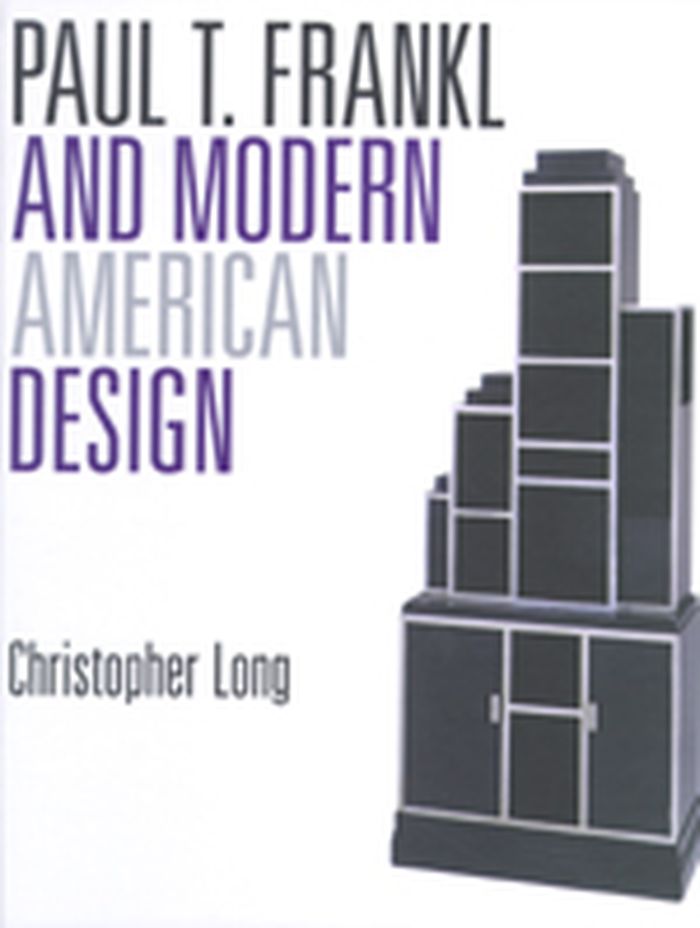
Arriving in the United States in 1914, Viennese-born Paul T. Frankl (1886-1958) brought with him an outsider's fresh perspective and an enthusiasm for forging a uniquely American design aesthetic. In the years between the two world wars he, more than any other designer, helped shape the distinctive look of American modernism. This authoritative book draws on an extensive collection of unpublished documents and family papers and photographs to provide the first full account of Frankl's life and ideas. The book also explores the history of modern American design and the extent of Frankl's influence on its trajectory. In the early 1920s, Frankl opened a New York City shop that became an epicentre of American modernism. Over the next decades, his work encompassed everything from individual pieces of furniture and decorative accessories to entire interiors, and his style continuously evolved, from early 'Skyscraper' furniture to relaxed and casual designs favoured by the Hollywood elite in the 1930s to manufactured pieces for the mass market in the 1950s. The book charts the impact of Frankl's ideas on merchants and consumers, on his fellow designers, and on the changing look of American homes and workplaces. With close to 170 illustrations, "Paul T. Frankl and Modern American Design" is an essential reference on 20th-century design.
Paul T. Frankl and modern American design
Actions:
Prix:
$54.95
(disponible en magasin)
Résumé:
Arriving in the United States in 1914, Viennese-born Paul T. Frankl (1886-1958) brought with him an outsider's fresh perspective and an enthusiasm for forging a uniquely American design aesthetic. In the years between the two world wars he, more than any other designer, helped shape the distinctive look of American modernism. This authoritative book draws on an extensive collection of unpublished documents and family papers and photographs to provide the first full account of Frankl's life and ideas. The book also explores the history of modern American design and the extent of Frankl's influence on its trajectory. In the early 1920s, Frankl opened a New York City shop that became an epicentre of American modernism. Over the next decades, his work encompassed everything from individual pieces of furniture and decorative accessories to entire interiors, and his style continuously evolved, from early 'Skyscraper' furniture to relaxed and casual designs favoured by the Hollywood elite in the 1930s to manufactured pieces for the mass market in the 1950s. The book charts the impact of Frankl's ideas on merchants and consumers, on his fellow designers, and on the changing look of American homes and workplaces. With close to 170 illustrations, "Paul T. Frankl and Modern American Design" is an essential reference on 20th-century design.
Classification:
livres
livres
Publication:
mai 2007, New Haven / London
mai 2007, New Haven / London
Sujet:
Design, monographies
Design, monographies
Classification:
livres
livres
Actions:
Prix:
$60.00
(disponible sur commande)
Résumé:
Gordon Matta-Clark died at only 35 of pancreatic cancer and has since become a cult figure of late 20th-century art. Trained in architecture at Cornell, he went on to question the field’s conventions in vivid projects—performance and recycling pieces, space and texture works and word games—some of which excised holes into existing buildings or assembled deeds to New York(...)
$60.00
(disponible sur commande)
Résumé:
Gordon Matta-Clark died at only 35 of pancreatic cancer and has since become a cult figure of late 20th-century art. Trained in architecture at Cornell, he went on to question the field’s conventions in vivid projects—performance and recycling pieces, space and texture works and word games—some of which excised holes into existing buildings or assembled deeds to New York(...)
Publication:
août 2016
août 2016
Titre:
Gordon Matta-Clark: Experience becomes the object
Actions:
Prix:
$60.00
(disponible sur commande)
Résumé:
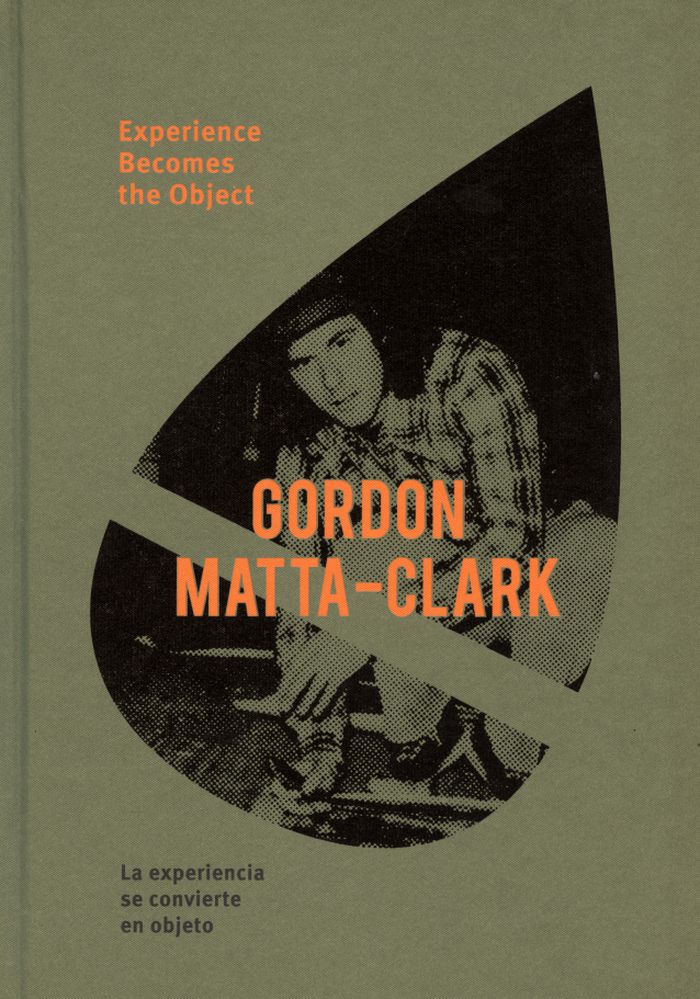
Gordon Matta-Clark died at only 35 of pancreatic cancer and has since become a cult figure of late 20th-century art. Trained in architecture at Cornell, he went on to question the field’s conventions in vivid projects—performance and recycling pieces, space and texture works and word games—some of which excised holes into existing buildings or assembled deeds to New York City alleys and curbs. The artist used a variety of media to document his work, including film, video and photography. His work and words, while sophisticated enough to make him an "artist’s artist," and colossal and outgoing enough to draw public attention and affection, were always also grounded in social or political convictions. In the early 1970s, Matta-Clark developed the idea of "anarchitecture," which encompassed his interest in voids, gaps and left-over spaces. Gordon Matta-Clark: Experience Becomes the Object collects five essays and ten individual interviews with various friends and family members of Matta-Clark’s. Together, they outline a biographical profile and offer an analysis of the historical period in which the artist developed his short but successful career. New, never-before-published material and photographs as well as an exclusive link to the documentary Crosswords: Matta-Clark’s Friends by Matias Cardone are also included.
Gordon Matta-Clark: Experience becomes the object
Actions:
Prix:
$60.00
(disponible sur commande)
Résumé:
Gordon Matta-Clark died at only 35 of pancreatic cancer and has since become a cult figure of late 20th-century art. Trained in architecture at Cornell, he went on to question the field’s conventions in vivid projects—performance and recycling pieces, space and texture works and word games—some of which excised holes into existing buildings or assembled deeds to New York City alleys and curbs. The artist used a variety of media to document his work, including film, video and photography. His work and words, while sophisticated enough to make him an "artist’s artist," and colossal and outgoing enough to draw public attention and affection, were always also grounded in social or political convictions. In the early 1970s, Matta-Clark developed the idea of "anarchitecture," which encompassed his interest in voids, gaps and left-over spaces. Gordon Matta-Clark: Experience Becomes the Object collects five essays and ten individual interviews with various friends and family members of Matta-Clark’s. Together, they outline a biographical profile and offer an analysis of the historical period in which the artist developed his short but successful career. New, never-before-published material and photographs as well as an exclusive link to the documentary Crosswords: Matta-Clark’s Friends by Matias Cardone are also included.
Classification:
livres
livres
Publication:
août 2016
août 2016
Classification:
livres
livres
Titre:
The photographer's cookbook
The photographer's cookbook
Actions:
Prix:
$37.50
(disponible sur commande)
Résumé:
In the late 1970s, the George Eastman Museum approached a group of photographers to ask for their favorite recipes and food-related photographs to go with them, in pursuit of publishing a cookbook. Playing off George Eastman’s own famous recipe for lemon meringue pie, as well as former director Beaumont Newhall’s love of food, the cookbook grew from the idea that(...)
$37.50
(disponible sur commande)
Résumé:
In the late 1970s, the George Eastman Museum approached a group of photographers to ask for their favorite recipes and food-related photographs to go with them, in pursuit of publishing a cookbook. Playing off George Eastman’s own famous recipe for lemon meringue pie, as well as former director Beaumont Newhall’s love of food, the cookbook grew from the idea that(...)
Titre:
The photographer's cookbook
Actions:
Prix:
$37.50
(disponible sur commande)
Résumé:
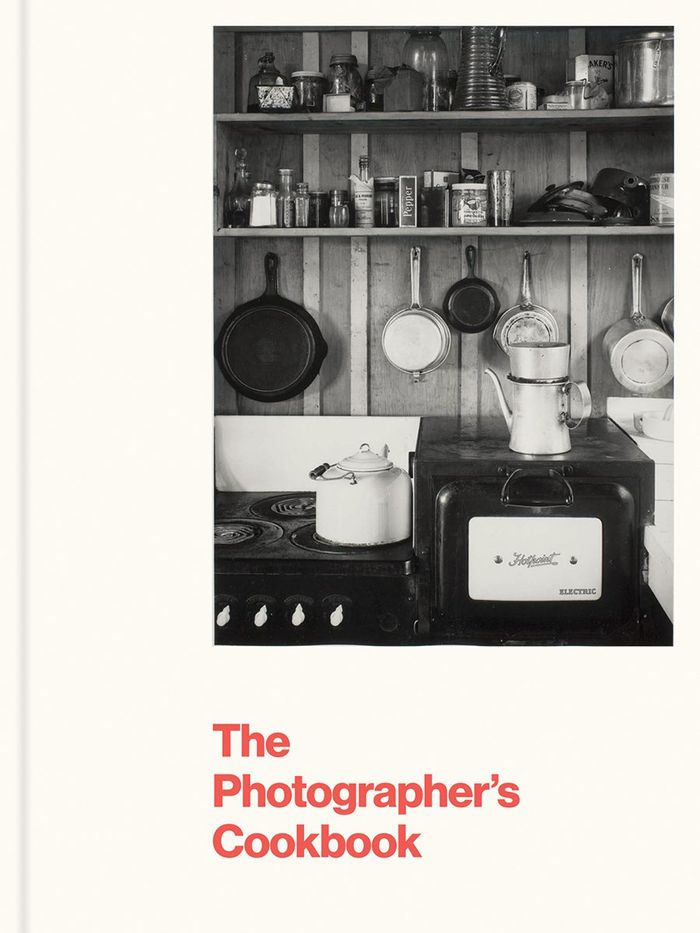
In the late 1970s, the George Eastman Museum approached a group of photographers to ask for their favorite recipes and food-related photographs to go with them, in pursuit of publishing a cookbook. Playing off George Eastman’s own famous recipe for lemon meringue pie, as well as former director Beaumont Newhall’s love of food, the cookbook grew from the idea that photographers’ talent in the darkroom must also translate into special skills in the kitchen. The recipes do not disappoint, with Robert Adams’ Big Sugar Cookies, Ansel Adams’ Poached Eggs in Beer, Richard Avedon’s Royal Pot Roast, Imogen Cunningham’s Borscht, William Eggleston’s Cheese Grits Casserole, Stephen Shore’s Key Lime Pie Supreme and Ed Ruscha’s Cactus Omelette, to name a few. The book was never published, and the materials have remained in George Eastman Museum’s collection ever since. Now, nearly 40 years later, this extensive and distinctive archive of untouched recipes and photographs is published in 'The Photographer’s Cookbook' for the first time. The book provides a time capsule of contemporary photographers of the 1970s many before they made a name for themselves as well as a fascinating look at how they depicted food, family and home, taking readers behind the camera and into the hearts and stomachs of some of photography’s most important practitioners.
The photographer's cookbook
Actions:
Prix:
$37.50
(disponible sur commande)
Résumé:
In the late 1970s, the George Eastman Museum approached a group of photographers to ask for their favorite recipes and food-related photographs to go with them, in pursuit of publishing a cookbook. Playing off George Eastman’s own famous recipe for lemon meringue pie, as well as former director Beaumont Newhall’s love of food, the cookbook grew from the idea that photographers’ talent in the darkroom must also translate into special skills in the kitchen. The recipes do not disappoint, with Robert Adams’ Big Sugar Cookies, Ansel Adams’ Poached Eggs in Beer, Richard Avedon’s Royal Pot Roast, Imogen Cunningham’s Borscht, William Eggleston’s Cheese Grits Casserole, Stephen Shore’s Key Lime Pie Supreme and Ed Ruscha’s Cactus Omelette, to name a few. The book was never published, and the materials have remained in George Eastman Museum’s collection ever since. Now, nearly 40 years later, this extensive and distinctive archive of untouched recipes and photographs is published in 'The Photographer’s Cookbook' for the first time. The book provides a time capsule of contemporary photographers of the 1970s many before they made a name for themselves as well as a fascinating look at how they depicted food, family and home, taking readers behind the camera and into the hearts and stomachs of some of photography’s most important practitioners.
Classification:
livres
livres
Publication:
juin 2016
juin 2016
Sujet:
Bouffe
Bouffe
Classification:
livres
livres
Titre:
The Urban Archetypes of Jane Jacobs and Ebenezer Howard: Contradiction and meaning in city form
The Urban Archetypes of Jane Jacobs and Ebenezer Howard: Contradiction and meaning in city form
Actions:
Prix:
$80.00
(disponible sur commande)
Résumé:
Ebenezer Howard, an Englishman, and Jane Jacobs, a naturalized Canadian, personify the twentieth century’s opposing outlooks on cities. Howard had envisaged small towns, newly built from scratch, fashioned on single family homes with small gardens. Jacobs embraced existing inner-city neighbourhoods emphasizing the verve of the living street. From Howard’s idea, the(...)
$80.00
(disponible sur commande)
Résumé:
Ebenezer Howard, an Englishman, and Jane Jacobs, a naturalized Canadian, personify the twentieth century’s opposing outlooks on cities. Howard had envisaged small towns, newly built from scratch, fashioned on single family homes with small gardens. Jacobs embraced existing inner-city neighbourhoods emphasizing the verve of the living street. From Howard’s idea, the(...)
Titre:
The Urban Archetypes of Jane Jacobs and Ebenezer Howard: Contradiction and meaning in city form
Actions:
Prix:
$80.00
(disponible sur commande)
Résumé:
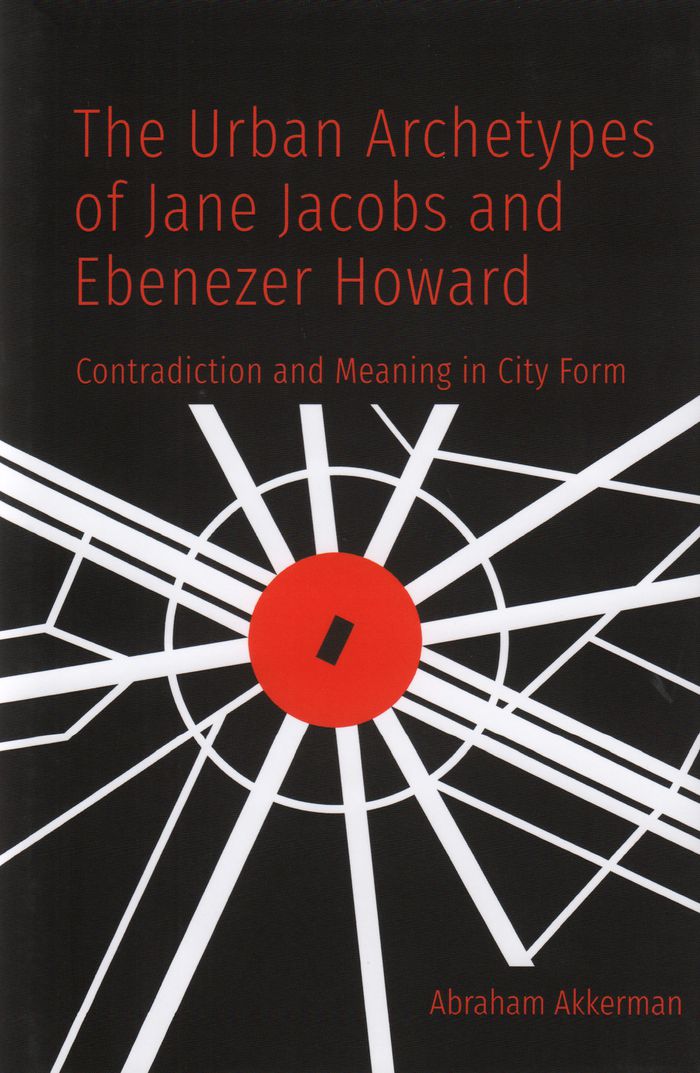
Ebenezer Howard, an Englishman, and Jane Jacobs, a naturalized Canadian, personify the twentieth century’s opposing outlooks on cities. Howard had envisaged small towns, newly built from scratch, fashioned on single family homes with small gardens. Jacobs embraced existing inner-city neighbourhoods emphasizing the verve of the living street. From Howard’s idea, the American Dream of garden suburbs had emerged, yet his conceptualization of a modern city received criticism for being uniform and alienated from the rest of the city. Similarly, at the turn of the new century, Jacobs’ inner-city neighbourhoods came to be recognized as the result of commodification, vacillating between poverty and newly discovered hubs of urban authenticity. Presenting Howard and Jacobs within a psychocultural context, ''The urban archetypes of Jane Jacobs and Ebenezer Howard'' addresses our urban crisis in the recognition that ''city form'' is a gendered, allegorical medium expressing femininity and masculinity within two founding features of the built environment: void and volume. Both founding contrasts bring tensions, but also the opportunities of fusion between pairs of urban polarities: human scale against superscale, gait against speed, and spontaneity against surveillance. Jacobs and Howard, in their respective attitudes, have come to embrace the two ancient archetypes, the Garden and the Citadel, leaving it to future generations to blend their two contrarian stances.
The Urban Archetypes of Jane Jacobs and Ebenezer Howard: Contradiction and meaning in city form
Actions:
Prix:
$80.00
(disponible sur commande)
Résumé:
Ebenezer Howard, an Englishman, and Jane Jacobs, a naturalized Canadian, personify the twentieth century’s opposing outlooks on cities. Howard had envisaged small towns, newly built from scratch, fashioned on single family homes with small gardens. Jacobs embraced existing inner-city neighbourhoods emphasizing the verve of the living street. From Howard’s idea, the American Dream of garden suburbs had emerged, yet his conceptualization of a modern city received criticism for being uniform and alienated from the rest of the city. Similarly, at the turn of the new century, Jacobs’ inner-city neighbourhoods came to be recognized as the result of commodification, vacillating between poverty and newly discovered hubs of urban authenticity. Presenting Howard and Jacobs within a psychocultural context, ''The urban archetypes of Jane Jacobs and Ebenezer Howard'' addresses our urban crisis in the recognition that ''city form'' is a gendered, allegorical medium expressing femininity and masculinity within two founding features of the built environment: void and volume. Both founding contrasts bring tensions, but also the opportunities of fusion between pairs of urban polarities: human scale against superscale, gait against speed, and spontaneity against surveillance. Jacobs and Howard, in their respective attitudes, have come to embrace the two ancient archetypes, the Garden and the Citadel, leaving it to future generations to blend their two contrarian stances.
Classification:
livres
livres
Publication:
janvier 2020
janvier 2020
Sujet:
Théorie de l’urbanisme
Théorie de l’urbanisme
Classification:
livres
livres
Titre:
Stephen Shore : steel town
Stephen Shore : steel town
Actions:
Prix:
$80.00
(disponible sur commande)
Résumé:
In 1977, Stephen Shore travelled across New York state, Pennsylvania, and eastern Ohio – an area in the midst of industrial decline that would eventually be known as the Rust Belt. Shore met steelworkers who had been thrown out of work by plant closures and photographed their suddenly fragile world: deserted factories, lonely bars, dwindling high streets, and lovingly(...)
$80.00
(disponible sur commande)
Résumé:
In 1977, Stephen Shore travelled across New York state, Pennsylvania, and eastern Ohio – an area in the midst of industrial decline that would eventually be known as the Rust Belt. Shore met steelworkers who had been thrown out of work by plant closures and photographed their suddenly fragile world: deserted factories, lonely bars, dwindling high streets, and lovingly(...)
Titre:
Stephen Shore : steel town
Actions:
Prix:
$80.00
(disponible sur commande)
Résumé:
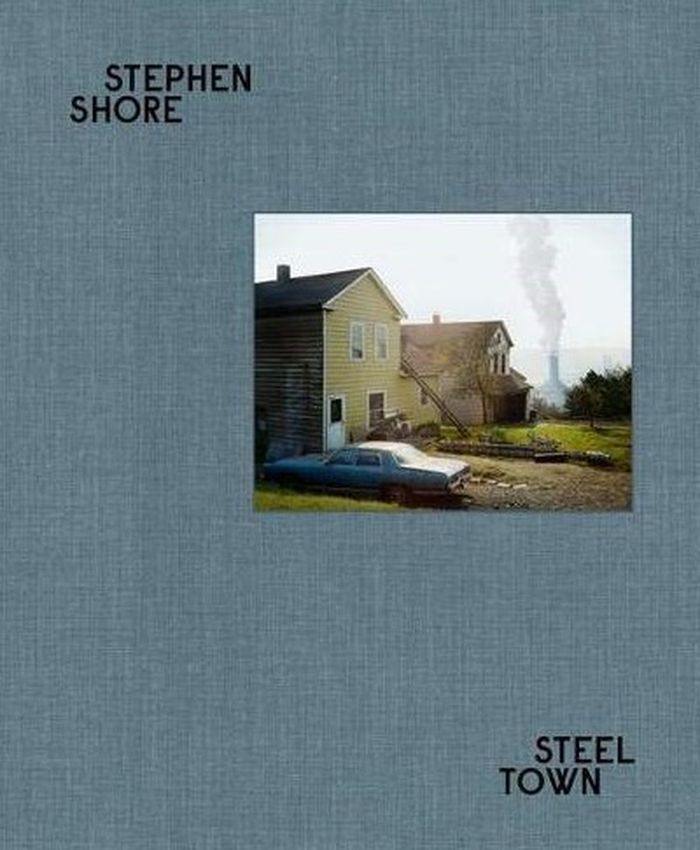
In 1977, Stephen Shore travelled across New York state, Pennsylvania, and eastern Ohio – an area in the midst of industrial decline that would eventually be known as the Rust Belt. Shore met steelworkers who had been thrown out of work by plant closures and photographed their suddenly fragile world: deserted factories, lonely bars, dwindling high streets, and lovingly decorated homes. Across these images, a prosperous middle America is seen teetering on the precipice of disastrous decline. Hope and despair alike lurk restlessly behind the surfaces of shop fronts, domestic interiors, and the fraught expressions of those who confront Shore’s 4x5'' view camera. Originally commissioned as an extended photographic report for Fortune Magazine in the vein of Walker Evans, Shore’s multifaceted investigation has only gained political salience in the intervening years. Shore’s subjects – including workers, union leaders, and family members – had voted for Jimmy Carter the year preceding his visit; now he found them disillusioned with the new president, fated to leave behind the Democratic party and become the ‘Reagan Democrats’. Through unfailingly engrossing images by one of the world’s acknowledged masters, Steel Town provides an immersive portrait of a time and place whose significance to our own is ever more urgent.
Stephen Shore : steel town
Actions:
Prix:
$80.00
(disponible sur commande)
Résumé:
In 1977, Stephen Shore travelled across New York state, Pennsylvania, and eastern Ohio – an area in the midst of industrial decline that would eventually be known as the Rust Belt. Shore met steelworkers who had been thrown out of work by plant closures and photographed their suddenly fragile world: deserted factories, lonely bars, dwindling high streets, and lovingly decorated homes. Across these images, a prosperous middle America is seen teetering on the precipice of disastrous decline. Hope and despair alike lurk restlessly behind the surfaces of shop fronts, domestic interiors, and the fraught expressions of those who confront Shore’s 4x5'' view camera. Originally commissioned as an extended photographic report for Fortune Magazine in the vein of Walker Evans, Shore’s multifaceted investigation has only gained political salience in the intervening years. Shore’s subjects – including workers, union leaders, and family members – had voted for Jimmy Carter the year preceding his visit; now he found them disillusioned with the new president, fated to leave behind the Democratic party and become the ‘Reagan Democrats’. Through unfailingly engrossing images by one of the world’s acknowledged masters, Steel Town provides an immersive portrait of a time and place whose significance to our own is ever more urgent.
Classification:
livres
livres
Publication:
avril 2021
avril 2021
Sujet:
Monographies photo
Monographies photo
Classification:
livres
livres
Prix:
$16.95
(disponible sur commande)
Résumé:
At a time when socialism is entering a historic crisis and we are witnessing a worldwide expansion of capitalist relations, a feminist rethinking of Marx’s work is vitally important. In ''Patriarchy of the wage,'' Silvia Federici, best-selling author and the most important Marxist feminist of our time, asks why Marx and the Marxist tradition were so crucial in their(...)
$16.95
(disponible sur commande)
Résumé:
At a time when socialism is entering a historic crisis and we are witnessing a worldwide expansion of capitalist relations, a feminist rethinking of Marx’s work is vitally important. In ''Patriarchy of the wage,'' Silvia Federici, best-selling author and the most important Marxist feminist of our time, asks why Marx and the Marxist tradition were so crucial in their(...)
Titre:
Patriarchy of the wage: notes on Marx, gender, and feminism
Actions:
Prix:
$16.95
(disponible sur commande)
Résumé:
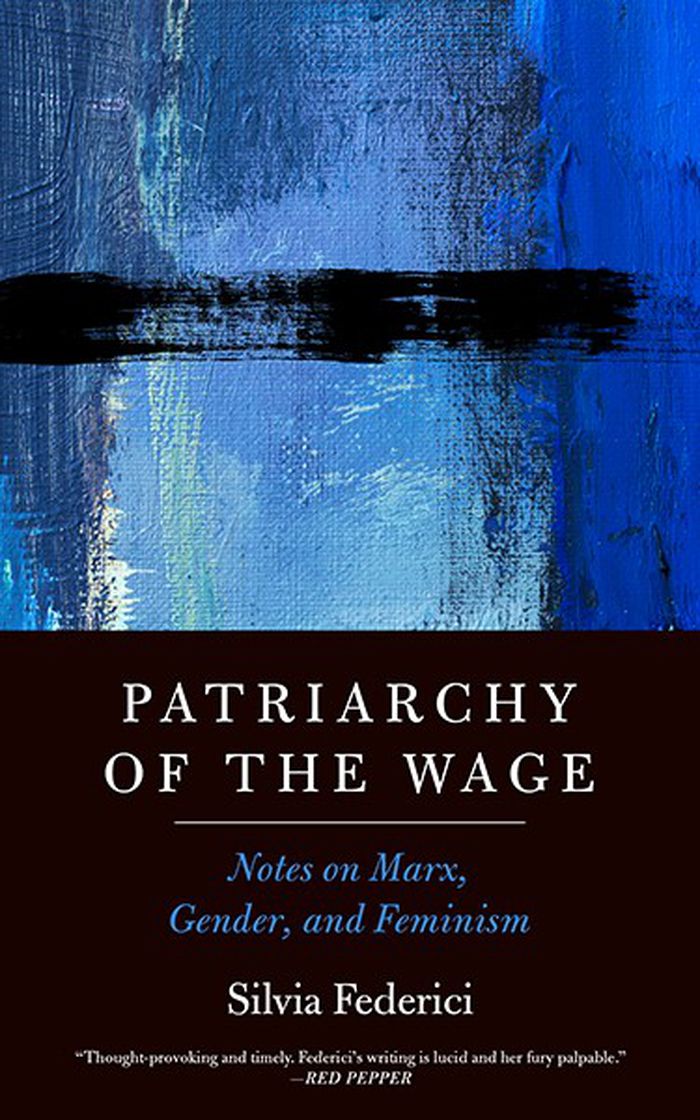
At a time when socialism is entering a historic crisis and we are witnessing a worldwide expansion of capitalist relations, a feminist rethinking of Marx’s work is vitally important. In ''Patriarchy of the wage,'' Silvia Federici, best-selling author and the most important Marxist feminist of our time, asks why Marx and the Marxist tradition were so crucial in their denunciation of capitalism’s exploitation of human labour and blind to women’s work and struggle on the terrain of social reproduction. Why was Marx unable to anticipate the profound transformations in the proletarian family that took place at the turn of the nineteenth century, creating a new patriarchal regime? In this fiery collection of penetrating essays published here for the first time, Federici carefully examines these questions and in the process has provided an expansive redefinition of work, class, and class-gender relations. Seeking to delineate the specific character of capitalist “patriarchalism,” this magnificently original approach also highlights Marx’s and the Marxist tradition’s problematic view of industrial production and the State in the struggle for human liberation. Federici’s lucid argument that most reproductive work is irreducible to automation is a powerful reminder of the poverty of a revolutionary imagination that consigns to the world of machines the creation of the material conditions for a communist society.
Patriarchy of the wage: notes on Marx, gender, and feminism
Actions:
Prix:
$16.95
(disponible sur commande)
Résumé:
At a time when socialism is entering a historic crisis and we are witnessing a worldwide expansion of capitalist relations, a feminist rethinking of Marx’s work is vitally important. In ''Patriarchy of the wage,'' Silvia Federici, best-selling author and the most important Marxist feminist of our time, asks why Marx and the Marxist tradition were so crucial in their denunciation of capitalism’s exploitation of human labour and blind to women’s work and struggle on the terrain of social reproduction. Why was Marx unable to anticipate the profound transformations in the proletarian family that took place at the turn of the nineteenth century, creating a new patriarchal regime? In this fiery collection of penetrating essays published here for the first time, Federici carefully examines these questions and in the process has provided an expansive redefinition of work, class, and class-gender relations. Seeking to delineate the specific character of capitalist “patriarchalism,” this magnificently original approach also highlights Marx’s and the Marxist tradition’s problematic view of industrial production and the State in the struggle for human liberation. Federici’s lucid argument that most reproductive work is irreducible to automation is a powerful reminder of the poverty of a revolutionary imagination that consigns to the world of machines the creation of the material conditions for a communist society.
Classification:
livres
livres
Publication:
octobre 2021
octobre 2021
Sujet:
Social
Social
Classification:
livres
livres
Titre:
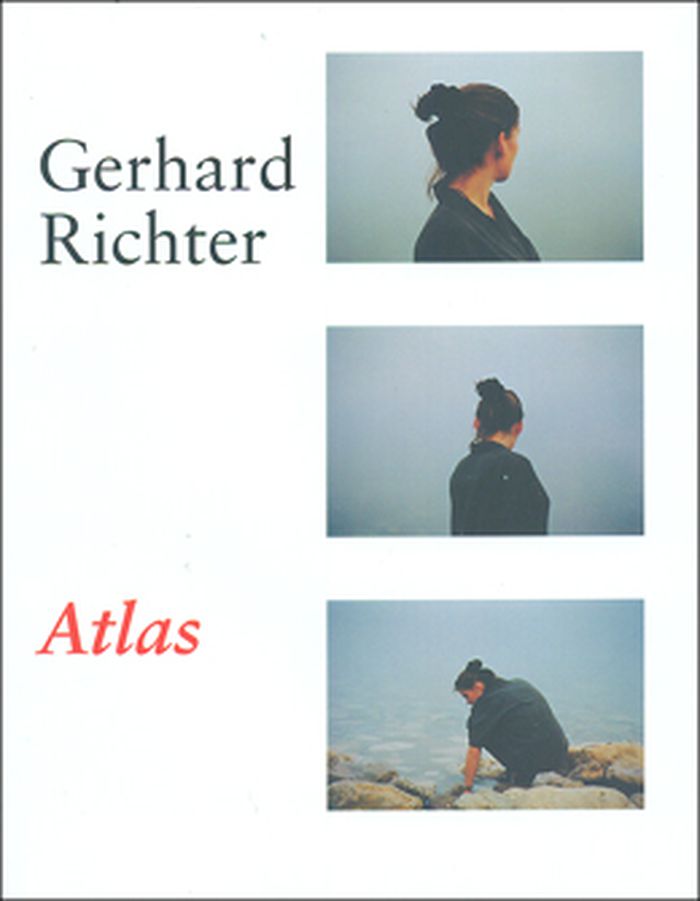
Gerhard Richter: atlas
Gerhard Richter: atlas
Actions:
Prix:
$60.00
(disponible sur commande)
Résumé:
This publication maps the ideas, processes, life and times of one of the most important painters of our time. Conceived and closely edited by Gerhard Richter himself, Atlas cuts straight to the heart of the artist's thinking, collecting more than 5,000 photographs, drawings and sketches that he has compiled or created since the moment of his creative breakthrough in 1962.(...)
$60.00
(disponible sur commande)
Résumé:
This publication maps the ideas, processes, life and times of one of the most important painters of our time. Conceived and closely edited by Gerhard Richter himself, Atlas cuts straight to the heart of the artist's thinking, collecting more than 5,000 photographs, drawings and sketches that he has compiled or created since the moment of his creative breakthrough in 1962.(...)
Titre:
Gerhard Richter: atlas
Actions:
Prix:
$60.00
(disponible sur commande)
Résumé:
This publication maps the ideas, processes, life and times of one of the most important painters of our time. Conceived and closely edited by Gerhard Richter himself, Atlas cuts straight to the heart of the artist's thinking, collecting more than 5,000 photographs, drawings and sketches that he has compiled or created since the moment of his creative breakthrough in 1962. Year by year, the images closely parallel the subjects of Richter's paintings, revealing the orderly but open-ended analysis that has been so central to his art. Offering invaluable insight into Richter's working process, this encyclopedic new edition, which completely revises and updates the rare, out-of-print 1997 edition and includes 147 additional plates, features 780 multi-image panels, each reproduced full page and in full color. Richter redefined the terms of contemporary painting as he looked to photography for a way to release painting from the political and symbolic burdens of Socialist Realism and Abstract Expressionism. From pictures of family and friends to images from the mass media, Richter's photographs - sometimes found, sometimes original - have provided the basis for many of his paintings, often re-emerging in a luminous, monochromatic palette, and falling ambiguously between documentary and historical painting.
Gerhard Richter: atlas
Actions:
Prix:
$60.00
(disponible sur commande)
Résumé:
This publication maps the ideas, processes, life and times of one of the most important painters of our time. Conceived and closely edited by Gerhard Richter himself, Atlas cuts straight to the heart of the artist's thinking, collecting more than 5,000 photographs, drawings and sketches that he has compiled or created since the moment of his creative breakthrough in 1962. Year by year, the images closely parallel the subjects of Richter's paintings, revealing the orderly but open-ended analysis that has been so central to his art. Offering invaluable insight into Richter's working process, this encyclopedic new edition, which completely revises and updates the rare, out-of-print 1997 edition and includes 147 additional plates, features 780 multi-image panels, each reproduced full page and in full color. Richter redefined the terms of contemporary painting as he looked to photography for a way to release painting from the political and symbolic burdens of Socialist Realism and Abstract Expressionism. From pictures of family and friends to images from the mass media, Richter's photographs - sometimes found, sometimes original - have provided the basis for many of his paintings, often re-emerging in a luminous, monochromatic palette, and falling ambiguously between documentary and historical painting.
Classification:
livres
livres
Publication:
décembre 2011
décembre 2011


