


424 Résultats
Classification:
livres
livres
Titre:
Detroit modern 1935-1985
Detroit modern 1935-1985
Actions:
Prix:
$130.00
(disponible sur commande)
Résumé:
Visitors to Detroit may not realize what residents of the Motor City have known for decades: metropolitan Detroit is a stunning showcase of mid-century modern houses. Endowed with old growth trees, rolling topography and miles of lakefront, the Detroit area inspired talented architects and their progressive clients to create uniquely beautiful residences that were(...)
$130.00
(disponible sur commande)
Résumé:
Visitors to Detroit may not realize what residents of the Motor City have known for decades: metropolitan Detroit is a stunning showcase of mid-century modern houses. Endowed with old growth trees, rolling topography and miles of lakefront, the Detroit area inspired talented architects and their progressive clients to create uniquely beautiful residences that were(...)
Titre:
Detroit modern 1935-1985
Actions:
Prix:
$130.00
(disponible sur commande)
Résumé:
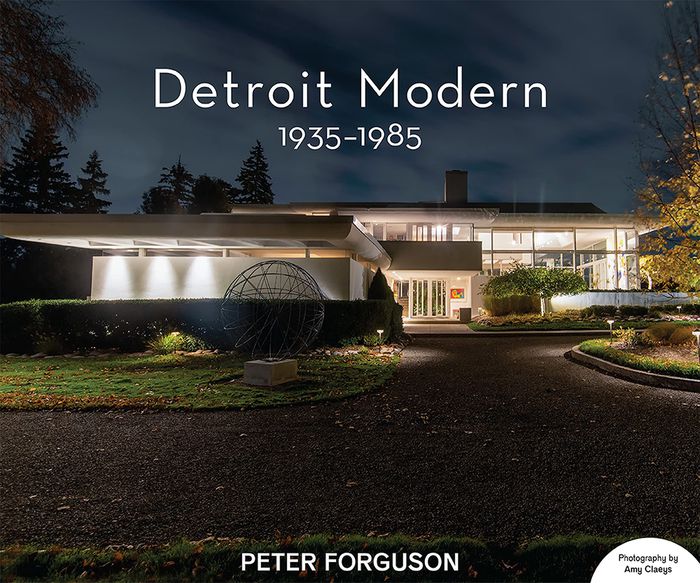
Visitors to Detroit may not realize what residents of the Motor City have known for decades: metropolitan Detroit is a stunning showcase of mid-century modern houses. Endowed with old growth trees, rolling topography and miles of lakefront, the Detroit area inspired talented architects and their progressive clients to create uniquely beautiful residences that were seamlessly integrated with lush natural surroundings. Detroit landscape designer and contractor Peter Forguson has shaped and maintained the grounds of many of these structures. This book comprises a comprehensive list he has compiled of the best examples. With nearly 500 photographs on pages designed by Marla Meltzer, Forguson leads readers on a memorable tour of 70 masterpieces of mid-century residential architecture that brings to life the shared visions of architects and clients.
Detroit modern 1935-1985
Actions:
Prix:
$130.00
(disponible sur commande)
Résumé:
Visitors to Detroit may not realize what residents of the Motor City have known for decades: metropolitan Detroit is a stunning showcase of mid-century modern houses. Endowed with old growth trees, rolling topography and miles of lakefront, the Detroit area inspired talented architects and their progressive clients to create uniquely beautiful residences that were seamlessly integrated with lush natural surroundings. Detroit landscape designer and contractor Peter Forguson has shaped and maintained the grounds of many of these structures. This book comprises a comprehensive list he has compiled of the best examples. With nearly 500 photographs on pages designed by Marla Meltzer, Forguson leads readers on a memorable tour of 70 masterpieces of mid-century residential architecture that brings to life the shared visions of architects and clients.
Classification:
livres
livres
Publication:
novembre 2022
novembre 2022
Sujet:
Modernisme
Modernisme
Classification:
livres
livres
Titre:
Hospital builders
Hospital builders
Actions:
Prix:
$122.99
(disponible sur commande)
Résumé:
"Hospital Builders" offers a comprehensive appraisal of 32 case studies covering significant healthcare projects in Britain and around the world. Each is thoroughly analysed with a critical description, plans, illustrations and photographs to provide creative information that is of assistance to architects, contractors and managers and all those involved in the(...)
$122.99
(disponible sur commande)
Résumé:
"Hospital Builders" offers a comprehensive appraisal of 32 case studies covering significant healthcare projects in Britain and around the world. Each is thoroughly analysed with a critical description, plans, illustrations and photographs to provide creative information that is of assistance to architects, contractors and managers and all those involved in the(...)
Publication:
juin 2004, Chichester
juin 2004, Chichester
Titre:
Hospital builders
Actions:
Prix:
$122.99
(disponible sur commande)
Résumé:
"Hospital Builders" offers a comprehensive appraisal of 32 case studies covering significant healthcare projects in Britain and around the world. Each is thoroughly analysed with a critical description, plans, illustrations and photographs to provide creative information that is of assistance to architects, contractors and managers and all those involved in the procurement and subsequent occupation of the facilities. The ideas and examples are amplified through an exploration of the historical achievements, present circumstances and potential future direction of our modern progressive health service. Current practitioners contribute from first-hand experience and anticipate the implications of private finance initiatives and competitive healthcare partnerships. A central theme throughout the book is the abiding importance of high-quality hospital architecture and the therapeutic benefits to be gained by friendly, human healthcare environments.
Hospital builders
Actions:
Prix:
$122.99
(disponible sur commande)
Résumé:
"Hospital Builders" offers a comprehensive appraisal of 32 case studies covering significant healthcare projects in Britain and around the world. Each is thoroughly analysed with a critical description, plans, illustrations and photographs to provide creative information that is of assistance to architects, contractors and managers and all those involved in the procurement and subsequent occupation of the facilities. The ideas and examples are amplified through an exploration of the historical achievements, present circumstances and potential future direction of our modern progressive health service. Current practitioners contribute from first-hand experience and anticipate the implications of private finance initiatives and competitive healthcare partnerships. A central theme throughout the book is the abiding importance of high-quality hospital architecture and the therapeutic benefits to be gained by friendly, human healthcare environments.
Classification:
livres
livres
Publication:
juin 2004, Chichester
juin 2004, Chichester
Classification:
périodiques
périodiques
Prix:
$25.50
(disponible en magasin)
Résumé:
“The center of architecture is shifting and cannot hold,” writes guest editor Bryony Roberts in Log 48: Expanding Modes of Practice. This moment of change, in which issues of inequity and intersectionality are coming to the fore, represents “an invitation to think differently, a chance to reask the questions that haunted the 20th century.” The collected authors in(...)
$25.50
(disponible en magasin)
Résumé:
“The center of architecture is shifting and cannot hold,” writes guest editor Bryony Roberts in Log 48: Expanding Modes of Practice. This moment of change, in which issues of inequity and intersectionality are coming to the fore, represents “an invitation to think differently, a chance to reask the questions that haunted the 20th century.” The collected authors in(...)
Titre:
Log 48: Expanding modes of practice. Winter/Spring 2020
Actions:
Prix:
$25.50
(disponible en magasin)
Résumé:
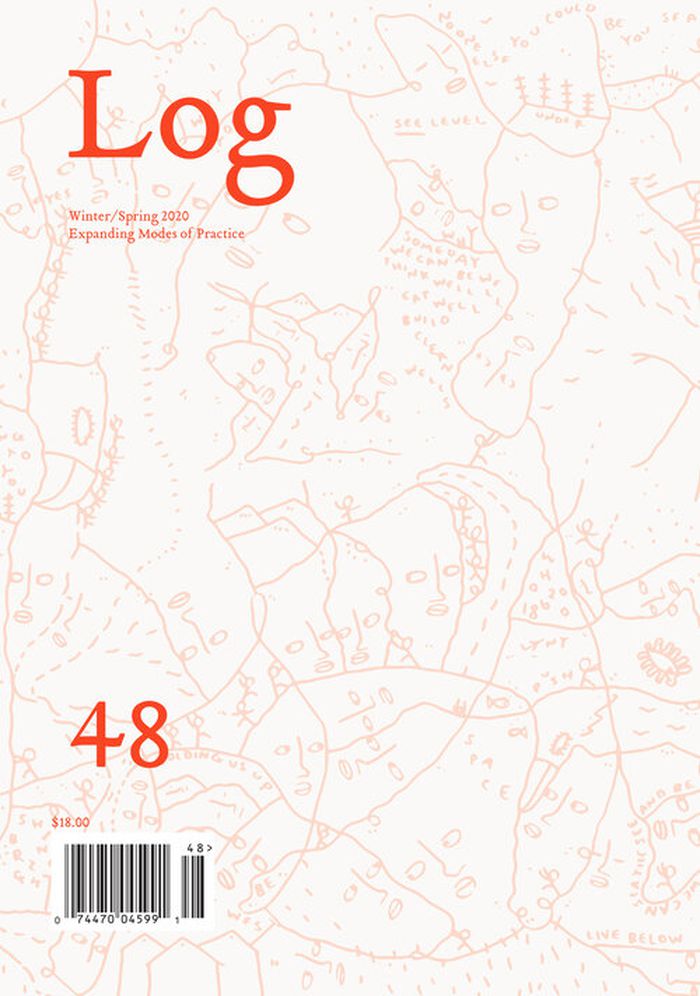
“The center of architecture is shifting and cannot hold,” writes guest editor Bryony Roberts in Log 48: Expanding Modes of Practice. This moment of change, in which issues of inequity and intersectionality are coming to the fore, represents “an invitation to think differently, a chance to reask the questions that haunted the 20th century.” The collected authors in this issue range from architects and urbanists to curators and composers who grapple with what it means to practice in a more just way, balancing aesthetics with ethics. As Roberts writes, “What emerges from [these] experiments with situated, intersectional practice is the merging of the professional and the personal. Rather than neutrality, practices cultivate empathy.” At the heart of this issue are Roberts’s interviews with progressive practices Assemble, Borderless Studio, HECTOR, LA-Más, and Mabel O. Wilson. In addition, essayists Peggy Deamer and Michael Kubo discuss collaborative architecture practices today and in the past; Ana Miljacki and Jerome Haferd propose better pedagogies; and Jia Yi Gu, Deborah Garcia, and the feminist architecture collaborative position feminist theory in architectural practice and discourse today, and Cynthia Davidson talks with Mirko Zardini about the role of the museum today.
Log 48: Expanding modes of practice. Winter/Spring 2020
Actions:
Prix:
$25.50
(disponible en magasin)
Résumé:
“The center of architecture is shifting and cannot hold,” writes guest editor Bryony Roberts in Log 48: Expanding Modes of Practice. This moment of change, in which issues of inequity and intersectionality are coming to the fore, represents “an invitation to think differently, a chance to reask the questions that haunted the 20th century.” The collected authors in this issue range from architects and urbanists to curators and composers who grapple with what it means to practice in a more just way, balancing aesthetics with ethics. As Roberts writes, “What emerges from [these] experiments with situated, intersectional practice is the merging of the professional and the personal. Rather than neutrality, practices cultivate empathy.” At the heart of this issue are Roberts’s interviews with progressive practices Assemble, Borderless Studio, HECTOR, LA-Más, and Mabel O. Wilson. In addition, essayists Peggy Deamer and Michael Kubo discuss collaborative architecture practices today and in the past; Ana Miljacki and Jerome Haferd propose better pedagogies; and Jia Yi Gu, Deborah Garcia, and the feminist architecture collaborative position feminist theory in architectural practice and discourse today, and Cynthia Davidson talks with Mirko Zardini about the role of the museum today.
Classification:
périodiques
périodiques
Publication:
avril 2020
avril 2020
Sujet:
Revues
Revues
Classification:
livres
livres

Actions:
Prix:
$34.95
(disponible sur commande)
Résumé:
Piecing Together Los Angeles: An Esther McCoy Reader is the first anthology of McCoy's writing. It features a selection of some 70 pieces--ranging from her 1945 article "Schindler, Space Architect" to "Arts & Architecture: Case Study Houses," a 1989 essay commissioned by the Museum of Contemporary Art, Los Angeles. From fiction for The New Yorker to seminal essays on(...)
$34.95
(disponible sur commande)
Résumé:
Piecing Together Los Angeles: An Esther McCoy Reader is the first anthology of McCoy's writing. It features a selection of some 70 pieces--ranging from her 1945 article "Schindler, Space Architect" to "Arts & Architecture: Case Study Houses," a 1989 essay commissioned by the Museum of Contemporary Art, Los Angeles. From fiction for The New Yorker to seminal essays on(...)
Titre:
Piecing together Los Angeles: an Esther McCoy reader
Actions:
Prix:
$34.95
(disponible sur commande)
Résumé:
Piecing Together Los Angeles: An Esther McCoy Reader is the first anthology of McCoy's writing. It features a selection of some 70 pieces--ranging from her 1945 article "Schindler, Space Architect" to "Arts & Architecture: Case Study Houses," a 1989 essay commissioned by the Museum of Contemporary Art, Los Angeles. From fiction for The New Yorker to seminal essays on new architectural forms, McCoy charts the progressive edge of American idealism, from the collective utopian spirit of Jazz Age Greenwich Village, through the Depression and the war years, to the optimism of the 1950s and 1960s. In preparing this volume, writer and editor Susan Morgan extensively researched the McCoy papers at the Archives of American Art. Her editorial decisions were based, in part, on McCoy's original selections for an unrealized anthology solicited by W. W. Norton in 1968.
Piecing together Los Angeles: an Esther McCoy reader
Actions:
Prix:
$34.95
(disponible sur commande)
Résumé:
Piecing Together Los Angeles: An Esther McCoy Reader is the first anthology of McCoy's writing. It features a selection of some 70 pieces--ranging from her 1945 article "Schindler, Space Architect" to "Arts & Architecture: Case Study Houses," a 1989 essay commissioned by the Museum of Contemporary Art, Los Angeles. From fiction for The New Yorker to seminal essays on new architectural forms, McCoy charts the progressive edge of American idealism, from the collective utopian spirit of Jazz Age Greenwich Village, through the Depression and the war years, to the optimism of the 1950s and 1960s. In preparing this volume, writer and editor Susan Morgan extensively researched the McCoy papers at the Archives of American Art. Her editorial decisions were based, in part, on McCoy's original selections for an unrealized anthology solicited by W. W. Norton in 1968.
Classification:
livres
livres
Publication:
mai 2012
mai 2012
Sujet:
Théorie de l’urbanisme
Théorie de l’urbanisme
Classification:
périodiques
périodiques
Actions:
Prix:
$43.95
(disponible sur commande)
Résumé:
Around the world, a new architectural form is emerging. In public places a progressive architecture is being commissioned to promote open-ended, undetermined, lightly programmed or un-programmed interactions between people. This new phenomenon of architectural form – Pavilions, Pop-Ups and Parasols – is presaged by rapidly changing social relationships flowing from social(...)
$43.95
(disponible sur commande)
Résumé:
Around the world, a new architectural form is emerging. In public places a progressive architecture is being commissioned to promote open-ended, undetermined, lightly programmed or un-programmed interactions between people. This new phenomenon of architectural form – Pavilions, Pop-Ups and Parasols – is presaged by rapidly changing social relationships flowing from social(...)
Titre:
Pavilions, pop ups and parasols: the impact of real and virtual meeting on physical space
Actions:
Prix:
$43.95
(disponible sur commande)
Résumé:
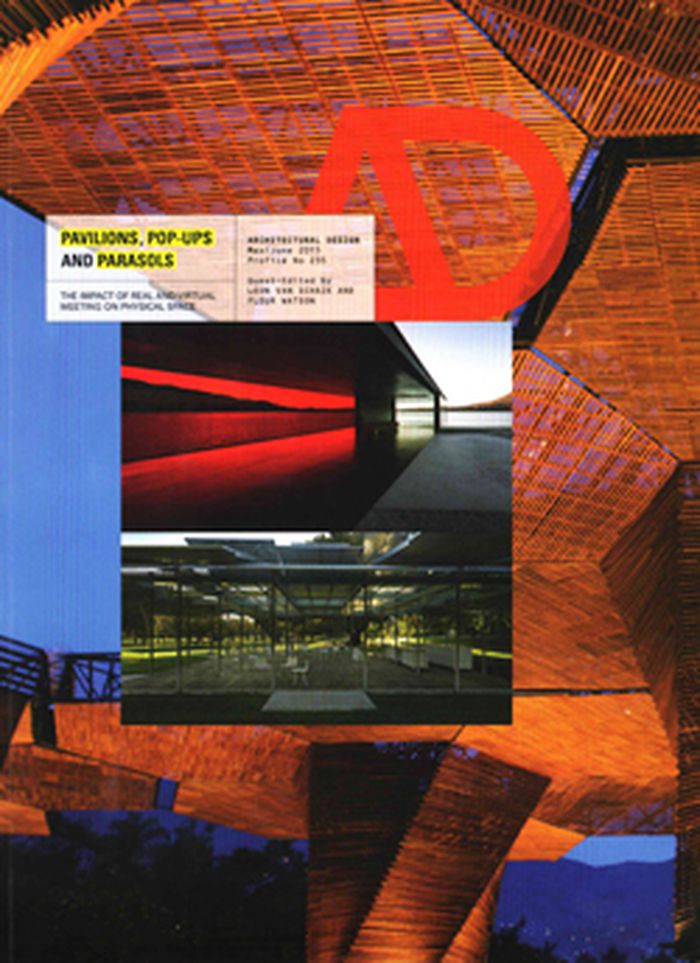
Around the world, a new architectural form is emerging. In public places a progressive architecture is being commissioned to promote open-ended, undetermined, lightly programmed or un-programmed interactions between people. This new phenomenon of architectural form – Pavilions, Pop-Ups and Parasols – is presaged by rapidly changing social relationships flowing from social media such as Facebook, Twitter and Instagram. The nexus between real and virtual meeting is effectively being reinvented by innovative and creative architectural practices. People meet in new and responsive ways, architects meet their clients in new forums, knowledge is ‘met’ and achieved in new and interactive frameworks. It contrasts bluntly with the commercially structured interactions of shopping malls and the increasingly deliberate interactions available in cultural institutions. These experiences imbue a new type of client; casually engaged, flocking, hacking, crowd funding and self-helping.
Pavilions, pop ups and parasols: the impact of real and virtual meeting on physical space
Actions:
Prix:
$43.95
(disponible sur commande)
Résumé:
Around the world, a new architectural form is emerging. In public places a progressive architecture is being commissioned to promote open-ended, undetermined, lightly programmed or un-programmed interactions between people. This new phenomenon of architectural form – Pavilions, Pop-Ups and Parasols – is presaged by rapidly changing social relationships flowing from social media such as Facebook, Twitter and Instagram. The nexus between real and virtual meeting is effectively being reinvented by innovative and creative architectural practices. People meet in new and responsive ways, architects meet their clients in new forums, knowledge is ‘met’ and achieved in new and interactive frameworks. It contrasts bluntly with the commercially structured interactions of shopping malls and the increasingly deliberate interactions available in cultural institutions. These experiences imbue a new type of client; casually engaged, flocking, hacking, crowd funding and self-helping.
Classification:
périodiques
périodiques
Publication:
juin 2015
juin 2015
Sujet:
Revues
Revues
Classification:
livres
livres
Prix:
$85.00
(disponible sur commande)
Résumé:
La ville a offert de multiples visages depuis son apparition en Mésopotamie et dans la vallée de l'Indus, voici environ 10 000 ans, et héberge aujourd'hui la moitié de l'humanité. L'appréhension du milieu urbain fut toutefois progressive et plurielle. Les quelque 200 cartes de la collection exceptionnelle de la Royal Geographical Society nous montrent comment l'homme a(...)
$85.00
(disponible sur commande)
Résumé:
La ville a offert de multiples visages depuis son apparition en Mésopotamie et dans la vallée de l'Indus, voici environ 10 000 ans, et héberge aujourd'hui la moitié de l'humanité. L'appréhension du milieu urbain fut toutefois progressive et plurielle. Les quelque 200 cartes de la collection exceptionnelle de la Royal Geographical Society nous montrent comment l'homme a(...)
Titre:
La ville: la cartographie urbaine de l'antiquité au XXe siècle
Actions:
Prix:
$85.00
(disponible sur commande)
Résumé:
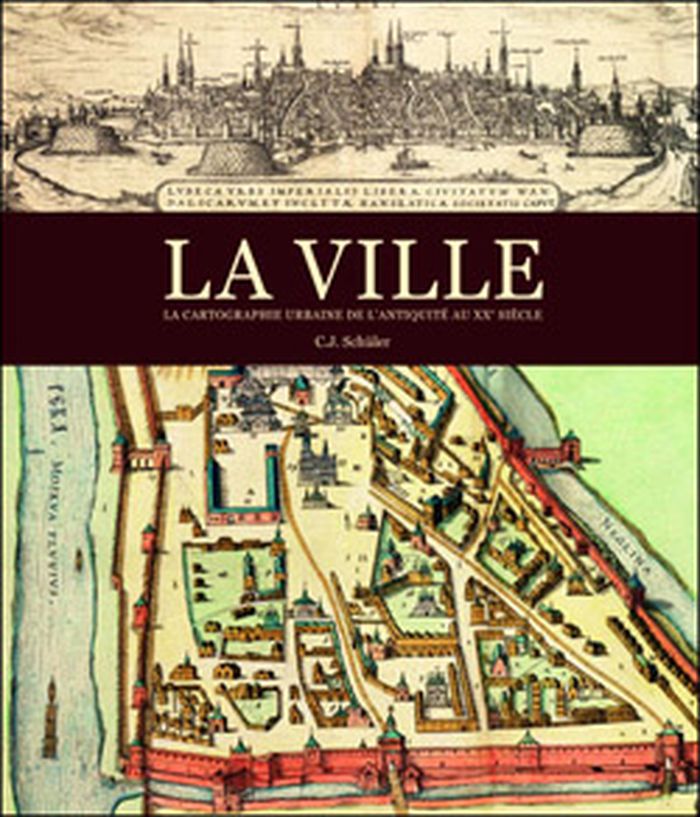
La ville a offert de multiples visages depuis son apparition en Mésopotamie et dans la vallée de l'Indus, voici environ 10 000 ans, et héberge aujourd'hui la moitié de l'humanité. L'appréhension du milieu urbain fut toutefois progressive et plurielle. Les quelque 200 cartes de la collection exceptionnelle de la Royal Geographical Society nous montrent comment l'homme a imaginé, puis dessiné la ville. Par les tablettes en terre cuite des Babyloniens aux plans très précis du milieu du XXe siècle, en passant par les peintures et les enluminures médiévales, ce livre nous entraîne dans les cités, les bourgs et les métropoles de différentes époques.
La ville: la cartographie urbaine de l'antiquité au XXe siècle
Actions:
Prix:
$85.00
(disponible sur commande)
Résumé:
La ville a offert de multiples visages depuis son apparition en Mésopotamie et dans la vallée de l'Indus, voici environ 10 000 ans, et héberge aujourd'hui la moitié de l'humanité. L'appréhension du milieu urbain fut toutefois progressive et plurielle. Les quelque 200 cartes de la collection exceptionnelle de la Royal Geographical Society nous montrent comment l'homme a imaginé, puis dessiné la ville. Par les tablettes en terre cuite des Babyloniens aux plans très précis du milieu du XXe siècle, en passant par les peintures et les enluminures médiévales, ce livre nous entraîne dans les cités, les bourgs et les métropoles de différentes époques.
Classification:
livres
livres
Publication:
septembre 2012
septembre 2012
Classification:
livres
livres
Actions:
Prix:
$77.00
(disponible sur commande)
Résumé:
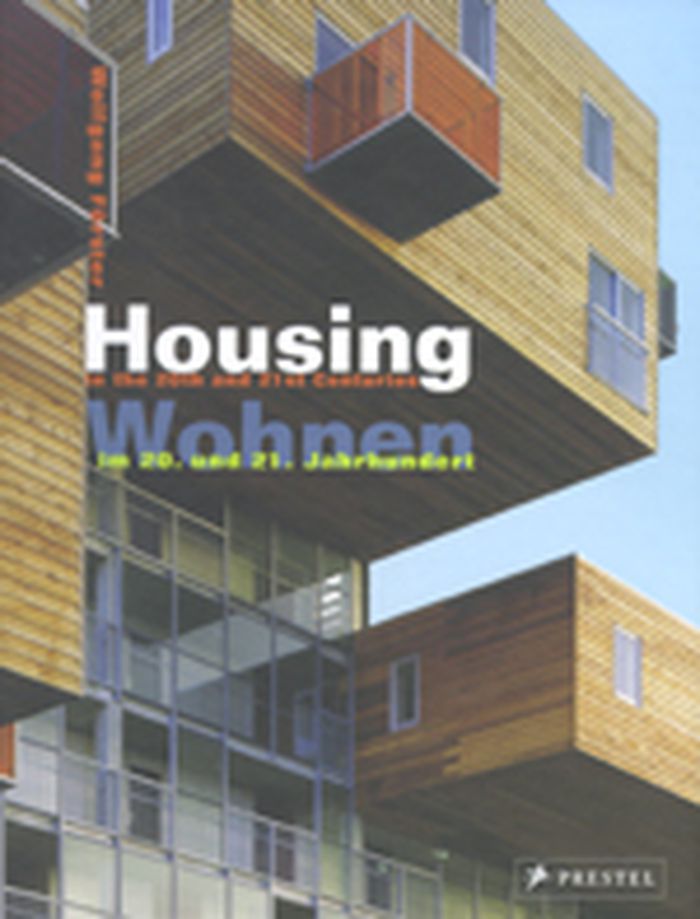
This wide-ranging book examines the world’s most significant large-scale housing complexes, which point the way for the future of housing design. The seventy residential complexes featured here are recognized as architectural milestones, embodying forward-thinking attitudes towards urban planning. This book chronicles the evolution of these structures, revealing how(...)
$77.00
(disponible sur commande)
Résumé:
This wide-ranging book examines the world’s most significant large-scale housing complexes, which point the way for the future of housing design. The seventy residential complexes featured here are recognized as architectural milestones, embodying forward-thinking attitudes towards urban planning. This book chronicles the evolution of these structures, revealing how(...)
Sujet:
Logements collectifs
Logements collectifs
Publication:
mars 2006, Munich Berlin London New York
mars 2006, Munich Berlin London New York
Titre:
Housing in the 20th and 21st centuries / Wohen im 20. umd 21. jahrundert
Actions:
Prix:
$77.00
(disponible sur commande)
Résumé:
This wide-ranging book examines the world’s most significant large-scale housing complexes, which point the way for the future of housing design. The seventy residential complexes featured here are recognized as architectural milestones, embodying forward-thinking attitudes towards urban planning. This book chronicles the evolution of these structures, revealing how each best represented its era’s goals: housing a new society in the 1920s and 30s; the 40s and 50s’ leap toward functionality and the future; the high-density urban projects of the 60s and 70s; and diversity and environmental awareness in the 80s and 90s. It also looks at this century’s most progressive developments: Beijing’s Looped Hybrid, a city within a city; India’s Aranya township, which provides housing for impoverished residents; and the environmentally friendly Solaire Apartments in Manhattan, among others. As today’s cities face myriad global challenges, this book provides ample food for thought for anyone concerned with socially responsible architecture.
Housing in the 20th and 21st centuries / Wohen im 20. umd 21. jahrundert
Actions:
Prix:
$77.00
(disponible sur commande)
Résumé:
This wide-ranging book examines the world’s most significant large-scale housing complexes, which point the way for the future of housing design. The seventy residential complexes featured here are recognized as architectural milestones, embodying forward-thinking attitudes towards urban planning. This book chronicles the evolution of these structures, revealing how each best represented its era’s goals: housing a new society in the 1920s and 30s; the 40s and 50s’ leap toward functionality and the future; the high-density urban projects of the 60s and 70s; and diversity and environmental awareness in the 80s and 90s. It also looks at this century’s most progressive developments: Beijing’s Looped Hybrid, a city within a city; India’s Aranya township, which provides housing for impoverished residents; and the environmentally friendly Solaire Apartments in Manhattan, among others. As today’s cities face myriad global challenges, this book provides ample food for thought for anyone concerned with socially responsible architecture.
Classification:
livres
livres
Publication:
mars 2006, Munich Berlin London New York
mars 2006, Munich Berlin London New York
Sujet:
Logements collectifs
Logements collectifs
Classification:
livres
livres
Actions:
Prix:
$19.99
(disponible en magasin)
Résumé:
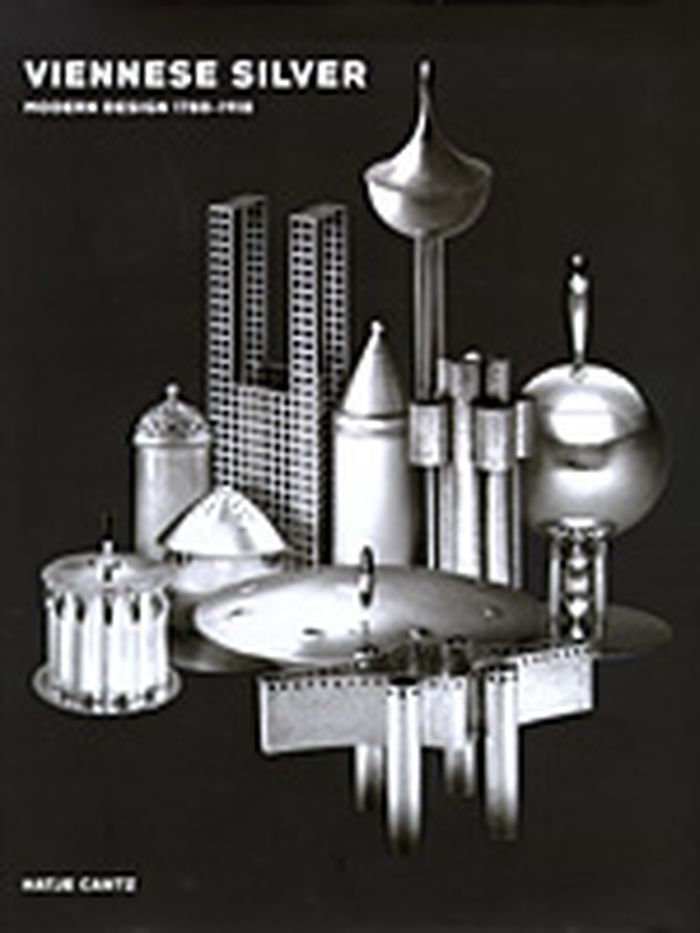
This sumptuously illustrated volume presents over 180 outstanding Viennese silver objects representing the period from Neoclassicism to the Wiener Werkstätte. Comparing early eighteenth-century works with examples of twentieth-century design and architecture, it offers a fascinating look at Vienna's contribution to the development of modern decorative arts. The authors(...)
$19.99
(disponible en magasin)
Résumé:
This sumptuously illustrated volume presents over 180 outstanding Viennese silver objects representing the period from Neoclassicism to the Wiener Werkstätte. Comparing early eighteenth-century works with examples of twentieth-century design and architecture, it offers a fascinating look at Vienna's contribution to the development of modern decorative arts. The authors(...)
Publication:
août 2003, Ostfildern
août 2003, Ostfildern
Titre:
Viennese silver : modern design 1780-1918
Actions:
Prix:
$19.99
(disponible en magasin)
Résumé:
This sumptuously illustrated volume presents over 180 outstanding Viennese silver objects representing the period from Neoclassicism to the Wiener Werkstätte. Comparing early eighteenth-century works with examples of twentieth-century design and architecture, it offers a fascinating look at Vienna's contribution to the development of modern decorative arts. The authors demonstrate how the roots of modern design go back further than is generally assumed. Achieving remarkable clarity and formal reduction, Viennese Biedermeier designers created everyday objects of silver with astonishingly straightforward and purposeful forms that remain as progressive as ever today. In turn-of-the-century Vienna, Josef Hoffmann and Koloman Moser drew inspiration from the intellectual legacy of the period in their designs for the Wiener Werkstätte. Many of the ideas introduced by the Viennese avant-garde were later expressed in such movements as the Bauhaus and De Stijl. By examining this history in all its complexity, the book traces the development of the vocabulary for contemporary design.
Viennese silver : modern design 1780-1918
Actions:
Prix:
$19.99
(disponible en magasin)
Résumé:
This sumptuously illustrated volume presents over 180 outstanding Viennese silver objects representing the period from Neoclassicism to the Wiener Werkstätte. Comparing early eighteenth-century works with examples of twentieth-century design and architecture, it offers a fascinating look at Vienna's contribution to the development of modern decorative arts. The authors demonstrate how the roots of modern design go back further than is generally assumed. Achieving remarkable clarity and formal reduction, Viennese Biedermeier designers created everyday objects of silver with astonishingly straightforward and purposeful forms that remain as progressive as ever today. In turn-of-the-century Vienna, Josef Hoffmann and Koloman Moser drew inspiration from the intellectual legacy of the period in their designs for the Wiener Werkstätte. Many of the ideas introduced by the Viennese avant-garde were later expressed in such movements as the Bauhaus and De Stijl. By examining this history in all its complexity, the book traces the development of the vocabulary for contemporary design.
Classification:
livres
livres
Publication:
août 2003, Ostfildern
août 2003, Ostfildern
Classification:
livres
livres

Titre:
The heavens on earth : observatories and astronomies in nineteeth-century science and culture
The heavens on earth : observatories and astronomies in nineteeth-century science and culture
Actions:
Prix:
$41.50
(disponible sur commande)
Résumé:
This book explores the place of the observatory in nineteenth-century science and culture. Astronomy was a core pursuit for observatories, but usually not the only one. It belonged to a larger group of "observatory sciences" that also included geodesy, meteorology, geomagnetism, and even parts of physics and statistics. These pursuits coexisted in the nineteenth-century(...)
$41.50
(disponible sur commande)
Résumé:
This book explores the place of the observatory in nineteenth-century science and culture. Astronomy was a core pursuit for observatories, but usually not the only one. It belonged to a larger group of "observatory sciences" that also included geodesy, meteorology, geomagnetism, and even parts of physics and statistics. These pursuits coexisted in the nineteenth-century(...)
Sujet:
Théorie de l’architecture
Théorie de l’architecture
Publication:
avril 2010
avril 2010
Titre:
The heavens on earth : observatories and astronomies in nineteeth-century science and culture
Actions:
Prix:
$41.50
(disponible sur commande)
Résumé:
This book explores the place of the observatory in nineteenth-century science and culture. Astronomy was a core pursuit for observatories, but usually not the only one. It belonged to a larger group of "observatory sciences" that also included geodesy, meteorology, geomagnetism, and even parts of physics and statistics. These pursuits coexisted in the nineteenth-century observatory; this collection surveys them as a coherent whole. Broadening the focus beyond the solitary astronomer at his telescope, it illuminates the observatory’s importance to technological, military, political, and colonial undertakings, as well as in advancing and popularizing the mathematical, physical, and cosmological sciences. The contributors examine "observatory techniques" developed and used not only in connection with observatories but also by instrument makers in their workshops, navy officers on ships, civil engineers in the field, and many others. These techniques included the calibration and coordination of precision instruments for making observations and taking measurements; methods of data acquisition and tabulation; and the production of maps, drawings, and photographs, as well as numerical, textual, and visual representations of the heavens and the earth. They also encompassed the social management of personnel within observatories, the coordination of international scientific collaborations, and interactions with dignitaries and the public. The state observatory occupied a particularly privileged place in the life of the city. With their imposing architecture and ancient traditions, state observatories served representative purposes for their patrons, whether as symbols of a monarch’s enlightened power, a nation’s industrial and scientific excellence, or republican progressive values.
The heavens on earth : observatories and astronomies in nineteeth-century science and culture
Actions:
Prix:
$41.50
(disponible sur commande)
Résumé:
This book explores the place of the observatory in nineteenth-century science and culture. Astronomy was a core pursuit for observatories, but usually not the only one. It belonged to a larger group of "observatory sciences" that also included geodesy, meteorology, geomagnetism, and even parts of physics and statistics. These pursuits coexisted in the nineteenth-century observatory; this collection surveys them as a coherent whole. Broadening the focus beyond the solitary astronomer at his telescope, it illuminates the observatory’s importance to technological, military, political, and colonial undertakings, as well as in advancing and popularizing the mathematical, physical, and cosmological sciences. The contributors examine "observatory techniques" developed and used not only in connection with observatories but also by instrument makers in their workshops, navy officers on ships, civil engineers in the field, and many others. These techniques included the calibration and coordination of precision instruments for making observations and taking measurements; methods of data acquisition and tabulation; and the production of maps, drawings, and photographs, as well as numerical, textual, and visual representations of the heavens and the earth. They also encompassed the social management of personnel within observatories, the coordination of international scientific collaborations, and interactions with dignitaries and the public. The state observatory occupied a particularly privileged place in the life of the city. With their imposing architecture and ancient traditions, state observatories served representative purposes for their patrons, whether as symbols of a monarch’s enlightened power, a nation’s industrial and scientific excellence, or republican progressive values.
Classification:
livres
livres
Publication:
avril 2010
avril 2010
Sujet:
Théorie de l’architecture
Théorie de l’architecture
Classification:
livres
livres
Titre:
Graftworld
Graftworld
Actions:
Prix:
$21.95
(disponible sur commande)
Résumé:
In addition to Graft’s the widely published projects, like the prize-winning Hotel Q in Berlin, Restaurants Fix and Stack in Las Vegas and several international houses, the exhibition will focus on the new and unpublished work of Graft, including numerous high-rise buildings, special hotel designs and private residences, research installations as well as public(...)
$21.95
(disponible sur commande)
Résumé:
In addition to Graft’s the widely published projects, like the prize-winning Hotel Q in Berlin, Restaurants Fix and Stack in Las Vegas and several international houses, the exhibition will focus on the new and unpublished work of Graft, including numerous high-rise buildings, special hotel designs and private residences, research installations as well as public(...)
Titre:
Graftworld
Actions:
Prix:
$21.95
(disponible sur commande)
Résumé:
In addition to Graft’s the widely published projects, like the prize-winning Hotel Q in Berlin, Restaurants Fix and Stack in Las Vegas and several international houses, the exhibition will focus on the new and unpublished work of Graft, including numerous high-rise buildings, special hotel designs and private residences, research installations as well as public projects. Graftworld refers to Graft’s specific method of work process, which fuses syntactic, semantic and phenomenological aspects into architecture. Graft uses narrative elements of cinema, exploiting space - time interconnections through storyboarding with progressive technical research of long term collaborations with various companies. The exhibit will showcase this methodology in an accessible, usable exhibition sculpture, an interactive lounge displaying not only projects of all three office locations but providing chillout zones to relax as well. Classical distinctive architecture elements like floor, wall and ceiling will be fused into a lounge-display-hybrid. Graftworld is thought to be inclusive and rather crosses and blurs boundaries than accepting their exclusive nature. This approach also touches on the increasing transition of distinct modern mono-functional living and working environments, that are blending into new urban lifestyles of the metropolitan nomads. Graftworld proposes architecture that can evolve to be sculpture, be furniture, be a product, be an urban scenario, be landscape at the same time. Design, methodology and technology are not classically “displayed”, but are integrated in the Graftworld.
Graftworld
Actions:
Prix:
$21.95
(disponible sur commande)
Résumé:
In addition to Graft’s the widely published projects, like the prize-winning Hotel Q in Berlin, Restaurants Fix and Stack in Las Vegas and several international houses, the exhibition will focus on the new and unpublished work of Graft, including numerous high-rise buildings, special hotel designs and private residences, research installations as well as public projects. Graftworld refers to Graft’s specific method of work process, which fuses syntactic, semantic and phenomenological aspects into architecture. Graft uses narrative elements of cinema, exploiting space - time interconnections through storyboarding with progressive technical research of long term collaborations with various companies. The exhibit will showcase this methodology in an accessible, usable exhibition sculpture, an interactive lounge displaying not only projects of all three office locations but providing chillout zones to relax as well. Classical distinctive architecture elements like floor, wall and ceiling will be fused into a lounge-display-hybrid. Graftworld is thought to be inclusive and rather crosses and blurs boundaries than accepting their exclusive nature. This approach also touches on the increasing transition of distinct modern mono-functional living and working environments, that are blending into new urban lifestyles of the metropolitan nomads. Graftworld proposes architecture that can evolve to be sculpture, be furniture, be a product, be an urban scenario, be landscape at the same time. Design, methodology and technology are not classically “displayed”, but are integrated in the Graftworld.
Classification:
livres
livres
Publication:
janvier 2007, Berlin
janvier 2007, Berlin
Sujet:
petits formats
petits formats


