


10583 Résultats
Classification:
livres
livres
Prix:
$54.00
(disponible sur commande)
Résumé:
We tend to think of architecture as a practice in permanence, but what if we looked instead for an architecture of transience? In "Things that move," Tim Anstey does just that: rather than assuming that architecture is, at a certain level, stationary, he considers how architecture moves subjects (referring to its emotive potential in the experience it creates); how it(...)
$54.00
(disponible sur commande)
Résumé:
We tend to think of architecture as a practice in permanence, but what if we looked instead for an architecture of transience? In "Things that move," Tim Anstey does just that: rather than assuming that architecture is, at a certain level, stationary, he considers how architecture moves subjects (referring to its emotive potential in the experience it creates); how it(...)
Titre:
Things that move: A hinterland in architectural history
Actions:
Prix:
$54.00
(disponible sur commande)
Résumé:
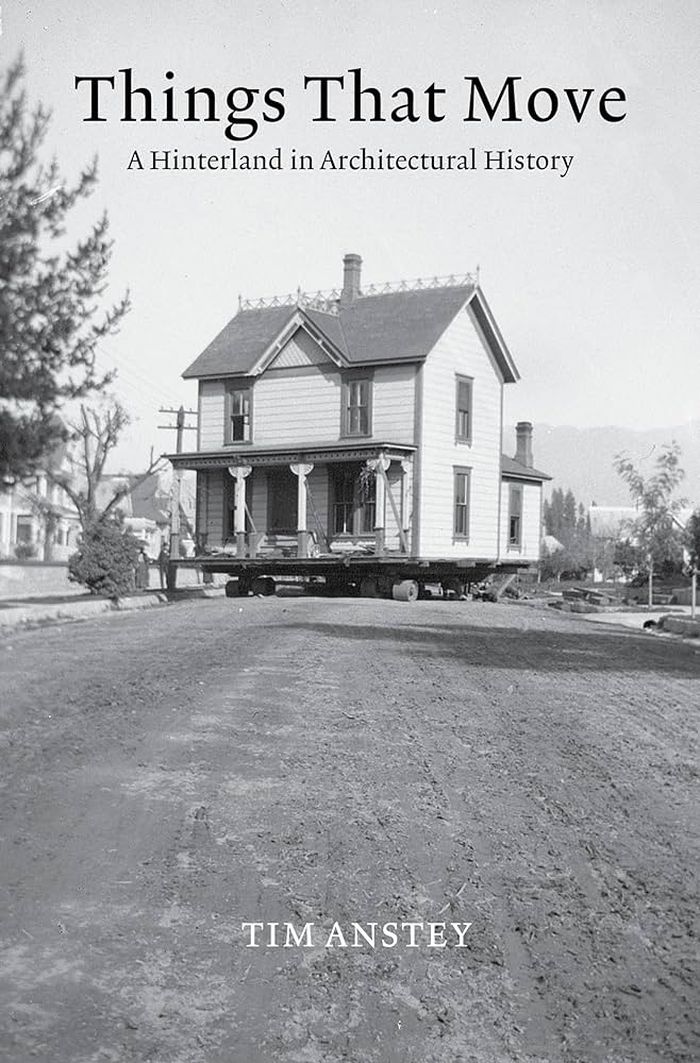
We tend to think of architecture as a practice in permanence, but what if we looked instead for an architecture of transience? In "Things that move," Tim Anstey does just that: rather than assuming that architecture is, at a certain level, stationary, he considers how architecture moves subjects (referring to its emotive potential in the experience it creates); how it moves objects (referring to how it choreographs bodies in motion); and how it is itself moved (referring to the mixture of materials, laws, affordances, and images that introduce movement into any architectural condition). The first of the book's three sections, "Cargoes," highlights the mobile peripheries of architectural history through the eighteenth and nineteenth centuries. It asks what kinds of knowledge can be included in a discussion of architecture, noting the connections between discourses of the lithe and the technical, on the one hand, and those associated with the production of monumental, static compositions on the other. The second section, “Dispatches,” reinterprets early architectural theory by examining the Renaissance ideal of decorum, the nature of the architectural work, and the ways in which architects are constituted as authors. The last part of the book, “Vehicles,” considers building in terms of literal and metaphorical movement, using two cases from the twentieth century that investigate the relationship between architecture and cultural memory. Using a broadly forensic approach to connect details in otherwise disparate cases, "Things that move" is a breathtakingly capacious architectural account that will change the way readers understand buildings, their becoming, and their significance.
Things that move: A hinterland in architectural history
Actions:
Prix:
$54.00
(disponible sur commande)
Résumé:
We tend to think of architecture as a practice in permanence, but what if we looked instead for an architecture of transience? In "Things that move," Tim Anstey does just that: rather than assuming that architecture is, at a certain level, stationary, he considers how architecture moves subjects (referring to its emotive potential in the experience it creates); how it moves objects (referring to how it choreographs bodies in motion); and how it is itself moved (referring to the mixture of materials, laws, affordances, and images that introduce movement into any architectural condition). The first of the book's three sections, "Cargoes," highlights the mobile peripheries of architectural history through the eighteenth and nineteenth centuries. It asks what kinds of knowledge can be included in a discussion of architecture, noting the connections between discourses of the lithe and the technical, on the one hand, and those associated with the production of monumental, static compositions on the other. The second section, “Dispatches,” reinterprets early architectural theory by examining the Renaissance ideal of decorum, the nature of the architectural work, and the ways in which architects are constituted as authors. The last part of the book, “Vehicles,” considers building in terms of literal and metaphorical movement, using two cases from the twentieth century that investigate the relationship between architecture and cultural memory. Using a broadly forensic approach to connect details in otherwise disparate cases, "Things that move" is a breathtakingly capacious architectural account that will change the way readers understand buildings, their becoming, and their significance.
Classification:
livres
livres
Publication:
avril 2024
avril 2024
Sujet:
Théorie de l’architecture
Théorie de l’architecture
Classification:
livres
livres
Prix:
$66.00
(disponible sur commande)
Résumé:
Although patents existed in Renaissance Italy and even in Confucian thought, it was not until the middle third of the nineteenth century that architects embraced the practice of patenting in significant numbers. Patents could ensure, as they did for architects' engineering brethren, the economic and cultural benefits afforded by exclusive intellectual property rights. But(...)
$66.00
(disponible sur commande)
Résumé:
Although patents existed in Renaissance Italy and even in Confucian thought, it was not until the middle third of the nineteenth century that architects embraced the practice of patenting in significant numbers. Patents could ensure, as they did for architects' engineering brethren, the economic and cultural benefits afforded by exclusive intellectual property rights. But(...)
Titre:
Prior art: Patents and the nature of invention in architecture
Actions:
Prix:
$66.00
(disponible sur commande)
Résumé:
Although patents existed in Renaissance Italy and even in Confucian thought, it was not until the middle third of the nineteenth century that architects embraced the practice of patenting in significant numbers. Patents could ensure, as they did for architects' engineering brethren, the economic and cultural benefits afforded by exclusive intellectual property rights. But patent culture was never directly translatable to the field of architecture, which tended to negotiate issues of technological innovation in the context of the more abstract issues of artistic influence and formal expression. In "Prior art," scholar Peter Christensen offers the first full-scale monographic treatment of this complex relationship between art and invention.
Prior art: Patents and the nature of invention in architecture
Actions:
Prix:
$66.00
(disponible sur commande)
Résumé:
Although patents existed in Renaissance Italy and even in Confucian thought, it was not until the middle third of the nineteenth century that architects embraced the practice of patenting in significant numbers. Patents could ensure, as they did for architects' engineering brethren, the economic and cultural benefits afforded by exclusive intellectual property rights. But patent culture was never directly translatable to the field of architecture, which tended to negotiate issues of technological innovation in the context of the more abstract issues of artistic influence and formal expression. In "Prior art," scholar Peter Christensen offers the first full-scale monographic treatment of this complex relationship between art and invention.
Classification:
livres
livres
Publication:
mai 2024
mai 2024
Sujet:
Théorie de l’architecture
Théorie de l’architecture
Classification:
livres
livres
Actions:
Prix:
$45.95
(disponible en magasin)
Résumé:
From "Magic and myth-work to care and repair" is a two-part book bringing together fourteen essays broadly concerned with the "fiction of the self" and with practices and explorations beyond that fiction. Each part of the book approaches this theme from a different angle. The first part, entitled "On magic and myth-work," deals with practices of transformation and with(...)
$45.95
(disponible en magasin)
Résumé:
From "Magic and myth-work to care and repair" is a two-part book bringing together fourteen essays broadly concerned with the "fiction of the self" and with practices and explorations beyond that fiction. Each part of the book approaches this theme from a different angle. The first part, entitled "On magic and myth-work," deals with practices of transformation and with(...)
Titre:
From magic and myth-work to care and repair
Actions:
Prix:
$45.95
(disponible en magasin)
Résumé:
From "Magic and myth-work to care and repair" is a two-part book bringing together fourteen essays broadly concerned with the "fiction of the self" and with practices and explorations beyond that fiction. Each part of the book approaches this theme from a different angle. The first part, entitled "On magic and myth-work," deals with practices of transformation and with contemporary myth-making in relation to landscape, performance, and writing. The second part, “On Care and Repair,” gathers together essays that are more personal, but that also look to various technologies (or devices) of self-care alongside ideas of collaboration and the collective. Crucial throughout this exploration are questions of agency and self-narration, but also how these connect to larger issues around historical trauma, neoliberalism, and ecological crisis. The essays reference many other texts and fellow travellers, and also draw on the author's own experiences (and teaching) within various art and theory worlds, as well as with performance, magical practices, gaming, and Buddhism.
From magic and myth-work to care and repair
Actions:
Prix:
$45.95
(disponible en magasin)
Résumé:
From "Magic and myth-work to care and repair" is a two-part book bringing together fourteen essays broadly concerned with the "fiction of the self" and with practices and explorations beyond that fiction. Each part of the book approaches this theme from a different angle. The first part, entitled "On magic and myth-work," deals with practices of transformation and with contemporary myth-making in relation to landscape, performance, and writing. The second part, “On Care and Repair,” gathers together essays that are more personal, but that also look to various technologies (or devices) of self-care alongside ideas of collaboration and the collective. Crucial throughout this exploration are questions of agency and self-narration, but also how these connect to larger issues around historical trauma, neoliberalism, and ecological crisis. The essays reference many other texts and fellow travellers, and also draw on the author's own experiences (and teaching) within various art and theory worlds, as well as with performance, magical practices, gaming, and Buddhism.
Classification:
livres
livres
Publication:
septembre 2024
septembre 2024
Sujet:
Théorie de l’art
Théorie de l’art
Classification:
livres
livres

Prix:
$34.00
(disponible sur commande)
Résumé:
In "Exit interview," the prominent art critics and historians Hal Foster and Benjamin Buchloh discuss their intellectual foundations and the projects they've worked on together, from October magazine to Art Since 1900. Through three engaging conversations, Foster engages Buchloh on his early influences and aspirations, his formative years in Berlin, London, and(...)
$34.00
(disponible sur commande)
Résumé:
In "Exit interview," the prominent art critics and historians Hal Foster and Benjamin Buchloh discuss their intellectual foundations and the projects they've worked on together, from October magazine to Art Since 1900. Through three engaging conversations, Foster engages Buchloh on his early influences and aspirations, his formative years in Berlin, London, and(...)
Titre:
Exit interview: Benjamin Buchloh in conversation with Hal Foster
Actions:
Prix:
$34.00
(disponible sur commande)
Résumé:
In "Exit interview," the prominent art critics and historians Hal Foster and Benjamin Buchloh discuss their intellectual foundations and the projects they've worked on together, from October magazine to Art Since 1900. Through three engaging conversations, Foster engages Buchloh on his early influences and aspirations, his formative years in Berlin, London, and Dusseldorf, and his career in North America, while exploring the impact of other art historians and critics. Buchloh candidly addresses his successes, critical significance, and unexplored avenues in art history, providing a unique window into his motivations and experiences. With a powerful postface by Buchloh, "Exit interview" builds from biography and anecdote to important reflection on one's critical life as a whole.
Exit interview: Benjamin Buchloh in conversation with Hal Foster
Actions:
Prix:
$34.00
(disponible sur commande)
Résumé:
In "Exit interview," the prominent art critics and historians Hal Foster and Benjamin Buchloh discuss their intellectual foundations and the projects they've worked on together, from October magazine to Art Since 1900. Through three engaging conversations, Foster engages Buchloh on his early influences and aspirations, his formative years in Berlin, London, and Dusseldorf, and his career in North America, while exploring the impact of other art historians and critics. Buchloh candidly addresses his successes, critical significance, and unexplored avenues in art history, providing a unique window into his motivations and experiences. With a powerful postface by Buchloh, "Exit interview" builds from biography and anecdote to important reflection on one's critical life as a whole.
Classification:
livres
livres
Publication:
avril 2024
avril 2024
Sujet:
Théorie de l’art
Théorie de l’art
Classification:
livres
livres
Actions:
Prix:
$65.00
(disponible en magasin)
Résumé:
During the Holocaust, approximately 50,000 Jews survived in occupied Poland and Ukraine by seeking shelter in unlikely hiding spots. Driven by necessity, they were forced to take refuge in unexpected and inhospitable spaces such as tree hollows, closets, basements or sewers—remaining there for hours, days and sometimes even months. Architect, scholar and artist Natalia(...)
$65.00
(disponible en magasin)
Résumé:
During the Holocaust, approximately 50,000 Jews survived in occupied Poland and Ukraine by seeking shelter in unlikely hiding spots. Driven by necessity, they were forced to take refuge in unexpected and inhospitable spaces such as tree hollows, closets, basements or sewers—remaining there for hours, days and sometimes even months. Architect, scholar and artist Natalia(...)
Sujet:
Théorie de l’architecture
Théorie de l’architecture
Publication:
avril 2024
avril 2024
Titre:
Hideouts: Architecture of survival
Actions:
Prix:
$65.00
(disponible en magasin)
Résumé:
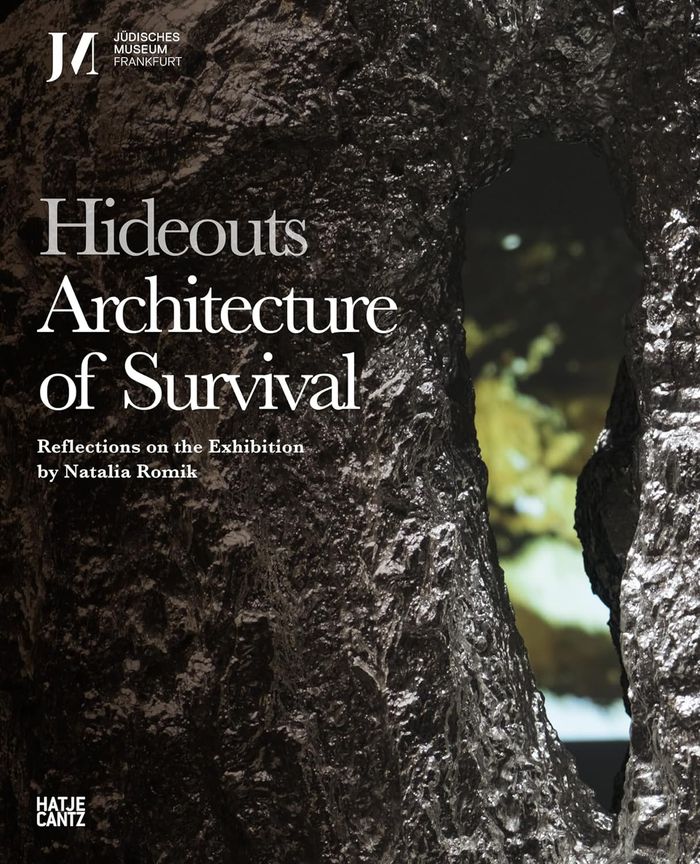
During the Holocaust, approximately 50,000 Jews survived in occupied Poland and Ukraine by seeking shelter in unlikely hiding spots. Driven by necessity, they were forced to take refuge in unexpected and inhospitable spaces such as tree hollows, closets, basements or sewers—remaining there for hours, days and sometimes even months. Architect, scholar and artist Natalia Romik has identified and studied several such hideouts that still exist today. Her research accentuates the material and spatial dimensions of living in hiding, gathering the evidence of vernacular architectural creativity employed under life-threatening conditions. Romik views hideouts as concealed monuments to the ingenuity of Holocaust survivors and their helpers. This interdisciplinary catalog makes tangible the fragile physical reality of these places and addresses the fundamental question of the function of architecture in relation to the history of violence and our culture of commemoration.
Hideouts: Architecture of survival
Actions:
Prix:
$65.00
(disponible en magasin)
Résumé:
During the Holocaust, approximately 50,000 Jews survived in occupied Poland and Ukraine by seeking shelter in unlikely hiding spots. Driven by necessity, they were forced to take refuge in unexpected and inhospitable spaces such as tree hollows, closets, basements or sewers—remaining there for hours, days and sometimes even months. Architect, scholar and artist Natalia Romik has identified and studied several such hideouts that still exist today. Her research accentuates the material and spatial dimensions of living in hiding, gathering the evidence of vernacular architectural creativity employed under life-threatening conditions. Romik views hideouts as concealed monuments to the ingenuity of Holocaust survivors and their helpers. This interdisciplinary catalog makes tangible the fragile physical reality of these places and addresses the fundamental question of the function of architecture in relation to the history of violence and our culture of commemoration.
Classification:
livres
livres
Publication:
avril 2024
avril 2024
Sujet:
Théorie de l’architecture
Théorie de l’architecture
Classification:
livres
livres
Titre:
Citizens of the cosmos
Citizens of the cosmos
Actions:
Prix:
$39.95
(disponible sur commande)
Résumé:
"Citizens of the cosmos" examines the artist Anton Vidokle’s films and the Cosmist philosophy underpinning them. It features essays and conversations with Vidokle by seminal contemporary theorists, curators, and artists: Franco "Bifo" Berardi, Keti Chukhrov, Liam Gillick, Boris Groys, Daniel Muzyczuk, Miguel Amado and Georgia Perkins, Elizabeth Povinelli, and Raqs Media(...)
$39.95
(disponible sur commande)
Résumé:
"Citizens of the cosmos" examines the artist Anton Vidokle’s films and the Cosmist philosophy underpinning them. It features essays and conversations with Vidokle by seminal contemporary theorists, curators, and artists: Franco "Bifo" Berardi, Keti Chukhrov, Liam Gillick, Boris Groys, Daniel Muzyczuk, Miguel Amado and Georgia Perkins, Elizabeth Povinelli, and Raqs Media(...)
Titre:
Citizens of the cosmos
Actions:
Prix:
$39.95
(disponible sur commande)
Résumé:
"Citizens of the cosmos" examines the artist Anton Vidokle’s films and the Cosmist philosophy underpinning them. It features essays and conversations with Vidokle by seminal contemporary theorists, curators, and artists: Franco "Bifo" Berardi, Keti Chukhrov, Liam Gillick, Boris Groys, Daniel Muzyczuk, Miguel Amado and Georgia Perkins, Elizabeth Povinelli, and Raqs Media Collective. This is the first book to survey Vidokle’s Cosmism-related filmic output, begun in 2014, and includes full scripts from the films. The book’s contributors speculate on Vidokle’s Cosmist conceptions of technological immortality, resurrection of all ancestors, radical museology, and space travel, grappling with how these ideas embroil or crystallize contemporary theories, artistic and technological imaginaries: atmospheric manipulation, cryonics, biopolitics, extraplanetary prospecting, geo-engineering, genetics.
Citizens of the cosmos
Actions:
Prix:
$39.95
(disponible sur commande)
Résumé:
"Citizens of the cosmos" examines the artist Anton Vidokle’s films and the Cosmist philosophy underpinning them. It features essays and conversations with Vidokle by seminal contemporary theorists, curators, and artists: Franco "Bifo" Berardi, Keti Chukhrov, Liam Gillick, Boris Groys, Daniel Muzyczuk, Miguel Amado and Georgia Perkins, Elizabeth Povinelli, and Raqs Media Collective. This is the first book to survey Vidokle’s Cosmism-related filmic output, begun in 2014, and includes full scripts from the films. The book’s contributors speculate on Vidokle’s Cosmist conceptions of technological immortality, resurrection of all ancestors, radical museology, and space travel, grappling with how these ideas embroil or crystallize contemporary theories, artistic and technological imaginaries: atmospheric manipulation, cryonics, biopolitics, extraplanetary prospecting, geo-engineering, genetics.
Classification:
livres
livres
Publication:
août 2024
août 2024
Sujet:
Théorie de l’art
Théorie de l’art
Classification:
livres
livres
Prix:
$25.95
(disponible sur commande)
Résumé:
What is magic? And what can it do? In this book, Jessica Backsell interrogates the magic of the art world and culture’s stubborn habit of foregrounding art as representative of an alternative value system. Through the empirical example of the freeport—luxury warehouses where valuable art is stored for preservation and taxation purposes—Backsell explores the implications(...)
$25.95
(disponible sur commande)
Résumé:
What is magic? And what can it do? In this book, Jessica Backsell interrogates the magic of the art world and culture’s stubborn habit of foregrounding art as representative of an alternative value system. Through the empirical example of the freeport—luxury warehouses where valuable art is stored for preservation and taxation purposes—Backsell explores the implications(...)
Titre:
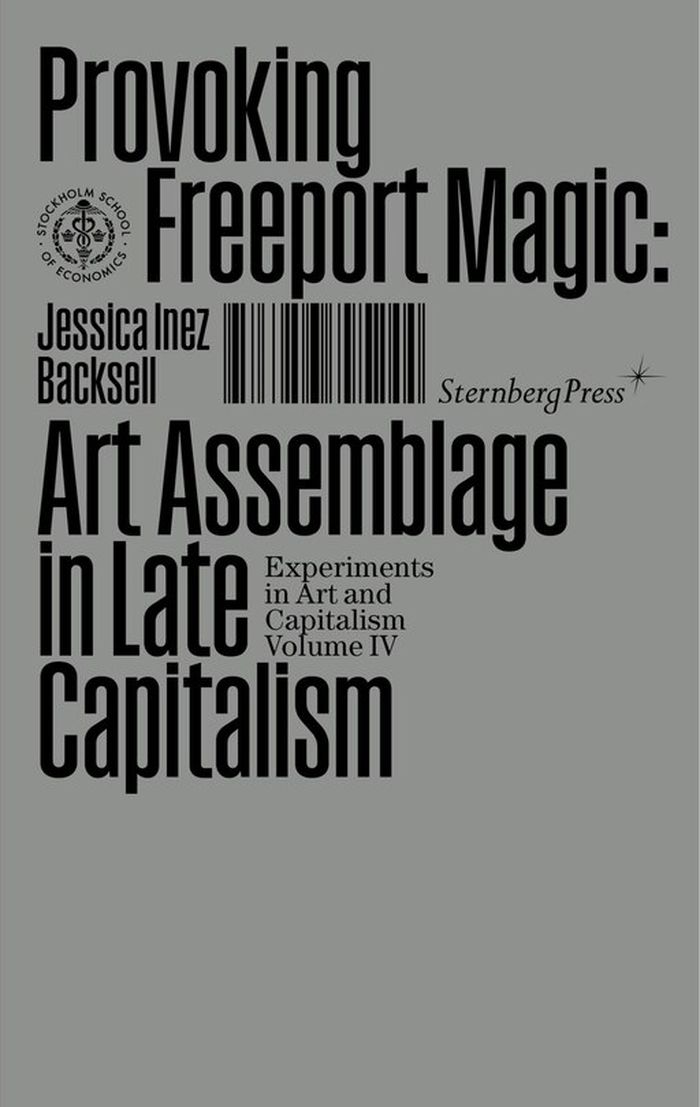
Provoking Freeport Magic: Art assemblage in late capitalism
Actions:
Prix:
$25.95
(disponible sur commande)
Résumé:
What is magic? And what can it do? In this book, Jessica Backsell interrogates the magic of the art world and culture’s stubborn habit of foregrounding art as representative of an alternative value system. Through the empirical example of the freeport—luxury warehouses where valuable art is stored for preservation and taxation purposes—Backsell explores the implications of understanding the art world through contingent entanglements and practices. Examining the contested site of the freeport, Backsell addresses the dichotomous “culture v. capitalism” debate by showing how magic is not an innate and mysterious quality. Rather, it is a practice, a central yet unexplored element of curatorial toolboxes, that unfolds through what Backsell denotes as the enactment of “conspicuous withdrawal.” This insight, she argues, sheds new light and understanding on broader political issues in contemporary market society.
Provoking Freeport Magic: Art assemblage in late capitalism
Actions:
Prix:
$25.95
(disponible sur commande)
Résumé:
What is magic? And what can it do? In this book, Jessica Backsell interrogates the magic of the art world and culture’s stubborn habit of foregrounding art as representative of an alternative value system. Through the empirical example of the freeport—luxury warehouses where valuable art is stored for preservation and taxation purposes—Backsell explores the implications of understanding the art world through contingent entanglements and practices. Examining the contested site of the freeport, Backsell addresses the dichotomous “culture v. capitalism” debate by showing how magic is not an innate and mysterious quality. Rather, it is a practice, a central yet unexplored element of curatorial toolboxes, that unfolds through what Backsell denotes as the enactment of “conspicuous withdrawal.” This insight, she argues, sheds new light and understanding on broader political issues in contemporary market society.
Classification:
livres
livres
Publication:
juillet 2024
juillet 2024
Sujet:
Théorie de l’art
Théorie de l’art
Classification:
livres
livres
Prix:
$34.95
(disponible sur commande)
Résumé:
"The complex answer: On art as a non-binary intelligence" presents a series of entangled essays on the question on how art—and contemporary art practices in particular—embodies an intelligence capable of serving the erasure of the culture/nature distinction. The book is conceived in four parts and each not only introduces a slightly different writing on the subject(...)
$34.95
(disponible sur commande)
Résumé:
"The complex answer: On art as a non-binary intelligence" presents a series of entangled essays on the question on how art—and contemporary art practices in particular—embodies an intelligence capable of serving the erasure of the culture/nature distinction. The book is conceived in four parts and each not only introduces a slightly different writing on the subject(...)
Titre:
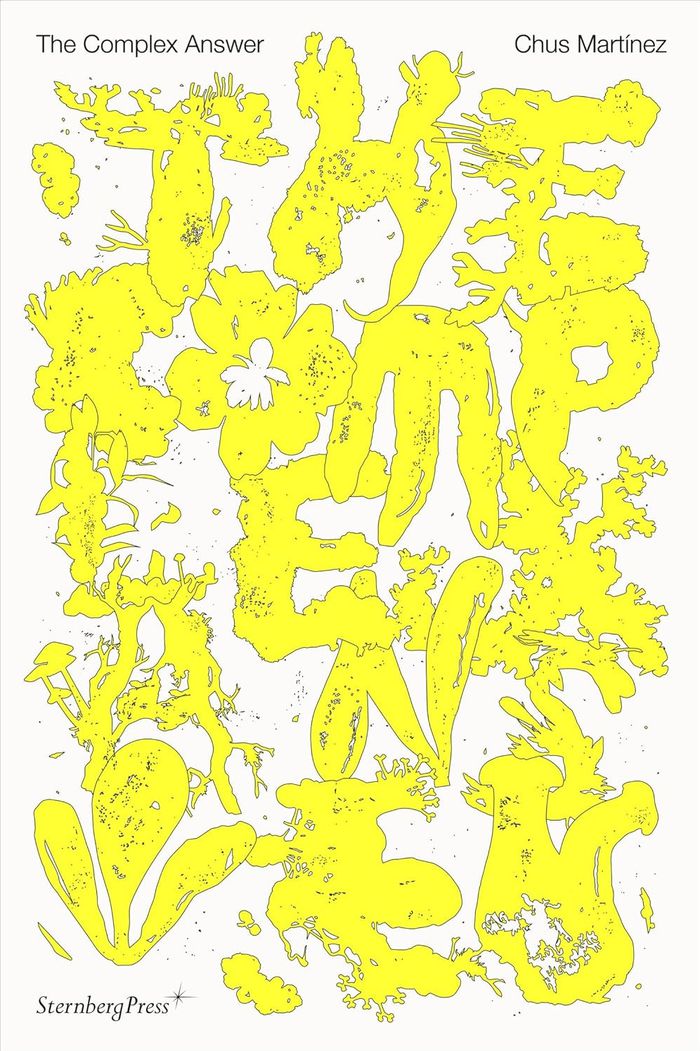
The complex answer: On art as a non-binary intelligence
Actions:
Prix:
$34.95
(disponible sur commande)
Résumé:
"The complex answer: On art as a non-binary intelligence" presents a series of entangled essays on the question on how art—and contemporary art practices in particular—embodies an intelligence capable of serving the erasure of the culture/nature distinction. The book is conceived in four parts and each not only introduces a slightly different writing on the subject matter, but also refers to concrete questions that affect the practice of art, the exercise of exhibiting, the duty of reflecting, and the institutional forms that define our present but may radically change in a near future. The book imagines art and contemporary art as an organ. An organ that produces an experience of inexpressible realities that are fundamental to understanding life and its processes. Stem cells exist, first, without a purpose and it is for the whole organism to decide if they will become part of an auditive nerve or the brain or the cornea of an eye. This adding to an organ is how Chus Martínez understands the intelligence of art. Poets and artists have claimed to understand the language of birds and flowers. We speak now of multi-species communication without a trace of metaphoric language. The experience of nature has evolved inside artistic practice. One could claim that the very fact that we talk about artificial intelligence is a merit of the arts. To transfer traits of organic life to inorganic entities such as information systems is a bold move that took centuries to prepare. Art has been essential in getting our senses and our arguments ready to accept this reality. The same with animal language, the synchronized reactions of a rainforest, and the transformative way fish have been discovered as able to recognize their own image in a mirror. These are just jests on the part of the sciences, developments of technical knowledges.
The complex answer: On art as a non-binary intelligence
Actions:
Prix:
$34.95
(disponible sur commande)
Résumé:
"The complex answer: On art as a non-binary intelligence" presents a series of entangled essays on the question on how art—and contemporary art practices in particular—embodies an intelligence capable of serving the erasure of the culture/nature distinction. The book is conceived in four parts and each not only introduces a slightly different writing on the subject matter, but also refers to concrete questions that affect the practice of art, the exercise of exhibiting, the duty of reflecting, and the institutional forms that define our present but may radically change in a near future. The book imagines art and contemporary art as an organ. An organ that produces an experience of inexpressible realities that are fundamental to understanding life and its processes. Stem cells exist, first, without a purpose and it is for the whole organism to decide if they will become part of an auditive nerve or the brain or the cornea of an eye. This adding to an organ is how Chus Martínez understands the intelligence of art. Poets and artists have claimed to understand the language of birds and flowers. We speak now of multi-species communication without a trace of metaphoric language. The experience of nature has evolved inside artistic practice. One could claim that the very fact that we talk about artificial intelligence is a merit of the arts. To transfer traits of organic life to inorganic entities such as information systems is a bold move that took centuries to prepare. Art has been essential in getting our senses and our arguments ready to accept this reality. The same with animal language, the synchronized reactions of a rainforest, and the transformative way fish have been discovered as able to recognize their own image in a mirror. These are just jests on the part of the sciences, developments of technical knowledges.
Classification:
livres
livres
Publication:
février 2024
février 2024
Sujet:
Théorie de l’art
Théorie de l’art
Classification:
livres
livres
Actions:
Prix:
$27.00
(disponible sur commande)
Résumé:
Although often considered to be a fault or a glitch in the system, the event of hallucination is central to the models of image production generated by artificial intelligence (AI). Through mining the latent space of computer vision, Trevor Paglen’s series "Adversarially evolved hallucinations" (2017–ongoing) reveals this phantasmal and hallucinatory domain. In the(...)
$27.00
(disponible sur commande)
Résumé:
Although often considered to be a fault or a glitch in the system, the event of hallucination is central to the models of image production generated by artificial intelligence (AI). Through mining the latent space of computer vision, Trevor Paglen’s series "Adversarially evolved hallucinations" (2017–ongoing) reveals this phantasmal and hallucinatory domain. In the(...)
Titre:
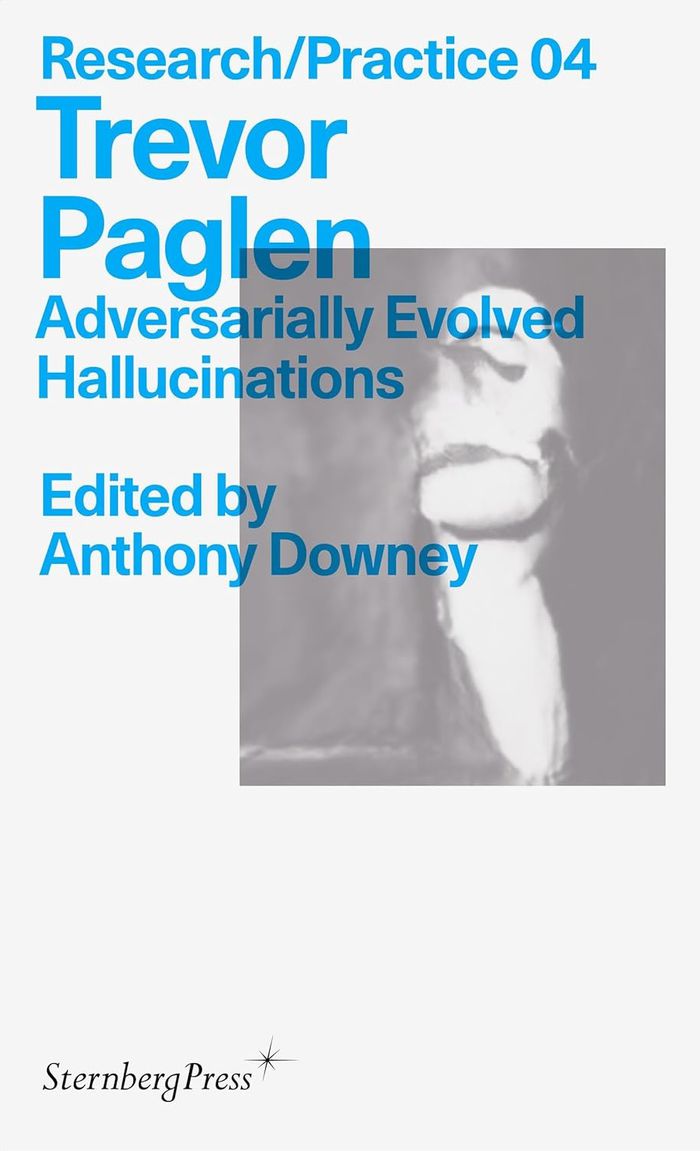
Adversarially evolved hallucinations
Actions:
Prix:
$27.00
(disponible sur commande)
Résumé:
Although often considered to be a fault or a glitch in the system, the event of hallucination is central to the models of image production generated by artificial intelligence (AI). Through mining the latent space of computer vision, Trevor Paglen’s series "Adversarially evolved hallucinations" (2017–ongoing) reveals this phantasmal and hallucinatory domain. In the conversation included in this volume, he discusses how we can think from within these opaque structures and, in turn, questions the frequently inflated claims made on behalf of automated image-production systems. In an accompanying essay, Anthony Downey explores the uncanny realm of algorithmically induced images and proposes that AI, through its generative modeling of the world, invariably estranges us from the present and the future.
Adversarially evolved hallucinations
Actions:
Prix:
$27.00
(disponible sur commande)
Résumé:
Although often considered to be a fault or a glitch in the system, the event of hallucination is central to the models of image production generated by artificial intelligence (AI). Through mining the latent space of computer vision, Trevor Paglen’s series "Adversarially evolved hallucinations" (2017–ongoing) reveals this phantasmal and hallucinatory domain. In the conversation included in this volume, he discusses how we can think from within these opaque structures and, in turn, questions the frequently inflated claims made on behalf of automated image-production systems. In an accompanying essay, Anthony Downey explores the uncanny realm of algorithmically induced images and proposes that AI, through its generative modeling of the world, invariably estranges us from the present and the future.
Classification:
livres
livres
Publication:
août 2024
août 2024
Sujet:
Théorie de l’art
Théorie de l’art
Classification:
livres
livres
Prix:
$30.00
(disponible sur commande)
Résumé:
In 2021, Etel Adnan and Simone Fattal recorded an intimate conversation about the Mediterranean at their Parisian home: "There are many Mediterraneans: the geographical, the historical, the philosophical... the personal, the one we swim, and we have swum in. It‘s an experience to swim, it is something you can‘t explain to somebody who never swam. This feeling of being(...)
$30.00
(disponible sur commande)
Résumé:
In 2021, Etel Adnan and Simone Fattal recorded an intimate conversation about the Mediterranean at their Parisian home: "There are many Mediterraneans: the geographical, the historical, the philosophical... the personal, the one we swim, and we have swum in. It‘s an experience to swim, it is something you can‘t explain to somebody who never swam. This feeling of being(...)
Titre:
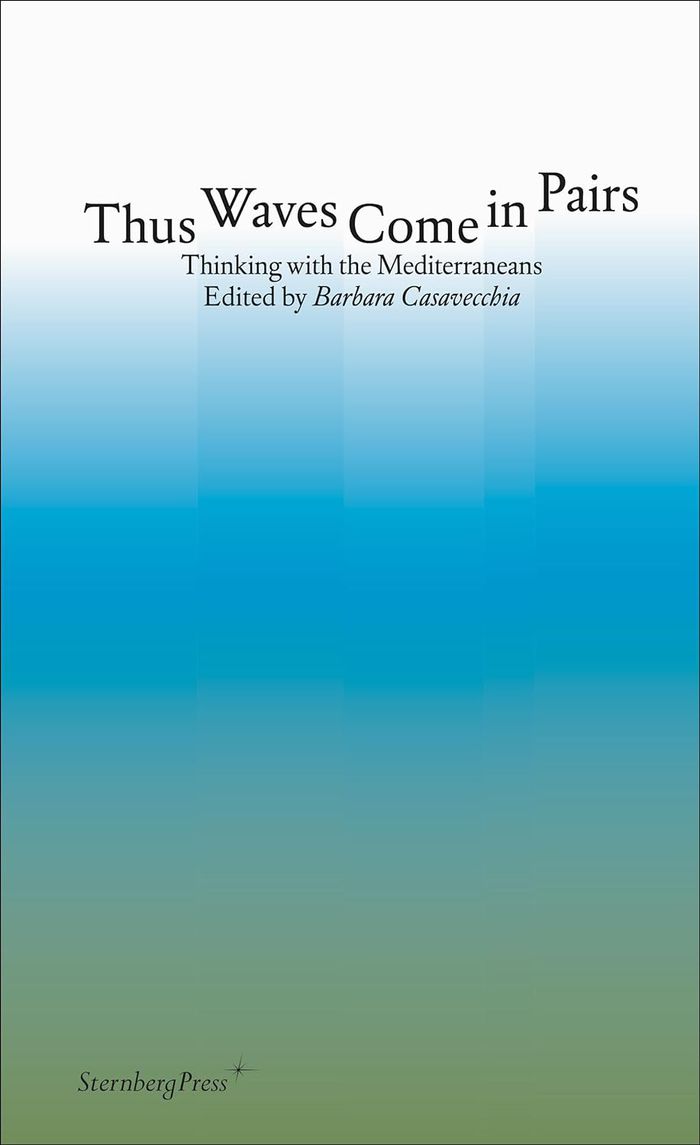
Thus waves come in pairs: Thinking with the Mediterraneans
Actions:
Prix:
$30.00
(disponible sur commande)
Résumé:
In 2021, Etel Adnan and Simone Fattal recorded an intimate conversation about the Mediterranean at their Parisian home: "There are many Mediterraneans: the geographical, the historical, the philosophical... the personal, the one we swim, and we have swum in. It‘s an experience to swim, it is something you can‘t explain to somebody who never swam. This feeling of being held up by this water." The third cycle of TBA21–Academy’s curatorial fellowship program "The Current", spanning from 2021–2023 focused on the Mediterraneans in a program entitled "Thus waves come in pairs" after a line from Adnan’s poem "Sea and Fog." It pointed to the necessity of thinking of, and thinking with, the Mediterraneans as plural—plural as their interconnected cultures, and bodies of sweet and salty water, and possibilities of narrating their current transformations.
Thus waves come in pairs: Thinking with the Mediterraneans
Actions:
Prix:
$30.00
(disponible sur commande)
Résumé:
In 2021, Etel Adnan and Simone Fattal recorded an intimate conversation about the Mediterranean at their Parisian home: "There are many Mediterraneans: the geographical, the historical, the philosophical... the personal, the one we swim, and we have swum in. It‘s an experience to swim, it is something you can‘t explain to somebody who never swam. This feeling of being held up by this water." The third cycle of TBA21–Academy’s curatorial fellowship program "The Current", spanning from 2021–2023 focused on the Mediterraneans in a program entitled "Thus waves come in pairs" after a line from Adnan’s poem "Sea and Fog." It pointed to the necessity of thinking of, and thinking with, the Mediterraneans as plural—plural as their interconnected cultures, and bodies of sweet and salty water, and possibilities of narrating their current transformations.
Classification:
livres
livres
Publication:
février 2024
février 2024
Sujet:
Théorie de l’art
Théorie de l’art


