


4193 Résultats
Classification:
livres
livres
Actions:
Prix:
$67.95
(disponible sur commande)
Résumé:
Between 1949 and 1953, Robert Frank continually returned to Europe from his new home in New York to take photographs in France, Switzerland, Spain, and Great Britain, photographs that show the development of his uniquely humanist, poetic, and realist eye. In 1951 and early 1952, Frank visited London--"I liked the light, I liked the fog."--and set out to photograph the(...)
$67.95
(disponible sur commande)
Résumé:
Between 1949 and 1953, Robert Frank continually returned to Europe from his new home in New York to take photographs in France, Switzerland, Spain, and Great Britain, photographs that show the development of his uniquely humanist, poetic, and realist eye. In 1951 and early 1952, Frank visited London--"I liked the light, I liked the fog."--and set out to photograph the(...)
Sujet:
Monographies photo
Monographies photo
Publication:
juin 2003, Zurich, Berlin and New York
juin 2003, Zurich, Berlin and New York
Titre:
Robert Frank : London / Wales
Actions:
Prix:
$67.95
(disponible sur commande)
Résumé:
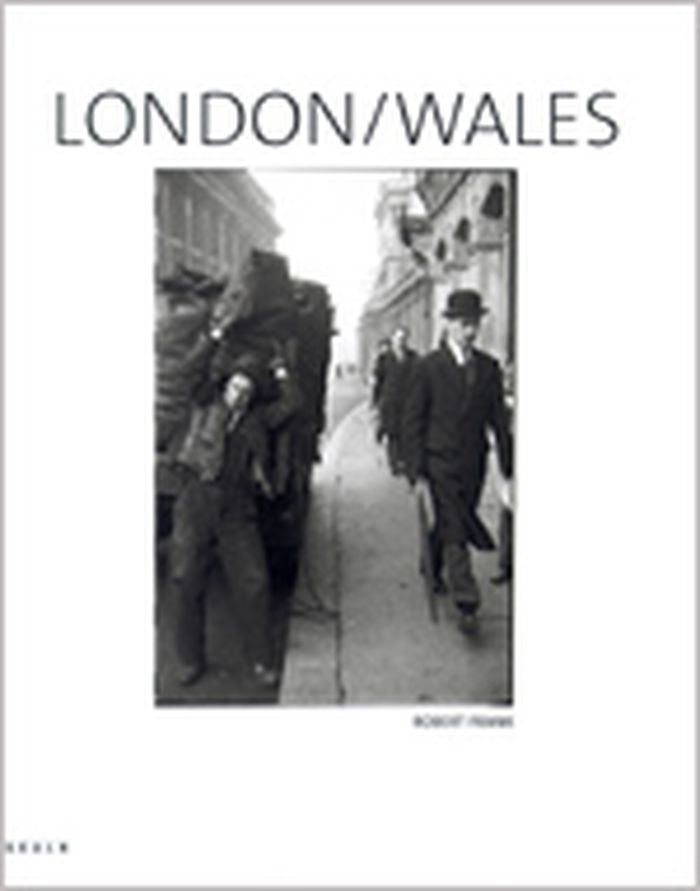
Between 1949 and 1953, Robert Frank continually returned to Europe from his new home in New York to take photographs in France, Switzerland, Spain, and Great Britain, photographs that show the development of his uniquely humanist, poetic, and realist eye. In 1951 and early 1952, Frank visited London--"I liked the light, I liked the fog."--and set out to photograph the unique atmosphere of the city. He followed British financiers around the City, capturing them in their traditional top hats and long coats, creating images that depict them in a poetic dance with their fog-shrouded environment. He shot pictures of workers, men delivering coal, children playing on the streets, people waiting or relaxing in the parks, and images of poverty. In these photographs he juxtaposed money and work, wealth and poverty, creating a dynamic photographic project that has never been shown before in its entirety. Then, in March 1953, before the impending nationalization of the country's coal mines, Frank travelled to the town of Careau, in Wales, to photograph the coal miners whose lives revolved around their work. One miner, Ben James, and his family became the subject of a picture essay (originally published in a 1955 issue of U.S. Camera) in which Frank downplayed the classic modernist photographic moment in favor of a more provocative form that offered informal, revealing glances rather than an official document. In "Robert Frank: London/Wales", Frank returns for the first time to these old negatives. The volume explores a stylistic transformation in his work, a period of development which saw his mode of photography move from an innovative romanticism to a highly charged, metaphorical realism.
Robert Frank : London / Wales
Actions:
Prix:
$67.95
(disponible sur commande)
Résumé:
Between 1949 and 1953, Robert Frank continually returned to Europe from his new home in New York to take photographs in France, Switzerland, Spain, and Great Britain, photographs that show the development of his uniquely humanist, poetic, and realist eye. In 1951 and early 1952, Frank visited London--"I liked the light, I liked the fog."--and set out to photograph the unique atmosphere of the city. He followed British financiers around the City, capturing them in their traditional top hats and long coats, creating images that depict them in a poetic dance with their fog-shrouded environment. He shot pictures of workers, men delivering coal, children playing on the streets, people waiting or relaxing in the parks, and images of poverty. In these photographs he juxtaposed money and work, wealth and poverty, creating a dynamic photographic project that has never been shown before in its entirety. Then, in March 1953, before the impending nationalization of the country's coal mines, Frank travelled to the town of Careau, in Wales, to photograph the coal miners whose lives revolved around their work. One miner, Ben James, and his family became the subject of a picture essay (originally published in a 1955 issue of U.S. Camera) in which Frank downplayed the classic modernist photographic moment in favor of a more provocative form that offered informal, revealing glances rather than an official document. In "Robert Frank: London/Wales", Frank returns for the first time to these old negatives. The volume explores a stylistic transformation in his work, a period of development which saw his mode of photography move from an innovative romanticism to a highly charged, metaphorical realism.
Classification:
livres
livres
Publication:
juin 2003, Zurich, Berlin and New York
juin 2003, Zurich, Berlin and New York
Sujet:
Monographies photo
Monographies photo
Classification:
livres
livres
Actions:
Prix:
$99.95
(disponible sur commande)
Résumé:
Eliot Noyes (1910–77) was a remarkable figure in twentieth-century design. An architect who began his career working in the office of Walter Gropius and Marcel Breuer, he went on to become the first Director of the Industrial Design department at MoMA in the 1940s. From the late 1950s until his death in 1977 he was Consulting Director of Design for IBM, Mobil Oil,(...)
$99.95
(disponible sur commande)
Résumé:
Eliot Noyes (1910–77) was a remarkable figure in twentieth-century design. An architect who began his career working in the office of Walter Gropius and Marcel Breuer, he went on to become the first Director of the Industrial Design department at MoMA in the 1940s. From the late 1950s until his death in 1977 he was Consulting Director of Design for IBM, Mobil Oil,(...)
Titre:
Eliot Noyes : a pioneer of design and architecture in the age of American modernism
Actions:
Prix:
$99.95
(disponible sur commande)
Résumé:
Eliot Noyes (1910–77) was a remarkable figure in twentieth-century design. An architect who began his career working in the office of Walter Gropius and Marcel Breuer, he went on to become the first Director of the Industrial Design department at MoMA in the 1940s. From the late 1950s until his death in 1977 he was Consulting Director of Design for IBM, Mobil Oil, Westinghouse and Cummins Engine Company, and was responsible for bringing about a change in the way that these corporations, and others that followed, were to think about design and its impact on business. He enlisted pioneering designers, notably Charles Eames, Paul Rand, Ivan Chermayeff and Tom Geismar, to help him bring about innovative architectural, graphic and industrial design. He was personally responsible for the design of some notable twentieth-century classics, such as IBM’s Selectric typewriter and Mobil Oil’s service stations and petrol pumps. His own work includes architectural projects, such as the award-winning Noyes' family residence in Connecticut. This monograph traces the life of this unique architect, designer and businessman who devoted a great deal of his career to encouraging large American businesses to respect and develop policies that were rich in cultural expression. The author has had extended access to the Noyes' archive of personal as well as business projects, materials and letters, and he has carried out extended interviews with a great deal of Noyes' acquaintances and relations. His comprehensive and lively text is accompanied by archival and new colour photography, drawings, plans and a diverse range of documentary material, much of which is previously unpublished.
Eliot Noyes : a pioneer of design and architecture in the age of American modernism
Actions:
Prix:
$99.95
(disponible sur commande)
Résumé:
Eliot Noyes (1910–77) was a remarkable figure in twentieth-century design. An architect who began his career working in the office of Walter Gropius and Marcel Breuer, he went on to become the first Director of the Industrial Design department at MoMA in the 1940s. From the late 1950s until his death in 1977 he was Consulting Director of Design for IBM, Mobil Oil, Westinghouse and Cummins Engine Company, and was responsible for bringing about a change in the way that these corporations, and others that followed, were to think about design and its impact on business. He enlisted pioneering designers, notably Charles Eames, Paul Rand, Ivan Chermayeff and Tom Geismar, to help him bring about innovative architectural, graphic and industrial design. He was personally responsible for the design of some notable twentieth-century classics, such as IBM’s Selectric typewriter and Mobil Oil’s service stations and petrol pumps. His own work includes architectural projects, such as the award-winning Noyes' family residence in Connecticut. This monograph traces the life of this unique architect, designer and businessman who devoted a great deal of his career to encouraging large American businesses to respect and develop policies that were rich in cultural expression. The author has had extended access to the Noyes' archive of personal as well as business projects, materials and letters, and he has carried out extended interviews with a great deal of Noyes' acquaintances and relations. His comprehensive and lively text is accompanied by archival and new colour photography, drawings, plans and a diverse range of documentary material, much of which is previously unpublished.
Classification:
livres
livres
Publication:
octobre 2006, London, New York
octobre 2006, London, New York
Sujet:
Design, monographies
Design, monographies
Classification:
livres
livres
Titre:
Valerio Olgiati: Villa Além
Valerio Olgiati: Villa Além
Actions:
Prix:
$95.00
(disponible en magasin)
Résumé:
"For many years, my wife Tamara and I had been searching for a place for which we could leave our current home in the Swiss mountains on social, cultural and climatic grounds. In the Alentejo region in Portugal, we found the perfect situation. A wonderful climate, a wide empty landscape and an existing culture that we like. Here, we spend a couple of months a year. From(...)
$95.00
(disponible en magasin)
Résumé:
"For many years, my wife Tamara and I had been searching for a place for which we could leave our current home in the Swiss mountains on social, cultural and climatic grounds. In the Alentejo region in Portugal, we found the perfect situation. A wonderful climate, a wide empty landscape and an existing culture that we like. Here, we spend a couple of months a year. From(...)
Titre:
Valerio Olgiati: Villa Além
Actions:
Prix:
$95.00
(disponible en magasin)
Résumé:
"For many years, my wife Tamara and I had been searching for a place for which we could leave our current home in the Swiss mountains on social, cultural and climatic grounds. In the Alentejo region in Portugal, we found the perfect situation. A wonderful climate, a wide empty landscape and an existing culture that we like. Here, we spend a couple of months a year. From here, we work – my wife is also an architect – close to our office in Flims. The basic idea and the all-influencing aim of our project was to create a garden, even more than a shelter, which, of course, we also have. The form of our house indeed should not primarily express ‘shelter’. It is the ‘garden’ that has to essentially find its form and that we want to experience. To date, three main forms are known to me in terms of housing. The first, ‘urban living’, I understand as living in the dense fabric of an urban setting. Then, ‘suburban living’, which takes place in a typical one-family home with a small garden in suburbia, and finally, ‘country living’, where people live socially and infrastructurally connected at large rural intervals. We excluded all three of these forms for our house. This was not what we were looking for. Our home is far away from the next town. It is disconnected in every respect. There is only the vast empty landscape around us. In Villa Além, a sense of loneliness and independence arises. It is a real retreat. I was looking for a term for this type of housing and have arrived at ‘landscape living’." – Valerio Olgiati
Valerio Olgiati: Villa Além
Actions:
Prix:
$95.00
(disponible en magasin)
Résumé:
"For many years, my wife Tamara and I had been searching for a place for which we could leave our current home in the Swiss mountains on social, cultural and climatic grounds. In the Alentejo region in Portugal, we found the perfect situation. A wonderful climate, a wide empty landscape and an existing culture that we like. Here, we spend a couple of months a year. From here, we work – my wife is also an architect – close to our office in Flims. The basic idea and the all-influencing aim of our project was to create a garden, even more than a shelter, which, of course, we also have. The form of our house indeed should not primarily express ‘shelter’. It is the ‘garden’ that has to essentially find its form and that we want to experience. To date, three main forms are known to me in terms of housing. The first, ‘urban living’, I understand as living in the dense fabric of an urban setting. Then, ‘suburban living’, which takes place in a typical one-family home with a small garden in suburbia, and finally, ‘country living’, where people live socially and infrastructurally connected at large rural intervals. We excluded all three of these forms for our house. This was not what we were looking for. Our home is far away from the next town. It is disconnected in every respect. There is only the vast empty landscape around us. In Villa Além, a sense of loneliness and independence arises. It is a real retreat. I was looking for a term for this type of housing and have arrived at ‘landscape living’." – Valerio Olgiati
Classification:
livres
livres
Publication:
janvier 2016
janvier 2016
Sujet:
Architecture, monographies
Architecture, monographies
Classification:
livres
livres

Prix:
$34.95
(disponible sur commande)
Résumé:
A world-leading expert shares her amazing story of discovering the communication that exists between trees, and shares her own story of family and grief. Now, in her first book, Suzanne Simard brings us into her world, the intimate world of the trees, in which she brilliantly illuminates the fascinating and vital truths—that trees are not simply the source of timber(...)
$34.95
(disponible sur commande)
Résumé:
A world-leading expert shares her amazing story of discovering the communication that exists between trees, and shares her own story of family and grief. Now, in her first book, Suzanne Simard brings us into her world, the intimate world of the trees, in which she brilliantly illuminates the fascinating and vital truths—that trees are not simply the source of timber(...)
Titre:
Finding the mother-tree: discovering the wisdom of the forest
Actions:
Prix:
$34.95
(disponible sur commande)
Résumé:
A world-leading expert shares her amazing story of discovering the communication that exists between trees, and shares her own story of family and grief. Now, in her first book, Suzanne Simard brings us into her world, the intimate world of the trees, in which she brilliantly illuminates the fascinating and vital truths—that trees are not simply the source of timber or pulp but are a complicated, interdependent circle of life; that forests are social, cooperative creatures connected through underground networks by which trees communicate their vitality and vulnerabilities with communal lives not that different from our own. Simard describes up close—in revealing and accessible ways—how trees, living side by side for hundreds of years, have evolved; how they perceive one another, learn and adapt their behaviors, recognize neighbors, and remember the past; how they have agency about their future; how they elicit warnings and mount defenses, compete and cooperate with one another with sophistication: characteristics previously ascribed to human intelligence, traits that are the essence of civil societies. And, at the center of it all, the Mother Trees: the mysterious, powerful forces that connect and sustain the others that surround them.Simard, born and raised in the rain forests of British Columbia, spent her days as a child cataloging the trees from the forest; she came to love and respect them and embarked on a journey of discovery and struggle. Her powerful story is one of love and loss, of observation and change, of risk and reward. And it is a testament to how deeply human scientific inquiry exists beyond data and technology: it’s about understanding who we are and our place in the world.
Finding the mother-tree: discovering the wisdom of the forest
Actions:
Prix:
$34.95
(disponible sur commande)
Résumé:
A world-leading expert shares her amazing story of discovering the communication that exists between trees, and shares her own story of family and grief. Now, in her first book, Suzanne Simard brings us into her world, the intimate world of the trees, in which she brilliantly illuminates the fascinating and vital truths—that trees are not simply the source of timber or pulp but are a complicated, interdependent circle of life; that forests are social, cooperative creatures connected through underground networks by which trees communicate their vitality and vulnerabilities with communal lives not that different from our own. Simard describes up close—in revealing and accessible ways—how trees, living side by side for hundreds of years, have evolved; how they perceive one another, learn and adapt their behaviors, recognize neighbors, and remember the past; how they have agency about their future; how they elicit warnings and mount defenses, compete and cooperate with one another with sophistication: characteristics previously ascribed to human intelligence, traits that are the essence of civil societies. And, at the center of it all, the Mother Trees: the mysterious, powerful forces that connect and sustain the others that surround them.Simard, born and raised in the rain forests of British Columbia, spent her days as a child cataloging the trees from the forest; she came to love and respect them and embarked on a journey of discovery and struggle. Her powerful story is one of love and loss, of observation and change, of risk and reward. And it is a testament to how deeply human scientific inquiry exists beyond data and technology: it’s about understanding who we are and our place in the world.
Classification:
livres
livres
Publication:
mai 2021
mai 2021
Sujet:
Théorie du paysage
Théorie du paysage
Classification:
livres
livres
Actions:
Prix:
$35.00
(disponible sur commande)
Résumé:
Feeding kids can often feel like climbing a mountain, and sometimes like an endless series of rejections and failures. With picky eating preferences changing at every turn, meals that were a mainstay one week are inexplicably pushed aside when they hit the table the next. Because kids don't care about what they're serving at the new It Restaurant, the food fads of the(...)
$35.00
(disponible sur commande)
Résumé:
Feeding kids can often feel like climbing a mountain, and sometimes like an endless series of rejections and failures. With picky eating preferences changing at every turn, meals that were a mainstay one week are inexplicably pushed aside when they hit the table the next. Because kids don't care about what they're serving at the new It Restaurant, the food fads of the(...)
Titre:
Little critics: What Canadian chefs cook for kids (and kids will actually eat)
Actions:
Prix:
$35.00
(disponible sur commande)
Résumé:
Feeding kids can often feel like climbing a mountain, and sometimes like an endless series of rejections and failures. With picky eating preferences changing at every turn, meals that were a mainstay one week are inexplicably pushed aside when they hit the table the next. Because kids don't care about what they're serving at the new It Restaurant, the food fads of the year or how long you spend in the kitchen—either they like what they're eating ... or they’ll let you know about it! But surely chefs, with all of their accolades, awards and years of experience don't go through this too ... do they? What food writer Joanna Fox discovered might surprise you. It turns out we’re all in the same boat, even Canada’s top culinary professionals from coast to coast. Inside ''Little critics'', you'll find out how our top chefs please even the most suspicious, judgmental or fastidious of early eaters, with recipes including Jeremy Charles’s go-to stew, Suzanne Barr’s Cauliflower Cheese Bake, Susur Lee’s favourite childhood chicken, Danny Smiles’s Italian family dinner, Dyan Solomon’s Green Hulk Risotto, Vikram Vij’s Butter Chicken Schnitzel, Ryusuke Nakagawa’s Cheesy Chicken Katsu, Billy Alexander’s Frybread Stuffed Pizza, Chuck Hughes’s Pappardelle Pesto and Michael Smith’s showstopper pancakes, Tara O’Brady’s hearty Oatmeal Waffles, and Anna Olson’s Gourmet Goo Skillet Brownies. ''Little critics'' is chock-full of ideas for every kind of meal, with easy-to-follow recipes for breakfast and brunch; vegetarian, fish and meat mains; soups, snacks and sides; and desserts and drinks too. With food this good, even the adults will be asking for more.
Little critics: What Canadian chefs cook for kids (and kids will actually eat)
Actions:
Prix:
$35.00
(disponible sur commande)
Résumé:
Feeding kids can often feel like climbing a mountain, and sometimes like an endless series of rejections and failures. With picky eating preferences changing at every turn, meals that were a mainstay one week are inexplicably pushed aside when they hit the table the next. Because kids don't care about what they're serving at the new It Restaurant, the food fads of the year or how long you spend in the kitchen—either they like what they're eating ... or they’ll let you know about it! But surely chefs, with all of their accolades, awards and years of experience don't go through this too ... do they? What food writer Joanna Fox discovered might surprise you. It turns out we’re all in the same boat, even Canada’s top culinary professionals from coast to coast. Inside ''Little critics'', you'll find out how our top chefs please even the most suspicious, judgmental or fastidious of early eaters, with recipes including Jeremy Charles’s go-to stew, Suzanne Barr’s Cauliflower Cheese Bake, Susur Lee’s favourite childhood chicken, Danny Smiles’s Italian family dinner, Dyan Solomon’s Green Hulk Risotto, Vikram Vij’s Butter Chicken Schnitzel, Ryusuke Nakagawa’s Cheesy Chicken Katsu, Billy Alexander’s Frybread Stuffed Pizza, Chuck Hughes’s Pappardelle Pesto and Michael Smith’s showstopper pancakes, Tara O’Brady’s hearty Oatmeal Waffles, and Anna Olson’s Gourmet Goo Skillet Brownies. ''Little critics'' is chock-full of ideas for every kind of meal, with easy-to-follow recipes for breakfast and brunch; vegetarian, fish and meat mains; soups, snacks and sides; and desserts and drinks too. With food this good, even the adults will be asking for more.
Classification:
livres
livres
Publication:
octobre 2022
octobre 2022
Sujet:
Bouffe
Bouffe
Classification:
livres
livres
Titre:
Power at ground zero : politics, money, and the remaking of lower Manhattan / Lynne B. Sagalyn.
Power at ground zero : politics, money, and the remaking of lower Manhattan / Lynne B. Sagalyn.
Actions:
Exemplaires:
Description:
xviii, 901 pages : illustrations, maps ; 27 cm
Description:
xviii, 901 pages : illustrations, maps ; 27 cm
Auteur:
Sujet:
Publication:
New York : Oxford University Press, 2016.
New York : Oxford University Press, 2016.
Titre:
Power at ground zero : politics, money, and the remaking of lower Manhattan / Lynne B. Sagalyn.
Actions:
Exemplaires:
Description:
xviii, 901 pages : illustrations, maps ; 27 cm
Power at ground zero : politics, money, and the remaking of lower Manhattan / Lynne B. Sagalyn.
Actions:
Exemplaires:
Description:
xviii, 901 pages : illustrations, maps ; 27 cm
Classification:
livres
livres
Publication:
New York : Oxford University Press, 2016.
New York : Oxford University Press, 2016.
Auteur:
Sujet:
Classification:
livres
livres
Prix:
$60.00
(disponible sur commande)
Résumé:
Wittgenstein's House reads Wittgenstein's his two main philosophical texts, Tractatus Logico-Philosophicus and Philosophical Investigations, in relation to an experience that intervened between them: his design and construction of the Stonborough-Wittgenstein house in Vienna. Arguing that the practice of architecture occupies not just a historical position between(...)
$60.00
(disponible sur commande)
Résumé:
Wittgenstein's House reads Wittgenstein's his two main philosophical texts, Tractatus Logico-Philosophicus and Philosophical Investigations, in relation to an experience that intervened between them: his design and construction of the Stonborough-Wittgenstein house in Vienna. Arguing that the practice of architecture occupies not just a historical position between(...)
Titre:
Wittgenstein's house: language, space, & architecture
Actions:
Prix:
$60.00
(disponible sur commande)
Résumé:
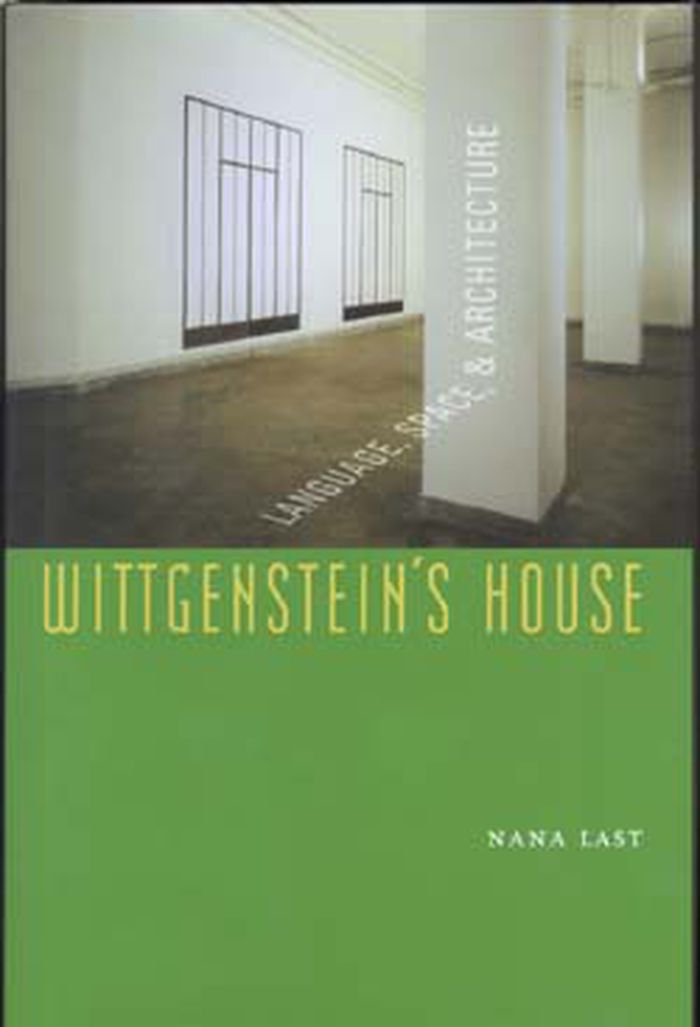
Wittgenstein's House reads Wittgenstein's his two main philosophical texts, Tractatus Logico-Philosophicus and Philosophical Investigations, in relation to an experience that intervened between them: his design and construction of the Stonborough-Wittgenstein house in Vienna. Arguing that the practice of architecture occupies not just a historical position between Wittgenstein's early and late philosophy, but a conceptual position as well, the book demonstrates that Wittgenstein's practice of architecture constitutes a fundamental component in the development of his philosophy of language from its early to late phases. The book advances the radical proposition that the field in which architecture and philosophy operate includes linguistic and spatial practices. It develops innovative forms of interdisciplinary analyses to demonstrate that the philosophical positions put forth by Wittgenstein's two main works are literally unthinkable outside of their respective conceptions of space: the view from above in the early work and the view from within constructed by the late work. To examine the manner in which Wittgenstein's practice of architecture insinuated itself into his philosophy, the author interweaves in-depth analyses of the spatial constructs underpinning the early and late philosophies with conceptual, formal and operative discussions of the design of the Stonborough-Wittgenstein house. Together these discussions reveal how Wittgenstein's practice of architecture engaged philosophical concepts, through which it influenced Wittgenstein's philosophy of language. At the heart of this approach is the finding that the philosophical concepts at the core of Wittgenstein's philosophy areindeed spatial ones, including his concerns with the limits of language, the boundary between showing and saying, the intricate textual numbering systems he devises, the relationship between the interiority of the subject and the publicness of language, and the formative principle of family resemblance.
Wittgenstein's house: language, space, & architecture
Actions:
Prix:
$60.00
(disponible sur commande)
Résumé:
Wittgenstein's House reads Wittgenstein's his two main philosophical texts, Tractatus Logico-Philosophicus and Philosophical Investigations, in relation to an experience that intervened between them: his design and construction of the Stonborough-Wittgenstein house in Vienna. Arguing that the practice of architecture occupies not just a historical position between Wittgenstein's early and late philosophy, but a conceptual position as well, the book demonstrates that Wittgenstein's practice of architecture constitutes a fundamental component in the development of his philosophy of language from its early to late phases. The book advances the radical proposition that the field in which architecture and philosophy operate includes linguistic and spatial practices. It develops innovative forms of interdisciplinary analyses to demonstrate that the philosophical positions put forth by Wittgenstein's two main works are literally unthinkable outside of their respective conceptions of space: the view from above in the early work and the view from within constructed by the late work. To examine the manner in which Wittgenstein's practice of architecture insinuated itself into his philosophy, the author interweaves in-depth analyses of the spatial constructs underpinning the early and late philosophies with conceptual, formal and operative discussions of the design of the Stonborough-Wittgenstein house. Together these discussions reveal how Wittgenstein's practice of architecture engaged philosophical concepts, through which it influenced Wittgenstein's philosophy of language. At the heart of this approach is the finding that the philosophical concepts at the core of Wittgenstein's philosophy areindeed spatial ones, including his concerns with the limits of language, the boundary between showing and saying, the intricate textual numbering systems he devises, the relationship between the interiority of the subject and the publicness of language, and the formative principle of family resemblance.
Classification:
livres
livres
Publication:
mai 2008, New York
mai 2008, New York
Sujet:
Théorie de l’architecture
Théorie de l’architecture
Classification:
livres
livres
Prix:
$90.00
(disponible sur commande)
Résumé:
"Things as they are" presents the story of photojournalism over fifty years, from 1955 until today. It takes us from the golden era of the illustrated press—the heyday of Life magazine and Picture Post, and the moment of the Museum of Modern Art’s defining Family of Man exhibition—to the explosion of digital media in the twenty-first century. This history is told through(...)
$90.00
(disponible sur commande)
Résumé:
"Things as they are" presents the story of photojournalism over fifty years, from 1955 until today. It takes us from the golden era of the illustrated press—the heyday of Life magazine and Picture Post, and the moment of the Museum of Modern Art’s defining Family of Man exhibition—to the explosion of digital media in the twenty-first century. This history is told through(...)
Publication:
mars 2006, New York
mars 2006, New York
Titre:
Things as they are : photojournalism in context since 1955
Actions:
Prix:
$90.00
(disponible sur commande)
Résumé:
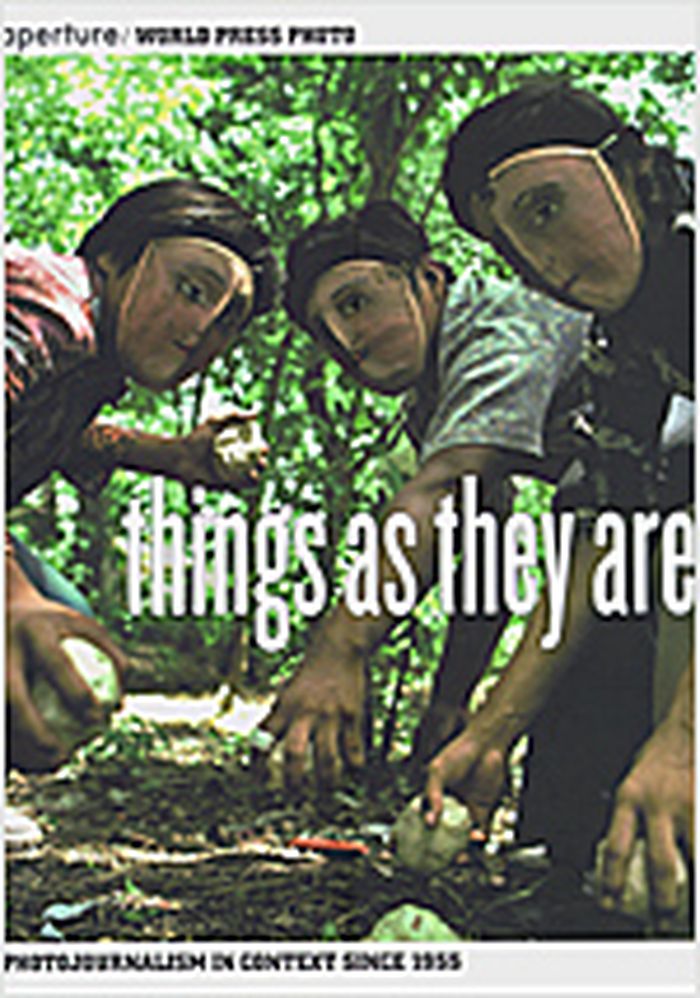
"Things as they are" presents the story of photojournalism over fifty years, from 1955 until today. It takes us from the golden era of the illustrated press—the heyday of Life magazine and Picture Post, and the moment of the Museum of Modern Art’s defining Family of Man exhibition—to the explosion of digital media in the twenty-first century. This history is told through the presentation of 125 photojournalism features shot and published throughout the world. These stories are presented in context—shown on the pages of newspapers and magazines, as the public originally experienced them. In this way, "Things as they are" reveals how the events of the world, the art of photographers, and the interests of publishers and the press converged on the printed page. It traces how photojournalism has developed over time alongside changing technology, media, fashions in photography—and a changing world. It includes photo-essays by photographers such as W. Eugene Smith, Sebastião Salgado, Mary Ellen Mark, and James Nachtwey, each accompanied by commentary. An international panel of one hundred photographers, editors, art directors, historians, and magazine collectors has made the final selections for the book. They have chosen stories that exemplify the highest quality of work published around the world during each period as well as stories that have played a key role in shaping the history of photojournalism itself, demonstrating important innovations in photography and in publishing. The book includes a preface by Michiel Munneke, director of World Press Photo; a foreword by Christian Caujolle, curator and founder of Agence Vu Press; an introduction by Mary Panzer that considers the past, present, and future of photojournalism; and a timeline of the period illustrated with iconic winners of the annual World Press Photo awards.
Things as they are : photojournalism in context since 1955
Actions:
Prix:
$90.00
(disponible sur commande)
Résumé:
"Things as they are" presents the story of photojournalism over fifty years, from 1955 until today. It takes us from the golden era of the illustrated press—the heyday of Life magazine and Picture Post, and the moment of the Museum of Modern Art’s defining Family of Man exhibition—to the explosion of digital media in the twenty-first century. This history is told through the presentation of 125 photojournalism features shot and published throughout the world. These stories are presented in context—shown on the pages of newspapers and magazines, as the public originally experienced them. In this way, "Things as they are" reveals how the events of the world, the art of photographers, and the interests of publishers and the press converged on the printed page. It traces how photojournalism has developed over time alongside changing technology, media, fashions in photography—and a changing world. It includes photo-essays by photographers such as W. Eugene Smith, Sebastião Salgado, Mary Ellen Mark, and James Nachtwey, each accompanied by commentary. An international panel of one hundred photographers, editors, art directors, historians, and magazine collectors has made the final selections for the book. They have chosen stories that exemplify the highest quality of work published around the world during each period as well as stories that have played a key role in shaping the history of photojournalism itself, demonstrating important innovations in photography and in publishing. The book includes a preface by Michiel Munneke, director of World Press Photo; a foreword by Christian Caujolle, curator and founder of Agence Vu Press; an introduction by Mary Panzer that considers the past, present, and future of photojournalism; and a timeline of the period illustrated with iconic winners of the annual World Press Photo awards.
Classification:
livres
livres
Publication:
mars 2006, New York
mars 2006, New York
Classification:
livres
livres
Titre:
Louise Bourgeois
Louise Bourgeois
Actions:
Prix:
$59.95
(disponible sur commande)
Résumé:
One of the century's most distinguished artists, Louise Bourgeois is an utterly unique figure. Born in Paris in 1911, Bourgeois spent most of her career receiving little recognition from the art community. She has worked closely to many of the century's key artistic moments, from Surrealism to Abstract Expressionism to feminist art, and yet she remains distinct from all(...)
$59.95
(disponible sur commande)
Résumé:
One of the century's most distinguished artists, Louise Bourgeois is an utterly unique figure. Born in Paris in 1911, Bourgeois spent most of her career receiving little recognition from the art community. She has worked closely to many of the century's key artistic moments, from Surrealism to Abstract Expressionism to feminist art, and yet she remains distinct from all(...)
Publication:
mai 2003, London
mai 2003, London
Titre:
Louise Bourgeois
Actions:
Prix:
$59.95
(disponible sur commande)
Résumé:
One of the century's most distinguished artists, Louise Bourgeois is an utterly unique figure. Born in Paris in 1911, Bourgeois spent most of her career receiving little recognition from the art community. She has worked closely to many of the century's key artistic moments, from Surrealism to Abstract Expressionism to feminist art, and yet she remains distinct from all of them. An extraordinarily influential sculptor, she has worked, often experimentally, with materials varying from alabaster, plaster, latex, bronze and marble. Bourgeois is equally admired for her intimate drawings, often combining fragments of text, and her highly personal writings, which often address her long and complex life story. With the backdrop of a conflicted and sexually complicated family upbringing, her struggles as an artist in a world reserved for men, as well as her experiences as a mother, the subject of her work is as broad as the materials in which she expresses them. Critic Paulo Herkenhoff (with Thyra Goodeve) has been in discussion with Bourgeois for many years. Topics in their interview range from her troubled relationship with her father, to men's fashions, to her recollections of Marcel Duchamp, whom she knew personally. Critic and curator Robert Storr's survey chronicles the unique trajectory of Bourgeois' work and life from a highly personal point of view. In his «Focus», critic Allan Schwartzman concentrates on Cell (You Better Grow Up) (1993), an intense cage-like space. For her «Artist's Choice» Bourgeois has selected extracts from the novel Bonjour Tristesse (1954) by Francoise Sagan, whose story about a young girl's response to her father's amorous relationships parallels to some degree the artist's own childhood experiences. The artist's writings include an early text, 'The Puritan', from 1947, alongside discussions of her own work, autobiographical writings and artist's projects.
Louise Bourgeois
Actions:
Prix:
$59.95
(disponible sur commande)
Résumé:
One of the century's most distinguished artists, Louise Bourgeois is an utterly unique figure. Born in Paris in 1911, Bourgeois spent most of her career receiving little recognition from the art community. She has worked closely to many of the century's key artistic moments, from Surrealism to Abstract Expressionism to feminist art, and yet she remains distinct from all of them. An extraordinarily influential sculptor, she has worked, often experimentally, with materials varying from alabaster, plaster, latex, bronze and marble. Bourgeois is equally admired for her intimate drawings, often combining fragments of text, and her highly personal writings, which often address her long and complex life story. With the backdrop of a conflicted and sexually complicated family upbringing, her struggles as an artist in a world reserved for men, as well as her experiences as a mother, the subject of her work is as broad as the materials in which she expresses them. Critic Paulo Herkenhoff (with Thyra Goodeve) has been in discussion with Bourgeois for many years. Topics in their interview range from her troubled relationship with her father, to men's fashions, to her recollections of Marcel Duchamp, whom she knew personally. Critic and curator Robert Storr's survey chronicles the unique trajectory of Bourgeois' work and life from a highly personal point of view. In his «Focus», critic Allan Schwartzman concentrates on Cell (You Better Grow Up) (1993), an intense cage-like space. For her «Artist's Choice» Bourgeois has selected extracts from the novel Bonjour Tristesse (1954) by Francoise Sagan, whose story about a young girl's response to her father's amorous relationships parallels to some degree the artist's own childhood experiences. The artist's writings include an early text, 'The Puritan', from 1947, alongside discussions of her own work, autobiographical writings and artist's projects.
Classification:
livres
livres
Publication:
mai 2003, London
mai 2003, London
Classification:
livres
livres
Actions:
Exemplaires:
Description:
63, [1] pages : color illustrations ; 23 cm.
Description:
63, [1] pages : color illustrations ; 23 cm.
Auteur:
Sujet:
Publication:
Paris : Monum : Editions du Patrimoine, ©2001.
Paris : Monum : Editions du Patrimoine, ©2001.
Titre:
Le palais Jacques-Cœur / [Jean-Yves Ribault].
Actions:
Exemplaires:
Description:
63, [1] pages : color illustrations ; 23 cm.
Le palais Jacques-Cœur / [Jean-Yves Ribault].
Actions:
Exemplaires:
Description:
63, [1] pages : color illustrations ; 23 cm.
Classification:
livres
livres
Publication:
Paris : Monum : Editions du Patrimoine, ©2001.
Paris : Monum : Editions du Patrimoine, ©2001.
Auteur:
Sujet:


