


5063 Résultats
Classification:
livres
livres
Actions:
Prix:
$66.95
(disponible sur commande)
Résumé:
Actes du colloque de Vassivière-en-Limousin.
$66.95
(disponible sur commande)
Résumé:
Actes du colloque de Vassivière-en-Limousin.
Titre:
Le jardin, art et lieu de mémoire
Actions:
Prix:
$66.95
(disponible sur commande)
Résumé:
Actes du colloque de Vassivière-en-Limousin.
Le jardin, art et lieu de mémoire
Actions:
Prix:
$66.95
(disponible sur commande)
Résumé:
Actes du colloque de Vassivière-en-Limousin.
Classification:
livres
livres
Publication:
janvier 1900, Besançon
janvier 1900, Besançon
Sujet:
Théorie du paysage
Théorie du paysage
Classification:
livres
livres
Titre:
Wild ideas
Wild ideas
Actions:
Prix:
$31.95
(disponible sur commande)
Résumé:
Blending both well-known and new voices, Wild Ideas surveys classical and romantic concepts of wilderness, from the scary to the sublime, and shows why neither serves us anymore.
$31.95
(disponible sur commande)
Résumé:
Blending both well-known and new voices, Wild Ideas surveys classical and romantic concepts of wilderness, from the scary to the sublime, and shows why neither serves us anymore.
Titre:
Wild ideas
Actions:
Prix:
$31.95
(disponible sur commande)
Résumé:
Blending both well-known and new voices, Wild Ideas surveys classical and romantic concepts of wilderness, from the scary to the sublime, and shows why neither serves us anymore.
Wild ideas
Actions:
Prix:
$31.95
(disponible sur commande)
Résumé:
Blending both well-known and new voices, Wild Ideas surveys classical and romantic concepts of wilderness, from the scary to the sublime, and shows why neither serves us anymore.
Classification:
livres
livres
Publication:
septembre 1995, Minneapolis
septembre 1995, Minneapolis
Sujet:
Théorie du paysage
Théorie du paysage
Classification:
livres
livres
Prix:
$49.95
(disponible sur commande)
Résumé:
Simpson describes the transformation of America from wilderness into an agrarian and suburban landscape as the nation expanded westward after the Revolution. He highlights the role of influential people in this transformation and the critical policies and programs they used to acquire, survey, and dispose(...)
$49.95
(disponible sur commande)
Résumé:
Simpson describes the transformation of America from wilderness into an agrarian and suburban landscape as the nation expanded westward after the Revolution. He highlights the role of influential people in this transformation and the critical policies and programs they used to acquire, survey, and dispose(...)
Titre:
Visions of paradise : glimpses of our landscape's legacy
Actions:
Prix:
$49.95
(disponible sur commande)
Résumé:
Simpson describes the transformation of America from wilderness into an agrarian and suburban landscape as the nation expanded westward after the Revolution. He highlights the role of influential people in this transformation and the critical policies and programs they used to acquire, survey, and dispose of the public domain. He shows how their actions reflected changes in our traditional values that considered land as property and a commodity primarily for functional use. This transformation in values has yielded a landscape of contradictions: it is at once a landscape of freedom and opportunity, order and disorder, permanence and transience.
Visions of paradise : glimpses of our landscape's legacy
Actions:
Prix:
$49.95
(disponible sur commande)
Résumé:
Simpson describes the transformation of America from wilderness into an agrarian and suburban landscape as the nation expanded westward after the Revolution. He highlights the role of influential people in this transformation and the critical policies and programs they used to acquire, survey, and dispose of the public domain. He shows how their actions reflected changes in our traditional values that considered land as property and a commodity primarily for functional use. This transformation in values has yielded a landscape of contradictions: it is at once a landscape of freedom and opportunity, order and disorder, permanence and transience.
Classification:
livres
livres
Publication:
avril 1999, Berkeley
avril 1999, Berkeley
Sujet:
Théorie du paysage
Théorie du paysage
Classification:
livres
livres
Actions:
Prix:
$35.00
(disponible sur commande)
Résumé:
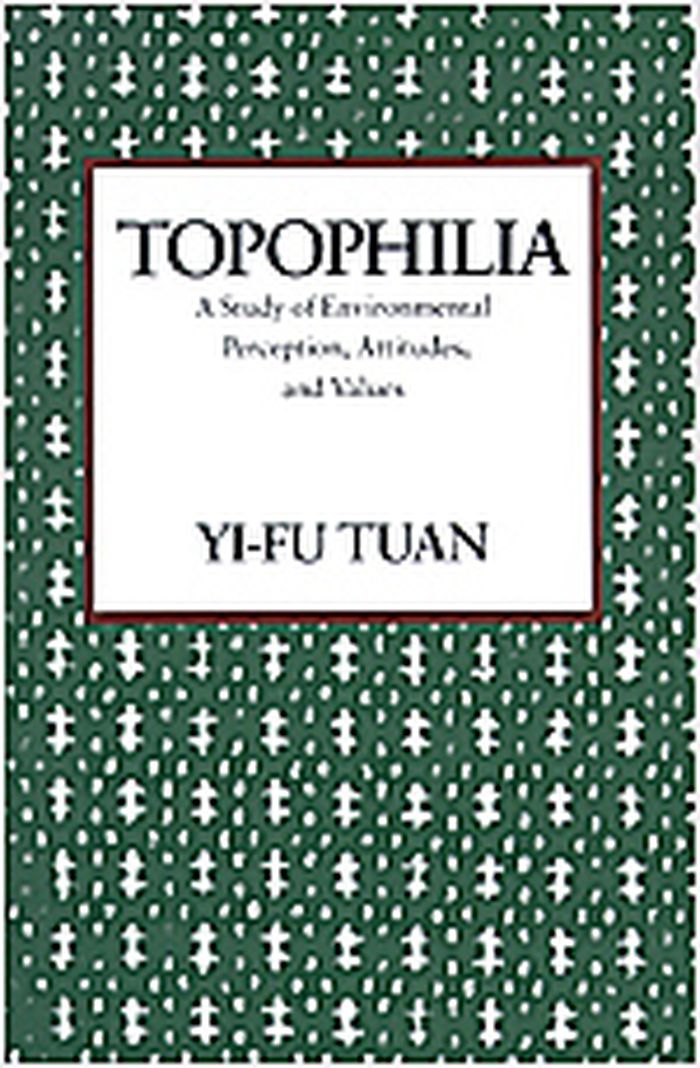
What are the links between environment and world view? Topophilia, the affective bond between people and place, is the primary theme of this book that examines environmental perceptions and values at different levels: the species, the group, and the individual. Yi-Fu Tuan holds culture and environment and topophilia and environment as distinct in order to show how(...)
$35.00
(disponible sur commande)
Résumé:
What are the links between environment and world view? Topophilia, the affective bond between people and place, is the primary theme of this book that examines environmental perceptions and values at different levels: the species, the group, and the individual. Yi-Fu Tuan holds culture and environment and topophilia and environment as distinct in order to show how(...)
Titre:
Topophilia : a study of environmental perception, attitudes, and values
Actions:
Prix:
$35.00
(disponible sur commande)
Résumé:
What are the links between environment and world view? Topophilia, the affective bond between people and place, is the primary theme of this book that examines environmental perceptions and values at different levels: the species, the group, and the individual. Yi-Fu Tuan holds culture and environment and topophilia and environment as distinct in order to show how they mutually contribute to the formation of values. Topophilia examines the search for environment in the city, suburb, countryside, and wilderness from a dialectical perspective, distinguishes different types of environmental experience, and describes their character.
Topophilia : a study of environmental perception, attitudes, and values
Actions:
Prix:
$35.00
(disponible sur commande)
Résumé:
What are the links between environment and world view? Topophilia, the affective bond between people and place, is the primary theme of this book that examines environmental perceptions and values at different levels: the species, the group, and the individual. Yi-Fu Tuan holds culture and environment and topophilia and environment as distinct in order to show how they mutually contribute to the formation of values. Topophilia examines the search for environment in the city, suburb, countryside, and wilderness from a dialectical perspective, distinguishes different types of environmental experience, and describes their character.
Classification:
livres
livres
Publication:
janvier 1900, New York
janvier 1900, New York
Sujet:
Théorie du paysage
Théorie du paysage
Classification:
livres
livres
Actions:
Prix:
$39.95
(disponible sur commande)
Résumé:
This book examines the vision of the countryside in early nineteenth-century France.
$39.95
(disponible sur commande)
Résumé:
This book examines the vision of the countryside in early nineteenth-century France.
Titre:
The spectacle of nature : landscape and bourgeois culture in nineteenth-century France
Actions:
Prix:
$39.95
(disponible sur commande)
Résumé:
This book examines the vision of the countryside in early nineteenth-century France.
The spectacle of nature : landscape and bourgeois culture in nineteenth-century France
Actions:
Prix:
$39.95
(disponible sur commande)
Résumé:
This book examines the vision of the countryside in early nineteenth-century France.
Classification:
livres
livres
Publication:
septembre 1992, Manchester
septembre 1992, Manchester
Sujet:
Théorie du paysage
Théorie du paysage
Classification:
livres
livres
Prix:
$31.50
(disponible sur commande)
Résumé:
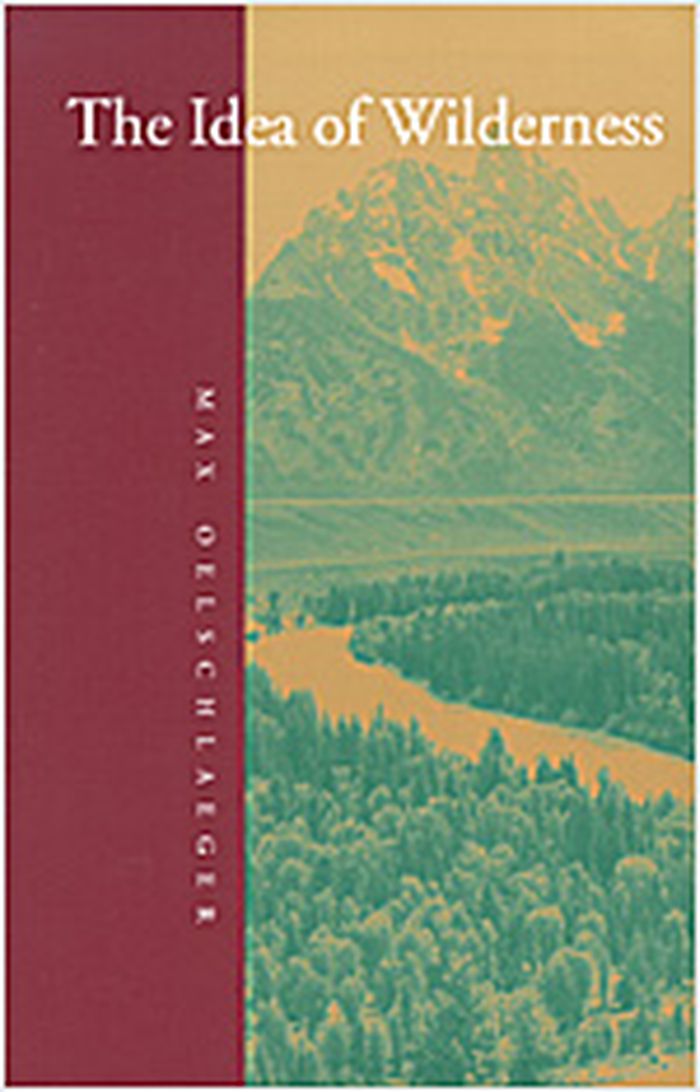
How has the concept of wild nature changed over the milennia? And what have been the environmental consequences? The author presents an examination of humankind's relationship with the natural world through the ages - from early teomism through Egyptian, Greco-Roman and Judeo-Christian supernaturalism to the rise of materialism and modernism.
$31.50
(disponible sur commande)
Résumé:
How has the concept of wild nature changed over the milennia? And what have been the environmental consequences? The author presents an examination of humankind's relationship with the natural world through the ages - from early teomism through Egyptian, Greco-Roman and Judeo-Christian supernaturalism to the rise of materialism and modernism.
Titre:
The idea of wilderness : from prehistory to the age of ecology
Actions:
Prix:
$31.50
(disponible sur commande)
Résumé:
How has the concept of wild nature changed over the milennia? And what have been the environmental consequences? The author presents an examination of humankind's relationship with the natural world through the ages - from early teomism through Egyptian, Greco-Roman and Judeo-Christian supernaturalism to the rise of materialism and modernism.
The idea of wilderness : from prehistory to the age of ecology
Actions:
Prix:
$31.50
(disponible sur commande)
Résumé:
How has the concept of wild nature changed over the milennia? And what have been the environmental consequences? The author presents an examination of humankind's relationship with the natural world through the ages - from early teomism through Egyptian, Greco-Roman and Judeo-Christian supernaturalism to the rise of materialism and modernism.
Classification:
livres
livres
Publication:
février 1993, New Haven, London
février 1993, New Haven, London
Sujet:
Théorie du paysage
Théorie du paysage
Classification:
livres
livres
Actions:
Prix:
$54.95
(disponible sur commande)
Résumé:
Ce livre raconte l'histoire des jardins en rassemblant les textes des trois grandes traditions connues, l'Islam, l'Extrême-Orient et l'Occident.
$54.95
(disponible sur commande)
Résumé:
Ce livre raconte l'histoire des jardins en rassemblant les textes des trois grandes traditions connues, l'Islam, l'Extrême-Orient et l'Occident.
Titre:
Les jardins : paysagistes, jardiniers, poètes
Actions:
Prix:
$54.95
(disponible sur commande)
Résumé:
Ce livre raconte l'histoire des jardins en rassemblant les textes des trois grandes traditions connues, l'Islam, l'Extrême-Orient et l'Occident.
Les jardins : paysagistes, jardiniers, poètes
Actions:
Prix:
$54.95
(disponible sur commande)
Résumé:
Ce livre raconte l'histoire des jardins en rassemblant les textes des trois grandes traditions connues, l'Islam, l'Extrême-Orient et l'Occident.
Classification:
livres
livres
Publication:
décembre 1998, Paris
décembre 1998, Paris
Sujet:
Théorie du paysage
Théorie du paysage
Classification:
livres
livres
Titre:
Les mots du jardin
Les mots du jardin
Actions:
Prix:
$25.25
(disponible sur commande)
Résumé:
Chaque texte de ce lexique poétique est illustré d'une oeuvre tirée des collections permanentes du musée Carnavalet, du musée Cognacq-Jay, du musée du Petit Palais, du musée Galliera, du musée de la Mode de la Ville de Paris et de la bibliothèque Forney.
$25.25
(disponible sur commande)
Résumé:
Chaque texte de ce lexique poétique est illustré d'une oeuvre tirée des collections permanentes du musée Carnavalet, du musée Cognacq-Jay, du musée du Petit Palais, du musée Galliera, du musée de la Mode de la Ville de Paris et de la bibliothèque Forney.
Sujet:
Théorie du paysage
Théorie du paysage
Publication:
novembre 1997, Arles
novembre 1997, Arles
Titre:
Les mots du jardin
Actions:
Prix:
$25.25
(disponible sur commande)
Résumé:
Chaque texte de ce lexique poétique est illustré d'une oeuvre tirée des collections permanentes du musée Carnavalet, du musée Cognacq-Jay, du musée du Petit Palais, du musée Galliera, du musée de la Mode de la Ville de Paris et de la bibliothèque Forney.
Les mots du jardin
Actions:
Prix:
$25.25
(disponible sur commande)
Résumé:
Chaque texte de ce lexique poétique est illustré d'une oeuvre tirée des collections permanentes du musée Carnavalet, du musée Cognacq-Jay, du musée du Petit Palais, du musée Galliera, du musée de la Mode de la Ville de Paris et de la bibliothèque Forney.
Classification:
livres
livres
Publication:
novembre 1997, Arles
novembre 1997, Arles
Sujet:
Théorie du paysage
Théorie du paysage
Classification:
livres
livres
Actions:
Prix:
$57.50
(disponible sur commande)
Résumé:
Publié pour la première fois vers 1634, le "Yuanye" est le premier et le seul ouvrage exclusivement consacré à l'art des jardins que la Chine nous ait légué.
$57.50
(disponible sur commande)
Résumé:
Publié pour la première fois vers 1634, le "Yuanye" est le premier et le seul ouvrage exclusivement consacré à l'art des jardins que la Chine nous ait légué.
Titre:
Yuanye : le traité du jardin (1634)
Actions:
Prix:
$57.50
(disponible sur commande)
Résumé:
Publié pour la première fois vers 1634, le "Yuanye" est le premier et le seul ouvrage exclusivement consacré à l'art des jardins que la Chine nous ait légué.
Yuanye : le traité du jardin (1634)
Actions:
Prix:
$57.50
(disponible sur commande)
Résumé:
Publié pour la première fois vers 1634, le "Yuanye" est le premier et le seul ouvrage exclusivement consacré à l'art des jardins que la Chine nous ait légué.
Classification:
livres
livres
Publication:
novembre 1997, Besançon
novembre 1997, Besançon
Sujet:
Théorie du paysage
Théorie du paysage
Classification:
livres
livres
Actions:
Prix:
$34.95
(disponible sur commande)
Résumé:
Publié par le Groupe d'étude du XVIIIè siècle de l'Université Libre de Bruxelles.
$34.95
(disponible sur commande)
Résumé:
Publié par le Groupe d'étude du XVIIIè siècle de l'Université Libre de Bruxelles.
Titre:
Études sur le XVIIIè siècle : parcs, jardins et forêts au XVIIIè siècle
Actions:
Prix:
$34.95
(disponible sur commande)
Résumé:
Publié par le Groupe d'étude du XVIIIè siècle de l'Université Libre de Bruxelles.
Études sur le XVIIIè siècle : parcs, jardins et forêts au XVIIIè siècle
Actions:
Prix:
$34.95
(disponible sur commande)
Résumé:
Publié par le Groupe d'étude du XVIIIè siècle de l'Université Libre de Bruxelles.
Classification:
livres
livres
Publication:
octobre 1997, Bruxelles
octobre 1997, Bruxelles
Sujet:
Théorie du paysage
Théorie du paysage


