


424 Résultats
Classification:
livres
livres
Actions:
Prix:
$63.95
(disponible sur commande)
Résumé:
Conceived as an experiment that would apply the new "science" of city planning to a suburban setting, Forest Hills Gardens was created by the Russell Sage Foundation to provide housing for middle-class commuters as an alternative to cramped flats in New York City. Although it has long been recognized as one of the most influential planned communities in the United(...)
$63.95
(disponible sur commande)
Résumé:
Conceived as an experiment that would apply the new "science" of city planning to a suburban setting, Forest Hills Gardens was created by the Russell Sage Foundation to provide housing for middle-class commuters as an alternative to cramped flats in New York City. Although it has long been recognized as one of the most influential planned communities in the United(...)
Titre:
A modern Arcadia : Frederick Law Olmsted Jr. & the plan for Forest Hill Gardens
Actions:
Prix:
$63.95
(disponible sur commande)
Résumé:
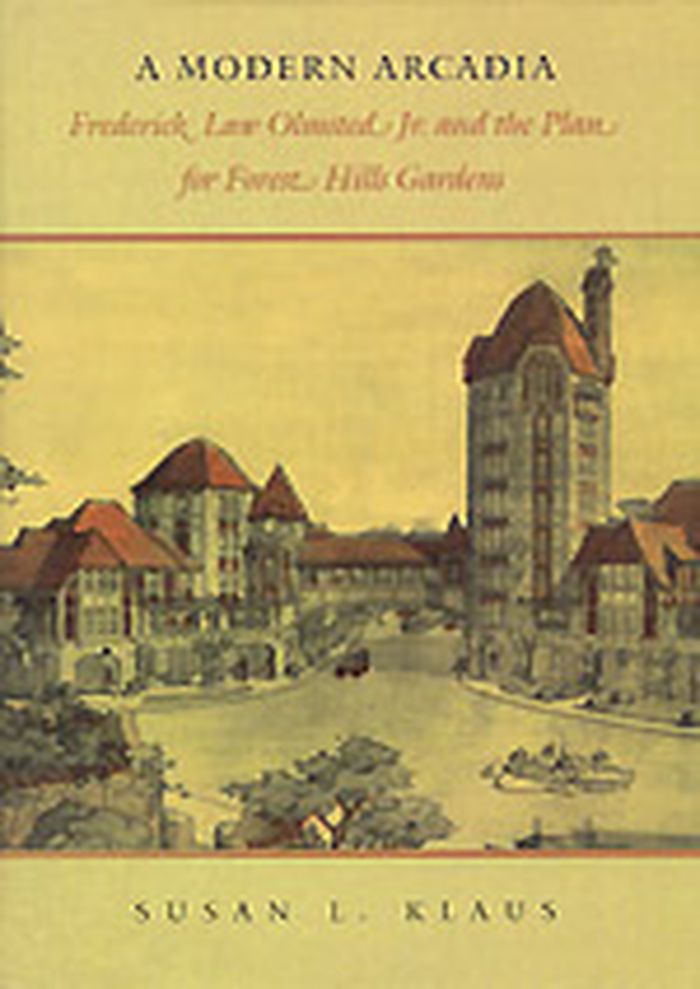
Conceived as an experiment that would apply the new "science" of city planning to a suburban setting, Forest Hills Gardens was created by the Russell Sage Foundation to provide housing for middle-class commuters as an alternative to cramped flats in New York City. Although it has long been recognized as one of the most influential planned communities in the United States, this is the first time Forest Hills Gardens has been the subject of a book. Susan L. Klaus's fully illustrated history chronicles the creation of the 142-acre development from its inception in 1909 through its first two decades, offering critical insights into American planning history, landscape architecture, and the social and economic forces that shaped housing in the Progressive Era. Klaus focuses particularly on the creative genius of Frederick Law Olmsted Jr., who served as planner and landscape architect for the project. Drawing on his father's visionary ideas but developing his own perspective, the younger Olmsted redefined planning for the modern era and became one of the founders of the profession of city planning in the United States.
A modern Arcadia : Frederick Law Olmsted Jr. & the plan for Forest Hill Gardens
Actions:
Prix:
$63.95
(disponible sur commande)
Résumé:
Conceived as an experiment that would apply the new "science" of city planning to a suburban setting, Forest Hills Gardens was created by the Russell Sage Foundation to provide housing for middle-class commuters as an alternative to cramped flats in New York City. Although it has long been recognized as one of the most influential planned communities in the United States, this is the first time Forest Hills Gardens has been the subject of a book. Susan L. Klaus's fully illustrated history chronicles the creation of the 142-acre development from its inception in 1909 through its first two decades, offering critical insights into American planning history, landscape architecture, and the social and economic forces that shaped housing in the Progressive Era. Klaus focuses particularly on the creative genius of Frederick Law Olmsted Jr., who served as planner and landscape architect for the project. Drawing on his father's visionary ideas but developing his own perspective, the younger Olmsted redefined planning for the modern era and became one of the founders of the profession of city planning in the United States.
Classification:
livres
livres
Publication:
janvier 1900, Amherst / Boston
janvier 1900, Amherst / Boston
Sujet:
Jardins
Jardins
Classification:
livres
livres
Actions:
Prix:
$19.95
(disponible en magasin)
Résumé:
In this text, Brenner, Peck and Theodore question the claim that neoliberalism has ended in the wake of the global economic crisis that began in September of 2008. The authors argue that this assumption rests upon an inadequate understanding of the reach and tenacity of the crisis-induced, market-disciplinary forms of regulatory restructuring that have accompanied the(...)
$19.95
(disponible en magasin)
Résumé:
In this text, Brenner, Peck and Theodore question the claim that neoliberalism has ended in the wake of the global economic crisis that began in September of 2008. The authors argue that this assumption rests upon an inadequate understanding of the reach and tenacity of the crisis-induced, market-disciplinary forms of regulatory restructuring that have accompanied the(...)
Publication:
juillet 2011
juillet 2011
Titre:
Civic city cahier 4 : Afterlives of neoliberalism
Actions:
Prix:
$19.95
(disponible en magasin)
Résumé:
In this text, Brenner, Peck and Theodore question the claim that neoliberalism has ended in the wake of the global economic crisis that began in September of 2008. The authors argue that this assumption rests upon an inadequate understanding of the reach and tenacity of the crisis-induced, market-disciplinary forms of regulatory restructuring that have accompanied the neoliberalisation of cities, regions and states across the world. In contrast with the over-simplified, monolithic conceptualisations of the global economy that prevail in many popular and academic accounts, the authors emphasise the constitutively uneven, institutionally hybrid and chronically unstable character of neoliberalism. For urban designers, planners and activists working to promote more socially just and democratic forms of urbanism, Brenner, Peck and Theodore insist on the need to radically restructure the macroinstitutional "rules of the game" that variously encourage and disallow localities, cities and regions to adapt to market-based approaches to (re)investment, collective-goods provisioning, and social reproduction. "Absent this", they argue, "the potential of progressive postneoliberal projects will continue to be frustrated by the dead hand of market rule".
Civic city cahier 4 : Afterlives of neoliberalism
Actions:
Prix:
$19.95
(disponible en magasin)
Résumé:
In this text, Brenner, Peck and Theodore question the claim that neoliberalism has ended in the wake of the global economic crisis that began in September of 2008. The authors argue that this assumption rests upon an inadequate understanding of the reach and tenacity of the crisis-induced, market-disciplinary forms of regulatory restructuring that have accompanied the neoliberalisation of cities, regions and states across the world. In contrast with the over-simplified, monolithic conceptualisations of the global economy that prevail in many popular and academic accounts, the authors emphasise the constitutively uneven, institutionally hybrid and chronically unstable character of neoliberalism. For urban designers, planners and activists working to promote more socially just and democratic forms of urbanism, Brenner, Peck and Theodore insist on the need to radically restructure the macroinstitutional "rules of the game" that variously encourage and disallow localities, cities and regions to adapt to market-based approaches to (re)investment, collective-goods provisioning, and social reproduction. "Absent this", they argue, "the potential of progressive postneoliberal projects will continue to be frustrated by the dead hand of market rule".
Classification:
livres
livres
Publication:
juillet 2011
juillet 2011
Classification:
livres
livres
Actions:
Prix:
$77.95
(disponible sur commande)
Résumé:
Dans les années 1730-1740, la " rocaille " connaît en France un épanouissement sans pareil, et tous les intérieurs se couvrent d'une débauche d'ornements dissymétriques alliant le minéral et le végétal. Mais les réactions ne tardent pas. Des théoriciens aspirent au retour du " goût simple et noble de l'antique ". Marc-Antoine Laugier, influencé par l'enseignement de(...)
$77.95
(disponible sur commande)
Résumé:
Dans les années 1730-1740, la " rocaille " connaît en France un épanouissement sans pareil, et tous les intérieurs se couvrent d'une débauche d'ornements dissymétriques alliant le minéral et le végétal. Mais les réactions ne tardent pas. Des théoriciens aspirent au retour du " goût simple et noble de l'antique ". Marc-Antoine Laugier, influencé par l'enseignement de(...)
Titre:
Les architectes européens à Rome : 1740-1765, la naissance du goût à la grecque
Actions:
Prix:
$77.95
(disponible sur commande)
Résumé:
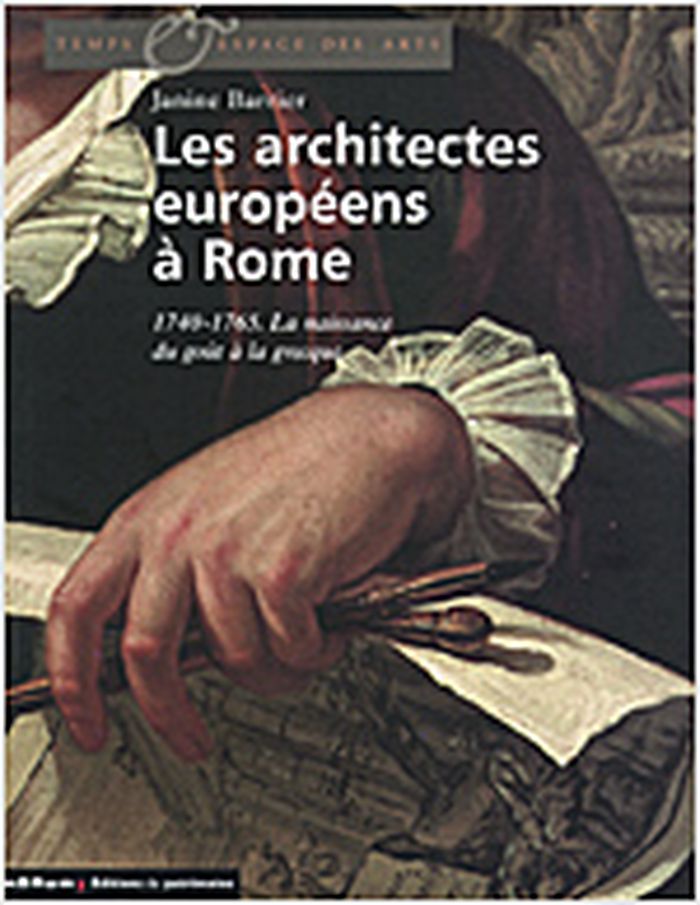
Dans les années 1730-1740, la " rocaille " connaît en France un épanouissement sans pareil, et tous les intérieurs se couvrent d'une débauche d'ornements dissymétriques alliant le minéral et le végétal. Mais les réactions ne tardent pas. Des théoriciens aspirent au retour du " goût simple et noble de l'antique ". Marc-Antoine Laugier, influencé par l'enseignement de l'érudit vénitien Carlo Lodoli, prône la supériorité d'une architecture fonctionnelle dont il retrouve en Grèce les fondements. Dans ce contexte, l'influence des idées et des œuvres de Piranèse puis l'étude simultanée des ruines grecques et romaines vont conduire à une évolution progressive des formes. Les artistes en résidence à l'Académie de France à Rome élaborent peu à peu une syntaxe et un vocabulaire nouveaux. Parmi ces pensionnaires se succéderont de jeunes architectes, Clérisseau, Peyre, De Wailly, Moreau, Chalgrin, qui côtoient dans la cité romaine leurs confrères étrangers, les Anglais William Chambers et Robert Adam, le Belge Laurent Benoît Dewez... Une profonde mutation se produit alors, qui donne naissance à un changement esthétique majeur, le " goût à la grecque ", prélude au néoclassicisme. Ainsi le piranésisme laissera-t-il son empreinte jusqu'à la fin du siècle sur plusieurs générations d'architectes, comme en témoignent les œuvres de Sir John Soane, d'Etienne Louis Boullée et de Claude Nicolas Ledoux.
Les architectes européens à Rome : 1740-1765, la naissance du goût à la grecque
Actions:
Prix:
$77.95
(disponible sur commande)
Résumé:
Dans les années 1730-1740, la " rocaille " connaît en France un épanouissement sans pareil, et tous les intérieurs se couvrent d'une débauche d'ornements dissymétriques alliant le minéral et le végétal. Mais les réactions ne tardent pas. Des théoriciens aspirent au retour du " goût simple et noble de l'antique ". Marc-Antoine Laugier, influencé par l'enseignement de l'érudit vénitien Carlo Lodoli, prône la supériorité d'une architecture fonctionnelle dont il retrouve en Grèce les fondements. Dans ce contexte, l'influence des idées et des œuvres de Piranèse puis l'étude simultanée des ruines grecques et romaines vont conduire à une évolution progressive des formes. Les artistes en résidence à l'Académie de France à Rome élaborent peu à peu une syntaxe et un vocabulaire nouveaux. Parmi ces pensionnaires se succéderont de jeunes architectes, Clérisseau, Peyre, De Wailly, Moreau, Chalgrin, qui côtoient dans la cité romaine leurs confrères étrangers, les Anglais William Chambers et Robert Adam, le Belge Laurent Benoît Dewez... Une profonde mutation se produit alors, qui donne naissance à un changement esthétique majeur, le " goût à la grecque ", prélude au néoclassicisme. Ainsi le piranésisme laissera-t-il son empreinte jusqu'à la fin du siècle sur plusieurs générations d'architectes, comme en témoignent les œuvres de Sir John Soane, d'Etienne Louis Boullée et de Claude Nicolas Ledoux.
Classification:
livres
livres
Publication:
janvier 2006, Paris
janvier 2006, Paris
Sujet:
Histoire jusqu’à 1900
Histoire jusqu’à 1900
Classification:
livres
livres
Actions:
Prix:
$74.00
(disponible sur commande)
Résumé:
Once the world’s tallest skyscraper, the Woolworth Building is noted for its striking but incongruous synthesis of Beaux-Arts architecture, fanciful Gothic ornamentation, and audacious steel-framed engineering. Here, in the first history of this great urban landmark, Gail Fenske argues that its design serves as a compelling lens through which to view the distinctive urban(...)
$74.00
(disponible sur commande)
Résumé:
Once the world’s tallest skyscraper, the Woolworth Building is noted for its striking but incongruous synthesis of Beaux-Arts architecture, fanciful Gothic ornamentation, and audacious steel-framed engineering. Here, in the first history of this great urban landmark, Gail Fenske argues that its design serves as a compelling lens through which to view the distinctive urban(...)
Titre:
The skyscraper and the city: the woolworth building and the making of modern New York
Actions:
Prix:
$74.00
(disponible sur commande)
Résumé:
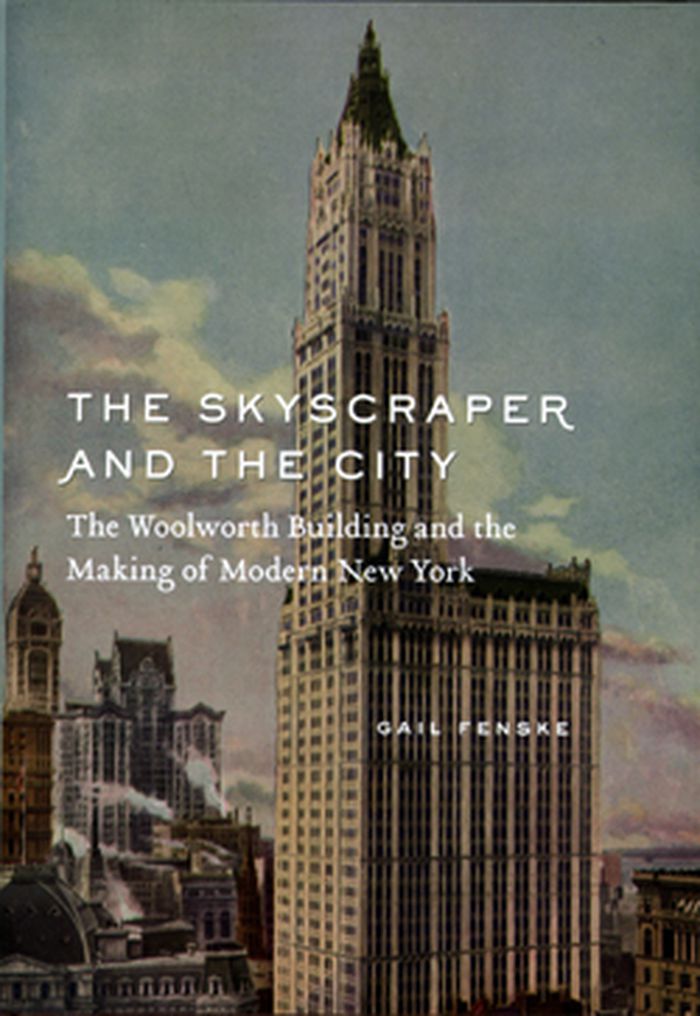
Once the world’s tallest skyscraper, the Woolworth Building is noted for its striking but incongruous synthesis of Beaux-Arts architecture, fanciful Gothic ornamentation, and audacious steel-framed engineering. Here, in the first history of this great urban landmark, Gail Fenske argues that its design serves as a compelling lens through which to view the distinctive urban culture of Progressive-era New York. Fenske shows here that the building’s multiplicity of meanings reflected the cultural contradictions that defined New York City’s modernity. For Frank Woolworth—founder of the famous five-and-dime store chain—the building served as a towering trademark, for advocates of the City Beautiful movement it suggested a majestic hotel de ville, for technological enthusiasts it represented the boldest of experiments in vertical construction, and for tenants it provided an evocative setting for high-style consumption. Tourists, meanwhile, experienced a spectacular sightseeing destination and avant-garde artists discovered a twentieth-century future. In emphasizing this faceted significance, Fenske illuminates the process of conceiving, financing, and constructing skyscrapers as well as the mass phenomena of consumerism, marketing, news media, and urban spectatorship that surround them. As the representative example of the skyscraper as a “cathedral of commerce,” the Woolworth Building remains a commanding presence in the skyline of lower Manhattan, and the generously illustrated Skyscraper and the City is a worthy testament to its importance in American culture.
The skyscraper and the city: the woolworth building and the making of modern New York
Actions:
Prix:
$74.00
(disponible sur commande)
Résumé:
Once the world’s tallest skyscraper, the Woolworth Building is noted for its striking but incongruous synthesis of Beaux-Arts architecture, fanciful Gothic ornamentation, and audacious steel-framed engineering. Here, in the first history of this great urban landmark, Gail Fenske argues that its design serves as a compelling lens through which to view the distinctive urban culture of Progressive-era New York. Fenske shows here that the building’s multiplicity of meanings reflected the cultural contradictions that defined New York City’s modernity. For Frank Woolworth—founder of the famous five-and-dime store chain—the building served as a towering trademark, for advocates of the City Beautiful movement it suggested a majestic hotel de ville, for technological enthusiasts it represented the boldest of experiments in vertical construction, and for tenants it provided an evocative setting for high-style consumption. Tourists, meanwhile, experienced a spectacular sightseeing destination and avant-garde artists discovered a twentieth-century future. In emphasizing this faceted significance, Fenske illuminates the process of conceiving, financing, and constructing skyscrapers as well as the mass phenomena of consumerism, marketing, news media, and urban spectatorship that surround them. As the representative example of the skyscraper as a “cathedral of commerce,” the Woolworth Building remains a commanding presence in the skyline of lower Manhattan, and the generously illustrated Skyscraper and the City is a worthy testament to its importance in American culture.
Classification:
livres
livres
Publication:
mai 2008, Chicago, London
mai 2008, Chicago, London
Sujet:
Gratte-ciels
Gratte-ciels


